The Premise of a Mystery

A mystery needs a strong premise to succeed in today’s vast sea of manuscripts and newly published books. But what exactly is a premise? And how can you tell if the premise of your book is a good one?

photo (45)

In Save the Cat, Blake Snyder defines the premise as the idea that promises to be an exciting or interesting story. It’s a short answer to the question, “What’s it about?” Its job is to make you want to read the book. Premise in this sense is similar to the back cover copy (blurb or description) of the book.

What’s a ginthewoodsood premise for a mystery? A child is murdered and the detective has to catch the killer. Not good enough. It’s a murder mystery, but why read this one?
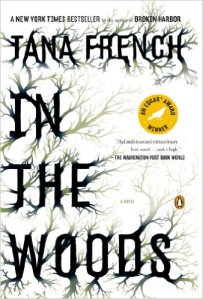
Three children go into the woods. Two are murdered and the third is found covered with blood. He remembers nothing. Better. I might read it.

But that was 20 years ago. Now there’s been a similar murder in the same woods and the detective is the third child who survived the earlier crime and still has no memory of it. I will definitely sample that book.

A twenty-year-old body is found, that of a young woman. Twenty years earlier, a young man and his girlfriend planned to elope. When she failed to show up, he thought she’d jilted him. The young man is now a detective, and the body is that of his girlfriend.

faithfulplace

In the Woods and Faithful Place are excellent examples of one way to build a compelling premise for a mystery: an interesting crime plus a personal connection with the detective. The fundamental conflict of any mystery—murderer versus agent of truth and justice—is amplified by internal conflict.

Moreover, there is a built-in professional conflict for the detective, because he should recuse himself. In ITW, he keeps it a secret that he was the third child. In FP, he defies orders and investigates secretly on his own.

For Snyder, the premise is a what-if containing elements of both character and inciting incident. For John Truby (The Anatomy of Story), the premise is a short synopsis that includes the inciting incident, the main character, and the outcome.

His example, for the Godfather: “The youngest son of a Mafia family takes revenge on the men who shot his father and becomes the new Godfather.” The whole story, in a nutshell.

The two different senses of the term ‘premise’ are both widely used. In Story, Robert McKee discusses both concepts, which he calls, respectively, the inspiring idea and the controlling idea.

The story-in-a-nutshell of a mystery is the solution to the mystery. It is what I have elsewhere called the hidden drama. It’s the truth about the murder that is concealed in the enticing set-up.

A mystery needs a strong premise in both senses. The set-up states the mystery (someone has been murdered—why? By whom?) and the hidden drama, when revealed, must pack some sort of wallop to pay off the promise of a good story.

I cannot give you an example of the latter without spoiling a mystery. So that’s what I’m going to do. If you have not read Rebecca, STOP READING NOW! Read Rebecca and come back.

Joan Fontaine and Judith Anderson as the second Mrs. DeWinter and Mrs. Danvers, respectively, in the 1940 film diected by Alfred Hitchcock

Joan Fontaine and Judith Anderson as the second Mrs. DeWinter and Mrs. Danvers, respectively, in the 1940 film diected by Alfred Hitchcock

A shy, unconfident young woman marries a man whose first wife, Rebecca, has died in an accident. Rebecca was beautiful, talented, seemingly perfect in every way. How can our poor heroine ever compete with the ghost of this paragon?

Not the most powerful set-up (no mention of a crime), but the hidden drama—oh my. It turns out Rebecca was EVIL! Her husband hated her and murdered her! He got away with it—or did he? OMG!!! A witness comes forward! Breathtaking, page-turning suspense ensues. This book delivers on its premise like no other.

Cornwall

On just such a bay in Cornwall, Rebecca De Winter drowned…supposedly.

Call them hook and twist: a compelling crime to be solved and an underlying truth that is both unexpected and confounding. A really good mystery needs both.
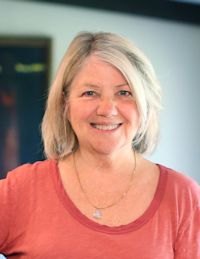
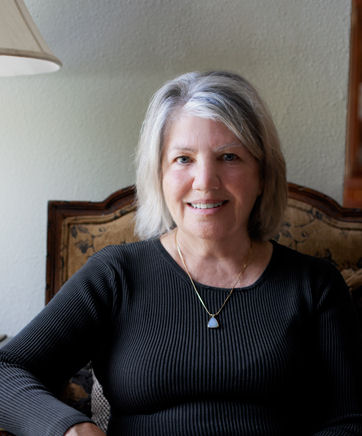
Elizabeth Buhmann

————————————————————

A woman who witnessed a murder lied on the stand. Twenty years later, the man who was convicted on her testimony has just been exonerated and released:

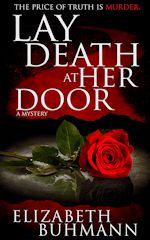
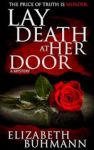
Lay Death at Her Door, by Elizabeth Buhmann

Author Highlight- Elizabeth Buhmann

We at AMW are a busy bunch, always working on many projects. I’m so proud to be a part of this diverse, interesting, and productive group! So proud in fact, that I thought I’d do a series of blog posts to highlight what current and former members are up to. Not only are we accomplishing things as a group, but individually we are setting goals for ourselves and we’re achieving them. These folks keep me on my toes! They fuel my desire to create and they give me courage to follow through with projects. By watching them, I’ve seen what can be done.

Austin Mystery Writer Elizabeth BUhmannI’d like to thank Elizabeth Buhmann, author of Lay Death At Her Door, for being the first person in this series.

VPC– Elizabeth, I’ve heard that Lay Death At Her Door is doing well. Any updates on its status? laydeath

EB– I recently got a very nice starred review from Publishers Weekly. Lay Death has been out for more than two years now, and it has done pretty well, in terms of both reviews and sales. I’m happy.

VPC– Any other writing projects that you’re working on that you’d like to share with us?

EB– It’s getting to the point where I’m overdue to get another book out. I have one novel on the brink, but it’s not quite right yet. I’m stewing on that.

I’m not in a hurry. On the contrary, I am trying to detach myself from the gotta-publish, gotta-publish mind-set. The validation that comes from publishing and being read is intoxicating, but publishing can also be a rabbit-hole. When will the next book come out? Did you make the big five? Did you make the bestseller list? In other words, What have you done LATELY?

I don’t need to earn money through my writing, and when it becomes a job with a deadline, I rebel. I admire people younger than myself who are setting out to make a career out of writing fiction (ie, trying to earn enough to give up the day job). I didn’t do that. In my career, I was a writer, but writing fiction is a whole different game. It’s hard work and more difficult than ever—the number of books coming out each year is staggering.

Publishing a novel and having it be well-received was a goal. I don’t want it to become a craving for more and more success and recognition. There are enough books. Maybe I’ll publish again, maybe I won’t. I want to write in peace, on my own terms, at my own pace. If I turn out to be a one-trick pony, that’s fine. It was a good trick.

VPC– I know that you practice Tai Chi. I believe that you’ve recently achieved special status. Please tell us all about it!

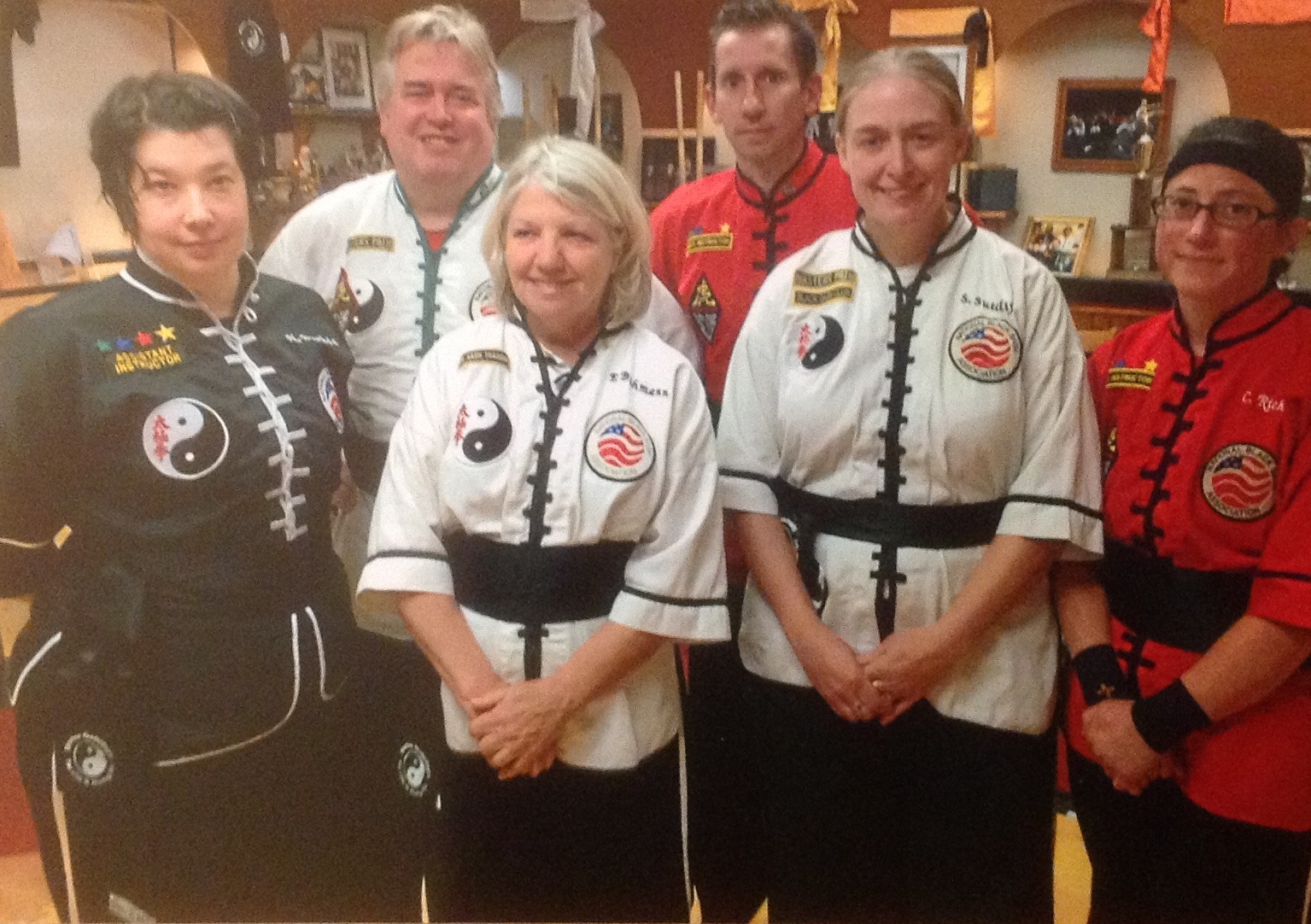
Elizabeth getting her second degree black sash cohort.

EB– I’ve been studying Tai Chi for six years and earned my second-degree black sash last fall. I’m pretty obsessed. In addition to my own solo practice, I maintain a Tai Chi blog (taichinotebook.com), take classes and work out with a group of Chinese people in my neighborhood. As a side effect, I have been learning a fair amount of Chinese! And I like reading mysteries set in China. I’ve read all of Qiu Xiaolong’s Inspector Chen novels, which are set in Shanghai in the 1990s.

VPC– I see your from posts here on the website that you read a wide variety of books. What are you currently reading? Anything to recommend?

EB– I have been catching up on Tana French. I read In the Woods and Faithful Place a few years ago; just finished Broken Harbor (six stars out of five, that one!) and The Likeness. Next for me: The Secret Place. I think Tana French is the most brilliant writer working in the mystery field today.

Thanks, Elizabeth! I always learn something new and interesting from you.

Stay tuned. In next month’s author highlight I’ll introduce author Patric Sanders.

The Novella in Your Line-Up

Some writers never struggle to find enough words; they struggle to prune over-long manuscripts. Other writers, like me, start out with a premise and work through an outline to a rough draft that is . . . short.

As I expand on my first draft, I worry about length. Optimal length for a novel (most genres) is between 70,000 and 90,000 words. What if your story comfortably winds up in the low range, 30-000-50,000?

You have a choice: complicate and expand to novel length or call it a novella.

In an article for Writer’s Digest, Chuck Sambuccino addresses this choice. His advice: Expand your story until it’s a novel. But he is talking to writers who want to query agents and land contracts with major publishers. Print publishers will rarely take on a novella, and “rarely” probably means “never” for the unknown first-timer.

heartThe novella has taken on new life in recent years, however, with the rise of digital publishing. Remove the cost of hard copy printing, binding and distribution, and the shorter literary forms are more than viable—they are attractive to readers and authors alike.

The novella is a time-honored and well established literary tradition—I need only mention Joseph Conrad, Edith Wharton and Ernest Hemmingway. An interesting article on the novella in Wikipedia includes a reading list that will keep you happy for a couple of months at least.

What the novella can do for you

Everybody knows that after the blog tour and the boosted posts, the best way to keep your book selling is to write more books. With a very small publisher, or by self-publishing, you can get new titles out there about as fast as you can write them. But if you once make the leap to the big-time, the process slows down. How do you stay on the radar in this fast-paced market?

Thought I Knew You is currently #11 in the Paid Kindle store on sale for $.99 (as of today, August 17, but not for long)

Thought I Knew You is currently #11 in the Paid Kindle store on sale for $.99 (as of today, August 17, but not for long)

One way is to write a novella. Case in point:

Bestselling author Kate Moretti debuted her knockout first book, Thought I Knew You (Red Adept Publishing), in September 2012. She followed with Binds That Tie a year and a half later, in March, 2014. About that time, TIKY hit the New York Times bestseller list, and Moretti caught the eye of literary agent Mark Gottlieb at Trident Media Group. Gottlieb parlayed this fast start into a two-book deal with Atria (Simon and Shuster).

Moretti had momentum and a growing fan base. But by stepping up to the big five, she was facing a two-year gap between book two and book three. How to keep her fans engaged? Enter the novella.

At half the length of a full novel (and proportionately fewer subplots and complications), the novella can be written in half the time. A small independent publisher can turn the ebook around in half the time it takes a major print publisher to get a novel out the door.

wywgWhile You were Gone is a tangent to TIKY, with all new characters, as engaging as we have come to expect from Moretti, plus a tight, fast-paced story, and a strong twist at the end. It is available for pre-order now, at $2.99, and will be released on September 1, 2015.

From a fan’s perspective, this is perfect—a short (130 pages) dose of Moretti’s unique blend of mystery/suspense and women’s fiction between the longer works. From the author’s perspective, she stays out front on the market with a book and keeps building her fan base in preparation for The Vanishing Year (coming in 2016). This is what a novella can do for you.

Kimberly Giarratano has done the same thing. Readers loved her YA mystery with ghosts, Grunge Gods and Graveyards (4.7 out of 5 stars on Amazon, based on 74 reviews). That book came out in May 2014, and Giarratano followed up just one year later with a spin-off novella, The Lady in Blue, which she self-published.

ladyinblue

Giarratano takes the logic one step further. In between GGG and LIB, she self-published a lovely YA ghost story, One Night is All You Need—just 21 pages, but hey, it’s free! And a reader who gets a taste of this story and likes it (how could you not) will surely take a look at one of the other books.

All this is good news to me. When I start working on a story and doubt assails me as to whether I have material for a 90,000-word novel, I relax. If it comes out short, I will have written a novella.

I love reading them myself. More than a short story, less than a novel, just the right length for a late-summer afternoon curled up in the reading chair. Perfect!

Elizabeth BuhmannElizabeth Buhmann is the author of Lay Death at Her Door: “The bill for lies told decades earlier comes due for Kate Cranbrook, the complex narrator of Buhmann’s superior debut… and more blood is shed along the way to a jaw-dropping, but logical, climax that will make veteran mystery readers eager for more.” Publishers Weekly (starred review)

Movie Review of Mr. Holmes

First off, let me say that Ian McKellan knocks it out of the park. I can’t imagine a better choice to play an aged Holmes. Everything about his performance was stupendous. Things like how he carried himself, to the minute changes he had in his facial expressions, conveyed exactly what Holmes was thinking and feeling

We see Holmes just after WWII. That’s right, WWII! So he’s 93 in this movie. Holmes is struggling with the degeneration of his most prized asset, his mind and memory. The idea was jolting to me. It’s a bit like Superman without his super strength. But, as we know, it can happen to anyone. And it becomes more and more apparent to Holmes that this is happening. So he must confront this impediment while trying to recall the details of his last case.

We also see his humanity. Traditionally Holmes been portrayed as an observer of human behavior. But actually feeling connections with people seem to elude him. Except for his friendship with Dr. Watson, his fascination with Irene Adler, and interactions with Mrs. Hudson, he has no relationships. The facts have always been more important than the human relationships. Certainly they are easier for him to understand. Living his life in such a sterile manner has ultimately left him alone.

So here he is, at the end of his life with no friends or loved ones. And he has to confront and hopefully accept some of the decisions he’s made over the years. Will he use this insight to make new friends? Will he find peace with his decisions?

Click on this picture to see the IMDb featurette! Don’t worry, no spoilers!

That’s all about the story that I’ll say. I don’t want to give too much away. If I was a total Sherlockian (is that a thing?) I’m sure I would have caught some inside references. Bees do play a major role in the movie because he’s a beekeeper. This isn’t totally out of the blue. In the story, His Last Bow, Holmes has retired to Sussex and keeps bees. So I wasn’t too surprised to see that.

Also, in a scene in the movie Holmes goes to the theater to watch a movie about himself, a movie based on a story that Watson had written. (How meta is that?) The actor on the screen was Nicholas Rowe, who played Holmes in the movie Young Sherlock Holmes. I wanted to shout out in the theater, “He played young Sherlock Holmes! McKellan is playing Holmes, watching a movie about Holmes, played by Rowe who played young Holmes!” (Yea, I’m not allowed out in public much.) But I was good and didn’t even whisper it to my friend sitting next to me.

So that’s it. It wasn’t an action-packed version like the ones with Robert Downey Jr., but the mysteries that were woven throughout kept me in my seat, wanting more. If you don’t watch it in the theater, please add it to your rental list. You won’t regret it.

How To Conduct A Masterful Story

by V.P. Chandler

Originally posted June 15, 2015

You know how some songs are more appealing than others? They just seem to have that “something” that people like. I think the same thing is true for books.

I’ve recently tried my hand at writing music, so I’ve been studying the structure of songs. The way the verses and chorus are laid out are comparable to poetry. Then one day I noticed that the music itself is similar to story structure. Even different types of songs can be compared to different genres. (All links provided are from “official” Youtube channels or websites.)

Typically most pop, rock, or standard music that we listen to follows a pattern:

Intro, Verse 1, Verse 2, Chorus, Verse 3 [Usually a variation of the tune], (Maybe Verse 4) Chorus [Maybe with a variation to change it up a bit.]

For instance, here’s Real Gone by Sheryl Crow

I love that song! The intro does exactly what it’s supposed to do. It sets the tone for the piece. The variations on the theme and the constant fast beat keep it from getting boring.

I think it’s like a lot of popular books out there. It’s got a good beat and the tempo doesn’t let up for the whole song. I think of thrillers that have constant action. A variation on theme helps to keep things interesting. Maybe like James Bond and his extra curricular activities? He’s still James Bond, just a variation on the spy theme.

But what about other songs, like maybe orchestral pieces? How do composers keep them interesting? Do they follow a pattern too? Is it similar to a story arc or story structure?

Breath and Life by Audiomachine.

The intro sets the mood. The pulsing beat keeps it moving. The melody plays then repeats. (Verse 1 and Verse 2) Then after a short change, the music grows and they vary the tune. It grows and grows with intensity, volume, and moves higher. It finally reaches the ultimate point. Then it dies off. The structure is not so much an arc, more like a wedge that just grows then drops off. Personally, I prefer a story to grow to almost the very end.

And here’s the part that absolutely fascinates me. Notice that while the singers and the main melody have long notes, there are always the underlying beats that keep it moving? I like to call this microtension. I believe I first heard the term from Donald Maas. http://absolutewrite.com/maas_fire_excerpt.html

Good writing, no matter what genre, has microtension to keep the story flowing. It’s what keeps your characters growing and interesting.

Here’s another song by Audiomachine called Equinox

While you listen to it, think about the pulsing under the long notes and feel how it grows. Now imagine your story or any story. Does it grow like this? Do your secondary characters highlight your antagonist and protagonist, like the chorus and instruments provide harmony? What is height of your story? I like the little tag at the end. It’s an echo of the theme. I think the best stories have a little scene at the end that sums up the journey, whatever it may have been. (I mean good grief! Don’t you want to read the story that fits this music?)

I can’t help myself. Here’s another called The Fire Within

And one last song. This isn’t as dramatic as the others. But I think it’s a perfect example of the relationship between a protagonist and an antagonist. The relationship of the two should mirror and echo each other. This is a relaxing song, like I said, not dramatic. But I love the echo of the piano and the harmony of the flute.

The Gift of Love by The O’Neill Brothers

So I’ll leave you with this. In the first words of your story, write an intro that gives your reader a taste of what’s to come. Set the melody. Support your story and characters with harmonies, and counter melodies. Don’t keep things the same. Grow by changing the key signature and keep the beat pulsing. Grow, grow, grow! Make it bigger! Give it a dramatic finale and end with a reflection, a bit of the original melody to remind the reader of the journey. Good luck. And if you have a favorite song that makes a perfect story, feel free to share with us in the comments! I’m always on the lookout for new music.

Links:

www.audiomachine.com

http://www.pianobrothers.com

2015 Reading Challenge

Wouldn’t it be great to have a list of every book you’ve ever read? An aunt of mine kept such a list.  We found it when she died at ninety. It would be a wonderful gift for a child, to give her a blank, lined notebook along with the idea of keeping such a list.

In January, I started writing down what I’ve read this year, and I’m curious to see whether I will read 100 books in 2015. Along the way, just for fun, I’ve already completed a reading challenge:

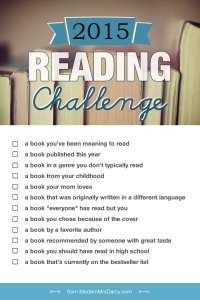
Modern Mrs. Darcy’s 2015 Reading Challenge

2015-Reading-Challenge

You’re supposed to read 12 books in each category–that’s a lot! I read one in each. My twelve books:

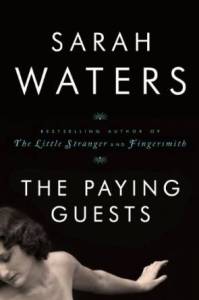
A BOOK I’VE BEEN MEANING TO READ: The Paying Guests, by Sarah Waters. She does not usually write in the murder/crime genre, but here she does. Loved it!

A BOOK PUBLISHED THIS YEAR: YOU, by Caroline Kepnes. I amended this category to “a book published within the last year.”

A BOOK IN A GENRE I DON’T TYPICALLY READ: The Battle for Saigon, a military history by Keith Nolan. I read it because I am writing up a friend’s experience living in Saigon during the 1960s and ‘70s. I glossed over the jargon, hardware and acronyms, of course. When he wrote about an NCOIC and three augmentees in a M113 APC with a .50-cal MG, I took this to be a bunch of guys in a truck with a big gun. I don’t like war, but this was by turns interesting, appalling, and exciting. Well researched, too. I thoroughly enjoyed it.

A BOOK FROM MY CHILDHOOD: I couldn’t think of a book from my childhood that I wanted to reread (Nancy Drew doesn’t work for me anymore), so I listed Winterdanceby Gary Paulson, because it’s such a great and perennial favorite of my inner child. It’s about sled dogs and the “fine madness” of running the Iditerod. Charming, wonderful read (especially if you’re foolish over dogs like me) (and out of 295 customer reviews, a whopping 255 are 5 stars–read this book).

winterdance

crackingrailwaybazaar

A BOOK MY MOTHER LOVES: The Sleep of Reason, by CP Snow. My mother didn’t love this book. I am not even sure she read it. She mentioned it in such a funny way that, fifty years later, I was curious enough to read it. Weird.

A BOOK ORIGINALLY WRITTEN IN A DIFFERENT LANGUAGE: The Devotion of Suspect X, by Keigo Higashino, a fabulously well-plotted murder mystery.

GOTpayingA BOOK “EVERYONE” BUT ME HAS READ: Ugh, do I have to? I bounced off a few of these—there’s a reason I haven’t read them—and finally settled on The Goldfinch, by Donna Tartt. This book will mess with your year-end total—it’s 800 pages long! A Pulitzer Prize winner with 21,000 Amazon reviews.

A BOOK I CHOSE BECAUSE OF THE COVER: Malice, also by Keigo Higashino.

A BOOK BY A FAVORITE AUTHOR: Last Train to Zona Verde, by Paul Theroux. This is a reprise of Dark Star Safari, which you should read instead. In fact, if you are not already a fan, start with The Great Railway Bazaar.

A BOOK RECOMMENDED BY SOMEONE WITH GREAT TASTE: Cracking India, by Bapsi Sidhwa.  Thanks for the recommendation, O you with great taste, Kathy Waller! I loved it.

A BOOK I SHOULD HAVE READ IN HIGH SCHOOL: Moby Dick. DNF. Once again.

A BOOK THAT IS CURRENTLY A BESTSELLER: The Girl on the Train, by Paula Hawkins. Great read. Inspiring that a mid-list author rolled the dice with a genre shift and hit the big-time!

Elizabeth BuhmannElizabeth Buhmann is the author of Lay Death at Her Door. An old murder comes unsolved when the man who was convicted of it is exonerated.

Faith Amid Doubt

Ever have doubts about your capabilities? I think we all have. (Except for maybe a few oblivious people out there.) But doubt and fear are normal reactions when it comes to how we feel about our own artistic expression, including writing.

The older I get, the more I see how things are connected. We draw upon previous experiences to prepare us for new ones. In this case, since I’m fairly new to writing, I often find myself comparing writing to making music. I’ve been singing since I was eight, playing piano since the age of nine, and playing in band since junior high. So I have a lot of experiences to draw from. (I won’t tell you how many years. Let’s just say it’s many decades!)

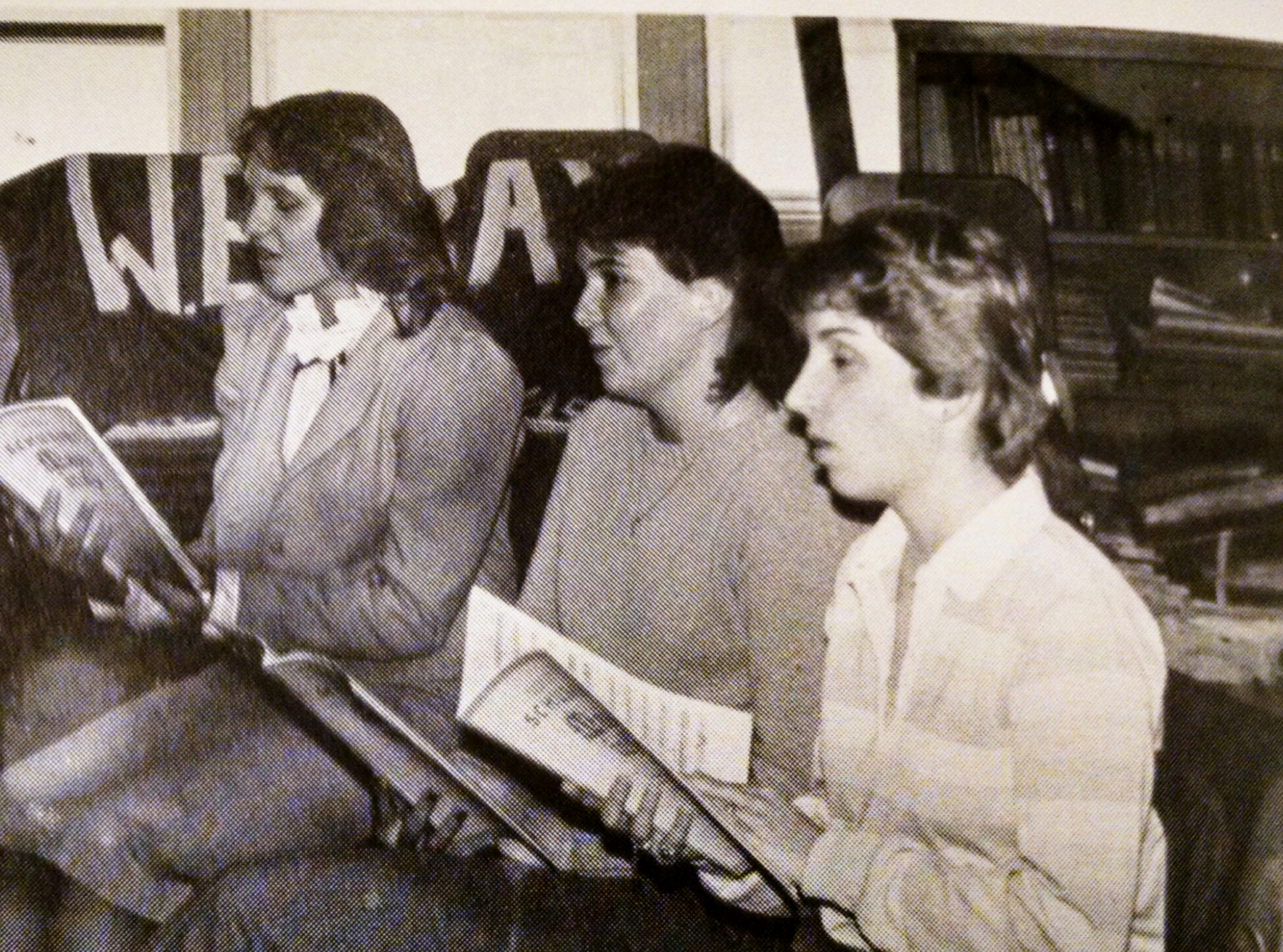
Now I’m not an excellent musician. I’m good at sight-reading choral music and the technical aspects of music. (That was the only way I made it to Area in the state competition in choir in high school. I beat out singers with better voices because of smarts instead of talent.) I’ve sung solos and played instrumental solos. I’m okay, not great. I know my limitations.

Me on the right.

Me on the right.


But there are some people, the happy oblivious ones previously mentioned, who have absolutely no idea that they are bad. God bless them, they often are the most dedicated and enthusiastic participants, but they have no idea they stink. (I know that’s rude, but it’s true and we all know it.) So here’s the doubt mentioned in the title–Sometimes I think, “Am I one of those people?” I honestly have to ask myself that question from time to time. I don’t think I am, but I think it’s a healthy question to keep myself in check.

So since writing is a lot like music, there are those who stink and those who are good. (Don’t get yourself in a kerfluffle. We all know there are writers who stink.) So as I’m going down this path of choosing writing as a career, I’m wondering how am I doing? I know there is a lot of room for improvement, but am I one of the oblivious? Do I stink and no one is willing to tell me? I think my true friends are honest with me. I hope so, because I can’t improve if I don’t know!

Got to have rocking hair if you're a drummer!

Got to have rocking hair if you’re a drummer!

On the other side of this coin, there are people who, no matter how much they practice, no matter how good they are, they’re still afraid of not measuring up. Boy, do I fall into this category. I get tremendous stage fright. It’s not uncommon for me to get sick to my stomach, sweat, or get heart palpitations. I used to cry and I’ve even blacked out before. Thank goodness I’ve at least got that under control! I’ve had people ask me, “If all of these things happen to you? Then why do you subject yourself to such torture?” The answer is, I’m compelled to. I have to. If you’ve ever been a part of something wonderful, that’s bigger than the sum of the participants, you’ll know what I mean. It’s a bit addictive but I think of it as a spiritual. It’s like you’re making magic, honestly. And who doesn’t want to make magic?

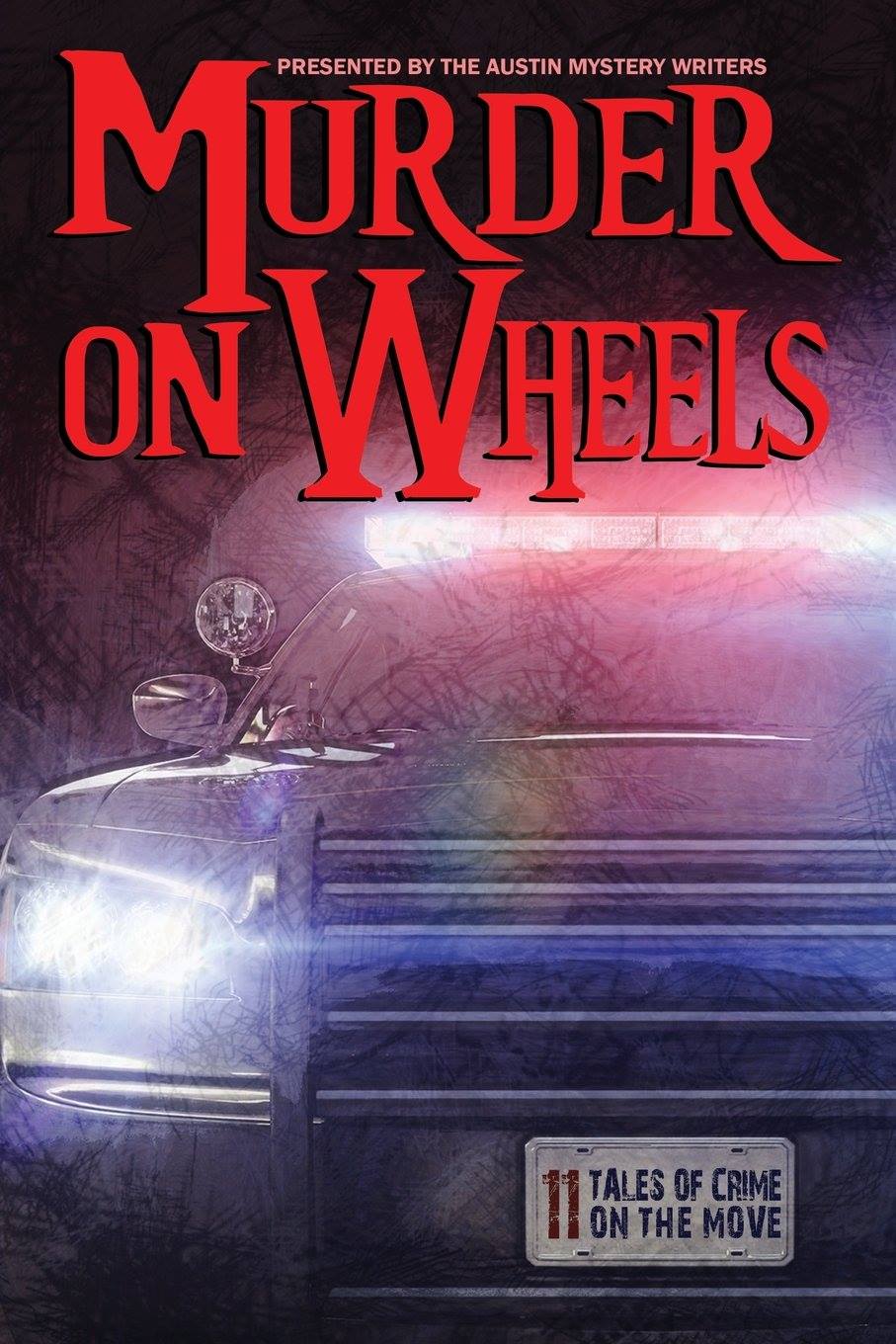
And speaking of performing with others, have you ever performed with outstanding musicians? They make the experience a joy. And of course they you make better because you usually perform better to match them. Well we, at Austin Mystery Writers, have put together an anthology and invited some of our friends to contribute. I think they raised the

Our anthology!

Our anthology!

bar for us and we delivered. Sometimes I have my doubts about the quality of my story, but I also have faith it’s pretty good and I’m getting better. So I have faith amid my doubts and I’m moving forward, enjoying the experience, and making magic. And as always, practice, practice, practice, practice.

Murder On Wheels is available on Amazon and Barnes and Noble. The ebook version should be available soon. 

Murder in the Far East

Elizabeth BuhmannBy Elizabeth Buhmann

Continuing the series, Murder in Exotic Places.

The digital image below hardly does justice to the exquisite jacket on Keigo Higashino’s most recent murder mystery, Malice. I paid top dollar for the hardcover because it was just so beautiful. Loved the book, too, a murder mystery set in modern-day Japan.

maliceI liked Malice enough that I also read The Devotion of Suspect X, a major bestseller in Japan a couple of years ago. And WOW!!! The best, most ingenious murder plot EVER. Sorry to shout, but seriously, this plot is one in a million. Move over, Agatha. Really. What a murder!

Shinju, by Laura Joh Rowland, is first in a series of more than a dozen detective mystery/thrillers set in 17th century Japan, in the days of Samurai and the corrupt, cutthroat, intrigue-ridden court of the Shogun Tokugawa. Rowland’s detective, Sano Ichiro, is one of the most admirable and lovable protagonists ever. Shinju, about an apparent ritual suicide between two star-crossed lovers, was almost too unbearably suspenseful for me!

ookaI cut my teeth as a mystery lover on the Tales of Ooka, Solomon in Kimono. The books I read as a child in the 1950s, by IG Edmonds, are hard-to-find collector’s items now. The character of the wise Judge Ooka is based on a real 17th century magistrate, Ooka Tadasuke, who rose to fame and high position with his famously wise and fair administration of justice as well as his incorruptible character.

A favorite Ooka story: the case of the stolen smell. A rich, miserly restaurant owner complains that a poor student is stealing the smell of his food. He wants to be paid! Ooka hears the case and demands that the student produce all the money he has. It’s only a couple of coins. Ooka tells him to drop the money from one hand to the other, then rules that the merchant has been paid for the smell of his food by the sound of clinking coins.

calamitousShamini Flint is an attorney who lives in Singapore and has traveled extensively in Asia. Her mysteries are set in India, China, Singapore, Bali  and Malaysia. I loved them all! I will suggest starting (as I did) with the one set in China: A Calamitous Chinese Killing.

Speaking of China, and if you like characters based on real-life historical figures, Robert Van Gulik’s Judge Dee series is a must-read. Dee was a seventh century Chinese magistrate (read about him in Wikipedia). Here is the Amazon list of the Judge Dee books.

lakebell

mazedee

The Celebrated Cases Of Dee Goong An is an honest-to-goodness 18th century Chinese detective novel based on Dee’s legendary career. The book was translated by Van Gulik (who was quite the Sinologist). His foreword about early Chinese detective fiction is fascinating. Many features of these books (the supernatural elements, the torture, their length) make them a tough read for the modern and/or Western reader. And in fact, what I recommend is that you read Van Gulik’s own Judge Dee novels first, rather than this one.

chanI’ll close with a cheat and a post-script. The cheat: Charlie Chan! A cheat because the books are not set in China, and Earl Derr Biggers had nothing to do with China. The House Without a Key is set in Hawaii, but at least Charlie is Chinese. Charlie Chan is not as well known as he once was (read about the books and films). I say he’s due for a revival.

Finally, a postscript to last month’s Murder in Africa. At the time, I had just picked up a novella by Kwei Quartey. When I finished that I tried his Darko Dawson series, and I must add it to the Murder in Africa list—love this series! The first book is Wife of the Gods. I guarantee that you will go looking for the rest of the series after you finish it. Dr. Quartey, I am anxiously awaiting the next book!

For more murder in the far east:

Elizabeth Buhmann is author of Lay Death at Her Door, and Amazon Top 100 Bestselling mystery about an old murder that comes unsolved when the man who was convicted for it is exonerated.

Neo-Noir?

I recently wrote to a friend and said, “Hey, next time you’re putting an anthology together, let me know. I’d like to contribute.”

He contacted me the next day. “Thanks for the idea! It’s all set. I’ve lined up all the writers and it’ll be Texas noir crime/mystery stories!”

What? That was fast. Noir? Images of James Cagney and Humphrey Bogart in trench coats came to mind. Now there’s nothing wrong with Cagney or Bogart. They were excellent actors who were in some great films. I’ve read some Raymond Chandler and he was very talented. He had a gift for unique metaphors that were brief and got right to the heart of the matter. I’ve never read Mickey Spillane but heard he was really good too. Lots of good writers of the genre out there.darkedinburgh_darklight

But, I’m not a fan of that type of setting. (Yes, I know. I heard your collective gasp. Please don’t throw tomatoes. Put down those pitchforks.) While there are some great stories out there, I’m not keen on men calling women “dames” and saying they have great “gams”. Not thrilled about guys punching other guys just to make a point that they’re tough. If I wanted to watch that, I’d have continued teaching high school.

I understand about noir and hard-boiled crime fiction, why it came about in America when it did. I have no problem with gritty books and movies, nor with the era. I’m a huge fan of Hitchcock, for example.

So now I’m thinking, great, what am I going to write? How am I, a kid from the ‘70s and ‘80’s, going to write about detectives swilling whiskey?

Put down my latte or I’ll give it to you right in the kisser!

I don’t think so.

I first started thinking about recent stories that were gritty. Surely there are modern (neo-noir?) stories. How gritty does it need to be? Aren’t crime/mysteries by definition dark? The only exception I can think of are cozies, but even sometimes they can be dark.

So I decided to do what I usually do several times a day. I Googled it. Apparently, according to Wikepedia, people can’t decide on the definition either. Then I fell back on my other source of information, my friends on Facebook. Since I have so many friends who are writers, this is a font of information. I received many good answers. A few of the recommendations were shows like the Longmire series and True Detective. Some of the books mentioned were The Bitch (yes, that’s the name), The Package by Cleve Sylcox, anything by Walter Moseley or Kelli Stanley, the Harry Dresden series, and an anthology called Lone Star Noir.lone star noir_

Okay, I think I’m getting there, closer to something that I could write. Dark stories, maybe like the Coen Brothers? I thought of Fargo, No Country for Old Men, True Grit, movies I really liked. Those had elements of crime and mystery. An idea popped into my head, something that I could really write. I’m sure some of the other writers for the anthology are wondering if a little housewife could possibly create something dark enough to fit in with their stories.

I think I’m up to the challenge.

So  how about you? Do you have a favorite story or movie that you consider to be noir?

Murder in Africa

Elizabeth Buhmann

MURDER IN EXOTIC PLACES, continued.

by Elizabeth Buhmann

Last month, I wrote about books set on the Indian subcontinent. How about books set in Africa? I have never been to Africa, but I’ve read Paul Theroux’s Dark Star Safari. The subtitle is “Overland from Cairo to Capetown.” Think about that for a minute. Not a journey for the faint of heart! But not one you have to make, because you can read a blow-by-blow that offers all the wit and keen observation of the most astute, acerbic and entertaining travel writer ever.

kenya

I loved that book, but I must have murder, and fortunately Africa is the setting for several outstanding detective series. Among the very best are Malla Nunn’s Emmanuel Cooper
presentdarknessnovels, set in South Africa during the 1950s, at the height of the Apartheid era. Malla Nunn is from Swaziland in South Africa and now resides in Australia.

All four books in her series are excellent. I started with the third, Blessed are the Dead, in which a young Zulu woman is murdered in the Drakensberg Mountains. This is a dark, gritty and well-plotted murder mystery with a fascinating geographic, social and political setting. I highly recommend it. Her latest is Present Darkness.

Botswanahouse

If you prefer light and delightful to dark and gritty, The Saturday Big Tent Wedding Party is a wonderful read. It’s the twelfth book in the No. 1 Ladies Detective Agency series sattentby Scottish author Alexander McCall Smith. The books are set in Gabarone, Botswana, and the main character is the wise and charming Precious Ramotswe.

You may already know about these books, since they have been wildly popular for more than ten years now, but did you know that there are fifteen books in the series? Here’s a checklist, so you can be sure you’ve read them all. The BBC/HBO television series captures the books perfectly, by the way; Season 1 is available on Amazon Video.

acarriondeathLess well known, and also set in Botswana, are the Kubu mysteries, by Michael Sears and Stanley Trollip, who publish as Michael Stanley. Both men were born in Africa and have traveled extensively there all their lives. Their lovable detective is the portly David Benga, affectionately known as Kubu (the Setsama word for hippopotamus). The series achieves a perfect balance between light humor and serious crime. A Carrion Death, their debut, is a good place to start.  There are four Kubu books altogether, plus a cook book.

But actually, if it’s African food you crave (and if you have ever tried African food, you surely crave it), try Jessica Harris’s Africa Cookbook, Tastes of a Continent. Babotie! Curried cabbage! Pigeon Pie! It takes all day to cook, and a village to eat, such a dinner!

zanzibar2

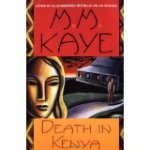
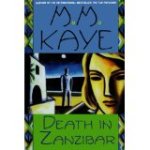
MM Kaye, you may recall from the first post in this series (Murder in Exotic Places) was born in India and lived there much of her life. After India’s independence, she followed her husband, a Major-General in the British Army, to Africa. There she wrote two more romantic suspense novels: Death in Kenya and Death in Zanzibar.

africacookbook

deathinkenyazanzibarlaydeath

I stumbled on MM Kaye’s mysteries when researching my own book, Lay Death at Her Door. My main character, Kate Cranbrook, is from Kenya, daughter of American ex-voyagerpatriates, and events from her teenage years in Nairobi reach across decades of her life to haunt her.

Finally, I have just discovered a series of mysteries by Kwei Quartey. I’m currently enjoying Death at the Voyager Hotel,  set in Ghana. I’m close to the end, and I don’t know whodunnit yet!

Next: Mysteries set in the Far East.