Mystery Workshop At Book People

Last Saturday I attended a writer’s workshop at Book People, sponsored by Mystery People and the Austin chapter of Sisters In Crime. I honestly didn’t think I’d learn much new. But I was wrong. *Note- Between classes we had drawings for giveaways like books and tote bags!
mysterypeople_cityscape_72


sinclogomediumred (1)

41VaFJ3tHPL._UX250_It started with George Wier speaking about writing action scenes. He’s literally a pro at this. Just read any of his books. (www.billtravismysteries.com) It wasn’t about how to describe a blow-by-blow fistfight. It was more about how to add tension to a scene, how to make it move along. I don’t know about you, but I like bullet points. So I’ll share my notes in that manner.


  • Before you can add action, you must put the reader in the moment. They won’t follow anything if they aren’t there. To accomplish this, describe the lay of the land and the surroundings.
  • What are the results of the action? There should be consequences or the reader won’t care.
  • The scene must have a beginning, middle, and end.
  • Don’t describe things in terms of time. (aka- three hours later). Believe it or not, that doesn’t do anything for the reader. Time isn’t as tangible as distance. “They walked down a flight of stairs.” Is much easier for the reader to see and instantly understand.
  • Perception is everything. Use all the senses. Have your characters be aware of their breathing, their surroundings, sounds, pain, everything.

The idea of writing about distance instead of time interests me. All of the things listed above make sense, but the idea that the reader can intuitively understand distance better than the concept of time is fascinating.

Scott Montgomery of Book People recommended the book, The Killer Inside Me by Jim Thompson. He said it was a good example of what Wier was talking about.
12440786_872683726208928_6233840132231229609_o

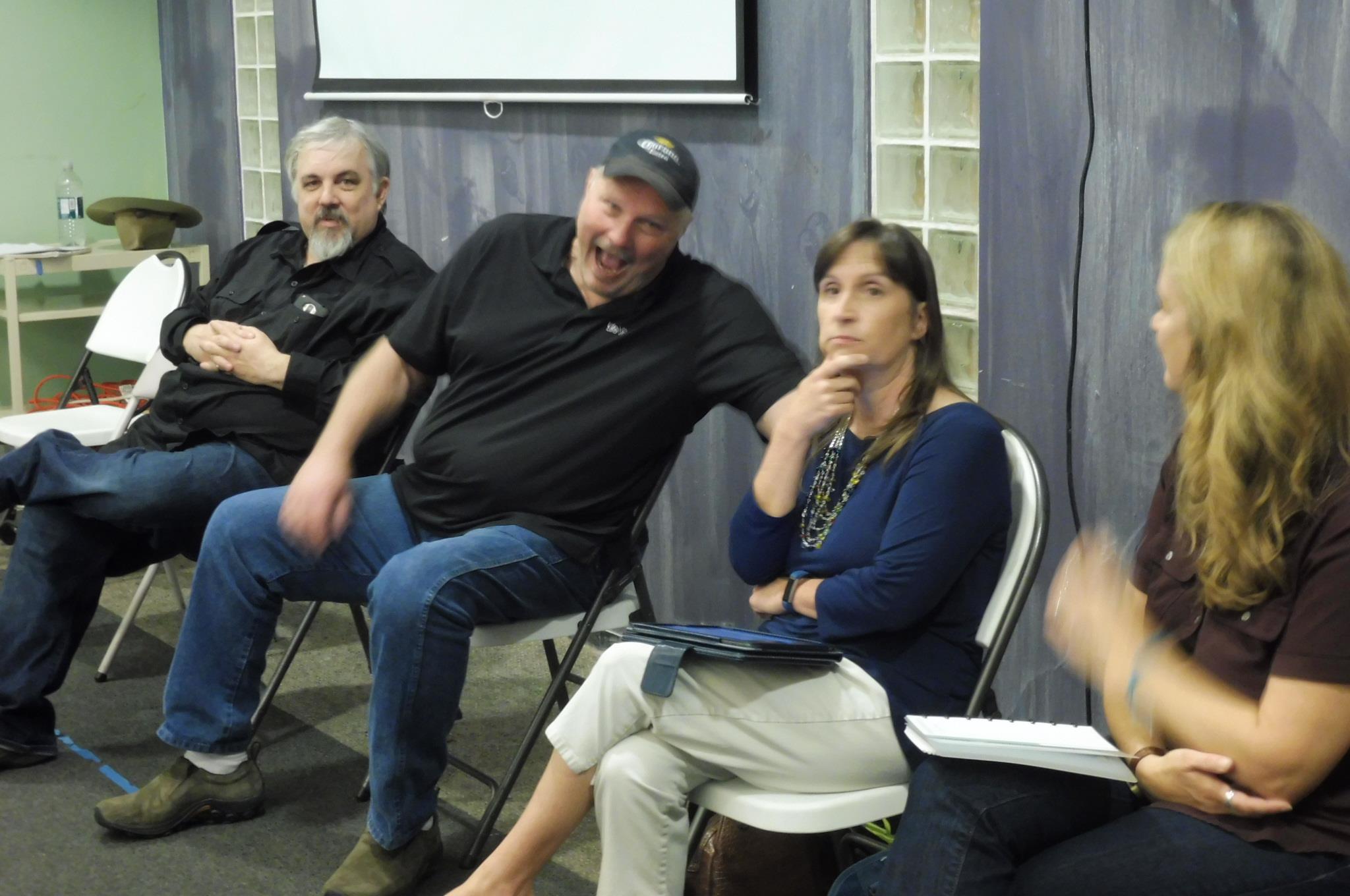
Cutting up between classes. Friend and author Billy Kring dropped by. He’s trying to distract me while George Wier looks on.

P1010228

The guys behaving for Terry’s talk.


shamesTerry_1


Next at the workshop was Terry Shames. She gave us many tips on how to writing compelling settings. And she should know. She does an excellent job of describing the Texas town where her Samuel Craddock series takes place. (www.terryshames.com) I came away with the concept of interior settings and exterior settings. No, not what a living room looks like, interior as in what’s going on inside a character. (More bullet points!)

  • Treat your scenes as characters.
  • The way to make your story interesting is to show how the interior setting (of characters) intersect with the exterior setting. How would someone from a Texas ranch interact with the people and setting of New York city? How would that same person act in their own hometown?
  • The devil is in the details. Immerse the reader in the setting. You don’t have to do an information dump. (Please don’t.) But you can provide things like smells and sounds.
  • If you aren’t familiar with a place, research it. Talk to people who know the place.
  • Above all, know how your characters would interact with the setting. Someone who almost drowned would have a different reaction to falling in the water than someone who is an Olympic swimmer. So Know Your Characters!
  • Every scene should try to have-
  1. Action
  2. Dialogue
  3. Physical description of setting
  4. Physical description of characters
  5. Internal thinking
  6. Internal physical descriptions.
  • A good rhythm of a scene would be: 2/1/2, 4/3/5, 6/2/1. Try it and see what happens.


13221302_872683152875652_8550652881065447974_o

Brent and James. Looking forward to reading their books.

After lunch we gathered for the last class about collaboration. Brent Douglass and James Dennis, two of the three authors who make up the persona of Miles Arecenaux (www.milesarceneaux.com), led a funny discussion on their journey of collaborative writing. They started their first book back in the days before email. Thank goodness the days of mailing a manuscript back and forth are gone. Thank you email! So what are their tips?

  • Don’t be afraid to be honest with each other. Actually, they said to be brutally honest. Treat each other like siblings.
  • Play up to your partners’ strengths. You are different people with different experiences. You that to your advantage.
  • Work to maintain “one voice” for your book. It will get easier with practice but it will also take many edits to achieve this.
  • Defer to people with experience. (Again, take advantage of your partner’s strengths.)
  • It helps to build accountability. If you know that you’re expected to get your part done by a certain time and the others are counting on you, you better do it.
  • Broadcast gratitude. Not only show gratitude to your partners, show gratitude to other writers.


(Collaborating sounds interesting. I think I’d like to take a stab at that just for fun.)
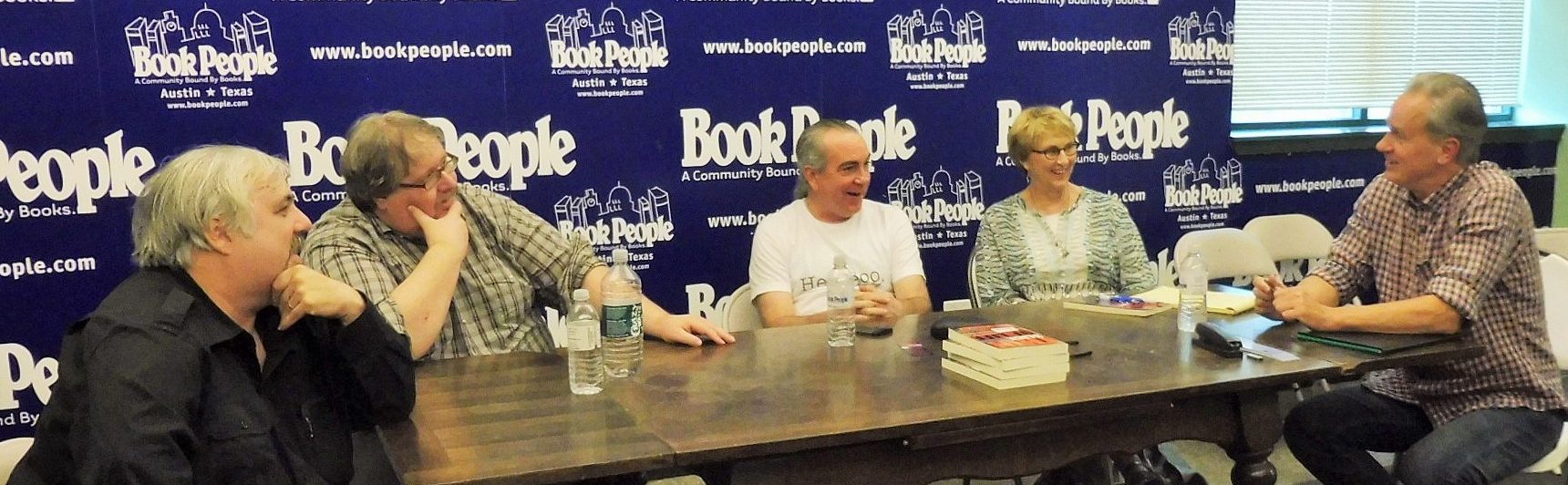
 

P1010257 (3)The last event was a panel discussion that was very informal. It was about publishing, marketing, and networking. Honestly, I was so caught up in listening, I forgot to take notes! All the speakers were charming, personable, and informative. It was worth every moment that I was there.

13221495_1309991895681591_3188641544421811289_n

Gale Albright helped put it all together and did the raffle.

13265889_1309991862348261_80808660105037085_n

George answering questions between classes.


P1010223

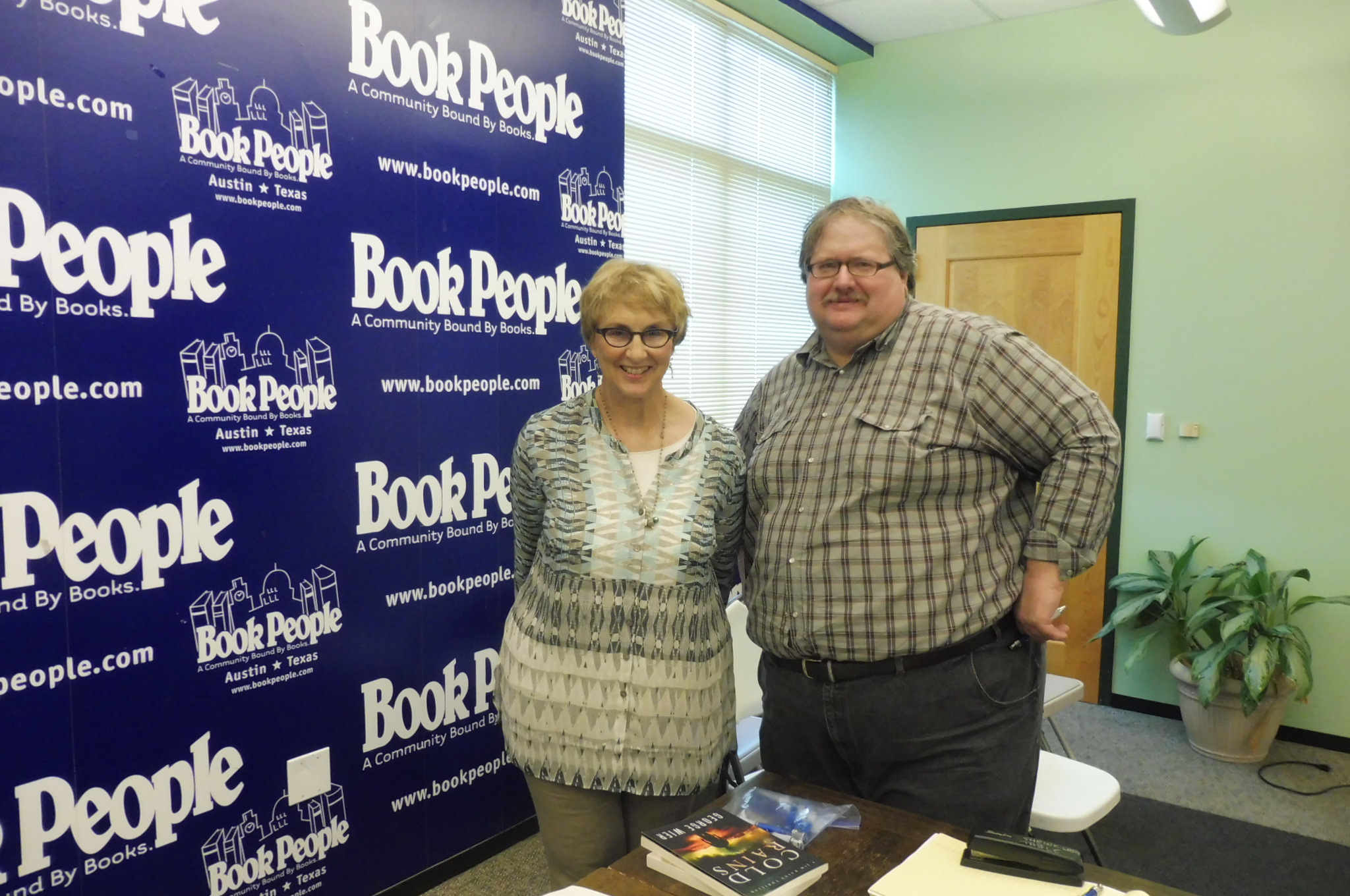
Terry and Scott


I’d like to say thank you to Book People and Scott Montgomery of Mystery People for hosting us!


Gretchen Archer on Road Trips, Super Spies & Double Knot

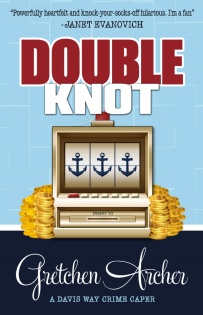
DOUBLEKNOTfrontF.jpgGretchen Archer’s biography claims she is a Tennessee housewife who turned to a life of crime (fiction) when her daughters left for college. Don’t let the housewife title fool you.

Gretchen Archer is a writer with mad skills, blending humor throughout her tightly plotted Davis Way mystery series that keeps the reader guessing until the very end. Archer is a USA Today bestselling author with a loyal readership that continues to grow with every addition to the series. Fortunately, the latest mystery, Double Knot, hits bookstores and e-readers today.

Gretchen’s ability to create hilarious high jinx in her novels must come from, in some part, raising kids because we parents know how much material our offspring provide. Gretchen’s writing is clever in its ability to draw us in immediately, giving us Davis Way, a ‘super spy’ who works for a covert security team at the Bellissimo Resort & Casino in Biloxi, Mississippi. Super spy she may be, Davis is also wonderfully relatable, allowing her humanity and imperfections to come through with an authenticity that keeps readers rooting for her success.

Double Knot has been praised by Janet Evanovich, who wrote, “Powerfully heartfelt and knock-your-socks-off hilarious. I’m a fan!” Double Knot charts new new territory with this series because it is a locked-room mystery with Davis Way and company traveling on the luxury liner MS Probability. My mind immediately went to Agatha Christie’s And Then There Were None and John Dickson Carr’s The Hollow Man. Gretchen readily admits that this book was both difficult and exhilarating to write, exploring growth in both Davis’ world and the characters who occupy it. I asked Gretchen to give us a peek inside Davis’ life, how she came to be, and what she sees in the future for her favorite crime caper chasers.

LO: How did you discover Davis Way-or did she find you? 

GA: I was driving from Biloxi to my home in Tennessee on I-65 North in Alabama when I saw an exit sign for Pine Apple, which I thought was hilarious. When I pulled into my driveway three hours later, it was with Davis Way from Pine Apple, Alabama, who moves to Biloxi. You know how road trips are good for thinking.

LO: What is it about Davis that you think has created such a loyal following of readers? What do you hear most often?

GA: Is it Davis, you think, readers come back for? I hear “I love Davis!” and “Hurry with the next Davis!” but I get even more letters about her husband, Bradley Cole, and her doppelganger Bianca Sanders. What readers have told me they love about Davis is her vulnerability—that she’s human. They love Bradley for the opposite reason, because he’s perfect. (A perfect man is hard to write. Seriously. Because there are no ROLE MODELS.) And Bianca. First, I’ll tell you she’s enormously fun to write, and next, I’ll tell you the letters I get about Bianca are hilarious. “When is someone going to slap that woman?” and “Davis needs to shoot Bianca and get it over with.”

LO: What do you think readers would be surprised to know about Davis?

GA: She loves a good con. She doesn’t say she admires the bandits who cleverly steal from the Bellissimo Resort and Casino, because they usually leave a pesky dead body in their wake, but she’s in awe of a clever thief. Another Davis semi-secret? I wonder if readers remember that Davis had a baby when she was sixteen. I remember it all the time. It’s something they don’t tell you in Mystery Series Writing School, maybe because there is no Mystery Series Writing School (we should start one), but the history you write for your main character in book one stays with her. For the whole series. Another Davis surprise? She can’t cook. You never read about Davis cooking, which is crazy, because I feel like it’s all I do. (“What’s for dinner, Mom?” (“Anything you want! Frosted Flakes! Goldfish! Popcorn!”) What about the fact that Davis never shops? I never send her shopping but her closet is full of fabulous clothes.

LO: How do you feel Davis has changed and grown since Double Whammy?  Are there certain areas or themes you hope to explore going forward?

GA: Davis grew up in a town of four hundred. The biggest change for her has been the people she’s met since leaving Pine Apple. Fantasy is the first BFF she’s ever had, and their relationship is so much fun because they’re so close. And true love. Davis wouldn’t take a million dollars for a hair on her husband’s head. So, her biggest changes since book one are in the personal relationships category.

LO: Are there any special talents that Davis has yet to bring to one of your stories?  Ninja warrior?  Underwater basket weaving?

GA: She might learn how to land a plane. She just might.

LO: Anything else you’d like to share about DOUBLE KNOT or Davis’ world?

GA: Double Knot was a labor of love. I absolutely loved writing it. It’s a locked-room mystery on a two-day timeline. It was challenging and rewarding and I don’t know if I’ll ever get to write one this close to my heart again.


Here’s a sneak peak of Double Knot

At midnight, the clock clicking from Saturday to Sunday, I locked the door to my stateroom behind me. I gathered my cat, pajamas, vitamins, toothbrush, and was in a hurry for the bed when I stepped into the gold bathroom and saw an envelope taped to the mirror above the vanity. It was addressed to me. I recognized my name right away; I’ve had it all my life. The problem was—I took slow and steady steps toward the envelope—no one outside 704 knew my name. Correspondence to me aboard Probability should have been addressed to Bianca Sanders. Not Davis Way Cole. I reached for it, curious and apprehensive at the same time. I opened it to find a photograph of my boss, No Hair. My knees gave way and the vanity caught me. Hands bound behind his back, legs secured at the ankles, clothes disheveled, his tie gone and his lower lip split wide open, he was in a straight chair against a wall between two dark porthole windows. No Hair was someone’s prisoner. He looked straight at me when the picture was taken, his eyes apologetic, but everything else about his expression and posture was livid.

My head swam and I saw stars. I backed up to the square porcelain bathtub in the middle of the gold floor and sat down on the wide edge. I read the letter.

Mrs. Cole,

To ensure your safety and that of your guests and loved ones, sit back and settle in, because you’re not leaving your suite. Rest assured no harm will come to anyone as long as you follow these simple instructions: Do not attempt to escape or make contact with anyone. Jeremy Covey will be detained for the duration of the cruise, as will you and your party. You will walk off this ship unharmed if you cooperate.

Unfortunately, the medical staff accompanying you tried to board with controlled substances and was refused passage. They’re not looking for you. Your photography crew has been reassigned. They’re not looking for you. No one is looking for you. There’s no way out. Not only is escape impossible, you will most assuredly jeopardize everyone’s welfare if you attempt any overt attention-seeking endeavors. In other words, Mrs. Cole, don’t start a fire. You’ll burn.

Arrangements have been made to communicate with your husband for you. Should you try to contact him directly and by some miracle succeed, you run the risk of never seeing him again.

Relax, follow these simple instructions, and all will be well. Attempts to escape, alert your husband, the authorities, or other passengers will be met with deadly consequences. It’s up to you.

And that was it.

We were hostages on a luxury cruise liner.

Gretchen_  To learn more about Double Knot and Gretchen Archer, please visit www.gretchenarcher.com. You can find Double Knot at your favorite bookstore or online through Amazon and other retailers.

–Laura Oles

Interview With AMW Member Kathy Waller

Interview with Manning Wolfe

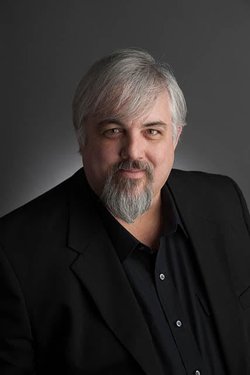
One of the perks of being a writer is having interesting and talented friends. Today I’d like to introduce you to Manning Wolfe.Manning Wolfe Headshot 2

VPC – Manning, welcome to the AMW blog and congratulations on your debut novel! Can you tell us a little something about it?


MW –Yes, it’s called Dollar Signs:Texas Lady Lawyer vs Boots King. It’s the first in a series and this one is set in Austin, Houston, and Port Aransas, Texas. MERIT BRIDGES, an Austin attorney and widowed mother with a lot of sass is the lead protagonist. She works hard, drinks too much wine, and sleeps with younger men. When she goes after a shady corporation threatening her client, she finds Boots King, a hired gun, threatening to kill her.

VPC – I know you’re a lawyer. In what ways did you use your legal background to write the book?

MW – The plot idea for Dollar Signs came from a client that I had several years ago who had gotten involved with an unscrupulous Outdoor Advertising Company (Billboards). Of course, I departed from that scenario fairly quickly in the book as the characters began to develop and the story took on a life of its own. I felt badly for that client and always wished he had gotten a fair shake. In Dollar Signs, I get to have the story turn out as I would have liked in real life. I’ve never practiced litigation although there are some courtroom scenes in the book. I wanted to show the other side of law – the business of it and the strategy that is involved.

VPC – Have you always wanted to be a writer?

MW – Yes, since I was a small child I’ve been spinning yarns and telling tales. I wrote my stories down as drawings, and then in narrative as soon as I was able to write. I loved Nancy Drew growing up and always wanted to write stories with a strong plot. I had great teachers who encouraged proper basic writing habits, so I received a good foundation early on. Much later, I wrote the screenplay of the life of Buckminster Fuller and found that I like combining cinematic style with novel structure. That blend has led me to the way I write today – fast paced legal thrillers with a strong visual component.

VPC – Where did you grow up and how has it affected your writing?

MW – I grew up in a small town just north of Houston called Humble. By the time I was in junior high, I had read every book in our public library. I still remember the wonderful librarian there and her interest in my constant reading habit. My father often asked me to do research in the courthouse archives in Harris County.  Those two things led not only to my legal career, but my writing career as well.  Property and business issues in the law are like a puzzle to me.  I always loved games and still enjoy online games and cards. Sorting out legal problems in real life or in a story is like a puzzle to my brain. I enjoy figuring things out and documenting that in writing.

VPC – Do you have any favorite authors?

MW – I read a lot and across many genres, but my favorites are thrillers. As far as legal thrillers, I like the early John Grisham novels, as well as Michael Connelly’s Mickey Haller series starting with The Lincoln Lawyer. Patricia Highsmith, who wrote The Talented Mr. Ripley, is a master of suspense. John Ellsworth’s Thaddeus Murfee series is very exciting, too. I think Scott Turow’s Presumed Innocent, that was made into a movie starring Harrison Ford, is one of the best legal thrillers ever written. And, of course, most people forget that Harper Lee’s To Kill A Mockingbird, another favorite of mine, was a legal thriller.

VPC – So what’s in store for your next book?

MW – The next book in the series is Green Fees: Texas Lady Lawyer vs Browno Zars, about a young golfer who wants to play the PGA tour and gets snagged up with a dastardly con man. It also was inspired by an actual client who was a golf pro. I’m editing it now for release later this year. I have about a dozen Texas Lady Lawyer novels in mind, some of them are outlined and some are just ideas.

VPC- Sounds good! Thanks for dropping by today and good luck on your new book. 🙂

DOLLAR SIGNS Final Ebook Cover 04

To keep up with Manning and her writing, you can go to her website at manningwolfe.com


Five Reasons To Write Historical Mysteries

Today we welcome a guest blogger, mystery writer Jeri Westerson! She writes the critically acclaimed Crispin Guest Medieval Noir novels. Her protagonist is a disgraced knight turned detective, plying his PI trade on the mean streets of fourteenth century London. 

Jeri_2015 (1)

Her books have been shortlisted for a slew of mystery awards, including the Macavity, Romantic Times Reviewers’ Choice Award, the Agatha, and the Shamus, the first medieval mystery to be nominated for this prestigious PI award. The Boston Globe calls her detective “A medieval Sam Spade, a tough guy who operates according to his own moral compass.”

Jeri also has short stories in several anthologies and talks around the country about the Middle Ages, demonstrating her cache of medieval weaponry.

Jeri is a member of the southern California chapter of Mystery Writers of America, Sisters in Crime, Private Eye Writers of America and the Historical Novel Society. Jeri is married to a commercial photographer, has a screenwriting son, and herds two cats, a tortoise, and the occasional tarantula at her home in southern California.

Jeri, welcome to AMW!


5 Reasons to Write Historical Mysteries

By Jeri Westerson


I’ve been immersed in history all my life. My parents were rabid Anglophiles, stuffing our bookshelves with historical novels, works of nonfiction, and having discussions at the dinner table about the British monarchy. I can definitely name more kings and queens of England than American presidents. I had my own literary relationship with Geoffrey Chaucer and was probably the only kindergartner in Los Angeles who could recite part of the prologue to The Canterbury Tales…in Middle English.


And so many years later when I decided to become a novelist, it was pretty much a no-brainer that I would write historical novels about the medieval period. I switched to medieval mysteries when the kind of historical novel I liked to write proved to be the kind editors didn’t want to publish, though they translated very nicely to the mystery genre and I found success!


  1. I Like To Research.

Let’s face it. If you never liked doing homework or researching for a term paper, this isn’t the genre for you. I rather enjoyed looking things up, tracking down that little fact like a detective, and coming up with oodles of other nifty things by reading those footnotes (ALWAYS read footnotes). And I love libraries and you’ll be spending a lot of time in them. For the kind of thing I need, I spend time in university libraries. I’d love to travel across the pond to do my research in archives, but alas, it’s not in the budget. Fortunately, you can now reach many of these archives online. Some of the items you need might even be scanned and uploaded. Sometimes you still have to pay the archivist to make a copy for you and they will either scan it and email it, or copy it and snail mail it to you. Either way, you’ve made a new friend and possibly a new reader.


  1. The Timeline is Your Outline

When you write historically, readers expect to get a healthy dose of history with their mystery. And if you write a series that will happen over many years, all the better. In my Crispin Guest series, my fourteenth century disgraced knight turned detective, encounters all the juicier bits of the late 1300’s during Richard II’s reign, including a friendship with one Geoffrey Chaucer, running into his former charge Henry of Bolingbroke as he and his Lords Appellant force the king to follow Parliament’s dictates, encounters his former mentor John of Gaunt and his longtime mistress Katherine Swynford, and is on hand when King Richard is ultimately deposed. There’s a lot of intriguing court politics and threats of war going on in the seventeen years the series is taking place, and each year in history helps suggest plot points on which my detective runs afoul of his monarch.


  1. A Ready-Made Audience

Now granted, it isn’t a big audience, so prepare yourself that you will be writing in a niche, which means sales won’t be huge. But there are also many sub genres and cross genres when it comes to historical mysteries. There is also historical mystery/romance, historical mystery timetravel, and every other permutation you can think of. So there is every opportunity to widen that base.


  1. Just the Facts

You must be a stickler for facts. Movies seem to get to play fast and loose with facts. There are millions of people out there who watched Braveheart and think that William Wallace sired a child on the wife of the future King Edward II, when anyone who knows a smidgen of history knows that Queen Isabella was a child of twelve herself at the time and wasn’t even yet living in England. But there were many things about that film that make even amateur historians cringe. You won’t be able to do that with a book. Readers will call you on it. They will abandon the book early if you fudge the facts. They won’t be able to trust any of your book and it will spoil their enjoyment. Just consider it your unwritten contract with your reader that you will do your best to get it as historically accurate as you can.


  1. You Write Because You Like To Read It

As I mentioned in number four, it won’t be a huge market. So there’s no sense in choosing to write something only because you think it’s going to make a lot of money. Get it into your head now that you won’t make a lot of money. There now. Don’t you feel better? If by some off chance your book captures the imagination of readers and hits the bestseller list, mazel tov! If by another off chance Hollywood comes calling and offers to make a series of it, then celebrate. But please don’t ever expect it. You should be writing in a genre because that’s what you like to read. That’s where your writing shines. That’s where you get the most enjoyment writing.


Is writing historical mysteries for everyone? Only if you are a person who enjoys research. And if you are, the entire history of humanity is open for grabs.


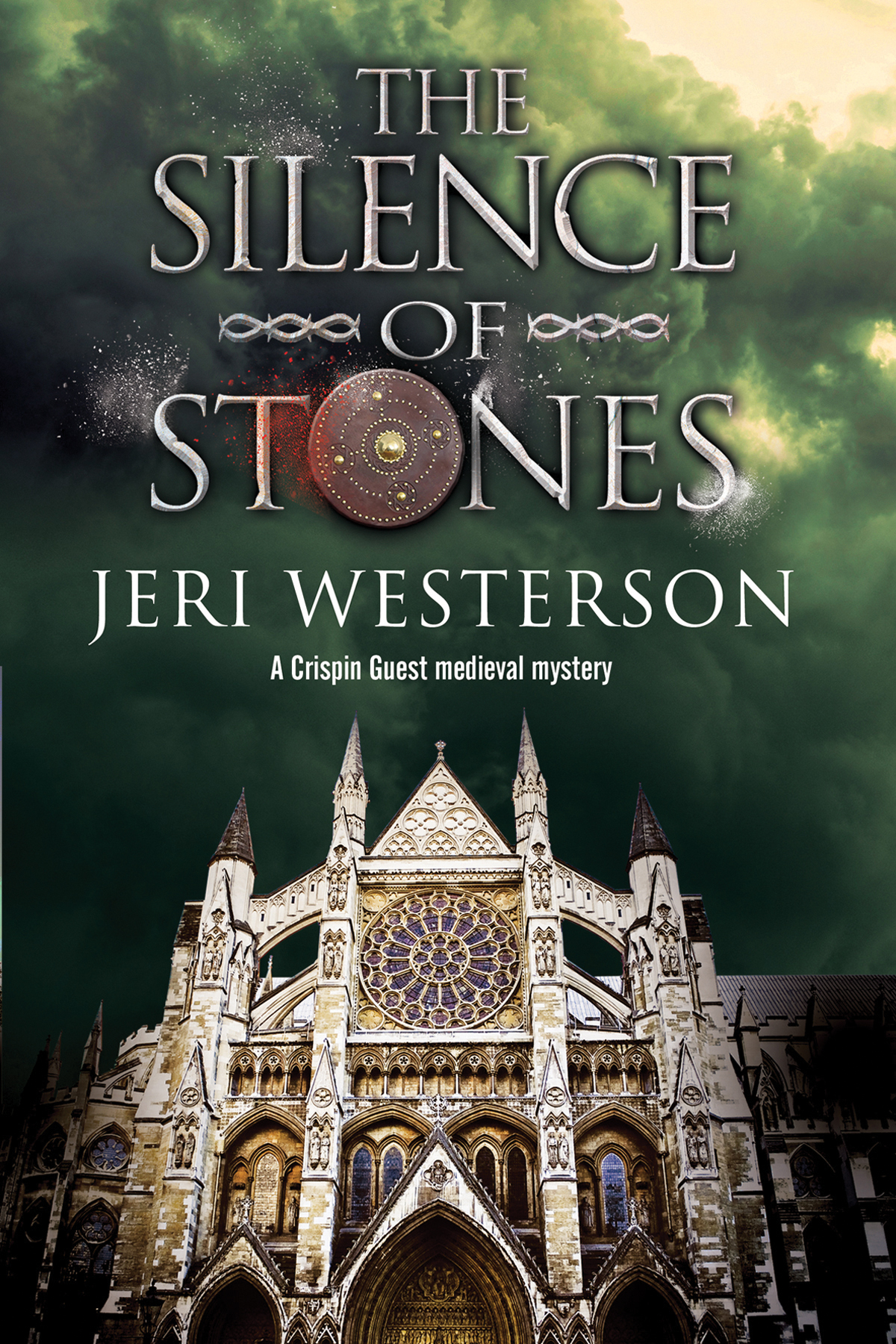
silence_rgb

Jeri likes exploring the past, especially with her latest mystery, THE SILENCE OF STONES; A Crispin Guest Medieval Noir, dealing with the Stone of Destiny, Scottish rebels, a dark and brooding knight detective, and murder. Read an excerpt, see discussion guides, and watch the series book trailer on her website at www.JeriWesterson.com.


AMW Author Highlight- Gale Albright

Welcome Patric Sanders Back to AMW!

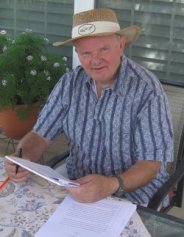
V.P. Chandler here. In continuing my interview series with AMW members, I’d like to introduce you to Patric Sanders. Patric was a previous member who has recently rejoined our group. 

VPC- Welcome back to the group! Why don’t you tell us a little something about yourself, like where did you grow up?

 I was born in Berlin, one month before Hitler invaded Poland, which started WW 2. When the Allied air raids increased in 1942, my mother and I, together with other mothers and children, were evacuated from Berlin, first to rural Silesia, then to Pomerania – now Western Poland. At the end of the war, when the Russians had overrun Berlin, we trekked from close to Prague with a hand-drawn cart back to Berlin. We found our apartment was burned out, and most of our furniture and belongings were destroyed.

I grew up in the Russian sector of the divided city of Berlin. My early play-ground were ruins, discarded trucks and tanks. Even at a young age, the finding of food (berries, fruit, grain), fixing appliances and collecting firewood were important tasks to help my mother.

East Germany was plundered by the Soviets. Rails, machinery, any steel products were taken to Russia. Later, they were returned as Soviet tanks and artillery pieces. German scientists and engineers disappeared from the streets, abducted to Russian research facilities and factories.

But the Western part of Berlin and West Germany received generous assistance from the United States through the Marshall Plan, and many personal gifts by American families through CARE packages and donations. West Germany and West Berlin were rebuilt and quickly became prosperous.

When my mother and I visited our relatives in West Berlin, we enjoyed rarities like oranges, bananas, chocolate, and I loved Wrigley’s chewing gum.

At school, I was taught the superiority of Communism, and that our ‘great friend and brother’ the Soviet Union would bury the capitalist West and defeat America. Despite Communist indoctrination, I received a good education, especially in math, physics, chemistry and geography. I loved reading German and English literature and adventure and mystery tales by Stevenson, Defoe and Edgar Allen Poe. In high school we had two languages – Russian and Latin. From a retired teacher I took private lessons in English. I learned more by listening to the ‘forbidden’ American Forces Network (AFN Berlin) – I loved Glen Miller, Benny Goodman, Louis ‘Satchmo’ Armstrong, and rock’n’roll by Bill Haley, Fats Domino, Louis Prima, Chuck Berry and Elvis. I imitated the way the announcers talked. That’s why later when I worked and met the first British engineers, they said, “Manfred, how come you sound like a Yank?”

I studied electrical engineering & marine electronics at the University of Rostock, which incidentally was founded in 1419 – 73 yrs. before Columbus ‘discovered’ America.

The border in Berlin was open and I often took the commuter train/S-Bahn to West Berlin. I enjoyed Western movies with Gary Cooper, John Wayne and Burt Lancaster – one of my favorites was ‘The Magnificent Seven’ with Yul Brynner and Steve McQueen. Reading the German author Karl May, I was fascinated by the American West, by trappers and Native Americans. As so many Germans, I had ‘Fernweh’ – the urge to travel, the longing to see distant places.

I often went to the Amerika-Haus in West Berlin, a place forbidden to visit by the communists, where one could watch American news reels and movies, listen to jazz, or read American magazines and books.
I dreamt about this far-away land America – this perceived bastion of power, wealth, ingenuity and freedom.

On that fateful day of August 13th 1961, when the Berlin Wall went up, I was visiting my mother in East Berlin. On that day everything changed – the only window to the free West was now closed. Nobody was allowed anymore to cross the Wall. Many people tried and got shot, some bled to death in the ‘no-man’s land’, the death strip.

After university I worked as a test engineer for navigation systems at a shipyard in Stralsund. Six months later, I was drafted into the National People’s Army – NVA. Because of my electronic knowledge, I soon was put in charge of a secret Russian radar unit. After serving 18 months in the army, I worked as an engineer for the State marine electronic company. Now I was hounded by the East German secret police Stasi to join them, to spy on foreigners – but I resisted. I feverishly looked for a way to get out, to cross the border. Finally, in the summer of 1966, I escaped to West Germany in an adventurous way – I describe all this, the Stasi harassment and my escape in detail in my book ‘Chasing The Sun’.


VPC- Where else have you lived?

After my escape to the West, I found a job as electronics officer on a German cable ship In Hamburg. Nobody onboard, except for the captain, knew its mission. We sailed across the Atlantic to Portsmouth, NH and loaded cable. American immigration officials denied my entry permit. Then I discovered the power of the American free press. A young reporter wrote a three-part story about my life under Communism, my escape and the denial of entry into the US. Shortly thereafter, politicians up to the NH governor intervened on my behalf, and I could finally set foot on American soil. I explored New Hampshire, Maine, Boston and even visited the ‘Big Apple’.

Screen Shot 2015-12-07 at 9.35.45 AM

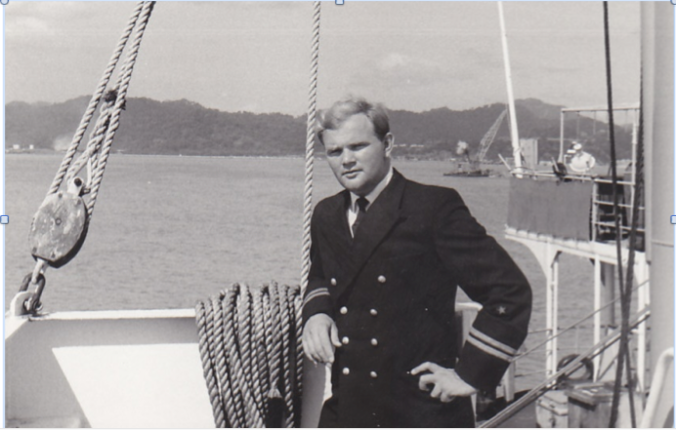
Electronics officer onboard cable ship ‘Neptun’ in Subic Bay Philippines, June 1967

In early 1967, we headed across the Atlantic for the Suez Canal and on to Singapore. After steaming into the South China Sea, our captain announced ‘Your pay will now double. We’re entering a war zone.’ For several months, we laid communication cable for the US Air Force around South Vietnam, from Da Nang to Nha Trang, Camh Ran Bay and Vung Tau, all the way to Thailand. From the ship we saw quite a bit of fighting, once we were almost blown up by Viet Cong swimmers, but they attached their limpet mines to a British tanker which was anchored close-by and blew it to pieces.

After completing my contract, I went to London and worked for the Decca radar and navigation company – the same company which under the Decca record label had rejected the Beatles, but signed on the Rolling Stones. I studied English and English literature at a Cambridge university extension and at school met my future wife.

In 1968, I decided to go after my old dream – America. I got married in London, and I found a job in San Francisco. The year was 1968 – hippies, drugs, protests, racial unrest and crime (we were burglarized & completely cleaned out!) were unfamiliar experiences for us. Future jobs took us to Orange County, Southern California, then to Houston. Through my jobs, I was transferred back and forth between Houston and Seattle several times.

With my electronic background, I worked in the marine industry, in merchant shipping, the offshore oil industry, in commercial fishing on the Pacific coast and Alaska, and in the defense industry for the US Navy and the German Navy. During my professional career I saw many interesting places and met great people, and I took notes.

 VPC- How did you come to live in Texas? Do you like it?

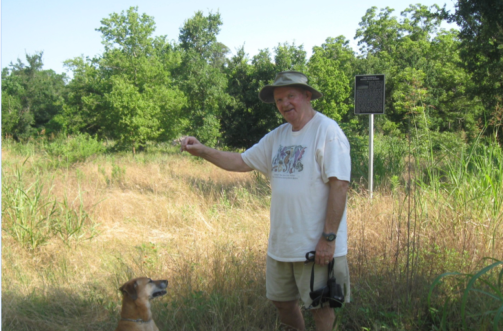
After living in the Seattle area for 25 years, in 2005 we had enough of grey skies, drizzle and rain and we retired to Texas sunshine. We love the Austin area and like to hike in the abundant nature parks together with our rescue dog Max, a Blue Lacy, the Texas State dog.

Screen Shot 2015-12-07 at 9.36.09 AM

With Max at Tejas Camp nature park


VPC- I know that you like American music, like Jazz. What is your favorite music? Did it influence your life? Is it mentioned in your stories?

I like music in many varieties, from rock’n’roll to Blues, Jazz to classical music and opera. When I write, I like to listen to Mozart and Vivaldi. I include music, classical pieces and hit tunes in my writing. In the mid-nineties, I even made a career change and ended up in the Music industry. I directed international marketing for a Seattle-based manufacturing company (audio mixers, amplifiers and studio speakers), traveling all over the world.

VPC- What other types of life experiences do you use in your stories?

During an adventurous vacation in Australia, while diving at the Great Barrier Reef, hiking through the croc-infested swamps of Kakadu National Park and exploring the wild shores of Tasmania, I decided to write an adventure story. I got my first novel published through Random House Germany in Muenchen – ‘Der Schatz vom Barrier Reef’ – The Treasure of the Barrier Reef, under my pen name Patric Sanders.

Barrier Reef cover


VPC- Tell us a little about your books?

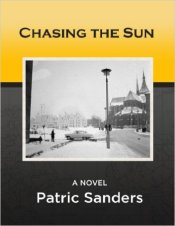
My wife urged me to write in English about my life in East Germany and my escape. Based on facts and experiences during that time – life under a communist dictatorship, the far-reaching power of the secret police Stasi and how people coped – I wrote two fiction novels, the cold-war thrillers “Chasing The Sun” and “Singed By The Sun” – both are self-published under Patric Sanders, and available on Amazon Kindle. A third book in the series is in the works – “Hostile Harbors”.

Chasing the Sun cover

Singed By the Sun


VPC- What are you working on currently?

As a follow-up to my German adventure novel (set in Australia), I’m writing an adventure thriller ‘Lethal Encounters’, set in Europe, the Pacific Northwest and Hawaii. It’s an international intrigue, where Russian criminals, German combat swimmers, Navy Seals and an adventurer and his Hawaiian friend, who look for the remains of a Spanish gold galleon, collide on a remote Hawaiian island.

VPC- It sounds exciting! (And to the readers our there, I’ve read a few chapters and it’s very good.)

Thanks, Patric, for the interview. I’m happy for this opportunity to share your story.

patric sanders

For more information about his books, here’s the link to his Amazon Author page. 


The Case of the Naked Picture

"A dazzling, richly textured YA debut." KIRKUS REVIEW

“A dazzling, richly textured YA debut.” KIRKUS REVIEW

A small town in Colorado was recently shocked by a “sexting” scandal involving 100 high school and middle school students sharing nude photographs of themselves and other students.  School officials, parents and police are at a loss to understand and respond–as I can well imagine!

I immediately thought about Brenda Vicars, an Austin area author who wrote Polarity in Motion, a YA mystery that revolves around the issue of sexting. Brenda is an experienced educator, a former teacher and school administrator. She gave me the following interesting interview.

EB: Brenda! Thanks for agreeing to answer some questions. First of all, I guess I thought sexting was a passing fad, and assumed most teenagers would not be involved in this kind of thing. But I just read that more than half of all college students report that they sexted before the age of 18. Does that surprise you?

BV: Yes–that number is way larger than I expected, which may be partially attributed to the loose interpretations of what “sexting” actually means. I still believe that lots of teens don’t want their nude pictures shared–especially with more than the one person who was the intended recipient.

EB: How long has sexting been around? When did you first become aware of it?

BV: I first became aware of it about ten years ago when guidance for parents and educators started being published.

Brenda Vicars has worked in Texas public education for many years. Her jobs have included teaching, serving as a principal, and directing student support programs. For three years, she also taught college English to prison inmates.

Brenda Vicars has worked in Texas public education for many years. Her jobs have included teaching, serving as a principal, and directing student support programs. For three years, she also taught college English to prison inmates.

EB: What do you think is an appropriate response to a discovery like the one in Colorado, where such a large sexting ring has been uncovered?

BV: There should definitely be consequences, but I think felony charges are too extreme when students are voluntarily sharing their pictures with other minors. The felony level category was probably established to apply to adults who deal in child porn.

EB: How serious is this issue? Is it harmful? Is it risky? How concerned should parents of teenagers be?

BV: It might not be any more serious than streaking of the 60s or flashing of the 90s if the pictures were seen only by the intended recipients.  However, once a picture is out there, it can literally go anywhere–including onto child porn sites.  The potential for harm is unlimited both in scope and time.

EB: The legal response to sexting can be quite severe, since having and sharing nude pictures of minors qualifies as possessing and distributing child pornography. is this right? is sexting tantamount to dealing in child pornography?

BV: That’s a great question–and there is no easy answer because the degree of lewdness and the quantity of distribution are different in every instance.  In Texas when sexting first reared its head, it fell into the felony level offenses. But several years ago, Texas statute changed so that minor sexting, first offense, can be a misdemeanor. But even with this reduction of severity, sexting incidents still keep schools, the legal system, and parents challenged.

And, in addition to legal consequences, there can be repercussions at school ranging from community service, suspension, or even expulsion. Sometimes students believe that since their phone is their private property, it is immune from school regulations.  But, when sexting interferes with activities at school, even if the sexting happened at night, Texas schools can take action.

EB: What a nightmare for parents! I suppose one reason we never sexted in my day was that we didn’t have camera phones, smartphones, or digital photography. We had to take film in to be developed–and who is going to do that with a nude picture?

In your book, Polarity in Motion, a teenage girl is horrified to learn that a nude picture of her is circulating throughout her school. It’s a tantalizing mystery, since she has no idea when or how the picture was taken, and you use it to explore a lot of complex issues involving teenagers. Can you discuss some of the issues you find most compelling?

BV: I’ve always been hung up on the numbers of innocent people who, in spite of our well-planned legal system, get incarcerated for crimes they didn’t commit.  News stories about cases being reopened and the innocent being released always strike a note of fear in my heart.  What if these same mistakes happen to students?  Are there cases of high school students being suspended or expelled when they are actually innocent? I hope none of the students I worked with were unjustly punished, but Polarity in Motion is a story of how it could happen.

It’s a thought-provoking book and a great read–146 reviews, of which two-thirds are 5-stars and more than 90% are fours or fives! If you have teenagers on your Christmas list, consider giving them Polarity in Motion, by Brenda Vicars.

Elizabeth BuhmannElizabeth Buhmann is the author of Lay Death at Her Door.

“…blood is shed along the way to a jaw-dropping, but logical, climax that will make veteran mystery readers eager for more…” – Publishers Weekly (starred review)

The Ghosts of Murder

When I hear the word mysterious I think of the supernatural—and ghosts. The word mystery brings to mind murder. Kim Giarratano writes mysteries about the ghosts of people who’ve been murdered. I thought she’d be a good person to interview right before Halloween.

EB: Kim, tell me about ghosts! What are they? Does everyone who dies become a ghost? To whom do they appear, and what do they want?

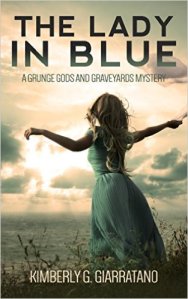
The Lady in Blue helps solve her own murder.

The Lady in Blue helps solve her own murder.

KGG: For the record, this is ghost mythology according to Kimberly Giarratano. I’m sure experts in the paranormal have other theories.

Ghosts are the soul’s imprint left in the physical world and they can’t let go. Not everyone who dies becomes a ghost (Earth would be overrun if they did). I’d like to think ghosts appear to people who they think can help them or because they think the person will understand them. Ghosts have a story to tell and it’s up to the living to figure it out what that story is.


EB: Are they dangerous? Should we be afraid of them? What can they or can they not do in the world we know?

KGG: I’m not gonna put on a false bravado– I’d be freaked out if I saw a ghost. I’m a huge scaredy cat. Ghosts can wreak havoc on the human psyche and mess with our feelings of security, and I’m not sold that they wouldn’t purposefully hurt us. Perhaps some ghosts are out for revenge against the person responsible for their death. And if that person is not around, another living soul will become the focus of the ghost’s revenge.

I think ghosts can affect objects indirectly and directly, ie move things. I think people can feel a ghost’s touch as well, but you might be more susceptible to sensing ghosts if you’re not in such an alert state of consciousness. I bet many people have ghost encounters at night, when they’re drifting in and out sleep.

EB: Do you believe in ghosts? Have you ever seen one?

Dead and Breakfast will be released in early 2016.

Dead and Breakfast will be released in early 2016.

KGG: I’ve never seen a ghost, but I believe in them enough. So many people have recalled experiences with ghosts that I can’t believe they’re all lying.

EB: Both One Night is All You Need and Dead and Breakfast are set in Key West, Florida, which is apparently a hotbed of ghostly activity. I didn’t know this! For real?

KGG: I went to Key West on vacation four years ago and took a haunted ghost walk. According to the tour guide, Key West is one of the ten most haunted cities in America. There are some crazy ghost stories. Look up Robert the Doll online and try not to get freaked out. Also, apparently the ladies bathroom in the Hard Rock Café is haunted.

Kimberly G. Giarratano

Kim Giarratano

EB: I loved the setting in those stories—really got the feel of the place. You must have spent some time there. What is your connection with Key West?

KGG: I was only there for five days, but Key West is an amazing place. I fell in love with the island and I’m dying to go back (just not as a ghost). I made sure to take notes as we walked around. I told my husband, “I’m totally setting a novel here.”

EB: You are working in an interesting niche: would you call it YA paranormal mystery? I would not have thought to combine YA and murder, but you do it with great charm. Are there other books in this genre that inspired you?

cristinasghost

KGG: First, thanks! I guess I would call it YA paranormal mystery with a nice side of romance. My favorite YA authors are Holly Black and Maggie Stiefvater. Their writing is unsurpassed and they really push the boundaries of their genres. Maggie Stiefvater really knows how to create a cast of intriguing characters and Holly Black has a way with words that I have yet to see duplicated in another author. She’s also a Jersey girl (like me), so bonus points for that.

EB: My favorite ghost story is The Turn of the Screw. What’s yours?

KGG: One of my favorite ghost movies is The Others. When I was a kid, I loved the book Christina’s Ghost by Betty Ren Wright (shudder).

Thanks, Kim! Kim is a forever Jersey girl who lives in the woods of northeastern Pennsylvania with her husband and small children. A former teacher and YA librarian, she is the author of Grunge Gods and Graveyards, The Lady in Blue, One Night is All You Need, and the upcoming Dead and Breakfast.

Elizabeth BuhmannHappy Halloween, everybody! Do you believe in ghosts? Ever seen one? What’s your favorite ghost story? Have you ever written a ghost story?

Elizabeth Buhmann is the author of Lay Death at Her Door.


Author Highlight: Kaye George

For today’s interview I’m talking to former AMW member, Kaye George who is a national-bestselling and multiple-award-winning author. Kaye George

Welcome to the interview couch, Kaye! Tell us, how did you find Austin Mystery Writers?

 I was at an Austin Sisters in Crime Holiday party at someone’s home, and I mentioned wanting a writing group. Someone led me to Karen MacInerney, who was still in the AMW group then. She invited me to a meeting, and I came back time after time. I attended through all kinds of membership changes until we moved out of Austin.

How did the group help you?

 We were all mystery writers, but we all wrote very different kinds of mysteries. I liked getting different feedback from the viewpoints of all the other writers. I liked it when we had guys in the group, too, because that’s another perspective. Having at least several members was always good, because you don’t want to take all the feedback you get. If two or more readers complain about the same passage or plot point, though, you know you have to change it.

When did you first know you wanted to be a writer?

 Probably in junior high school, when I started to think it might be possible. We had an assignment to write a page of description without telling the reader what we were describing. I wrote about Cocker Spaniel, not telling the reader it was a dog, but saying he ran up the hill on four paws and enjoyed the breeze blowing through his long silky ears–or something like that. The teacher loved it! In fact, she read it to the class as an example of how the assignment should be done. My face was bright red! But I loved that she loved it. Throughout high school and college I submitted short stories to impossible markets, Atlantic Monthly (as it was then called) and New Yorker magazines. I collected piles of rejection slips.

What was the first thing of yours that was published?

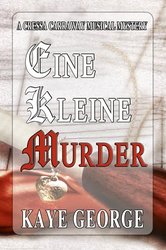
 It was a short story in Web Mystery Magazine. I’ve lost track of Rosalie Stafford, who accepted my piece, but still keep up with Earl Staggs, who edited for them. The story was called “Flash Mob” and was published in April 2006. I even got paid for it! I remember being so anxious to get it published before flash mobs fell out of fashion. They’re still around, so I wasted that anxiety. I thought I was on my way and it wouldn’t be long before I got the novel published that I’d been working on. Ha! My first novel, CHOKE, was published in 2011, but THAT novel was published in April 2013 as EINE KLEINE MURDER. April seems to be a good month for me.

Tell us about some of your hobbies.

 I play the violin and love to compose when I have the time. In the past, I’ve had fun arranging things for the string quartet I had in Dallas. Reading, of course, and walking. Hiking in the mountains, but not long, overnight treks, just half-day or shorter.

Tell us an unusual fact about you.

After having been on several panels at mystery conferences, I’m not longer all that terrified of speaking in front of people, and I can play in a string quartet or even duet without the shakes, but I’m paralyzed when I play an audition or a violin solo. I can’t do it without a little “helper.”

I know that you have more than one series. Briefly tell us what those are and what’s new.

As Kaye George, I’m doing 3 series (I know, I’m nuts).

Cressa Carraway Musical Mysteries: Eine Kleine MurderEINE KLEINE MURDER, REQUIEM IN RED (coming out in April 2016)

Imogene Duckworthy humorous Texas series: CHOKE, SMOKE, BROKE          Choke by Kaye George


People of the Wind Neanderthal Mysteries:

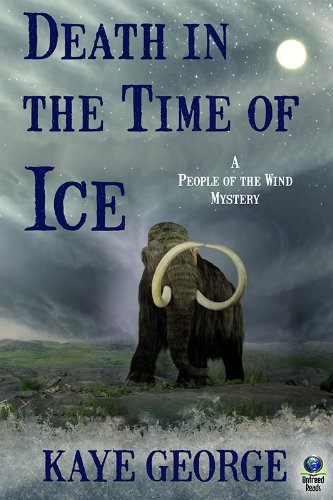
Death in the Time of IceDEATH IN THE TIME OF ICE, DEATH ON THE TREK (coming out June 2016)


As Janet Cantrell, just one series.

FCSO cover smallFat Cat: FAT CAT AT LARGE, FAT CAT SPREADS OUT, FAT CAT TAKES THE CAKE (coming out in April) April is a good month for me, but it’s getting a little crowded for 2016.

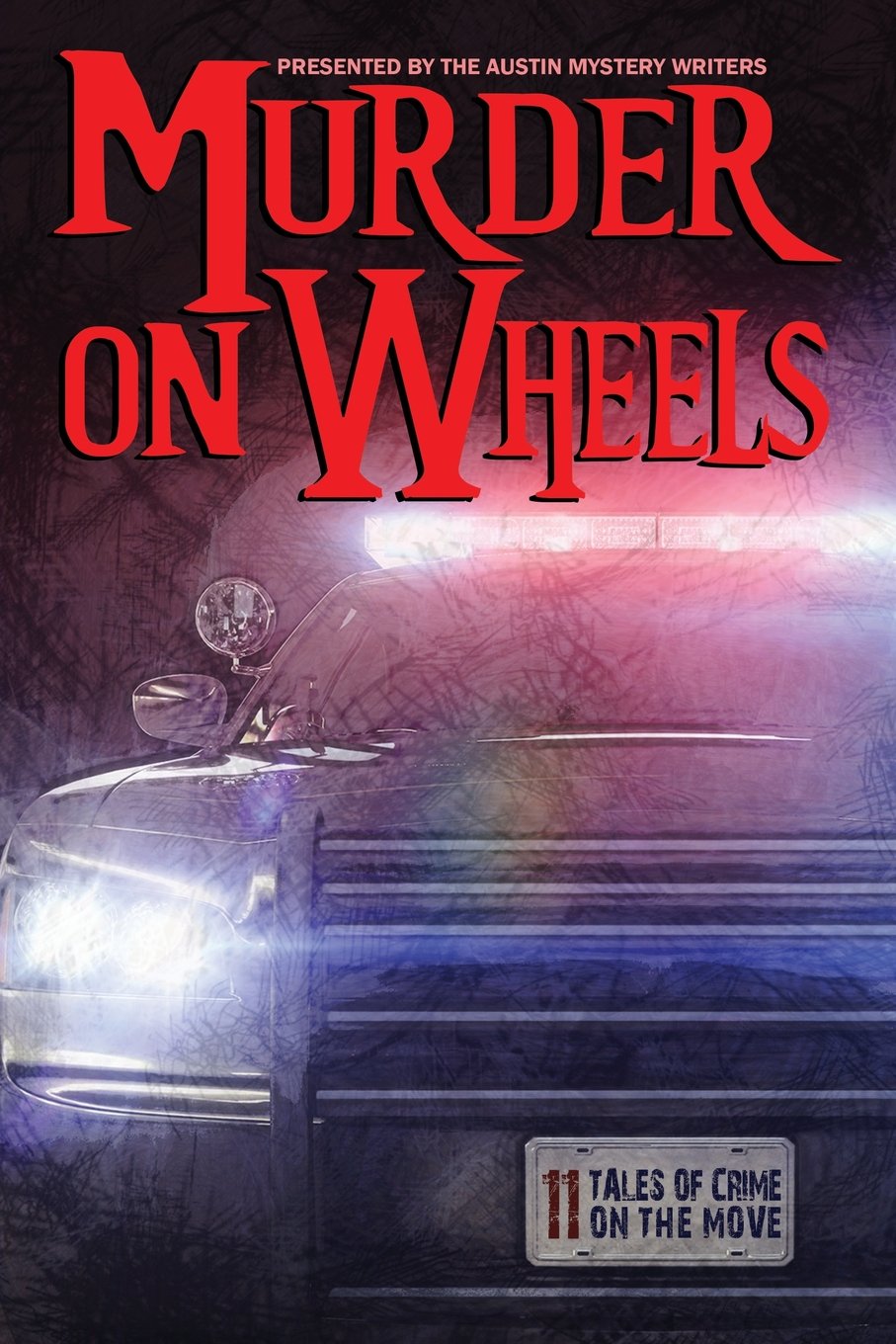
My first love, though, is short stories. With the other members of this group, we had a lot of fun putting out MURDER ON WHEELS with Wildside Press this year. 71QiKRIkj+L

My next short story will be “Heartbreak in Graceland” in MEMPHIS NOIR, memphis noircoming out by Akashic in November. I have some more in the works, but not definite dates. I try to keep my web page updated, so everything should be there soon after I know it.

Do you have any insights into the publishing industry?

Um, no. I’ve always said that if anyone tells you what publishing will look like in ten years, or even next year, they’re full of baloney. No one knows. But that’s what makes this field so interesting. You gotta be on your toes and keep up!

Thanks for the interview!

Thanks so much for having me here today!

A side note: Hurry up and get the hardcover for Death in the Time of Ice at Untreed Reads. It’s available only through Septemeber!

http://www.untreedreads.com/store/index.php?main_page=product_info&cPath=873&products_id=1709

And if you’re interested in her Fat Cat series: http://www.barnesandnoble.com/w/fat-cat-takes-the-cake-janet-cantrell/1122291999

http://www.amazon.com/Fat-Cat-Takes-Cake-Mystery/dp/042526744X/

Here are the links to her novel page and short stories page:

http://kayegeorge.wix.com/kaye-george#!novels/c1qrd

http://kayegeorge.wix.com/kaye-george#!short-stories/c1bfa