Writers Wanted

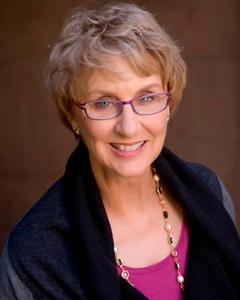
(Alexandra Burt is our guest author today. Born in Germany, she moved to Texas, married, and worked as a freelance translator. Determined to acknowledge the voice in the back of her head prompting her to break into literary translations, the union never panned out. She decided to tell her own stories. Her books include Remember Mia and The Good Daughter. She is working on  her third novel.)

abbw

I feel awkward telling my readers that growing up I never had an inclination toward becoming a writer. Too often I’ve heard of authors writing since they were children. Jane Austen is known to have flexed her creative muscle as a teenager, writing sentimental stories to entertain her family and Virginia Woolf produced magazines about family outings. Their early efforts prepared them for dozens of novels they would write later in life.

I had never written a single word until about seven years ago. Reading a particularly bad book, I thought I could do better as if armed with my love of reading was enough to write a breakout novel. I spare you the details. Let me just say it became apparent that much was to be learned and it took years to pen a story that was remotely well crafted, coherent, and entertaining.

If you want to write, there’s good news and bad news. The good news first: you can become a solid and successful writer without coming from any sort of literary DNA or being born with a pen in your little clumsy hand destined to take the world by storm. The bad news is that you have to put in the time and learning the craft of writing is hard work. Like… hard work.

I went after it with a baseball bat. Hours a day. Every day. I read, I enrolled in classes, studied books on writing, and I wrote. Every day. I still wrote badly and did so for a very long time. See, epiphanies and experience take time, no ifs, ands, and buts about it, but eventually my stories became coherent. What I learned along the way was that craft was nothing more than using the tools of the trade and we all know what a good story calls for: a hook, a compelling setup, a killer plot, thrilling beginnings followed by perfect middles, completed by satisfying endings. The tools of the trade are nothing more than the application of POV, tense, dialogue and action, narrative and exposition. All those tools at your disposal allow you to masterly lure the reader into the worlds of your characters.

But having those tools does not a book make.

A novel is like a wristwatch; there’s the rather unassuming case that houses the watch mechanism, a clock face, and two hands. Seems simple enough, doesn’t it? But crack open that case and intricate parts and mechanisms become apparent; there are springs controlled by more springs, unwinding into a controlled and periodic release of time. A force is transmitted through a series of gears which oscillate back and forth and with each swing of the balance wheel the hands move forward at a constant rate. And in the background you hear a constant ‘ticking’ sound. Like a wrist watch uses a mechanical apparatus to measure the passage of time, a writer—unbeknownst to the reader—aligns the elements of an intricate story at a certain pace and in the end, if the writer times it just right, the reader will rejoice and give you their time and feel as if they’ve been in good hands.clock-976234_960_720

But there’s more. There’s a part of writing I call art. If craft is execution, art is the design of the novel. If craft is the metal case that houses the watch mechanism, the clock face and the hands, the screws that hold it all together, the springs and gears, then art is the way you put the parts together, the way they connect with fickle timing, and the constant ticking in the background. Like every single component inside a watch, the individual parts must be assembled just right to tell time accurately, to produce that tick tick tick. It’s nothing you do overtly. It’s not like you sit down and tell yourself I’m going to produce a work of art. It’s just you telling a story the way only you can. So in a way you are your art.

See, you are all you have and if you are so inclined, take the leap and tell a story. Steady and balanced, combine craft and art, build something that causes a ticking sound in the background, alive like the beat of a heart.

Go!
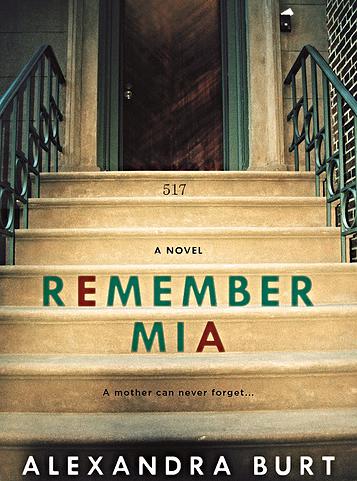
ALEXANDRA BURT BOOK COVER


Kaye George comes to town

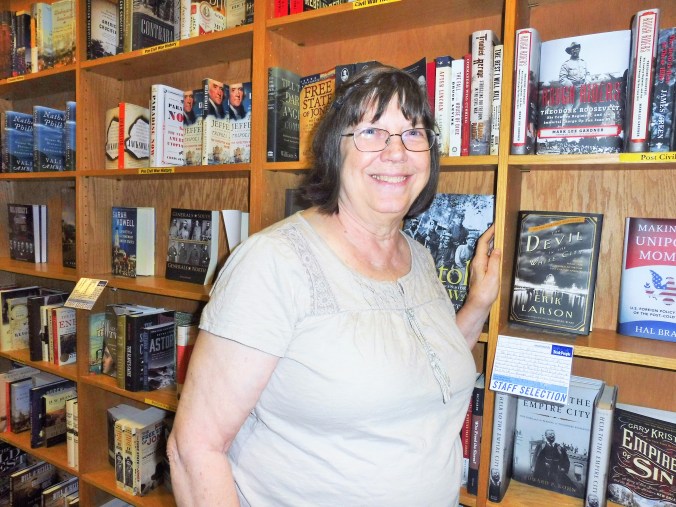
P1100023 (2)By Gale Albright

It’s been a treat to see Kaye George again.

She flew into town last week to visit grown children and to see us of course, her Austin Mystery Writers “branch” of the family.

We met at our BookPeople haunt last Thursday to hug and laugh and talk about many things, most of them involving writing. And a lot of other stuff.

I first met Kaye George several years ago through Kathy Waller, who had just joined Austin Mystery Writers. Kathy asked Kaye, who was the head poohbah, if I could join as well. It was a critique group with several members. But, as is often the case with critique groups, members faded away for various reasons, and at one point the group consisted of Kathy, Kaye, and me.

I remember the vicarious thrill I felt when Kaye’s mystery novel, Choke, received a publishing contract. After ten years of patiently slogging away at her writing, Kaye was a professional! We were all giddy with delight. It couldn’t have happened to a more deserving person.

When you have a really good critique group, the heartstrings are involved. It’s not just about writing. You start to genuinely care about all the people in your group in a personal and  professional way. Kaye’s victory was our victory as well.

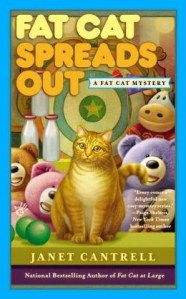
FCSO cover smallEine Kleine MurderBROKE_final_webChoke by Kaye George

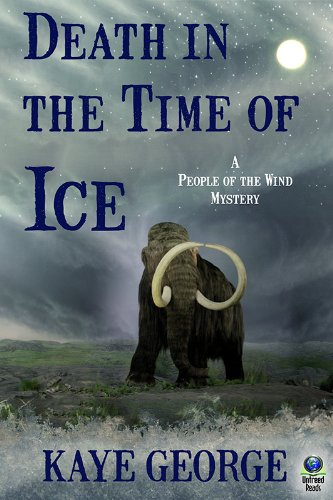
Kaye’s first three mysteries in her Immy Duckworthy series (Choke, Smoke, and Broke) were published, followed by three Berkley Prime Crime Fat Cat who-done-its (under the nom de plume Janet Cantrell), the Cressa Carraway series, the Neanderthal mystery Death in the Time of Ice (Untreed Reads), as well as various short stories. She was on a roll.

Unfortunately for us, she was also gone. First, she and her husband moved to Waco, then on to Knoxville, TN, where they now reside.

Kathy and I were members of a two-person critique group for a bit, but luckily we acquired fabulous new members for Austin Mystery Writers, gleaned from the ranks of the Sisters in Crime: Heart of Texas chapter—Valerie Chandler, Laura Oles, and Elizabeth Buhmann.

Now for the fun part.

SilverFalchionAwardWinner_Web-300x30071QiKRIkj+L

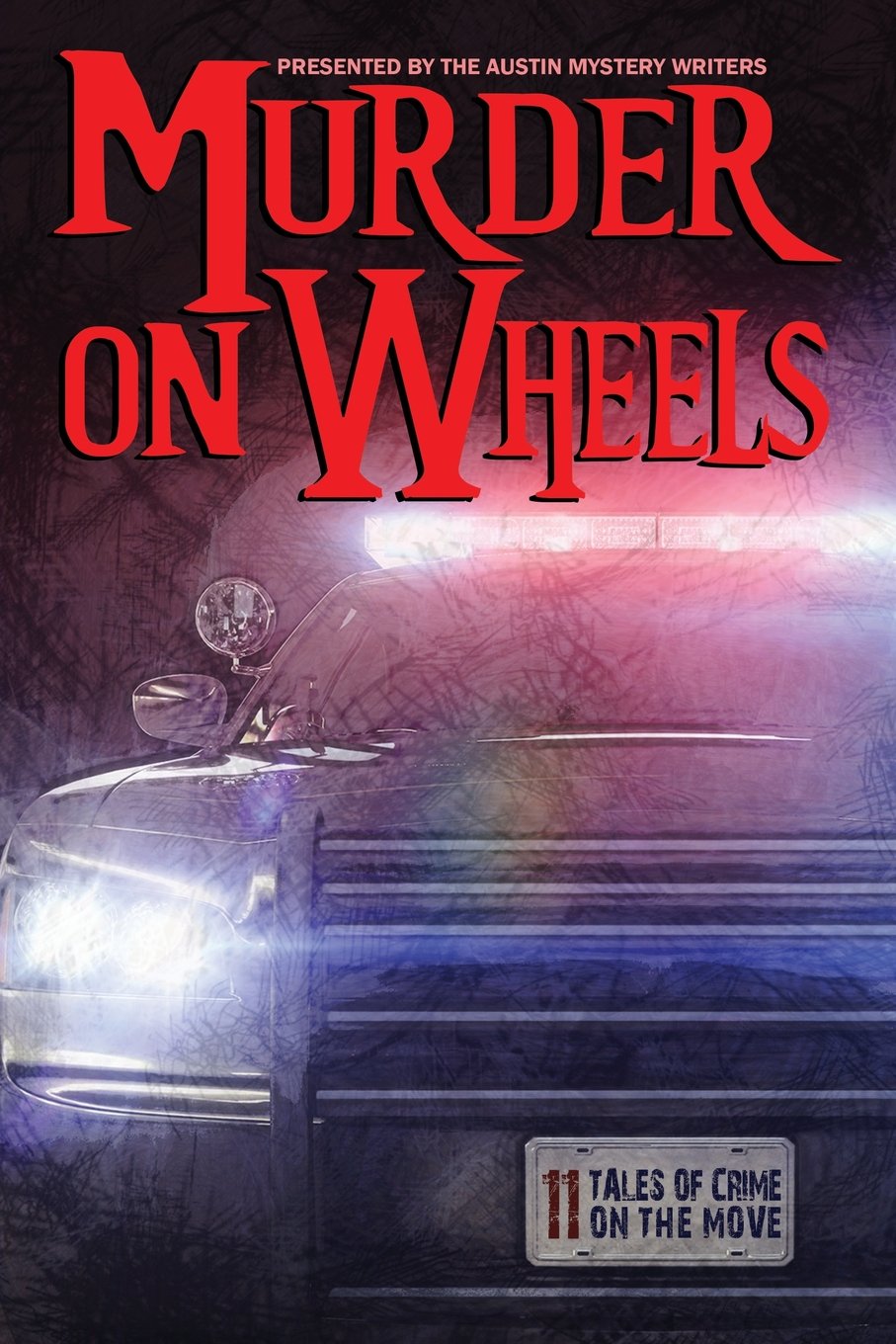
Thanks to Kaye, who had the original idea and pushed it to fruition, Austin Mystery Writers’ first crime anthology, Murder on Wheels, got published by Wildside Press in 2015. Flash forward a year. Murder on Wheels just won the Silver Falchion Award for best fiction short-story mystery anthology at the Killer Nashville writing conference for 2016.

On top of that, we are hard at work on our second crime anthology, whose title is a bit up in the air at the moment. It’s about Texas and crime. Enough said.

Although we all worked very hard on Murder on Wheels, I give Kaye the credit for riding herd on the project. I thank her for her vision and guidance.

We all wish Kaye would move back to the Austin area. She’s just too far away. But, thanks to the miracle of e-mail attachments, digital photography, and FB posting, we can still create our dreams together.

Death in the Time of Ice


Killer Nashville 2016

Each writers’ conference has its own personality. If I were to summarize Killer Nashville, I would describe it as a broad embrace of mystery sub genres with an inclusion of indie, hybrid and traditionally published authors, all carried by an undercurrent of noir appreciation and a love of Nashville music culture.

I know. I’m casting a wide net.

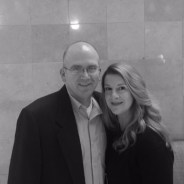
David_Laura_KillerNashvilleJPG

My favorite traveling companion..

The first night kicked off with a Wine & Shine event, which after a full day of hustling kids to school and flying from Austin, left me with more whine and no shine. My efforts in networking resulted in little more than two sips of merlot paired with a chocolate chip cookie while slouched on a chair in the hotel lobby.

Mercedes_King.JPG

With fellow Claymore finalist Mercedes King

The next two days were packed with learning sessions and special events. Killer Nashville’s panel schedule offered five options per time slot, leaving many attendees to make tough decisions regarding which discussion to attend. Programs ranging from “How to Write Effective Plot Twists” to “Law Enforcement, Soldiers and PTSD” demonstrate the range in programming. Topics covering technique, marketing, publishing and collaboration were also offered, along with breakout sessions with bestselling authors Janet Evanovich, Anne Perry, Kevin O’Brien, William Kent Krueger and Robert J. Randisi. I attended as many panels as I could fit in my schedule and left with several pages of notes and insight. I still don’t know how Robert Randisi, co-founder of Mystery Scene Magazine and founder of the Private Eye Writers of America (and the coveted Shamus award), writes 25 books a year. Like many things in our profession, this remains a mystery.

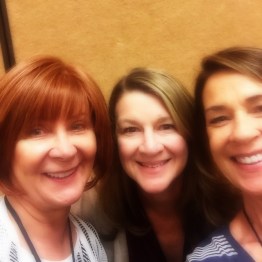
Janet_Evanovich_Selfie

With authors Janet Evanovich and Gretchen Archer

Janet Evanovich’s lunch program was both fun and fascinating. She is open with her advice and opinions, both of which were appreciated by the audience she addressed. Her honesty about the empire she’s building–she currently writes or co-authors four books per year with the support of her husband and children– made me tired just listening to her talk about it. She. Never. Takes. A. Break.

The Mock Crime Scene was exceptionally well done. Its primary architect, Tennessee Bureau of Investigations Special Agent Dan Royse, composed a puzzle well supported by clues, evidence and online interviews. Attendees had their work cut for them out in identifying the culprit. The smile on Dan’s face told us all we needed to know–he was going to make us work. Hard.

Anne_Perry.JPG

Laura Oles with author Anne Perry

The awards banquet was a sold out event and included a buffet-style dinner and some fantastic live music. I had the opportunity to meet several authors, including fellow Claymore nominee Mercedes King. Before long, attentions turned to the awards portion of the evening. I was honored to accept, on behalf of Austin Mystery Writers, the Silver Falchion award for Best Fiction Short Story Anthology, presented by Anne Perry.

The Claymore was awarded to R.G. Belsky for Forget Me Not. It was an honor to make the short list for the Claymore, and I was grateful to be amongst such talented writers. I’m interested in seeing how these authors’ careers unfold over the next few years. I imagine some fabulous stories will be shared, and I’m looking forward to adding them to my reading list.

SilverFalchionAwardWinner_Web-300x300With Killer Nashville 2016 now over, I’m back to my daily grind but with a new perspective on both my own work and the industry in general. Most important, I’m reminded how lucky I am to be able to tell stories and spend my time around others who love to do the same thing.
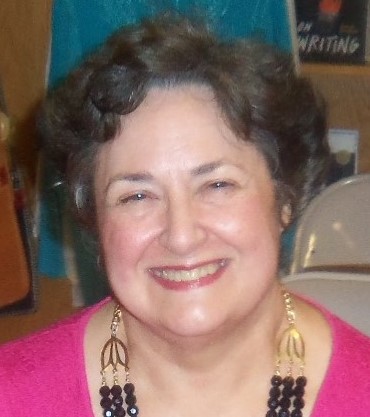
–Laura Oles

Murder on Wheels Nominated for 2016 Silver Falchion Award

Posted by Kathy Waller

MURDER ON WHEELS, Austin Mystery Writers’ first crime fiction anthology, has been named a finalist for Killer Nashville’s 2016 Silver Falchion Award.

Best Fiction Short Story Anthology
Ramona DeFelice Long, Fish or Cut Bait
Kaye George, Murder on Wheels
Joe McKinney, Shrieks and Shivers from the Horror Zine
Josh Pachter, The Tree of Life

71QiKRIkj+LThe Killer Nashville Silver Falchion Award™ honors “the best books published for the first time that are readily available to a North American audience in any format from the past year.”

The idea for MURDER ON WHEELS came from a late-night group e-mail session.  As Kaye George explains in her Introduction, she and her husband had taken a ride on a large commercial double-decker bus, the Megabus, that runs between major cities.

“I started thinking that the bus would make a good setting for a murder,” Kaye writes. “There was only one problem–where to hide the body.”

One night, when all the AMWs were online, Kaye mentioned the idea. That led to members suggesting other vehicular settings: Bopped on a Bicycle, Creamed in a Car, Vaporized on a Velocipede… The thesaurus got involved, wordplay began, and an idea formed–we would all write stories around the theme of wheels. Once momentum started to gather, there was no getting off that bus.

So we wrote. Each of us contributed one or two stories. We were pleased to have two guest writers, Reavis Wortham and Earl Staggs, contribute as well. Ramona DeFelice Long edited the manuscript. MURDER ON WHEELS was published by Wildside Press in April 2015.

The final line-up goes like this:

A NICE SET OF WHEELS, by Kathy Waller
FAMILY BUSINESS, by Reavis Z. Wortham
ROTA FORTUNAE, by V. P. Chandler
MOME RATH, MY SWEET, by Gale Albright
THE WHEELS ON THE BUS GO ROUND AND ROUND, by Kaye George
BUON VIAGGIO, by Laura Oles
APORKALYPSE NOW, by Gale Albright
HAVE A NICE TRIP, by Kaye George
DEAD MAN ON A SCHOOL BUS, by Earl Staggs
HELL ON WHEELS, by Kathy Waller
RED’S WHITE F-150 BLUES, by Scott Montgomery

We’re also pleased to announce that member Laura Oles’ manuscript, THE DAUGHTERS OF BAD MEN, is a finalist for Killer Nashville’s Claymore Award.

Winners of the 2016 Silver Falchion Award and  the Claymore Award will be announced tonight at the Dinner and Awards Banquet at Killer Nashville Writers’ Conference in Franklin, Tennessee.

We’ve all heard, It’s an honor just to be nominated. In this case, it’s not a cliche. Austin Mystery Writers are honored to be nominated for these awards.

We’re also delighted, ecstatic, effervescent, excited, flabbergasted, frolicsome, joyous, jubilant, thrilled, thunderstruck… and in a veritable tizzy.

###

Kathy Waller blogs at MOW BOOK LAUNCH 003 (3)
Telling the Truth, Mainly and at
Writing Wranglers and Warriors.
Her short stories appear in
MURDER ON WHEELS and at
Mysterical-E

Critic or Critiquer?

Lately, the topic of critique groups has reared its head. Valerie Chandler represented both Austin Mystery Writers and Sisters in Crime: Heart of Texas chapter at the Third Thursday meeting of the Writers League of Texas at BookPeople on July 21.  Valerie was invited to join local critique group leaders/members to make announcements about their organizations before the main panel discussion of the evening.

again val with mow

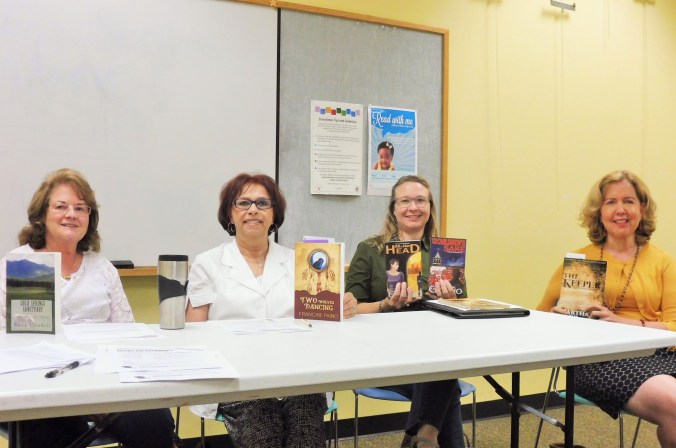
I was privileged to moderate a panel of local authors and members of Sisters in Crime: Heart of Texas chapter on our July 10 meeting at the  Yarborough branch of the Austin Public Library. Included in the wide-ranging discussion was a ringing endorsement of critique groups and how they helped writers. The panel was composed of writers Doris Christian (writing as Sara Caudell), Francine Paino, Noreen Cedeno, and Martha Carr.P1030005 (2)

Below, see a post I wrote some years ago about the difference between being critical and being helpful in a critique situation. It appeared in one of the Sisters in Crime: Heart of Texas chapter’s HOTSHOTS! newsletter. I thought it would be helpful to resurrect it.

By Gale Albright

I grew up admiring critics.hutto oct. 1 2014 023 (2)

Critics like Dorothy Parker and Rex Reed. Their comments were witty, dry, often acerbic. For many years, Rex Reed has been known for his acidic movie reviews. Just a small example among many is this one, from the New York Observer, July 13, 2010:

“At the movies, incomprehensible gibberish has become a way of life, but it usually takes time before it’s clear that a movie really stinks. Inception, Christopher Nolan’s latest assault on rational coherence, wastes no time. It cuts straight to the chase that leads to the junkpile without passing go, although before it drags its sorry butt to a merciful finale, you’ll be desperately in need of a ‘Get Out of Jail Free’ card.”

Pretty funny, eh? And then there’s the iconic Dorothy Parker, whose critique of a youthful Katharine Hepburn’s performance on Broadway has become legendary: “Miss Hepburn runs the emotional gamut from A to B,” Miss Parker was supposed to have said to a colleague during the play’s intermission.

So, naturally, I thought you were supposed to basically heap scorn on books and movies and performances you didn’t like. As long as you were witty, dry, and often acerbic. A good critic made expert use of sarcasm and unkind jokes and metaphors.

I thought the critic was the center of attention. The bringer of wit and laughter.

I learned that the origin of the word sarcasm was from Latin for rending the flesh. Apt indeed.

The trouble is, when your flesh is rended, it doesn’t feel very good. As a person who thought cheap shots and ill-considered comebacks were the height of wit, I discovered how devastating it was to be on the receiving end of those oh-so-clever comments and witticisms.

Especially when it involved something I had written.

When I went back to college after intervening years of Real Life, I decided to major in English Writing and Rhetoric. To my chagrin, I had to take some classes in which, among other things, we had to learn the proper manner of critique. Critique etiquette, as it were.

I found I was not the second coming of Rex Reed or Dorothy Parker. Nasty, witty comments were strictly taboo. I had to learn how to give constructive criticism to classmates.

At first, I had a very hard time. What if I just hated what the other person wrote? What if it was stupid, boring, idiotic, or insane? Too bad.  And I had to do it over and over again. In short, I hated it. I felt totally out of my depth.

It was pure torture. Witticisms leaped to my tongue, only to die a stillborn death within my mouth. It was discipline. It was a change of habit. It was hard.

Then I understood. A critic is a star. She is the center of the universe. She earns her money by saying clever, often unkind things. But a person who offers a critique is not a star. To offer a critique is to offer a somewhat educated opinion, encouragement, and suggestions. One endeavors to be honest without being cruel or funny. I had to learn that I was not the director of the show. My lofty pronouncements did not come straight from Mount Olympus. I was merely a handmaid in the service of some other writer’s creative birthing.

At school I was told to start out a critique by telling the writer “what worked” in the piece. Sometimes I had to look pretty hard to find something “that worked.” It was like your mother telling you that if you can’t say something nice, don’t say anything at all. Except, the catch was, you couldn’t abstain. You had to give feedback.

After stressing the positive parts of a piece of writing, the critiquer would then write down “What didn’t work so well was ….” And say it without making a cruel comment at the writer’s expense.

All the critiquer has to offer is a personal opinion. It is to be hoped that critiquers in writers’ groups are people who love reading and writing, so that their opinions might have some literary weight. But it’s still just a solitary opinion.

As a critiquer, I’m not writing a syndicated column. I’m not an agent or an editor. I’m a fellow writer who needs another pair of eyes to look at my work. I want feedback, gentle feedback. It’s a balancing act.

I can’t lie and say something is great when it’s not. That’s evading one’s responsibility as a critiquer. But I’m not mean. The aim, I should think, of a writing group, is to keep the writers writing and coming back to the critique group. You don’t want to be so witty and sarcastic and cruel that a writer quits the group, shreds all her writings, shoots her laptop and treks off to Tibet in search of the spiritual peace of which you robbed her.

If a writer seeks out a critique group, obviously said writer, number one, wants to be read and, number two, wants feedback. Number three, said writer probably wants to continue writing.

A writer puts his heart and soul and ego on the page. A writer needs tender treatment. Tell the truth, but do it in a constructive manner. To critique is to help a fellow writer improve, not implode.

What goes around comes around. Yesterday’s witty, cruel comments may come back to haunt you when your own heart and soul are exposed on the page.

Writers.  Handle them with care.


Write What You Know: A BookPeople Event with Martin Limón, Manning Wolfe and Billy Kring

A lawyer, an Army clerk and a border patrol agent walk into a bookstore…

BookPeople, our much beloved independent bookstore here in Austin, hosted a panel of crime writers this past week, and the discussions kept us laughing, interested and entertained the entire evening. Scott Montgomery, BookPeople’s Crime Fiction Coordinator, moderated the panel, although it quickly evolved from a formal Q&A session to a fascinating conversation amongst colleagues and friends.

Martin Limón, Manning Wolfe and Billy Kring gathered together to share how each of them has taken their professional experiences and used them as foundations upon which to build successful crime writing careers. The program was titled “Write What You Know,” and it’s clear that each author has executed this writing tenet with substantial skill.

martin_manning_billyIt seems that a solid sense of humor is a requirement in each of these fields, as Billy, Manning and Martin shared stories that were equal parts heartbreaking and humorous. Like any profession that is also a passion, the work is made easier by the love for it, but the injustices are more painful for the same reason. Manning’s debut mystery novel, Dollar Signs, is loosely based upon one of her cases while working as an Austin attorney, and the nuances of that case are brought to life, mixed with a healthy dose of savvy storytelling.   When asked what had prompted her love of reading during her childhood, Manning gave credit to a librarian in her life. “Once I started, I just took off and read every book in the library. Books were a way for me to escape my small town and expand and travel in many ways, all while just sitting in my room.”

Martin’s fascination and respect for Korea and its culture was evident during this panel discussion as he shared how some family and friends were puzzled by his desire to stay in Korea during his time of service. As he explained to Scott Montgomery, “Culturally, I realized early on how different Korea is from the West. Not only are the buildings and the food and the clothes and the music and the art much different, but also the way people think. I was fascinated by this (and I still am).” His attraction to the culture and the time period in which he served is evident in his latest release, Ping Pong Heart, which takes us into the heart of a North-South Korea espionage mystery.

When asked what drew him to reading, Martin admitted that he hadn’t been much interested in reading when he was a child. He’d found it difficult to find stories that captured this imagination. Then along came Jack London, whom he had discovered when he was fourteen years old, and To Build a Fire converted him into a life long reader.

panel_bookpeople1.jpgMartin shared with us that, while he would have loved to have spent his entire military career in Korea, the Army decided to send him back to the States to serve as a recruiter. It was during this time that he decided he would use his spare time to write. “I had wanted to write for twenty years, and at that point, I decided to give myself permission.” That decision was the catalyst that sparked a successful writing career, one that has allowed Martin to share his fascination of both Korea and time period in which he served in that country.
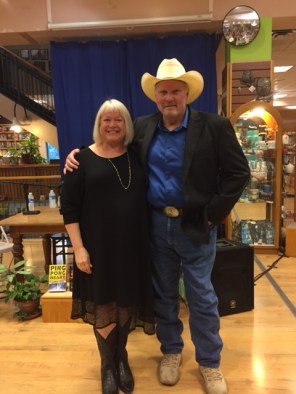
Billy Kring’s latest novel, Tonton, features female border patrol agent, Hunter Kincaid, throwing her into a South Florida case involving a Haitian community and vodou. When asked if some of his villains were based upon actual people he had encountered during his time working border intelligence and security, he replied, “Yes, and I haven’t even used some of the worst offenders yet.”

Are you scared yet, readers? You should be. Billy paints an effectively frightening villain within his book’s pages, and it has been recommended that this latest book is best read during the daytime. The opening scene of Tonton is based upon an actual experience of Billy’s while working border security. “Well, everything but the shark, but the shark is from another case,” he explained.

billy_manning.JPG
Billy explained that he truly enjoyed the work he did, which meant that he came late to the writing game. He had once had a bank job and he hated it, living each day in a cubicle and not being out in the world. He loved the fact a career in border security meant that each day brought new challenges and experiences. “I never knew what was going to happen next, and I liked that part of the job.” Like Martin and Manning, Billy then realized he could take his enthusiasm and experience for his work and bring it to a life writing fiction. Billy also shared the nuances that ripple across our borders. “There are two distinct cultures that have changed and merged over many generations, and it’s important to recognize that and bring those elements to the story.”

One thing is clear after spending an evening with these three authors–each one of them brings their experiences to life in ways that are engrossing, entertaining and compelling. While an evening with their books is fantastic, an evening with the authors behind those books?

Even better.

–Laura Oles


ROW80: The Writing Challenge That Knows You Have a Life

Posted by Kathy Waller

It is a truth universally acknowledged that to accomplish anything of worth, one must first set goals.

English: 85. Functions and Use Scenarios Mappi...

English: 85. Functions and Use Scenarios Mapping to Requirements and Goals (Photo credit: Wikipedia). By Richard J. Mayer and others [Public domain], via Wikimedia Commons

But goals drive me crazy, and that’s no secret either. Periodically, fellow Austin Mystery Writer Gale Albright pulls out her notebook and says, “All right. Let’s write down our goals.” Her goals, my goals, goals for us as a team. She’s serious about goals.

As soon as she says the magic word, I start a major case of the fantods. I can come up with goals, but when I see them on paper, claustrophobia sets in. I dig in my heels and think, “I will not do [whatever I’ve written that I will do]. And you can’t make me.” Sometimes I don’t just think it–I say it.

I’ve said it to Gale so often that now when she pulls out her notebook, she begins with, “I know you don’t like goals, but…”

I don’t think she knows I have a long history of goal-setting–I love trying to organize myself. And there are so many goals out there just itching to be adopted.

Writing challenges lurk all over the Internet: Write every day, write a thousand words every day, keep a journal, do morning pages, do evening pages, write for an hour-two hours-three hours every day, produce a 50,000-word novel in November by writing 1,667 words a day…

That last, which you no doubt recognize as the goal of NaNoWriMo, really drives me up the wall. Every year, I register. Then, every October 31, the fantods set in, and there goes my chance of winning. I’ve given up all hope of getting a NaNo tee-shirt.

row80logocopySeveral years ago, however, I discovered a writing challenge I can live with: A Round of Words in 80 Days: The writing challenge that knows you have a life.

It goes like this: Each year, there are four 80-day rounds. On the first day of each round, participants decide on goals and post them on their blogs. Then they put links to their posts on a ROW80 Linky for a ROW80 blog hop.

For the rest of the round, participants report their progress on Sundays and Wednesdays, and publish their links on the day’s Linky.

If they’ve met their goals, that’s great. If they haven’t, that’s life. Participants are free to change goals and post new ones.

Anyone who wants to join is welcome, and it’s okay to jump in at any time during the round–just post goals on the next Sunday/Wednesday check-in day and go on from there.

I’ve done ROW80 several times without even a hint of the fantods. The secret, I think, is in the subtitle: The writing challenge that knows you have a life.

I have a life. And sometimes it gets in the way. Cedar fever, company coming, hauling cats to the vet–so many things can bump writing down to second or third or tenth priority. When I  set out to write every single day, or one hour every single day–or adopt any goal set by someone else–and then don’t meet that goal, I’ve failed. And I’m likely to stop altogether.

But ROW80 not only allows me to set my own goals, it also acknowledges I might need to set them aside. It allows me to tweak them, change them, and if I need to, scuttle them and start over. There’s no pressure to conform or to make excuses for lapses. I’m in charge.

Now, here’s the evidence that I’m a little crazy: No matter what goals I set or what challenges I face, I’m always in charge. No one stands over me holding a machete to make sure I write one hour a day. No one pins a Scarlet F-for-failure on my tee-shirt when I don’t write in my journal.

Nobody. Not even Gale.

But there’s a flexibility to ROW80 that somehow makes goals easier to live with. I’m free, free, free… In addition, I’m not in this alone. At present, fourteen bloggers have registered on today’s Linky. Tomorrow there will be more. Reading their posts is instructive as well. Participants don’t make excuses; they evaluate, consider what didn’t work and what might work, and go from there.

Yesterday I drafted some goals, posted them on my blog, and registered on the Linky. On Wednesday, I’ll report on my progress, or possibly on my not-progress. But when I’m part of ROW80, I usually make some progress, even when life gets in the way.

Rules for A Round of Words in 80 Days, appear here. Information about how ROW80 started appears here. Find the ROW80 blog here.

###

fantod: Usually, fantods. a state of extreme nervousness or restlessness; the willies; the fidgets (usually preceded by the)

I came across the word fantods in a story by O. Henry and liked it so much I decided to have the fantods as often as possible.

###

Kathy Waller blogs at Telling the Truth, Mainly
and at the group blog Writing Wranglers and Warriors
as well as here at Austin Mystery Writers.
Her short stories appear at Mysterical-E
and in Murder on Wheels


Pets and the Fourth


Today we have a guest blogger who is a former AMW member, Kaye George.


If you’re reading this, you either like to read or to write, right? Or you’re a loyal friend of one of the Austin Mystery Writers. I’ve seen an odd connection between lovers of the written word and the love of animals. Or maybe that’s just a universal thing, or a thing with people who hang around in cyber space. Anyway, I’d like to appeal to those of you who love animals.

running dog

If you have a dog or cat, take care of it tonight! Please don’t leave it outside. Between July 4th and July 6th, animal control services nationwide see a 30% rise in missing pets!* If you live in Texas, among many other places, fireworks will start well before the 4th, so you’ll need to take precautions in the days leading up to Fireworks Day, as well as the days afterward.


If you have an animal that is overly anxious, you might want to give him medicine to soothe him during the height of the booming. Hugging or wrapping tightly can help some dogs. If you can distract your pet with other noises, that might help. Also, it’s good to have at least an ID tag, at most a chip, just in case he gets out and runs away, confused and frightened by the unusual noises.


If you should see an animal running loose and scared, you can report it here:

https://www.petamberalert.com/report-a-pet-sighting/


One more if. If you’re fortunate enough to have a laid-back furry buddy who can ignore fireworks, count yourself lucky and enjoy the holiday. Happy Fourth!


*https://www.petamberalert.com/blog/keeping-your-pets-safe-on-the-4th-of-july/

Banishing Lazy Words by Terry Shames

This week we have a guest blogger, friend and fellow mystery writer, Terry Shames!

Terry grew up in Texas, and has an abiding affection for the people she grew up with and the landscape and culture of the town that is the model for Jarrett Creek. She graduated from the University of Texas and has an MA from San Francisco State University. Terry now lives in Northern California with her husband, two terriers and a regal cat.

Terry’s first Samuel Craddock novel, A Killing at Cotton Hill, (July 2013) and was named one of the top five debut mystery novels of 2013 by MysteryPeople. The second in the series, The Last Death of Jack Harbin was named one of the top five mysteries of 2014 by the Library Association’s Library Journal. Dead Broke in Jarrett Creek, the third in the Samuel Craddock series, came out in October of 2014, followed by A Deadly Affair at Bobtail Ridge in April 2015 and The Necessary Murder of Nonie Blake in January 2016.

A member of Mystery Writers of America and Sisters in Crime, she serves on the boards of Northern California chapters of both.

Welcome, Terry! shamesTerry_1

Banishing Lazy Words

When I’m editing a book, I know that when I begin to get restless I’ve probably come across a nest of lazy words–words that are shorthand, or placeholders, for what I really want to say. Here are some lazy word indicators:

These, this, those, thing, stuff, some, about, just…and the dreaded “to be” verb (was, were…)

I often find when I come across several of these words on one page it means I was reluctant to dig deeper into the emotional content in the scene. When I buckle down and confront what I’m avoiding writing, digging deep to find the emotional core of the scene, I often end up writing a lot more words than I had before.

Here’s an example of a piece I was editing for someone else. I ran across several places on one page where two characters were talking about, “This thing we have going,” and “This thing we are trying.” The “thing” the writer was talking about was a difficult relationship between people of different ethnic backgrounds. By repeating the words “this thing,” she avoided addressing in depth the painful aspects of the relationship. The words fell flat on the page. Only when she changed it to say what she really meant, “Our risky experiment,” and “The way we are thumbing our nose at tradition,” did it begin to have the depth it deserved. Instead of a romance novel, it because more like Romeo and Juliet.

In first drafts, we often use shorthand for what we know is going to be a difficult description. But as writers we have to work hard to ferret out those lazy little words and phrases and say what we really mean. Not, “Amanda’s bedroom was a mess. There was STUFF lying everywhere,” or “I walked into Bill’s office. There was STUFF lying everywhere,” but instead, “Amanda’s clothes were strewn on the floor leading to the bed,” or “Judging from Bill’s office, he was a guy who dropped whatever he was reading onto any handy surface as soon as he was done with it.” Instead of saying, “there were several things he wanted to tell her,” it’s more interesting to read, “he stored up little criticisms that he could spring on her later.”

Contrast these two paragraphs:

“They dated for a few months, during which he told several lies. Some time later, she tried to remember which lies bothered her the most. There was the time he told her he was an accountant and lost his job when the economy went bad. And another time he said he looked around for a job for a long while before he could find another one. But the worst was when he said he’d buy her some jewelry, and never did.”

The fix:

“They dated for six month. After he disappeared, she found that he had hardly opened his mouth without lying. She bought into it when he told her he was an accountant, and lost his job when the economy went bust. She even believed that he pounded the pavement looking for a job for six months before he found one. But the lie that hurt most was that he promised to buy her a diamond ring, and he never did.”

The first paragraph is full of lazy words like “a few,” “several,” “some, “tried,” most,” “there was,” etc. The second one uses livelier, mores descriptive words.

When you read authors you admire, note that they pin down real time, real place, real emotion. It makes their prose richer and keeps readers engaged. It takes hard editing work, but it’s worth it. It’s the key element that will make your prose come alive.

You can find more information about Terry Shames at www.terryshames.com 

Thank you, Terry! That’s good concrete information that all writers can use. What do you think, reader? Any questions or comments?


A Brief Malice Domestic Recap

(Kaye George, prolific mystery writer and blogger, has granted us permission to borrow and publish a recap of her “A Brief Malice Recap” from her blog “Travels with Kaye” at http://travelswithkaye.blogspot.com/)


Kaye George at Malice DomesticIt was exhilarating and exhausting, as usual. This year I was there to let people know about two new books of mine that both came out in early April.

Here’s me at Malice Go Round, giving one minute of information on each book. This is an event described as Speed Dating, But with Authors. A pair of authors visits 20 tables of 8-10 people each, staying for 4 minutes and taking 1 minute to change tables. We tell the listeners about our books and give them bookmarks and sometimes other things so they’ll remember us. I paired up with Jim Jackson, James M. Jackson is his author name. His newest book is ANT FARM, in his Seamus McCree series. My new ones are FAT CAT TAKES THE CAKE (by Janet Cantrell) and REQUIEM IN RED (by Kaye George). This event was Friday morning after I checked in Thursday night.

This picture was taken by Patti Phillips when I was at her table.

After Malice Go Round, I walked over to Booeymonger’s with Judy Penz Sheluk, who was at Malice for the first time. This sandwich and salad place is where the Guppies have gathered for lunch ever since the convention moved to Bethesda from Crystal City in Virginia. I got to chat with several Guppies there.

Later that afternoon, I met with my agent, Kim Lionetti. This is the only time I see her face to face, once a year. That night Berkley, my Fat Cat publisher took us out to dinner at The American Tap Room.

Early Saturday, 7:30, was the Sisters in Crime breakfast, where all the Guppies wear boas or reasonable facsimiles. Jan Rubens, who came with Jim Jackson, took this picture of ALL the Gups that attended. After I wore a feather boa one year and threw it away the same day, I wear my chartreuse scarf.

I admit I deflated a bit and stayed in the hotel for lunch, then went to my panel, “Death for Dessert: Sweet Murder” in the afternoon. Our admirable moderator was Nancy J. Parra and the panelists were Kathy Aarons, Maggie Barbieri, me, and Jessie Crocket/Jessica Estevao. We all write cozy mysteries with dessert recipes in the back. We discovered that Jessie is actually the only one of us who is a good cook. This photo was shot by Julie Hennrikus.

I raced to the wine and cupcake reception given by my agency, BookEnds, guided by Terrie Moran, who had also guided me to the dinner the night before. If these people keep guiding me, I’ll never learn how to get anywhere. Actually, I may not anyway, so I’m grateful for that!

Our panel signed books soon after that, then we did a cocktail or so, then the Banquet with the Agatha Awards.

I highly regret that I wasn’t able to make it to the New Authors Breakfast the next morning at 7. I chalked it up to getting older, but I came down with a cold and bronchitis as soon as I got home, so I’ll blame that instead. I’m making plans to hold a mystery conference/convention where nothing starts earlier than 10.

My own camera, as usual, stayed safely tucked inside my suitcase for the whole trip. Someday I’ll take pictures!

Another fun time talking to and seeing so many of my online pals!

Kaye's panel at Malice DomesticBreakfast at Malice Domestic where Guppies wear boas.

(Pictures) Top picture is Kaye George. Second picture is Kaye George’s panel at Malice Domestic, “Death for Dessert: Sweet Murder” (Photo by Julie Hennrikus). Third picture is Breakfast at Malice Domestic, where Guppies wear boas.