The Ones That Stick With Us

by Helen Currie Foster

We read to learn, we read to be entertained.

We begged at age three, “Tell me a story.”

The stories began, “Once upon a time…”

And Hansel fooled the witch and escaped. Jack chopped down the beanstalk and escaped.

We mystery readers read a vast number of mystery novels. Fifty percent of adults say their favorite book genre is mystery/thriller. In 2020 mystery e-book sales appear to have increased by13% and thrillers by 15%.

We’re always searching for a new adventure, a new love. Have you ever pulled a book from the shelf, glance at the back cover, then (with hope in your heart) the first page, and then pushed the book back on the shelf, sure this one won’t do? I have, so many times. Same drill at the library. We usually know from page one (or at most page two) if we’re going to like a new author. If we don’t like the setting, the protagonist, the voice, forget it. But if we do, if we give that book a chance and like it, we look for a series. Bonus points if we find a new series we like! A series is efficient: we already know the protagonist, the repeating characters, many details of the setting. We plunge straight into the story.

Yet sometimes—even when I really like an author’s book—they run together. I may find them exciting, may remember specific scenes, may like the ending. But often a week after I finish a book, even one in a series with a protagonist who enchants me, I can’t quite remember who died. Now that’s embarrassing. As a murder mystery reader, shouldn’t I remember the victim?

If the victim, stuck there on the page, could talk back, maybe he or she would say, “C’mon, reader, give me a break! Don’t you remember how my body was pulled from the [canal] [truck] [hidden grave]? Don’t you remember how hard I was to find? Don’t you remember how excited the [police team] [sleuth] was to figure out who killed me? Can’t you remember me for at least three minutes? I mean, I’m the one your beloved protagonist investigated! I’m the whole point of the book!” And then in a more querulous tone, “Aren’t I?”

Maybe not. We get caught up in the badinage between DI Dalziel and his sidekick Pascoe. They go off to a pub and suddenly we find we’ve opened the refrigerator. We want to be there with them, sitting at that table near the dart board, sipping beer. Or our protagonist is reviewing the grisly evidence while listening to Madame Butterfly, and we find ourselves humming the first phrase of the aria (the only one we know). Maybe we’re really more interested in a favorite protagonist than in the victim.  Sorry, Victim. The Protagonist will be in the next book––but you won’t.

On the other hand, now and then, there’s a death that sticks. One that even haunts me, after the denouement, after the explanation, after I finish saying “aha, I spotted that,” or “Hmm, very tricksy.” After all the figuring-out, occasionally I’m still thinking about the victim.

I started wondering about the ones who stick this week when I read two mysteries from Donna Leon, who just published her 30th book, Transient Desires. The title puns on what Donna Leon terms the “Nigerian Mafia” which she describes as smuggling young African women into Italy, promising them jobs which will let them send needed money home to their families, but instead enslaving them as sex workers or—occasionally—taking their transport money while throwing them into the Mediterranean to drown. In Transient Desires, Leon introduces us first to a young woman who survived the sea crossing but is being driven mad by her enslavement. Then we meet a naïve young Venetian man, desperate to keep a job with his boat-owning uncle which allows him to support his mother. The young man is slowly being destroyed by what his uncle forces him to do. These two portraits stick in my mind.

I also read Leon’s 22d book, The Golden Egg, where her protagonist, Venetian Inspector Guido Brunetti, must determine whether a young deaf man committed suicide by swallowing his mother’s tranquilizers, or was murdered. Which? Brunetti is stunned that the Serene Republic of Venice, which keeps tab of virtually every aspect of every inhabitant’s life, has no record of this young man. He’s unaccounted for: no school, no paying job, nothing. Brunetti learns he toiled his life away ironing clothes in a laundry, unpaid, speaking to no one, with no one speaking to him. He was never taught sign language, never taught how to interact with people. He lived in Venice where people know and speak to their neighbors and shopkeepers…but no one spoke to him. Brunetti doggedly unearths the peculiar cruelty of the people who kept him alive but didn’t teach him to live…parents who never talked to him, never taught him, never allowed anyone to reach out to him. Even worse, if worse is possible, Brunetti discovers the boy had a rare artistic talent—appreciated only by the boy’s doctor—that the boy never knew was worthy of recognition. Donna Leon’s description of one of the boy’s drawings, one the doctor has on his wall, brings home to the reader the two-fold tragedy: that the boy never knew his creations were beautiful, and that the world was deprived of knowing the human being who created such beauty. He was trapped. And he died without ever escaping. That’s a victim I cannot forget.

What about The Nine Tailors (1934), by Dorothy Sayers?. This classic tale, often called her best, has all the charming hallmarks of a carefully constructed village-and-vicar English mystery, including the peculiarly English tradition of bell-ringing. We’ve got it all here: stolen jewels, a letter written in cipher, and an unidentified male body with no hands. The setting: the fens of East Anglia, with drainage ditches, locks, and ever-shifting floodwaters, and the contrasting grandeur of the ancient fen churches whose spires, with their enormous bells, mark the landscape. On New Year’s Eve, with the great influenza raging, Lord Peter Wimsey and his valet Bunter wreck the car and become lost in a snowstorm. They’re rescued by the vicar of Fenchurch St. Paul, who proudly announces that his bell-ringers are going to ring in the New Year with “no less than fifteen thousand, eight hundred and forty Kent Treble Bob Majors”—nine hours of bell-ringing. When one ringer, Will Thoday, is struck down by influenza, the vicar begs Wimsey to take his place. Wimsey later finds a recently buried man with no hands. As to why the victim has no hands, and how he was killed—is it a spoiler to emphasize, reader, that you do not want to be tied up, unable to escape, in a bell-chamber just above those enormous thousand-year-old bells while they ring unceasingly for nine hours? That victim’s death has stayed with me. But also, the circumstances which led to in his entrapment in the bell tower resulted in such grief for three characters that their lives are changed forever. That stayed with me too. No happy Sayers-esque denouement here. Instead, characters are condemned to remember. As to the title, the Nine Tailors are the nine strokes of the tenor bell—three, three, and three more—rung to mark a death in the parish.

Fans of Tony Hillerman will remember The Wailing Wind, where NavajoDetective Joe Leaphorn is hired by Wiley Denton, a wealthy older man recently released from prison for shooting a man named McKay, who had promised Denton a map to a fabled gold mine. Denton wants Leaphorn to find out what happened years ago at Halloween to his beloved young wife, Linda. The convoluted plot takes the reader through numerous twists and turns, but the gold mine convolutions aren’t what I remember. Instead I remember that McKay, all those years ago, drugged Linda and left her in a locked bunker (one of hundreds of identical bunkers in an untravelled area on the vast grounds of Fort Wingate), hoping to use her as leverage to get the deal he wanted from Denton. Denton shot McKay, not knowing that McKay had hidden Linda. So she died, slowly mummified, in a bunker in the Arizona desert. Now that’s one that sticks with me.

I’ve been wondering why I found these particular victims so hard to forget. You’ll have noticed that all were trapped. Transient Desires involves economic entrapment—slavery, really. Both the young Nigerian and the young Venetian have no economic hope, no way to escape doing what they hate. The Golden Egg reveals a young man cruelly trapped by isolation, deprived of human communication, deprived of any way to express an enormous talent. In Nine Tailors and The Wailing Wind, the victim’s death by physical entrapment creates another trap: those involved are trapped by their memories.

I wonder if the rank injustice that Leon depicts is part of the staying power of Transient Desires and The Golden Egg. Particularly in The Golden Egg, Brunetti feels helpless, and we share his frustration, his horror, really, at the young man’s death, and at the society that allowed it to happen. To that extent I’m still identifying with Brunetti, not the victim.

I’ve hidden my murder victims in enclosed spaces. Ghost Cave.

 Ghost Dog.

But mercifully, they were already dead.

Maybe we identify more with the victim when reading about a death caused by physical entrapment, whether the victim’s tied up in a bell-tower or locked in an isolated bunker, where no one can hear the call for help (the bells are too loud, or the bunker too soundproof). Doesn’t that reverberate with all of us? We’re generally confident we could escape from most situations, could chew off the ropes on our wrist, pick the lock, find a secret passage, get a message to our rescuers. Fool the witch and chop down the beanstalk. But what if there’s no one to hear? No one to help? No way to get out? End of story. Not comfortable. Awfully memorable. Awfully.

***

Helen Currie Foster is the author of the Alice MacDonald Greer mystery series. Her latest novel is Ghost Cat. Read more about her here.

What’s That Smell?

by Helen Currie Foster

In the back of the closet I recently unearthed my mother’s old Caswell Massey “Gardenia” bubble bath. The resulting bath held astonishing comfort and nostalgia. It smelled like her house.

Mystery writers can use smell to reinforce not only setting and character, but powerful plots. Here are strong examples from the first chapter of Lethal White, the fourth in Robert Galbraith’s Cormoran Strike series. Chapter one begins with the wedding of Strike’s former co-detective Robin Ellacott and her long-time (but insufferable) fiancé Matthew Cunliffe, arguing while the wedding photographer tries to get some decent shots. Strike has fired Robin, partly from fear she’ll be killed. Without her job, Robin’s miserable. Matthew’s furious because of the joy he saw on Robin’s face when Strike arrived for the ceremony, heavily bandaged from capturing a killer. And now, arguing with Matthew, how does Robin feel? “The sweet, ticklish smell of hot grass filled her nostrils as the sun beat down on her uncovered shoulders.” The hot smell matches Robin’s itchy misery as she second-guesses her marriage to Matthew.

The country hotel setting smells beautiful, in stark contrast to Strike’s emotions: “For a while he lurked at the end of the bar, nursing a pint…and then repaired to the terrace, where he had stood apart from the other smokers and contemplated the dappled evening, breathing in the sweet meadow smell beneath a coral sky.” Sweet meadow smell; miserable situation.

Robin finally reaches Strike on the stairs as he’s leaving: “They were holding each other tightly before they knew what had happened, Robin’s chin on Strike’s shoulder, his face in her hair. He smelled of sweat, beer, and surgical spirits, she, of roses and the faint perfume that he had missed when she was no longer in the office.” The scene is almost shocking in its sensory overload. We feel their powerful attraction. Galbraith (J. K. Rowling) brilliantly gives us not only the protagonists, but the pain of their predicament, using scent to remind us of Strike’s injury (surgical spirits) and the fact that he has missed her perfume because she’s no longer in the office.

We already know that Chet, the heroic detective dog of Spencer Quinn’s Chet and Bernie series, is a dog of admirable olfactory sensitivity. He feels sorry for his human partner, Bernie (who labors under the misapprehension that he, not Chet, is the detective), because Chet knows human limitations, olfactorily speaking.

Chet and Bernie search for lost young campers in Spencer Quinn’s The Dog Who Knew Too Much. Chet’s nose moves the plot along: “I smelled ashes, plus chocolate, the way it smells when hot chocolate gets burned in the pot, and….the remains of a not-too-long-ago campfire. I knew fire pits, of course, went over and took some closer sniffs. Burned hot chocolate, yes. There’d also been Spam and something eggy. I stuck my nose just about right into the ashes. They were cold.” Oh, the advantages of a detective dog as protagonist.

Well, Chet, don’t underrate us. Research shows we humans can detect at least a trillion odors! Bill Bryson, The Body, at 90.

Furthermore, as Chet the dog already knows, we humans each have our own unique scent: “It’s like a fingerprint,” says Johan Lundström, a neuroscientist at the Karolinska Institute in Sweden, in “The Sense of Smell in Humans is More Powerful Than We Think, ” by Marta Zaraska–an interesting article.

Didn’t we already know we can identify the scent of the loved one? Mothers can recognize their newborns by smell (and vice versa). Bryson says olfactory information goes directly to our olfactory cortex, next to the hippocampus, where memories are shaped, which is why some neuroscientists think certain smells evoke memories. Oh, didn’t Proust mention that? Scent brings back the dead, if only for a second. In my Ghost Cat, after the death of his wife Holly, Russ confesses that when he walks in the house, he lifts his eyes and inhales: “I always hope for a little whiff of Holly.”

However––some odors fly under our radar. We may feel, but can’t always articulate, how certain smells arouse our emotions. We say fear is contagious but we haven’t known how. Zaraska cites research showing when we smell body odor from a stressed person, we ourselves become more vigilant. When we smell body odor of a close relative, per Zaraska, we can recognize family, and our dorsomedial-prefontal cortext can light up. Maybe some of this we’ve known without really knowing it.

Plus, we apparently have sensory radar for genetic information. For mating! A woman inhaling body odor of a potential mate senses how genetically related the two are––by sniffing a gene family that links body scent and the immune system, called the “major histocompatibility complex” or “MHC.” This capacity is useful: we like our mates to be related enough––but not too much. My protagonist Alice, lawyer and amateur sleuth in the Alice MacDonald Greer Mystery series, is well aware how much she likes the way her love interest Ben Kinsear smells––he “smells good”––but she hasn’t put words to the smell the way Chet the dog has. He defines his own smell as “the most familiar smell in the world: old leather, salt and pepper, mink coats, and just a soupcon of tomato; and to be honest, a healthy dash of something male and funky. My smell: yes, sir.”

Could you define your own smell? With aromatic detail? Probably not. A loved one might be able to.

Smell can deepen a scene, define character, highlight plot. Ann Cleeves, in Dead Water (her Shetland series) describes the reception desk in the hotel, a key setting, as “all dark wood, with the smell of beeswax.” The sweet smell, the dark venue.

Elly Griffiths in The Crossing Places shows us her protagonist, archeologist Ruth Galloway: “Climbing the danksmelling staircase to her office, she thinks about her first lecture: First Principles in Excavation.” Danksmelling…excavation. Her job.

Louise Penny, in A Better Man, uses smell to reinforce the humiliating demotion of her protagonist, Quebec Inspector Armand Gamache. A former subordinate now bosses him. A giant ice storm with crashing ice flows and high water threatens Quebec. Worried the Champlain bridge will break, on the way to a police meeting, Gamache gets splattered with mud trying to see whether the dam will hold.

“I see some of the crap thrown at you today on Twitter has stuck,” said the senior officer from the RCMP, gesturing at Gamache’s clothing.

Gamache smiled. “Fortunately, it won’t stain.”

“But it does smell,” said the Mountie, with a wry smile. “Helluva first day back on the job, Armand.”

A great metaphor for the smelly attacks on Gamache that have led to his demotion.

In A Cinnabar Sky’s opening scene, Billy Kring uses smell to build dread and suspense around the locked trunk his protagonist Hunter Kincaid and her companion Buddy are about to pry open. Buddy says, “Now the smell is more like a really bad swamp, right?” When they pop the trunk, it’s “like an abandoned slaughterhouse gone fetid and rotten in the summer heat.”

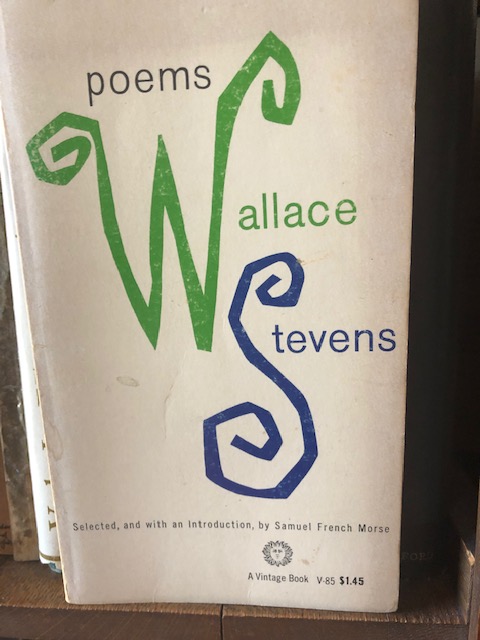
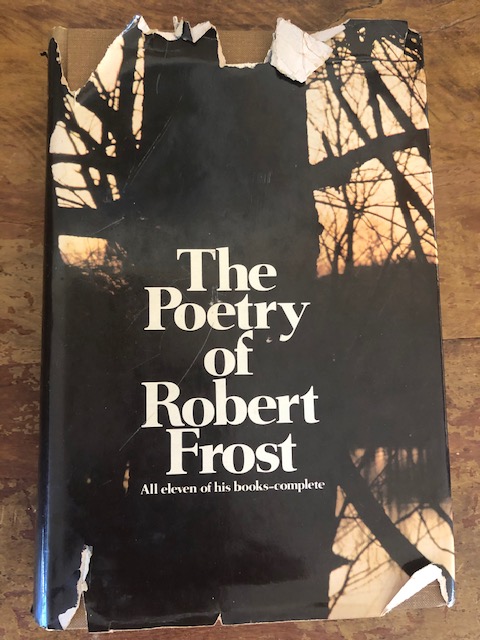
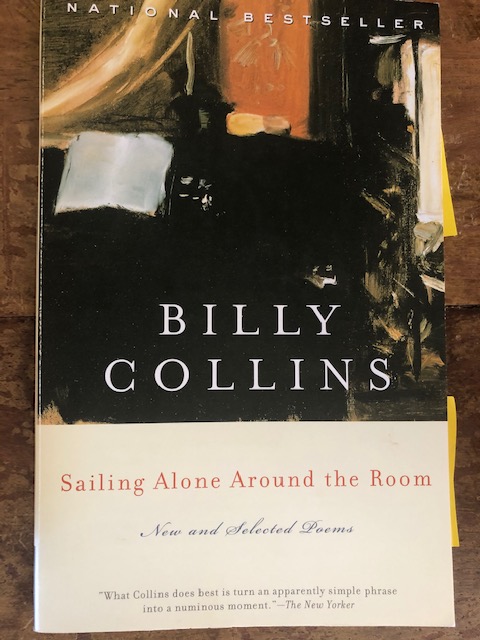
The “smells” article sent me to poetry. Back to the bookshelves. Poets, in their compressed genre, seem to convey scent by evocative words, words that already define a smell, name a smell. Wallace Stevens has only to say, “coffee and oranges in a sunny chair” in Sunday Morning and we smell them. Shakespeare has only to write “The rose looks fair, but fairer we it deem/For that sweet odor which doth in it live” in Sonnet 54. He doesn’t have to define the “sweet odor”: he knows we know it. Coffee? Oranges? Cigar smoke? The word itself gives us the smell. Robert Frost, In Neglect: “I smell the earth, I smell the bruised plant…” We do too. Billy Collins, Canada: “O Canada, as the anthem goes,/scene of my boyhood summers,/you are the pack of Sweet Caporals on the table…” The smell of sneaked cigarettes of youth.

Wallace Stevens did try more extensive fragrant description in Approaching Carolina: “Tilting up his nose/he inhaled the rancid rosin, burly smells/Of dampened lumber, emanations blown/From warehouse doors, the gustiness of ropes,/Decays of sacks, and all the arrant stinks…” We sure know what he means. But is this too much? I wonder if he wondered.

In the upcoming Ghost Daughter, seventh in my series, Alice quizzes a young friend about a new boyfriend. Alice blurts, “So he smells good?” She realizes her own standards for a lifetime companion involve “someone who smelled right…” Probably you’ve all had that experience. Maybe that’s how humans perceive certain under-the-radar scents, as “right” or “not right,” as “good” or “threatening.” Based on Zaraska’s article I suppose “good” may mean “right” in terms of the mysterious “major histocompatibility complex.” Not sure that’s how I want to describe it, though.

I’ll keep working on aromatic pages.

###

Read more about Helen Currie Foster here.

J.D. Robb’s Holiday in Death

kp gresham


by K.P. Gresham


My Go-To Seasonal Escape!

When the holidays come around, I can’t help it. Sometimes I get so stressed I just wanna kill somebody. (On paper, of course!) It can be very cathartic.

But if my murderous muse isn’t singing, I turn to my favorite holiday crime novel, Holiday in Death, by the supreme, futuristic murder writer, J.D. Robb. (It irks me that some industry aficionados refer to this series as “romantic suspense.” Sure, it has a romance in it, BUT, this is a crime novel in every sense!)

Holiday in Death is the seventh in the now fifty-one book series about New York murder cop Eve Dallas and her devastatingly rich, handsome and techno-wizard husband, Roarke. Did you catch that? There are fifty-one books in this series, with the next, Faithless in Death, coming February 9, 2021.

But I digress. Here’s the scoop on my favorite Christmas mystery taken from its Publisher’s Weekly review 6/01/1998.

The year is 2058. Guns are banned and medical science has learned how to prolong life to well beyond the century mark. And man has yet to stop killing man. At Cop Central, it’s Lieutenant Eve Dallas’s job to stand up for the dead. So begins the seventh riveting installment in Robb’s (aka Nora Roberts) futuristic romantic suspense series (following Vengeance in Death). With Christmas only weeks away, Eve is stressing out trying to find the right gift for her new husband, Rourke, who “”not only had everything, but owned most of the plants and factories that made it.”” More to her concern is the latest serial killer who is using “”The Twelve Days of Christmas”” as a theme for his heinous rape and murder spree. The case touches Eve on a personal level, and while flash-backs from her abusive childhood are flinchingly repetitious, it defines Eve’s gritty, hard-boiled character and validates her obsessive determination to bring down the killer any way she can.

So if the holidays stress you out, grab a peppermint-schnapps-laced, hot chocolate, get in that comfy chair in front of the fireplace, turn on that Tiffany lamp that casts just enough light for you to read by, settle your animal on your lap, and crack open this great read.

Merry Christmas, everyone!

P.S. There is one story I like better at this time of year, just for the record. You’ll find it in the Bible’s new Testament. I usually start at Luke, chapter one.

###

K.P. Gresham writes the Pastor Matt Hayden mystery series. Her latest is MURDER ON THE THIRD TRY.

You Dreamt You Went Where? Again?


by Kathy Waller

***

Last night I dreamt I went to Mandereley again.

The first line of Daphne Du Maurier’s Rebecca. 

Perfectly poetic, iambic hexameter: Last night I dreamt I went to Manderley again.

Says Sarah Perry in the Irish Times, “Every novelist since has ground their teeth in envy: here is all the enchantment of a child’s story, with an irresistible melancholy hung about it.”

The rest of the novel isn’t bad either.

But so much depends on that first line.

Can you identify the books that begin with the lines below? And the authors who composed them?

Show what you know in a comment. (Searching the Internet is acceptable.)

Some may be a snap. Others, not so much. But each comes from a book by a major mystery author.

All will be revealed in a later post. Or, as they used to say, stay tuned.

*

  1.  On November the twenty-first, the day of her forty-seventh birthday, and three weeks and two days before she was murdered, Rhoda Gradwyn went to Harley Street to keep a first appointment with her plastic surgeon, and there in a consulting room designed, it appeared, to inspire confidence and allay apprehension, made the decision which would lead inexorably to her death.
  2. In the corner of a first-class smoking carriage, Mr Justice Wargrave, lately retired from the bench, puffed at a cigar and ran an interested eye through the political news in The Times.
  3. Eunice Parchman killed the Coverdale family because she could not read or write.
  4. When I think of my wife, I always think of her head.
  5. My name was Salmon, like the fish; first name Susie. I was fourteen when I was murdered on December 6, 1973.
  6. The snow in the mountains was melting and Bunny had been dead for several weeks before we came to understand the gravity of our situation.
  7. There were crimson roses on the bench; they looked like splashes of blood.
  8. It was as black in the closet as old blood.
  9. My name is Mary Katherine Blackwood.
  10. It was five o’clock on a winter’s morning in Syria.
  11. I feel compelled to report that at the moment of death, my entire life did not pass before my eyes in a flash.
  12.  I’ve always considered myself to be, basically, a lucky person.
  13. Miss Jane Neal met her maker in the early morning mist of Thanksgiving Sunday. It was pretty much a surprise all around.
  14. There are two disadvantages to being a minor royal.
  15. It was a mob, but not yet a full-fledged riot. Over a dozen retirees, dressed in housecoats and robes, had taken to the streets, demanding action at eight in the morning.
  16. There hadn’t been a god for many years.

***

Image of book cover via Wikipedia. Public domain.

Barbeculinary Thoughts

by Helen Currie Foster

I know, you’re asking yourself what barbecue has to do with mystery writing, my other beloved topic. Barbecuing, like writing (see K.P. Gresham’s wonderful recent blog), is a solitary pursuit.

And a mystery. And we barbecuers want it that way. We have our little ways. We know exactly how those baby-back ribs should go limp when done, go kind of boneless, as did Trixie, the little girl in Knuffle Bunny, when her dad left her beloved bunny in the laundromat dryer.

We know precisely the color of mahogany-ebony-mesquite the brisket will achieve the moment we decide it’s time to begin applying the mop. Also, of course, we know the color of the mop, its ingredients, its smell, its virtue. We know precisely the heft and flexibility that a brisket should demonstrate when we pick it up in our silicone-gloved hands to test its doneness.

We know, and we’re not telling.

Like writing, barbecuing is a solitary calling. Sure, people will wander out, ask if they can help. But these terrace tourists don’t want smoke in their eyes, their hair, their clothes. Besides, the Barbecuer doesn’t want them. Doesn’t want suggestions, doesn’t want comparisons, doesn’t want recipes. So if you wander out to the Barbecuer’s sacred precincts, your only job is to ask if the Barbecuer would like something to drink.

The Barbecuer, alone on the captain’s deck, seeks perfection. [Yes, I’m rereading my favorite Patrick O’Brians.] Perfection requires concentration. Because the Barbecuer is engaged in a sacred ritual: preparing the offering for the people.

You may be thinking wrongly of the word “barbecue” as did famed food-writer Michael Pollan who admits, “[A]s a Northerner, I’d already spent more than half of my life as a serial abuser of that peculiar word, which is to say, as a backyard blackener of steaks and chops over too-hot fires—over flames!—with a pitiable dependence on sauce.” Cooked, p. 45. That was before he saw the light on the road to whole-hog barbecue.

Barbecue is not the mere flipping of burgers or sizzle of a steak or blackening of hot dogs over a too-hot fire. Barbecue, while a gift, traditionally, to the gods, is a ritual offering to the gathered cohort. See the Iliad.

It is a ritual to be communally observed (not kibitzed at).

Think of the best barbecues in which you’ve participated. The Barbecuer completes preparation of the ritual gift and serves it forth. On a large and venerable cutting board, in sight of the waiting crowd, the Barbecuer slices the brisket, offers the pulled pork, displays the properly limp yet crispy-crusted ribs. This offering is accompanied by the ritual sighs and groans of the rapt crowd, holding plates and awaiting their turn.

Sure, it’s competitive. I mean, Achilles way outshines Agamemnon when it comes to barbecue, and that’s strategic. Achilles and his team nail it when Odysseus comes calling to beg (unsuccessfully) Achilles to make up his quarrel with that tyrant Agamemnon:

…Patroclus obeyed his great friend,
Who put down a heavy chopping block in the firelight
And across it laid a sheep’s chine, a fat goat’s
And the long back cut of a full-grown pig,
marbled with lard. Automedon held the meats
While lordly Achilles carved them into quarters,
Cut them well into pieces, pierced them with spits
And Patroclus raked the hearth, a man like a god
making the fire blaze. Once it had burned down|
and the flames died away, he scattered the coals
And stretching the spitted meats across the embers,
Raised them onto supports and sprinkled clean pure salt.|
As soon as the roasts were done and spread on platters,
Patroclus brought the bread, set it out on the board
In ample wicker baskets. Achilles served the meat.

Il. 9:246-259 (Robert Fagles’ translation).

See? “Lordly Achilles.” No way will Achilles lose that argument with Odysseus, despite the latter’s eloquence. I’ve always said that peace in the middle east could be achieved if both sides ––all sides––sat down to share really excellent barbecue, but that approach didn’t work for Agamemnon and Achilles.

Given the stellar role of the Barbecuer, alone there in the spotlight, one would think the Barbecuer would figure strongly in our literature. Here, Readers, I seek help. I’ve searched vainly for roles for the Barbecuer equal in stature to the best barbecue. (Though apparently—I can’t find where—Chaucer at least wrote “Woe to the cook whose sauce has no sting.” Readers?)

Some mysteries do involve barbecue, or use barbecue in the setting. My Ghost Next Door features murder of a food writer during (key word) the first annual Coffee Creek Brisket Competition. One contestant is even a suspect. But not a serious one, because…what self-respecting Barbecuer would leave the side of his or her barbecue, even if presented with a great opportunity for a secret silent murder? Can you imagine a Barbecuer taking the risk that the ribs would burn? The brisket dry out? The pork shoulder shrivel? Certainly not.

Thus in my view the role of murderer is contraindicated for a Barbecuer. Perhaps the writer could assign the deed to a mere Assistant, who might go AWOL and stab the buddy who forgot the beer, the aunt who forgot the devilled eggs, the guest who always volunteers to make coleslaw but chops the cabbage too big and uses way-old ranch dressing instead of Real Mayonnaise. The Assistant could even create an alibi—leave to buy more beer, to get more salt and ice for a guest making homemade peach ice cream, to help carry in the giant blackberry cobbler, to husk the corn.

But writer, you would sacrifice realism if you excused the Barbecuer from tending the ritual offering merely to move the plot forward. Even if the Barbecuer has the best thermometer, the most accurate timer…could slip out for a moment of mayhem…the responsibility’s too great.

Of course barbecue itself is a mystery. Here I reveal my own prejudices. Standing in my back yard north of Dripping Springs is a venerable Weber kettle. Like Knuffle Bunny it has lost some of its elegance, some of its youthful gloss (and a few knobs and vents). Relatives have Tragers they like. Green Eggs have appeared. But I love the old Weber the same way I love, say, the old Kitchenaid stand mixer in the kitchen. Both are old-fashioned, made of steel, curvy and solid. The old kettle adds greatly to barbecue mystery—no, there’s no automatic temperature sensor, indeed, no electronics whatsoever. It’s acoustic. Acoustic Barbecue. Just the meat, the coals, the mop—and time. Time to gaze solemnly at the developing crust, time to add just a few more coals to the “parsimonious little fire” on one side of the kettle, time to poke the meat to gauge whether it’s almost ready for the mop…

Still ahead lies the moment on the cutting board, the presentation of the ritual offering. Much like a book launch. But in the meantime, there’s the solitary work, the focused attention, the lone responsibility on the shoulders, of the Barbecuer.

A lot like writing.

***

Helen Currie Foster is the author of the Alice MacDonald Greer Mystery series. The latest in the series is GHOST CAT, available at Austin’s BookPeople and other independent bookstores as well as Amazon and Kindle.

I Won’t Kill the Governor!


by K.P. Gresham


The Texas Governor’s Mansion is the perfect setting for my next book in the Pastor Matt Hayden Mystery Series. I’ve said it before, I LOVE doing research for my stories, and studying up on the Governor’s Mansion is a blast. Such rich history. So many anecdotes. I just had to share some of them with you.

First off, I am not a native Texan (though I’ve lived here for thirty-six years) so most of what I’ve learned is all new territory for me. To that end, I must credit The FRIENDS of the GOVERNOR’S MANSION who wrote The Governor’s Mansion of Texas, A Historic Tour, published in 1985, as well as the website https://gov.texas.gov/first-lady/history  for most of this information.

The Mansion’s history began with a $14,500 appropriation from the legislature roughly a decade after Texas became a state in 1845. Austin master builder Abner Cook was awarded the construction contract. This beautiful home has served as the official residence of Texas governors and their families since 1856.  (Governor Elisha M.  Pease and his family were the mansion’s first occupants.) It is the fourth oldest continuously occupied governor’s residence in the country and the oldest governor’s mansion west of the Mississippi River.

The mansion stayed pretty much in its original condition until after the Civil War when Governor Edmund J. Davis started a line of renovations in 1879 with an indoor lavatory installation. By 1915, there was running water, a telephone, electricity and wallpaper and more living space. I could go on, with more renovations, security installations, historic donations, BUT!

What makes this Mansion beloved are the stories of the people who lived there.

One of my favorites was the tale of Governor James Hogg (the first native Texan to become governor) and his rambunctious four children. To this day, the stair railings are still scarred  where Governor Hogg hammered nails to deter his children from sliding down the banister.

Another fave. Governor Joseph D. Sayers—the one who had electricity and wallpaper installed–owned a dog. Well, his dog must have appreciated all the modern improvements because when it was time for the Sayers family to move out of the house, the dog refused to leave. He stayed with the carriage driver the rest of his days—at the Mansion.

Then there was Governor Miriam “Ma” Ferguson, the first female governor of Texas. She vowed to return to the Mansion after her husband was impeached, (yes, James Ferguson had served as governor and gotten the boot). She was elected and arrived in the same Packard the family used to leave in 1917.  An interesting aside: Mrs. Ferguson fought to end the Ku Klux Klan, passing an anti-mask law making it illegal to wear masks in public. Now isn’t that topical in this day and age?

So many stories, so little time. I haven’t even mentioned Queen Elizabeth’s visit, or the unsolved 2008 arsonist attack on the Mansion in 2008 or its more recent occupants. I mean to think about it. How could I describe Ann Richards in one blog?

To that end, I highly recommend the above mentioned book or a quick visit to the link I’ve shared above. Thank you to all who kept records of the history of the Mansion so folks like me can wonder and laugh and learn to appreciate just this one small piece of our Texas heritage. Think how much, much more there is to learn!

Like I said, I like doing research when I’m writing a book. And, I’ll even give you a hint about this, the fourth installment in the Pastor Matt Hayden Mystery Series.

I don’t kill the Governor–but everyone else is game!

***

Image of Governor’s Mansion by skeeze from Pixabay

***

K.P. Gresham is author of the Pastor Matt Hayden mystery series. Her latest is MURDER ON THE THIRD TRY. 

An Interview with Elizabeth Buhmann, Author of BLUE LAKE

by M.K. Waller

[Notice:
Typgress is not authorized
to post content from this blog
on its site.]

When I began Elizabeth Buhmann’s BLUE LAKE, I was—I’m ashamed to say—afraid I would be disappointed. Her first novel,LAY DEATH AT HER DOOR, was so well constructed, clues so obviously placed, that I should have been able to predict the ending—but so deftly woven into the plot that the last chapter was a complete surprise. More than a surprise—a shock. That novel was so good, I knew BLUE LAKE couldn’t match it.

I was wrong. BLUE LAKE is different from its predecessor, of course, but just as well written and just as suspenseful.  And when I reached the end, I said, “I should have known.”

BLUE LAKE does not disappoint.

Buhmann hides things in plain sight—the mark of a good mystery writer, and the delight of every mystery reader.

*

“Rural Virginia, 1945. The Second World War had just ended when Alice Hannon found the lifeless body of her five-year-old daughter, Eugenie, floating in Blue Lake. The tragedy of the little girl’s death destroyed the Hannon family.

“More than twenty years later, Alice’s youngest daughter, Regina, returns home after a long estrangement because her father is dying. She is shocked to discover, quite by accident, that her sister’s drowning was briefly investigated as a murder at the time. . . . 

Click here to read the original post on Ink-Stained Wretches.


MysteryPeople Interviews Helen Currie Foster

helen-currie-foster-hotxsincAMW member Helen Currie Foster was interviewed for the MysteryPeople blog by Crime Fiction Coordinator Scott Montgomery. Helen is the author of the  Alice MacDonald Greer mystery series: GHOST CAVE, GHOST DOG, GHOST LETTER, GHOST DAGGER, and THE GHOST NEXT DOOR.

Midwest Book Review calls the Alice MacDonald Greer mysteries a 2018-10-10-helen-currie-foster-gng-cover“simply outstanding mystery series.”

Read Helen’s interview with MysteryPeople here.


AMW Books Nominated for Silver Falchion Readers’ Choice Award

SilverFalchionAwardWinner_Web-300x300Killer Nashville International Writers Conference has announced the slate of nominees for its Silver Falchion Readers’ Choice Award–and two books by AMW members are on it!

Laura Oles’ DAUGHTERS OF BAD MEN is nominated in the Best Thriller category.

11 2017 Laura Oles DOBM_Cover


*

DAY OF THE DARK: Stories of Eclipse, edited by Kaye George, is nominated in the Best Fiction-Anthology/Collection category. Laura Oles’ story “Ocean’s Fifty,” and M. K. Waller‘s “I’ll Be a Sunbeam” appear in the anthology.

Day of the Dark - cover

If you’d care to vote–and since this is a Readers’ Choice Award, everyone is eligible to do so–go to https://killernashville.com/awards/killer-nashville-readers-choice-award/ and mark your ballot.

(The ballot lists Debra Goldstein as editor of DAY OF THE DARK, but that’s a glitch. Kaye George is the editor. One of Debra’s stories is in the book.)

###

Kaye George was a member of Austin Mystery Writers until she moved out of state. At that time, however, she was named Grand Pooh-Bah Emerita and we therefore still claim her as ours.

Never Mind the Villain! Dorothy Sayers and Point of View – by Helen Currie Foster

AMW member Helen Currie Foster discusses how Dorothy L. Sayers handled point of view in her Lord Peter Wimsey mysteries in

NEVER MIND THE VILLAIN!: DOROTHY SAYERS AND POINT OF VIEW

at Writing Wranglers and Warriors.

Click on the link and read her analysis–which is both informative and entertaining.