The Novella in Your Line-Up

Some writers never struggle to find enough words; they struggle to prune over-long manuscripts. Other writers, like me, start out with a premise and work through an outline to a rough draft that is . . . short.

As I expand on my first draft, I worry about length. Optimal length for a novel (most genres) is between 70,000 and 90,000 words. What if your story comfortably winds up in the low range, 30-000-50,000?

You have a choice: complicate and expand to novel length or call it a novella.

In an article for Writer’s Digest, Chuck Sambuccino addresses this choice. His advice: Expand your story until it’s a novel. But he is talking to writers who want to query agents and land contracts with major publishers. Print publishers will rarely take on a novella, and “rarely” probably means “never” for the unknown first-timer.

heartThe novella has taken on new life in recent years, however, with the rise of digital publishing. Remove the cost of hard copy printing, binding and distribution, and the shorter literary forms are more than viable—they are attractive to readers and authors alike.

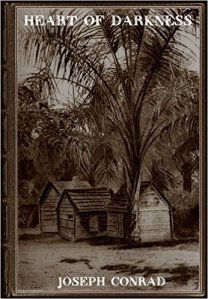
The novella is a time-honored and well established literary tradition—I need only mention Joseph Conrad, Edith Wharton and Ernest Hemmingway. An interesting article on the novella in Wikipedia includes a reading list that will keep you happy for a couple of months at least.

What the novella can do for you

Everybody knows that after the blog tour and the boosted posts, the best way to keep your book selling is to write more books. With a very small publisher, or by self-publishing, you can get new titles out there about as fast as you can write them. But if you once make the leap to the big-time, the process slows down. How do you stay on the radar in this fast-paced market?

Thought I Knew You is currently #11 in the Paid Kindle store on sale for $.99 (as of today, August 17, but not for long)

Thought I Knew You is currently #11 in the Paid Kindle store on sale for $.99 (as of today, August 17, but not for long)

One way is to write a novella. Case in point:

Bestselling author Kate Moretti debuted her knockout first book, Thought I Knew You (Red Adept Publishing), in September 2012. She followed with Binds That Tie a year and a half later, in March, 2014. About that time, TIKY hit the New York Times bestseller list, and Moretti caught the eye of literary agent Mark Gottlieb at Trident Media Group. Gottlieb parlayed this fast start into a two-book deal with Atria (Simon and Shuster).

Moretti had momentum and a growing fan base. But by stepping up to the big five, she was facing a two-year gap between book two and book three. How to keep her fans engaged? Enter the novella.

At half the length of a full novel (and proportionately fewer subplots and complications), the novella can be written in half the time. A small independent publisher can turn the ebook around in half the time it takes a major print publisher to get a novel out the door.

wywgWhile You were Gone is a tangent to TIKY, with all new characters, as engaging as we have come to expect from Moretti, plus a tight, fast-paced story, and a strong twist at the end. It is available for pre-order now, at $2.99, and will be released on September 1, 2015.

From a fan’s perspective, this is perfect—a short (130 pages) dose of Moretti’s unique blend of mystery/suspense and women’s fiction between the longer works. From the author’s perspective, she stays out front on the market with a book and keeps building her fan base in preparation for The Vanishing Year (coming in 2016). This is what a novella can do for you.

Kimberly Giarratano has done the same thing. Readers loved her YA mystery with ghosts, Grunge Gods and Graveyards (4.7 out of 5 stars on Amazon, based on 74 reviews). That book came out in May 2014, and Giarratano followed up just one year later with a spin-off novella, The Lady in Blue, which she self-published.

ladyinblue

Giarratano takes the logic one step further. In between GGG and LIB, she self-published a lovely YA ghost story, One Night is All You Need—just 21 pages, but hey, it’s free! And a reader who gets a taste of this story and likes it (how could you not) will surely take a look at one of the other books.

All this is good news to me. When I start working on a story and doubt assails me as to whether I have material for a 90,000-word novel, I relax. If it comes out short, I will have written a novella.

I love reading them myself. More than a short story, less than a novel, just the right length for a late-summer afternoon curled up in the reading chair. Perfect!

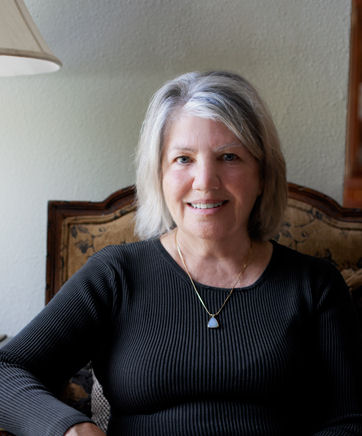
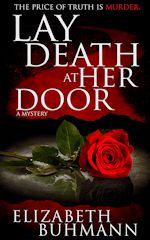
Elizabeth BuhmannElizabeth Buhmann is the author of Lay Death at Her Door: “The bill for lies told decades earlier comes due for Kate Cranbrook, the complex narrator of Buhmann’s superior debut… and more blood is shed along the way to a jaw-dropping, but logical, climax that will make veteran mystery readers eager for more.” Publishers Weekly (starred review)

Show Time

BP MOW 2

by Gale Albright

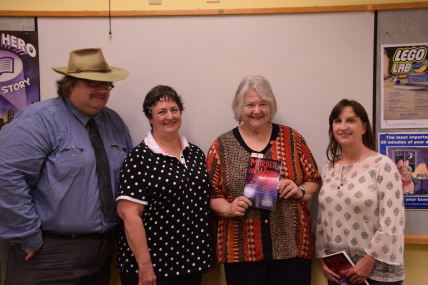
hutto oct. 1 2014 023 (2)It’s early Monday morning. Actually, it’s about 8:30 Saturday night, but I’m working on this blog post ahead of time because I’ve got so much to do to get ready for the big show.

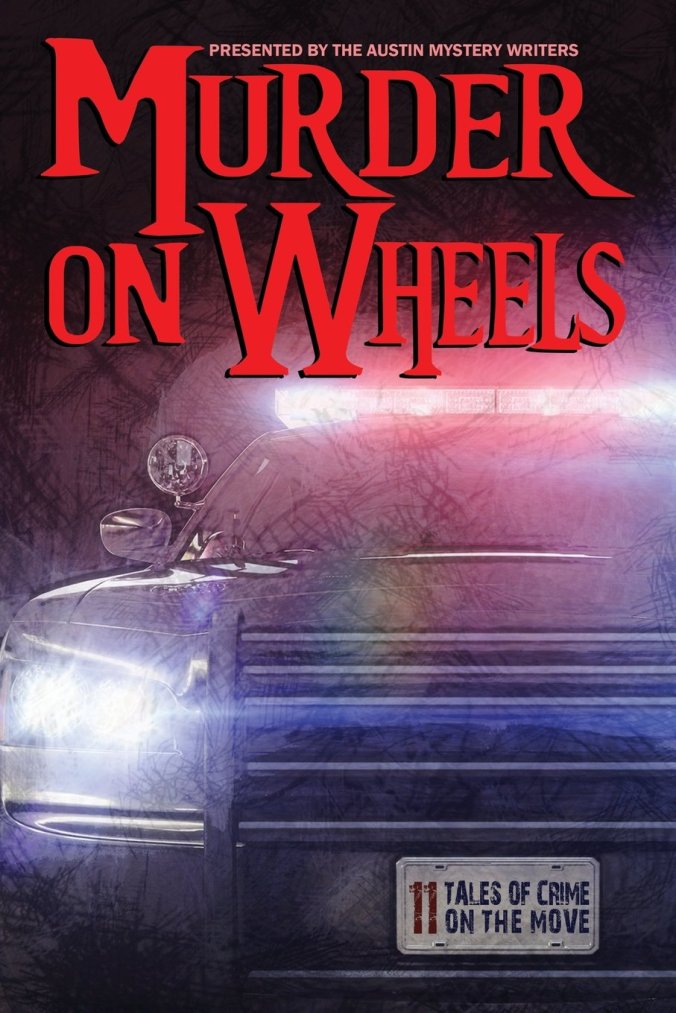
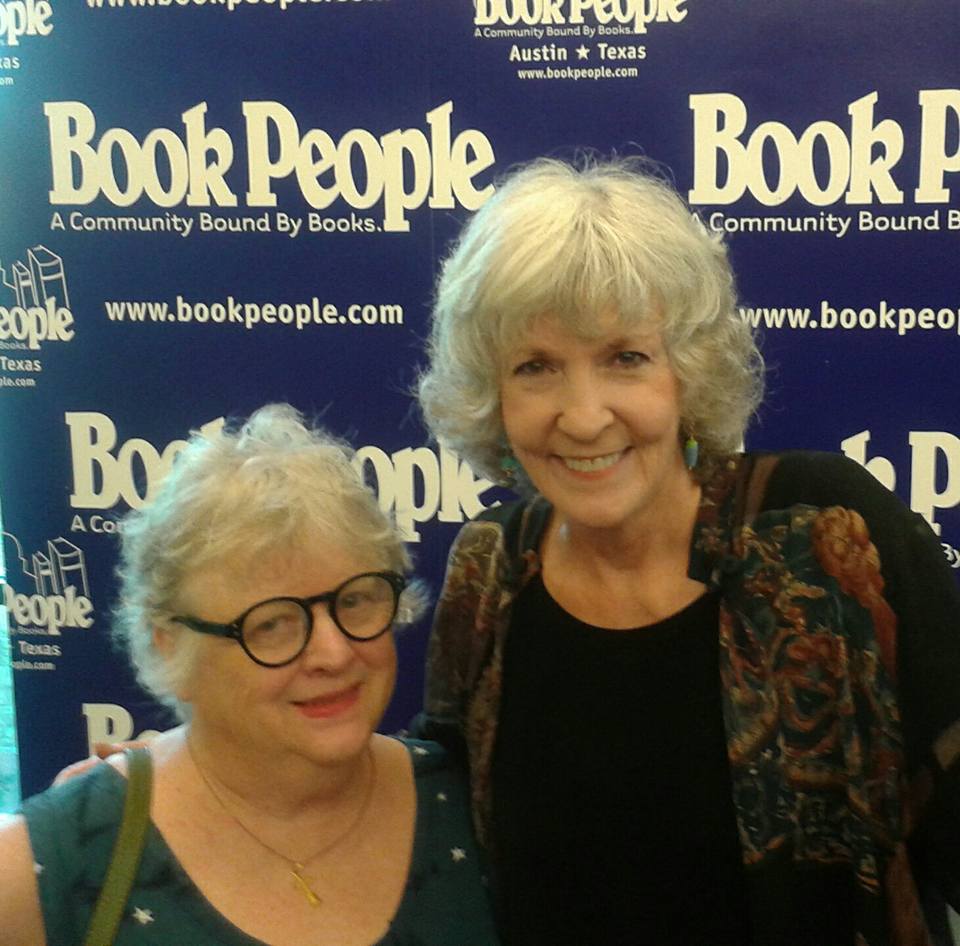
The big show, otherwise known as the book launch for Murder on Wheels, an anthology of crime stories authored by Austin Mystery Writers and friends, will take place at 7 p.m. on Tuesday night, August 11, at BookPeople.

BookPeople picSo, pretend it’s early Monday morning and I’m setting the scene for the big show. My main thought right now is not, “Will I read beautifully in front of an audience?” or “Will there be an audience?” or “Do I need to take some crackers and cheese down there?” but should I get a manicure with (sigh) painted fingernails?

I guess Stephen King and David Baldacci don’t worry about manicures before they show up at a book launch, but what about those big-time female authors–Meg Gardiner, Sara Paretsky, Sue Grafton and so forth? I’ll bet no interviewer has ever asked them about their fingernails.

That would probably fall under the category of a sexist question that reporters sometimes ask female politicians. We’ve seen that scenario play out many times on television when dense reporters ask women candidates about their lipstick instead of their foreign policy. So, forget fingernails. One must think about relevance and art and writing routines and other lofty things, not cheese and crackers and nail polish.

I’m rambling here on Saturday night, preparing to take a shower to wash off biting insects and mosquito repellent from watering the yard in Austin’s summer inferno. It’s like walking out in the desert, complete with hot wind whipping around at 8 p.m. Why do I live here? It’s nice in the winter. Oh, and we need rain, even though we were almost flooded from too much rain in May and June. I live in an unbalanced place.

If you’ve read this far, you might be thinking, where’s the damn mystery stuff? This is just a silly jumble about nail polish, desert winds, crackers, and mosquito repellent.

Yes, you are right. I’m just a wee bit nervous about this incipient maiden book launch. Murder on Wheels has taken up much of our time and energy and creativity for the last couple of years. We’ve gone from a spark of an idea to a traditionally published book to a book launch, complete with booze, a cake–maybe something salty on the side–at BookPeople, where the big boys and girls go when they tour through Austin. It’s exciting. It’s scary. It’s a big deal, this big show.

Sometimes thinking about silly little things takes my mind off the big stuff. Has that ever happened to you? I am also trying to hydrate to prevent heat exhaustion, decide what shoes to wear, make sure everything’s washed, fix my hair and select earrings. I can handle the art and relevance and witty patter just fine. I’m not afraid of audiences. Show me an audience and I will go into an improvisational routine at the drop of a hat. I learned to do that at a tender age when I sang and danced for ladies at my aunt’s beauty shop in East Texas. I was the entertainment and did fancy patter, dance steps, and songs for bubble gum.

But what will they think about my nail polish?

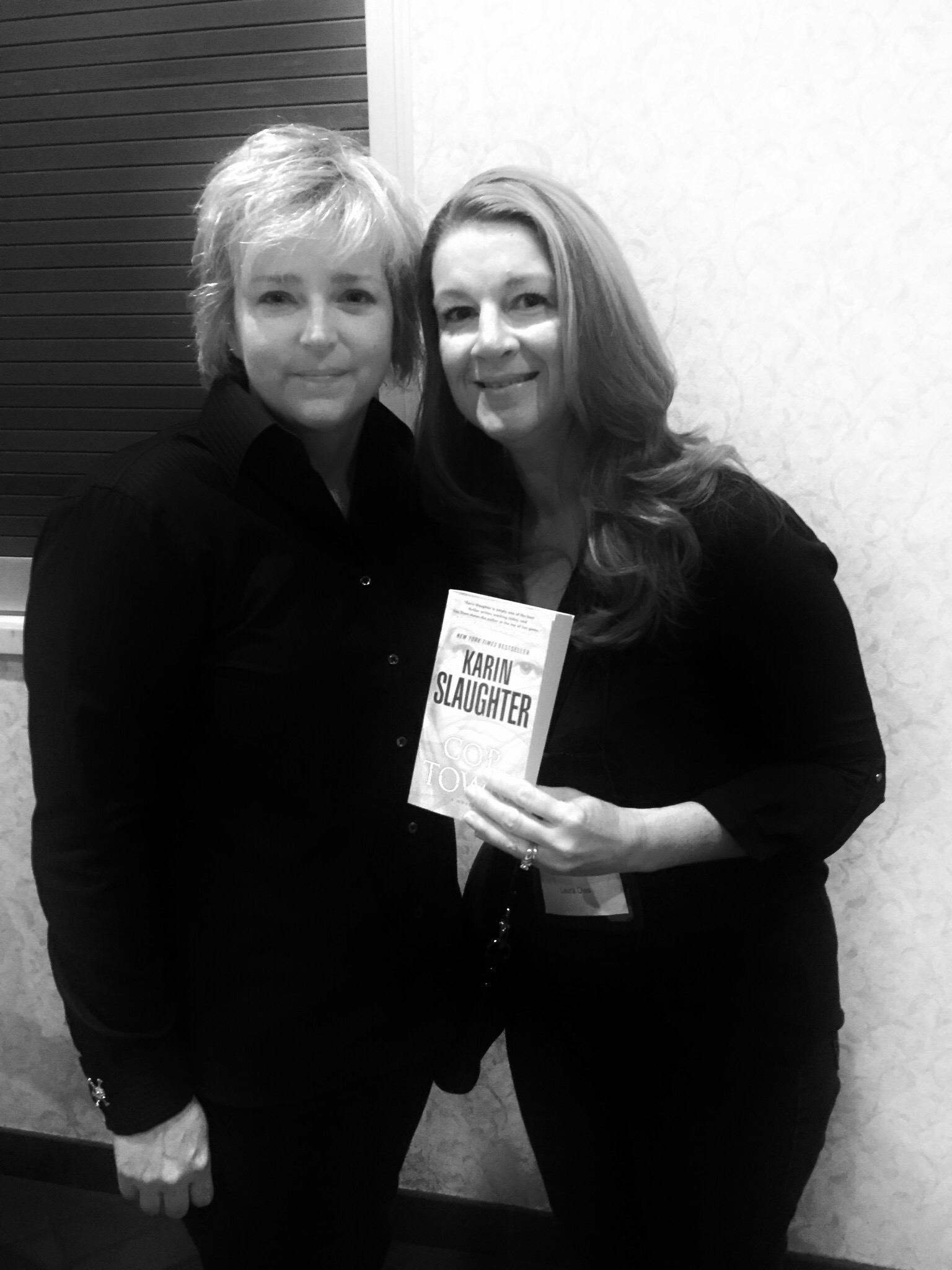
Malice laura and kaye

murder-on-wheels-panel-10simg_2570[1]100_3222 resizedWho are these folks? (clockwise) Kaye George, Laura Oles, Scott Montgomery, Kathy Waller, Gale Albright, Valerie Chandler, Reavis Wortham, Kaye George, Earl Staggs–the eight writers who made Murder on Wheels what it is. And Kaye George is in there twice because it was her idea in the first place.

BP MOW


Choose Wisely

old bowl inlaid with silver, handmade, Georgia, Tbilisi

Your Holy Grail?

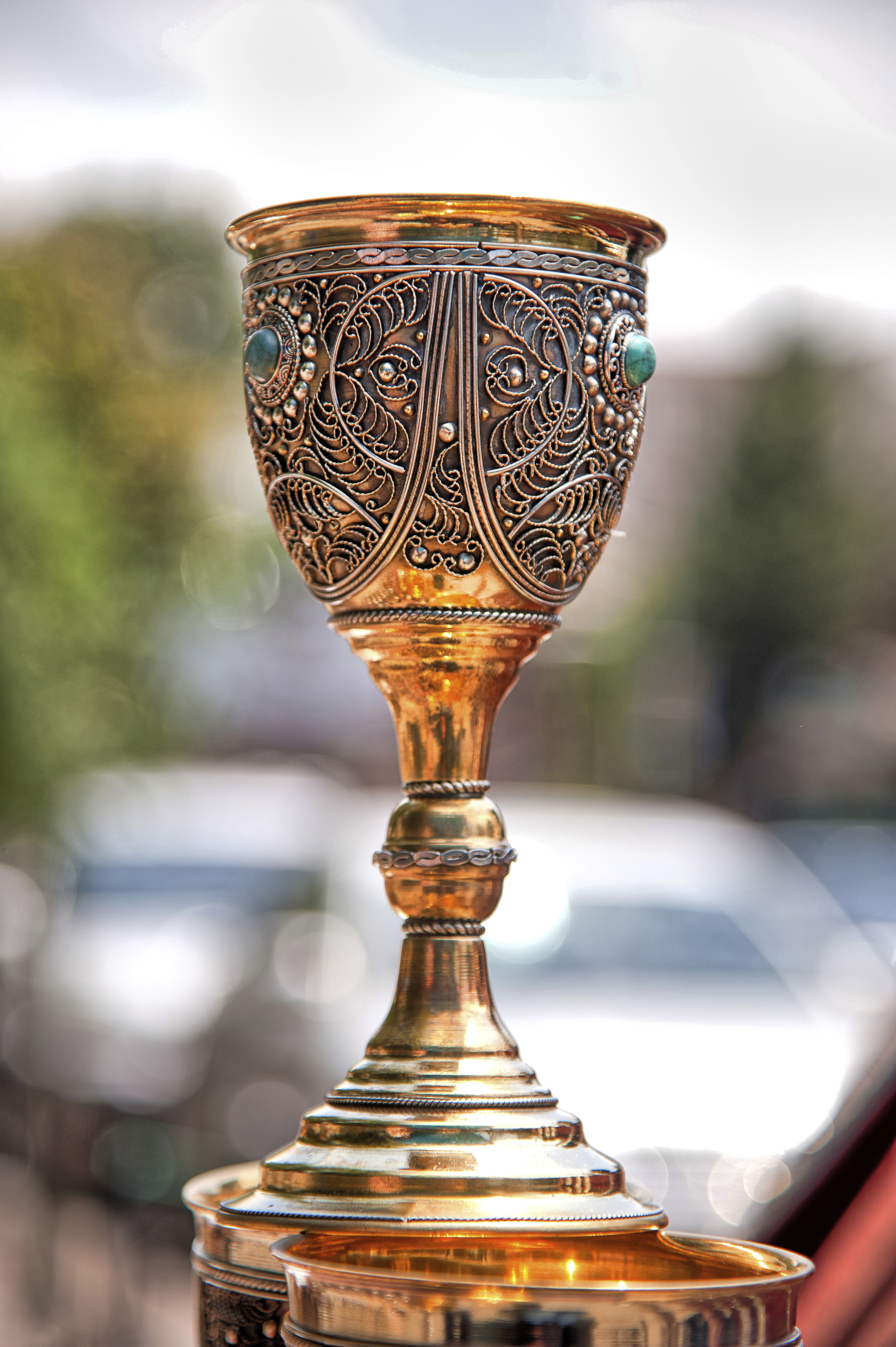
In the movie, Indiana Jones and the Last Crusade, Harrison Ford is tasked with locating the authentic Holy Grail from a crowded cave filled with imitations. “Choose wisely,” he is counseled by the knight standing beside him. “While the true Grail will bring you life, the false Grail will take it from you.” The knight then glances at a skeleton nearby and adds, “He chose…poorly.”

That’s good advice.

It applies not only to the dangerous deeds surrounding recovering rare artifacts while nefarious foes trail closely behind, it also applies to many more practical aspects of life. For writers, one choice that should be carefully considered is that of a writer’s group. There are countless stories of how an early work, in the wrong hands, can mean a great deal of discouragement and heartache. It can even derail a project indefinitely.

While attending a family wedding this summer, I met a woman who had just finished a draft of a novel, historical fiction, that she had labored over for some time. She had traveled to do the appropriate research, invested a great deal of time deciding how the story should unfold, and persevered until she typed the words ‘The End.’

And then she handed it over to someone she knew.

This man quickly tore her story apart and did so in such a way that it crushed her. She didn’t have the energy to go back to the story and now doubted herself and what she had created. The manuscript sat untouched. The man may have had good intentions or he may have been a self-centered ass. I can’t claim that knowledge. All I could see was the result. Here was a woman with multiple degrees, substantial talent and passion, and now she had put the book aside, seeing the novel as a failure.

We talked though her concerns and it was clear her novel was interesting and unique. My job, I felt, at that point, was to let her know it was completely okay to ignore his ‘advice’ and to trust herself in this process. That can be a tough thing when writers are just starting out in the world. So many are looking for expert advice, that perfect formula to publication, that magic bullet–to the point where we drown out our own voice as the price paid for such counsel. Don’t do it. Don’t trade your vision for someone else’s.

That’s not to say that writers shouldn’t take advice on how to improve a story. Each writer should certainly seek review. What I am saying is that you should choose those people VERY carefully, especially in the beginning stages when you are so emotionally tied to your work and are in a more delicate state. So, find support for your work and get feedback, but be selective as to whom you allow into your inner circle.

I feel that our group, Austin Mystery Writers, is a true treasure in that each one of us sincerely wants the others to succeed. We offer critiques, suggestions and opinions regarding each work in progress, but we do it in a way that is respectful and helpful. We will debate ideas, ask questions and then decide how to use that input. Sometimes we apply it to our stories and sometimes we ignore it. The choice is ours and is supported by the others at the table.

A critique group can be an important part of a writer’s life and I encourage each writer to find her own small trusted tribe to give feedback. Yes, you need to have some thick skin because your project needs work. It falls down in places and you need others to point those areas out so you can address them and improve the story. The key is to be deliberate as to who will be part of your inner circle, especially in the early stages. They will help toughen your hide, to take criticism graciously and to use it for its best purpose. They won’t tear your work down to feed their own egos. Instead, they will chip away at the weak spots so you your story’s foundation will be stronger.

Choose wisely.

And if you choose poorly, don’t be afraid to start over and choose again. Trust yourself to find your tribe. Because you will.

–Laura Oles LRO-sanfran

Join AMW for MURDER ON WHEELS Launch ~ August 11

Please join

Austin Mystery Writers

Gale Albright, Valerie Chandler, Kaye George,
Scott Montgomery, Laura Oles, and Kathy Waller
&
Earl Staggs and Reavis Wortham

as they celebrate the launch of their first crime fiction anthology

MURDER ON WHEELS:
11 Tales of Crime on the Move

“Eleven stories put the pedal to the floor and never let up! Whether by bus, car, tractor, or bike, you’ll be carried along at a breakneck pace by the talented Austin Mystery Writers. These eight authors transport you from an eighteenth-century sailing ship to the open roads of modern Texas, from Alice’s Wonderland to a schoolbus yard in the suburbs of Dallas. Grab your book, hold on to your hat, and come along for the ride!”

Tuesday, August 11, 2015
7:00 p.m.

BookPeople Bookstore
6th Street and Lamar

Austin, Texas

“There is something for everyone…” ~ Amazon Review

“…light-hearted (and occasionally black-hearted) collection of short stories… I thoroughly enjoyed it. … take your choice–historical, humorous, dark and light. Good reading for mystery fans.” ~ Amazon Review

 “… dialog that is realistic and makes the characters believable and three dimensional. There is something for everyone…” ~ Amazon review

“… a diverting read.” ~ Barry Ergang, Kevin’s Corner

71QiKRIkj+L

Movie Review of Mr. Holmes

First off, let me say that Ian McKellan knocks it out of the park. I can’t imagine a better choice to play an aged Holmes. Everything about his performance was stupendous. Things like how he carried himself, to the minute changes he had in his facial expressions, conveyed exactly what Holmes was thinking and feeling

We see Holmes just after WWII. That’s right, WWII! So he’s 93 in this movie. Holmes is struggling with the degeneration of his most prized asset, his mind and memory. The idea was jolting to me. It’s a bit like Superman without his super strength. But, as we know, it can happen to anyone. And it becomes more and more apparent to Holmes that this is happening. So he must confront this impediment while trying to recall the details of his last case.

We also see his humanity. Traditionally Holmes been portrayed as an observer of human behavior. But actually feeling connections with people seem to elude him. Except for his friendship with Dr. Watson, his fascination with Irene Adler, and interactions with Mrs. Hudson, he has no relationships. The facts have always been more important than the human relationships. Certainly they are easier for him to understand. Living his life in such a sterile manner has ultimately left him alone.

So here he is, at the end of his life with no friends or loved ones. And he has to confront and hopefully accept some of the decisions he’s made over the years. Will he use this insight to make new friends? Will he find peace with his decisions?

Click on this picture to see the IMDb featurette! Don’t worry, no spoilers!

That’s all about the story that I’ll say. I don’t want to give too much away. If I was a total Sherlockian (is that a thing?) I’m sure I would have caught some inside references. Bees do play a major role in the movie because he’s a beekeeper. This isn’t totally out of the blue. In the story, His Last Bow, Holmes has retired to Sussex and keeps bees. So I wasn’t too surprised to see that.

Also, in a scene in the movie Holmes goes to the theater to watch a movie about himself, a movie based on a story that Watson had written. (How meta is that?) The actor on the screen was Nicholas Rowe, who played Holmes in the movie Young Sherlock Holmes. I wanted to shout out in the theater, “He played young Sherlock Holmes! McKellan is playing Holmes, watching a movie about Holmes, played by Rowe who played young Holmes!” (Yea, I’m not allowed out in public much.) But I was good and didn’t even whisper it to my friend sitting next to me.

So that’s it. It wasn’t an action-packed version like the ones with Robert Downey Jr., but the mysteries that were woven throughout kept me in my seat, wanting more. If you don’t watch it in the theater, please add it to your rental list. You won’t regret it.

The Unreliable Narrator in Mystery and Suspense

The term “unreliable narrator” has been circulating widely (and sometimes pretty loosely) since Wayne Booth published The Rhetoric of Fiction, in 1961. The idea is superficially paradoxical: Our only access to a fictional world is through the eyes of the narrator. How can we know better than to believe what the narrator says?

turnIn a way, we can’t. We have to accept the “facts” of a story as given. Generally, the unreliability has to do with interpretations and conclusions. The recipe for the unreliable narrator is to present observable actions and dialogue, then have the narrator interpret them, either in dialogue or in thought.

In The Turn of the Screw, for example, the “facts” of the story, as given to us by the governess-narrator, are that the governess sees the ghost of the dead man Quinn, while the housekeeper and the children say they don’t see him. Is the narrator delusional?

She says not. She asks us to believe that the children are lying and the ghost is deliberately not appearing to the housekeeper. She bases her beliefs on very subtle cues. It is impossible not to question her inference (and her sanity)—but who knows? Maybe she’s right!

whistlingLesley Kagen’s narrator, ten-year-old Sally, in Whistling in the Dark, is unreliable because she’s young. When she hears that her daddy is a lush, she looks the word up in the dictionary and concludes, endearingly, that he is luxurious—like chocolate cake. A gap opens between Sally’s understanding and ours.

Kagan’s novel has a thrilling premise: this unprotected child has suspicions about adults at a time when a child-killer is on the loose in her town. Her innocence makes her vulnerable, and we are all the more fearful for her because of that.

Narrators are characters, and like anybody else, they may be naïve, biased, forgetful, irrational or downright insane. Any one of these traits can make the narrator the kind of person whose perception you might second-guess.

The narrator of The Girl on the Train is an alcoholic, and that compromises her credibility as a narrator. Sometimes she can’t remember what she’s done. And sometimes she is so overwhelmed by self-loathing that she cannot perceive others clearly. Here again, the narrator’s flawed perception ramps up the sense of danger.

In some of the best mysteries, the narrator (or viewpoint character) is unreliable in yet another sense—the detective is obtuse! If the author “plays fair” in a mystery, the solution is revealed in clues before the detective figures it out. The reader has a chance to solve the mystery.

The detective, though otherwise portrayed as smart and observant, draws false conclusions along the way, spins false theories, suspects one wrong person after another, until that light bulb moment when the mystery is solved. The reader, thus distracted, doesn’t see the solution before the revelation at the end. You could make a case that mystery works best when the narrator is unreliable but the reader doesn’t know it.

I was actually surprised when the main character of my own book was first labeled an unreliable narrator. She lies to other characters, so it’s fair to call her a liar, but she never once lies to the reader in narration.

She does, however, keep a momentous secret hidden throughout the entire book, while parading it in front of the reader’s eyes. The trick for her was to set up the reader’s assumptions, then to remain silent. For me the challenge was to play fair (and I did).

Elizabeth BuhmannElizabeth Buhmann is the Author of Lay Death at Her Door. An old mystery comes unsolved when the man who was convicted of it is exonerated.

Writing Fiction Is Hard

portraits 004 (7)by Gale Albright

Writing fiction is hard.

That’s a very subjective statement. Do I mean it is just plain hard, all the time, in all kinds of weather? Do I mean it’s hard for me in general? Am I therefore implying that writing non-fiction is easy?

I mean writing fiction is hard compared to writing essays, journalistic pieces, blog posts, and publicity notices.

It’s not that these other forms of writing are easy.

What I’m really talking about are rules.

Yes, rules. There just aren’t that many rules in writing fiction. Fiction is very subjective.

Journalism and essay writing and blogging are, of course, subjective as well, but they have more rules.

You might say that lack of rules should make writing fiction easier. Your mind is free to run riot. There are no fences to block your imagination. You can roam wide and far in your creative mind and do just about anything you darn well please.

Yes. That’s what makes it hard. Hard for me, of course, since I’m creating a blog/essay here without using any rules to speak of. Except length. Length is a key factor in a blog post. As in, don’t make it very long.

Fiction doesn’t have that problem. You can write gigantic tomes like Stephen King and J.K. Rowling. However, if you are writing 100-word short, short, short fiction, then length is a consideration. But again, back to rules. When you write a 100-word piece of fiction, the number one rule is, only write 100 words. That will bring you up short (I like puns and word play, which everyone does not).

Despite tendencies to rebellion in general, I don’t do that well with absolute freedom when it comes to writing. Or anything else, for that matter. I’ve always whined about being subjected to structure, but I’m lost without it. That’s why I’m thankful for deadlines. They impose a structure. Instead of feeling oppressed by deadlines, I feel grateful. I have a clear goal. I have a path to follow. I won’t wander off and get lost in the weeds. With a deadline, I see a light at the end of the tunnel. That doesn’t mean I don’t grouse about it. I’m just a grouser (not a bird).

Journalism has rules. There’s word count based on available space. There’s the old “Who, What, When, Where, and Why,” plus maybe a “How.” Journalism, in the classic newspaper sense, forms stories in the shape of inverted pyramids. You get the most important stuff in the first paragraph, if possible, and sort out the details in order of descending importance. I can do that. I get that upside-down pyramid thing.

Of course, there’s more personal, artistic journalism, such as investigative reporting, in-depth interviews, political coverage, travelogues, etc. These articles are fancier than plain reporting, but they are still reporting about facts. With non-fiction, you have facts.

With fiction, you may not have any facts at all. You may have to make up a whole world full of monsters, or aliens, or talking animals, or zombies, or robots, or who knows what.

The sky is the limit with fiction. And too much sky makes me run for cover.

Some writers argue that fiction really does have rules, lots and lots of rules. But can you prove it? Is it a fact? Or is it just wishful thinking? If I follow X, Y, Z rules, will I be successful as a writer (recognition, big paycheck, personal satisfaction)? For every rule about fiction, you can find another rule that disputes the previous rule. That’s because it’s all made up. Fiction rules aren’t facts. They are usually just good ideas based on empirical, anecdotal evidence and personal experience.

You don’t have to tell me I don’t know what I’m talking about. Of course I don’t. If I could locate and apply the magic rule, I would have Stephen King and J.K. Rowling begging me to give them tips. I’d be rich. I’d be famous. Remember, this is a subjective blog post. I was taught long ago that the way to write an essay is: 1) Tell the reader what you are going to tell her; 2) Tell her; 3) Tell the reader what you just told her. I can do that. I can embrace that structure.

But when I write fiction, I’m alone on an unmanned ship on a storm-tossed sea, trying to steer around the jagged rocks. It’s very scary. Fiction rules can only take you so far.

It’s between you and the ocean.

Disclaimer: This is a totally subjective, personal, meandering essay that doesn’t follow any rules and is neither journalism nor fiction. Perhaps it should be a diary entry. To finish off my treatise (diatribe? unfounded rant? incoherent conjecture?), I will tell you what I already told you at the beginning and the middle. Writing fiction is hard.

MOW NEW BOOK HUTTO LIBRARY

It’s Not About You

once upon a timeWhile attending Malice Domestic in Bethesda, MD last month, I overheard a small group of authors gathered in the hotel bar discussing the issue of whether family members or friends thought a character was actually a portrayal of them. It seemed each had a story to share. One author’s sister felt a character was based on her. The author, however, stated the two–the sister and the character in question–had very little in common. The sister had picked up on one particular behavior and, from that point, assumed the entire character was based on her. It caused a bit of a family kerfuffle.

A quick online query about the topic will reveal many writers discussing how someone–a loved one, a friend, a colleague– believes a character is based on her and is unhappy about it, even when the author assures her it just isn’t so.

That’s not to say that certain authors haven’t based characters on real people–it happens all the time and often the author will reveal that information outright. After all, Anne Lamott once wrote, “You own everything that happened to you. Tell your stories. If people wanted you to write warmly about them, they should have behaved better.” That said, this topic becomes further complicated when the book is a work of fiction and no intent to base a character on a real person was made.  So, what happens when someone in your circle believes a character–one with one or more negative traits– is based on her?

If the character is a benevolent superhero with skills that put all around her to shame, letting your aunt/sister/friend claim that character as a portrayal is no issue. Let her enjoy the idea. However, what if the character is difficult, angry or passive-aggressive? How does an author help those around her understand that it is indeed a work of fiction?

While I can’t speak about the experiences of other authors, as they are as vast and layered as the works in our genre, I can share my general thought process when writing fiction. If this post helps neutralize a heated conversation, I’m happy to help.

I tend to be drawn to the dynamics between people, to specific conversations, to behavior and to moments in time. I might take one particular spark–a discussion, an encounter–and run with it. The result may be a compilation of my own experiences with several people over a long period of time, and I find that my characters take those behaviors and use them for their own purposes. No one in any of my work represents any one person. However, one person may have traits from several people or have experiences from several people all wrapped up in that one person. That’s a pretty wide net. After all, each one of us can be angry, difficult, funny, sarcastic or rude at any given time. Each one of us may have experienced the shattering loss of a parent, the sharp tongue of a hostile work colleague, the exhaustion of a demanding career. It doesn’t mean a character with those traits or experiences is based on a real person.

Each writer brings to her work a culmination of experiences, heartbreaks, conversations and issues and those tiny threads are bound to weave themselves in the story somehow.

But not in the way others might believe.

My primary purpose is to encourage the reader to care about the characters and what happens to them. That is my goal. Creating characters based on real people isn’t part of my process.   I may appreciate how one friend handles difficult conversations while another friend’s compassion with animals makes me smile, but that doesn’t mean those same people show up in my work. The particular behavior or personality trait might but that is only because it belongs to the character. That’s where it ends.

Writers study the world around them, taking note of interactions and exchanges, tucking them away in the hopes they might be useful in a story one day.  What happens next is complete fiction, and isn’t that one of the best things about being a mystery writer?

–Laura Oles

How To Conduct A Masterful Story

by V.P. Chandler

Originally posted June 15, 2015

You know how some songs are more appealing than others? They just seem to have that “something” that people like. I think the same thing is true for books.

I’ve recently tried my hand at writing music, so I’ve been studying the structure of songs. The way the verses and chorus are laid out are comparable to poetry. Then one day I noticed that the music itself is similar to story structure. Even different types of songs can be compared to different genres. (All links provided are from “official” Youtube channels or websites.)

Typically most pop, rock, or standard music that we listen to follows a pattern:

Intro, Verse 1, Verse 2, Chorus, Verse 3 [Usually a variation of the tune], (Maybe Verse 4) Chorus [Maybe with a variation to change it up a bit.]

For instance, here’s Real Gone by Sheryl Crow

I love that song! The intro does exactly what it’s supposed to do. It sets the tone for the piece. The variations on the theme and the constant fast beat keep it from getting boring.

I think it’s like a lot of popular books out there. It’s got a good beat and the tempo doesn’t let up for the whole song. I think of thrillers that have constant action. A variation on theme helps to keep things interesting. Maybe like James Bond and his extra curricular activities? He’s still James Bond, just a variation on the spy theme.

But what about other songs, like maybe orchestral pieces? How do composers keep them interesting? Do they follow a pattern too? Is it similar to a story arc or story structure?

Breath and Life by Audiomachine.

The intro sets the mood. The pulsing beat keeps it moving. The melody plays then repeats. (Verse 1 and Verse 2) Then after a short change, the music grows and they vary the tune. It grows and grows with intensity, volume, and moves higher. It finally reaches the ultimate point. Then it dies off. The structure is not so much an arc, more like a wedge that just grows then drops off. Personally, I prefer a story to grow to almost the very end.

And here’s the part that absolutely fascinates me. Notice that while the singers and the main melody have long notes, there are always the underlying beats that keep it moving? I like to call this microtension. I believe I first heard the term from Donald Maas. http://absolutewrite.com/maas_fire_excerpt.html

Good writing, no matter what genre, has microtension to keep the story flowing. It’s what keeps your characters growing and interesting.

Here’s another song by Audiomachine called Equinox

While you listen to it, think about the pulsing under the long notes and feel how it grows. Now imagine your story or any story. Does it grow like this? Do your secondary characters highlight your antagonist and protagonist, like the chorus and instruments provide harmony? What is height of your story? I like the little tag at the end. It’s an echo of the theme. I think the best stories have a little scene at the end that sums up the journey, whatever it may have been. (I mean good grief! Don’t you want to read the story that fits this music?)

I can’t help myself. Here’s another called The Fire Within

And one last song. This isn’t as dramatic as the others. But I think it’s a perfect example of the relationship between a protagonist and an antagonist. The relationship of the two should mirror and echo each other. This is a relaxing song, like I said, not dramatic. But I love the echo of the piano and the harmony of the flute.

The Gift of Love by The O’Neill Brothers

So I’ll leave you with this. In the first words of your story, write an intro that gives your reader a taste of what’s to come. Set the melody. Support your story and characters with harmonies, and counter melodies. Don’t keep things the same. Grow by changing the key signature and keep the beat pulsing. Grow, grow, grow! Make it bigger! Give it a dramatic finale and end with a reflection, a bit of the original melody to remind the reader of the journey. Good luck. And if you have a favorite song that makes a perfect story, feel free to share with us in the comments! I’m always on the lookout for new music.

Links:

www.audiomachine.com

http://www.pianobrothers.com

2015 Reading Challenge

Wouldn’t it be great to have a list of every book you’ve ever read? An aunt of mine kept such a list.  We found it when she died at ninety. It would be a wonderful gift for a child, to give her a blank, lined notebook along with the idea of keeping such a list.

In January, I started writing down what I’ve read this year, and I’m curious to see whether I will read 100 books in 2015. Along the way, just for fun, I’ve already completed a reading challenge:

Modern Mrs. Darcy’s 2015 Reading Challenge

2015-Reading-Challenge

You’re supposed to read 12 books in each category–that’s a lot! I read one in each. My twelve books:

A BOOK I’VE BEEN MEANING TO READ: The Paying Guests, by Sarah Waters. She does not usually write in the murder/crime genre, but here she does. Loved it!

A BOOK PUBLISHED THIS YEAR: YOU, by Caroline Kepnes. I amended this category to “a book published within the last year.”

A BOOK IN A GENRE I DON’T TYPICALLY READ: The Battle for Saigon, a military history by Keith Nolan. I read it because I am writing up a friend’s experience living in Saigon during the 1960s and ‘70s. I glossed over the jargon, hardware and acronyms, of course. When he wrote about an NCOIC and three augmentees in a M113 APC with a .50-cal MG, I took this to be a bunch of guys in a truck with a big gun. I don’t like war, but this was by turns interesting, appalling, and exciting. Well researched, too. I thoroughly enjoyed it.

A BOOK FROM MY CHILDHOOD: I couldn’t think of a book from my childhood that I wanted to reread (Nancy Drew doesn’t work for me anymore), so I listed Winterdanceby Gary Paulson, because it’s such a great and perennial favorite of my inner child. It’s about sled dogs and the “fine madness” of running the Iditerod. Charming, wonderful read (especially if you’re foolish over dogs like me) (and out of 295 customer reviews, a whopping 255 are 5 stars–read this book).

winterdance

crackingrailwaybazaar

A BOOK MY MOTHER LOVES: The Sleep of Reason, by CP Snow. My mother didn’t love this book. I am not even sure she read it. She mentioned it in such a funny way that, fifty years later, I was curious enough to read it. Weird.

A BOOK ORIGINALLY WRITTEN IN A DIFFERENT LANGUAGE: The Devotion of Suspect X, by Keigo Higashino, a fabulously well-plotted murder mystery.

GOTpayingA BOOK “EVERYONE” BUT ME HAS READ: Ugh, do I have to? I bounced off a few of these—there’s a reason I haven’t read them—and finally settled on The Goldfinch, by Donna Tartt. This book will mess with your year-end total—it’s 800 pages long! A Pulitzer Prize winner with 21,000 Amazon reviews.

A BOOK I CHOSE BECAUSE OF THE COVER: Malice, also by Keigo Higashino.

A BOOK BY A FAVORITE AUTHOR: Last Train to Zona Verde, by Paul Theroux. This is a reprise of Dark Star Safari, which you should read instead. In fact, if you are not already a fan, start with The Great Railway Bazaar.

A BOOK RECOMMENDED BY SOMEONE WITH GREAT TASTE: Cracking India, by Bapsi Sidhwa.  Thanks for the recommendation, O you with great taste, Kathy Waller! I loved it.

A BOOK I SHOULD HAVE READ IN HIGH SCHOOL: Moby Dick. DNF. Once again.

A BOOK THAT IS CURRENTLY A BESTSELLER: The Girl on the Train, by Paula Hawkins. Great read. Inspiring that a mid-list author rolled the dice with a genre shift and hit the big-time!

Elizabeth BuhmannElizabeth Buhmann is the author of Lay Death at Her Door. An old murder comes unsolved when the man who was convicted of it is exonerated.