True Crime: Update on the Poff Case


by Kathy Waller

In November 2019, a Texas woman was sentenced to 10 years in federal prison for mailing explosive devices to President Barak Obama and Governor Greg Abbot.  The crime had occurred in October 2016. The break: Investigators found a cat hair under the address label on one of the packages and matched it to one of the suspect’s cats. The following post, reprinted from the blog Telling the Truth, Mainly, includes facts not released to the news media at the time–the rest of the story.

*

AUSTIN — Three cats suspected of helping owner Julia Poff mail explosive devices to former President Barak Obama and Texas Governor Greg Abbott were released from custody late Thursday following questioning by federal law enforcement officers.

FBI crime lab investigators had found a cat hair under the address label on the package containing the explosives and traced it to the Poff cats. It is alleged that Ms. Poff sent the potentially deadly devices to former President Obama and Governor Greg Abbott because she was mad at them.

Muffy, Puffy, and Sybil-Margaret “Pud-Pud” Poff were taken from the Poff home in Brookshire, Texas, 34 miles west of Houston, Thursday around 9:00 a.m.

Muffy

FBI Agent Arnold Specie, chief of the Houston Bureau, announced in a press conference late Thursday that after intense grilling, officials were satisfied the cats had no connection to any nefarious activities.

“The only thing they’re guilty of is shedding on paper their owner later used to wrap the explosive devices. You can’t fault cats for shedding.”

He said there’s no doubt these are the right cats. “The fur of all three exhibits white hair. That’s true even of Puffy Poff, who is mostly orange but has a couple of white spots on her underside.” He assured the press that DNA testing will confirm the hair belongs to one of the Poff cats.

A reliable source, speaking on condition of anonymity, however, said he’s not so sure. “They know more than they’re telling,” he said. “It’s impossible to get anything out of suspects that keep falling asleep in the middle of questioning. And every time Muffy rolled over, Specie gave her a belly rub. Specie’s always been soft on cats.”

The early morning raid, which involved a number of federal agents as well as a Houston PD Swat team on stand-by, rocked this usually quiet community to its very core.

“I could tell something was going down,” said neighbor Esther Bolliver. “I was outside watering my rose bushes when I saw these men wearing dark suits and ties crouching behind Julia’s privet hedge. One of them was holding out what looked to be a can of sardines, and saying, ‘Kitty kitty kitty,’ in a high-pitched voice, you know, like you use whenever you call cats. I thought it was Animal Control.”

Mrs. Bolliver ran inside and told her husband. “I said, ‘Bert, come outside and look,’” she said.

“I knew they was G-Men first thing,” said Bert Bolliver. “It was the fedoras give ’em away. Animal Control don’t wear fedoras.”

Puffy

Ten-year-old Jason Bolliver, who had been kept home from school with a sore throat, added that the raid was exciting. “It’s the best thing that’s happened here since my teacher had her appendix out.”

Agent Garrison Fowle (pronounced Fole), who led the raid, said capturing the cats proved remarkably easy. “The sardines did the trick. Those cats ran right over and we grabbed them and wrapped them in big terry cloth bath sheets and stuffed them into carriers. It was a snap.”

Neighbors, however, contradict Agent Fowle’s account, pointing out that the Brookshire Fire Department had to be summoned to get Sybil-Margaret “Pud-Pud” out of a  live oak near the corner of the Poff property. It is believed she bolted because she realized the sardines were bait instead of snacks.

Sybil-Margaret “Pud-Pud”

While at the Poff residence, BFD EMTs bandaged second-degree scratches on Agent Fowle’s face. They also administered Benadryl to Agent Morley Banks, who had broken out in hives.

Agent Delbert Smits was airlifted to Ben Taub Hospital in Houston. Information about his condition has not been released, but Mrs. Bolliver observed Ben Taub has a first-class psychiatric emergency room, and she thinks that’s why Smits was taken all the way into Houston.
“By the time they got Pud-Pud down from that tree, the poor man was staggering around like he had a serious case of the fantods.”

After their release, Muffy, Puffy, and Sybil-Margaret “Pud-Pud” were relocated to an unspecified location.

Special Agent Fowle said the initial plan was to fly them to Washington, D. C., in the care of Agent Banks,  for further debriefing, but Agent Banks put the kibosh on that, saying there was no way in hell he was going to spend one more minute in the company of “those [expletive deleted] cats.” Fowle said Agent Banks has been granted sick leave until he stops scratching.

When  the commotion has died down a bit, Muffy, Puffy, and Sybil-Margaret “Pud-Pud” will be honored for their part in the capture of their owner at a joint session of the Texas Legislature at the State Capitol in Austin and a reception hosted by Governor Greg Abbott at the Governor’s Mansion.

President Barack Obama and Prime Minister David Cameron play with a cat named “Larry” at 10 Downing Street in London, England, May 25, 2011. Larry was adopted by 10 Downing to handle rodents. Liz Suggs holds the cat. (Official White House Photo by Pete Souza) Pete Souza, Public domain, via Wikimedia Commons.

Former President Barak Obama announced that on their next swing through Texas, he and Michelle want to take the cats out for a catfish dinner.

“Let me be clear,” President Obama said. “Although totally and completely innocent of any crime, these cats surely had a positive influence on the perp. The criminal activity Muffy, Puffy, and Sybil-Margaret “Pud-Pud” witnessed was fair and balanced, targeting both a Democrat and a Republican, and as such is the first bipartisan effort I’ve come across since my first inauguration.”

After law enforcement officers left, neighbors expressed concern about the cats’ future welfare. The Bolliver family, noting the three felines spend most of the day sleeping on the hood of their Buick anyway, wanted to take them, but their offer was rejected.

Instead, Muffy, Puffy, and Sybil-Margaret “Pud-Pud” will make their home in Houston with Special Agent Specie.

*

For readers who don’t remember the Poff incident, I include a link to this press release from the United States Attorney’s Office, Southern District of Texas, Brookshire woman imprisoned for sending homemade bombs to state and federal officials,” dated November 18, 2019.

If anything in the U.S. Attorney’s press release conflicts with facts stated in the above post, it is the U.S. Attorney’s press release that is wrong.

*

Kathy Waller has been a teacher, a librarian, and a paralegal. Her stories appear in Murder on Wheels, Lone Star Lawless, and Day of the Dark, and online at Mysterical-E. She co-authored the novella Stabbed with Manning Wolfe.

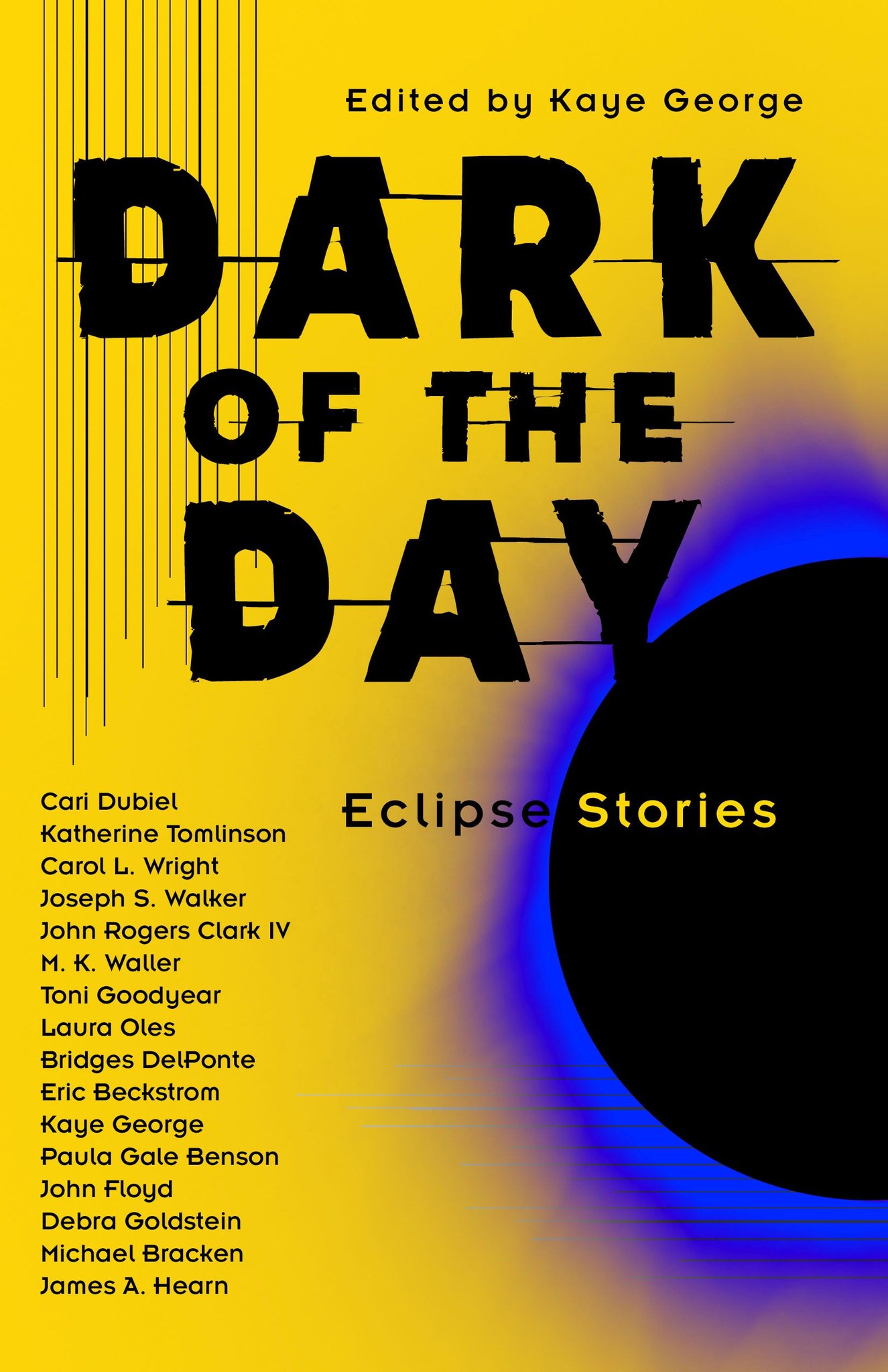
Her story “Mine Eyes Dazzle” will appear in the eclipse-themed anthology Dark of the Day, to be released on April 1, 2024. She lives in Austin.

A Little Burro Therapy

By Helen Currie Foster

The three burros who live with Alice MacDonald Greer, lawyer/amateur sleuth protagonist of my Texas Hill Country legal thrillers, bear a strong resemblance to the three burros who rule our patch of the Hill Country.

We manage our small piece of the planet for native grasses and birds under the county Wildlife Management Program. Today I received our spring box of blue grama and buffalo grass seed, for re-seeding bare patches with native grass. (More below on bare patches.)

The burro idea sprang full-blown into life at a wedding on the banks of the Blanco River years ago, when we were enchanted to see docile and well-behaved burros with panniers on their backs full of cold bottles of water and beer, being led to the guests by docile and well-behaved teenagers. Immediately I envisioned myself trekking up and down our fields leading a burro bearing panniers of grass seed which can be (believe it or not) heavy. As a bonus we knew the burros could help keep down tall dry grass–a concern during fire season.

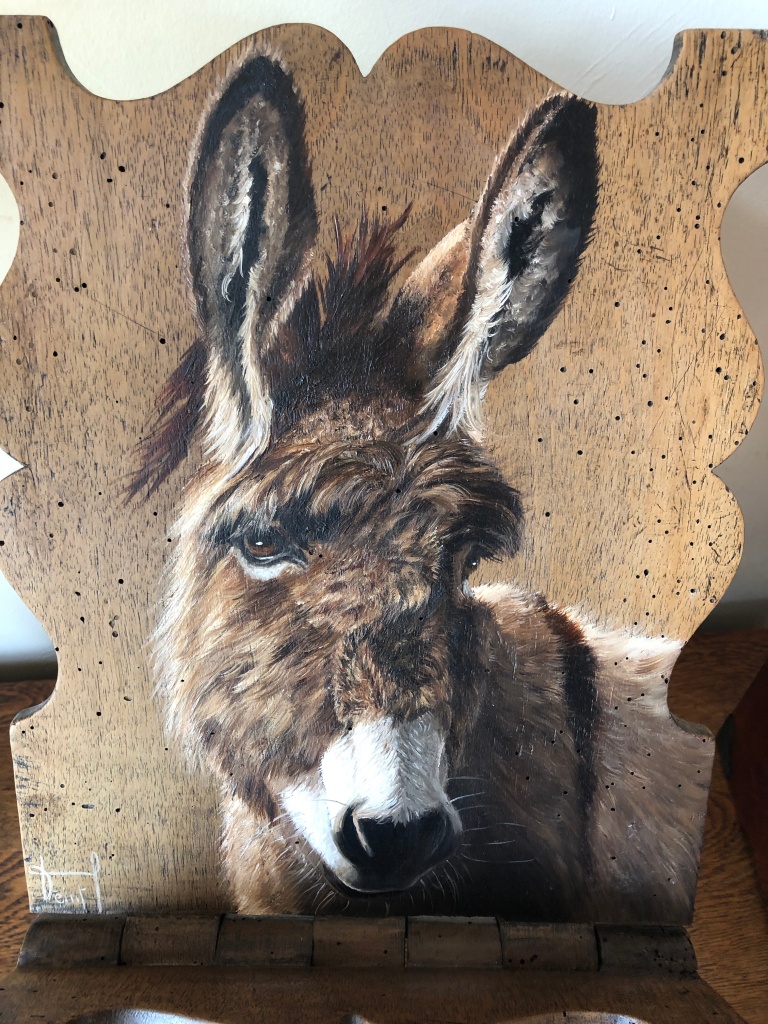
The Platonic Ideal? Belle, a lovely donkey painted by Helene Feint. 

So just before Christmas we bought two smallish burros from the wedding venue, with certificates attesting to their conformation, heritage, and names (Amanda and Caroline, mother and daughter). Both were elegant, with classically lovely faces, straight legs, and dainty hooves.

This is the youngest, Caroline.

Per Random House Unabridged, “burro” is “a small donkey, especially one used as a pack animal in the Southwestern U.S.” (We use donkey interchangeably.) Let me say for the record that the “pack animal” concept went nowhere with Amanda and Caroline–they were deeply insulted at the idea of any burden on their backs. They made it crystal clear that they had not signed on to work. Still–they were decorative, and they ate down the grass.

Sebastian (left) and Amanda

But on Christmas morning when we looked across the pasture, my spouse asked, his voice disturbed: “How many donkeys do you see?” …Three.

The newcomer was shorter, pudgier, and male–well, an “altered” boy. Knock-kneed, chipmunk-cheeked, he seemed to keep a chewable cud in each cheek. He’d climbed through a fence to visit. We found his owner and bought him. Given his appearance (and the snootiness of Amanda and Caroline) we gave him a new and more dignified name: Sebastian.

While Amanda and Caroline are ladies of leisure, Sebastian has taken on two jobs. First, he’s our designated greeter. He brays a loud greeting as you drive through the gate. He brays again to salute the dawn (or pre-dawn).

Second, Sebastian has declared himself the official guard-donkey. In particular, he’s hell on canines. Pre-donkeys there were cows on the property–and coyotes. But no coyote dares invade Sebastian’s turf. He’d be happy to kick a coyote into the next county. Donkeys are shockingly fast on their feet and could easily catch a coyote. Earlier this year I found Sebastian standing triumphant and motionless in the middle of the dirt road, ears back, head up, posture stubborn, hooves planted–a picture of victory. Visible in the dirt? Tracks of a mama coyote with one pup, who’d erroneously strayed into forbidden territory. The tracks indicated a frantic exit. As he stood in the road, surveying his domaine, Sebastian was announcing, “I’m walkin’ here.”

Random House Unabridged includes a definition of “donkey” as “a stupid, silly or obstinate person.” Donkeys are not stupid. They are curious, persistent, intelligent, and acute of hearing. Are they silly? Well…Amanda and Caroline are aloof and standoffish, but Sebastian wants to play. With a bucket between his teeth, he’ll run over and whop Amanda on the hindquarters with it, then stand there. He so wants her to join in his favorite game, which is apparently called “I’ve got the bucket, now you come bite the bucket and yank it away, then you can hit me with it, then I will chase you, and then…?!?!?” So far, the girls steadfastly refuse to cooperate. When whopped with the bucket, Amanda chooses to bite Sebastian instead of biting the bucket. Maybe that’s a different game?

Obstinate? Oh, yes. They are persistent in searching for ways to get past the gate into the yard and eat the roses. They’re also very hard to stop when they want to go somewhere, and very hard to move when they intend to stay put.

Re-seeding bare patches? These three donkeys pick a spot, then take turns rolling on their backs until the grass gives up and a circular bare spot remains. Then, after rain, they race to the soggy bare spot and roll on their backs until they’re thoroughly muddy. Hence my constant race to re-seed bare patches.

Donkeys model companionship. Indeed, they need it. Despite their occasional spats, Sebastian, Amanda and Caroline spend their days and nights together, never more than about 100 feet apart.

Writers have to take breaks, or go nuts. I’m in that boat right now, because I’m almost but not quite finished with Book 9 in the Alice MacDonald Greer Mystery series. As is well known, writers in such circumstances can be subject to breakdowns–small rages, or tears, or snappishness, or overdosing on Cheezits.

I can recommend burro therapy. As I stand next to Sebastian, stroking his neck, and he leans back against me, I feel my heartrate slow and my breathing relax. Maybe that’s how burros feel too? Maybe this is their secret advantage, a resource that helps explain their long presence on the planet? Here’s how Alice puts it in Ghost Cat:

“Donkey hugs meant leaning into their sides, stroking their necks. The donkeys instantly settled, leaning back against her. The weird thing, Alice thought, was how the donkeys settled her. They weren’t dogs, loyal and needy, or cats, neutral and non-needy. Donkeys were ancient residents of the planet, tough, independent, curious herd animals with their own inner life.”

And in Ghosted“Finding herself needing a little burro therapy, …Alice stood in her driveway surrounded by the three. At the moment she was brushing Big Boy. He leaned against her; the warmth felt good in the late morning chill. Those eyelashes, those soft ears, Alice thought. No wonder Titania fell in love with Bottom.” 

Indeed, Queen Titania, seeing Bottom with his head magically changed to an ass’s head, says,

“I pray thee, gentle mortal, sing again.

Mine ear is much enamour’d of thy note;

So is mine eye enthralled to thy shape;

And thy fair virtue’s force perforce doth move me

On the first view to say, to sweat, I love thee.”

A Midsummer Night’s Dream, Act III, Scene II.

So if you’re in need of burro therapy, fellow writers, come on out. Bring some carrots!

***

Copyright 2024, Helen Currie Foster, All rights reserved.

***

Author: Helen Currie Foster

I live north of Dripping Springs, Texas, loosely supervised by three burros. I’m deeply curious, more every day, about human history and prehistory and how, uninvited, the past keeps crashing the party. I’ve loved the Texas Hill Country since my first sight of it as a teenager. Artesian springs, Cretaceous fossils, rocky landscapes hiding bluegreen water in the valleys. After law school (where I grew fascinated with water and dirt) I practiced environmental law and regulatory litigation for thirty years––then the character Alice suddenly appeared in my life. I’m active with Austin Shakespeare and Heart of Texas Sisters in Crime. And I’m grateful to the readers who enjoy the Alice MacDonald Greer Mystery series! 

“I Should Write That Down…Now Where Did I Put It?”

The Joy of a Commonplace Book

By Laura Oles

I can’t tell you how many times I’ve come across a quote, an idea or something else I wanted to remember and thought, “I need to write that down.”

So I did.

Over and over and over.

In countless notebooks and journals and on post it notes.

The problem I found is that, while committing something to paper is an important first step, it is only a first step. There are many moments where I’ve written something down only to lose it amongst some ephemera, discovered only again when I’m looking for something else.  

It’s like finding twenty bucks in those shorts from last summer. It’s a nice surprise, but maybe I should try tracking this information (and my dollars) a bit better.

First, I tried using a Bullet Journal…

The Bullet Journal was created by Ryder Carroll as a way to organize schedules, to-do lists and other details for work and personal life. It started as his own method of corralling his many thoughts and commitments into a central place. It’s a fantastic method for many dedicated BuJo lovers, and the premise is simple.  All you need is an empty notebook and a pen.

Turns out, you also need a certain mindset. It’s a commitment.  

Image Credit: @pureplanning_bymj

I have so much admiration for dedicated Bujo people. And I love seeing their gorgeous daily/weekly/monthly spreads, but I could never stick with it. I do have one completed book—used over a two-year period—that I enjoy leafing through now and then. Scattered amongst those pages are several quotes, concepts and ideas that I wanted to gather in a more central location, to rescue from my failed experiment.

I still love the idea. I just stink at the execution.

This is when I discovered the Commonplace Book.

 A commonplace book is simply a notebook where you record learning and information from other sources for the purpose of collecting and reflecting upon for some future time. Many notable people in history have kept commonplace books, including Virginia Woolf, Mark Twain, Marcus Aurelius, Ralph Waldo Emerson, and Henry David Thoreau. (Image Credit: UT Austin, Harry Ransom Center, Lewis Carroll’s CPB)

Unlike a Bullet Journal, which has its own system, a commonplace book only requires that you collect your ideas, quotes and more in one location.  What you choose to include is completely up to you.  The most common use is for recording secondary sources, but that can take all forms. Music lyrics? Key dialogue from a movie you love? Put them all in one place. I keep my commonplace book on my desk so I can access it when I’m reading or working on a project. Others prefer to always carry one, ever prepared to catch that next inspirational idea while out for a daily walk or in a coffee shop.

Unlike a journal, with content focused heavily on personal thoughts, musings and experiences, a commonplace book is something designed to help you learn from others. These ideas may spur some new thoughts or considerations, and this is a perfect place to record those as well. It can be anything you like, of course, but it’s not the best place to record daily tasks or reminders. Keep your digital or paper planner for those purposes (and feel free to ask me about planners because I will happily engage in that topic, too). 

There is scientific evidence that supports the theory of choosing to write by hand rather than typing into a digital document. A recent study from the University of Tokyo showed that graduates revealed that “writing on physical paper can lead to more brain activity when remembering the information an hour later. Researchers say that the unique, complex, spatial and tactile information associated with writing by hand on physical paper is likely what leads to improved memory.” (Science Daily).

My commonplace book has a wide variety of quotes and concepts tucked inside. Adam Grant, Anne Lamott and James Clear make regular appearances on my pages. I can tell by my handwriting how I’m feeling because my messier cursive signals I’m in a rush while my neater entries show that I’m taking time to really consider what I’m transcribing. The important part is the practice. Keeping a commonplace book encourages my love of learning, of reading and of writing. There is a quiet joy in taking time to learn something new, to consider it and then commit it to paper.  

Maybe you’re already doing some form of this practice. I was, and it was only when I sought to improve my process that I learned about the commonplace book and how to better use it in my daily life.  Having one location helps me gather this knowledge and, more important, keep it somewhere that allows me to reflect and learn. If you haven’t tried keeping a CPB, I hope you’ll consider it, and I would love to hear how it works for you. 

Laura Oles is the Agatha-nominated and award-winning author of the Jamie Rush mystery series. Her work has appeared in crime fiction anthologies, consumer magazines and business publications.

Helen Currie Foster, January 15, 2024

“But at my back I always hear time’s wingèd chariot drawing near…” (Andrew Marvell, 1621-1678)  

Today in pre-dawn darkness, the house quiet except for the murmuring furnace, my characters were already at me, barking orders: “More! More smells, tastes, experiences! More about me! Tell people what I’m thinking, what I’m experiencing, what I’m worrying about!”

They’re right. Readers want to know their favorite mystery protagonists. Why? Because readers are in league with them, walking in their shoes. Readers know that stepping into a protagonist’s sensory experience—smells, food, experiences, relationships—will springboard them into the setting, help them to be in the picture, ready to seize on every clue.

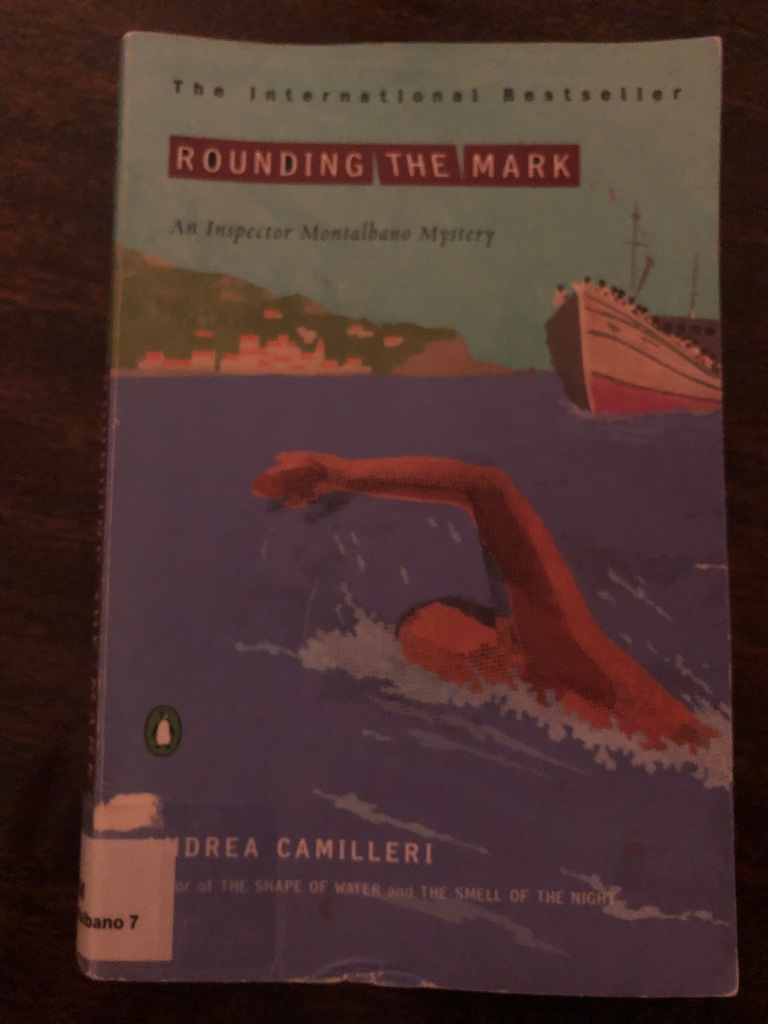
Resolution 1. Tastes! Flavors! Food! As Rounding the Mark, Book 7 of Andrea Camilleri’s long-running series, begins, Inspector Montalbano of little Vigáta, Sicily, can’t sleep:

“Stinking, treacherous night. Thrashing and turning, twisting and drifting off one minute, jolting awake and then lying back down—and it wasn’t from having scarfed down too much octopus a strascinasali or sardines a beccafino the evening before. No, he didn’t even have that satisfaction.”

Fortunately the recipes are described in the Notes at the book’s end. In Sicily, where seafood reigns supreme, Montalbano refers to small octopi, boiled and dressed in olive oil and lemon juice, and then sardines, stuffed and rolled up with sauteed breadcrumbs, pine nuts, sultana raisins, and anchovies. When Montalbano returns home from the police station he always races to his refrigerator to see what his housekeeper, Adelina, has left for him. In Book 16, Treasure Hunt, Montalbano “howled like a wolf with joy” when he finds “eggplant parmesan, done up just right, enough for four.”

Can’t you just smell this dish? Montalbano consumes the entire panful: “the sauce was a wonder to taste.” (50). We see how he delights in his food, how very particular he is. (And throughout the series Adelina keeps cooking – pasta in squid ink, involtini of small fish, pasta ‘Ncasciata…https://www.foodandwine.com/pasta-ncasciata-sicilian-baked-pasta-7093847

Here’s Montalbano in Rounding the Mark after discovering a new restaurant:

“The antipasto of salted octopus tasted as though it were made of condensed sea and melted the moment it entered his mouth…And the mixed grill of mullet, sea bass and gilthead had that heavenly taste the inspector feared he had lost forever….After a long and perilous journey of the sea, Odysseus had finally found his long lost Ithaca. “(73)

Camilleri (died 2019) was writing mystery, murder, crime—but he included as major players in the setting Sicilian food, awareness of this ancient Mediterranean island culture, and echoes of classic myth.

We can only imagine Montalbano shaking his head at the food situation of private detective Cormoran Strike, protagonist of The Running Grave, seventh in the series by “Robert Galbraith” (aka J.K. Rowling). To protect his knee, Strike, a military police veteran who lost his lower leg in Afghanistan, must lose weight; he’s now lost “three stone” or about 42 pounds. “Usually he’d have grabbed a takeaway on the way home” but now, “without much enthusiasm,” he’s fixing broccoli and salmon in the tiny flat above his seedy London office.

Does the author need to describe these flavors? Aren’t “broccoli” and “salmon” redolent enough by themselves, especially broccoli? Later, as the plot roars into action, Strike’s off his diet, overcome by “the lure of sweet and sour chicken and fried rice” (767) and demanding that his partner Robin Ellacott stop at a 24-hour McDonald’s on London’s Strand (848) where, as they walk to the office, he’s eating “large mouthfuls of burger” and starting on two bags of fries. He’s back to his usual food habits––pub food, fast food––yet his mind’s on the recent attack, “as though he’d only just felt the heat of the bullet searing his cheek.” At chapter’s end, as they discuss the case, “Strike ate a solitary cold chip lingering at the bottom of a greasy bag.” There’s an urgency to his desperate hunger, to the need for enough energy to stick with an exhausting case—and don’t we all know about that solitary cold french fry in the bottom of the bag? Can’t you see him fishing it out? For Strike, food fills a need, but he’s not immersed in the culinary experience. He’s focused on his case.

What keeps Strike working as a private investigator? Challenge, curiosity, tenacity, terror—but not great cuisine. Food-wise, Montalbano’s habits differ sharply from Strike’s. But for each man, eating habits vividly highlight both personal life and setting.

Resolution 2: Human Scent! Other scents matter to both Strike and Montalbano. In the first chapter of The Ink Black Heart, Cormoran Strike has tried to find a perfect perfume for Robin’s 30th birthday. When she sprays on the new perfume, “he…detected roses and an undertone of musk, which made him think of sun-warmed skin.”

Similarly, in Treasure Hunt, when Montalbano and his compadre, the daring Ingrid, are outside on his veranda, “The night now smelled of brine, mint, whisky, and apricot, which was exactly what Ingrid’s skin smelled like. It was a blend not even a prize parfumeur could have invented.” (175)

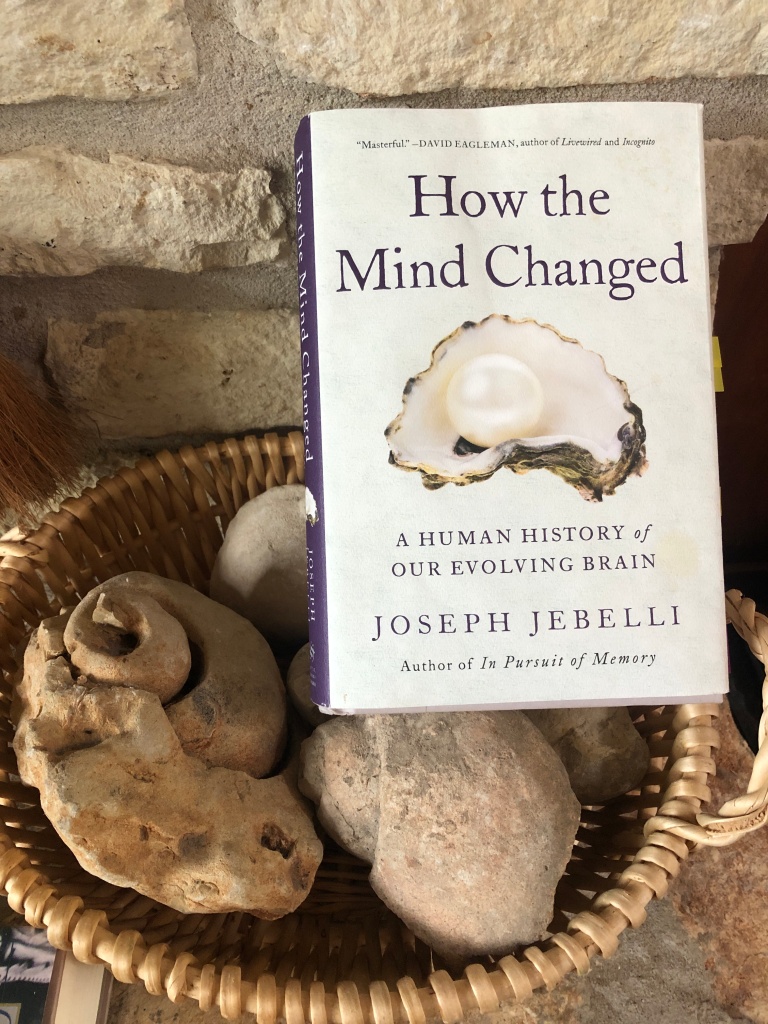
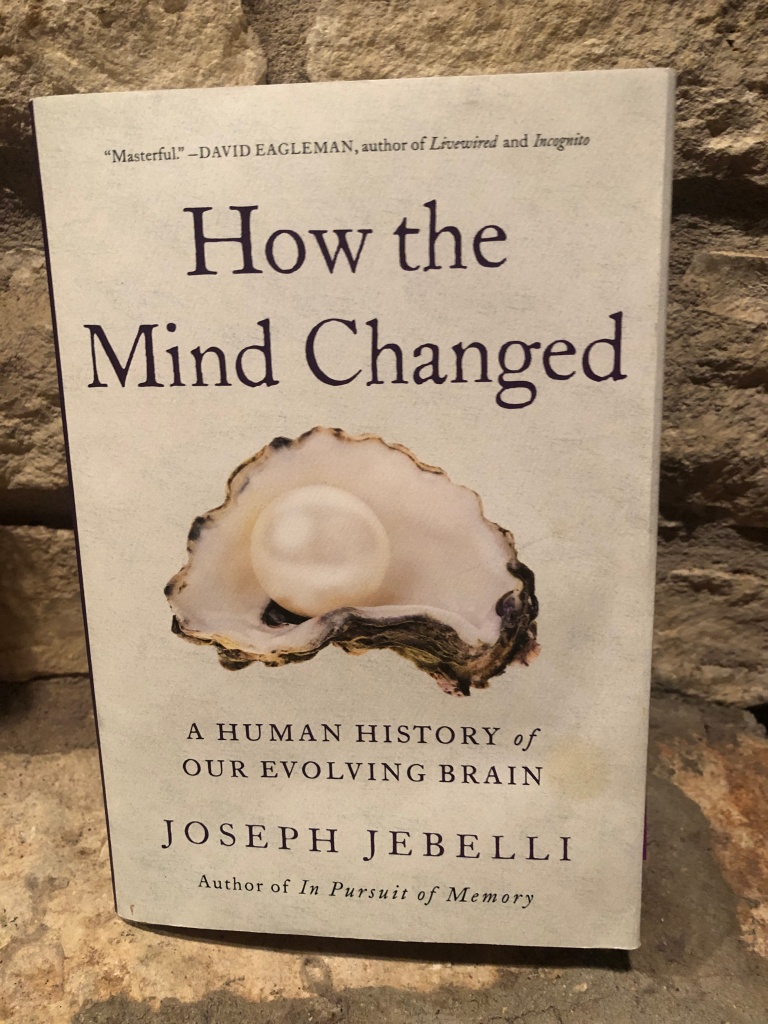
Reportedly one writing instructor has suggested that authors “include smell on every page.” These two mystery writers don’t obey that injunction (do you know any who do?). But why is scent so critical for us? Apparently the amygdala (a paired structure, with one in each temporal lobe) “developed from our most primitive sense—the sense of smell.” Joseph Jebelli, How the Mind Changed (Little, Brown, Spark, 2022, at 30). It’s near the olfactory nerve which is why scents connect strongly to emotions and memories. https://my.clevelandclinic.org/health/body/24894-amygdala

What scents spark your own memories? If a book mentions honeysuckle on a summer day, I might remember my grandparents’ front porch in Itasca, Texas, and how we learned as kids to suck nectar from a honeysuckle blossom. What pops up for you when a book mentions lavender? Or clean sheets? Baby powder? Or iodine, rubbing alcohol, band-aids? Marshmallows toasting on a stick? Pine straw underfoot? The first ocean breeze when you hit the beach? Does a book feel richer to you when your own memories are awakened?

What about the scent of January? Today’s the coldest day of 2024 so far, here in the Hill Country. Inside – hot tea: mint, chamomile, green, or  maybe ginger slices, with honey and lemon. Outside, cedar burning in a neighbor’s brush pile.

Resolution 3: Character’s thoughts (and feelings)! In Treasure Hunt Camilleri includes a hilarious italicized interchange between Montalbano (called “Montalbano One”) and “Montalbano Two” where Montalbano Two criticizes Montalbano One’s case-handling as showing signs of deterioration, of “losing his cool,” highlighting Montalbano’s own concerns about aging. (18-19)

Camilleri also uses other techniques to put us in Montalbano’s head. Here’s one from Rounding the Mark, where, again, Montalbano’s worrying about getting older:

“As he was shaving, the scenes of the previous evening on the wharf ran through his head again. Little by little, as he reviewed them with a cold eye, he began to feel uneasy…. There was something that didn’t jibe….He stubbornly played the scenes over in his head, trying to bring them more into focus. No dice. He lost heart. This was surely a sign of aging. He used to be able to find the flaw, the jarring note…without fail.” (61)

Camilleri lets his character feel. When a small boy is kidnapped from north Africa by sex traffickers and escapes on the pier in Sicily, Montalbano  returns him to his “mother,” not understanding she isn’t his “mother” at all. When the little boy is killed Montalbano visits the morgue:

“He lifted the sheet with one hand…and froze. A chill ran down his spine. It all came back to him at once: the look the little boy had given him as his mother ran up to take him back….he hadn’t understood that look. Now…he did. The little eyes were imploring him. They were telling him for pity’s sake, let me go, let me escape. And now…he felt bitterly guilty…He was slipping. It was hard to admit, but true… “(84)

In contrast, Cormoran Strike is more inscrutable, more unwilling to reveal his emotions, perhaps even to himself. Galbraith describes Strike as a “mentally resilient man” who tries but sometimes fails to control emotion. One of his tools “was a habit of compartmentalization that rarely failed him, but right now, it wasn’t working. Emotions he didn’t want…and memories he generally suppressed were closing in on him…” As a consequence he was “brooding so deeply that he barely registered the passing Tube stations and realized, almost too late, that he was already” at his stop. (105) In one scene after visiting his sister Strike starts home feeling very angry at his dead mother, who died of an overdose when he was nineteen. Galbraith then uses italics for Strike’s mental attack on her: “If you hadn’t been what you were, maybe I wouldn’t be what I am. Maybe I’m reaping what you sowed, so don’t you f*king laugh at the army, or me, you with your paedophile mates and the squatters and the junkies…” (106) These passages show the reader Strike’s painful upbringing and may partially explain his need (and ability) to compartmentalize—both, ironically, key to his later success.

Strike drinks, smokes, has sex, but almost in the same way as he gulps down fast food. Food seems temporarily satisfying, but not a life pleasure. Early on we become aware that the strongest sensation Strike is described as experiencing is the pain of his stump, and the relief he experiences when he removes his prosthetic. In his compartmentalization of his emotions, has he replicated this binary condition? (No spoilers here!)

Resolution Four: The Weather! Camilleri and Galbraith’s characters don’t always focus on weather, but here in the Texas Hill Country we must take notice. It’s too cold (like today), too hot (pretty soon), too wet (spring rain bombs and dangerous low-water crossings), or too dry (like last summer’s dreadful drought). Blessings on March, which will bring bluebonnets and the ethereal prairie celestial, then wine cups, with the pink of redbud and Mexican buckeye to rejoice the eye. But weather’s definitely a factor in upcoming Book 9 of the Alice MacDonald Greer Mystery series. Watch for it—coming soon!

She Never Graduated

By Laura Oles

“Education is not the filling of a pail, but the lighting of a fire.”

While there is some debate as to whether this quote belongs to William Butler Yeats, the sentiment is one that has stayed with me, particularly throughout my writing career.  One of the best things about being a writer is that it requires ongoing education.  I love that my job demands regular research. I’ve gone down more rabbit holes that I care to admit, but it’s this spark of learning something new that fuels my enthusiasm for my fiction.  

I experienced a wonderful “lighting of a fire” during my week in Salem, Massachusetts at the Writer Unboxed Unconference. Unlike other writer conferences that I attend (and love), this one involved being solely a student for the entire week.  The conference welcomes all genres, and spending time outside of crime fiction gave me some valuable insight into how others approach storytelling, structure and character development. 

Therese Walsh opened with her session titled “Good Chaos: Provocation and Invitation,” and by the end, I knew this week would be one of time well invested. Susan DeFreitas is a gift to writers. Her session, “Emotional Alchemy,” was so thoughtful and packed with practical advice that I took ten pages of notes. I’ve re-read them twice since returning home. And as someone who gets excited about outlines, timelines and plotting considerations, her “Anatomy of a Novel: Create a Blueprint” session provided me with specific skills to apply to a current project.

Watching Tiffany Yates Martin stand in front of a room to discuss fiction is an experience I hope every writer gets at least once. Her passion, knowledge and enthusiasm for characters, craft, storytelling and readers rolled through the room. She’s also damn funny. I left with another ten pages of notes. 

Because there were two session tracks, I was forced to make difficult choices regarding the schedule, and I know that I missed several other excellent sessions. Lunch breaks provided the opportunity to explore a bit of Salem, walking through downtown and adjacent neighborhoods. Evenings were spent sampling different restaurants, and I left with a favorite pub (O’Neill’s), sushi spot (Finz Seafood & Grill—the Lobster Maki Roll was fabulous), coffee shop (Lulu’s) and bookstore (Wicked Good Books).  That I was able to experience this week with some of my favorite writer friends made it even more special. 

Returning home with a novella sized document full of notes, I took my time reading through them, extracting additional gems, and analyzing how they might influence my own projects. I’m back at my desk, and the spark remains. The learning continues, and it seems I will never graduate. 

If so, I would consider that success.

Laura Oles is the award-winning author of the Jamie Rush mystery series. Her debut mystery, Daughters of Bad Men, was an Agatha nominee, a Claymore Award finalist, and a Writers’ League of Texas Award finalist. Her work has appeared in crime fiction anthologies, consumer magazines and business publications. She loves road trips, bookstores and any outdoor activity that doesn’t involve running.  https://lauraoles.com

Thanksgiving–for Books Reread

by Helen Currie Foster

Now and then, when I sneak a book off the shelf, glancing around to be sure no one notices it’s a children’s book…or pick up an old LeCarré…I’m grateful for the joy of rereading.

Rather like upcoming Thanksgiving dinners! Think of their literary content! Suspense, of course–is that turkey really done? Imminent peril–are the drippings sufficient for decent gravy? Strong characters–the usual suspects are arriving at the table! Ethical challenges–no comments on the burnt marshmallow topping on the yams. And, hopefully, enough whipped cream for a happy ending!

Of course an invitee may decide to bring Something New. (I refer to an aunt’s “Pumpkin Chiffon” creation, still infamous years later. I mean, it wasn’t pumpkin pie and never would be.) In the face of such unwonted (unwanted) novelty we draw back: we don’t want something new: we want…reassurance.

So many good books are out now, deserving our attention–Lawrence Wright’s Mr. Texas, Paulette Jiles’s Chenneville, Paul Woodruff’s Living Toward Virtue, and my dear friend Dr. Megan Biesele’s amazing memoir about her anthropological adventures in the Kalahari, Once Upon a Time Is Now. https://amzn.to/3MSVL7y

But sometimes I return to the old faves, craving (especially these days)…reassurance.

What sort of reassurance? How about vindication for a beloved character in trouble? See the end of William Faulkner’s Intruder in the Dust (1948), a murder mystery where Lucas Beauchamp with his gold toothpick is saved from lynching with the help of two teens and an old lady. It’s a precursor to Harper Lee’s To Kill a Mockingbird (which has a sadder ending).

Children’s books require vindication of the hero. Lucy receives that in The Lion, the Witch and the Wardrobe, when her older siblings finally follow her through the back of the wardrobe into Narnia and discover her amazing story is true.

As a Le Carré follower, I remain thrilled by A Legacy of Spies (2017). And yes, like many of his spy thrillers, it’s a murder mystery. Our first-person narrator is “young Peter Guillam” who won our hearts earlier as the man that master spy George Smiley could always count on. White-haired, a bit deaf, and back home on the Breton coast, he’s no longer protected by the now-retired Smiley, and Britain’s foreign service (the “Circus”) has hauled Guillam to England and arrested him. The Circus is plotting an unconscionable rewrite of agency history, with Guillam cast as the villain.

But this old dog still knows old tricks, and, yes, is vindicated! We rejoice, reassured, when Peter Guillam once again is strolling the Breton coast, with a furious Smiley about to descend with a vengeance on the Circus.

Other great rereads for reassurance: Patrick O’Brian’s Aubrey-Maturin sea novels. The last pages of The Commodore (Book 17) provide classic vindication for our surgeon-spy, Stephen Maturin. After many perils, barely surviving yellow fever, and finally encountering his beloved potto https://en.wikipedia.org/wiki/Potto, Maturin learns of the death of a most vicious but hitherto unnamed enemy, who has plotted Maturin’s downfall, even his murder, for years (through many volumes). Just pages later Maturin experiences the wild joy of an unexpected reunion with his lost Diana. O’Brian’s unsurpassed powerful brevity can create the sudden turns and arouse the fierce emotions that satisfy a happy (re)reader.

My housemate reports that his rereads include The Cruel Sea by Nicholas Monserrat, Cannery Row, Pride and Prejudice, certain sections of Moby Dick, and more.

This Thanksgiving I give thanks for books, new and old. Do you remember learning to read? I do. Early one morning, age five, I opened a new book titled Children’s Book of Knowledge. The long strings of separate curly letters abruptly morphed into words. Like a bolt of lightning! I could read! Words became magnetic: I couldn’t keep my eyes away. I read everything–stray magazines, newspapers, the Cheerios box. I was now independent. No waiting for grown-ups to dispense information: I could simply read for myself! (With a library book stashed inside my desk at East Elementary–unfortunately confiscated by the teacher.)

Reading sets us free, gives us resources, gives us respite, gives us independence..and reassurance. Happy Thanksgiving!

I’m working on the ninth novel in the Alice MacDonald Greer Mystery series set in Coffee Creek, Texas, in the Hill Country. You can be sure the inhabitants insist on cornbread dressing and pumpkin pie with whipped cream. The burros will hope for leftovers.

Share this:

THE PULL OF EMPTY SPACES

by Helen Currie Foster~October 17,2023

Last week, trudging up a rocky trail to an abandoned abbey high above an Italian valley in the Sabine Hills, I heard another walker ask this: after the Romans defeated the Sabines, were any Sabine ruins left?

“Yes,” said the guide. “A temple to the goddess of empty spaces.”

The goddess of empty spaces? Her name?

“Vacuna.”

Even in fourth year Latin at McCallum High, our beloved teacher, Miss Bertha Casey, never mentioned Vacuna.

The walker’s question—any Sabine ruins?—had never occurred to me.

Questions by others can open empty pages in our own minds.

Vacuna’s authority remains a mystery—appropriate, if she was, among other powers, in charge of empty spaces. Or moments of rest, of vacancy, of relaxation. One writer says, “Vacuna was the Sabine goddess of water, nature, forests and fertility, but she was also the goddess of rest.” https://worldhistory.us/ancient-history/vacuna-the-hidden-goddess-veiled-in-the-mist-of-history.phphttps://www.romeandart.eu/en/art-nimphs-floating-island.htmlhttps://en.wikipedia.org/wiki/Vacuna

From this hill to the next hill stretched a vast empty space.

Well, not exactly empty––the air seemed visible, with sunlight glinting on bits of dust and mist. But the enormous not-exactly-empty openness fired imagination. The land below contains houses, farms, fences, vineyards—all presumably considered to belong to someone. But watching the air shimmer above the valley I wondered—does that openness belong to Vacuna? To anyone looking out across the valley?

Wait—it didn’t belong to anyone. Not to a hang-glider, nor a kite-flier, nor a drone.  Long after they’d folded their toys and gone home, empty space would still be there, stirring imagination, raising questions, dreams, ideas.

How do you respond to the words “blank page”? To a new notebook? To a waiting empty screen—a “new document” in Word? Your pencil is sharp. Your fingers are poised. What will you write, draw, scribble on that blank page? The very sight of the words “blank page” makes you pause, doesn’t it, making you wonder what you might write? Blank pages prick the imagination.

Or you’re an artist, brush in one hand, a vivid palette of colors in the other, confronting a blank canvas. The choices! Red? Violet? Ochre? Viridian? Think of Rembrandt’s self-portrait, as the artist lifts his brush, staring directly at us while coyly hiding the canvas. For us, his canvas is blank. What’s the artist thinking? What do we imagine he’s painting? Of course the tricky master has already painted the canvas we’re looking at, and he included his staring eyes, his ruthless assessment of himself, every wrinkle, every wart.

https://www.louvre.fr/en/what-s-on/life-at-the-museum/a-masterpiece-of-the-louvre And you? What would you paint?

I think of Lily Briscoe in Virginia Woolf’s To the Lighthouse, fiercely concentrating on finishing the portrait she began years ago. We can’t see her painting, but we feel the intensity of her decision-making as to precisely why, where, and how she’ll move her brush for the last stroke.

“Blank canvas”? Emptiness…better, openness; availability; possibility. Imagination calls.

I spend hours revisiting mysteries, reveling in the craftsmanship of the greats, and the enormous creativity that blossoms from the first page, where the canvas is empty before the reader. This week I’ve revisited “Fred Vargas” (writing name) – the French archeologist whose mysteries about her Pyrennean police commissaire, Jean Baptiste Adamsberg, lead the unsuspecting reader into wild leaps of imaginative plotting. https://fr.wikipedia.org/wiki/Fred_Vargas In An Uncertain Place, for instance, when Adamsberg goes to London for an international police conference, his English counterpart, Inspector Radstock, drags him to Highgate Cemetery where someone has left at the entrance 18 pairs of shoes with human feet in them. https://highgatecemetery.org/ The feet have been chopped off dead bodies awaiting burial in funeral parlors. Oh, wait—that’s 17 pairs plus one solo shoe with a solo foot. Adamsberg returns to France, still mulling this weirdness, and confronts a grisly murder where the corpse has been chopped into confetti, with special attention to the big toes and hands and feet. Why? And is the wild-eyed twenty-something who invaded Adamsberg’s Paris house really his undreamed-of son? The plot turns on Serbian vampire stories and the rumor that when Victorian artist/poet Dante Gabriel Rossetti exhumed his dead wife Elizabeth Siddal seven years after her death—ostensibly to retrieve his manuscript volume Poems—she was still rosy and pink. https://nonfictioness.com/victorian/the-exhumation-of-elizabeth-siddal/

From a blank page, to dead poets, to vampires and tombs in Serbia, to…well, check it out! Let me know if you actually identify the murderer before the end. Adamsberg’s one of my favorite characters. Still don’t know why he wears two watches and can’t tell time.

How do fiction writers fill the blank page? By that mysterious process—imagination. In the October 16, 2023 New York Times, Italian physicist Carlo Rovelli asks how we can learn about black holes—places we can neither travel to nor see. His answer? “To travel to places that we cannot reach physically, we need more than technology, logic or mathematics. We need imagination.”

Per Merriam Webster, “The meaning of IMAGINATION is the act or power of forming a mental image of something not present to the senses or never before wholly perceived in reality.” J.K. Rowling: “Though I personally will defend the value of bedtime stories to my last gasp, I have learned to value imagination in a much broader sense. Imagination is not only the uniquely human capacity to envision that which is not, and therefore the fount of all invention and innovation. In its arguably most transformative and revelatory capacity, it is the power that enables us to empathise with humans whose experiences we have never shared.” https://news.harvard.edu/gazette/story/2008/06/text-of-j-k-rowling-speech/

Our genre requires imagination. Mystery writers need a vivid, tangible setting, especially for the murder. My mind has taken me to a rock-art painted cave atop a bluff high above an old ranch, to a music recording studio, to a dining room where a horse rears. We need characters. Protagonist! Murder victim! Suspects! Subsidiary characters who adds color, flavor, depth—like Eddie LaFarge, the retired pro football center who limped into the Central Garage in my imaginary town of Coffee Creek.

And I find something unexpected has happened to me, writing the Alice MacDonald Greer murder mystery series. In the middle of the night, my characters now feel as real as relatives. I watch them driving, kissing, feeding the burros, worrying. Sometimes they pause for a moment, imagining what they’ll do next.

Thank you, Vacuna, goddess of empty spaces.

Those croissants? We’re recovering in Paris from hiking, where these, from the Maison Julien patisserie on Rue Cler, may be the best ever. Letting melting butter create those empty spaces between the layers? Genius.

Helen Currie Foster writes the Alice MacDonald Greer Mystery series (now working on the 9th) north of Dripping Springs, Texas, in the Hill Countrloosely supervised by three burros. She’s active in Austin Shakespeare and the Hays County Master Naturalists and very much enjoys talking to book groups. The 7th mystery, Ghost Daughter, published June 15, 2021, was named The Eric Hoffer Award 2022 Mystery/Crime Category First Runner-up, and also 2022 National Indie Excellence Award Finalist, Mystery.

When the Character Steps off the Page…

by Helen Currie Foster

You go to a play, you’re reading the program, you’re waiting for the curtain to go up. It does. And onstage a character comes alive. You not only believe in that character—suddenly you feel that character is real.

After the play, in the lobby, out comes a chattering group of actors, one of whom is—the character you believed in! But it’s merely…another human being!

This happens to me over and over at Austin Shakespeare productions. I remember sitting riveted, watching Othello preparing to smother Desdemona, his face just a few feet from the front row of the Rollins Theatre. “No, no!” I wanted to scream. Minutes later, still quaking from the death scene, I watched the actors come back out for their traditional after-talk with the audience. I watched brokenhearted Othello plop down in a folding chair and grin at us––morphed from Othello into actor Mark Pouhé. At Free Shakespeare outdoors in Austin’s Zilker Park I held my breath, watching young Romeo climb the balcony to talk with Juliet, enchanted––like Juliet––by every word he uttered. Then at intermission, still in costume, actors came out and climbed the hillside, shaking buckets for donations, including…Romeo! Jarring to think he’d time-traveled from sixteenth century Verona to an Austin hillside. https://www.austinshakespeare.org/

You may be thinking, “I know all about that––it’s just the ‘willing suspension of disbelief.’ Coleridge, right? Maybe you’ve just got an aggravated case!”

https://en.wikipedia.org/wiki/Samuel_Taylor_Coleridge

But the question is—how exactly can actors do that? Maybe because Shakespeare has made Othello and Romeo so active, so appealing, so fascinating, so human, so alive in their loves and hates, that we believe in them, and we must hear their story. Others call such fixations our willing contract with actors, in exchange for being entertained––so long as the illusion is not spoiled. See The Actor’s Edge Online, https://www.youtube.com/watch?v=zdGM7QzFJhM

As always, Shakespeare says it best. In the Prologue to Henry V, his Chorus begs the audience to use their own imaginations to make the small wooden stage come alive with the war between the “two mighty monarchies,” England and France:

“Think, when we talk of horses, that you see them/

Printing their proud hoofs I’ th’ receiving earth./

For ‘tis your thoughts that now must deck our kings,/

Carry them here and there, jumping o’er times,

Turning the accomplishment of many years/

Into an hour-glass…” Henry V, Prologue.

That’s genius.

Coleridge himself recalled his agreement with Wordsworth as follows: that while Wordsworth would write poems about the charm of everyday things,

“It was agreed, that my endeavours should be directed to persons and characters supernatural, or at least romantic, yet so as to transfer from our inward nature a human interest and a semblance of truth sufficient to procure for these shadows of imagination that willing suspension of disbelief for the moment, which constitutes poetic faith.” (Emphasis added.)

https://en.wikipedia.org/wiki/Suspension_of_disbelief [Also spoken of as “the concept that to become emotionally involved in a narrative, audiences must react as if the characters are real…”] https://www.oxfordreference.com/display/10.1093/acref/9780199568758.001.0001/acref-9780199568758-e-267

By buying a theatre ticket, or a movie ticket, we’re inviting an agreement like the one between the child who begs, “Tell me a story!” and the adult who responds, “Once upon a time…” In those two phrases, the contract is made. The child agrees—likely longs––to suspend disbelief, and the storyteller promises a world where the unexpected (even the unbelievable) can happen. Talking animals…bears with beds and chairs…

You and I happily suspend our disbelief when the characters become real to us, even though the events may be beyond “belief.” Harry Potter! Indiana Jones and the Dial of DestinyLord of the RingsStar Wars!

What does this have to do with mysteries? At least the protagonist in any mystery must come alive for us. If you’re a Louise Penny fan, you appreciate how Gamache smiles at his wife, how he strokes his dog. As for Donna Leon’s Inspector Brunetti, I know him well; I’ve followed him upstairs to his Venetian apartment so many times, practically huffing with him on that last staircase. I’ve watched him choose a panini to have with coffee in his favorite coffee bar—indeed, I can practically smell the espresso. I’ve stood with him in the police boat as it bounces across the lagoon to a murder scene. He’s become so familiar, so…well, real to me. V.I. Warshawski in the Sara Paretzky novels? I know the emotion she feels when she touches her mother’s cherished wine glasses, I feel my blood pressure rise with hers over injustice. And Robert Galbraith’s team, Robin and Cormoran? I ache with the pain of Cormoran Strike’s prosthetic as he runs, trying to catch a suspect; I feel Robin’s fear as she opens a door to a dark hallway. I peer over Joyce’s shoulder as she writes in her journal in Richard Osman’s The Thursday Murder Club series.

A story (play, movie, mystery novel) demands a setting in which the protagonist comes alive for us. We’ve suspended disbelief when our favorite mystery characters no longer exist merely as ink on a page, as lines in a Kindle. Coleridge’s goal was to create “a human interest and a semblance of truth sufficient to procure for these shadows of imagination that willing suspension of disbelief for the moment.” We’re interested in what happens—a “semblance of truth”––to a character who arouses our “human interest.” The author, actor, director, has made us feel in league with our favorite characters. We’ve become collaborators with them, sharing their adventures, their frustrations, their fears. Suspending disbelief may be why we’re so anxious when our protagonists face danger, why we’re indignant when they’re treated badly, why we’re so relieved when they’re vindicated.

Of course a mystery plot may challenge imagination. The perfectly timed rescues in Daniel Silva’s spy thrillers…and the magnificent art restoration skills of his hero, Gabriel? The exquisitely choreographed capture and totally successful interrogation of Grigoriev in John Le Carré’s Smiley’s People?

Or the clever solutions deftly reached by ex(?)-spy Elizabeth and her friend Joyce at a foreign agent’s swimming pool suspended high above London, in The Bullet that Missed? https://amzn.to/45NxJlE

Knowing how reality usually works, we worry how plans go awry, how colleagues disappoint, how villains can foil. We shake our heads, fearfully anticipating that the plan will fail, and our character’s bluff will be called. But we’re still hoping, and holding our breath every second. And we keep turning the page.

Tell Me a Story!

By Helen Currie Foster

In My Reading Life, a grand book about reading and writing, author Pat Conroy says, “The most powerful words in English are ‘tell me a story…’” bit.ly/3PpSoHF

Yes! And don’t we know stories demand––require––insist on characters? Fairy tales––Jack in the Beanstalk, Hansel and Gretel. Epics––The Fellowship of the Ring, Star Wars. 

I love the beginning of Emily Wilson’s recent translation of The Odysseybit.ly/43Bdjvi

Tell me about a complicated man,

Muse, tell me how he wandered and was lost

When he had wrecked the holy town of Troy…

…Now, goddess, child of Zeus,

Tell the old story for our modern times.

Find the beginning.

So, how do writers create memorable characters? What works to create character? And why do we care? Isn’t it because character drives narrative?

Recall Shakespeare’s famous terse description in Julius Caesar: “Yon Cassius hath a lean and hungry look…” Those ambiguous words reach beyond the man’s shape or facial expression to hint at driving ambition…the very subject which drives the play’s narrative.

Or take Pride and Prejudice, published in 1813, and still one of the most loved novels in the English language. https://www.independent.co.uk/arts-entertainment/books/features/austen-power-200-years-of-pride-and-prejudice-8454448.html

How does Jane Austen create character? Looking back, I am surprised by the lack of physical description. She doesn’t tell us what Mr. or Mrs. Bennet, or the five daughters, look like. We’re given a few visual breadcrumbs, told that Bingley and Darcy are “handsome” and that Bingley “wore a blue coat and rode a black horse.” But her characters, with their personalities, their actions, largely come to life in our minds otherwise: by conversation.

Elizabeth overhears Mr. Darcy describing her as “tolerable but not handsome enough to tempt me”—a criticism she later recounts to friends, “for she had a lively, playful disposition.” Okay, there’s one aspect of Elizabeth—lively and playful. Yet after telling friends that Elizabeth “had hardly a good feature in her face,” Darcy “began to find it was rendered uncommonly intelligent by the beautiful expression of her dark eyes.” So she’s also intelligent! Elizabeth tells her sister Jane, “you are a great deal too apt…to like people in general. You never see a fault in any body.” Elizabeth is not just “playful” and “intelligent,” but a critical observer.

Using dialogue––what Elizabeth and Darcy say––Austen shows us how Elizabethand ultimately Darcy––think. In a world focused on superficiality—class, wealth, appearance, social skills and niceties––Austen makes us care about two characters who are too smart, too critical, too thoughtful, not to keep thinking and––ultimately––change their minds. Their characteristics (both pride and prejudice!) drive the narrative.

But hey, what about those dark eyes? Mr. Darcy disturbs the haughty Miss Bingley by saying he’s meditating on “the very great pleasure which a pair of fine eyes in the face of a pretty woman can bestow.” As all Austen readers know, that specific detail––“[A] pair of fine eyes”––will also powerfully move the plot.

Texas’s Larry McMurtry shows us how conflict between characters drives narrative. In his Lonesome Dove, the first character we meet is Augustus, sitting on the porch at the Hat Creek Cattle Company, in “the smidgin of shade he had to work with.” He has retrieved his jug from the springhouse and, as is his custom, he’s drinking Tennessee mash whiskey, which makes him feel “feel nicely misty inside.”

We’re in Augustus’s point of view when we meet his counterpoint, the other key character, his stubborn partner Captain Woodrow Call. Augustus, when he hears the whir of a nervous rattler in the corner of the springhouse, believes “in giving creatures a little time to think.” He doesn’t shoot the snake; he waits until the rattler has “calmed down” and crawled out a hole. He contrasts his own behavior to Call’s:

Call had no respect whatsoever for snakes, or for anyone who stood aside for snakes. He treated rattlers like gnats, disposing of them with one stroke of whatever tool he had in hand. “A man that slows down for snakes might as well walk,” he often said.

As  Call and their diffident hand, PeaEye, arrive at the porch, Augustus notes that while he himself stands four inches taller than Call, and Pea Eye three inches taller, there’s no way to convince Pea Eye that Call is the short man: “Call had him buffaloed.” Augustus knows that if a man means to hold his own with Call, that man must keep in mind that Call isn’t as big as he seemed. Thus Augustus begins many a day by remarking, “You know, Call, you ain’t really no giant.”

McMurtry doesn’t give us a detailed physical description of Augustus or Call. Instead, we hear them banter. We see Call’s impact on others, and how Augustus works to maintain his own status vis à vis Call. Right off the bat McMurtry makes us feel the sheer force of two characters, two magnetic and conflicting personalities, and their relationship, as we’re launched into this epic tale. Their characters, the combined magnetism and conflict, drive us to Montana…and back…

We first meet Sir Arthur Conan Doyle’s character Sherlock Holmes in A Study in Scarlet, when Holmes is introduced to the narrator, Dr. Watson, as a potential roommate. Watson walks into the lab: “There was only one student in the room, who was bending over a distant table absorbed in his work. At the sound of our steps he glanced round and sprang to his feet with a cry of pleasure. ‘I’ve found it! I’ve found it,’ he shouted to my companion, running towards us with a  test-tube in his hand.” Then he shakes hands with Watson: “You have been in Afghanistan, I perceive.” Watson is astonished. bit.ly/3N0U4Ep

We get no actual physical description of Holmes until Chapter Two. Instead, we confront Holmes’s vigor, curiosity, perspicacity, confidence in his own powers. Similarly, in “A Scandal in Bohemia,” Watson first describes Holmes’s “immense faculties and extraordinary powers of observation” in deciphering clues. Then, looking up from the street, Watson sees the detective’s silhouette on the window-shade: “I saw his tall, spare figure pass twice…He was pacing the room swiftly, eagerly, with his head sunk upon his chest and his hands clasped behind him.” Watson instantly knows, “He was at work again.”

The author engraves that image of Holmes, pacing eagerly, on our imaginations. We can’t wait to see Holmes in action: that’s what we’re reading for.

Herman Melville deprives the reader as well as Ishmael, the narrator of Moby Dick, of even one glance at Captain Ahab until Chapter 28, when Ishmael is well out to sea on the whaling ship Pequod. Ahab finally appears on deck and stands erect, holding on by a shroud, his bone peg-leg planted in the auger hole drilled on deck for that purpose:

There was an infinity of firmest fortitude, a determinate, unsurrenderable wilfulness, in the fixed and fearless, forward dedication of that glance. Not a word he spoke; nor did his officers say aught to him; though…they plainly showed the uneasy, if not painful, consciousness of being under a troubled master eye…moody stricken Ahab stood before them with a crucifixion in his face; in all the nameless regal overbearing dignity of some mighty woe.

The word “character” comes from the Greek root for “engraving tool.” https://www.merriam-webster.com/dictionary/character If ever character was engraved on a person’s body, Melville’s description of Ahab and his impact on his shipmates qualifies. The uneasy silence of the officers! The crucifixion in Ahab’s face! His unsurrenderable wilfulness, fixed and fearless!

If that’s not enough foreshadowing, in Chapter 36, Ahab demands the entire crew to assemble and then hammers a gold piece to the mast for the first man who sees the white whale which took off Ahab’s leg—Moby Dick. Starbuck objects: he signed on to hunt whales, not to take vengeance on a mere animal, which he calls blasphemous. But Ahab makes the rest of the crew swear: “Death to Moby Dick!” Melville creates a character whose physical description conveys tragic history and deep emotion, and whose forceful actions persuade the crew to follow him. We know there’s no stopping Ahab now. And we haven’t yet met the whale.

Pat Conroy also tells us, in My Reading Life, of the day his beloved high school English teacher, Greg Norris, took sixteen-year old Conroy to visit the poet Archibald Rutledge. Rutledge “suggested that I make the close observation of nature part of my life’s work and that I learn the actual names of things,” because “specifics always proved fruitful to the validity of any narrative”:

“A Cherokee rose, not just a rose. A swallowtail butterfly, not just a butterfly. That kind of thing,” he said. “Get the details right. Always the details.”

https://en.wikipedia.org/wiki/Rosa_laevigata

Always a great reminder for mystery writers. My character Alice, in the Alice MacDonald Greer Mystery series––stays on me to get the details right. https://bit.ly/3qC2fzI

So–tell me a story! Show me the character! Get the details! And we’re off!

About Helen Currie Foster

I live north of Dripping Springs, Texas, supervised by three burros. I’m deeply curious, more every day, about human history and prehistory and how, uninvited, the past keeps crashing the party. I’ve loved the Texas Hill Country since my first sight of it as a teenager. Artesian springs, Cretaceous fossils, rocky landscapes hiding bluegreen water in the valleys. After law school (where I grew fascinated with water and dirt) I practiced environmental law and regulatory litigation for thirty years––then the character Alice suddenly appeared in my life. I’m active with Austin Shakespeare and Heart of Texas Sisters in Crime. And I’m grateful to the readers who enjoy the Alice MacDonald Greer Mystery series!

Why They’re Favorites…? On Rereading

BY HELEN CURRIE FOSTER

What’s your favorite place to read? A certain chair? The one with a lamp that shines on your book, not in your eyes? Perhaps a ferryboat seat, where you glance up at the horizon, then down at your book? On a plane, or train?

When I was young our house had an elm tree in the back yard which was not only climbable, but offered two branches that stuck out at the perfect angle for a lounging pre-adolescent. Even better—the lounger was invisible from the house. I could scramble up, arrange myself, open my book—and be left unfound, undisturbed, for some time.

A later joy was climbing on the New Haven RR in Boston after final exams (Chaucer, Shakespeare), armed with the latest James Bond and the very biggest Hershey bar with almonds, and being rocked south for miles along the coastline. Uninterrupted.

And I confess to rereading books. I further confess to rereading children’s books. Maybe a more accurate word is: revisiting. At least every two years, I pick up Kipling’s Kim, finding my way to the part where Kim guides his Tibetan lama, who seeks a sacred river, on a pilgrimage into the high deodar forests of the Himalayas. I can almost smell the trees. There Kim steals the Russian spies’ notes––his own initiation into the Great Game. Even more satisfying? The long afternoon where, exhausted, he is “taken apart” by Eastern massage and finally stumbles out, recovered, to find his lama at the brink of—well, no spoilers.

Why this gravitational pull of favorite children’s books?

Maybe because the best children’s books feature enterprise, surprise, disguise. And—most important––the discovery of identity.

Consider The Sword in the Stone, where Merlin transforms Wart into various animals (badger, owl, fish) who teach him survival techniques (“put your back into it!”). And magic! Giants! Griffins! The Queen of Air and Darkness! (See volume below–griffin looming behind tree.) One favorite moment? When Merlin transforms Wart to a raptor—a small merlin––who must sit for desperate minutes during his formal initiation, near the maddened and perilous Peregrine. Why does Wart need Merlin’s special tutelage? Because of his identity, which he and we will finally discover.

Others I still pull off the shelf: The Wind in the Willows, especially Mole’s tearful return home, where he recognizes his true self.

Also Susan Cooper’s The Dark Is Rising. Maurice Sendak’s Nutshell Library – memorizing all the poems. I sneak back to Harry Potter—a feast of enterprise, surprise, disguise, and Harry’s search for his own identity. Occasionally I return to Lord of the Rings––especially the battle for Gondor. You’ll note I missed out on Jack London and many others. But there’s always The Lion, the Witch and the Wardrobe—remember that wondrous moment when Lucy slips through the back of the wardrobepast all the mothballed coats…into magic? Into the snowy landscape where she meets Mr. Tumnus the faun? Into the realm where––as Lucy later discovers––she is Queen Lucy?

You have your favorites. So do our collective children and grandchildren. Bookstore shelves still offer children tales of enterprise, surprise, disguise—and characters discovering their own identities.

And fortunately, children’s books needn’t follow the 1930 Detection Club’s 10 Rules for Writing a Mystery. Rule #2: “All supernatural or preternatural agencies are ruled out as a matter of course.” Following Rule #2 would let out magic, of course, and its enormous space for imagination. (If you, like me, crave an occasional touch of magic for grown-ups, try Remarkably Bright Creatures by Shelby Van Pelt. amzn.to/44iIoVj)

As a mystery writer/reader I usually write about mystery. But thinking lately about the bibliophile’s favorites—favorite reading spots, favorite chairs, favorite characters––has sent me down a different path. Why reread? Wait––why revisit?

What is it about the end of Kimor the plight of Frodo and Samwise in Shelob’s lair, or Harry Potter’s first moment on his broom, learning how good he is at Quidditch––that whispers, “read it again!”

I reread mysteries too. Have you reread a Dorothy Sayers, a Ngaio Marsh, a Sherlock Holmes? Or John le Carré? How many times have you read Tinker, Tailer, Soldier, Spy, or Smiley’s People? (Come on, spy thrillers are part of the mystery-thriller-spy novel genre.) And why do we reread le Carré? One character in particular: George Smiley.

Smiley first appears on page 1 of chapter 1, titled “A Brief History of George Smiley,” in Call for the Dead, le Carré’s first book, published in 1961. Smiley’s marriage to the aristocratic Lady Ann Sercomb has ended when she abandoned him, and he’s described as follows: “Short, fat and of a quiet disposition, he appeared to spend a lot of money on really bad clothes, which hung about his squat frame like skin on a shrunken toad.”

We learn of his deep love of 17th century German literature, his success at Oxford, his recruitment by MI-6, his dangerous service abroad as a spy in WWII. Not a commanding figure, no. But le Carré allows us to glimpse his sharp mind, his penetration, his ability to absorb all he hears. Smiley’s work as an intelligence officer provides him “with what he had once loved best in life: academic excursions into the mystery of human behaviour, disciplined by the practical application of his own deductions.”

Smiley appears next in A Murder of Quality (1962), where Smiley’s solution to the murder rests on a scathing critique of the snobbishness of British public schools (le Carré despised his own experience at such a school).

By the time we reach Tinker, Tailor, Soldier, Spy (1974), Smiley has been put out to grass at MI-6 under the new regime headed by Bill Haydon, who has seduced Smiley’s wife Ann and taken over London Station after causing the bitter dismissal of Control as its head.

In Tinker, Tailor, Smiley is plucked out of retirement to interview a somewhat dubious British agent who claims the Russians may have placed a mole inside MI-6. Here’s Smiley, listening to the agent’s tale:

“He sat leaning back with his short legs bent, head forward, and plump hands linked across his generous stomach. His hooded eyes had closed behind the thick lenses. His only fidget was to polish his glasses on the silk lining of his tie, and when he did this, his eyes had a soaked, naked look that was embarrassing to those who caught him at it.”

Smiley’s investigation marches ahead. The BBC wants to make a series of Tinker, Tailor. And John le Carré has an actor in mind: Alec Guinness. https://www.theguardian.com/tv-and-radio/2019/sep/05/tinker-tailor-soldier-spy-40-years-on-alec-guinness

Le Carré’s letter to Sir Alec Guinness (3 March 1978) appears in A Private Spy / The Letters of John le Carré, at 213. He tells Sir Alec:

“Apart from plumpness, you have all the other physical qualities: a mildness of manner, stretched taut, when you wish it, by an unearthly stillness and an electrifying watchfulness. In the best sense, you are uncomfortable company, as I suspect Smiley is. An audience wishes––when you wish it––to take you into its protection. It feels responsible for you, it worries about you. I don’t know what you call that kind of empathy, but it is very rare, & Smiley and Guinness have it: when either of you gets his feet wet, I can’t help shivering.”

I love that “as I suspect Smiley is.” Does the author’s own speculation about George Smiley explain, in part, why we readers become so attached to this character? What drives us to Smiley’s side? Is it his apparent ineffectualness, his vulnerability, his stillness, his watchfulness, entwined with our certainty that he will somehow keep going?

Not until 1979 in Smiley’s People does Smiley achieve final vindication, catching the Russian master-spy who conceived the long set of steps that led to Haydon’s seduction and Control’s fall. At the climax, we (along with Smiley and his fellow spy Peter Guillam) await the possible arrival of the Russian in cold war Berlin, at the crossing point from East Germany. Will the spy make it across the bridge? Guillam asks what cover the Russian will use:

Smiley sat opposite him across the little plastic table, a cup of cold coffee at his elbow. He looked somehow very small inside his overcoat.

“’Something humble,” Smiley said. “Something that fits in. Those who cross here are mostly old-age pensioners, I gather.’ He was smoking one of Guillam’s cigarettes and it seemed to take all his attention.”

At book’s end, we are waiting with Smiley. It’s cold there by the Berlin bridge. I expect Smiley’s feet are wet. Like the author, “I can’t help shivering.” When we know a character’s vulnerabilities, we begin to perceive true identity.

For Smiley, for all the characters created by their authors with such vividness and such vulnerability that we seem to feel what they feel, for such characters–I reread. Yes, the better word is revisit: I go back just to be sure the characters are still there, still available, still waiting quietly on the shelf. And, yes, just as good as I thought they were.

I’d love to hear your favorites (reading spots, children’s books) and the favorite characters you…revisit.

*****

Author: Helen Currie Foster

I live north of Dripping Springs, Texas, supervised by three burros. I’m deeply curious, more every day, about human history and prehistory and how, uninvited, the past keeps crashing the party. I’ve loved the Texas Hill Country since my first sight of it as a teenager. Artesian springs, Cretaceous fossils, rocky landscapes hiding bluegreen water in the valleys. After law school (where I grew fascinated with water and dirt) I practiced environmental law and regulatory litigation for thirty years––then the character Alice suddenly appeared in my life. I’m active with Austin Shakespeare and Heart of Texas Sisters in Crime. And I’m grateful to the readers who enjoy the Alice MacDonald Greer Mystery series!