Author Highlight- Elizabeth Buhmann

We at AMW are a busy bunch, always working on many projects. I’m so proud to be a part of this diverse, interesting, and productive group! So proud in fact, that I thought I’d do a series of blog posts to highlight what current and former members are up to. Not only are we accomplishing things as a group, but individually we are setting goals for ourselves and we’re achieving them. These folks keep me on my toes! They fuel my desire to create and they give me courage to follow through with projects. By watching them, I’ve seen what can be done.

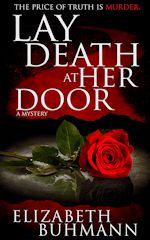
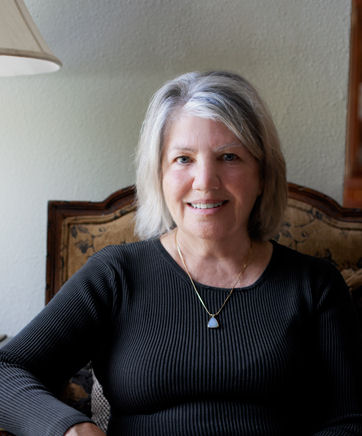
Austin Mystery Writer Elizabeth BUhmannI’d like to thank Elizabeth Buhmann, author of Lay Death At Her Door, for being the first person in this series.

VPC– Elizabeth, I’ve heard that Lay Death At Her Door is doing well. Any updates on its status? laydeath

EB– I recently got a very nice starred review from Publishers Weekly. Lay Death has been out for more than two years now, and it has done pretty well, in terms of both reviews and sales. I’m happy.

VPC– Any other writing projects that you’re working on that you’d like to share with us?

EB– It’s getting to the point where I’m overdue to get another book out. I have one novel on the brink, but it’s not quite right yet. I’m stewing on that.

I’m not in a hurry. On the contrary, I am trying to detach myself from the gotta-publish, gotta-publish mind-set. The validation that comes from publishing and being read is intoxicating, but publishing can also be a rabbit-hole. When will the next book come out? Did you make the big five? Did you make the bestseller list? In other words, What have you done LATELY?

I don’t need to earn money through my writing, and when it becomes a job with a deadline, I rebel. I admire people younger than myself who are setting out to make a career out of writing fiction (ie, trying to earn enough to give up the day job). I didn’t do that. In my career, I was a writer, but writing fiction is a whole different game. It’s hard work and more difficult than ever—the number of books coming out each year is staggering.

Publishing a novel and having it be well-received was a goal. I don’t want it to become a craving for more and more success and recognition. There are enough books. Maybe I’ll publish again, maybe I won’t. I want to write in peace, on my own terms, at my own pace. If I turn out to be a one-trick pony, that’s fine. It was a good trick.

VPC– I know that you practice Tai Chi. I believe that you’ve recently achieved special status. Please tell us all about it!

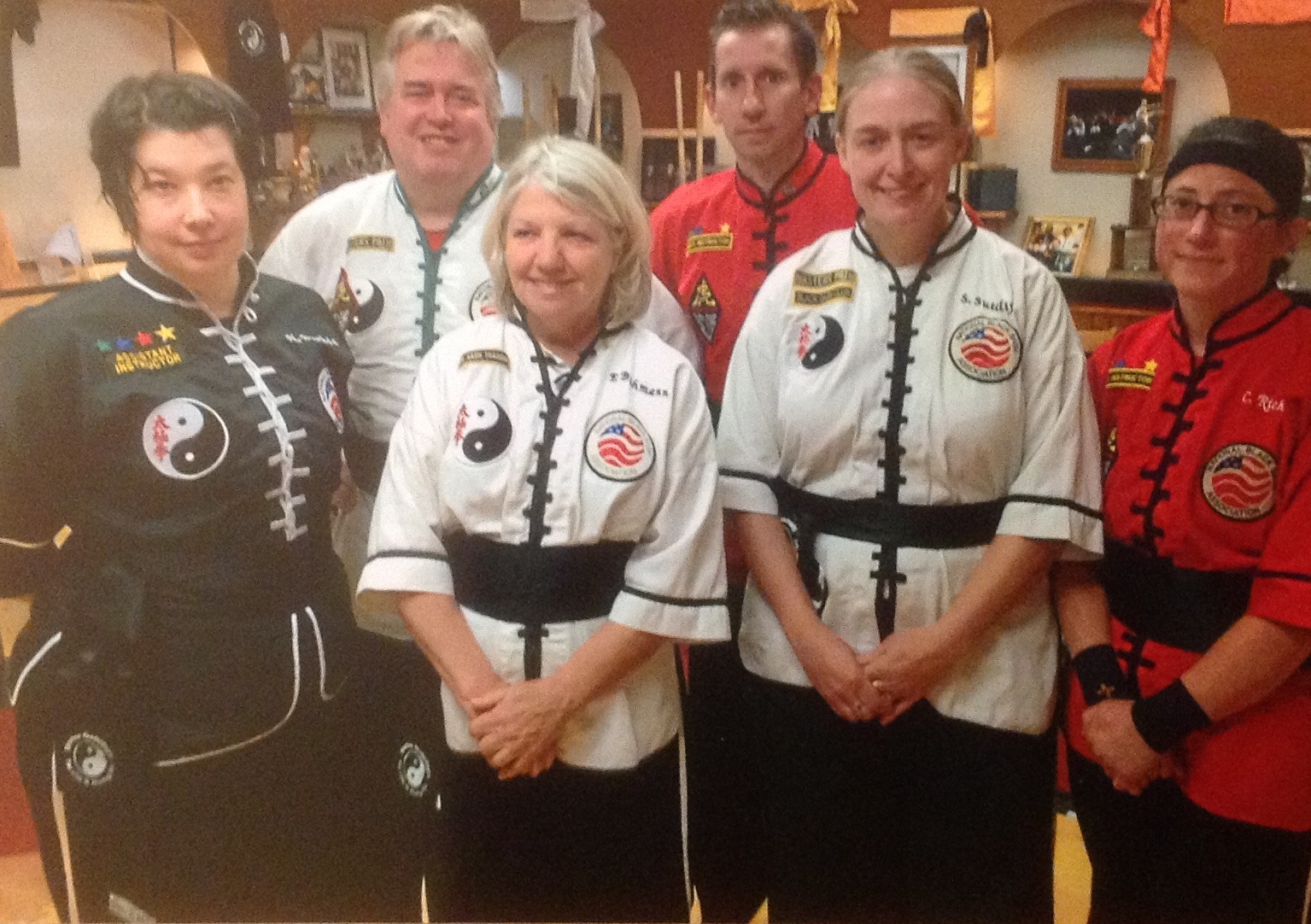
Elizabeth getting her second degree black sash cohort.

EB– I’ve been studying Tai Chi for six years and earned my second-degree black sash last fall. I’m pretty obsessed. In addition to my own solo practice, I maintain a Tai Chi blog (taichinotebook.com), take classes and work out with a group of Chinese people in my neighborhood. As a side effect, I have been learning a fair amount of Chinese! And I like reading mysteries set in China. I’ve read all of Qiu Xiaolong’s Inspector Chen novels, which are set in Shanghai in the 1990s.

VPC– I see your from posts here on the website that you read a wide variety of books. What are you currently reading? Anything to recommend?

EB– I have been catching up on Tana French. I read In the Woods and Faithful Place a few years ago; just finished Broken Harbor (six stars out of five, that one!) and The Likeness. Next for me: The Secret Place. I think Tana French is the most brilliant writer working in the mystery field today.

Thanks, Elizabeth! I always learn something new and interesting from you.

Stay tuned. In next month’s author highlight I’ll introduce author Patric Sanders.

Movie Review of Mr. Holmes

First off, let me say that Ian McKellan knocks it out of the park. I can’t imagine a better choice to play an aged Holmes. Everything about his performance was stupendous. Things like how he carried himself, to the minute changes he had in his facial expressions, conveyed exactly what Holmes was thinking and feeling

We see Holmes just after WWII. That’s right, WWII! So he’s 93 in this movie. Holmes is struggling with the degeneration of his most prized asset, his mind and memory. The idea was jolting to me. It’s a bit like Superman without his super strength. But, as we know, it can happen to anyone. And it becomes more and more apparent to Holmes that this is happening. So he must confront this impediment while trying to recall the details of his last case.

We also see his humanity. Traditionally Holmes been portrayed as an observer of human behavior. But actually feeling connections with people seem to elude him. Except for his friendship with Dr. Watson, his fascination with Irene Adler, and interactions with Mrs. Hudson, he has no relationships. The facts have always been more important than the human relationships. Certainly they are easier for him to understand. Living his life in such a sterile manner has ultimately left him alone.

So here he is, at the end of his life with no friends or loved ones. And he has to confront and hopefully accept some of the decisions he’s made over the years. Will he use this insight to make new friends? Will he find peace with his decisions?

Click on this picture to see the IMDb featurette! Don’t worry, no spoilers!

That’s all about the story that I’ll say. I don’t want to give too much away. If I was a total Sherlockian (is that a thing?) I’m sure I would have caught some inside references. Bees do play a major role in the movie because he’s a beekeeper. This isn’t totally out of the blue. In the story, His Last Bow, Holmes has retired to Sussex and keeps bees. So I wasn’t too surprised to see that.

Also, in a scene in the movie Holmes goes to the theater to watch a movie about himself, a movie based on a story that Watson had written. (How meta is that?) The actor on the screen was Nicholas Rowe, who played Holmes in the movie Young Sherlock Holmes. I wanted to shout out in the theater, “He played young Sherlock Holmes! McKellan is playing Holmes, watching a movie about Holmes, played by Rowe who played young Holmes!” (Yea, I’m not allowed out in public much.) But I was good and didn’t even whisper it to my friend sitting next to me.

So that’s it. It wasn’t an action-packed version like the ones with Robert Downey Jr., but the mysteries that were woven throughout kept me in my seat, wanting more. If you don’t watch it in the theater, please add it to your rental list. You won’t regret it.

How To Conduct A Masterful Story

by V.P. Chandler

Originally posted June 15, 2015

You know how some songs are more appealing than others? They just seem to have that “something” that people like. I think the same thing is true for books.

I’ve recently tried my hand at writing music, so I’ve been studying the structure of songs. The way the verses and chorus are laid out are comparable to poetry. Then one day I noticed that the music itself is similar to story structure. Even different types of songs can be compared to different genres. (All links provided are from “official” Youtube channels or websites.)

Typically most pop, rock, or standard music that we listen to follows a pattern:

Intro, Verse 1, Verse 2, Chorus, Verse 3 [Usually a variation of the tune], (Maybe Verse 4) Chorus [Maybe with a variation to change it up a bit.]

For instance, here’s Real Gone by Sheryl Crow

I love that song! The intro does exactly what it’s supposed to do. It sets the tone for the piece. The variations on the theme and the constant fast beat keep it from getting boring.

I think it’s like a lot of popular books out there. It’s got a good beat and the tempo doesn’t let up for the whole song. I think of thrillers that have constant action. A variation on theme helps to keep things interesting. Maybe like James Bond and his extra curricular activities? He’s still James Bond, just a variation on the spy theme.

But what about other songs, like maybe orchestral pieces? How do composers keep them interesting? Do they follow a pattern too? Is it similar to a story arc or story structure?

Breath and Life by Audiomachine.

The intro sets the mood. The pulsing beat keeps it moving. The melody plays then repeats. (Verse 1 and Verse 2) Then after a short change, the music grows and they vary the tune. It grows and grows with intensity, volume, and moves higher. It finally reaches the ultimate point. Then it dies off. The structure is not so much an arc, more like a wedge that just grows then drops off. Personally, I prefer a story to grow to almost the very end.

And here’s the part that absolutely fascinates me. Notice that while the singers and the main melody have long notes, there are always the underlying beats that keep it moving? I like to call this microtension. I believe I first heard the term from Donald Maas. http://absolutewrite.com/maas_fire_excerpt.html

Good writing, no matter what genre, has microtension to keep the story flowing. It’s what keeps your characters growing and interesting.

Here’s another song by Audiomachine called Equinox

While you listen to it, think about the pulsing under the long notes and feel how it grows. Now imagine your story or any story. Does it grow like this? Do your secondary characters highlight your antagonist and protagonist, like the chorus and instruments provide harmony? What is height of your story? I like the little tag at the end. It’s an echo of the theme. I think the best stories have a little scene at the end that sums up the journey, whatever it may have been. (I mean good grief! Don’t you want to read the story that fits this music?)

I can’t help myself. Here’s another called The Fire Within

And one last song. This isn’t as dramatic as the others. But I think it’s a perfect example of the relationship between a protagonist and an antagonist. The relationship of the two should mirror and echo each other. This is a relaxing song, like I said, not dramatic. But I love the echo of the piano and the harmony of the flute.

The Gift of Love by The O’Neill Brothers

So I’ll leave you with this. In the first words of your story, write an intro that gives your reader a taste of what’s to come. Set the melody. Support your story and characters with harmonies, and counter melodies. Don’t keep things the same. Grow by changing the key signature and keep the beat pulsing. Grow, grow, grow! Make it bigger! Give it a dramatic finale and end with a reflection, a bit of the original melody to remind the reader of the journey. Good luck. And if you have a favorite song that makes a perfect story, feel free to share with us in the comments! I’m always on the lookout for new music.

Links:

www.audiomachine.com

http://www.pianobrothers.com

Faith Amid Doubt

Ever have doubts about your capabilities? I think we all have. (Except for maybe a few oblivious people out there.) But doubt and fear are normal reactions when it comes to how we feel about our own artistic expression, including writing.

The older I get, the more I see how things are connected. We draw upon previous experiences to prepare us for new ones. In this case, since I’m fairly new to writing, I often find myself comparing writing to making music. I’ve been singing since I was eight, playing piano since the age of nine, and playing in band since junior high. So I have a lot of experiences to draw from. (I won’t tell you how many years. Let’s just say it’s many decades!)

Now I’m not an excellent musician. I’m good at sight-reading choral music and the technical aspects of music. (That was the only way I made it to Area in the state competition in choir in high school. I beat out singers with better voices because of smarts instead of talent.) I’ve sung solos and played instrumental solos. I’m okay, not great. I know my limitations.

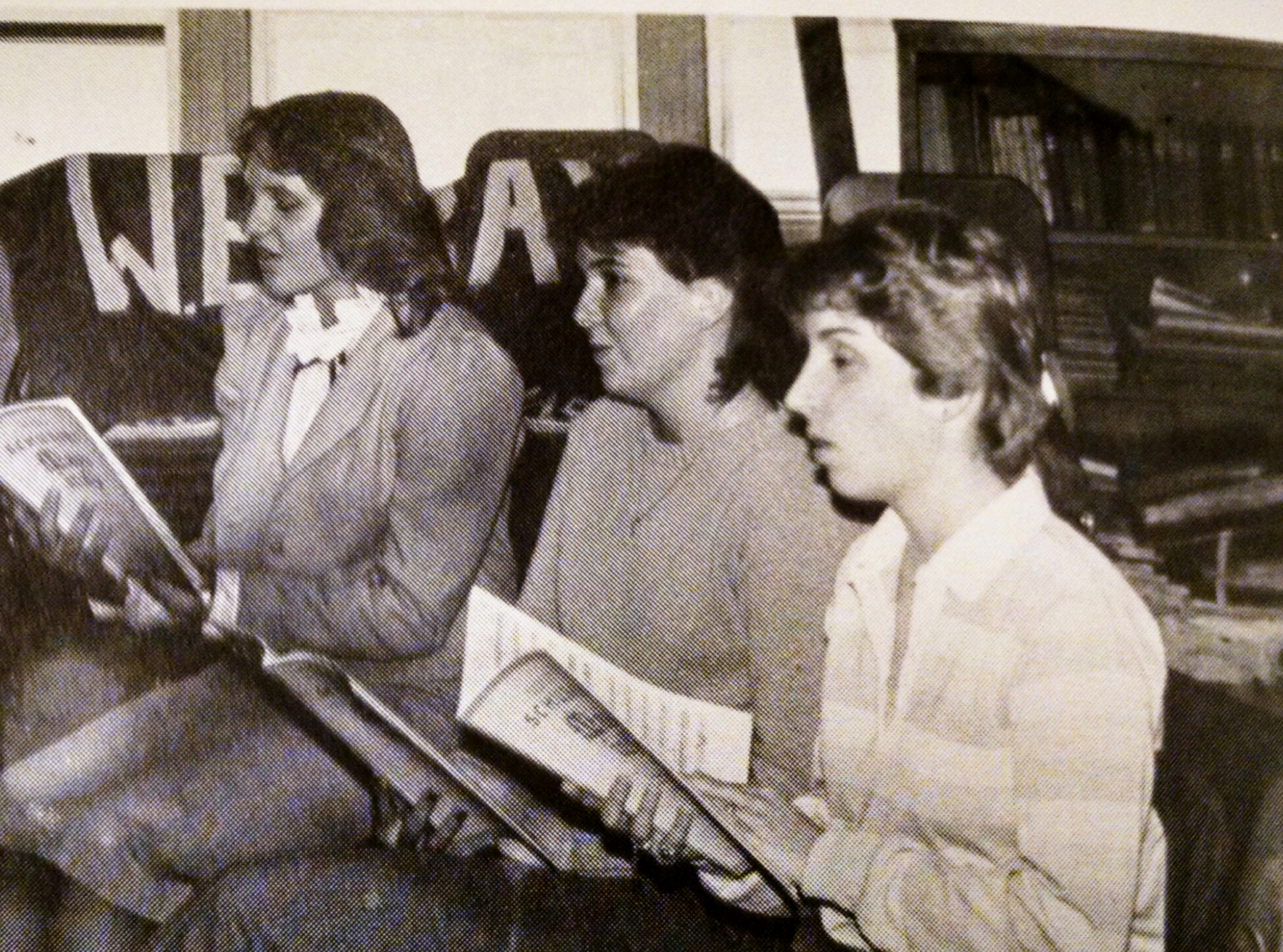
Me on the right.

Me on the right.


But there are some people, the happy oblivious ones previously mentioned, who have absolutely no idea that they are bad. God bless them, they often are the most dedicated and enthusiastic participants, but they have no idea they stink. (I know that’s rude, but it’s true and we all know it.) So here’s the doubt mentioned in the title–Sometimes I think, “Am I one of those people?” I honestly have to ask myself that question from time to time. I don’t think I am, but I think it’s a healthy question to keep myself in check.

So since writing is a lot like music, there are those who stink and those who are good. (Don’t get yourself in a kerfluffle. We all know there are writers who stink.) So as I’m going down this path of choosing writing as a career, I’m wondering how am I doing? I know there is a lot of room for improvement, but am I one of the oblivious? Do I stink and no one is willing to tell me? I think my true friends are honest with me. I hope so, because I can’t improve if I don’t know!

Got to have rocking hair if you're a drummer!

Got to have rocking hair if you’re a drummer!

On the other side of this coin, there are people who, no matter how much they practice, no matter how good they are, they’re still afraid of not measuring up. Boy, do I fall into this category. I get tremendous stage fright. It’s not uncommon for me to get sick to my stomach, sweat, or get heart palpitations. I used to cry and I’ve even blacked out before. Thank goodness I’ve at least got that under control! I’ve had people ask me, “If all of these things happen to you? Then why do you subject yourself to such torture?” The answer is, I’m compelled to. I have to. If you’ve ever been a part of something wonderful, that’s bigger than the sum of the participants, you’ll know what I mean. It’s a bit addictive but I think of it as a spiritual. It’s like you’re making magic, honestly. And who doesn’t want to make magic?

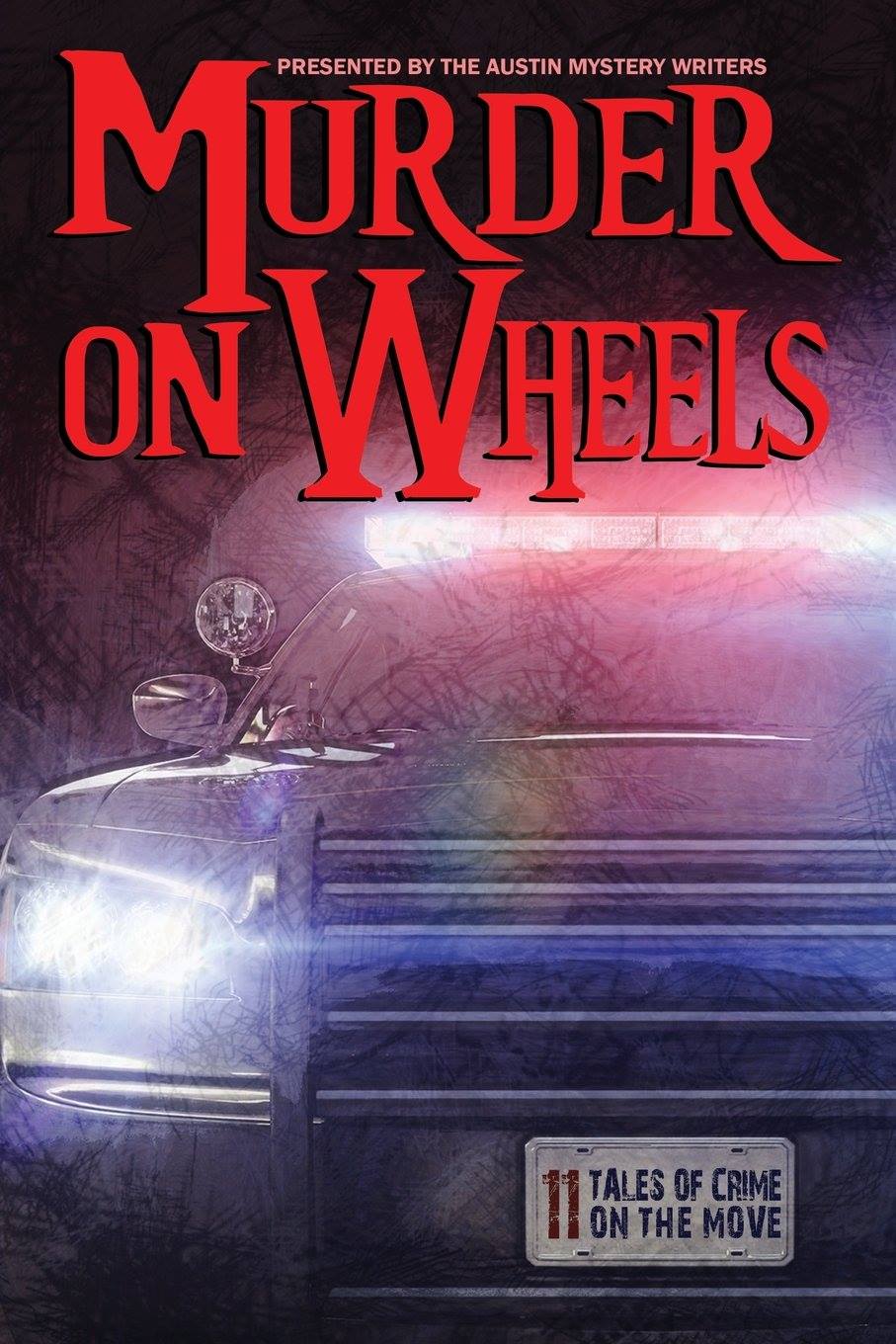
And speaking of performing with others, have you ever performed with outstanding musicians? They make the experience a joy. And of course they you make better because you usually perform better to match them. Well we, at Austin Mystery Writers, have put together an anthology and invited some of our friends to contribute. I think they raised the

Our anthology!

Our anthology!

bar for us and we delivered. Sometimes I have my doubts about the quality of my story, but I also have faith it’s pretty good and I’m getting better. So I have faith amid my doubts and I’m moving forward, enjoying the experience, and making magic. And as always, practice, practice, practice, practice.

Murder On Wheels is available on Amazon and Barnes and Noble. The ebook version should be available soon. 

Neo-Noir?

I recently wrote to a friend and said, “Hey, next time you’re putting an anthology together, let me know. I’d like to contribute.”

He contacted me the next day. “Thanks for the idea! It’s all set. I’ve lined up all the writers and it’ll be Texas noir crime/mystery stories!”

What? That was fast. Noir? Images of James Cagney and Humphrey Bogart in trench coats came to mind. Now there’s nothing wrong with Cagney or Bogart. They were excellent actors who were in some great films. I’ve read some Raymond Chandler and he was very talented. He had a gift for unique metaphors that were brief and got right to the heart of the matter. I’ve never read Mickey Spillane but heard he was really good too. Lots of good writers of the genre out there.darkedinburgh_darklight

But, I’m not a fan of that type of setting. (Yes, I know. I heard your collective gasp. Please don’t throw tomatoes. Put down those pitchforks.) While there are some great stories out there, I’m not keen on men calling women “dames” and saying they have great “gams”. Not thrilled about guys punching other guys just to make a point that they’re tough. If I wanted to watch that, I’d have continued teaching high school.

I understand about noir and hard-boiled crime fiction, why it came about in America when it did. I have no problem with gritty books and movies, nor with the era. I’m a huge fan of Hitchcock, for example.

So now I’m thinking, great, what am I going to write? How am I, a kid from the ‘70s and ‘80’s, going to write about detectives swilling whiskey?

Put down my latte or I’ll give it to you right in the kisser!

I don’t think so.

I first started thinking about recent stories that were gritty. Surely there are modern (neo-noir?) stories. How gritty does it need to be? Aren’t crime/mysteries by definition dark? The only exception I can think of are cozies, but even sometimes they can be dark.

So I decided to do what I usually do several times a day. I Googled it. Apparently, according to Wikepedia, people can’t decide on the definition either. Then I fell back on my other source of information, my friends on Facebook. Since I have so many friends who are writers, this is a font of information. I received many good answers. A few of the recommendations were shows like the Longmire series and True Detective. Some of the books mentioned were The Bitch (yes, that’s the name), The Package by Cleve Sylcox, anything by Walter Moseley or Kelli Stanley, the Harry Dresden series, and an anthology called Lone Star Noir.lone star noir_

Okay, I think I’m getting there, closer to something that I could write. Dark stories, maybe like the Coen Brothers? I thought of Fargo, No Country for Old Men, True Grit, movies I really liked. Those had elements of crime and mystery. An idea popped into my head, something that I could really write. I’m sure some of the other writers for the anthology are wondering if a little housewife could possibly create something dark enough to fit in with their stories.

I think I’m up to the challenge.

So  how about you? Do you have a favorite story or movie that you consider to be noir?

Interview With George Wier

George Wier was nice enough to agree to an interview. Thank you, George! George Wier
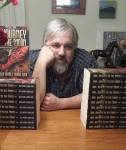
(He’s a personal friend of mine so he knew I’d give him grief if he didn’t. 😉  )

I know that you’re not originally from Austin. How did you get here?

I moved to Austin in 2002 from College Station. One day I took a look at the world around me and realized that most of my friends and all of my family had moved away. Also, after thirty years of living in Bryan-College Station, I knew everyone and everything that I wanted to know.  In a word, I was bored. I called an old friend who lived in Austin and told him about my dilemma, and without even the hint of hesitation, he offered a spare room in his apartment and told me to load up my meager possessions and come on. I left the next day. This was about September or October, not far from my 37th birthday. I was essentially–and with malice aforethought–wiping out an old existence and beginning a new one. I was time to do that. It was one of the best decisions I ever made. Apart from rooting for the old home team (the Aggies) I took to Austin like a duck to water. I’m home now.

Have you always been a writer? Was there a book that inspired you to write?

Yes, I have always been a writer, ever since I could read. My first inspiration was comic books and film. My first actual attempt at a complete narrative was essentially a skit that was somehow a cross between a story and a script, and was actually inspired by Monty Python. I couldn’t do humor well, though, and sight gags were not my thing. The earliest, clearest influences on my writing came from science fiction, particularly Frank Herbert’s Dune books. I loved those. There is one story idea from those early days that I will attempt sometime in the near future. It’s about an outpost at the fringe of human expansion into the universe, and will be sort of a cross between Castaway and the Star Trek universe. We’ll see, though, if I ever get that done. My hopper is pretty much loaded up at the moment.

Along about 1976 or ’77, I was given a collection of Doc Savage paperbacks by my best friend’s sister. Her name was Peggy Dale Taylor. The Doc Savage books she gave me were the 1960s and ’70s Bantam paperback reprints of the old Street and Smith Doc Savage series written under the pen name of Kenneth Robeson, but mostly actually penned by Lester Dent, who though originally from Missouri, was a member of the Explorer’s Club in New York. Dent wrote about a quasi-private investigator, quasi-superhero named Clark Savage, Jr., and his five aides, who traveled the world righting wrongs and punishing evildoers. They sparked the imagination of this young teenager and would later very largely influence my Bill Travis Mystery series. The difference, however, between Doc Savage and Bill Travis is that Bill is based in Texas and rarely crosses the state line, he doesn’t have a lot of gadgets to help him out, and his small collection of friends are more from the “friends in low places” crowd, and less from the “cream of the crop”. I’ve written ten Bill Travis books, and there are at least eleven more to go before I round out the series, including three prequels. And by the time I’m at the end of that long runway, I should–hope springs eternal–know how to write.

Tell us about the different genres you write. Does the genre influence how you approach or plot your book?

Mostly, I write MY genre. I’m not sure what that is. For instance, the Bill Travis books, though billed as mystery, occasionally cross over the line into the fantastic, or you might call it Science Fiction. The first book, The Last Call, is straight action-adventure. The second book, Capitol Offense, while it has elements of action-adventure, is at least half mystery with some elements of political intrigue. The third book, Longnecks and Twisted Hearts, quite definitely crosses the line into science fiction, yet remains mostly a murder mystery. Books four and five, The Devil to Pay and Death On the Pedernales, are both pretty much straight mysteries. Book Six, Slow Falling, has so much science fiction that it should probably be classified as such, yet it’s my favorite of all of them. And so on through the series. By the time we get to book ten, Ghost of the Karankawa, Bill Travis meets Bigfoot. So, there you go. 

Genre doesn’t so much influence me. The story does, however. It’s going to ultimately be whatever it is. I don’t write from outline, or at least in those few instances when I have and “knew” what was coming in later chapters, the outline might be a simple sentence of what was to happen in that chapter. About the only time I do that however, is either when I’m skipping around in the book and writing it in a non-linear fashion or when I’m collaborating and my co-author needs to fill in what I skipped over. In the latter instance, it’s at least courteous for me to provide some clues as to what, in general, I think should happen here and there in the story. I guess that’s about it on that.

As a side-note, I don’t like to read a lot of books in the genre in which I’m going to be doing any extensive writing (i.e., mysteries) because I don’t like to be unduly influenced by other writers. People tell me that my writing style is similar to John D. McDonald. I must confess, I’ve never read a John D. McDonald book. I hear that they’re wonderful, and at the top of the mystery genre, so I always take that as a high compliment and accept it as gracefully as I can. But, I’ll only read a mystery if it’s written by a friend and this friend needs an endorsement or a general leg up. That’s about it. 

What is the secret to your success?

Writing is like anything else. Most of the battle is won by showing up. You have to sit down and write. You have to write a lot. You have to produce, bang out copy, write like there’s no tomorrow (there really isn’t, after all, there is only today!), plan and scheme and push the envelope. However, I think what you’re asking me is for some formula. Okay, I’ll give it to you. Here are my “secrets” to success (it’s interesting to me that there are no real secrets. The nature of the universe is that we all think that there’s some great secret hidden back of the curtain of reality, and that if we could only somehow penetrate that curtain, why, we’d HAVE IT and we’d simply do that magical little formula and the world would lie at our feet. The secret of the universe is nothing. This is also the definition of a mystery. A mystery is: the answer was not given. That’s all a mystery is. The mystery of the universe is a big fat zero. We don’t do well, as a species, with zero. Nothing is difficult to confront. If you don’t believe me, try walking through an unfamiliar house full of furniture in the pitch blackness. You move slowly, at best, because you’re pretty sure you’re going to hit something hard and kill your shins, or fall down and break your neck. So, in our minds, that darkness, that big zero, is really “something”. (Let me tell you, it’s not!):   

I have, this lifetime, sifted through quite a bit of data on success. I’ve narrowed my findings to ten basic points:

     1. Work toward your goal every single day.

     2. Do not let the sun set without accomplishing something towards it.

     3. Hold on to any wins you achieve along the way and disregard the losses.

     4.Don’t allow anyone to evaluate or invalidate your goals, your dreams, and particularly your abilities.

     5. Thinking about a thing is not the same as doing a thing. Success is only ever accomplished through action. The dream, however, must give your actions purpose and life.

     6. Treat your goals as if they are living beings, and grant them life.

     7. All other rules apply with regard to your goals, particularly the Golden Rule.

     8. Study, learn and become the top person on the planet in your field. Knowing WHY is of immense value. Knowing HOW will guarantee prosperity. Knowing both HOW and WHY is everything.

     9. If you get mad at someone or something that stands in your way, you have granted them or it immense power. Become unflappable. In any situation you are the expert. You are the source. Unquestionably. Success is hidden in the minutiae. It’s the small things that, brought together, create the whole.

     10. Fortune and fame are illusions, and at best are fleeting. Don’t seek these. Instead, seek happiness. You will ultimately find that it resides within you.

I’ve found that most writers have other talents. What are your other talents?

Well, that’s a loaded question. I like to think I’m adept at everything I do, and typically overinflate my abilities, at the very least to myself. However, I like to draw (with a mechanical pencil), I paint, I play violin and I play country fiddle, and I do other things I’m not supposed to do. 

Some of George’s pictures
West Texas  Fall    Secret Meadow

Do you have any advice particularly for mystery writers?

The main piece of advice, I suppose, is what I said above about not reading too much in that genre. But really, you might like to read mysteries and want to write them as well. Really, it’s a personal preference on my part not to do so. I also write a little science fiction, for instance, and I am so well-read in that genre, and will continue to be so, that it’s impractical for me to even think about not reading science fiction. So, whatever your write, whether it’s mystery or romance or whatever, you should write what my friend Joe Lansdale calls “your own genre”. Your writing is YOUR genre. Write what you want to write, and how you want to write it. And, write what you, yourself, would most want to read. That’s the simple one. Do that, and you’ve got it made.

Tell us something cool about Austin that we probably don’t know.

The one thing I like about Austin is that it’s full of secrets. There are so many little-known, out-of-the-way and off-the-beaten-path little hidey-hole restaurants, coffee bars, music venues, acting and dancing troupes, and etc. I love finding those. It’s my goal to find all of them! Sallie and I venture forth at least once weekly looking for that offbeat place that we’ve never heard of before. And I have the knack for smelling them out.

How can we find more information about you and your books?

The best place is my website, www.georgewier.com (which takes you directly to the www.billtravismysteries.comsite). Both of these sites have now been combined into one. Also, I have a wordpress blog at http://georgewier.wordpress.com. Other than that, you can follow me on Twitter at @BillTravisWrite and on Facebook at George Wier-Author. Also, I encourage everyone to communicate directly with me. I usually answer my own emails, and I typically do this quickly. So, please communicate with me. I know that people get punished in this world for the two great crimes: being there and communicating. But, that’s the only way to ever get anywhere. So, yes, get in touch with me and ask if you can’t find the answer. Or just email me to say “Hey!” I’ll say “hey” back at you.

What are you working on now?

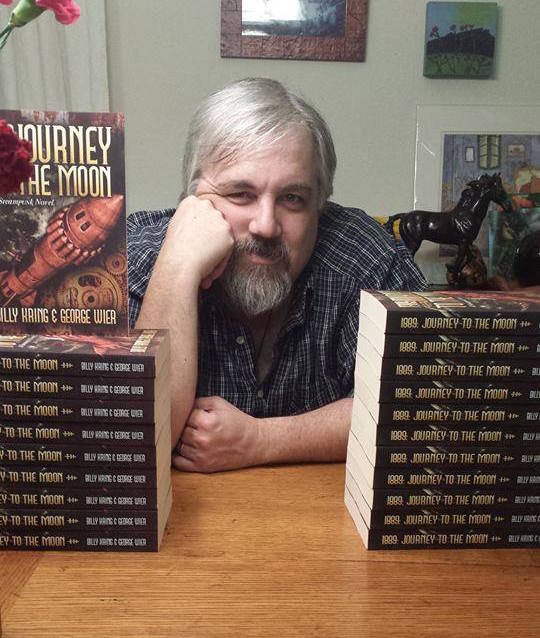
Hmm. The question should be “what are you NOT working on now?” I’m working on Bill Travis #11, Desperate Crimes. Also, I’m right at the end of yet another mystery standalone entitled Errant Knight. It’ll be forthcoming in a few weeks as an ebook and a trade paperback. I will have another book coming out from Cinco Puntos Press in January of 2016 entitled Murder In Elysium. Also, I’m collaborating at the moment with Billy Kring (another fantastic mystery author) on the steampunk series The Far Journey Chronicles. Billy and I have completed and published 1889: Journey to the Moon, and have finished and are in the process of editing 1899: Journey to Mars. We have also begun 1904: Journey Into Time. There will be a minimum of four books in that series, with the last one planned: 1909: Journey to Atlantis. Aside from that, I’ve got a few other projects going that I pay attention to, catch as catch can. But I have far more than that planned, including a collaborative series with science fiction great (and friend), T.R. Harris, of San Diego, California. I guess that’s it.

Thanks for the interview. You’ve given me a lot to think about and now I’m pumped up! I can’t wait to get back to my writing!
Mystery/Thriller Recommendations

It’s that time of year! A time for reflection on the past year and anticipation of the new. If you’re like me, you hear a lot of people mention a good book or movie and you think to yourself, “That sounds good! I gotta remember that.” And then you don’t.

So, since I have a lot of friends on Facebook who like mysteries and thrillers, I’ve asked them to recommend at least one good book or movie they discovered this year. And of course, each of us here at AMW has a recommendation too.

Here they are, in no particular order:

1. Mandy Eve Barnett (author): mandyevebarnett.com – Lucy – it is unusual, exciting and a great twist at the end! A woman, accidentally caught in a dark deal, turns the tables on her captors and transforms into a merciless warrior evolved beyond human logic.

2. Beverly Nelms (personal and book club friend) – A Most Wanted Man with Philip Seymour Hoffman from a John LeCarre book. It’s about a (most likely) innocent Muslim man being ground up in the system by the Taliban, then by us. PSH plays a German operative with a small group of “assets” who is trying to help him. Underdogs helping the underdog. The view of agents, especially ours, is devastating.

3. Laura Wilson (personal and book club friend) – I liked The Girl with the Dragon Tattoo, book much better than the movie, by Stieg Larsson. The main character is a girl with a troubled background who is brilliant with technology and a research savant. There is torture, murder, blackmail and deceit all over this book.

4. Billy Kring (mystery author) www.billykring.com – Suspect by Robert Crais. One of my top reads of the year, and highly recommended. LAPD cop Scott James and his female partner are ambushed, and Scott is wounded, his partner killed. He is broken, suffering, and angry, textbook PTSD. As a last chance, he is partnered with a german shepherd with her own problems. Maggie is a two-tour bomb-sniffing dog who lost her handler in an ambush. She is also suffering from PTSD, and it is her last chance, too. When they begin to investigate the case where Scott’s partner was murdered, they have to rely on each other, and what they encounter in the case could well break both of them.

5. David B. Schlosser (writer, editor) – www.dbschlosser.com – The Broken Shore by Peter Temple. This terrific Australian mystery explores the traditional aspects of a crime/cop story — good guys, bad guys, and their travails — as well as some really interesting cultural challenges in Australia.

6. Kelly Pustejovsky (personal friend) – I watched Dream House yesterday on Netflix, surprisingly good.

7. Tara Madden (personal friend) – Wilde’s The Gods of Gotham and it’s sequel. Fairly new mystery series about the very beginnings of the NYPD set in the 1840s. Very good. Really pulls you into the story. Great richly created characters.

8. Jeanne Kisacky (writer) – It’s been out a while, but Elizabeth Wein’s Code Name Verity defied my ability to see where the plot was going. It was truly remarkable to read a book and not have any of my guesses pan out.

9. H.M. Bouwmann (author and professor) – www.hmbouwman.com – I’ll second the Code Name Verity recommendation. And I enjoyed both Robert Galbraith (Rowling) mysteries–though I loved the first more than the second. Also, just as an FYI, the opening couple of pages are not great. Then: very good.

10. Roger Cuevas (personal friend) – I love Alice LaPlant’s “Turn of Mind.” It’s narrated by a woman, a former hand surgeon with Alzheimer’s. Then one day her neighbor and long-time friend is found dead and the body’s hands have been expertly removed. Did she do it? Our narrator just can’t remember…

11. Morris Nelms (personal, book club friend, professor of fine arts, and musician) (Yea, he’s a cool guy) – The Afghan, by Forsyth. Frequencies, a sci-fi whodunit movie. Crescent City Rhapsody, a sci-fi thriller about what happens when an EMP disables everything.

12. Joseph Huerta (personal friend) – The two “Blood” books by James Rollins and Rebecca Cantrell that feature warfare against the forces of Armageddon, including angels and devils and a secret band of priests who were once vampires. Yes, it doesn’t really sound like a Joe-book but it was truly fascinating. The third book will be out this Spring.

13. Angie Kinsey (writer) – www.angiekinsey.com – The Martian by Andy Weir – a not too far fetched sci-fi thriller about an engineer who gets stranded on Mars. He has to figure out how to stay alive with the resources he has until he can connect with home. Entertaining and thrilling!

14. Debbie Woodard (personal friend) –  I discovered the BBC’S Sherlock this year. Fantastic production, great actors, character-driven-well-written scripts.

15. Elizabeth Buhmann (AMW member) – I’ve read a lot of good mysteries this year. I think I’ll go for Present Darkness, the latest by Malla Nunn, but my recommendation is not to start here but to start with her first, A Beautiful Place to Die. The setting for these books is South Africa in the 1950s, at the height of the Apartheid era.

16. Laura Oles (AMW member) – My favorite this year isn’t a traditional mystery but I loved it because it had a strong mystery component and very strong storytelling. It was Leaving Time by Judy Picoult.

17. Gale Albright (AMW member) – I was fascinated and awed by Tana French’s In the Woods, from the very first paragraph because her writing is lyrical and compelling. It’s set in Ireland and is her first book about the “Dublin Murder Squad.”

18. Kaye George (AMW member) – I’m JUST like that. I vow to remember the good books I’ve read, but, alas, my memory doesn’t really go back 12 months. I know that every Harlan Coben I read is my favorite. Recently I read “Iron Lake” by William Kent Krueger and it was terrific. It’s the first Cork O’Connor book. I’ve read others, but had never read this one.

19. Kathy Waller (AMW member) – Terry Shames’ A Killing at Cotton Hill. She captures small town life in a southern town while mixing humor with suspense and mystery. I couldn’t put it down. It won the 2014 Macavity Award. 

20. My favorite book that I read this past year was Jackaby by William Ritter. I loved the mix of historical fantasy and mystery. Jackaby is an investigator of unexplained phenomena and the story is told from the POV of his new assistant, Abigail Rook. It’s a bit like Sherlock Holmes meets Harry Potter. It was delightful and intriguing.

So there you have it! A whole slew of books to add to your TBR (To Be Read) list.

Writer Unboxed Un-Conference

Salem house

Just got back from the Writer Unboxed Un-Con a couple of days ago and like many of my peers, I’m having a hard time adjusting to real life again. It was so great! What’s Writer Unboxed? I guess I’ll start at the beginning.

WU is a wonderful blog (www.writerunboxed.com) that’s all about the craft of writing fiction and providing moral support for fellow writers. I’ve been a member of the “family” for a few years now and I can say that it’s been invaluable.

This was the first conference and it was held in Salem, Massachusetts and what a wonderful time of year to be there! The leaves were gorgeous and it was right after Halloween so there was still a magical feeling in the air.

The days were packed with classes and workshops. I literally filled my notebook with notes. I wish I could tell you everything I learned and the insights I discovered, but that would take  pages and pages to do. So instead I’ll share some granules of wisdom and some links so you can delve further on your own.

My first class was Lisa Cron’s Wired for Story. I’m now a groupie. It was about how stories are the most powerful form of communication and our brains are literally wired for story because that’s how information has been passed down for generations. When someone says, “Let me tell you a story…” your brain releases Dopamine and you’re ready to experience the story. A good story is more important than beautiful writing because you’ll get a better reader response. She compared it to a tricked out car with no engine. It’s pretty, but it won’t get you anywhere. And most importantly—story is internal, not external. It’s what happens to your characters. Lisa has a TED talk all about this. I highly recommend it. It’s almost more like learning philosophy and about writing.

Learned about Setting as Character taught by Brunonia Barry and Liz Michalski. Both are from the area so not only was it a good class about describing your setting, they offered some new insights into the area. Most of it was a writing exercise and some of us shared what we wrote.

Velveteen Characters taught by Therese Walsh. Therese is a founder of WU and organized the conference so she is a powerhouse, to say the least. Basically she said that all of your characters are important, even the secondary ones. You should try to give each one a quirk or flaw, it makes them more real and will enhance the story. She suggested for a writing prompt to make 5 assumptions about a character and flip them. See what happens!

Plot vs  and Story taught by Lisa Cron, Brunonia Barry, and Donald Maass. This was a biggie. To sum up copious notes, story is internal and the changes that happen within your characters. Plot is actions, events and things that affect your characters. Also a side-note,  every single scene should have conflict, action, suspense, and a turning point.

Where Story Comes From led by Meg Rosoff. Basically, you are unique so your voice is unique. It was about tapping into the conscious and unconscious mind, to get to those memories, fears, and feelings that are real. If you can convey those feelings, your voice will be unique and you’ll connect with the reader.

Donald Maass’s class on How Good Manuscripts Go Wrong. So many notes! He talked about how to make your characters deeper and more interesting by giving them flaws and obstacles to overcome. Does your MC (main character) do something that no one else can do? Does your MC know something that no one else knows?  And don’t forget to add tension to every scene. Most books don’t have enough tension.

The last day was an all-day long workshop about 21st Century Fiction. It seems that genres are starting to cross over and readers are expecting it. Plot driven books have deeper characters and literary books have more suspense and action. His method was to ask questions which make you think about your characters and the events. Many people, myself included, had “aha!” moments which made us look at things differently. So insightful.

That’s it in a nutshell. I’m including a video of me singing the Un-Con song. It’s embarrassing and the quality isn’t great, but it was fun.


AMW Writing Retreat- AKA Babes in the Woods

I’ll be honest, I’ve never been on a writing retreat. So as the days got closer to October, my excitement grew. What all is involved? What is expected of me?

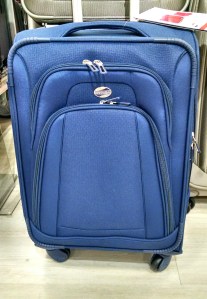
Like most gals (I think), I thought about accessories. What do I wear? Which made me think about my suitcase. I hate using the same old black blah suitcase so  I went shopping. I’ll also be going to a conference in November so I’ve been thinking about this. I went to JaCque Penney and found exactly what I was looking for.  I love this color of blue.

Suitcase

I also got so excited that I asked a talented friend to make something to “mark” the occasion. She made AMW book markers and magnets. Aren’t they cute? Book markers


(I think we should have more of these for prizes at future AMW events)

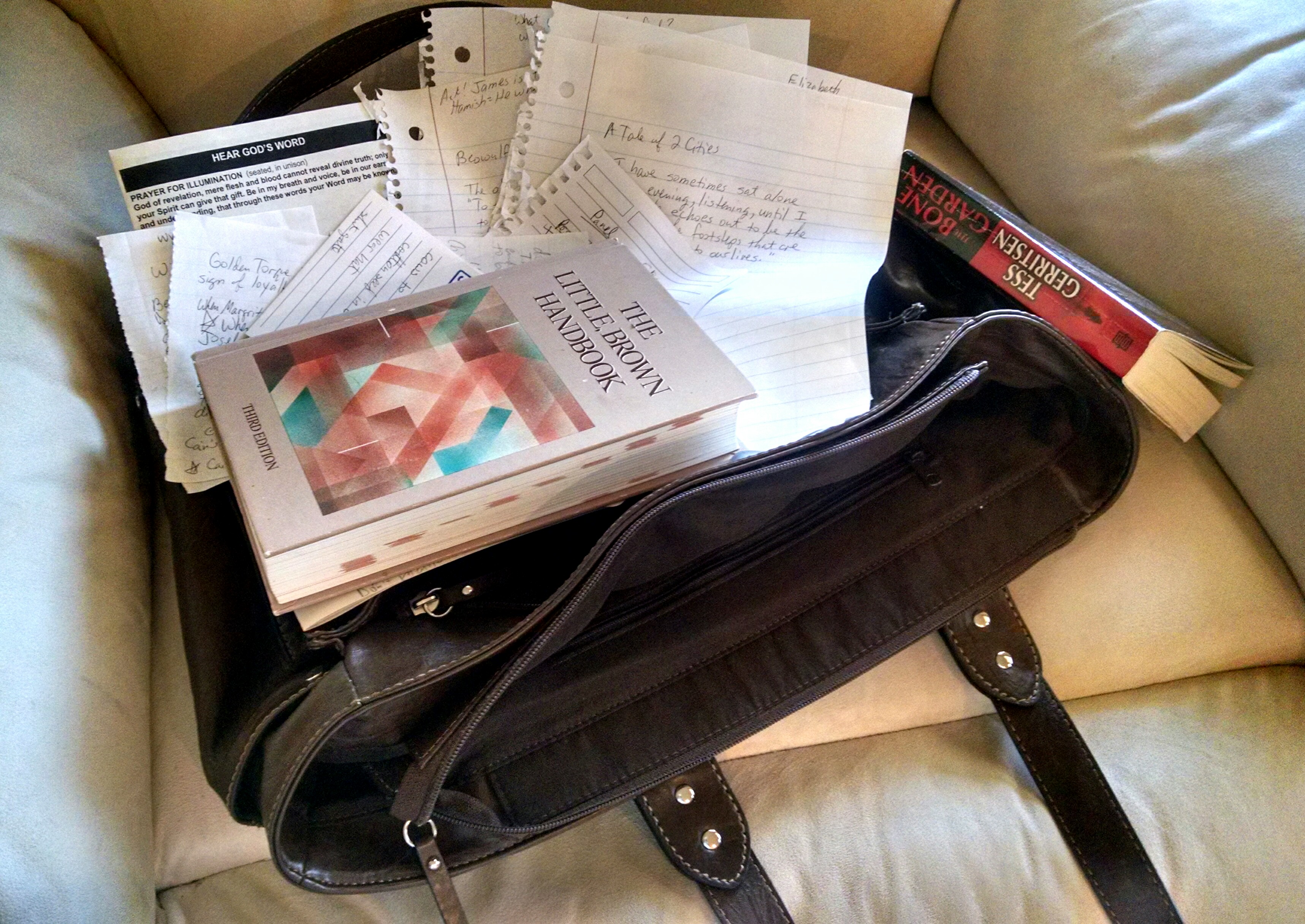
Friday finally came around, time to get to the cabin! I gathered my notes, computer, and supplies.

My notes


I got my directions and I was on my way! I arrived in no time at all and was the first to get there. I hunted around for the key, found it and let myself in. It was a gorgeous day so I opened all the windows. Let the magic begin! Cabin

While I waited for the others to arrive I unpacked. I heard a vehicle approaching. Yay! They’re here! Nope, a truck pulling a large BBQ cooker was arriving at the property next door. About ten minutes later I heard another engine. Yay! Nope, another truck pulling a large cooker, followed by a few more trucks.

By the time my cohorts had arrived, five more cookers had passed by. They were planning on some serious BBQ next door.Turns out there was a cook-off planned for the same weekend.

BBQ Sign

That’s okay because nothing was going to stop us!


We visited, relaxed, and had a nice time that first night.

Gale on couchKathy on couch


The next morning we awoke with a sense of business. Time to write! At first this was all I could think about, a keyboard staring back at me.Keyboard

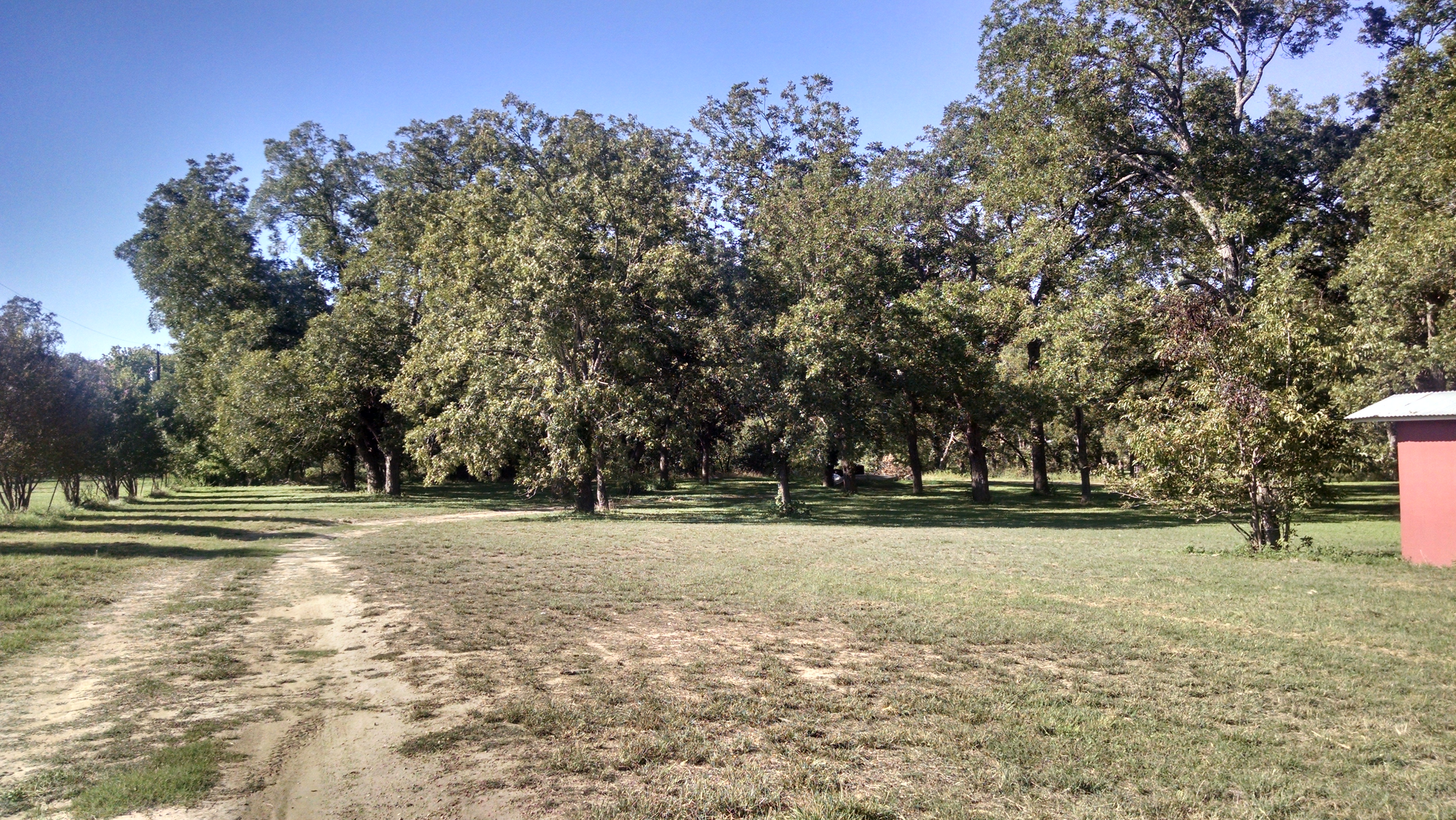
I’m so glad I have an outline to keep me on track. Once I got started, I was in the groove and made some good progress. Throughout the day, we wrote in writing sprints. They were usually about 30 minutes long with breaks in between. During the breaks I’d go outside and enjoy the cool weather and listen to the music from the cook off next door.  Yard (We never did bet brave enough to see if they needed more judges.)


By the time we left on Sunday, all three of us had made quite a bit of progress on our projects. Mine was definitely more than if I had stayed at home. It was nice to share a creative space and have that extra discipline.

I declare the 2014 retreat a success!

Have you ever been on a writing retreat? Please share your ideas and experiences.


Interview with Tim Bryant, author of Spirit Trap

I recently met author Tim Bryant at Book People’s Lonestar Mystery Discussion. He’s such an interesting person, I wanted to know more about him, his creative process, and his path to writing. Thanks for letting me interview you, Tim! Tim Bryant

AMW – When did you know that you wanted to be a writer?

TB – I’m not entirely sure I ever wanted to be a writer. I just was one. My grandmother probably knew I was a writer when I was ten years old. It took me at least thirty more years to realize she was onto something. I dedicated my first novel to her. I was happy that she was able to see it before she died.

AMW – What was the first creation of yours that got published?

TB – Well, I had had music published because I came to fiction writing after many years as a musician. The first piece of fiction I got published was my first Dutch Curridge short story. It’s called “Bob Wills Is Still The King,” and it was published in REAL Regarding Arts & Letters Literary Magazine. I had written several other Dutch short stories and a lot of non-Dutch stories too, of course, but that was the one that pretty much started everything.

AMW – How long did it take for you to write your first novel?

 TB – The first novel was DUTCH CURRIDGE. It took close to a year from start to finish, although the real meat of the writing probably took four months. My original idea with it was that I would take the collection of Dutch Curridge short stories— I think there were six or seven of them at that point— and weave them together into novel form. It was a fine idea in theory, it just didn’t work. I finally ended up setting all of those stories aside and writing the novel from scratch. Some of the earlier material worked its way into it, but only here and there. The story about the migrating squirrels and that parts about Dutch’s marriage and divorce, to name two examples. The bulk of the story was new material and was much better for it.

AMW – Did anyone help you? Did you belong to a critique group?

 TB – Unfortunately, I didn’t have any kind of group during the writing of the first novel. I wish I had. That did come along almost immediately after, and a couple of the people are still with me today. My friend Brett Gaffney has been a huge help with workshopping and even helped co-write the book THOSE WHO KNOW US BEST DON’T KNOW US AT ALL. It’s a book of free verse, but it also has a dark, mysterious edge to it and actually shares a character with the Dutch books. Brett’s my first go-to with things, and I do think writers need that. My good friend Jen Moody edited “Doll’s Eyes,” which was part of the Subterranean Press anthology IMPOSSIBLE MONSTERS. She did such an amazing job on that, I asked her to edit the newest Dutch novel, SPIRIT TRAP. She’s top shelf when it comes to editing, and she’s a great fiction writer too. They’re both invaluable secret weapons to have as a writer.

AMW– Do you currently belong to a writing group?

TB – Yes. In addition to Brett and Jen, I have a local writing group that meets regularly. They’re librarians and teachers in addition to being writers, and they’re great motivators, supportive friends, and I owe them a lot as well. I also hang out with Joe Lansdale from time to time, when he’s in town. I’ve certainly learned a lot from Joe. Writing is such a solitary endeavor, I find I really need those connections, just to keep me focused…and sane.

AMW – Your recent book, Spirit Trap, is the third book in the Dutch Curridge series. Tell us a little something about Dutch.
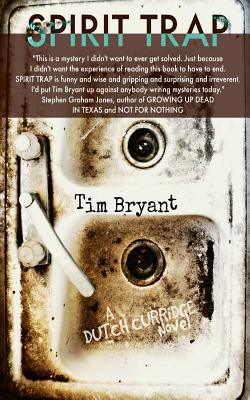
tim-bryant-spirit-trap

TB – Dutch is a private eye in 1950s Fort Worth who worked with the Tarrant County Sheriff’s Department until he realized he was too bad to be a good cop and too good to be a bad one. He identifies strongly with the down-and-out citizens of Fort Worth. He sees himself as one of them, where maybe the other guys on the force didn’t. Dutch has always been an underdog. He’s fought for everything he has (which isn’t much), and he’s ready to fight for every other underdog he meets up with.

On a personal level, he likes Jack Daniels and Dr Pepper, western swing and jazz music and a young lady who writes for the local newspaper. He has a bad ear, which is a leftover from a childhood illness, and a good friend named Slant Face, who hails from Manchester, England.

AMW – The series is set in Fort Worth in 1955. Why Fort Worth and why 1955?

 TB – Having a background in music, I wanted to extend some of that to the Dutch stories, and Fort Worth just has an extremely rich musical history. Especially, in that era of the 1940s and ‘50s. WBAP radio was broadcasting all over this part of the country. Bob Wills and Milton Brown were breaking down musical and racial barriers. Jazz clubs were hot, especially in the African-American neighborhoods. Fort Worth was a wild and colorful place, with Hell’s Half Acre downtown and Jacksboro Highway to the north. Dutch belonged in a place like that. He was right at home.

AMW – I’ve been reading the book and I can honestly say it’s what I call a “total immersion experience”. I can hear the music, the voices, and noises of the time. Did you have to do a lot of research to capture the era?

TB – Yes. I’ve done tons of research, and that research continues. I enjoy it so much, I hardly think of it as being research. I love reading about the history, personal accounts, pouring over maps, watching films and listening to recordings from that era and area. I’ve joked that I probably know more about Fort Worth than most people who live there, but it’s true. I’ve only visited a handful of times, believe it or not, but I’d love to spend more time there.

But yes, I did work to get the full effect of the time and place. The feel and the sounds. Fort Worth is much like a character in the books, so it was essential that I get it right.

AMW– Do you write other kinds of stories besides mysteries?

TB – Absolutely. In fact, I’m not sure I really write standard mysteries at all. The second book in the Dutch series, SOUTHERN SELECT, is probably the most straight-forward mystery I’ve written, and, although it’s quite important in the series, it seems to get overlooked a little. I tend to think of mystery in the larger sense. Not so much cases of missing heirlooms and dead bodies, even if those things do show up from time to time. To me, the best mysteries are the ones that are never solved. They get people thinking and talking. They’re the ones that draw them in, keep them up at night. So I like stories that ask questions more than I like stories that answer them. I think most of my stories ask the questions that intrigue me most.

AMW– You mentioned you’re a musician. What instrument and what kind of music do you play? Is your music available online?

TB – I’ve played music for most of my life too. I’m primarily a piano player, although I can fake a few other things enough to fool a few people. I play totally by ear, by instinct. I’ve been lucky enough to play music all over New Orleans, around Texas, on the same stage and in studios with some of my heroes.

My music is available on iTunes, most places you find music. It’s under either my name or 2Take Tim, which is a nickname I got down in New Orleans, or Ramshackle Day Parade, a cool international band that I put together. That band featured Steve Wickham, who plays with The Waterboys and Tatanka Ohitika— Strong Buffalo— a Dakota-Sioux poet. Almost all of my music  is available at TimBryantsUprightPiano.com.

AMW – What are the next projects you’re looking at? Another Curridge book? Something that’s been on the “back burner” you’ve been dying to get to?

TB – SPIRIT TRAP was the last major thing I wrote. Right before that, I wrote a non-Dutch novel called CONSTELLATIONS. A publisher in New York City is looking at that one. I have two other non-Dutch novels that I’m working on. I tend to alternate between the Dutch books and non-Dutch books, so I’ll most likely finish at least one of them before I return to Dutch.

One is indeed that big one that’s been simmering on the back burner. I think it might be time to bring it forward now. It’s set in the Philippines during World War II, and I’ve been researching that one for a good while now. I was going to say it’s one of those mysteries that’s not really a mystery. I think it would be closer to say it’s a non-mystery that really is one. Everything about life is a mystery, right?

I’ll return to Dutch though. He’s a friend too at this point. He always comes back around, and I’m always happy to see him. There should be at least two more Dutch novels. I think I’ll be back to him in 2015.

AMW – Thank you, Tim and good luck with the new book!