When I first sat down to write the stories that would eventually become part of For Every Evil Under the Sun, I didn’t know exactly where they would lead me—I only knew I wanted to stretch my writing skills, try new things, and be a part of a hot, cool collaboration. (Yes, I like puns.)
Now, I’m proud to announce that this collection is out in the world, published by the brand-new Fredonia Ink Publishing. I’m honored to be sharing the pages with two powerhouse writers, Alexandra Burt and Laura Oles—both of whom are not only incredibly talented but also deeply committed to telling stories that explore the dark, complex corners of the human experience.
This collection is a bit of a literary experiment. We each approached the idea of “evil” through our own unique lens—psychological thriller, family drama, crime, horror, western—and let the stories guide us. What came out of it is a collection that isn’t just eclectic, it’s electric. It shines! (Yes, another pun.)
As for me, I leaned into the grit—into crime, revenge, justice. I wanted my stories to carry that weight—to explore the consequences of violence and vengeance. And also add a little bit of fun to the mix. And the stories by Alexandra Burt and Laura Oles are equally as dark and entertaining.
And hey, if you’re in Austin this summer, I’d love to invite you to join us for a special event at Vintage Bookstore and Wine Bar (1101 E. 11th St.) on July 18 at 7pm. Alexandra, Laura, and I will be discussing short story craft, the experiences of women writing crime fiction, and what went into shaping this haunting little book. It’ll be an evening of books, wine, and maybe a few goosebumps.
So if you’re in the mood for stories that simmer under the heat of summer and explore just how far people will go—to protect, to avenge, to survive—then For Every Evil Under the Sun might just be what you’re looking for.
🗓️ Event Info: July 18, 7pm @ Vintage Bookstore and Wine Bar, Austin, TX 🔗 Learn more, here is the Amazon listing. Ebook now available and paperback will be soon on Amazon and bookstores everywhere: https://tinyurl.com/2tph4xcz
Why do so many of us choose to work or study at our favorite coffee shop? Even if we have a fully equipped office, we pack up our laptop and relocate, settling in with likeminded people doing the same thing.
If this sounds like you, you’ve adopted a favorite “third space.”
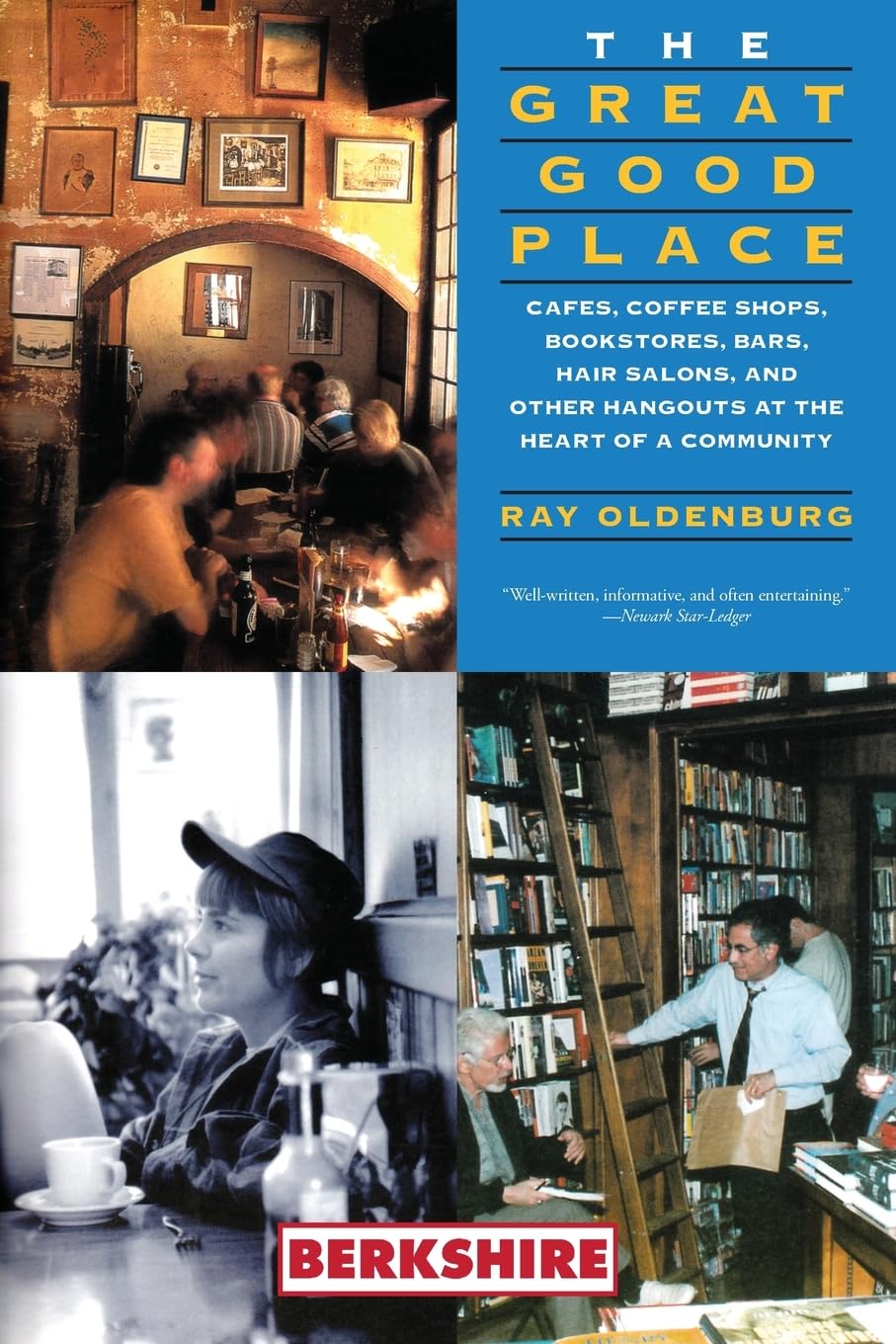
Urban sociologist Ray Oldenburg coined the term “third space” in his book, “The Great Good Place,” (originally published in 1989 and revised in 2023). Popular third spaces include coffee shops, pubs, diners, libraries, parks and gyms. The third space, Dr. Oldenburg stated, were ones that allowed people to leave private and professional concerns behind to connect with others in conversation. Third spaces “host the regular, voluntary, informal and happily anticipated gatherings of individuals beyond the realms of home and work.”
There’s some science that indicates it’s not simply the lure of a fantastic latte. A 2012 study published in the Journal of Consumer Research indicated that lower levels of ambient noise can spur creative idea generation. In a later 2019 study, researchers pointed to “stochastic resonance,” a measure of a particular background noise level that benefits our senses and can help in those moments where we are temporarily distracted or in a contemplative state.
In short, the “coffee shop effect” has been cited in several studies. This, coupled with being surrounded by others seeking a similar environment, can further motivate us into action. The idea of parallel work—working alongside others but not directly with them—can help us in our solitary efforts. All while feeling less alone.
Still, not all coffee shops will become beloved third spaces. A place where you will regularly spend both money and time is chosen. It is special. It draws you in and invites you to linger for a bit, often in the company of friends or colleagues.
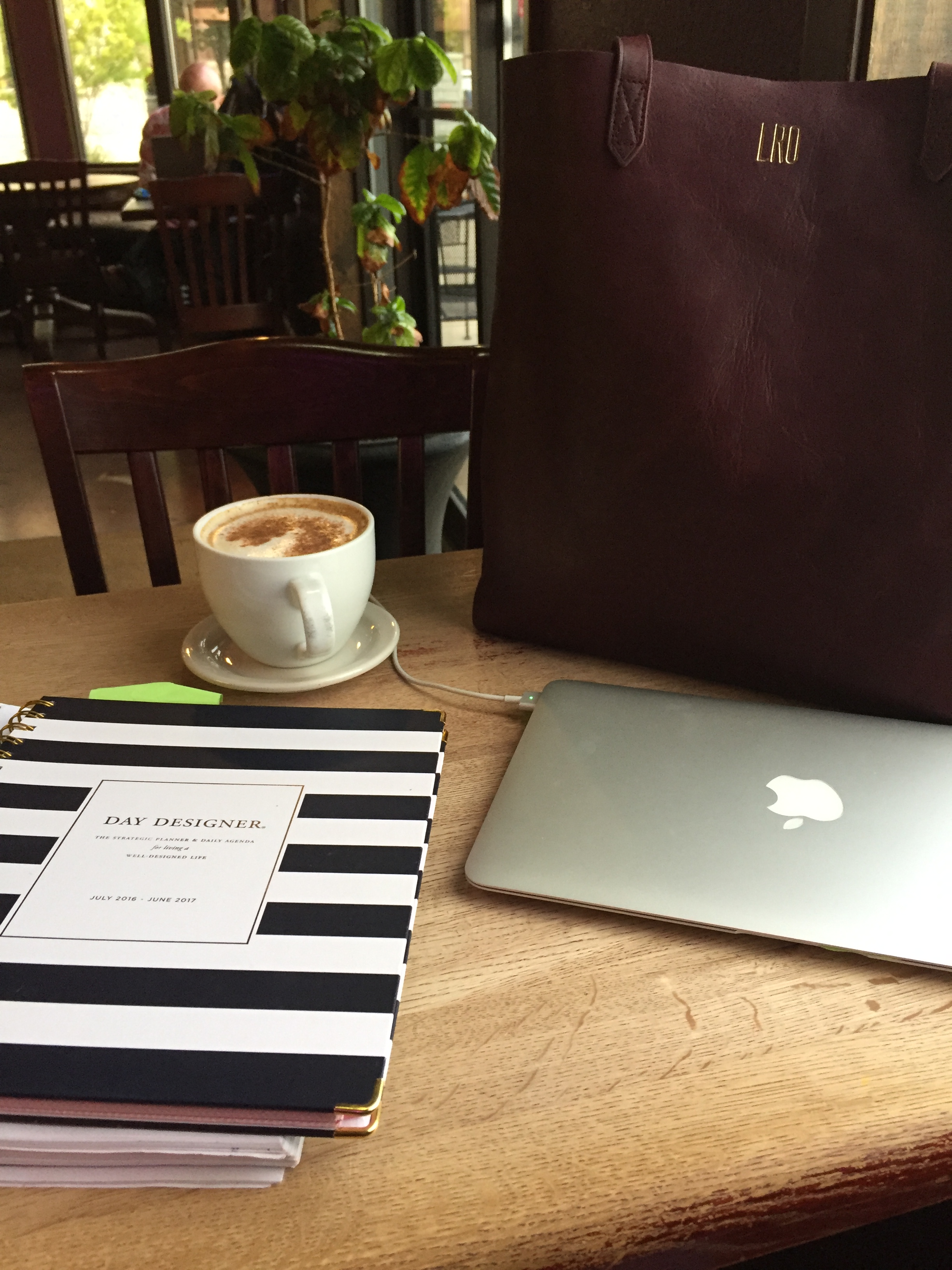
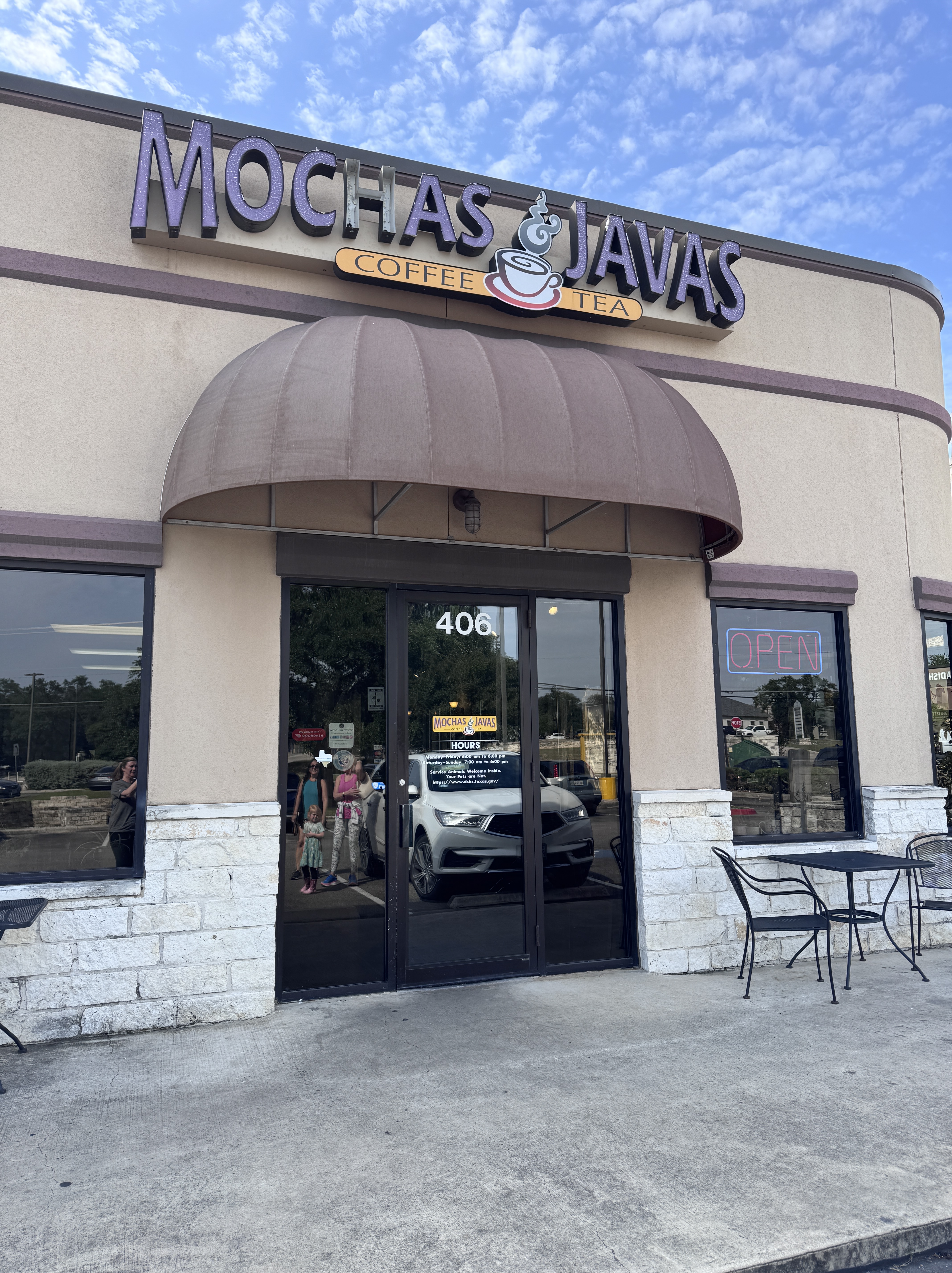
The third space has evolved from being a place where people gather to connect with community, to one that incorporates these components and adds a welcoming setting for students and WFH employees and solopreneurs. As someone who raised three kids while working from home, I sometimes struggled to tune out tasks and chores. So, I sought my own third space and found it at Mochas & Javas. In addition to business articles and columns, I wrote much of my debut novel at the Wonder World location.
My “MJ office” in 2016
Mochas & Javas continues to be part of my regular routine—sometimes to chat with friends and other times to stare down a deadline—and I was curious to learn more about not only this beloved local institution but the guiding principles behind the business.
Mochas and Javas was founded in 2003 by four family members—Kevin Carswell, his brother Kirby Carswell and their wives, Michelle and Kelly Carswell. The idea originated when Kevin and Michelle began brainstorming about a local venue where San Marcos residents could gather to enjoy quality food and beverages as well as “legendary customer service.” Like many fantastic ideas penned on the back of a napkin or a business card, Michelle sketched the now well-known logo on a napkin and named the business Mochas & Javas (Community Impact, 2019). Over the last twenty years, Mochas & Javas has thoughtfully expanded into five locations.
I asked Kevin if he would share his insight about Mochas & Javas as a trusted third space in the San Marcos community and his philosophy regarding building this popular Hill Country destination. He was kind enough to share his thoughts with me in the following interview:
LO: “Getting together for coffee” is a common refrain we share with friends and colleagues. What encouraged you to take the first steps to create Mochas & Javas as a gathering space for the San Marcos community?
KC: When we began the discussion about opening our own business we discussed several types of business. But coffee made the most sense at the time, because it was in the food and beverage industry, which is my background and in 2002, the coffee industry was rapidly expanding. I had heard the term “third” space before, but not sure that I fully grasped the concept until we opened, expanded and then had time to grow MJ’s (I’ll abbreviate the full name) over several years and then see how many of our guests became daily/weekly regulars or made MJ’s their third space. Coffee does bring people together, I’ve seen many relationships built from the connection our guests made with one another while at MJ’s, it’s a great thing to see. And for myself I’ve made many friends over the years through MJ’s, lifelong friends. It’s a good feeling.
LO: Do you find that each location has its own personality/vibe or is the community based on proximity? Or a combination?
KC: One of the areas that I enjoy about MJ’s is that they all have their own “vibe” or connection to the community or the surrounding area that they are located. Such as WW, many locals with a mix of students and visitors. Whereas LBJ is a more concentrated number of students and professors with a nice mix of visitors, usually families coming for informal or formal visit to TX State University. Our Frisco store is very similar to our WW store, as where it’s mostly locals and business professionals with a mix of students.
LO: Why do you think local writers, artists, students and businesspeople are drawn to Mochas & Javas as a third space?
KC: Over the years many writers have used the WW store as their office. Paul Pullin for example is in his third book and has become a good friend over the years, he’s been a regular for 22 years. We’ve chosen not to place TVs at any of our stores. I believe they are a distraction, and most people today already have plenty of screen time. If our guests were staring at a screen, they may never meet someone new. We need more face-to-face conversations and MJs provide this.
LO: How has Mochas & Javas expanded and evolved since you opened the first location over twenty years ago?
KC: MJs opened the LBJ and WW stores the same year, 2003, about 6 months apart. We have always had plans to expand, sometimes slower than we first thought, but moving a bit slower is not a bad thing. Keeping our debt in check and growth at a steady pace. Five stores in 22 years is no record, but we have five stable stores with a strong following from our loyal guests. We are planning to continue with our expansion but will plan accordingly based off good solid numbers which allow us to grow without taking on more than we can manage.
LO: Mochas & Javas has strong ties to the Hill Country community, and I wonder if this stems from your philosophy of “always giving back.” Can you expand on this?
KC: I grew up in San Marcos, our family moved from the Houston area in 1967/68 to San Marcos. So, I’ve seen the city change over the past 57 years. Giving back not only to the San Marcos community but all the communities that we serve great coffee to. Giving back is an important part of owning and operating our business in the communities we serve, and we are grateful that we have the success to do this. We’ve made many small donations and added some larger ones over the years. They are all worthwhile. It’s a great way to say thank you to our community and guests for the many years of support.
The best part of working at MJs, from my standpoint, is our guests and staff. The interaction with both groups of people is the most enjoyable part of our business. I never get tired of working at the register or being a barista. It’s a lot of fun.
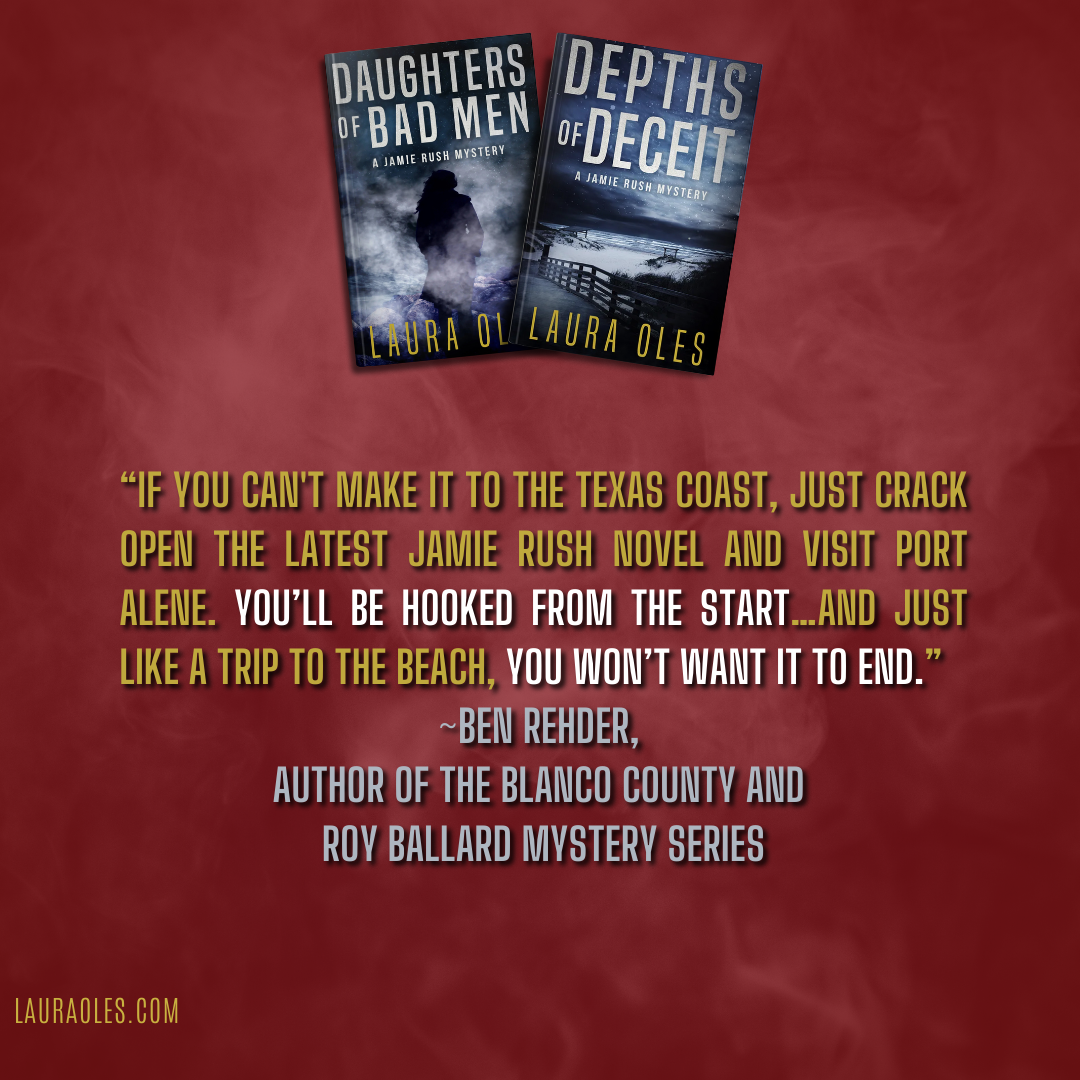
Laura Oles is the award-winning author of the Jamie Rush mystery series. Her debut mystery, Daughters of Bad Men, was an Agatha nominee, a Claymore Award finalist, and a Writers’ League of Texas Award finalist. Depths of Deceit, her second novel, was named Best Mystery by Indies Today. Her novella, Last Call, won the Silver Falchion award. Her work has appeared in crime fiction anthologies, consumer magazines and business publications. She lives in the Texas Hill Country with her family. (https://lauraoles.com)
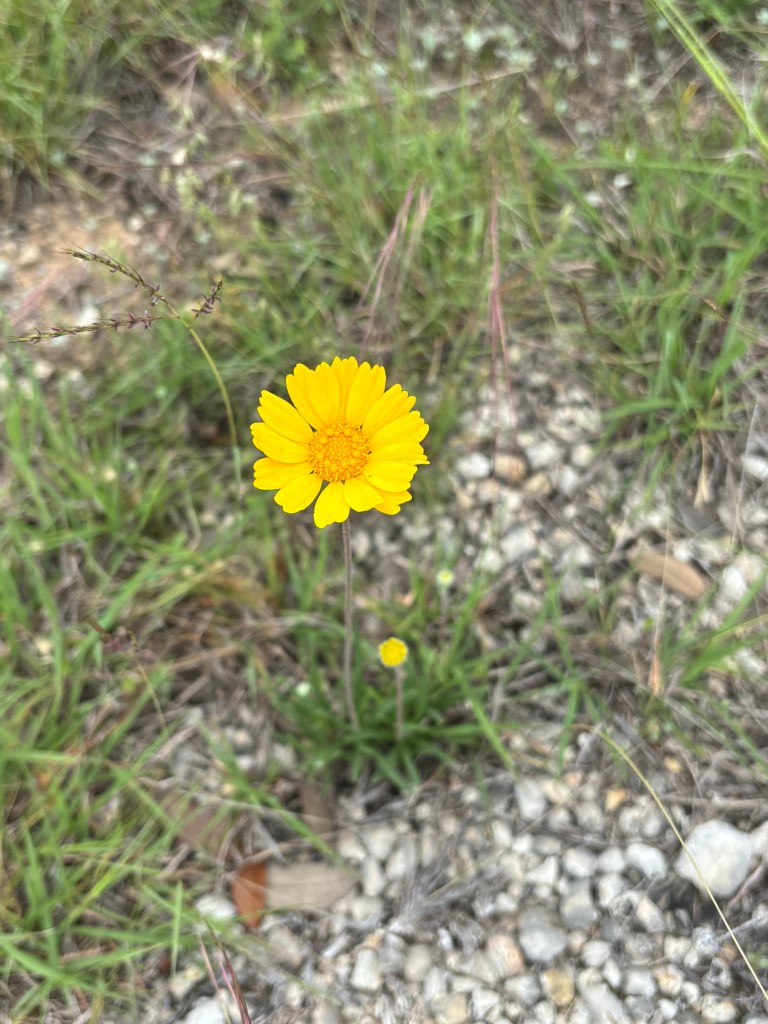
Not enough rain fell this year to allow the brilliant cerulean fields of Hill Country bluebonnets we usually expect, but the hardy lupines are busy making seedpods. “Maybe next year,” they say. Now instead we have the bright yellow coreopsis lanceolata, nodding their heads with any breeze,
the wine-cups with their indescribable color—a member of the mallow family, not quite fuchsia, not maroon, just—heart-stopping,
the milkweed flower globes beloved of monarch butter-flies, and others. Heaven includes a few prairie celestials, magically opening in early in the afternoon, then vanishing by dusk.
Also, “Sweet Mademoiselle,” planted a couple of years ago, and who has never bloomed, produced her first rose!
Meanwhile, the ever-interloping cactus hope to assuage my fury at them (remember those secretly spreading roots and the huge basal “plates” that help the Cactus Conspiracy spread?) by popping open their yellow flowers. I am not fooled. I’ll continue to battle them with shovel and hoe. And a picker-upper.
See? Perfectly possible. It’s still wild out here in the Hill Country, even as suburbs press upon us. At dusk I often find myself glancing at the edge of the drop-off behind the house, wondering if I’ll see a pair of ears. You can say mountain lion, puma, cougar…they’re secretive, strong, and active in the spring.
But the big cat I once saw on Bell Springs Road west of here was likely a large bobcat. I was alone, driving home from the post office. Up ahead a golden vision, spotted, walked slowly to the edge of the asphalt. I stopped. The cat stood, gazed at me, and after a breathless (for me) interval, gracefully turned and vanished through a fence into thick cedar. A magical moment. Every time I drive that road, I hold my breath, longing for one more sighting of something looking like this:
ANCIENT BONES? I wrote about old bones in my Ghost Bones (2024)—and now have learned that our Hays County police deal with ancient bones more often than you’d think. One resident recently called to report she’d found a skull in her firepit. The skull, with its lower jaw present, was obviously fairly old, but in an unexplained death Hays County is not permitted to send a body to the Travis County Medical Examiner without including the name of the person whose skull it is. (Hays County doesn’t have its own medical examiner.) So this skull traveled instead to Texas State anthropologists who reported, after testing, that the skull apparently belonged to a long, long-ago teenager who’d gone through hard times, as was evident from the “enamel lines” (a bit like tree rings) in the teeth.
But how it wound up in that firepit? So far as I know, that’s still a mystery. We forget—until reminded by a skull in a firepit—how long humans have roamed these hills, drawn by hunger and thirst to spring water and the hunt for food.
We also forget the age and history of this landscape. Some trees have sheltered native Americans, deer, and buffalo. The Columbus Live Oak near the Colorado River in Columbus is estimated to be over 500 years old. Others may be as old as 1,000 years.
I revere the live oak in our front yard as if it were a beloved ancient relative and a symbol of stability and the power of trees. If anything were to happen to it—woe! I tried to estimate its age—using the calculator instruction to measure girth in inches at 4.5 feet, divide by pi, then multiply by a “growth factor” of 4, which gave me 127 years old. Perhaps this tree was a sapling in 1900, before either World War, before the Viet Nam war, before our current fraught politics. On a nearby hill there’s an ancient patch of even bigger live oaks. Perhaps those particular oaks depend on the odd little ribbon of wet white clay that lies about five feet underground and has been there—who knows how long. But the feeling of walking in beneath these old live oaks can confer a sense of being in the protection of one’s elders.
So, welcome to the Hill Country in spring—southeasterly winds from the Gulf, blowing the flowers back and forth; reasonably moderate temperatures; fields and trees as green as green, as far as you can see. At the bird feeder, more color! Purple house finch, yellow-throated vireo, lesser goldfinch with brilliant gold breasts, vermilion cardinals, black-crested titmouse, white-winged dove—and the shy and tiny, but utterly gorgeous, painted bunting. (Reportedly it loves millet.) They provide not just color but music, from the titmouse, the tiny but high-volume Carolina wren, plaintive doves, whistling cardinals, and, at night, chuck-will’s-widow.
Not for long, of course. In winter ice can wreak havoc on trees and people. Summer sun? Scorching. Autumn? Nothing like the colors of New England, but hey—the sumac turns red. So welcome, Spring, with your bluebonnets and live oaks, with bird music and color, and with your reminder of the power and beauty of nature!
***
Progress report: madly working on Book 10 of the Alice MacDonald Greer Mystery series, set in the Hill Country. Have ordered “Forest Bathing” by Dr. Qing Li. Would enjoy hearing what you all are reading too, and any reports of “forest bathing”!
Helen Currie Foster lives and writes the Alice MacDonald Greer Mystery series north of Dripping Springs, Texas, loosely supervised by three burros. She’s drawn to the compelling landscape and quirky characters of the Texas Hill Country. She remains deeply curious about our human history and how, uninvited, the past keeps crashing the party.
Most writers battle resistance from time to time, and it comes in many forms. Maybe you’re working on a project with a looming deadline, which is the perfect time to clean your kitchen.
Just ask Agatha Christie.
“The best time for planning a book is when you’re doing the dishes.”—Agatha Christie
I realize I’m bending her quote to serve my purposes, but who am I to argue with greatness?
My most recent battle with resistance happened yesterday. After being away from a project too long due to other writing deadlines, I struggled to find my groove, which culminated in my spending nine hours trying to get my arms around a manuscript. My characters refused to behave, and a section of the second act sagged like a neglected hundred-year roof. The final pin dropped in the form of my losing several thousand words due to some sort of file syncing error. I’d spent all day trying to nail Jello to the wall and wondering why it refused to stick.
I called my sister-in-law, who sagely suggested I needed to step away from my computer. Get some fresh air, go for a walk. I felt a bit better after but still defeated. I spent the rest of the evening with the gritty dust of failure stuck to my skin. I then reminded myself that this, too, is part of the process. The only way out is through. Tomorrow is another day.
I decided to start this morning with some writer support. After a two mile walk while listening to Brandon Sanderson discuss writing with Tim Ferris, I then read J.T. Ellison’s Substack on resistance. There was something about listening to other authors discuss their craft and the struggles that come with it that helped me refocus with a fresh perspective (and an attitude adjustment, which was sorely needed. I was very salty).
If you’re struggling with any sort of creative project, consider taking respite by listening to other creatives discuss how they do their thing. Here are a few of my favorites:
The Tim Ferriss Show: Episode #794: Brandon Sanderson on Building a Fiction Empire…
Buckle up, loves, because this episode is 3.5 hours long. It took me several walks and cleaning sessions to get through it, but I promise it’s jam packed with some fantastic advice and discussion related to both the art and business of writing. Few writers have accomplished what Brandon has while also so freely sharing his expertise with others.
Work Life with Adam Grant: Your Insecurities Aren’t What You Think They Are
Adam Grant is an organizational psychologist with a curiosity superpower that translates into countless benefits for his audience. His WorkLife podcast is a regular listen in my feed. This episode is also how I found Taylor Tomlinson, which some might think is a strange way to discover a comedian. Their discussion about how to handle insecurities when your job is centered largely on external feedback and validation (hello, writers!) is one that you may listen to more than once.
If you’re a Substack fan, I highly recommend giving J.T Ellison’s newsletter a read. She gives us an inside look at her life as a bestselling author juggling multiple projects for both traditional publishers as well as her own imprint. Her advice is practical and specific, and she mixes in a generous amount of empathy. Here’s the post that pulled me out of my latest bout of writing resistance.
The author collective of the #AmWriting enterprise deliver some of the best stories, guidance, and interviews related to the business and craft of writing. Regardless of genre or publishing preference, they have you covered. Their Substack is well organized and offers tons of shovels to help you dig yourself out of any writing hole you currently find yourself stuck in.
As someone who receives far too emails, James Clear’s newsletter is the rare one that I make sure to read as soon as it hits my inbox. His 3-2-1 format (three ideas, two quotes and one question to consider) are thoughtfully considered. Every issue provides a valuable takeaway, and his recent Master Class covers the concepts he outlines in his mega-bestseller Atomic Habits. Here’s what he shares with us about resistance:
“If you feel resistance before you begin, it’s usually procrastination and you need to get started. If you feel resistance after you begin, it’s usually feedback and you need to make adjustments.”
Jiro Ono is an 85-year-old sushi chef and proprietor of Sukiyabashi Jiro, a 10-seat restaurant located in a Tokyo subway station. Some of the top critics believe he is the world’s greatest sushi chef. This documentary follows his passion for continued mastery even at what he sees as the final years of his career. “A thoughtful and elegant mediation on work, family and the art of perfection, chronicling Jiro’s life as both an unparalleled success in the culinary world, and a loving yet complicated father.”
I discovered this documentary after my last visit to Japan and was moved by both the constant pursuit of mastery as well as the price it exacts on those closest to him.
I’d like to leave you with a quote that I revisit so often that I should have it tattooed on my forehead.
“If I waited for perfection, I’d never write a word.”—Margaret Atwood
The world needs your stories more than ever, so I hope that if you’re battling resistance, you’ll find some support from the creative community. Storytelling, at its heart, should be something we enjoy, and if it isn’t bringing that to you right now, I hope it soon returns. And when it does, readers will be waiting for you.
–Laura Oles (https://lauraoles.com) is the award-winning author of the Jamie Rush mystery series. Her debut mystery, Daughters of Bad Men, was an Agatha nominee, a Claymore Award finalist, and a Writers’ League of Texas Award finalist. Depths of Deceit, her second novel, was named Best Mystery by Indies Today. Her novella, Last Call, won the Silver Falchion award. Her work has appeared in crime fiction anthologies, consumer magazines and business publications. She lives in the Texas Hill Country with her family.
My most recent blog post announced the publication of my short story, “Under The Blackjack Tree” in Killer Nashville magazine and now I’m now doubly thrilled to announce that the short story was also chosen by Otto Penzler and John Grisham to appear in the 2025 edition of Best Mystery Stories of the Year! (Mysterious Press)This is a huge honor. Honestly, at first I didn’t think it was true. I read the email about three times and did some online research before I believed it!
But another reason why this is so special to me is because my story is steeped with bits of my family’s history.
It began when my mother told me several years ago that one of her most cherished memories was when she got to help her grandfather feed the inmates at the Huntsville jail when she was about four. (Wait, what?) That’s when I learned that my great grandfather had been sheriff of Walker County. I later learned that it was common practice for the sheriff and his family to live on the first floor of the jailhouse while the inmates would be on the second floor.
The image of an innocent girl closely interacting with a potentially dangerous person was so intriguing to me, I was compelled to put it in a story. (I played with the timeline and instead of my mother being the little girl, I made it my grandmother. It simplified the story.) I had no idea where the story was going to go, but I knew that I needed that opening scene. It took me places that I didn’t expect!
Some of the things that were true are-
My great grandfather was sheriff at the time of Bonnie and Clyde. I thought that would make an interesting backdrop. A lot of tension in Texas at that time.
My grandmother’s first mother did die in childbirth and her loving stepmother was called “Cullie”.
There really was a bank robbery in Conroe at that time. (I don’t think it was ever solved.)
Trusted inmates often cooked the meals for the other inmates and sometimes for the family.
It was my mother that fell into the yard with the hunting dogs and was almost mauled.
My grandmother was shot in the face with a shotgun, by accident. It was a miracle that her eyes were spared, and she had not one single scar. That is such an amazing part of our family history that I had to include it.
And two things that I didn’t know until after I wrote the story.
My grandmother was sometimes called “Mary V” at school because there was another Mary in her class.
When she attended Sam Houston to get her teaching certificate, she would often cut across the cemetery when her classmates wouldn’t. She was never a squeamish person.
My grandmother, the flapper!
Although the Mary V in the story is pure fiction, I hope that my grandmother would be proud the story and that some of our family history is saved and shared with others.
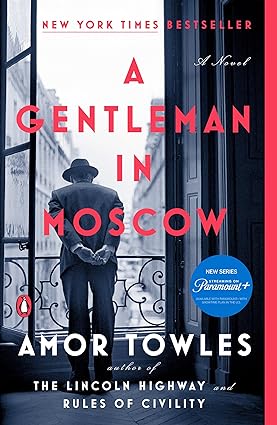
Ever since I read A Gentleman in Moscow (2016) I’ve considered Amor Towles’ writing style to be nearly perfect. So when my niece told me Towles was making an appearance at the Empire Theatre in San Antonio, I booked it. He was there to support the San Antonio Book Festival and to talk about his latest book, Table for Two. It’s a collection of six short stories plus a novella. Unlike some of his other stories, these all take place in the current Millennium.
Over the evening I learned a interesting things about Towles.
I learned that he is what we used to label in the news business, an “easy interview.” Austin’s own Stephen Harrigan (Big Wonderful Thing, 2019) was on the stage with Towles as moderator but he didn’t get to ask many of the questions on his notepad. Towles was in a talkative mood so needed little prompting.
I learned that Towles took up writing full time only after success in his first career at a small Wall Street investment firm.
I learned that once he gets a project in mind, he begins to fill notebook after notebook with hand-written outlines, ideas, scenes, characters. It may take years. He says this process frees his imagination and subconscious to go where beautiful language and the characters’ inner lives take him.
There was more but of the many memorable things I learned about this accomplished author, what I remember best, and took to heart, was his description of his research process. He said that when writing he intentionally postpones what he calls “applied research” until near the end. During this time he is also reading novels written by others that are set in the same historical period as the book he’s working on. His novel is almost written before he begins deep research.
That’s why he waited until A Gentleman in Moscow was almost finished before traveling to Moscow and checking into the Hotel Metropol, the exclusive hotel where his story about Count Alexander Ilyich Rostov is set.
Towles advised that details gleaned from this kind of active research should be written into the story much the way one might design the stage for Anton Chekhov’s The Cherry Orchard (1903). Of course Towles would choose this particular play as a point of reference because, like his own novel set in Russia, Chekhov’s tragicomedy also deals with a period of decline for the Russian aristocracy.
He said that when the curtain rises for the play the audience might see only the suggestion of a cherry orchard through large windows as if were rendered by an impressionist such as Claude Monet or Mary Cassatt. The windows might be framed by plywood bookcases painted to resemble mahogany. In the center of the room there would be a table set with a porcelain tea service.
When an author is ready to fold research into the story, Towles said it should be presented with similar layers of reality. Some details are just suggested in the background. Some, like the bookcases, give the scene the appearance of reality but need not be too detailed. Then there are aspects of research that can’t be given short shrift. For these, the author must adhere to absolute authenticity. The audience needs to hear the chair move across the floor and the teacup rattle in the saucer. The challenge for me is where all of the information that I’ve accumulated in my own research belongs – in the window or on the table?
Charles McNulty, theater critic for the Los Angeles Times, said in a June 6, 2022, review of a local revival of The Cherry Orchard, “Big things occur in Chekhov. Houses are lost, guns occasionally go off, and people die. But the focus is on muddling through.”
Much the same might be said about A Gentleman in Moscow and the subtle use of active research by Towles so that his story isn’t swallowed up in the details.
Image of Anton Chekov via Wikipedia. Public domain.
Image of stage of The Cherry Orchard via Wikipedia. Public domain.
***
A former political reporter in Austin, Dixie also taught writing at Syracuse University. When she teamed up with Sue Cleveland to write fiction, they sold a screenplay to a Hollywood producer. Although the movie was never made, the seed money financed ThirtyNineStars, their publishing company. Through it they published two award-winning thrillers (Shrouded and Digging up the Dead) under the pen name, Meredith Lee. Dixie’s first solo mystery was Bloodlines & Fencelines, set in a tiny Texas town near Austin. Kirkus reviews described the book as, “A twisty whodunit that’s crafted with care and saturated with down-home Southern charm.” She is working on second mystery in the series. www.dlsevatt.com
New reads! If, like me, you desperately miss John le Carré, consider A Spy Alone, the 2023 debut spy thriller by Charles Beaumont, a field operative veteran of Britain’s MI-6. https://bit.ly/3ZzHjHs His premise is fascinating: we know of the “Cambridge Five” who spied for Russia from the 1930’s to 1950’s—Kim Philby, Guy Burgess, Donald Maclean, Anthony Blunt and John Cairncross. https://en.wikipedia.org/wiki/Cambridge_Five But has there ever been, or could there be, a spy ring linked to Oxford? Beaumont’s protagonist Simon Sharman feels real, right from the first page:
“It is their shoes that give them away. As a lifelong fieldman, Simon Sharman hasn’t forgotten the lesson: walkers might change their jackets, pull on a pair of glasses, even a wig. But nobody changes their shoes on a job. Look at their shoes.“
I was hooked. Warning: Beaumont’s book is contemporary, well-written, tense, and may interfere with sleep.
Two other recent reads: old adventure and a new “adult fantasy.” I’d never heard of The Long Ships by Frans G. Bengtsson (1954).
Set from 980 to 1010 A.D., the book recounts the wide-ranging adventures of Norseman Red Orm Tostesson, and the collision between Christian priests (the “shaven men”) and the Norse culture of Skania at the south tip of Sweden. Now I know what it meant to go “a-viking”—to go sea-raiding! 500 pages, with Red, a very engaging Norseman. Great maps, too.
The Lost Bookshop, by Evie Woods (2024),offers time travel between the 1920’s and 30’s in Britain, and the present; a search for a lost Brontë manuscript; a disappearing attic; and disappearing and reappearing characters. I confess I flipped through big chunks, relieved when true love finally won out after two women, generations apart, survive appalling treatment. The disappearing attic reminded me of Susan Cooper’s Over Sea, Under Stone, and of course the wardrobe into Narnia in The Lion, the Witch and the Wardrobe. I’m always up for secret doors.
I’m rereading a fascinating and fairly demanding study by Graham Robb, who has probably bicycled and walked further in Britain and France than most humans:
In The Search for Middle Earth: Mapping the Lost World of the Celts (2013), he describes how the Keltoi, or Celts, developed a system of surveying based on a midline transected by the lines of the summer and winter solstice to estimate travel distances and times—a feat not replicated for centuries. He maps the Heraklean Way, the path from southwestern Iberia that runs northeast across the Pyrenees to the Alps along the diagonal of the solstice sun, which Hannibal took when he invaded Italia. He describes Druid schooling (20 years to learn) and maps out protohistoric forts which turn out to lie along survey lines. He provides amazing maps. Two ongoing lessons from Robb’s devoted research: the winners write history; and humans tend to underestimate the accomplishments of earlier civilizations.
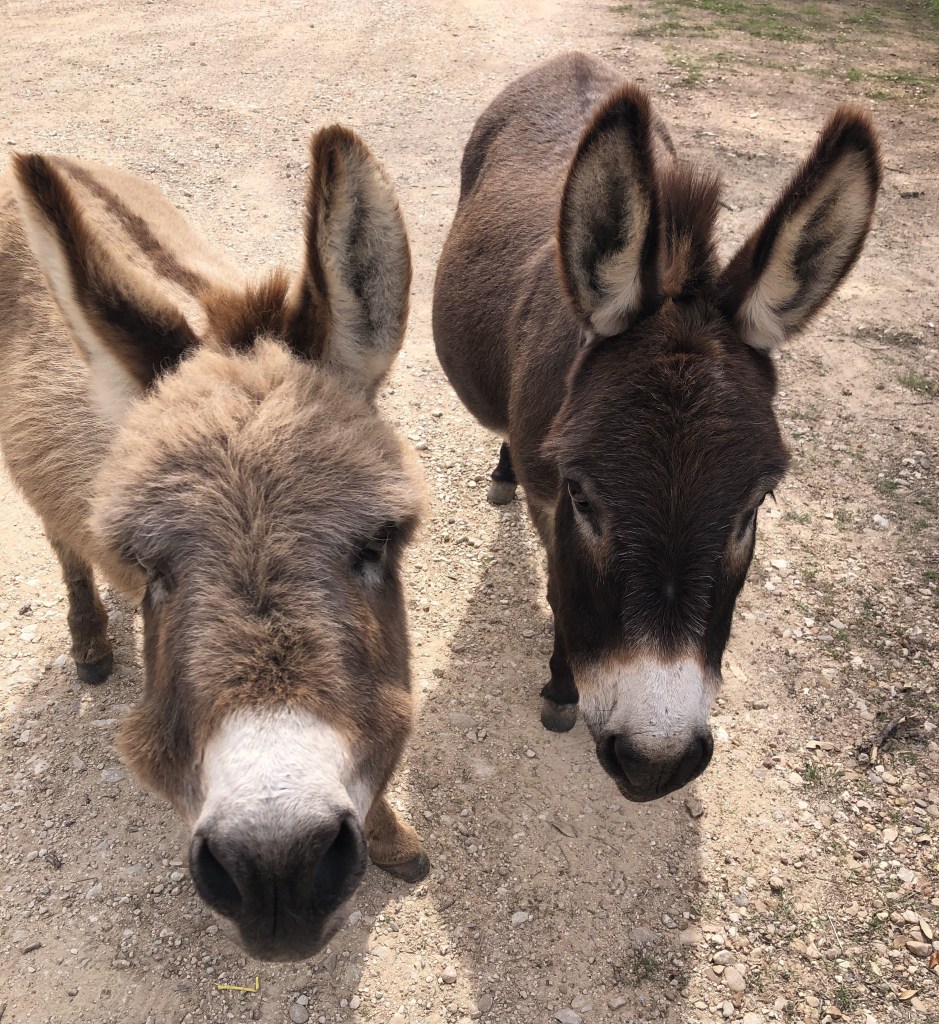
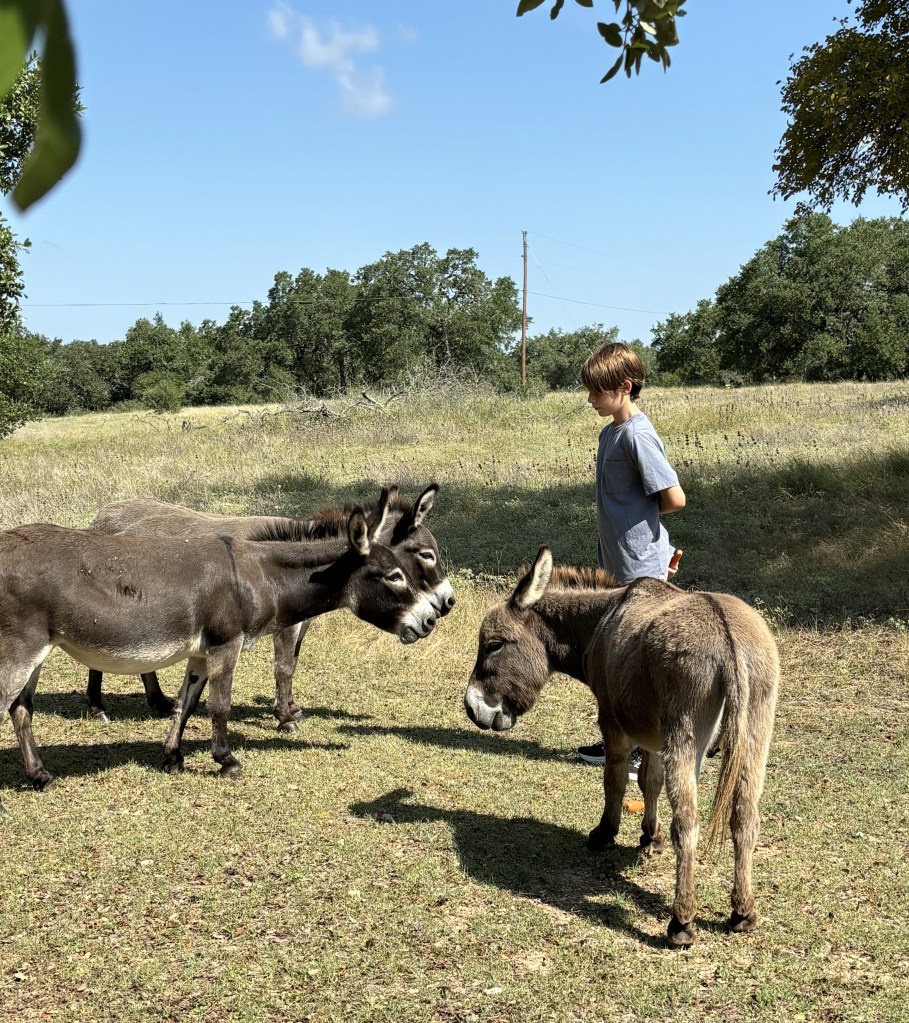
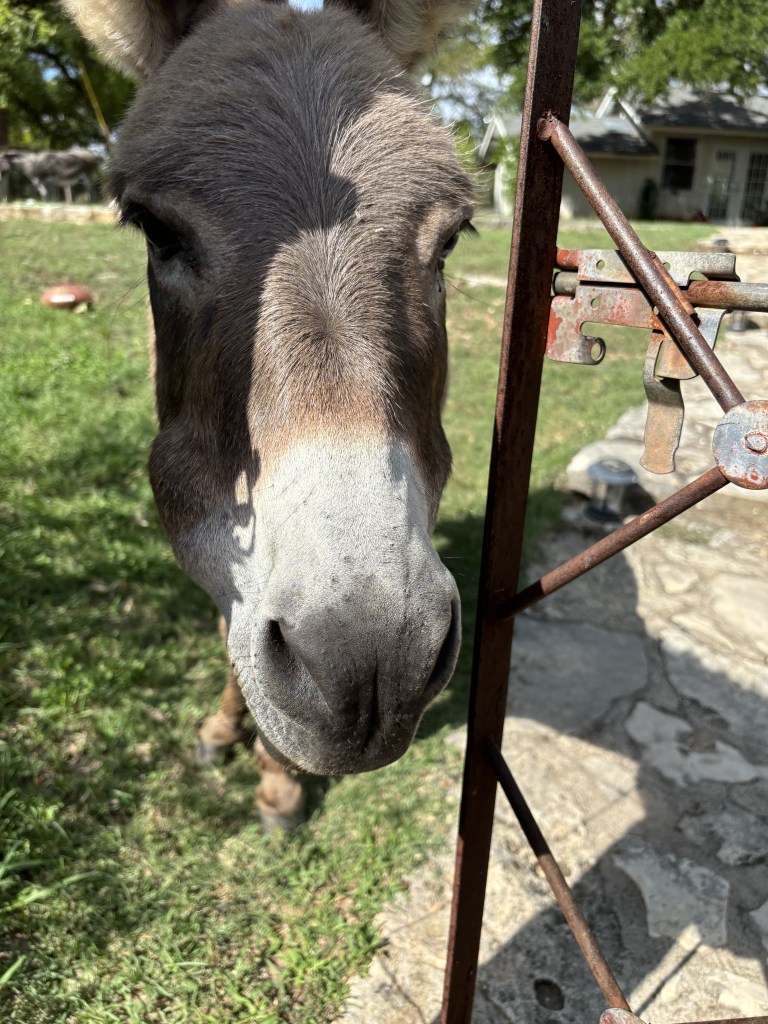
Several of you asked about the three burros, given the recent cold snap. Thank you, they’re well. Their hair’s not waterproof so in cold rain they gather on the south side of the stable, under the roof, safe from rain and the north wind. They were relieved to see green grass again after the drought broke, but they’re also eating—and rolling in––green hay. And mud!
Yet despite hay, they gather outside the gate every morning and afternoon for carrots. They consider this part of their deal.
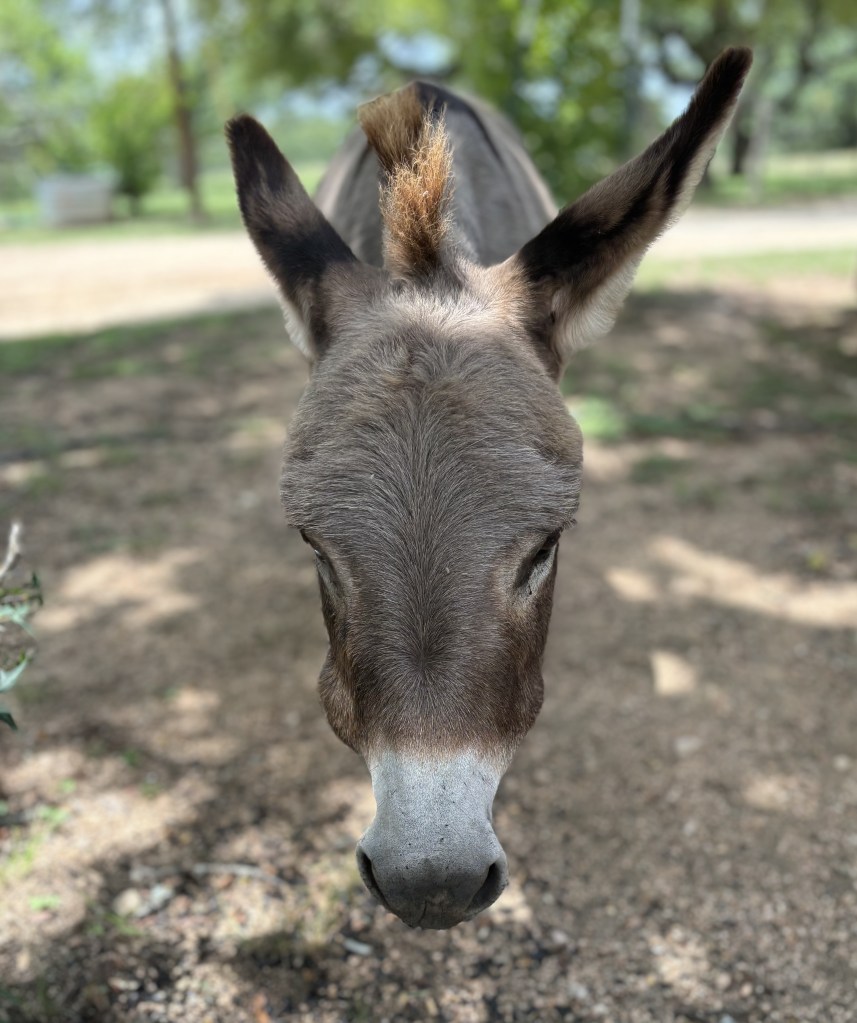
Burros are curious. They amble over to watch us garden and hang up laundry. They need company. They graze near each other. They may live into their 40’s. Sebastian, the short stubby knock-kneed male who invited himself to live here, may be 35 or more. Amanda (who insists I tell you she’s registered, with papers)may be 20. Her daughter Caroline is 12. Sebastian deems it his duty to bray loudly when any person or car appears at the end of the driveway, and to welcome the sun every morning with a stunningly loud bray. Now both Amanda and Caroline have begun to bray occasionally.
Only donkeys can bray. Unlike horses or zebras, donkeys begin a bray on the inhale and continue braying on the exhale. They have great hearing—supposedly they can hear another donkey bray 60 miles away.
They especially detest canids and will attack, dance on and kick dogs, coyotes, bobcats, foxes. A spooked horse will run away: donkeys stand together until they decide what they’re going to do. This morning, leaving for the post office, I saw the three donkeys standing together, knees locked, ears cocked, eyes fixed on two trespassing dogs who’d strayed across the cattleguard and into the donkeys’ domain.
The dogs immediately acknowledged their gross error of judgment, raced frantically away and never returned.
If donkeys could read (wait—maybe they can, but have trouble turning the pages), I predict they’d prefer mysteries. They enjoy puzzles (like how to lift the chain and invade the fenced garden).
Humans and donkeys. We are both curious animals.
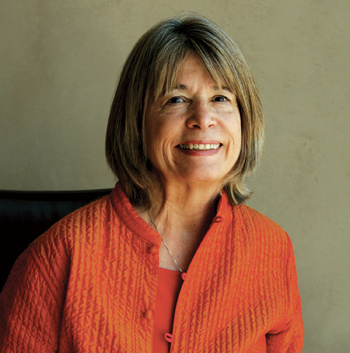
Helen Currie Foster lives and writes the Alice MacDonald Greer Mystery Series north of Dripping Springs, Texas, loosely supervised by three burros. She’s drawn to the compelling landscape and quirky characters of the Texas Hill Country. She’s also deeply curious about our human history and how, uninvited, the past keeps crashing the party! Currently she’s working on Book 10. Her protagonist, Alice, gets into legal drama, and matters of the heart. Alice does have a treehouse…
The following post appeared on my personal blog, Telling the Truth, Mainly, in April 2022. But the story of my writing process is always worth a retelling. Please read on.
*************
Sometime back in the 1930s, my grandmother picked up the telephone receiver just in time to hear the Methodist minister’s wife, on the party line, drawl, “I am just wo-ahn out. I’ve been waterin’ the yahd.”
To those not in the know, the statement might not seem funny, but my family has its own criteria for funny. And so those two sentences entered our vernacular.
They were used under a variety of circumstances: after stretching barbed wire, frying chicken, mowing the lawn, doing nothing in particular.
My father would fold the newspaper, set it on the table, and announce, “I am just wo-ahn out. I’ve been waterin’ the yahd.”
I am wo-ahn out now but not from waterin’ the yahd.
Putative novel 2022
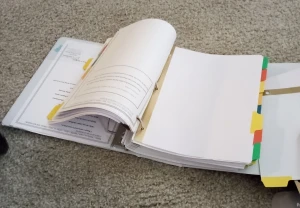
Last night David, the family’s official printer, printed the manuscript of what I’ve been calling my putative novel. It runs to over two hundred pages, 51,000 words. It isn’t finished—far from it. There’s more to write, scenes to put in order, clues and red herrings to insert, darlings to kill. All that stuff. And more.
However, for the first time it feels like I can stop calling it putative. No longer supposed, alleged, or hypothetical. It’s looking more like a potential novel. Possible, Even probable.
Now, about being wo-ahn out.
Last night I started putting the manuscript, scene by scene, into a three-ring binder. That required using a three-hole punch.
I hate using three-hole punches. I hate fitting the holes in the paper onto the binder rings. They never fit properly. Getting them on the rings requires effort. It’s tiring.
When I went to bed, I was all the way up to page 37.
Then I woke at 5:30 this morning. Instead of turning over and going back to sleep, I got up. I just couldn’t wait to get back to organizing my manuscript.
But I didn’t organize. I managed to drop the whole thing onto the floor and then couldn’t pick it up. (I’d had knee surgery and wasn’t quite up to bending over that far.) I had to wait for David.
Putative novel 2022-2024
By the time the notebook and manuscript were back in my possession, I was sick and tired of the whole thing. I played Candy Crush.
If I’d had any sense at all, I’d have gone back to bed. I was sleepy. I felt awful. I needed to sleep.
But did I go back to bed? Noooooooooooooooooooooo. That would have been the act of a rational person.
I stayed up added to my sleep deprivation.
I could go to bed right now. I could conk out and tomorrow feel ever so much better.
But will I? No. Because I’m too tired to stand up, too tired to put on my pajamas, too tired to pull down the sheets.
I am just wo-ahn out. I’ve been waterin’ the yahd.
***
Things have changed since 2022. Some days, the novel has reverted to putative, but on most days, it’s still possible. Thanks to extensive revision, the current draft bears little resemblance to the one in the notebook. I have given up three-ring binders and three-hold punches.
***
M. K. Waller’s latest story, “Mine Eyes Dazzle,” appears in the eclipse-themed anthology Dark of the Day, edited by Kaye George (Down and Out Books, 2024). Other stories appear inDay of the Dark (Wildside, 2017), Lone Star Lawless (Wildside, 2017), Murder on Wheels (Wildside, 2015), and online on Mysterical-E. She is co-author of the novella Stabbed (Starpath, 2019), written with Manning Wolfe. She also writes as Kathy Waller. She lives in Austin and blogs at Telling the Truth, Mainly.
I can’t tell you how many times I’ve come across a quote, an idea or something else I wanted to remember and thought, “I need to write that down.”
So I did.
Over and over and over.
In countless notebooks and journals and on post it notes.
The problem I found is that, while committing something to paper is an important first step, it is only a first step. There are many moments where I’ve written something down only to lose it amongst some ephemera, discovered only again when I’m looking for something else.
It’s like finding twenty bucks in those shorts from last summer. It’s a nice surprise, but maybe I should try tracking this information (and my dollars) a bit better.
First, I tried using a Bullet Journal…
The Bullet Journal was created by Ryder Carroll as a way to organize schedules, to-do lists and other details for work and personal life. It started as his own method of corralling his many thoughts and commitments into a central place. It’s a fantastic method for many dedicated BuJo lovers, and the premise is simple. All you need is an empty notebook and a pen.
Turns out, you also need a certain mindset. It’s a commitment.
Image Credit: @pureplanning_bymj
I have so much admiration for dedicated Bujo people. And I love seeing their gorgeous daily/weekly/monthly spreads, but I could never stick with it. I do have one completed book—used over a two-year period—that I enjoy leafing through now and then. Scattered amongst those pages are several quotes, concepts and ideas that I wanted to gather in a more central location, to rescue from my failed experiment.
I still love the idea. I just stink at the execution.
This is when I discovered the Commonplace Book.
A commonplace book is simply a notebook where you record learning and information from other sources for the purpose of collecting and reflecting upon for some future time. Many notable people in history have kept commonplace books, including Virginia Woolf, Mark Twain, Marcus Aurelius, Ralph Waldo Emerson, and Henry David Thoreau. (Image Credit: UT Austin, Harry Ransom Center, Lewis Carroll’s CPB)
Unlike a Bullet Journal, which has its own system, a commonplace book only requires that you collect your ideas, quotes and more in one location. What you choose to include is completely up to you. The most common use is for recording secondary sources, but that can take all forms. Music lyrics? Key dialogue from a movie you love? Put them all in one place. I keep my commonplace book on my desk so I can access it when I’m reading or working on a project. Others prefer to always carry one, ever prepared to catch that next inspirational idea while out for a daily walk or in a coffee shop.
Unlike a journal, with content focused heavily on personal thoughts, musings and experiences, a commonplace book is something designed to help you learn from others. These ideas may spur some new thoughts or considerations, and this is a perfect place to record those as well. It can be anything you like, of course, but it’s not the best place to record daily tasks or reminders. Keep your digital or paper planner for those purposes (and feel free to ask me about planners because I will happily engage in that topic, too).
There is scientific evidence that supports the theory of choosing to write by hand rather than typing into a digital document. A recent study from the University of Tokyo showed that graduates revealed that “writing on physical paper can lead to more brain activity when remembering the information an hour later. Researchers say that the unique, complex, spatial and tactile information associated with writing by hand on physical paper is likely what leads to improved memory.” (Science Daily).
My commonplace book has a wide variety of quotes and concepts tucked inside. Adam Grant, Anne Lamott and James Clear make regular appearances on my pages. I can tell by my handwriting how I’m feeling because my messier cursive signals I’m in a rush while my neater entries show that I’m taking time to really consider what I’m transcribing. The important part is the practice. Keeping a commonplace book encourages my love of learning, of reading and of writing. There is a quiet joy in taking time to learn something new, to consider it and then commit it to paper.
Maybe you’re already doing some form of this practice. I was, and it was only when I sought to improve my process that I learned about the commonplace book and how to better use it in my daily life. Having one location helps me gather this knowledge and, more important, keep it somewhere that allows me to reflect and learn. If you haven’t tried keeping a CPB, I hope you’ll consider it, and I would love to hear how it works for you.
Laura Oles is the Agatha-nominated and award-winning author of the Jamie Rush mystery series. Her work has appeared in crime fiction anthologies, consumer magazines and business publications.
“Education is not the filling of a pail, but the lighting of a fire.”
While there is some debate as to whether this quote belongs to William Butler Yeats, the sentiment is one that has stayed with me, particularly throughout my writing career. One of the best things about being a writer is that it requires ongoing education. I love that my job demands regular research. I’ve gone down more rabbit holes that I care to admit, but it’s this spark of learning something new that fuels my enthusiasm for my fiction.
I experienced a wonderful “lighting of a fire” during my week in Salem, Massachusetts at the Writer Unboxed Unconference. Unlike other writer conferences that I attend (and love), this one involved being solely a student for the entire week. The conference welcomes all genres, and spending time outside of crime fiction gave me some valuable insight into how others approach storytelling, structure and character development.
Therese Walsh opened with her session titled “Good Chaos: Provocation and Invitation,” and by the end, I knew this week would be one of time well invested. Susan DeFreitas is a gift to writers. Her session, “Emotional Alchemy,” was so thoughtful and packed with practical advice that I took ten pages of notes. I’ve re-read them twice since returning home. And as someone who gets excited about outlines, timelines and plotting considerations, her “Anatomy of a Novel: Create a Blueprint” session provided me with specific skills to apply to a current project.
Watching Tiffany Yates Martin stand in front of a room to discuss fiction is an experience I hope every writer gets at least once. Her passion, knowledge and enthusiasm for characters, craft, storytelling and readers rolled through the room. She’s also damn funny. I left with another ten pages of notes.
Because there were two session tracks, I was forced to make difficult choices regarding the schedule, and I know that I missed several other excellent sessions. Lunch breaks provided the opportunity to explore a bit of Salem, walking through downtown and adjacent neighborhoods. Evenings were spent sampling different restaurants, and I left with a favorite pub (O’Neill’s), sushi spot (Finz Seafood & Grill—the Lobster Maki Roll was fabulous), coffee shop (Lulu’s) and bookstore (Wicked Good Books). That I was able to experience this week with some of my favorite writer friends made it even more special.
Returning home with a novella sized document full of notes, I took my time reading through them, extracting additional gems, and analyzing how they might influence my own projects. I’m back at my desk, and the spark remains. The learning continues, and it seems I will never graduate.
If so, I would consider that success.
Laura Oles is the award-winning author of the Jamie Rush mystery series. Her debut mystery, Daughters of Bad Men, was an Agatha nominee, a Claymore Award finalist, and a Writers’ League of Texas Award finalist. Her work has appeared in crime fiction anthologies, consumer magazines and business publications. She loves road trips, bookstores and any outdoor activity that doesn’t involve running. https://lauraoles.com


















 Austin Mystery Writers

