In Memoriam: Gale Albright


Posted by Kathy Waller

Gale Albright

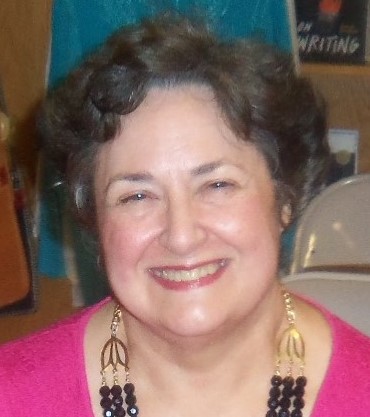
Gale Albright, November 2016

Gale Albright, 2016 president of Sisters in Crime Heart of Texas chapter, a member of Austin Mystery Writers and the Writers’ League of Texas, an author, and our dear friend, died on November 19.

Gale was born in Tyler, in the Piney Woods of East Texas, where her family has lived for generations. She attended the University of Texas at Austin, and in the late 2000s completed a degree in English Writing and Rhetoric at St. Edwards University.

In an interview posted on the Austin Mystery Writers website, Gale spoke of how important her East Texas upbringing was to her writing:

“I always have to write about Texas. I had many conversations with older people in my family when I was a little kid, so I heard a lot of stories about hard times picking cotton, taking a lunch to school in a lard bucket and going barefoot until it was time to start school in the fall. I am fascinated with the Great Depression and the WW II years, all from an East Texas point of view. I love Southern story telling, all the rhythms of language and colloquial expressions.”

Gale had a fine ear for language. One of her stories, Eva, winner of the 2008 Writers’ League of Texas Manuscript Contest for Young Adult Fiction, and based on her aunt’s childhood in East Texas, demonstrates her ability to duplicate the rhythms of East Texas speech on the page. You don’t just read Eva; you hear it.

In the following passage, for example, the main character, twelve-year-old Eva, describes the new boy at school:

Mama had raised me to be polite and not stare at folks, but it was hard not to stare at this boy. He looked like he had slept in a mud puddle. His overalls were patched and filthy and his shirt collar was ragged. The shirt was so dirty I didn’t even know what color it used to be. And he was barefoot. Now, some of the farm boys kept on coming to school barefoot, at least as long as the warm weather held, but this boy’s feet were solid black! …

West Jonah was a small town in East Texas. Everybody knew everybody else. Where had this boy come from? It had been three years since the hard times started, but things kept on getting worse. It was 1932 and we still had hungry strangers coming through, looking for jobs, looking for a meal. Whole families sometimes, in beat-up old cars with furniture piled high and kids sitting on top of the furniture. But I had never seen a boy my age on his own.

By lunch time, everybody was calling the new boy “Dirty Billy.”

Gale Albright check for grant from the national SINC to Lake Travis Community Library Director, October 2016

Gale Albright presenting check for grant from the national SINC to Lake Travis Community Library Director, October 2016

Gale’s first ambition was to be an actress–she said by the time she was three years old, she was singing and dancing for an audience of women in her grandmother’s beauty shop. Years later, she played the role of Stella in a little theater production of Tennessee William’s A Streetcar Named Desire. But for a profession, she turned to writing and editing. In a training program at the Chicago Tribune, she learned to typeset news and proof galleys when the technology involved hot metal. Later she worked for twenty-three years at the University of Texas as a typesetter and an administrative assistant, first for the Petroleum Extension Service, and later for the School of Engineering, the Department of Spanish and Portuguese, and finally, the School of Law. After retiring, she wrote and edited for the Hutto News.

Gale loved her family: her husband, Joe; her daughter, Sarah; her brother, Stuart Inman, and her sisters, Molly Inman and Dawn Holmes. She loved her friends and co-workers at UT; the members of her Sisters in Crime chapter and of Austin Mystery Writers, and many others.

img_2439

AMW members Kathy Waller, Laura Oles, Gale Albright, and Valerie Chandler, outside Habana Restaurant.

She loved the butterfly garden she was building in her yard in Hutto; Pashmina shawls and scented soaps; reading crime fiction; going to writing workshops–“I’m a workshop junkie,” she said; organizing workshops; going on writing retreats, especially those held in Alpine, Texas; and her cat, Maggie, a rescue cream tabby she adopted from Austin Pets Alive!. Maggie supported Gale’s writing career by spending a goodly portion of her time meowing to be let into and out of Gale’s office. (Gale spent a goodly portion of her time opening and closing the door).

Gale loved the Hutto Public Library and belonged to Friends of the Hutto Library. She volunteered, wrote about the library for the Hutto News, and took Spanish and drawing classes there.

And Gale loved writing.

She did say, now and then, that she’d been avoiding working on a piece because writing was hard, and that she knew if she just started writing, the words would begin to flow, and what had been torture would become fun; and that she was so frustrated because she avoided doing something she would inevitably enjoy. Actually, I usually said that to her and she agreed. But for a person who admitted to avoidance, she put a lot of words on paper.

She loved National Novel Writing Month (NaNoWrimo). Every November, she focused on writing 1667 words a day–a 50,000-word novel in thirty days. Last year she organized two NaNoWrimo Write-Ins at the Hutto Public Library, and this November, she hosted another for the 2016 round. She proudly wore the tee-shirt proclaiming her a NaNo winner.

I met Gale at a Writers League of Texas meeting dedicated to helping members form critique groups. We read a few pages of each other’s work, decided we could work together, and agreed to meet once a week. Of course, we wanted to be published, but we’d been told writing just to be published wasn’t a good idea–because publication is an iffy thing–our reason should be deeper, more philosophical. So we chose a reason and a name to match: the Just for the Hell of It Writers. At the time, Gale was working on a mystery novel entitled One Small Monkey. It was set in the 1970s Austin music scene, a time she remembered fondly.

Austin Mystery Writers: Gale Albright, Scott Montgomery, Laura Oles, and Valerie Chandler.

Austin Mystery Writers: Gale Albright, Scott Montgomery, Laura Oles, and Valerie Chandler.

A year or so later, we dissolved JFTHOI and joined Austin Mystery Writers. In the larger group, we read more manuscripts, heard more comments about our own work. Gale was a discerning reader. She focused on the positive elements in a manuscript and gently pointed out negatives. She explained how she learned to critique in a blog post: “Critic or Critiquer?”

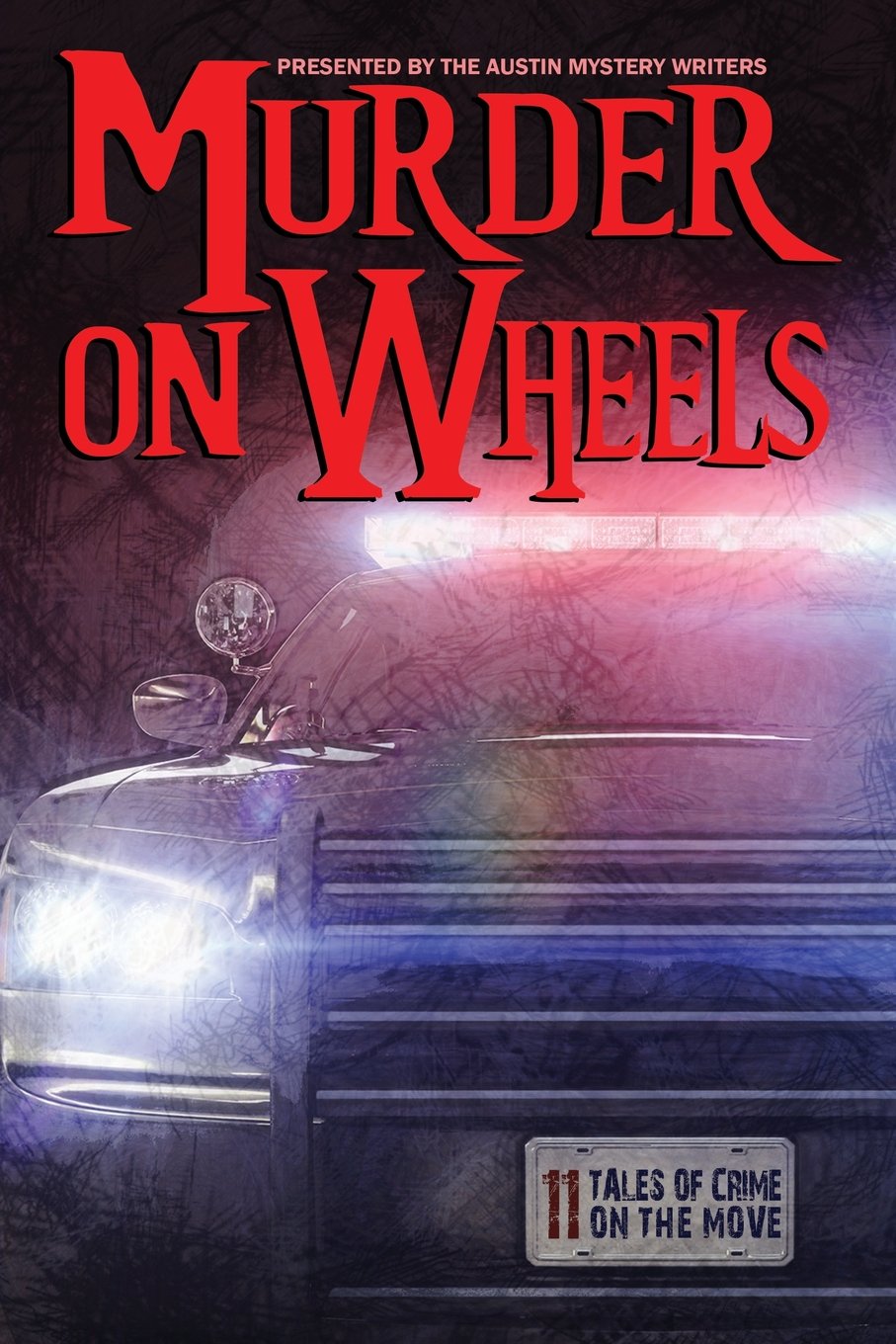
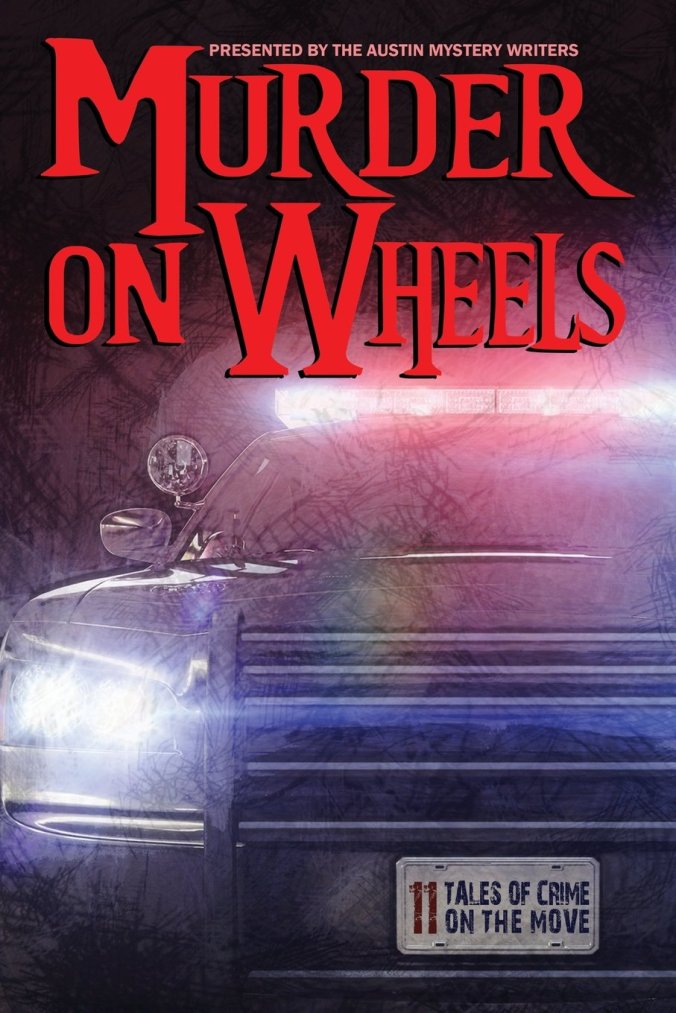
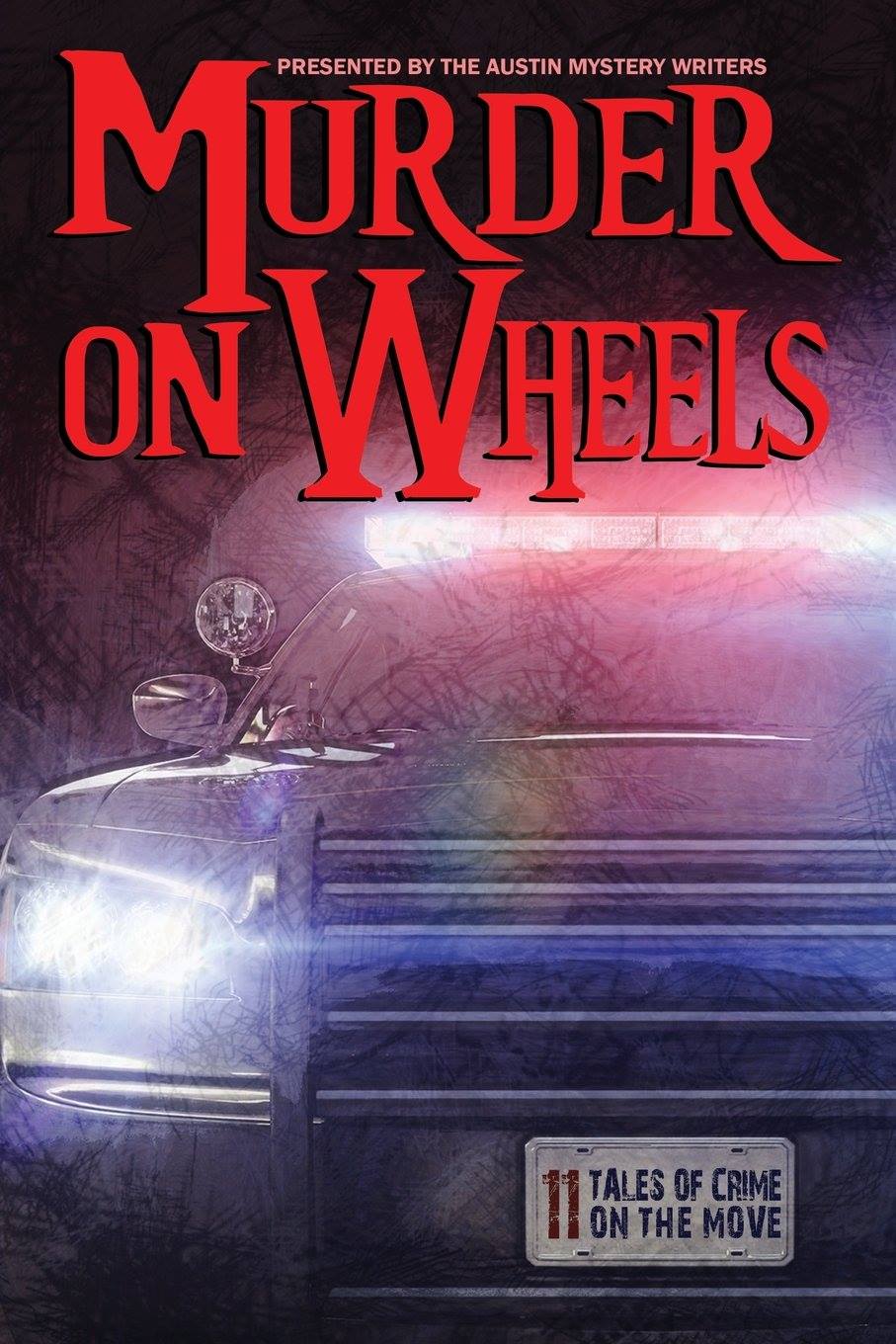
In 2015, Austin Mystery Writers published its first crime fiction anthology, MURDER ON WHEELS. Two of Gale’s stories appear there: “Aporkalypse Now” and “Mome Rath, My Sweet.” Both showcase her ability to infuse suspense with humor.

“Aporkalypse Now” is the story of a woman obsessed with pork ribs and pistachio ice cream, and resentful–and suspicious–of her husband’s sudden obsession with his bicycle.

In “Mome Rath, My Sweet,” she merges Lewis Carroll, the Brothers Grimm, and Raymond Chandler.

Gale Albright and novelist Marsha Moyer at the MURDER ON WHEELS book launch, BookPeople, August 2015.

Gale Albright and novelist Marsha Moyer at the MURDER ON WHEELS book launch, BookPeople, August 2015.

The story begins, “Joey Dormouse was dead and I was heading for a fall.” With that terse statement, private eye Jacob Grimm turns down the brim of his fedora, leaves his dingy office, and tangles with turquoise-eyed women and tough-talking men to rescue Alice Wonderland from the clutches of the gangster Mome Rath.

This story is probably the only example of noir fiction featuring a dormouse.

Gale joined SINC Heart of Texas in 2009. As vice president for programming, she introduced the chapter to many local authors. She edited the chapter newsletter. She coordinated the annual Barbara Burnett Smith Aspiring Writers Event. She helped facilitate a writing workshop co-sponsored with BookPeople bookstore. She moderated a panel at the Writers’ League of Texas Agents and Editors Conference, and, with host Hopeton Hay of radio station KAZI 88.7, interviewed mystery author Sue Grafton. For the December 2015 party, she wrote, produced, and acted in a radio play, “Holly Through the Heart,” in which Sherlock Holmes meets Tiny Tim. Gale brought  new energy to the chapter. And her involvement wasn’t going to end after her presidency–there were other projects she wanted to pursue.

Cast of "Holly Through the Heart": Alex Ferraro, Kathy Waller, Dave Ciambrone, Gale Albright, and Valerie Chandler; Book Spot, December 2014.

Cast of “Holly Through the Heart”: Alex Ferraro, Kathy Waller, Dave Ciambrone, Gale Albright, and Valerie Chandler; Book Spot, December 2014.

And there was her own writing. At the time of her death, she was working on edits of two stories to be included in Austin Mystery Writers’ second anthology. She was also revising Eva for middle grade readers.

Gale is survived by her husband, Joe Albright; her daughter, Sarah Hathcock; her brother, Stuart Inman; and her sisters, Molly Inman and Dawn Holmes.

She also leaves behind many friends. We miss her.

A memorial service for Gale will be held on Saturday, December 10, from 2:00 to 4:00 p.m., at the Northland AA Group, 2809 Northland Drive, in Austin.

Memorials may be sent to Friends of the Hutto Library or to SINC Heart of Texas chapter.

This slideshow requires JavaScript.

*****

Read more of Gale’s writing at her personal blog, Crime Ladies, and at the Heart of Texas chapter’s newsletter, HOTSHOTS!

Watch a production of Gale’s “Holly Through the Heart.”

*****

Some of the information in this post was provided by Gale’s husband, Joe Albright. Some came from the linked sources, above. Most came from memories.


Happy 100th, Agatha & Hercule! and Many More

Posted by Kathy Waller

This month mystery lovers celebrate two of the most important figures in the history of crime fiction:

~ Agatha Christie, who was born on September 15, 1890, and whose mysteries have outsold everything except Shakespeare and the Bible; and

~ Hercule Poirot, who, having appeared in 1916 in Christie’s first published novel, The Mysterious Affair at Styles, is marking his one hundredth birthday.

The Royal Mail is observing the occasion with a special stamp issue focusing on six of Christie’s novels. Each stamp contains clues and features related to a specific book.  “As the solving of mysteries is the focus of Christie’s art,” said a spokesman for the Royal Mail, “it is fitting that the public have to turn detective to find the hidden words and images in each stamp.”

A series of literary events–Agatha Christie Birthday Celebrations: Marking 100 Years of Creativity–is in progress, including those in Torquay, where Christie was born, and in Wallingford, where she lived at Winterbrook House from 1934 to her death in 1976.

Closed Casket, Sophie Hannah’s second Hercule Poirot novel, was released on September 6th, just in time for Hannah to take part in the festivities, including a book signing at Christie’s holiday home, Greenway.

(Kirkus Reviews on Closed Casket: As in The Monogram Murders (2014), Hannah provides both less and more than Agatha Christie ever baked into any of her tales. But the climactic revelation that establishes the killer’s motive is every bit as brilliant and improbable as any of Christie’s own decorous thunderclaps.)

And BBC One will produce seven more adaptations of Christie’s works.

Austin Mystery Writers, alas, couldn’t attend the festivities in England, so we celebrate here in our own small but sincere way–by letting the Queen of Crime speak for herself.

handlebar-mustache-1

*The best time to plan a book is while you’re doing the dishes.

English: The Agatha Christie Bus Tour bus, at ...

English: The Agatha Christie Bus Tour bus, at the corner of the walled gardens at Greenway House. (Photo credit: Wikipedia). By Derek Harper is licensed under [CC BY-SA  2.0], via Wikimedia Commons

*Many friends have said to me, ‘I never know when you write your books, because I’ve never seen you writing, or even seen you go away to write.’ I must behave rather as dogs do when they retire with a bone; they depart in a secretive manner and you do not see them again for an odd half hour. They return self-consciously with mud on their noses. I do much the same.

*All I needed was a steady table and a typewriter…a marble-topped bedroom washstand table made a good place; the dining-room table between meals was also suitable.

*Plots come to me at such odd moments, when I am walking along the street, or examining a hat shop… suddenly a splendid idea comes into my head.

*Every murderer is probably somebody’s old friend.

*There’s no agony like [getting started]. You sit in a room, biting pencils, looking at a typewriter, walking about, or casting yourself down on a sofa, feeling you want to cry your head off.

*One problem is that the interruptions are generally far more enjoyable than writing, and once you’ve stopped, it’s exceedingly difficult to get started again.

*One’s always a little self-conscious over the murderer’s first appearance. He must never come in too late; that’s uninteresting for the reader at the end of the book. And the dénouement has to be worked out frightfully carefully.

*I myself always found the love interest a terrible bore in detective stories. Love, I felt, belonged to romantic stories. To force a love motif into what should be a scientific process went much against the grain.

*God bless my soul, woman, the more personal you are the better! This is a story of human beings – not dummies! Be personal – be prejudiced – be catty – be anything you please! Write the thing your own way. We can always prune out the bits that are libellous afterwards!

*I know nothing about pistols and revolvers, which is why I usually kill off my characters with a blunt instrument or better with poisons. Besides, poisons are neat and clean and really exciting… I do not think I could look a really ghastly mangled body in the face. It is the means that I am interested in. I do not usually describe the end, which is often a corpse.

*If I were at any time to set out on a career of deceit, it would be of Miss Marple that I should be afraid.

*Three months seems quite a reasonable time to complete a book, if one can get right down to it.

*I am like a sausage machine. As soon as [I finish a novel] and cut off the string, I have to think of the next one.

*When I re-read those first [detective stories I wrote], I’m amazed at the number of servants drifting about. And nobody is really doing any work, they’re always having tea on the lawn.

*I’ve always believed in writing without a collaborator, because where two people are writing the same book, each believes he gets all the worry and only half the royalties.

*I am not mad. I am eccentric perhaps–at least certain people say so; but as regards my profession. I am very much as one says, ‘all there.’

*It is a curious thought, but it is only when you see people looking ridiculous that you realize just how much you love them.

*If one sticks too rigidly to one’s principles, one would hardly see anybody.

*I married an archaeologist because the older I grow, the more he appreciates me.

*What they need is a little immorality in their lives. Then they wouldn’t be so busy looking for it in other people’s.

*A man when he is making up to anybody can be cordial and gallant and full of little attentions and altogether charming. But when a man is really in love he can’t help looking like a sheep.

*Mr. Jesmond made a peculiar noise rather like a hen who has decided to lay an egg and then thought better of it.

*Coffee in England always tastes like a chemistry experiment.

*I know there’s a proverb which that says ‘To err is human,’ but a human error is nothing to what a computer can do if it tries.

*I can’t imagine why everybody is so keen for authors to talk about writing. I should have thought it was an author’s business to write, not to talk.

*People should be interested in books, not their authors.

*If anyone is really determined to loan you a book, you can never get out of it!

*I’ve got a stomach now as well as a behind. And I mean – well, you can’t pull it in both ways, can you? … I’ve made it a rule to pull in my stomach and let my behind look after itself.

*Writing is a great comfort to people like me, who are unsure of themselves and have trouble expressing themselves properly.

*I would like it to be said that I was a good writer of detective and thriller stories.

handlebar-mustache-1


Agatha Christie Birthday Celebrations
2017 DATES: 13TH-17TH SEPTEMBER

*****

For a everything about Agatha Christie, go to http://www.agathachristie.com/

And for more:

Quotations from Agatha Christie were drawn from following sources:

handlebar-mustache-1

***

Kathy Waller blogs at
Telling the Truth, Mainly,
and at
Writing Wranglers and Warriors.

Murder on Wheels Nominated for 2016 Silver Falchion Award

Posted by Kathy Waller

MURDER ON WHEELS, Austin Mystery Writers’ first crime fiction anthology, has been named a finalist for Killer Nashville’s 2016 Silver Falchion Award.

Best Fiction Short Story Anthology
Ramona DeFelice Long, Fish or Cut Bait
Kaye George, Murder on Wheels
Joe McKinney, Shrieks and Shivers from the Horror Zine
Josh Pachter, The Tree of Life

71QiKRIkj+LThe Killer Nashville Silver Falchion Award™ honors “the best books published for the first time that are readily available to a North American audience in any format from the past year.”

The idea for MURDER ON WHEELS came from a late-night group e-mail session.  As Kaye George explains in her Introduction, she and her husband had taken a ride on a large commercial double-decker bus, the Megabus, that runs between major cities.

“I started thinking that the bus would make a good setting for a murder,” Kaye writes. “There was only one problem–where to hide the body.”

One night, when all the AMWs were online, Kaye mentioned the idea. That led to members suggesting other vehicular settings: Bopped on a Bicycle, Creamed in a Car, Vaporized on a Velocipede… The thesaurus got involved, wordplay began, and an idea formed–we would all write stories around the theme of wheels. Once momentum started to gather, there was no getting off that bus.

So we wrote. Each of us contributed one or two stories. We were pleased to have two guest writers, Reavis Wortham and Earl Staggs, contribute as well. Ramona DeFelice Long edited the manuscript. MURDER ON WHEELS was published by Wildside Press in April 2015.

The final line-up goes like this:

A NICE SET OF WHEELS, by Kathy Waller
FAMILY BUSINESS, by Reavis Z. Wortham
ROTA FORTUNAE, by V. P. Chandler
MOME RATH, MY SWEET, by Gale Albright
THE WHEELS ON THE BUS GO ROUND AND ROUND, by Kaye George
BUON VIAGGIO, by Laura Oles
APORKALYPSE NOW, by Gale Albright
HAVE A NICE TRIP, by Kaye George
DEAD MAN ON A SCHOOL BUS, by Earl Staggs
HELL ON WHEELS, by Kathy Waller
RED’S WHITE F-150 BLUES, by Scott Montgomery

We’re also pleased to announce that member Laura Oles’ manuscript, THE DAUGHTERS OF BAD MEN, is a finalist for Killer Nashville’s Claymore Award.

Winners of the 2016 Silver Falchion Award and  the Claymore Award will be announced tonight at the Dinner and Awards Banquet at Killer Nashville Writers’ Conference in Franklin, Tennessee.

We’ve all heard, It’s an honor just to be nominated. In this case, it’s not a cliche. Austin Mystery Writers are honored to be nominated for these awards.

We’re also delighted, ecstatic, effervescent, excited, flabbergasted, frolicsome, joyous, jubilant, thrilled, thunderstruck… and in a veritable tizzy.

###

Kathy Waller blogs at MOW BOOK LAUNCH 003 (3)
Telling the Truth, Mainly and at
Writing Wranglers and Warriors.
Her short stories appear in
MURDER ON WHEELS and at
Mysterical-E

Why I’m Not a Journalist

The Good Old Days.

Let’s face it: Were things really that good?

Yes, they were. Those ’70s television sit-coms were the best things ever.

I’m binge-watching The Mary Tyler Moore Show, which ran from 1970 to 1977. It was funny then and it’s just funny now.

One episode isn’t quite as funny as the others, though, because it reflects an aspect of my life I find particularly painful.

First season cast: (left top) Harper, Asner, L...

First season cast: (left top) Harper, Asner, Leachman; (left bottom) MacLeod, Moore, Knight. Last season cast: (right top) Knight, MacLeod, Asner; (right bottom) White, Engel, Moore. (Photo credit: Wikipedia). By CBS Television Uploaded by We hope at en.wikipedia [Public domain], via Wikimedia Commons

It’s the scene in which news writer Murray Slaughter rushes home to operate on an ailing water heater, leaving associate producer Mary Richards to cover for him. If a bulletin comes in over the wire–

No problem, she says. The news is almost over, she says. If a story comes across the wire, I’ll just take it off the teletype machine, type it up, and get it to the anchor desk. It’s easy, she says.

She rolls a piece of paper into her typewriter, just in case.

Then a story comes in: A fire is threatening a munitions plant on the outskirts of town.

Mary tears off the bulletin, sits down at her desk, thinks… and thinks… types a few words…  erases… brushes away the crumbs… thinks… and thinks….

Producer Lou Grant, who’s been leaning over her shoulder, bouncing up and down on his toes, finally grabs the paper, runs into his office, types–like the wind–then flies out just in time to meet anchorman Ted Baxter leaving the studio. The show’s over. He’s already signed off–“Good night, and good news”–and the competition’s 7:00 o’clock news will get the scoop.


Embed from Getty Images

That’s why I’m not a journalist. I’m not Lou. I’m not Murray. I’m Mary.

That, and because as a journalist, I would have to make cold calls: get people on the phone, request interviews, ask questions. I’m not comfortable talking to people I don’t know.

But mainly, it’s because editors would expect me to write fast. I don’t do fast. I’m slower than Mary Richards is. Sometimes getting words on paper requires moaning and weeping and riving of hair.

Looking back I wonder how I got to this point. Not the distaste for talking to strangers–I’ve never liked doing that–but the difficulty with writing.

In the beginning, I loved to write. By the time I was seven, I was writing long letters to grandmothers and aunts and cousins. Once when I was home from school, enjoying ill health, I used my father’s fountain pen to write letter after letter. Another time, I used a pencil with a point so soft and dull I doubt the recipients could read through the smears.

The summer I was eight, I spent June in Central Texas with an aunt and uncle while my mother was in Dallas with my grandmother, who was ill. My father, who remained at home in Del Rio, brought me a present one weekend: a ream of legal-sized paper.


Embed from Getty Images

On a scale of one to ten, most children would have rated a ream of paper at minus 3. I gave it a twelve and used it to produce my own newspaper. Mostly I reported weddings in the cat and dog community. I described bridesmaids’ dresses worn by Blackie and Bootsie and Kitty and my fox terrier, Pat Boone. It was a devastating little parody of a small-town newspaper. That summer, I was a journalist.

Fairchild Mill Grindstone

Fairchild Mill Grindstone (Photo credit: Wikipedia)

But things changed. Writing stopped being easy. It stopped being fun. It became a millstone ’round my neck. It became nose-to-the-grindstone work. I turned into Mary Richards, thinking, typing, thinking, thinking, typing, erasing, thinking…

How did that happen? I suspect it had something to do with school and English classes, and writing pieces I didn’t want to write, on topics I knew nothing about. And having to outline before I wrote.

There’s nothing that strangles the free flow of words onto the page than having to organize your thought before you’ve had any.

Portrait of E. M. Forster by Dora Carrington I...

Portrait of E. M. Forster by Dora Carrington Italiano: Ritratto di E. M. Forster di Dora Carrington (Photo credit: Wikipedia)

A lifetime later, I discovered novelist E. M. Forster’s remark on the relationship between writing and organizing: “How do I know what I think until I see what I say?”

In other words, if you can write an outline, you’ve already written the piece in your head. 

But I didn’t know that then. I didn’t know it doesn’t have to be right the first time. I didn’t know I could just start writing and, that way, find out what I knew and what I thought before I tried to put those thoughts in order.

I didn’t know Nancy Peacock would one day write, “If I don’t have the pages I hate I will never have the pages I love.”

I didn’t know all I had to do was lighten up.

Now I’ve lightened a bit, and so has the millstone. When I write for my personal blog, I’m fluent–unless I’m trying to be serious, weighty, and profound.

English: Original caption:"NASA Remembers...

English: Original caption:”NASA Remembers Walter Cronkite. Legendary CBS newsman Walter Cronkite speaks in February 2004 at a ceremony at the National Air and Space Museum in Washington honoring the fallen astronauts of the STS-107 Columbia mission. (Photo credit: Wikipedia)

I do not do profound. I think profound, but I write shallow. I wish it were otherwise, but, to quote Walter Cronkite, that’s the way it is.

Some things haven’t changed, however. I will never fit in the little journalism box. I don’t write fast. I don’t want to strike up conversations with strangers. And the only facts I want to deal with are ones I make up myself.

So that’s why I’m not a journalist.

That’s why I write fiction.

Writers of fiction have deadlines. But they don’t have Lou Grant leaning over them, fidgeting while they think and delete and rewrite and delete and rewrite…

Writers of fiction–especially we pantsers, who write by the seat of our pants–can see what they say before they know what they think.

Sorry, Mary Richards, but that’s the way it is.

*

The Mary Tyler Moore Show, “Room 223”: Mary takes a journalism class
(Resolution isn’t great, but the show is.)

Other high points:

The Mary Tyler Moore Show, “Chuckles Bites the Dust: Chuckles the Clown goes to a parade dressed as a peanut, and an elephant… But it’s okay to laugh.

The Mary Tyler Moore Show, “The Lars Affair”: Sue Ann Nivens closes an oven door in a way formerly unknown to man.

I don’t understand the legalities of putting these programs on Youtube, but as long as they’re there, I’ll assume it’s okay to link to them. Enjoy.

*

P. S. I don’t like being interviewed either. I always tell reporters to be sure they make me sound intelligent. One young lady told me she didn’t have to fix anything because I talk in complete sentences. I told her that was strictly accidental.

*

–Posted by Kathy Waller


D-minus

MOW BOOK LAUNCH 003 (3)
First posted by Kathy Waller
on Writing Wranglers and Warriors
and on Telling the Truth, Mainly

Very long, but sort of necessary

On January 29, I was diagnosed with Stage IV metastatic breast cancer. Two kinds of cancer are present, not a common occurrence. One kind is aggressive but easier to treat than the other, which is slow-growing. There is a lesion in each lung. One was biopsied, so we know which kind it is. My oncologist said there’s no reason to think the lesion in the other lung is the same kind, but since that lesion wasn’t been biopsied, we don’t know. The radiologist preferred not to biopsy it because it’s near the heart. Sticking needles near the heart isn’t a preferred protocol.

Before I go further, I must say this: Please don’t say you’re sorry. I don’t feel ill. I have no symptoms except one lump I can feel. I’m sorry–really, really sorry, big-time sorry–I’m in this fix, but I already know you’re sorry, too, so it’s okay not to say it. Hearing it can be a bit of a downer. 

I announced the diagnosis to a friend over lunch. We discussed the situation from all sides. Before we parted, she said, “You know this is an opportunity to write.” I said, Yes, I’d already thought of that.

Newbie writers repeatedly ask themselves–and each other–When can I call myself a ***writer*** without feeling like a fraud?

Answer: When no matter where you are, or what you’re doing, or what you’re feeling, you think, I can write about this.

From now on, when people ask what I do, or what I am, I shall say, in a firm and forthright manner, as if they’d better believe it or else, I am a writer.

I responded to the diagnosis with a combination of O God and Okaaaayyyyy…. The oncologist spoke of palliative care and statistics. I despise the word palliative, and the statistics were mind-boggling, and not in a good way. But I told David I’m going to fight, and he said he was, too. I said I was going to be happy while I fought. He said, “That’s what fighting is.” I’ve never heard a better definition.

When a navigator (survivor) from the Breast Cancer Resource Center (BCRC) called to introduce herself, I told her I hadn’t read the stack of literature the surgeon had given me–a looseleaf notebook, a spiral notebook, and a passel of booklets–because after glancing over a couple of pages, I decided I didn’t need that much information. I said I guessed I was in denial. She said a little denial can be a good thing.

I dumped the stack of paper in David’s lap and invited him to read it. He did. He’s a good person. A brick, if I may use an old-fashioned word that sounds funny now but in this case isn’t. He takes copious notes, asks questions, knows what meds and chemo drugs I take, records appointments on his calendar, remembers what other questions we need to ask, and and and… He can recite most of the info from memory.

I’ve vowed several times to step up and take more responsibility for the fight. To date, I’ve learned which anti-nausea pill to take first and which to take if the first one hasn’t worked. I know chemo #4 is scheduled for April 15, too, plus a few other random facts.

On the not-denial side–and to date–for a few days after a chemo infusion, I feel kind of meh but generally okay. However, I become fatigued easily. But I forget about the fatigue and do too much and then pay for it. The oncologist said, “Yeah, everybody does that.” The first time, I paid with a day in bed. Then, a couple of weeks ago, I stayed up half the night, three nights in a row, trying to write three hundred words for a guest blog, and paid for over-reach by thinking, What if the chemo doesn’t work?

The good old, What if?

The thought had already crossed my mind, of course, but this time it was accompanied by the line from It’s Always Something, Gilda Radner’s account of  her experience with ovarian cancer:

I had wanted to wrap this book up in a neat little package. I wanted a perfect ending. Now I’ve learned the hard way that some poems don’t rhyme, and some stories don’t have a clear beginning, middle, and end.

I’ve not read the book, but a long time ago, I read that sentence, and it stuck.

The BCRC navigator called again to see how I was getting along. We I met for iced tea and conversation, and I unloaded a couple of million words on her and said I would attend a meeting of a group the oncologist had strongly recommended (twice already). I perked up some more.

But then came the third visit with oncologist. He ordered a CT scan to check progress, as in, Is the chemo working?–and the possibility of No surfaced again. After a while, No morphed from possibility to probability. Then it began to feel like a prediction. More sighing, combined with an undeclared expectation of the worst.

But I knew that surgical oncologist Dr. Bernie Siegal says cancer patients must tell the truth, that if you go around claiming, I’m fine, just fine, your subconscious, which takes words literally, will believe you, and won’t tell your body it must fight. He recommends using a grading system: When you feel like C-minus, admit it. So I told people who asked, and some who didn’t, that I was a D-minus: scared to death.

Anyway. I had the CT scan yesterday (Thursday) afternoon. The oncologist had stressed that he wanted me to have the results by the second day at the latest–I like him a lot–so if we hadn’t heard by then, to call his office.

Later I realized that when you have a scan on Thursday, the second day is Monday, which leaves a weekend of not knowing in the middle.

But. Here’s where things get better.

The oncologist called yesterday afternoon, not two hours after we left the imaging center. One lung lesion has almost “resolved,” the other has reduced in size by nearly half, one lymph node has reduced significantly. However, a lymph node near where the bronchial tubes branch off from the trachea has enlarged significantly. He said it could be just “reactive,” doing what lymph nodes normally do when you have, say, a cold–but not to count on that. We’ll follow it closely, see what it does, and if it doesn’t shrink, figure out what to do next.

In short, this is a mixed result, but the oncologist is pleased. What pleases him pleases me. So I’m pleased.

Backing up a bit, at our second visit, the oncologist asked whether I had more questions. I said, “No.”

He said, “Okay. Well, your next question should be, ‘How will we know the chemo is working?’” I told him I’d assumed he’d get around to that when he was ready.

Now, Dear Reader, your next question should be, Why did it take you so long to write this post?

For a variety of reasons, I suppose. Because I’ve only now decided how to approach the topic. Because I wanted to hear some good news before writing. Because I wanted some grounding–I like certainty; even relative certainty–before writing.

Because I didn’t want to.

Because writing about any subject makes it real.

Years ago, I put off writing a letter because I’d have had to say in it that my father had died. I still haven’t written that letter. Writing it would have made the death real, and I preferred it stay as it was, hovering on the edge of reality.

Writing about Stage IV cancer would have made every detail, every statistic, real. I wasn’t ready for that.  Now it’s okay. It’s real, not like it was yesterday with No in the ascendant, but real with mixed but pleasing results.

Ending tacked on Tuesday night: That’s the post I wrote last Friday, or most of it. I started working on it during chemo infusion #3 and continued that evening and into the night. Chemo drugs seem to invigorate me. Sunday, however, the crash came. The “flu-like” symptoms the oncologist had been asking about finally hit. That lasted only thirty-six hours or so, and it could have been worse. However, it left me in a nasty mood from which I haven’t emerged.

Last Friday, this was a chirpy post about adventures in breast cancer. Tonight–or, as it will probably post tomorrow, the 30th, a day late–it’s a non-chirpy post written by someone who’s in a nasty, nasty mood. Because I took all the chirpy parts out.

I shouldn’t admit that. Even if it’s evident, I shouldn’t admit it. I should pretend to be chirpy. I really, really should. That’s what nice Southern girls are supposed to do. Chirp.

But I remember the name of the English honor society I joined in college: Sigma Tau Delta. Sincerity. Truth. Design.

And I think of Dr. Siegal: If you’re feeling D-minus, say you’re D-minus.

So what this post lacks in Design, it makes up for in Sincerity and Truth. Tonight, I’m D-minus.

Having said that, however, I think tomorrow I’ll be much improved.

###

Oh, all right. As long as I’m already late, I’ll mention one achievement: After watching selected videos on YouTube, I have learned to wrap a scarf into a turban. For one devoid of manual dexterity, that’s big. The first two times we appeared together in public, the turban stayed put, and I received compliments. During Friday’s chemo, filaments of fringe kept popping out. They looked like little bitty antennae.

Obviously, Friday’s edition was poorly engineered from the get-go, because as soon as I got home, one end slipped out and draped down the side of my face. Fringe crawled over in front of my glasses.

©MKW. Any person who even thinks about copying, reproducing, grabbing, stealing, purloining, or otherwise taking and placing, positioning, or using this photograph anywhere else in the Universe should recognize, understand, and know that if he, she, or it does, Something Bad will happen.

©MKW. Any person who even thinks about copying, reproducing, grabbing, stealing, purloining, or otherwise taking and placing, positioning, or using this photograph anywhere else in the Universe should recognize, understand, and know that if he, she, or it does, Something Bad will happen.

I reminded myself of Lord Byron in Albanian dress. Except Byron’s headgear probably isn’t called a turban.

And he’s absolutely gorgeous.

I look like I wrapped a scarf around my head, and shouldn’t have.


###

Kathy Waller blogs at Telling the Truth, Mainly and at Writing Wranglers and Warriors.


Join AMW for MURDER ON WHEELS Launch ~ August 11

Please join

Austin Mystery Writers

Gale Albright, Valerie Chandler, Kaye George,
Scott Montgomery, Laura Oles, and Kathy Waller
&
Earl Staggs and Reavis Wortham

as they celebrate the launch of their first crime fiction anthology

MURDER ON WHEELS:
11 Tales of Crime on the Move

“Eleven stories put the pedal to the floor and never let up! Whether by bus, car, tractor, or bike, you’ll be carried along at a breakneck pace by the talented Austin Mystery Writers. These eight authors transport you from an eighteenth-century sailing ship to the open roads of modern Texas, from Alice’s Wonderland to a schoolbus yard in the suburbs of Dallas. Grab your book, hold on to your hat, and come along for the ride!”

Tuesday, August 11, 2015
7:00 p.m.

BookPeople Bookstore
6th Street and Lamar

Austin, Texas

“There is something for everyone…” ~ Amazon Review

“…light-hearted (and occasionally black-hearted) collection of short stories… I thoroughly enjoyed it. … take your choice–historical, humorous, dark and light. Good reading for mystery fans.” ~ Amazon Review

 “… dialog that is realistic and makes the characters believable and three dimensional. There is something for everyone…” ~ Amazon review

“… a diverting read.” ~ Barry Ergang, Kevin’s Corner

71QiKRIkj+L

That Would Make a Pretty Good Story

When Howard was four, he and his baby sister were playing in the living room, while his mother and his grandmother sat at the kitchen table just around the corner. A few days before, while staying with his grandmother, Howard had said something cute–he did that a lot–and today, over coffee, his grandmother told her daughter about it.

Immediately after Grandma finished the anecdote, Howard piped up from the other room, “That makes a pretty good story, doesn’t it?”

That’s a four-year-old thinking like a writer. Thinking, in fact, like James Thurber, who filled entire books with cute things. Thurber said this about his works in progress:

“I often tell them at parties and places. And I write them there too….I never quite know when I’m not writing. Sometimes my wife comes up to me at a party and says, ‘Dammit, Thurber, stop writing.’ She usually catches me in the middle of a paragraph. Or my daughter will look up from the dinner table and ask, ‘Is he sick?’ ‘No,’ my wife says, ‘he’s writing something.'”


Writers never stop writing. We may be immersed in experience and emotion, and at the same time be standing outside ourselves, thinking, That would make a pretty good story.

For the purposes of this post, I’m now going to tell a brief story. When you finish reading it, there will be a test:

A couple of weeks ago, I was riding the Washington, D. C. Metro, going from Reagan International Airport to Bethesda, Maryland, for Malice Domestic, a convention at which fans and authors celebrate the traditional mystery.

My plane had arrived late. Darkness had fallen and seeped into the rail tunnels. Signage was… lacking. I couldn’t see names of the stops, nor could I understand the voice announcing them.

I’d already wasted time by taking the YELLOW LINE instead of the BLUE LINE, because, on impulse, I decided my way would get me to the RED LINE just as easily as the BLUE LINE would. And it would have, if the YELLOW LINE I boarded hadn’t been going the wrong way. If I missed my stop now, there was a distinct possibility I would have to sleep on the Metro, which is considered taboo.

Now, each Metro car has one map beside one of the doors. At a stop near mine, I decided to move to the front seat so I could see and count the stops preceding mine. I rose, pushed my humongous suitcase into the aisle, and somehow managed to position it between me and the front of the car. So I pulled up the handle and tried to turn the case so I could roll it behind me. At the same time, I tried to exchange places with it. I think.

That is when the suitcase attacked me. Rocking back and forth, it threw me off balance, and I fell backward, full length, into the aisle. On the way down, I thought, I’ve never fallen this direction before. Then my bottom hit, and after that, my head.

When I realized my head would hit the floor, I had a nanosecond of worry, but I hardly felt the impact. That surprised me, because my head is protected by far less padding than is my bottom. It was such an easy fall, very much like lying down in the aisle, without knowing you’re going to.

End of story, almost.

Here’s test question #1: How does this not-so-pretty-good tale about a train ride relate to thinking like a writer?

Because when no one ran to help me up, and I realized I was alone, surrounded by dark, unfamiliar territory far from home, where anybody and his mean dog could enter the car at any time… I lay in the aisle, smiling, gazing at the ceiling, and thinking, This will make a pretty good story, won’t it?

Unfortunately, this obsession–the word is an exaggeration, but sometimes it feels like obsession–with story isn’t necessarily welcome… because we can’t switch it off. It follows us into the sickroom and stands with us at the graveside and makes us feel ashamed, because one small corner of our minds is nearly always detached, removed from real life, observing, remembering, writing. 

We speak about the subject among ourselves. But when we speak about it to non-writers, we concentrate on the lighter side. The other part we prefer to leave in darkness.

Only the relative anonymity of the blogger allows me to write about it here.

Test question #2: Do you write all the time? Do you know when you’re not writing? Have you had an experience that would make a pretty good story?

 ***

Note: Imagine the child in the portrait above with blond hair… That would be Howard.

Note: Metro riders who knew where they were going were so very helpful in assuring me that, yes, the YELLOW LINE would stop at Gallery Place. I think I asked at least a dozen of them over the course of the evening. A transit worker carrying a broom yelled at me, but I’m sure he was doing the best he could, bless his heart. I am sorry to say I raised my voice a couple of decibels in return (righteous indignation), but, bless my heart, I was doing the best I could, too. It’ll probably make a pretty good story.

***

You can read Kathy Waller’s personal blog here, and once or twice a month she posts at Writing Wranglers and Warriors.

Kathy

Kathy

Two of her stories appear in AMW’s MURDER ON WHEELS, published by Wildside Press and available at Amazon and Barnes & Noble.

Our anthology!

Our anthology!


The Writing Process: The Wisdom of Darrell Royal and Lessons from a Jack Russell Terrier

Most people don’t believe it, but I was almost thirty years old, and had been teaching English for seven years, when I discovered I possessed a writing process. I learned about it in a special summer program for teachers of English at the University of Texas – Austin–the Hill Country Writing Project.

Author Anna Castle addressing SINC ~ Heart of Texas Chapter, March 2015

Author Anna Castle addressing SINC ~ Heart of Texas Chapter, March 2015

A certain writer of fiction for middle grade who spoke at the Texas Library Association’s Bluebonnet luncheon several years ago was even older than I when she found out about hers. I won’t mention her name, although I’ve just discovered she lives in Austin and am wondering whether she might accept an invitation to speak at one of my Sisters in Crime chapter’s meetings–But I digress.

This author said children she met at school visits started asking, “What is your writing process?”  When they explained to her what that was, she thought a while and then described it in roughly the following way:


Hit the alarm button, roll out of bed, throw on robe, drag out of bedroom, bang on son’s door in passing, go downstairs, make coffee, pile dirty towels in hall, bang on son’s door and yell “Get up,” dress, put towels in and start washer, go to office, turn on computer, inhale coffee fumes until eyes open, pull up file, stare at monitor, drink coffee, stare some more, check on son . . . 

This author’s process isn’t exactly what the UT scholars meant but it’s worked for her through nearly sixty books (the last time I counted).

About a month ago I reviewed my own writing process–I’d been trying and failing to complete (which means I couldn’t even begin) a 100-word story for Friday Fictioneers, and I believed analyzing my process might offer insight into the source of the problem. I did my best to remember how I had written the first three short-short stories, which had practically composed themselves.

The next three paragraphs provide a rough description of what went through my mind as I wrote those stories, which were based on picture prompts. I’ve included links so you can see the pictures and also, if you wish, read the final versions of the stories.

The second story: “Lovestruck.” Prompt–picture of old boat. Know nothing about boats. Grandfather’s old wooden boat on river. Friend’s husband surprised her with boat; she wasn’t pleased. Husband and wife. He wants boat. She sees flaws, thinks he’s crazy. He sees possibilities. Probably unrealistic. She’s patient. He doesn’t listen? What’s the end? Oh–he loves the boat–a love affair, name boat. No, lust. Ending? ???Too long. Quote Coleridge–develops wife’s character, she reads. Oh–have him intro boat-girlfriend to wife–first line–hook reader. Ending? Cut more. Oh–she wants something, boat is leverage–imply–end? suggest they look at–what?–sewing machine. She wants him happy–but–what’s good for gander. Both smiling. Cut.

The third story: “‘Shrooms.” Prompt–picture of mushrooms. What the heck I do with that? Poisonous. Lord Peter Wimsey–victim killed w/ deadly Amanita. Wife cooks mushroom gravy–End, poisons husband. How trite. Keep them talking about mushrooms. Tease–he won’t eat mushrooms, never does. Afraid of mistake–toadstools. She picked them. Husband–horrified! Create character, aunt–knows mushrooms–helped pick. Okay. Tastes, yum. Aunt pops in–new glasses–poor vision picking mushrooms–imply. End ambiguous. Accident? What did husband eat? Whimsy, understatement–Might want to spit out. Not trite.

First story: “Nothing But Gray.” Prompt: Man looking out window at courtyard? stone walls on all sides, no visible exit–b&w except for pot plants, red flowers. Boxed in, trapped, stone, gray. Start–boy, not man, place him staring out, gray stone, his POV. Easy–put him at window. Consider table, 4 plates, one boy. Guests for dinner? A brother. Mom comes in. Gray. Death. Mom in denial. 4 plates. (Note: Really, I’m not sure how I wrote this. Serendipity. Started writing and tripped over a miracle.)

That isn’t exactly what the scholars meant either–they talked about pre-writing, writing, revising, editing, polishing, nitpicking,** things that can be taught in a formal classroom setting.

English: A whole and split Cadbury Creme Egg.

English: A whole and split Cadbury Creme Egg. (Photo credit: Wikipedia). By Evan-Amos (Own work) [CC0], via Wikimedia Commons

I’m talking about the process unique to the individual, the brain state during which neurons explode at the mere thought of outlining before you do anything else or outlining at all, the state during which you either eat five pounds of Cadbury eggs or handcuff yourself to the birdbath so you can’t reach the box. Or, the state in which you’re relaxed, productive, focused, enjoying the act of creation despite the confusion and uncertainty creation entails.

To be continued…

Join me for Part 2 to discover
the Five Truths of the Writing Process,
how to make your writing practice more effective, and
What Darrell Royal and a Jack Russell Terrier Have to Do With Anything

 *

  • Nitpicking isn’t an official part of the writing process, but some people throw it in anyway.
  • To become a Friday Fictioneer, read instructions here: https://rochellewisofffields.wordpress.com/friday-fictioneers-2/. Then check Rochelle’s main page for the photo prompt, here: https://rochellewisofffields.wordpress.com/ You’ll probably have to scroll down to locate the correct picture. The projected date of publication will be the title. The official publication date is the Friday after the Wednesday prompt announcement. However, as I understand it, that’s a Friday-ish deadline. If Friday is impossible, just put it online before the next prompt comes out. Any Fictioneers out there, please correct me if I’m wrong.

*

Kathy

Kathy

Kathy Waller blogs at To Write Is to Write Is to Write, and once or twice a month at Writing Wranglers and Warriors. Two of her stories will appear in AMW’s MURDER ON WHEELS, available soon from Wildside Press. Years ago, Kathy’s tongue got lodged in her cheek and she’s never managed to get it unstuck, so you can’t believe everything she says. Except about the writing process.

My Valentine to Writing

Five members of Austin Mystery Writers post here regularly, and I sometimes wonder whether you readers know which of us is which. So I’m going to clear up any questions  concerning my identity.

I’m Kathy. I write about angst. Any time you arrive here to find weeping and wailing and gnashing of teeth over the writing life, it’s my teeth you hear gnashing.

Kathy

Kathy

I’m writing this at home, but home isn’t the only place I gnash. I do it at my office, AKA bookstore coffee shop, in full view of the public. I try to emote quietly, but muttering carries. People around me, many of them equipped with laptops and writing assignments of their own, receive full benefit of my outbursts: “Stupid, stupid, stupid!” “Noooo.” “What’s the word? What’s the word?” “^!*%&@% network.”

(I don’t really say ^!*%&@% , but that’s what I mean.)

I suspect other writers gnash, too.

Consider American poet William Cullen Bryant, author of “Thanatopsis.” I can’t imagine his interrupting himself with undignified emotional outbursts, but no one who holds his forehead like that is easy in his mind.

Today, though, there will be no gnashing. Today I depart from the usual tales of woe to say, I love writing.

I love the exhilaration I experience when words flow onto the page.

I love finding just the right word to express my meaning.

I love revising, moving sentences and paragraphs around, cutting excess–words, paragraphs, whole pages.

I love writing an entire blog post and then scrapping it and writing something different. (As I did for this post.)

I love filling holes to add clarity.

I love watching a story develop: beginning, middle, and end.

I love–oh, how I love–line editing, slashing words and phrases, discovering the one word whose omission makes the piece smoother, tighter.

I love the joy I feel on reading the finished product–and finding one more word to cut.

I love the satisfaction and the surprise of completing a task I didn’t think I could do.

I love making something out of nothing.

I love making art.

I love creating.

I love saying, “I write.”

I love loving writing.

*****

Lagniappe, Freebie, Pilon

William Cullen Bryant wrote “Thanatopsis” when he was seventeen years old. The title comes from the Greek thanatos (“death”) and opsis (“sight”), and has been translated “Meditation upon Death.” He initially hid the poem from his father because it expressed ideas not found in traditional Christine doctrine. In the concluding lines, which my mother memorized in high school and sixty years later could recite from memory, the poet instructs how to “join the innumerable caravan” of those who have gone before.

*

So live, that when thy summons comes to join
The innumerable caravan, which moves
To that mysterious realm, where each shall take
His chamber in the silent halls of death,
Thou go not, like the quarry-slave at night,
Scourged to his dungeon, but, sustained and soothed
By an unfaltering trust, approach thy grave
Like one who wraps the drapery of his couch
About him, and lies down to pleasant dreams.

Imagine Bryant reading those lines. He must have loved writing.

See the entire poem here.

*****

029

To Write Is to Write Is to Write

Kathy Waller blogs at To Write Is to Write Is to Write,which she plans to rename, and, every thirty days or so, with friends at Writing Wranglers and Warriors. She blogged at Whiskertips until cats took it over.


Tailoring, Treaties, and Tomatoes: 3 Techniques to Turn You into a Tenacious Writer

Italiano: Pomodoro grinzoso

Italiano: Pomodoro grinzoso (Photo credit: Wikipedia). By Abbasnullius (Own work) [Public domain], via Wikimedia Commons

In a post that appeared here last fall, Austin Mystery Writer Laura Oles asked the burning question,

Can a technique named after a tomato serve as the answer to your time management woes?

Or, more specifically, what does the writer do when it’s impossible to devote a large block of time–several consecutive hours, at least–to writing?

Laura answered the question with a resounding Yes! and went on to describe her success using the Pomodoro Technique, which involves working in 25-minute blocks of time.

After reading her post, I put a Pomodoro on my toolbar. I like it. It helps me log my time, a necessary evil for professional writers, and gives me a feeling of accomplishment.

But my schedule isn’t demanding. I often feel I’m running around like a chicken with its head cut off, trying to just get through the day, but really–I have time to write.  Pomodoro works while I’m writing.

But procrastination–in my case known as staring into space and thinking about what I’m going to do . . . later–wastes time. I need a jump start in order to start writing.

Even the promise an old-fashioned homegrown tomato is not enough of a carrot to lure me to the page. (Sorry about that.) To move me, there must also be a stick. Fortunately, sticks are available.

One I’ve found helpful is a writing challenge: A Round of Words in 80 Days (ROW80), subtitled The Writing Challenge That Knows You Have a Life.

In ROW80, you set your own goals. They must be specific and measurable, but they’re tailored to your needs. The first day of the challenge, you announce your goals in a blog post; then you put a link to your post on the ROW80 Linky.

I won’t try to explain the Linky, but you can read about it in the FAQs.

There are four rounds each year, starting the first Mondays in January, April, July, and October. Each runs eighty days and is followed by several days off. You check in every Sunday and Wednesday with a blog post in which you report your progress. If you need to change your goals, that’s fine. Just state the new ones and go on from there.

Round 1 for 2015 began January 5. Too late to enter? No. Jump in tomorrow or Sunday, or next week . . .

Your obligations, in addition to writing the Sunday and Wednesday posts and listing them on the Linky are 1) to put a link to the Linky page on your post; and 2) to visit the blogs of other ROW80 participants, comment, encourage them.

ROW80 allows flexibility. You choose when and how much you write, and if you don’t meet your goals, you haven’t failed–you’ve learned something. No pain, plenty of gain. The challenge is a stick, but there’s a lot of carrot in it, too.

A slightly stickier stick appears on Ramona DeFelice Long’s blog, which is an excellent resource for writers. Ramona is a professional editor as well as a writer. She’s successful because she works at her craft. In this post, she describes the persistence and determination required of the serious writer:

Writers write. Writers who get published complete work and submit that work to agents and editors. It’s how it works. The way to write for publication is to commit to it. That means nothing–and no one–stands in the way of your writing goals.

Ramona invites readers to take “The Sacred Writing Time Pledge.” As in ROW80, you tailor the pledge to your own needs–within certain parameters. But after that, there’s no wiggle room. A Sacred Pledge is meant to be kept. It’s simple: You do what you said you would do, or you don’t do it.

The pledge is a kind of treaty, too–a formal agreement between the writer and other parties. In most cases, it takes a village to make a writer. You sign the pledge, but there are spaces for your villagers to sign as well.

What I like best about Ramona’s pledge is its focus on the goal most writers aspire to–publication–and its honesty about what it takes to get there.

Now for a summary: In this post, I presented for your edification three techniques:

 ROW80, which lets you tailor goals to your needs;

The Sacred Writing Pledge, which a comprises both a pledge and a treaty; and

Pomodoro, which is a tomato.

Singly, or in combination, these three can help turn you into a tenacious writer.

But Wait!

I just read over the paragraph in which I referred to Ramona’s pledge as a stickier stick, and I realize the stick part is a gross exaggeration.

The Sacred Writing Time Pledge contains much more carrot than stick. In the first place, publication is as good a carrot as any writer can aspire to. It’s the literary equivalent of carrot cake.

Also, Ramona reminds us that we take the Sacred Writing Time Pledge not to enter 2015 burdened with an overwhelming task, but with hands open, ready to receive a gift:

 Think of it as renewing a vow–or falling in love for the first time, or again—with what you want to write.

Falling in love. What could be better?

Falling in love is carrot cake with a dollop of ice cream on the side.

 *****

And now, for tenacious readers, a pilon:

Tenacious

Cowhide makes the best of leather.
It should. It keeps a cow together.

 ~ Ogden Nash (of course)

 *****

0kathy-blog

  Posted by Kathy Waller,
who also blogs at
To Write Is to Write Is to Write