BY HELEN CURRIE FOSTER
May 18, 2026
One morning each year the bird genius, Jesse Huth, of Huth Avian Services, arrives from Wimberley to conduct our annual bird survey.
Every year I tiptoe along behind, hearing his soft announcements. “Green heron above the creek.” I look up, straining to spot the lovely heron in flight. While I’m wondering what it would be like to fly like that, I hear: “Red-tailed hawk.” Now Jesse’s facing a different direction, lifting his binoculars. Later, “American Redstart.” (I ask myself: what’s that?) We climb back up from the creek. Then, “Field sparrow. Lark sparrow.” (I peer, unsure of the difference.) Then off to the pasture. “Vireo, red-eyed.” “Vireo, white-eyed.” And “Vireo, yellow-throated.”
Those vireos?—I never spot them, whatever they are doing––flying, darting, twittering, disappearing.
Then—such elation! Sitting boldly at the top of a tree we see the brilliant crimson of a summer
tanager, surveying its territory. https://macaulaylibrary.org/asset/657490711.
And in the same tree—golden-cheeked warblers! https://macaulaylibrary.org/asset/657490671
I’ve never seen one before. And finally, hiding in the branches, the ineffably gorgeous painted bunting! https://macaulaylibrary.org/asset/657490695
Jesse’s an expert on birds. He has studied their voices, their habits, their preferences, their appearance. He knows how to use owl calls to draw a crowd of various birds. After Jesse departs, I grab The Sibley Guide to Birds to study those three vireos (red-eyed, white-eyed, yellow-throated).
So tiny, the differences! You have to see the eye, where the yellow is, and where it isn’t; you must notice whether it has the gray cap, or not…
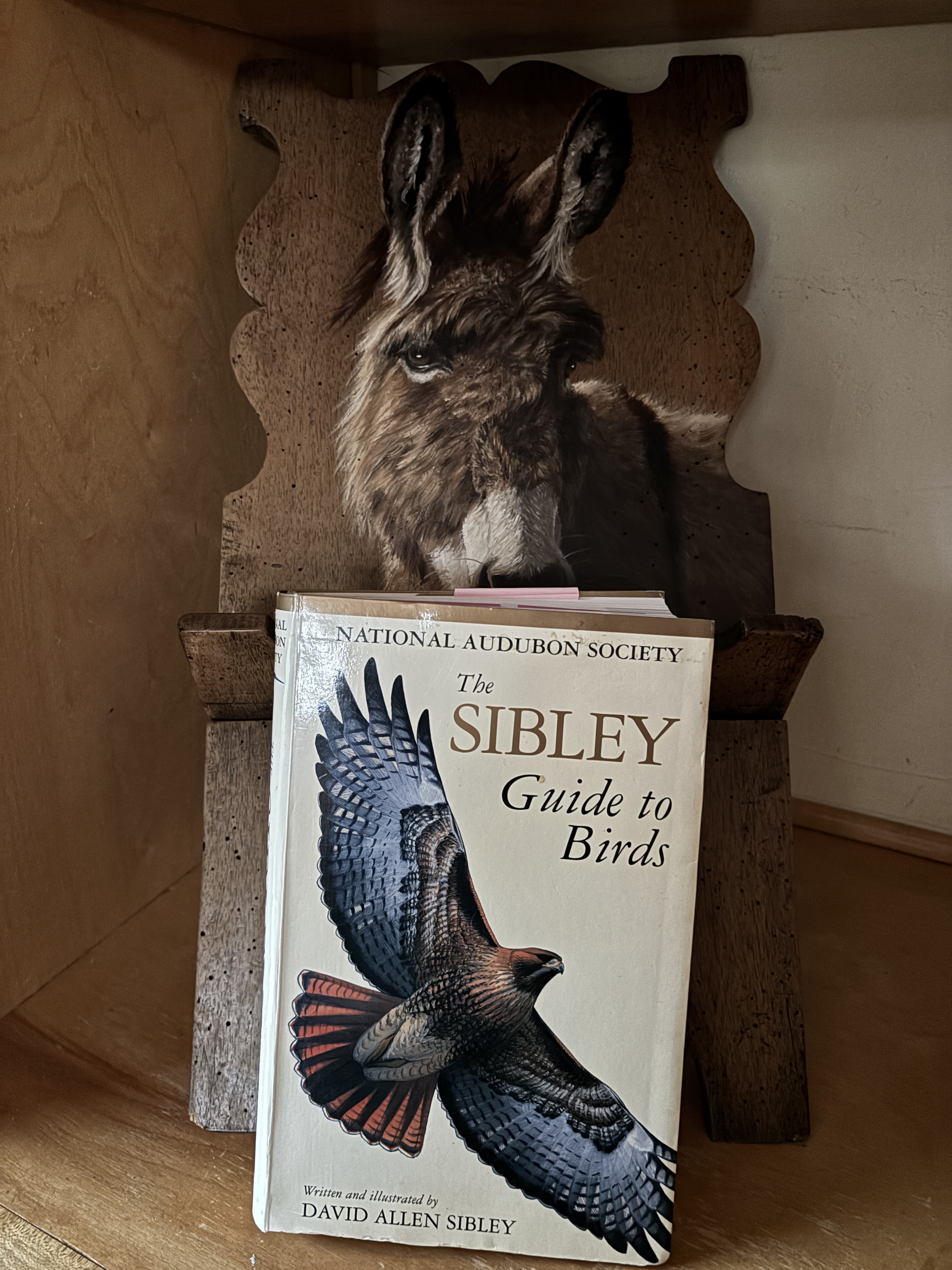
Jesse has spent years with those birds under close observation, yes, and under closer observation, applying his knowledge of detail. He sees differences that escape me. He can distinguish their songs.
After two hours he’s observed, and recorded or photographed, 40 species.
Details! Writers also must choose details that work, that light up, that bring to life characters and setting. That phrase—“under close observation”—describes the writer’s job: finding just the right details of setting, just the right details of characters, to make the plot come to life and satisfy the reader, the audience.
We all know great examples. In Act I, Shakespeare’s Julius Caesar closely observes Cassius:
“Seldom he smiles, and smiles in such a sort
As if he mock’d himself and scorn’d his spirit
That could be moved to smile at anything.
Such men as he be never at heart’s ease
Whiles they behold a greater than themselves,
And therefore are they very dangerous.” Act I, Scene II.
Reading that, did you get a glimpse of Cassius’s face, as Caesar describes it? And hear that firm conviction, “therefore are they very dangerous”? Right away we begin to hold our breath.
I confess I do want to like the protagonist, whether in a play, a novel, a mystery, biography, autobiography. I do not need to approve entirely of that character, but, whatever the genre, I prefer to spend time reading about someone I can empathize with. So, turning to autobiography, consider these excerpts from the beginning of Out of Africa, by Isak Dinesen:
I had a farm in Africa, at the foot of the Ngong Hills. The Equator runs across these highlands, a hundred miles to the North, and the farm lay at an altitude of over six thousand feet. In the day-time you felt that you had got high up, near to the sun, but the early mornings and evenings were limpid and restful, and the nights were cold. …
We grew coffee on my farm. The land was in itself a little too high for coffee, and it was hard work to keep it going; we were never rich on the farm. But a coffee-plantation is a thing that gets hold of you and does not let you go, and there is always something to do on it: you are generally a little behind with your work.
…Later on, when I flew in Africa, and became familiar with the appearance of my farm from the air, I was filled with admiration for my coffee-plantation, that lay quite bright green in the grey-green land, and I realized how keenly the human mind yearns for geometrical figures.
With these details Isak Dinesen makes us see the farm and the Ngong Hills, then makes us feel the air at six thousand feet… with “lipid and restful” evenings. We feel her emotional attachment—“a coffee-plantation is a thing that gets hold of you and does not let you go.” Then she catches our imagination, describing seeing her farm from the air while flying, and shares her discovery that “the human mind yearns for geometrical figures.” Her own observations of detail reveal to us the protagonist, the main character in this autobiography, as a thinker, a noticer, a person with staying power, who once (but no longer) “had a farm in Africa”—and now offers to share that adventure. Her intelligence, her sensibility, her brilliant use of detail, kept me turning the page.
Another protagonist we meet and can’t abandon: Count Alexander Ilyich Rostov, of Amor Towles’s A Gentleman in Moscow. We’re introduced as the Count strides back from the Kremlin Gates to his home at the Hotel Metropol. On the way he greets the fruit seller, thanks the soldiers whose prisoner (we now perceive) he is, returns to his elegant suite—and learns that he has been dispossessed. He will spend the rest of his life in a tiny room in the hotel’s attic: “a cast-iron bed, a three-legged bureau, and a decade of dust.” He’s allowed to retrieve a few possessions. He wants “all the books” and also chooses two high-back chairs his grandmother’s oriental coffee table, porcelain plates, two table lamps, and the portrait of his sister…plus one trunk which he fills with clothes and personal effects, including his sister’s tiny scissors. We watch him take a last walk through his suite, then return to his tiny new room. A pigeon lands outside:
“Why, hello,” said the Count. “How kind of you to stop by.”
The pigeon looked back with a decidedly proprietary air. Then he scuffed the flashing with its claws and thrust its beak at the window several times in quick succession.
“Ah, yes,” conceded the Count. “There is something in what you say.”
I already liked this man, his exquisite courtesy to the pigeon, his apparent ability to laugh at himself, his apparent determination to stay himself, to refuse to give the state the satisfaction of causing him despair …despite the state’s efforts to destroy almost everything he has. Then I watch while he hosts a party for his friends in the hotel staff:
“The Count was something of a natural-born host and in the hour that ensued, as he topped a glass here and sparked a conversation there, he had an instinctive awareness of all the temperaments in the room.”
Personal tragedy, but humor, civility, sensitivity, courage—and determination. Okay, I’ll definitely keep reading.
Screenwriter Robert McKee, in his book Story about principles of screenwriting, points out that a story’s protagonist must have a conscious desire, but must also have the capacities, and at least a chance, to attain that desire. Also, according to McKee, “The protagonist must be empathetic; he may or may not be sympathetic.” Per McKee, “Empathetic means ‘like me.’ Deep within the protagonist the audience recognizes a certain shared humanity.”
McKee explains: “The unconscious logic of the audience runs like this: ‘This character is like me. Therefore, I want him to have whatever he wants, because if I were he in those circumstances, I’d want the same thing for myself.’” Amor Towles certainly accomplished that with Count Rostov.
So what details have kept you reading a book? What particular description made you think—this writer’s keeping me entertained, keeping me turning the pages? In particular, are there protagonists who—when you think about it—have some appealing characteristics you enjoy? I’d love to hear your thoughts.
Now, a short report. First, no peaches. Tragically, after warm weather when the blossoms opened and tiny peaches formed, two late freezes killed the baby peaches. Sigh. Second, after unusual rain, the pastures out here in Hays County are bright green. No bluebonnets this year (well, maybe six), but we still have magenta Wine Cup, lavender Passion Flower, and so many yellow flowers—Brown-eyed Susan, Mexican Hat, Golden-Eye, Coneflowers, Sunflowers, Cowpen Daisy, Golden-Wave Coreopsis, Navajo Tea, Indian Blanket. Hard to know which is which.
I’m at work on Book 11 in the Alice MacDonald Greer Mystery series, set in the Texas hill country. That means working on the big triumvirate—setting, characters, plot. The protagonist, Alice, definitely has a conscious desire, and the capacities to attain it—but barriers lie ahead. Yes, she’s under close observation. Stay tuned.
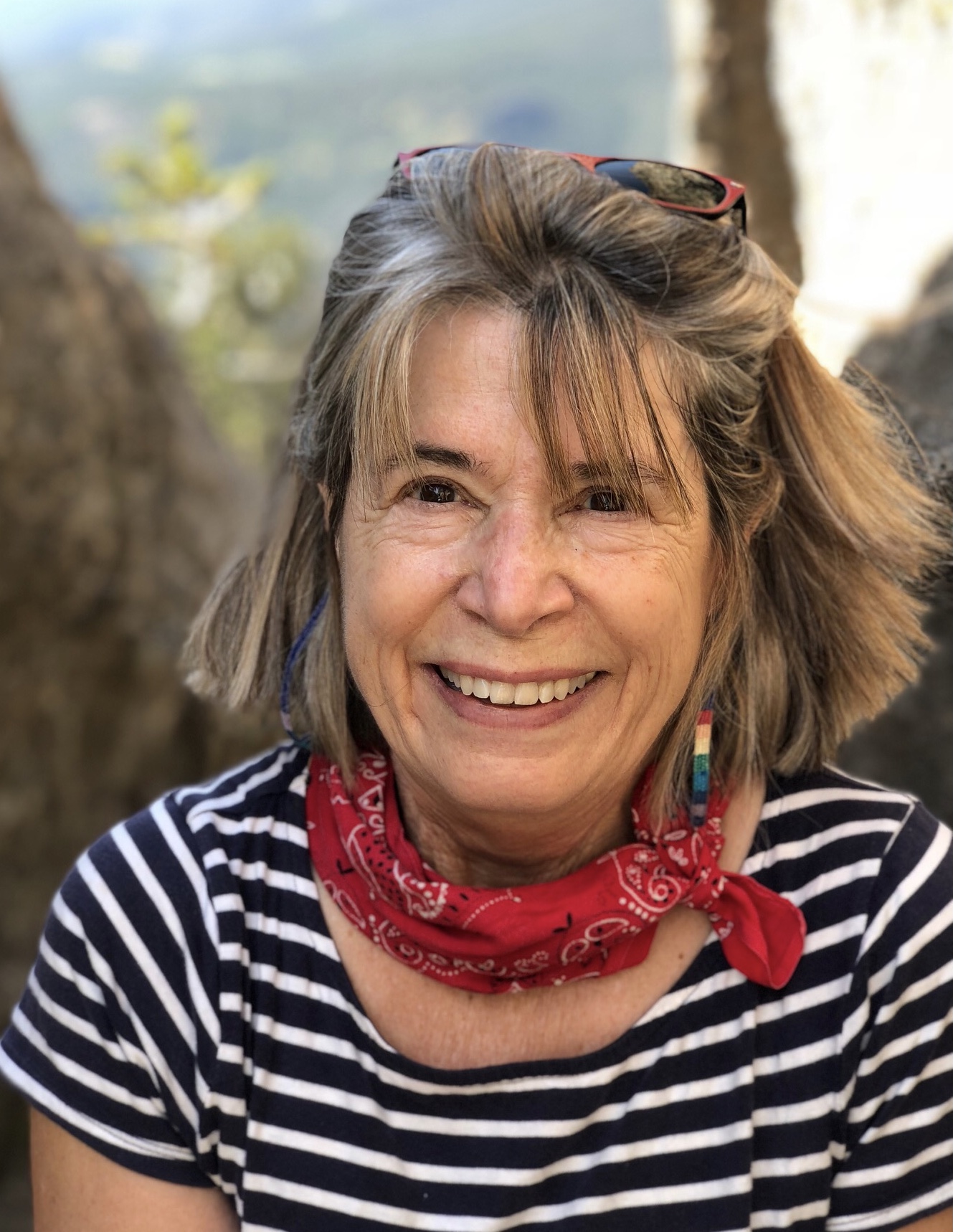
Helen Currie Foster lives and writes the Alice MacDonald Greer Mystery series north of Dripping Springs, Texas, loosely supervised by three burros. She’s drawn to the compelling landscape and quirky characters of the Texas Hill Country. She’s also deeply curious about our human history and how, uninvited, the past keeps crashing the party. She’s active with Austin Shakespeare and the Heart of Texas Sisters in Crime Chapter of the national Sisters in Crime (come join us! 2-3:30, Laura Bush Library on Bee Cave Road, second Sundays of the month).
June 25, 2026–Watch for the DSCL Author Showcase–Helen will be presenting, along with Jo Pellinore and Michael Baldwin! Social at 5:45, Panel Discussion 6-7:30. Contact Dripping Springs Community Library to register.
Follow Helen at http://www.helencurriefoster.com and find her books on Amazon and also at BookPeople in Austin, Texas.



 Austin Mystery Writers