Revising and Editing

I’m currently editing a long story on a short deadline and preparing to speak to a high school creative writing class about revising and editing their own work. Consequently, I find myself following some of the advice I’m about to give the students.
With editing and revisions in mind, I have confessions to make.

  1. I usually write stories in chronological order, then decide to rearrange pieces after I’ve finished the first draft.
  2. This means I rarely start a story in the “right” place. So my opening frequently changes between the first and final draft.
  3. While I usually remember to avoid vague words like “big, little, large, small, short, tall” and words that unnecessarily weaken statements like “perhaps and maybe,” I still have to check the draft and remove vague or useless words.
  4. I use too many “-ly” adverbs to modify verbs which should be replaced by stronger verbs, requiring me to edit them out and replace the verbs.
  5. I sometimes use too many dialog tags which should be replaced by actions that paint a better picture of my characters.
  6. My first drafts rarely include descriptions for setting or for characters. I almost always insert descriptive details in a later draft, layering in information after the plot is set.
  7. I still have to excise the words “really” and “just,” even after years of training myself to avoid them.
  8. I have to remove variations of “I think I…” or “I guess I…” in statements made by characters.
  9. Character names sometimes change after the story is written. I’ve misnamed many characters on the first attempt. (I’m lucky I didn’t do that with my children.)

Once I complete all that, I have to make MS Word read the story to me to find dropped words, typos, and misplaced commas. On the plus side, I have learned to write faster, especially when I have a deadline. It doesn’t matter if the first draft is ugly. That’s why editing and revision exist.

Because as multiple authors have said before me, you can’t edit a blank page.

On a side note: Congratulations to all the winners at Bouchercon Calgary! Going to Calgary wasn’t in the cards for me this year. I hope to make it to a convention next year.

News:

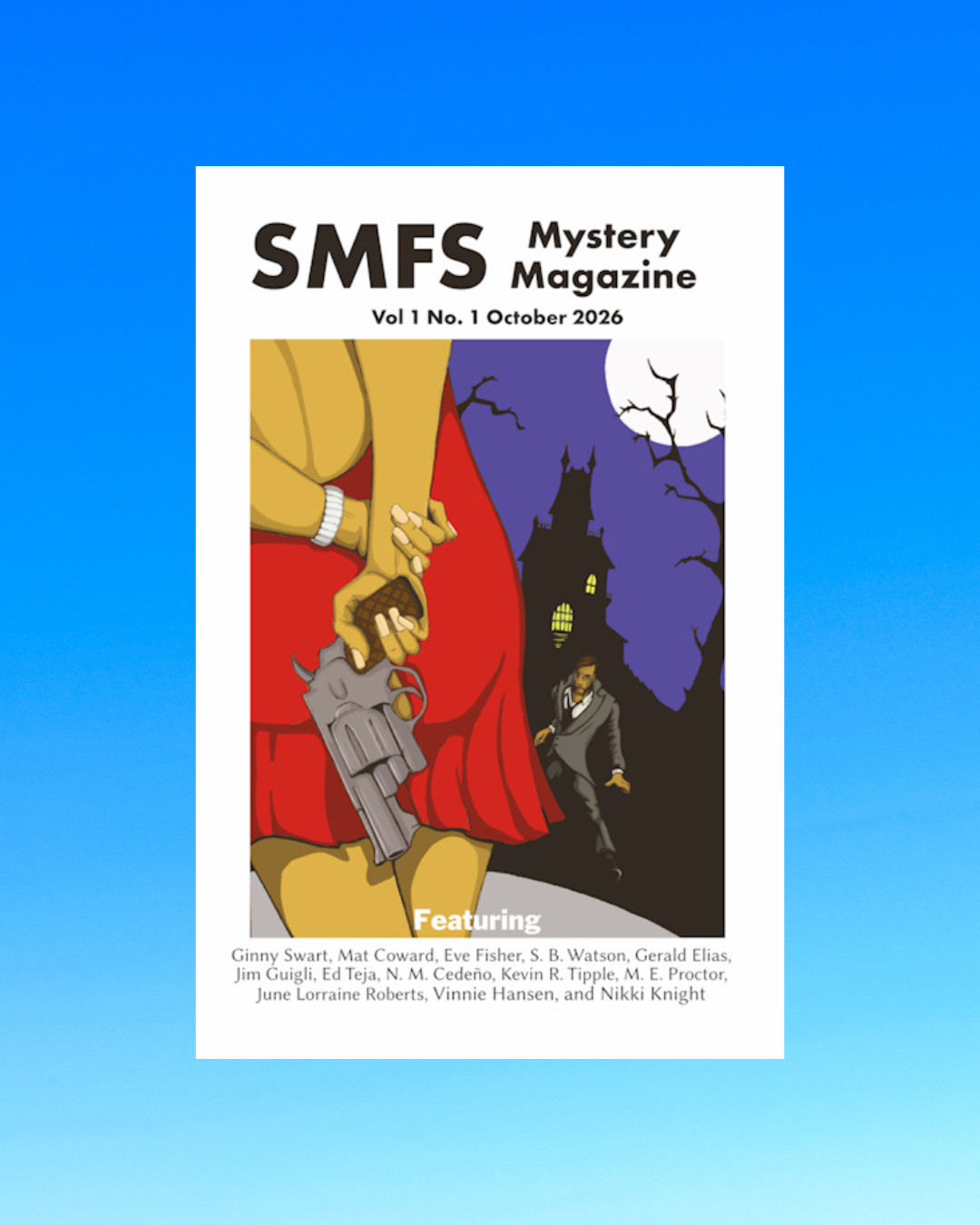
The Short Mystery Fiction Society and Murderous Ink Press have produced a new mystery magazine! The SMFS Mystery Magazine Volume 1, issue 1 is now available for sale. It has stories, reviews, interviews, and a short essay by me!
N.M. Cedeño writes short fiction. Her story entitled “A Reasonable Expectation of Privacy” placed third for Best Short Story in the 2013 Analog Readers Poll. Her story “Predators and Prey” was selected for the “Other Distinguished Mystery and Suspense of 2024” list in Best American Mysteries and Suspense 2025. For information on her stories, please visit nmcedeno.com!

And the Winner is… Still Undecided

By N.M. Cedeño

The finalists for the Derringer Award for Best Anthology have been announced by the Short Mystery Fiction Society. They are…

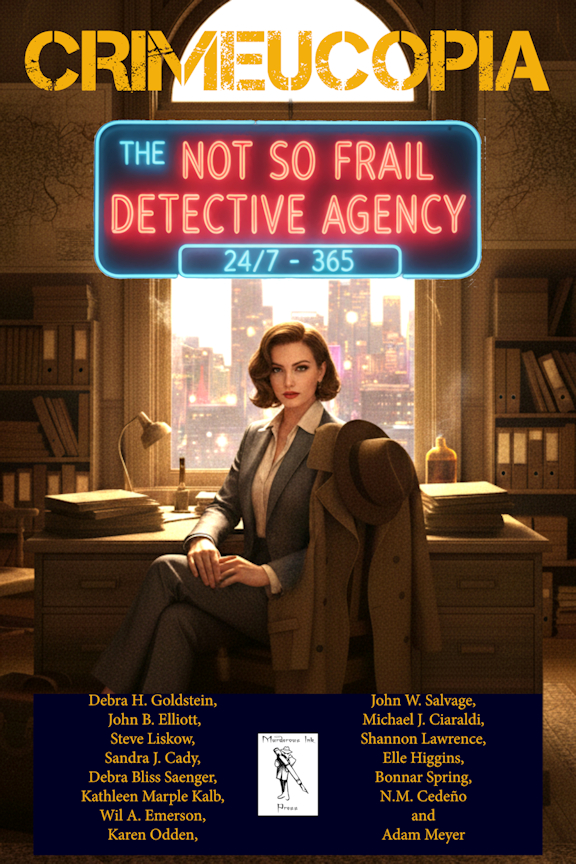
Crimeucopia: The Not So Frail Detective Agency, Edited by John Connor, Murderous Ink Press

Gone Fishin’: Crime Takes a Holiday, The Eighth Guppy Anthology, edited by James M. Jackson released by Wolf’s Echo Press

Hollywood Kills: An Anthology, edited by Adam Meyer & Alan Orloff, Level Best Books – Level Short

Midnight Schemers & Daydream Believers: 22 Stories of Mystery & Suspense: A Superior Shores Anthology, edited by Judy Penz Sheluk, Superior Shores Press

On Fire and Under Water: A Climate Change Crime Fiction Anthology, Edited by Curtis Ippolito, Rock and a Hard Place Press

SoWest: Danger Awaits! A Desert Sleuths Anthology, Edited by Claire A. Murray, Eva Eldridge, Suzanne E. Flaig, Denise Ganley, and Sarah Smith, DS Publishing

Descriptions of each book can be found on the Short Mystery Fiction Society Blog.

At this time, the members of the Short Mystery Fiction Society should be reading these books in preparation for voting for the winner in a few months.

Judges from the SMFS are also reading hundreds of anonymized story submissions in four other categories to come up with the lists of finalists in those categories. The categories are flash fiction (1000 words or less), short story (1001 to 4000 words), long story (4001 to 8000 words), and novelette (8001 to 20,000 words). Finalists in those categories will be announced April 1. Then society members will read all the finalists in order to vote for the winners during the month of April. Winners for all four individual story categories and the anthology category will be announced on May 1.

I have a stake in this vote because I have a story inCrimeucopia: The Not So Frail Detective Agency. My story, “Disappearance of an Easy Lover,” features Maya Laster, a genetic genealogy private investigator. She takes a case that appears to be simple: find out why a girl ghosted a guy. But the answer to the question is far from simple, and Maya ends up traveling all over Texas to solve it. Maya has been featured in three published stories so far. The other two stories, “Disappearance of a Serial Spouse” and “A Matter of Trust,” appeared in Black Cat Weekly issues #79 and #110. Maya is scheduled to make two more appearances soon, one currently without a publication date, and the other scheduled to be published in April if all goes well.

If you missed reading any of my stories that were published in Black Cat Weekly or in the various Crimeucopia anthologies, I have good news. Black Cat Weekly and the Crimeucopia anthologies are available via Hoopla and other library services. I discovered many of my stories were available online at my local library via Hoopla. So, if, like one of my relatives who shall remain nameless, you “don’t want to buy a whole magazine or book just to read my one story,” you can log in to your library and check them out to your personal reading device for free. Then, maybe you’ll discover the value of reading the whole book or magazine!