A 9/11 TRIBUTE – 25 Years Later

By

Francine Paino

In 25 days, this coming September 11th will mark a quarter-century since the United States was attacked by evil in a way we’d never imagined.  For those of us who lived it, it’s as fresh in our memories as if it happened yesterday.

There was only one color in New York on September 11, 2001: Ash Grey. There was only one fragrance in the air: toxic fumes, sharp and acrid, as far as 25 miles away.

No one was black, white, or brown. We reached out for each other’s hands, without regard for race or ethnicity. Together, we watched in horror close up and from local distances, praying that our loved ones would somehow be spared a horrible end—but not all were.

On that day, the sun shone in a bright, clear blue sky, not common over the skyline of New York. It was as if God wanted everyone to see, without confusion, malevolence in action, and the heroism that battled it.

But who, exactly, were the heroes that day? Were the heroes those who like to stand above us and preach, like Hollywood stars? No. Did overpaid, spoiled-brat athletes run in to try to save those trapped and praying for rescue? No. Did the fascist/socialist fist-pumping, Hate-and-Steal-From-Those-Who-Have-More mobs try to get near those buildings to help? Certainly not. And make no mistake, they existed in New York 25 years ago. In our nation’s capital, D. C., did the feckless Congress ask to be transported to the Pentagon to help rescue those trapped inside, as Secretary of Defense Donald Rumsfeld did? Again, no!  Were Pennsylvania’s politicians first to the crash site of Flight 95 and the brave men and women on board who chose to die fighting? No.

The rescuers that day, who rushed into danger, were the fire, rescue, EMT, and police departments. And some civilian volunteers tried to help, even without training. They didn’t ask if it was safe. They knew it wasn’t.

On that day, 25 years ago, 343 New York City firefighters, including one chaplain and two paramedics, died. Thirty-seven police officers of the Port Authority of NY and NJ perished, as did twenty-three police officers of the NYPD and one New York Fire Patrol officer. Emergency medical technicians and paramedics of private emergency services also gave their lives to help others—and their sacrifices didn’t end that day.

Since 2001, 400 additional FDNY members have died from 9/11-related diseases, caused by toxins spewed into the air that day, and the number continues to grow.

More than 8,000 people have died from 9/11-related illnesses, surpassing the total number of lives lost on September 11, 2001. According to data and public awareness campaigns highlighted by The Mesothelioma Center, the long-term health consequences—including cancers like mesothelioma and lung cancer from Ground Zero toxins and asbestos exposure—continue to claim lives 25 years later. (The Mesothelioma Center) Just as devastating, over 40 percent of the victims still have not been identified—that’s about 1,000 people. An additional agony for their families.

And here we are, 25 years later, with obnoxious, hateful people trying to say we deserved that attack. Tell that to the families of those who died trying to save others, and to the victims armed with coffee cups and pencils, who were virtually pulverized, and those who did manage to get out alive, but damaged for life.

And now we watch our less-than-illustrious city councils, mayors, and governors prostitute themselves, bending over to the criminal insurrectionist mobs. They shout Defund the police, a service without which no civil society can exist. By doing so, they dishonor the memories of all who died on 9/11, the rescuers, and the victims waiting and praying that police or firefighters could reach and save them. No one that day prayed for or expected a politician or community activist to rescue them.

Indeed, these politicians have despoiled and rendered meaningless the actions of the officers who worked so hard to rescue so many and maintain law and order in the aftermath—again with no regard for the risk to their own health, working in the heart of the poisoned air of New York City and its suburbs.

But our political leaders are put in power by us—We, the people. Thus, we are a nation in disgrace. Unlike the surprise attack on Pearl Harbor, which remains in the minds of Americans even to this day, we’ve ignored the sacrifices made by so many who serve law and order, allowing us to live and work in a safe society, and 9/11 is one of the great failings of our public school systems. It is not taught. “Only 14 states explicitly require public schools to teach students about the events of September 11, 2001, leaving the topic up to local districts or omission in the remaining 36 states.” (Rep.  A, Garabino)

The police, fire, and EMT services are the real stars in our lives, not the tinkling fake glitter of those who hide behind their private security guards and walled communities, then dare to lecture us. Or, the athletes who choose to kneel, bow, and scrape to those who would rather see our country perish—rather than stand up and say, “NO. Destruction is not the way.” And to the ethics-free Democrats and spineless Republicans masquerading as politicians, who allow our cities to be burned down and our law-abiding citizens to be attacked so that they can maintain their privileged positions and wealth and power—let’s defund you.

To all the men and women of every police, fire, and EMT department in the United States, thank you for your willingness to do jobs that put your lives in danger to protect ours.Thank you for your efforts to keep our streets safe despite the ingratitude of the public and the disgusting backstabbing politicians. Thank you for your resilience and your service.  

And once again, to all who died at the hands of evil on 9/11, including the police, fire, and EMT personnel, may God keep you in the light of His face, and give peace and comfort to the loved ones you left behind.

JEWELS AND LEGENDS IN HISTORY

By

Francine Paino, a.k.a. F. Della Notte

Research for book four of the Housekeeper Mystery Series brought me to legends and myths connected to jewels and gemstones, many of which have traveled a long way in storytelling traditions. Often, a mystical aura goes beyond the material value of some precious stones and metals, and these stories show us how jewelry is not only beautiful to look at but also carries the power of love, misfortune, and protection. Some of the most famous are The Curse of the Hope Diamond, The Myth of Pearls, and The Legend of Cleopatra’s Emeralds.

According to the legend,the curse of the Hope Diamond originated when the diamond was stolen from a statue of a Hindu god in India. The priests of the temple placed a curse on whoever possessed it, and throughout history, many who owned it have suffered great misfortunes, including King Louis XVI and Marie Antoinette.  

Cleopatra, the last queen of Egypt,is said to have loved emeralds., which were symbols of fertility and protection in her time. Legend has it that Cleopatra possessed an enormous and valuable emerald that she wore often to show her power and divine status. The emerald was lost after her death, and its whereabouts have never been discovered.

The Myth of Pearls. Called Tears of God in many cultures, pearls became symbols of purity and femininity. In Greek mythology, pearls are said to be the tears of the goddess Aphrodite and were often used as wedding gifts to symbolize purity and happiness in marriage.

In Rome, onyx, especially sardonyx, which is a layered gemstone composed of bands of sard and onyx, both varieties of chalcedony (a variety of quartz (silicon dioxide) known for its fine, fibrous structure and waxy luster). Onyx is known for its striking contrast of colors, typically reddish-brown alternating with white or black onyx layers. This banded structure made it popular for jewelry and carvings and was considered a talisman for protection and good fortune. Onyx was favored by the Roman army. Soldiers often wore sardonyx amulets carved with images of Mars, the Roman God of War, or Hercules. The Romans believed that wearing onyx or sardonyx would instill bravery and courage in battle, bring good luck, and ensure success in combat while protecting the wearer. Many of these legends and myths began in connection with historical events, and such is the legend of the Miltiades Cross.

THE HISTORY: It began on October 28, 312 C.E. Miltiades, the first Christian bishop of Rome, was revered by his community and addressed as papa or father by his followers. He was a small man of 62 years and of humble means, working in the Roman marketplace. When he was summoned from his hiding place, a small house in an alleyway in Trastevere, by two centurions, he assumed he was about to meet his end since Christianity was outlawed in Rome and punishable by death. Wearing a threadbare robe, the poor little man made the sign of the cross and prepared to meet his fate as a martyr for Christ. He followed his Roman guards out into the sunlight and came face to face with the six-foot, imposing figure of Emperor Constantine, flanked by hundreds of soldiers, all of them, including the emperor, covered in blood and grime. They’d come from the battle of the Milvian Bridge, where Constantine had defeated his imperial rival, Maxentius. Constantine was now the sole ruler of the entire Roman Empire.

To Miltiades’s great shock, Constantine greeted him with a hug and had him wrapped in a purple robe. The emperor explained that he followed the instructions he’d received in a dream.,the night before the battle. He was told to paint the Chi Ro on his soldiers shields, and “in this sign, conquer,” and he did. After his victory, Constantine decided to make the god of the Christians his god and the god of the Roman Empire.

Instead of the gruesome death Miltiades expected, the emperor asked to be brought to the spot where the bones of Peter, Christ’s Apostle, were buried. In a little cemetery outside of Rome, Constantine dropped to his knees and swore to build a great basilica over those bones. Then, the emperor took the dazed bishop to a grand palace on Lateran Hill and decreed that, henceforth, all successors of Peter would live in that palace.

THE MYTH: Two weeks after Constantine’s conversion, Miltiades was again summoned to the Emperor. Terrified that Constantine had changed his mind, Miltiades again prepared to meet the fate. Trembling, the old bishop appeared before the emperor and knelt in respect, but Constantine pulled him upright. Around Miltiades’s neck, the emperor hung a gold chain with a gold cross studded with Servilia pearl, the most valued gemstone in Rome. Constantine then decreed that this cross should be handed down to all succeeding bishops of Rome. It was the cross Constantine had envisioned in the shape of the Chi Ro. Legend, has it that the cross was last seen on Pope Innocent I in 417 C.E. when he fled Rome before the invasion of the Visigoths. Over the following 1600-plus years, the position of the Catholic Church was that the cross either never existed or was taken by non-believers and refashioned.

In book four of the Housekeeper Mystery Series, Murder in the Cat’s Eye, Father Melvyn and Mrs. B. take a group of parishioners to Rome to study the lives of ancient Christians, where they become random victims of a criminal enterprise involving jewel theft and murder. This high-stakes web of deceit blurs the line between upholding and breaking the law, straddled by a police inspector when a not-so-scrupulous antiquities dealer disappears and a young woman is murdered. Organized crime, a member of Rome’s elite, and the Catholic Church face off when it’s discovered that among the stolen jewels is what may be the ancient and priceless Miltiades Cross, given to the first bishop of Rome by Emperor Constantine in 312.

Watch for Murder in the Cat’s Eye in the fall of 2025.

warfarehistorynetwork.com

The Vatican Exposed: Money, Murder, and the Mafia, by Paul L. Williams  pg. 10

THE NAME OF THE ROSE IS—wait, how do you pronounce that?

BY HELEN CURRIE FOSTER

April 1! It’s spring, with a riot of bluebonnets this year.

Plus paintbrush! Winecup! Verbena! Prairie celestials (so lovely)!

And within the fence, safe from our marauding burros, the roses are opening their petals and sharing their beauty.  Humans have been growing and hybridizing roses for millenia. I favor those with deep rose fragrance. This year the sniff prize goes to Madame Isaac Pereire,

but Zephirine Drouhine is a strong contender as well—sweet perfume, but no thorns!

Blooming with pride are Cramoisi Superieur, fun to pronounce, and dainty little Perle d’or, below.

Yes, the French have been busy.  But I’m waiting on the spectacular Star of the Republic, which is covered with buds that will become exquisite cream and pink roses,  and is almost as tall as Texas.

Thanks for human ingenuity and the deep love of beauty and fragrance that resulted in these roses. We humans are so able to produce beauty—and yet we mystery readers and writers know how gripped we are by the companion question: why do humans commit the primal sin of murder?

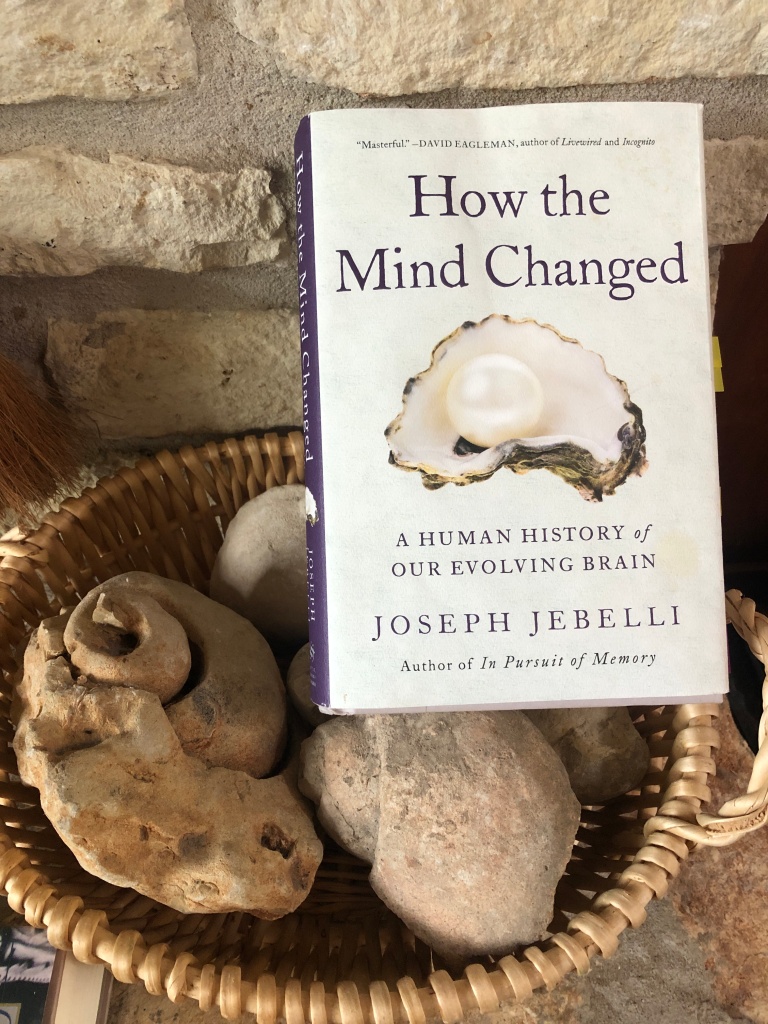
I’ve been reading a riveting book called How the Mind Changed, A Human History of Our Evolving Brain (2022), by neuroscientist Joseph Jebelli, who studies the genetic history of the human brain. I’ve had to put stickers and checks on so many pages!

Jebelli says that, starting about 7 million years (or 230,000 generations) ago, when humans split from chimps, our brains were only 350 cm3 big. Then 3.5 million years ago, when our ancestor Lucy came along, we got a new uniquely human gene that gave us a folding neocortex and nearly doubled our brain size to 650 cm3.

Later, he says, our brains bloomed to 900 cm3, when we began cooking (maybe 2.7 million years ago), then to 1000 cm3, about 2.5 million years ago, then to 1500 cm3 500,000 years ago, and then grew another 25% by the time, 300,000-400,000 years ago, when Homo sapiens appeared.

Later research shows—the bigger the brain, the bigger the social group. Id., 69.

And lucky Homo sapiens came along when our planet was in extreme ecological instability: “African megadroughts depleted the land’s fresh water; vanishing grasslands diminished the number of animals available…” Homo sapiens spread across the planet, interbreeding along the way with the Neanderthals (who went extinct around 40,000 years ago), and the Denisovans, Neanderthal cousins from Asia. Most humans outside Africa carry around 2 percent Neanderthal-derived DNA while today humans in Papua New Guinea and Australia possess up to 6% Denisovan DNA.

Now we have tools of advanced microscopy and molecular genetics to use “the mosaic of neurons, the constellation of synapses and the tributaries of molecules to learn the age of the brain and the transformations it has seen.” Îd., 21.

But it’s Jebelli’s discussion of brain research on “fair play” that I find most fascinating – whether the experiment uses rats, vampire bats, or humans. “Our minds intuitively draw a distinction between unfair equality (all students receiving the same…grades regardless of merit) and fair inequality (the doctor earning more than the cleaner). When push comes to shove, humans nearly always prefer fair inequality to unfair equality.” Jebelli goes on to explain that when we humans engage in fair play, we experience a surge of neural activity in our brain’s reward centers, releasing dopamine, oxytocin, serotonin and endorphins. Id., 68.

Watch out: scientists are identifying gene mutations that explain amazing things. “Non-monogamous brains tend to have a special kind of dopamine receptor gene called DRD4, which is linked to promiscuity and infidelity.” Id., 78. Use that in a plot, mystery-writers!

But I was thrilled by the focus on the link between strong imagination and intelligence in our “default network, a brain system that participates in daydreaming, mind wandering, reflective thinking and imagining the future….People who engage in these cognitive practices…have greater access to the states of mind necessary to solve complex problems.” Id., 115. Jebelli says our default networks are only active when we’re not focused on a task, “when the brain is cycling through thoughts not associated with the immediate environment.”  In other words, the default network contrasts with our executive control network.  Jebelli makes another leap: compassion also stimulates the default network. “Compassion requires imagination. ‘Climb into his skin and walk around in it,’ Atticus tells Scout.” But imagination also requires compassion.  Id., 119.

Why has this book grabbed me? As a mystery writer I wrestle with why some humans will run into the street to save a child from a bus, and some will just watch; and why and how some humans invent gripping new imaginative worlds (Lord of the Rings, Harry Potter, Slough House, Yoknapatawpha County, the Forest of Arden, Hat Creek and the saga of Lonesome Dove) that tell of human struggles and victories, tragedies and comedies. Yes, writers who stimulate our “default networks”!

So you might like to take a peek at How the Mind Changed—check out the chapter on that age-old conundrum––what is consciousness? And the chapter on different minds, or neurodiversity, including genetic components. And the chapter on the new field of neurocriminology: what makes humans commit crimes? Which brain regions are responsible for violence? One possibility—it’s an area of the hypothalamus called the ventromedial hypothalamus, “an ancient brain region that has been conserved throughout mammalian evolution.” Yikes!

As Jebelli notes, plots will abound from this inquiry, this research. As always, inquiring minds want to know.

Meanwhile, it’s April! So let us now praise Geoffrey Chaucer – whose compassion and imagination gave us “Whan that April with his showres soote The droughte of March hath perced to the roote, And bathed every veine in swich licour, Of which vertu engendred is the flowr…”

And further to celebrate—Book 9 of my Alice MacDonald Greer legal thriller series has gone off for copy-edit. Yes, again the primal crime has been committed…!

Whispers of Memories

I recently took a trip to Huntsville, Texas, and everything I saw at every turn stirred up old memories.


–          Right behind the hotel where I stayed was the apartment complex where my cousins had lived. A few blocks away was a second place they lived.

–          I passed a street of good friends of many years. They hosted a wedding shower for me.

–          I passed the fancy restaurant where my grandmother lived for a while when she was a child. I remember that when she told us, we had no idea!

–          I saw the nursing home where my other grandmother spent her last years.


All of this within a short drive just to get a burger! My mother’s family has been in the Huntsville area since the mid 1800’s so we have a lot of stories. A couple of my favorites:


–          Sam Houston was a friend of the family. He used to come and visit.

–          My great-grandfather was sheriff for a while and lived in the jail.


Neither of my parents grew up there, but my father moved there after my parents got divorced. He was offered a job at Sam Houston State University as a Criminal Justice professor. So I have a personal connection to the place through my mother and my father.

Besides the personal connections, there is something that draws me to the place. OLYMPUS DIGITAL CAMERAMaybe it’s something about the vines growing in the pines, maybe it’s because I love history and old things, maybe it’s because of my “writer brain”, but when I pass old houses, I imagine children playing and grannies rocking while shelling peas. I love browsing through the old stores. I sometimes look at what they’re selling, though I’m more likely to be looking at the tin ceilings and wondering what the original store was.

The history of a place just calls out to me. I look at the red leather seats in the booth at a diner and remember when not everyone was welcome as a customer. I look at the young, happy families and wonder if they hear or feel the negative things that happened. Can they even imagine it? I pass the prison walls and know the prison has been there since 1849. Lots of famous and infamous people have been in those walls.

At the university I think of my great great aunts who attended when it was a Sam Houston Normal School. We’ve had a graduate from there in every generation. My grandmother went to kindergarten at Old Main, which has since burned down.

I think about my father when I sit on the bench outside the CJ building that’s dedicated to him. There’s a plaque with his name on it. He used to sit outside and smoke and talk to students. Inside the building there’s a big picture of him. DadNext to it are plaques with names of students who have received scholarships named after him.


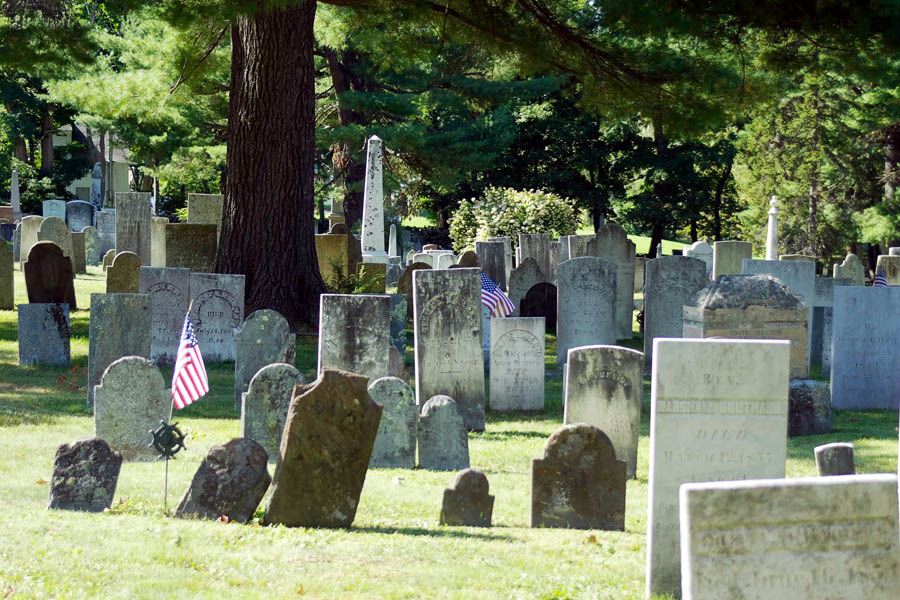
Sometimes when I’m in town, I visit the cemetery. I look up my folks and browse around. Yep, some people like museums, I like cemeteries. file000511322167When you’re looking at someone’s headstone, you see when they were born and when they died. You can see if they were married or had children buried with them. So many stories untold.


It’s all a bit overwhelming for me at times. But I guess it’s no surprise that I like to write historical fiction. file0001461581320For me the place is full of mystery, history, conflicts, love, death and birth. Those piney woods have a lot of secrets.


Do you have a place that calls to you?