The Upside of Resistance

 Productive Procrastination for Creatives

Most writers battle resistance from time to time, and it comes in many forms. Maybe you’re working on a project with a looming deadline, which is the perfect time to clean your kitchen.

Just ask Agatha Christie.

“The best time for planning a book is when you’re doing the dishes.”—Agatha Christie

I realize I’m bending her quote to serve my purposes, but who am I to argue with greatness?

© agathachristie.com

My most recent battle with resistance happened yesterday. After being away from a project too long due to other writing deadlines, I struggled to find my groove, which culminated in my spending nine hours trying to get my arms around a manuscript. My characters refused to behave, and a section of the second act sagged like a neglected hundred-year roof. The final pin dropped in the form of my losing several thousand words due to some sort of file syncing error. I’d spent all day trying to nail Jello to the wall and wondering why it refused to stick. 

I called my sister-in-law, who sagely suggested I needed to step away from my computer. Get some fresh air, go for a walk. I felt a bit better after but still defeated. I spent the rest of the evening with the gritty dust of failure stuck to my skin. I then reminded myself that this, too, is part of the process. The only way out is through. Tomorrow is another day.

I decided to start this morning with some writer support. After a two mile walk while listening to Brandon Sanderson discuss writing with Tim Ferris, I then read J.T. Ellison’s Substack on resistance. There was something about listening to other authors discuss their craft and the struggles that come with it that helped me refocus with a fresh perspective (and an attitude adjustment, which was sorely needed. I was very salty).

If you’re struggling with any sort of creative project, consider taking respite by listening to other creatives discuss how they do their thing.  Here are a few of my favorites:

The Tim Ferriss Show: Episode #794: Brandon Sanderson on Building a Fiction Empire… 

Buckle up, loves, because this episode is 3.5 hours long. It took me several walks and cleaning sessions to get through it, but I promise it’s jam packed with some fantastic advice and discussion related to both the art and business of writing. Few writers have accomplished what Brandon has while also so freely sharing his expertise with others.  

https://www.youtube.com/watch?v=5zzzjLKuFZA

Work Life with Adam Grant: Your Insecurities Aren’t What You Think They Are

Adam Grant is an organizational psychologist with a curiosity superpower that translates into countless benefits for his audience.  His WorkLife podcast is a regular listen in my feed. This episode is also how I found Taylor Tomlinson, which some might think is a strange way to discover a comedian.  Their discussion about how to handle insecurities when your job is centered largely on external feedback and validation (hello, writers!) is one that you may listen to more than once. 

https://podcasts.apple.com/us/podcast/worklife-with-adam-grant/id1346314086?i=1000523780269

J.T. Ellison Substack: The Creative Edge

If you’re a Substack fan, I highly recommend giving J.T Ellison’s newsletter a read. She gives us an inside look at her life as a bestselling author juggling multiple projects for both traditional publishers as well as her own imprint. Her advice is practical and specific, and she mixes in a generous amount of empathy. Here’s the post that pulled me out of my latest bout of writing resistance.

https://jtellison.substack.com/p/interim-step-two-facing-down-resistance

#AmWriting: Substack and Podcast

The author collective of the #AmWriting enterprise deliver some of the best stories, guidance, and interviews related to the business and craft of writing. Regardless of genre or publishing preference, they have you covered.  Their Substack is well organized and offers tons of shovels to help you dig yourself out of any writing hole you currently find yourself stuck in. 

https://amwriting.substack.com

James Clear: Atomic Habits and Newsletter

As someone who receives far too emails, James Clear’s newsletter is the rare one that I make sure to read as soon as it hits my inbox.  His 3-2-1 format (three ideas, two quotes and one question to consider) are thoughtfully considered. Every issue provides a valuable takeaway, and his recent Master Class covers the concepts he outlines in his mega-bestseller Atomic Habits.  Here’s what he shares with us about resistance:

“If you feel resistance before you begin, it’s usually procrastination and you need to get started.  If you feel resistance after you begin, it’s usually feedback and you need to make adjustments.”

Jiro Dreams of Sushi

Jiro Ono is an 85-year-old sushi chef and proprietor of Sukiyabashi Jiro, a 10-seat restaurant located in a Tokyo subway station. Some of the top critics believe he is the world’s greatest sushi chef. This documentary follows his passion for continued mastery even at what he sees as the final years of his career.  “A thoughtful and elegant mediation on work, family and the art of perfection, chronicling Jiro’s life as both an unparalleled success in the culinary world, and a loving yet complicated father.”

I discovered this documentary after my last visit to Japan and was moved by both the constant pursuit of mastery as well as the price it exacts on those closest to him.

I’d like to leave you with a quote that I revisit so often that I should have it tattooed on my forehead. 

“If I waited for perfection, I’d never write a word.”—Margaret Atwood

The world needs your stories more than ever, so I hope that if you’re battling resistance, you’ll find some support from the creative community. Storytelling, at its heart, should be something we enjoy, and if it isn’t bringing that to you right now, I hope it soon returns. And when it does, readers will be waiting for you.
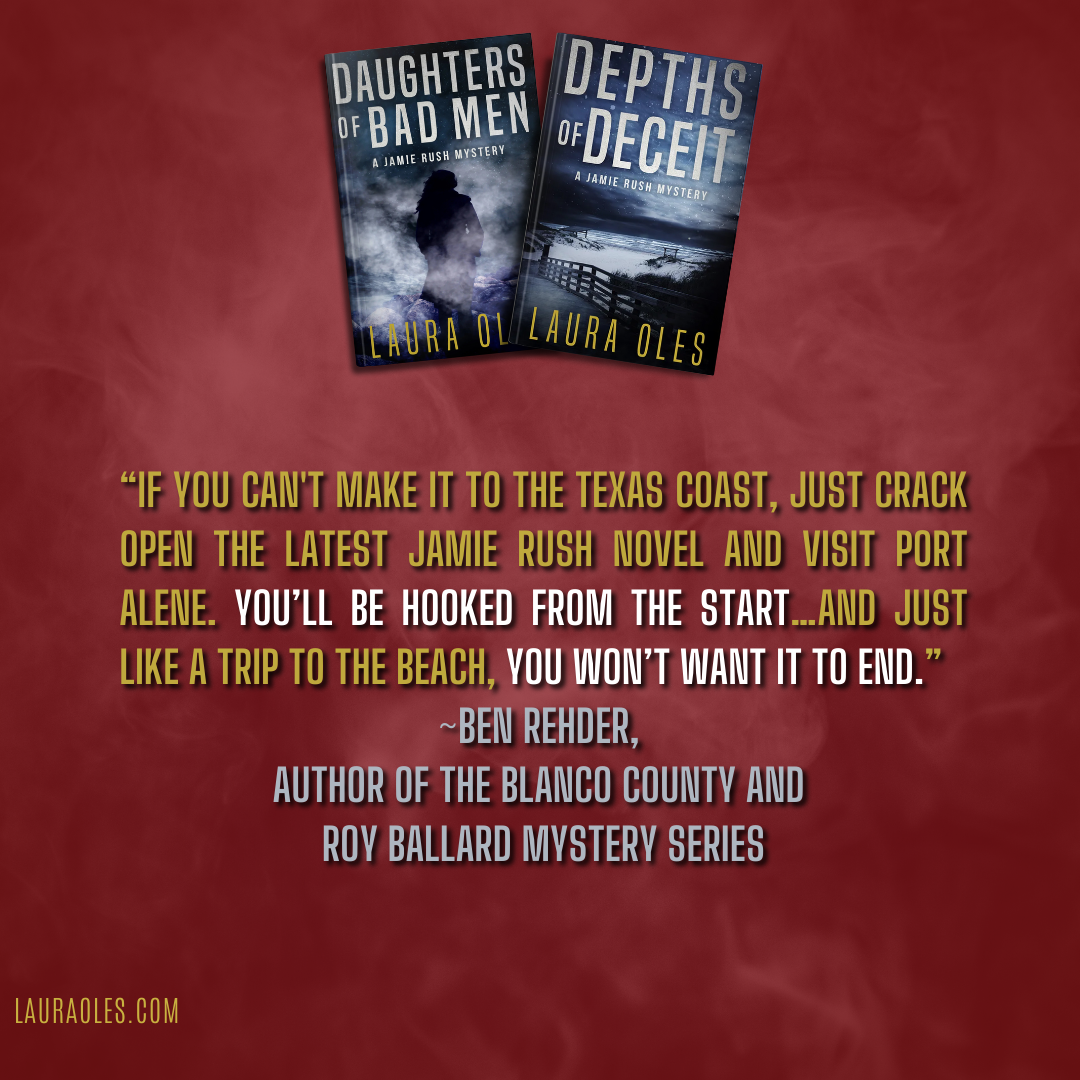
–Laura Oles (https://lauraoles.com) is the award-winning author of the Jamie Rush mystery series. Her debut mystery, Daughters of Bad Men, was an Agatha nominee, a Claymore Award finalist, and a Writers’ League of Texas Award finalist. Depths of Deceit, her second novel, was named Best Mystery by Indies Today. Her novella, Last Call, won the Silver Falchion award. Her work has appeared in crime fiction anthologies, consumer magazines and business publications. She lives in the Texas Hill Country with her family.

Equinox!

by Helen Currie Foster

An excess of animal spirits”–springtime! Really? Molly Ivins was right as usual when she wrote, “Texas–land of wretched excess!” We’ve had ridiculous lows, unseen for decades. Early daffodils and hyacinths came, shivered, and shriveled in the unholy cold winds roaring across the plains. But we’ve also had the earliest 90 degrees in decades! Wretched excess indeed!

Just two days until the vernal equinox on March 19, and spring. What makes us wander outside, searching for the first bluebonnet, the first violet? What makes us huddle outside the garden store, searching through the little plants shivering in the breeze, fingering seed packets, carrying home small pots of basil and blue salvia even though the weather’s far too untrustworthy for planting? What is this proto-agricultural spirit that makes us lug home the potting soil, hoe the garden bed? More sunlight? Cabin fever? Some early human gene? We, the Animal Kingdom, working with the Plant Kingdom?

I’m rereading Barry Cunliffe’s Europe Between the Oceans: 9000 BC-AD 1000a book I value not just for the stunning photographs of prehistoric sites and art, but for describing a history of human inventiveness. Cunliffe, Oxford Professor Emeritus of Archeology since 2007 (many books), says “massive transformation” occurred in Europe between 1300-800 BCPopulation growth required developing more crops than wheat and barley, including lentils, peas and—“the celtic bean (Vicia faba).”

Immediately I ordered a giant pack of fava bean seeds.

This image has an empty alt attribute; its file name is img_0981.jpg

Then I read the label: they’re mostly a winter crop–but this year I’m desperate. With last year’s blistering hot drought, I wound up with only one pot of cherry tomatoes on the porch and a dozen wilting jalapeno plants in the garden. Cunliffe’s reference to Vicia faba fired my imagination—envisioning myself harvesting large fuzzy green pods, containing delectable beans, and adding a little vinaigrette…olive oil (since 4000 BC) and vinegar (3000 BC). Using an ancient bean and ancient vinaigrette recipe! Possibly those beans were harvested, and the vinaigrette shaken, by some long-ago ancestor 3000 years ago, making me wonder if we have genetic preferences, genetic recipe roots? After all, we of the Animal Kingdom depend on the Plant Kingdom (oxygen, vinaigrette, and wine!).

Mysteries offer escape—a protagonist we like, an intriguing plot, a vivid setting. Like plants, favorite old mysteries offer much when we revisit. Mystery writers? They’re good to “talk to.” This morning I discovered on the shelf my dad’s 1934 Modern Library edition of Dashiell Hammett’s The Maltese Falcon, with a brief bio and the “new introduction” by Hammett.

This image has an empty alt attribute; its file name is img_0980.jpg

I didn’t know Hammett had worked as an operative for Pinkerton’s Detective Agency before he started writing! “Drifting through a miscellany of ill-paid jobs, he found a temporary solution to his economic problem by shadowing real malefactors with what might be called conspicuous success.” Then came the World War: “He won a sergeantcy and lost his health.”

Hammett can remember where he got his characters. Here’s a snippet of what he says about The Maltese Falcon:

“Dundy’s prototype I worked with in a North Carolina railroad yard; Cairo’s I picked up on a forgery charge in Pasco, Washington, in 1920; Polhous’s was a former captain of detectives…Effie’s once asked me to go into the narcotic smuggling business with her in San Diego…”

Hammett then muses about his own protagonist. “Spade had no original. He is a dream man in the sense that he is what most of the private detectives I worked with would like to have been and what quite a few of them in their cockier moments thought they approached. For your private detective does not—or did not ten years ago when he was my colleague—want to be an erudite solver of riddles in the Sherlock Holmes manner; he wants to be a hard and shifty fellow, able to take care of himself in any situation, able to get the best of anybody he comes in contact with, whether criminal, innocent by-stander or client.”

What a great description, and didn’t Humphrey Bogart nail it?

It strikes me that this new character of his upended the vision of the members of the London 1930 Detectives Club—Hammett gave the wide-eyed mystery audience a protagonist who is not a secret member of the aristocracy (Albert Campion) or a perfect gentleman (Roderick Alleyn) or a hyper-particular French veteran drinking tea and waxing his moustache (Hercule Poirot)…but a “hard and shifty fellow…able to get the best of anybody.” Welcome to the New World’s new-style mystery protagonists, the children of Hammett, Raymond Chandler, Sara Paretzky and others…including that hybrid protagonist, Mary Russell, in Laurie King’s Mary Russell and Sherlock Holmes series.

For Mary Russell and Sherlock Holmes, the scent of honey is a repeat theme (her Holmes is a beekeeper). I like her Holmes, I like her Russell, and just finished her Garment of Shadows (2012). King has chosen a fascinating and ambitious setting: the 1920’s, with Spain and France fighting for control of Morocco, each coveting its crucial strategic location at Gibraltar, while various Moroccan groups—Berber and otherwise—fight for independence. King uses first person point of view for Mary Russell, who’s suffering from acute amnesia—forgetting her childhood and even her marriage––but uses third person POV for Holmes’s chapters. Those shifts sometimes confused me. But her depth of history and geography, and her vivid descriptions of the magical city of Fez with its souk, bring the setting alive. Mary Russell herself has become quite a protagonist, with linguistic skills—including Arabic––and the imagination and drive to devise a daring escape from a horrible prison. I’d like to learn knife-throwing like Mary Russell (she keeps one in her boot) but the likelihood seems dim.

Writer/theologian Bruce Reyes-Chow mentioned how, when stuck, he’d “talk through ideas with myself, my plants…” I intend to follow his lead. On our deck sit five jasmine plants we’ve toted around since the seventies. I think they sometimes do communicate with me—“I’m dry-y-y-y!” But from now on, when I’m stuck on a plot, I’ll go consult them. Every spring, those jasmine produce tiny white flowers with an unmatchable scent. In search of even more scent, this year I’ve planted another mix of old and new. Rose de Recht is a fragrant pink heirloom damask, Fragrant Blush promises pink perfume, and Star of the Republic is tough, like her name, but delicate pink with exquisite fragrance.

This image has an empty alt attribute; its file name is img_0978.jpg

And now suddenly the redbuds, with their irresistible yet evanescent fuchsia buds, are blooming. I’ve seen our first bluebonnet,

This image has an empty alt attribute; its file name is img_0974.jpg

and the first purple prairie verbena. The live oaks know it’s almost the equinox—they’ve flung down their old leaves (aided by the fierce winds) and are preparing their catkins and baby leaves. The cedar elms have put out tiny chartreuse leaves just in the last two days.

This image has an empty alt attribute; its file name is img_0973.jpg

So it’s spring! Grab that trowel! And after all your work, you deserve to loll on the couch at night with a good mystery. I’m halfway through the tenth book in my Hill Country murder mystery series. This one raises a question I find intriguing and difficult. Can justice be served when, unauthorized to pronounce justice, we take justice into our own hands? Is that still justice? I’m discussing it with the plants. More to come….

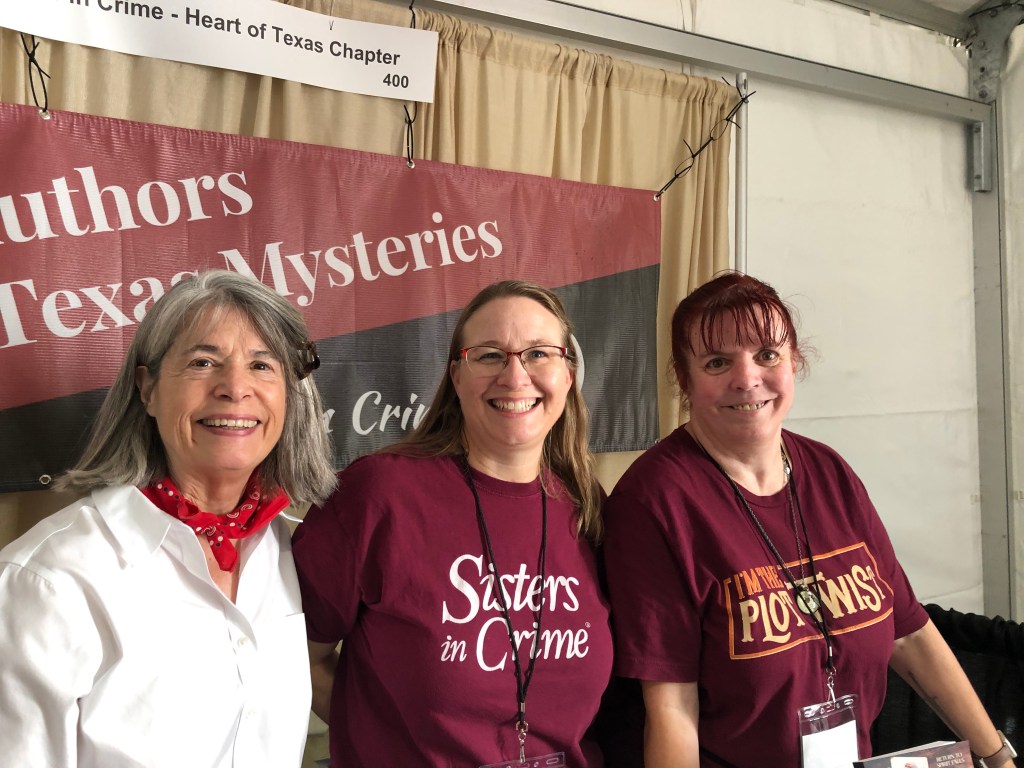
Here are Helen, Noreen Cedeno, and Juanita Houston at the Texas Book Festival!–Heart of Texas Sisters in Crime

***

Award-winning Helen Currie Foster lives and writes the Alice MacDonald Greer Mystery series (9 volumes so far) north of Dripping Springs, Texas, loosely supervised by three burros. She’s working on Book 10. She’s drawn to the compelling landscape and quirky characters of the Texas Hill Country. She’s also deeply curious about our human history and how, uninvited, the past keeps crashing the party.

Follow her at Helen Currie Foster and at her author page on Amazon.

In the Window or On the Table? What I Learned from Amor and Anton

By: Dixie Evatt

Ever since I read A Gentleman in Moscow (2016) I’ve considered Amor Towles’ writing style to be nearly perfect. So when my niece told me Towles was making an appearance at the Empire Theatre in San Antonio, I booked it. He was there to support the San Antonio Book Festival and to talk about his latest book, Table for Two. It’s a collection of six short stories plus a novella. Unlike some of his other stories, these all take place in the current Millennium.

Over the evening I learned a interesting things about Towles.

I learned that he is what we used to label in the news business, an “easy interview.” Austin’s own Stephen Harrigan (Big Wonderful Thing, 2019) was on the stage with Towles as moderator but he didn’t get to ask many of the questions on his notepad. Towles was in a talkative mood so needed little prompting.

I learned that Towles took up writing full time only after success in his first career at a small Wall Street investment firm.

I learned that once he gets a project in mind, he begins to fill notebook after notebook with hand-written outlines, ideas, scenes, characters. It may take years. He says this process frees his imagination and subconscious to go where beautiful language and the characters’ inner lives take him.

There was more but of the many memorable things I learned about this accomplished author, what I remember best, and took to heart, was his description of his research process. He said that when writing he intentionally postpones what he calls “applied research” until near the end. During this time he is also reading novels written by others that are set in the same historical period as the book he’s working on. His novel is almost written before he begins deep research.

That’s why he waited until A Gentleman in Moscow was almost finished before traveling to Moscow and checking into the Hotel Metropol, the exclusive hotel where his story about Count Alexander Ilyich Rostov is set.

Towles advised that details gleaned from this kind of active research should be written into the story much the way one might design the stage for Anton Chekhov’s The Cherry Orchard (1903). Of course Towles would choose this particular play as a point of reference because, like his own novel set in Russia, Chekhov’s tragicomedy also deals with a period of decline for the Russian aristocracy.

He said that when the curtain rises for the play the audience might see only the suggestion of a cherry orchard through large windows as if were rendered by an impressionist such as Claude Monet or Mary Cassatt. The windows might be framed by plywood bookcases painted to resemble mahogany. In the center of the room there would be a table set with a porcelain tea service.

When an author is ready to fold research into the story, Towles said it should be presented with similar layers of reality. Some details are just suggested in the background. Some, like the bookcases, give the scene the appearance of reality but need not be too detailed. Then there are aspects of research that can’t be given short shrift. For these, the author must adhere to absolute authenticity. The audience needs to hear the chair move across the floor and the teacup rattle in the saucer. The challenge for me is where all of the information that I’ve accumulated in my own research belongs – in the window or on the table?

Charles McNulty, theater critic for the Los Angeles Times, said in a June 6, 2022, review of a local revival of The Cherry Orchard, “Big things occur in Chekhov. Houses are lost, guns occasionally go off, and people die. But the focus is on muddling through.”

Much the same might be said about A Gentleman in Moscow and the subtle use of active research by Towles so that his story isn’t swallowed up in the details.

***

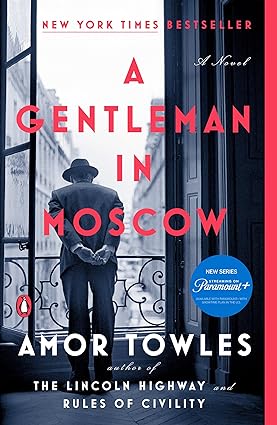
Cover of A Gentleman in Moscow via Amazon

Image of Anton Chekov via Wikipedia. Public domain.

Image of stage of The Cherry Orchard via Wikipedia. Public domain.

***

A former political reporter in Austin, Dixie also taught writing at Syracuse University. When she teamed up with Sue Cleveland to write fiction, they sold a screenplay to a Hollywood producer. Although the movie was never made, the seed money financed ThirtyNineStars, their publishing company. Through it they published two award-winning thrillers (Shrouded and Digging up the Dead) under the pen name, Meredith Lee. Dixie’s first solo mystery was Bloodlines & Fencelines, set in a tiny Texas town near Austin. Kirkus reviews described the book as, “A twisty whodunit that’s crafted with care and saturated with down-home Southern charm.” She is working on second mystery in the series. www.dlsevatt.com


Curious Animals And Recent Reads


by Helen Currie Foster

New reads! If, like me, you desperately miss John le Carré, consider A Spy Alone, the 2023 debut spy thriller by Charles Beaumont, a field operative veteran of Britain’s MI-6. https://bit.ly/3ZzHjHs His premise is fascinating: we know of the “Cambridge Five” who spied for Russia from the 1930’s to 1950’s—Kim Philby, Guy Burgess, Donald Maclean, Anthony Blunt and John Cairncross. https://en.wikipedia.org/wiki/Cambridge_Five But has there ever been, or could there be, a spy ring linked to Oxford? Beaumont’s protagonist Simon Sharman feels real, right from the first page:

“It is their shoes that give them away. As a lifelong fieldman, Simon Sharman hasn’t forgotten the lesson: walkers might change their jackets, pull on a pair of glasses, even a wig. But nobody changes their shoes on a job. Look at their shoes. 

I was hooked. Warning: Beaumont’s book is contemporary, well-written, tense, and may interfere with sleep. 

Two other recent reads: old adventure and a new “adult fantasy.” I’d never heard of The Long Ships by Frans G. Bengtsson (1954).

Set from 980 to 1010 A.D., the book recounts the wide-ranging adventures of Norseman Red Orm Tostesson, and the collision between Christian priests (the “shaven men”) and the Norse culture of Skania at the south tip of Sweden. Now I know what it meant to go “a-viking”—to go sea-raiding! 500 pages, with Red, a very engaging Norseman. Great maps, too.

The Lost Bookshop, by Evie Woods (2024), offers time travel between the 1920’s and 30’s in Britain, and the present; a search for a lost Brontë manuscript; a disappearing attic; and disappearing and reappearing characters. I confess I flipped through big chunks, relieved when true love finally won out after two women, generations apart, survive appalling treatment. The disappearing attic reminded me of Susan Cooper’s Over Sea, Under Stone, and of course the wardrobe into Narnia in The Lion, the Witch and the Wardrobe. I’m always up for secret doors.

I’m rereading a fascinating and fairly demanding study by Graham Robb, who has probably bicycled and walked further in Britain and France than most humans:

In The Search for Middle Earth: Mapping the Lost World of the Celts (2013)he describes how the Keltoi, or Celts, developed a system of surveying based on a midline transected by the lines of the summer and winter solstice to estimate travel distances and times—a feat not replicated for centuries. He maps the Heraklean Way, the path from southwestern Iberia that runs northeast across the Pyrenees to the Alps along the diagonal of the solstice sun, which Hannibal took when he invaded Italia. He describes Druid schooling (20 years to learn) and maps out protohistoric forts which turn out to lie along survey lines. He provides amazing maps. Two ongoing lessons from Robb’s devoted research: the winners write history; and humans tend to underestimate the accomplishments of earlier civilizations. 

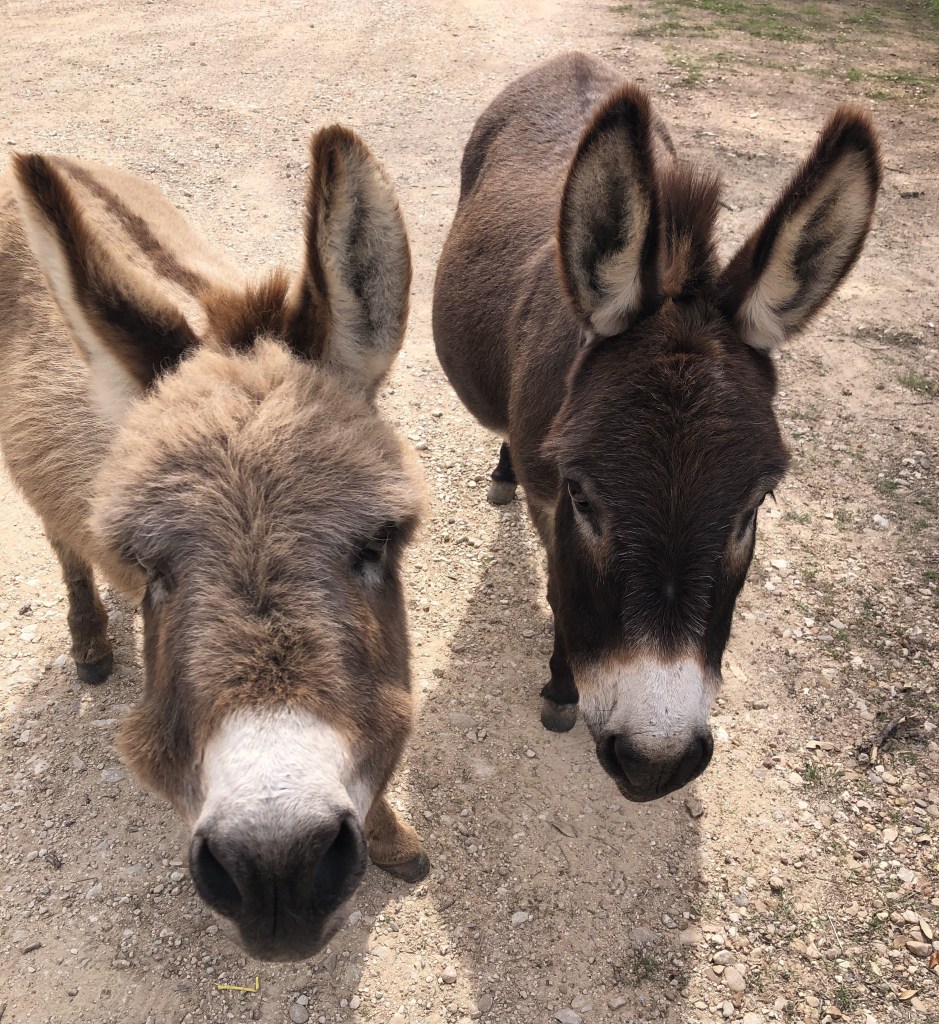
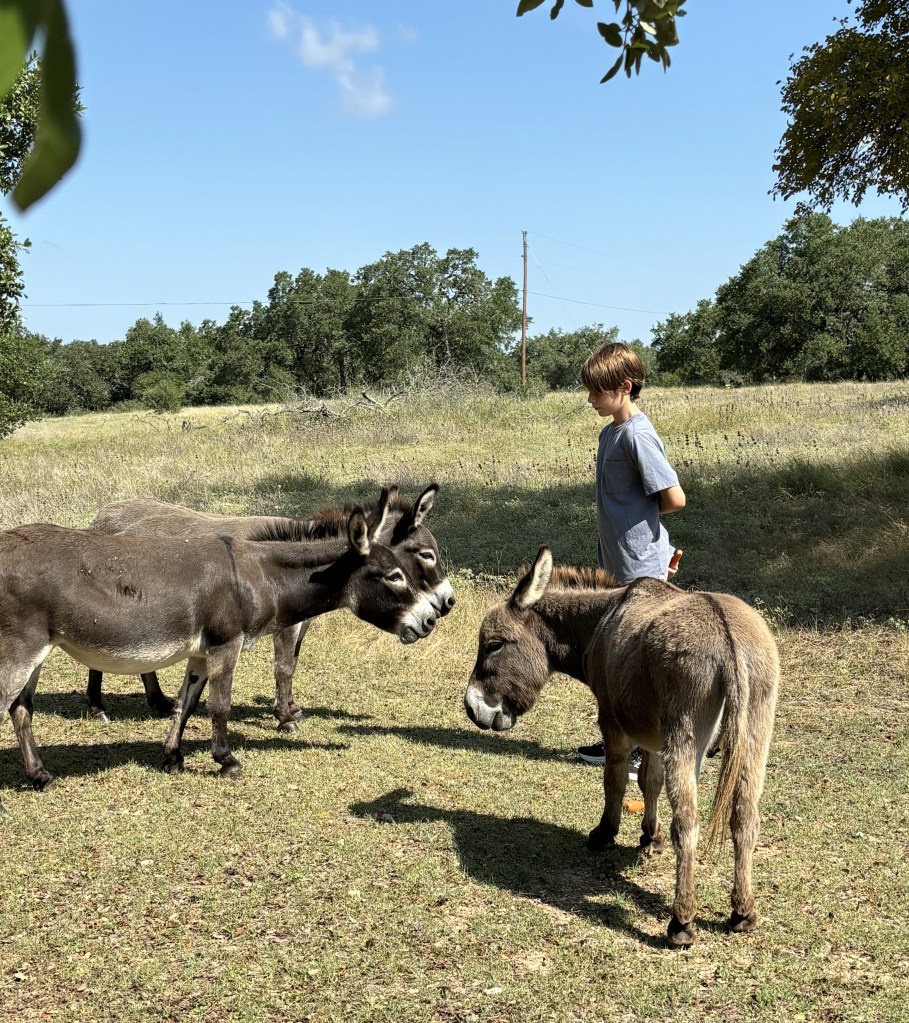
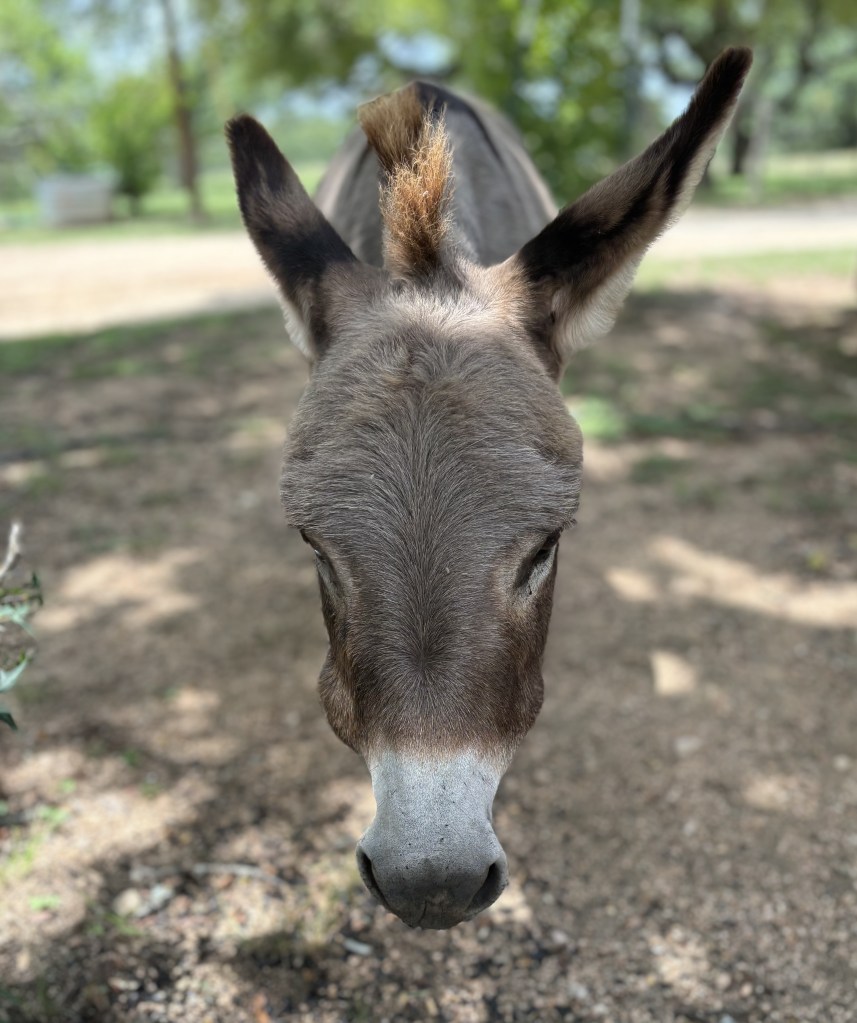
Several of you asked about the three burros, given the recent cold snap. Thank you, they’re well. Their hair’s not waterproof so in cold rain they gather on the south side of the stable, under the roof, safe from rain and the north wind. They were relieved to see green grass again after the drought broke, but they’re also eating—and rolling in––green hay. And mud!

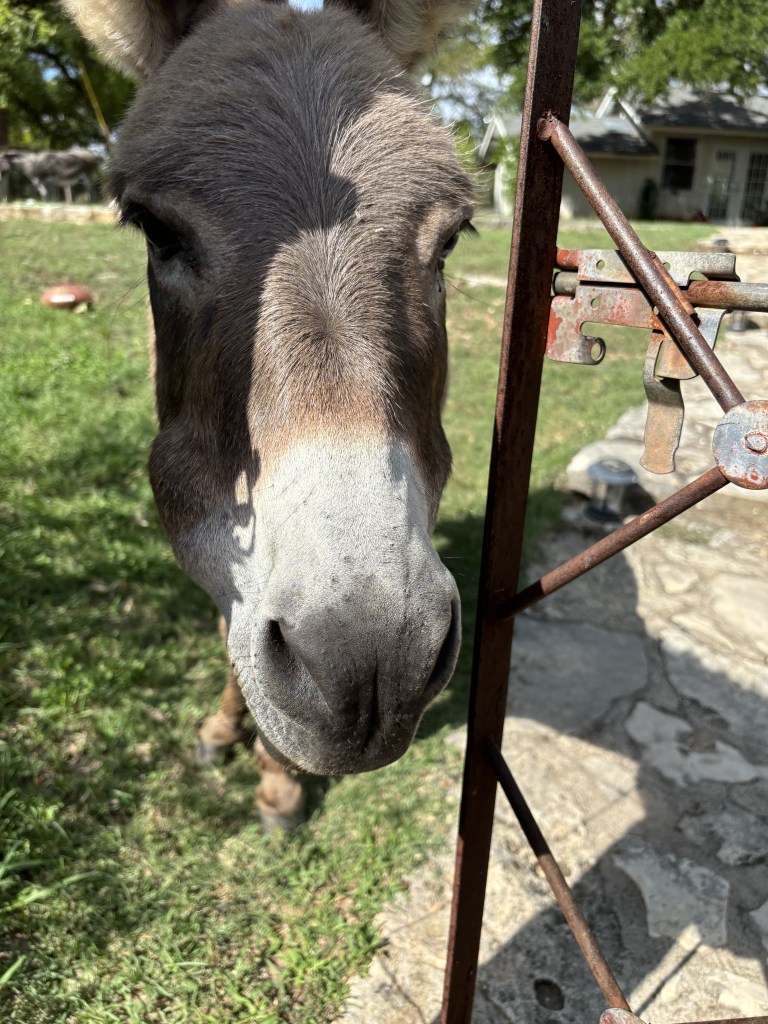
Yet despite hay, they gather outside the gate every morning and afternoon for carrots. They consider this part of their deal.

Burros are curious. They amble over to watch us garden and hang up laundry. They need company. They graze near each other. They may live into their 40’s. Sebastian, the short stubby knock-kneed male who invited himself to live here, may be 35 or more. Amanda (who insists I tell you she’s registered, with papers) may be 20. Her daughter Caroline is 12. Sebastian deems it his duty to bray loudly when any person or car appears at the end of the driveway, and to welcome the sun every morning with a stunningly loud bray. Now both Amanda and Caroline have begun to bray occasionally. 

Only donkeys can bray. Unlike horses or zebras, donkeys begin a bray on the inhale and continue braying on the exhale. They have great hearing—supposedly they can hear another donkey bray 60 miles away. 
They especially detest canids and will attack, dance on and kick dogs, coyotes, bobcats, foxes. A spooked horse will run away: donkeys stand together until they decide what they’re going to do. This morning, leaving for the post office, I saw the three donkeys standing together, knees locked, ears cocked, eyes fixed on two trespassing dogs who’d strayed across the cattleguard and into the donkeys’ domain. 

The dogs immediately acknowledged their gross error of judgment, raced frantically away and never returned.

If donkeys could read (wait—maybe they can, but have trouble turning the pages), I predict they’d prefer mysteries. They enjoy puzzles (like how to lift the chain and invade the fenced garden). 

Humans and donkeys. We are both curious animals.

Helen Currie Foster lives and writes the Alice MacDonald Greer Mystery Series north of Dripping Springs, Texas, loosely supervised by three burros. She’s drawn to the compelling landscape and quirky characters of the Texas Hill Country. She’s also deeply curious about our human history and how, uninvited, the past keeps crashing the party! Currently she’s working on Book 10. Her protagonist, Alice, gets into legal drama, and matters of the heart. Alice does have a treehouse…

Follow Helen at http://www.helencurriefoster.com and on Amazon and Facebook, https://www.facebook.com/helencurriefoster

Who Do You Love?

 / AUSTIN MYSTERY WRITERS

Yes, Bo Diddley, https://www.youtube.com/watch?v=e5tSgiB_Tgc but I like the Thorogood version too bit.ly/4gNi38m

I’ve got a secret. So many books I have NOT read. You’d be shocked. No, really. My husband (retired business professor) admires Tolstoy, especially Anna Karenina. He’s read most of Dickens and every word of Moby Dick–several times. When we were dating he bought Baudelaire’s Les Fleurs du Mal (English translation) because he’d seen it on my shelf. He knows I’m hung up on Virginia Woolf; he’s read Three Guineas. He’s read reams of history—shelves and shelves, plus tome after tome on Richard Feynman and everything that’s going on with astronomy and quantum physics. He forges onward, aiming for the stars at the edge of the universe.

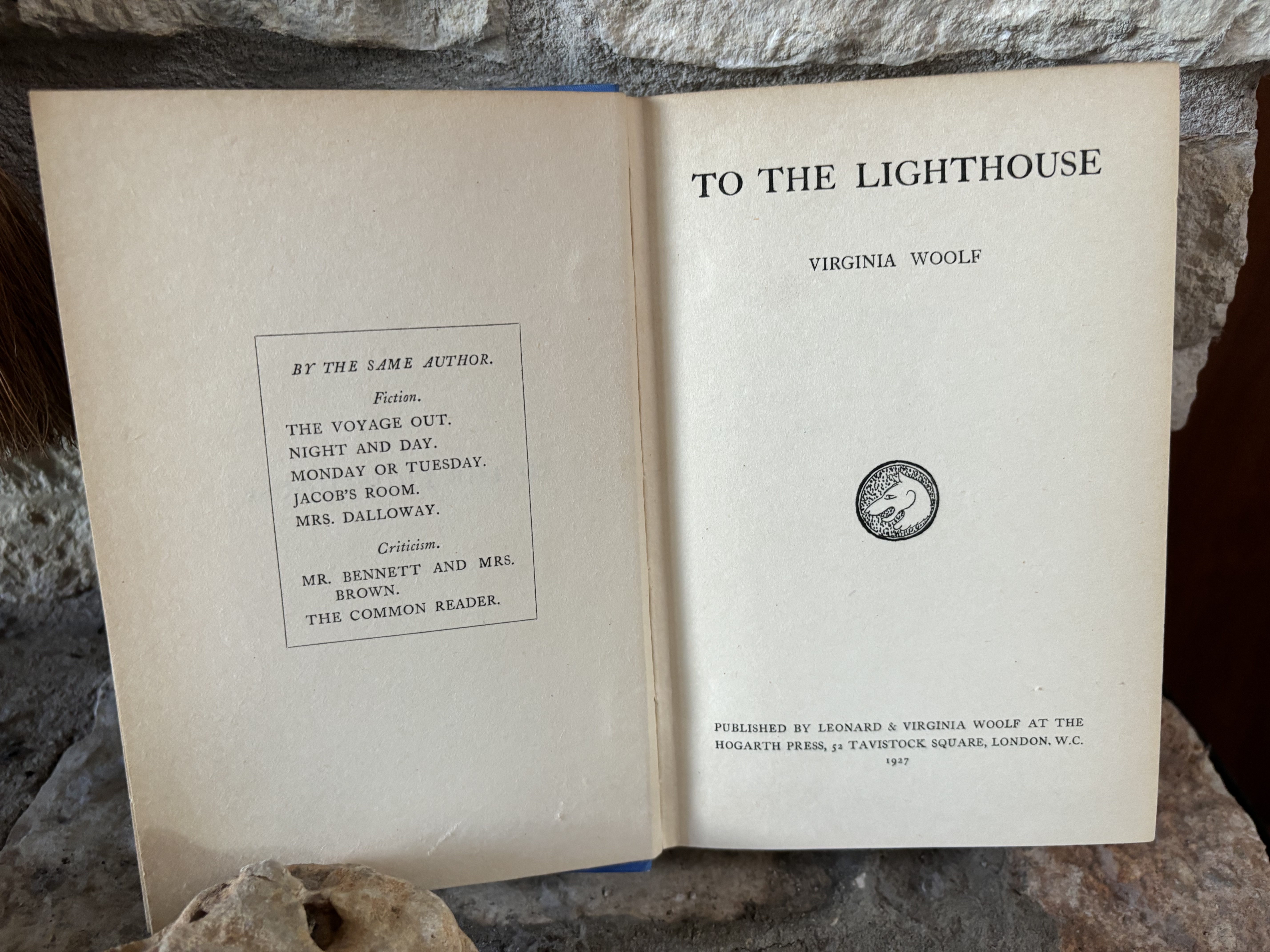
I, however, the English major, the mystery writer? I who should have read All The Books? I confess a powerful secret vice: rereading my favorites, particularly Virginia Woolf. Every year, To the Lighthouse sneaks back into my hand. Why? Why not concentrate only on the new novels, the best-sellers?

Because I have to reread that moment in Part III when, years later, after world war and illness have claimed her beloved friend Mrs. Ramsay and so many of the Ramsay family, the spinster Lily Briscoe returns to the Ramsays’ summer home on the Isle of Skye. https://bit.ly/3zHF77w

Out on the lawn, facing the old white house, she sets up again the unfinished oil painting she began all those years earlier—the painting that had posed such a challenge in Part I as her mind reverberated with the repeated mantra from Professor Ramsay’s obnoxious male philosophy student: “Women can’t paint, can’t write.” During the long day, full of changing light on the sea, and repeated interruptions by other characters, Woolf returns us over and over to Lily, staring at her painting, seeing again the remembered shapes of Mrs. Ramsay and her son James all those years ago. And her artistic effort? Here’s the end of the book:

“It would be hung in the attics, she thought; it would be destroyed. But what did that matter? She asked herself, taking up her brush again. She looked at the steps; they were empty; she looked at her canvas; it was blurred. With a sudden intensity, as if she saw it clear for a second, she drew a line there, in the centre. It was done; it was finished. Yes, she thought, laying down her brush in extreme fatigue, I have had my vision.”

Why do I return to that? So much of the book is touching, gripping, and even hilarious, including the thoughts of Professor Ramsay, a philosophy professor who’s both overbearing and insecure. He delights in his own “splendid mind”: “For if thought is like the keyboard of a piano divided into so many notes, or like the alphabet is ranged in twenty-six letters all in order, then his splendid mind had no difficulty in running over those letters one by one, firmly and accurately, until it had reached, say, the letter Q.  …Very few people in the whole of England ever reach Q.” Then he falters. “But after Q? What comes next? After Q there are a number of letters the last of which is scarcely visible to mortal eyes, but glimmers red in the distance.”  He braces himself, clenches himself. “Q he was sure of. Q he could demonstrate. If Q then is Q—R—” Then “he heard people saying—he was a failure—that R was beyond him. He would never reach R.”  

What an image—the alphabet, R glimmering red in the distance, then fading, fading!  And then of course there’s the famous dinner party featuring Mrs. Ramsay’s boeuf en daube. Surely, just reading this, you smell the simmered sauce, the wine, the bay leaf? The thought crossed my mind that if Professor Ramsay had been offered a sip of the Talisker malt whiskey for which Skye is famous, he’d have felt a bit better. https://www.malts.com/en/talisker (The distillery gives a great tour, too.)

But Lily’s painting? This spinster friend of Mrs. Ramsay, with her amateur brushstrokes? The tale of Lily’s painting, her decision and indecision as she holds her brush, grabbed me all those years ago, and refuses to let go. The same question must hit every musician—“Is this the last note? Did that chord resolve properly? Does it make you feel beauty and longing, or does it just hang there, unfinished?”  Every cook: “A pinch of salt? What about some coriander? To garlic or not to garlic?” Every filmmaker: “Do they walk into the sunset? Or fade out? Or kiss?” And every writer? “Is this character real? Is this setting compelling? Does the plot work? And will anyone care?”

Lily’s painting embodies desire to capture memory, resistance, light and color, and more than that. Isn’t it  her experience? A moment of creation, of recapture, of making a line on a canvas and then feeling completion?  She’s had her vision. If you know of another book where we readers feel such a moment of revelation from the frustrating process of creation—let me know.

Oh, don’t get me wrong. My Kindle received today the brand-new Martin Walker (A Grave in the Woods) and I can’t wait. bit.ly/3Xzqawt Like the other women in his (busy) life,  I love to accompany Inspector Bruno, in his fictional Perigord village of St. Denis, partly because of his cooking. Thank you, Martin Walker, for describing the ham hanging from the kitchen ceiling, the cheerful chickens, and the paté with its duck fat on top, waiting in Bruno’s fridge, and the way Bruno sings La Marseillaise to count how long until he must sizzle the foie de gras before he deglazes the pan. I look forward to new recipes and to finding out who’s buried in the woods.

And a sad farewell: I’ve decided to forgive Elly Griffiths for saying goodbye to Ruth Galloway in her last book in that series, The Last Remains, even though I have loved watching Ruth clamber down into a trench to dig up ancient bones in East Anglia. amzn.to/3ZxU5rv I’ve also savored every page of Alan Bradley’s latest (last?) Flavia de Luce – What Time the Sexton’s Spade Doth Rust – as he allows this delightful protagonist to feel herself beginning to grow up—not too much, not too fast, just enough. https://bit.ly/4dla13A 

And I did just finish We Solve Murders, Richard Osman’s first book in a new series. bit.ly/4ezjIwh  Have to confess I found myself missing Joyce, Ibrahim, Ron, Elizabeth and the other characters of his Thursday Murder Club books. My strong belief is I must careabout a mystery protagonist and so far I haven’t completely bought in to his new cadre–though I do like Steve. We’ll see.  I’d be interested in your reactions.

So that’s four new mysteries, just in September. I’m also rereading Virginia Woolf’s The Waves, and finding even more, yes, even more to love about how she brings those characters to vivid life, and how she describes the way we humans think and react to each other.

And out here with the three burros I’m writing the tenth in my Coffee Creek series featuring Alice MacDonald Greer and the gorgeous landscape of the Texas Hill Country, with its pristine (well, so far) bluegreen streams. Water’s for fighting over, right?

But when the going gets tough, you may find me sidling back to the revolving bookcase, on the shelf where Virginia Woolf and all the old faves hang out.

Helen Currie Foster lives and writes north of Dripping Springs, Texas, loosely supervised by three burros. She’s drawn to the compelling landscape and quirky characters of the Texas Hill Country. She’s also deeply curious about our human history and how, uninvited, the past keeps crashing the party. Latest in her award-winning series: Ghost Bones.

Follow her on http://www.facebook.com/helencurriefoster/ and http://www.helencurriefoster.com

Share this:

Who Do You Love?

Yes, Bo Diddley, https://www.youtube.com/watch?v=e5tSgiB_Tgc but I like the Thorogood version too bit.ly/4gNi38m

I’ve got a secret. So many books I have NOT read. You’d be shocked. No, really. My husband (retired business professor) admires Tolstoy, especially Anna Karenina. He’s read most of Dickens and every word of Moby Dick–several times. When we were dating he bought Baudelaire’s Les Fleurs du Mal (English translation) because he’d seen it on my shelf. He knows I’m hung up on Virginia Woolf; he’s read Three Guineas. He’s read reams of history—shelves and shelves, plus tome after tome on Richard Feynman and everything that’s going on with astronomy and quantum physics. He forges onward, aiming for the stars at the edge of the universe.

I, however, the English major, the mystery writer? I who should have read All The Books? I confess a powerful secret vice: rereading my favorites, particularly Virginia Woolf. Every year, To the Lighthouse sneaks back into my hand. Why? Why not concentrate only on the new novels, the best-sellers?

Because I have to reread that moment in Part III when, years later, after world war and illness have claimed her beloved friend Mrs. Ramsay and so many of the Ramsay family, the spinster Lily Briscoe returns to the Ramsays’ summer home on the Isle of Skye. https://bit.ly/3zHF77w

Out on the lawn, facing the old white house, she sets up again the unfinished oil painting she began all those years earlier—the painting that had posed such a challenge in Part I as her mind reverberated with the repeated mantra from Professor Ramsay’s obnoxious male philosophy student: “Women can’t paint, can’t write.” During the long day, full of changing light on the sea, and repeated interruptions by other characters, Woolf returns us over and over to Lily, staring at her painting, seeing again the remembered shapes of Mrs. Ramsay and her son James all those years ago. And her artistic effort? Here’s the end of the book:

“It would be hung in the attics, she thought; it would be destroyed. But what did that matter? She asked herself, taking up her brush again. She looked at the steps; they were empty; she looked at her canvas; it was blurred. With a sudden intensity, as if she saw it clear for a second, she drew a line there, in the centre. It was done; it was finished. Yes, she thought, laying down her brush in extreme fatigue, I have had my vision.”

Why do I return to that? So much of the book is touching, gripping, and even hilarious, including the thoughts of Professor Ramsay, a philosophy professor who’s both overbearing and insecure. He delights in his own “splendid mind”: “For if thought is like the keyboard of a piano divided into so many notes, or like the alphabet is ranged in twenty-six letters all in order, then his splendid mind had no difficulty in running over those letters one by one, firmly and accurately, until it had reached, say, the letter Q.  …Very few people in the whole of England ever reach Q.” Then he falters. “But after Q? What comes next? After Q there are a number of letters the last of which is scarcely visible to mortal eyes, but glimmers red in the distance.”  He braces himself, clenches himself. “Q he was sure of. Q he could demonstrate. If Q then is Q—R Then “he heard people saying—he was a failure—that R was beyond him. He would never reach R.”  

What an image—the alphabet, R glimmering red in the distance, then fading, fading!  And then of course there’s the famous dinner party featuring Mrs. Ramsay’s boeuf en daube. Surely, just reading this, you smell the simmered sauce, the wine, the bay leaf? The thought crossed my mind that if Professor Ramsay had been offered a sip of the Talisker malt whiskey for which Skye is famous, he’d have felt a bit better. https://www.malts.com/en/talisker (The distillery gives a great tour, too.)

But Lily’s painting? This spinster friend of Mrs. Ramsay, with her amateur brushstrokes? The tale of Lily’s painting, her decision and indecision as she holds her brush, grabbed me all those years ago, and refuses to let go. The same question must hit every musician—“Is this the last note? Did that chord resolve properly? Does it make you feel beauty and longing, or does it just hang there, unfinished?”  Every cook: “A pinch of salt? What about some coriander? To garlic or not to garlic?” Every filmmaker: “Do they walk into the sunset? Or fade out? Or kiss?” And every writer? “Is this character real? Is this setting compelling? Does the plot work? And will anyone care?”

Lily’s painting embodies desire to capture memory, resistance, light and color, and more than that. Isn’t it  her experience? A moment of creation, of recapture, of making a line on a canvas and then feeling completion?  She’s had her vision. If you know of another book where we readers feel such a moment of revelation from the frustrating process of creation—let me know.

Oh, don’t get me wrong. My Kindle received today the brand-new Martin Walker (A Grave in the Woods) and I can’t wait. bit.ly/3Xzqawt Like the other women in his (busy) life,  I love to accompany Inspector Bruno, in his fictional Perigord village of St. Denis, partly because of his cooking. Thank you, Martin Walker, for describing the ham hanging from the kitchen ceiling, the cheerful chickens, and the paté with its duck fat on top, waiting in Bruno’s fridge, and the way Bruno sings La Marseillaise to count how long until he must sizzle the foie de gras before he deglazes the pan. I look forward to new recipes and to finding out who’s buried in the woods.

And a sad farewell: I’ve decided to forgive Elly Griffiths for saying goodbye to Ruth Galloway in her last book in that series, The Last Remains, even though I have loved watching Ruth clamber down into a trench to dig up ancient bones in East Anglia. amzn.to/3ZxU5rv I’ve also savored every page of Alan Bradley’s latest (last?) Flavia de Luce – What Time the Sexton’s Spade Doth Rust – as he allows this delightful protagonist to feel herself beginning to grow up—not too much, not too fast, just enough. https://bit.ly/4dla13A 

And I did just finish We Solve Murders, Richard Osman’s first book in a new series. bit.ly/4ezjIwh  Have to confess I found myself missing Joyce, Ibrahim, Ron, Elizabeth and the other characters of his Thursday Murder Club books. My strong belief is I must care about a mystery protagonist and so far I haven’t completely bought in to his new cadre–though I do like Steve. We’ll see.  I’d be interested in your reactions.

So that’s four new mysteries, just in September. I’m also rereading Virginia Woolf’s The Waves, and finding even more, yes, even more to love about how she brings those characters to vivid life, and how she describes the way we humans think and react to each other.

And out here with the three burros I’m writing the tenth in my Coffee Creek series featuring Alice MacDonald Greer and the gorgeous landscape of the Texas Hill Country, with its pristine (well, so far) bluegreen streams. Water’s for fighting over, right?

But when the going gets tough, you may find me sidling back to the revolving bookcase, on the shelf where Virginia Woolf and all the old faves hang out.

Helen Currie Foster lives and writes north of Dripping Springs, Texas, loosely supervised by three burros. She’s drawn to the compelling landscape and quirky characters of the Texas Hill Country. She’s also deeply curious about our human history and how, uninvited, the past keeps crashing the party. Latest in her award-winning series: Ghost Bones.

Follow her on http://www.facebook.com/helencurriefoster/ and http://www.helencurriefoster.com

A Mind Unhinged


Posted by Kathy Waller

So you start writing your post about the incomparable Josephine Tey’s mystery novels two weeks before it’s due but don’t finish, and then you forget, and a colleague reminds you, but the piece refuses to come together, and the day it’s due, it’s still an embarrassment, and the next day it’s not much better, and you decide, Oh heck, at this point what’s one more day? and you go to bed,

and in the middle of the night you wake to find twenty pounds of cat using you as a mattress, and you know you might as well surrender, because getting him off is like moving Jello with your bare hands,

Elisabet Ney: Lady Macbeth, Detail

Elisabet Ney: Lady Macbeth, Detail (Photo credit: Wikipedia) Attribution: Ingrid Fisch at the German language Wikipedia.  GNU_Free_Documentation_License

so you lie there staring at what would be the ceiling if you could see it, and you think, Macbeth doth murder sleep…. Macbeth shall sleep no more,

and then you think about Louisa May Alcott writing, She is too fond of books, and it has turned her brain,

and you realize your own brain has not only turned, but has possibly come completely unhinged.

And you can’t get back to sleep, so you lie there thinking, Books, books, books. Strings and strings of words, words, words. Why do we write them, why do we read them? What are they all for?

And you remember when you were two years old, and you parroted, from memory, because you’d heard it so many times,

The owl and the pussycat went to sea in a beautiful pea green boat,

because happiness was rhythm and rime.

And when you were five and your playmate didn’t want to hear you read “Angus and the Cat,” and you made her sit still and listen anyway.

And when you were sixteen and so happy all you could think was, O world, I cannot hold thee close enough!, and you didn’t know who wrote it but you remembered the line from a Kathy Martin book you got for Christmas when you were ten.

And when you were tramping along down by the river and a narrow fellow in the grass slithered by too close, and you felt a tighter breathing, and zero at the bone.

And when you woke early to a rosy-fingered dawn and thought

By Dana Ross Martin, (CC BY-NC-ND 2.0), via flickr

By Dana Ross Martin, (CC BY-NC-ND 2.0)

I’ll tell you how the sun rose,
A ribbon at a time,
The steeples swam in Amethyst
The news, like Squirrels, ran –
The Hills untied their Bonnets –

And when you saw cruelty and injustice, and you remembered, Perfect love casts out fear, and knew fear rather than hate is the source of inhumanity, and love, the cure.

And when your father died unexpectedly, and you foresaw new responsibilities, and you remembered,

We never know how high we are
Till we are called to rise.

And when your mother died, and you thought,

Oh, if instead she’d left to me
The thing she took into the grave!-
That courage like a rock, which she
Has no more need of, and I have.

Fentress United Methodist Church. © Kathy Waller

Fentress United Methodist Church. © Kathy Waller

And at church the day after your father’s funeral, when your cousins, who were officially middle-aged and should have known how to behave, sat on the front row and dropped a hymnbook, and something stuck you in the side and you realized that when you mended a seam in your dress that morning you left the needle just hanging there and you were in danger of being punctured at every move, and somehow everything the minister said struck you as funny, and the whole family chose to displace stress by laughing throughout the service, and you were grateful for Mark Twain’s observations that

Laughter which cannot be suppressed is catching. Sooner or later it washes away our defences, and undermines our dignity, and we join in it … we have to join in, there is no help for it,

and that, 

Against the assault of Laughter nothing can stand.

And when you fell in love and married and said with the poet, My beloved is mine and I am his.

And when, before you walked down the aisle, you handed a bridesmaid a slip of paper on which you’d written, Fourscooooorrrrrrre…, so that while you said, “I do,” she would be thinking of Mayor Shinn’s repeated attempts to recite the Gettysburg Address at River City’s July 4th celebration, and would be trying so hard not to laugh that she would forget to cry.

And when your friend died before you were ready and left an unimaginable void, and life was unfair, and you remembered that nine-year-old Leslie fell and died trying to reach the imaginary kingdom of Terabithia, and left Jess to grieve but also to pass on the love she’d shown him.

And when the doctor said you have an illness and the outlook isn’t good, and you thought of Dr. Bernie Siegal’s writing, Do not accept that you must die in three weeks or six months because someone’s statistics say you will… Individuals are not statistics, but you also remembered what Hamlet says to Horatio just before his duel with Laertes,

There’s a special providence in the fall of a sparrow. If it be now, ’tis not to come. If it be not to come, it will be now. If it be not now, yet it will come—the readiness is all.

And by the time you’ve thought all that, you’ve come back to what you knew all along, that books exist for pleasure, for joy, for consolation and comfort, for courage, for showing us that others have been here before, have seen what we see, felt what we feel, shared needs and wants and dreams we think belong only to us, that

Photograph of Helen Keller at age 8 with her t...

Photograph of Helen Keller at age 8 with her tutor Anne Sullivan on vacation in Brewster, Cape Cod, Massachusetts (Photo credit: Wikipedia)

everything the earth is full of… everything on it that’s ours for a wink and it’s gone, and what we are on it, the—light we bring to it and leave behind in—words, why, you can see five thousand years back in a light of words, everything we feel, think, know—and share, in words, so not a soul is in darkness, or done with, even in the grave.

And about the time you have settled the question to your satisfaction, the twenty pounds of Jello slides off, and you turn over, and he stretches out and leans so firmly against your back that you end up wedged between him and your husband, who is now clinging to the edge of  the bed, as sound asleep as the Jello is, and as you’re considering your options, you think,

The Owl and the Pussy-cat went to sea
   In a beautiful pea-green boat,
They took some honey, and plenty of money,
   Wrapped up in a five-pound note.
The Owl looked up to the stars above,
   And sang to a small guitar…

and by the time the Pussycat and the Elegant Fowl have been married by the Turkey who lives on the hill, and have eaten their wedding breakfast with a runcible spoon, and are dancing by the light of the moon, the moon, you’ve decided that a turned brain has its advantages, and that re-hinging will never be an option.

***

20 pounds of cat. © Kathy Waller

20 pounds of cat. © Kathy Waller

***

Sources:

http://nfs.sparknotes.com/macbeth/page_58.html
https://www.goodreads.com/author/quotes/1315.Louisa_May_Alcott
http://www.poetryfoundation.org/poem/171941
http://www.vintagechildrensbooksmykidloves.com/2009/06/angus-and-cat.html
http://www.poetryfoundation.org/poem/182477
https://en.wikipedia.org/wiki/Epithets_in_Homer
http://biblehub.com/1_john/4-18.htm
http://writersalmanac.publicradio.org/index.php?date=2002/10/15
http://www.twainquotes.com/Laughter.html
http://biblehub.com/songs/2-16.htm
https://en.wikipedia.org/wiki/The_Music_Man_(1962_film)
https://en.wikipedia.org/wiki/Bridge_to_Terabithia_(novel)
http://www.shareguide.com/Siegel.html
http://nfs.sparknotes.com/hamlet/page_320.html
http://www.shorewood.k12.wi.us/page.cfm?p=3642

***

“A Mind Unhinged” appeared on Austin Mystery Writers on February 25, 2016.

***

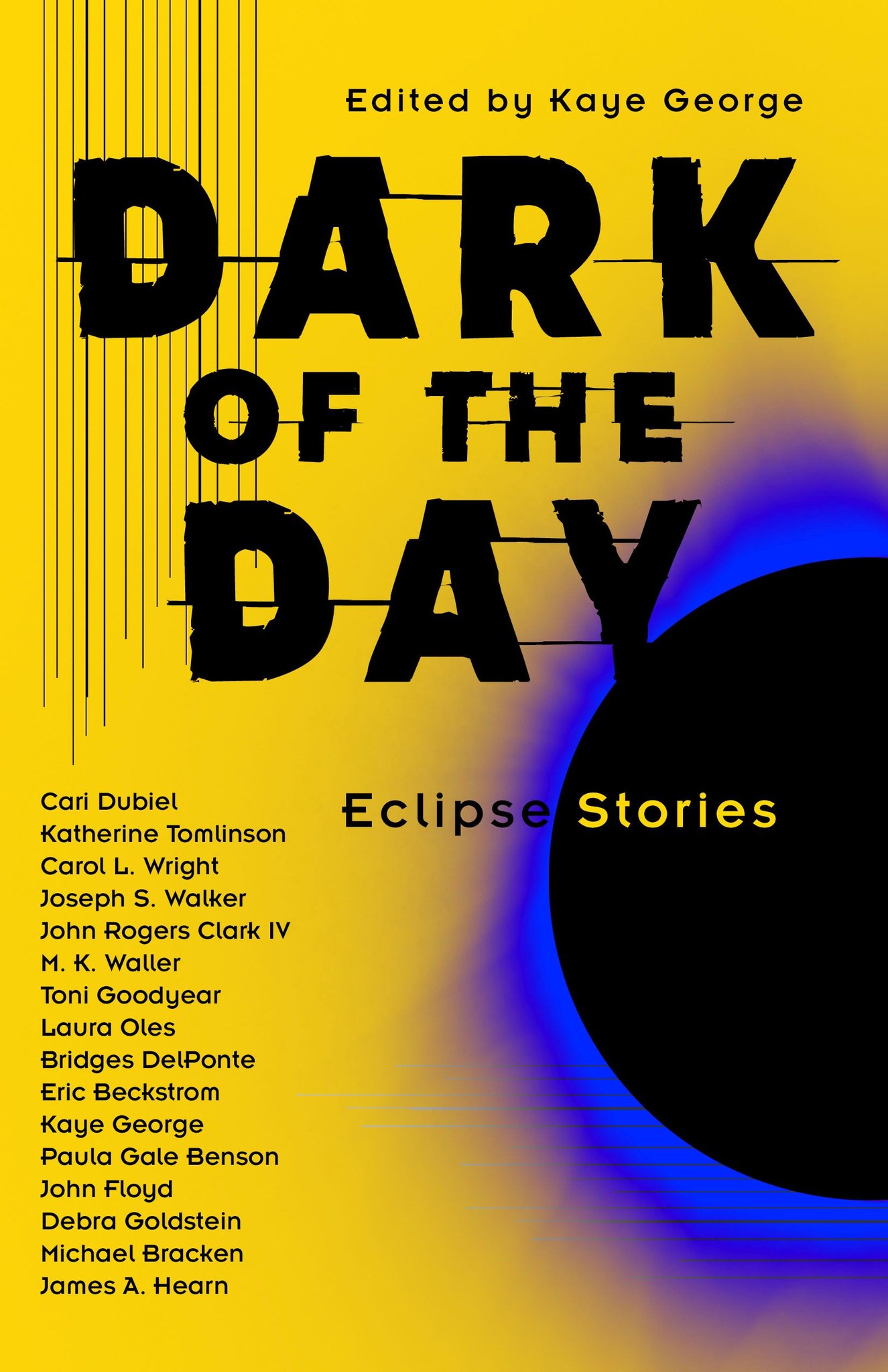
Kathy Waller [M. K. Waller] writes crime fiction, literary fiction, humor, memoir, and whatever else comes to mind. Her latest story, “Mine Eyes Dazzle,” which appears in Dark of the Day, was mentioned by Robert Lopresti as “The best mystery story I read this week” (Little Big Crimes, May 12, 2024).

Other short stories appear in anthologies: the Silver Falchion Award winner Murder on Wheels, Lone Star Lawless, and Day of the Dark, as well as online. She is co-author, with Manning Wolfe, of the novella STABBED,

Memories of growing up in a small town on the San Marcos River in Central Texas, and life in a large extended family, inspire much of her work. She now lives in Austin.

She blogs at Telling the Truth–Mainly. Find her on Facebook and on Amazon.

Helen Currie Foster, January 15, 2024

“But at my back I always hear time’s wingèd chariot drawing near…” (Andrew Marvell, 1621-1678)  

Today in pre-dawn darkness, the house quiet except for the murmuring furnace, my characters were already at me, barking orders: “More! More smells, tastes, experiences! More about me! Tell people what I’m thinking, what I’m experiencing, what I’m worrying about!”

They’re right. Readers want to know their favorite mystery protagonists. Why? Because readers are in league with them, walking in their shoes. Readers know that stepping into a protagonist’s sensory experience—smells, food, experiences, relationships—will springboard them into the setting, help them to be in the picture, ready to seize on every clue.

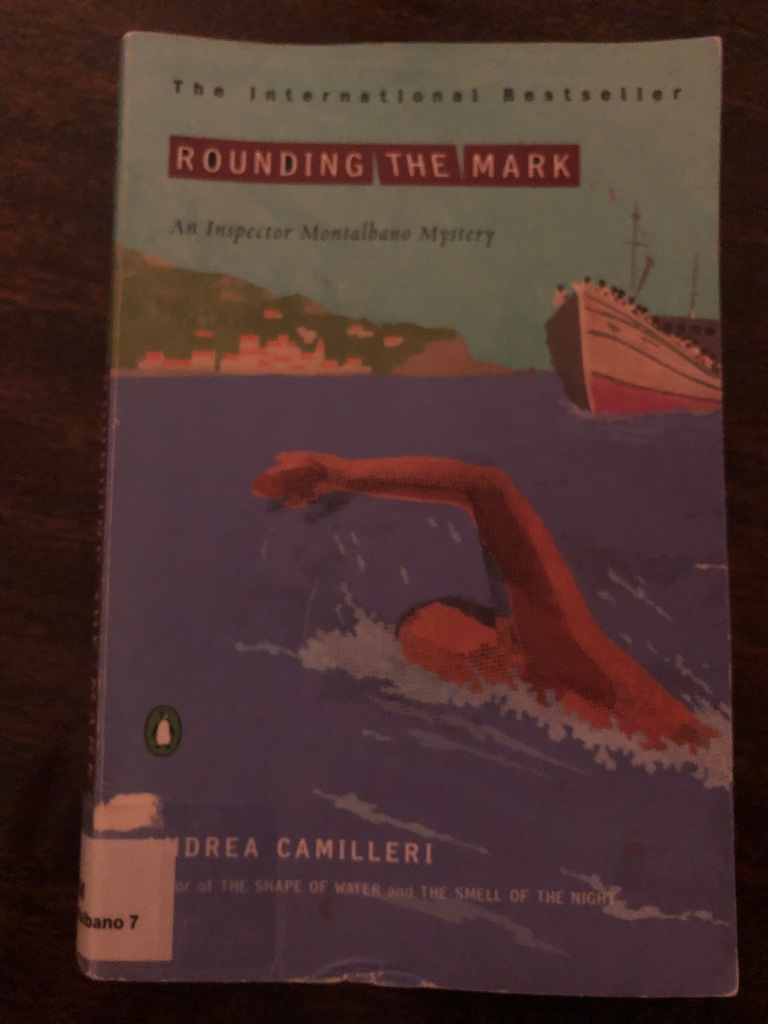
Resolution 1. Tastes! Flavors! Food! As Rounding the Mark, Book 7 of Andrea Camilleri’s long-running series, begins, Inspector Montalbano of little Vigáta, Sicily, can’t sleep:

“Stinking, treacherous night. Thrashing and turning, twisting and drifting off one minute, jolting awake and then lying back down—and it wasn’t from having scarfed down too much octopus a strascinasali or sardines a beccafino the evening before. No, he didn’t even have that satisfaction.”

Fortunately the recipes are described in the Notes at the book’s end. In Sicily, where seafood reigns supreme, Montalbano refers to small octopi, boiled and dressed in olive oil and lemon juice, and then sardines, stuffed and rolled up with sauteed breadcrumbs, pine nuts, sultana raisins, and anchovies. When Montalbano returns home from the police station he always races to his refrigerator to see what his housekeeper, Adelina, has left for him. In Book 16, Treasure Hunt, Montalbano “howled like a wolf with joy” when he finds “eggplant parmesan, done up just right, enough for four.”

Can’t you just smell this dish? Montalbano consumes the entire panful: “the sauce was a wonder to taste.” (50). We see how he delights in his food, how very particular he is. (And throughout the series Adelina keeps cooking – pasta in squid ink, involtini of small fish, pasta ‘Ncasciata…https://www.foodandwine.com/pasta-ncasciata-sicilian-baked-pasta-7093847

Here’s Montalbano in Rounding the Mark after discovering a new restaurant:

“The antipasto of salted octopus tasted as though it were made of condensed sea and melted the moment it entered his mouth…And the mixed grill of mullet, sea bass and gilthead had that heavenly taste the inspector feared he had lost forever….After a long and perilous journey of the sea, Odysseus had finally found his long lost Ithaca. “(73)

Camilleri (died 2019) was writing mystery, murder, crime—but he included as major players in the setting Sicilian food, awareness of this ancient Mediterranean island culture, and echoes of classic myth.

We can only imagine Montalbano shaking his head at the food situation of private detective Cormoran Strike, protagonist of The Running Grave, seventh in the series by “Robert Galbraith” (aka J.K. Rowling). To protect his knee, Strike, a military police veteran who lost his lower leg in Afghanistan, must lose weight; he’s now lost “three stone” or about 42 pounds. “Usually he’d have grabbed a takeaway on the way home” but now, “without much enthusiasm,” he’s fixing broccoli and salmon in the tiny flat above his seedy London office.

Does the author need to describe these flavors? Aren’t “broccoli” and “salmon” redolent enough by themselves, especially broccoli? Later, as the plot roars into action, Strike’s off his diet, overcome by “the lure of sweet and sour chicken and fried rice” (767) and demanding that his partner Robin Ellacott stop at a 24-hour McDonald’s on London’s Strand (848) where, as they walk to the office, he’s eating “large mouthfuls of burger” and starting on two bags of fries. He’s back to his usual food habits––pub food, fast food––yet his mind’s on the recent attack, “as though he’d only just felt the heat of the bullet searing his cheek.” At chapter’s end, as they discuss the case, “Strike ate a solitary cold chip lingering at the bottom of a greasy bag.” There’s an urgency to his desperate hunger, to the need for enough energy to stick with an exhausting case—and don’t we all know about that solitary cold french fry in the bottom of the bag? Can’t you see him fishing it out? For Strike, food fills a need, but he’s not immersed in the culinary experience. He’s focused on his case.

What keeps Strike working as a private investigator? Challenge, curiosity, tenacity, terror—but not great cuisine. Food-wise, Montalbano’s habits differ sharply from Strike’s. But for each man, eating habits vividly highlight both personal life and setting.

Resolution 2: Human Scent! Other scents matter to both Strike and Montalbano. In the first chapter of The Ink Black Heart, Cormoran Strike has tried to find a perfect perfume for Robin’s 30th birthday. When she sprays on the new perfume, “he…detected roses and an undertone of musk, which made him think of sun-warmed skin.”

Similarly, in Treasure Hunt, when Montalbano and his compadre, the daring Ingrid, are outside on his veranda, “The night now smelled of brine, mint, whisky, and apricot, which was exactly what Ingrid’s skin smelled like. It was a blend not even a prize parfumeur could have invented.” (175)

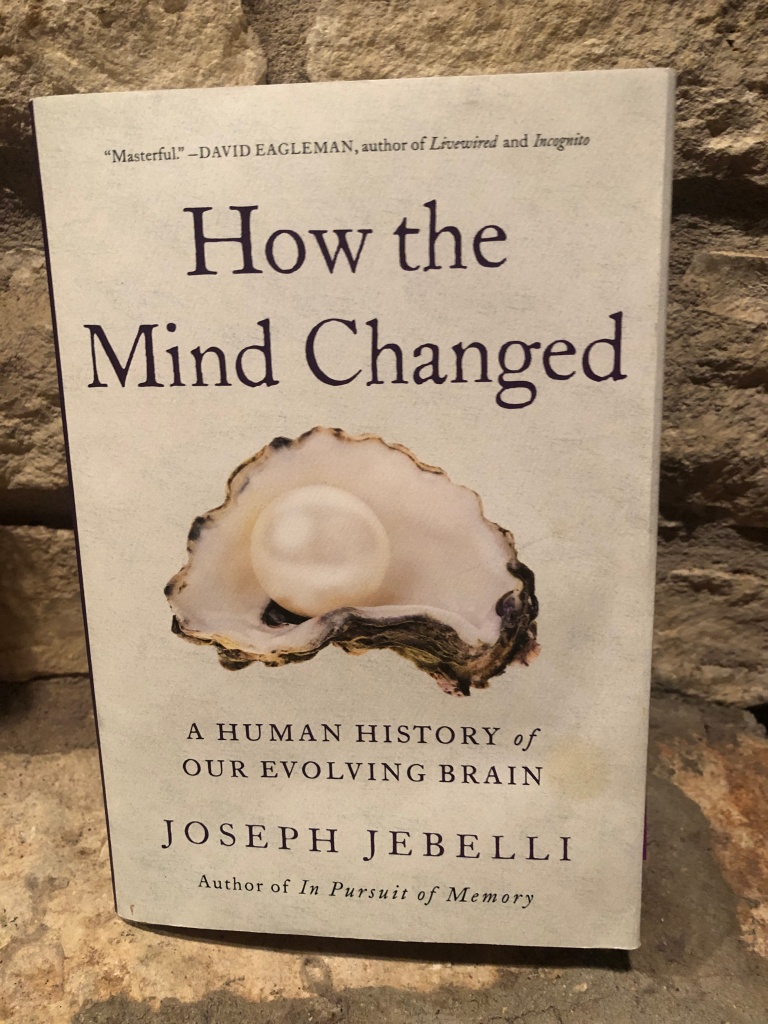
Reportedly one writing instructor has suggested that authors “include smell on every page.” These two mystery writers don’t obey that injunction (do you know any who do?). But why is scent so critical for us? Apparently the amygdala (a paired structure, with one in each temporal lobe) “developed from our most primitive sense—the sense of smell.” Joseph Jebelli, How the Mind Changed (Little, Brown, Spark, 2022, at 30). It’s near the olfactory nerve which is why scents connect strongly to emotions and memories. https://my.clevelandclinic.org/health/body/24894-amygdala

What scents spark your own memories? If a book mentions honeysuckle on a summer day, I might remember my grandparents’ front porch in Itasca, Texas, and how we learned as kids to suck nectar from a honeysuckle blossom. What pops up for you when a book mentions lavender? Or clean sheets? Baby powder? Or iodine, rubbing alcohol, band-aids? Marshmallows toasting on a stick? Pine straw underfoot? The first ocean breeze when you hit the beach? Does a book feel richer to you when your own memories are awakened?

What about the scent of January? Today’s the coldest day of 2024 so far, here in the Hill Country. Inside – hot tea: mint, chamomile, green, or  maybe ginger slices, with honey and lemon. Outside, cedar burning in a neighbor’s brush pile.

Resolution 3: Character’s thoughts (and feelings)! In Treasure Hunt Camilleri includes a hilarious italicized interchange between Montalbano (called “Montalbano One”) and “Montalbano Two” where Montalbano Two criticizes Montalbano One’s case-handling as showing signs of deterioration, of “losing his cool,” highlighting Montalbano’s own concerns about aging. (18-19)

Camilleri also uses other techniques to put us in Montalbano’s head. Here’s one from Rounding the Mark, where, again, Montalbano’s worrying about getting older:

“As he was shaving, the scenes of the previous evening on the wharf ran through his head again. Little by little, as he reviewed them with a cold eye, he began to feel uneasy…. There was something that didn’t jibe….He stubbornly played the scenes over in his head, trying to bring them more into focus. No dice. He lost heart. This was surely a sign of aging. He used to be able to find the flaw, the jarring note…without fail.” (61)

Camilleri lets his character feel. When a small boy is kidnapped from north Africa by sex traffickers and escapes on the pier in Sicily, Montalbano  returns him to his “mother,” not understanding she isn’t his “mother” at all. When the little boy is killed Montalbano visits the morgue:

“He lifted the sheet with one hand…and froze. A chill ran down his spine. It all came back to him at once: the look the little boy had given him as his mother ran up to take him back….he hadn’t understood that look. Now…he did. The little eyes were imploring him. They were telling him for pity’s sake, let me go, let me escape. And now…he felt bitterly guilty…He was slipping. It was hard to admit, but true… “(84)

In contrast, Cormoran Strike is more inscrutable, more unwilling to reveal his emotions, perhaps even to himself. Galbraith describes Strike as a “mentally resilient man” who tries but sometimes fails to control emotion. One of his tools “was a habit of compartmentalization that rarely failed him, but right now, it wasn’t working. Emotions he didn’t want…and memories he generally suppressed were closing in on him…” As a consequence he was “brooding so deeply that he barely registered the passing Tube stations and realized, almost too late, that he was already” at his stop. (105) In one scene after visiting his sister Strike starts home feeling very angry at his dead mother, who died of an overdose when he was nineteen. Galbraith then uses italics for Strike’s mental attack on her: “If you hadn’t been what you were, maybe I wouldn’t be what I am. Maybe I’m reaping what you sowed, so don’t you f*king laugh at the army, or me, you with your paedophile mates and the squatters and the junkies…” (106) These passages show the reader Strike’s painful upbringing and may partially explain his need (and ability) to compartmentalize—both, ironically, key to his later success.

Strike drinks, smokes, has sex, but almost in the same way as he gulps down fast food. Food seems temporarily satisfying, but not a life pleasure. Early on we become aware that the strongest sensation Strike is described as experiencing is the pain of his stump, and the relief he experiences when he removes his prosthetic. In his compartmentalization of his emotions, has he replicated this binary condition? (No spoilers here!)

Resolution Four: The Weather! Camilleri and Galbraith’s characters don’t always focus on weather, but here in the Texas Hill Country we must take notice. It’s too cold (like today), too hot (pretty soon), too wet (spring rain bombs and dangerous low-water crossings), or too dry (like last summer’s dreadful drought). Blessings on March, which will bring bluebonnets and the ethereal prairie celestial, then wine cups, with the pink of redbud and Mexican buckeye to rejoice the eye. But weather’s definitely a factor in upcoming Book 9 of the Alice MacDonald Greer Mystery series. Watch for it—coming soon!

The Ones That Stick With Us

by Helen Currie Foster

We read to learn, we read to be entertained.

We begged at age three, “Tell me a story.”

The stories began, “Once upon a time…”

And Hansel fooled the witch and escaped. Jack chopped down the beanstalk and escaped.

We mystery readers read a vast number of mystery novels. Fifty percent of adults say their favorite book genre is mystery/thriller. In 2020 mystery e-book sales appear to have increased by13% and thrillers by 15%.

We’re always searching for a new adventure, a new love. Have you ever pulled a book from the shelf, glance at the back cover, then (with hope in your heart) the first page, and then pushed the book back on the shelf, sure this one won’t do? I have, so many times. Same drill at the library. We usually know from page one (or at most page two) if we’re going to like a new author. If we don’t like the setting, the protagonist, the voice, forget it. But if we do, if we give that book a chance and like it, we look for a series. Bonus points if we find a new series we like! A series is efficient: we already know the protagonist, the repeating characters, many details of the setting. We plunge straight into the story.

Yet sometimes—even when I really like an author’s book—they run together. I may find them exciting, may remember specific scenes, may like the ending. But often a week after I finish a book, even one in a series with a protagonist who enchants me, I can’t quite remember who died. Now that’s embarrassing. As a murder mystery reader, shouldn’t I remember the victim?

If the victim, stuck there on the page, could talk back, maybe he or she would say, “C’mon, reader, give me a break! Don’t you remember how my body was pulled from the [canal] [truck] [hidden grave]? Don’t you remember how hard I was to find? Don’t you remember how excited the [police team] [sleuth] was to figure out who killed me? Can’t you remember me for at least three minutes? I mean, I’m the one your beloved protagonist investigated! I’m the whole point of the book!” And then in a more querulous tone, “Aren’t I?”

Maybe not. We get caught up in the badinage between DI Dalziel and his sidekick Pascoe. They go off to a pub and suddenly we find we’ve opened the refrigerator. We want to be there with them, sitting at that table near the dart board, sipping beer. Or our protagonist is reviewing the grisly evidence while listening to Madame Butterfly, and we find ourselves humming the first phrase of the aria (the only one we know). Maybe we’re really more interested in a favorite protagonist than in the victim.  Sorry, Victim. The Protagonist will be in the next book––but you won’t.

On the other hand, now and then, there’s a death that sticks. One that even haunts me, after the denouement, after the explanation, after I finish saying “aha, I spotted that,” or “Hmm, very tricksy.” After all the figuring-out, occasionally I’m still thinking about the victim.

I started wondering about the ones who stick this week when I read two mysteries from Donna Leon, who just published her 30th book, Transient DesiresThe title puns on what Donna Leon terms the “Nigerian Mafia” which she describes as smuggling young African women into Italy, promising them jobs which will let them send needed money home to their families, but instead enslaving them as sex workers or—occasionally—taking their transport money while throwing them into the Mediterranean to drown. In Transient Desires, Leon introduces us first to a young woman who survived the sea crossing but is being driven mad by her enslavement. Then we meet a naïve young Venetian man, desperate to keep a job with his boat-owning uncle which allows him to support his mother. The young man is slowly being destroyed by what his uncle forces him to do. These two portraits stick in my mind.

I also read Leon’s 22d book, The Golden Egg, where her protagonist, Venetian Inspector Guido Brunetti, must determine whether a young deaf man committed suicide by swallowing his mother’s tranquilizers, or was murdered. Which? Brunetti is stunned that the Serene Republic of Venice, which keeps tab of virtually every aspect of every inhabitant’s life, has no record of this young man. He’s unaccounted for: no school, no paying job, nothing. Brunetti learns he toiled his life away ironing clothes in a laundry, unpaid, speaking to no one, with no one speaking to him. He was never taught sign language, never taught how to interact with people. He lived in Venice where people know and speak to their neighbors and shopkeepers…but no one spoke to him. Brunetti doggedly unearths the peculiar cruelty of the people who kept him alive but didn’t teach him to live…parents who never talked to him, never taught him, never allowed anyone to reach out to him. Even worse, if worse is possible, Brunetti discovers the boy had a rare artistic talent—appreciated only by the boy’s doctor—that the boy never knew was worthy of recognition. Donna Leon’s description of one of the boy’s drawings, one the doctor has on his wall, brings home to the reader the two-fold tragedy: that the boy never knew his creations were beautiful, and that the world was deprived of knowing the human being who created such beauty. He was trapped. And he died without ever escaping. That’s a victim I cannot forget.

What about The Nine Tailors (1934), by Dorothy Sayers?This classic tale, often called her best, has all the charming hallmarks of a carefully constructed village-and-vicar English mystery, including the peculiarly English tradition of bell-ringing. We’ve got it all here: stolen jewels, a letter written in cipher, and an unidentified male body with no hands. The setting: the fens of East Anglia, with drainage ditches, locks, and ever-shifting floodwaters, and the contrasting grandeur of the ancient fen churches whose spires, with their enormous bells, mark the landscape. On New Year’s Eve, with the great influenza raging, Lord Peter Wimsey and his valet Bunter wreck the car and become lost in a snowstorm. They’re rescued by the vicar of Fenchurch St. Paul, who proudly announces that his bell-ringers are going to ring in the New Year with “no less than fifteen thousand, eight hundred and forty Kent Treble Bob Majors”—nine hours of bell-ringing. When one ringer, Will Thoday, is struck down by influenza, the vicar begs Wimsey to take his place. Wimsey later finds a recently buried man with no hands. As to why the victim has no hands, and how he was killed—is it a spoiler to emphasize, reader, that you do not want to be tied up, unable to escape, in a bell-chamber just above those enormous thousand-year-old bells while they ring unceasingly for nine hours? That victim’s death has stayed with me. But also, the circumstances which led to in his entrapment in the bell tower resulted in such grief for three characters that their lives are changed forever. That stayed with me too. No happy Sayers-esque denouement here. Instead, characters are condemned to remember. As to the title, the Nine Tailors are the nine strokes of the tenor bell—three, three, and three more—rung to mark a death in the parish.

Fans of Tony Hillerman will remember The Wailing Windwhere NavajoDetective Joe Leaphorn is hired by Wiley Denton, a wealthy older man recently released from prison for shooting a man named McKay, who had promised Denton a map to a fabled gold mine. Denton wants Leaphorn to find out what happened years ago at Halloween to his beloved young wife, Linda. The convoluted plot takes the reader through numerous twists and turns, but the gold mine convolutions aren’t what I remember. Instead I remember that McKay, all those years ago, drugged Linda and left her in a locked bunker (one of hundreds of identical bunkers in an untravelled area on the vast grounds of Fort Wingate), hoping to use her as leverage to get the deal he wanted from Denton. Denton shot McKay, not knowing that McKay had hidden Linda. So she died, slowly mummified, in a bunker in the Arizona desert. Now that’s one that sticks with me.

I’ve been wondering why I found these particular victims so hard to forget. You’ll have noticed that all were trapped. Transient Desires involves economic entrapment—slavery, really. Both the young Nigerian and the young Venetian have no economic hope, no way to escape doing what they hate. The Golden Egg reveals a young man cruelly trapped by isolation, deprived of human communication, deprived of any way to express an enormous talent. In Nine Tailors and The Wailing Wind, the victim’s death by physical entrapment creates another trap: those involved are trapped by their memories.

I wonder if the rank injustice that Leon depicts is part of the staying power of Transient Desires and The Golden Egg. Particularly in The Golden Egg, Brunetti feels helpless, and we share his frustration, his horror, really, at the young man’s death, and at the society that allowed it to happen. To that extent I’m still identifying with Brunetti, not the victim.

I’ve hidden my murder victims in enclosed spaces. Ghost Cave.

 Ghost Dog.

But mercifully, they were already dead.

Maybe we identify more with the victim when reading about a death caused by physical entrapment, whether the victim’s tied up in a bell-tower or locked in an isolated bunker, where no one can hear the call for help (the bells are too loud, or the bunker too soundproof). Doesn’t that reverberate with all of us? We’re generally confident we could escape from most situations, could chew off the ropes on our wrist, pick the lock, find a secret passage, get a message to our rescuers. Fool the witch and chop down the beanstalk. But what if there’s no one to hear? No one to help? No way to get out? End of story. Not comfortable. Awfully memorable. Awfully.

***

Helen Currie Foster is the author of the Alice MacDonald Greer mystery series. Her latest novel is Ghost Cat. Read more about her here.

Take Control of Your Life! Write!

kp gresham


by K.P. Gresham


This pandemic thing is getting really old. (A quote from Captain Obvious, obviously) But we writers have one thing in our arsenal that others don’t. We can create a world where we want to be.

Lori Rader-Day

Lori  Rader-Day, National Sisters in Crime President and award-winning mystery author, spoke to our Sisters in Crime Heart of Texas Chapter last Sunday. Besides promoting her new book, The Lucky One (which is an incredible must-read psychological suspense mystery), she also talked about how the pandemic is influencing her writing.

Authors, in our stories we get to create whole worlds that we can completely control. Our characters must acquiesce to our every whim. The settings can be places we want to hang, RESTAURANTS we want to eat at, crowded parks where we can watch fireworks with friends and family, churches where we can go to worship. As Ray Bradbury said, “Write only what you love, and love what you write. The key word is love. You have to get up in the morning and write something you love, something to get up for in the morning.”

This is a time where we can escape into our stories. Want to say something pithy in the real world? Act it out in your characters. Want to kill somebody? Do it on the page. (I can speak to this. It’s very cathartic.) The empowerment that comes by sitting down to the computer and writing just 250 words can produce those happy endorphins that’ll spark you right up. At least William Faulkner thought so. He said, “The right word in the right place at the right time can soothe, calm and heal.”

Full disclosure now. For the first two months of the pandemic I wrote absolutely nothing. Maybe I was too rattled, or just waiting for this pandemonium to pass, or in denial–bottom line I didn’t write one word.  Then I got mad. I wanted to scream at the TV. I wanted to rant on Facebook, “I’m mad as hell and I’m not gonna take this anymore!” After a few more weeks, I finally realized that this angst had to be released or I’d go crazy. And then I remembered how I had released that angst at different low points in my past.

Oh, yeah. That’s right. I wrote.

So I offer that you give it a try. Sit down, create the world that you CAN control and say what you have to say. As Walt Disney wrote, “That’s what we storytellers do. We restore order with imagination. We instill hope again and again and again.”

Take control of your world! Write!

***

K.P. Gresham authors the Pastor Matt Hayden mystery series. Her latest is MURDER ON THE THIRD TRY.