That First Line…and More?

by Helen Currie Foster

November 24, 2025

Writers live in trepidation that they’re failing a much-publicized writing test: a great first line.

Maybe that’s not a fair burden. If I already like a writer’s work—a favorite mystery-writer, for instance–I don’t demand a blockbuster first line. But I do need reassurance that I’m going to like that writer’s new book as well as the last. So on the opening page, I hope to see a reminder of the detective’s personality, of an interesting setting, of the vagaries of the detective’s colleagues.

If, however, it’s my first encounter with an author—I need to be drawn in swiftly. Looking at first lines (and what immediately follows) is a good exercise. Each reader knows when the opening has worked, and they’re hooked on a story—or not. Maybe the lesson is this: when the reader’s eyes fall on the first page, the writer must promise the story!

“Tell me a story!” That’s what we’re looking for when we open a book. The first sentence, the first page, needn’t summarize the book, but we want very quickly to know we’re going to get a story.

Here’s a first line that kept me reading: “When Augustus came out on the porch the blue pigs were eating a rattlesnake—not a very big one.”

Blue pigs? I’d never heard of blue pigs, much less pigs dining on rattlesnake. Of course I kept reading, just to hear more about Augustus: “Pigs on the porch just made things hotter, and things were already hot enough. He stepped down into the dusty yard and walked around to the springhouse to get his jug.” By then the reader might also be feeling thirsty and might wonder if Augustus would share that jug… but the author hadn’t finished:

“[T]he sun had the town trapped deep in dust, far out in the chaparral flats, a heaven for snakes and horned toads, roadrunners and stinging lizards, but a hell for pigs and Tennesseans.”

What a setting, and what a contrast to Augustus’s home—he’s stuck in godforsaken dusty chaparral flats, heaven for snakes and horned toads, and far from the moist green hills of Tennessee.

McMurtry’s first sentence is great. But then he gives us just a couple more sentences—and we find ourselves already longing to hear more about Augustus as the saga begins—Lonesome Dove, of course, and thank you, Larry McMurtry.

The on-line lists of “famous first lines” include perennial favorites. Of course Moby Dick is famous—“Call me Ishmael.” We’re notified that our protagonist will be wandering far….

Also there’s Pride and Prejudice: “It is a truth universally acknowledged that a single man in possession of a good fortune must be in want of a wife.”  Jane Austen doesn’t keep us waiting. By the end of the first page we know that “a single man of large fortune” has arrived in the neighborhood—and we tingle in anticipation of the plot suggested in the opening sentence.

What about Shogun? The first line of James Clavell’s novel hauls us in: “The gale tore at him and he felt its bite deep within and he knew that if they did not make landfall in three days they would all be dead.” Then, “Too many deaths on this voyage, he thought, I’m Pilot-Major of a dead fleet. One ship left out of five—eight and twenty men from a crew of one hundred and seven and now only ten can walk and the rest near death and our Captain-General one of them. No food, almost no water and what there is, brackish and foul.”

What will happen? Will the pilot survive? We’re hooked by the first sentence, and the next few sentences convince us that we’ve got a tale to read in Shogun. Even if we’ve never yet read any Clavell, we’re confident—as we are in Lonesome Dove, and in Pride and Prejudice––that the author’s got a story for us.

Hilary Mantel is a genius at first lines. The Mirror & the Light begins In London, in May 1536, with this sentence:  “Once the queen’s head is severed, he walks away.” It takes another page before we begin to grasp that “he” is Cromwell, attending the execution of Anne Boleyn. And already we know that this story will be frightening.

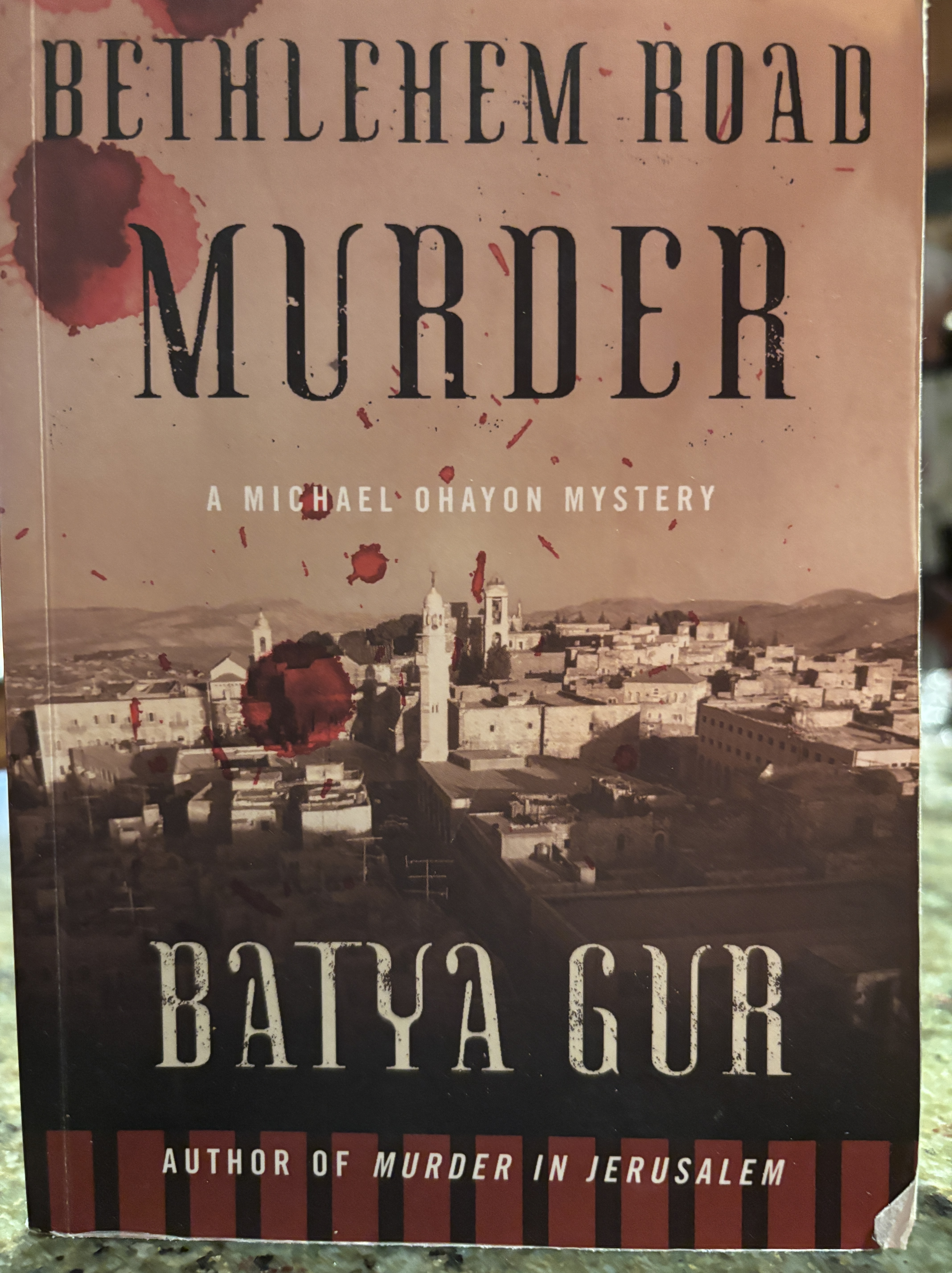
As a lover of mystery novels, I’m critical about beginnings. I liked Batya Gur’s mysteries, set in Jerusalem, with Chief Superintendent Michael Ohayon. Here’s the first line of Bethlehem Road Murder:
“There comes a moment in a person’s life when he fully realizes that if he does not throw himself into action, if he does not stop being afraid to gamble, and if he does not follow the urgings of his heart that have been silent for many a year—he will never do it.”

Okay, but who’s thinking that? The next sentence reveals the thought belongs to Chief Superintendent Ohayon himself, and he’s thinking that thought while he’s engaged in leaning over a woman’s corpse and trying to get a better look at the silk fibers from the rip in the scarf around her neck. In other words, our detective’s already on the job—but what are the “urgings of his heart” that we just heard about? I’m hooked—we have a corpse, a murder (surely a mystery to solve)—and also a mystery about what’s bugging our protagonist.
Here are the first and second line of one of Tony Hillerman’s later mysteries, The Shape Shifter (2006):

“Lieutenant Joe Leaphorn, retired, stopped his pickup about a hundred yards short of where he had intended to park, turned off the ignition, stared at Sergeant Jim Chee’s trailer home, and reconsidered his tactics. The problem was making sure he knew what he could tell them, and what he shouldn’t, and how to handle it without offending either Bernie or Jim.”

If you didn’t already know Lieutenant Leaphorn, you’d at least grasp from the first sentence that he’s tactful, careful, thoughtful. But what’s the issue he’s wrestling with? We’ll know by the end of the paragraph, and we’ll be deep into a new story. Just as we hoped.

And here’s the first line of Hillerman’s earlier The Ghostway (1986): “Hosteen Joseph Joe remembered it like this.”  The next paragraph explains how this witness “noticed the green car just as he came out of the Shiprock Economy Wash-O-Mat…The car looked brand new and it was rolling slowly across the gravel, the driver leaning out the window just a little.” And what Hosteen Joseph Joe remembered next was that the driver—though he looked like a Navajo—had yelled at Joseph Joe, who was eighty-one, and “that was not a Navajo thing to do.” We already feel a story—why would someone yell at Hosteen Joseph Joe?—but by the time Hosteen Joseph Joe winds up his narrative (just paragraphs later) he has also described the ensuing pistol shot leaving a dead man on the ground. Who was murdered? By whom? Why? We’ve definitely got a story.

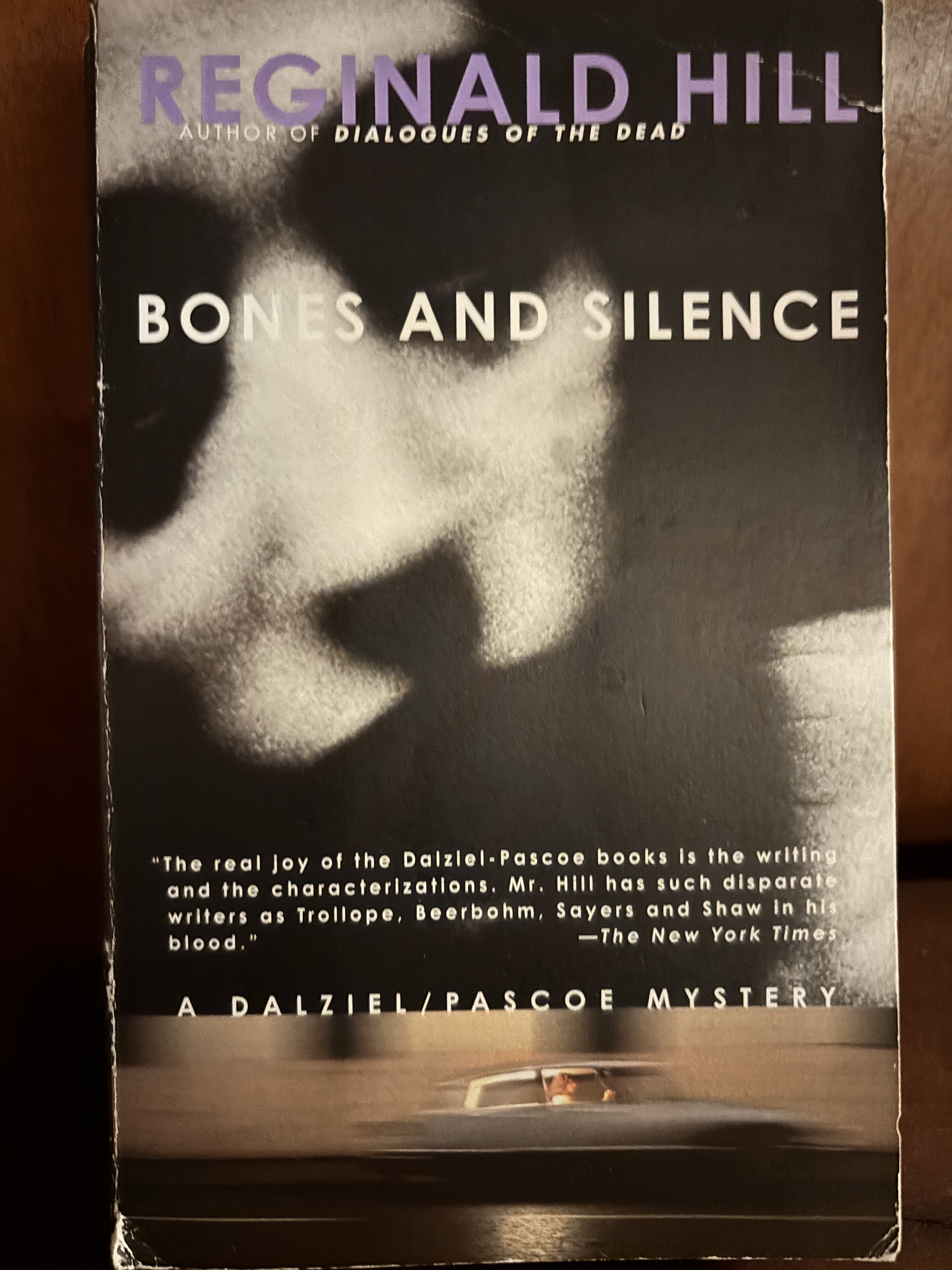
If you read Reginald Hill (his protagonists are Detective Superintendent Andy Dalziel and Peter Pascoe of the Yorkshire CID), you know that he begins every mystery differently. His Bones and Silence (1990) is no candidate for a mere “first sentence.” Instead, it opens with a letter to Superintendent Dalziel from an anonymous correspondent who intends to commit suicide, but wants to be in correspondence with Dalziel before this occurs. The letters continue to arrive for Dalziel for months—anonymous, and we don’t know whether the writer is man or woman—as he and Pascoe toil through a series of apparently unrelated murder investigations. We readers are kept in suspense until the very last page.
Finally—and do you remember being assigned this book?—consider this first sentence: “The cold passed reluctantly from the earth, and the retiring fogs revealed an army stretched out on the hills, resting.” Thus opens The Red Badge of Courage, by Stephen Crane. We see the landscape—and we see the army, “resting.” “Resting”? The army must need  rest and we wonder why. “Resting” somehow builds suspense for what may follow –for what may happen when the army finishes resting. We know there’s a story––but we don’t know what, and we won’t meet that young private for a couple of pages more.

Our craving for stories is what makes us human. Think of the power of those four little words: “Once upon a time…!” Four words that assure us of a story. We gather around to hear it, whether we’re three, thirty, ninety.

Robert Louis Stevenson, author of such tales as Treasure Island and Kidnapped, was given a name by the Samoans: TUSITALA—the Teller of Tales. What an honor!

And that’s who we aspire to be. Raconteurs! Storytellers! Writers! Authors! Tellers of Tales!

And now–here in the Hill Country west of Austin, we finally (FINALLY) got some rain. Wishing you a HAPPY THANKSGIVING!

My latest tale, Ghost Justice, came out August 29, 2025. It’s Book 10 in the series involving Alice, a lawyer working in the small town of Coffee Creek in the iconic Texas Hill Country. Legal drama, and matters of the heart! The next tale is simmering! Find Ghost Justice at BookPeople in Austin or on Amazon. https://www.amazon.com/Ghost-Justice-Helen-Currie-Foster/dp/1732722943

Follow me at http://www.helencurriefoster.com.

Quiet Wins at Bouchercon

VP Chandler

by V.P. Chandler

When people talk about Bouchercon, especially in New Orleans, they usually share stories of late nights, legendary meals, bustling crowds, powdery beignets, and lots of alcohol.

That wasn’t my week.

But the funny thing is—I still accomplished exactly what I went to do.

My panel, Wide Open Spaces, with Craig Johnson, Bruce Borgos, Jeff Ayers, George Wilhite, and moderated by the lovely Sylissa Franklin was a highlight. The conversation flowed, and the audience was engaged. I made them laugh a few times and even got a gasp. So, mission accomplished. I walked away feeling like I’d contributed something worthwhile.

I also got to meet Clay Stafford in person and thank him for publishing my short story, Under The Blackjack Tree, in Killer Nashville Magazine.  (The story that was chosen by John Grisham and Otto Penzler for The Best Mystery Stories of the Year 2025, which is still surreal to me. (Coming out next week!) Stafford’s keynote, The Story That Saved Me, was “cry for crime writers and readers to remember why stories of darkness and redemption still matter—and why telling the truth on the page can save us, too.” Honestly, it was one of the most inspiring talks I’ve heard in a long while. Glad I went.

Another highlight was finally meeting Otto Penzler in person. I thanked him for the opportunity, and he graciously signed my copy of the anthology. A small moment, but one I’ll carry with me.

At the end of most days, I met up with Laura Oles in the hotel/lounge bar. (It was so noisy all of the time!) We compared notes at the end of the day—who we’d seen, what panels had sparked ideas. She was on a terrific panel herself, Dialogue Matters: Slang, Concise, or Verbose? The group dug into how dialogue can reveal character and control pacing, which is something that I’m always working on.

I also loved being in the audience for Sweet Tea with a Splash of Crime: The Southern Influence, with Ace Atkins, S.A. Cosby, and other writers who captured both the grit and taste of Southern literature, and where it’s headed. Another standout was Killing Your Darlings, with Penzler and Donald Maass, which was a sharp reminder that ego doesn’t belong in the editing room if the goal is to make the story better.

And one of my favorite unexpected moments? Donald Maass allowed me to join him for lunch one afternoon. We had a thoughtful conversation about Writer Unboxed, an organization we’re both part of, about writing in general, and drawing inspiration from real life,. It was simple but memorable, the kind of connection that lingers long after the conference ends.

So no, this wasn’t a Bouchercon of big parties or long nights on Bourbon Street. But it was a Bouchercon where I hit my goals, connected with people who matter to me, and left with a few new insights and ideas. Sometimes the quieter wins are the ones that last.

Connecting Through the Ether

VP Chandler

By V.P. Chandler

Have you ever researched something—like a purse, a computer, or even a car—only to suddenly notice it everywhere, even though you hadn’t before? Inspiration for stories works the same way.

One of the most common questions authors hear is: “Where do you get your ideas?” The answer: pretty much everywhere—news articles, books, movies, history, snippets of conversation, personal experiences… inspiration can spark from the smallest detail.

I’m currently writing a historical novella, and inspiration is coming from all directions. I feel like a goalie in a soccer match—I’m fully immersed.

Story Settings and Characters

My protagonist is a young woman named Martha. She’s married to Tom, who has moved her far from home—and life isn’t unfolding as she expected. (Isn’t that always the case? But is it simply the way things are, or is something nefarious at work?) They’re building a cabin in the East Texas woods around 1830. I imagined they’d arrived at the tail end of the Old 300, grabbing land wherever they could. (Although the story could take place anywhere from 1820 to 1880, west of Virginia in pine country, I discovered that pines aren’t as widespread as I once thought—which is why research matters.)

https://www.tshaonline.org/handbook/entries/old-three-hundred

As I write, Martha is revealing herself to me—like she exists on another plane and there’s a conduit between us through something I call “the ether,” a metaphysical space. (Is that a real thing? I don’t know—dammit, Jim, I’m a writer, not a metaphysicist!) Her voice is growing stronger. Her past and current life are becoming clearer. When she speaks, it feels like she’s speaking directly at me. I think most writers go through this—and when it happens, it’s exhilarating. To me, it means the character will have depth and feel real.

And, as in the past, there have been “signs” that I’m on the right track with characters and story. Sometimes these signs are even eerie. In the first chapter, when it was new and amorphous, I was writing a dream sequence to explain her inner thoughts, worries, and where she’s from. I imagined she came from a large family, and she had had a brown and white dog named “Peaches”.

A few days later I was on Facebook and came across this picture. It caught my attention because a cabin is a major feature of the story, and I took a screenshot for inspiration to look at details. Later I read the description. Look at what I circled. That’s right! I wasn’t too surprised by the date. But the dog in the picture was name “Peaches”! And it looks brown and white to me. It gave me inspiration that I’m on the right track with the story and characters.

(Picture from https://www.facebook.com/TracesofTexas. They post historical and modern pics taken in Texas.)

Another time, while writing my (currently unpublished) novel Gilt Ridden, I created a character in West Texas, educated and obsessed with gold, known locally as “The Professor,” living in a dugout. Years later, I came across a local-history book about Stonewall County describing a man known as “The Professor” who lived in a dugout and searched for gold. I hadn’t known he existed—but the parallels were uncanny. At first, I worried that people would think that I borrowed someone’s real story. But then it comforted me. I took it as a sign that I had created a realistic character from imaginary circumstances.

So when you’re writing—or working on any project—block out the world and tune in to the voice or idea coming from the ether. Who knows what will be revealed?


Bonus Content

I’ve been obsessed with one song lately. It’s been playing in my head nonstop for a week. I didn’t know much about it until I watched the YouTube video. The character is pregnant and contemplating life choices, just like Martha! Now it’s really stuck in my head. Hope you enjoy it:

Sara Bareilles – “She Used to Be Mine” (from Waitress)

READING WHILE TRAVELING

by Helen Currie Foster

Just before a trip I get anxious: is there enough stored in my Kindle to keep me happy? You constant readers know that feeling. Did you upload enough for the waiting room at the airport? For the plane? For a sleepless first night, jet-lagging? Enough to keep you happy even if weak (or no) wi-fi at the (tent, cabin, hotel, boat, campsite, rental) precludes another download? Yes, there’ll be news–but I am escaping!

We’re on a family trip to France, with children and grandchildren. I loaded up the Kindle diligently beforehand. Of course there are way too many wonderful things to do besides read…

Still, my heart sang when we entered the rental in the French mountains and spied—A BOOKCASE!

Moreover, the shelves held mysteries! Ian McEwan, Patricia Cornwell, Elizabeth George, Janet Evanovich, V.I. Warshawski, Alexander McCall Smith…

Also serious nonfiction and titles from Kazuo Ishiguro, Dostoevsky, Graham Greene, Julian Barnes and more. Then I spotted Kinky Friedman’s Frequent Flyer and thought—eclectic tastes! Perhaps some were left behind by guests. Still, the shelves made me want to meet the owners. The welcoming bookshelves and, to boot, a choice of comfortable corners where a tired tourist can flop, prop up the well-used feet, and read…what more can one ask?

(Sidebar—when you see a Talking Head on your screen, with a bookshelf behind—do you wonder if the books really belong to the Head? Or are they just a prop intended to impress? Maybe we’ll see some interviewer pose a question: “How did you like Crimes Against Humanity?” Blank stare.)

I know I’ve mentioned her in a prior blog, but have you discovered Dorothy Dunnett yet? https://en.wikipedia.org/wiki/Dorothy_Dunnett

If you’re familiar with Dunnett’s stunning two historical fiction series, The Lymond Chronicles and The House of Niccolo, you already know she delivered powerful (and powerfully surprising) plots, magnetic characters, and vivid reconstructions of the 15th and 16th centuries. Using (for all that detail) an omniscient narrator.

But in her spare time she also wrote the Dolly mystery series, involving an astoundingly talented portrait painter named Johnson Johnson (yes, two), who happens to turn up in scenic locations in his yacht, the Dolly, on secret missions for the British ministry of defense. I’ve reread three of those on this trip—one set in Ibiza, one in Morocco, one in Canada. Unlike the Niccolo or Lymond historical series, Dunnett’s heroines in these first-person mysteries are in their late teens or twenties and trying to make their way in the world (as an au pair, a cook, an executive assistant, etc.). Naturally they find themselves in dangerous situations while trying to identify a murderer, and Dunnett gives each her own first-person voice—each interestingly different.

Clearly Dunnett didn’t merely set foot in these locales: she absorbed them. The action’s fast-moving, but she paints a landscape with details that place you right in the square where the villains are about to—well, here’s an example from Moroccan Traffic, in the Atlas Mountains, where Wendy, a young executive assistant, watches as Johnson and the engaging inventor Mo pursue two ruthless adversaries up perilous cliffs:

…where they had set their faces to climb was the flank of the mountain; the boulder slope rising to cliffs and ridges and rock bands interlaid with tongues of snow, and scree-fields, and stony pockets of pasture. And further up, behind escarpment and terrace, the burning forepeaks of the range.

         I had seen it all from the road. Somewhere there, already entrenched, already waiting, were Gerry and Sullivan, ex-SAS marksmen.

You can also tell that Dunnett (as well as her character Johnson) was a painter:

All around us the hills, limp as blankets, glowed in soft reds, their milky hollows the colour of amethyst. The snow on Sirwa was tinged golden pink, and cast china blue shadows which were technically impermanent. A man walked by the road, a black goat like a scarf around his neck.

         And from Roman Nights – the young heroine, an astronomer, battles spy dealings in Italy including the Aragonese Castle on Ischia in the Bay of Naples:

         On a plateau the cathedral reared its three roofless sides like a kind of dismembered Versailles, white and flaking; the walls furnished with crumbling cherubs and statues, with rococo arches and pillars and architraves.

Dunnett gives her astronomer heroine plenty of tongue-in chic wit:

Johnson and Lenny sailed out of Amalfi, in a pure, warm air blowing about eight on the bloody Beaufort scale, and the rain lashing down. After becoming exceedingly well acquainted with the water filling the Gulf of Salerno, we fled into a fishing harbour called San Marco and spent the night offshore in a cat’s cradle of other boats’ cables.

Thank you, Dorothy Dunnett, for stupendous scholarship and for witty mysteries in places so believably described. What a gift to the traveler! Sorry, gotta go—I’m deep into Tropical Issue, set in Madeira, where I’ve never been—but it sure looks great in this prose…

What gifts they are to humans—to write, to read!

Award-winning writer Helen Currie Foster lives and writes in the iconic Texas hill country, supervised by three inquisitive and persistent burros. After practicing law for more than thirty years, she found the Alice MacDonald Greer Mysteries had suddenly appeared in her life. Book 10 in the series, Ghost Justice, is expected to debut in August 2025. Helen is continually fascinated by human history and how, uninvited, the past keeps invading our parties. Follow her on Facebook and Amazon, and in Austin at BookPeople.

https://www.facebook.com/helencurriefoster

Walking the Dark Side of Summer: A Personal Look at For Every Evil Under the Sun

VP Chandler


By V.P. Chandler

When I first sat down to write the stories that would eventually become part of For Every Evil Under the Sun, I didn’t know exactly where they would lead me—I only knew I wanted to stretch my writing skills, try new things, and be a part of a hot, cool collaboration. (Yes, I like puns.)

Now, I’m proud to announce that this collection is out in the world, published by the brand-new Fredonia Ink Publishing. I’m honored to be sharing the pages with two powerhouse writers, Alexandra Burt and Laura Oles—both of whom are not only incredibly talented but also deeply committed to telling stories that explore the dark, complex corners of the human experience.

This collection is a bit of a literary experiment. We each approached the idea of “evil” through our own unique lens—psychological thriller, family drama, crime, horror, western—and let the stories guide us. What came out of it is a collection that isn’t just eclectic, it’s electric. It shines! (Yes, another pun.)

As for me, I leaned into the grit—into crime, revenge, justice. I wanted my stories to carry that weight—to explore the consequences of violence and vengeance. And also add a little bit of fun to the mix. And the stories by Alexandra Burt and Laura Oles are equally as dark and entertaining.

And hey, if you’re in Austin this summer, I’d love to invite you to join us for a special event at Vintage Bookstore and Wine Bar (1101 E. 11th St.) on July 18 at 7pm. Alexandra, Laura, and I will be discussing short story craft, the experiences of women writing crime fiction, and what went into shaping this haunting little book. It’ll be an evening of books, wine, and maybe a few goosebumps.

So if you’re in the mood for stories that simmer under the heat of summer and explore just how far people will go—to protect, to avenge, to survive—then For Every Evil Under the Sun might just be what you’re looking for.

Hope to see you in July.

—VP Chandler
vpchandler.com


🗓️ Event Info: July 18, 7pm @ Vintage Bookstore and Wine Bar, Austin, TX
🔗 Learn more, here is the Amazon listing. Ebook now available and paperback will be soon on Amazon and bookstores everywhere: https://tinyurl.com/2tph4xcz

The Woods Are Lovely: A Passion for Trees

by Helen Currie Foster

October 29, 2024

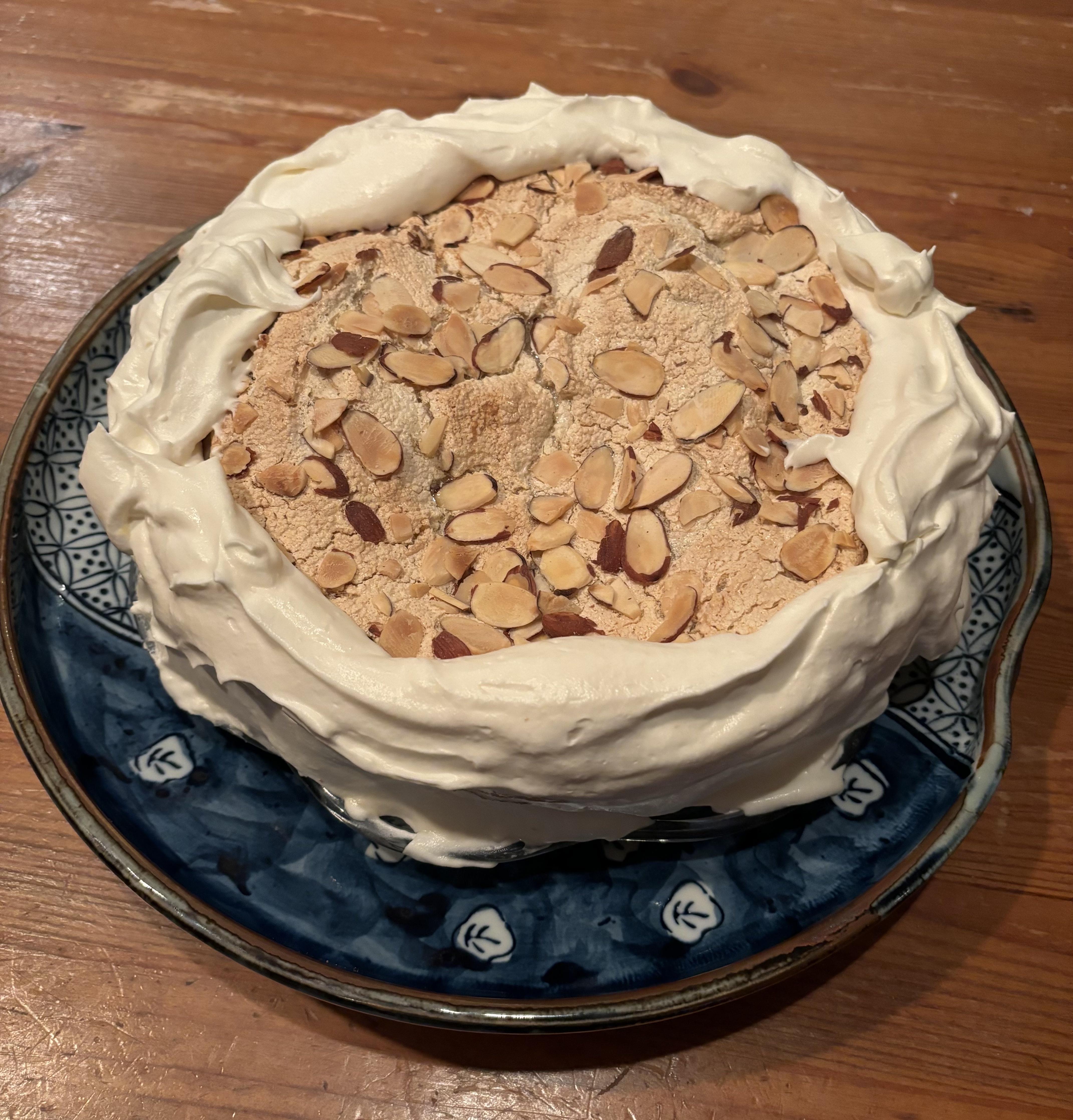
The mystery is solved! In my search for  what I recalled as “the “Blitzkuchen” once served at Schwamkrug’s outside New Braunfels, in the Texas Hill Country, I had the name wrong. It’s a blitz torte, not a blitz kuchen! Several readers sent recipes from German cookbooks indicating that “Blitzkuchen” is a quick cake, usually one layer only. My memory, though? A tall two-layer confection, baked with meringue and almond flakes on top and between the layers! And in my memory, more meringue on the outside, plus some moistness in the filling.

Online I found Oma Gerhild’s “Oma’s Blitz Torte Recipe ––Lightning Cake.” https://www.quick-german-recipes.com/german-blitz-torte-recipe.html  Each almond-flavored layer is baked with meringue and sliced almonds on top of the batter. The recipe offers either custard filling or whipped cream filling. I opted to finish off with whipped cream with powdered sugar and vanilla, not just inside, but around the cake (and in blobs all around the kitchen).

FINALLY! First, that lovely almond taste. Plus, everyone at the table now wore an attractive little white mustache of whipped cream. You don’t get that with a madeleine and a cup of tea, do you, M. Proust?

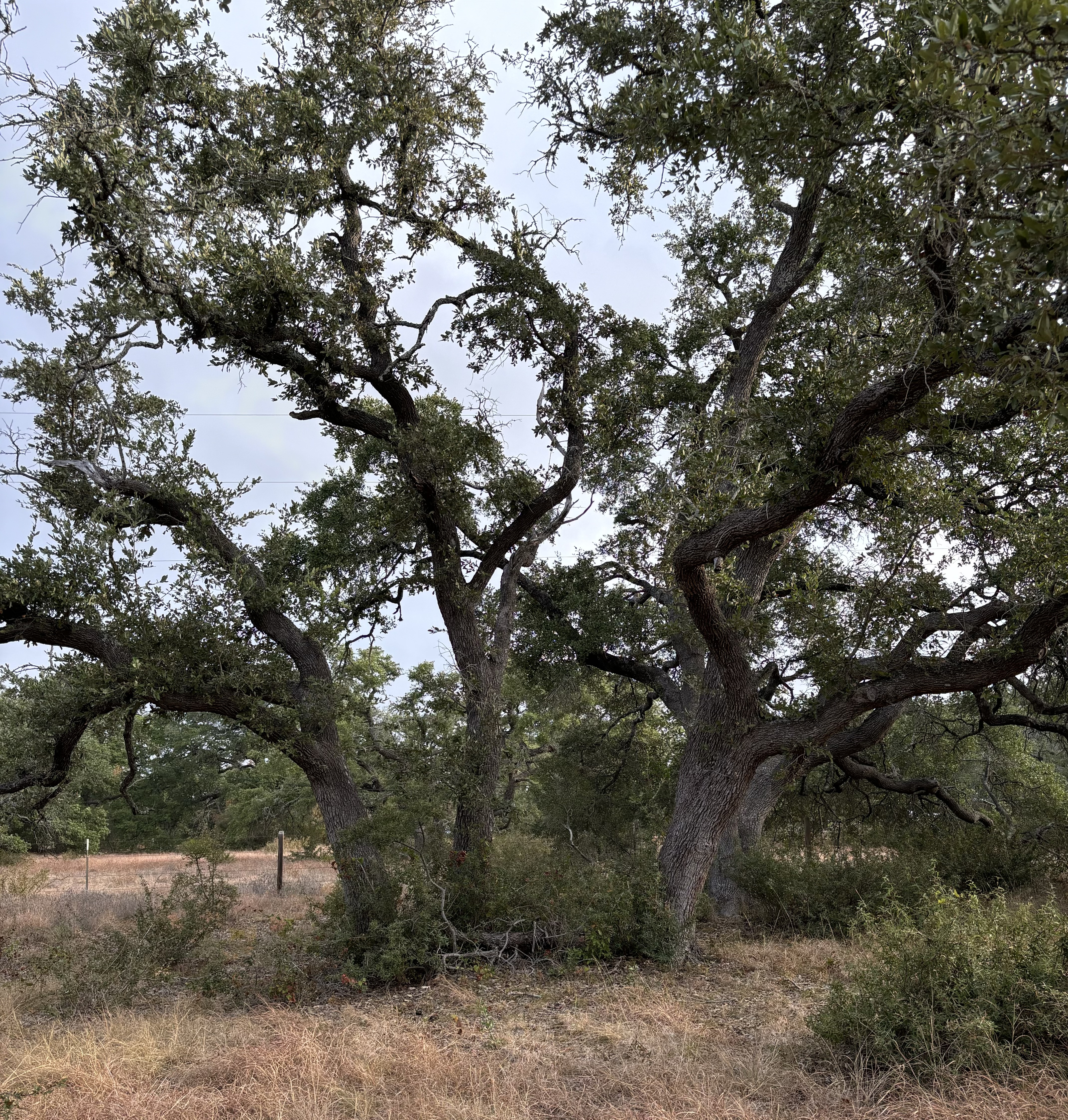
As October runs into November, Texas Hill Country towns are celebrating Oktoberfest, or, in New Braunfels, Wurstfest. Normally by now our trees would show some fall color––nothing like New England, of course. The cypresses by Lake Austin are turning bronze. Out here north of Dripping Springs, the possum haws are showing their red berries. The cedar elms turned bright yellow, then slowly lost their leaves. The live oaks, thankfully, stay green.

But this year? Drought brings bad news for trees. Cypress-lined creeks are dry…the cypresses’ arched roots groping into the earth for water. Downhill at our place Barton Creek is dry, and I mean dry, with only occasional small pools. Up on the limestone plateau the leaves on some smaller saplings just turned brown and fluttered to the ground, with the tree already looking dead. We’re watering, but in Stage 2 drought restrictions. Will our wells run dry? Have we drained the Trinity aquifers that lie hundreds of feet below?

So, to general geopolitical angst, I’ve added…tree worry.

Trees in books play such a role in our imaginations. After reading Johann David Wyss’s Swiss Family Robinson (1812)—where the shipwrecked family builds a tree-house on their desert island––I always wanted to live in a tree-house! https://en.wikipedia.org/wiki/The_Swiss_Family_Robinson We’re drawn to forests, home of the trees—scary, but sometimes the safest place. In The Sword in the Stone by T. H. White (1939), first of the four volumes that make up The Once and Future King, the Wart (the young Arthur, under Merlin’s tutelage) and Kay meet Little John who tells them about Robin Wood (explaining why it’s not “Robin Hood” and why he lives in the woods (or “‘oods”):

“They’m free pleaces, the ‘oods, and fine pleaces. Let thee sleep in ‘em, come summer, come winter, withouten brick nor thatch, and huntin’ ‘em for thy commons lest thee starve; and smell to ‘em with the good earth in the springtime; and number of ‘em as they brings forward their comely bright leaves, according to order…”

There the boys, the future King and Sir Kay, approach “the monarch of the forest. It was a lime tree as great as that which used to grow at Moor Park in Herefordshire, no less than one hundred feet in height and seventeen feet in girth, a yard above the ground….” Headquarters for Robin Wood and Maid Marian! And there begins a great and perilous adventure for Kay and Wart, who break into the castle of Morgan le Fay, Queen of Air and Darkness—to rescue prisoners paralyzed by magic. (Speaking of paralyzed victims of witches—note how C.S. Lewis later describes turned-to-stone courtyard figures in his first foray into fantasy, The Lion, the Witch and the Wardrobe (1950).)

One writer, Elisabeth Brewer, notes that “The Sword in the Stone shows a passion for trees that White shared with Tolkien. https://bit.ly/3Ceqk. How about the Ents we meet in Fangorn Forest, in J. R. R. Tolkien’s Middle-Earth? Trees that walk…and tend other trees. Not all trees are benign––including the wicked old willow which captures Frodo and friends (rescued by Tom Bombadil).

I’m reading a fascinating graphic (yes, graphic!) book about Tolkien and his close friend C.S. Lewis: The Mythmakers: The Remarkable Fellowship of C.S. Lewis and J.R.R. Tolkien, by John Hendrix. https://bit.ly/4hqiyFr

Tolkien and Lewis met in 1929 in Oxford, where they were, famously, members of a writers’ group, the Inklings, and shared many hours at The Eagle and Child. That’s not all they shared. In 1916, both men experienced horrific warfare on the Western Front in France. Young and just married, Tolkien fought in the trenches, then contracted life-threatening trench fever. At nineteen, Lewis was wounded by shrapnel (from friendly fire) on the Somme, and carried shrapnel in his body the rest of his life. Hendrix’s wonderful book uncovers the sort of salvation two disillusioned veterans found in the healing power of imagination, including Norse mythology and the European fairy tale. Tolkien knew of Yggdrasil, the sacred ash tree central to Norse mythology. https://en.wikipedia.org/wiki/Yggdrasilhttps://dc.swosu.edu/cgi/viewcontent.cgi?article=2130&context=mythlore

And how the worlds created by Lewis and Tolkien fired our imaginations! The fantasy world of C.S. Lewis’s Narnia emerged when The Lion, the Witch and the Wardrobe was published (1950). Tolkien’s The Hobbit, or There and Back Again, was first published in 1937 but became a pop-culture phenomenon only in 1960’s, when the paperback edition became available. https://time.com/4941811/hobbit-anniversary-1937-reviews/

Both Lewis and Tolkien had copies of The Sword in the Stone early on. Indeed, in 1939 it was a Book-of-the-Month Club selection. T. H. White 1964 obituary, https://nyti.ms/4hlasht. Curiously, Hendrix’s book on Tolkien and Lewis doesn’t mention T. H. White, perhaps because Hendrix focuses on the impact of war; T.H. White 1906-1964) was born too late to serve in World War I. Nor was he an Oxonian. While C.S. Lewis reportedly disparaged The Sword in the Stone in 1940, he later invited T. H. White to the Inklings if he ever visited Oxford. https://bit.ly/4f4wcww (“Dickieson post”). Perhaps Hendrix doesn’t mention T. H. White because unlike Tolkien and Lewis, though he creates a fantasy world, White grounds The Once and Future King firmly in England.

But Elisabeth Brewer commented in T.H. White’s The Once and Future King that The Sword in the Stone shows a passion for trees that White shared with Tolkien. (Dickieson post.)

What about powerful trees in more recent books? Consider the Whomping Willow, in J. K. Rowling’s Harry Potter and the Wizard of Azkabanhttps://bit.ly/4f1koex Magic—but terrorizing—it reveals the secret passage which ultimately allows Harry and friends to discover––well, remember? Indeed, Harry reminds us of T. H. White’s Wart, both with an earnest determination to do right, and a magical tutor.

Maybe children are especially open to tree power because they still climb trees. My dad swooped us off to grad school in Atlanta, and then to Charlotte, before we moved back to Texas. In the southeast I discovered the power of pine trees. We children built an admirable and secret treehouse in the woods, where we surveyed the world from on high. No parents came near to scold or warn: deep in the trees we ruled our own domain. Later in Carolina at eleven, I could climb the neighbors’ big back yard pine all the way to the top. The tree swayed slowly back and forth, but I could see the entire neighborhood and beyond. Tree power.

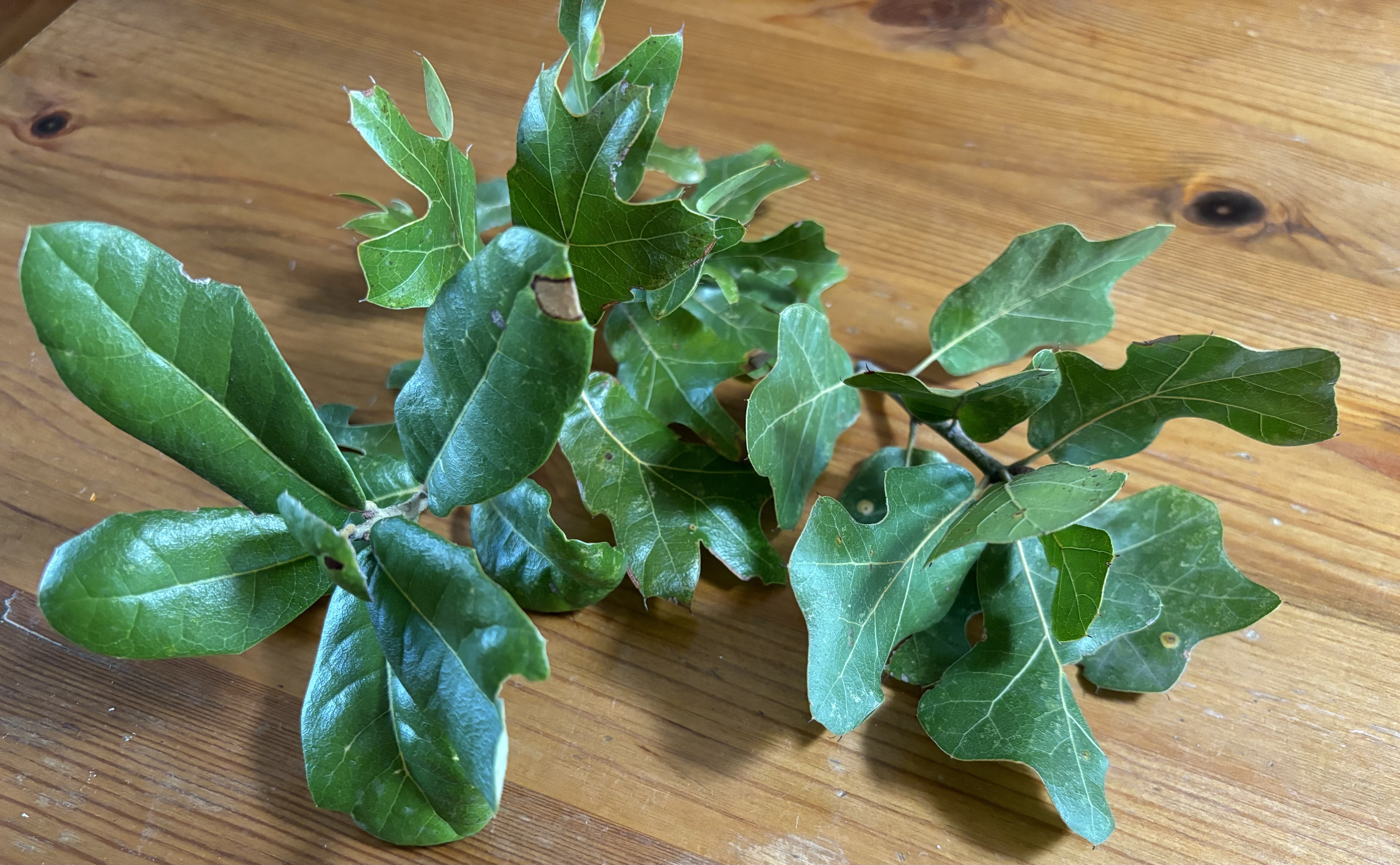
Out here on the Edwards Plateau, in the rugged karst landscape above a hill country creek, live oaks rule. The big evergreens, up to sixty feet tall, with a wide crown and massive limbs close to the ground, are Quercus Virginiana. They often grow in a circle—and you know they are communicating through their root systems. https://www.npr.org/sections/health-shots/2021/05/04/993430007/trees-talk-to-each-other-mother-tree-ecologist-hears-lessons-for-people-too

The way live oaks vary their leaves makes identification tough. On the Edwards Plateau, the species passes into the “shrubby Texas Live Oak”—shorter with smaller trunks: “…[I]ntermediate forms occur between the variety and the species and the distinctions are often difficult,” per Robert Vines, Trees, Shrubs and Woody Vines of the Southwest (1960). Well, thanks.

Now, in drought, with grass turned grayish tan, with dirt powder-dry beneath our feet, we treasure the blessed green of live oaks, often home to swings and hammocks, and providing wide shade to houses, pastures, and somnolent cattle.

Trees inspire us. We know Shakespeare’s song: “Under the greenwood tree, who loves to lie with me…” (As You Like It). The first poem in Wendell Berry’s A Timbered Choir begins, “I go among trees and sit still.”

Mary Oliver’s “Honey Locust” begins,

“Who can tell how lovely in June is the

honey locust tree, or why

A tree should be so sweet and live

            in this world?”

Robert Frost knows his trees: The Road Not Taken, Stopping by Woods on a Snowy Evening, Tree at My Window, Spring Pools, so many. Of course, his Birches:

“When I see birches bend to left and right

Across the lines of straighter darker trees,

I like to think some boy’s been swinging them…”

Frost makes it easy to imagine “some boy” swinging the birches—or Frost imagining that, as he marched through a yellow wood.

And then e.e. cummings, My Father Moved Through Dooms of Love—I like this verse:

“My father moved through theys of we,

Singing each new leaf out of each tree

(and every child was sure that spring

Danced when she heard my father sing)”

And Gerard Manley Hopkins, Spring and Fall:

“Margaret, are you grieving

Over Goldengrove unleaving?”

Yes, trees: later in the poem we find when “worlds of wanwood leafmeal lie.”

The forecast calls for rain. Please cross your fingers.

Helen Currie Foster lives and writes the Alice MacDonald Greer Mystery Series north of Dripping Springs, Texas, loosely supervised by three burros. She’s drawn to the compelling landscape and quirky characters of the Texas Hill Country. She’s also deeply curious about our human history and how, uninvited, the past keeps crashing the party. Currently she’s working on Book 10. Her protagonist, Alice, gets into legal drama, and matters of the heart. And yes, Alice does have a treehouse.

Who Do You Love?

 / AUSTIN MYSTERY WRITERS

Yes, Bo Diddley, https://www.youtube.com/watch?v=e5tSgiB_Tgc but I like the Thorogood version too bit.ly/4gNi38m

I’ve got a secret. So many books I have NOT read. You’d be shocked. No, really. My husband (retired business professor) admires Tolstoy, especially Anna Karenina. He’s read most of Dickens and every word of Moby Dick–several times. When we were dating he bought Baudelaire’s Les Fleurs du Mal (English translation) because he’d seen it on my shelf. He knows I’m hung up on Virginia Woolf; he’s read Three Guineas. He’s read reams of history—shelves and shelves, plus tome after tome on Richard Feynman and everything that’s going on with astronomy and quantum physics. He forges onward, aiming for the stars at the edge of the universe.

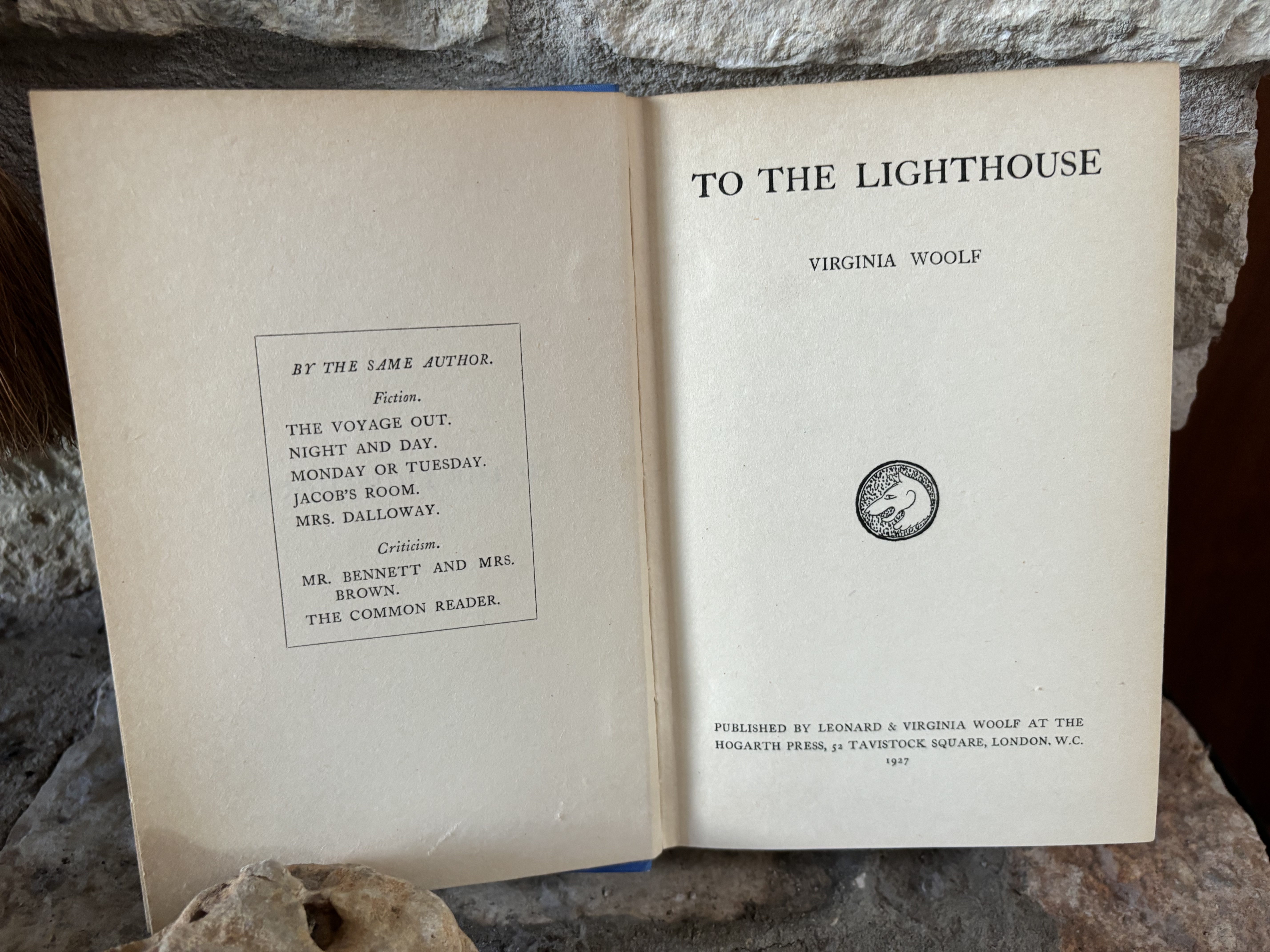
I, however, the English major, the mystery writer? I who should have read All The Books? I confess a powerful secret vice: rereading my favorites, particularly Virginia Woolf. Every year, To the Lighthouse sneaks back into my hand. Why? Why not concentrate only on the new novels, the best-sellers?

Because I have to reread that moment in Part III when, years later, after world war and illness have claimed her beloved friend Mrs. Ramsay and so many of the Ramsay family, the spinster Lily Briscoe returns to the Ramsays’ summer home on the Isle of Skye. https://bit.ly/3zHF77w

Out on the lawn, facing the old white house, she sets up again the unfinished oil painting she began all those years earlier—the painting that had posed such a challenge in Part I as her mind reverberated with the repeated mantra from Professor Ramsay’s obnoxious male philosophy student: “Women can’t paint, can’t write.” During the long day, full of changing light on the sea, and repeated interruptions by other characters, Woolf returns us over and over to Lily, staring at her painting, seeing again the remembered shapes of Mrs. Ramsay and her son James all those years ago. And her artistic effort? Here’s the end of the book:

“It would be hung in the attics, she thought; it would be destroyed. But what did that matter? She asked herself, taking up her brush again. She looked at the steps; they were empty; she looked at her canvas; it was blurred. With a sudden intensity, as if she saw it clear for a second, she drew a line there, in the centre. It was done; it was finished. Yes, she thought, laying down her brush in extreme fatigue, I have had my vision.”

Why do I return to that? So much of the book is touching, gripping, and even hilarious, including the thoughts of Professor Ramsay, a philosophy professor who’s both overbearing and insecure. He delights in his own “splendid mind”: “For if thought is like the keyboard of a piano divided into so many notes, or like the alphabet is ranged in twenty-six letters all in order, then his splendid mind had no difficulty in running over those letters one by one, firmly and accurately, until it had reached, say, the letter Q.  …Very few people in the whole of England ever reach Q.” Then he falters. “But after Q? What comes next? After Q there are a number of letters the last of which is scarcely visible to mortal eyes, but glimmers red in the distance.”  He braces himself, clenches himself. “Q he was sure of. Q he could demonstrate. If Q then is Q—R—” Then “he heard people saying—he was a failure—that R was beyond him. He would never reach R.”  

What an image—the alphabet, R glimmering red in the distance, then fading, fading!  And then of course there’s the famous dinner party featuring Mrs. Ramsay’s boeuf en daube. Surely, just reading this, you smell the simmered sauce, the wine, the bay leaf? The thought crossed my mind that if Professor Ramsay had been offered a sip of the Talisker malt whiskey for which Skye is famous, he’d have felt a bit better. https://www.malts.com/en/talisker (The distillery gives a great tour, too.)

But Lily’s painting? This spinster friend of Mrs. Ramsay, with her amateur brushstrokes? The tale of Lily’s painting, her decision and indecision as she holds her brush, grabbed me all those years ago, and refuses to let go. The same question must hit every musician—“Is this the last note? Did that chord resolve properly? Does it make you feel beauty and longing, or does it just hang there, unfinished?”  Every cook: “A pinch of salt? What about some coriander? To garlic or not to garlic?” Every filmmaker: “Do they walk into the sunset? Or fade out? Or kiss?” And every writer? “Is this character real? Is this setting compelling? Does the plot work? And will anyone care?”

Lily’s painting embodies desire to capture memory, resistance, light and color, and more than that. Isn’t it  her experience? A moment of creation, of recapture, of making a line on a canvas and then feeling completion?  She’s had her vision. If you know of another book where we readers feel such a moment of revelation from the frustrating process of creation—let me know.

Oh, don’t get me wrong. My Kindle received today the brand-new Martin Walker (A Grave in the Woods) and I can’t wait. bit.ly/3Xzqawt Like the other women in his (busy) life,  I love to accompany Inspector Bruno, in his fictional Perigord village of St. Denis, partly because of his cooking. Thank you, Martin Walker, for describing the ham hanging from the kitchen ceiling, the cheerful chickens, and the paté with its duck fat on top, waiting in Bruno’s fridge, and the way Bruno sings La Marseillaise to count how long until he must sizzle the foie de gras before he deglazes the pan. I look forward to new recipes and to finding out who’s buried in the woods.

And a sad farewell: I’ve decided to forgive Elly Griffiths for saying goodbye to Ruth Galloway in her last book in that series, The Last Remains, even though I have loved watching Ruth clamber down into a trench to dig up ancient bones in East Anglia. amzn.to/3ZxU5rv I’ve also savored every page of Alan Bradley’s latest (last?) Flavia de Luce – What Time the Sexton’s Spade Doth Rust – as he allows this delightful protagonist to feel herself beginning to grow up—not too much, not too fast, just enough. https://bit.ly/4dla13A 

And I did just finish We Solve Murders, Richard Osman’s first book in a new series. bit.ly/4ezjIwh  Have to confess I found myself missing Joyce, Ibrahim, Ron, Elizabeth and the other characters of his Thursday Murder Club books. My strong belief is I must careabout a mystery protagonist and so far I haven’t completely bought in to his new cadre–though I do like Steve. We’ll see.  I’d be interested in your reactions.

So that’s four new mysteries, just in September. I’m also rereading Virginia Woolf’s The Waves, and finding even more, yes, even more to love about how she brings those characters to vivid life, and how she describes the way we humans think and react to each other.

And out here with the three burros I’m writing the tenth in my Coffee Creek series featuring Alice MacDonald Greer and the gorgeous landscape of the Texas Hill Country, with its pristine (well, so far) bluegreen streams. Water’s for fighting over, right?

But when the going gets tough, you may find me sidling back to the revolving bookcase, on the shelf where Virginia Woolf and all the old faves hang out.

Helen Currie Foster lives and writes north of Dripping Springs, Texas, loosely supervised by three burros. She’s drawn to the compelling landscape and quirky characters of the Texas Hill Country. She’s also deeply curious about our human history and how, uninvited, the past keeps crashing the party. Latest in her award-winning series: Ghost Bones.

Follow her on http://www.facebook.com/helencurriefoster/ and http://www.helencurriefoster.com

Share this:

World War Z Review

VP Chandler

by V.P. Chandler

I recently finished reading World War Z. I know, I know, the book came out in 2006. As usual, I’m behind the times when it comes to reading books. I have so many on my bookshelves that it takes me a long while to get to them all. This book is one that my kid read back when it was popular and insisted that I read it too. So, it sat on the bookshelf, patiently waiting for my attention for several years. And while WWZ doesn’t fall into the usual reading for me, I’ve always been interested in anything that has to do with zombies. I watch most of the movies and shows. Not for the gore, but because I like to see how people react in the beginning days of the plague and how people may or may not survive in the long term.

Within the first pages I immediately saw why it was popular. Max Brooks is an excellent writer and the format appealed to me. Instead of creating a narrative with a beginning, middle, and end, he structured the book as a series of interviews. Each story is only a few of pages so it’s great if you like to pick up a book, do a quick read, and put it aside until next time. I personally like short chapters. It’s evident in my writing. But in the format of interviews, I found that the book didn’t hold my interest. There wasn’t much to compel me to open it and keep flipping pages. The story that I liked the most was about a downed pilot stuck in a Louisiana bayou. It was longer than the others, so I became invested in her, and I wanted see her survive. I wish more of the stories had been like that.

But I will say this about the book. Kudos to Brooks in his understanding of people and countries. If I were to sum up the book, I’d say that it was a character study of how people handle emergencies. It was as if he thought, “How would the American people and government respond to a zombie plague? Japan? Russia? Israel?” He included almost every country and every environment. What would happen in the mountains? Bayous? Coastal towns? How would this effect how people live in their homes? What kind of houses or fortresses would they have? Would people trust each other afterwards? And what would this do to humanity if we survived? Would the world still be worth living in?

He answers all these questions and more.

So, while it is a book of interviews about how people survived a global zombie apocalypse, it’s much more than that. It’s a study of humanity.

It’s definitely worth reading.

Previously published on vpchandler.com

V.P. Chandler has been a paralegal, a teacher, and a West Texas rancher. She grew up in a family involved with the criminal justice system, (criminal justice professor, parole officer, pathologist, photographer, etc.), so thinking about the dark side of life is in her blood. Her most recent book, THE LAST STRAW  is a novella co-written with Manning Wolfe.

“I Should Write That Down…Now Where Did I Put It?”

The Joy of a Commonplace Book

By Laura Oles

I can’t tell you how many times I’ve come across a quote, an idea or something else I wanted to remember and thought, “I need to write that down.”

So I did.

Over and over and over.

In countless notebooks and journals and on post it notes.

The problem I found is that, while committing something to paper is an important first step, it is only a first step. There are many moments where I’ve written something down only to lose it amongst some ephemera, discovered only again when I’m looking for something else.  

It’s like finding twenty bucks in those shorts from last summer. It’s a nice surprise, but maybe I should try tracking this information (and my dollars) a bit better.

First, I tried using a Bullet Journal…

The Bullet Journal was created by Ryder Carroll as a way to organize schedules, to-do lists and other details for work and personal life. It started as his own method of corralling his many thoughts and commitments into a central place. It’s a fantastic method for many dedicated BuJo lovers, and the premise is simple.  All you need is an empty notebook and a pen.

Turns out, you also need a certain mindset. It’s a commitment.  

Image Credit: @pureplanning_bymj

I have so much admiration for dedicated Bujo people. And I love seeing their gorgeous daily/weekly/monthly spreads, but I could never stick with it. I do have one completed book—used over a two-year period—that I enjoy leafing through now and then. Scattered amongst those pages are several quotes, concepts and ideas that I wanted to gather in a more central location, to rescue from my failed experiment.

I still love the idea. I just stink at the execution.

This is when I discovered the Commonplace Book.

 A commonplace book is simply a notebook where you record learning and information from other sources for the purpose of collecting and reflecting upon for some future time. Many notable people in history have kept commonplace books, including Virginia Woolf, Mark Twain, Marcus Aurelius, Ralph Waldo Emerson, and Henry David Thoreau. (Image Credit: UT Austin, Harry Ransom Center, Lewis Carroll’s CPB)

Unlike a Bullet Journal, which has its own system, a commonplace book only requires that you collect your ideas, quotes and more in one location.  What you choose to include is completely up to you.  The most common use is for recording secondary sources, but that can take all forms. Music lyrics? Key dialogue from a movie you love? Put them all in one place. I keep my commonplace book on my desk so I can access it when I’m reading or working on a project. Others prefer to always carry one, ever prepared to catch that next inspirational idea while out for a daily walk or in a coffee shop.

Unlike a journal, with content focused heavily on personal thoughts, musings and experiences, a commonplace book is something designed to help you learn from others. These ideas may spur some new thoughts or considerations, and this is a perfect place to record those as well. It can be anything you like, of course, but it’s not the best place to record daily tasks or reminders. Keep your digital or paper planner for those purposes (and feel free to ask me about planners because I will happily engage in that topic, too). 

There is scientific evidence that supports the theory of choosing to write by hand rather than typing into a digital document. A recent study from the University of Tokyo showed that graduates revealed that “writing on physical paper can lead to more brain activity when remembering the information an hour later. Researchers say that the unique, complex, spatial and tactile information associated with writing by hand on physical paper is likely what leads to improved memory.” (Science Daily).

My commonplace book has a wide variety of quotes and concepts tucked inside. Adam Grant, Anne Lamott and James Clear make regular appearances on my pages. I can tell by my handwriting how I’m feeling because my messier cursive signals I’m in a rush while my neater entries show that I’m taking time to really consider what I’m transcribing. The important part is the practice. Keeping a commonplace book encourages my love of learning, of reading and of writing. There is a quiet joy in taking time to learn something new, to consider it and then commit it to paper.  

Maybe you’re already doing some form of this practice. I was, and it was only when I sought to improve my process that I learned about the commonplace book and how to better use it in my daily life.  Having one location helps me gather this knowledge and, more important, keep it somewhere that allows me to reflect and learn. If you haven’t tried keeping a CPB, I hope you’ll consider it, and I would love to hear how it works for you. 

Laura Oles is the Agatha-nominated and award-winning author of the Jamie Rush mystery series. Her work has appeared in crime fiction anthologies, consumer magazines and business publications.

Helen Currie Foster, January 15, 2024

“But at my back I always hear time’s wingèd chariot drawing near…” (Andrew Marvell, 1621-1678)  

Today in pre-dawn darkness, the house quiet except for the murmuring furnace, my characters were already at me, barking orders: “More! More smells, tastes, experiences! More about me! Tell people what I’m thinking, what I’m experiencing, what I’m worrying about!”

They’re right. Readers want to know their favorite mystery protagonists. Why? Because readers are in league with them, walking in their shoes. Readers know that stepping into a protagonist’s sensory experience—smells, food, experiences, relationships—will springboard them into the setting, help them to be in the picture, ready to seize on every clue.

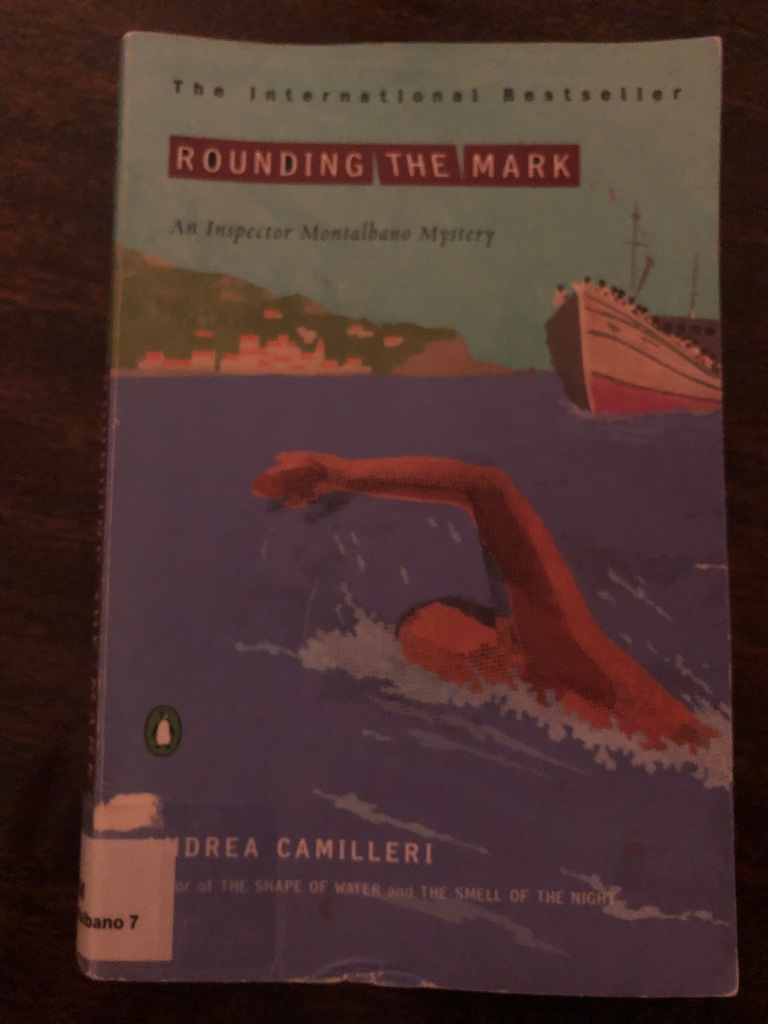
Resolution 1. Tastes! Flavors! Food! As Rounding the Mark, Book 7 of Andrea Camilleri’s long-running series, begins, Inspector Montalbano of little Vigáta, Sicily, can’t sleep:

“Stinking, treacherous night. Thrashing and turning, twisting and drifting off one minute, jolting awake and then lying back down—and it wasn’t from having scarfed down too much octopus a strascinasali or sardines a beccafino the evening before. No, he didn’t even have that satisfaction.”

Fortunately the recipes are described in the Notes at the book’s end. In Sicily, where seafood reigns supreme, Montalbano refers to small octopi, boiled and dressed in olive oil and lemon juice, and then sardines, stuffed and rolled up with sauteed breadcrumbs, pine nuts, sultana raisins, and anchovies. When Montalbano returns home from the police station he always races to his refrigerator to see what his housekeeper, Adelina, has left for him. In Book 16, Treasure Hunt, Montalbano “howled like a wolf with joy” when he finds “eggplant parmesan, done up just right, enough for four.”

Can’t you just smell this dish? Montalbano consumes the entire panful: “the sauce was a wonder to taste.” (50). We see how he delights in his food, how very particular he is. (And throughout the series Adelina keeps cooking – pasta in squid ink, involtini of small fish, pasta ‘Ncasciata…https://www.foodandwine.com/pasta-ncasciata-sicilian-baked-pasta-7093847

Here’s Montalbano in Rounding the Mark after discovering a new restaurant:

“The antipasto of salted octopus tasted as though it were made of condensed sea and melted the moment it entered his mouth…And the mixed grill of mullet, sea bass and gilthead had that heavenly taste the inspector feared he had lost forever….After a long and perilous journey of the sea, Odysseus had finally found his long lost Ithaca. “(73)

Camilleri (died 2019) was writing mystery, murder, crime—but he included as major players in the setting Sicilian food, awareness of this ancient Mediterranean island culture, and echoes of classic myth.

We can only imagine Montalbano shaking his head at the food situation of private detective Cormoran Strike, protagonist of The Running Grave, seventh in the series by “Robert Galbraith” (aka J.K. Rowling). To protect his knee, Strike, a military police veteran who lost his lower leg in Afghanistan, must lose weight; he’s now lost “three stone” or about 42 pounds. “Usually he’d have grabbed a takeaway on the way home” but now, “without much enthusiasm,” he’s fixing broccoli and salmon in the tiny flat above his seedy London office.

Does the author need to describe these flavors? Aren’t “broccoli” and “salmon” redolent enough by themselves, especially broccoli? Later, as the plot roars into action, Strike’s off his diet, overcome by “the lure of sweet and sour chicken and fried rice” (767) and demanding that his partner Robin Ellacott stop at a 24-hour McDonald’s on London’s Strand (848) where, as they walk to the office, he’s eating “large mouthfuls of burger” and starting on two bags of fries. He’s back to his usual food habits––pub food, fast food––yet his mind’s on the recent attack, “as though he’d only just felt the heat of the bullet searing his cheek.” At chapter’s end, as they discuss the case, “Strike ate a solitary cold chip lingering at the bottom of a greasy bag.” There’s an urgency to his desperate hunger, to the need for enough energy to stick with an exhausting case—and don’t we all know about that solitary cold french fry in the bottom of the bag? Can’t you see him fishing it out? For Strike, food fills a need, but he’s not immersed in the culinary experience. He’s focused on his case.

What keeps Strike working as a private investigator? Challenge, curiosity, tenacity, terror—but not great cuisine. Food-wise, Montalbano’s habits differ sharply from Strike’s. But for each man, eating habits vividly highlight both personal life and setting.

Resolution 2: Human Scent! Other scents matter to both Strike and Montalbano. In the first chapter of The Ink Black Heart, Cormoran Strike has tried to find a perfect perfume for Robin’s 30th birthday. When she sprays on the new perfume, “he…detected roses and an undertone of musk, which made him think of sun-warmed skin.”

Similarly, in Treasure Hunt, when Montalbano and his compadre, the daring Ingrid, are outside on his veranda, “The night now smelled of brine, mint, whisky, and apricot, which was exactly what Ingrid’s skin smelled like. It was a blend not even a prize parfumeur could have invented.” (175)

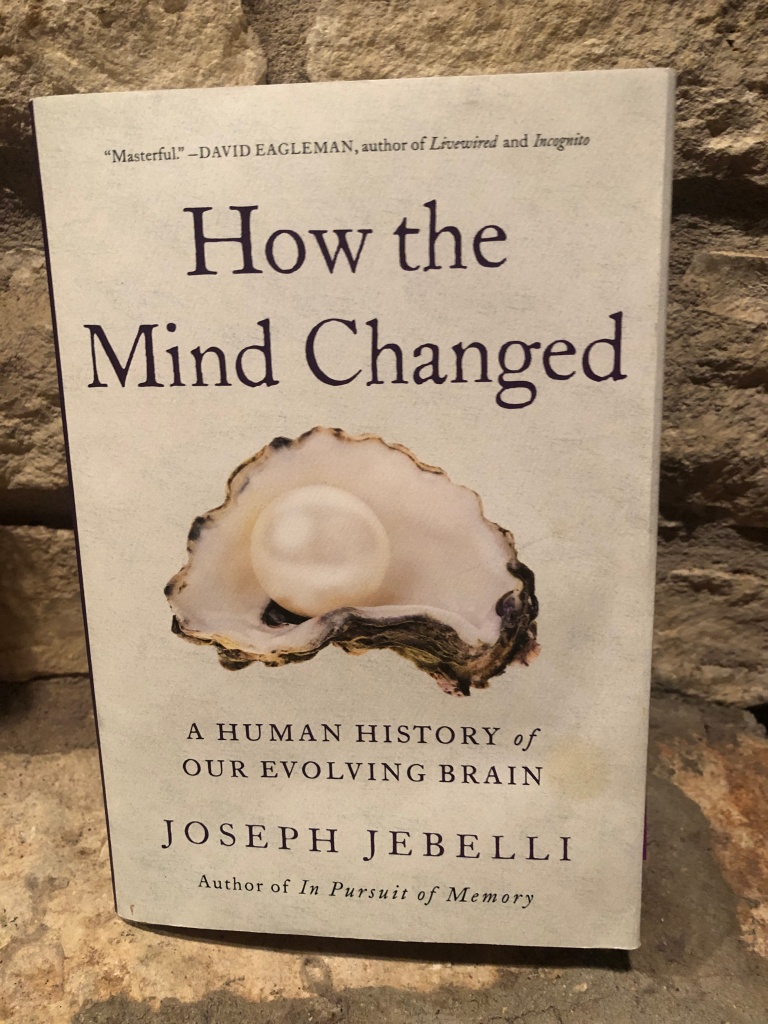
Reportedly one writing instructor has suggested that authors “include smell on every page.” These two mystery writers don’t obey that injunction (do you know any who do?). But why is scent so critical for us? Apparently the amygdala (a paired structure, with one in each temporal lobe) “developed from our most primitive sense—the sense of smell.” Joseph Jebelli, How the Mind Changed (Little, Brown, Spark, 2022, at 30). It’s near the olfactory nerve which is why scents connect strongly to emotions and memories. https://my.clevelandclinic.org/health/body/24894-amygdala

What scents spark your own memories? If a book mentions honeysuckle on a summer day, I might remember my grandparents’ front porch in Itasca, Texas, and how we learned as kids to suck nectar from a honeysuckle blossom. What pops up for you when a book mentions lavender? Or clean sheets? Baby powder? Or iodine, rubbing alcohol, band-aids? Marshmallows toasting on a stick? Pine straw underfoot? The first ocean breeze when you hit the beach? Does a book feel richer to you when your own memories are awakened?

What about the scent of January? Today’s the coldest day of 2024 so far, here in the Hill Country. Inside – hot tea: mint, chamomile, green, or  maybe ginger slices, with honey and lemon. Outside, cedar burning in a neighbor’s brush pile.

Resolution 3: Character’s thoughts (and feelings)! In Treasure Hunt Camilleri includes a hilarious italicized interchange between Montalbano (called “Montalbano One”) and “Montalbano Two” where Montalbano Two criticizes Montalbano One’s case-handling as showing signs of deterioration, of “losing his cool,” highlighting Montalbano’s own concerns about aging. (18-19)

Camilleri also uses other techniques to put us in Montalbano’s head. Here’s one from Rounding the Mark, where, again, Montalbano’s worrying about getting older:

“As he was shaving, the scenes of the previous evening on the wharf ran through his head again. Little by little, as he reviewed them with a cold eye, he began to feel uneasy…. There was something that didn’t jibe….He stubbornly played the scenes over in his head, trying to bring them more into focus. No dice. He lost heart. This was surely a sign of aging. He used to be able to find the flaw, the jarring note…without fail.” (61)

Camilleri lets his character feel. When a small boy is kidnapped from north Africa by sex traffickers and escapes on the pier in Sicily, Montalbano  returns him to his “mother,” not understanding she isn’t his “mother” at all. When the little boy is killed Montalbano visits the morgue:

“He lifted the sheet with one hand…and froze. A chill ran down his spine. It all came back to him at once: the look the little boy had given him as his mother ran up to take him back….he hadn’t understood that look. Now…he did. The little eyes were imploring him. They were telling him for pity’s sake, let me go, let me escape. And now…he felt bitterly guilty…He was slipping. It was hard to admit, but true… “(84)

In contrast, Cormoran Strike is more inscrutable, more unwilling to reveal his emotions, perhaps even to himself. Galbraith describes Strike as a “mentally resilient man” who tries but sometimes fails to control emotion. One of his tools “was a habit of compartmentalization that rarely failed him, but right now, it wasn’t working. Emotions he didn’t want…and memories he generally suppressed were closing in on him…” As a consequence he was “brooding so deeply that he barely registered the passing Tube stations and realized, almost too late, that he was already” at his stop. (105) In one scene after visiting his sister Strike starts home feeling very angry at his dead mother, who died of an overdose when he was nineteen. Galbraith then uses italics for Strike’s mental attack on her: “If you hadn’t been what you were, maybe I wouldn’t be what I am. Maybe I’m reaping what you sowed, so don’t you f*king laugh at the army, or me, you with your paedophile mates and the squatters and the junkies…” (106) These passages show the reader Strike’s painful upbringing and may partially explain his need (and ability) to compartmentalize—both, ironically, key to his later success.

Strike drinks, smokes, has sex, but almost in the same way as he gulps down fast food. Food seems temporarily satisfying, but not a life pleasure. Early on we become aware that the strongest sensation Strike is described as experiencing is the pain of his stump, and the relief he experiences when he removes his prosthetic. In his compartmentalization of his emotions, has he replicated this binary condition? (No spoilers here!)

Resolution Four: The Weather! Camilleri and Galbraith’s characters don’t always focus on weather, but here in the Texas Hill Country we must take notice. It’s too cold (like today), too hot (pretty soon), too wet (spring rain bombs and dangerous low-water crossings), or too dry (like last summer’s dreadful drought). Blessings on March, which will bring bluebonnets and the ethereal prairie celestial, then wine cups, with the pink of redbud and Mexican buckeye to rejoice the eye. But weather’s definitely a factor in upcoming Book 9 of the Alice MacDonald Greer Mystery series. Watch for it—coming soon!