A Mind Unhinged

Posted by Kathy Waller

So you start writing your post about the incomparable Josephine Tey’s mystery novels two weeks before it’s due but don’t finish, and then you forget, and a colleague reminds you, but the piece refuses to come together, and the day it’s due it’s still an embarrassment, and the next day it’s not much better, and you decide, Oh heck, at this point what’s one more day? and you go to bed,

and in the middle of the night you wake to find twenty pounds of cat using you as a mattress, and you know you might as well surrender, because getting him off is like moving Jello with your bare hands,

Elisabet Ney: Lady Macbeth, Detail

Elisabet Ney: Lady Macbeth, Detail (Photo credit: Wikipedia) Attribution: Ingrid Fisch at the German language Wikipedia.  GNU_Free_Documentation_License

so you lie there staring at what would be the ceiling if you could see it, and you think, Macbeth doth murder sleep…. Macbeth shall sleep no more,

and then you think about Louisa May Alcott writing, She is too fond of books, and it has turned her brain,

and you realize your own brain has not only turned, but has possibly come completely unhinged.

And you can’t get back to sleep, so you lie there thinking, Books, books, books. Strings and strings of words, words, words. Why do we write them, why do we read them? What are they all for?

And you remember when you were two years old, and you parroted,

The owl and the pussycat went to sea in a beautiful pea green boat,

because happiness was rhythm and rime.

And later when your playmate didn’t want to hear you read “Angus and the Cat,” and you made her sit still and listen anyway.

And when you were fourteen and so happy all you could think was, O world, I cannot hold thee close enough!, and you didn’t know who wrote it but you remembered the line from a Kathy Martin book you got for Christmas when you were ten.

And when you were tramping along down by the river and a narrow fellow in the grass slithered by too close, and you felt a tighter breathing, and zero at the bone.

And when you woke early to a rosy-fingered dawn and thought

By Dana Ross Martin, (CC BY-NC-ND 2.0), via flickr

By Dana Ross Martin, (CC BY-NC-ND 2.0)

I’ll tell you how the sun rose,
A ribbon at a time,
The steeples swam in Amethyst
The news, like Squirrels, ran –
The Hills untied their Bonnets –

And when you saw cruelty and injustice, and you remembered, Perfect love casts out fear, and knew fear rather than hate as the source of inhumanity, and love, the cure.

And when your father died unexpectedly, and you foresaw new responsibilities, and you remembered,

We never know how high we are
Till we are called to rise.

And when your mother died, and you thought,

Oh, if instead she’d left to me
The thing she took into the grave!-
That courage like a rock, which she
Has no more need of, and I have.

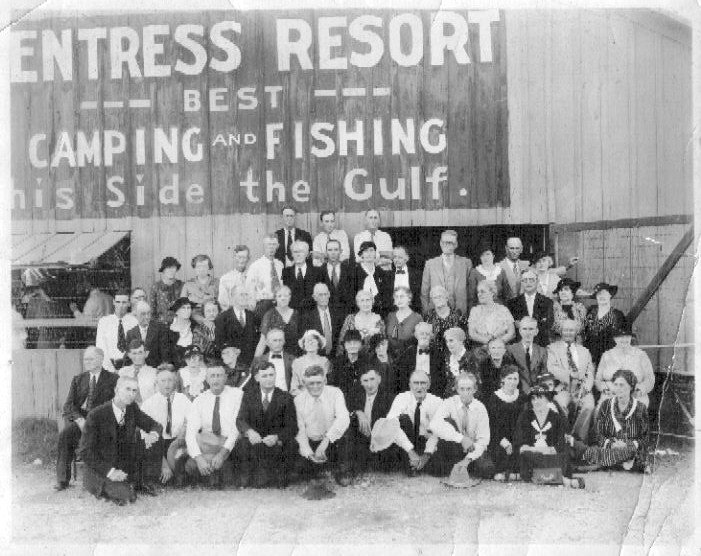
Fentress United Methodist Church. © Kathy Waller

Fentress United Methodist Church. © Kathy Waller

And at church the day after your father’s funeral, when your cousins, who were officially middle-aged and should have known how to behave, sat on the front row and dropped a hymnbook, and something stuck you in the side and you realized that when you mended a seam in your dress that morning you left the needle just hanging there and you were in danger of being punctured at every move, and somehow everything the minister said struck you as funny, and the whole family chose to displace stress by laughing throughout the service, and you were grateful for Mark Twain’s observations that

Laughter which cannot be suppressed is catching. Sooner or later it washes away our defences, and undermines our dignity, and we join in it … we have to join in, there is no help for it,

and that, 

Against the assault of Laughter nothing can stand.

And when you fell in love and married and said with the poet, My beloved is mine and I am his.

And when, before you walked down the aisle, you handed a bridesmaid a slip of paper on which you’d written, Fourscooooorrrrrrre…, so that while you said, “I do,” she would be thinking of Mayor Shinn’s repeated attempts to recite the Gettysburg Address at River City’s July 4th celebration, and would be trying so hard not to laugh that she would forget to cry.

And when your friend died before you were ready and left an unimaginable void, and life was unfair, and you remembered that nine-year-old Leslie fell and died trying to reach the imaginary kingdom of Terabithia, and left Jess to grieve but to also to pass on the love she’d shown him.

And when the doctor said you have an illness and the outlook isn’t good, and you thought of Dr. Bernie Siegal’s writing, Do not accept that you must die in three weeks or six months because someone’s statistics say you will… Individuals are not statistics, but you also remembered what Hamlet says to Horatio just before his duel with Laertes,

There’s a special providence in the fall of a sparrow. If it be now, ’tis not to come. If it be not to come, it will be now. If it be not now, yet it will come—the readiness is all.

And by the time you’ve thought all that, you’ve come back to what you knew all along, that books exist for pleasure, for joy, for consolation and comfort, for courage, for showing us that others have been here before, have seen what we see, felt what we feel, shared needs and wants and dreams we think belong only to us, that

Photograph of Helen Keller at age 8 with her t...

Photograph of Helen Keller at age 8 with her tutor Anne Sullivan on vacation in Brewster, Cape Cod, Massachusetts (Photo credit: Wikipedia)

everything the earth is full of… everything on it that’s ours for a wink and it’s gone, and what we are on it, the—light we bring to it and leave behind in—words, why, you can see five thousand years back in a light of words, everything we feel, think, know—and share, in words, so not a soul is in darkness, or done with, even in the grave.

And about the time you have settled the question to your satisfaction, the twenty pounds of Jello slides off, and you turn over, and he stretches out and leans so firmly against your back that you end up wedged between him and your husband, who is now clinging to the edge of  the bed, as sound asleep as the Jello is, and as you’re considering your options, you think,

The Owl and the Pussy-cat went to sea
   In a beautiful pea-green boat,
They took some honey, and plenty of money,
   Wrapped up in a five-pound note.
The Owl looked up to the stars above,
   And sang to a small guitar…

and by the time the Pussycat and the Elegant Fowl have been married by the Turkey who lives on the hill, and have eaten their wedding breakfast with a runcible spoon, and are dancing by the light of the moon, the moon, you’ve decided that a turned brain has its advantages, and that re-hinging will never be an option.

###

20 pounds of cat. © Kathy Waller

20 pounds of cat. © Kathy Waller

###

http://nfs.sparknotes.com/macbeth/page_58.html
https://www.goodreads.com/author/quotes/1315.Louisa_May_Alcott
http://www.poetryfoundation.org/poem/171941
http://www.vintagechildrensbooksmykidloves.com/2009/06/angus-and-cat.html
http://www.poetryfoundation.org/poem/182477
https://en.wikipedia.org/wiki/Epithets_in_Homer
http://biblehub.com/1_john/4-18.htm
http://writersalmanac.publicradio.org/index.php?date=2002/10/15
http://www.twainquotes.com/Laughter.html
http://biblehub.com/songs/2-16.htm
https://en.wikipedia.org/wiki/The_Music_Man_(1962_film)
https://en.wikipedia.org/wiki/Bridge_to_Terabithia_(novel)
http://www.shareguide.com/Siegel.html
http://nfs.sparknotes.com/hamlet/page_320.html
http://www.shorewood.k12.wi.us/page.cfm?p=3642


Interview with Manning Wolfe

One of the perks of being a writer is having interesting and talented friends. Today I’d like to introduce you to Manning Wolfe.Manning Wolfe Headshot 2

VPC – Manning, welcome to the AMW blog and congratulations on your debut novel! Can you tell us a little something about it?


MW –Yes, it’s called Dollar Signs:Texas Lady Lawyer vs Boots King. It’s the first in a series and this one is set in Austin, Houston, and Port Aransas, Texas. MERIT BRIDGES, an Austin attorney and widowed mother with a lot of sass is the lead protagonist. She works hard, drinks too much wine, and sleeps with younger men. When she goes after a shady corporation threatening her client, she finds Boots King, a hired gun, threatening to kill her.

VPC – I know you’re a lawyer. In what ways did you use your legal background to write the book?

MW – The plot idea for Dollar Signs came from a client that I had several years ago who had gotten involved with an unscrupulous Outdoor Advertising Company (Billboards). Of course, I departed from that scenario fairly quickly in the book as the characters began to develop and the story took on a life of its own. I felt badly for that client and always wished he had gotten a fair shake. In Dollar Signs, I get to have the story turn out as I would have liked in real life. I’ve never practiced litigation although there are some courtroom scenes in the book. I wanted to show the other side of law – the business of it and the strategy that is involved.

VPC – Have you always wanted to be a writer?

MW – Yes, since I was a small child I’ve been spinning yarns and telling tales. I wrote my stories down as drawings, and then in narrative as soon as I was able to write. I loved Nancy Drew growing up and always wanted to write stories with a strong plot. I had great teachers who encouraged proper basic writing habits, so I received a good foundation early on. Much later, I wrote the screenplay of the life of Buckminster Fuller and found that I like combining cinematic style with novel structure. That blend has led me to the way I write today – fast paced legal thrillers with a strong visual component.

VPC – Where did you grow up and how has it affected your writing?

MW – I grew up in a small town just north of Houston called Humble. By the time I was in junior high, I had read every book in our public library. I still remember the wonderful librarian there and her interest in my constant reading habit. My father often asked me to do research in the courthouse archives in Harris County.  Those two things led not only to my legal career, but my writing career as well.  Property and business issues in the law are like a puzzle to me.  I always loved games and still enjoy online games and cards. Sorting out legal problems in real life or in a story is like a puzzle to my brain. I enjoy figuring things out and documenting that in writing.

VPC – Do you have any favorite authors?

MW – I read a lot and across many genres, but my favorites are thrillers. As far as legal thrillers, I like the early John Grisham novels, as well as Michael Connelly’s Mickey Haller series starting with The Lincoln Lawyer. Patricia Highsmith, who wrote The Talented Mr. Ripley, is a master of suspense. John Ellsworth’s Thaddeus Murfee series is very exciting, too. I think Scott Turow’s Presumed Innocent, that was made into a movie starring Harrison Ford, is one of the best legal thrillers ever written. And, of course, most people forget that Harper Lee’s To Kill A Mockingbird, another favorite of mine, was a legal thriller.

VPC – So what’s in store for your next book?

MW – The next book in the series is Green Fees: Texas Lady Lawyer vs Browno Zars, about a young golfer who wants to play the PGA tour and gets snagged up with a dastardly con man. It also was inspired by an actual client who was a golf pro. I’m editing it now for release later this year. I have about a dozen Texas Lady Lawyer novels in mind, some of them are outlined and some are just ideas.

VPC- Sounds good! Thanks for dropping by today and good luck on your new book. 🙂

DOLLAR SIGNS Final Ebook Cover 04

To keep up with Manning and her writing, you can go to her website at manningwolfe.com


Five Reasons To Write Historical Mysteries

Today we welcome a guest blogger, mystery writer Jeri Westerson! She writes the critically acclaimed Crispin Guest Medieval Noir novels. Her protagonist is a disgraced knight turned detective, plying his PI trade on the mean streets of fourteenth century London. 

Jeri_2015 (1)

Her books have been shortlisted for a slew of mystery awards, including the Macavity, Romantic Times Reviewers’ Choice Award, the Agatha, and the Shamus, the first medieval mystery to be nominated for this prestigious PI award. The Boston Globe calls her detective “A medieval Sam Spade, a tough guy who operates according to his own moral compass.”

Jeri also has short stories in several anthologies and talks around the country about the Middle Ages, demonstrating her cache of medieval weaponry.

Jeri is a member of the southern California chapter of Mystery Writers of America, Sisters in Crime, Private Eye Writers of America and the Historical Novel Society. Jeri is married to a commercial photographer, has a screenwriting son, and herds two cats, a tortoise, and the occasional tarantula at her home in southern California.

Jeri, welcome to AMW!


5 Reasons to Write Historical Mysteries

By Jeri Westerson


I’ve been immersed in history all my life. My parents were rabid Anglophiles, stuffing our bookshelves with historical novels, works of nonfiction, and having discussions at the dinner table about the British monarchy. I can definitely name more kings and queens of England than American presidents. I had my own literary relationship with Geoffrey Chaucer and was probably the only kindergartner in Los Angeles who could recite part of the prologue to The Canterbury Tales…in Middle English.


And so many years later when I decided to become a novelist, it was pretty much a no-brainer that I would write historical novels about the medieval period. I switched to medieval mysteries when the kind of historical novel I liked to write proved to be the kind editors didn’t want to publish, though they translated very nicely to the mystery genre and I found success!


  1. I Like To Research.

Let’s face it. If you never liked doing homework or researching for a term paper, this isn’t the genre for you. I rather enjoyed looking things up, tracking down that little fact like a detective, and coming up with oodles of other nifty things by reading those footnotes (ALWAYS read footnotes). And I love libraries and you’ll be spending a lot of time in them. For the kind of thing I need, I spend time in university libraries. I’d love to travel across the pond to do my research in archives, but alas, it’s not in the budget. Fortunately, you can now reach many of these archives online. Some of the items you need might even be scanned and uploaded. Sometimes you still have to pay the archivist to make a copy for you and they will either scan it and email it, or copy it and snail mail it to you. Either way, you’ve made a new friend and possibly a new reader.


  1. The Timeline is Your Outline

When you write historically, readers expect to get a healthy dose of history with their mystery. And if you write a series that will happen over many years, all the better. In my Crispin Guest series, my fourteenth century disgraced knight turned detective, encounters all the juicier bits of the late 1300’s during Richard II’s reign, including a friendship with one Geoffrey Chaucer, running into his former charge Henry of Bolingbroke as he and his Lords Appellant force the king to follow Parliament’s dictates, encounters his former mentor John of Gaunt and his longtime mistress Katherine Swynford, and is on hand when King Richard is ultimately deposed. There’s a lot of intriguing court politics and threats of war going on in the seventeen years the series is taking place, and each year in history helps suggest plot points on which my detective runs afoul of his monarch.


  1. A Ready-Made Audience

Now granted, it isn’t a big audience, so prepare yourself that you will be writing in a niche, which means sales won’t be huge. But there are also many sub genres and cross genres when it comes to historical mysteries. There is also historical mystery/romance, historical mystery timetravel, and every other permutation you can think of. So there is every opportunity to widen that base.


  1. Just the Facts

You must be a stickler for facts. Movies seem to get to play fast and loose with facts. There are millions of people out there who watched Braveheart and think that William Wallace sired a child on the wife of the future King Edward II, when anyone who knows a smidgen of history knows that Queen Isabella was a child of twelve herself at the time and wasn’t even yet living in England. But there were many things about that film that make even amateur historians cringe. You won’t be able to do that with a book. Readers will call you on it. They will abandon the book early if you fudge the facts. They won’t be able to trust any of your book and it will spoil their enjoyment. Just consider it your unwritten contract with your reader that you will do your best to get it as historically accurate as you can.


  1. You Write Because You Like To Read It

As I mentioned in number four, it won’t be a huge market. So there’s no sense in choosing to write something only because you think it’s going to make a lot of money. Get it into your head now that you won’t make a lot of money. There now. Don’t you feel better? If by some off chance your book captures the imagination of readers and hits the bestseller list, mazel tov! If by another off chance Hollywood comes calling and offers to make a series of it, then celebrate. But please don’t ever expect it. You should be writing in a genre because that’s what you like to read. That’s where your writing shines. That’s where you get the most enjoyment writing.


Is writing historical mysteries for everyone? Only if you are a person who enjoys research. And if you are, the entire history of humanity is open for grabs.


silence_rgb

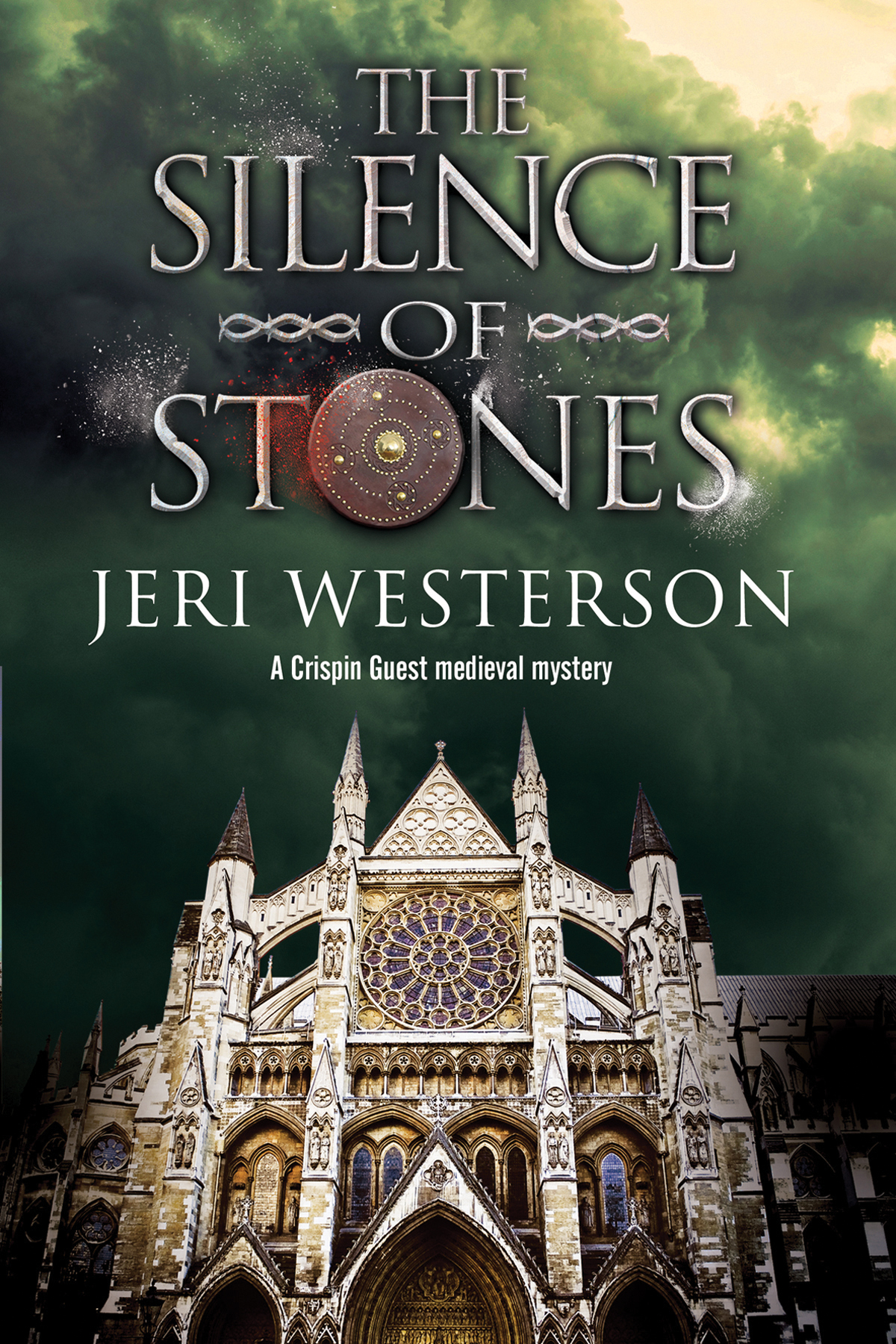
Jeri likes exploring the past, especially with her latest mystery, THE SILENCE OF STONES; A Crispin Guest Medieval Noir, dealing with the Stone of Destiny, Scottish rebels, a dark and brooding knight detective, and murder. Read an excerpt, see discussion guides, and watch the series book trailer on her website at www.JeriWesterson.com.


Who’s on First?

By Gale Albright

Abbott and Costello invented the comedy routine Who's on First

Abbott and Costello invented the classic comedy routine “Who’s on First?”

Abbott and Costello invented a hilarious comedy routine called “Who’s on First?” about baseball. But my questions are not about baseball, but points of view (POV), such as first, second, and third person.

I prefer to write in first person. I don’t want to know too much, like that know-it-all omniscient narrator. It must be exhausting to know everything about what’s going on in a novel. It sounds way too stressful to juggle all that information.

I prefer to write in first person because there are limitations. The narrator only knows how she feels and what she sees. She finds out about the world through her five senses—what she can feel, smell, taste, see, or hear. The reader only knows what the narrator knows.

The first-person protagonist finds out information by personal observation. If she hears gossip, she can only take it on face value. She doesn’t know if it’s true. The reader doesn’t know if it’s true either.

I’ll give you an example from one of my works in progress. In a small Depression-era East Texas town, young Eva knows that Demon Rum is bad. Not from personal experience, but from what her mama and the church ladies in the Temperance Union tell her. She takes it on faith without really thinking about it. When, through a series of bizarre circumstances, she takes a swig of Demon Rum (for investigative purposes only), she feels she is on the road to perdition. She doesn’t know what perdition is, but it sounds pretty bad. Mama and the church ladies are against it.

When Eva asks her father why some old man is always getting drunk and making a fool of himself on Main Street, he tells her not to be too hard on the poor fellow. “Some men just have a sickness in their belly. They crave it and can’t stop.”

After Eva’s clandestine sip of illegal homebrew whiskey, she wonders why anybody would crave something that tastes worse than turpentine. So the reader knows that Eva has a lot to learn. The reader is part of that learning process. Readers will be privy to Eva’s innermost thoughts and feelings and opinions because they have a privileged position inside Eva’s brain.

Writing a story in first person allows intimacy between narrator and reader. The reader has a front-row seat right smack in the middle of the narrator’s psyche. The reader forms a bond with the narrator and makes an emotional investment in the character.

One of the drawbacks of relying on first-person narrative is the reader doesn’t know if the narrator is telling the truth. The narrator may think she is telling the truth, but she might be lying to herself. Where does that leave the reader? You now have the first-person unreliable narrator, which can add a lot of suspense to a novel. The reader doesn’t know whether he’s coming or going. Is the first-person narrator (whom the reader has come to love and worry about and care about) really a deranged psycho, split-personality nutcase? Mercy.

What’s even more interesting in the point-of-view question is the “head hopping” phenomenon.

Have you ever had a piece of writing critiqued for head hopping? This phenomenon occurs when one is writing a first person novel and the narrator knows what other people are thinking. “Aha!” shrieks a critique partner, shaking a red pencil in the hapless author’s direction. “Head hopping! You did head hopping! This is a first person POV and you have the narrator acting like an omniscient third-person narrator who knows what other people are thinking!” Then everyone laughs gleefully and pelts the author with paper clips.

I made that up. That sort of behavior may occur in ill-bred critique groups, but certainly not mine. In my critique group there is no humiliation. Just a gentle reminder that you totally messed up.

But why not have a narrative with creative head hopping? It’s not always so wrong, is it? What about novels with more than one first-person narrator? What if the book has several first-person narrators and they each have several chapters of their own where they all seem to experience the same events in a completely different way?

A good example of a single novel with different first-person points of view is The Other Queen, by Philippa Gregory. The story of Mary of Scotland’s imprisonment in England before her execution is told from the POV of the captive queen and her two jailers. Somehow, in the midst of all three unreliable narrators, the reader begins to see what really happened.

There’s a scary film called The Fallen, with Denzel Washington and John Goodman. The devilish essence of an executed killer escapes when the felon dies and his evil spirit jumps from one person to another—to fellow police buddies Washington and Goodman–and even a cat. Talk about head hopping on steroids, The Fallen has a nasty entity hopping around and possessing the minds of nice folks who turn murderous. If a nasty killer spirit possesses your brain, you will become an unreliable narrator.

Any thoughts about who’s on second?


Comparisons Can Kill (Your Mystery)

While attending a writers conference a few years ago, I found myself drawn to a panel titled, “Writing While Working Full Time.” This session appealed to me on a number of levels. A writer’s life is often envisioned as one where a good part of every day in spent in solitude, unencumbered by the demands of small children, a traditional office gig, caring for aging parents or other responsibilities that threaten to slice up a day into shards of time. This popular author had two small children and a regular job and had successfully published several thrillers. He was going to share his inside tricks and help me better understand what I was doing wrong, allowing me to finally get consistent about a daily word count and progress on my novel.

I was going to GET. STUFF. DONE.

I had pen in hand, ready to transcribe every bit of knowledge onto paper, committing it forever to a reference sheet that I could staple to my wall (or possibly my forehead). After an explanation of his schedule, which included a teaching position and attending his kids’ various events, he said, “It’s important for me to rise early, usually by six o’clock on the weekends, so that I can get a good six hours or so of work done on my book. “

silhouette of woman with puzzle

What does your day look like?

“How do you get six hours of uninterrupted work at your house with two small kids?” one person asks.

“Oh,” he says rather offhandedly. “My wife is in charge of the kids on the weekends until the early afternoon, so she takes them out to the park or to do other things so I can write.”

I closed my notebook.

I would not discover the ultimate time saving hack to help me write my novel amidst the swirling chaos of three small kids, my own work and my husband’s demanding travel schedule.

One thing I’ve come to discover is that whenever I compare myself to other writers, hoping to suss out their secret superpower for prolific storytelling while managing the real world, I realize that I’m making a mistake. I need to make my own way, tweak my schedule the best I can, taking advice but bending its usefulness in my own way.

Jane Friedman’s blog (which is filled with practical advice and counsel) includes a post titled The Secret to My Productivity, where she candidly discusses what advantages she has had in crafting a writing life. Her honesty is such a gift, and it helped me better understand that I needed to work with what I have in terms of time and resources. Yes, some people have more time, more freedom than others. Yes, sometimes that advantage matters. And sometimes it’s a reminder to just get on with it, make better use of what you have, not comparing yourself to others with different life demands.

However, there are cases when more time isn’t better, and I can’t count the number of authors I know who produce quality mystery novels in short periods of time. They have honed their skills, remained consistent and, instead of lamenting the lack of an uninterrupted eight hour day, have embraced time on the subway or early mornings before the kids wake up. They make it happen.

I now understand that comparisons can kill in so many ways. There has never been one path to success, one way to write a book, one way to tell your stories.  It’s just important that you tell them, and whatever that looks like..well, that’s the right way…because you’re doing it in the first place.

–Laura Oles

AMW Author Highlight- Gale Albright

Pieces of Time

“After you learn – and if you’re good and Gawd helps ya and you’re lucky to have a personality that comes across – then what you’re doing is, you’re giving people… little, tiny pieces of time… that they never forget.”- James Stewart, explaining to Peter Bogdanovich what actors do

Three paragraphs into a post about the importance of motivation in character and plot development–working title: “What Do You Want?”–I remembered hearing that As Good As It Gets would be on television. I’d like to see it again, so I checked the schedule for the network that airs oldies.

As Good As It Gets wasn’t running, nor was anything else I wanted to see, but while I was there, I went on to see what’s playing today, and tomorrow, and the next day, until nearly two weeks were planned out. Because it’s so easy to forget these things, I prepared a schedule:

Cropped screenshot of Claudette Colbert and Cl...

Cropped screenshot of Claudette Colbert and Clark Gable from the trailer for the film It Happened One Night. (Photo credit: Wikipedia). By Trailer screenshot, from DVD It Happened One Night, Columbia, 1999 (It Happened One Night trailer) [Public domain], via Wikimedia Commons

Tuesday, December 15
5:45a It Happened One Night
8:00p The Desperate Hours (I love Frederic March and Humphrey Bogart)
10:30p Compulsion (based on the Leopold and Loeb case; Orson Welles as the DA)

Wednesday, December 16
3:40p Come Back, Little Sheba (always wanted to see it, never have)
5:45p Let No Man Write My Epitaph (Burl Ives, always wonderful, and Jean Seberg, ditto)

Thursday, December 17
6:20a Blueprint for Murder (don’t get to see Joseph Cotton much any more)
5:25p Stalag 17 (William Holden and Gary Merrill; what’s not to like?)
8:00p Twelve O’Clock High (Gregory Peck and Gary Merrill; see above)

Friday, December 18
8:00a The Bells of St. Mary’s (Ingrid Bergman; her smile in that last scene makes me reach for a second crying towel; worth getting up early for)

Saturday, December 19
5:15p The Rainmaker (Katharine Hepburn; no comment needed)
8:00p Roman Holiday (Audrey Hepburn; two Hepburns in rapid succession–modified rapture!)
10:40p Father Goose (Cary Grant; well, d’oh)

Sunday, December 20
11:00a The Cheap Detective (Neil Simon’s script, Sid Caesar, Dom DeLuise, John Houseman, Madeline Kahn, Fernando Llamas, Phil Silvers, and on and on…)
8:00p Cheaper by the Dozen (seen it several times, but I love Clifton Webb and Myrna Loy)

And during the rest of the week, there will be opportunities to see Tootsie, Bye Bye Birdie, The Keys of the Kingdom, Oliver Twist (1933 version, with Dickie Moore), Let’s Make it Legal (Claudette Colbert and Marilyn Monroe), That Touch of Mink, and Barefoot in the Park.

And the Shirley Temple Christmas Day marathon, or at least Captain January, might be fun…

I’d be happy to watch nearly everything that network has to offer, one after the other.

(Except The Man Who Shot Liberty Valance. After seeing that one a half-dozen times, I know who shot him and don’t need a review.)

But now, a reality check. The movies are uncut, and they’re interrupted by numerous commercials, so each runs about three hours. Watching the ones named above, minus Captain January because it’s a maybe–would take sixty-three hours. If I watched for sixteen hours straight–nothing else, just sat there and watched–the film binge would take four days. Watching eight hours a day would use up eight days. I hate to admit it, but lying on the couch all day, eating Hershey’s Kisses, watching old films… I could do that. But I won’t.

Because how much time have I spent over my lifetime lost in the fantasy on a small screen? How many hours have I sat and watched instead of taking up pen and paper–or laptop–and writing?

Too many.

James Stewart didn’t make all those marvelous little pieces of time by lying on his couch, watching Charlie Chaplin on TV.

Stories are pieces of time, too, and I want to make more of them. But it’s not going to happen while I’m mesmerized by Hollywood. I have to turn off that television and write.

***


Kathy Waller blogs at Telling the Truth, Mainly12376007_1178023688877814_9154670791884953413_n (3)
and at Writing Wranglers and Warriors.
Two of her stories appear in the anthology
MURDER ON WHEELS (Wildside, 2015).
She’s now working on short stories
and on a mystery novel set in a town
very like the one she grew up in.


Welcome Patric Sanders Back to AMW!

V.P. Chandler here. In continuing my interview series with AMW members, I’d like to introduce you to Patric Sanders. Patric was a previous member who has recently rejoined our group. 

VPC- Welcome back to the group! Why don’t you tell us a little something about yourself, like where did you grow up?

 I was born in Berlin, one month before Hitler invaded Poland, which started WW 2. When the Allied air raids increased in 1942, my mother and I, together with other mothers and children, were evacuated from Berlin, first to rural Silesia, then to Pomerania – now Western Poland. At the end of the war, when the Russians had overrun Berlin, we trekked from close to Prague with a hand-drawn cart back to Berlin. We found our apartment was burned out, and most of our furniture and belongings were destroyed.

I grew up in the Russian sector of the divided city of Berlin. My early play-ground were ruins, discarded trucks and tanks. Even at a young age, the finding of food (berries, fruit, grain), fixing appliances and collecting firewood were important tasks to help my mother.

East Germany was plundered by the Soviets. Rails, machinery, any steel products were taken to Russia. Later, they were returned as Soviet tanks and artillery pieces. German scientists and engineers disappeared from the streets, abducted to Russian research facilities and factories.

But the Western part of Berlin and West Germany received generous assistance from the United States through the Marshall Plan, and many personal gifts by American families through CARE packages and donations. West Germany and West Berlin were rebuilt and quickly became prosperous.

When my mother and I visited our relatives in West Berlin, we enjoyed rarities like oranges, bananas, chocolate, and I loved Wrigley’s chewing gum.

At school, I was taught the superiority of Communism, and that our ‘great friend and brother’ the Soviet Union would bury the capitalist West and defeat America. Despite Communist indoctrination, I received a good education, especially in math, physics, chemistry and geography. I loved reading German and English literature and adventure and mystery tales by Stevenson, Defoe and Edgar Allen Poe. In high school we had two languages – Russian and Latin. From a retired teacher I took private lessons in English. I learned more by listening to the ‘forbidden’ American Forces Network (AFN Berlin) – I loved Glen Miller, Benny Goodman, Louis ‘Satchmo’ Armstrong, and rock’n’roll by Bill Haley, Fats Domino, Louis Prima, Chuck Berry and Elvis. I imitated the way the announcers talked. That’s why later when I worked and met the first British engineers, they said, “Manfred, how come you sound like a Yank?”

I studied electrical engineering & marine electronics at the University of Rostock, which incidentally was founded in 1419 – 73 yrs. before Columbus ‘discovered’ America.

The border in Berlin was open and I often took the commuter train/S-Bahn to West Berlin. I enjoyed Western movies with Gary Cooper, John Wayne and Burt Lancaster – one of my favorites was ‘The Magnificent Seven’ with Yul Brynner and Steve McQueen. Reading the German author Karl May, I was fascinated by the American West, by trappers and Native Americans. As so many Germans, I had ‘Fernweh’ – the urge to travel, the longing to see distant places.

I often went to the Amerika-Haus in West Berlin, a place forbidden to visit by the communists, where one could watch American news reels and movies, listen to jazz, or read American magazines and books.

I dreamt about this far-away land America – this perceived bastion of power, wealth, ingenuity and freedom.

On that fateful day of August 13th 1961, when the Berlin Wall went up, I was visiting my mother in East Berlin. On that day everything changed – the only window to the free West was now closed. Nobody was allowed anymore to cross the Wall. Many people tried and got shot, some bled to death in the ‘no-man’s land’, the death strip.

After university I worked as a test engineer for navigation systems at a shipyard in Stralsund. Six months later, I was drafted into the National People’s Army – NVA. Because of my electronic knowledge, I soon was put in charge of a secret Russian radar unit. After serving 18 months in the army, I worked as an engineer for the State marine electronic company. Now I was hounded by the East German secret police Stasi to join them, to spy on foreigners – but I resisted. I feverishly looked for a way to get out, to cross the border. Finally, in the summer of 1966, I escaped to West Germany in an adventurous way – I describe all this, the Stasi harassment and my escape in detail in my book ‘Chasing The Sun’.


VPC- Where else have you lived?

After my escape to the West, I found a job as electronics officer on a German cable ship In Hamburg. Nobody onboard, except for the captain, knew its mission. We sailed across the Atlantic to Portsmouth, NH and loaded cable. American immigration officials denied my entry permit. Then I discovered the power of the American free press. A young reporter wrote a three-part story about my life under Communism, my escape and the denial of entry into the US. Shortly thereafter, politicians up to the NH governor intervened on my behalf, and I could finally set foot on American soil. I explored New Hampshire, Maine, Boston and even visited the ‘Big Apple’.

Screen Shot 2015-12-07 at 9.35.45 AM

Electronics officer onboard cable ship ‘Neptun’ in Subic Bay Philippines, June 1967

In early 1967, we headed across the Atlantic for the Suez Canal and on to Singapore. After steaming into the South China Sea, our captain announced ‘Your pay will now double. We’re entering a war zone.’ For several months, we laid communication cable for the US Air Force around South Vietnam, from Da Nang to Nha Trang, Camh Ran Bay and Vung Tau, all the way to Thailand. From the ship we saw quite a bit of fighting, once we were almost blown up by Viet Cong swimmers, but they attached their limpet mines to a British tanker which was anchored close-by and blew it to pieces.

After completing my contract, I went to London and worked for the Decca radar and navigation company – the same company which under the Decca record label had rejected the Beatles, but signed on the Rolling Stones. I studied English and English literature at a Cambridge university extension and at school met my future wife.

In 1968, I decided to go after my old dream – America. I got married in London, and I found a job in San Francisco. The year was 1968 – hippies, drugs, protests, racial unrest and crime (we were burglarized & completely cleaned out!) were unfamiliar experiences for us. Future jobs took us to Orange County, Southern California, then to Houston. Through my jobs, I was transferred back and forth between Houston and Seattle several times.

With my electronic background, I worked in the marine industry, in merchant shipping, the offshore oil industry, in commercial fishing on the Pacific coast and Alaska, and in the defense industry for the US Navy and the German Navy. During my professional career I saw many interesting places and met great people, and I took notes.

 VPC- How did you come to live in Texas? Do you like it?

After living in the Seattle area for 25 years, in 2005 we had enough of grey skies, drizzle and rain and we retired to Texas sunshine. We love the Austin area and like to hike in the abundant nature parks together with our rescue dog Max, a Blue Lacy, the Texas State dog.

Screen Shot 2015-12-07 at 9.36.09 AM

With Max at Tejas Camp nature park


VPC- I know that you like American music, like Jazz. What is your favorite music? Did it influence your life? Is it mentioned in your stories?

I like music in many varieties, from rock’n’roll to Blues, Jazz to classical music and opera. When I write, I like to listen to Mozart and Vivaldi. I include music, classical pieces and hit tunes in my writing. In the mid-nineties, I even made a career change and ended up in the Music industry. I directed international marketing for a Seattle-based manufacturing company (audio mixers, amplifiers and studio speakers), traveling all over the world.

VPC- What other types of life experiences do you use in your stories?

During an adventurous vacation in Australia, while diving at the Great Barrier Reef, hiking through the croc-infested swamps of Kakadu National Park and exploring the wild shores of Tasmania, I decided to write an adventure story. I got my first novel published through Random House Germany in Muenchen – ‘Der Schatz vom Barrier Reef’ – The Treasure of the Barrier Reef, under my pen name Patric Sanders.

Barrier Reef cover


VPC- Tell us a little about your books?

My wife urged me to write in English about my life in East Germany and my escape. Based on facts and experiences during that time – life under a communist dictatorship, the far-reaching power of the secret police Stasi and how people coped – I wrote two fiction novels, the cold-war thrillers “Chasing The Sun” and “Singed By The Sun” – both are self-published under Patric Sanders, and available on Amazon Kindle. A third book in the series is in the works – “Hostile Harbors”.

Chasing the Sun cover

Singed By the Sun


VPC- What are you working on currently?

As a follow-up to my German adventure novel (set in Australia), I’m writing an adventure thriller ‘Lethal Encounters’, set in Europe, the Pacific Northwest and Hawaii. It’s an international intrigue, where Russian criminals, German combat swimmers, Navy Seals and an adventurer and his Hawaiian friend, who look for the remains of a Spanish gold galleon, collide on a remote Hawaiian island.

VPC- It sounds exciting! (And to the readers our there, I’ve read a few chapters and it’s very good.)

Thanks, Patric, for the interview. I’m happy for this opportunity to share your story.

patric sanders

For more information about his books, here’s the link to his Amazon Author page. 


The Case of the Naked Picture

"A dazzling, richly textured YA debut." KIRKUS REVIEW

“A dazzling, richly textured YA debut.” KIRKUS REVIEW

A small town in Colorado was recently shocked by a “sexting” scandal involving 100 high school and middle school students sharing nude photographs of themselves and other students.  School officials, parents and police are at a loss to understand and respond–as I can well imagine!

I immediately thought about Brenda Vicars, an Austin area author who wrote Polarity in Motion, a YA mystery that revolves around the issue of sexting. Brenda is an experienced educator, a former teacher and school administrator. She gave me the following interesting interview.

EB: Brenda! Thanks for agreeing to answer some questions. First of all, I guess I thought sexting was a passing fad, and assumed most teenagers would not be involved in this kind of thing. But I just read that more than half of all college students report that they sexted before the age of 18. Does that surprise you?

BV: Yes–that number is way larger than I expected, which may be partially attributed to the loose interpretations of what “sexting” actually means. I still believe that lots of teens don’t want their nude pictures shared–especially with more than the one person who was the intended recipient.

EB: How long has sexting been around? When did you first become aware of it?

BV: I first became aware of it about ten years ago when guidance for parents and educators started being published.

Brenda Vicars has worked in Texas public education for many years. Her jobs have included teaching, serving as a principal, and directing student support programs. For three years, she also taught college English to prison inmates.

Brenda Vicars has worked in Texas public education for many years. Her jobs have included teaching, serving as a principal, and directing student support programs. For three years, she also taught college English to prison inmates.

EB: What do you think is an appropriate response to a discovery like the one in Colorado, where such a large sexting ring has been uncovered?

BV: There should definitely be consequences, but I think felony charges are too extreme when students are voluntarily sharing their pictures with other minors. The felony level category was probably established to apply to adults who deal in child porn.

EB: How serious is this issue? Is it harmful? Is it risky? How concerned should parents of teenagers be?

BV: It might not be any more serious than streaking of the 60s or flashing of the 90s if the pictures were seen only by the intended recipients.  However, once a picture is out there, it can literally go anywhere–including onto child porn sites.  The potential for harm is unlimited both in scope and time.

EB: The legal response to sexting can be quite severe, since having and sharing nude pictures of minors qualifies as possessing and distributing child pornography. is this right? is sexting tantamount to dealing in child pornography?

BV: That’s a great question–and there is no easy answer because the degree of lewdness and the quantity of distribution are different in every instance.  In Texas when sexting first reared its head, it fell into the felony level offenses. But several years ago, Texas statute changed so that minor sexting, first offense, can be a misdemeanor. But even with this reduction of severity, sexting incidents still keep schools, the legal system, and parents challenged.

And, in addition to legal consequences, there can be repercussions at school ranging from community service, suspension, or even expulsion. Sometimes students believe that since their phone is their private property, it is immune from school regulations.  But, when sexting interferes with activities at school, even if the sexting happened at night, Texas schools can take action.

EB: What a nightmare for parents! I suppose one reason we never sexted in my day was that we didn’t have camera phones, smartphones, or digital photography. We had to take film in to be developed–and who is going to do that with a nude picture?

In your book, Polarity in Motion, a teenage girl is horrified to learn that a nude picture of her is circulating throughout her school. It’s a tantalizing mystery, since she has no idea when or how the picture was taken, and you use it to explore a lot of complex issues involving teenagers. Can you discuss some of the issues you find most compelling?

BV: I’ve always been hung up on the numbers of innocent people who, in spite of our well-planned legal system, get incarcerated for crimes they didn’t commit.  News stories about cases being reopened and the innocent being released always strike a note of fear in my heart.  What if these same mistakes happen to students?  Are there cases of high school students being suspended or expelled when they are actually innocent? I hope none of the students I worked with were unjustly punished, but Polarity in Motion is a story of how it could happen.

It’s a thought-provoking book and a great read–146 reviews, of which two-thirds are 5-stars and more than 90% are fours or fives! If you have teenagers on your Christmas list, consider giving them Polarity in Motion, by Brenda Vicars.

Elizabeth BuhmannElizabeth Buhmann is the author of Lay Death at Her Door.

“…blood is shed along the way to a jaw-dropping, but logical, climax that will make veteran mystery readers eager for more…” – Publishers Weekly (starred review)

The Keep Writing Sign

“One of the pleasant things those of us who write or paint do is to have the daily miracle. It does come.” Gertrude Stein

Portrait of Gertrude Stein, with American flag...

Portrait of Gertrude Stein, with American flag as backdrop (1935 January 4) (Photo credit: Wikipedia)

I’m having a hard time getting this post started. First I wrote a sentence about buying Natalie Goldberg’s The True Secret of Writing but stopped half-way through. Then I began a sentence about the book’s title, finished it, and realized it had nothing to do with my topic. I’m still trying to get it right.

For most of us, the first sentence isn’t easy. Neither is the second. Often, the third is troublesome. Sometimes the process just goes on and on.

Okay, scratch that. There’s nothing new in it. I was trying to avoid using the first opening sentence I thought of, because it might be a little off-putting, and I didn’t want you to stop reading. But it’s only fair to warn you:

The section in italics is boring. 

It’s not necessary to read the whole thing, but at least skim a few paragraphs, because if you don’t, you’ll miss the point I intend to make.

Below is a draft I wrote for another group blog, Writing Wranglers and Warriors:

I’d planned to write about Shakespeare today, but a picture of a dress fellow Writing Wrangler Nancy Jardine shared stopped me in my tracks.

Copyright restrictions don’t allow me to display a photo here, and I could never describe it adequately, so I’ll post the link to Blonde and Wise and to a picture of the Bright Red and Yellow Trench Dress so you can see for yourself.

Now. Isn’t that absolutely track-stopping?

I confess I had to look up trench dress. I’d never heard the term. Imagine my surprise when I realized I’ve had trench dresses of my own. Although I love nice clothes, the technicalities have never interested me.

The feature of this particular dress that caught my eye was the plaid. It reminds me of my childhood. There was never a plaid my mother didn’t love and wouldn’t wrap me up in.

And that brought to mind the annual back-to-school treks to Comal Cottons in New Braunfels, Texas, where we bought patterns, fabric, and all the necessary notions to make back-to-school clothes. Friends from up the street and their mother came, too.

We made the trip in July, and started early, to get a jump on the summer heat. The outlet store, about thirty miles from where we lived, was filled with bolt after bolt of cloth. Mother walked slowly, running her hand across every bolt–it seemed to me she touched every bolt–and saying, “Isn’t that pretty,” or, “That color would look good on you,” or, “That would make a cute…” I followed along. My job was to chime about the colors and patterns I liked, but I trusted my mother to do the right thing, and I was bored stiff. I agreed with everything.

Next step, patterns: Opening long metal file drawers, pulling out packets of patterns… Simplicity and Butterick patterns were the best; but McCall’s instructions were confusing. Then, mentally matching styles with material we’d seen, taking patterns to fabrics to make sure, checking yardage and price, reconsidering… I was sure we re-examined every bolt.

By this time my feet were killing me. (I was born with feet designed for sitting). Comal Cottons had no chairs. Three bored tweens, one with aching feet, needed chairs. With chairs, girls can read books. Without chairs, girls stand around, one of them shuffling from foot to foot.

Then, decisions: making choices, stacking bolts on big tables, watching clerks cut material straight across, perfectly straight. and folded them. Despite its name, Comal Cottons also sold wool.

And then, the notions: buttons, thread, bias tape, zippers, lots more considering.

Clackson-tartan

Clackson-tartan (Photo credit: Wikipedia)

And finally we headed for the car, bearing loads of raw material that over the next six weeks would be made into our fall wardrobes. Which in my case would include a plethora plaids. My mother loved plaids.

By the time I reached high school, plaids had retreated from entire outfits to wool skirts worn with solid color sweaters, and trips to Comal Cottons had ended.

Now, like much else of my childhood, the store is a memory. Today it’s found on postcards.

Thank you, Nancy. With just one picture of a plaid dress, you brought back part of my childhood.

On and on and on. To quote my former high school students, BO-ring.

But as I wrote that last line, the daily miracle arrived: A treasured memory of a different piece of fabric surfaced. And then, another miracle:  I realized the story about the shopping trip was just a warm-up, an introduction, brain rubble that had to be expelled before higher quality thought could emerge.

Acting on the epiphany, I found my bit of fabric, snapped a photograph, and added three short paragraphs to what was already there. Finally, I deleted the boring prelude.

The final version–part of it, anyway–looked like this:

Fellow Writer and Wrangler Nancy Jardine recently shared a picture of a beautiful plaid dress that reminded me of  some fabric I’ve saved for more than fifty years. After residing all that time in my mother’s cedar chest, it’s wrinkled but intact.

The fall I turned eleven, my father’s father, whom we called Dad, gave Mother some money to buy me a birthday present. She purchased the wool shown in the photo and made me a pleated skirt. When I was sixteen, she remade it into an A-line skirt and a weskit.

DSCN1342

Note: That isn’t the end. There’s one more paragraph. Read it, please, at https://writingwranglersandwarriors.wordpress.com/2015/11/09/a-scrap-of-plaid/ It’s important, too.

But back to the topic at hand.

To prevent further strike-throughs, I’ll get to the point promised in the Warning:

A boring (bad, terrible, appalling, disgusting, abhorrent, loathsome, etc.) first (second, third, etc.) draft is not a Stop Writing sign. It’s a Keep Writing sign, signaling that brain rubble is loosening up, that something better is in the offing–that the daily miracle will come. Because the only way to get rid of brain rubble is to write it out.

I wish I had more time to work on this. If I did, the daily miracle would arrive.

And this post might be on an entirely different topic. It would also contain less brain rubble.