Music to Our Ears!

by Helen Currie Foster

On April 2 I drove with my writing compadre D.L.S. Evatt (aka Dixie) to Houston to sign books at Murder by the Book. That renowned bookstore has sold mysteries for 42 years. Huzzah!

We’d launched our books–my Ghost Daughter, Book 7 in the series, and her Bloodlines and Fencelines–at our Honky-Tonk Book Launch on December 5, 2021, at venerable Sam’s Town Point, a South Austin treasure for decades. The owner, Ramsay Midwood, declared it was the “first book launch” for Sam’s. Before the band––Floyd Domino’s All-Stars––began playing, Austin Shakespeare’s Ann Ciccolella interviewed us. Her first question: “why have a book launch at a honky-tonk?”

Dixie and Helen

Why? For all the right reasons—great beer signs, dance floor, pool table, and music. But the main reason: murder mysteries set in small Texas towns must have a place where townspeople meet, where news is exchanged and gossip is passed along, where people see friends and frenemies and fall in love, where the past isn’t forgotten but the present is very much in play.

For Alice Greer, the lawyer protagonist in my Ghost series, the century-old Beer Barn is that place. Artisanal beers, excellent Tex-Mex food, the requisite dance floor—and the mix of music that says “Texas Hill Country.” In Dixie’s Bloodlines and Fencelines, that place is Sara’s General Store.

Of course setting is crucial in mysteries. For a small town setting, a “town crossroads” becomes a useful dramatic tool, providing a place where the mystery’s protagonist runs into various characters and hears (and evaluates) their stories, slowly unraveling the truth of a murder. Have you ever lived or visited relatives in a small town? You may have identified potential locations that would work well in a mystery. In Itasca, Texas, home of my maternal grandparents (and the Itasca Wampus Cats), it might’ve been the church fellowship hall, or the one café that served breakfast and lunch, or (I keep returning to this thought) the frigid meat locker downtown where, like many families, my grandmother kept her side of beef, back before home freezers. I still remember the sharp cold vapor of the meat locker. Imagination stirs…

At any rate, Sam’s Town Point was perfect for a book launch. When we scouted Sam’s, Dixie took a look around and said, “There are stories in these floorboards.” So we wrote a song, “Stories in the Floorboards,” which premiered last month at our book event at the Austin Woman’s Club, sung by songwriter/actress Helyn Rain Messenger.

We asked John McDougall at Murder by the Book if he knew of other authors who’d written or commissioned a song for their book launch. He said, yes, Harlan Coben and Jeffrey Deaver had done so, and Lee Childs had commissioned an entire album. Well!

The notion of an album set me thinking of John Rebus, the crusty Edinburgh cop made famous by author Ian Rankin. Rebus, acerbic and brilliant, likes his music. In Black and Blue, he sticks a tape in his car cassette player – Robert Wyatt, Rock Bottom, then Deep Purple, Into the Fire.” That title matches the heat of the fix he’s in at that point. (Later in the series, the cassette player becomes a CD player.) But at home, he still relies on the hi-fi.In Rather Be the Devil, set in his ways, now retired and older than dirt, Rebus knows he has an ominous shadow on his lung as he enters his apartment: “A glow from the hi-fi system that told him he hadn’t switched it off. Last album played: Solid Air. Felt like that was what he was walking through…” https://www.amazon.com/s?k=rather+be+the+devil+by+ian+rankin&crid=11GFHLFGLRGUT&sprefix=%2Caps%2C135&ref=nb_sb_ss_recent_1_0_recent

Rebus has stuck to his old technology. And now he’s ahead of the curve. Vinyl sales are up: “Left for dead with the advent of CDs in the 1980s, vinyl records are now the music industry’s most popular and highest-grossing physical format, with fans choosing it for collectibility, sound quality or simply the tactile experience of music in an age of digital ephemerality. After growing steadily for more than a decade, LP sales exploded during the pandemic.In the first six months of this year, 17 million vinyl records were sold in the United States, generating $467 million in retail revenue, nearly double the amount from the same period in 2020, according to the Recording Industry Association of America.”

https://www.nytimes.com/svc/oembed/html/?url=https%3A%2F%2Fwww.nytimes.com%2F2021%2F10%2F21%2Farts%2Fmusic%2Fvinyl-records-delays.html

Moreover, it’s not retirees pushing this trend: “And while you might think it’s nostalgic Boomers or Gen Xers behind the renaissance of records, in fact surveys show it’s millennial consumers driving the rising trend in vinyl sales.” https://www.themanual.com/culture/why-vinyl-is-coming-back/

Why? For some, vinyls are the new collectible. But maybe it’s about the additional experience involved in listening to a favorite chunk of music. Rebus, for instance, is not listening to streamed music, not asking Alexa to play music that “sounds like” some musician. No, he’s taking a number of steps, both mental and physical, before he begins to experience the music he’s after. He’s choosing an album, seeing the familiar cover again, sliding the fragile (yet powerful) disc from its jacket, and placing it on the turntable. The album represents an entire experience, not just one cover song. Then he’s lifting the arm, carefully lowering the needle, hearing the introductory hum and scratch and—there it is again, the music that lives in his memory and is playing out again right now, in his living room. He’s making music.

Moreover, he’s activating memories, and perhaps comparing the memories of the music with his present situation, as Rebus does here, thinking the song title—John Martyn’s “Solid Air”—“felt like … what he was walking through.” (A compelling description. https://www.youtube.com/watch?v=UikPQOaJpfU)

Writers use music in mysteries to add depth to the protagonist’s character. Inspector Morse, alone in his flat, listens to opera. Lord Peter Wimsey plays Bach on his baby grand; Sherlock Holmes plays the violin and attends opera. Rebus relies on the music of his time, has the albums, still has t-shirts from concerts he attended. Detectives need a listening ear, need to be able to discern the sound of a lie, hear the tremble in a frightened voice. What the sleuth chooses to listen to can almost make us feel we’re hearing background music. Music becomes the continuo, the bass line that we feel beating like a heart as a book comes to life.

Because—even if we don’t know the specific notes Holmes is fingering on his violin, or which Bach fugue Wimsey is toying with, or which Wagnerian album Morse has put on his hi-fi, or precisely what “Solid Air” sounds like, we do have a huge memory vault of similar music that bubbles up as we read a mystery. We may not quite create the same soundtrack the author had in mind, but our brains engage.

Book 5 of my series, Ghost Next Door, involves a murder at the Coffee Creek city park, the night before Coffee Creek’s first barbecue competition. My protagonist, lawyer Alice Greer, is part of the happy crowd under the stars, listening to keyboard geniuses playing varieties of boogie-woogie, a genre which may have begun in the lumber camps of East Texas and still flourishes in Austin. Early in the evening Alice hears “Right Place, Wrong Time,” presaging what happens next. https://www.youtube.com/watch?v=hf15HrUZ5Wk. The following night she and her romantic interest, Ben Kinsear, attend the Pianorama at the Beer Barn (Alice’s favorite client). Six piano players are trading licks, winding up with Freddie Slack’s “Down the Road A Piece,” with its rippling magic trick at the end, https://www.youtube.com/watch?v=OX8TPanPKzU, and ending with Slack’s haunting theme song, “Strange Cargo.” https://www.youtube.com/watch?v=tQM46xi031M

The crowd demands an encore, Alice listens as the theme grows “more complex, begins to create dreams, memories, ambitions.” The music reflects Alice’s emotions.

Music memory involves several different parts of our brain. “Different types of music-related memory appear to involve different brain regions, for instance when lyrics of a song are remembered, or autobiographical events are recalled associated with a particular piece of music.” https://academic.oup.com/brain/article/138/8/2438/330016

And it may be for that reason that music stays in our brains longer than many other memories. https://kids.frontiersin.org/articles/10.3389/frym.2017.00005#:~:text=Our%20brains%20possess%20a%20remarkable,might%20know%20it%20by%20heart.

You already know this. Your personal music catalog—music from your past, your present, your childhood, your teenage years, and the new piece of music you just listened to—is with you, quietly ticking away in your brain, available and waiting. And there’s always more to add.

So, you could check out the line-up at Sam’s Town Point. Go Hear Floyd Domino’s All-Stars. Keep filling the music catalog…

https://www.samstownpointatx.com/

Helen Currie Foster writes the Alice MacDonald Greer “Ghost” series, north of Dripping Springs, Texas, supervised by three burros. She’s fascinated by dirt and water law, as well as human history, and the way the past, uninvited, keeps crashing the party.

Ghost Daughter, Book 7, was named Semifinalist for the BookLife Prize for Mystery/Thriller (“an intriguing and complex narrative”). Book 8 is underway.

blog reference

Book Review: Benjamin Capps’ The Heirs of Franklin Woodstock

by Kathy Waller

George Woodstock received the peculiar phone call on his sixty-sixth birthday. . . He let the phone ring twice, then answered, “Woodstock Machine Shop.”

It was Helen’s voice. “Clara called, George.”

“Where is she?” 

“Your sister. She’s out at Woodstock where she always is. Your papa has escaped from the nursing home.” . . . 

“What in the hell does escaped mean? Did you ask any questions? . . .  Have they put up a fence for patients to climb over? Or did he tunnel out? Did he wound any guards? I thought Papa was in a nursing facility.”

“Please don’t be snotty, George. I’m only telling you what Clara said. I said you’d call back.”

According to Best Mystery Novels, mysteries must meet certain criteria: there must be a puzzle; a detective or protagonist who sets out to solve the puzzle; suspects; clues; red herrings; hidden evidence; gaps in information; and suspense.

The Heirs of Franklin Woodstock  isn’t classed as a mystery.  It’s “general fiction.” Literary fiction. It isn’t shelved  in  bookstores and libraries amongst the Christies and the Hammetts and the Chandlers.

Author Benjamin Capps is famous for his award-winning historical fiction, realistic novels set in an Old West lacking the romance of pulp fiction. He didn’t write mysteries.

But based on the criteria laid out above, The Heirs of Franklin Woodstock is a mystery. On page one, the puzzle is laid out: ninety-one-year-old rancher Franklin Woodstock has “escaped” from the nursing home and is missing. And protagonist George Woodstock sets out on the three-hour drive from Fort Worth, northwest to the town of Woodstock, near his father’s seven-thousand-acre ranch, to find out what’s going on. (Clara, the sister who called, is known in the family as “a dingbat.”)

George’s investigation begins in chaos. The sheriff says they don’t usually find missing persons, just bodies they then identify by going through the files. He has two deputies out looking and will call in more searchers–George offers to help with expenses if necessary–but that’s about all his office can do.

At the Goodhaven Nursing Home, George asks the nurse at the front desk if she has a clue as to what his father might have been thinking in the days before he disappeared. She has a ready, and vehement, non-answer:

“I’m trying to bring the charts up for the next shift,” she said. ” . . . Now, sir, I would like to tell you what is charted again and again about Mr. Franklin Woodstock: Stubborn! Will not eat boiled and mashed carrots. Stubborn! Will not accept bath. Stubborn! Will not let aides assist in toilet. Stubborn! Tries to pinch aide or nurse. Stubborn! Will not lay as asked in bed. Stubborn! Pulls out feeding tube. Stubborn! Broke injection needle. Stubborn! Will not swallow boiled and mashed vegetables. Stubborn! Spits out pills.”

Asked the same question, the ward nurse sticks out a hand: “See that thumb? That knuckle! That’s  where a patient bit me. Just bit me on purpose.  . . .  She’s only got about seven teeth and she sunk every of them into my thumb.”

The Director of Nursing speaks more formally, but her only specific reference to George’s father is that a nurse was fired because she was discovered  bringing him food from home–ground broiled steak mixed with mushroom soup and thermoses of cold beer.

At the Woodstock ranch, George finds a haven in the person of Izzy, housekeeper, cook, compulsive gardener, canner, egg gatherer and churner of butter, and mother to everyone, although she’s probably no older than George. Izzy’s son Juan, who’s always gone by the name of Johnny Woodstock, is, as always, doing the practical–heading out on horseback with tenant-cowhands Buck and Slim to search for their employer. Johnny knows the ranch nearly as well as Franklin does.

Then the phone calls begin, and the six-hour round-trips to the airport in Fort Worth to pick up siblings and to try to keep his small machine shop afloat.

So the suspects gather. With plans. And motives.

Walter, a New York businessman with a degree from Harvard Business School, sees an opportunity to subdivide five thousand acres for an exclusive community, “no low-class people.” With his experience, of course, he’ll head up the project. That Chicano Johnny is good enough for punching cows but using a computer and managing a huge enterprise? Maybe he graduated from high school. Walter has also hired a private detective to find Papa, no matter how far he has to go or how much it costs.

Irma and her evangelist son Wilbur propose a different idea: The ranch will become Noah’s Ark, a combination religious retreat that will attract famous preachers, and a place of safety where every resident will be armed, a thousand rounds of ammo for each rifle, seeds, chainsaws, experts who can fix windmills and water pumps, animals two by two . . . because Russia, or somebody, is preparing to drop the Bomb. They’ve thought it out to the nth degree. Papa was a Born Again Christian and would have approved. Wilbur will probably be the first president, receiving a modest salary of $60,000. Irma had suggested $100,000.

Clara seems to want only to spoil her grandchildren, and Clarence, with a Ph.D. in literature and teaching in California, seems only to want to sit up all night with George, sharing several six-packs and talking old times. But Frank, his geologist son, believes the ranch sits on deep oil wells that could be profitable.

During George’s long drives between Fort Worth and the ranch, we learn a lot about Franklin Woodstock. He hasn’t always been “stubborn” or “Born Again.” He’s been a hard worker and a shrewd manager, starting with nothing and acquiring land and cattle, building “the Old Place” and later a large house, adding stock tanks and windmills, working alongside his hands in every endeavor. He has raised a family and sent his children to any school they wanted. When Clara’s grandson, Homer, who is “different,” is expelled from third grade for arguing unintelligibly with the teacher because he doesn’t want to sit down, and then (it is assumed) keeps breaking into the school library and stealing books (which are always returned), Franklin somehow smooths things over and starts building a library in his own home; the break-ins cease. Homer can’t read but seems to think if he could , he would understand what everyone else does.

Franklin Woodstock is the best man George has ever known.

We learn a lot about George, too: a surveyor with the CCC, a navigator who flew forty missions over the Pacific in World War II, an assistant engineer with the U. S. Army Corps of Engineers, a machinist and tool-and-die maker. He’s a man  with a high school education who wants to work with his hands, and he’s good at it. His father respects that and has promised him $100,000 to expand his business–a loan, not a gift. But with nothing on paper, and no witnesses to the promise, George doesn’t know whether he’ll get the money. And he feels guilty for even thinking about it.

He’s also worried that his siblings are behaving as if Papa is already dead. Walter says they can have him declared so. Walter is determined. Who knows what the others will agree to?

Although the active characters are the heirs of Franklin Woodstock, the old man holds the novel together. He’s missing. Is he dead or alive? Will they ever know?

What happened to Franklin Woodstock? There’s the mystery.

There are, of course, clues, red herrings, hidden evidence, gaps in information, suspense–all of the other basic criteria. But it would be a shame to share too much here.

As they say in fourth-grade book reports, if you want to know what happens, you’ll have to read the book.

***

A word about the author:

Benjamin Capps was born in 1922 in Dundee, Archer County, Texas.

At fifteen, he entered Texas Technological College in Lubbock but left after a year to work in the Civilian Conservation Corps and then as a surveyor in the U. S. Department of Engineering. As a navigator, he flew forty missions over the Pacific in World War II. He received two degrees in English and journalism from the University of Texas and taught at Northeastern State College in Oklahoma. But teaching didn’t allow him time to write and drained his creativity. He became a machinist and tool-and-die maker before becoming a full-time writer. He lived in Grand Prairie, Texas.

In “Benjamin Capps Papers: A Guide,” (University of Texas Arlington Special Collections), it notes that,

According to Capps, his writing’s aim is to be authentic and “to probe the human nature and human motives” involved in his stories. His works are painstakingly researched for historical accuracy and generally explore lesser known facets of the American frontier. 

Three of his books won Spur Awards from the Western Writers of America. One novel and one work of nonfiction received a Wrangler Award from the Cowboy Hall of Fame and Western Heritage Center. He was the recipient of numerous other awards.

Dundee, Capps’ birthplace, is nineteen miles from Archer City, where Larry McMurtry was born eleven years later. Capps never achieved McMurtry’s fame (or notoriety).

But he’s been counted among writers such as Walter Van Tilburg Clark and Conrad Richter for writing about the Old West with “compelling authenticity.”

James W. Lee, Director, Center for Texas Studies, University of North Texas, calls his Woman of the People “the finest novel ever to come out of Texas.” (Note: Lee is right.)

He also says “Ben Capps is the Texas author whose work will still be read a hundred years from now.”

***

Kathy Waller has published short stories and one novella, Stabbed, written with Manning Wolfe. She blogs at Telling the Truth, Mainly.

*

Sources:

Benjamin Capps. The Heirs of Franklin Woodstock. Lubbock: TCU Press, 1989.

Spur Award for the Best Western Novel

Texas Archival Resources Online

Encyclopedia.com

Texas Escapes

Within Hours

Book flap and blurbs

Master’s class, “Literature and Lore of the Southwest,” Southwest Texas State University, taught by Dr. Dickie Heaberlin, 1984. Memory and informed opinions of Kathy Waller, student.

Cover image: Amazon.com

Sisters in Crime, Thank You!!!

By K.P. Gresham

First off, the best job I ever had (short of writing mysteries) was teaching. And yes, I taught Middle Schoolers, which most people think is the worst possible teaching job you can have. Not me. I loved the students, and I loved my fellow teachers and staff. The kids were sponges. As long as you weren’t a jerk to them, they weren’t a jerk to you. And when they succeeded, both teacher and student won. The same could be said for all of us school employees who came to work every day to help those students become educated, excellent citizens.

What does that have to do with Sisters in Crime? Well, this time I’M the student, and my fellow chapter members and I are the sponges, learning as much as we possibly can to be better writers, readers and business people.

Sisters in Crime (SinC), both on the national level and the chapter levels, provides the teaching. The organization is based solely on helping readers and writers, women and men to learn their craft and sell their books.

SinC is the premier crime writing association focused on equity and inclusion in our community and in publishing. The association, founded in 1986, has 4500+ members who enjoy access to tools to help them learn, grow, improve, thrive, reinvent if necessary, and to share the lessons they’ve learned during their mystery writing experience.

4500+ members? That’s a whole lot of folks to learn from!

SinC National offers many resources to mystery readers and writers. They support a large international network of local chapter with grants, webinars, a central bank of crime-writing research, etc. They support local libraries and independent bookstores. National also provides a monthly newsletter called inSinC which is sent to every member.

Local chapters are where the meatiest teaching takes place. In the last year, our Heart of Texas Chapter centered in Austin, Texas, hosted a plethora of programs spanning the mystery writing need-to-know list. NY Times Bestselling author L.R. Ryan shared her secrets to plotting the blockbuster novel. Cathy DeYoung, a former LAPD CSI fingerprint analyst (and the inspiration for the character of Abby on the TV show, NCIS) walked us through the steps of exploring a crime scene. Mike Kowis, a mild-mannered tax attorney for a Fortune 500 company AND a fellow author, taught us the ins and out of the tax code for authors and other legal matters.  Oh, and we were graced with a frank Q & A with the U.S. District Judge of the U.S. District Court for the Western District of Texas.

Honestly. Why would a writer not want to learn from these experts??  And these incredible lessons all were brought together through the Sisters in Crime organizations.

Once you get past the realization that we kill people for a living (on the page, of course), crime writers and readers are a very supportive, very giving group of people. And Sisters in Crime is the best way to get to know them.


***

Some Book Recommendations

by VP Chandler

VP Chandler

I’ve been reading this summer and wanted to share some great books with you!

The Blessing Way is book #1 of the famous Leaphorn and Chee series by Tony Hillerman. This series has been in my TBR (To Be Read) pile for years and I’m happy to say that I finally got around to it! I knew that it would be good because everyone I’ve talked to has loved these books. Even knowing that, I was pleasantly surprised. Leaphorn is interesting and has an inherent understand about people and what makes them tick. His internal dialogue also teaches the reader about his heritage and culture. I honestly found that aspect of the story to be entertaining and enlightening. It was also full of suspenseful action. There’s a seen where a character is stalked by something or someone in the night. That scene was the best in the book! It was chilling and creepy. I loved it. *happy chills*

I’m currently reading book #2, Dance Hall of The Dead and it’s just as creepy and suspenseful.

Good Reads description of The Blessing Way: Homicide is always an abomination, but there is something exceptionally disturbing about the victim discovered in a high lonely place, a corpse with a mouth full of sand, abandoned at a crime scene seemingly devoid of tracks or useful clues. Though it goes against his better judgment, Navajo Tribal Police Lieutenant Joe Leaphorn cannot help but suspect the hand of a supernatural killer. There is palpable evil in the air, and Leaphorn’s pursuit of a Wolf-Witch is leading him where even the bravest men fear, on a chilling trail that winds perilously between mysticism and murder.

The second book that I recommend is The Far Empty by J. Todd Scott. It’s also the first in a series, the Chris Cherry series. While it also has a landscape that’s remote, isolated, and vast, this book is quite different. The story is told in alternating chapters from different characters. It took me a bit to get the characters straight, but once I did that, it took off. Scott does an excellent job of capturing the feel of the west Texas landscape and its people, especially bullies in small towns. As most good books, there’s a showdown of sorts and my nerves were raw, waiting to see what happens. It’s not a small book but you’ll be turning pages.

Good Reads description: Seventeen-year-old Caleb Ross is adrift in the wake of the sudden disappearance of his mother more than a year ago, and is struggling to find his way out of the small Texas border town of Murfee. Chris Cherry is a newly minted sheriff’s deputy, a high school football hero who has reluctantly returned to his hometown. When skeletal remains are discovered in the surrounding badlands, the two are inexorably drawn together as their efforts to uncover Murfee’s darkest secrets lead them to the same terrifying suspect: Caleb’s father and Chris’s boss, the charismatic and feared Sheriff Standford “Judge” Ross. Dark, elegiac, and violent, The Far Empty is a modern Western, a story of loss and escape set along the sharp edge of the Texas border. Told by a longtime federal agent who knows the region, it’s a debut novel you won’t soon forget.

Recommendation #3 is South California Purples by Baron R. Birtcher. It’s set in 1973 and starts out with an easy feel of a typical traditional Western. Then rancher Ty Dawson gets conscripted into helping the county’s law enforcement, who seems to have no interest in dealing with the growing problem. When time after time Dawson doesn’t get help from the local cops, Dawson decides to handle matters as he sees fit. If you’re looking for a mix of hard-boiled with a Western, this book fits the bill. Biker gangs vs. cowboys. You know it’s full of action. *trigger warning- it does deal with rape*

From Good Reads: Cattle rancher Ty Dawson, a complex man tormented by elements of his own past, is involuntarily conscripted to assist local law enforcement when a herd of wild mustangs is rounded up and corralled in anticipation of a government auction, igniting the passions of political activist Teresa Pineu, who threatens to fan the flames of an uprising that grows rapidly out of control.

As the past collides with the present, and hostility escalates into brutality and bloodshed, Ty is drawn into a complex web of predatory alliances and corruption where he must choose to stand and fight, or watch as the last remnants of the American West are consumed in a lawless conflagration of avarice and cruelty.

I hope this helps you find some new books. And remember, whenever possible, please try to purchase your books from local, independent bookstores. Thank you!

Where Are We? Trowels Up!

by Helen Currie Foster

Try to imagine a mystery without its setting. What? You’re having trouble?

Open a mystery and be denied the setting. What? You’re getting irritated? Why?

We use our senses to smell, to see, to hear, to feel a setting. We LIVE in our own settings, with their dimensions of sight, smell, sound, touch, with plants to see and smell and touch, other humans to love or fear. We use all our senses to apprehend a setting, and we imagine with those senses when we engage in a mystery setting. A mystery without a setting? Our imaginations would feel so deprived.

And if we’re talking about a “regional” mystery without a setting—what’s the point? I read about Venice because I want to feel I’m there as well as follow Guido Brunetti around his favorite canals. If it’s one of Spencer Quinn’s  Chet and Bernie mysteries I want to ride with Bernie in his beat-up Porsche, with Chet in the front seat (his tongue hanging out of course), cruising through the Arizona desert.

Texas mysteries? Local color, please. Note that term “color,” that appeal to our senses! The color of eyes and landscapes, the sound of accents and music, the feel of dry wind or thunderstorms, the scent of salsa and barbecue, saddles and blankets, cedar and limestone, creek water and cypress trees. We want it all.

We mystery writers face so many decisions. Protagonist? Characters? Point(s) of view? Tenses? Oh yeah, the plot? But perhaps paramount? Setting.

At last year’s Bouchercon conference in Dallas, Elizabeth George told a rapt audience (including me) that in her Lynley series she begins with the setting. She described visiting various settings and how the characters emerged in her imagination—from the place.

Alexander McCall Smith agrees that in his novels, location is as important as the characters. “Place is often terribly important to us,” he said. “And to describe it is to describe our feelings for the world.”  Our feelings for the world! Or at least, for the world of that setting.

Smith describes how he begins a book: “I mentally write the first paragraph and, on occasion, the last paragraph. With these two elements in place, all that remains is to write the bits in-between. The first sentence is very important. For me, that can set the whole tone of the book, and once I have the first sentence the task of writing proves relatively easy.”

His first sentence usually drops us directly into the setting, as in To the Land of Long Lost Friends (Pantheon Books 2019):

“Precious Ramotswe, founder of the No. 1 Ladies’ Detective Agency, doyenne of private investigators in Botswana (not that there were any others, apart from her assistant, Grace Makutsi), wife of Mr. J.L.B. Matekoni (garagiste and past chairman of the Botswana Motor Trades Association, citizen of Botswana)—that same Precious Ramotswe was sitting in the second row of chairs at the open-air wedding of Mr. Seemo Outule to Ms. Thato Kgwadi.”

The paragraph continues: “It was a hot day in October, a month of heat and unremitting thirst for the land and all that lived upon the land: the cattle, the wild animals, the small, almost invisible creatures that conducted their lives in the undergrowth or among the rocks, creatures whose very names had been forgotten now. They were all waiting for the rains…”

We know we’re in Botswana at an open-air wedding where we’ve learned of the sleuth, her partner, and her husband, but the rest of the paragraph tells us even more: it’s hot and dry October, a time of “unremitting thirst for the land and all that lived upon the land: the cattle, the wild animals, the small, almost invisible creatures that conducted their lives in the undergrowth or among the rocks…”

We’ve felt how the protagonist, Precious Ramotswe, lives and breathes awareness of her country, where all creatures—human and otherwise, even the invisible creatures whose names have been forgotten—are waiting for the rains. What an appeal to imagination! Maybe this setting has extra appeal for readers in central Texas who know all too well the unforgiving heat of August, its crunchy dry grass, cracks in the soil, and desperate deer, waiting for a rousing thunderstorm to refill dry water tanks and refresh even the “small, almost invisible creatures” that surround us.

So a mystery setting is much more than a GPS setting. Accuracy’s important, as Rhys Bowen emphasized in her presentation to HOTXSINC (Heart of Texas Sisters in Crime): the writer risks losing all credibility with mistakes in location or description. But the mystery setting must include how the characters feel about the setting—which reveals more about the characters.

Here’s the beginning of Josephine Tey’s To Love and Be Wise (copyright 1951; Scribner Paperback Fiction 1998), with her series protagonist, Alan Grant of Scotland Yard:

“Grant paused with his foot on the lowest step, and listened to the shrieking from the floor above. As well as the shrieks there was a dull continuous roar; an elemental sound, like a forest fire or a river in spate. As his reluctant legs bore him upwards he arrived at the inevitable deduction: the party was being a success.

“He was not going to the party. Literary sherry parties, even distinguished ones, were not Grant’s cup of tea. He was going to collect Marta Hallard and take her out to dinner…The roar of the party’s success came flooding out through the open doors on to the landing, and Grant paused to look at the yelling crowd asparagus-packed into the long Georgian room and to wonder how he was going to pry Marta out of it.”

Ever felt like that, dear reader? Ever dreaded having to walk into a “roaring success” of a party with a “yelling crowd asparagus-packed”? I’m betting most of us (with our share of introversion) have “reluctant legs” in such situations. On Tey’s first page we learn Grant’s a “presentable escort,” a Detective Inspector at Scotland Yard, and can “afford to dine at Laurent’s.” But his “reluctant legs” indicate how this privileged character feels about even a “distinguished” literary sherry party. By dropping us into this particular London setting Tey helps us identify with her protagonist by his reaction to that setting. We walk with his “reluctant legs” up those steps. We understand that he (probably like us) is there because he feels an obligation, and, despite his feelings, he’s a man who meets his obligations.

Setting’s critical for regional mysteries. “The setting may define the mystery: an Arizona book, a Missouri story, a Cape Cod [or a Texas] mystery. In regional mysteries, the setting is more than mere background. The setting influences the characters and plot. It drives the story.” (Emphasis added.)

Texas writer Tex Thompson pointed out in her recent presentation to HOTXSINC that one way to dial up the conflict in our mysteries is to dial up the contrast between the character and the setting.  For example, is the protagonist a fish out of water? In my Ghost Cat, the protagonist Alice practices law in a small Texas town but fears any firearm other than a flare gun and feels like a complete impostor on a horse.

One engaging archeological mystery dive is Elly Griffiths’ Ruth Galloway Series set on the marshes of Norfolk, England. Ruth, a forensic archeologist, is often called to help local police when bones are found at construction sites. She feels many disconnects—unmarried mother of a daughter, slightly overweight, harassed by her university department head––but takes pride in her competence as a sharp-eyed and professional archeologist. She lives on a lonely road by the coastal saltmarsh, where water meets land, a liminal area with Bronze Age artifacts buried deep. Her love for this location drives the plot and enriches her character:

“Her favourite place. Beyond her front garden with its windblown grass and broken blue fence there is nothingness. Just miles and miles of marshland, sported with stunted gorsebushes and criss-crossed with small, treacherous streams…Ruth has absolutely no idea why she loves it so much.”

I wonder if archeology offers a challenge to our own imaginations. Just north of Austin is an archeological site including the “Gault Assemblage.” Very careful long-term excavation and documentation of the site now reveal human occupancy up to 20,000 years ago—much earlier than traditionally thought. The dates for human habitation in North and South America keep moving further and further back. And why wouldn’t early people have chosen this area? It’s on water…there’s chert available to chip into powerful tools…the nearby plains furnished buffalo. Similarly, recent breakthroughs in dating Neanderthal tools have pushed back dates for their culture by several hundred thousand years. Most artifacts of that age are lithic (rock points, rock knapping), and it takes sustained imagination and examination to understand what our ancestors were up to. It takes human imagination, staring at a biface point, looking at a reassembled cobble, to see the chipping techniques our ancestors developed, to begin to grasp the complex reality of their daily lives—their setting. Rebecca Wragg Sykes, Kindred: Neanderthal Life, Love, Death and Art.

In a way mystery-writing is archeological. In our imaginations we excavate clues from the past—perhaps an imagined past—to recreate what happened, or could have happened. We recreate in our imaginations what our characters saw, smelled, heard, felt…and did. Maybe the more richly we imagine the setting, the more the characters can come alive.

Okay, trowels up. Back to the trenches. Well, not archeological—but fingers on keyboards, pens on paper.

***

Helen Currie Foster is author of the Alice MacDonald Greer mystery series, her latest, Ghost Cat, was published in April 2020.  She is also author of The Bloody Bead, a Bullet Book Speed Read, co-written with Manning Wolfe.

Writing Humor in Mysteries

By K.P. Gresham

kp gresham

I recently appeared on a “Writing Humor in Mysteries” panel at the Pflugerville, Texas, Library along with fellow authors Kelly Cochran and Nancy West.  My first reaction was the old adage, “Dying is easy, comedy is hard.” Unless you’re talking about the Pink Panther and Inspector Clouseau, one doesn’t usually think that humor and death work well as a pair. 

Although the mysteries I write are serious, I find that interjecting comedy into the either the character or plot (or both) really moves the action along. It picks up the pacing, gives more depth to characters, and sometimes you just have to lighten the moment for the reader as the plot turns darker and darker.

I once read a blog by Zia Westfield (www.ziawestfield.com) and she outlined five elements that often appear in comedic mysteries.

  1. The Screwball Heroine (think “I Love Lucy”)
  2. The Wacky Secondary Character (obviously Ethel Mertz comes to mind)
  3. The Snowball Effect (Events become more and more out of control)
  4. Whatever Can Go Wrong, Make it a Hundred Times Worse (back to Lucille Ball)
  5. Snappy Dialogue and Word Choice (Here pacing is everything)
Preacher's First Murder

In more serious murder mysteries, however, to me its all about the characters. For example, its possible to have a series of homicides and a very serious detective, but a side character can provide the comedic relief. In The Preacher’s First Murder, an elderly woman has gone missing and is considered to be in danger. Very scary stuff for the family. Enter an idiot rookie “hunter” who didn’t know a rifle from a shotgun. His exploits provided the needed chuckle to break up the intense drama.

I’ve also found that putting my hero in a foreign place presents lots of opportunity for the hero’s inner dialogue to ponder this “new world.” Again, in The Preacher’s First Murder, the hero, originally from Miami, has moved to small town Texas. The first time someone says “She makes a hornet look cuddly” he realizes he’s not in…well, you know.

For me, the easiest way to write humor is in first person, and I’ve found it to be a lot of fun. Most stories come from experiences I’ve had, a belly laugh all over. “Write What You Know”, as they say. Perhaps it goes without saying but I’ll say it anyway. It really helps to write humorous mysteries if you have a sense of humor yourself. Odds are that what makes you laugh will make others laugh too.

Anyway, feel free to check out the writing comedic mysteries at https://www.youtube.com/watch?v=0Ur2gyXHEvM&feature=youtu.be

Special thanks to Margaret Miller for the invitation to participate and awesome kudos to my fellow panelists Kelly Cochran and Nancy West!

Check out more about K.P. Gresham at her website, http://www.kpgresham.com

Her books in the Pastor Matt Hayden Mystery Series include

The Preacher’s First Murder

Murder in the Second Pew

Murder on the Third Try

Characters Inspired By Real-Life People: Eldon Chandler

VP Chandler

by V.P. Chandler

There are a wide variety of fiction writers. Some are “pantsers”, who don’t write an outline and just write whatever pops into their heads. And others are “plotters”, who write outlines and make sure that the story follows a three-act structure or whatever structure they think is best. (I’m in between. I do a little of both but try to stay on track.) But I think that we all have something in common. I think that we use real life people as inspiration for our characters.

While writing my first novel, Gilt Ridden, I needed a character that was wise, experienced, and knew how to make bullets. Did I know anyone like that? There was no question. I based the character on my husband’s father’s cousin, Eldon Chandler, and named him accordingly. The Eldon in my story is a throwback to the era of cattle drives and skirmishes with native tribes. And like men of his day, he made his own bullets. The real Eldon was not much different. He grew up in West Texas when it wasn’t much different than the cattle drive days.

Eldon “Slim” Chandler was a living example of integrity and grit. He was born in 1926 just outside of Lubbock, and like most kids of that era, he was tough and resourceful. He grew up to be a big bear of a guy, with a barrel chest, and had a deep voice to match. He was over six feet tall and extremely strong. He told us a lot of stories about his life and one that sticks in my mind was when he drove a beer truck. Instead of using a dolly to carry the kegs, he’d put one under each arm and carry them inside the bar. He liked the surprised looks on people’s faces when they realized these were full, not empty, kegs of beer. He always laughed when he told us the story.

He was an excellent marksman and an award-winning trap shooter. Once when I was fishing with his son, Victor, Victor told me that they did trick shooting as a family for a while. The kids would practice twirling wooden guns while they watched Bugs Bunny cartoons. I love that image. That’s such a “Chandler” thing to do.

So, I guess it’s also no surprise that back when I married into the Chandler family and was living on a farm/ranch in the middle of rattlesnake country, Eldon gave me my gun that I’ve used to kill hundreds of rattlesnakes. It’s a .410 shotgun called a “Snake Charmer”. I remember when he was visiting and gave it to me. I liked how it handled. It’s a small shotgun and perfect size for me. He said, “Keep it. It’s for you.” No, it’s too much. “I got it for you. You’ll need it.” And he was right! I think of him every time I take it hunting. And to go along with all of those talents, he also became a craftsman at making homemade knives. He could take an old oxidized butcher knife and turn it into a work of art.

You can see where he imprinted his name.

In 1945 Eldon had married Othella Owens, who was equally an incredible person. She was tall and artistic. I never saw a woman who wore so much turquoise. She’d wear large turquoise and silver rings, earrings, and necklaces, sometimes all at once. It would have looked ridiculous on someone else, but it was somehow flawless on her. She was amazing. She could paint anything or take a bunch of horseshoes and somehow turn them into art. They were a perfect pair.

And Eldon, like most Chandlers, took his family bond seriously. Like I said, Othella was an Owens. Well, back in 1927 her uncle, Jake Owens, had been a deputy sheriff. Sheriff Robert Smith and Deputy Owens had arrested two men for stealing a bale of cotton. They were decent lawmen and they took the suspects home to change clothes before transporting them to jail. But one of the suspects had gotten a gun and concealed it in his clothes. In route, he pulled out the gun and shot Sheriff Smith in the head, killing him. Deputy Owens jumped from the vehicle but was gunned down. The sheriff and Deputy Owens were buried side by side. The suspect was eventually sentenced to death and electrocuted at the Texas State Prison in Huntsville on October 17th, 1930. The second suspect was released 14 years later. Some time, I assume after Eldon married Othella in 1945, Eldon learned that the second suspect was working in a shop in Odessa. Eldon drove the long distance and paid him a visit at the shop. With his words and his presence, he told the guy that he needed to make himself scarce, he wasn’t welcome. The guy tried to act big. When he asked who Eldon thought he was to make such a proclamation, “My name is Eldon Chandler and I’m married to an Owens.” That was enough for the man. He never returned to the shop and hightailed it out of West Texas.

Thank you for letting me tell you about a wonderful man who leaves behind a legacy of faith, love, grit, humor, and art. My character only played a small part in my story, but since he was a larger than life person, I’m sure that I’ll use the real Eldon for inspiration in other stories. I also used his father, Price, briefly in my novel. I had forgotten at the time that Price was Eldon’s father. I just remember a lot of funny stories about him and wanted to use someone who was humorous yet wise.

I’ve had people ask me if I was ever bored in West Texas. No. And whenever I write a story, I try to capture the spirit of the place, both good and bad.

Link to more info about Deputy Jake Owens

Learn more about V.P. Chandler and her writing at www.vpchandler.com

Five Mysteries You May Have Missed


by Scott Montgomery

Today we have a guest author, honorary AMW member, Scott Montgomery. He’s well-known in the Mystery community and is a book seller at Book People in Austin.  His most recent work appears in The Eyes of Texas: Private Eyes From The Panhandle To The Piney Woods anthology, which was nominated for a 2020 Anthony award. Available at Book People here.


When the pandemic hit, it affected the book world like the rest of society. Authors who had books out in the spring and early part of the summer got word of their work lost to book stores being down, publishers strategizing, and the plain fact people had other things on their minds. As a bookseller there were novels I was excited to promote. Two authors whose books I loved were scheduled to do an event on the first day we shut down. To hopefully get the word out some more, here are five books released during that period, you should go back and find.

1. A Familiar Dark by Amy Engel
If you are looking for a sunny novel to take you away from current troubles, look down the list. If you have the fortitude and interest for a truly bleak rural noir, grab this immediately. Engel follows a single mothers’ quest for answers and revenge when her twelve year old daughter is murdered along with her best friend and she struggles not to become like the person she most feared, her drug dealing mother. The story gets darker and darker, yet more empathetic, as each character’s secrets get revealed and it hits its gut punch of a climax.


2. Poison Flood by Jordan Farmer
This book has one of the best protagonists of the year, Hollis Brass, a hunchback musician who ghostwrites songs for his first love who has now become a popular American performer. To finance his own recordings, he meets up with the rebellious son of his Appalachian town’s chemical plant, to sell some of his music memorabilia. A storm breaks out, setting of a chain of events that lead to a chemical leak from the plant and a murder Hollis witnesses. Hollis deftly moves through this story, populating his book with broken characters in battle with thier angles and demons. The writer reaches out with understanding, sorrow, and hope for them all.


3. That Left At Albuquerque by Scott Phillips
Scott Phillips was in the middle of his book tour after a hiatus from writing when the pandemic hit. He deserves new fans with his take on Southern California lowlifes trying to live the high one. When a drug deal he arranged blows up in his face, scheming lawyer Douglas needs money quick. He hatches an art fraud scam involving some very shaky folks including both his wife and mistress, a flaky forger, and an aging tv producer with fond memories of his casting couch days. Pillips matched a rich plot with even richer characters, poking at social mores and social climbing that occurs as people chase after their American dream by any means necessary. Scott Phillips once again finds that perfect apex where noir and comedy meet.


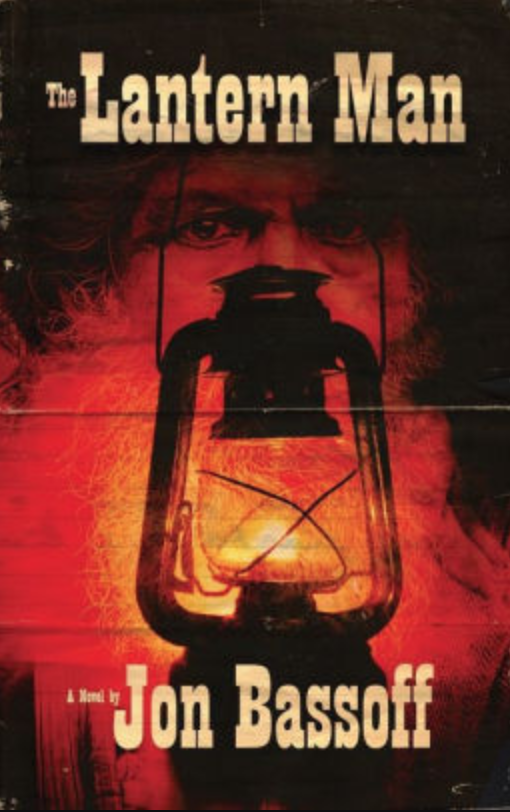
4. The Lantern Man by Jon Basoff
Jon Basoff created the most unique and ambitious thriller of the year of a dtective reopening arson-suicide case committed by Lizzy Grenier connected to the relationship with her other two siblings. Basoff tells much of the story through Lizzy’s journal, newspaper clippings, and photos, creating a meditation on family, media, and the elusiveness of truth.


5. Lost River by J. Todd Scott
This book creates an epic out of a dark violent day that entwines the lives of a Kentucky lawman, DEA agent, and EMT around a southern drug ring, weaving through a population of desperate characters pushed to the edge. Scott, a practicing DEA agent, gives a ground eye view of the opioid crisis. I put this up there with Don Winslow’s Cartel Trilogy at capturing the war on drugs.


You can get more excellent book recommendations from the Mystery People website at https://mysterypeople.wordpress.com

And The Finalists Are…

VP Chandler


by V.P. Chandler


Due to the Covid19 pandemic, writing conventions across the world are changing their tactics for the 2020 season, and that includes Killer Nashville and Bouchercon. While they will not be meeting in person, people have still been nominated for their outstanding writing. And three of our AMW family have been nominated this year! (I think this may be a record for us.)

K.P. Gresham, Laura Oles, and Scott Montgomery have all been nominated for awards!  Please scroll through the lists and look at the finalists. I’ve also enlarged the titles and names of friends whose works I recommend.

Enjoy adding many more books to your TBR (To Be Read) list!

And congrats again to K.P., Laura Oles (with Manning Wolfe), and Scott. Well done!


2020 KILLER NASHVILLE 

SILVER FALCHION AWARD FINALISTS


Mystery


A Dream of Death, by Connie Berry

The White Heron, Carl & Jane Bock

The Mammoth Murders, by Iris Chacon

Blood Moon Rising, by Richard Conrath

Fake, by John DeDakis

Lovely Digits, by Jeanine Englert

The Marsh Mallows, by Henry Hack

Murder at the Candlelight Vigil, by Karen McCarthy

Murder Creek, by Jane Suen

The Deadliest Thief, by June Trop


Thriller

Red Specter, by Brian Andrews & Jeffrey Wilson

All Hollow, by Simeon Courtie

Deadly Obsession, by Shirley B. Garrett

The Gryphon Heist, by James R. Hannibal

Low Country Blood, by Sue Hinkin

Hyperion’s Fracture, by Thomas Kelso

Rise, by Leslie McCauley

The Secret Child, by Caroline Mitchell

The Silent Victim, by Dana Perry

Downhill Fast, by Dana J. Summers


Suspense


Fade to the Edge, by Kathryn J. Bain

Below the Fold, by R.G. Belsky


Murder on the Third Try
, by K.P. Gresham

Queen’s Gambit, by Bradley Harper

The Strange Disappearance of Rose Stone, by J.E. Irvin

Revenge in Barcelona, by Kathryn Lane

The Daughter of Death, by Dianne McCartney

VIPER, A Jessica James Mystery, by Kelly Oliver

Downhill Fast, by Dana J. Summers

The Scions of Atlantis, by Claudia Turner


Action or Adventure


Westfarrow Island, by Paul A. Barra

The Measure of Ella, by Toni Bird Jones

Dangerous Conditions, by Jenna Kernan

The Best Lousy Choice, by Jim Nesbitt

Angel in the Fog, by Tj Turner

Cozy


Two Bites Too Many, by Debra H. Goldstein

A Sip Before Dying, by Gemma Halliday

Bad Pick, by Linda Lovely

The Fog Ladies, by Susan McCormick

Twisted Plots, by Bonita McCoy


Procedural or P.I.


Russian Mojito, by Carmen Amato

Apprehension, by Mark Bergin

The Things That Are Different, by Peter W.J. Hayes

Paid in Spades, by Richard Helms

The Dead of Summer, by Jean Rabe


Juvenile or Y.A.


Daughter Undisclosed, by Susan K. Flach

Speak No Evil, by Liana Gardner

The Clockwork Dragon, by James R. Hannibal

Kassy O’Roarke, Cub Reporter, by Kelly Oliver

This Dark and Bloody Ground, by Lori Roberts


Short Story Anthology or Collection


Couch Detective, by James Glass

Words on Water, by Harpeth River Writers

A Midnight Clear, by Lindy Ryan


Last Call, by Manning Wolfe and Laura Oles

The Muse of Wallace Rose, by Bill Woods

Science Fiction, Fantasy, or Horror

The Line Between, by Tosca Lee


A Single Light, by Tosca Lee

To the Bones, by Valerie Nieman

Moon Deeds, by Palmer Pickering

Dreamed It, by Maggie Toussaint


2020 ANTHONY AWARD NOMINEES for Bouchercon 2020

Best Novel

Your House Will Pay, by Steph Cha

They All Fall Down, by Rachel Howzell Hall

Lady in the Lake, by Laura Lippman 

The Murder List, by Hank Phillippi Ryan 

Miami Midnight, by Alex Segura


Best First Novel


The Ninja Daughter, by Tori Eldridge

Miracle Creek, by Angie Kim

One Night Gone, by Tara Laskowski

Three-Fifths, by John Vercher 

American Spy, by Lauren Wilkinson


Best Paperback Original


The Unrepentant, by E.A. Aymar

Murder Knocks Twice, by Susanna Calkins

The Pearl Dagger, by L.A. Chandlar 

Scot & Soda, by Catriona McPherson 

The Alchemist’s Illusion, by Gigi Pandian

Drowned Under, by Wendall Thomas

The Naming Game, by Gabriel Valjan


Best Critical Non-Fiction Work


Hitchcock and the Censors, by John Billheimer

The Hooded Gunman: An Illustrated History of the Collins Crime Club, by John Curran

The Mutual Admiration Society: How Dorothy L. Sayers and her Oxford Circle Remade the World for Women, by Mo Moulton

The Trial of Lizzie Borden: A True Story, by Cara Robertson

The Five: The Untold Stories of the Women Killed by Jack the Ripper, by Hallie Rubenhold


Best Short Story

(Read each story for free by clicking the link in the title)

“Turistas,” by Hector Acosta (appearing in ¡Pa’que Tu Lo Sepas!: Stories to Benefit the People of Puerto Rico)

“Unforgiven,” by Hilary Davidson (appearing in Murder a-Go-Gos: Crime Fiction Inspired by the Music of the Go-Gos)

“Red Zone,” by Alex Segura (appearing in ¡Pa’que Tu Lo Sepas!: Stories to Benefit the People of Puerto Rico)

“Better Days,” by Art Taylor (appearing in Ellery Queen Mystery Magazine, May/June 2019)

“Hard Return,” by Art Taylor (appearing in Crime Travel)


Best Anthology or Collection


The Eyes of Texas: Private Eyes from the Panhandle to the Piney Woods, edited by Michael Bracken 

¡Pa’que Tu Lo Sepas!: Stories to Benefit the People of Puerto Rico, edited by Angel Luis Colón

Crime Travel, edited by Barb Goffman

Malice Domestic 14: Mystery Most Edible, edited by Verena Rose, Rita Owen, and Shawn Reilly Simmons

Murder A-Go-Go’s: Crime Fiction Inspired by the Music of the Go-Gos, edited by Holly West


Best Young Adult


Seven Ways to Get Rid of Harry, by Jen Conley 

Catfishing on CatNet, by Naomi Kritzer

Killing November, by Adriana Mather

Patron Saints of Nothing, by Randy Ribay

The Deceivers, by Kristen Simmons

Wild and Crooked, by Leah Thomas

The Bookseller by Mark Pryor

VP Chandler

by V.P. Chandler


As you may know from past blog posts, I’m often late to the game when it comes to reading a new book.  Although I have purchased several of the Hugo Marsten books, written by Mark Pryor, I finally got around to reading the first one, The Bookseller (2012)

(It was my turn to recommend a book for my book club so I was happy to recommend it. Two birds, once stone, and all of that. 😉 )

*WARNING, if you read this book, you will be craving French coffee and pastries!*

It starts with Hugo Marsten, head of security at the U.S. embassy, looking for a book at his favorite bouquiniste’s (bookseller’s) stall. These stalls are set up for tourists along the Seine. Pryor does a great job of explaining what these look like and describing the history of the bouquinistes without bogging the narrative down in details. As with many things in the book, I was interested in learning more. The bouquinistes have been in Paris for centuries. https://en.wikipedia.org/wiki/Bouquinistes

While Marsten is browsing and chatting with his friend, a nefarious-looking character approaches and Max, the bookseller, is kidnapped at gunpoint. The next day Marsten goes to the bookstall, hoping to see his friend, but a strange ferret-faced man is in his place. The man says he doesn’t know anything. Thus, starts the hunt to find Max. Marsten enlists the help of an old friend, semi-retired CIA agent, Tom Green and they uncover a myriad of dark secrets.

While searching for Max, they learn that Max was a survivor of the Holocaust and had been a Nazi hunter. Is his disappearance related to that? Soon other booksellers start to disappear and their bodies are found floating in the Seine. There is also a turf war in Paris among drug gangs who could be involved. And Marsten discovers that his new girlfriend has her own share of secrets. AND THEN, “…as he himself becomes a target, Hugo uncovers a conspiracy from Paris’s recent past that leads him deep into the enemy’s lair.” (description from markpryorbooks.com)
So there’s a lot going on in the novel, but Pryor is masterful at juggling all the pieces.

And I’m happy to report that my choice was a hit among my friends. We were all impressed that this was Pryor’s first novel! There are a few of us in the bunch who are fans of Sherlock Holmes and we liked the Holmesian touches that were peppered into the story. By the time we met, via Zoom, some had already read the second in the series. So two thumbs up for The Bookseller!

You can find more about the series on Mark Pryor’s website.

www.markpryorbooks.com/hugo-marston-series

And there he has an update on the series!

  • The Hugo Marston series has now been optioned for television / film by Ivan Schwarz at Like Entertainment, Inc.!
  • The ninth Hugo Marston novel, which is titled, THE FRENCH WIDOW, will be released on September 15, 2020.

Congratulations to Mark Pryor!

*I’d also like to add a reminder to please consider buying books from independent booksellers. The Bookseller, and other books, are available at  IndieBound, a great resource for finding independent bookstores.