Pets and the Fourth


Today we have a guest blogger who is a former AMW member, Kaye George.


If you’re reading this, you either like to read or to write, right? Or you’re a loyal friend of one of the Austin Mystery Writers. I’ve seen an odd connection between lovers of the written word and the love of animals. Or maybe that’s just a universal thing, or a thing with people who hang around in cyber space. Anyway, I’d like to appeal to those of you who love animals.

running dog

If you have a dog or cat, take care of it tonight! Please don’t leave it outside. Between July 4th and July 6th, animal control services nationwide see a 30% rise in missing pets!* If you live in Texas, among many other places, fireworks will start well before the 4th, so you’ll need to take precautions in the days leading up to Fireworks Day, as well as the days afterward.


If you have an animal that is overly anxious, you might want to give him medicine to soothe him during the height of the booming. Hugging or wrapping tightly can help some dogs. If you can distract your pet with other noises, that might help. Also, it’s good to have at least an ID tag, at most a chip, just in case he gets out and runs away, confused and frightened by the unusual noises.


If you should see an animal running loose and scared, you can report it here:

https://www.petamberalert.com/report-a-pet-sighting/


One more if. If you’re fortunate enough to have a laid-back furry buddy who can ignore fireworks, count yourself lucky and enjoy the holiday. Happy Fourth!


*https://www.petamberalert.com/blog/keeping-your-pets-safe-on-the-4th-of-july/

Life Lessons Learned In “Battle”


I’ve been waging war.

12087928_10207847195967051_9168143893847477408_o

Photo by Michael O’Reilly

(No, that isn’t a picture of me. It’s a picture my friend Michael O’Reilly took of his friend. He sometimes goes around Austin with a sword and asks strangers to pose with it. Really, and he gets some great pictures!)

But back to my story. I’ve been at war with the Dreaded Ivy Monster. This thing has overtaken my yard and covers huge bushes. It’s choking the life out of everything. And while I’m out there on the front line, hacking and pulling, I do a lot of thinking.

20160627_104708

Small section of the monster that’s overtaken my yard. There are rock and other plants under there.

I can’t help but seeing symbolism in what I’m doing. I actually talked about this on the first post of my blog back in 2012. At that time I happened to be thinking about clutter. http://vpchandler.com/trim-away-the-dead/

But apparently fighting the DIM is good for my imagination. I recently told a friend who felt like she wasn’t making progress on her book,

“We have a vine that’s grown to be a monster. It’s taken over the flowerbeds and killed some of the bushes. Everyday I go outside and trim it and rip up parts of it out of the ground. Basically chipping away at the problem, but I’m getting results. I’ll take one tendril and pull on it. It’s amazing to see how intertwined it all is.

Every time I go out there I can’t help but compare working on it to writing and editing a book. I may spend anywhere from 5 minutes to an hour on it. But each time I see progress. Each time I’m unraveling a tendril, I’m unraveling a problem.”


As I say in the above quote, I’ve been editing my book, getting rid of unwanted and unnecessary stuff. So when I pull on a lonnng tendril that has creeped and wound its way through the bushes, it reminds of getting rid of unwanted story lines. Of course they weave their way through the book so I have to make sure everything makes sense when that’s gone! But it feels good when the extra stuff is hacked away.

Something else also popped into my mind yesterday, of course while fighting the DIM. The more I thought about it, the more I liked it. Now I’m not a poet, but here’s what I was thinking.


Reach For the Light

What kind of vine are you? Are you a jasmine, a honeysuckle, English ivy, the stifling kudzu? I hope you aren’t the dreaded poison ivy or poison oak!

Whatever vine you are, search for the light that helps you grow.
Don’t stay in the dark humus, the decay of years past. That way stifles and rots your roots. It weakens growth and stunts your leaves.

No, search for the light.
If you have to twist your way among Life’s branches to go around obstacles, keep at it. Study your path, grow strong and use what you’ve learned to anchor yourself while you reach for the new, the sun, and see what Life has to offer.


(It’s not Emily Dickinson, but I like it.)


I can now see rocks!

The edge of progress. I can now see rocks!

I’d also like to add that it’s rewarding to see how a few minutes here and there can produce results. So whatever you’re working on, whether it’s writing, gardening, painting, or what have you, a few minutes can make a difference. And while you’re pulling those weeds, let your mind wander. Who knows, you might find the answers to the questions you’ve been looking for or you might get a glimpse into the meaning of Life.


Whiskers, my trusty companion in battle. He comforts me and criticizes my work. Apparently I'm not worthy.

Whiskers, my trusty companion in battle. He comforts me and criticizes my work. Apparently I’m not worthy.

Does this happen to you? Do you get insights to your writing or life when you’re driving, washing dishes or doing other such work? Had any “aha!” moments? Share them with us!

Banishing Lazy Words by Terry Shames

This week we have a guest blogger, friend and fellow mystery writer, Terry Shames!

Terry grew up in Texas, and has an abiding affection for the people she grew up with and the landscape and culture of the town that is the model for Jarrett Creek. She graduated from the University of Texas and has an MA from San Francisco State University. Terry now lives in Northern California with her husband, two terriers and a regal cat.

Terry’s first Samuel Craddock novel, A Killing at Cotton Hill, (July 2013) and was named one of the top five debut mystery novels of 2013 by MysteryPeople. The second in the series, The Last Death of Jack Harbin was named one of the top five mysteries of 2014 by the Library Association’s Library Journal. Dead Broke in Jarrett Creek, the third in the Samuel Craddock series, came out in October of 2014, followed by A Deadly Affair at Bobtail Ridge in April 2015 and The Necessary Murder of Nonie Blake in January 2016.

A member of Mystery Writers of America and Sisters in Crime, she serves on the boards of Northern California chapters of both.

Welcome, Terry! shamesTerry_1

Banishing Lazy Words

When I’m editing a book, I know that when I begin to get restless I’ve probably come across a nest of lazy words–words that are shorthand, or placeholders, for what I really want to say. Here are some lazy word indicators:

These, this, those, thing, stuff, some, about, just…and the dreaded “to be” verb (was, were…)

I often find when I come across several of these words on one page it means I was reluctant to dig deeper into the emotional content in the scene. When I buckle down and confront what I’m avoiding writing, digging deep to find the emotional core of the scene, I often end up writing a lot more words than I had before.

Here’s an example of a piece I was editing for someone else. I ran across several places on one page where two characters were talking about, “This thing we have going,” and “This thing we are trying.” The “thing” the writer was talking about was a difficult relationship between people of different ethnic backgrounds. By repeating the words “this thing,” she avoided addressing in depth the painful aspects of the relationship. The words fell flat on the page. Only when she changed it to say what she really meant, “Our risky experiment,” and “The way we are thumbing our nose at tradition,” did it begin to have the depth it deserved. Instead of a romance novel, it because more like Romeo and Juliet.

In first drafts, we often use shorthand for what we know is going to be a difficult description. But as writers we have to work hard to ferret out those lazy little words and phrases and say what we really mean. Not, “Amanda’s bedroom was a mess. There was STUFF lying everywhere,” or “I walked into Bill’s office. There was STUFF lying everywhere,” but instead, “Amanda’s clothes were strewn on the floor leading to the bed,” or “Judging from Bill’s office, he was a guy who dropped whatever he was reading onto any handy surface as soon as he was done with it.” Instead of saying, “there were several things he wanted to tell her,” it’s more interesting to read, “he stored up little criticisms that he could spring on her later.”

Contrast these two paragraphs:

“They dated for a few months, during which he told several lies. Some time later, she tried to remember which lies bothered her the most. There was the time he told her he was an accountant and lost his job when the economy went bad. And another time he said he looked around for a job for a long while before he could find another one. But the worst was when he said he’d buy her some jewelry, and never did.”

The fix:

“They dated for six month. After he disappeared, she found that he had hardly opened his mouth without lying. She bought into it when he told her he was an accountant, and lost his job when the economy went bust. She even believed that he pounded the pavement looking for a job for six months before he found one. But the lie that hurt most was that he promised to buy her a diamond ring, and he never did.”

The first paragraph is full of lazy words like “a few,” “several,” “some, “tried,” most,” “there was,” etc. The second one uses livelier, mores descriptive words.

When you read authors you admire, note that they pin down real time, real place, real emotion. It makes their prose richer and keeps readers engaged. It takes hard editing work, but it’s worth it. It’s the key element that will make your prose come alive.

You can find more information about Terry Shames at www.terryshames.com 

Thank you, Terry! That’s good concrete information that all writers can use. What do you think, reader? Any questions or comments?


Mystery Workshop At Book People

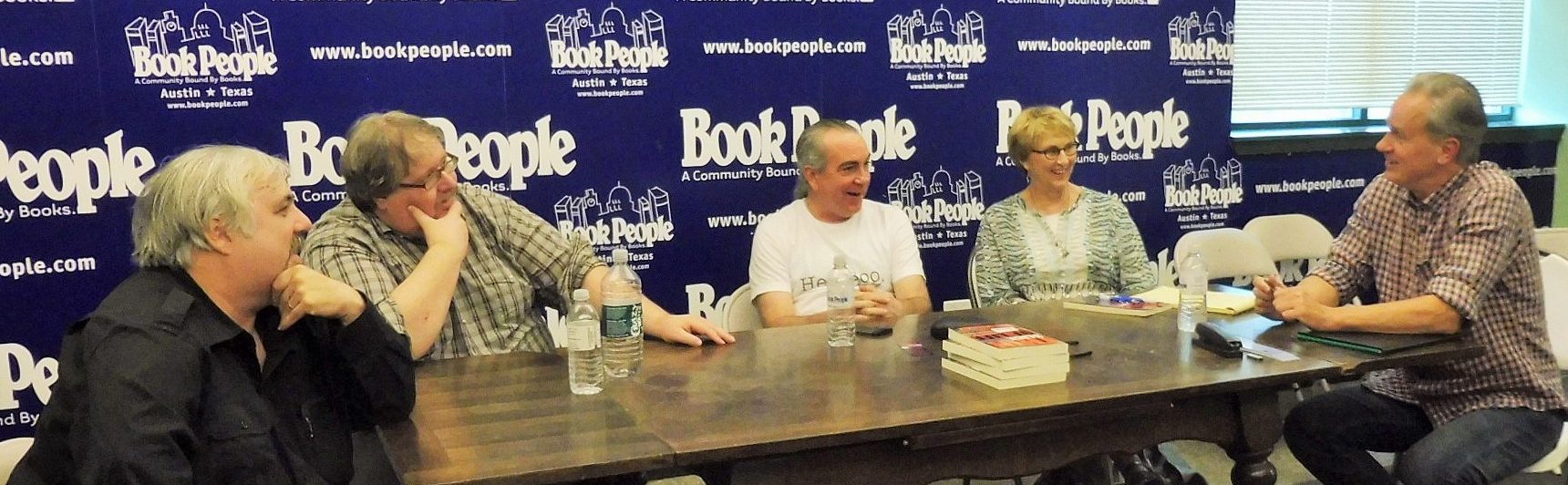
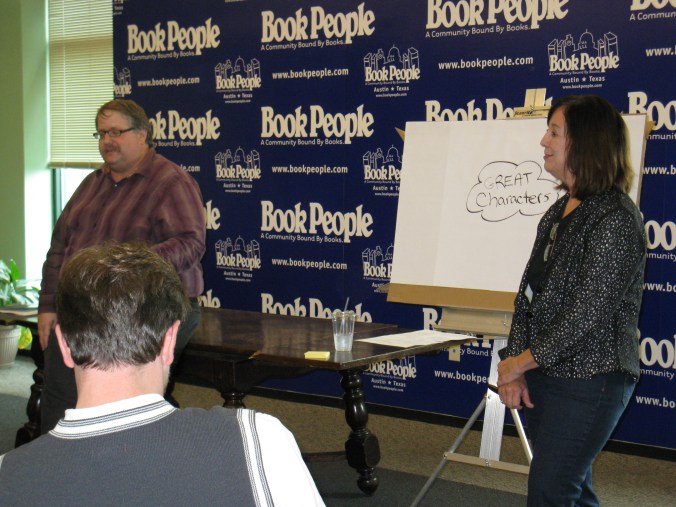
Last Saturday I attended a writer’s workshop at Book People, sponsored by Mystery People and the Austin chapter of Sisters In Crime. I honestly didn’t think I’d learn much new. But I was wrong. *Note- Between classes we had drawings for giveaways like books and tote bags!

mysterypeople_cityscape_72


sinclogomediumred (1)

41VaFJ3tHPL._UX250_It started with George Wier speaking about writing action scenes. He’s literally a pro at this. Just read any of his books. (www.billtravismysteries.com) It wasn’t about how to describe a blow-by-blow fistfight. It was more about how to add tension to a scene, how to make it move along. I don’t know about you, but I like bullet points. So I’ll share my notes in that manner.


  • Before you can add action, you must put the reader in the moment. They won’t follow anything if they aren’t there. To accomplish this, describe the lay of the land and the surroundings.
  • What are the results of the action? There should be consequences or the reader won’t care.
  • The scene must have a beginning, middle, and end.
  • Don’t describe things in terms of time. (aka- three hours later). Believe it or not, that doesn’t do anything for the reader. Time isn’t as tangible as distance. “They walked down a flight of stairs.” Is much easier for the reader to see and instantly understand.
  • Perception is everything. Use all the senses. Have your characters be aware of their breathing, their surroundings, sounds, pain, everything.

The idea of writing about distance instead of time interests me. All of the things listed above make sense, but the idea that the reader can intuitively understand distance better than the concept of time is fascinating.

Scott Montgomery of Book People recommended the book, The Killer Inside Me by Jim Thompson. He said it was a good example of what Wier was talking about.

12440786_872683726208928_6233840132231229609_o

Cutting up between classes. Friend and author Billy Kring dropped by. He’s trying to distract me while George Wier looks on.

P1010228

The guys behaving for Terry’s talk.


shamesTerry_1


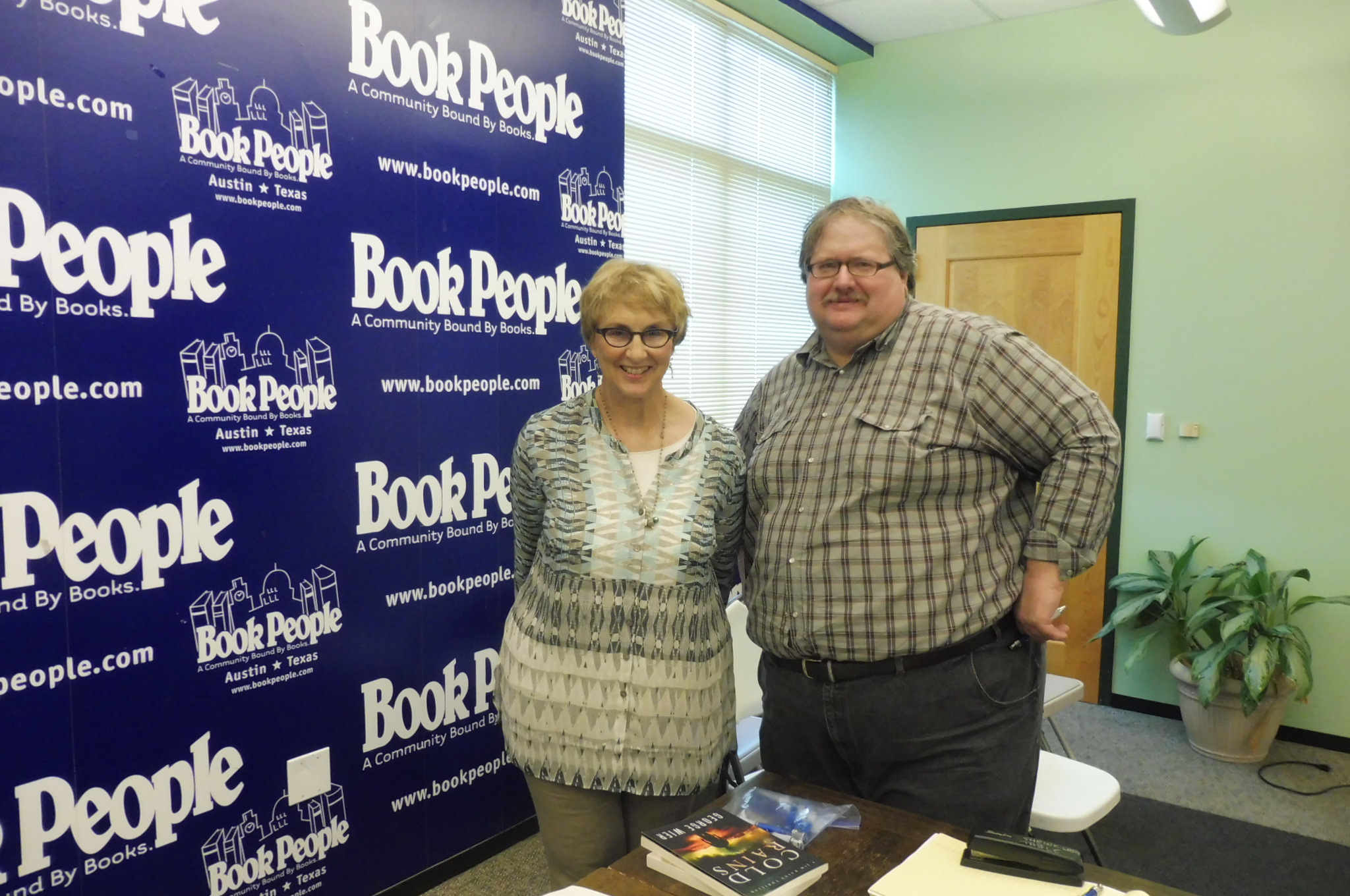
Next at the workshop was Terry Shames. She gave us many tips on how to writing compelling settings. And she should know. She does an excellent job of describing the Texas town where her Samuel Craddock series takes place. (www.terryshames.com) I came away with the concept of interior settings and exterior settings. No, not what a living room looks like, interior as in what’s going on inside a character. (More bullet points!)

  • Treat your scenes as characters.
  • The way to make your story interesting is to show how the interior setting (of characters) intersect with the exterior setting. How would someone from a Texas ranch interact with the people and setting of New York city? How would that same person act in their own hometown?
  • The devil is in the details. Immerse the reader in the setting. You don’t have to do an information dump. (Please don’t.) But you can provide things like smells and sounds.
  • If you aren’t familiar with a place, research it. Talk to people who know the place.
  • Above all, know how your characters would interact with the setting. Someone who almost drowned would have a different reaction to falling in the water than someone who is an Olympic swimmer. So Know Your Characters!
  • Every scene should try to have-
  1. Action
  2. Dialogue
  3. Physical description of setting
  4. Physical description of characters
  5. Internal thinking
  6. Internal physical descriptions.
  • A good rhythm of a scene would be: 2/1/2, 4/3/5, 6/2/1. Try it and see what happens.


13221302_872683152875652_8550652881065447974_o

Brent and James. Looking forward to reading their books.

After lunch we gathered for the last class about collaboration. Brent Douglass and James Dennis, two of the three authors who make up the persona of Miles Arecenaux (www.milesarceneaux.com), led a funny discussion on their journey of collaborative writing. They started their first book back in the days before email. Thank goodness the days of mailing a manuscript back and forth are gone. Thank you email! So what are their tips?

  • Don’t be afraid to be honest with each other. Actually, they said to be brutally honest. Treat each other like siblings.
  • Play up to your partners’ strengths. You are different people with different experiences. You that to your advantage.
  • Work to maintain “one voice” for your book. It will get easier with practice but it will also take many edits to achieve this.
  • Defer to people with experience. (Again, take advantage of your partner’s strengths.)
  • It helps to build accountability. If you know that you’re expected to get your part done by a certain time and the others are counting on you, you better do it.
  • Broadcast gratitude. Not only show gratitude to your partners, show gratitude to other writers.


(Collaborating sounds interesting. I think I’d like to take a stab at that just for fun.)


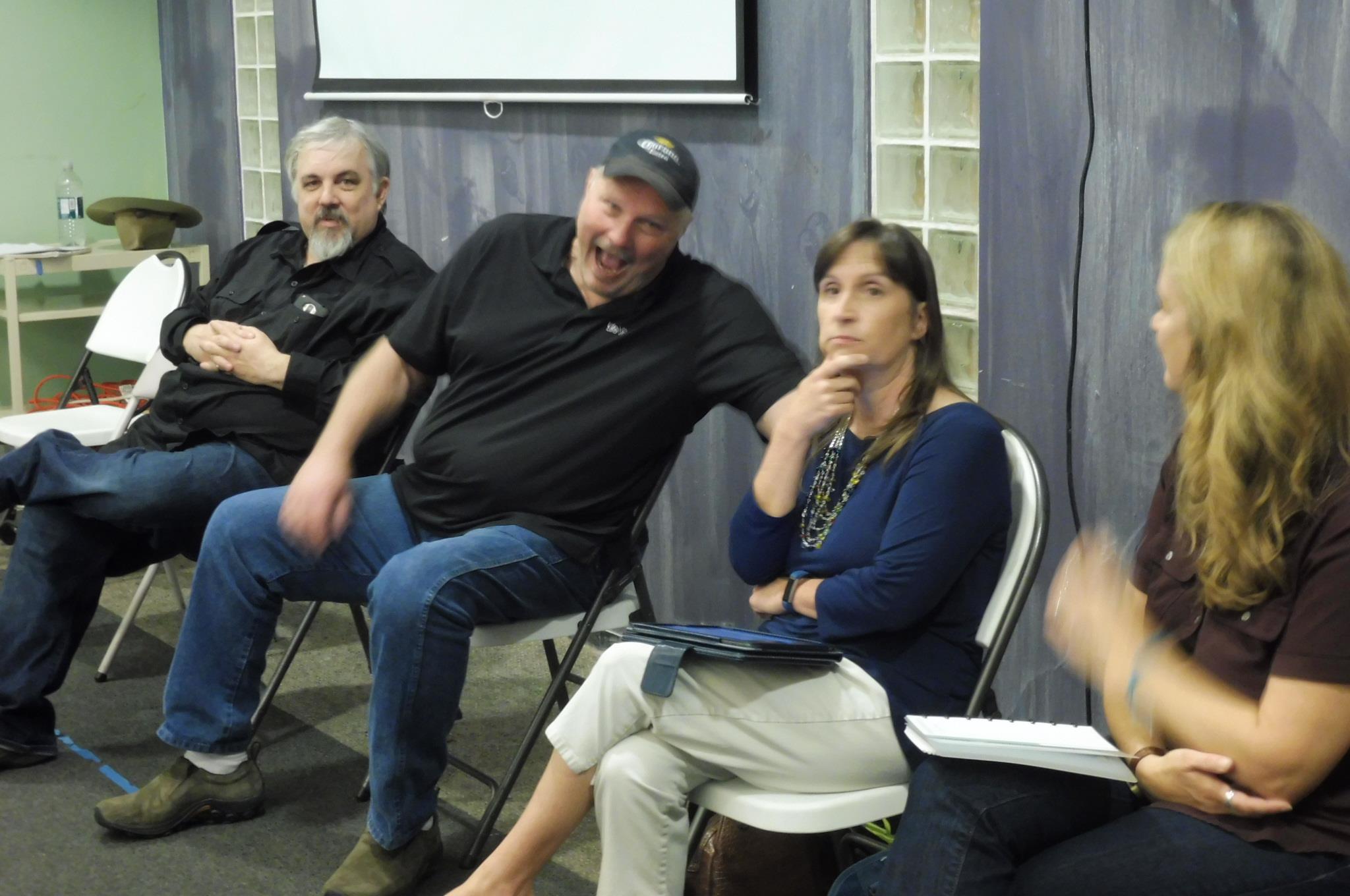
P1010257 (3)The last event was a panel discussion that was very informal. It was about publishing, marketing, and networking. Honestly, I was so caught up in listening, I forgot to take notes! All the speakers were charming, personable, and informative. It was worth every moment that I was there.

13221495_1309991895681591_3188641544421811289_n

Gale Albright helped put it all together and did the raffle.

13265889_1309991862348261_80808660105037085_n

George answering questions between classes.


P1010223

Terry and Scott


I’d like to say thank you to Book People and Scott Montgomery of Mystery People for hosting us!


A Brief Malice Domestic Recap

(Kaye George, prolific mystery writer and blogger, has granted us permission to borrow and publish a recap of her “A Brief Malice Recap” from her blog “Travels with Kaye” at http://travelswithkaye.blogspot.com/)


Kaye George at Malice DomesticIt was exhilarating and exhausting, as usual. This year I was there to let people know about two new books of mine that both came out in early April.

Here’s me at Malice Go Round, giving one minute of information on each book. This is an event described as Speed Dating, But with Authors. A pair of authors visits 20 tables of 8-10 people each, staying for 4 minutes and taking 1 minute to change tables. We tell the listeners about our books and give them bookmarks and sometimes other things so they’ll remember us. I paired up with Jim Jackson, James M. Jackson is his author name. His newest book is ANT FARM, in his Seamus McCree series. My new ones are FAT CAT TAKES THE CAKE (by Janet Cantrell) and REQUIEM IN RED (by Kaye George). This event was Friday morning after I checked in Thursday night.

This picture was taken by Patti Phillips when I was at her table.

After Malice Go Round, I walked over to Booeymonger’s with Judy Penz Sheluk, who was at Malice for the first time. This sandwich and salad place is where the Guppies have gathered for lunch ever since the convention moved to Bethesda from Crystal City in Virginia. I got to chat with several Guppies there.

Later that afternoon, I met with my agent, Kim Lionetti. This is the only time I see her face to face, once a year. That night Berkley, my Fat Cat publisher took us out to dinner at The American Tap Room.

Early Saturday, 7:30, was the Sisters in Crime breakfast, where all the Guppies wear boas or reasonable facsimiles. Jan Rubens, who came with Jim Jackson, took this picture of ALL the Gups that attended. After I wore a feather boa one year and threw it away the same day, I wear my chartreuse scarf.

I admit I deflated a bit and stayed in the hotel for lunch, then went to my panel, “Death for Dessert: Sweet Murder” in the afternoon. Our admirable moderator was Nancy J. Parra and the panelists were Kathy Aarons, Maggie Barbieri, me, and Jessie Crocket/Jessica Estevao. We all write cozy mysteries with dessert recipes in the back. We discovered that Jessie is actually the only one of us who is a good cook. This photo was shot by Julie Hennrikus.

I raced to the wine and cupcake reception given by my agency, BookEnds, guided by Terrie Moran, who had also guided me to the dinner the night before. If these people keep guiding me, I’ll never learn how to get anywhere. Actually, I may not anyway, so I’m grateful for that!

Our panel signed books soon after that, then we did a cocktail or so, then the Banquet with the Agatha Awards.

I highly regret that I wasn’t able to make it to the New Authors Breakfast the next morning at 7. I chalked it up to getting older, but I came down with a cold and bronchitis as soon as I got home, so I’ll blame that instead. I’m making plans to hold a mystery conference/convention where nothing starts earlier than 10.

My own camera, as usual, stayed safely tucked inside my suitcase for the whole trip. Someday I’ll take pictures!

Another fun time talking to and seeing so many of my online pals!

Kaye's panel at Malice DomesticBreakfast at Malice Domestic where Guppies wear boas.

(Pictures) Top picture is Kaye George. Second picture is Kaye George’s panel at Malice Domestic, “Death for Dessert: Sweet Murder” (Photo by Julie Hennrikus). Third picture is Breakfast at Malice Domestic, where Guppies wear boas.

Why I’m Not a Journalist

The Good Old Days.

Let’s face it: Were things really that good?

Yes, they were. Those ’70s television sit-coms were the best things ever.

I’m binge-watching The Mary Tyler Moore Show, which ran from 1970 to 1977. It was funny then and it’s just funny now.

One episode isn’t quite as funny as the others, though, because it reflects an aspect of my life I find particularly painful.

First season cast: (left top) Harper, Asner, L...

First season cast: (left top) Harper, Asner, Leachman; (left bottom) MacLeod, Moore, Knight. Last season cast: (right top) Knight, MacLeod, Asner; (right bottom) White, Engel, Moore. (Photo credit: Wikipedia). By CBS Television Uploaded by We hope at en.wikipedia [Public domain], via Wikimedia Commons

It’s the scene in which news writer Murray Slaughter rushes home to operate on an ailing water heater, leaving associate producer Mary Richards to cover for him. If a bulletin comes in over the wire–

No problem, she says. The news is almost over, she says. If a story comes across the wire, I’ll just take it off the teletype machine, type it up, and get it to the anchor desk. It’s easy, she says.

She rolls a piece of paper into her typewriter, just in case.

Then a story comes in: A fire is threatening a munitions plant on the outskirts of town.

Mary tears off the bulletin, sits down at her desk, thinks… and thinks… types a few words…  erases… brushes away the crumbs… thinks… and thinks….

Producer Lou Grant, who’s been leaning over her shoulder, bouncing up and down on his toes, finally grabs the paper, runs into his office, types–like the wind–then flies out just in time to meet anchorman Ted Baxter leaving the studio. The show’s over. He’s already signed off–“Good night, and good news”–and the competition’s 7:00 o’clock news will get the scoop.


Embed from Getty Images

That’s why I’m not a journalist. I’m not Lou. I’m not Murray. I’m Mary.

That, and because as a journalist, I would have to make cold calls: get people on the phone, request interviews, ask questions. I’m not comfortable talking to people I don’t know.

But mainly, it’s because editors would expect me to write fast. I don’t do fast. I’m slower than Mary Richards is. Sometimes getting words on paper requires moaning and weeping and riving of hair.

Looking back I wonder how I got to this point. Not the distaste for talking to strangers–I’ve never liked doing that–but the difficulty with writing.

In the beginning, I loved to write. By the time I was seven, I was writing long letters to grandmothers and aunts and cousins. Once when I was home from school, enjoying ill health, I used my father’s fountain pen to write letter after letter. Another time, I used a pencil with a point so soft and dull I doubt the recipients could read through the smears.

The summer I was eight, I spent June in Central Texas with an aunt and uncle while my mother was in Dallas with my grandmother, who was ill. My father, who remained at home in Del Rio, brought me a present one weekend: a ream of legal-sized paper.


Embed from Getty Images

On a scale of one to ten, most children would have rated a ream of paper at minus 3. I gave it a twelve and used it to produce my own newspaper. Mostly I reported weddings in the cat and dog community. I described bridesmaids’ dresses worn by Blackie and Bootsie and Kitty and my fox terrier, Pat Boone. It was a devastating little parody of a small-town newspaper. That summer, I was a journalist.

Fairchild Mill Grindstone

Fairchild Mill Grindstone (Photo credit: Wikipedia)

But things changed. Writing stopped being easy. It stopped being fun. It became a millstone ’round my neck. It became nose-to-the-grindstone work. I turned into Mary Richards, thinking, typing, thinking, thinking, typing, erasing, thinking…

How did that happen? I suspect it had something to do with school and English classes, and writing pieces I didn’t want to write, on topics I knew nothing about. And having to outline before I wrote.

There’s nothing that strangles the free flow of words onto the page than having to organize your thought before you’ve had any.

Portrait of E. M. Forster by Dora Carrington I...

Portrait of E. M. Forster by Dora Carrington Italiano: Ritratto di E. M. Forster di Dora Carrington (Photo credit: Wikipedia)

A lifetime later, I discovered novelist E. M. Forster’s remark on the relationship between writing and organizing: “How do I know what I think until I see what I say?”

In other words, if you can write an outline, you’ve already written the piece in your head. 

But I didn’t know that then. I didn’t know it doesn’t have to be right the first time. I didn’t know I could just start writing and, that way, find out what I knew and what I thought before I tried to put those thoughts in order.

I didn’t know Nancy Peacock would one day write, “If I don’t have the pages I hate I will never have the pages I love.”

I didn’t know all I had to do was lighten up.

Now I’ve lightened a bit, and so has the millstone. When I write for my personal blog, I’m fluent–unless I’m trying to be serious, weighty, and profound.

English: Original caption:"NASA Remembers...

English: Original caption:”NASA Remembers Walter Cronkite. Legendary CBS newsman Walter Cronkite speaks in February 2004 at a ceremony at the National Air and Space Museum in Washington honoring the fallen astronauts of the STS-107 Columbia mission. (Photo credit: Wikipedia)

I do not do profound. I think profound, but I write shallow. I wish it were otherwise, but, to quote Walter Cronkite, that’s the way it is.

Some things haven’t changed, however. I will never fit in the little journalism box. I don’t write fast. I don’t want to strike up conversations with strangers. And the only facts I want to deal with are ones I make up myself.

So that’s why I’m not a journalist.

That’s why I write fiction.

Writers of fiction have deadlines. But they don’t have Lou Grant leaning over them, fidgeting while they think and delete and rewrite and delete and rewrite…

Writers of fiction–especially we pantsers, who write by the seat of our pants–can see what they say before they know what they think.

Sorry, Mary Richards, but that’s the way it is.

*

The Mary Tyler Moore Show, “Room 223”: Mary takes a journalism class
(Resolution isn’t great, but the show is.)

Other high points:

The Mary Tyler Moore Show, “Chuckles Bites the Dust: Chuckles the Clown goes to a parade dressed as a peanut, and an elephant… But it’s okay to laugh.

The Mary Tyler Moore Show, “The Lars Affair”: Sue Ann Nivens closes an oven door in a way formerly unknown to man.

I don’t understand the legalities of putting these programs on Youtube, but as long as they’re there, I’ll assume it’s okay to link to them. Enjoy.

*

P. S. I don’t like being interviewed either. I always tell reporters to be sure they make me sound intelligent. One young lady told me she didn’t have to fix anything because I talk in complete sentences. I told her that was strictly accidental.

*

–Posted by Kathy Waller


Interview With AMW Member Laura Oles

In continuing my series of interviews of fellow members of AMW, I’d like to introduce you to Laura Oles.

Austin Mystery Writer Laura Oles

VPC- Welcome, Laura! Tell us a little about your background.

LO- I grew up in an Air Force family and moved a number of times growing up.   I graduated from Texas State and met my husband while I was in college. His parents were both professional photographers and entrepreneurs who introduced me to the world of photography. At the time, I didn’t know an f/stop from a bus stop, but I loved the industry almost immediately. We were working in the time of early digital photography and had built a business that did some pretty cool things in that space. I also started writing for digital photography magazines—both consumer and trade— and did that for about fifteen years. Some of the most interesting people I’ve ever met work behind the camera. It remains my first love, although I detest having my photo taken. Ask anyone—the camera comes out and I duck behind a tree.   If awkward smiling were an Olympic sport, I would bring home the gold.

LRO-sanfran

Laura hiding from the camera.

VPC- I can vouch for that, readers. It’s true! So you’ve had some success with publishing nonfiction, why are you interested in writing fiction?

LO- Yes, I wrote Digital Photography for Busy Women back in 2005 and was so happy to see the reception it received in the photography field. Technology books become obsolete pretty quickly, so while it served its purpose then, it’s outdated now. Part of the cycle. Still, it came out an important time in the industry when people were leaving film for digital and had no idea what to do with their photos once the image had been taken. I had been covering related technology for industry magazines and the book was an extension of that education.

Nonfiction has its own challenges but I love it as much as I love fiction. I grew up reading fiction at an early age, getting lost in Nancy Drew, Sweet Valley High and Judy Blume, Reading fiction was the perfect escape for a kid that kept relocating to a new school, a new city. While I enjoy many genres, mystery, suspense and thrillers remain my favorites. Not only do I love getting lost in the worlds other people create, I also love creating my own worlds and occupying them with interesting personalities. My husband once told me that I talk about these characters like they’re real people. I guess for me, they are real people. Is that weird?

I also like reading both fiction and nonfiction. I often bounce between reading a business book and a mystery at the same time. So, right now I’ve got Charles Duhigg’s Smarter Faster Better and Mark Pryor’s Hollow Man in progress. I find it hard to commit to reading one book at a time. Both books are excellent. And my TBR list is a little out of hand at the moment.


VPC- I know that you also have three kids. Two of them are twins! How do you juggle writing, working and raising a family?

LO- I think one of the challenges of loving your work and loving your family is that you never feel like you’re excelling in either arena at the same time. Other people may have tamed this dragon but I have yet to do so. I try to compartmentalize as much as possible, but it’s difficult. My time is often split into small segments so I work at piecing them together to create something meaningful. For example, I’ve started and stopped answering these questions several times already because of a soccer tournament, Prom, and NHS volunteer projects. Granted, it’s easier than it was when my kids were little, especially when my twins were in the pre-school stages. I don’t think I drank of cup of hot coffee for a couple of years. With three teenagers, it’s a different kind of busy. My job is largely driving, coordinating schedules, counseling and proofreading my kids’ English papers.   I am very fortunate to have an awesome husband who, despite a demanding work and travel schedule, still makes most of the sporting events, concerts and other things that are important. If he has to drive from the airport to a volleyball game, he’s there.

With respect to writing, I think one of the most difficult things is shifting my brain from multi-tasking to creative mode. I have found that it is so important to protect that sacred space of allowing your imagination to roam, to get lost in the ‘what if’s of storytelling so the story has time to grow and take some turns. I really have to work at protecting that space. It’s very easy for real life to intrude and lay claim to it. (Link to Laura’s article about making the most of your time via the Pomodoro Method.) OLYMPUS DIGITAL CAMERA


VPC: What aspect of writing do you enjoy the most?

LO: I have a fond affection for dialogue. I love writing interactions between characters, trying to find the proper beats where the back-and-forth feels authentic. Elmore Leonard remains one of my all time favorite masters of dialogue. He said, “If it sounds like writing, I rewrite it.” I think that’s very good advice. I also enjoy editing, maybe even more than writing the first draft, because it’s my opportunity to shape the story and figure out what works and what is getting in the way of the story moving forward.


VPC- How did you come to be a member of AMW?

LO-I met Kathy Waller and Gale Albright through our local Sisters in Crime chapter and was part of the Barbara Burnett Smith Mentor program in 2012. They invited me in and I have enjoyed their company and critiques ever since. Writing is a solitary process, so having like minded writers who want to discuss plot points, character development and setting is a wonderful thing. I would probably bore my non-writer friends out of their minds but the AMW people get me. And I’m grateful for it.


VPC- What are you working on now?

LO-I am currently revising my second mystery, Point & Shoot, which was named a finalist in the Writer’s League of Texas manuscript competition. I’m also working on a few short stories, including one for an anthology being put together by AMW for publication next year. I continue to write for the photo industry, although I’m taking a hiatus for a bit to focus on my fiction (no pun intended). I’m leaving for Malice Domestic this week (in Bethesda, MD) and am looking forward to spending time with some of my favorite writers and friends.   I’m also finally making it to Bouchercon this year in New Orleans. Other than that, I’m just trying to find time to write each day so I can keep my imaginary friends alive. They suffer if I’m gone too long. And I do, too.  I’m cranky if I’ve gone a bit without writing.  Even worse than when I skip coffee, and that’s saying something.


Hank & Laura

With Hank Phillippi Ryan at MD 2014

Malice laura and kaye

Laura and Kaye George at Malice in 2014


Article about Malice Domestic 2014


Thank you for the interview, Laura Oles! I’ve enjoyed these interviews. I like showing the world how diverse we are in AMW.

Gretchen Archer on Road Trips, Super Spies & Double Knot

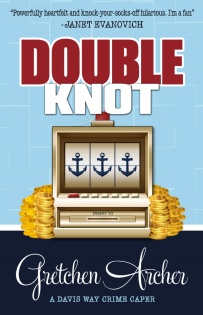
DOUBLEKNOTfrontF.jpgGretchen Archer’s biography claims she is a Tennessee housewife who turned to a life of crime (fiction) when her daughters left for college. Don’t let the housewife title fool you.

Gretchen Archer is a writer with mad skills, blending humor throughout her tightly plotted Davis Way mystery series that keeps the reader guessing until the very end. Archer is a USA Today bestselling author with a loyal readership that continues to grow with every addition to the series. Fortunately, the latest mystery, Double Knot, hits bookstores and e-readers today.

Gretchen’s ability to create hilarious high jinx in her novels must come from, in some part, raising kids because we parents know how much material our offspring provide. Gretchen’s writing is clever in its ability to draw us in immediately, giving us Davis Way, a ‘super spy’ who works for a covert security team at the Bellissimo Resort & Casino in Biloxi, Mississippi. Super spy she may be, Davis is also wonderfully relatable, allowing her humanity and imperfections to come through with an authenticity that keeps readers rooting for her success.

Double Knot has been praised by Janet Evanovich, who wrote, “Powerfully heartfelt and knock-your-socks-off hilarious. I’m a fan!” Double Knot charts new new territory with this series because it is a locked-room mystery with Davis Way and company traveling on the luxury liner MS Probability. My mind immediately went to Agatha Christie’s And Then There Were None and John Dickson Carr’s The Hollow Man. Gretchen readily admits that this book was both difficult and exhilarating to write, exploring growth in both Davis’ world and the characters who occupy it. I asked Gretchen to give us a peek inside Davis’ life, how she came to be, and what she sees in the future for her favorite crime caper chasers.

LO: How did you discover Davis Way-or did she find you? 

GA: I was driving from Biloxi to my home in Tennessee on I-65 North in Alabama when I saw an exit sign for Pine Apple, which I thought was hilarious. When I pulled into my driveway three hours later, it was with Davis Way from Pine Apple, Alabama, who moves to Biloxi. You know how road trips are good for thinking.

LO: What is it about Davis that you think has created such a loyal following of readers? What do you hear most often?

GA: Is it Davis, you think, readers come back for? I hear “I love Davis!” and “Hurry with the next Davis!” but I get even more letters about her husband, Bradley Cole, and her doppelganger Bianca Sanders. What readers have told me they love about Davis is her vulnerability—that she’s human. They love Bradley for the opposite reason, because he’s perfect. (A perfect man is hard to write. Seriously. Because there are no ROLE MODELS.) And Bianca. First, I’ll tell you she’s enormously fun to write, and next, I’ll tell you the letters I get about Bianca are hilarious. “When is someone going to slap that woman?” and “Davis needs to shoot Bianca and get it over with.”

LO: What do you think readers would be surprised to know about Davis?

GA: She loves a good con. She doesn’t say she admires the bandits who cleverly steal from the Bellissimo Resort and Casino, because they usually leave a pesky dead body in their wake, but she’s in awe of a clever thief. Another Davis semi-secret? I wonder if readers remember that Davis had a baby when she was sixteen. I remember it all the time. It’s something they don’t tell you in Mystery Series Writing School, maybe because there is no Mystery Series Writing School (we should start one), but the history you write for your main character in book one stays with her. For the whole series. Another Davis surprise? She can’t cook. You never read about Davis cooking, which is crazy, because I feel like it’s all I do. (“What’s for dinner, Mom?” (“Anything you want! Frosted Flakes! Goldfish! Popcorn!”) What about the fact that Davis never shops? I never send her shopping but her closet is full of fabulous clothes.

LO: How do you feel Davis has changed and grown since Double Whammy?  Are there certain areas or themes you hope to explore going forward?

GA: Davis grew up in a town of four hundred. The biggest change for her has been the people she’s met since leaving Pine Apple. Fantasy is the first BFF she’s ever had, and their relationship is so much fun because they’re so close. And true love. Davis wouldn’t take a million dollars for a hair on her husband’s head. So, her biggest changes since book one are in the personal relationships category.

LO: Are there any special talents that Davis has yet to bring to one of your stories?  Ninja warrior?  Underwater basket weaving?

GA: She might learn how to land a plane. She just might.

LO: Anything else you’d like to share about DOUBLE KNOT or Davis’ world?

GA: Double Knot was a labor of love. I absolutely loved writing it. It’s a locked-room mystery on a two-day timeline. It was challenging and rewarding and I don’t know if I’ll ever get to write one this close to my heart again.


Here’s a sneak peak of Double Knot

At midnight, the clock clicking from Saturday to Sunday, I locked the door to my stateroom behind me. I gathered my cat, pajamas, vitamins, toothbrush, and was in a hurry for the bed when I stepped into the gold bathroom and saw an envelope taped to the mirror above the vanity. It was addressed to me. I recognized my name right away; I’ve had it all my life. The problem was—I took slow and steady steps toward the envelope—no one outside 704 knew my name. Correspondence to me aboard Probability should have been addressed to Bianca Sanders. Not Davis Way Cole. I reached for it, curious and apprehensive at the same time. I opened it to find a photograph of my boss, No Hair. My knees gave way and the vanity caught me. Hands bound behind his back, legs secured at the ankles, clothes disheveled, his tie gone and his lower lip split wide open, he was in a straight chair against a wall between two dark porthole windows. No Hair was someone’s prisoner. He looked straight at me when the picture was taken, his eyes apologetic, but everything else about his expression and posture was livid.

My head swam and I saw stars. I backed up to the square porcelain bathtub in the middle of the gold floor and sat down on the wide edge. I read the letter.

Mrs. Cole,

To ensure your safety and that of your guests and loved ones, sit back and settle in, because you’re not leaving your suite. Rest assured no harm will come to anyone as long as you follow these simple instructions: Do not attempt to escape or make contact with anyone. Jeremy Covey will be detained for the duration of the cruise, as will you and your party. You will walk off this ship unharmed if you cooperate.

Unfortunately, the medical staff accompanying you tried to board with controlled substances and was refused passage. They’re not looking for you. Your photography crew has been reassigned. They’re not looking for you. No one is looking for you. There’s no way out. Not only is escape impossible, you will most assuredly jeopardize everyone’s welfare if you attempt any overt attention-seeking endeavors. In other words, Mrs. Cole, don’t start a fire. You’ll burn.

Arrangements have been made to communicate with your husband for you. Should you try to contact him directly and by some miracle succeed, you run the risk of never seeing him again.

Relax, follow these simple instructions, and all will be well. Attempts to escape, alert your husband, the authorities, or other passengers will be met with deadly consequences. It’s up to you.

And that was it.

We were hostages on a luxury cruise liner.

Gretchen_  To learn more about Double Knot and Gretchen Archer, please visit www.gretchenarcher.com. You can find Double Knot at your favorite bookstore or online through Amazon and other retailers.

–Laura Oles

WATCH OUT FOR THE NET

Pflugerville Book Pfestival April 16 and 17

By Gale Albright

Ever since I assumed the presidency of Sisters in Crime: Heart of Texas chapter in January of 2016, I’ve been trying not to get tangled up in the net. The “net” as in “networking.”

I love all the things I’m involved in, but it behooves me to get my head out of the clouds and be careful where my feet are stepping. I don’t want to get so tangled up that I trip and fall.

I get excited, I get ambitious, I get enthusiastic, and I tend to say “yes” to any and all new projects that come my way. I find out about these projects via networking.

A net can be a safety net and it can also be a net that traps you.

Without networking, without contacts with others who have similar interests, without commitment to projects, nothing would happen. But you have to do the work. You have to get people to help you do the work. You have to pace yourself so you won’t burn out. I’m talking to myself here, so if you can see yourself in what I’m saying, don’t take it personally.

So far, I haven’t agreed to take care of more than one thing at a time. I need to make sure that doesn’t happen.

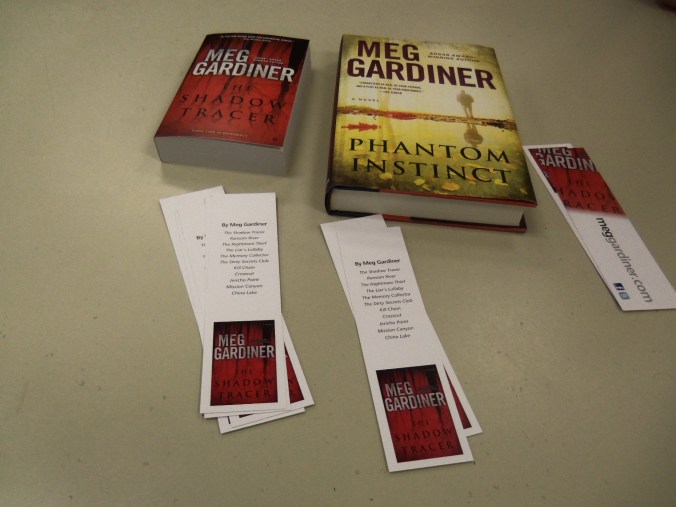
“Enthusiasm” and “Exhaustion” both start with the same letter.SINC August Meg Gardiner 005


IMG_2617It is through Sisters in Crime: Heart of Texas chapter that our organization had a wonderful weekend visit from international best-selling author Rhys Bowen in March. It is through Scott Montgomery, crime fiction coordinator for BookPeople, that I got to know Hopeton Hay of KAZI FM’s book review. I got to interview Sue Grafton on his radio program. I’m now involved in the Pflugerville Book Pfestival (April 16-17) because of networking with Scott and Hopeton. Networking can lead to wonderful things: moderating a mystery panel at a book festival; producing May Mystery Month day-long free workshops at BookPeople; meeting writers and making new friendships.
But remember to breathe, take your vitamins, and don’t get your feet tangled in the net.

JULY SINC HELEN CURRIE FOSTERSINC JULY GHOST DOGdeathontourcoverSINC August Meg Gardiner 003ALEXANDRA PICTURE 2

Speaking of networking, please come to the Pflugerville Book Pfestival April 16-17, at the Pflugerville Public Library at 1008 Pfluger Street.ALEXANDRA BURT BOOK COVER

The weekend festival, free and open to the public, is packed with writers, book signings, panel discussions and interviews. I will moderate the panel “Sisters in Crime: Women Crime Fiction Writers” with award-winning authors Meg Gardiner, Alexandra Burt, Janice Hamrick, and Helen Currie Foster from 1:30 – 2:30 p.m. on Saturday, April 16.

On Sunday, April 17, there will be panels on mystery in fantasy and science fiction novels, international crime fiction, and the greatest crime-fiction novels of all time.

Get information and schedules about the Pflugerville Book Pfestival by calling 512-990-6375 or go to http://www.pflugervilletx.gov/index.aspx?NID=2237


Janice Hamrick on Work, Writing, & Studies in Scotland

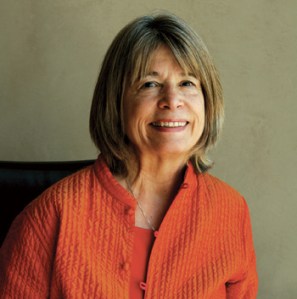
Janice_Hamrick_2012_for_web.pngJanice Hamrick may not be a professor, but watching her presentation during her recent program for the Heart of Texas Chapter of Sister’s in Crime, it’s quite clear she has a talent for teaching. In less than ninety minutes, Janice had demonstrated how each writer in the group could take a simple exercise and turn it into something compelling and interesting.
It’s harder than it looks.

Writing is also like that. Countless people say that they will, someday, sit down to write the Great American Novel once they have more time, more money, more freedom. Janice cautions against such thinking because writers make the time–no, writers steal the time–to put their projects on the top of the priority list. Even now, with an award winning series under her belt, Janice wakes up at 5 am to focus on her fiction before working a full day as a technical writer. She understands that there is no ideal time. There is only time, and it is up to each one of us to claim it.

We recently met for dinner at Gruene River Grille, a jewel of a restaurant nestled in the heart of Texas Hill Country, and tested the waitress’ patience with our three hour dinner (the waitress was amazing, by the way). Our conversation traveled the gamut of topics ranging from work and family to writing and publishing, and at the end of the dinner, we still left ground uncovered.

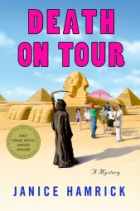
Janice is a writer’s writer–she is supportive, honest, kind and willing to share her expertise with others, all the while remarkably humble when the topic turns her to her own professional accomplishments. Her debut novel, Death of Tour, won the Mystery Writers of America/Minotaur Books First Crime Novel Competition in 2010 and launched her popular Jocelyn Shore series. After three successful books under her belt, Janice continued to work and write, and also traveled to Scotland to earn an M.Sc. in History from the University of Edinburgh. She has since returned to Austin, where she juggles work, life and writing.

Below are a few highlights from our discussion:

LO: How did you come to writing? At what point did you realize you wanted to write a mystery?

JH: I’ve wanted to write my whole life. In fact, I can’t remember a time when I didn’t want to be a writer. And I’ve loved mysteries almost that long, beginning with Trixie Beldon, Nancy Drew, and the Three Investigators. It seemed a natural thing to try to write one of the books I loved.

LO:  How did the character of Jocelyn Shore come to you?

Will_Janice.JPG

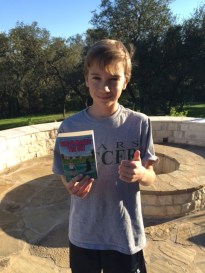
William Oles gives Janice’s series a ‘thumbs up!’

JH: I got the idea for a mystery set on a tour of Egypt when I went on a tour myself and noticed the potential for undetected deception is particularly great in a group of strangers who are traveling together. Once I got the basic plot idea, I needed a character with an intuitive understanding of human nature – and who better than a teacher for that?  I love Jocelyn for having no illusions about what people are capable of and yet still genuinely liking them.

LO: Take us through your entry in the Minotaur competition and what happened when you realized that you had won.

JH: I stumbled on the contest when I was searching for agents to query, and I entered it in pretty much the same way I occasionally buy a lottery ticket – it seemed like such a long shot. In fact, it was not on my radar at all, and I had almost forgotten about it by the time I got the phone call.  I was at lunch with friends, didn’t hear the phone ring, and checked my messages in my car – before starting to drive, thank goodness.  When I heard an editor from Minotaur wanted me to call her back, my head almost exploded. I mean, I’m insecure, but even I didn’t think that editors routinely made personal phone calls just to tell writers their books suck.

LO: Many writers believe that their lives will be forever changed if they are fortunate enough to win a competition or, better yet, receive a traditional publishing contract.  As someone who has achieved the very thing most writers covet, what advice or insight can you give to those still striving for those goals?

JH: I’m not going to lie – being published was my biggest dream come true. However, like most dreams, the reality isn’t exactly what I expected. It’s not what my friends expected, either. I can’t tell you how often I’ve been asked if I’m going to quit my day job. My response is always the same: “No, I like to eat.”  The financial rewards aren’t what people expect, especially in the beginning of your career.

The biggest surprise to me was that publishers expect authors to become publicists, marketing managers, social media gurus, and polished public speakers, which, when you think about it, is almost the exact opposite of everything a solitary writer-type is likely enjoy or excel at doing. Those activities have a steep learning curve and really cut into my writing time. Even worse, all those things focused my attention on what other people want or what I “should” be writing. And actually – that leads to my advice, because I see it happening to all writers, whether they’ve been published or not. The tendency is to focus on what is selling, how to sell, what successful writers do, and what trends are popping up in publishing instead of focusing on the writing. It absolutely crushes creativity…and the fun.

My advice:  Read what you love. Write what you love. Finish what you start. Then you can worry about trying to get published.

An important side note– I’d started querying agents at the same time I entered the Minotaur competition.  Even after I won, the rejection slips kept rolling in. So, take that as further proof that being rejected does not indicate anything about the quality of your work.

And yes, the rejections still stung. 

LO: Your sabbatical from your job to temporarily move to Scotland sounds like a fantastic adventure. Can you share more of that experience with us?

JH: I moved to Edinburgh, Scotland, for an entire year and traveled extensively while earning an M.Sc. in History from the University of Edinburgh. The title of my thesis was “Supernatural Belief, the Scientific World, and the Victorian Experience of Grief in England: 1848–1890.”  It was the best year of my life…so far, at least.  Completely life- and attitude-changing.  As a side note, although the title of my dissertation is awesome, academic writing completely and utterly sucks the life out of even the coolest topic.

LO: Are you writing now? If so, how do you balance this with your current career demands?

JH: I AM writing now.  I’m working on a short story, which I’ve never done before, and I’m in the plotting stages of a new mystery. Details to be kept mysterious.  I get up at about 5:00 a.m. every day to write fiction before my workday starts. I tried doing it in the evenings, but I found that at the end of a full day, I’m tired of being on the computer in addition to just being tired.

LO: What advice might you offer to writers who hope to one day publish a mystery?

JH: Although I have lots of small tips and tricks, everything important I’ve learned can be boiled down to three things

  1. Write at least five days a week.  Even if you can only manage half a page, establishing a deathontourcoverwriting habit is vital. Don’t wait to be “inspired.” You are a writer, and writing is hard. Embrace that.
  1. Finish what you start. Do not start one thing after another without ever reaching “The End” of anything. Do not spend years and years on one book, endlessly polishing and rewriting. Get to the end and LET IT GO. Put it in a drawer if you aren’t happy enough to start querying and start something new. Start something new even if you ARE happy enough to start querying. You have an endless supply of stories inside you. Get them out there.
  1. Have FUN!  Stop reading publishing news. Stop obsessing over the failures and successes of other writers who aren’t you. Stop willingly inviting negative, critical, and fear-mongering voices into your head. (As a writer, you have enough voices in there already.)  Stop obsessing over how to get published and start obsessing over actually writing. Don’t get me wrong – writing is terribly hard work and some days it just sucks. But there are also days when it’s like flying. Obsess about getting more of those days.

You can learn more about Janice Hamrick, her Jocelyn Shore series, and her current projects at www.janicehamrick.com.

—Laura Oles