Your Doomscrolling Escape Hatch

I have a complicated relationship with social media.

 I treat it like a prickly colleague I need to check in with now and again and then excuse myself after I’ve spent an hour scrolling when I should have been doing something more important. I’ll abstain for a month or few. Then I’ll return, checking on family and friends. My feed is soon overwhelmed with all kinds of nonsense, including algorithm detours so off track that they resemble the last time I searched for an obscure restaurant without consulting my GPS first.  

While I’m working on better curating my social media experience, I have returned to one of my favorite methods of quality escapism.

My friends, if you aren’t putting down the phone and picking up a short story anthology or a novella, may I kindly recommend that you give it a try? As someone who has written short stories included in several anthologies, I am also a reader who has discovered other writers and other genres this way. Giving a short story twenty minutes of my time pays far more dividends than the social media algorithm ever could. 

Why not a novel, you ask? I love sinking into a good book, but sometimes that action results in completely ignoring other obligations, which leaves Tomorrow Laura in a real pickle. It’s almost always worth it, but the times I’m talking about here involve those moments when your brain itches to pick up your phone for “just a few minutes.” What I’m suggesting is that you pick up a short story magazine or anthology instead. A companion to your phone, but one offering a better conversation. 

Short stories are a wonderful way to dip in and out of a new universe and meet new characters without the three-hundred-page commitment. You may also discover you enjoy a different genre that you’ve avoided reading because, again, time commitment. The sheer abundance of fantastic short form fiction available right now is spectacular. You can throw a rock (please don’t) and hit a dozen collections worth your time. 

I’d be remiss if I didn’t mention Substack because it’s the one social media platform I spend time on regularly. Substack’s design encourages longer form discussions (think blog plus newsletter) and many writers have found a happy home posting essays, articles and stories there. But any algorithm driven product is a mixed bag for me, so after a little reading there, it’s back to short form fiction.

I’m not saying that social media isn’t a way to find your next great read—it definitely happens—but we’re now at the enshittification stage of social media (you can read more on that here  https://www.newyorker.com/culture/infinite-scroll/the-age-of-enshittification ) so I’m working to be more deliberate with my attention because it’s the one thing I can fully control. My goal now to use it as a tool that supports my love of reading and creating rather than mindlessly consuming whatever pops up in my feed (some success, some failure).
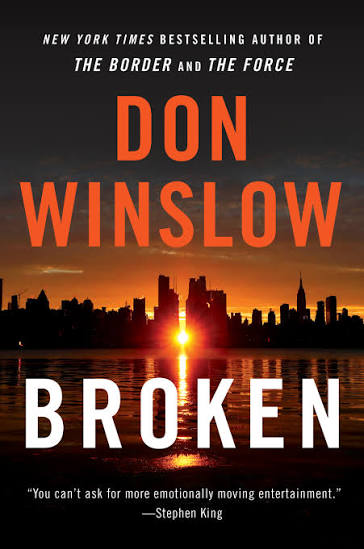
I’m currently re-reading Don Winslow’s Broken, a collection of six novellas, because “Crime 101” remains one of my all-time favorite stories. You know when you read something and then think, “Damn, that was something special”? I’m chasing more of that these days.

I also have a new little project launching soon, one that’s dedicated to finding and sharing fantastic short form fiction. I can’t wait to share it with you once it’s ready. 

What short story, anthology, novella or collection is a favorite of yours? Please share in the comments!

(A Small Snippet of) Recommendations: 

Ellery Queen Magazine:

https://elleryqueenmysterymagazine.com

Alfred Hitchcock’s Mystery Magazine:

https://alfredhitchcockmysterymagazine.com

Black Cat Weekly Magazine:

https://blackcatweekly.com

Broken by Don Winslow

https://bookshop.org/p/books/broken-don-winslow/2b90248c9e52682d?ean=9780062988904&source=IndieBound&ref=https%3A%2F%2Fwww.donwinslow.com%2F

Best of “The Strand Magazine”: 25 Years of Twists, Turns, and Tales from the Modern Masters of Mystery and Fiction By Andrew Gulli and Lami Gulli

https://tinyurl.com/t2txkx4c

Come Along with Me: Classic Short Stories and an Unfinished Novel (Penguin Classics by Shirley Jackson, Lara Miller (Foreword):

https://tinyurl.com/Shirley-Jackson
The Best American Mystery and Suspense 2025: An Anthology of Premier Short Fiction  Edited by Steph Cha and Don Winslow:

https://tinyurl.com/aje2amwa

Wish Upon a Crime: Crime Fiction Inspired by Fairy Tales by Michael Bracken & Stacy Woodson

https://tinyurl.com/pruubpw3

Story Club with George Saunders:

https://georgesaunders.substack.com

Cold Caller Magazine:

https://coldcallermag.substack.com

Laura Oles is the award-winning author of the Jamie Rush mystery series. Her shorter work has appeared in crime fiction anthologies, consumer magazines and business publications. She is a member of Sisters in Crime and the Writers’ League of Texas. Before turning to fiction, Laura spent two decades as a photo industry journalist.She loves road trips, bookstores and any outdoor activity that doesn’t involve running. She lives in the Texas Hill Country with her family. (https://www.lauraoles.com).


Writing, Thinking, and Miracles

by Kathy Waller

“One of the pleasant things those of us who write or paint do
is to have the daily miracle. It does come.” ~ Gertrude Stein

I’m having a hard time getting this post started. First I started a sentence about buying Natalie Goldberg’s The True Secret of Writing but stopped half-way through. Then I began a sentence about the book’s title, finished it, and realized it had nothing to do with my topic. I’m still trying to get it right.

For most of us, the first sentence isn’t easy. Neither is the second. Often, the third is troublesome. Sometimes the process just goes on and on.

Okay, scratch all that. There’s nothing new in it. The first opening sentence I composed seemed off-putting, so I wrote another, and it wasn’t any better. So I’ll dive right in:

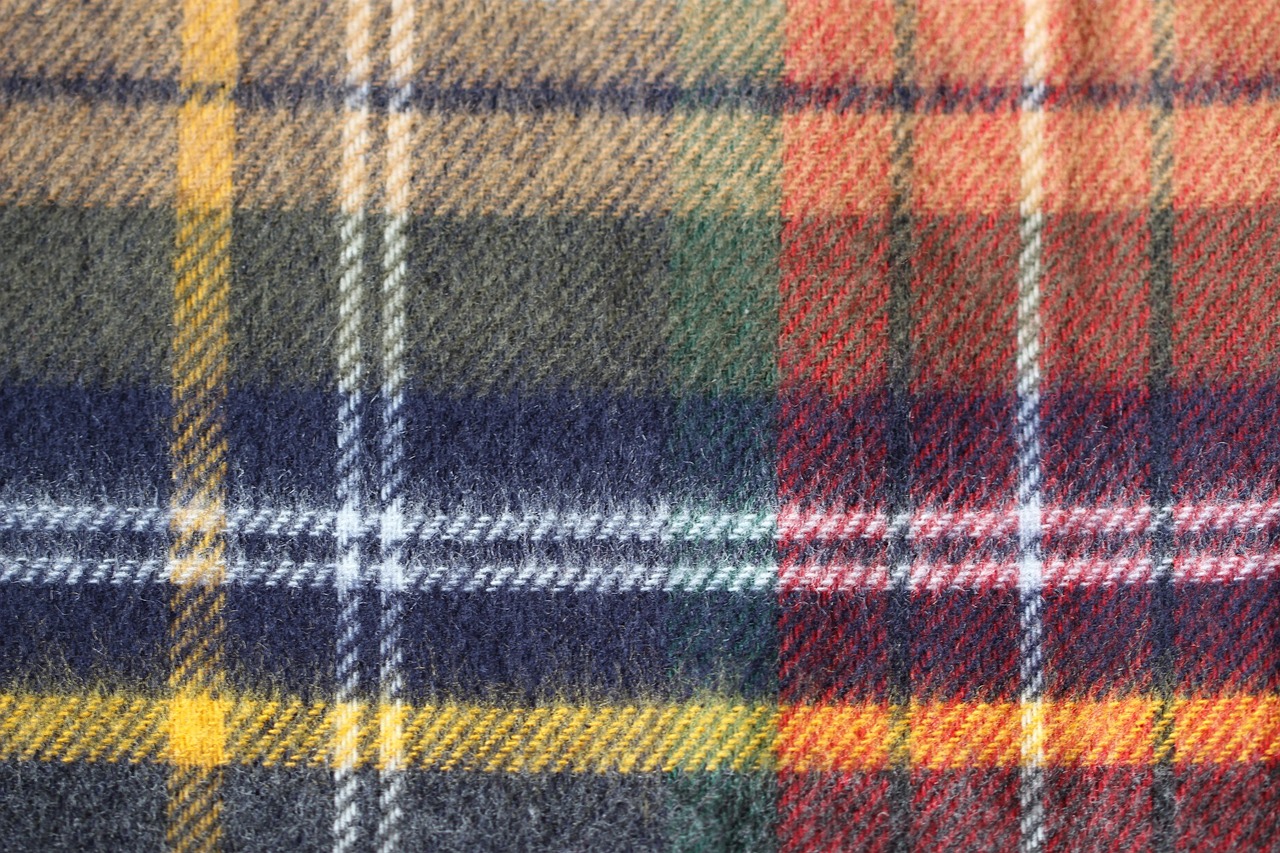
But it’s only fair to warn you: This post is about writing and thinking. It isn’t about childhood or cotton or plaids or sewing or shopping. But if you’ll take a minute to read through some cottons and plaids, the point will become clear.

The post is also about miracles.

Below, in italics, is a draft I wrote for another group blog, Writing Wranglers and Warriors:

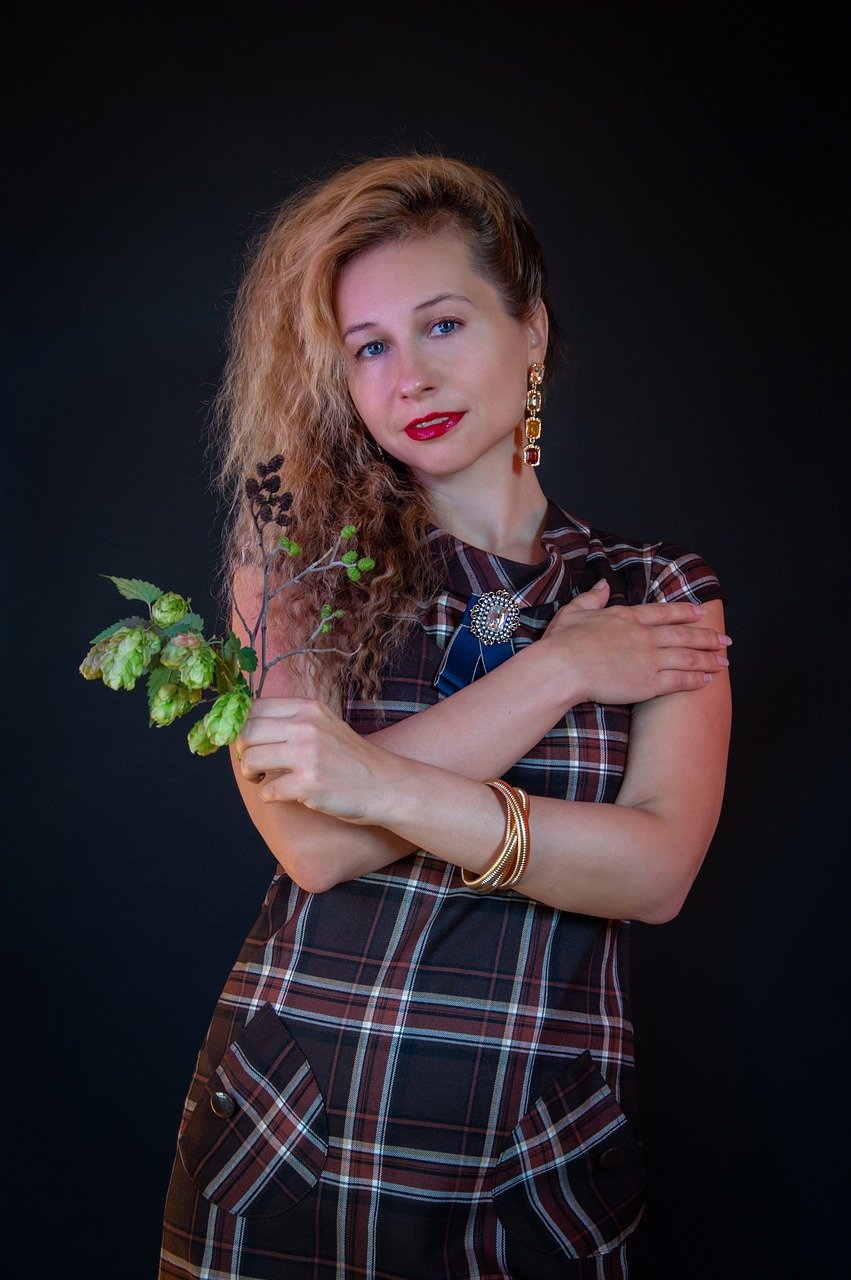
I’d planned to write about Shakespeare today, but a picture of a trench dress fellow Writing Wrangler Nancy Jardine shared stopped me in my tracks.

I confess I had to look up trench dress. I’d never heard the term. Imagine my surprise when I realized I’ve had trench dresses of my own. Although I love nice clothes, the technicalities have never interested me.

What caught my eye about this particular dress was the plaid. It reminded me of my childhood. There was never a plaid my mother didn’t love and wouldn’t wrap me up in.

And that brought to mind the annual back-to-school treks to Comal Cottons in New Braunfels, Texas, where we bought patterns, fabric, and notions to make back-to-school clothes. Friends from up the street and their mother came, too.

We made the trip in July, and started early, to get a jump on the summer heat. The outlet store, about thirty miles from where we lived, was filled with bolt after bolt of cloth. Mother walked slowly, running her hand across every bolt—it seemed to me she touched every bolt—and saying, “Isn’t that pretty,” or, “That color would look good on you,” or, “That would make a cute…” I followed along. My job was to chime in about the colors and patterns I liked, but I was bored stiff. I agreed with everything.

Next step, patterns: Opening long metal file drawers, pulling out packets of patterns… Simplicity and Butterick patterns were the best; McCall’s instructions could be confusing. Then, mentally matching styles with material we’d seen, taking patterns to fabrics to make sure, checking yardage and price, reconsidering… I was sure we re-examined every bolt.

By this time, my feet were killing me. (I was born with feet designed for sitting.) Comal Cottons had no chairs. Three bored tweens, one with aching feet, needed chairs. With chairs, girls can read books. Without chairs, girls stand around, one of them shuffling from foot to foot.

Then, decisions: making choices, stacking bolts on big tables, watching clerks cut material straight across, perfectly straight, and fold it. 

And then, the notions: buttons, thread, bias tape, zippers, and lots more considering.


And finally we headed for the car, bearing loads of raw material that over the next six weeks would be made into our fall wardrobes. Which in my case would include a plethora plaids. 

Now, like much else of my childhood, Comal Cottons itself is only a memory. 

Thank you, Nancy. With just one picture of a plaid dress, you brought back part of my childhood.

Well. To quote one of my former high school students, BO-ring. And, So what?

But as I wrote that last line about memory, the Daily Miracle arrived: A treasured memory of a different piece of fabric surfaced. The memory I really wanted to write about.

And then, another miracle:  I realized the story about the shopping trip was a warm-up. It was a seed of an idea starting to germinate. It was brain rubble that had to be expelled before the real subject could emerge.

Acting on the epiphany, I found my bit of fabric, snapped a photograph, and added three short paragraphs. Finally, I deleted the whole boring warm-up.

The final post read this way:

Fellow Writer and Wrangler Nancy Jardine recently shared a picture of a beautiful plaid dress that reminded me of  some fabric I’ve saved for more than fifty years. After residing all that time in my mother’s cedar chest, it’s wrinkled but intact.

The fall I turned eleven, my father’s father, whom we called Dad, gave Mother some money to buy me a birthday present. She purchased the wool shown in the photo and made me a pleated skirt. When I was sixteen, she remade it into an A-line skirt and a weskit.

DSCN1342

Opening the box at breakfast on the morning of my eleventh birthday was a bittersweet experience, because Dad had died unexpectedly the afternoon before. Mother told me she’d chosen the fabric because the blue reminded her of the color of his eyes.

Now, to prevent further strike-throughs, I’ll get to the point promised in the Warning:

Writing is Thinking.

A boring (bad, terrible, appalling, disgusting, abhorrent, loathsome, etc.) first (second, third, etc.) draft is not a Stop Writing sign. It’s a Keep Writing sign, signaling that brain rubble is loosening up, that something better is about to present itself—that the Daily Miracle will come.

Because the only way to get rid of brain rubble is to write it out.

To quote author Nancy Peacock, “If I don’t have the pages I hate I will never have the pages I love.”

I wish I had more time to work on this. It would contain less brain rubble. It might also be on an entirely different topic.

*

This post appeared on the Austin Mystery Writers blog in 2015. It’s since been edited. If it appears in the future, it will be edited again. That’s part of the process. It’s always something. (Remember Gilda Radner?)

**

Note: Nancy Peacock wrote A Broom of One’s Own: Words on Writing, Housecleaning & Life. Here’s what I think about it. Other people like it, too.

***

Images from Pixabay.

*****

Kathy Waller’s short stories have been published in anthologies and online. She is co-author, with Manning Wolfe, of a novella, Stabbed.

A native of small-town Texas, she lives in Austin but finds that cows, horses, and rivers keep showing up in her fiction, and no amount of editing can make them leave.