Writing, Thinking, Pantsing, and Miracles

Pantsing, when successful, lets you create a story closely resembling the spark that ignited it. ~Janalyn Voigt, Live, Write, Breathe

The first step in starting a blog is finding the perfect name. I wanted to call mine Contrariwise, as an homage to Lewis Carroll and to my ability to locate an argument in nearly any issue I come across.

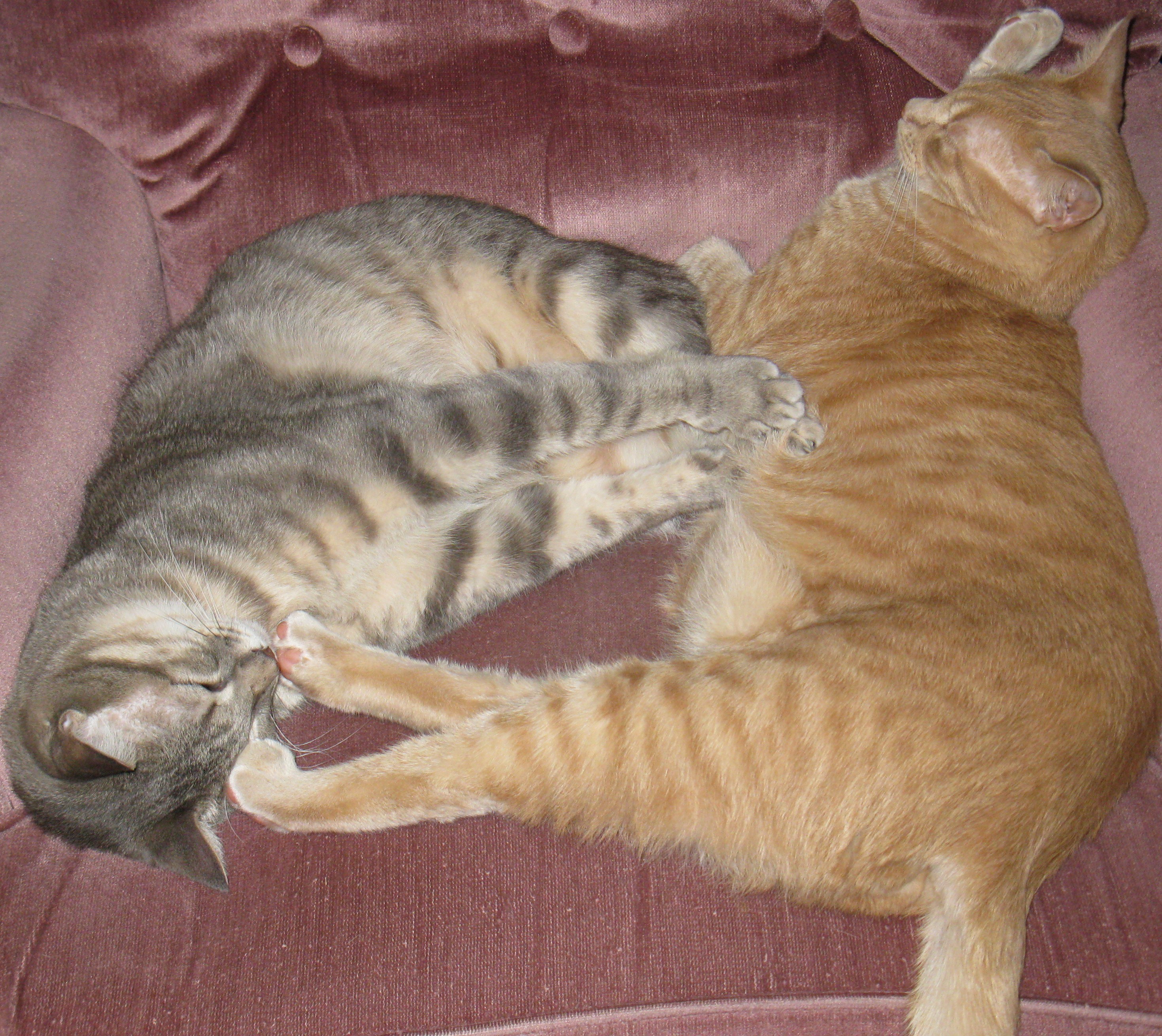
Contrariwise was already in use, however, several times over, and I couldn’t find another literary allusion that satisfied, so I named it Whiskertips. It was my own invention, an homage to the two whiskered beasts with whom I share living quarters.

The next step is thinking of something to blog about. For most people, determining a theme would be Step #1. Reversing the steps led to a series of posts I like to think of as eclectic. In other words, I wrote about whatever came to mind. I also hosted guest bloggers. Mark Twain and Emily Dickinson appeared often. But after a while, nothing came to mind, and I began to fall back on the beasts. When they IMG_0832.1assumed complete control of content, I withdrew and created another blog. I took its name from Gertrude Stein: To Write Is to Write Is to Write.* In a note in the sidebar, I stated the purpose: I would write about the experience of becoming a writer. I would write about writing.
It seemed like a good idea at the time.

But the best-laid plans of mice and men, etc. In only weeks–days–I had another eclectic blog on my hands. Why? Because I didn’t know anything about writing.

Or, to qualify that, I didn’t know anything writers–or anyone else–would want to read.

I know the basics: grammar, usage, mechanics, various elements of fiction, methods and techniques learned from reading, attending workshops, taking classes, reading articles, books, and blogs. But I had nothing to add.  Other people had gotten there first. And who wants to read another article about where the commas go?

The worst part was that most of the authorities claimed to have the One True Way:

Write fast. Don’t revise as you go. Outline–you have to outline every scene. Use index cards. Use colored pens. Tape butcher paper to the wall. Never share your work before you’ve completed it. Find a critique group. Write 1,000 words a day, and in ninety days you’ll have a completed manuscript. Write every day. Write morning pages. Keep a writing journal. Keep a bible for your manuscript. Query early. Query later. Have a platform. Establish a brand.

All good advice, I was sure. And frustrating, because I couldn’t seem to follow the rules.

Finally, I gave up. The experts were great at explaining how they write, but they weren’t so good at telling me how to write.

I had to struggle for a while, find my own way, develop my own process, set my own rules, and deviate from rules I’d outgrown.

Now, after years of wrangling with the experts, and with myself, I finally have something to say about how I write:

I don’t start with an outline. I start with a character and a line and go from there. I can’t construct a decent plot until I understand the characters, and I can’t understand the characters until I know their backstories. The only way I can know backstories is to write them, not in a separate document, but as part of the manuscript itself. Afterward, I go back and start putting the material in order. I may have to scrap some of the best parts–the darlings–but they go in a Darlings file so I can use them later if I find a place they fit.

This method is called pantsing–as in flying by the seat of your pants. Some plotters look down on pantsers. That used to make me feel like a failure. Then I read Writing Mysteries, a collection of essays edited by Sue Grafton, in which Tony Hillerman tells about his own pantsing. He said it takes longer, but in the end, he gets there. Since reading that, I’ve stopped apologizing for pantsing. What’s good for Tony Hillerman is good enough for me.

Let me make one thing clear: I revise. The condition of my first manuscript dictates that I revise a lot. The end product looks very different from the original.

Because I’m a pantser, the NanoWriMo program of writing a 50,000-word novel in thirty days doesn’t bring out the best in me. I write more slowly, and I can’t pound out a book on someone else’s timetable. For years I registered for NaNo and then wrote perhaps ten words. That’s called losing Nano.  Now I register and write whatever I want on my own timetable. I lose nothing, NaNo loses nothing.

(There’s another reason I don’t do well with NaNoWriMo. I don’t like to talk about it. But if you want to read about it, check Wikipedia under Passive-Aggressive behavior.)

The exception to my pantsing process occurs when a story comes to me already outlined. One such blessed event happened one night just after I’d gotten into bed and turned out the light: a story appeared, beginning, middle and end. I thought it would take about 600 words, but the final version turned out to be nearly 5,000 words. It included a little pantsing.

When I began this post, I knew only two or three things about writing, but now I realize I know more. Having already run on at length, I will leave the rest for another time. After I’ve pointed out one more thing:

Some writers, myself included, know (There’s another one!)–that writing is  a form of thinking, a way to generate ideas, to learn what we already know.

But I also subscribe to Gertrude Stein’s description:

One of the pleasant things that those of us who write or paint do
is to have the daily miracle. It does come.

I depend on the daily miracle. When I write, and keep on writing, it does come.

 *

*The entire quotation is “To write is to write is to write is to write is to write is to write is to write.” I presume it was not already in use because no one wanted it.

*

Posted by Kathy Waller 0kathy-blog
Kathy blogs at To Write Is to Write Is to Write and at  the group blog Writing Wranglers and Warriors.

Find her on Facebook at https://www.facebook.com/kathy.waller68.


Hawking Books at the TBF

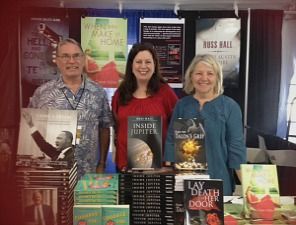
Every year, Texas author Russ Hall rents a booth at the Texas Book Festival, a downtown event that draws more than 40,000 readers from all over Central Texas.  This year, Russ shared his booth with my romance-writer friend Claire Ashby and me.

Russ Hall, Claire Ashby and Elizabeth Buhmann at the 2014 Texas Book Festival

Russ Hall, Claire Ashby and Elizabeth Buhmann at the 2014 Texas Book Festival

Nowadays, whether you are traditionally, indie or self-published, you have to sell your own books. Claire and I learned a lot about that from Russ over the weekend.

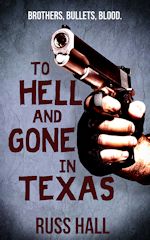
The three of us all have books out with Red Adept Publishing—Claire’s and my first books and Russ’s most recent. We all prepared for the book festival by having posters made of our cover images. The posters are good to have; they’ll come in handy at nearly any local event.

tohell

whenyoulaydeath


A good cover can play a major role in the success of your book. The three of us are happy with ours by Streetlight Graphics, cover designers who subcontract with Red Adept. Consider using them if you are choosing your own cover. And just for laughs, check out these Nine Cover Mistakes to Avoid from Book Bub Unbound.

Hawking to the Crowd

At the book festival every year, Russ shifts into what he calls his extrovert-for-a-day mode. It’s not the most natural state for the average writer, but it’s not that hard to cultivate, either. Russ taught us to greet people and make friendly conversation about the weather (it was HOT in that tent!), the crowds (BIG!), and the festival in general (so much to see).

TBF

Be ready with a quick, catchy description of your book—its genre and its hook. Claire and I struggled on this learning curve. Ask yourself: how would you describe your book in one or two sentences to make it sound like a great read? Practice your pitch!

  • Russ often quoted a line from the Kirkus review when selling his mystery, Goodbye, She Lied: “Cartloads of down-home humor, amusing characters and a hint of romance.”
  • Claire’s book is a “love story about a pregnant woman and a man who lost his leg in Afghanistan.”
  • I learned to throw out the fact that I used to work at the Attorney General’s Office. It gave me and my mystery credibility.

Russ also taught us to make sure people realized we were the authors, not just vendors. It made a difference! We ended up signing every book we sold.

Cover to Title to Blurb

It was fascinating to see the cover-title-blurb progression in action. The cover is the first thing that sells your book to a casually browsing shopper. We could see people’s eyes get caught by a cover, then they would read the title, then pick up the book and turn it over to read the back cover.

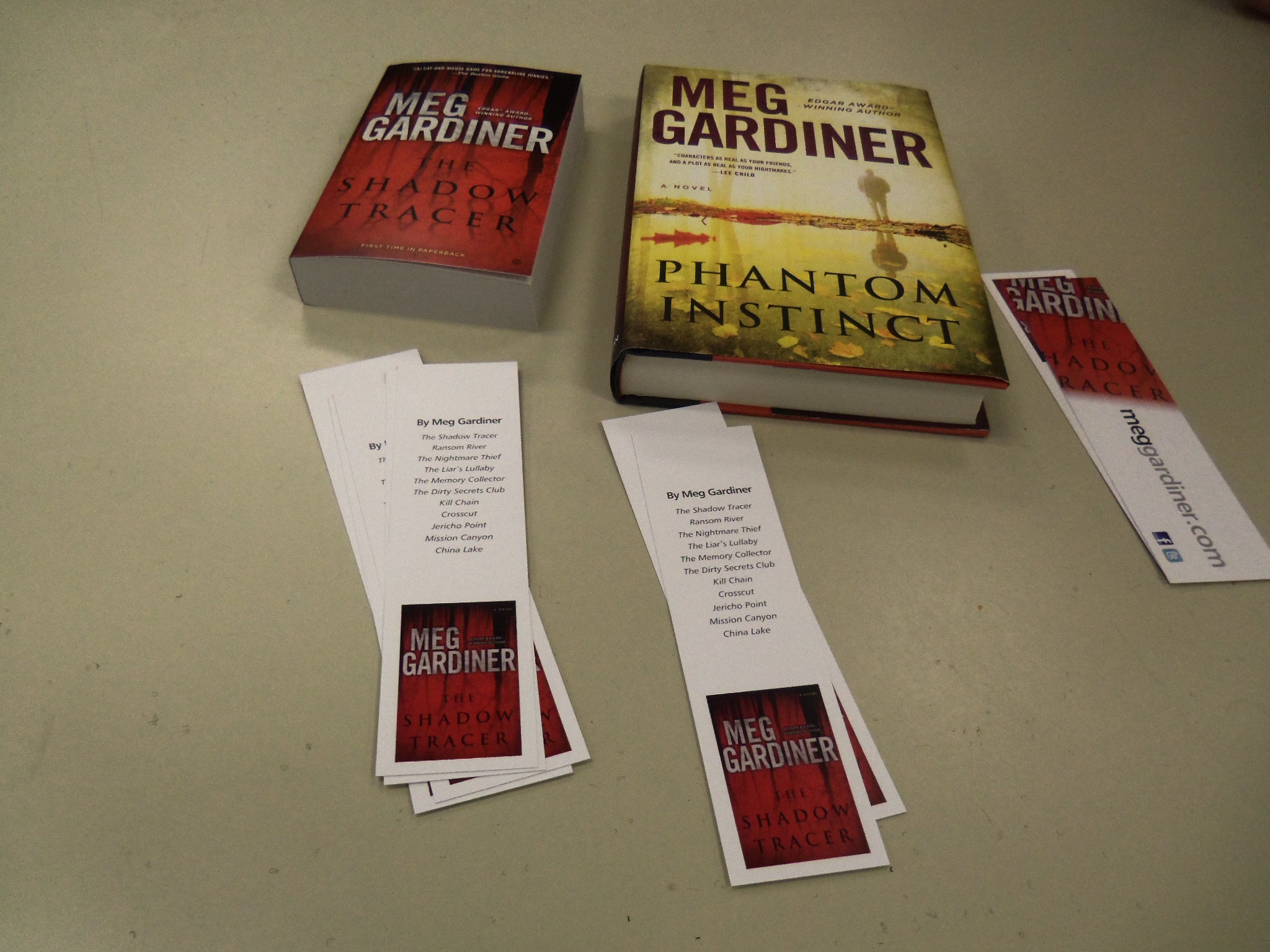
Be sure to take bookmarks! Mine included the graphics from the cover, the title and the hook paragraph from my back cover. I found I could easily pull people over by reaching out and offering a bookmark.

bookmark

One woman took the bookmark from me without pausing or even really looking at me. We watched her walk past us, glance down, then slow down, reading. Then she stopped and stood there. She turned around, came back, picked up the book, and read the back cover. Sold!

I went through 200 bookmarks and could have used more. Who knows? Maybe some people went home and read the bookmark later. If they like mysteries, maybe they’ll look it up on Amazon.

Will you have a book out next year? Get your poster and bookmarks and sign up to hawk your wares at next year’s Texas Book Festival! Where a good time is had by all.

THE GARDINER CHRONICLES: PART TWO

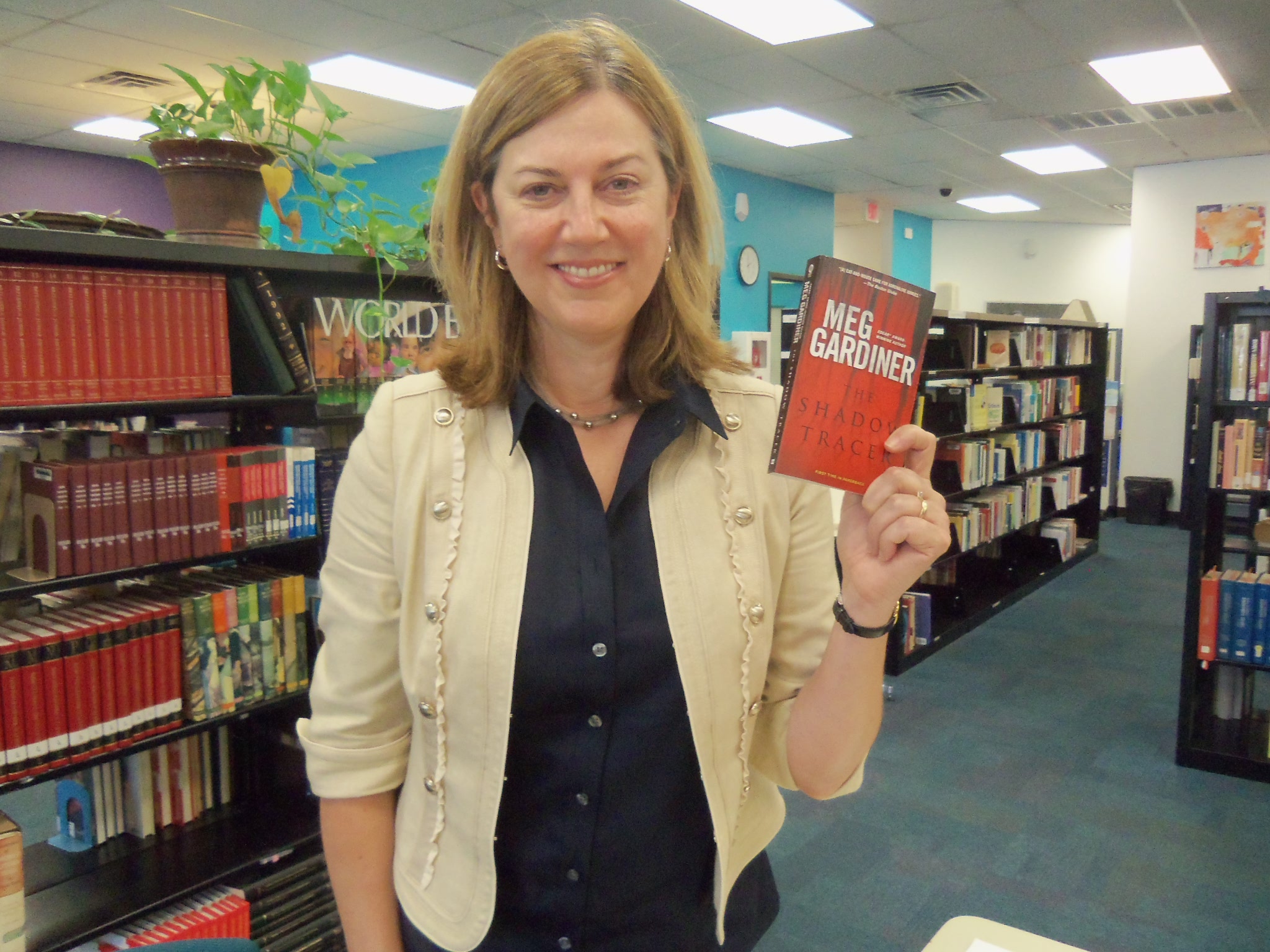
SINC August Meg Gardiner 003Or who let the deus ex machina out, what’s a plot, and is this about cannibalism?

hutto oct. 1 2014 023 (2)By Gale Albright

“Plot is soylent green. It’s made up of people!”
Is Edgar award-winning thriller writer Meg Gardiner talking about cannibalism?

http://en.wikipedia.org/wiki/Soylent_Green

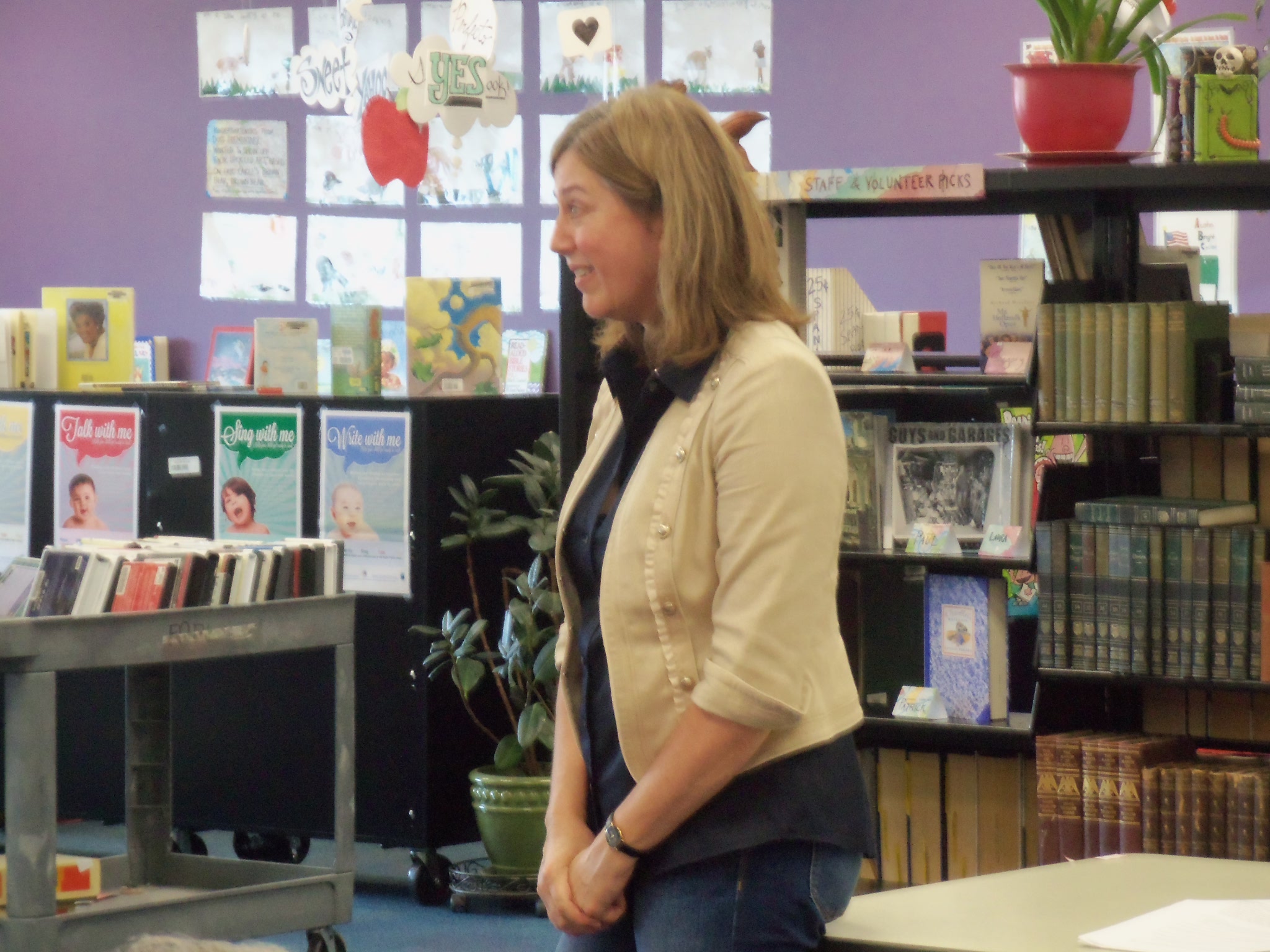
No, she did not advocate turning people into crackers in a malnourished dystopian future. She talked about plotting novels during her August 10 presentation at the Sisters in Crime: Heart of Texas chapter monthly meeting.

“Plot or characters are largely the same thing. The story is all about what the characters do. You should know what the ending is. The seeds of the ending must be sown at the beginning of the book.”

She used Jaws as an example. “The first chapter shows what needs to happen at the end of the story. There’s a set up there. The protagonist must defeat the antagonist.” You know from the beginning that somebody has to do something about that shark—pronto! That shark can’t be washed ashore six months later on a beach in South Carolina and die of indigestion. The protagonist and antagonist must engage in hand to hand combat, or hand to fin, as it were.

According to Gardiner, thrillers have a fairly linear, straightforward plot. There’s an “inciting incident” that throws life out of whack for the protagonist, which in turn causes complications. It sets off a chain of events. The essence of plotting is “thwarting desire.”

The protagonist desires something and the job of the antagonist is to throw a monkey wrench into the works. The antagonist is a critical character who keeps the protagonist from getting what she wants.
You need a strong, active protagonist. If everything happens easily for a protagonist, it’s not a story. She doesn’t need to be Sylvester Stallone, but she’s not going to fold when the going gets tough. The protagonist doesn’t go with the flow, she’s willing to put herself out there and take action.SINC August Meg Gardiner 007

Is the heroine an amateur sleuth? Why does she feel compelled to look for answers? Is the villain a murderer? The villain has strong motivations and feels he is the hero of his own story. They must have compelling characteristics. Gardiner likes Moriarty as a villain as he clashes with Sherlock Holmes. Both men are obviously the heroes of their own stories.

Even if you don’t know who the killer is until the end of the novel, you know there is someone out there doing bad things, perhaps a minion of the main villain. In Gardiner’s Dirty Secrets Club, someone is committing murder by forcing the victims to kill themselves. Forensic psychiatrist Jo Beckett, one of Gardiner’s serial heroines, has to track down the killer.

The story must build bigger and bigger with plot twists and escalating pressure. There is continual revelation and shock. The characters have to make decisions under pressure.

The key to the plot is action. Figure out what the chase is and cut to it. Start with action, not a lot of back story–no dream sequences. The plot has to be emotionally coherent or the reader will feel cheated and put the book down.

To prevent that “sag in middle,” keep the tension up, develop the story, and build in progressive complications with big scenes, time pressure, and a ticking clock of some kind.

The ending must be surprising, yet inevitable. You need some surprise, otherwise the result might be vaguely dissatisfying. Create a dilemma at the ending, forcing the protagonist to choose the lesser of two evils by making a difficult decision.

Always make sure the protagonist is the one who takes action to resolve the issues. The hero/heroine has to take active steps at the end of the novel. Don’t try to pull a deus ex machina out of the bag at the end.

http://en.wikipedia.org/wiki/Deus_ex_machina

What is a deus ex machina, you ask? In ancient Greek plays, an actor playing a god was literally cranked out from the wings onto the stage to resolve the ending of the story. He was sitting in a “god machine” made by ancient Greek stage hands, no doubt. This form of achieving a satisfying ending to the story is frowned upon in modern times. The protagonist must defeat the antagonist with her own smarts and heroism.

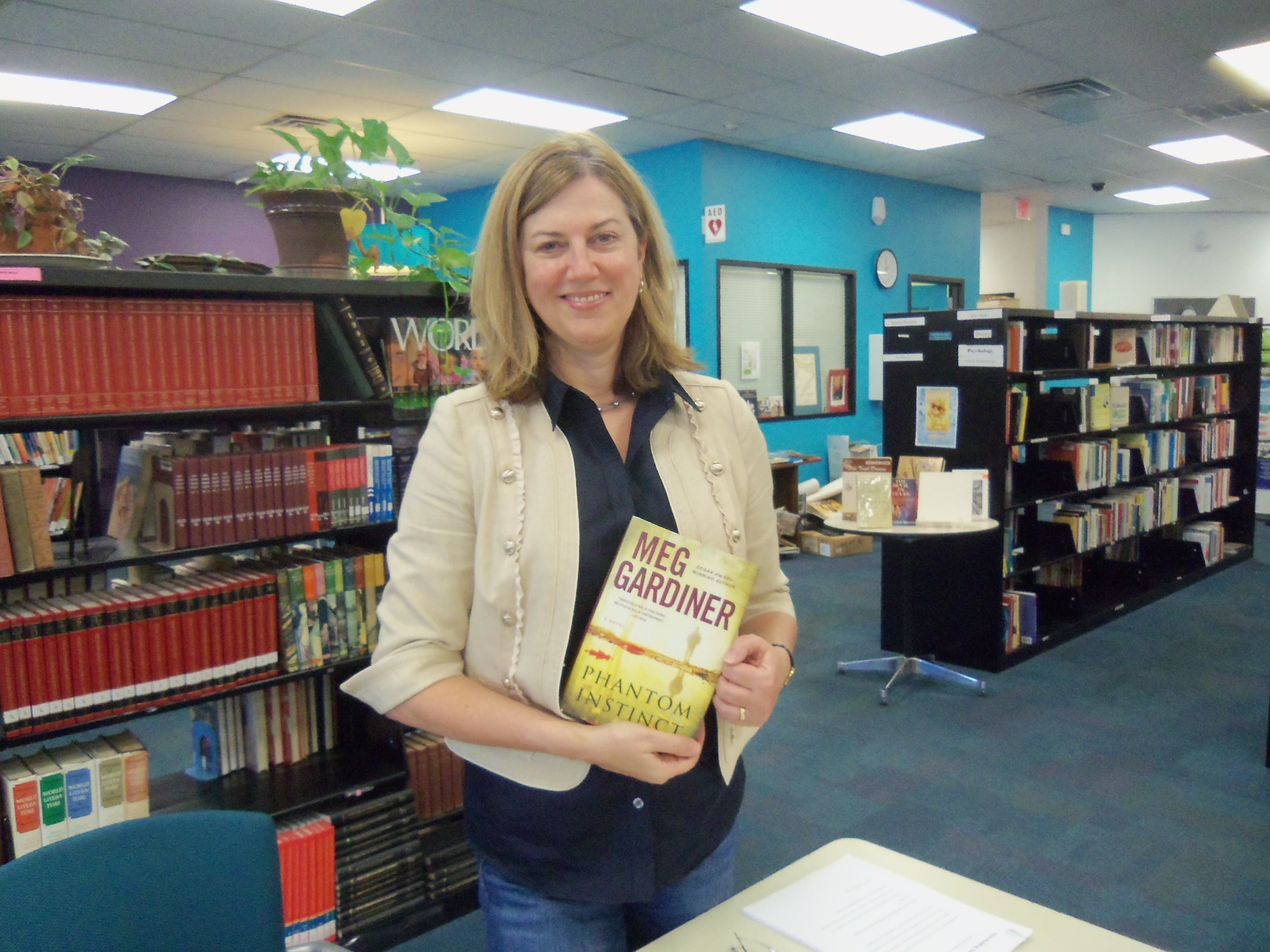
Meg Gardiner is an Edgar award-winning American crime writer who lives in Austin, Texas. Her best-known books are the Evan Delaney novels. In June 2008, she published the first novel in a new series, featuring forensic psychiatrist Jo Beckett. More recently she has published three stand-alone novels: Ransom River (June 2012), The Shadow Tracer (June 2013), and Phantom Instinct (June 2014).SINC August Meg Gardiner 005


Procrastination and the Perfect Writer’s Guide

There’s something alluring about reference books for writers. You know the ones, lining the shelves at your favorite local bookstore. They beckon, encouraging us to come closer, to flip through their pages to discover their secrets. They promise to teach us everything we need to know about creating compelling characters, powerful plots and revealing dialogue. They offer to give us a glimpse into the writing life as experienced by those who have earned some modicum of success. These guides are filled with information, tips, anecdotes and motivation. They are filled with promise.

They get me every time.

StevenKingCoverI’ve always been a bit of a research geek. When I want to learn something new, I tend to go all in, diving into the topic quickly and deeply. Some would claim this fascination serves as a distraction, a way to procrastinate from the hard work of putting words to paper. I’ve read many blog posts cautioning us to abstain from the allure of the writer’s reference book. You must practice the craft, not read about it. “These books are yet another way to put off the actual work. Research isn’t writing.” And I agree with this sentiment.

To a point.

I believe that any activity that lures us away from honing our skills falls in this category. My weakness is weeding out closets. When I’m stuck–or afraid to tackle a project–I tackle a drawer instead. I’m a master at this method of delay. If I’m engaged in de-cluttering the closet, it’s probably because my mind is too cluttered to move my story forward.

It is the writing reference guide that actually draws me back to the page. These books become the bridge that helps me return to the work at hand.

My current favorite is Alexandra Sokoloff’s Screenwriting Tricks for Authors. I keep Anne Lamott’s Bird by Bird, Stephen King’s On Writing and Stephen Pressfield’s War on Art on my desk, close enough to guide me through a tough stretch of writing. They keep me pushing forward when dealing with the messy middle of my manuscript. I confess to sometimes spending too much time searching for that perfect  formula when I should be discovering the path through my own practice. Still, I rationalize this habit as one that encourages me to come back to the work rather than giving up on it entirely. And isn’t that what these books really offer? The hope, the gentle push to continue our efforts. And if they serve as a crutch now and again, well, that’s okay.

I just call it research.

What are your experiences? Which writer’s guides are your favorites, and do they help or hinder your daily word count?

–Laura Oles

Morning Pages: Don’t Speak. Don’t Judge. Don’t Fall Asleep.

Karleen Koen

Karleen Koen

The first day of last summer’s Writer’s League of Texas retreat, author-instructor Karleen Koen told students that every morning before class, we must do Morning Pages: Wake up, don’t speak, take pen and paper–not computer–and, while still drowsy, write “three pages of anything.” Don’t judge. Keep the pen moving. In her course notebook, Karleen listed the following:

Stream of consciousness, complain, whine, just move your hand across the page writing whatever crosses your mind until you get to the end of page three.

Karleen stressed that she didn’t invent Morning Pages. The technique, minus the name, came from the book Becoming a Writer by teacher Dorothea Brande, published in 1934 and reissued in 1981. Author John Gardner, in his foreword to the reprinted edition, states it was “astonishing” that the book had ever gone out of print.

IMG_3540

Becoming a Writer by Dorothea Brande

Ms Brande advises aspiring writers to “rise half an hour, or a full hour, before you customarily rise.” She continues,

Write anything that comes into your head: last night’s dream, if you are able to remember it; the activities of the day before; a conversation, real or imaginary; an examination of conscience. Write any sort of early morning reverie, rapidly and uncritically. (Brande, p. 72)

Julia Cameron, in her bestselling The Artist’s Way, published in 1992, named the process Brande advocated Morning Pages and made them the cornerstone of her Artist’s Way program. Cameron considers them a form of meditation.

Why do Morning Pages? To quiet the internal critic; to tap into the subconscious; to discover what you know; to remember and to capture the present; to build fluency, the ability to “write smoothly and easily when the unconscious is in the ascendant.” (Brande, p. 72) And, as Koen notes, to whine and complain.

When I do Morning Pages, I like to focus on whining and complaining. Words of discontent virtually flow from my pen when I follow Brande’s instruction to rise early. To wit:

The morning after Karleen assigned Morning Pages, my roommate and I woke to my cell phone alarm at seven rather than the previous day’s eight. (I think that was the morning the phone flew from the nightstand and landed on the concrete floor.) I propped myself up on a couple of pillows, gathered the pen and the notebook I’d placed on the nightstand before retiring the night before, and started to write.

While I wrote, my roommate sat on the side of her bed. Instead of picking up her notebook, she spoke. I reminded her we weren’t supposed to talk. She told me she didn’t care what we weren’t supposed to do. After violating the rules once or twice more, she started on her Morning Pages.

Roommate drinking tea and smiling

Roommate drinking tea and smiling

In my usual all-or-nothing fashion (a tiny bit of OCD), I wrote through hand cramp and shifting pillows. Halfway through, I fell asleep. When I woke about a half-hour later, I resumed scribbling.

My roommate had already finished her Pages. She had dressed. She had sat on the porch and drunk a cup of hot tea. She was smiling.

Sometimes it is better to bend the rules.

At break time, I quoted to Karleen the first sentence of my Morning Pages: I don’t like Karleen any more. (I said it in bold font.) She laughed uproariously and asked if I knew how funny I was. I didn’t tell her I was dead serious. Before the end of the day I would like her again, and if I told the truth now, I would have to apologize later, and I just didn’t have the energy.

Since I’m confessing, I might as well admit that, while I was scribbling, I figured out a fool-proof way to make Morning Pages a positive experience: Use a notebook with little tiny pages. They fill up faster.

Looking back, I’m ashamed of the thought, but at the time it seemed a darned good idea.

Anyway. Having griped about that miserable experience, I’ll also admit that Morning Pages work. I’ve done them off and on since 1998, when I heard Julia Cameron speak at the Austin Whole Life Festival. A small group of young men stood outside Palmer Auditorium holding placards and begging attendees to abandon chakras and crystals and choose reason instead, while inside, Cameron shared the most reasonable ideas on stimulating creativity.

So I read The Artist’s Way and, although a 17-cent spiral notebook would have sufficed, I bought a copy of The Artist’s Way Journal. (The Journal had enormous, narrow-ruled pages that took forever to cover, but having the proper tools is important to OCDs.)

Then I wrote. And whined. And complained. As I did, the garbage in my head moved down my arm, through my hand, and onto the page. By the time I got to page three, my mood had lightened. When I turned to other writing, the garbage stayed trapped inside the Journal.

Once the brain has been cleared of debris, words can flow.

That’s my experience. Others have their own reasons for writing those three pages per day. But those who engage in the practice swear by it.

Adequate sleep

Adequate sleep

As I said, I’m not consistent. I’ve done Morning Pages for months at a time, then skipped one day and failed to resume the habit.* Nearly every time I’ve given up,  fatigue has been the cause. A long commute before and after an extra-long day makes rising early unpleasant if not impossible. The same thing goes for getting to bed too late. Morning Pages require adequate sleep. But so does good health. So does good writing of any kind.**

Before leaving the retreat, I bought a special notebook for my return to Morning Pages. The signature on the cover looked like Dickens but turned out to be Darwin. No matter. Darwin and I are friends, too, and I wanted the green one. I’ve not yet made peace with going to bed at a decent hour. I’m trying. But when I stay up into the wee hours working on a blog post, my morning edges toward afternoon.

Oh–I’ve just remembered: A situation unrelated to fatigue once interfered with Morning Pages. It involved the repaving of twenty miles of FM20, a wintry cold house, and a new box of cat litter.

But that’s a story for another post.

Charles Darwin's signature on elegant green notebook

Charles Darwin’s signature on elegant green notebook

###

*Morning Pages is about the only habit I’ve ever managed to break.

** I’m not sure about sleep being necessary for good writing of all kinds. I suspect Hemingway, Faulkner, and Fitzgerald might have stayed up past bedtime. But I bet Willa Cather kept regular hours. And, as people with any discernment at all recognize, Cather is at the very top of the American novelist pecking order.

###

0kathy-blog

Kathy Waller blogs at To Write Is to Write Is to Write (http://kathywaller1.com) and at the group blog Writing Wranglers and Warriors. She’s set aside her novel manuscript for a while to concentrate on writing short stories.

The Pomodoro Technique: Writing a Novel 25 Minutes at a Time

OLYMPUS DIGITAL CAMERACan a technique named after a tomato serve as the answer to your time management woes?

For those writers who dream of having several uninterrupted hours to write a novel but find those hours never arrive, maybe it’s time to consider another approach. It’s that fantasy that often keeps us from ever getting started–the common but sometimes detrimental belief that writing a novel will only happen if we have six hours a day of quiet time. I know that particular expectation derailed my own efforts more often than I’d like to admit. Between my work, my husband’s demanding schedule, and three kids who all play sports, the chance that I will have several interrupted hours in a row will only happen if I catch the flu and wind up in bed. This is true for most of us, isn’t it? The fantasy of writing all day colliding with the reality of a jam-packed schedule with the result being a persistent frustration surrounding why we can’t get this novel finished?

Why can’t we get to THE END?

I finally realized that I would need to figure out a method that would best work within the structure of my own life. For me, that meant searching for successful authors who juggled day jobs, kids and other demands. I’m a bit of a time management and organization geek anyway, so I used the opportunity to seek guidance. When I came across the Pomodoro Technique, I felt it might be just the tool to push my project along.

Francisco Cirillo created the Pomodoro Technique in the 1980s and it has since become one of the most popular time management techniques used today. The word ‘pomodoro’ means tomato in Italian and the name came about because Cirillo used a kitchen timer shaped like a tomato when developing the concept. Here’s how it works: you simply write in a 25 minute block of time, called a pomodoro, and then you take a five minute break before starting the next pomodoro. After four completed pomodoros, you then take a 15-20 minute break. To keep your motivation up, mark each pomodoro on your calendar with an X or a circle. As you see these marks add up, they 1) help build momentum for your project and 2) show you just how much work you can do in short blocks of time.

I found this strategy has helped me move my own work forward. In times past, I would discount even a fifteen minute block of time for fear that it wouldn’t make a difference. I realize now that I was wrong. I actually convert my pomodoros into 15-minute blocks because it keeps me from disregarding any small block of time. It often leads to 25 minutes of work, but only expecting 15 minutes means I’m more likely to give it a shot.

This approach has changed my entire mindset when writing fiction. I no longer believe I need an eight-hour day of solitude to be effective (although I still dream about it). It does require some advance preparation on my part–keeping papers together, taking notes regarding the next scene to be written–but I am now working with my editor on my first book while writing my second. I am moving forward with my fiction, and if it happens 25 minutes at a time, that’s just fine with me.

What about you? How do you balance your writing projects with your daily demands?

–Laura Oles

The Gardiner Chronicles

SINC August Meg Gardiner 002By Gale Albright

portraits 004 (5)Part One of the Gardiner Chronicles, wherein we learn about Big Dogs and Big Ideas. Meg Gardiner presented the August 10 program for Sisters in Crime: Heart of Texas chapter in Austin at Recycled Reads.

In order to complete a 95,000-word novel, Meg Gardiner needed a compelling main character and a big idea to hang her story on. “It only took me decades to learn that,” laughs Gardiner, the Edgar-winning, best-selling thriller author of Phantom Instinct.

Gardiner’s parents were teachers who encouraged her writing in a pragmatic way. “My dad’s car was full of books, the trunk and back seat. I thought everyone lived like this. Dad said go to law school so you can pay bills while you are writing. Pay the rent. So I went to law school.”

Years after law school, when she came up with her first series character, Evan Delaney, Gardiner was married with three children. She could relate to Evan Delaney, a “girl lawyer,” although Evan was “more athletic than the author. My first attempt was horrible, deadly, nothing happened in it.” The book was shelved.

Her next novel got up to “thirty good pages” with a hit and run scene. The scene was long and slow. It turned out there was no reason for the hit and run driver to hit and run over anybody. In short, there was no plot. Project shelved.

Gardiner finally finished a novel with a cast of thousands. Although she called it a murder mystery, a friend pointed out that no one had been murdered. You guessed it—shelved.

When her children were out of diapers, Gardiner was living in London and trying to get an agent with only three chapters written for a new book. She found Giles Gordon, an agent in London.

“With thirty years in the business and lots of professional experience, I learned when he gives advice, it’s wise to listen.” Gordon said her first chapter was not working. She protested that it was funny, shiny, and clever. He said it was a cliché. It took her a long time to start listening, but she finally saw the light. “He didn’t have to come to my house and hit me with a two by four.”

She redid chapters but still got rejections. “I hope you’re feeling tough,” said Gordon on one memorable occasion, when he showed her a publisher’s reply to her submission. The two-page, single-spaced letter said the manuscript was horrible.

Giles said, “Read it, burn it, drink a glass of whiskey, then get back to work.”

Finally, China Lake, the first Evan Delaney novel, was ready for prime time. A British publisher made an offer and China Lake was published in London, translated into other languages, and sold in Europe.

But United States publishers did not want it.

When she wrote Mission Canyon, the sequel to China Lake, the land of her birth didn’t want that one either. It was snapped up by European publishers. This happened five times in a row with the Evan Delaney series. She could find a copy of her books in Singapore, but not in California when she went home for a family visit. She joked that her relatives probably thought she was fibbing about being published.

Then along came good ole Serendipity, AKA Stephen King.

“King’s got a closet full of books people have sent him. In preparation for a long airplane trip, he saw China Lake in his closet and took it with him. Why? It had nice big print, so he figured it was good for an overnight flight.”

And he liked it. He said, “This was good. Do you have any more?”

Gardiner’s British publisher gave copies of all her books to Stephen King, who mentioned her in a column he wrote for Entertainment Weekly and encouraged people to read her thrillers. Almost immediately, she got offers from about fourteen different U.S. publishers.

“Sometimes you need a very big dog with a very big bark to be in your corner.”

Had Gardiner been languishing with a hanky, worrying about not getting U.S. publishers all this time? She had not. Like any serious writer, she was working on new material, a series featuring Jo Beckett, a forensic psychiatrist. She took an offer from Penguin to have the first Jo Beckett novel published, The Dirty Secrets Club. “You must be ready when opportunity knocks.” You never know when Stephen King is going to turn your world upside down.

Gardiner thinks her very early writing attempts were “crap.” But, “If you believe in a book, keep trying to jump over the bar.”

Stay tuned for Part Two of the Gardiner Chronicles, wherein we learn about Writer Work Ethics and Plotting 101. Coming to a blog near you in a few weeks.

SINC August Meg Gardiner 004SINC August Meg Gardiner 010

Celebrating Mystery Author P. D. James

0kathy-blogWho’s your favorite mystery author?

A Sister in Crime recently posed that question.

I told her my favorite mystery author is–

Agatha Christie / Donna Leon / Josephine Tey / Margery Allingham / Ngaio Marsh / Ruth Rendell / Mary Roberts Rinehart / Sarah Caudwell / Sophie Hannah / Ellis Peters / Elizabeth Peters / Elizabeth George / Dorothy L. Sayers / Patricia Highsmith / Minette Walters / Mary Willis Walker / Kaye George / Terry Shames / Karin Fossum / Cammie McGovern / Laura Lippman / Anne Perry / Ann George / Joan Hess / Faye Kellerman / Daphne DuMaurier / Carolyn Keene . . .

And others too numerous to mention.

That’s typical. When asked to choose a favorite, I come down somewhere between wishy-washy and overwhelmed. There are so many writers whose books I enjoy, each for a different reason.

I like Josephine Tey for her ability to keep readers feverishly turning pages of a mystery in which there’s not even a hint of murder.

I like Sarah Caudwell for her wit and for her erudite narrator, Professor of Medieval Law Hilary Tamar, who couldn’t solve a crime if the answer jumped up and bit her.

I like Donna Leon for her vivid depiction of Venice, and for Commissario Guido Brunetti, increasingly cynical about the possibility of dispensing justice in a corrupt society, who finds refuge in his home and family.

I like Ruth Rendell for her complex and amazingly tight plotting, and her ability to drop in one more revelation when the reader thinks all questions have already been answered.

I like Daphne DuMaurier for–well, for the reasons everyone else likes her.

My Sister, however, pressed me to give her only one name. The reason? She had an idea for a SINC ~ Heart of Texas Chapter (HOTXSINC) program focusing on a mystery author, a celebration of that writer’s life and work.

To that, the answer was both immediate and obvious: P. D. James, acknowledged by both critics and readers as the premier writer of mysteries in the English language.

I like James for her complex plots, and for characters so fully realized that their lives seem to extend beyond the pages of the book. I like her because she plays fair with the reader, hiding clues in plain sight. I like her for her clean, elegant prose and her literary style. James feels no need to start with a murder on page one, but takes her time, introducing characters, establishing relationships, orienting the reader in time and place. Her pace is leisurely, and the reader who tears through a James novel, intent on learning the identity of the villain and moving on to the next title on his To-Be-Read stack misses half the pleasure her mysteries offer.

In addition to the skill and stature that make James a perfect choice for HOTXSINC’s program is the fact that a television adaptation of her latest novel, Death Comes to Pemberley, based on Jane Austen’s Pride and Prejudice, is scheduled for airing on PBS Masterpiece Mystery! at the end of October.

Finally, there’s the fact that on August 3rd of this year, James celebrated her ninety-fourth birthday. The birthday of a favorite mystery writer certainly merits a party.

The Sister who came up with the idea for the celebration is Sarah Ann Robertson, past president and treasurer/membership coordinator for HOTXSINC. As is only fair, since it was her idea, I asked her to coordinate it. As always, she’s done an excellent job.

The program will feature presentations by members on James’ life and work, including Youtube videos of interviews with the author. Special guests Maria Rodriguez, Director of Programming for KLRU-TV, will present an overview of KLRU/PBS “Mystery!”, based on mysteries by female authors, and Linda Lehmusvirta, KLRU Senior Producer for Central Texas Gardener and a P. D. James enthusiast, will speak about P. D. James’ televised mysteries on KLRU/PBS.

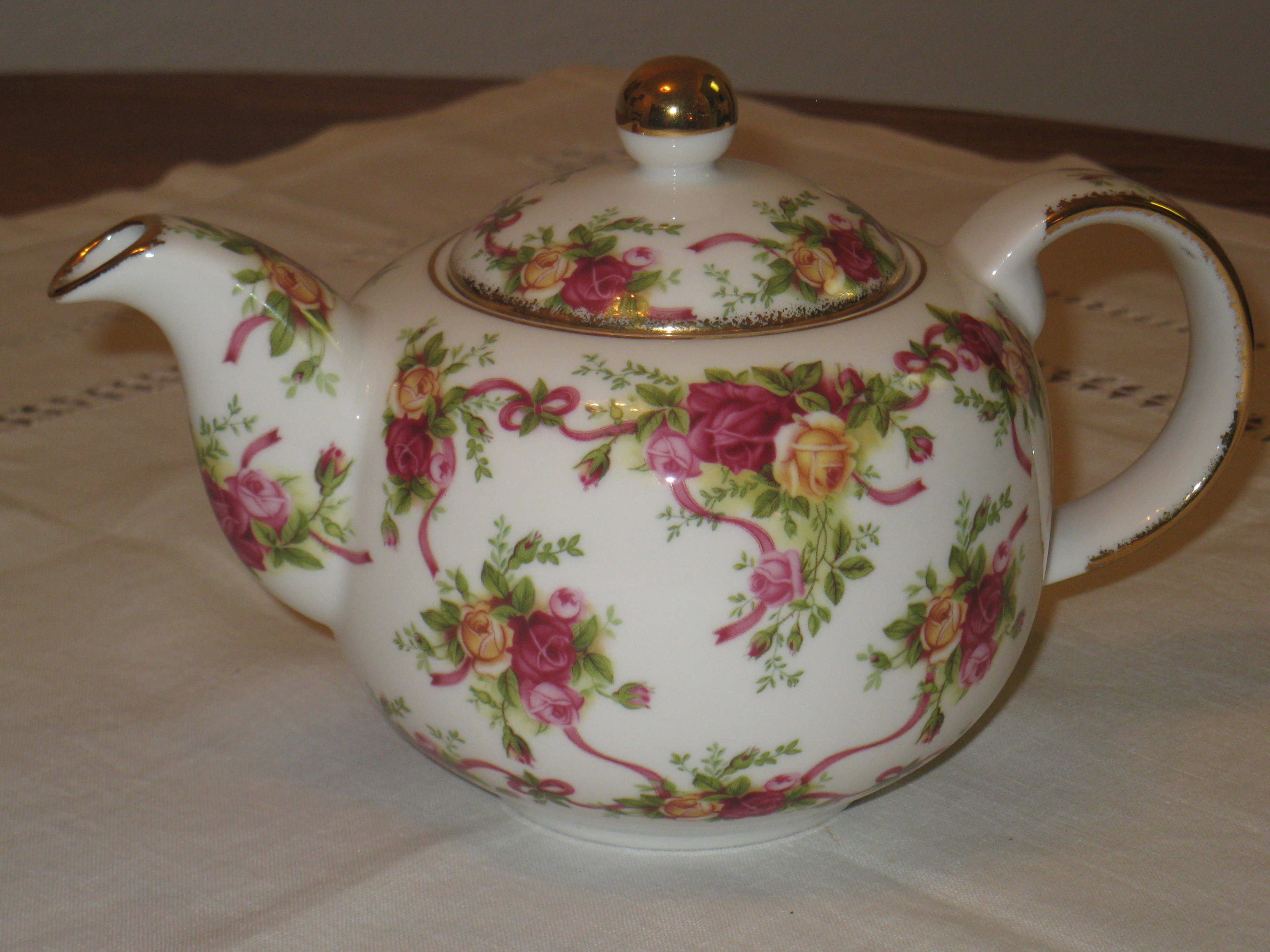
sinc teapots web 2014-08-27 007 After the program, members and guests will be treated to a traditional afternoon Texas-style English tea.

The celebration will take place at Recycled Reads, 5335 Burnet Road, Austin, TX 78756, from 2:00 to 4:00 p.m., on Sunday, September 14. The meeting is free and open to the public.

Please join us.

*****

For a bibliography of P. D. James’ publications, click here.

To read about the traditional English afternoon tea, click here.

*****

Kathy Waller blogs at To Write Is to Write Is to Write (kathywaller1.com).


Whispers of Memories

I recently took a trip to Huntsville, Texas, and everything I saw at every turn stirred up old memories.


–          Right behind the hotel where I stayed was the apartment complex where my cousins had lived. A few blocks away was a second place they lived.

–          I passed a street of good friends of many years. They hosted a wedding shower for me.

–          I passed the fancy restaurant where my grandmother lived for a while when she was a child. I remember that when she told us, we had no idea!

–          I saw the nursing home where my other grandmother spent her last years.


All of this within a short drive just to get a burger! My mother’s family has been in the Huntsville area since the mid 1800’s so we have a lot of stories. A couple of my favorites:


–          Sam Houston was a friend of the family. He used to come and visit.

–          My great-grandfather was sheriff for a while and lived in the jail.


Neither of my parents grew up there, but my father moved there after my parents got divorced. He was offered a job at Sam Houston State University as a Criminal Justice professor. So I have a personal connection to the place through my mother and my father.

Besides the personal connections, there is something that draws me to the place. OLYMPUS DIGITAL CAMERAMaybe it’s something about the vines growing in the pines, maybe it’s because I love history and old things, maybe it’s because of my “writer brain”, but when I pass old houses, I imagine children playing and grannies rocking while shelling peas. I love browsing through the old stores. I sometimes look at what they’re selling, though I’m more likely to be looking at the tin ceilings and wondering what the original store was.

The history of a place just calls out to me. I look at the red leather seats in the booth at a diner and remember when not everyone was welcome as a customer. I look at the young, happy families and wonder if they hear or feel the negative things that happened. Can they even imagine it? I pass the prison walls and know the prison has been there since 1849. Lots of famous and infamous people have been in those walls.

At the university I think of my great great aunts who attended when it was a Sam Houston Normal School. We’ve had a graduate from there in every generation. My grandmother went to kindergarten at Old Main, which has since burned down.

I think about my father when I sit on the bench outside the CJ building that’s dedicated to him. There’s a plaque with his name on it. He used to sit outside and smoke and talk to students. Inside the building there’s a big picture of him. DadNext to it are plaques with names of students who have received scholarships named after him.


Sometimes when I’m in town, I visit the cemetery. I look up my folks and browse around. Yep, some people like museums, I like cemeteries. file000511322167When you’re looking at someone’s headstone, you see when they were born and when they died. You can see if they were married or had children buried with them. So many stories untold.


It’s all a bit overwhelming for me at times. But I guess it’s no surprise that I like to write historical fiction. file0001461581320For me the place is full of mystery, history, conflicts, love, death and birth. Those piney woods have a lot of secrets.


Do you have a place that calls to you?

Two New Mystery Events for May

DENNIS TAFOYA’S SHORT MYSTERY WRITING CLASS AT BOOKPEOPLE

tafoya  pictureAcclaimed crime author Dennis Tafoya is teaching a short mystery writing class on May 1st, 6:30 PM on BookPeople’s third floor.

It’s a fun way to promote his new book The Poor Boy’s Game. He will teach an hour-long class on the elements of crime fiction using examples from classic and current authors as well as his own work. A fun and informative night for beginning and practicing writers as well as people who are just fans of the genre. Bring pen and paper. Admission is free.

Dennis Tafoya has also authored The Wolves of Fairmount Park and Dope Thief.

Tafoya book cover

To find out more, click on http://www.dennistafoya.com/

BookPeople is located at 603 N. Lamar Blvd., Austin, TX78703.

tafoya  dope thief

Tafoya wolves

tafoya philly noir


BARBARA BURNETT SMITH ASPIRING WRITERS EVENT

On May 18, Sisters in Crime Heart of Texas Chapter will host the Barbara Burnett Smith Aspiring Writers Event (BBSAWE) at 2 p.m. at Recycled Reads in Austin.

This event will celebrate the legacy of Barbara Burnett Smith, a published mystery author who helped many writers in the Austin community. Aspiring Writers will meet with their Mentors, who are published mystery authors in the Sisters in Crime Heart of Texas Chapter.

W.D. Smith will speak about his mother’s legacy and Russ Hall will talk about mentorship. Following these remarks, the mentors will introduce their aspiring writers to the membership and the writers will read their 500 submitted words to the audience.

Following the program, a buffet supper will be served and aspiring writers will consult with their mentors.

Jan Grape mentors Jane Shaughness; Russ Hall mentors Alex Ferraro; Helen Ginger mentors Shelby O’Neill; Susan Rogers Cooper mentors Lindsay Carlson; Caroline Shearer mentors Eileen Dew; Elizabeth Buhmann mentors co-authors Sue Cleveland and Dixie Evatt.

Recycled Reads is located at 5335 Burnet Rd, Austin, TX78756.

img_1111-1