Show Time

BP MOW 2

by Gale Albright

hutto oct. 1 2014 023 (2)It’s early Monday morning. Actually, it’s about 8:30 Saturday night, but I’m working on this blog post ahead of time because I’ve got so much to do to get ready for the big show.

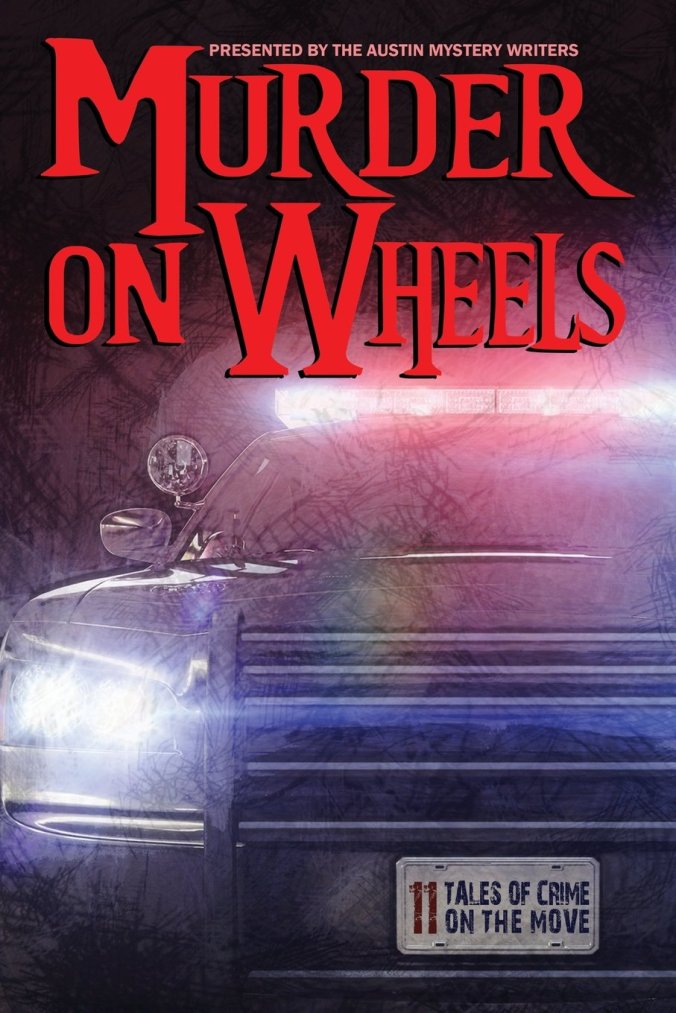
The big show, otherwise known as the book launch for Murder on Wheels, an anthology of crime stories authored by Austin Mystery Writers and friends, will take place at 7 p.m. on Tuesday night, August 11, at BookPeople.

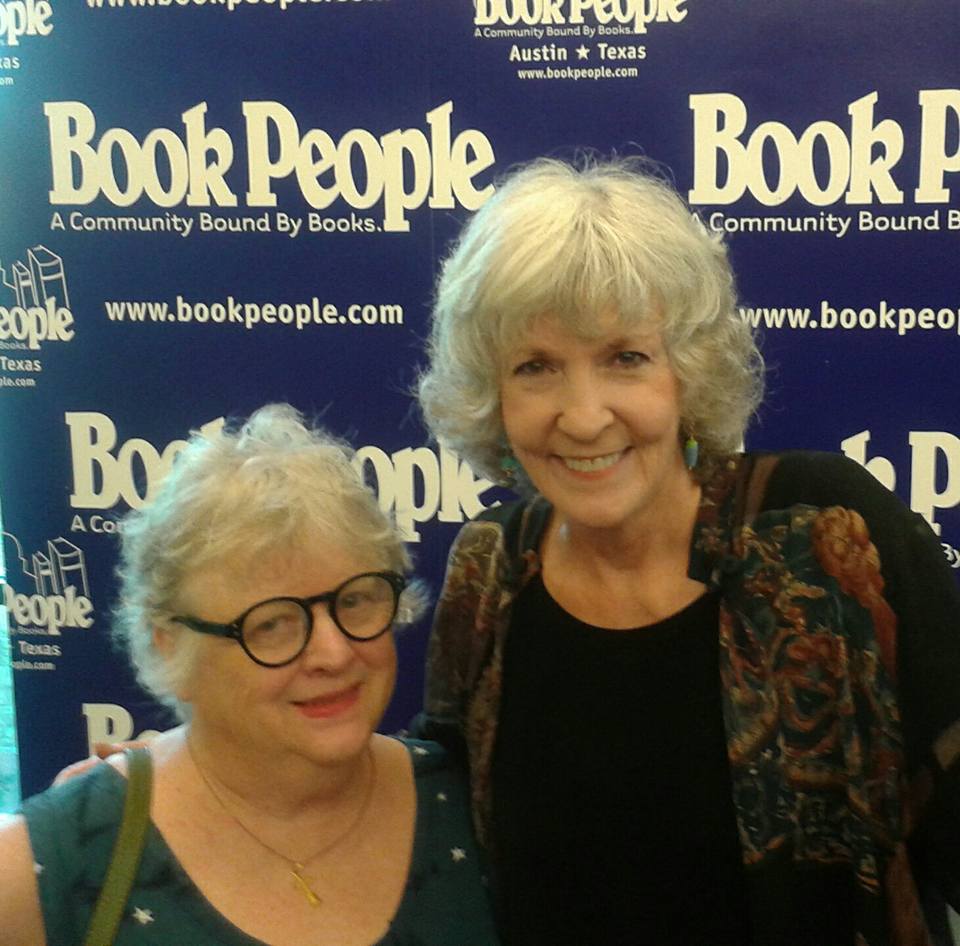
BookPeople picSo, pretend it’s early Monday morning and I’m setting the scene for the big show. My main thought right now is not, “Will I read beautifully in front of an audience?” or “Will there be an audience?” or “Do I need to take some crackers and cheese down there?” but should I get a manicure with (sigh) painted fingernails?

I guess Stephen King and David Baldacci don’t worry about manicures before they show up at a book launch, but what about those big-time female authors–Meg Gardiner, Sara Paretsky, Sue Grafton and so forth? I’ll bet no interviewer has ever asked them about their fingernails.

That would probably fall under the category of a sexist question that reporters sometimes ask female politicians. We’ve seen that scenario play out many times on television when dense reporters ask women candidates about their lipstick instead of their foreign policy. So, forget fingernails. One must think about relevance and art and writing routines and other lofty things, not cheese and crackers and nail polish.

I’m rambling here on Saturday night, preparing to take a shower to wash off biting insects and mosquito repellent from watering the yard in Austin’s summer inferno. It’s like walking out in the desert, complete with hot wind whipping around at 8 p.m. Why do I live here? It’s nice in the winter. Oh, and we need rain, even though we were almost flooded from too much rain in May and June. I live in an unbalanced place.

If you’ve read this far, you might be thinking, where’s the damn mystery stuff? This is just a silly jumble about nail polish, desert winds, crackers, and mosquito repellent.

Yes, you are right. I’m just a wee bit nervous about this incipient maiden book launch. Murder on Wheels has taken up much of our time and energy and creativity for the last couple of years. We’ve gone from a spark of an idea to a traditionally published book to a book launch, complete with booze, a cake–maybe something salty on the side–at BookPeople, where the big boys and girls go when they tour through Austin. It’s exciting. It’s scary. It’s a big deal, this big show.

Sometimes thinking about silly little things takes my mind off the big stuff. Has that ever happened to you? I am also trying to hydrate to prevent heat exhaustion, decide what shoes to wear, make sure everything’s washed, fix my hair and select earrings. I can handle the art and relevance and witty patter just fine. I’m not afraid of audiences. Show me an audience and I will go into an improvisational routine at the drop of a hat. I learned to do that at a tender age when I sang and danced for ladies at my aunt’s beauty shop in East Texas. I was the entertainment and did fancy patter, dance steps, and songs for bubble gum.

But what will they think about my nail polish?

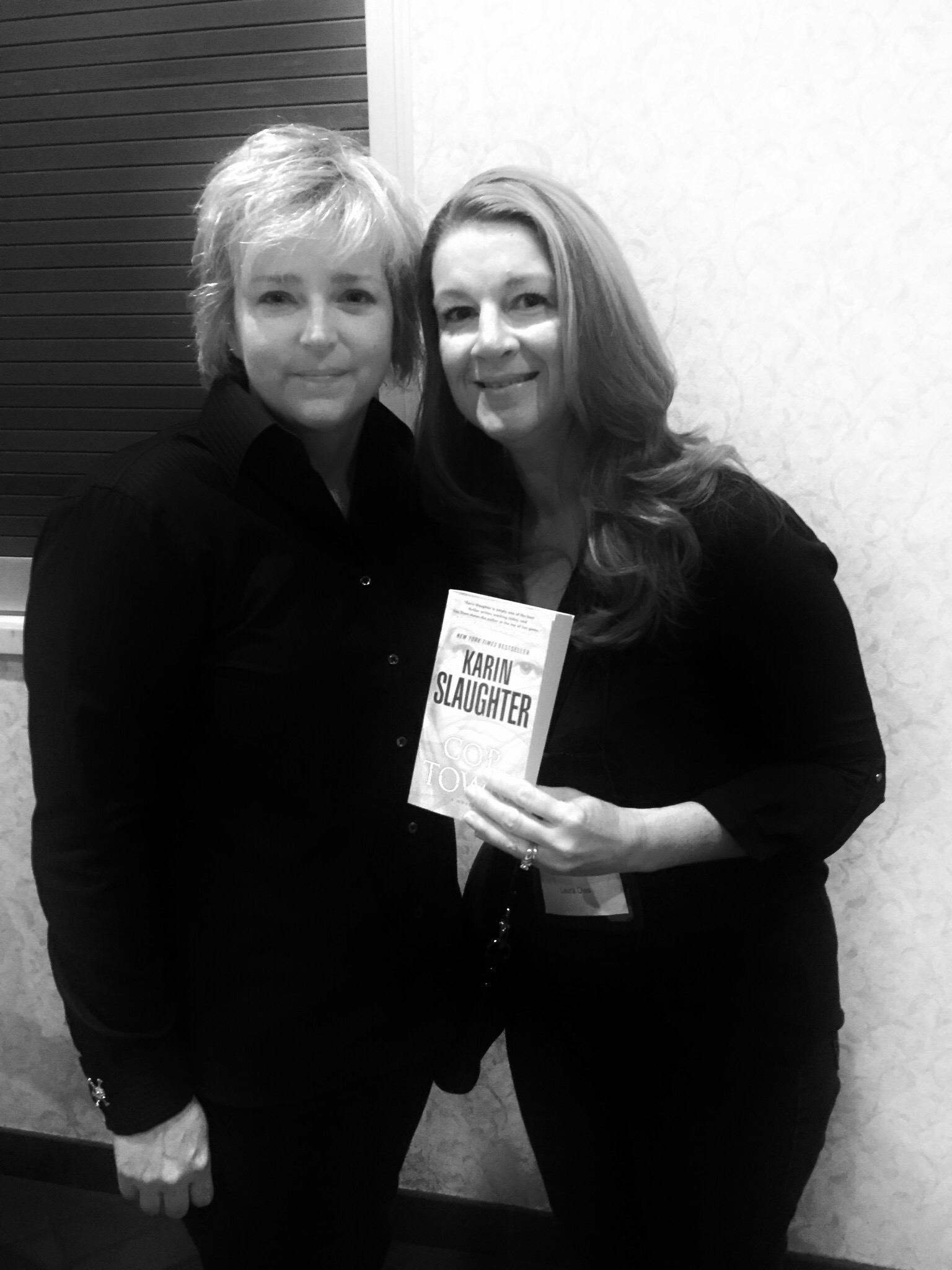
Malice laura and kaye

murder-on-wheels-panel-10simg_2570[1]100_3222 resizedWho are these folks? (clockwise) Kaye George, Laura Oles, Scott Montgomery, Kathy Waller, Gale Albright, Valerie Chandler, Reavis Wortham, Kaye George, Earl Staggs–the eight writers who made Murder on Wheels what it is. And Kaye George is in there twice because it was her idea in the first place.

BP MOW


Choose Wisely

old bowl inlaid with silver, handmade, Georgia, Tbilisi

Your Holy Grail?

In the movie, Indiana Jones and the Last Crusade, Harrison Ford is tasked with locating the authentic Holy Grail from a crowded cave filled with imitations. “Choose wisely,” he is counseled by the knight standing beside him. “While the true Grail will bring you life, the false Grail will take it from you.” The knight then glances at a skeleton nearby and adds, “He chose…poorly.”

That’s good advice.

It applies not only to the dangerous deeds surrounding recovering rare artifacts while nefarious foes trail closely behind, it also applies to many more practical aspects of life. For writers, one choice that should be carefully considered is that of a writer’s group. There are countless stories of how an early work, in the wrong hands, can mean a great deal of discouragement and heartache. It can even derail a project indefinitely.

While attending a family wedding this summer, I met a woman who had just finished a draft of a novel, historical fiction, that she had labored over for some time. She had traveled to do the appropriate research, invested a great deal of time deciding how the story should unfold, and persevered until she typed the words ‘The End.’

And then she handed it over to someone she knew.

This man quickly tore her story apart and did so in such a way that it crushed her. She didn’t have the energy to go back to the story and now doubted herself and what she had created. The manuscript sat untouched. The man may have had good intentions or he may have been a self-centered ass. I can’t claim that knowledge. All I could see was the result. Here was a woman with multiple degrees, substantial talent and passion, and now she had put the book aside, seeing the novel as a failure.

We talked though her concerns and it was clear her novel was interesting and unique. My job, I felt, at that point, was to let her know it was completely okay to ignore his ‘advice’ and to trust herself in this process. That can be a tough thing when writers are just starting out in the world. So many are looking for expert advice, that perfect formula to publication, that magic bullet–to the point where we drown out our own voice as the price paid for such counsel. Don’t do it. Don’t trade your vision for someone else’s.

That’s not to say that writers shouldn’t take advice on how to improve a story. Each writer should certainly seek review. What I am saying is that you should choose those people VERY carefully, especially in the beginning stages when you are so emotionally tied to your work and are in a more delicate state. So, find support for your work and get feedback, but be selective as to whom you allow into your inner circle.

I feel that our group, Austin Mystery Writers, is a true treasure in that each one of us sincerely wants the others to succeed. We offer critiques, suggestions and opinions regarding each work in progress, but we do it in a way that is respectful and helpful. We will debate ideas, ask questions and then decide how to use that input. Sometimes we apply it to our stories and sometimes we ignore it. The choice is ours and is supported by the others at the table.

A critique group can be an important part of a writer’s life and I encourage each writer to find her own small trusted tribe to give feedback. Yes, you need to have some thick skin because your project needs work. It falls down in places and you need others to point those areas out so you can address them and improve the story. The key is to be deliberate as to who will be part of your inner circle, especially in the early stages. They will help toughen your hide, to take criticism graciously and to use it for its best purpose. They won’t tear your work down to feed their own egos. Instead, they will chip away at the weak spots so you your story’s foundation will be stronger.

Choose wisely.

And if you choose poorly, don’t be afraid to start over and choose again. Trust yourself to find your tribe. Because you will.

–Laura Oles LRO-sanfran

Join AMW for MURDER ON WHEELS Launch ~ August 11

Please join

Austin Mystery Writers

Gale Albright, Valerie Chandler, Kaye George,
Scott Montgomery, Laura Oles, and Kathy Waller
&
Earl Staggs and Reavis Wortham

as they celebrate the launch of their first crime fiction anthology

MURDER ON WHEELS:
11 Tales of Crime on the Move

“Eleven stories put the pedal to the floor and never let up! Whether by bus, car, tractor, or bike, you’ll be carried along at a breakneck pace by the talented Austin Mystery Writers. These eight authors transport you from an eighteenth-century sailing ship to the open roads of modern Texas, from Alice’s Wonderland to a schoolbus yard in the suburbs of Dallas. Grab your book, hold on to your hat, and come along for the ride!”

Tuesday, August 11, 2015
7:00 p.m.

BookPeople Bookstore
6th Street and Lamar

Austin, Texas

“There is something for everyone…” ~ Amazon Review

“…light-hearted (and occasionally black-hearted) collection of short stories… I thoroughly enjoyed it. … take your choice–historical, humorous, dark and light. Good reading for mystery fans.” ~ Amazon Review

 “… dialog that is realistic and makes the characters believable and three dimensional. There is something for everyone…” ~ Amazon review

“… a diverting read.” ~ Barry Ergang, Kevin’s Corner

71QiKRIkj+L

The Unreliable Narrator in Mystery and Suspense

The term “unreliable narrator” has been circulating widely (and sometimes pretty loosely) since Wayne Booth published The Rhetoric of Fiction, in 1961. The idea is superficially paradoxical: Our only access to a fictional world is through the eyes of the narrator. How can we know better than to believe what the narrator says?

turnIn a way, we can’t. We have to accept the “facts” of a story as given. Generally, the unreliability has to do with interpretations and conclusions. The recipe for the unreliable narrator is to present observable actions and dialogue, then have the narrator interpret them, either in dialogue or in thought.

In The Turn of the Screw, for example, the “facts” of the story, as given to us by the governess-narrator, are that the governess sees the ghost of the dead man Quinn, while the housekeeper and the children say they don’t see him. Is the narrator delusional?

She says not. She asks us to believe that the children are lying and the ghost is deliberately not appearing to the housekeeper. She bases her beliefs on very subtle cues. It is impossible not to question her inference (and her sanity)—but who knows? Maybe she’s right!

whistlingLesley Kagen’s narrator, ten-year-old Sally, in Whistling in the Dark, is unreliable because she’s young. When she hears that her daddy is a lush, she looks the word up in the dictionary and concludes, endearingly, that he is luxurious—like chocolate cake. A gap opens between Sally’s understanding and ours.

Kagan’s novel has a thrilling premise: this unprotected child has suspicions about adults at a time when a child-killer is on the loose in her town. Her innocence makes her vulnerable, and we are all the more fearful for her because of that.

Narrators are characters, and like anybody else, they may be naïve, biased, forgetful, irrational or downright insane. Any one of these traits can make the narrator the kind of person whose perception you might second-guess.

The narrator of The Girl on the Train is an alcoholic, and that compromises her credibility as a narrator. Sometimes she can’t remember what she’s done. And sometimes she is so overwhelmed by self-loathing that she cannot perceive others clearly. Here again, the narrator’s flawed perception ramps up the sense of danger.

In some of the best mysteries, the narrator (or viewpoint character) is unreliable in yet another sense—the detective is obtuse! If the author “plays fair” in a mystery, the solution is revealed in clues before the detective figures it out. The reader has a chance to solve the mystery.

The detective, though otherwise portrayed as smart and observant, draws false conclusions along the way, spins false theories, suspects one wrong person after another, until that light bulb moment when the mystery is solved. The reader, thus distracted, doesn’t see the solution before the revelation at the end. You could make a case that mystery works best when the narrator is unreliable but the reader doesn’t know it.

I was actually surprised when the main character of my own book was first labeled an unreliable narrator. She lies to other characters, so it’s fair to call her a liar, but she never once lies to the reader in narration.

She does, however, keep a momentous secret hidden throughout the entire book, while parading it in front of the reader’s eyes. The trick for her was to set up the reader’s assumptions, then to remain silent. For me the challenge was to play fair (and I did).

Elizabeth BuhmannElizabeth Buhmann is the Author of Lay Death at Her Door. An old mystery comes unsolved when the man who was convicted of it is exonerated.

Writing Fiction Is Hard

portraits 004 (7)by Gale Albright

Writing fiction is hard.

That’s a very subjective statement. Do I mean it is just plain hard, all the time, in all kinds of weather? Do I mean it’s hard for me in general? Am I therefore implying that writing non-fiction is easy?

I mean writing fiction is hard compared to writing essays, journalistic pieces, blog posts, and publicity notices.

It’s not that these other forms of writing are easy.

What I’m really talking about are rules.

Yes, rules. There just aren’t that many rules in writing fiction. Fiction is very subjective.

Journalism and essay writing and blogging are, of course, subjective as well, but they have more rules.

You might say that lack of rules should make writing fiction easier. Your mind is free to run riot. There are no fences to block your imagination. You can roam wide and far in your creative mind and do just about anything you darn well please.

Yes. That’s what makes it hard. Hard for me, of course, since I’m creating a blog/essay here without using any rules to speak of. Except length. Length is a key factor in a blog post. As in, don’t make it very long.

Fiction doesn’t have that problem. You can write gigantic tomes like Stephen King and J.K. Rowling. However, if you are writing 100-word short, short, short fiction, then length is a consideration. But again, back to rules. When you write a 100-word piece of fiction, the number one rule is, only write 100 words. That will bring you up short (I like puns and word play, which everyone does not).

Despite tendencies to rebellion in general, I don’t do that well with absolute freedom when it comes to writing. Or anything else, for that matter. I’ve always whined about being subjected to structure, but I’m lost without it. That’s why I’m thankful for deadlines. They impose a structure. Instead of feeling oppressed by deadlines, I feel grateful. I have a clear goal. I have a path to follow. I won’t wander off and get lost in the weeds. With a deadline, I see a light at the end of the tunnel. That doesn’t mean I don’t grouse about it. I’m just a grouser (not a bird).

Journalism has rules. There’s word count based on available space. There’s the old “Who, What, When, Where, and Why,” plus maybe a “How.” Journalism, in the classic newspaper sense, forms stories in the shape of inverted pyramids. You get the most important stuff in the first paragraph, if possible, and sort out the details in order of descending importance. I can do that. I get that upside-down pyramid thing.

Of course, there’s more personal, artistic journalism, such as investigative reporting, in-depth interviews, political coverage, travelogues, etc. These articles are fancier than plain reporting, but they are still reporting about facts. With non-fiction, you have facts.

With fiction, you may not have any facts at all. You may have to make up a whole world full of monsters, or aliens, or talking animals, or zombies, or robots, or who knows what.

The sky is the limit with fiction. And too much sky makes me run for cover.

Some writers argue that fiction really does have rules, lots and lots of rules. But can you prove it? Is it a fact? Or is it just wishful thinking? If I follow X, Y, Z rules, will I be successful as a writer (recognition, big paycheck, personal satisfaction)? For every rule about fiction, you can find another rule that disputes the previous rule. That’s because it’s all made up. Fiction rules aren’t facts. They are usually just good ideas based on empirical, anecdotal evidence and personal experience.

You don’t have to tell me I don’t know what I’m talking about. Of course I don’t. If I could locate and apply the magic rule, I would have Stephen King and J.K. Rowling begging me to give them tips. I’d be rich. I’d be famous. Remember, this is a subjective blog post. I was taught long ago that the way to write an essay is: 1) Tell the reader what you are going to tell her; 2) Tell her; 3) Tell the reader what you just told her. I can do that. I can embrace that structure.

But when I write fiction, I’m alone on an unmanned ship on a storm-tossed sea, trying to steer around the jagged rocks. It’s very scary. Fiction rules can only take you so far.

It’s between you and the ocean.

Disclaimer: This is a totally subjective, personal, meandering essay that doesn’t follow any rules and is neither journalism nor fiction. Perhaps it should be a diary entry. To finish off my treatise (diatribe? unfounded rant? incoherent conjecture?), I will tell you what I already told you at the beginning and the middle. Writing fiction is hard.

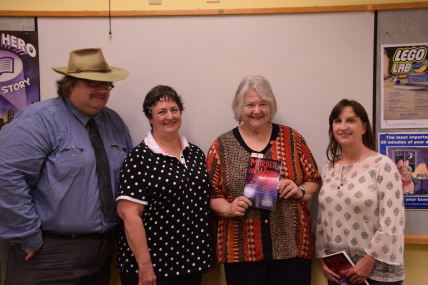
MOW NEW BOOK HUTTO LIBRARY

It’s Not About You

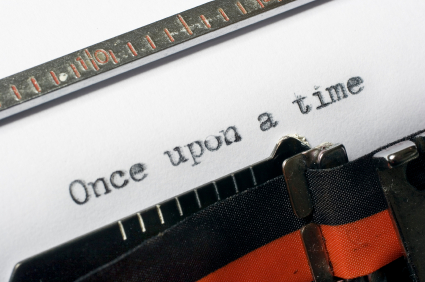
once upon a timeWhile attending Malice Domestic in Bethesda, MD last month, I overheard a small group of authors gathered in the hotel bar discussing the issue of whether family members or friends thought a character was actually a portrayal of them. It seemed each had a story to share. One author’s sister felt a character was based on her. The author, however, stated the two–the sister and the character in question–had very little in common. The sister had picked up on one particular behavior and, from that point, assumed the entire character was based on her. It caused a bit of a family kerfuffle.

A quick online query about the topic will reveal many writers discussing how someone–a loved one, a friend, a colleague– believes a character is based on her and is unhappy about it, even when the author assures her it just isn’t so.

That’s not to say that certain authors haven’t based characters on real people–it happens all the time and often the author will reveal that information outright. After all, Anne Lamott once wrote, “You own everything that happened to you. Tell your stories. If people wanted you to write warmly about them, they should have behaved better.” That said, this topic becomes further complicated when the book is a work of fiction and no intent to base a character on a real person was made.  So, what happens when someone in your circle believes a character–one with one or more negative traits– is based on her?

If the character is a benevolent superhero with skills that put all around her to shame, letting your aunt/sister/friend claim that character as a portrayal is no issue. Let her enjoy the idea. However, what if the character is difficult, angry or passive-aggressive? How does an author help those around her understand that it is indeed a work of fiction?

While I can’t speak about the experiences of other authors, as they are as vast and layered as the works in our genre, I can share my general thought process when writing fiction. If this post helps neutralize a heated conversation, I’m happy to help.

I tend to be drawn to the dynamics between people, to specific conversations, to behavior and to moments in time. I might take one particular spark–a discussion, an encounter–and run with it. The result may be a compilation of my own experiences with several people over a long period of time, and I find that my characters take those behaviors and use them for their own purposes. No one in any of my work represents any one person. However, one person may have traits from several people or have experiences from several people all wrapped up in that one person. That’s a pretty wide net. After all, each one of us can be angry, difficult, funny, sarcastic or rude at any given time. Each one of us may have experienced the shattering loss of a parent, the sharp tongue of a hostile work colleague, the exhaustion of a demanding career. It doesn’t mean a character with those traits or experiences is based on a real person.

Each writer brings to her work a culmination of experiences, heartbreaks, conversations and issues and those tiny threads are bound to weave themselves in the story somehow.

But not in the way others might believe.

My primary purpose is to encourage the reader to care about the characters and what happens to them. That is my goal. Creating characters based on real people isn’t part of my process.   I may appreciate how one friend handles difficult conversations while another friend’s compassion with animals makes me smile, but that doesn’t mean those same people show up in my work. The particular behavior or personality trait might but that is only because it belongs to the character. That’s where it ends.

Writers study the world around them, taking note of interactions and exchanges, tucking them away in the hopes they might be useful in a story one day.  What happens next is complete fiction, and isn’t that one of the best things about being a mystery writer?

–Laura Oles

Wine-Dark Sea or Purple Ocean?

Jo Nesbo 005

hutto oct. 1 2014 023 (2)By Gale Albright

Are translators poets? In the séance of life, are they the disembodied spirits who speak not beyond the grave, but beyond the language barrier?

I’ve always had a problem reading translated works. The problem being I wouldn’t read them. I figured I just wouldn’t get anything worth while. To coin a phrase, I thought everything would be lost in translation.

I was wrong.

To begin with, think how much knowledge, beauty, and experience I was missing. If Europeans followed my example, I assume no German or Frenchman would have ever heard of Shakespeare. They would say “Who’s Hamlet?”

See, I was so wrong.

Without talented, inspired translator Robert Fitzgerald, how could we thrill to phrases such as “rosy-fingered dawn” or the “wine-dark sea” in Homer’s Odyssey?

Someone else might have said “the ocean which has a purple shade somewhat like Chianti,” or the “sun rose with little pink things reaching out like tentacles to the sky,” or some such.

And there’s another point. Just any old translator won’t do. Surely the translator, to capture the essence, the heart and soul, the very being of the language and feeling and evoke the right responses in readers in a totally different language and cultural context, must be an artist himself.

http://www.poetryfoundation.org/bio/robert-fitzgerald

And then there’s the slang, for heaven’s sake. Supposedly, Americans speak the same language as do the folk in the United Kingdom. But I had to stop watching Red Riding with one of my favorite actors, Sean Bean, because they might as well have been speaking Urdu, and I lost about 75 percent of the story. The same holds true for novels. They are full of local slang and colloquialisms. For example, Tana French writes in English and is a great writer, but her characters in the Dublin Murder Squad are always “taking the piss.” It’s not what it sounds like. From what I could gather, it means being teased or set up for a joke. So, suppose Tana French were not writing in English. Say, she was writing in Norwegian. And wrote down whatever the Norwegian police jargon for “taking the piss” is. Now you need a translator who is expert in English and Norwegian who can find a way to take local slang and make it accessible to English-speaking readers.

Take being separated by an uncommon language, trying to show English-speaking readers the heart and troubled soul of Harry Hole, Norwegian off-and-on-again reformed alcoholic, opium head, investigative genius, and jazz enthusiast and getting it right. Hitting my heart with the right arrow, where the words on the page take me on a flowing ride and where I care about these people named Oleg and Rakel. I get the humor that people who play tennis in Norway are regarded as dangerous because they’re not skiing.

Harry Hole has a friend, a genius forensic officer, a homegrown “hillbilly” who wears handmade suits ordered from Nashville, collects rockabilly records, and wears Rastafarian hats. I love this character.

Who makes it possible for me to love Harry Hole? Don Bartlett.

 http://www.worldliteraturetoday.org/translating-norways-love-literature#.VWsyepVFCic

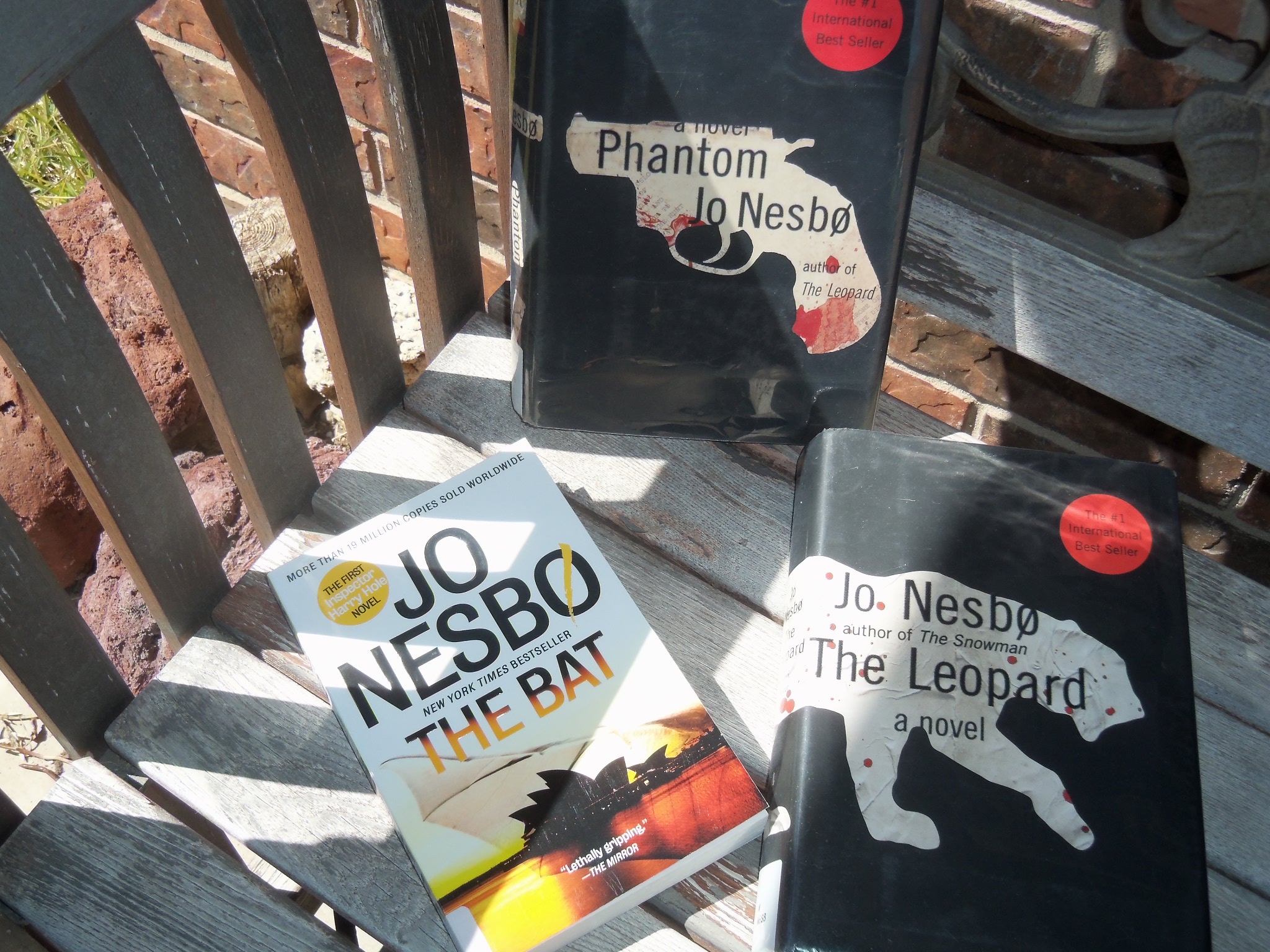
 Yes, Don Bartlett, a denizen of the UK who has obviously been everywhere, examined everyone in every language, taught everyone, and translated everything. He translated all ten of Norwegian crime fiction writer Jo Nesbø’s Harry Hole novels into English. How does a British non-native Norwegian speaker manage to show me the tortured people of Oslo, which seems to be rife with serial killers, damaged detectives, and messed up relationships? He puts me inside the head of a crooked detective known as “Beavis” from boyhood because he has an under bite and a horrible laugh like the cartoon character. Or Harry, who is lovable, horrible, crazy, brilliant, funny, and out of control. The novels are scary, sometimes grisly, funny, and full of wry observations about Norwegian culture.

So, how much is Don Bartlett and how much is Jo Nesbø?

I don’t read Norwegian, so how do I know that whatever I read on the page is what Jo Nesbø means to say?

Is the translated crime novel a baby being ushered into daylight by a midwife translator, or is the translator more of a surrogate parent than a mere midwife?

I don’t know the answer. I just know I love these books. Maybe it’s magic.

http://en.wikipedia.org/wiki/Jo_Nesb%C3%B8


That Would Make a Pretty Good Story

When Howard was four, he and his baby sister were playing in the living room, while his mother and his grandmother sat at the kitchen table just around the corner. A few days before, while staying with his grandmother, Howard had said something cute–he did that a lot–and today, over coffee, his grandmother told her daughter about it.

Immediately after Grandma finished the anecdote, Howard piped up from the other room, “That makes a pretty good story, doesn’t it?”

That’s a four-year-old thinking like a writer. Thinking, in fact, like James Thurber, who filled entire books with cute things. Thurber said this about his works in progress:

“I often tell them at parties and places. And I write them there too….I never quite know when I’m not writing. Sometimes my wife comes up to me at a party and says, ‘Dammit, Thurber, stop writing.’ She usually catches me in the middle of a paragraph. Or my daughter will look up from the dinner table and ask, ‘Is he sick?’ ‘No,’ my wife says, ‘he’s writing something.'”


Writers never stop writing. We may be immersed in experience and emotion, and at the same time be standing outside ourselves, thinking, That would make a pretty good story.

For the purposes of this post, I’m now going to tell a brief story. When you finish reading it, there will be a test:

A couple of weeks ago, I was riding the Washington, D. C. Metro, going from Reagan International Airport to Bethesda, Maryland, for Malice Domestic, a convention at which fans and authors celebrate the traditional mystery.

My plane had arrived late. Darkness had fallen and seeped into the rail tunnels. Signage was… lacking. I couldn’t see names of the stops, nor could I understand the voice announcing them.

I’d already wasted time by taking the YELLOW LINE instead of the BLUE LINE, because, on impulse, I decided my way would get me to the RED LINE just as easily as the BLUE LINE would. And it would have, if the YELLOW LINE I boarded hadn’t been going the wrong way. If I missed my stop now, there was a distinct possibility I would have to sleep on the Metro, which is considered taboo.

Now, each Metro car has one map beside one of the doors. At a stop near mine, I decided to move to the front seat so I could see and count the stops preceding mine. I rose, pushed my humongous suitcase into the aisle, and somehow managed to position it between me and the front of the car. So I pulled up the handle and tried to turn the case so I could roll it behind me. At the same time, I tried to exchange places with it. I think.

That is when the suitcase attacked me. Rocking back and forth, it threw me off balance, and I fell backward, full length, into the aisle. On the way down, I thought, I’ve never fallen this direction before. Then my bottom hit, and after that, my head.

When I realized my head would hit the floor, I had a nanosecond of worry, but I hardly felt the impact. That surprised me, because my head is protected by far less padding than is my bottom. It was such an easy fall, very much like lying down in the aisle, without knowing you’re going to.

End of story, almost.

Here’s test question #1: How does this not-so-pretty-good tale about a train ride relate to thinking like a writer?

Because when no one ran to help me up, and I realized I was alone, surrounded by dark, unfamiliar territory far from home, where anybody and his mean dog could enter the car at any time… I lay in the aisle, smiling, gazing at the ceiling, and thinking, This will make a pretty good story, won’t it?

Unfortunately, this obsession–the word is an exaggeration, but sometimes it feels like obsession–with story isn’t necessarily welcome… because we can’t switch it off. It follows us into the sickroom and stands with us at the graveside and makes us feel ashamed, because one small corner of our minds is nearly always detached, removed from real life, observing, remembering, writing. 

We speak about the subject among ourselves. But when we speak about it to non-writers, we concentrate on the lighter side. The other part we prefer to leave in darkness.

Only the relative anonymity of the blogger allows me to write about it here.

Test question #2: Do you write all the time? Do you know when you’re not writing? Have you had an experience that would make a pretty good story?

 ***

Note: Imagine the child in the portrait above with blond hair… That would be Howard.

Note: Metro riders who knew where they were going were so very helpful in assuring me that, yes, the YELLOW LINE would stop at Gallery Place. I think I asked at least a dozen of them over the course of the evening. A transit worker carrying a broom yelled at me, but I’m sure he was doing the best he could, bless his heart. I am sorry to say I raised my voice a couple of decibels in return (righteous indignation), but, bless my heart, I was doing the best I could, too. It’ll probably make a pretty good story.

***

You can read Kathy Waller’s personal blog here, and once or twice a month she posts at Writing Wranglers and Warriors.

Kathy

Kathy

Two of her stories appear in AMW’s MURDER ON WHEELS, published by Wildside Press and available at Amazon and Barnes & Noble.

Our anthology!

Our anthology!


Confessions of a Workshop Junkie

by Gale Albright

My name is Gale and I am a workshop junkie.
Yes, I confess it freely. I love to attend workshops and take copious notes. That’s how it started out. But it’s a slippery slope. Now the addiction has escalated to organizing workshops. I’m standing on shadowy street corners, outside book stores, tempting the innocent to “Come hear the authors. Come to the workshops. It won’t cost you a thing…except your soul!!!”
Well, not really. Maybe I’m in denial, but if you love listening to writers talk about how they write, how they got published, and how they create memorable characters, it’s already too late for you. You are lost.
You are a writer. You are a reader. There’s no cure.
So join the other lost souls and come to a fabulous all-day free mystery writing workshop at BookPeople at Sixth Street and Lamar Boulevard on Saturday, May 23. There will be free door prizes, free parking, and free workshops. Who could ask for anything more?

Reavis PhotoReavis Wortham, author of the Red River mystery series, is the first workshop speaker. He will discuss “the things an author learns once the manuscript goes into production, including those irritating proofs, writing tips, (cut those adverbs), bad habits, overused words, marketing, and how to up your game once the book is out. Is it a good idea to go to conferences? Do I need to network? Where to pitch a story to an agent (and not in the bathroom), and even where to write and edit.”
Kirkus Reviews listed his first novel, The Rock Hole, as one of “the top mysteries of 2011, written to the hilt and harrowing in its unpredictability.” Burrows, and The Right Side of Wrong have received critical acclaim from Publishers Weekly and The Library Journal.

George WierGeorge Wier presents the second workshop, which will be about editing, or as the author says, “Without Mercy: The alternative to hiring a contract killer—why the author should be his or her own best editor.”
George Wier wrote the Bill Travis Mysteries and co-authored Long Fall From Heaven (2013, Cinco Puntos Press). He writes principally mystery and science fiction. 1889: Journey to the Moon, co-authored with Billy Kring, was his first steampunk novel. The sequel, 1899: Journey to Mars was released in February 2015. His newest standalone mystery, Murder In Elysium, was released in March.

Les EdgertonOur third author, Les Edgerton will present a workshop on protagonists and antagonists. He’ll be “introducing what may be a new concept to some writers—that thinking of protagonists and antagonists as heroes/heroines and villains/bad guys may be preventing the writer from creating complex characters and complex novels by viewing characters in moral terms (good vs. evil), resulting in one-dimensional, cardboard, cartoonish characters.”
Les Edgerton is a full-time writer and writing teacher. His eighteenth book, a black comedy crime caper, titled The Genuine, Imitation, Plastic Kidnapping came out in October from Down & Out Books. He has been nominated for or won numerous awards, including the Pushcart Prize, the O. Henry Award, the Derringer Award, Jesse Jones Book Award, Edgar Allan Poe Award (short story category), and the Violet Crown Book Award.

SATURDAY, MAY 23 SCHEDULE

10 AM–REAVIS WORTHAM
11:30 AM–LES EDGERTON
2 PM–GEORGE WIER
3:30 PM–PANEL DISCUSSION

BOOKPEOPLE THIRD FLOOR
603 N. LAMAR BLVD., AUSTIN, TX

FREE PARKING
FREE WORKSHOPS
FREE DOORPRIZES
COME FOR AN HOUR OR STAY ALL DAY

CO-SPONSORED BY BOOKPEOPLE AND
SISTERS IN CRIME: HEART OF TEXAS CHAPTERlong-fall-from-heavenLansdale cover

BookPeople picPageflex Persona [document: PRS0000037_00028]

Want a Master Class in Storytelling? Tune In…

Vintage radio

What’s old is new again.

Welcome the new age of the podcast.  Many people compare podcasts to online radio, but they are different in that podcasts are recorded in advance and then ready to be listened to at your convenience. Podcasts, which have been around since about 2004, have been quietly plugging along in the background with little growth and not much buzz.

All that changed with Serial. Serial, a podcast produced by This American Life that turned into an obsession for many, chronicled an investigation of a fifteen year-old murder case (you can read my review of Serial here). It quickly became the fastest downloaded podcast on iTunes ever to reach 5 million listeners.

While a compelling listen is always a a good way to spend your time, listening to poorly-executed podcasts can be just as valuable as listening to outstanding ones. You can pinpoint when your attention is captured and when it wanes.   By listening to both ends of the storytelling-prowess spectrum, you can learn how to analyze your own project based upon your response to listening to other programs.

I suppose I am a bit nostalgic for that previous radio era, a time that had come and gone before I was even born. That said, this isn’t your granddad’s radio hour. Today’s long form storytelling podcasts are skillfully structured combining current techniques and an understanding of today’s listeners. They cover topics ranging from true crime and current events to the more nebulous but compelling topics. What does it mean to be happy and is chasing happiness really the answer? What happens when people are put in positions that are far out of their expertise? Why do people say such hateful things on the Internet? Each of these topics is tackled with a depth and skill guaranteed to keep you listening until the very end.

The master of this domain, in my opinion, is This American Life, with its substantial catalog of interesting episodes all crafted under Ira Glass’s gifted guidance. And, although I had heard of TAL, I never listened consistently until getting hooked on Serial.

I had no idea what I was missing.

So, storytellers, consider tuning in and downloading an episode or two the next time you go for a walk, a run, or a drive. Apple’s Podcast app is simple to use and there are also several options for listening on Android devices as well. Here are a few podcasts I hope you will consider:

radio_microphoneLaura’s Podcast Recommendation List:

Serial:

This is the one that started it all for me. The investigation, handled deftly by Sarah Koenig, will keep you downloading one episode after another, causing you to ignore phone calls, dishes and possibly even your children.

serialpodcast.org

This American Life:

TAL is the wise and skilled parent of Serial, and many agree that they are masters of long form storytelling. Some of my favorite episodes include:

The House on Loon Lake, Episode #199: Described by TAL as a “real life Hardy Boys Mystery,” it’s the tale of what happens when a boy discovers an abandoned house and decides to find out what happened to the people who lived there.

Dr. Gilmer and Mr. Hyde: Episode #492: When Dr. Benjamin Gilmer lands a job working in a small clinic, he discovers he is replacing another doctor…also named Dr. Gilmer. The previous physician was serving time in prison for killing his own father, an act that those who knew the family couldn’t believe. As it turns out, there was far more to the story.

If You Don’t Have Anything Nice to Say, SAY IT IN ALL CAPS: Episode #545. Act I of this episode broke my heart. What happens when someone hides behind their anonymity on the Internet, bullying you and saying hateful things? One writer decides to confront her attacker–with surprising results. Note: This episode has some explicit language but there is a ‘bleeped’ version on TAL’s site.

Criminal:

This true crime podcast keeps things short and sweet, introducing a 20-30 minute episode monthly. My favorite episode chronicles Raymond Chandler fans–seventy-year-old newlyweds– working diligently to get something extremely important to Chandler back to where it belongs. A must for Chandler and mystery fans:

http://thisiscriminal.com/episode-thirteen-the-big-sleep-12-19-2014/ 

Startup:

This one caught my attention because it chronicled a man starting an Internet startup. As someone who has been involved with a company going through investment funding and working on pitches and PR during the tech bubble, I found this one hit close to home. In a surprising twist, it also shows the challenges of starting a new tech business while trying to raise young children, giving it a more layered narrative and one that is far more compelling than a simple launch story. Not mystery based but great storytelling in a contemporary and intimate format. Side note–Alex Blumberg was a former TAL producer and left to start this company.

http://gimletmedia.com/show/startup/

LRO-sanfran–Laura Oles