Who’s on First?

By Gale Albright
Abbott and Costello invented the comedy routine Who's on First

Abbott and Costello invented the classic comedy routine “Who’s on First?”

Abbott and Costello invented a hilarious comedy routine called “Who’s on First?” about baseball. But my questions are not about baseball, but points of view (POV), such as first, second, and third person.

I prefer to write in first person. I don’t want to know too much, like that know-it-all omniscient narrator. It must be exhausting to know everything about what’s going on in a novel. It sounds way too stressful to juggle all that information.

I prefer to write in first person because there are limitations. The narrator only knows how she feels and what she sees. She finds out about the world through her five senses—what she can feel, smell, taste, see, or hear. The reader only knows what the narrator knows.

The first-person protagonist finds out information by personal observation. If she hears gossip, she can only take it on face value. She doesn’t know if it’s true. The reader doesn’t know if it’s true either.

I’ll give you an example from one of my works in progress. In a small Depression-era East Texas town, young Eva knows that Demon Rum is bad. Not from personal experience, but from what her mama and the church ladies in the Temperance Union tell her. She takes it on faith without really thinking about it. When, through a series of bizarre circumstances, she takes a swig of Demon Rum (for investigative purposes only), she feels she is on the road to perdition. She doesn’t know what perdition is, but it sounds pretty bad. Mama and the church ladies are against it.

When Eva asks her father why some old man is always getting drunk and making a fool of himself on Main Street, he tells her not to be too hard on the poor fellow. “Some men just have a sickness in their belly. They crave it and can’t stop.”

After Eva’s clandestine sip of illegal homebrew whiskey, she wonders why anybody would crave something that tastes worse than turpentine. So the reader knows that Eva has a lot to learn. The reader is part of that learning process. Readers will be privy to Eva’s innermost thoughts and feelings and opinions because they have a privileged position inside Eva’s brain.

Writing a story in first person allows intimacy between narrator and reader. The reader has a front-row seat right smack in the middle of the narrator’s psyche. The reader forms a bond with the narrator and makes an emotional investment in the character.

One of the drawbacks of relying on first-person narrative is the reader doesn’t know if the narrator is telling the truth. The narrator may think she is telling the truth, but she might be lying to herself. Where does that leave the reader? You now have the first-person unreliable narrator, which can add a lot of suspense to a novel. The reader doesn’t know whether he’s coming or going. Is the first-person narrator (whom the reader has come to love and worry about and care about) really a deranged psycho, split-personality nutcase? Mercy.

What’s even more interesting in the point-of-view question is the “head hopping” phenomenon.

Have you ever had a piece of writing critiqued for head hopping? This phenomenon occurs when one is writing a first person novel and the narrator knows what other people are thinking. “Aha!” shrieks a critique partner, shaking a red pencil in the hapless author’s direction. “Head hopping! You did head hopping! This is a first person POV and you have the narrator acting like an omniscient third-person narrator who knows what other people are thinking!” Then everyone laughs gleefully and pelts the author with paper clips.

I made that up. That sort of behavior may occur in ill-bred critique groups, but certainly not mine. In my critique group there is no humiliation. Just a gentle reminder that you totally messed up.

But why not have a narrative with creative head hopping? It’s not always so wrong, is it? What about novels with more than one first-person narrator? What if the book has several first-person narrators and they each have several chapters of their own where they all seem to experience the same events in a completely different way?

A good example of a single novel with different first-person points of view is The Other Queen, by Philippa Gregory. The story of Mary of Scotland’s imprisonment in England before her execution is told from the POV of the captive queen and her two jailers. Somehow, in the midst of all three unreliable narrators, the reader begins to see what really happened.

There’s a scary film called The Fallen, with Denzel Washington and John Goodman. The devilish essence of an executed killer escapes when the felon dies and his evil spirit jumps from one person to another—to fellow police buddies Washington and Goodman–and even a cat. Talk about head hopping on steroids, The Fallen has a nasty entity hopping around and possessing the minds of nice folks who turn murderous. If a nasty killer spirit possesses your brain, you will become an unreliable narrator.

Any thoughts about who’s on second?


Comparisons Can Kill (Your Mystery)

While attending a writers conference a few years ago, I found myself drawn to a panel titled, “Writing While Working Full Time.” This session appealed to me on a number of levels. A writer’s life is often envisioned as one where a good part of every day in spent in solitude, unencumbered by the demands of small children, a traditional office gig, caring for aging parents or other responsibilities that threaten to slice up a day into shards of time. This popular author had two small children and a regular job and had successfully published several thrillers. He was going to share his inside tricks and help me better understand what I was doing wrong, allowing me to finally get consistent about a daily word count and progress on my novel.

I was going to GET. STUFF. DONE.

I had pen in hand, ready to transcribe every bit of knowledge onto paper, committing it forever to a reference sheet that I could staple to my wall (or possibly my forehead). After an explanation of his schedule, which included a teaching position and attending his kids’ various events, he said, “It’s important for me to rise early, usually by six o’clock on the weekends, so that I can get a good six hours or so of work done on my book. “

silhouette of woman with puzzle

What does your day look like?

“How do you get six hours of uninterrupted work at your house with two small kids?” one person asks.

“Oh,” he says rather offhandedly. “My wife is in charge of the kids on the weekends until the early afternoon, so she takes them out to the park or to do other things so I can write.”

I closed my notebook.

I would not discover the ultimate time saving hack to help me write my novel amidst the swirling chaos of three small kids, my own work and my husband’s demanding travel schedule.

One thing I’ve come to discover is that whenever I compare myself to other writers, hoping to suss out their secret superpower for prolific storytelling while managing the real world, I realize that I’m making a mistake. I need to make my own way, tweak my schedule the best I can, taking advice but bending its usefulness in my own way.

Jane Friedman’s blog (which is filled with practical advice and counsel) includes a post titled The Secret to My Productivity, where she candidly discusses what advantages she has had in crafting a writing life. Her honesty is such a gift, and it helped me better understand that I needed to work with what I have in terms of time and resources. Yes, some people have more time, more freedom than others. Yes, sometimes that advantage matters. And sometimes it’s a reminder to just get on with it, make better use of what you have, not comparing yourself to others with different life demands.

However, there are cases when more time isn’t better, and I can’t count the number of authors I know who produce quality mystery novels in short periods of time. They have honed their skills, remained consistent and, instead of lamenting the lack of an uninterrupted eight hour day, have embraced time on the subway or early mornings before the kids wake up. They make it happen.

I now understand that comparisons can kill in so many ways. There has never been one path to success, one way to write a book, one way to tell your stories.  It’s just important that you tell them, and whatever that looks like..well, that’s the right way…because you’re doing it in the first place.

–Laura Oles

Pieces of Time

“After you learn – and if you’re good and Gawd helps ya and you’re lucky to have a personality that comes across – then what you’re doing is, you’re giving people… little, tiny pieces of time… that they never forget.”- James Stewart, explaining to Peter Bogdanovich what actors do

Three paragraphs into a post about the importance of motivation in character and plot development–working title: “What Do You Want?”–I remembered hearing that As Good As It Gets would be on television. I’d like to see it again, so I checked the schedule for the network that airs oldies.

As Good As It Gets wasn’t running, nor was anything else I wanted to see, but while I was there, I went on to see what’s playing today, and tomorrow, and the next day, until nearly two weeks were planned out. Because it’s so easy to forget these things, I prepared a schedule:

Cropped screenshot of Claudette Colbert and Cl...

Cropped screenshot of Claudette Colbert and Clark Gable from the trailer for the film It Happened One Night. (Photo credit: Wikipedia). By Trailer screenshot, from DVD It Happened One Night, Columbia, 1999 (It Happened One Night trailer) [Public domain], via Wikimedia Commons

Tuesday, December 15
5:45a It Happened One Night
8:00p The Desperate Hours (I love Frederic March and Humphrey Bogart)
10:30p Compulsion (based on the Leopold and Loeb case; Orson Welles as the DA)

Wednesday, December 16
3:40p Come Back, Little Sheba (always wanted to see it, never have)
5:45p Let No Man Write My Epitaph (Burl Ives, always wonderful, and Jean Seberg, ditto)

Thursday, December 17
6:20a Blueprint for Murder (don’t get to see Joseph Cotton much any more)
5:25p Stalag 17 (William Holden and Gary Merrill; what’s not to like?)
8:00p Twelve O’Clock High (Gregory Peck and Gary Merrill; see above)

Friday, December 18
8:00a The Bells of St. Mary’s (Ingrid Bergman; her smile in that last scene makes me reach for a second crying towel; worth getting up early for)

Saturday, December 19
5:15p The Rainmaker (Katharine Hepburn; no comment needed)
8:00p Roman Holiday (Audrey Hepburn; two Hepburns in rapid succession–modified rapture!)
10:40p Father Goose (Cary Grant; well, d’oh)

Sunday, December 20
11:00a The Cheap Detective (Neil Simon’s script, Sid Caesar, Dom DeLuise, John Houseman, Madeline Kahn, Fernando Llamas, Phil Silvers, and on and on…)
8:00p Cheaper by the Dozen (seen it several times, but I love Clifton Webb and Myrna Loy)

And during the rest of the week, there will be opportunities to see Tootsie, Bye Bye Birdie, The Keys of the Kingdom, Oliver Twist (1933 version, with Dickie Moore), Let’s Make it Legal (Claudette Colbert and Marilyn Monroe), That Touch of Mink, and Barefoot in the Park.

And the Shirley Temple Christmas Day marathon, or at least Captain January, might be fun…

I’d be happy to watch nearly everything that network has to offer, one after the other.

(Except The Man Who Shot Liberty Valance. After seeing that one a half-dozen times, I know who shot him and don’t need a review.)

But now, a reality check. The movies are uncut, and they’re interrupted by numerous commercials, so each runs about three hours. Watching the ones named above, minus Captain January because it’s a maybe–would take sixty-three hours. If I watched for sixteen hours straight–nothing else, just sat there and watched–the film binge would take four days. Watching eight hours a day would use up eight days. I hate to admit it, but lying on the couch all day, eating Hershey’s Kisses, watching old films… I could do that. But I won’t.

Because how much time have I spent over my lifetime lost in the fantasy on a small screen? How many hours have I sat and watched instead of taking up pen and paper–or laptop–and writing?

Too many.

James Stewart didn’t make all those marvelous little pieces of time by lying on his couch, watching Charlie Chaplin on TV.

Stories are pieces of time, too, and I want to make more of them. But it’s not going to happen while I’m mesmerized by Hollywood. I have to turn off that television and write.

***


Kathy Waller blogs at Telling the Truth, Mainly12376007_1178023688877814_9154670791884953413_n (3)
and at Writing Wranglers and Warriors.
Two of her stories appear in the anthology
MURDER ON WHEELS (Wildside, 2015).
She’s now working on short stories
and on a mystery novel set in a town
very like the one she grew up in.


The Keep Writing Sign

“One of the pleasant things those of us who write or paint do is to have the daily miracle. It does come.” Gertrude Stein

Portrait of Gertrude Stein, with American flag...

Portrait of Gertrude Stein, with American flag as backdrop (1935 January 4) (Photo credit: Wikipedia)

I’m having a hard time getting this post started. First I wrote a sentence about buying Natalie Goldberg’s The True Secret of Writing but stopped half-way through. Then I began a sentence about the book’s title, finished it, and realized it had nothing to do with my topic. I’m still trying to get it right.

For most of us, the first sentence isn’t easy. Neither is the second. Often, the third is troublesome. Sometimes the process just goes on and on.

Okay, scratch that. There’s nothing new in it. I was trying to avoid using the first opening sentence I thought of, because it might be a little off-putting, and I didn’t want you to stop reading. But it’s only fair to warn you:

The section in italics is boring. 

It’s not necessary to read the whole thing, but at least skim a few paragraphs, because if you don’t, you’ll miss the point I intend to make.

Below is a draft I wrote for another group blog, Writing Wranglers and Warriors:

I’d planned to write about Shakespeare today, but a picture of a dress fellow Writing Wrangler Nancy Jardine shared stopped me in my tracks.

Copyright restrictions don’t allow me to display a photo here, and I could never describe it adequately, so I’ll post the link to Blonde and Wise and to a picture of the Bright Red and Yellow Trench Dress so you can see for yourself.

Now. Isn’t that absolutely track-stopping?

I confess I had to look up trench dress. I’d never heard the term. Imagine my surprise when I realized I’ve had trench dresses of my own. Although I love nice clothes, the technicalities have never interested me.

The feature of this particular dress that caught my eye was the plaid. It reminds me of my childhood. There was never a plaid my mother didn’t love and wouldn’t wrap me up in.

And that brought to mind the annual back-to-school treks to Comal Cottons in New Braunfels, Texas, where we bought patterns, fabric, and all the necessary notions to make back-to-school clothes. Friends from up the street and their mother came, too.

We made the trip in July, and started early, to get a jump on the summer heat. The outlet store, about thirty miles from where we lived, was filled with bolt after bolt of cloth. Mother walked slowly, running her hand across every bolt–it seemed to me she touched every bolt–and saying, “Isn’t that pretty,” or, “That color would look good on you,” or, “That would make a cute…” I followed along. My job was to chime about the colors and patterns I liked, but I trusted my mother to do the right thing, and I was bored stiff. I agreed with everything.

Next step, patterns: Opening long metal file drawers, pulling out packets of patterns… Simplicity and Butterick patterns were the best; but McCall’s instructions were confusing. Then, mentally matching styles with material we’d seen, taking patterns to fabrics to make sure, checking yardage and price, reconsidering… I was sure we re-examined every bolt.

By this time my feet were killing me. (I was born with feet designed for sitting). Comal Cottons had no chairs. Three bored tweens, one with aching feet, needed chairs. With chairs, girls can read books. Without chairs, girls stand around, one of them shuffling from foot to foot.

Then, decisions: making choices, stacking bolts on big tables, watching clerks cut material straight across, perfectly straight. and folded them. Despite its name, Comal Cottons also sold wool.

And then, the notions: buttons, thread, bias tape, zippers, lots more considering.

Clackson-tartan

Clackson-tartan (Photo credit: Wikipedia)

And finally we headed for the car, bearing loads of raw material that over the next six weeks would be made into our fall wardrobes. Which in my case would include a plethora plaids. My mother loved plaids.

By the time I reached high school, plaids had retreated from entire outfits to wool skirts worn with solid color sweaters, and trips to Comal Cottons had ended.

Now, like much else of my childhood, the store is a memory. Today it’s found on postcards.

Thank you, Nancy. With just one picture of a plaid dress, you brought back part of my childhood.

On and on and on. To quote my former high school students, BO-ring.

But as I wrote that last line, the daily miracle arrived: A treasured memory of a different piece of fabric surfaced. And then, another miracle:  I realized the story about the shopping trip was just a warm-up, an introduction, brain rubble that had to be expelled before higher quality thought could emerge.

Acting on the epiphany, I found my bit of fabric, snapped a photograph, and added three short paragraphs to what was already there. Finally, I deleted the boring prelude.

The final version–part of it, anyway–looked like this:

Fellow Writer and Wrangler Nancy Jardine recently shared a picture of a beautiful plaid dress that reminded me of  some fabric I’ve saved for more than fifty years. After residing all that time in my mother’s cedar chest, it’s wrinkled but intact.

The fall I turned eleven, my father’s father, whom we called Dad, gave Mother some money to buy me a birthday present. She purchased the wool shown in the photo and made me a pleated skirt. When I was sixteen, she remade it into an A-line skirt and a weskit.

DSCN1342

Note: That isn’t the end. There’s one more paragraph. Read it, please, at https://writingwranglersandwarriors.wordpress.com/2015/11/09/a-scrap-of-plaid/ It’s important, too.

But back to the topic at hand.

To prevent further strike-throughs, I’ll get to the point promised in the Warning:

A boring (bad, terrible, appalling, disgusting, abhorrent, loathsome, etc.) first (second, third, etc.) draft is not a Stop Writing sign. It’s a Keep Writing sign, signaling that brain rubble is loosening up, that something better is in the offing–that the daily miracle will come. Because the only way to get rid of brain rubble is to write it out.

I wish I had more time to work on this. If I did, the daily miracle would arrive.

And this post might be on an entirely different topic. It would also contain less brain rubble.

Turn Off Your Internal Editor and Do The NaNo

NaNo-2015-Participant-Banner Gale AlbrightBy Gale Albright

On November 1, 2015, the NaNo will begin.

Sharpen your pencils (really?), sharpen your quills, get out your parchment paper, turn on your computers, laptops, notebooks (both electronic and paper)—and do the NaNo.

No, it is not like the TanGo.

National Novel Writing Month (NaNoWriMo) was started in 1999 by Chris Baty, who thought of a novel (get it?) idea that people could write a 50,000-word novel in 30 days. The NaNo took off and is now a world-wide phenomenon. Chris also wrote No Plot? No Problem in 2004, which is a well-thumbed holy book for NaNoers across the globe. Every November, people who live in Kansas and Saskatoon and New Zealand and Austin listen for the imaginary pistol shot that signals the start of the race to complete 50,000 words of writing in 30 days.NANO BLOG OCT. 19 005

It doesn’t matter what the words are. They don’t have to be good, bad, or indifferent. They don’t have to make any sense. Your ego is not on the line. It’s just words.

The most important thing is—don’t give up. Persevere. Every single day for 30 days you must produce 1667 words. If you produce 1667 words every day for 30 days, you will have 50,010 words.

You will be a winner. You will have done the NaNo. You are a champion.

What have you won?

You have won the sure and certain knowledge that you can write a 50,000-word novel in 30 days. The excuses such as, “I don’t have time to write,” “I just can’t write a novel,” “I can’t think of a plot,” “I don’t think I have any talent,” don’t matter. If you produce 1667 words times 30 and enter it before midnight on Nov. 30, you can call yourself a novelist.

Chris Baty didn’t pretend that everyone would write a masterpiece or a best seller or even something coherent. That’s not the point. The point of NaNoWriMo is to show self-doubting writers and wannabe writers that they can complete a novel. It can be done. After weeping and gnashing your teeth and tearing your hair out for 30 days and a thousand nights, you can stand proud and tall and say “I wrote a %%$#^% novel in 30 days. I finished a project.”

Many writers start novels, but have trouble finishing them. They start thinking maybe the writing isn’t very good, the plot is stupid, the characters are boring, or the dialog is stilted. Then they quit the sad, unfinished baby novel and tell themselves maybe they really aren’t writers anyway.

Congratulations. You have discovered your Internal Editor.

It criticizes everything you do. It says you aren’t good enough. You’ll never be good enough. Why even try? Just go eat a quart of ice cream in the corner and shut up.

But, if you glom onto NaNo with a death grip for 30 days, you can thumb your nose at Internal Editor and say “Nya, Nya, Nya. I wrote a %$#$%^^ novel in 30 days, you miserable *%^%^&.”

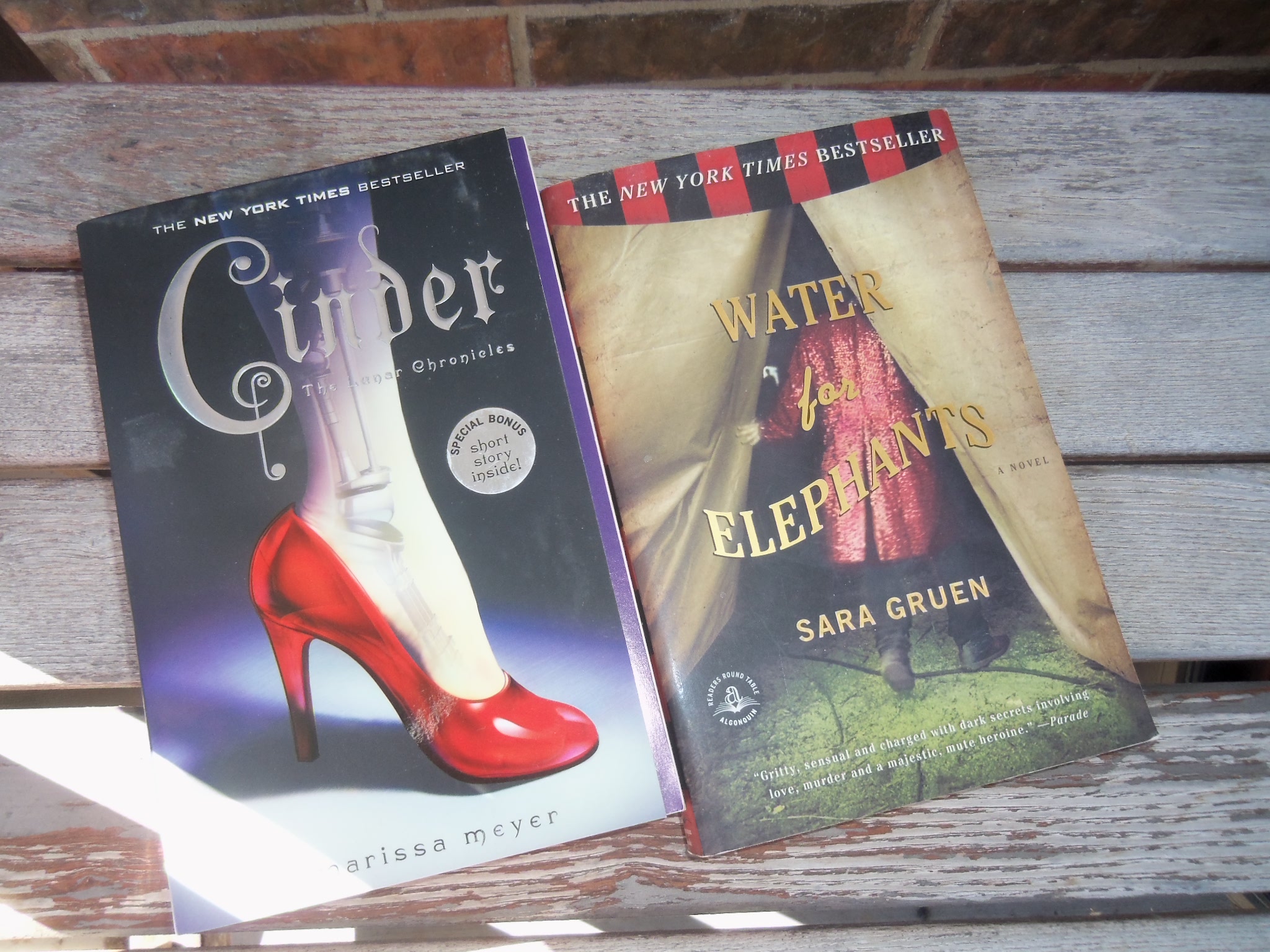
NANO BLOG OCT. 19 003Fun Fact: Did you know that over 250 published novels started out as NaNoWriMo projects? Among them are Sara Gruen’s Water for Elephants and Marissa Meyer’s Cinder.

Now that we’ve explored what NaNoWriMo is and what it can do for you, let’s talk about actually doing it this November.

My friend Kayla Marnach, whom I met in 2009 at a Writers’ League class at Sul Ross University in Alpine, is a five-time winner of NaNoWriMo. She will teach “Tips and Tricks are NaNo Bricks: Building Your Novel in 30 Days” at the San Gabriel Writers’ League meeting at 7 p.m. on Nov. 5 at the Georgetown Public Library. Kayla has also published a children’s book called My Body’s Mine. I will be in Georgetown to cheer her on and learn more about those tips and tricks.KAYLA HEAD SHOT

I am hosting two write-ins at the Hutto Public Library on Saturdays, Nov. 7 and Nov. 14 from 10 a.m. to 1:30 p.m. Write-ins occur when lonely NaNoers congregate with their laptops and snacks and coffee cups at a book store, library, coffee shop, restaurant, or any place that is having a write-in. People go there to work, to pound out words, to absorb caffeine and to ingest calories. They are seeking group warmth and solace, as, like herd animals, they stick together to ward off the terrors of novel writing.

So if you want to be a Penguin (in the Austin region, we are the Penguins, as opposed to the Maryland Crabs, for instance) and write to glorify yourself and your NaNo regional group, look up http://nanowrimo.org/ After you sign up, find your region. You’ll find friends and forums. The folks on the website are very welcoming. It’s all free. You get pep talks and your own NaNo e-mail box and writing buddies and tips and encouragement. They are great cheerleaders. They are the antithesis of the Internal Editor.

AUNOWRIMO PENGUINIf you’re looking for tips on doing the NaNo, go hear Kayla at the San Gabriel Writers’ League on Nov. 5 at the Georgetown Library. If you happen to be passing by Hutto Public Library on Nov. 7 and 14, bring your laptop and come on in. We will give you big smiles and snacks. And it’s all free.

To learn more about the local NaNo scene in Central Texas, go to AuNoWriMos on Facebook. To reiterate, get a free account at NaNoWriMo at http://nanowrimo.org/ and find your local region, find out who your Municipal Liaisons (ML) are, and look at the write-in calendar for November.

Let the NaNo begin!

Hutto Nano

There is No Ideal Time To Write Your Novel

words_page7XSmallMany writers suffer from this affliction–myself included–surrounding the idea that we could make monumental progress on our short story/novel/non-fiction project if only we could have some long uninterrupted days. My perfect day involves a cabin in the woods with an incredible mountain view, something I am unlikely to experience since I live in Texas. It includes meals magically appearing without cooking, coffee all day long, and, and at the end of the day, a review of several thousand words, all perfectly placed and paced.

My reality is, like many others, one that is full and fragmented. Yes, I work from home, which allows me to handle client projects with some flexibility. I also have three children who play year-round sports, a husband with a demanding career (read: no schedule flexibility), and it seems most evenings are spent at the soccer field or volleyball games. A night at home after 6:30pm feels luxurious. And I know I’m not alone. Most people who strive to make fiction a priority have lives bursting with responsibilities and commitments. So, how do we finish our fiction in the midst of this realization?

I still struggle with this issue, and at times, catch myself lamenting the idea that I would get more done if only I had more uninterrupted time. While that’s true, it’s also completely unhelpful. Some days I have several hours in a row and other days I’m running from morning until night. I’ve decided that I need to make the most of what I’ve got, which means letting go of the idea of the ‘perfect writing day.’

This one decision has proved to be quite freeing because there is no one perfect writing day. Each one of us has to figure out how to fit our fiction into the demands of daily life. I am by no means an expert here but here are a few tips that have helped me make the most of the time available:

Track Your Schedule: Let the eye-rolling commence, but I promise this works. If you can track your day (or a few days) in 30-minute increments, small pockets of time will reveal themselves. Granted, these times may not be ideal but they are available, so if you can seize even one or two blocks per week, you now have momentum on your book. It’s also important to make peace with whether you are an early bird or a night owl. Don’t force yourself to write early if you prefer to start your day late. Find your flow and grab a small slot of time when you feel you’re most likely to take advantage of it. Early morning, after midnight, whatever works best for you.

Touch Your Project Every Day: I’m not suggesting you need to write 1,000 words per day. I do believe, however, that spending even 15 minutes at a time reviewing your outline, reading a scene or pondering a plot problem helps you remain connected to your work in progress. And this connection stays with you, rolls around in your brain, helps keep your head in the story. I don’t follow this advice as often as I should, but when I do, I notice a huge leap in weekly word count and productivity.

Stay Connected to the Creative Life: Writing is often a solitary endeavor, so it’s important to find ways to stay connected to other writers and the writing life. For me, listening to writing podcasts and, when I am surfing online, I’m directing my attention to sites related to reading and writing. An evening at the soccer fields allows me to walk a few miles while listening to a writing podcast, an activity that has helped me transform unproductive time into something that helps me both physically and mentally. TedTalks remain my favorite source for writing-related podcasts: https://www.ted.com/topics/writing

Take Note (cards): A confession first–I have an office supply addiction. Apparently, it runs in my family and there is no cure. I’m fine with that. In fact, I’ve found that notecards and a pen are my best friends when it comes to working on a project when I only have a small snippet of time to spare. I use them to write down issues with my book such as understanding a character’s motivation. Sometimes I use cards to outline scenes and sometimes I write down research topics. The most important thing is that notecards help me capture issues related to my novel, and the fact that the notecard is only 4×6 in size helps keep the intimidation factor down.

Thumb Up SignFill Your Feed: This is a strategy for those who run to social media as the perfect temporary distraction. My twitter and Facebook feeds are filled largely with posts from writers and people in the storytelling space. This is intentional because, if I’m compelled to kill a few minutes while standing in line, I’m still staying connected to the creative life I wish to live.

Being Prepared Helps You Be Flexible: Consistency is key when it comes to writing, but let’s face it, kids get sick, you end up driving a last minute field trip, or your work day ends up longer than you expected. Even in these circumstances, you may find yourself with small fragments of time you can use. Having notecards or a journal with ideas to explore can help you make the most of whatever minutes present themselves. These stray moments can add up, like pennies in your pocket. You collect enough words, and soon enough, you’ve got a finished novel.

Start Saying No: This is a tough one for me. I’ve been accused of having lousy boundaries when it comes to volunteering or taking on local projects. I would have to confess that to be true, but this year, I decided to severely limit how much time I would spend on other people’s priorities. I still help with school dances and other volunteer activities but I am far more selective because, by saying ‘yes’ to others’ requests, I’m saying ‘no’ to my own projects. There are times when we can’t simply steal time or find time. We only have so much, which means we sometimes have to put our own priorities first. And that’s okay. In fact, it’s even better than okay.

Take (or Leave) Any or All Writing Advice: How many times have you tried to follow some specific writing advice from a best-selling author only to have it become more hindrance than help? If that’s the case, let it go. Take what you want and leave the rest. You get to stock your own writing toolbox with the tips that help you move forward. I’m including all the tips I just listed in this post. Helpful? Awesome. Not Helpful? No problem. Skip them and find something else. You know what works best for you, so let that be your guide.

My contention is that there is no perfect day to write, no perfect hour, no perfect moment. We only have today, which may or may not look anything like tomorrow. Letting go of the belief that we need four hours per day to write means that, instead of being imprisoned by an unrealistic idea, we are now free to pursue our projects, even if it’s only a half hour at a time.

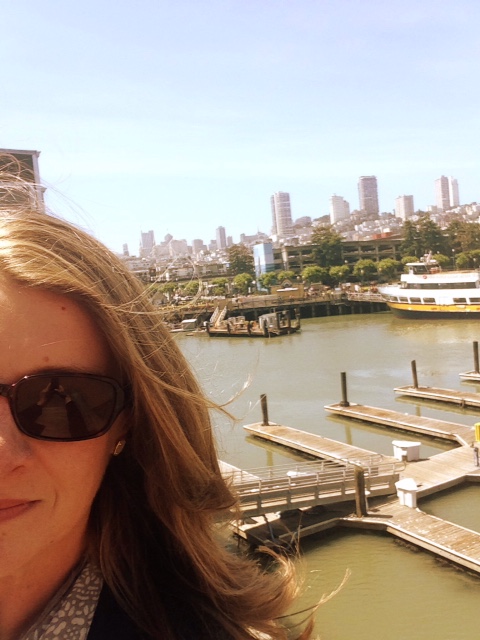
–Laura OlesLRO-sanfran

My Writing Library: Nancy Peacock’s A Broom of One’s Own

Advice to writers?

There’s a lot out there, some good, some bad.

Back up your computer. Back up all your files. All the time. That’s good advice. It comes from every writer friend I have. Recently I learned what truly excellent advice that is.

A Broom of One's Own - Nancy Peacock - Harper Perennial, 2008 - PB & Kindle

A Broom of One’s Own – Nancy Peacock – Harper Perennial, 2008 – PB & Kindle

Someday I’ll regain enough emotional stability to talk about it without twitching like a frantic Deputy Barney Fife.

Friends sometimes give bad advice, however. The one who told me I had to outline every scene before I began my manuscript had me stalled for months. The method worked for her but tied me up in knots. Don’t worry–he won’t recognize himself.

If you’re interested in writing. you’ve no doubt browsed the section of the bookstore or library for books about how to write. Shelves are packed with them. I’ve bought them for years, compulsively. Some have helped me, but some–not so much.

The least helpful preach rules that must be closely adhered to:

>You must outline before writing.

>You must get up an hour early to write before you go to work.

>You must write for a set time every single day. Even days when you sleep through the alarm, and the boss makes you stay late, and you get home and have to cook dinner, and then your five children tell you they promised you would make homemade brownies for their class Halloween parties, and the sixth says she’s given away her mermaid costume because now she wants to be a duck, and the stores don’t have any duck costumes, and you couldn’t make that child look like a duck if your life depended on it. And your husband is working in the Azores and won’t be home till Thanksgiving.

>And my #1 favorite: You must describe each scene of your projected novel on a 3″ x  5″ note card, and stack the cards in sequence, before you begin the manuscript. At any point, you may stack them in a different order, but you must never jump ahead and write a scene out of sequence, before you’ve written the scenes before it.

That Very Specific Commandment appeared in a book by a prominent author and teacher, so I thought I had to obey. For months I kept the paper companies in business by buying note cards, describing scenes, becoming seasick every time I tried to write, throwing the cards away–and buying new cards. I recently read the author now uses popular software when he composes. He didn’t mention note cards.

***

As I said before, some advice is good, and some isn’t. Each writer gets to decide for himself which is which, to find his own process and establish his own rules. We’re all different.

For that reason, the books I like are primarily descriptive rather than prescriptive, not How to but How I… Books in which authors tell stories about their own experiences, success and failures, methods, and beliefs about the writing life. If they slip in some How to…, it’s usually worth considering.

Perhaps the best-known and -loved of his genre is Anne Lamott’s Bird by Bird, a humorous and heartfelt memoir of her development as a writer and as a human being. Stephen King’s On Writing is another, a story of persistence crowned by his wife’s pulling the manuscript of Carrie out of the wastebasket and insisting he continue trying to get it published.

But there are other fine books that, though not so well known, are worth anyone’s time and attention.

The first came to my notice for a Story Circle challenge: Write and post a four-sentence book review. I chose a review copy of Nancy Peacock’s A Broom of One’s Own: Words on Writing, Housecleaning, & Life. From cleaning the houses of a variety of clients, Peacock extracts truths about about writing. Below is my original review.

English: Broom Suomi: Luuta

English: Broom Suomi: Luuta (Photo credit: Wikipedia). By Pearson Scott Foresman [Public domain], via Wikimedia Commons

“I like Nancy Peacock’s A Broom of One’s Own: Words About Writing, Housecleaning & Life so much that it’s taken me over two months and two missed deadlines to untangle my thoughts and write this four-sentence review, an irony Peacock, author of two critically acclaimed novels, would no doubt address were I in one of her writing classes.

“She would probably tell me there is no perfect writing life; that her job as a part-time house cleaner, begun when full-time writing wouldn’t pay the bills, afforded time, solitude, and the “foundation of regular work” she needed;  that engaging in physical labor allowed her unconscious mind to “kick into gear,” so she became not the writer but the “receiver” of her stories.

“She’d probably say that writing is hard; that sitting at a desk doesn’t automatically bring brilliance; that writers have to work with what they have; that “if I don’t have the pages I hate I will never have the pages I love”; that there are a million “saner” things to do and a “million good reasons to quit” and that the only good reason to continue is, “This is what I want.”

“So, having composed at least two dozen subordinated, coordinated, appositived, participial-phrase-stuffed first sentences and discarded them before completion; having practically memorized the book searching for the perfect quotation to end with; and having once again stayed awake into the night, racing another deadline well past the due date, I am completing this review—because I value Nancy Peacock’s advice; and because I love A Broom of One’s Own; and because I consider it the equal of Anne Lamott’s Bird by Bird; and because I want other readers to know about it; and because this is what I want.”

Since I’m not limited to four sentences, I’ll add that I appreciate Peacock’s integrity. In an afterword, “Writing Advice from the Author,” she rebuts ten pieces of “free advice she’s received about being an author.”

About #10, “You have to network, network, network, and never forget that everyone you meet is a potential source for something besides friendship,” she counters, “People are not commodities. Enough said.”

And under “bonus advice on developing your own writing life,” she says,

“Be kind. Do not write for revenge. Do not vilify. If you are writing a memoir understand that you will have to write about your own role in whatever event you are exploring. Nothing is ever everyone else’s fault. A part of being kind is seeing the complexities of life and people, finding what is human in your story. This does not mean being dishonest.”

In its own way, A Broom of One’s Own is as amusing as Bird by Bird. Much humor comes from Peacock’s description of her relationship with clients and of their idiosyncrasies.

Asked whether she has any housecleaning tips, she says, “My most valuable advice is to never hire a writer to clean your house.”

I planned to review three books readers might like as much as I do, but I’ve run on long enough.

So I’ll wrap this up with a paragraph about the author herself, taken from her website:

“Nancy Peacock does not have enough fingers and toes (it’s the standard issue of ten of each) to count the number of times she’s quit this confounded writing business. Yet somehow she always comes back to it, and has finally come to accept it is not only her lot in life, but a damn good place to be too.”

The authors whose advice I respect most are ones like Peacock: kind, thoughtful, understanding, honest, and generous, willing to share what they know and to admit they don’t know it all.

They also believe the writing life is “…a damn good place to be too.”

***

Kathy

Kathy

Kathy Waller blogs at Kathy Waller–Telling the Truth, Mainly,
and at Writing Wranglers & Warriors.
Years ago she gave several stacks of her books about writing
to the library she directed.
She wishes she had them back.

***


Live Without Water - Nancy Peacock - Longstreet, 1996 - HB & PB

Life Without Water
Nancy Peacock
Longstreet, 1996
Hardback & Paperback


It’s not about the pantyhose

SUE GRAFTON AND CAROL AUSTIN

(Sue Grafton and my friend Carol Austin at BookPeople on August 31)

by Gale Albright

hutto oct. 1 2014 023 (2)When Hopeton Hay of KAZI Book Review (88.7 FM) asked me to help him interview Sue Grafton, I was thrilled.

Then I was nervous.

Sue Grafton is big. William Holden said that to Gloria Swanson in Sunset Boulevard. “You used to be big.” She replied, “I am big. It’s the pictures that got small.”

I digress.

Grafton was big and is still big. She penned a long-lived, successful mystery series that made her heroine, Kinsey Millhone, a household word. In literate households, at any rate. Her California female private eye novels have remained big through 24 novels. And Grafton is still penning them, even though she has only two letters of the alphabet left.

Grafton’s most recent Millhone offering, X, is a slight departure from her usual title strategy. Her first detective novel was A is for Alibi, published in 1982. Soon thereafter came B is for Burglar and C is for Corpse. You get the drift. There is a letter of the alphabet, a verb, and a noun. Now X comes along all by its lonesome. She didn’t call it X is for Xylophone, Xenophobia, Xeriscape, Xerxes, Xerox–nothing. Just X.

I received an advanced reader copy of X to read so I could prep for the interview. Along the way, I tried to figure out intelligent questions to ask.

I found out that legendary crime writer Ross Macdonald of the Lew Archer mystery novels was her inspiration for the alphabet series. I think Ross Macdonald is one of the greatest writers of all time, have read a whole bunch of his books, and believe anyone who likes Ross Macdonald has to be really smart. That gave us something in common, even though I’m not a world-renowned successful professional mystery author. Let’s not quibble.

I was trying to be nonchalant about the interview, but kept asking Hopeton Hay things like, “What should I call her?” Your Worship? Your Honor?

He said to call her “Sue.”

I read X carefully, looking for “x” clues in the manuscript. There were several. I read about Grafton’s life. I typed up questions. Finally, as I drove to the KAZI studio on August 23, I figured I was ready.

Hopeton Hay is a professional. He does interviews all the time. No doubt he sensed I was a bit jittery, so he talked me down in his soothing way. By the time we put on headphones and he called Sue Grafton, I felt reasonably human.

She answered. She was nice and informal and friendly. She didn’t sound like Gloria Swanson. She sounded like a real person. I started to relax, but I kept clutching those questions. This was being taped!

Hopeton asked her a question. Then he turned the microphone toward me. The moment of truth. I opened my mouth and hoped I didn’t sound like Minnie Mouse, a hick, or a wavery-voiced nitwit.

She was gracious. She laughed. She was pleased when I told her X reminded me in some ways of Lew Archer on the search for truth in the dark underbelly of Southern California. We were off to a good start.

I got calmer. I was getting a handle on this thing. Then I ran out of typed questions. And Hopeton kept turning that microphone toward me. I had to go unscripted. I was panic-stricken. Then I started having fun.

By the time the interview was over, I could have gone on longer. I felt like Sue Grafton was a heck of a nice person and a lot of fun to talk to.

Hopeton said the interview went well. He reminded me gently not to mutter “Uh-huh” when people were talking. He said it was a natural thing for people to do in a conversation, but on the radio it’s a bit distracting when the microphone picks it up.

And sure enough, when I heard the tape a week later, on August 30, at one (thankfully brief) point, I heard myself “uh-humming” along enthusiastically while Sue was speaking.

Live and learn. As well as learning not to “uh-huh” on radio, I learned some interesting things from Sue Grafton.

She writes five pages a day. She doesn’t count time she spends writing, just the page count. She says it’s a more accurate way to estimate output than putting a time limit on writing. She keeps writing until she gets those five pages.

She finds index cards “invaluable.” If a section of writing is muddy and difficult, she writes everything down, scene by scene on index cards, spreads them out and finds out where she went wrong.

When she spoke about increasing her male readership, she said men should realize that a book written by a woman about a woman detective is not girly stuff. “These books are not about mascara and pantyhose. It’s about kicking serious butt.”

I agree. Kinsey Millhone is into serious sleuthing and butt-kicking, not high fashion. The novels are full of movement, mystery, questions, wry humor, and scary bad guys. If you’re a man and haven’t read the alphabet series, you are in for a treat. You have 24 great books to choose from. I would start with A is for Alibi.

It’s not about G is for Gender. It’s about G is for Great Writing.

Drop by BookPeople for a copy of X

If you want to find out more about Hopeton Hay, go to

https://www.facebook.com/kazibookreview

.

Writers’ Police Academy 2015

WPA_LogoWhen it comes to writers’ conferences, it can be difficult at times to decide which one is best suited for your needs. Considerations regarding schedules, genre, speakers and panels will all come into play. There is one event, however, that stands apart from the rest because it is, by nature, completely different from the traditional writers’ conference experience.

It stands alone because it’s not a writers’ conference at all. I’ve heard it called “Disneyland for crime writers,” and after attending this year, I agree completely.

The Writers’ Police Academy offers extensive hands-on training and education for writers who wish to learn more about all aspects related to forensics and law enforcement. Want to learn how to photograph a crime scene? Learn arson investigation techniques? Chase bad guys? Learn what it’s like to go undercover in New York City? If so, there is no better place for hands-on learning than WPA.

When I arrived in Appleton, Wisconsin on the day of registration, I was greeted by sixty-five degree temperatures (thank you, thank you thank you,) and a lobby filled with other curious crime writers waiting to receive their welcome packets. The event is only one weekend but easily packs an entire week’s worth of events and education. The first evening, after registration, we were treated to Dr. Joe LeFevre’s program on 3D Crime Scene Mapping. As someone who has spent her career in the digital photography field, I was thrilled to learn one of my favorite camera manufacturers, Leica, is also a leader in providing this 3D laser technology. Joe’s program was packed with information and went until after 10pm. I was full of information and exhausted.

Officers demonstrate a high pursuit chase.

Officers demonstrate a high speed pursuit

The next morning we traveled by bus to the Fox Valley facility. The Fox Valley Technical College Public Safety Training Center hosted this year’s WPA courses, and it truly is a fun park for crime writers. The 75- acre campus houses state of the art simulation technology, laboratories and areas designed for tactical training in all aspects of law enforcement. As I walked through the main building and out the back door, I stepped into a town. Okay, it was a fake town, but it was an impressive fake town. The campus includes a hotel, a couple of houses, a convenience store, a jet (yes, you read that right) and other buildings designed for various training exercises. At one point, a training team of officers enacted a high-speed chase with a suspect and two police cars speeding down the streets behind the buildings so we could witness different methods of police pursuit. We then had the opportunity to ask questions related to their decision-making, tactics and strategies. What an exhilarating way to start the morning!

Fake Training Town, Jet Included...

Fake training town, jet included…

One of the wonderful but challenging things about attending WPA is that there are several programs available in each session–and all are excellent. This is a problem in that you have some tough choices to make. We were told to pick our top three programs in each time slot because the events fill up quickly. Some programs required an early sign up and an additional (modest) fee, so if you want to try a building breach, a shoot/don’t shoot scenario, called Milo, or the firing range, you had to sign up in advance due to limited spots being available. I was fortunate in that I was able to attend most of my first picks.

John Gilstrap teaching Bangs & Booms 101

John Gilstrap teaching Bangs & Booms 101

John Gilstrap, bestselling author of the Jonathan Grave series, conducted a program on explosives, Bangs and Booms 101, that was equal parts informative and hilarious. Gilstrap’s sense of humor, coupled with his extensive knowledge, made his session one of my WPA favorites. Amanda Thoma, coroner for Green Lake County Coroner’s office, was another top pick with her program From Crime Scene to Autopsy. In addition to her extensive credentials, her approach to her chosen profession was one that demonstrated her enormous enthusiasm, curiosity and respect for her profession. She had the room’s rapt attention from the time she started her session until she ended, and even with several pages of notes, I know we merely scratched the surface.

Laura's First Target Practice at the Indoor Firing Range

Laura’s first target practice at the indoor firing range

Nothing takes the place of hands-on experience and nowhere is this more evident than in the field of firearms training. I was fortunate to draw a slot for the pistol shooting range, and going through the firearms training was exhilarating and intimidating. And it turns out that I’m not such a bad shot, either.

Dan Feucht’s program on Bloodstain Pattern Investigation and Techniques was one that allowed attendees the benefit of hands on experience. It was a packed class, but Dan managed the group well, allowing each of us to conduct a couple of lab tests and also taking us through how to determine trajectory based upon various bloodstain patterns. Dr. Katherine Ramsland’s program on Forensic Psychology reminded me that truth is often stranger than fiction, and understanding a person’s motives and “why people do what they do” remains a complicated and fascinating puzzle.

The Crime Scene Photography course, conducted by Dr. Joe LeFevre, provided insight into how this critical role in law enforcement can assist in understanding a crime scene as well as provide valuable tools in understanding the relationship between objects at a scene and how they fit into the larger scenario. Joe took the class through his process of photographing a scene and discussed the techniques currently employed to protect photographic data from being altered or edited in any way. Protecting the chain of custody is paramount in order for the images to be beneficial in a prosecutorial capacity. Joe, a stickler for details and process, patiently answered our litany of questions and took us through an example of how we could photograph a crime scene. Depending upon the particular case, photographing a crime scene can easily take several hours, even going through ten to twelve hours if a death is involved. It is a specialty that requires patience, a disciplined methodology and a dedication to thorough detailed examination.

New York Times bestselling author Allison Brennan had us in stitches sharing her advice on how to get research right in fiction. Her willingness to share how she gleans the key details necessary for her novels was refreshing, and it’s clear that Allison is willing to go down a rabbit hole of research to garner one or two key details for a particular story. One excellent piece of advice she offered related to how to handle an interview with an expert, such as an FBI agent. “Ask smart questions,” she says. “Don’t waste time asking questions whose answers can be found online.” She added that the FBI website, for example, provided a number of excellent resources, so do your homework first before picking up the phone or sending an email.

Meeting with Karin Slaughter after the WPA Banquet

Meeting with Karin Slaughter after the WPA Banquet

Karin Slaughter, the #1 internationally best-selling author of the Will Trent series, served as the keynote speaker for the WPA banquet, and she delivered a speech that, were I to try and explain it here, simply wouldn’t do it justice. Her wit is clever and fierce, and her delivery is deadpan and on target. Her speech demonstrated her prowess as a master of the spoken word as well as the written one. And yes, her next book, Pretty Girls, is on my reading list the moment it hits the stands (September 29).

Several authors I met have attended the Writers’ Police Academy more than once, and now that I have had my turn, I understand why. I hope to one day be able to attend WPA again because the hands-on aspect of this program is extremely valuable to those writing mysteries and crime fiction. Truly, there is nothing else like it, which makes it a gem in the field of writers’ conferences.

LRO-sanfran–Laura Oles

Shattering a Vase

…it was like taking a vase and setting it down so hard it shatters…

~  Tracy Chevalier

When I taught secondary English, grading essays was my least favorite task. I was happy to read them, but assigning letter grades? I hated that.
I hated judging. I hated trying to determine the difference between a B and an A, or, worse, between a B-plus and an A-minus.

But the worst–the part that made me want to moan like the Ghost of Hamlet’s father, “Oh, horrible, oh, horrible, most horrible!”–was listening to students who thought their work merited higher grades: “But I worked so harrrrrrrd.

Some had watched classmates complete an entire assignment during a lull in history class and then score A’s. It wasn’t fair.

“Harrrrrrrrrrd” was my signal to say that no, it didn’t seem fair, but that good writing comes from more than just time sheets and sweat. It’s the words on the page that matter.

Now, to my dismay, I sometimes find myself slipping into student mode. For example, when I submit a chapter to my critique group, or an agent, or a publisher, or a reviewer, or even a family member, and they find fault, or don’t even mention my genius, I have to restrain myself from wailing, But I worked so harrrrrrrd…

Each time it happens, I pull out the old talk about time sheets and sweat. I add that whingeing is the hallmark of the amateur.

And I meditate upon Tracy Chevalier.

Chevalier wrote the critically acclaimed historical novel Girl with a Pearl Earring. Her next (third) novel began as a draft written in third person, with small sections in first-person voices of children. The finished manuscript was a disappointment.

When I reread the first draft, she says,  I cried at the end. It was boring, dead weight, terrible. Then I looked it over and thought, there’s nothing wrong with the story except the way it’s told.

She found the solution in another contemporary novel:

I had the idea when, just as I was finishing the first draft in third person, I read Barbara Kingsolver’s The Poisonwood Bible, which uses five different voices beautifully. It’s a wonderful book, using multiple voices very successfully, and I thought, “Oh, that’s an interesting technique, I wonder if I should take the kids’ voices I’ve already written and have the three of them tell it.” It just felt right.

The revision was published as Falling Angels, an exquisite novel about a young wife and mother struggling to survive in the rigid, but rapidly changing, social structure of Edwardian England. The book is written in first person, from twelve perspectives, in twelve distinctive voices.

I came across Chevalier’s account when I was just beginning to write fiction and became obsessed with the work. Writing an entire manuscript, setting it aside, starting all over—it had to be pure drudgery. I couldn’t imagine putting myself through that. 

Recently, though, I reread the article and a different passage caught my attention—Chevalier’s description of the rewrite:

I took the draft, and it was like taking a vase and setting it down so hard it shatters, then putting the pieces back together in a different way. I rewrote the whole thing in first person with all these different voices.

That passage doesn’t describe drudgery. Shattering a vase, putting the pieces back together to make something new—that’s a picture of creation, of the excitement and the pleasure and the beauty that accompany it.

I love Tracy Chevalier’s novels and admire her talent. But, on a more personal level, I’m grateful to her for sharing publicly how Falling Angels made its way into print, for reminding me that hard work and drudgery aren’t synonymous, for implying it’s okay to cry over a bad draft and that perceived failure can turn into success, and for showing that the act of writing itself affords as much pleasure as the spirit is willing to embrace.

And—for tacitly suggesting that no one really needs to hear me whinge about how harrrrrrrrd I work.

It’s the words on the page that matter.

*****

Note: I do love Chevalier’s novels. In fact, I love Falling Angels so much that during library duty one Saturday morning, I was so intent on finishing the book—just racing toward the climax—that I unlocked the front doors but left the lights in the reading room off, and spent the next ninety minutes parked behind the circulation desk, reading and hoping no one would walk in and want something. I’m not proud of what I did, but patrons didn’t seem to notice anything different, and I finished the book.

Note: The angel pictured above stands in the Oakwood Cemetery in Hendersonville, North Carolina. Carved from Italian marble, she is the angel often referred to in Thomas Wolfe’s Look Homeward, Angel. Wolfe’s childhood home is in Asheville, about twenty miles north of Hendersonville.

*****

Information about Tracy Chevalier comes from Fiction Writers Review.

*****

Posted by Kathy Waller

Kathy

Kathy

Two of Kathy’s stories appear in
Austin Mystery Writers’ crime fiction anthology,
Murder on Wheels.
She blogs at Kathy Waller ~ Telling the Truth, Mainly,
and on the group blog, Writing Wranglers and Warriors.