All Hallows Eve approaches, and it’s not just the children who love this holiday, with its ghost stories and the trick-or-treat traditions. According to the National Retail Federation, “more than 148 million U.S. adults plan to participate in Halloween-related activities,” [[i]] despite the restrictions of COVID-19! What is it that we love so much about Halloween?
According to a Purdue University professor, Halloween lets us experience a good scare without being in real danger. It is within human nature to seek out and suffer unpleasant feelings – but in small doses, allowing us to flirt with danger and experience the emotional rush— free of real consequences.[[ii]]
Historically, Halloween is believed to have originated with the pagan Celtic festival of Samhain. This ancient community, which lived 2,000 years ago, celebrated their new year on November 1 and believed that the boundary between the worlds of the living and the dead collided.
On October 31, the Celts believed the spirits of the dead returned to earth to cause trouble and damage their crops. They built huge sacred bonfires, where they burned crops and sacrificed animals to the Celtic deities. During the celebration, the Celts wore costumes, typically consisting of animal heads and skins, and attempted to tell each other’s fortunes. Before the festivities began, they extinguished their hearth fires at home. When the celebration was over, they re-lit them with flames from the sacred, ceremonial bonfire to help protect themselves during the coming winter.
By the ninth century, Christianity had spread into Celtic lands and blended Christian ceremonies with older pagan rites. In 1,000 A.D., the Catholic church designated November 1 as All Saints’ Day, or All-hallows/All-hallowmas (from Middle English Alholowmesse meaning All Saints’ Day), absorbing the Celtic traditions of Samhain, with bonfires and masquerades. This became All-Hallows Eve, and the word eventually compressed into Halloween.[[iii]]During this time, new rituals sprang up and were theforerunners to trick-or-treat, a custom not loved universally by parents in today’s world.
In Medieval England, on All Hallows Eve, poor people would visit the homes of wealthy families to receive soul cakes. The custom was called souling because “Little pastries were given in exchange for a promise to pray for the souls of the dead relatives.” [[iv]] In Scotland and Ireland, young people disguised themselves by dressing in costume, and accepting offerings from households in return for singing, reciting poetry, telling jokes, or performing a trick before receiving their treat.[[v]]
In the U.S., the custom of trick-or-treating became a staple of the American Halloween celebrations after WW II, when sugar rationing ended. In 1952, Walt Disney released the first Trick-or-Treat cartoon movie, starring Donald Duck, which helped solidify Halloween’s celebration in American culture.
Whatever one feels about the practice of trick-or-treating, there is another tradition that almost everyone looks forward to. Halloween is a fine time to revisit our beloved and deliciously scary, creepy stories and find new ones. Who can resist the urge to vicariously experience, without consequence, the chills, thrills, and fright of ghost stories and strange happenings?
Among thousands of spooky tales are Edith Wharton’s Ghost Stories, ranging from the unnerving appearance of ghosts in All Souls’, who appear at Sara Clayburn’s house to wreak havoc for one night. There is a spirit in The Lady’s Maid’s Bell, leaving the reader to wonder if the bell rang to warn of something terrible happening, or was it the narrator’s imagination?
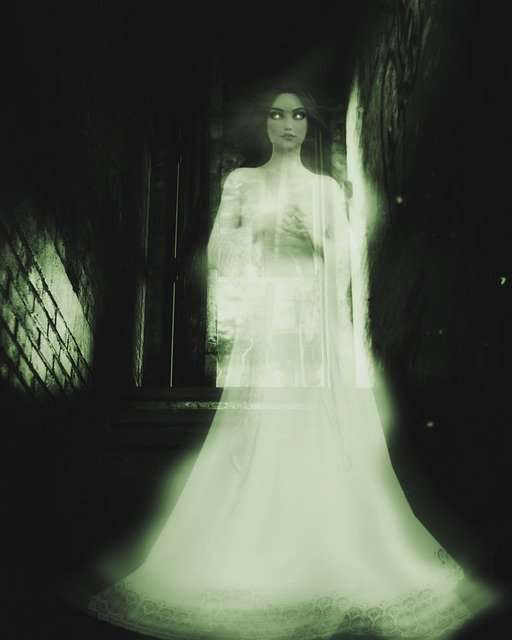
Then there’s the frightful notion of not recognizing a being from the afterlife in Afterwards when a husband disappears – and only at the end does the bereft wife understand that the ghost of someone dead had visited.
Often, the tales of crime by Sir Arthur Conan Doyle imply something supernatural, as in The Adventure of the Speckled Band, about a mysterious death and a young woman’s fear that her own was approaching. And, of course, his classic The Hound of the Baskervilles can be read repeatedly and still maintain its emotional impact. Just the thought of the hound braying on the moor raises goosebumps.

There is hardly room to mention every author whose work has become a Halloween special. Among the scariest are Shirley Jackson’s The Haunting of Hill House, in which an occult scholar and his searchers seek evidence of hauntings and get more than they bargained for.
And the scariest, ever, Henry James’s The Turn of the Screw. Again, the author creates a terrifying picture of two dead servants returning and possessing the bodies of two young children, a brother, and sister. Again, the author leaves the reader questioning whether or not the events and their interpretations are from the nanny’s imagination, or are they real? Only Henry James knew for sure—or did he?

So, on All Hallow’s Eve, when you’re done with your traditions, trick-or-treating – whether ringing doorbells or handing out safely wrapped candies set the mood. Darken the house, keep a reading lamp bright to illuminate the pages and curl up with a hot chocolate or something more robust and let yourself be immersed in the netherworld and allow yourself to be scared.

BOO!
[i] https://nrf.com/media-center/press-releases/consumers-anticipate-new-ways-to-celebrate-halloween-despite-covid-19 10/23/20
[ii] https://www.dailymail.co.uk/sciencetech/article-3860638/The-science-Halloween-Researchers-reveal-safe-gross-appeal-spooky-celebration.html 10/22/20
[iii] https://www.history.com/topics/halloween/history-of-halloween 10/21/20
[iv] Ibid
[v] Ibid
ART:
Image OF HANDS ON GLASS by Sergey Gricanov from Pixabay
Image SETTING THE MOOD by Enrique Meseguer from Pixabay
Image of GHOST WOMAN by DarkmoonArt_de from Pixabay
Image OF ESTATE FOR HOUND by Basil Smith from Pixabay












 Like writing, barbecuing is a solitary calling. Sure, people will wander out, ask if they can help. But these terrace tourists don’t want smoke in their eyes, their hair, their clothes. Besides, the Barbecuer doesn’t want them. Doesn’t want suggestions, doesn’t want comparisons, doesn’t want recipes. So if you wander out to the Barbecuer’s sacred precincts, your only job is to ask if the Barbecuer would like something to drink.
 You may be thinking wrongly of the word “barbecue” as did famed food-writer Michael Pollan who admits, “[A]s a Northerner, I’d already spent more than half of my life as a serial abuser of that peculiar word, which is to say, as a backyard blackener of steaks and chops over too-hot fires—over flames!—with a pitiable dependence on sauce.”
  Think of the best barbecues in which you’ve participated. The Barbecuer completes preparation of the ritual gift and serves it forth. On a large and venerable cutting board, in sight of the waiting crowd, the Barbecuer slices the brisket, offers the pulled pork, displays the properly limp yet crispy-crusted ribs. This offering is accompanied by the ritual sighs and groans of the rapt crowd, holding plates and awaiting their turn.
 Some mysteries do involve barbecue, or use barbecue in the setting. My




 This is a time where we can escape into our stories. Want to say something pithy in the real world? Act it out in your characters. Want to kill somebody? Do it on the page. (I can speak to this. It’s very cathartic.) The empowerment that comes by sitting down to the computer and writing just 250 words can produce those happy endorphins that’ll spark you right up. At least William Faulkner thought so. He said, “The right word in the right place at the right time can soothe, calm and heal.”
 Austin Mystery Writers