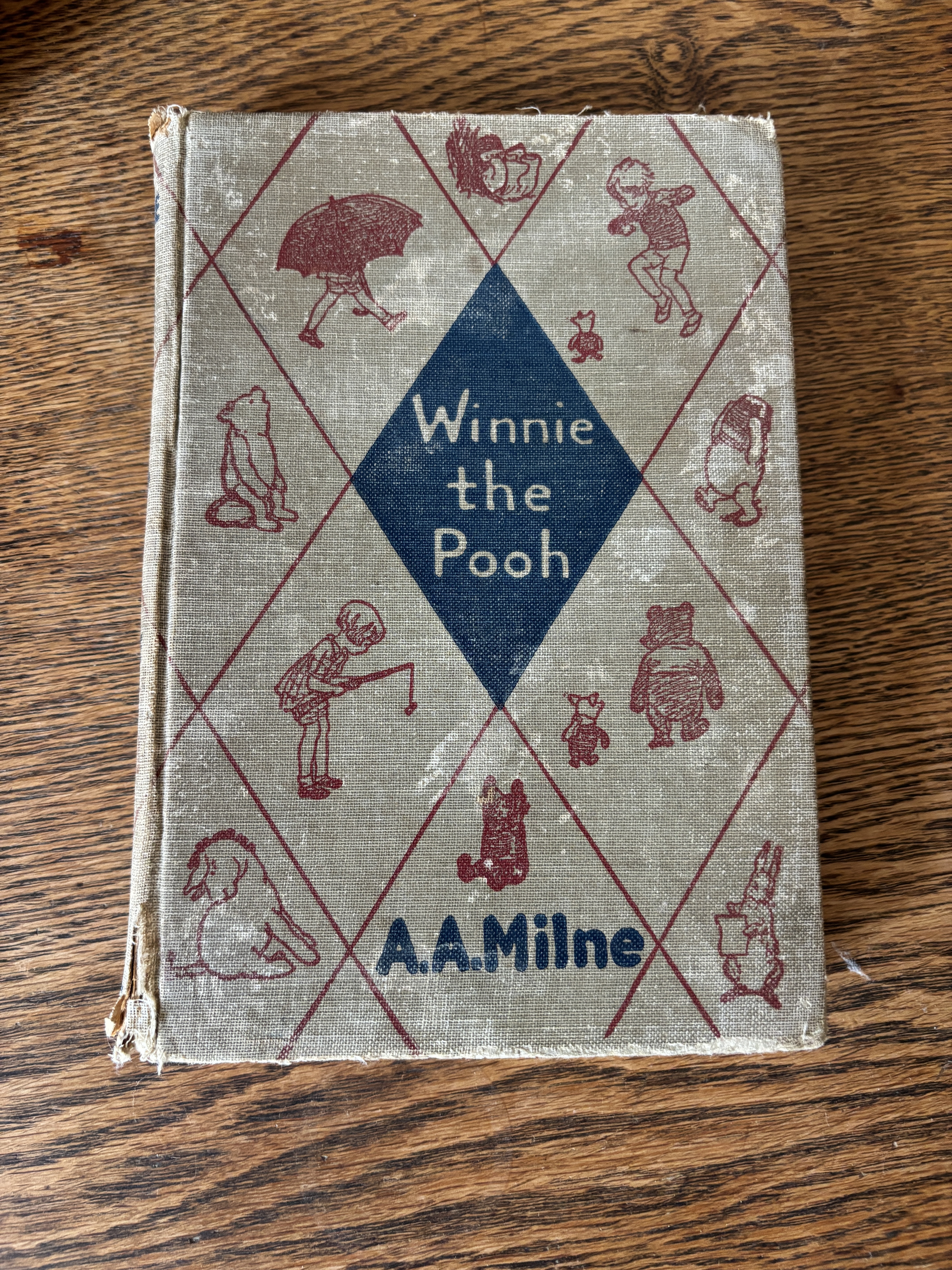
By Helen Currie Foster
November 23, 2026
Last night I attended the sold-out performance of Austin Shakespeare’s Lear, at the Rollins Theatre. Stunning! Why?
(1) It was a staged reading. WHAT? HOW DO YOU DO THAT? First, the actors stand behind their lecterns, clutching their scripts. A caveat—they’ve memorized most everything and they move swiftly. No props to speak of—vicious and convincing sword-fights with invisible swords…
(2) Advantages of a staged reading? Shorter, while emotionally compelling. The audience watches those expressive faces and the actors never turn their backs.
(3) Instead of having to watch the hasty switch of sets and props, the audience sees views appearing on the big screen behind the actors: the misty moors, battle tents, castles. I felt drawn into the frigid weather, the endless flights from danger.
I love the company’s full-blown productions of Shakespeare in Zilker Park, every May, above Barton Springs Pool, the beloved spring-fed gem of Austin—sets, actors, props galore. And staged readings are new to me. But their compression feels both satisfying and intense.

Have you ever acted in a play? No doubt some of you have—successfully, triumphantly. On the other hand, many of us–maybe when dragged into a production—have concluded that acting is not for us. Once we realize an audience is watching we feel unsure, unconvincing, self-conscious, ridiculous! (I speak from personal experience.) Not everyone has the actor’s drive, desire, or the amazing ability to magic themselves into another being, to speak with that character’s voice, to make the plot come to life before our eyes! To make us believe!
Actors obviously have special genes. I asked a high-school grandchild how she feels when singing or acting. She enjoys it! She loves connecting with the audience! I shake my head in baffled admiration.
And Shakespeare? We owe him so much!––including over 1,700 English words and phrases, many of which you likely use yourself. King Lear was first produced in 1606. https://www.rsc.org.uk/shakespeares-plays/histories-timeline/timeline

But centuries later we still say “Sharper than a serpent’s tooth”! Or, as Lear answers his wicked daughter Goneril—“How sharper than a serpent’s tooth it is to have a thankless child!” Act 1, Scene 4.
And if you say someone has “a heart of gold”—you’re repeating what Pistol told the King in Henry V, Act 4, Scene 1. Or you might say—when you disapprove of someone’s latest paramour—“Love is blind.” The Merchant of Venice, Act 2, Scene 6.
Shakespeare’s characters include nobility, peasants, lovers and haters, soldiers and nursemaids and cooks… Shakespeare makes them come to life with these vivid phrases. Shakespeare may not have created each phrase his characters speak: he may have heard compatriots using many of these expressions in the streets of London, or at The Anchor, or The Mermaid Tavern, where he or certainly his friends might have heard, or used, plenty of colorful language. https://en.wikipedia.org/wiki/Mermaid_Tavern
But his plays are the first written record of their use. https://en.wikipedia.org/wiki/List_of_idioms_attributed_to_Shakespeare
And they’ve lasted because they’re memorable! If a class of yours studied Julius Caesar, maybe you let this roll off your tongue: “Cowards die many times before their death; the valiant only taste of death but once.” Act 2, Scene 2. Or “Friends, Romans, countrymen, lend me your ears!” Act 3, Scene 2. Or “Let slip the dogs of war!” Act 3, Scene 1.
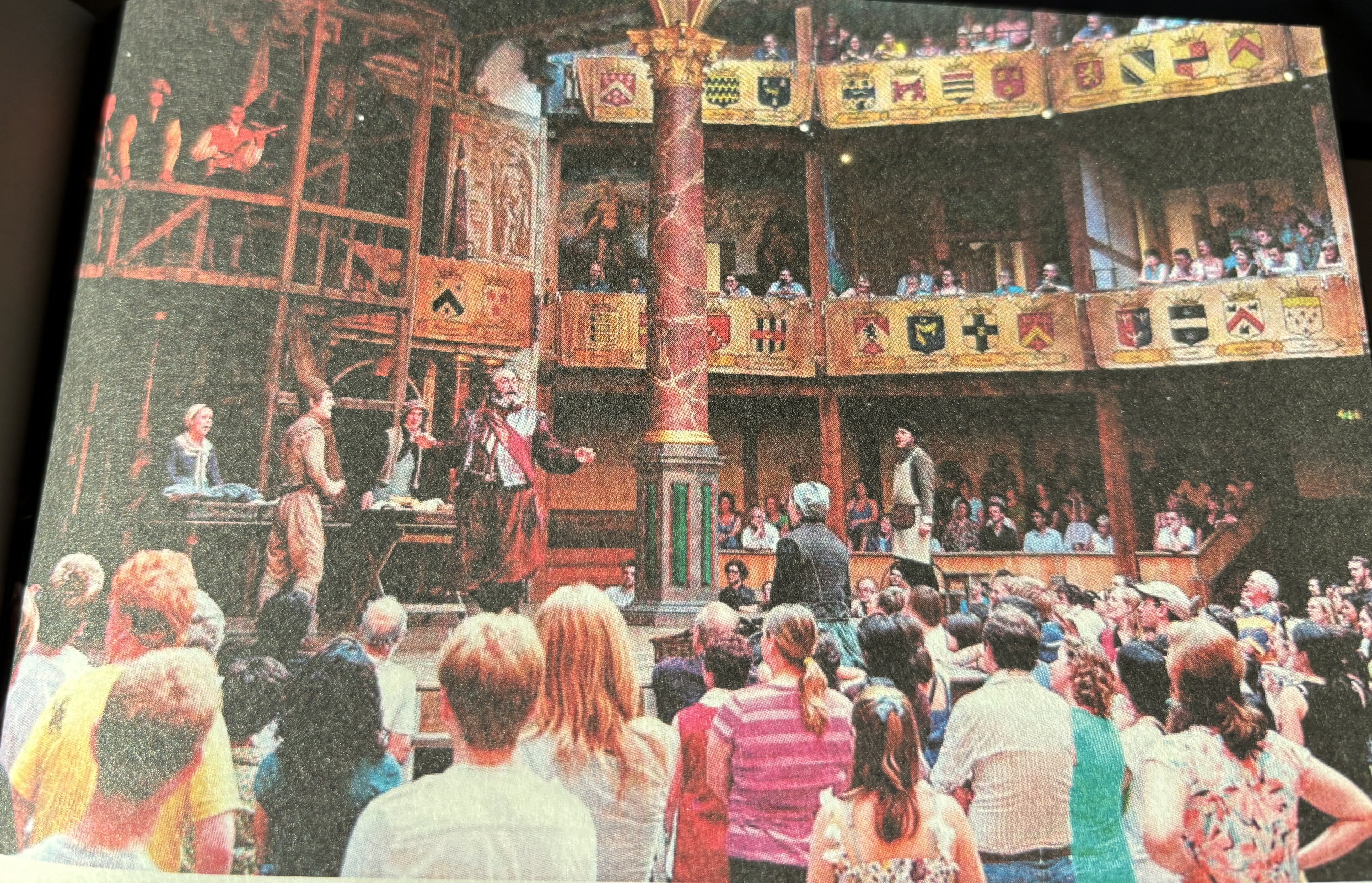
Shelves buckle under the weight of books about Shakespeare. But what continues to hold us is the sheer force of his plays. As William Gibson notes in Shakespeare’s Game, the man worked to “hold the stage,” to hold the ticket buyers, to know the audience, to arouse and keep their attention! https://bit.ly/4ChypRe. Like the folks in today’s Globe Theatre (picture from Shakespeare’s Restless World by Neil MacGregor).
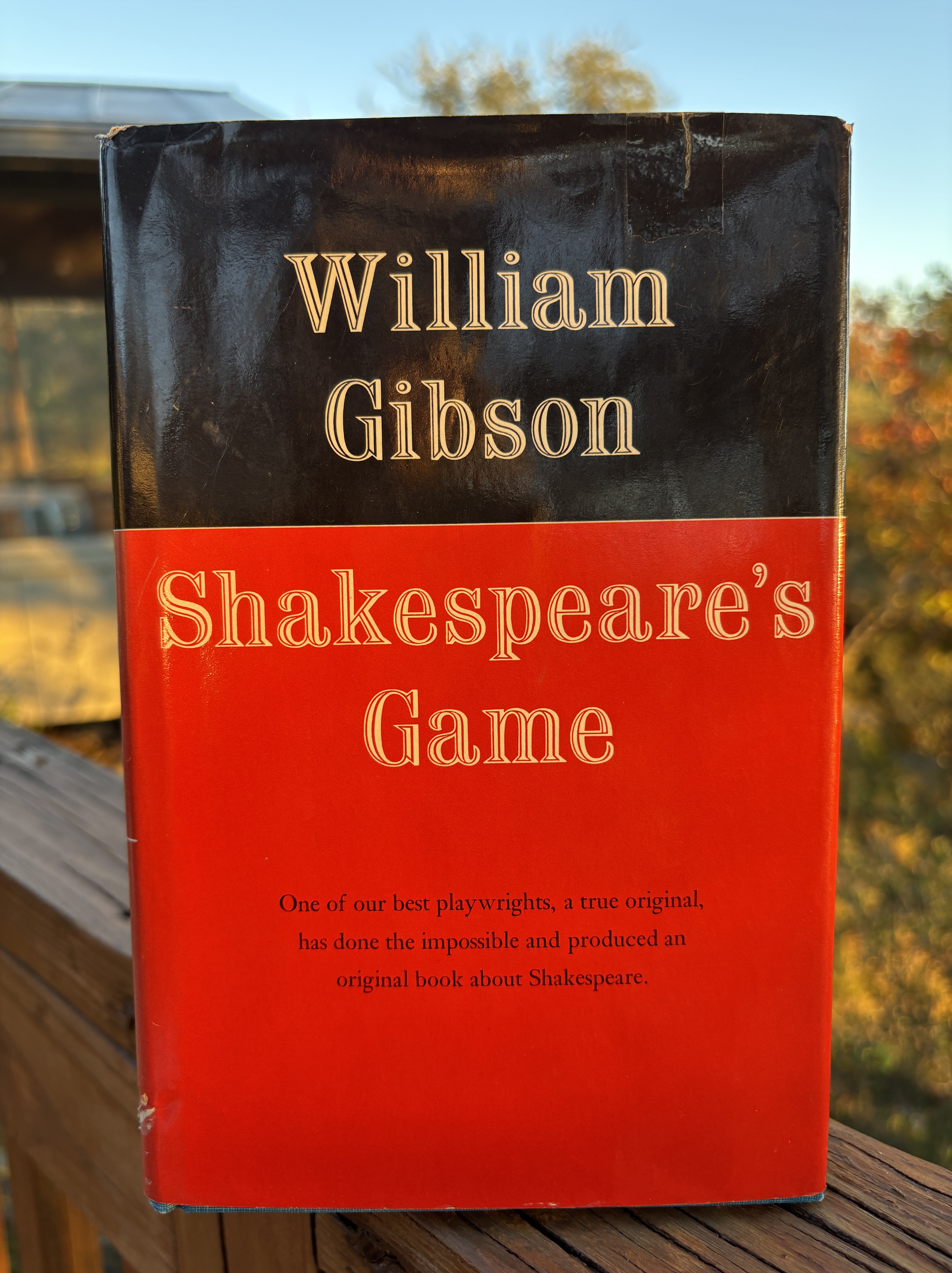
Gibson also tells us—and this, as a mystery writer, I find fascinating: “A play begins when a world in equipoise, always uneasy, is broken into by a happening.” At 6. Thus, in Hamlet we meet Horatio, waiting for a midnight “thing” to appear. Act 1, Scene 1. In Much Ado About Nothing, we learn right off the bat that “There is a kind of merry war between Signior Benedick and her” [meaning Beatrice]. And the first scene of The Tempest? A sinking ship with some alarmed nobility is falling into the hands of Prospero—after twelve long years.
As A Midsummer Night’s Dream begins, Duke Theseus announces to his soon-to-be-wife Hippolyta that in four days “our nuptial hour draws on apace.” He orders his master of the revels to get to work to “Stir up the Athenian youth to merriment.” But in the same scene a cranky citizen named Egeus appears, dragging in his daughter Hermia, followed by Demetrius and Lysander. Furious at furious at Hermia because—though engaged to Demetrius—she’s fallen in love with Lysander, Egeus wants Theseus to take action. We immediately foresee not only merriments for Athenian youth–but romantic crisis.
Gibson also claims that drama differs from other literature: the first scene results in a first move, which will provoke another, and another. Horatio must make a decision—to tell Hamlet what he’s seen. And then comes a next move—and on we go, into each scene Shakespeare uses to build the drama of one will against another. And so Shakespeare will “hold the stage”!
I find Gibson’s insights intriguing. Early on the mystery reader expects to encounter a setting, and also expects to encounter a breach of that equipoise. Our characters must seem as real to the reader as an able actor on the stage. And we use scene after scene for the story to unfold, for clues to be found, for an ending that we hope will deeply satisfy the reader.
These days we have TV, films on the screen, videos on YouTube. Plenty to watch. And our bookshelves sag with books. I still remember the morning I learned to read, when all the letters fell into place. Liberating! And empowering! I expect many of you are inveterate readers, library mavens, always with a book in the purse, a magazine on the table, an Audible book in your phone? And did you, as I did, try to sneak-read in elementary school from the book hidden in your desk?
It’s Thanksgiving week. We’re celebrating many things. I’m grateful for libraries, for friends who lend books, for magazines and newspapers, for READING.
But when we go to a play, instead of reading? When we see what appear to be regular people turn into different characters? When we hear the characters’ voices? And see the actual expressions on their faces? Sometimes a different magic occurs—a magic to be celebrated.
And also—though it’s not time to celebrate his birthday until April 23—we can celebrate Shakespeare now—grateful for the vivid sayings he gave us, the spicy phrases that color our lives.
By the way, the reason the name “Lear” above in line 1 didn’t include “King”? In this production, Lear was Queen Lear, acted by the amazing Austin actress Franchelle Dorn. If Shakespeare were paying attention, I believe he’d be thrilled…scene after scene!
And I do think Shakespeare would’ve enjoyed some New World food—pumpkin pie, corn bread stuffing, roast turkey, and cranberry sauce? (Our cranberry sauce will have a little chipotle added…) And that he’d have enjoyed eavesdropping on our conversations…and hearing a familiar phrase or two! “Hey! I wrote that!”

Author Helen Currie Foster lives and writes the Alice MacDonald Greer Mystery series north of Dripping Springs, Texas, loosely supervised by three burros (Amanda, Caroline, and Sebastian). She’s drawn to the compelling landscape and quirky characters of the Texas Hill Country, where these mysteries are set. She’s also deeply curious about our human history and how, uninvited, the past keeps crashing the party.
Ghost Daughter, Book 7 in the series, was named Finalist in the 2022 Eric Hoffer Book Award GrandPrize Short List, the 2022 Next Generation Indie Book Awards, and the 16th Annual National Indie Excellence Awards.
Follow Helen at http://www.helencurriefoster.com and on Facebook. Her books are available at BookPeople in Austin, and on Amazon.