THE PLOT THICKENS! Or, Your Suspicions May Be True

by Helen Currie Foster

Okay—Mom Genes is such a great title, it couldn’t not be used. But Abigail Tucker’s new book of that title doesn’t focus just on moms. Tucker, a New York Times best-selling science writer, dives deep into the burgeoning science examining parental behavior—genetic? hormonal? learned?

And you writers may find it a rich source for potential plots.

Moms will recognize Tucker’s description of the weird sensation of being kidnapped, of feeling like victims of an Invasion of the Body Snatchers. Not feeling quite yourself? In the first of a series of jaw-dropping recent research findings, Tucker reports, “Our children colonize our lungs, spleens, kidneys, thyroids, skin”—and brains. Far from being that familiar image of the one-way street, with mother’s blood, nutrients and even cells flowing into the fetus, the fetus also sends its own fetal cells into the mother. It’s “fetal microchimerism.” No wonder a burgeoning mom feels…she’s changed.

Tucker doesn’t dodge painful issues of maternal and paternal favoritism. “Some 80 percent of us allegedly … prefer one of our children to the others, and more than half of parents demonstrate so-called differential treatment toward various progeny.” The most striking predictor? “Moms appear to dote on their cutest kids.” Apparently “the components of infant attractiveness…are rigid and globally constant,” including big eyes, large forehead, small chin, and chubby cheeks. Tucker says this preference extends to nearly all baby mammals.

But dads apparently outperform moms on “child facial resemblance determination” – i.e., dads are more skilled at noticing whether a child looks like them. Indeed, one Senegal study found “kids grow up bigger and are better fed if they look and in fact smell more like their dads.” A different kind of favoritism…favoring the child which dad feels sure is his.

Jane Austen knew this. You remember that Mr. and Mrs. Bennet, the parents in Pride and Prejudice, have different favorites? Mrs. Bennet favors beautiful Jane; Mr. Bennet favors sensible Lizzy (Elizabeth). Mrs. Bennet scolds her husband: “Lizzy is not a bit better than the others; and I am sure she is not half so handsome as Jane, nor half so good-humoured as Lydia. But you are always giving her the preference.”

Humans share mothering tendencies across species. Will you recognize yourself if I mention “left-handed cradling bias”? In a “near-universal” mothering behavior, “Something like 80 percent of right-handed women and, remarkably, almost as many left-handed women hold their babies automatically on the left.” Check out many paintings of the Madonna, suggests Tucker. This “lefty” preference extends to other mammals. Why? It may allow the infant to “view the more expressive left side of the maternal face.”

Tucker points out it’s not all about genes. Life experience also affects maternal behavior. She describes studies of new monkey mothers showing that, of those roughly treated by their mothers, “more than half of the maltreated monkeys became abusive mothers. All the well-tended infants matured as competent mothers.” But when the scientists swapped some babies, so the abusive monkey moms took charge of the offspring of outstanding monkey moms, “the monkeys grew up to match the behaviors of their adoptive mothers, not their biological mothers.”

Here’s another potential genetic component. Canadian scientist Frances Champagne wondered why mother lab rats from the same genetic strain, living under identical conditions, engaged in different “licking/grooming” of their babies. When Champagne swapped the rat babies, so high-licking moms raised the babies of low-licking moms, the babies of below-average lickers followed in their adoptive mom’s footsteps. Then other scientists found they could program a baby rat’s future licking behavior by stroking it with a tiny paintbrush. “The physicality of getting licked somehow shaped the females’ instincts and behavior.” According to Champagne, “I wanted to show that the care you receive leads to epigenetic changes in infancy, and that this could replicate.” Epigenetics focuses on whether and how bits of genetic code may be “expressed.” Champagne found well-licked baby rats “were more likely to express their genes for certain estrogen receptors…” which made them more likely to express genes for oxytocin receptors and to grow more oxytocin neurons in their brains.

Fascinating research discusses how different bits of our genes “express” themselves, particularly in response to hormones. For instance, various sorts of stress can result in hormonal effects on gene expression: “Physiological changes that affect mRNA stability occur during development, nutritional stress, hypoxia, inflammation, cancer, and aging.”

The notion that our genes are static? Maybe not!

So…parental behavior factors include genes plus life experience with hormones kicking into action to affect gene expression.

Back to favoritism! Harry Potter? Reluctant adoptive parent Mrs. Dursley can’t abide her own sister’s son. The internet is full of books and studies on why parents have favorites and how favorites impact families, including impact on sibling rivalry.

Being a favorite can be dangerous, as Joseph learned. “Now Israel loved Joseph more than any other of his children…But when his brothers saw that their father loved him more than all his brothers, they hated him….” (Genesis 37.)

And I haven’t touched on what Tucker calls the “murderous tendencies of mothers,” citing Sarah Blaffer Hrdy’s theories on infanticide in Mother Nature.

Tucker’s final chapters look at the impact of our own stressful society on parents. “Social-support deficits and perinatal depression are intimately linked.” Tucker reports that compared to Dutch mothers, American mothers appeared comparatively quite miserable, with high levels of unhappiness and worry, because they don’t get enough support in their health care or workplace. To transform this problem “would involve taking on some of the most grinding and deadlocked political issues of our day: not only income inequality, but also health care, education, and other topics that have consistently stumped our government,” including racism (citing pregnant Black women’s higher blood pressure and elevated risks of prenatal diabetes, preterm delivery and death).

Tucker visited Erin Kinnally, a scientist at the UC Davis California National Primate Research Center. “Kinnally rattles off the factors that can shape primate moms…age, number of births, genetics, her own mother’s rearing history, the baby’s sex and other characteristics, access to food and shelter and sundry other environmental factors.” But the most potent force is “social chemistry.” The low-ranking macaque moms at the primate center “have weaker immune system and other distinct traits…the lowest ranking moms had four times the amount of stress hormones in their blood.” “Low-ranking [macaque] moms grasp that they have to be vigilant at all times. Fascinating studies have shown that these moms are much more likely to try to shush their infants’ cries when higher-ranked animals are around, for fear that the fussing will draw unwanted attention and attacks.”

Hormonal impact? Stress can mean a baby gets more cortisol in breast milk. In monkeys, “these high-cortisol babies grow unusually quickly, ‘prioritizing’ growth instead of social exploration…”

Tucker, like Bill Bryson in The Body, respects her readers enough to include a serious index. Hers is excellent: for her assertions in each chapter, she includes detailed links to the research studies involved.

We’re all from families; we’re all affected by our genes and our experiencesby how we were parented (and, indeed, how those who parented us were parented, and so on back up the long chain of humanity). Mom Genes confirms what writers already suspect: plots abound!

***

Helen Currie Foster lives north of Dripping Springs, Texas, supervised by three burros. She writes the Alice MacDonald Greer Mystery series. Ghost Daughter, Book 7 of the series, was published June 15, 2021. Helen’s active with Austin Shakespeare and Sisters in Crime – Heart of Texas chapter. Find out more at www.helencurriefoster.com.

Tipper: My Manager Extraordinaire

by K .P. Gresham

I suspect most of us have our secrets about how we survived the Pandemic of ’20-’21. Video games, binge-watching movies, reading like a fiend–you get the idea.

My secret was my dog, Tipper. Or should I say my manager. Tip’s a fifteen-pound rescue dog of the Chihuahua meets Terrier variety. Nobody wanted to adopt him because he has bad knees. Really? I’ve had two knee replacements and nobody ever threw me out on the street. Tipper came home to live with me and my better half, Kevin, that very day. 

Now, eight years later, it is my dog who has rescued me. Or should I say bosses me around. Thanks to him, I have the next installment of the Pastor Matt Hayden Mystery Series, Four Reasons to Die, later this summer. 

This is the schedule Tip put me on from the pandemic’s git-go. First, he begins his slow process of waking–this entails laying beneath the bed covers for at least a half hour after Kevin and I are already up, then he slowly rises like a ghost from the grave because the sheets trail after him as he fights his way out of bed, and finally, he spends another half hour under the bed to avoid the rising sun. His last half hour of officially waking iup is spent in my lap while I finish my morning pot of coffee.

And then he jumps down from my lap, game face on. Enough lolly-gagging on my part. Time to get to work.

We start our day with a three-mile walk. Tip has decided this is the amount of time it takes for me to chew through the scene I have to write that day. When we come home, he demands breakfast, then shoos me upstairs to my office to get to work. No shower. No breakfast. It’s work time. To make sure I stay at it, he takes up residence on the small couch in my office and does not leave it until he hears my husband (who during Covid works in his office downstairs) making lunch. Then Tipper jumps down from the couch and scratches at my leg to tell me to take a break. But does he come downstairs with me? Oh, no.  He goes back to his couch where he waits for fifteen minutes while I make my lunch and put some tidbits in his bowl. THEN, he comes down.

I finally get my shower after lunch–remember, he doesn’t let me take it before since he’s sure I will forget what I’ve decided to write during our walk. Only then does he allow me to return to my office to get back to work.

At 4:00, Tipper believes our work for the day is done. This is the time when, pre-pandemic, my neighbors and I used to get together to watch Jeopardy. We couldn’t, of course, during the Pandemic, but Tipper never got the memo. At 4:00, we’re supposed to close up shop. I oftentimes decide to keep on working until Kevin was done with his day, and Tipper thinks this is sacrilege. He leaves his couch to sit by my feet and growls as I type away. He believes its against his contract to work such long hours and has threatened several times to call Animal Rescue to arrest me.

I didn’t understand how serious he was about his managerial duties until he started wearing a tie to work. And proofing everything I write. And working on his own stories.

Lord help me, they’ll probably be better than mine…

Thank goodness for my little Tipper. I wouldn’t have made it through the Pandemic without him.

Coming Soon (Thanks to Tipper)!

Four Reasons to Die

The 4th Book in the Pastor Matt Hayden Mystery Series

 When Pastor Matt Hayden steps up to give the Texas Inaugural Ceremony’s benediction after the scheduled minister, Reverend Duff, disappears, he finds himself embroiled in a religious war, a political power-grab, and murder.

 The missing Duff, a progressive leftist, is locked in a bitter, public battle with the ultra-conservative Reverend Meade. Duff has also taken on U.S. Senator Womack, a far-right Presidential hopeful whose only love is himself.

 Matt joins the search for the missing pastor, but is he prepared to discover the true evil that threatens his family, including the new governor…and his beloved Angie?

***

Where to Find Me

Website: http://www.kpgresham.com/

Email: kp@kpgresham.com

Blogs: https://inkstainedwretches.home.blog/

https://austinmysterywriters.com/

Facebook: https://www.facebook.com/kpgresham

Books by K.P. Gresham

Three Days at Wrigley Field

The Pastor Matt Hayden Mystery Series

The Preacher’s First Murder

Murder in the Second Pew

Murder on the Third Try

“Quaint and Curious”

by Kathy Waller

Today is Memorial Day, the last Monday in May, when we remember the men and women of the military to whom we cannot say, “Thank you.”

There are many stories about when and where Memorial Day, formerly called Decoration Day, began. Originally, it honored soldiers fallen during the Civil War, and was first officially celebrated in 1868.

Wikipedia, however, points to an earlier beginning: “On May 1, 1865 in Charleston, SC, formerly enslaved African Americans honored hundreds of Black soldiers who were killed in the Civil War but who were buried in a mass grave. They unearthed the bodies and gave each a proper burial and held a parade in the soldiers’ honor. This is the first major honoring of fallen soldiers that is believed to have begun the tradition.”

In honor of the day, I’ve chosen a poem by British poet and novelist Thomas Hardy.

#

The Man He Killed

By Thomas Hardy

“Had he and I but met
            By some old ancient inn,
We should have sat us down to wet
            Right many a nipperkin!

            “But ranged as infantry,
            And staring face to face,
I shot at him as he at me,
            And killed him in his place.

            “I shot him dead because —
            Because he was my foe,
Just so: my foe of course he was;
            That’s clear enough; although

            “He thought he’d ‘list, perhaps,
            Off-hand like — just as I —
Was out of work — had sold his traps —
            No other reason why.

            “Yes; quaint and curious war is!
            You shoot a fellow down
You’d treat if met where any bar is,
            Or help to half-a-crown.”

#

Wartime provides the setting for many books, movies, plays, and television films in the mystery genre. Among them:

12 best historical fiction books set during World War II

9 Mysteries Set in the Immediate Aftermath of WWI

9 Murder Mysteries Set During Wartime

The Best Historical Mystery Series

Five Novels of Mystery, Intrigue and Suspense Set in WWII

Foyle’s War (Television series)

My Boy Jack (Television film based on play by Daniel Haig)
(Link leads to complete film on Youtube.)
The title My Boy Jack comes from a poem written by Rudyard Kipling for Jack Cornwell, “the 16 year old youngest recipient of the Victoria Cross who stayed by his post on board ship during the battle of Jutland until he died.” The poem “echoes the grief of all parents who lost sons in the First World War. John Kipling was a 2nd Lt in the Irish Guards and disappeared in September 1915 during the Battle of Loos in the First World War.” His body was never found. (Wikipedia).  Haig’s play deals with Kipling’s grief at the loss of his son.

#

Kathy Waller’s stories appear in Murder on Wheels, Lone Star Lawless, and Day of the Dark, as well as online at Mysterical-E. She blog at Telling the Truth, Mainly.

The Ones That Stick With Us

by Helen Currie Foster

We read to learn, we read to be entertained.

We begged at age three, “Tell me a story.”

The stories began, “Once upon a time…”

And Hansel fooled the witch and escaped. Jack chopped down the beanstalk and escaped.

We mystery readers read a vast number of mystery novels. Fifty percent of adults say their favorite book genre is mystery/thriller. In 2020 mystery e-book sales appear to have increased by13% and thrillers by 15%.

We’re always searching for a new adventure, a new love. Have you ever pulled a book from the shelf, glance at the back cover, then (with hope in your heart) the first page, and then pushed the book back on the shelf, sure this one won’t do? I have, so many times. Same drill at the library. We usually know from page one (or at most page two) if we’re going to like a new author. If we don’t like the setting, the protagonist, the voice, forget it. But if we do, if we give that book a chance and like it, we look for a series. Bonus points if we find a new series we like! A series is efficient: we already know the protagonist, the repeating characters, many details of the setting. We plunge straight into the story.

Yet sometimes—even when I really like an author’s book—they run together. I may find them exciting, may remember specific scenes, may like the ending. But often a week after I finish a book, even one in a series with a protagonist who enchants me, I can’t quite remember who died. Now that’s embarrassing. As a murder mystery reader, shouldn’t I remember the victim?

If the victim, stuck there on the page, could talk back, maybe he or she would say, “C’mon, reader, give me a break! Don’t you remember how my body was pulled from the [canal] [truck] [hidden grave]? Don’t you remember how hard I was to find? Don’t you remember how excited the [police team] [sleuth] was to figure out who killed me? Can’t you remember me for at least three minutes? I mean, I’m the one your beloved protagonist investigated! I’m the whole point of the book!” And then in a more querulous tone, “Aren’t I?”

Maybe not. We get caught up in the badinage between DI Dalziel and his sidekick Pascoe. They go off to a pub and suddenly we find we’ve opened the refrigerator. We want to be there with them, sitting at that table near the dart board, sipping beer. Or our protagonist is reviewing the grisly evidence while listening to Madame Butterfly, and we find ourselves humming the first phrase of the aria (the only one we know). Maybe we’re really more interested in a favorite protagonist than in the victim.  Sorry, Victim. The Protagonist will be in the next book––but you won’t.

On the other hand, now and then, there’s a death that sticks. One that even haunts me, after the denouement, after the explanation, after I finish saying “aha, I spotted that,” or “Hmm, very tricksy.” After all the figuring-out, occasionally I’m still thinking about the victim.

I started wondering about the ones who stick this week when I read two mysteries from Donna Leon, who just published her 30th book, Transient DesiresThe title puns on what Donna Leon terms the “Nigerian Mafia” which she describes as smuggling young African women into Italy, promising them jobs which will let them send needed money home to their families, but instead enslaving them as sex workers or—occasionally—taking their transport money while throwing them into the Mediterranean to drown. In Transient Desires, Leon introduces us first to a young woman who survived the sea crossing but is being driven mad by her enslavement. Then we meet a naïve young Venetian man, desperate to keep a job with his boat-owning uncle which allows him to support his mother. The young man is slowly being destroyed by what his uncle forces him to do. These two portraits stick in my mind.

I also read Leon’s 22d book, The Golden Egg, where her protagonist, Venetian Inspector Guido Brunetti, must determine whether a young deaf man committed suicide by swallowing his mother’s tranquilizers, or was murdered. Which? Brunetti is stunned that the Serene Republic of Venice, which keeps tab of virtually every aspect of every inhabitant’s life, has no record of this young man. He’s unaccounted for: no school, no paying job, nothing. Brunetti learns he toiled his life away ironing clothes in a laundry, unpaid, speaking to no one, with no one speaking to him. He was never taught sign language, never taught how to interact with people. He lived in Venice where people know and speak to their neighbors and shopkeepers…but no one spoke to him. Brunetti doggedly unearths the peculiar cruelty of the people who kept him alive but didn’t teach him to live…parents who never talked to him, never taught him, never allowed anyone to reach out to him. Even worse, if worse is possible, Brunetti discovers the boy had a rare artistic talent—appreciated only by the boy’s doctor—that the boy never knew was worthy of recognition. Donna Leon’s description of one of the boy’s drawings, one the doctor has on his wall, brings home to the reader the two-fold tragedy: that the boy never knew his creations were beautiful, and that the world was deprived of knowing the human being who created such beauty. He was trapped. And he died without ever escaping. That’s a victim I cannot forget.

What about The Nine Tailors (1934), by Dorothy Sayers?This classic tale, often called her best, has all the charming hallmarks of a carefully constructed village-and-vicar English mystery, including the peculiarly English tradition of bell-ringing. We’ve got it all here: stolen jewels, a letter written in cipher, and an unidentified male body with no hands. The setting: the fens of East Anglia, with drainage ditches, locks, and ever-shifting floodwaters, and the contrasting grandeur of the ancient fen churches whose spires, with their enormous bells, mark the landscape. On New Year’s Eve, with the great influenza raging, Lord Peter Wimsey and his valet Bunter wreck the car and become lost in a snowstorm. They’re rescued by the vicar of Fenchurch St. Paul, who proudly announces that his bell-ringers are going to ring in the New Year with “no less than fifteen thousand, eight hundred and forty Kent Treble Bob Majors”—nine hours of bell-ringing. When one ringer, Will Thoday, is struck down by influenza, the vicar begs Wimsey to take his place. Wimsey later finds a recently buried man with no hands. As to why the victim has no hands, and how he was killed—is it a spoiler to emphasize, reader, that you do not want to be tied up, unable to escape, in a bell-chamber just above those enormous thousand-year-old bells while they ring unceasingly for nine hours? That victim’s death has stayed with me. But also, the circumstances which led to in his entrapment in the bell tower resulted in such grief for three characters that their lives are changed forever. That stayed with me too. No happy Sayers-esque denouement here. Instead, characters are condemned to remember. As to the title, the Nine Tailors are the nine strokes of the tenor bell—three, three, and three more—rung to mark a death in the parish.

Fans of Tony Hillerman will remember The Wailing Windwhere NavajoDetective Joe Leaphorn is hired by Wiley Denton, a wealthy older man recently released from prison for shooting a man named McKay, who had promised Denton a map to a fabled gold mine. Denton wants Leaphorn to find out what happened years ago at Halloween to his beloved young wife, Linda. The convoluted plot takes the reader through numerous twists and turns, but the gold mine convolutions aren’t what I remember. Instead I remember that McKay, all those years ago, drugged Linda and left her in a locked bunker (one of hundreds of identical bunkers in an untravelled area on the vast grounds of Fort Wingate), hoping to use her as leverage to get the deal he wanted from Denton. Denton shot McKay, not knowing that McKay had hidden Linda. So she died, slowly mummified, in a bunker in the Arizona desert. Now that’s one that sticks with me.

I’ve been wondering why I found these particular victims so hard to forget. You’ll have noticed that all were trapped. Transient Desires involves economic entrapment—slavery, really. Both the young Nigerian and the young Venetian have no economic hope, no way to escape doing what they hate. The Golden Egg reveals a young man cruelly trapped by isolation, deprived of human communication, deprived of any way to express an enormous talent. In Nine Tailors and The Wailing Wind, the victim’s death by physical entrapment creates another trap: those involved are trapped by their memories.

I wonder if the rank injustice that Leon depicts is part of the staying power of Transient Desires and The Golden Egg. Particularly in The Golden Egg, Brunetti feels helpless, and we share his frustration, his horror, really, at the young man’s death, and at the society that allowed it to happen. To that extent I’m still identifying with Brunetti, not the victim.

I’ve hidden my murder victims in enclosed spaces. Ghost Cave.

 Ghost Dog.

But mercifully, they were already dead.

Maybe we identify more with the victim when reading about a death caused by physical entrapment, whether the victim’s tied up in a bell-tower or locked in an isolated bunker, where no one can hear the call for help (the bells are too loud, or the bunker too soundproof). Doesn’t that reverberate with all of us? We’re generally confident we could escape from most situations, could chew off the ropes on our wrist, pick the lock, find a secret passage, get a message to our rescuers. Fool the witch and chop down the beanstalk. But what if there’s no one to hear? No one to help? No way to get out? End of story. Not comfortable. Awfully memorable. Awfully.

***

Helen Currie Foster is the author of the Alice MacDonald Greer mystery series. Her latest novel is Ghost Cat. Read more about her here.

Naming Characters: Steve Dauchy MacCaskill

I’m working on a mystery novel—I’ve been working on it for years, but now I’m working on itand am faced with dilemmas too numerous to whine about in only one post, so I’ll move along.

I will instead write about the one pleasure of the writing life: creating and naming characters.

My novel is set in a little town very like my own hometown. I don’t base my plot on real events, and I don’t use real people as characters—with one exception: Steve Dauchy.

Not Steve, but close

Note: One of my readers, Cullen Dauchy, knows more about Steve than I do, especially about his early life, and I hope he’ll feel free to correct any errors.

Steve Dauchy was a career blood donor at Katy Veterinary Clinic in Katy, Texas. On retirement he moved to Fentress, where he lived with his veterinarian-owner’s parents, Joe and Norma Dauchy. Joe and Norma lived next door to me; in local terms, next door meant that my house was on one corner, then there was a half-acre “patch” of pecan and peach trees and grass and weeds, then a street, and then on the next corner, the Dauchy yard and their house. The point being that when Steve visited me, he didn’t just walk across a driveway.

Joe was my dad’s first cousin, so I guess that makes Steve and me second cousins. I have a lot of cousins on that side of the family, although most are human.

Steve is a family name, with a story behind it. As I understand it, back in the ’20s or ’30s, my great-uncle Cull (Joseph Cullen) Dauchy, Sr., enjoyed listening to a radio program about a Greek character who frequently spoke of “my cat Steve and her little cattens.” Uncle Cull was so amused by the phrase that he named a cat—probably one of the barn cats—Steve. And ever after, he always had a cat named Steve.

Uncle Cull and Aunt Myrtle Dauchy’s house, home of the first Steves

So when the clinic cat became part of the Uncle Cull’s son and daughter-in-law’s family, he became the latest in a long line of Steves.

How to describe Steve. He was a fine figure of a cat: a big tabby, deep orange, with an expression of perpetual boredom. His reaction to nearly everything translated as, “Meh.” I’ve heard that’s common among clinic cats.

Once when Steve was standing on my front porch, the neighbor’s Great Dane got loose and charged over. I was frantic, shouting at the dog, shouting at Steve. But when the dog hit the porch, Steve just looked up at him. Dog turned around and trotted home.

Some would say Steve was brave, and I’m sure he was. But I believe his grace under pressure had their roots elsewhere.

First, he had experience. He knew dogs. In his former employment, he’d observed the breed: big, little, yappy, whining, growling, howling, cringing, confined to carriers, restrained by leashes, sporting harnesses and rhinestone collars, hair wild and matted, sculpted ‘dos and toenails glistening pink from the OPI Neon Collection. He’d seen them all, and he was not impressed.

Facing down a Great Dane, however, took more than experience. There was something in Steve’s character, an inborn trait that marked him for greatness: his overarching sense of entitlement. He was never in the wrong place at the wrong time. My porch was his porch. The world was his sardine.

Except for the kitchen counter. Steve thought kitchen counters were for sleeping, and Joe and Norma’s maid didn’t. Consequently, he stayed outside a lot. He took ostracism in stride and used his freedom to range far and wide. Far and wide meant my yard.

Steve’s house

At that time I had three indoor cats—Christabel, Chloe, and Alice B. Toeclaws—and a raft of outdoor cats. The outdoor cats started as strays, but I made the mistake of naming them, which meant I had to feed them, which meant they were mine. Chief among them was Bunny, a black cat who had arrived as a teenager with his mother, Edith.

One day Bunny, Edith, and I were out picking up pecans when Steve wandered over to pay his respects, or, more likely, to allow us to pay our respects to him. Bunny perked up, put on his dangerous expression, and walked out to meet the interloper. It was like watching the opening face-off in Gunsmoke.

But instead of scrapping, they stopped and sat down, face to face, only inches apart. Each raised his right paw above his head and held it there a moment. Next, simultaneously, they bopped each other on the top of the head about ten times. Then they toppled over onto their sides, got up, and walked away.

That happened every time they met. Maybe it was just a cat thing, a neighborly greeting, something like a Masonic handshake. But I’ve wondered if it might have had religious significance. Bunny was a Presbyterian, and Steve was a Methodist, and both had strong Baptist roots, and although none of those denominations is big on ritual, who knows what a feline sect might entail?

Steve had a Macavity-like talent for making himself invisible. Occasionally when I opened my front door, he slipped past and hid in a chair at the dining room table, veiled by the tablecloth. When he was ready to leave, he would hunt me down—Surprise!—and lead me to the door. Once, during an extended stay, he used the litter box. Christabel, Chloe, and Alice B. were not amused.

Distance Steve traveled between his house and mine. His house is way over there behind the trees.

Invisibility could work against him, though. Backing out of the driveway one morning, I saw in the rearview mirror a flash streak across the yard. I got out and looked around but found nothing and so decided I’d imagined it. When I got home from work, I made a more thorough search and located Steve under the house, just out of reach. I called, coaxed, cajoled. He stared. It was clear: he’d been behind the car when I backed out, I’d hit him, and he was either too hurt to move or too disgusted to give me the time of day.

It took a long time and a can of sardines to get him out. I delivered him to the veterinarian in Lockhart; she advised leaving him for observation. A couple of days later, I picked him up. Everything was in working order, she said, cracked pelvis, nothing to do but let him get over it.

“Ordinarily,” said the vet, “I would have examined him and sent him home with you the first day. I could tell he was okay. But you told me his owner’s son is a vet, and I was afraid I’d get it wrong.”

Although an indoor-outdoor cat, Steve did plenty of indoor time at his own house, too, especially in winter, and when the maid wasn’t there. One cold day, the family smelled something burning. They found Steve snoozing atop the propane space heater in the kitchen. His tail hung down the side, in front of the vent. The burning smell was the hair on his tail singeing. They moved him to a safer location. I presume he woke up during the process.

At night, he had his own bedroom, a little garden shed in the back yard. He slept on the seat of the lawnmower, snuggled down on a cushion. Except when he didn’t.

Once extremely cold night, I was piled up in bed under an extra blanket and three cats. About two a.m., I woke up to turn over—sleeping under three cats requires you to wake up to turn over—and in the process, reached down and touched one of the cats. It was not my cat.

I cannot describe the wave of fear that swept over me. It sounds ridiculous now, but finding myself in the dark with an unidentified beast, and unable to jump and run without first extricating myself from bedding and forty pounds of cat—I lay there paralyzed.

Unnecessarily, of course. The extra cat was Steve. He’s sneaked in and, considering the weather forecast, decided sleeping with a human and three other cats in a bed would be superior to hunkering down on a lawnmower.

Steve’s full name was, of course, Steve Dauchy. In my book, he will be Steve MacCaskill. MacCaskill was the name of a family who lived next door to my Aunt Bettie and Uncle Maurice. Their children were friends of my father and his brothers and their many cousins. They were a happy family.

“My family had to plan everything,” my dad’s cousin Lucyle Dauchy Meadows told me, “but the MacCaskills were spontaneous. If they decided they wanted to go to a movie, they just got into the car and went to a movie.” When Lucyle and the other girls helped their friend Mary Burns MacCaskill tidy her room before the Home Demonstration Agent came to examine it (I am so glad the Home Demonstration Agent didn’t examine rooms when I was a girl), one of the first things they did was to remove the alligator from the bathtub.

I heard so many delightful stories about the MacCaskill family that I decided they were too good to be true until my Aunt Bettie’s 100th birthday party, when my mother introduced me to Mary Burns MacCaskill, who had traveled from Ohio for the party.

So as an homage to that family, I’ve named my main character Molly MacCaskill. And when choosing a pet for Molly, I couldn’t choose a finer beast than Steve.

***

Kathy Waller blogs at Telling the Truth, Mainly. She has published short stories, as well as a novella co-written with Manning Wolfe. She is perpetually working on a novel.

What’s That Smell?

by Helen Currie Foster

In the back of the closet I recently unearthed my mother’s old Caswell Massey “Gardenia” bubble bath. The resulting bath held astonishing comfort and nostalgia. It smelled like her house.

Mystery writers can use smell to reinforce not only setting and character, but powerful plots. Here are strong examples from the first chapter of Lethal Whitethe fourth in Robert Galbraith’s Cormoran Strike series. Chapter one begins with the wedding of Strike’s former co-detective Robin Ellacott and her long-time (but insufferable) fiancé Matthew Cunliffe, arguing while the wedding photographer tries to get some decent shots. Strike has fired Robin, partly from fear she’ll be killed. Without her job, Robin’s miserable. Matthew’s furious because of the joy he saw on Robin’s face when Strike arrived for the ceremony, heavily bandaged from capturing a killer. And now, arguing with Matthew, how does Robin feel? “The sweet, ticklish smell of hot grass filled her nostrils as the sun beat down on her uncovered shoulders.” The hot smell matches Robin’s itchy misery as she second-guesses her marriage to Matthew.

The country hotel setting smells beautiful, in stark contrast to Strike’s emotions: “For a while he lurked at the end of the bar, nursing a pint…and then repaired to the terrace, where he had stood apart from the other smokers and contemplated the dappled evening, breathing in the sweet meadow smell beneath a coral sky.” Sweet meadow smell; miserable situation.

Robin finally reaches Strike on the stairs as he’s leaving: “They were holding each other tightly before they knew what had happened, Robin’s chin on Strike’s shoulder, his face in her hair. He smelled of sweat, beer, and surgical spirits, she, of roses and the faint perfume that he had missed when she was no longer in the office.” The scene is almost shocking in its sensory overload. We feel their powerful attraction. Galbraith (J. K. Rowling) brilliantly gives us not only the protagonists, but the pain of their predicament, using scent to remind us of Strike’s injury (surgical spirits) and the fact that he has missed her perfume because she’s no longer in the office.

We already know that Chet, the heroic detective dog of Spencer Quinn’s Chet and Bernie series, is a dog of admirable olfactory sensitivity. He feels sorry for his human partner, Bernie (who labors under the misapprehension that he, not Chet, is the detective), because Chet knows human limitations, olfactorily speaking.

Chet and Bernie search for lost young campers in Spencer Quinn’s The Dog Who Knew Too Much. Chet’s nose moves the plot along: I smelled ashes, plus chocolate, the way it smells when hot chocolate gets burned in the pot, and….the remains of a not-too-long-ago campfire. I knew fire pits, of course, went over and took some closer sniffs. Burned hot chocolate, yes. There’d also been Spam and something eggy. I stuck my nose just about right into the ashes. They were cold.” Oh, the advantages of a detective dog as protagonist.

Well, Chet, don’t underrate us. Research shows we humans can detect at least a trillion odors! Bill Bryson, The Body, at 90.

Furthermore, as Chet the dog already knows, we humans each have our own unique scent: “It’s like a fingerprint,” says Johan Lundström, a neuroscientist at the Karolinska Institute in Sweden, in “The Sense of Smell in Humans is More Powerful Than We Think, ” by Marta Zaraska–an interesting article.

Didn’t we already know we can identify the scent of the loved one? Mothers can recognize their newborns by smell (and vice versa). Bryson says olfactory information goes directly to our olfactory cortex, next to the hippocampus, where memories are shaped, which is why some neuroscientists think certain smells evoke memories. Oh, didn’t Proust mention that? Scent brings back the dead, if only for a second. In my Ghost Cat, after the death of his wife Holly, Russ confesses that when he walks in the house, he lifts his eyes and inhales: “I always hope for a little whiff of Holly.”

However––some odors fly under our radar. We may feel, but can’t always articulate, how certain smells arouse our emotions. We say fear is contagious but we haven’t known how. Zaraska cites research showing when we smell body odor from a stressed person, we ourselves become more vigilant. When we smell body odor of a close relative, per Zaraska, we can recognize family, and our dorsomedial-prefontal cortext can light up. Maybe some of this we’ve known without really knowing it.

Plus, we apparently have sensory radar for genetic information. For mating! A woman inhaling body odor of a potential mate senses how genetically related the two are––by sniffing a gene family that links body scent and the immune system, called the “major histocompatibility complex” or “MHC.” This capacity is useful: we like our mates to be related enough––but not too much. My protagonist Alice, lawyer and amateur sleuth in the Alice MacDonald Greer Mystery series, is well aware how much she likes the way her love interest Ben Kinsear smells––he “smells good”––but she hasn’t put words to the smell the way Chet the dog has. He defines his own smell as “the most familiar smell in the world: old leather, salt and pepper, mink coats, and just a soupcon of tomato; and to be honest, a healthy dash of something male and funky. My smell: yes, sir.”

Could you define your own smell? With aromatic detail? Probably not. A loved one might be able to.

Smell can deepen a scene, define character, highlight plot. Ann Cleeves, in Dead Water (her Shetland series) describes the reception desk in the hotel, a key setting, as “all dark wood, with the smell of beeswax.” The sweet smell, the dark venue.

Elly Griffiths in The Crossing Places shows us her protagonist, archeologist Ruth Galloway: “Climbing the danksmelling staircase to her office, she thinks about her first lecture: First Principles in Excavation.” Danksmelling…excavation. Her job.

Louise Penny, in A Better Man, uses smell to reinforce the humiliating demotion of her protagonist, Quebec Inspector Armand Gamache. A former subordinate now bosses him. A giant ice storm with crashing ice flows and high water threatens Quebec. Worried the Champlain bridge will break, on the way to a police meeting, Gamache gets splattered with mud trying to see whether the dam will hold.

“I see some of the crap thrown at you today on Twitter has stuck,” said the senior officer from the RCMP, gesturing at Gamache’s clothing.

Gamache smiled. “Fortunately, it won’t stain.”

“But it does smell,” said the Mountie, with a wry smile. “Helluva first day back on the job, Armand.”

A great metaphor for the smelly attacks on Gamache that have led to his demotion.

In A Cinnabar Sky’s opening scene, Billy Kring uses smell to build dread and suspense around the locked trunk his protagonist Hunter Kincaid and her companion Buddy are about to pry open. Buddy says, “Now the smell is more like a really bad swamp, right?” When they pop the trunk, it’s “like an abandoned slaughterhouse gone fetid and rotten in the summer heat.”

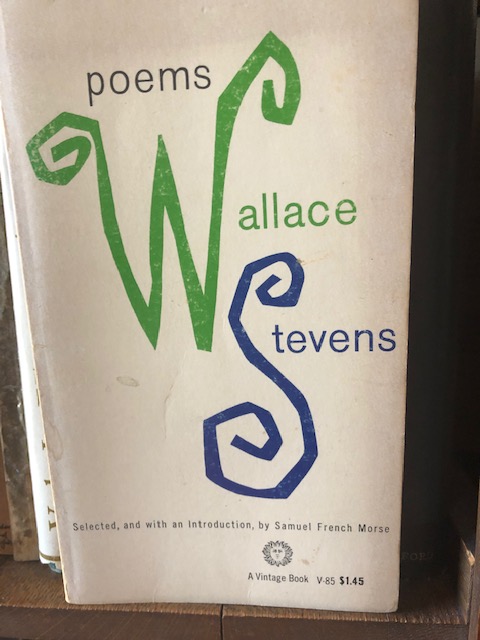
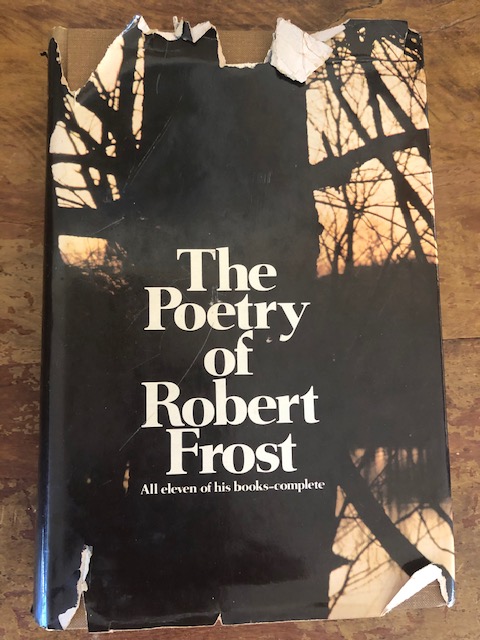
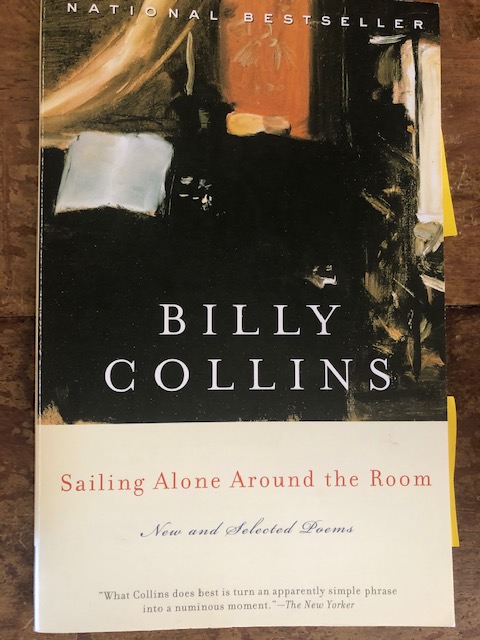
The “smells” article sent me to poetry. Back to the bookshelves. Poets, in their compressed genre, seem to convey scent by evocative words, words that already define a smell, name a smell. Wallace Stevens has only to say, “coffee and oranges in a sunny chair” in Sunday Morning and we smell them. Shakespeare has only to write “The rose looks fair, but fairer we it deem/For that sweet odor which doth in it live” in Sonnet 54. He doesn’t have to define the “sweet odor”: he knows we know it. Coffee? Oranges? Cigar smoke? The word itself gives us the smell. Robert Frost, In Neglect: “I smell the earth, I smell the bruised plant…” We do too. Billy Collins, Canada: “O Canada, as the anthem goes,/scene of my boyhood summers,/you are the pack of Sweet Caporals on the table…” The smell of sneaked cigarettes of youth.

Wallace Stevens did try more extensive fragrant description in Approaching Carolina: “Tilting up his nose/he inhaled the rancid rosin, burly smells/Of dampened lumber, emanations blown/From warehouse doors, the gustiness of ropes,/Decays of sacks, and all the arrant stinks…” We sure know what he means. But is this too much? I wonder if he wondered.

In the upcoming Ghost Daughter, seventh in my series, Alice quizzes a young friend about a new boyfriend. Alice blurts, “So he smells good?” She realizes her own standards for a lifetime companion involve “someone who smelled right…” Probably you’ve all had that experience. Maybe that’s how humans perceive certain under-the-radar scents, as “right” or “not right,” as “good” or “threatening.” Based on Zaraska’s article I suppose “good” may mean “right” in terms of the mysterious “major histocompatibility complex.” Not sure that’s how I want to describe it, though.

I’ll keep working on aromatic pages.

###

Read more about Helen Currie Foster here.

I Am Not a Moral Pauper

by Kathy Waller

“Giving up smoking is the easiest thing in the world.
I know because I’ve done it thousands of times.”
~ Mark Twain
(or possibly W. C. Fields, or . . . )

*

It seemed a valuable medical course, and I recommended it to a lady. She had run down and down and down, and had at last reached a point where medicines no longer had any helpful effect upon her. I said I knew I could put her upon her feet in a week. It brightened her up, it filled her with hope, and she said she would do everything I told her to do. So I said she must stop swearing and drinking, and smoking and eating for four days, and then she would be all right again. And it would have happened just so, I know it; but she said she could not stop swearing, and smoking, and drinking, because she had never done those things. So there it was. She had neglected her habits, and hadn’t any. Now that they would have come good, there were none in stock. She had nothing to fall back on. She was a sinking vessel, with no freight in her to throw over lighten ship withal. Why, even one or two little bad habits could have saved her, but she was just a moral pauper. ~ Mark TwainFollowing the Equator

*

So I decide to write about New Years’ Resolutions, and some I’ve made and why I don’t make them any more, and of course, to write about that, I must quote Mark Twain’s remark about smoking, and while searching for the quotation I wonder whether Mark Twain really said it, so I check other  [more reliable] sources and learn that he probably didn’t, and now I’m so fired up about errors in attribution–and errors in everything else–flying around the globe even as I type, that I’m too emotionally jangled to settle down and write about resolutions.

Isn’t that just the way?

Well, whatever. Back to resolutions.

I don’t smoke, never have, so I can’t give it up–well, when I was ten, I did try to smoke a section of mustang grapevine, which my grandfather had warned me would make my tongue sore, but I was afraid of holding a lighted match so close to And another time, three cousins and I–we were eleven or twelve years old–lit one of their mother’s Winstons and each took one puff. Then we decided we’d done something entirely too daring, and their mother was probably already on her way home from town, less than a mile away, so we put the cigarette out, placed the butt on a piece of shingle one of them dug up from somewhere, carried it with great ceremony and a lot of giggling to their burn barrel, and disposed of it.

I guess that means I have smoked but resolved to give it up. One resolution kept.

I am not, however, a moral pauper. I have not neglected my habits. I have plenty of freight I could throw overboard. And I’ve tried, how I’ve tried. But what I intend as jetsam floats back and attaches like barnacles, as it were, to my hull.

I’ve never lost ten, twenty, thirty-five, forty, or any set number of pounds; or completed grad school papers (or blog posts) with more than a few hours to spare; or abstained from chocolate; or organized my purse, office, car, house, or self; or left my keys, reading glasses, or shoes where I could find them; or reached any other goal listed on a December 31st contract.

I know I’m not alone. A proper Victorian girl, Louisa May Alcott was taught to strive for self-improvement but had difficulty following through. At ten years of age, she wrote in her journal “A Sample of Our Lessons”:

‘What virtues do you wish more of?’ asks Mr.L. I answer:—
Patience, Love, Silence,
Obedience, Generosity, Perseverance,
Industry, Respect, Self-denial.
‘What vices less of?’
Idleness, Wilfulness, Vanity,
Impatience, Impudence, Pride,
Selfishnes, Activity, Love of cats.

Alcott is famous for her industry, perseverance, and generosity, but also for wilfulness, impatience, and activity–and thank goodness she retained those “negative” characteristics. American literature would be in a sad state without them.*

Does breaking resolutions bother me? It used to. I have a broad streak of Puritanism. I want to do better. To get it right. When the Methodist minister inquired about me one Sunday morning and my mother told him I was at home trying to finish a grad school paper before slamming into the deadline, he asked, “Is she a perfectionist?” My mother said yes. “I thought so,” he said.

But that was then, and this is 2021. I’ve been at this resolution thing for a long time. A woman at my age and weight** knows how things work.

Contracts can be renegotiated. And when I’m the only party, I’m allowed to set new terms to suit myself. Or to say, “So what?”

Award-winning columnist Ellen Goodman*** wrote something about resolutions that has stayed with me for over ten years:

We spend January walking through our lives, room by room, drawing up a list of work to be done, cracks to be patched. Maybe this year, to balance the list, we ought to walk through the rooms of our lives … not looking for flaws, but for potential.

I like that. I think Alcott would have liked it, too. In fact, maybe that’s what she did all those years. She saw her own potential, got down to business, and didn’t let up.

That’s the trouble with potential–once you’ve found it, you have to do something about it. Like work.

I suppose the trick is to learn to love the work. Alcott and Twain must have loved what they did. Even when they hated it, they loved it.

Well. What got me thinking about resolutions that I don’t believe in making?

Anthony Trollope. I binge-watched the miniseries adaptation of his The Way We Live Now a couple of weeks ago, for the fourth time. And then I watched the adaptation of Dr. Thorne. And I’m looking for the adaptation of The Pallisers series–I believe it’s seventeen episodes, and I’ve seen it at least three times, but I’d love to watch it again. And The Barchester Chronicles, which is so funny, and I’ve watched it so many times, I’ve practically memorized the dialogue . . .

I love Trollope. I decided to marry my husband when he told me he’d read many of Trollope’s novels. He hadn’t asked me to marry him, but I decided. If he’d read Dickens, I might not have been so impressed. But any man who’d read that many of Trollope’s novels just because he wanted to had to be a man of substance.

If you look at the reviews of The Warden on Amazon, for example, you find, “boring… boring… boring… boring… long and boring…” And, “I couldn’t get into it.” (Good grief, people, it’s a Victorian novel. What did you expect?)

But that is a matter of taste. Some of us think his novels delightful. Satirical. At times, drop-dead funny. The Eustace Diamonds, in The Pallisers series, is a murder mystery.

Trollope wrote forty-seven novels, plus short stories, plus a ton of travel books. He set a writing goal for each day. When he finished one book, he immediately began another. In an autobiography published posthumously, he admitted to writing for money rather than for a Muse. (The admission led to a decrease in sales, because writing for money was considered crass. I don’t know what readers thought Dickens was writing for.)

And Trollope was a civil servant, worked for the British postal service, where he invented the mailbox. 

Now. My dirty little secret is that I’ve never read The Warden. I’ve read its sequel, Barchester Towers. But that’s the only Trollopian novel I’ve read. I have, like many writers of high school book reports, seen the movies.

So I made a resolution: In 2021, I’m going to read all the novels of Anthony Trollope.

If I read one novel a week, I’ll finish with two weeks to spare. My Kindle initially said I could read The Warden in 3 hours and 53 minutes, but a few pages later, it said I could be finished in 4 hours and 15 minutes. Beats me.

In the two weeks left over, I plan to read Brian Doyle’s Martin Marten, which was recommended by a former student, and something by Ann Patchett.

Furthermore, after looking for potential, I’ve resolved to finish writing my own novel. It’s been in the works for a while. Bits and pieces are stored in approximately 3, 508 files on my hard drive (and in the cloud).

I worked on it today, revising an ancient scene for the umpteenth time, and was stuck on whether an Afghan hound named Katie Couric should wear eau de lavender or eau de peppermint when I remembered I had to write this post.

By this time tomorrow I expect to have that issue solved and to have moved on to the next, which will probably involve a goat and a climbing rose.

I don’t write as fast as Trollope.

***

* I’m sure that if Louisa May Alcott stopped loving cats,  she had to do it thousands of times.

** The phrase “A woman at my age and weight” is an allusion to Christopher Morley’s Parnassus on Wheels, a little book in which a thirty-nine-year-old woman gets tired of taking care of her bachelor brother and takes off with the owner of a horse-drawn bookstore who made a door-to-door stop by the farm and invites her to come along. When the brother catches up with them, he blesses her out:

“Look here, Helen,” said Andrew, “do you think I propose to have my
sister careering around the State with a strolling vagabond? Upon my
soul you ought to have better sense–and at your age and weight!…” ~ Christopher Morley, Parnassus on Wheels

I read Parnassus about fifty years ago and thought that phrase funny, and have waited all this time for an opportunity to use it.

***I know Ellen Goodman said this because it read it myself in her column in The Austin American-Statesman. She was one of my favorite columnists.

****

Images of authors from Wikipedia, public domain
Image of notepad by USA-Reiseblogger from Pixabay
Image of book cover from Amazon

****

Kathy Waller’s stories appear in Austin Mystery Writers’ Murder on Wheels and Lone Star Lawless, and in Kaye George’s Day of the Dark. She is co-author with Manning Wolfe of the novella Stabbed. She blogs at Telling the Truth, Mainly.

J.D. Robb’s Holiday in Death

kp gresham


by K.P. Gresham


My Go-To Seasonal Escape!

When the holidays come around, I can’t help it. Sometimes I get so stressed I just wanna kill somebody. (On paper, of course!) It can be very cathartic.

But if my murderous muse isn’t singing, I turn to my favorite holiday crime novel, Holiday in Death, by the supreme, futuristic murder writer, J.D. Robb. (It irks me that some industry aficionados refer to this series as “romantic suspense.” Sure, it has a romance in it, BUT, this is a crime novel in every sense!)

Holiday in Death is the seventh in the now fifty-one book series about New York murder cop Eve Dallas and her devastatingly rich, handsome and techno-wizard husband, Roarke. Did you catch that? There are fifty-one books in this series, with the next, Faithless in Death, coming February 9, 2021.

But I digress. Here’s the scoop on my favorite Christmas mystery taken from its Publisher’s Weekly review 6/01/1998.

The year is 2058. Guns are banned and medical science has learned how to prolong life to well beyond the century mark. And man has yet to stop killing man. At Cop Central, it’s Lieutenant Eve Dallas’s job to stand up for the dead. So begins the seventh riveting installment in Robb’s (aka Nora Roberts) futuristic romantic suspense series (following Vengeance in Death). With Christmas only weeks away, Eve is stressing out trying to find the right gift for her new husband, Rourke, who “”not only had everything, but owned most of the plants and factories that made it.”” More to her concern is the latest serial killer who is using “”The Twelve Days of Christmas”” as a theme for his heinous rape and murder spree. The case touches Eve on a personal level, and while flash-backs from her abusive childhood are flinchingly repetitious, it defines Eve’s gritty, hard-boiled character and validates her obsessive determination to bring down the killer any way she can.

So if the holidays stress you out, grab a peppermint-schnapps-laced, hot chocolate, get in that comfy chair in front of the fireplace, turn on that Tiffany lamp that casts just enough light for you to read by, settle your animal on your lap, and crack open this great read.

Merry Christmas, everyone!

P.S. There is one story I like better at this time of year, just for the record. You’ll find it in the Bible’s new Testament. I usually start at Luke, chapter one.

###

K.P. Gresham writes the Pastor Matt Hayden mystery series. Her latest is MURDER ON THE THIRD TRY.

Five Mysteries You May Have Missed


by Scott Montgomery

Today we have a guest author, honorary AMW member, Scott Montgomery. He’s well-known in the Mystery community and is a book seller at Book People in Austin.  His most recent work appears in The Eyes of Texas: Private Eyes From The Panhandle To The Piney Woods anthology, which was nominated for a 2020 Anthony award. Available at Book People here.


When the pandemic hit, it affected the book world like the rest of society. Authors who had books out in the spring and early part of the summer got word of their work lost to book stores being down, publishers strategizing, and the plain fact people had other things on their minds. As a bookseller there were novels I was excited to promote. Two authors whose books I loved were scheduled to do an event on the first day we shut down. To hopefully get the word out some more, here are five books released during that period, you should go back and find.

1. A Familiar Dark by Amy Engel
If you are looking for a sunny novel to take you away from current troubles, look down the list. If you have the fortitude and interest for a truly bleak rural noir, grab this immediately. Engel follows a single mothers’ quest for answers and revenge when her twelve year old daughter is murdered along with her best friend and she struggles not to become like the person she most feared, her drug dealing mother. The story gets darker and darker, yet more empathetic, as each character’s secrets get revealed and it hits its gut punch of a climax.


2. Poison Flood by Jordan Farmer
This book has one of the best protagonists of the year, Hollis Brass, a hunchback musician who ghostwrites songs for his first love who has now become a popular American performer. To finance his own recordings, he meets up with the rebellious son of his Appalachian town’s chemical plant, to sell some of his music memorabilia. A storm breaks out, setting of a chain of events that lead to a chemical leak from the plant and a murder Hollis witnesses. Hollis deftly moves through this story, populating his book with broken characters in battle with thier angles and demons. The writer reaches out with understanding, sorrow, and hope for them all.


3. That Left At Albuquerque by Scott Phillips
Scott Phillips was in the middle of his book tour after a hiatus from writing when the pandemic hit. He deserves new fans with his take on Southern California lowlifes trying to live the high one. When a drug deal he arranged blows up in his face, scheming lawyer Douglas needs money quick. He hatches an art fraud scam involving some very shaky folks including both his wife and mistress, a flaky forger, and an aging tv producer with fond memories of his casting couch days. Pillips matched a rich plot with even richer characters, poking at social mores and social climbing that occurs as people chase after their American dream by any means necessary. Scott Phillips once again finds that perfect apex where noir and comedy meet.


4. The Lantern Man by Jon Basoff
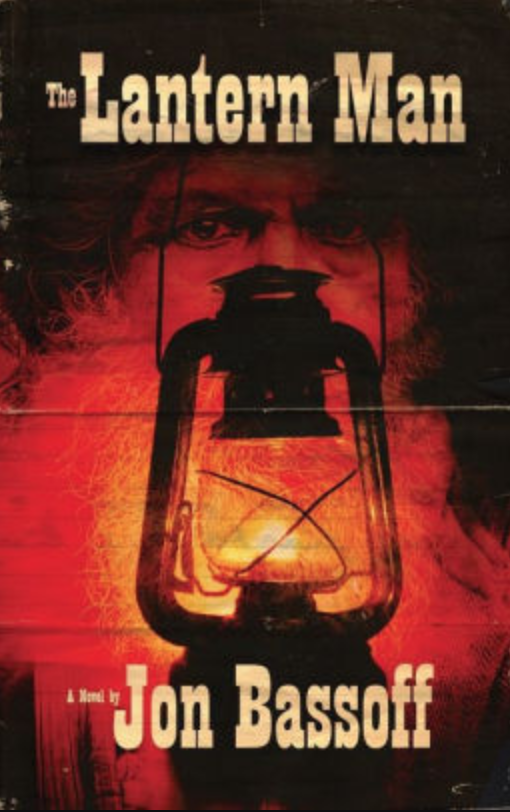
Jon Basoff created the most unique and ambitious thriller of the year of a dtective reopening arson-suicide case committed by Lizzy Grenier connected to the relationship with her other two siblings. Basoff tells much of the story through Lizzy’s journal, newspaper clippings, and photos, creating a meditation on family, media, and the elusiveness of truth.


5. Lost River by J. Todd Scott
This book creates an epic out of a dark violent day that entwines the lives of a Kentucky lawman, DEA agent, and EMT around a southern drug ring, weaving through a population of desperate characters pushed to the edge. Scott, a practicing DEA agent, gives a ground eye view of the opioid crisis. I put this up there with Don Winslow’s Cartel Trilogy at capturing the war on drugs.


You can get more excellent book recommendations from the Mystery People website at https://mysterypeople.wordpress.com

Take Control of Your Life! Write!

kp gresham


by K.P. Gresham


This pandemic thing is getting really old. (A quote from Captain Obvious, obviously) But we writers have one thing in our arsenal that others don’t. We can create a world where we want to be.

Lori Rader-Day

Lori  Rader-Day, National Sisters in Crime President and award-winning mystery author, spoke to our Sisters in Crime Heart of Texas Chapter last Sunday. Besides promoting her new book, The Lucky One (which is an incredible must-read psychological suspense mystery), she also talked about how the pandemic is influencing her writing.

Authors, in our stories we get to create whole worlds that we can completely control. Our characters must acquiesce to our every whim. The settings can be places we want to hang, RESTAURANTS we want to eat at, crowded parks where we can watch fireworks with friends and family, churches where we can go to worship. As Ray Bradbury said, “Write only what you love, and love what you write. The key word is love. You have to get up in the morning and write something you love, something to get up for in the morning.”

This is a time where we can escape into our stories. Want to say something pithy in the real world? Act it out in your characters. Want to kill somebody? Do it on the page. (I can speak to this. It’s very cathartic.) The empowerment that comes by sitting down to the computer and writing just 250 words can produce those happy endorphins that’ll spark you right up. At least William Faulkner thought so. He said, “The right word in the right place at the right time can soothe, calm and heal.”

Full disclosure now. For the first two months of the pandemic I wrote absolutely nothing. Maybe I was too rattled, or just waiting for this pandemonium to pass, or in denial–bottom line I didn’t write one word.  Then I got mad. I wanted to scream at the TV. I wanted to rant on Facebook, “I’m mad as hell and I’m not gonna take this anymore!” After a few more weeks, I finally realized that this angst had to be released or I’d go crazy. And then I remembered how I had released that angst at different low points in my past.

Oh, yeah. That’s right. I wrote.

So I offer that you give it a try. Sit down, create the world that you CAN control and say what you have to say. As Walt Disney wrote, “That’s what we storytellers do. We restore order with imagination. We instill hope again and again and again.”

Take control of your world! Write!

***

K.P. Gresham authors the Pastor Matt Hayden mystery series. Her latest is MURDER ON THE THIRD TRY.