Well. Today I planned to get out of bed and be perfect. It didn’t work that way.
First I had a fight getting a certain video to embed properly in a certain site. It was a very nice video, and I was trying to help a friend, but the video began with an ad about a cure for toenail fungus, complete with pictures. That was not what I had in mind, and it was certainly not what my friend had in mind. The fight took longer than it should have. I’m afraid to look back to see if the cure–for the video, not the toenail fungus–is still working.
Then while I fought, my breakfast, thanks to a kind husband, sat on the table beside the recliner where I was working, and I looked up and saw Ernest the Cat had designs on it. Yesterday I found him stretching upward, his paw in my bacon. He’s never tasted bacon, but he’d like to. I rescued breakfast.
 So now I’m sitting here in my Snoopy and Woodstock nightshirt, entirely inappropriate attire for a woman of my age and respectability, recovering from a major fume.
I knew I should have put on makeup as soon as I got out of bed. Yesterday I did so for the first time in ages–let’s face it, staying home for seventeen months straight changes one’s attitude toward personal grooming–and with makeup, the day went better.
I used a face cream, which I thought might be a night cream but didn’t have my glasses on and so couldn’t tell but risked it anyway. And it did wonders for the wrinkles around my eyes, filled them right in.
I put on enough blush that a ship on troubled seas would need no lighthouse to warn it away from perilous rocks, so I wiped some of it off. I used eye shadow, maybe too much, but I didn’t wipe that off because behind my glasses it’s invisible anyway. I applied lipstick.
Then I used my curling iron. That’s problematic because something is wrong with my shoulders–no rotator cuff tears, but the arms don’t like to go up as far as they should, like to the top of my head, and I refuse to go back to PT and have a bunch of skinny infants tell me I’m doing the exercises wrong, when all I’m doing is executing them faster than prescribed because I want to get them over with and go home.
But anyway, I made the effort and used the curling iron, and then I even brushed my hair, and the day really did go better. I imagine my husband was relieved. He’s staying in self-imposed quarantine, too, and there’s not much visual variety inside. I’m probably the reason he spends so much time looking at the cats.
Anyway, I spent the next part of my better yesterday deciding that I spend too much time watching television. That wasn’t a difficult decision, since I’ve watched all the BritBox offerings at least three times. I like to watch TV shows and movies more than once; the more often I watch, the less attention I have to pay to know what’s going on. But it seemed time to unsubscribe. After all, I still have Prime and ROKU.
I also decided I wasn’t listening to enough music–I used to have music going all the time–so I upgraded Spotify in hopes it will play what I tell it to, like it used to, instead of what it wants to. I went all the way up to 99 cents a month. I’m not sure 99 cents is enough to do what I expected. I want Max Morath playing piano rags–he has the best touch I’ve ever heard. And Brian Stokes Mitchell, whose name I can rarely remember without prompting, singing a certain song from South Pacific, which I’m afraid is not in the repertoire.
But there’s an out. If I’m not happy, I can always go back to Acorn TV, which I subscribed to years ago. I watch mostly British programs. The accents are comforting.
Anyway, having progressed from cussing a certain website to discussing television, I’ll move into the main idea of this post, which my high school English teacher said I should do in the first paragraph, but I’m old enough to break the rules.
The main idea is TV shows I like–old TV shows. I’m always reading the backlist, so why shouldn’t I do the same for viewing?
Here they are, in no particular order:
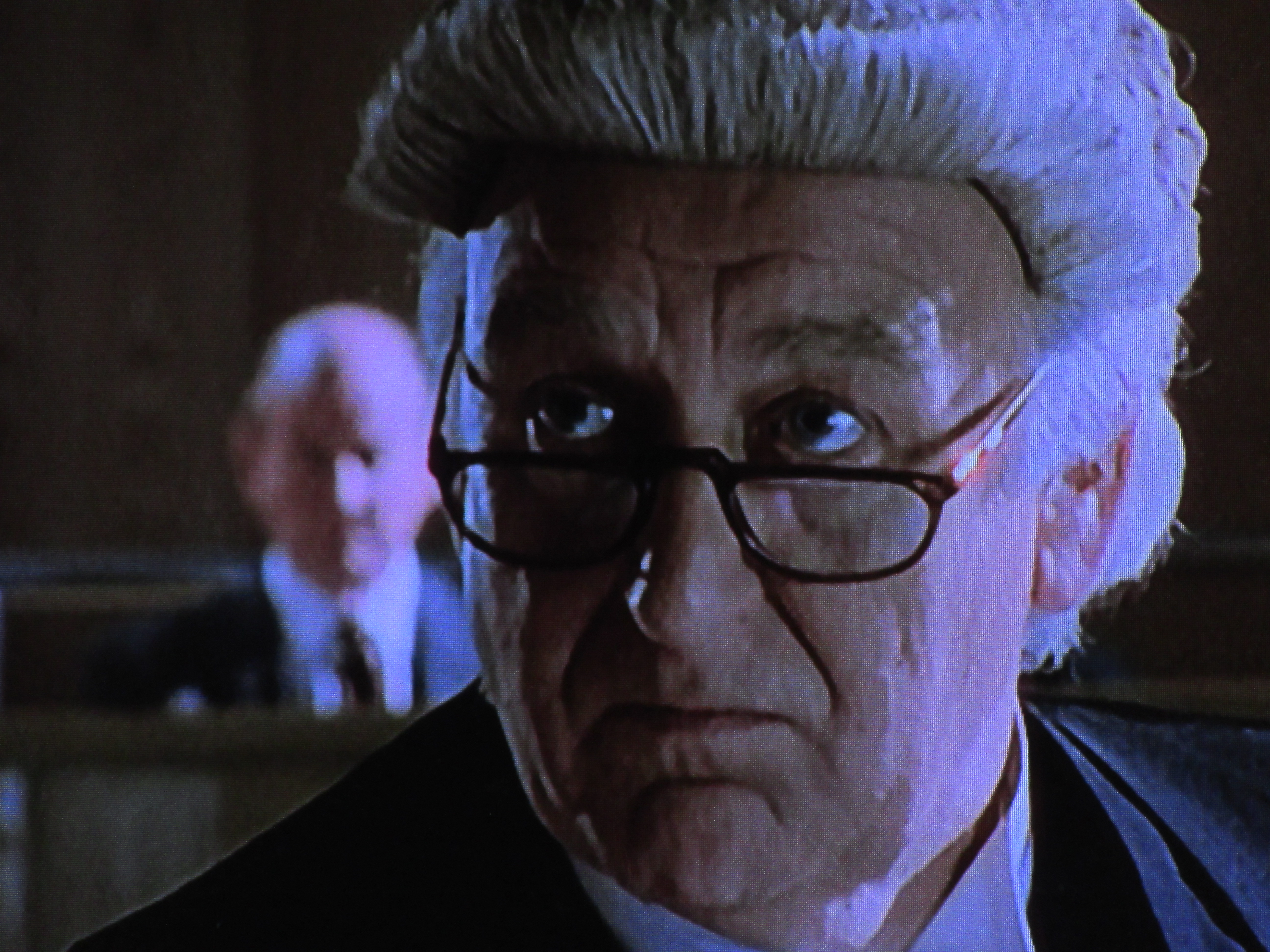
- Kavanaugh QC, starring John Thaw as a London barrister, a senior member
 of River Court chambers, who usually appears for the defense but sometimes prosecutes. The antithesis of Thaw’s former character, the irascible Inspector Morse, Kavanaugh is even-tempered and respected by both colleagues and opposing counsel. A family man, he is also, like many protagonists in crime fiction, a workaholic, but his character plays against type when his wife accepts a job with the European Union based in Strasbourg, and he must adjust his own life to accommodate hers. Some mild comic relief is provided by a snobbish colleague in chambers, Jeffrey Aldermarten, but Kavanaugh’s cases are serious, no comedy there. His goal is justice, which he often finds difficult to deliver, even when he wins his cases.
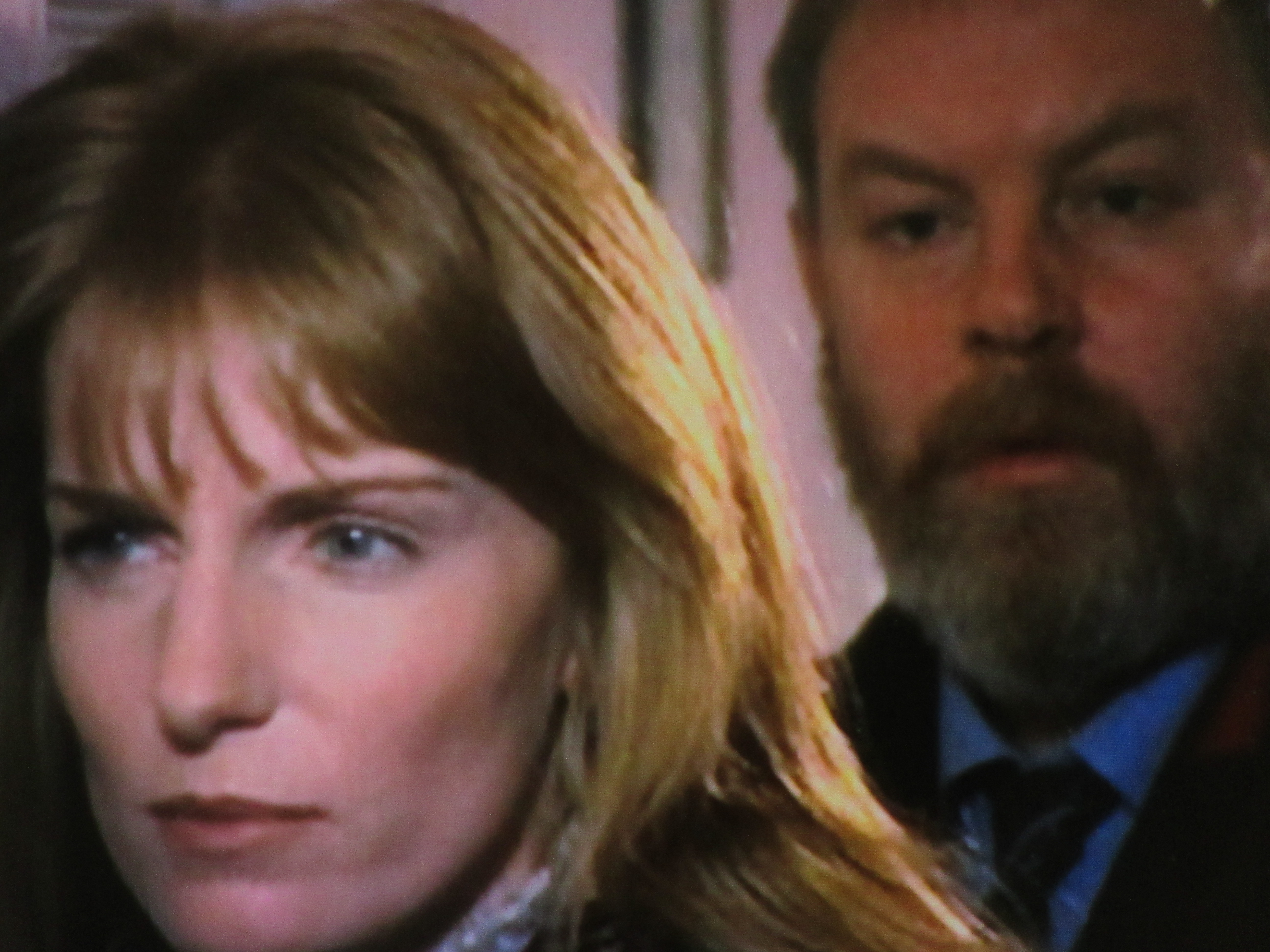
 - Wycliffe, based on W. J. Burley’s novels. Jack Shepherd stars as Detective
 Superintendent Charley Wycliffe, whose territory covers the coast of Cornwall. He is quiet, thoughtful, and good at his job, but not interested in advancement. He’s often at odds with his Deputy Chief Constable, who is concerned with budget restraints and with convincing
  Wycliff to run his division from the office rather than work cases himself. The Chief Constable and others often urge Wycliffe to apply for promotion–and to retire. He is assisted by two Detective Inspectors, Doug Kersey and Lucy Lane. Kersey is a solitary man, lonely, quietly and hopelessly attracted to Lucy. Lucy, as ambitious as Wycliffe is not, finds promotion is based more on sexual politics than on ability. Cases in this series are serious, but scenes of Wycliffe’s family life, while not comedic, sometimes lighten the intensity. Emphasis is on human relationships, not on just police procedure.
 - Line of Duty, another police procedural, which ran for six seasons and has
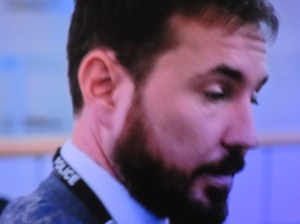 received numerous awards, including being ranked third in a Radio Times 2018 poll of the best British crime dramas of all time. The series begins with a young Steve Arnott being transferred to the Anti-Corruption unit because he has refused to cover up a mistake made during a raid in which he took part. Corruption in the department goes deeper, however, than anyone suspects, and the lives of members of the unit are sometimes in danger, even from their own colleagues. Twists and turns abound; it appears that no one is completely clean–or they can be made to appear bent–and the viewer continually wonders whom he can trust, and even whom he can like. What makes the series especially satisfying is that the plot isn’t strictly linear–it circles around; events that seemed to be resolved in early episodes emerge as catalysts toward the end. Gritty doesn’t begin to describe Line of Duty. You’ll thank yourself for watching. I’ve seen it twice and might watch it again. And yet, I’m not sure I want to.
 - A Touch of Frost. I love this series, the early episodes of which are based on
 the novels of R. D. Wingfield. David Jason stars as William “Jack” Frost, an experienced detective with the Denton Police Force, who does everything his way. Superintendent “Horn Rimmed Harry” Mullet admires Frost’s abilities but would love to retire him, downsize him, generally get rid of him–Frost is famous for neglecting paperwork, which gets Mullet in trouble up the line, and for happily putting his foot in his mouth, with generally amusing results. But Frost is the Chief Constable’s fair-haired boy–he once subdued an armed man, was shot, and won the George Cross for bravery. Frost is a flawed individual, as the best characters are. Privately, the award embarrasses him, since his heroism was the result of his being drunk on duty–he’d just made up his mind to leave an unhappy marriage when his wife was diagnosed with terminal cancer, and he carelessly risked his life because he knew he had to stay with her. In the first episode, Frost is widowed; a series of relationships fail because his job always comes first. But he is loyal to his colleagues and becomes especially fond of a young man who serves as his assistant. And although he has no tolerance for crime, he often feels compassion and understanding for those who commit it. The series comes to an end that is both sad and satisfactory, like many of Frost’s cases. The popular series ended when David Jason retired, saying at sixty-eight he was older than any real police detective, and that he couldn’t imagine filming Frost in a wheelchair.


All of these mystery/thriller/police procedurals, and many others, are available on Prime as well as on BritBox and other subscription services.
Now I shall divest myself of my Snoopy shirt, don some regular clothes–also known as rags, but these days, only one human and two cats see them, and they don’t care–and apply makeup. Maybe I’ll wear enough blush to be a lighthouse. With the amount of rain we’ve been having, I might end up being useful.
***
Photographs of actors are television screenshots taken by me.
Photograph of Snoopy and Woodstock was taken my my husband.
***
Kathy Waller blogs at Telling the Truth, Mainly. Her stories are published in anthologies and online. Sometimes she works on a novel. Sometimes she doesn’t. She wants to re-read an old book by Rebecca West, but she can’t remember the title.


 Austin Mystery Writers