Imposter at the Library

By Kathy Waller

In late October, I spoke at the J.B. Nickells Memorial Library in Luling, Texas. An author talk, although I feel like an imposter calling it that. I write slowly, have published only a few short stories plus a novella co-written with a real author, haven’t published a novel of my own, . . .  I’m not really an author . . . Well, you get the idea.

The condition is not new, and I’m not the only sufferer. New Austin Mystery Writer Noreen Cedeno recently posted on Ink-Stained Wretches Bouchercon and the Imposter Syndrome. On today’s Writer Unboxed blog, Rachel Toalson posted The Terrible, Horrible, No Good, Very Bad Imposter Syndrome Crisis. Nobody looking at these two writers’ lists of publications would describe either as an imposter—they are writers. I, on the other hand, am an imposter.

When invited to speak in Luling, however, I didn’t let impostership stop me. I said, Yes. I had my reasons.

In the first place, I love talking about books. I’d rather talk about other people’s books, but since retiring as a librarian, I don’t get to give booktalks anymore. I miss that.

In the second place, I was born in the old Luling Hospital and six years later left my tonsils there. I grew up, and lived for years after, in Fentress, a very small town ten miles from Luling. I was a member of the Rainbow Girls chapter in Luling. I spent a lot of time at the Luling DQ. My maternal great-grandparents lived there; my grandmother was born there. My mother’s family lived there for two years when she was in junior high (and she and her sister were the first girls to wear shorts to play tennis in Longer Park). And two cousins on my father’s side who grew up three blocks up the street from me in Fentress married Luling natives. In short, Luling is my old stomping ground.

I wanted so much to speak in Luling that I decided to pretend I was a real author.

Note: I’m not a total fraud. I mean, I not only gave booktalks at my libraries, I once gave a booktalk at a meeting of the Seguin, Texas, Kiwanis Club. I was a professional librarian. Real.

As a professional, I arrived prepared: outline, notes, quotations, copies of the anthologies containing my short stories and of the novella co-written with Manning Wolfe. The librarian escorted me to the room where I was to speak. I laid out my books and materials.

Then things fell apart.

About a half-hour before the presentation was to begin, kinfolk arrived: Peggy, a second cousin whose family lived up the street in Fentress; Brownie, her late sister’s husband; and Brownie’s daughter and son-in-law and granddaughter. I hadn’t seen them in forever. So the family reunion began.

By the time I went on stage, so to speak, I was was having so much fun that I scrapped my notes and just talked. And talked. And talked.

Minna Katherine Stagner Veazey and Col. John L. Veazey

First, I shared some local history that has faded from the town’s memory: the story of my great-grandfather, Col. John L. Veazey, who took his wife and two young daughters to Cuba for the Spanish-American War, and who was murdered in broad daylight on Luling’s Main Street in 1904. No one in the audience had heard the story. I told other stories. I talked about writing. I had a drawing and gave away some books. I talked.

Afterward, there was more family reunion, and Fentress reunion, since one member of the audience was the daughter, and the granddaughter, of Fentress residents.

I had the time of my life.

Then speaker’s remorse set in. I had done a terrible job, just babbled, talked too fast, bored the dickens out of everyone, left my education at home, made a fool of myself—it’s not like I don’t know how to conduct myself before an audience, but I totally forgot myself, lost all sense of decorum, and was just awful. Imposter author, imposter speaker. Simply dreadful.

But. One man—actually, the only man who stayed for the program—Tom Brown Webb, Jr., familiarly known as Brownie. He married my cousin Janell Waller sixty-nine years ago, when they were both nineteen. That was just before my fifth birthday. When I was a child, I knew Janell and her sisters were princesses. She died nearly four years ago,

During the reunion, I told Brownie something I’d wanted to say for a good while—I thanked him for being so nice to me when I was a disgusting and ever-present four-year-old extremely excited about wedding plans; he always treated me as if I were a real person and not just a little kid.

He left right after I finished speaking. I just knew he’d been so bored that he couldn’t wait to get outta there. But we had all agreed to meet soon for lunch at a cafe in Fentress. I would apologize then.

Last week, nine days after we met at the library, Peggy called to say Brownie had died. Unexpectedly. She also said he’d enjoyed his evening at the library. His daughter said the same thing, that he’d talked a lot about it, said he learned things he hadn’t known, that he could “just see” everything I described, and “wouldn’t your mother have enjoyed that.” After the funeral, his son-in-law told me the same.

Imposter Syndrome. If I’d given in to it and declined the invitation to speak in Luling, I wouldn’t have seen Brownie one last time. I wouldn’t have told him how much I appreciated his kindness to a little girl. I wouldn’t have known he enjoyed listening to the stories I  told. I wouldn’t have the memory of a happy time with a treasured relative.

I still feel like an imposter. But I’m finished with speaker’s remorse. Brownie enjoyed my talk. That’s all the validation I need.

***

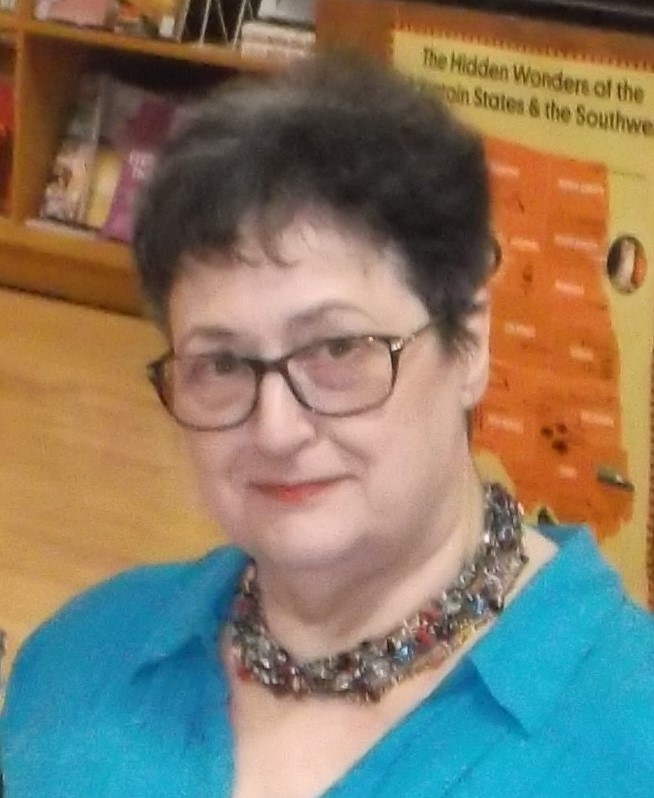
Kathy Waller blogs at Telling the Truth, Mainly. She has almost completed a draft of a mystery novel. When she gets to “The End,” she will no longer feel like an imposter, probably.

She is grateful to fellow Austin Mystery Writer  Helen Currie Foster for telling the librarian at the Nickells Library that she is a writer, and for not mentioning that she is an imposter,


Naming Characters: Steve Dauchy MacCaskill

Kathy Waller

I’m working on a mystery novel—I’ve been working on it for years, but am now seeing the light at the end of the tunneland am faced with dilemmas too numerous to whine about in only one post, so I’ll move along.

I will instead write about the one pleasure of the writing life: creating and naming characters.

My novel is set in a little town very like my own hometown. I don’t base my plot on real events, and I don’t use real people as characters—with one exception: Steve Dauchy.

Not Steve, but close

Note: One of my readers, Dr. Cullen Dauchy, knows more about Steve than I do, especially about his early life, and I hope he’ll feel free to correct any errors.

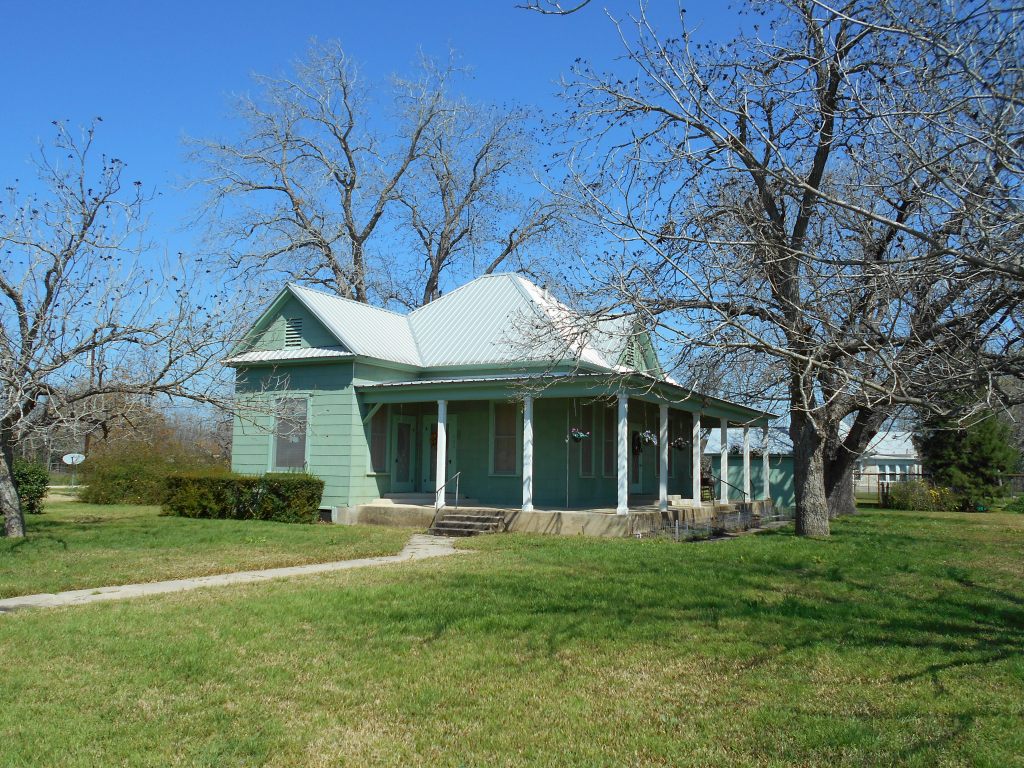
Steve Dauchy was a career blood donor at Katy Veterinary Clinic in Katy, Texas. On retirement he moved to Fentress, where he lived with his veterinarian-owner’s parents, Joe and Norma Dauchy. Joe and Norma lived next door to me; in local terms, next door meant that my house was on one corner, then there was a half-acre “patch” of pecan and peach trees and grass and weeds, then a street, and then on the next corner, the Dauchy yard and their house. The point being that when Steve visited me, he didn’t just stroll across a driveway.

Joe was my dad’s first cousin, so I guess that makes Steve and me second cousins. I have a lot of cousins on that side of the family, although most are human.

Steve is a family name, with a story behind it. As I understand it, back in the ’20s or ’30s, my Great-uncle Cull (Joseph Cullen Dauchy, Sr.), enjoyed listening to a radio program about a Greek character who frequently spoke of “my cat Steve and her little cattens.” Uncle Cull was so amused by the phrase that he named a cat—probably one of the barn cats—Steve. And for the next forty or so years, he always had a cat named Steve.

Uncle Cull and Aunt Myrtle Dauchy’s house, home of the first Steves

So when the clinic cat became part of the Uncle Cull’s son and daughter-in-law’s family, he became the latest in a long line of Steves.

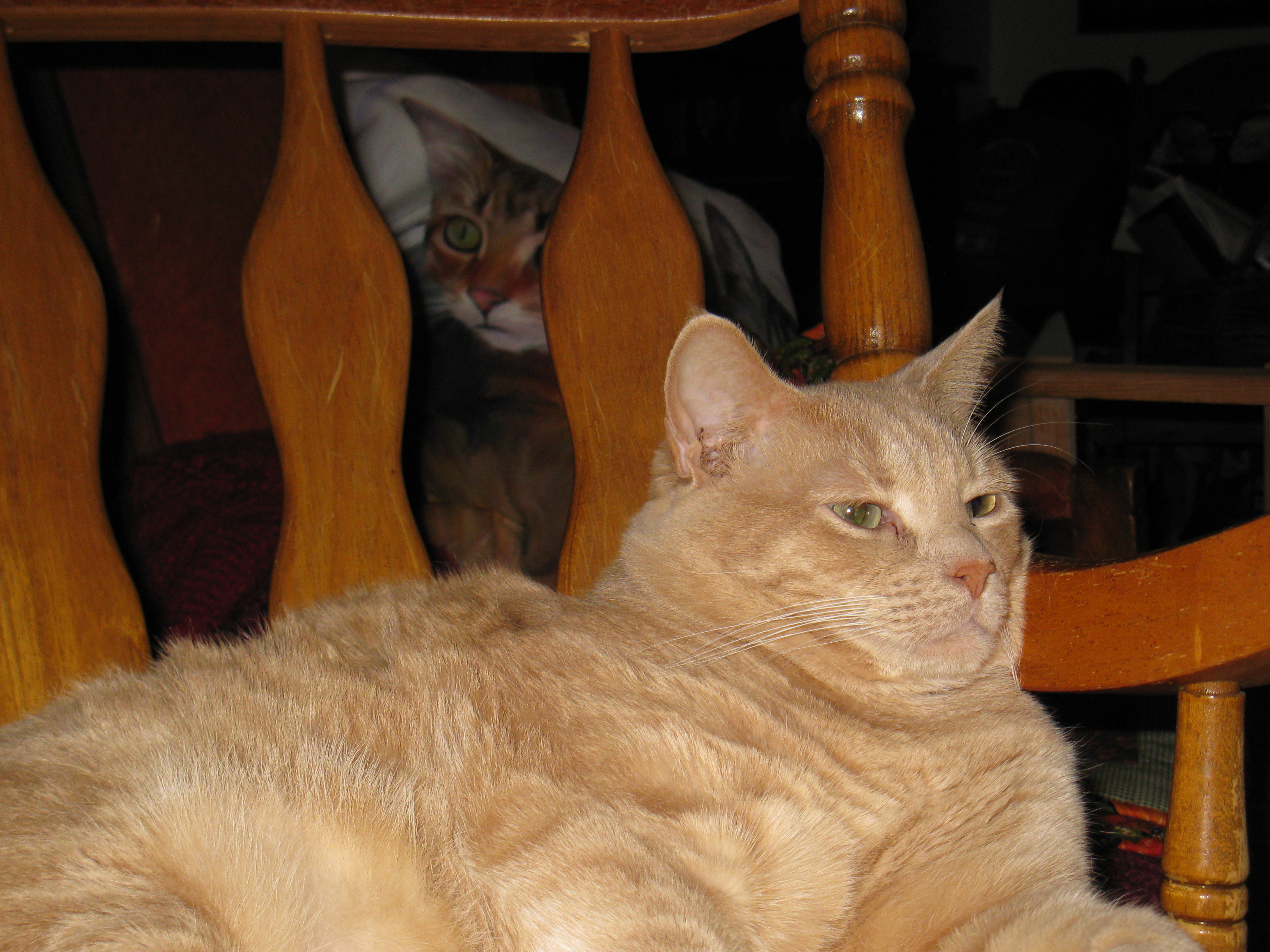
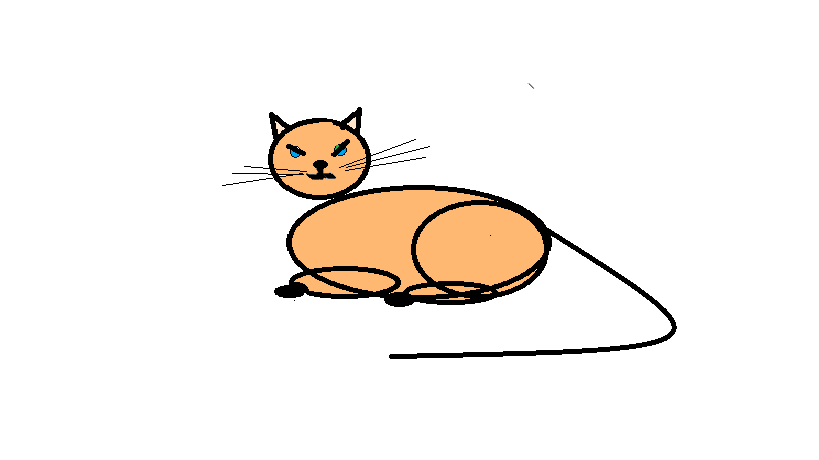
How to describe Steve? He was a fine figure of a cat: a big tabby, deep orange, with an expression of perpetual boredom. His reaction to nearly everything translated as, “Meh.” I’ve heard that’s common among clinic cats.

Once when Steve was standing on my front porch, the neighbor’s Great Dane got loose and charged over. I was frantic, shouting at the dog, shouting at Steve. But when the dog hit the porch, Steve just looked up at him. Dog turned around and trotted home.

Some would say Steve was brave, and I’m sure he was. But I believe his grace under pressure had its roots elsewhere.

First, he had experience. He knew dogs. In his former employment, he’d observed the breed: big, little, yappy, whining, growling, howling, cringing, confined to carriers, restrained by leashes, sporting harnesses and rhinestone collars, hair wild and matted, sculpted ‘dos and toenails glistening pink from the OPI Neon Collection. He’d seen them all. He was not impressed.

Facing down a Great Dane, however, took more than experience. There was something in Steve’s character, an inborn trait that marked him for greatness: his overarching sense of entitlement. He was never in the wrong place at the wrong time. My porch was his porch. The world was his sardine.

Except for the kitchen counter. Steve thought kitchen counters were for sleeping, but Joe and Norma’s maid didn’t. Consequently, he stayed outside a lot. He took ostracism in stride and used his freedom to range far and wide. Far and wide meant my yard.

Steve’s house

At that time I had three indoor cats—Christabel, Chloe, and Alice B. Toeclaws—and a raft of outdoor cats. The outdoor cats started as strays, but I made the mistake of naming them, which meant I had to feed them, which meant they were mine. Chief among them was Bunny, a black cat who had arrived as a teenager with his gray-tabby mother, Edith.

One day Bunny, Edith, and I were out picking up pecans when Steve wandered over to pay his respects, or, more likely, to allow us to pay our respects to him. Bunny perked up, put on his dangerous expression, and walked out to meet the interloper. It was like watching the opening face-off in Gunsmoke.

But instead of scrapping, they stopped and sat down, face to face, only inches apart. Each raised his right paw above his head and held it there a moment. Next, simultaneously, they bopped each other on the top of the head about ten times. Then they toppled over onto their sides, got up, and walked away.

That happened every time they met. Maybe it was just a cat thing, a neighborly greeting, something like a Masonic handshake. But I’ve wondered if it might have had religious significance. Bunny was a Presbyterian, and Steve was a Methodist, and both had strong Baptist roots, and although none of those denominations is big on ritual, who knows what a feline sect might entail?

Steve had a Macavity-like talent for making himself invisible. Occasionally when I opened my front door, he slipped past and hid in a chair at the dining room table, veiled by the tablecloth. When he was ready to leave, he would hunt me down—Surprise!—and lead me to the door. Once, during an extended stay, he used the litter box. Christabel, Chloe, and Alice B. Toeclaws were not amused.

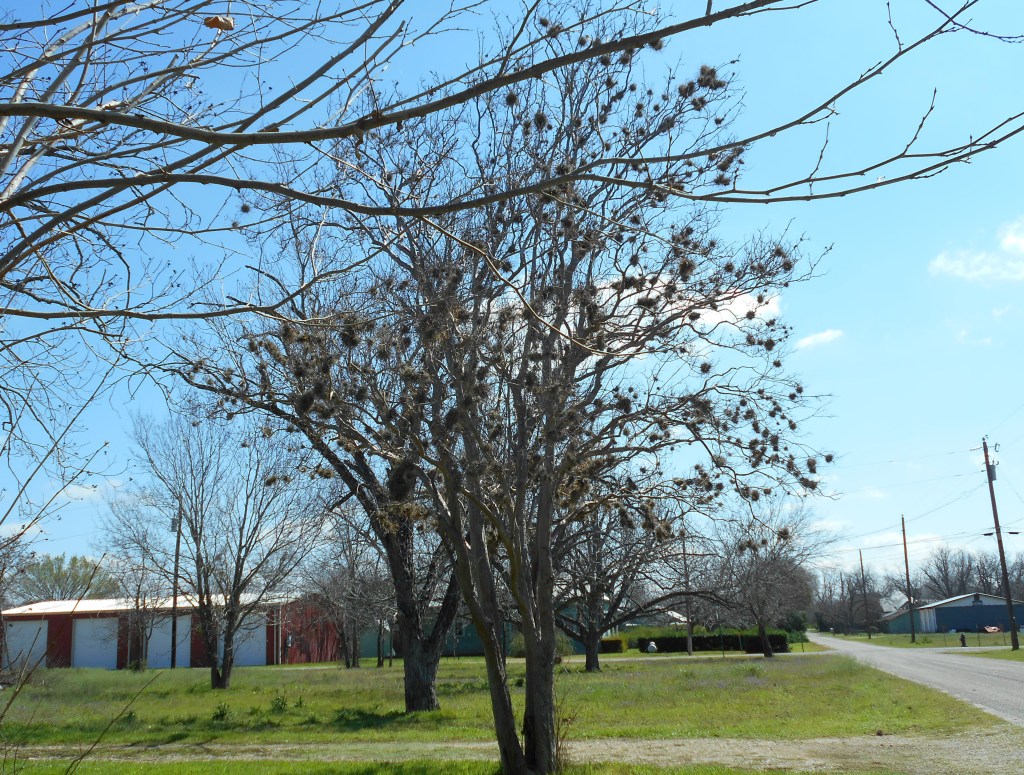
Distance Steve traveled between his house and mine. His house is way over there behind the trees.

Invisibility could work against him, though. Backing out of the driveway one morning, I saw in the rearview mirror a flash streaking across the yard. I got out and looked around but found nothing and so decided I’d imagined it. When I got home from work, I made a thorough search and located Steve under my house, just out of reach. I called, coaxed, cajoled. He stared. It was clear: he’d been behind the car when I backed out, I’d hit him, and he was either too hurt to move or too disgusted to give me the time of day.

It took a long time and a can of sardines to get him out. I delivered him to the veterinarian in Lockhart; she advised leaving him for observation. A couple of days later, I picked him up. Everything was in working order, she said, cracked pelvis, nothing to do but let him get over it.

“Ordinarily,” said the vet, “I would have examined him and sent him home with you the first day. I could tell he was okay. But you told me his owner’s son is a vet, and I was afraid I’d get it wrong.”

Although he was an indoor-outdoor cat, Steve managed plenty of indoor time at his own house, too, especially in winter, and when the maid wasn’t there. One cold day, the family smelled something burning. They found Steve snoozing atop the propane space heater in the kitchen. His tail hung down the side, in front of the vent. The burning smell was the hair on his tail singeing. They moved him to a safer location. I presume he woke up during relocation.

At night, he had his own bedroom, a little garden shed in the back yard. He slept on the seat of the lawnmower, snuggled down on a cushion. Except when he didn’t.

One extremely cold night, I was piled up in bed under an extra blanket and three cats. About two a.m., I woke up to turn over—sleeping under three cats requires you to wake up to turn over—and in the process, reached down and touched one of the cats. It was not my cat.

I cannot describe the wave of fear that swept over me. It sounds ridiculous now, but finding myself in the dark with an unidentified beast, and unable to jump and run without first extricating myself from bedding and forty pounds of cat—I lay there paralyzed.

Unnecessarily, of course. The extra cat was Steve. He’s sneaked in and, considering the weather forecast, decided that sleeping with a human and three other cats in a bed would be superior to hunkering down on a lawnmower.

Steve’s full name was, of course, Steve Dauchy. In my book, he will be Steve MacCaskill. MacCaskill was the name of a family who lived next door to my Aunt Bettie and Uncle Maurice. Their children were friends of my father and his brothers and their many cousins. They were a happy family.

“My family had to plan everything,” my dad’s cousin Lucyle Dauchy Meadows (Steve’s aunt) told me, “but the MacCaskills were spontaneous. If they decided they wanted to go to a movie, they just got into the car and went to a movie.” When Lucyle and the other girls helped their friend Mary Burns MacCaskill tidy her room before the Home Demonstration Agent came to examine it, one of the first things they did was to remove the alligator from the bathtub.

I heard so many delightful stories about the MacCaskill family that I decided they were too good to be true. Then, at Aunt Bettie’s 100th birthday party, my mother introduced me to Mary Burns MacCaskill, who had traveled from Ohio for the party.

So as an homage to that family, I’ve named my main character Molly MacCaskill. And when choosing a pet for Molly, I couldn’t choose a finer beast than Steve.

*

Note: Cullen Dauchy no longer owns Katy Veterinary Clinic, but he did when Steve worked there, and the clinic was Steve’s first home, so I’m leaving the link.

And I’m so glad the Home Demonstration agent didn’t inspect bedrooms when I was a girl. I didn’t have an alligator, but she might have thought I had something worse.

***

This post first appeared in Ink-Stained Wretches in 2021.

***

Kathy Waller blogs at Telling the Truth, Mainly. She has published short stories, and a novella co-written with Manning Wolfe. She is perpetually working on a novel.

Review of a Very Very Very Very Very Good Book


by Kathy Waller


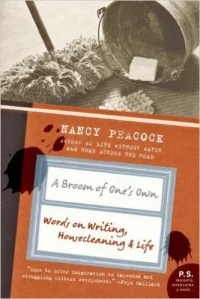
I’m rereading novelist Nancy Peacock’s  memoir, A Broom of One’s Own: Words on Writing, Housecleaning & Life.  I liked the book when I read it the first time, sixteen years ago, and I like it even more now.

I posted the following review on my personal blog in 2009. The disclaimer preceding it is a reference to a recent FTC rule designed to “provide a robust framework that curbs unscrupulous practices in the book publishing industry. By prohibiting the creation, sale, or procurement of fictitious reviews, the FTC discourages the manipulation of the book review ecosystem.” Bloggers who occasionally posted reviews—”small-time” reviewers (like me), as it were—sometimes fulfilled their obligation by observing the letter of the law while frolicking with the spirit.

Where small-timers are concerned, the rule seems to have fallen by the wayside, and that’s a shame.  It stimulated creativity.

***

The backstory:

I wrote the following review to answer a “challenge.” I intended to post it at the end of September 2009. But in the process of writing, I got all tangled up in words and couldn’t finish even the first sentence.

I intended to post it at the end of October. I still couldn’t write it.

Finally, after telling myself I didn’t care, I managed to write it after the October deadline.*

In the middle of the “process,” I considered posting the following review: “I like Nancy Peacock’s A Broom of One’s Own very very very very very much.”

But the challenge specified a four-sentence review, and that was only one, and I didn’t want to repeat it three times.

So there’s the background.

I must also add this disclaimer: I bought my copy of A Broom of One’s Own myself, with my own money. No one told, asked, or paid me to write this review. No one told, asked, or paid me to say I like the book. No one told, asked, or paid me to like it. No one offered me tickets to Rio or a week’s lodging in Venice, more’s the pity. I decided to read the book, to like it, and to write this review all by myself, at the invitation of Story Circle Book Review Challenge. Nobody paid them either. Amen.

*********************************************

The review:

I like Nancy Peacock’s A Broom of One’s Own: Words About Writing, Housecleaning & Life so much that it’s taken me over two months and two missed deadlines to untangle my thoughts and write this four-sentence review, an irony Peacock, author of two critically acclaimed novels, would no doubt address were I in one of her writing classes.

She would probably tell me that there is no perfect writing life; that her job as a part-time house cleaner, begun when full-time writing wouldn’t pay the bills, afforded time, solitude, and the “foundation of regular work” she needed;  that engaging in physical labor allowed her unconscious mind to “kick into gear,” so she became not the writer but the “receiver” of her stories.

She’d probably say that writing is hard; that sitting at a desk doesn’t automatically bring brilliance; that writers have to work with what they have; that “if I don’t have the pages I hate I will never have the pages I love”; that there are a million “saner” things to do and a “million good reasons to quit” and that the only good reason to continue is, “This is what I want.”

So, having composed at least two dozen subordinated, coordinated, appositived, participial-phrase-stuffed first sentences and discarding them before completion; having practically memorized the text searching for the perfect quotation to end with; and having once again stayed awake into the night, racing another deadline well past the due date, I am completing this review—because I value Nancy Peacock’s advice; and because I love A Broom of One’s Own; and because I consider it the equal of Anne Lamott’s Bird by Bird; and because I want other readers to know about it; and because this is what I want.

*Not caring is often the key to cracking writer’s block. Nancy Peacock probably would say that, too.

Stop Signs, Part I

by Kathy Waller

For Thanksgiving Week, I’m sharing a story made from things I’m thankful for: a hometown the size of a broom closet; long, hot summers that started on  June 1 and stretched clear to Labor Day; a visiting teenager who spent every spare minute reading Gone With the Wind; bobby socks and garter belts and petticoats; an ornery Presbyterian great-aunt and her ornery Baptist mare; front porches where quiet kids learned a lot; Army surplus bunk beds; a grandfather who said stop signs cause wrecks. I don’t know whether he believed it, but he said it. 

Flannery O’Connor said, “Anyone who survives a southern childhood has enough material to last a lifetime.” 

I survived. So do the memories. 

(“Stop Signs” won first place for short story in the 2000 North Texas Professional Writers Association Contest. It isn’t a murder mystery, but only because one of the characters restrains herself.)

***

Stop Signs, Part I

My grandfather thinks stop signs cause wrecks. That’s what he told Mama when they put up stop signs at Farm Road 20. If you go on across, you’ll be okay, but if you stop, you won’t be able to build up enough speed, and a car will come along and hit you for sure.

Mama didn’t argue. She says when she married into the Coburn family, she learned to pick her battles. The rest of the time, she’s just polite.

Nobody was just being polite that day on Aunt Eula’s front porch. Dr. Larrimore was there, and they were talking about the new phone system we’re getting. We’ve always just turned the crank and told Ernest who we want to talk to, but now we’ll have to dial a number. Dr. Larrimore said it’ll never work—people will get the O and the zero mixed up. They also agreed that man will never go to the moon because it isn’t in the Bible. Mama said the new phone system isn’t in the Bible either. I don’t know whether to be more concerned about getting the O and the zero mixed up or about having a doctor who gets them confused.

I know Aunt Eula wasn’t just being polite because she doesn’t bother with that kind of thing. She is Daddy’s oldest aunt, and, like Grandaddy, is tall and straight and white-haired. Unlike Granddaddy, she is proud and haughty. She belongs to both the Daughters of the Republic of Texas and the United Daughters of the Confederacy. She likes the United Daughters best. Mama says that’s because she’s an unreconstructed rebel.

Aunt Eula has a beautiful sorrel mare named Lady, who is my Mr. Boots’ mother. She bought her when the San Marcos Baptist Academy sold off its stables. I used to ride her before Mr. Boots was saddle broke. Mostly I chased her around the pasture trying to catch her. Once when I finally got hold of her and got the bit in her mouth and led her into the yard to saddle her, she sidled up to a big pecan tree and walked round and round it, while I followed, trying to get the saddle across. She’s never tried to unseat me, probably because by the time we get started, she’s worn out.

Daddy says Lady’s uncooperative because those Baptist Academy kids didn’t know how to ride and let her build up some bad habits. Mama says it’s because she belongs to Aunt Eula, and animals always resemble their owners. I say it’s because she’s a Baptist set down here in a nest of Presbyterians, and she’s testing the doctrine of Free Will against that of Predestination.

My cousin Ruth must be a Baptist, too, because she’s been using her Free Will ever since she arrived last month to spend the summer.

Ruth is thirteen, two years older than I am, and she used to be my dearest friend in the whole world. I could hardly wait till she got here. I had the summer all planned out. I would ride Mr. Boots and she would ride Lady, when she could catch her, and we would explore all the places over on York Creek that Mama won’t let me go to by myself. We’d share a bedroom and talk all night just like sisters.

But when we picked Ruth up at the train in San Marcos, I hardly recognized her. She was wearing a dress with about five petticoats, and high heels, and nylon hose. She was carrying a copy of Gone With the Wind.

We got into the back seat of the car. I held her book while she spent about five minutes arranging her petticoats.

“Do you like this book?” I said. “I read it last spring.”

She raised her eyebrows. “I’m surprised Aunt Virginia let you. It was written for adults.”

“I guess you haven’t heard,” I said. “I’m advanced. I’m a third of the way through the high school reading list.”

She smiled. “You’ll probably want to read this one again when you’re older. I imagine you missed a lot.”

I let that pass and tried again. “Why aren’t you wearing loafers and bobby sox?”

She said, “They’re not appropriate for the train.”

I said, “Why?” and she said, “They just aren’t,” and I said, “Who told you that?” and she said, “You’ll understand when you’re older.”

“You told me wearing a garter belt was like sitting on rubber bands.”

“I’ve grown up a lot since I said that.” Then she crossed her legs at the ankle and folded her hands over her white straw clutch purse, and by the time we got to Martindale, I was nauseated, and it wasn’t motion sickness that was causing it.

At home, Daddy carried Ruth’s suitcases into my room, and Ruth said she would sleep on the top bunk.

“That’s where I’m going to sleep,” I said.

Ruth knows better than to boss me outright—I got that settled when I was five—so she tried bribery instead.

“Look, if you let me sleep on the top, you can lie on the bottom and kick me while I’m sleeping.”

“It’s tempting,” I said, “but my legs aren’t that long. It looks like yours are, though. Exactly how tall are you now?”

She smiled. “Mother says I’m going to be statuesque.” And then Princess Grace floated out to see if Mama needed help in the kitchen.

The next day, I was up at six o’clock as usual, ready to saddle Mr. Boots, but Ruth didn’t drag out of bed until nine. Then, instead of saddling up and heading to York Creek, she insisted on walking downtown to say hello to all of my relatives. When she saw Aunt Eula and Aunt Babs sitting on the front porch, nothing would do but we must stop and visit. The first thing out of her mouth, Ruth asked Aunt Babs to teach her to crochet. Aunt Babs lit up like a chandelier and ran inside to get a hook and some yarn so they could start right away.

While she was gone, Ruth told Aunt Eula that she was reading Gone With the Wind and asked about the United Daughters. That got Aunt Eula started. Before they were finished, she and Ruth had rebuilt Tara on the banks of the San Marcos River and were ready to move in. Aunt Eula told Ruth the next time she came, she could look at Great-great-grandpa’s Civil War sword and medals. When we finally left, I heard Aunt Eula tell Aunt Babs that Virginia’s niece was turning into a lovely young lady even if she wasn’t a Coburn.

Ruth spent all the next day chain stitching with her nose in a book. That night, she kept the light on a half-hour past my bedtime. I finally leaned over the side of the top bunk and asked her, very politely, to turn out the light.

“I can’t,” she said. “I’m putting my hair in pin curls.”

“Anybody who spends that much time on a ducktail must have a bird brain,” I said, and she took one of her statuesque legs and kicked the underside of my mattress, and I yelled, and Mama came and moved Ruth into the front bedroom, where she had her own double bed and a good breeze and our grandmother’s piano, and she played her transistor radio all night long.

And that wasn’t all she did up there at night. I know because one night when I thought she might be asleep, I tiptoed in to turn off the radio—I’d had about as much “Purple People Eater” as anyone should have to endure—and Ruth was sitting on the side of the bed in the dark, talking to Junie Franklin through the window screen. He was sitting out in the yard on Uncle Robert’s Palomino. I was shocked. If Mama knew what was going on, she would be very disappointed.

TO BE CONTINUED

***

Frank Waller [“Dad”] and Kathy Waller, ca. 1962

More about the man who said stop signs cause wrecks at “Dad” on the blog Whiskertips.

A Halloween Story: Hansel and Gretel and Cuthbert and Me

By M. K. Waller


Shakespeare said, “A sad tale’s best for winter,” but this is only October, and in Texas, that sure ain’t winter. And I don’t feel like telling a sad tale.

Halloween is near, so I shall tell a scary tale, one about a wicked witch and innocent little children.

But with a reminder: Sometimes it’s the innocent little children you have to watch out for.

For you to fully appreciate the trauma inflicted here, a preface—

My university degrees are in English and biology. I trained to teach secondary students. High school. Teenagers. People as tall as I am. Usually taller.

Mid-career, I was invited to take the position of school district librarian. I had neither education nor experience in the field, but both my employers and the State of Texas said that was okay—I was an English teacher, I could do anything. I would start working in August, two weeks away, and then jump back into graduate school for a second master’s degree when January rolled around. I’d do fine.

I thought both the State and my employer were a little crazy, and I hadn’t planned a return to grad school, but I was a little crazy, too, so I accepted the offer.

And both the library and I were fine. I was more than fine. I absolutely adored library work. It was like putting together a big puzzle—so many different pieces. And a couple of years later, here came computers and networking and T1 lines and the Internet and the world wide web and  . . . A wild learning curve, perpetual continuing education. On-the-job boredom? Not a chance.

Library school was—not adorable. It was challenging. Some courses were nerve-wracking. When they said library science, they meant science. In the words of the Library of Congress cataloger teaching the Organization of Materials course, as she looked out over a sea of bewildered students— “Come on, people. Cataloging isn’t rocket science. Rocket scientists couldn’t handle it.”*

But nothing was so challenging—or so nerve-wracking—as the two days a week I spent in my own elementary school library with the little people. Very little people. The ones some teachers called, privately, the ankle-biters.

I loved little children, nieces and nephews and such. I would play with them for hours on end. But they came in twos and threes. At the library, little children came in hordes.

Nothing in my formal education had prepared me to be in the same room with themIn all my fifteen years as a librarian, I was never prepared. They always managed to surprise me.

And now, my story for Halloween.

Oh—you must also know the story of Hansel and Gretel. In case you’ve forgotten, here’s Wikipedia’s summary:

Hansel and Gretel are siblings who are abandoned in a forest and fall into the hands of a witch who lives in a bread, cake, and sugar house. The witch, who has cannibalistic intentions, intends to fatten Hansel before eventually eating him. However, Gretel saves her brother by pushing the witch into her own oven, killing her, and escaping with the witch’s treasure.

Okay, to the story.

*

This is the story of Cuthbert, a five-year-old boy
who visited
my school library
for twenty minutes every week.
My job was to teach him about the library.
I’m not sure what his job was.
But he was very good at it.

*

Once upon a time, I read “Hansel and Gretel” to a class of kindergarteners. The audience, sitting rapt at my feet, comprised sixteen exceptionally good listeners, a fact I later regretted.

While I read, Cuthbert sat on the floor beside my chair and stroked my panty-hose-clad shin. Small children find panty-hose fascinating.

When I reached, “And they lived happily ever after,” Cuthbert stopped stroking and tugged on my skirt. I ceded him the floor.

“But it’s a good thing, what the witch did.”

Because he spoke kindergartener-ese and I sometimes didn’t, I thought I had misunderstood. Come again?

“It’s really a good thing, what the witch did.”

I should have slammed the book shut right then, or pulled out the emergency duct tape, or something, anything to change the subject. But I’m not very smart, so I asked Cuthbert to elaborate.

His elaboration went like this:

When the witch prepared the hot oven to cook and then eat Hansel, she was doing a good thing. Because then Hansel would die and go to Heaven to be with God and Jesus.

I smiled a no doubt horrified smile and said something like But But But. While Cuthbert explained even more fully, I analyzed my options.

a) If I said, No, the witch did a bad thing, because it is not nice to cook and eat little boys and girls, then sixteen children would go home and report, Miss Kathy said it’s bad to go to Heaven and be with God and Jesus.

b) If I said, Yes, the witch did a good thing, because cooking and eating little boys and girls ensures their immediate transport Heavenward, then sixteen children would go home and report, Miss Kathy approves of cold-blooded murder and cannibalism. Plus witchcraft. Plus reading a book about a witch, which in our Great State is sometimes considered more damaging than the murder/cannibalism package.

c) Anything I said might be in complete opposition to what Cuthbert’s mother had told him on this topic, and he would report that to her, and then I would get to attend a conference that wouldn’t be nearly so much fun as it sounds.

Note: The last sentence under b) is not to be taken literally. It is sarcasm, and richly deserved. The earlier reference to emergency duct tape is hyperbole. I’ve never duct taped a child.

Well, anyway, I wish I could say the sky opened and a big light bulb appeared above my head and gave me words to clean up this mess. But I don’t remember finding any words at all, at least sensible ones. I think I babbled and stammered until the teacher came to repossess her charges.

I do remember Cuthbert was talking when he left the room. There’s no telling what his classmates took away from that lesson.

If I’d been in my right mind, I might have said something to the effect that God and Jesus don’t like it when witches send people to Heaven before their due date.

But the prospect of talking theology with this independent thinker froze my neural pathways.

And anyway, I was using all my energy to keep from laughing.

*

*I know most people think librarians are educated to do two thing: stamp books and say, “Shhhhhh.” Those people are dead wrong. Someday I shall publish a post—maybe an entire book—upending all the common misconceptions about librarians. It will be a page-turner.

*

This post appeared on Telling the Truth, Mainly, in 2011 and again in 2012. I like to repost around Halloween, because the season cries out for scary stories, and that day with Cuthbert was pretty darned scary. (I’ve never thought of myself as a witch, but some people probably did. And still do.)

The discussion about  fairy tales and religion took place over twenty years ago. I think about it often and feel lucky I’ve never had a nightmare about it. But I remember Cuthbert fondly for giving me both the worst and the best day of my career. He was adorable.

***

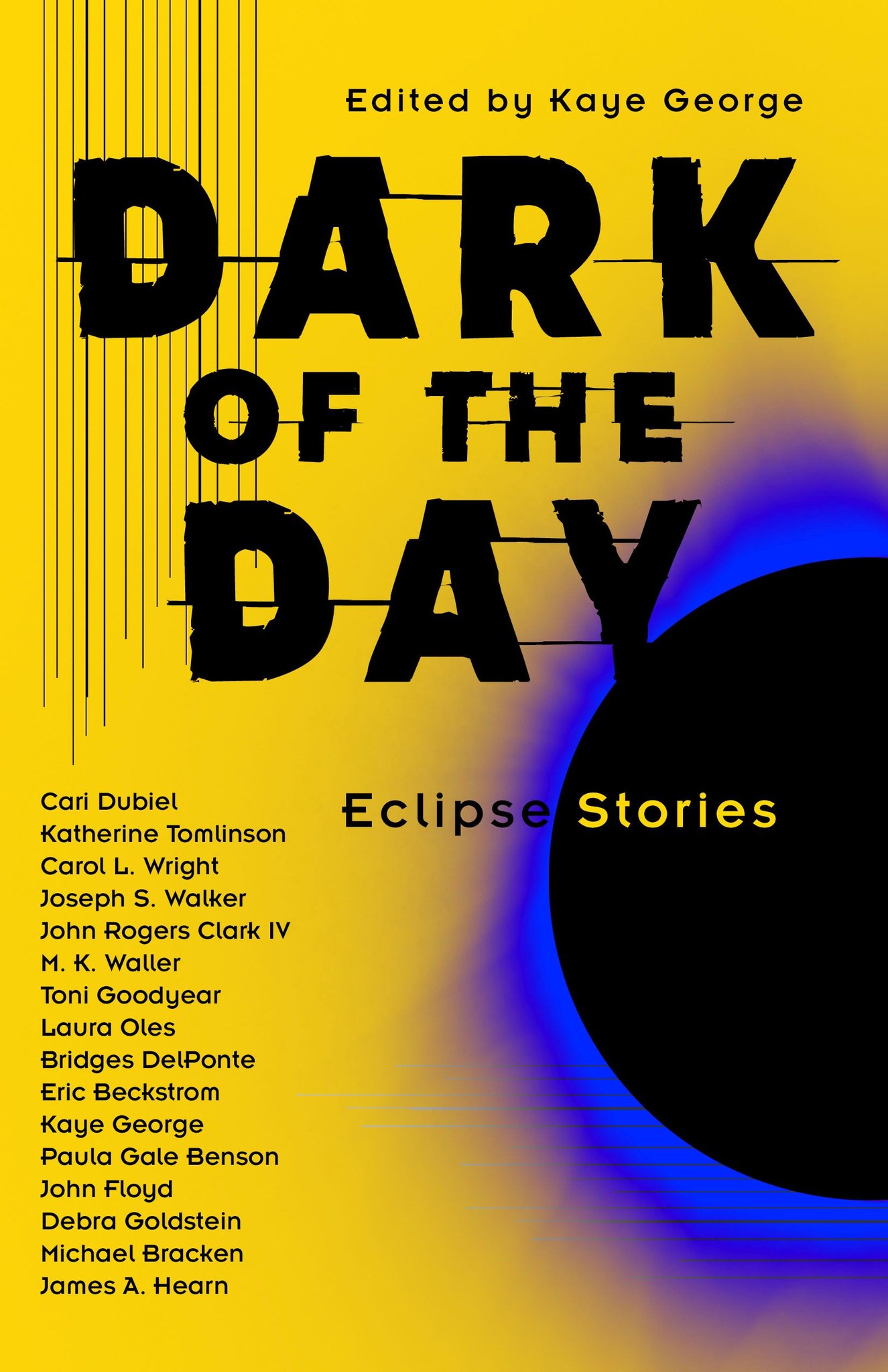
M. K. Waller’s short stories appear is several anthologies, the latest of which is Kaye George’s Dark of the Day: Eclipse Stories (Down and Out Press, 2024). Her novella, Stabbed,  was co-written with Manning Wolfe. She also writes as Kathy Waller. Read more about her at kathywaller1.com and follow her on Facebook at https://www.facebook.com/kathy.waller68/

She lives in Austin, Texas.

****

Image by Gordon Johnson from Pixabay

Image by Free Fun Art from Pixabay

Image of “Hansel and Gretel” by Arthur Rackham from Wikipedia

“Everybody Eats Mushrooms.” Some Live to Tell the Tale.

By M. K. Waller

Today’s post comprises two parts–a bit of fiction followed by a bit of fact–linked by a “fleshy, spore-bearing fruiting body of a fungus” and a mystery writer who used it as a murder weapon–and later confessed to something even worse.

I.

The following flash fiction was inspired by a photo prompt on Friday Fictioneers, a weekly writing challenge sponsored by Rochelle Wisoff-Fields.

‘SHROOMS

John ambled into the kitchen. “What’s cooking?”

“Mushroom gravy.” Mary kept stirring.

John frowned. “Toadstools. Fungi. Dorothy Sayers killed someone with Amanita.

“These are morels.” She added salt. “Everybody eats mushrooms.”

“I don’t.”

“Suit yourself.”

He sat down. “Where’d you buy them?”

“I picked them.”

You?

“Aunt Helen helped. She knows ‘shrooms.” Mary held out a spoonful. “Taste.”

“Well . . . ” John tasted. “Mmmm. Seconds?”

“Yoo-hoo.” Aunt Helen bustled in. “See my brand new glasses? Those old ones–yesterday I couldn’t see doodly squat.”

Mary looked at the gravy, then at John. “Maybe you should spit that out.”

II.

The following is a guest post I wrote for Manning Wolfe’s Bullet Books Speed Reads blog. In it, I explain what an author does when she doesn’t have a clue about the subject she’s writing about.

There are many rules for writers. Two of the major ones: Write what you know and Write what you love.

I was pleased that Stabbed, which I co-wrote with Manning Wolfe, was set in Vermont. I love vacationing there: mountains and trees, summer wildflowers and narrow, winding roads, rainstorms and starry nights, white frame churches and village greens.

In Chapter 1, Dr. Blair Cassidy, professor of English, arrives home one dark and stormy night, walks onto her front porch, and trips over the body of her boss, Dr. Justin Capaldi. She locks herself in her car and calls the sheriff. The sheriff arrives and . . .

What happens next? Vermont is a small state. Who takes charge of murder investigations? The sheriff? Or the state police? What do their uniforms look like? Where do major rail lines run? What’s the size of a typical university town? And a typical university? What else had I not noticed while driving through the mountains?

Not knowing the answers, I defaulted to a third rule: Write what you learn. Research. Research. Research. The best mystery authors have been avid researchers.

Agatha Christie, for example, is known for her extensive knowledge of poisons. As a pharmacy technician during World War I, she did most of her research on the job before she became a novelist. Later she dispatched victims with arsenic, strychnine, cyanide, digitalis, belladonna, morphine, phosphorus, veronal (sleeping pills), hemlock, and ricin (never before used in a murder mystery). In The Pale Horse, she used the less commonly known thallium. Christie’s accurate treatment of strychnine was mentioned in a review in the Pharmaceutical Journal.

Francis Iles’ use of a bacterium was integral to the plot in Malice Aforethought. His character, Dr. Bickleigh, serves guests sandwiches of meat paste laced with Clostridium botulinum and waits for them to develop botulism. If Dr. Bickleigh had known as much about poisons as his creator did, he wouldn’t have been so surprised when his best-laid plans went, as Robert Burns might have said, agley.

Among modern authors, P.D. James is known for accuracy. Colleague Ruth Rendell said that James “always took enormous pains to be accurate and research her work with the greatest attention.” Before setting Devices and Desires near a nuclear power station, she visited power plants in England; she even wore a protective suit to stand over a nuclear reactor. Like Christie, James used information acquired on the job—she wrote her early works during her nineteen years with the National Health Service—for mysteries set in hospitals.

Most authors don’t go as far as to stand over nuclear reactors to be sure they get it right, but even the simplest research can be time-consuming.

And no matter how hard they strive for accuracy, even the most meticulous researchers sometimes make errors.

Dorothy L. Sayers was as careful in her fiction as she was in her scholarly writing. But she confessed in a magazine article that The Documents in the Case contained a “first-class howler”: A character dies from eating the mushroom Amanita muscaria, which contains the toxin muscarine. Describing the chemical properties of muscarine, Sayers said it can twist a ray of polarized light. But only the synthetic form can do that—the poison contained in the mushroom can’t.

Considering Sayers’ body of work, this one “howler” seems a very small sin, and quite forgivable.

Most readers, however, don’t forgive big mistakes, and reputable writers don’t expect them to. Thorough research is a mark of respect for readers.

Sometimes, getting the facts straight in fiction has real-life consequences the author can’t predict. Christie’s The Pale Horse is credited with saving two lives: In one case, a reader recognized the symptoms of thallium poisoning Christie had described and saved a woman whose husband was slowly poisoning her; in a second, a nurse who’d read the book diagnosed thallium poisoning in an infant. The novel is also credited with the apprehension of one would-be poisoner.

Back to Stabbed—Well, we don’t expect it to save lives or help catch criminals. But doing my due diligence and reading up on Vermont’s railways, demographics, and criminal procedure set the novella on a sound factual footing.

Unlike Christie, Iles, and Sayers, however, I didn’t have to expend too much effort learning about how the murder weapon worked. One look at the book’s title and–well, d’oh–no research needed.

***

Learn more about Friday Fictioneers at Rochelle Wisoff-Fields’ blog and on their Facebook page.

***

M. K. Waller (Kathy) is a former teacher, former librarian, former paralegal, and former pianist at various small churches desperate for someone who could find middle C.

She writes crime fiction, literary fiction, humor, memoir, and whatever else comes to mind.

She grew up in Fentress,  population ~ 150 in 1960, on the San Marcos River in Central Texas, the Blackland Prairie, and memories of the time and the place inform much of her fiction.

Except for the part about murders. Fentress didn’t have any murders. At least any that people talked about.

She now lives in Austin.

A Mind Unhinged


Posted by Kathy Waller

So you start writing your post about the incomparable Josephine Tey’s mystery novels two weeks before it’s due but don’t finish, and then you forget, and a colleague reminds you, but the piece refuses to come together, and the day it’s due, it’s still an embarrassment, and the next day it’s not much better, and you decide, Oh heck, at this point what’s one more day? and you go to bed,

and in the middle of the night you wake to find twenty pounds of cat using you as a mattress, and you know you might as well surrender, because getting him off is like moving Jello with your bare hands,

Elisabet Ney: Lady Macbeth, Detail

Elisabet Ney: Lady Macbeth, Detail (Photo credit: Wikipedia) Attribution: Ingrid Fisch at the German language Wikipedia.  GNU_Free_Documentation_License

so you lie there staring at what would be the ceiling if you could see it, and you think, Macbeth doth murder sleep…. Macbeth shall sleep no more,

and then you think about Louisa May Alcott writing, She is too fond of books, and it has turned her brain,

and you realize your own brain has not only turned, but has possibly come completely unhinged.

And you can’t get back to sleep, so you lie there thinking, Books, books, books. Strings and strings of words, words, words. Why do we write them, why do we read them? What are they all for?

And you remember when you were two years old, and you parroted, from memory, because you’d heard it so many times,
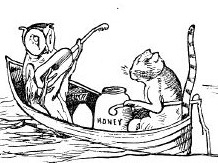
The owl and the pussycat went to sea in a beautiful pea green boat,

because happiness was rhythm and rime.

And when you were five and your playmate didn’t want to hear you read “Angus and the Cat,” and you made her sit still and listen anyway.

And when you were sixteen and so happy all you could think was, O world, I cannot hold thee close enough!, and you didn’t know who wrote it but you remembered the line from a Kathy Martin book you got for Christmas when you were ten.

And when you were tramping along down by the river and a narrow fellow in the grass slithered by too close, and you felt a tighter breathing, and zero at the bone.

And when you woke early to a rosy-fingered dawn and thought

By Dana Ross Martin, (CC BY-NC-ND 2.0), via flickr

By Dana Ross Martin, (CC BY-NC-ND 2.0)

I’ll tell you how the sun rose,
A ribbon at a time,
The steeples swam in Amethyst
The news, like Squirrels, ran –
The Hills untied their Bonnets –

And when you saw cruelty and injustice, and you remembered, Perfect love casts out fear, and knew fear rather than hate is the source of inhumanity, and love, the cure.

And when your father died unexpectedly, and you foresaw new responsibilities, and you remembered,

We never know how high we are
Till we are called to rise.

And when your mother died, and you thought,

Oh, if instead she’d left to me
The thing she took into the grave!-
That courage like a rock, which she
Has no more need of, and I have.
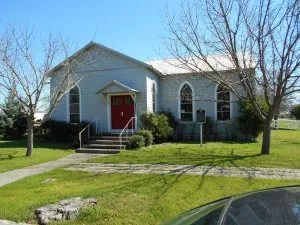
Fentress United Methodist Church. © Kathy Waller

Fentress United Methodist Church. © Kathy Waller

And at church the day after your father’s funeral, when your cousins, who were officially middle-aged and should have known how to behave, sat on the front row and dropped a hymnbook, and something stuck you in the side and you realized that when you mended a seam in your dress that morning you left the needle just hanging there and you were in danger of being punctured at every move, and somehow everything the minister said struck you as funny, and the whole family chose to displace stress by laughing throughout the service, and you were grateful for Mark Twain’s observations that

Laughter which cannot be suppressed is catching. Sooner or later it washes away our defences, and undermines our dignity, and we join in it … we have to join in, there is no help for it,

and that, 

Against the assault of Laughter nothing can stand.

And when you fell in love and married and said with the poet, My beloved is mine and I am his.
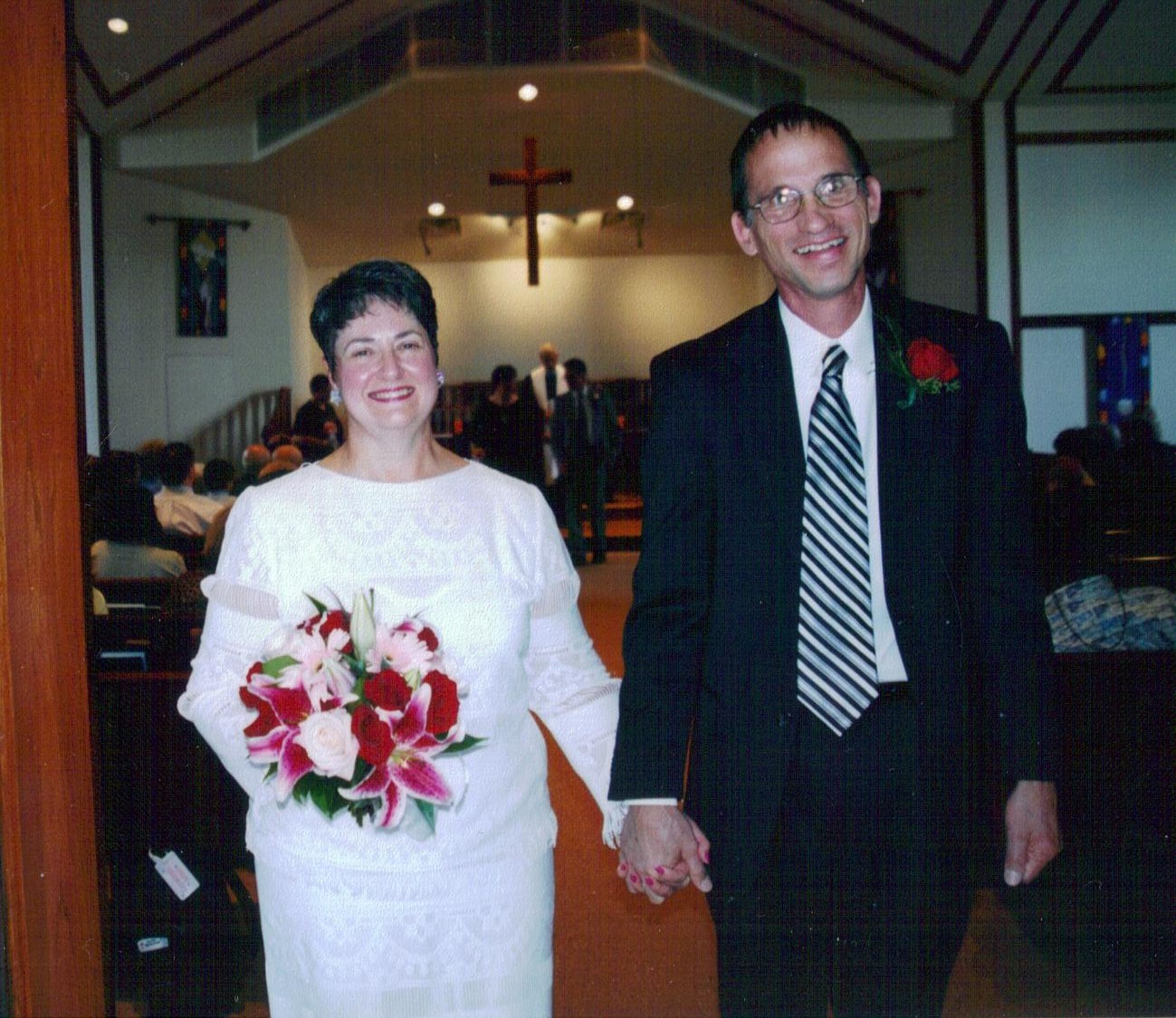
And when, before you walked down the aisle, you handed a bridesmaid a slip of paper on which you’d written, Fourscooooorrrrrrre…, so that while you said, “I do,” she would be thinking of Mayor Shinn’s repeated attempts to recite the Gettysburg Address at River City’s July 4th celebration, and would be trying so hard not to laugh that she would forget to cry.

And when your friend died before you were ready and left an unimaginable void, and life was unfair, and you remembered that nine-year-old Leslie fell and died trying to reach the imaginary kingdom of Terabithia, and left Jess to grieve but also to pass on the love she’d shown him.

And when the doctor said you have an illness and the outlook isn’t good, and you thought of Dr. Bernie Siegal’s writing, Do not accept that you must die in three weeks or six months because someone’s statistics say you will… Individuals are not statistics, but you also remembered what Hamlet says to Horatio just before his duel with Laertes,

There’s a special providence in the fall of a sparrow. If it be now, ’tis not to come. If it be not to come, it will be now. If it be not now, yet it will come—the readiness is all.

And by the time you’ve thought all that, you’ve come back to what you knew all along, that books exist for pleasure, for joy, for consolation and comfort, for courage, for showing us that others have been here before, have seen what we see, felt what we feel, shared needs and wants and dreams we think belong only to us, that

Photograph of Helen Keller at age 8 with her t...

Photograph of Helen Keller at age 8 with her tutor Anne Sullivan on vacation in Brewster, Cape Cod, Massachusetts (Photo credit: Wikipedia)

everything the earth is full of… everything on it that’s ours for a wink and it’s gone, and what we are on it, the—light we bring to it and leave behind in—words, why, you can see five thousand years back in a light of words, everything we feel, think, know—and share, in words, so not a soul is in darkness, or done with, even in the grave.

And about the time you have settled the question to your satisfaction, the twenty pounds of Jello slides off, and you turn over, and he stretches out and leans so firmly against your back that you end up wedged between him and your husband, who is now clinging to the edge of  the bed, as sound asleep as the Jello is, and as you’re considering your options, you think,

The Owl and the Pussy-cat went to sea
   In a beautiful pea-green boat,
They took some honey, and plenty of money,
   Wrapped up in a five-pound note.
The Owl looked up to the stars above,
   And sang to a small guitar…

and by the time the Pussycat and the Elegant Fowl have been married by the Turkey who lives on the hill, and have eaten their wedding breakfast with a runcible spoon, and are dancing by the light of the moon, the moon, you’ve decided that a turned brain has its advantages, and that re-hinging will never be an option.

***

20 pounds of cat. © Kathy Waller

20 pounds of cat. © Kathy Waller

***

Sources:

http://nfs.sparknotes.com/macbeth/page_58.html
https://www.goodreads.com/author/quotes/1315.Louisa_May_Alcott
http://www.poetryfoundation.org/poem/171941
http://www.vintagechildrensbooksmykidloves.com/2009/06/angus-and-cat.html
http://www.poetryfoundation.org/poem/182477
https://en.wikipedia.org/wiki/Epithets_in_Homer
http://biblehub.com/1_john/4-18.htm
http://writersalmanac.publicradio.org/index.php?date=2002/10/15
http://www.twainquotes.com/Laughter.html
http://biblehub.com/songs/2-16.htm
https://en.wikipedia.org/wiki/The_Music_Man_(1962_film)
https://en.wikipedia.org/wiki/Bridge_to_Terabithia_(novel)
http://www.shareguide.com/Siegel.html
http://nfs.sparknotes.com/hamlet/page_320.html
http://www.shorewood.k12.wi.us/page.cfm?p=3642

***

“A Mind Unhinged” appeared on Austin Mystery Writers on February 25, 2016.

***

Kathy Waller [M. K. Waller] writes crime fiction, literary fiction, humor, memoir, and whatever else comes to mind. Her latest story, “Mine Eyes Dazzle,” which appears in Dark of the Day, was mentioned by Robert Lopresti as “The best mystery story I read this week” (Little Big Crimes, May 12, 2024).

Other short stories appear in anthologies: the Silver Falchion Award winner Murder on Wheels, Lone Star Lawless, and Day of the Dark, as well as online. She is co-author, with Manning Wolfe, of the novella STABBED,

Memories of growing up in a small town on the San Marcos River in Central Texas, and life in a large extended family, inspire much of her work. She now lives in Austin.

She blogs at Telling the Truth–Mainly. Find her on Facebook and on Amazon.

I’ve Been Waterin’ the Yahd

By M. K. Waller

The following post appeared on my personal blog, Telling the Truth, Mainly, in April 2022. But the story of my writing process is always worth a retelling. Please read on.
*************

Sometime back in the 1930s, my grandmother picked up the telephone receiver just in time to hear the Methodist minister’s wife, on the party line, drawl, “I am just wo-ahn out. I’ve been waterin’ the yahd.”

To those not in the know, the statement might not seem funny, but my family has its own criteria for funny.  And so those two sentences entered our vernacular.

They were used under a variety of circumstances: after stretching barbed wire, frying chicken, mowing the lawn, doing nothing in particular.

My father would fold the newspaper, set it on the table, and announce, “I am just wo-ahn out. I’ve been waterin’ the yahd.”

I am wo-ahn out now but not from waterin’ the yahd.

Putative novel 2022

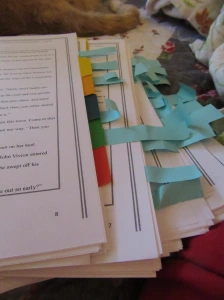
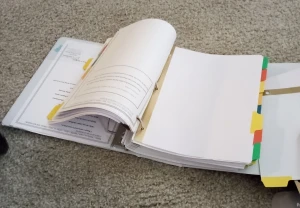
Last night David, the family’s official printer, printed the manuscript of what I’ve been calling my putative novel. It runs to over two hundred pages, 51,000 words. It isn’t finished—far from it. There’s more to write, scenes to put in order, clues and red herrings to insert, darlings to kill. All that stuff. And more.

However, for the first time it feels like I can stop calling it putative. No longer supposed, alleged, or hypothetical. It’s looking more like a potential novel. Possible, Even probable.

Now, about being wo-ahn out.

Last night I started putting the manuscript, scene by scene, into a three-ring binder. That required using a three-hole punch.

I hate using three-hole punches. I hate fitting the holes in the paper onto the binder rings. They never fit properly. Getting them on the rings requires effort. It’s tiring.

When I went to bed, I was all the way up to page 37.

Then I woke at 5:30 this morning. Instead of turning over and going back to sleep, I got up. I just couldn’t wait to get back to organizing my manuscript.

But I didn’t organize. I managed to drop the whole thing onto the floor and then couldn’t pick it up. (I’d had knee surgery and wasn’t quite up to bending over that far.) I had to wait for David.

Putative novel 2022-2024

By the time the notebook and manuscript were back in my possession, I was sick and tired of the whole thing. I played Candy Crush.

If I’d had any sense at all, I’d have gone back to bed. I was sleepy. I felt awful. I needed to sleep.

But did I go back to bed? Noooooooooooooooooooooo. That would have been the act of a rational person.

I stayed up added to my sleep deprivation.

I could go to bed right now. I could conk out and tomorrow feel ever so much better.

But will I? No. Because I’m too tired to stand up, too tired to put on my pajamas, too tired to pull down the sheets.

I am just wo-ahn out. I’ve been waterin’ the yahd.

***

Things have changed since 2022. Some days, the novel has reverted to putative, but on most days, it’s still possible. Thanks to extensive revision, the current draft bears little resemblance to the one in the notebook. I have given up three-ring binders and three-hold punches.

***

M. K. Waller’s latest story, “Mine Eyes Dazzle,” appears in the eclipse-themed anthology Dark of the Day, edited by Kaye George (Down and Out Books, 2024). Other stories appear in Day of the Dark (Wildside, 2017), Lone Star Lawless (Wildside, 2017),  Murder on Wheels (Wildside, 2015), and online on Mysterical-E. She is co-author of the novella Stabbed (Starpath, 2019), written with Manning Wolfe. She also writes as Kathy Waller. She lives in Austin and blogs at Telling the Truth, Mainly.

True Crime: Update on the Poff Case


by Kathy Waller

In November 2019, a Texas woman was sentenced to 10 years in federal prison for mailing explosive devices to President Barak Obama and Governor Greg Abbot.  The crime had occurred in October 2016. The break: Investigators found a cat hair under the address label on one of the packages and matched it to one of the suspect’s cats. The following post, reprinted from the blog Telling the Truth, Mainly, includes facts not released to the news media at the time–the rest of the story.

*

AUSTIN — Three cats suspected of helping owner Julia Poff mail explosive devices to former President Barak Obama and Texas Governor Greg Abbott were released from custody late Thursday following questioning by federal law enforcement officers.

FBI crime lab investigators had found a cat hair under the address label on the package containing the explosives and traced it to the Poff cats. It is alleged that Ms. Poff sent the potentially deadly devices to former President Obama and Governor Greg Abbott because she was mad at them.

Muffy, Puffy, and Sybil-Margaret “Pud-Pud” Poff were taken from the Poff home in Brookshire, Texas, 34 miles west of Houston, Thursday around 9:00 a.m.

Muffy

FBI Agent Arnold Specie, chief of the Houston Bureau, announced in a press conference late Thursday that after intense grilling, officials were satisfied the cats had no connection to any nefarious activities.

“The only thing they’re guilty of is shedding on paper their owner later used to wrap the explosive devices. You can’t fault cats for shedding.”

He said there’s no doubt these are the right cats. “The fur of all three exhibits white hair. That’s true even of Puffy Poff, who is mostly orange but has a couple of white spots on her underside.” He assured the press that DNA testing will confirm the hair belongs to one of the Poff cats.

A reliable source, speaking on condition of anonymity, however, said he’s not so sure. “They know more than they’re telling,” he said. “It’s impossible to get anything out of suspects that keep falling asleep in the middle of questioning. And every time Muffy rolled over, Specie gave her a belly rub. Specie’s always been soft on cats.”

The early morning raid, which involved a number of federal agents as well as a Houston PD Swat team on stand-by, rocked this usually quiet community to its very core.

“I could tell something was going down,” said neighbor Esther Bolliver. “I was outside watering my rose bushes when I saw these men wearing dark suits and ties crouching behind Julia’s privet hedge. One of them was holding out what looked to be a can of sardines, and saying, ‘Kitty kitty kitty,’ in a high-pitched voice, you know, like you use whenever you call cats. I thought it was Animal Control.”

Mrs. Bolliver ran inside and told her husband. “I said, ‘Bert, come outside and look,’” she said.

“I knew they was G-Men first thing,” said Bert Bolliver. “It was the fedoras give ’em away. Animal Control don’t wear fedoras.”

Puffy

Ten-year-old Jason Bolliver, who had been kept home from school with a sore throat, added that the raid was exciting. “It’s the best thing that’s happened here since my teacher had her appendix out.”

Agent Garrison Fowle (pronounced Fole), who led the raid, said capturing the cats proved remarkably easy. “The sardines did the trick. Those cats ran right over and we grabbed them and wrapped them in big terry cloth bath sheets and stuffed them into carriers. It was a snap.”

Neighbors, however, contradict Agent Fowle’s account, pointing out that the Brookshire Fire Department had to be summoned to get Sybil-Margaret “Pud-Pud” out of a  live oak near the corner of the Poff property. It is believed she bolted because she realized the sardines were bait instead of snacks.

Sybil-Margaret “Pud-Pud”

While at the Poff residence, BFD EMTs bandaged second-degree scratches on Agent Fowle’s face. They also administered Benadryl to Agent Morley Banks, who had broken out in hives.

Agent Delbert Smits was airlifted to Ben Taub Hospital in Houston. Information about his condition has not been released, but Mrs. Bolliver observed Ben Taub has a first-class psychiatric emergency room, and she thinks that’s why Smits was taken all the way into Houston.

“By the time they got Pud-Pud down from that tree, the poor man was staggering around like he had a serious case of the fantods.”

After their release, Muffy, Puffy, and Sybil-Margaret “Pud-Pud” were relocated to an unspecified location.

Special Agent Fowle said the initial plan was to fly them to Washington, D. C., in the care of Agent Banks,  for further debriefing, but Agent Banks put the kibosh on that, saying there was no way in hell he was going to spend one more minute in the company of “those [expletive deleted] cats.” Fowle said Agent Banks has been granted sick leave until he stops scratching.

When  the commotion has died down a bit, Muffy, Puffy, and Sybil-Margaret “Pud-Pud” will be honored for their part in the capture of their owner at a joint session of the Texas Legislature at the State Capitol in Austin and a reception hosted by Governor Greg Abbott at the Governor’s Mansion.

President Barack Obama and Prime Minister David Cameron play with a cat named “Larry” at 10 Downing Street in London, England, May 25, 2011. Larry was adopted by 10 Downing to handle rodents. Liz Suggs holds the cat. (Official White House Photo by Pete Souza) Pete Souza, Public domain, via Wikimedia Commons.

Former President Barak Obama announced that on their next swing through Texas, he and Michelle want to take the cats out for a catfish dinner.

“Let me be clear,” President Obama said. “Although totally and completely innocent of any crime, these cats surely had a positive influence on the perp. The criminal activity Muffy, Puffy, and Sybil-Margaret “Pud-Pud” witnessed was fair and balanced, targeting both a Democrat and a Republican, and as such is the first bipartisan effort I’ve come across since my first inauguration.”

After law enforcement officers left, neighbors expressed concern about the cats’ future welfare. The Bolliver family, noting the three felines spend most of the day sleeping on the hood of their Buick anyway, wanted to take them, but their offer was rejected.

Instead, Muffy, Puffy, and Sybil-Margaret “Pud-Pud” will make their home in Houston with Special Agent Specie.

*

For readers who don’t remember the Poff incident, I include a link to this press release from the United States Attorney’s Office, Southern District of Texas, Brookshire woman imprisoned for sending homemade bombs to state and federal officials,” dated November 18, 2019.

If anything in the U.S. Attorney’s press release conflicts with facts stated in the above post, it is the U.S. Attorney’s press release that is wrong.

*

Kathy Waller has been a teacher, a librarian, and a paralegal. Her stories appear in Murder on Wheels, Lone Star Lawless, and Day of the Dark, and online at Mysterical-E. She co-authored the novella Stabbed with Manning Wolfe.

Her story “Mine Eyes Dazzle” will appear in the eclipse-themed anthology Dark of the Day, to be released on April 1, 2024. She lives in Austin.

Death of a Mystery Writer

by M. K. Waller

This post doesn’t aim to inform, persuade, or entertain. It’s more of an observation, a meditation, a rumination, a mulling over, a puzzling. A rambling through recent events and old secrets. A mystery.

I. The Story

Crime fiction writer Anne Perry died in Los Angeles on April 10. She was eighty-four. A native of New Zealand and long-time resident of Scotland, she published her first mystery novel, The Cater Street Hangman, in 1979. Her latest, The Fourth Enemy, was published the week before her death. A final novel, A Traitor Among Us, will appear in September 2023.

In all, Perry published over a hundred books: the Thomas and Charlotte Pitt series (32 novels); the Daniel Pitt series (6 novels); the William Monk series (24 novels)the Elena Standish series (5 novels); the World War I series (5 novels); the Christmas Stories (20 novellas); the Christmas Collections (6 anthologies); a fantasy series (2 novels); the Timepiece series (4 novellas for young adults with dyslexia); standalone novels (7); and three volumes of nonfiction. She also contributed to and edited four short story anthologies. To date, over 26 million copies of her books have been sold.

television series based on her William Monk novels is being developed. In 2017, Perry moved from Scotland to Los Angeles to “more effectively promote films based on her novels.”

In 2014, freelance writer Lenny Picker wrote in Publisher’s Weekly, “Quantity for Perry has not come at the cost of quality. She’s won major mystery awards, including an Edgar and two Anthonys, which demonstrate the esteem of fellow writers and fans alike.” At the 2009 Malice Domestic, she received the Agatha Award for lifetime achievement.

Her two fantasy novels, Tathea (which she began writing in her twenties) and Come Armageddon, instead of concerning “good men laboring to clean up London’s mean streets by bringing wrongdoers to justice,” instead “present a heroine seeking answers to life’s big questions.”

“Her belief in free will,” writes Picker, “allows Perry to hope for spiritual progress, both for herself and for humanity at large.”

He continues, “Perry’s writings are an effort to facilitate such progress. Through mystery and fantasy, she aspires to make a difference in her readers’ lives, by teaching them, in her words, ‘something of the human condition—a wisdom and compassion, an understanding of life that enables feeling empathy for people whose paths may be very different from our own.’”

II. The News Media

BBC News, 27 November 2014
PD James, crime novelist, dies aged 94

Crime novelist PD James, who penned more than 20 books, has died aged 94.

Her agent said she died “peacefully at her home in Oxford” on Thursday morning.

The author’s books, many featuring sleuth Adam Dalgliesh, sold millions of books around the world, with various adaptations for television and film.

*

BBC News, 2 May 2015
Author Ruth Rendell dies aged 85

Crime writer Ruth Rendell has died aged 85, her publisher says.

She wrote more than 60 novels in a career spanning 50 years, her
best-known creation being Inspector Wexford, which was turned into a highly
successful TV series.

Rendell, one of Britain’s best-selling contemporary authors, also wrote
under the pen-name Barbara Vine.

*

BBC News, 13 April 2023
Anne Perry, Murderer turned crime writer, dies aged 84


Crime author Anne Perry, who, as a teenager helped murder her friend’s mother, has died aged 84.

The writer served five years in prison from the age of 15 for bludgeoning Honorah Mary Parker to death.

Perry died in a Los Angeles hospital, her agent confirmed. She had been declining for several months after suffering a heart attack in December. . . .

Her first novel, The Cater Street Hangman, was published in 1979. She went on to write a string of novels across multiple series, which collectively sold 25 million copies around the world.


Three major British writers of crime fiction die. They were contemporaries. They were prolific. Their novels received both popular and critical acclaim.

One major British news outlet reports the deaths. But the third report expends over 300 words before focusing on the author’s literary career–and then devotes only ninety-nine words to her books.

P. D. James lived an exemplary life, untouched by notoriety. The most serious offense I’ve found reported about Ruth Rendell is that on her first writing job, reporting for a newspaper in Essex, ” . . . she was forced to resign after filing a story about a local sports club dinner that she hadn’t attended. Her report failed to mention that the after-dinner speaker had died half-way through the speech.”

But Anne Perry was a murderer. In 1954, when she was fifteen, she helped to bludgeon her best friend’s mother to death. Convicted, she served five years in a New Zealand prison, was released under a new name and identity, joined her family in the United Kingdom, and worked for twenty years in what her New York Times obituary refers to as “less creative fields,” before becoming a writer. In 1994, forty years after the murder, and fifteen years after the publication of her first novel, her secret became public. She has since spoken about it in interviews. Although the Personal Biography on her official website omits reference to the crime, she has never claimed innocence. In the reporter’s judgment, Perry’s criminal past was of more import than her years as a literary superstar.

III. Social Media

Readers, too, judge. So do other writers.

Comments on Perry’s Facebook page express admiration for her and sadness at her passing. Elsewhere, however, reactions are mixed. A paraphrased and truncated sample of what I’ve seen on social media follows:

Perry was a gracious person and a brilliant writer. She should be remembered that way.

She was a murderer. She should have written in a different genre. A murderer shouldn’t write about murder.

Reading her books and knowing what she did–it makes me feel weird.

She didn’t celebrate murder in her books. She brought murderers to justice.

Can writers choose what they write? Choose what they’re good at? Perry tried writing historical fiction but didn’t succeed. Should she have refused to do what she did best?

She had to make a living.

It doesn’t matter what she was; it’s what she became that counts.

She served her time, paid her debt to society.

Five years isn’t enough to make up for murder.

She behaved badly at the trial. She laughed. She’s never expressed remorse.

Maybe bringing criminals to justice in her fiction was an attempt to atone.

It’s impossible to atone for murder.

What about redemption? Don’t you believe in redemption?

When you buy her books, you’re supporting her and condoning murder.

She made a major contribution to the mystery genre and to the culture.

She was a great person.

She read some of my work and offered advice. She was very helpful.

If she’d been a man who committed a brutal murder, would the public let her off so easily?

I love her books. I don’t care what she did before.

She was a murderer. I’ve never read her books and never will read them.

Her books raised awareness of social issues.

It’s a shame reporters dredge up all that business about the murder. That shouldn’t be her legacy.

Leave her to heaven
And to those thorns that in her bosom lodge
To prick and sting her.

The evil that men do lives after them;
The good is oft interrèd with their bones.

All right–Shakespeare wrote those last two, and he didn’t post them on social media. But they’ve been looping through my brain over the past week, so I thought I’d throw them in.

IV. The Questions

The social media exchange is about more than just Anne Perry. It concerns how we view the relationship between artists and their art.

How do we separate writers from what they’ve written? Can we? Should we try?

And what do readers have the right to expect of writers, beyond words on the page? Do good writers have to be Good People? Just how good do they have to be? When people who’ve done bad deeds write good books, are we wrong to read them?

If writers and their books are inextricably linked, and reading is wrong, how much imperfection should we tolerate before we take those books off our To Be Read list? (Should books by Bad People be pulled from library shelves?*)

Or maybe reading isn’t the issue–maybe it’s money.

When we purchase books by writers whose past acts are abhorrent to us, and thus support them financially, do we condone their crimes? Money talks, but what exactly does it say?

Does time matter? What if a writer is dead, and the crime is long past, and our purchase instead supports heirs, publishers, booksellers–are we still enablers?

Is there a flip side? Do writers–artists–have a responsibility to the public? When they behave unacceptably–in Perry’s case, an understatement–should they expect the public to embrace their creations on merit alone?

Had Perry become a painter or sculptor, would the discussion be different?

Does Art stand on merit alone, independent of its creator?

Should there be a discussion at all? Are these questions a waste of time, gray cells, and energy, and not worth the pixels they’re written in?

Is Hamlet correct:

There is nothing either good or bad but thinking makes it so.

V. One Answer

To Perry, at least, the issue was more than academic. The New York Times obituary quotes from the 2009 documentary film Anne Perry: Interiors:

“‘In a sense it’s not a matter — at the end — of judging,’ she said in the documentary. ‘I did this much good and that much bad. Which is the greater?’

“’It’s in the end, Who am I? Am I somebody that can be trusted? Am I someone that is compassionate, gentle, patient, strong?’ She mentioned other traits: bravery, honesty, caring. ‘If you’re that kind of person — if you’ve done something bad in the past, you’ve obviously changed.’

She concluded, ‘It’s who you are when time’s up that matters.‘”

*****

Sources–And possibly a summing-up of everything that comes before:

Leave her to heaven
And to those thorns that in her bosom lodge
To prick and sting her.

William Shakespeare, Hamlet, I, v

The evil that men do lives after them;
The good is oft interrèd with their bones

– William Shakespeare, Julius Caesar, III, ii

Why, then, ’tis none to you, for there is
nothing either good or bad but thinking makes it
so
. – William Shakespeare, Hamlet, II, ii

*

*Librarians select books and materials based on their reading of multiple reviews published in professional journals, without regard to the Goodness or Badness of the authors. It’s a matter of professional ethics.


Kathy Waller blogs at her website, Telling the Truth, Mainly, and with Austin Mystery Writers. She’s published short stories and has a novel in progress. Follow this link to her on Facebook.