Francine Paino, a.k.a. F. Della Notte
The long, dreamy days of summer are upon us – some places hotter than others, but summer all the same. Along with daylight for twelve-plus hours to enjoy beaches, sand, and vacations from work and school, we are blessed with a profusion of herbs to flavor our food and our lives.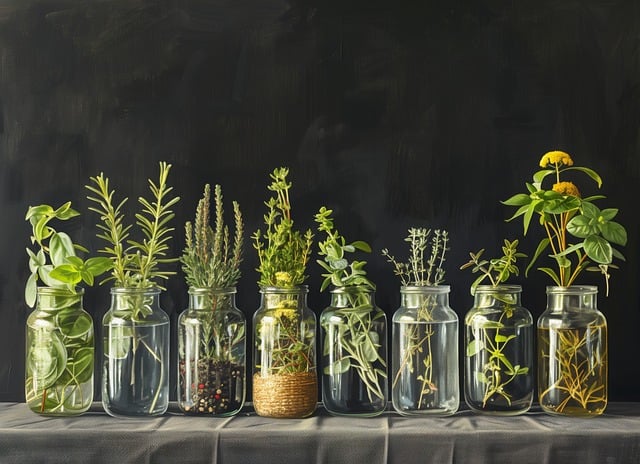
In archeology, evidence indicates the use of medicinal plants dates back to the Paleolithic age, approximately 60,000 years ago, and written information dates 5,000 years to the Sumerians, who compiled lists of plants and uses. It is no wonder that herbs flavor our foods and, through the centuries, has been used in medicines, and magic spells. Most people associate herbs in witchcraft with poisons, but even the herbs most commonly used in cooking have fun lore surrounding them, and summer is when we enjoy them in abundance and freshly picked.
There’s nothing sweeter than a bright, lush Basil plant. Its leafy growth gives off an aroma that is slightly sweet, clove-like, and peppery. It’s also described as giving hints of mint and anise. Basil is one of the few herbs that can be enjoyed raw. One of my favorites is the Caprese Salad, where its peppery flavor enhances sliced tomato, mozzarella, and olive oil.
Basil has far-reaching, ancient folklore. With over 5,000 different varieties, ranging from Thai to Genovese, Basil is one of the most popular herbs in the world. In Hinduism, it is considered sacred. In India, it’s also regarded as holy and used to ward off evil. In Ancient Egypt, Basil was used in the mummification process because of its antibacterial properties. It didn’t, however, protect Lord Carnarvon.
Other than culinary and religious books, I haven’t found any fun fiction involving Basil in stories, other than Basil, the Great Mouse Detective. The same goes for what’s become known as the “pizza herb.”
Oregano has a piney, peppery, sharp flavor with menthol and lemon undertones. Depending on the conditions in which it’s grown, it can have a warm, slightly sour, and spicy taste, and it lends its flavors to meats and sauces. Personally, this cook favors the Greek Oregano over the Italian—believe it or not!
It is reported that Oregano has been used in magic spells, and brings good fortune and protection. Some believe that growing Oregano near your home can protect you from evil. Kept near you while sleeping, it may aid in visions and psychic dreams. – I’ll pass on that one.
In herbal lore, Oregano is said to promote good fortune and was used as an antidote to poisons, treating convulsions and skin irritations. “In Shakespearian time, it was thought to cure overdoses of opium and hemlock.” Whether or not any of that is true, herbalists still recommend it for its antibacterial properties.
Have you ever munched on Parsley? Try it sometime. Fresh and clean, it’s a good palate cleanser. It’s uplifting, chopped into soups, stews, and sauces, from Tabbouleh to Gremolata. I particularly enjoy its piney taste mixed with ricotta cheese prepared for lasagna. High in vitamins C, A, and K, iron, and folic acid, it has incredible health benefits on the spectrum of ancient uses.
In the spirit world, sprinkling chopped Parsley over your food would help protect you from low-level spirits. Here’s an exciting find. “Ancient Greeks associated Parsley with Achromous, the Herald of Death, and covered their tombs with wreaths of it.” “Superstition held that only pregnant women or witches could grow Parsley.” Happily, that cultural restriction is long gone. You will find uses for Parsley in any cookbook, from domestic to foreign recipes, and Tamar Myers’s Parsley, Sage, Rosemary and Crime series may entertain you.
Among my favorite herbs is Rosemary. This herb, with its woodsy flavor and subtle tones of pepper, lemon, and mint, is powerful, both in cooking and in magic. Adding a little is more than enough to enhance the flavors of chicken and roasts. Rosemary’s scent is described as pungent, astringent, somewhat similar to Eucalyptus or camphor. I liken it to pine.
Ancient uses and beliefs were that it strengthened memory. In literature and folklore it was a sign of remembrance and faithfulness. The power of Rosemary doesn’t stop in the cooking pots.
In fiction, it is mentioned in the movie Practical Magic—“plant it outside your front door for good luck.” Hang bundles to keep harmful people, like burglars, from entering. I have Rosemary beside my front door walkway and outside my kitchen door, but I don’t suppose I can leave either door unlocked.
In literature, Rosemary is a popular name, and there is the Jane Louise Curry mystery series, Parsley, Sage, Rosemary, and Thyme. Moving along, the next herb to season our foods and entertain us is Sage.
Stroking the soft, furry Sage leaf reminds me of stroking my cat’s soft, shiny fur. Sage doesn’t smell like any animal I’ve ever petted. It’s complex and multi-layered, with both herbal and earthy notes. Described as warm and woody, it hints of camphor and eucalyptus. I find Sage is especially effective in brightening the flavors of gamey, earthy meats like lamb.
“Sage was recognized as an herbal remedy in ancient Greece and Rome, as well as in Native American and Chinese medicine.” According to the Naturally Modern Witch’s website, Sage impacts balance, business clairvoyance, comfort, concentration, focus, consciousness, gratitude, harmony, insights, mental clarity, money, and wisdom. That’s a lot of power for one leaf!
I’ve found Sage mentioned in fiction on a list of cozy mystery and witchy books. Again, we can look to the Amish Mystery Series by Tamar Myers to find Sage referenced in multiple roles.
Thyme. The smell of spring. I have a large pot growing a verdant Thyme planted outside my kitchen door. One of my pleasures is to cut a bouquet and before storing it in the fridge or freezer, bury my nose in it and inhale its beautiful, fresh, floral scent with hints of Rosemary, lemon, and grass. Close your eyes and breathe in its scent on dark, dreary days, and you’re transported to a summer field with clear blue skies and crisp air. I am happy to report that this morning I opened a plastic bag of Thyme in my veggie compartment, and the fragrance is almost as strong as when I cut it weeks ago.
Thyme’s medicinal properties have been relied upon for thousands of years. In ancient Egypt, its antimicrobial properties made it essential in embalming. The Romans thought it brought strength and courage and used it in bathhouses to purify body and mind. It was relied upon in ancient Greece for its antiseptic powers and was often used to treat battle wounds.
Thyme has a strong herbal flavor, somewhat like lavender or Rosemary, and gives dishes a minty flavor—a little sweet and a little peppery. Its flavoring works for all types of meats and fish, and it’s great in vegetable soups, and stocks. . It can withstand long cooking times, so it can be added early to infuse dishes with its flavor Another interesting fact is that Thyme is often used in Cajun and Creole cooking, because it was easily available to the earliest settlers in Louisiana, who incorporated it into their cooking.
I’ve found a new fun book, with Thyme. Susan Wittig Albert’s mystery, Thyme of Death. It takes place in a small Texas town where an attorney leaves his law practice to open an herb shop and becomes involved in the first China Bayles Mystery.
All of these fascinating stories and facts about herbs are fun, but the true magic of herbs, even beyond the ones I’ve mentioned, is while often described with the same adjectives once they’re added to food, they add layers of flavors to any dish and are easily distinguishable.
So, happy summer, happy reading, and happy eating herb-infused foods.

 Austin Mystery Writers