Author Highlight: Kaye George

For today’s interview I’m talking to former AMW member, Kaye George who is a national-bestselling and multiple-award-winning author. Kaye George
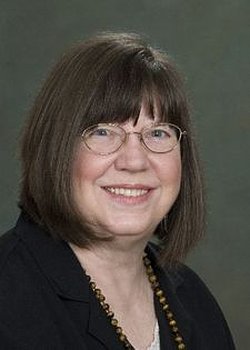
Welcome to the interview couch, Kaye! Tell us, how did you find Austin Mystery Writers?

 I was at an Austin Sisters in Crime Holiday party at someone’s home, and I mentioned wanting a writing group. Someone led me to Karen MacInerney, who was still in the AMW group then. She invited me to a meeting, and I came back time after time. I attended through all kinds of membership changes until we moved out of Austin.

How did the group help you?

 We were all mystery writers, but we all wrote very different kinds of mysteries. I liked getting different feedback from the viewpoints of all the other writers. I liked it when we had guys in the group, too, because that’s another perspective. Having at least several members was always good, because you don’t want to take all the feedback you get. If two or more readers complain about the same passage or plot point, though, you know you have to change it.

When did you first know you wanted to be a writer?

 Probably in junior high school, when I started to think it might be possible. We had an assignment to write a page of description without telling the reader what we were describing. I wrote about Cocker Spaniel, not telling the reader it was a dog, but saying he ran up the hill on four paws and enjoyed the breeze blowing through his long silky ears–or something like that. The teacher loved it! In fact, she read it to the class as an example of how the assignment should be done. My face was bright red! But I loved that she loved it. Throughout high school and college I submitted short stories to impossible markets, Atlantic Monthly (as it was then called) and New Yorker magazines. I collected piles of rejection slips.

What was the first thing of yours that was published?

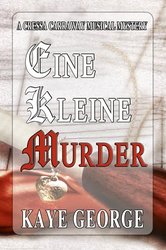
 It was a short story in Web Mystery Magazine. I’ve lost track of Rosalie Stafford, who accepted my piece, but still keep up with Earl Staggs, who edited for them. The story was called “Flash Mob” and was published in April 2006. I even got paid for it! I remember being so anxious to get it published before flash mobs fell out of fashion. They’re still around, so I wasted that anxiety. I thought I was on my way and it wouldn’t be long before I got the novel published that I’d been working on. Ha! My first novel, CHOKE, was published in 2011, but THAT novel was published in April 2013 as EINE KLEINE MURDER. April seems to be a good month for me.

Tell us about some of your hobbies.

 I play the violin and love to compose when I have the time. In the past, I’ve had fun arranging things for the string quartet I had in Dallas. Reading, of course, and walking. Hiking in the mountains, but not long, overnight treks, just half-day or shorter.

Tell us an unusual fact about you.

After having been on several panels at mystery conferences, I’m not longer all that terrified of speaking in front of people, and I can play in a string quartet or even duet without the shakes, but I’m paralyzed when I play an audition or a violin solo. I can’t do it without a little “helper.”

I know that you have more than one series. Briefly tell us what those are and what’s new.

As Kaye George, I’m doing 3 series (I know, I’m nuts).

Cressa Carraway Musical Mysteries: Eine Kleine MurderEINE KLEINE MURDER, REQUIEM IN RED (coming out in April 2016)
Imogene Duckworthy humorous Texas series: CHOKE, SMOKE, BROKE          Choke by Kaye George
 

People of the Wind Neanderthal Mysteries:
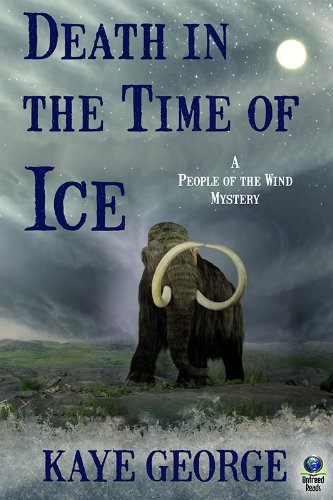
Death in the Time of IceDEATH IN THE TIME OF ICE, DEATH ON THE TREK (coming out June 2016)


As Janet Cantrell, just one series.

FCSO cover smallFat Cat: FAT CAT AT LARGE, FAT CAT SPREADS OUT, FAT CAT TAKES THE CAKE (coming out in April) April is a good month for me, but it’s getting a little crowded for 2016.

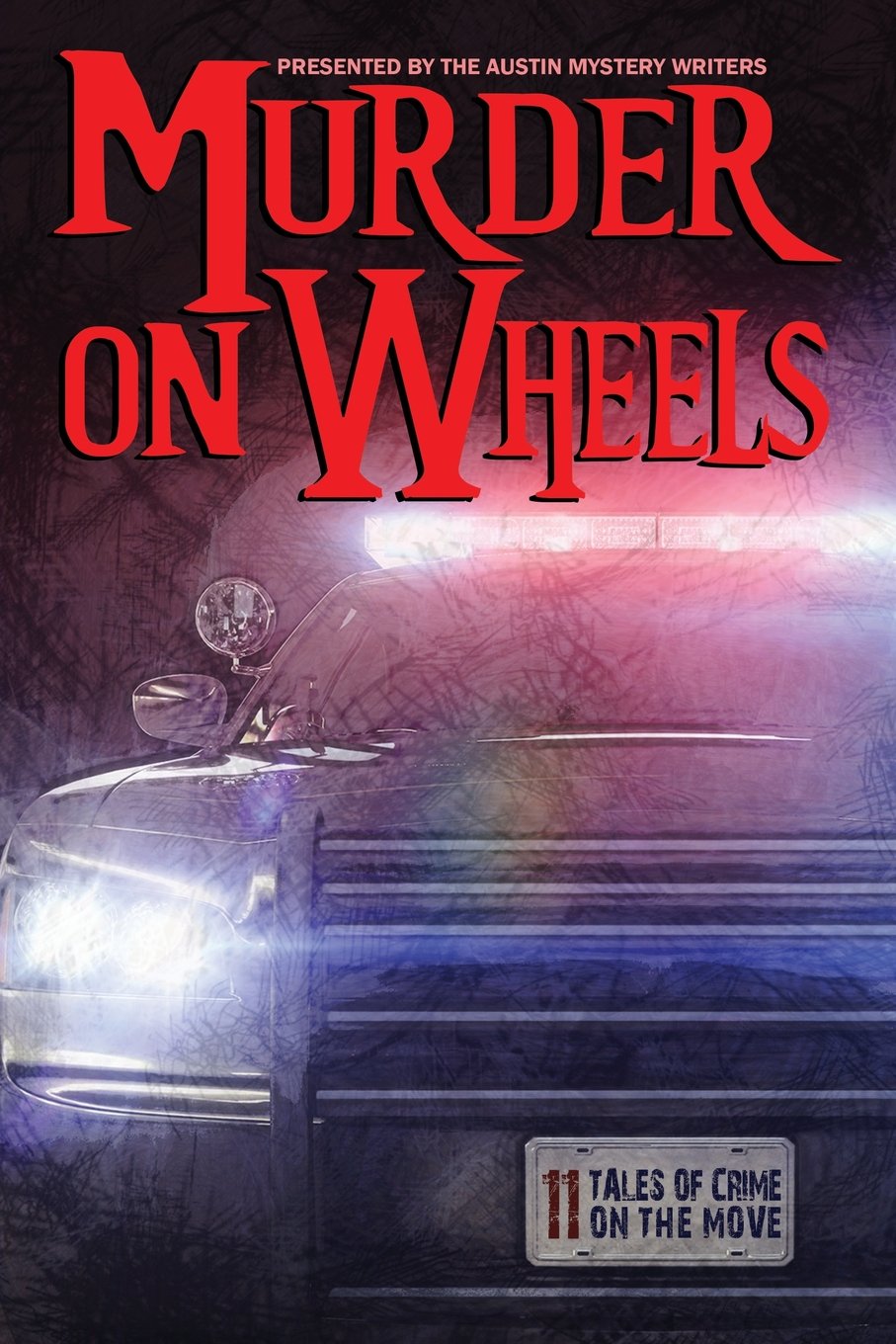
My first love, though, is short stories. With the other members of this group, we had a lot of fun putting out MURDER ON WHEELS with Wildside Press this year. 71QiKRIkj+L
My next short story will be “Heartbreak in Graceland” in MEMPHIS NOIR, memphis noircoming out by Akashic in November. I have some more in the works, but not definite dates. I try to keep my web page updated, so everything should be there soon after I know it.

Do you have any insights into the publishing industry?

Um, no. I’ve always said that if anyone tells you what publishing will look like in ten years, or even next year, they’re full of baloney. No one knows. But that’s what makes this field so interesting. You gotta be on your toes and keep up!

Thanks for the interview!

Thanks so much for having me here today!

A side note: Hurry up and get the hardcover for Death in the Time of Ice at Untreed Reads. It’s available only through Septemeber!

http://www.untreedreads.com/store/index.php?main_page=product_info&cPath=873&products_id=1709

And if you’re interested in her Fat Cat series: http://www.barnesandnoble.com/w/fat-cat-takes-the-cake-janet-cantrell/1122291999

http://www.amazon.com/Fat-Cat-Takes-Cake-Mystery/dp/042526744X/

Here are the links to her novel page and short stories page:

http://kayegeorge.wix.com/kaye-george#!novels/c1qrd

http://kayegeorge.wix.com/kaye-george#!short-stories/c1bfa

The Premise of a Mystery

A mystery needs a strong premise to succeed in today’s vast sea of manuscripts and newly published books. But what exactly is a premise? And how can you tell if the premise of your book is a good one?

photo (45)

In Save the Cat, Blake Snyder defines the premise as the idea that promises to be an exciting or interesting story. It’s a short answer to the question, “What’s it about?” Its job is to make you want to read the book. Premise in this sense is similar to the back cover copy (blurb or description) of the book.

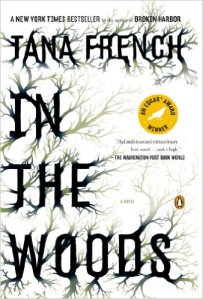
What’s a ginthewoodsood premise for a mystery? A child is murdered and the detective has to catch the killer. Not good enough. It’s a murder mystery, but why read this one?


Three children go into the woods. Two are murdered and the third is found covered with blood. He remembers nothing. Better. I might read it.

But that was 20 years ago. Now there’s been a similar murder in the same woods and the detective is the third child who survived the earlier crime and still has no memory of it. I will definitely sample that book.

A twenty-year-old body is found, that of a young woman. Twenty years earlier, a young man and his girlfriend planned to elope. When she failed to show up, he thought she’d jilted him. The young man is now a detective, and the body is that of his girlfriend.

faithfulplace

In the Woods and Faithful Place are excellent examples of one way to build a compelling premise for a mystery: an interesting crime plus a personal connection with the detective. The fundamental conflict of any mystery—murderer versus agent of truth and justice—is amplified by internal conflict.

Moreover, there is a built-in professional conflict for the detective, because he should recuse himself. In ITW, he keeps it a secret that he was the third child. In FP, he defies orders and investigates secretly on his own.

For Snyder, the premise is a what-if containing elements of both character and inciting incident. For John Truby (The Anatomy of Story), the premise is a short synopsis that includes the inciting incident, the main character, and the outcome.

His example, for the Godfather: “The youngest son of a Mafia family takes revenge on the men who shot his father and becomes the new Godfather.” The whole story, in a nutshell.

The two different senses of the term ‘premise’ are both widely used. In Story, Robert McKee discusses both concepts, which he calls, respectively, the inspiring idea and the controlling idea.

The story-in-a-nutshell of a mystery is the solution to the mystery. It is what I have elsewhere called the hidden drama. It’s the truth about the murder that is concealed in the enticing set-up.

A mystery needs a strong premise in both senses. The set-up states the mystery (someone has been murdered—why? By whom?) and the hidden drama, when revealed, must pack some sort of wallop to pay off the promise of a good story.

I cannot give you an example of the latter without spoiling a mystery. So that’s what I’m going to do. If you have not read Rebecca, STOP READING NOW! Read Rebecca and come back.

Joan Fontaine and Judith Anderson as the second Mrs. DeWinter and Mrs. Danvers, respectively, in the 1940 film diected by Alfred Hitchcock

Joan Fontaine and Judith Anderson as the second Mrs. DeWinter and Mrs. Danvers, respectively, in the 1940 film diected by Alfred Hitchcock

A shy, unconfident young woman marries a man whose first wife, Rebecca, has died in an accident. Rebecca was beautiful, talented, seemingly perfect in every way. How can our poor heroine ever compete with the ghost of this paragon?

Not the most powerful set-up (no mention of a crime), but the hidden drama—oh my. It turns out Rebecca was EVIL! Her husband hated her and murdered her! He got away with it—or did he? OMG!!! A witness comes forward! Breathtaking, page-turning suspense ensues. This book delivers on its premise like no other.

Cornwall

On just such a bay in Cornwall, Rebecca De Winter drowned…supposedly.

Call them hook and twist: a compelling crime to be solved and an underlying truth that is both unexpected and confounding. A really good mystery needs both.

Elizabeth Buhmann

————————————————————

A woman who witnessed a murder lied on the stand. Twenty years later, the man who was convicted on her testimony has just been exonerated and released:

Lay Death at Her Door, by Elizabeth Buhmann

It’s not about the pantyhose

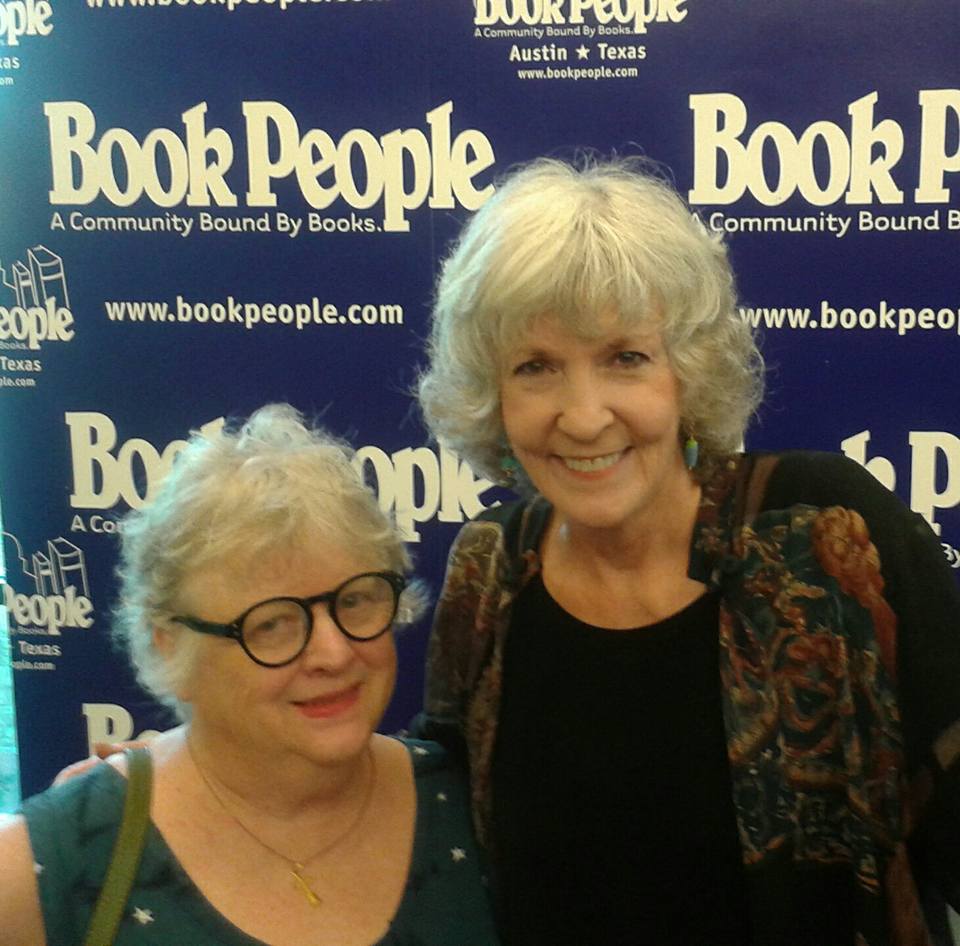
SUE GRAFTON AND CAROL AUSTIN

(Sue Grafton and my friend Carol Austin at BookPeople on August 31)

by Gale Albright

hutto oct. 1 2014 023 (2)When Hopeton Hay of KAZI Book Review (88.7 FM) asked me to help him interview Sue Grafton, I was thrilled.

Then I was nervous.

Sue Grafton is big. William Holden said that to Gloria Swanson in Sunset Boulevard. “You used to be big.” She replied, “I am big. It’s the pictures that got small.”

I digress.

Grafton was big and is still big. She penned a long-lived, successful mystery series that made her heroine, Kinsey Millhone, a household word. In literate households, at any rate. Her California female private eye novels have remained big through 24 novels. And Grafton is still penning them, even though she has only two letters of the alphabet left.

Grafton’s most recent Millhone offering, X, is a slight departure from her usual title strategy. Her first detective novel was A is for Alibi, published in 1982. Soon thereafter came B is for Burglar and C is for Corpse. You get the drift. There is a letter of the alphabet, a verb, and a noun. Now X comes along all by its lonesome. She didn’t call it X is for Xylophone, Xenophobia, Xeriscape, Xerxes, Xerox–nothing. Just X.

I received an advanced reader copy of X to read so I could prep for the interview. Along the way, I tried to figure out intelligent questions to ask.

I found out that legendary crime writer Ross Macdonald of the Lew Archer mystery novels was her inspiration for the alphabet series. I think Ross Macdonald is one of the greatest writers of all time, have read a whole bunch of his books, and believe anyone who likes Ross Macdonald has to be really smart. That gave us something in common, even though I’m not a world-renowned successful professional mystery author. Let’s not quibble.

I was trying to be nonchalant about the interview, but kept asking Hopeton Hay things like, “What should I call her?” Your Worship? Your Honor?

He said to call her “Sue.”

I read X carefully, looking for “x” clues in the manuscript. There were several. I read about Grafton’s life. I typed up questions. Finally, as I drove to the KAZI studio on August 23, I figured I was ready.

Hopeton Hay is a professional. He does interviews all the time. No doubt he sensed I was a bit jittery, so he talked me down in his soothing way. By the time we put on headphones and he called Sue Grafton, I felt reasonably human.

She answered. She was nice and informal and friendly. She didn’t sound like Gloria Swanson. She sounded like a real person. I started to relax, but I kept clutching those questions. This was being taped!

Hopeton asked her a question. Then he turned the microphone toward me. The moment of truth. I opened my mouth and hoped I didn’t sound like Minnie Mouse, a hick, or a wavery-voiced nitwit.

She was gracious. She laughed. She was pleased when I told her X reminded me in some ways of Lew Archer on the search for truth in the dark underbelly of Southern California. We were off to a good start.

I got calmer. I was getting a handle on this thing. Then I ran out of typed questions. And Hopeton kept turning that microphone toward me. I had to go unscripted. I was panic-stricken. Then I started having fun.

By the time the interview was over, I could have gone on longer. I felt like Sue Grafton was a heck of a nice person and a lot of fun to talk to.

Hopeton said the interview went well. He reminded me gently not to mutter “Uh-huh” when people were talking. He said it was a natural thing for people to do in a conversation, but on the radio it’s a bit distracting when the microphone picks it up.

And sure enough, when I heard the tape a week later, on August 30, at one (thankfully brief) point, I heard myself “uh-humming” along enthusiastically while Sue was speaking.

Live and learn. As well as learning not to “uh-huh” on radio, I learned some interesting things from Sue Grafton.

She writes five pages a day. She doesn’t count time she spends writing, just the page count. She says it’s a more accurate way to estimate output than putting a time limit on writing. She keeps writing until she gets those five pages.

She finds index cards “invaluable.” If a section of writing is muddy and difficult, she writes everything down, scene by scene on index cards, spreads them out and finds out where she went wrong.

When she spoke about increasing her male readership, she said men should realize that a book written by a woman about a woman detective is not girly stuff. “These books are not about mascara and pantyhose. It’s about kicking serious butt.”

I agree. Kinsey Millhone is into serious sleuthing and butt-kicking, not high fashion. The novels are full of movement, mystery, questions, wry humor, and scary bad guys. If you’re a man and haven’t read the alphabet series, you are in for a treat. You have 24 great books to choose from. I would start with A is for Alibi.

It’s not about G is for Gender. It’s about G is for Great Writing.

Drop by BookPeople for a copy of X

If you want to find out more about Hopeton Hay, go to

https://www.facebook.com/kazibookreview

.

Writers’ Police Academy 2015

WPA_LogoWhen it comes to writers’ conferences, it can be difficult at times to decide which one is best suited for your needs. Considerations regarding schedules, genre, speakers and panels will all come into play. There is one event, however, that stands apart from the rest because it is, by nature, completely different from the traditional writers’ conference experience.

It stands alone because it’s not a writers’ conference at all. I’ve heard it called “Disneyland for crime writers,” and after attending this year, I agree completely.

The Writers’ Police Academy offers extensive hands-on training and education for writers who wish to learn more about all aspects related to forensics and law enforcement. Want to learn how to photograph a crime scene? Learn arson investigation techniques? Chase bad guys? Learn what it’s like to go undercover in New York City? If so, there is no better place for hands-on learning than WPA.

When I arrived in Appleton, Wisconsin on the day of registration, I was greeted by sixty-five degree temperatures (thank you, thank you thank you,) and a lobby filled with other curious crime writers waiting to receive their welcome packets. The event is only one weekend but easily packs an entire week’s worth of events and education. The first evening, after registration, we were treated to Dr. Joe LeFevre’s program on 3D Crime Scene Mapping. As someone who has spent her career in the digital photography field, I was thrilled to learn one of my favorite camera manufacturers, Leica, is also a leader in providing this 3D laser technology. Joe’s program was packed with information and went until after 10pm. I was full of information and exhausted.

Officers demonstrate a high pursuit chase.

Officers demonstrate a high speed pursuit

The next morning we traveled by bus to the Fox Valley facility. The Fox Valley Technical College Public Safety Training Center hosted this year’s WPA courses, and it truly is a fun park for crime writers. The 75- acre campus houses state of the art simulation technology, laboratories and areas designed for tactical training in all aspects of law enforcement. As I walked through the main building and out the back door, I stepped into a town. Okay, it was a fake town, but it was an impressive fake town. The campus includes a hotel, a couple of houses, a convenience store, a jet (yes, you read that right) and other buildings designed for various training exercises. At one point, a training team of officers enacted a high-speed chase with a suspect and two police cars speeding down the streets behind the buildings so we could witness different methods of police pursuit. We then had the opportunity to ask questions related to their decision-making, tactics and strategies. What an exhilarating way to start the morning!

Fake Training Town, Jet Included...

Fake training town, jet included…

One of the wonderful but challenging things about attending WPA is that there are several programs available in each session–and all are excellent. This is a problem in that you have some tough choices to make. We were told to pick our top three programs in each time slot because the events fill up quickly. Some programs required an early sign up and an additional (modest) fee, so if you want to try a building breach, a shoot/don’t shoot scenario, called Milo, or the firing range, you had to sign up in advance due to limited spots being available. I was fortunate in that I was able to attend most of my first picks.

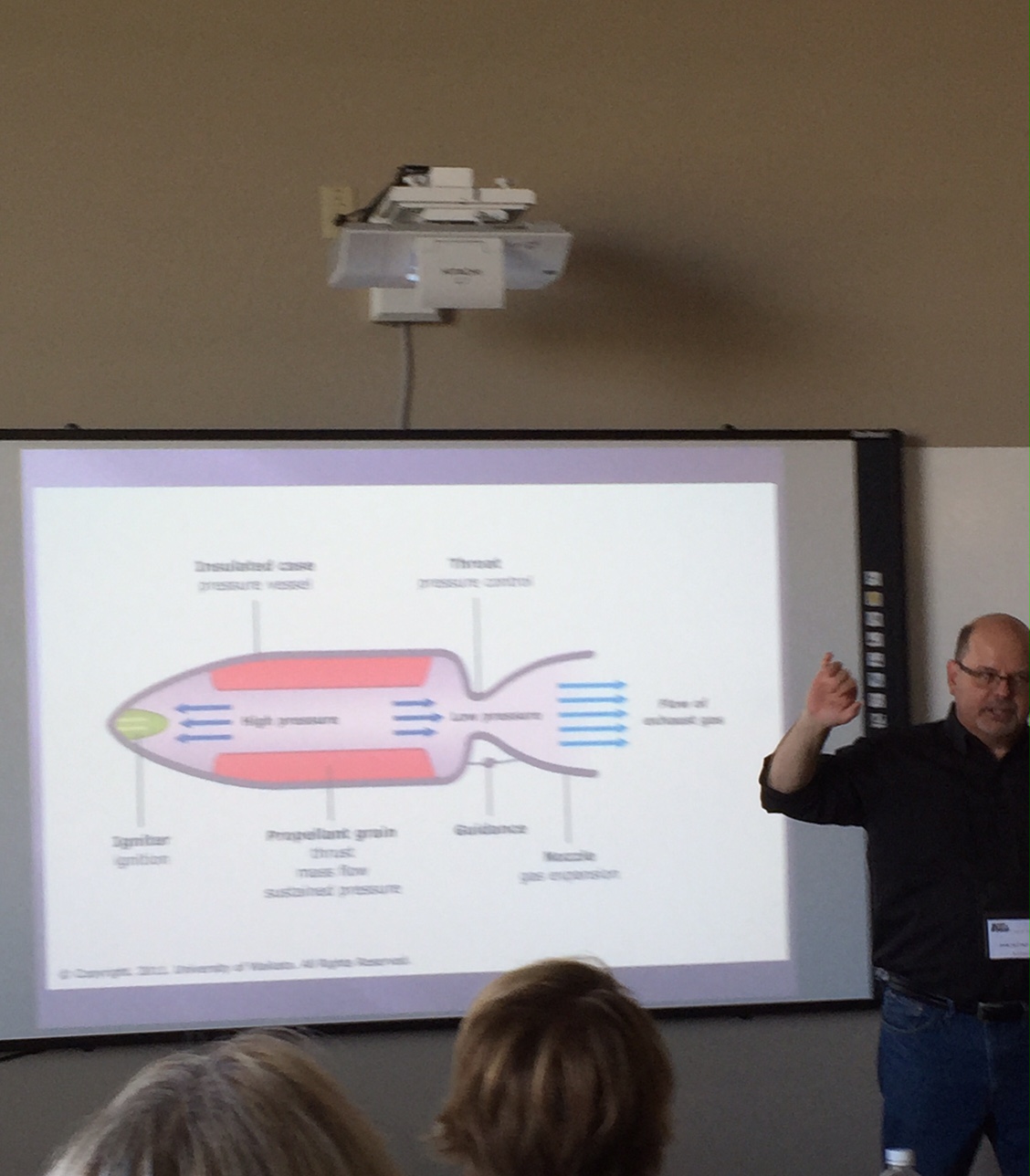
John Gilstrap teaching Bangs & Booms 101

John Gilstrap teaching Bangs & Booms 101

John Gilstrap, bestselling author of the Jonathan Grave series, conducted a program on explosives, Bangs and Booms 101, that was equal parts informative and hilarious. Gilstrap’s sense of humor, coupled with his extensive knowledge, made his session one of my WPA favorites. Amanda Thoma, coroner for Green Lake County Coroner’s office, was another top pick with her program From Crime Scene to Autopsy. In addition to her extensive credentials, her approach to her chosen profession was one that demonstrated her enormous enthusiasm, curiosity and respect for her profession. She had the room’s rapt attention from the time she started her session until she ended, and even with several pages of notes, I know we merely scratched the surface.

Laura's First Target Practice at the Indoor Firing Range

Laura’s first target practice at the indoor firing range

Nothing takes the place of hands-on experience and nowhere is this more evident than in the field of firearms training. I was fortunate to draw a slot for the pistol shooting range, and going through the firearms training was exhilarating and intimidating. And it turns out that I’m not such a bad shot, either.

Dan Feucht’s program on Bloodstain Pattern Investigation and Techniques was one that allowed attendees the benefit of hands on experience. It was a packed class, but Dan managed the group well, allowing each of us to conduct a couple of lab tests and also taking us through how to determine trajectory based upon various bloodstain patterns. Dr. Katherine Ramsland’s program on Forensic Psychology reminded me that truth is often stranger than fiction, and understanding a person’s motives and “why people do what they do” remains a complicated and fascinating puzzle.

The Crime Scene Photography course, conducted by Dr. Joe LeFevre, provided insight into how this critical role in law enforcement can assist in understanding a crime scene as well as provide valuable tools in understanding the relationship between objects at a scene and how they fit into the larger scenario. Joe took the class through his process of photographing a scene and discussed the techniques currently employed to protect photographic data from being altered or edited in any way. Protecting the chain of custody is paramount in order for the images to be beneficial in a prosecutorial capacity. Joe, a stickler for details and process, patiently answered our litany of questions and took us through an example of how we could photograph a crime scene. Depending upon the particular case, photographing a crime scene can easily take several hours, even going through ten to twelve hours if a death is involved. It is a specialty that requires patience, a disciplined methodology and a dedication to thorough detailed examination.

New York Times bestselling author Allison Brennan had us in stitches sharing her advice on how to get research right in fiction. Her willingness to share how she gleans the key details necessary for her novels was refreshing, and it’s clear that Allison is willing to go down a rabbit hole of research to garner one or two key details for a particular story. One excellent piece of advice she offered related to how to handle an interview with an expert, such as an FBI agent. “Ask smart questions,” she says. “Don’t waste time asking questions whose answers can be found online.” She added that the FBI website, for example, provided a number of excellent resources, so do your homework first before picking up the phone or sending an email.

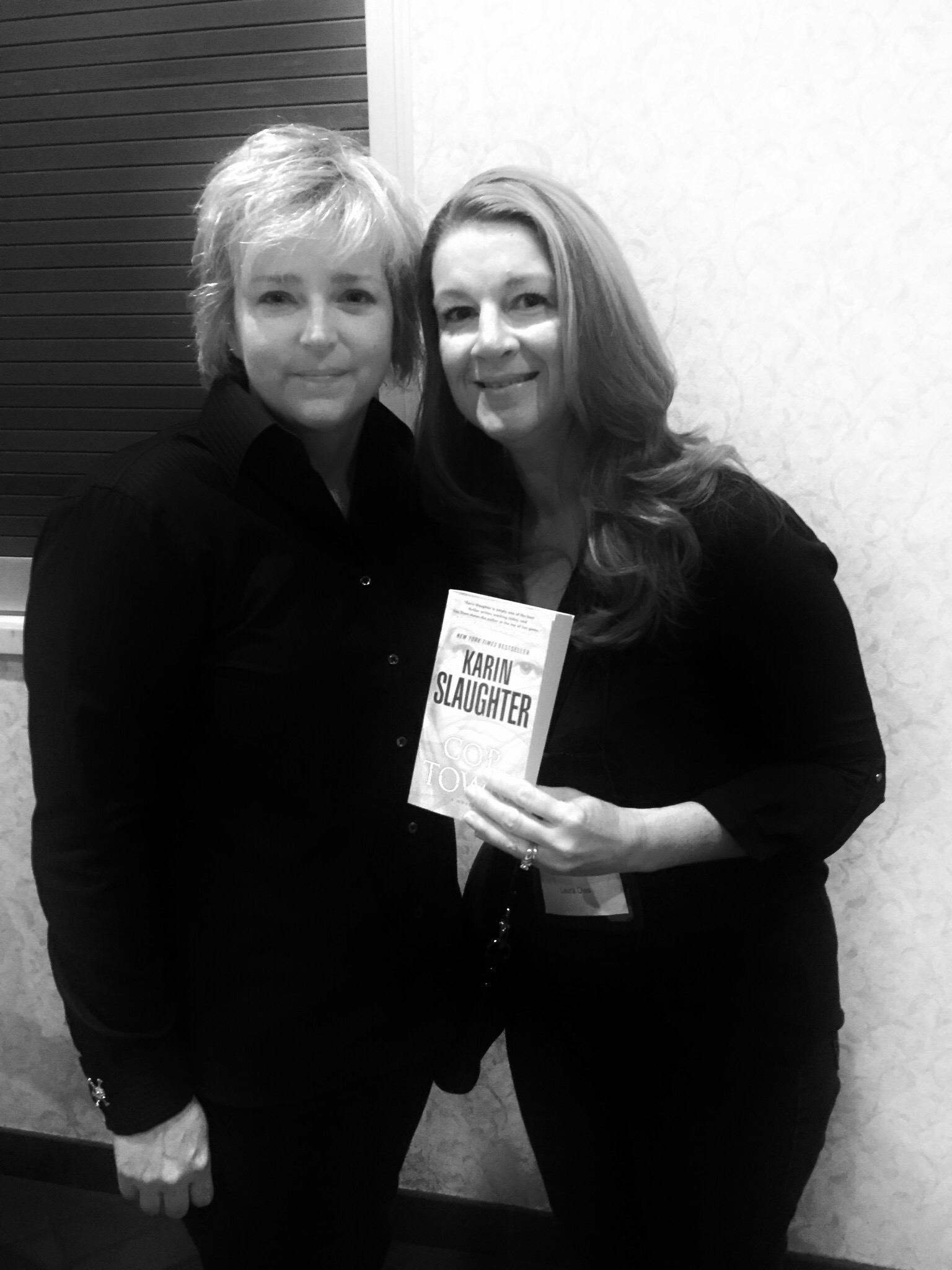
Meeting with Karin Slaughter after the WPA Banquet

Meeting with Karin Slaughter after the WPA Banquet

Karin Slaughter, the #1 internationally best-selling author of the Will Trent series, served as the keynote speaker for the WPA banquet, and she delivered a speech that, were I to try and explain it here, simply wouldn’t do it justice. Her wit is clever and fierce, and her delivery is deadpan and on target. Her speech demonstrated her prowess as a master of the spoken word as well as the written one. And yes, her next book, Pretty Girls, is on my reading list the moment it hits the stands (September 29).

Several authors I met have attended the Writers’ Police Academy more than once, and now that I have had my turn, I understand why. I hope to one day be able to attend WPA again because the hands-on aspect of this program is extremely valuable to those writing mysteries and crime fiction. Truly, there is nothing else like it, which makes it a gem in the field of writers’ conferences.

LRO-sanfran–Laura Oles

Shattering a Vase

…it was like taking a vase and setting it down so hard it shatters…

~  Tracy Chevalier

When I taught secondary English, grading essays was my least favorite task. I was happy to read them, but assigning letter grades? I hated that.

I hated judging. I hated trying to determine the difference between a B and an A, or, worse, between a B-plus and an A-minus.

But the worst–the part that made me want to moan like the Ghost of Hamlet’s father, “Oh, horrible, oh, horrible, most horrible!”–was listening to students who thought their work merited higher grades: “But I worked so harrrrrrrd.

Some had watched classmates complete an entire assignment during a lull in history class and then score A’s. It wasn’t fair.

“Harrrrrrrrrrd” was my signal to say that no, it didn’t seem fair, but that good writing comes from more than just time sheets and sweat. It’s the words on the page that matter.

Now, to my dismay, I sometimes find myself slipping into student mode. For example, when I submit a chapter to my critique group, or an agent, or a publisher, or a reviewer, or even a family member, and they find fault, or don’t even mention my genius, I have to restrain myself from wailing, But I worked so harrrrrrrd…

Each time it happens, I pull out the old talk about time sheets and sweat. I add that whingeing is the hallmark of the amateur.

And I meditate upon Tracy Chevalier.

Chevalier wrote the critically acclaimed historical novel Girl with a Pearl Earring. Her next (third) novel began as a draft written in third person, with small sections in first-person voices of children. The finished manuscript was a disappointment.

When I reread the first draft, she says,  I cried at the end. It was boring, dead weight, terrible. Then I looked it over and thought, there’s nothing wrong with the story except the way it’s told.

She found the solution in another contemporary novel:

I had the idea when, just as I was finishing the first draft in third person, I read Barbara Kingsolver’s The Poisonwood Bible, which uses five different voices beautifully. It’s a wonderful book, using multiple voices very successfully, and I thought, “Oh, that’s an interesting technique, I wonder if I should take the kids’ voices I’ve already written and have the three of them tell it.” It just felt right.

The revision was published as Falling Angels, an exquisite novel about a young wife and mother struggling to survive in the rigid, but rapidly changing, social structure of Edwardian England. The book is written in first person, from twelve perspectives, in twelve distinctive voices.

I came across Chevalier’s account when I was just beginning to write fiction and became obsessed with the work. Writing an entire manuscript, setting it aside, starting all over—it had to be pure drudgery. I couldn’t imagine putting myself through that. 

Recently, though, I reread the article and a different passage caught my attention—Chevalier’s description of the rewrite:

I took the draft, and it was like taking a vase and setting it down so hard it shatters, then putting the pieces back together in a different way. I rewrote the whole thing in first person with all these different voices.

That passage doesn’t describe drudgery. Shattering a vase, putting the pieces back together to make something new—that’s a picture of creation, of the excitement and the pleasure and the beauty that accompany it.

I love Tracy Chevalier’s novels and admire her talent. But, on a more personal level, I’m grateful to her for sharing publicly how Falling Angels made its way into print, for reminding me that hard work and drudgery aren’t synonymous, for implying it’s okay to cry over a bad draft and that perceived failure can turn into success, and for showing that the act of writing itself affords as much pleasure as the spirit is willing to embrace.

And—for tacitly suggesting that no one really needs to hear me whinge about how harrrrrrrrd I work.

It’s the words on the page that matter.

*****

Note: I do love Chevalier’s novels. In fact, I love Falling Angels so much that during library duty one Saturday morning, I was so intent on finishing the book—just racing toward the climax—that I unlocked the front doors but left the lights in the reading room off, and spent the next ninety minutes parked behind the circulation desk, reading and hoping no one would walk in and want something. I’m not proud of what I did, but patrons didn’t seem to notice anything different, and I finished the book.

Note: The angel pictured above stands in the Oakwood Cemetery in Hendersonville, North Carolina. Carved from Italian marble, she is the angel often referred to in Thomas Wolfe’s Look Homeward, Angel. Wolfe’s childhood home is in Asheville, about twenty miles north of Hendersonville.

*****

Information about Tracy Chevalier comes from Fiction Writers Review.

*****

Posted by Kathy Waller

Kathy

Kathy

Two of Kathy’s stories appear in
Austin Mystery Writers’ crime fiction anthology,
Murder on Wheels.
She blogs at Kathy Waller ~ Telling the Truth, Mainly,
and on the group blog, Writing Wranglers and Warriors.