Tell Me a Story!

By Helen Currie Foster

In My Reading Life, a grand book about reading and writing, author Pat Conroy says, “The most powerful words in English are ‘tell me a story…’” bit.ly/3PpSoHF

Yes! And don’t we know stories demand––require––insist on characters? Fairy tales––Jack in the Beanstalk, Hansel and Gretel. Epics––The Fellowship of the Ring, Star Wars. 

I love the beginning of Emily Wilson’s recent translation of The Odysseybit.ly/43Bdjvi

Tell me about a complicated man,

Muse, tell me how he wandered and was lost

When he had wrecked the holy town of Troy…

…Now, goddess, child of Zeus,

Tell the old story for our modern times.

Find the beginning.

So, how do writers create memorable characters? What works to create character? And why do we care? Isn’t it because character drives narrative?

Recall Shakespeare’s famous terse description in Julius Caesar: “Yon Cassius hath a lean and hungry look…” Those ambiguous words reach beyond the man’s shape or facial expression to hint at driving ambition…the very subject which drives the play’s narrative.

Or take Pride and Prejudice, published in 1813, and still one of the most loved novels in the English language. https://www.independent.co.uk/arts-entertainment/books/features/austen-power-200-years-of-pride-and-prejudice-8454448.html

How does Jane Austen create character? Looking back, I am surprised by the lack of physical description. She doesn’t tell us what Mr. or Mrs. Bennet, or the five daughters, look like. We’re given a few visual breadcrumbs, told that Bingley and Darcy are “handsome” and that Bingley “wore a blue coat and rode a black horse.” But her characters, with their personalities, their actions, largely come to life in our minds otherwise: by conversation.

Elizabeth overhears Mr. Darcy describing her as “tolerable but not handsome enough to tempt me”—a criticism she later recounts to friends, “for she had a lively, playful disposition.” Okay, there’s one aspect of Elizabeth—lively and playful. Yet after telling friends that Elizabeth “had hardly a good feature in her face,” Darcy “began to find it was rendered uncommonly intelligent by the beautiful expression of her dark eyes.” So she’s also intelligent! Elizabeth tells her sister Jane, “you are a great deal too apt…to like people in general. You never see a fault in any body.” Elizabeth is not just “playful” and “intelligent,” but a critical observer.

Using dialogue––what Elizabeth and Darcy say––Austen shows us how Elizabethand ultimately Darcy––think. In a world focused on superficiality—class, wealth, appearance, social skills and niceties––Austen makes us care about two characters who are too smart, too critical, too thoughtful, not to keep thinking and––ultimately––change their minds. Their characteristics (both pride and prejudice!) drive the narrative.

But hey, what about those dark eyes? Mr. Darcy disturbs the haughty Miss Bingley by saying he’s meditating on “the very great pleasure which a pair of fine eyes in the face of a pretty woman can bestow.” As all Austen readers know, that specific detail––“[A] pair of fine eyes”––will also powerfully move the plot.

Texas’s Larry McMurtry shows us how conflict between characters drives narrative. In his Lonesome Dove, the first character we meet is Augustus, sitting on the porch at the Hat Creek Cattle Company, in “the smidgin of shade he had to work with.” He has retrieved his jug from the springhouse and, as is his custom, he’s drinking Tennessee mash whiskey, which makes him feel “feel nicely misty inside.”

We’re in Augustus’s point of view when we meet his counterpoint, the other key character, his stubborn partner Captain Woodrow Call. Augustus, when he hears the whir of a nervous rattler in the corner of the springhouse, believes “in giving creatures a little time to think.” He doesn’t shoot the snake; he waits until the rattler has “calmed down” and crawled out a hole. He contrasts his own behavior to Call’s:

Call had no respect whatsoever for snakes, or for anyone who stood aside for snakes. He treated rattlers like gnats, disposing of them with one stroke of whatever tool he had in hand. “A man that slows down for snakes might as well walk,” he often said.

As  Call and their diffident hand, PeaEye, arrive at the porch, Augustus notes that while he himself stands four inches taller than Call, and Pea Eye three inches taller, there’s no way to convince Pea Eye that Call is the short man: “Call had him buffaloed.” Augustus knows that if a man means to hold his own with Call, that man must keep in mind that Call isn’t as big as he seemed. Thus Augustus begins many a day by remarking, “You know, Call, you ain’t really no giant.”

McMurtry doesn’t give us a detailed physical description of Augustus or Call. Instead, we hear them banter. We see Call’s impact on others, and how Augustus works to maintain his own status vis à vis Call. Right off the bat McMurtry makes us feel the sheer force of two characters, two magnetic and conflicting personalities, and their relationship, as we’re launched into this epic tale. Their characters, the combined magnetism and conflict, drive us to Montana…and back…

We first meet Sir Arthur Conan Doyle’s character Sherlock Holmes in A Study in Scarlet, when Holmes is introduced to the narrator, Dr. Watson, as a potential roommate. Watson walks into the lab: “There was only one student in the room, who was bending over a distant table absorbed in his work. At the sound of our steps he glanced round and sprang to his feet with a cry of pleasure. ‘I’ve found it! I’ve found it,’ he shouted to my companion, running towards us with a  test-tube in his hand.” Then he shakes hands with Watson: “You have been in Afghanistan, I perceive.” Watson is astonished. bit.ly/3N0U4Ep

We get no actual physical description of Holmes until Chapter Two. Instead, we confront Holmes’s vigor, curiosity, perspicacity, confidence in his own powers. Similarly, in “A Scandal in Bohemia,” Watson first describes Holmes’s “immense faculties and extraordinary powers of observation” in deciphering clues. Then, looking up from the street, Watson sees the detective’s silhouette on the window-shade: “I saw his tall, spare figure pass twice…He was pacing the room swiftly, eagerly, with his head sunk upon his chest and his hands clasped behind him.” Watson instantly knows, “He was at work again.”

The author engraves that image of Holmes, pacing eagerly, on our imaginations. We can’t wait to see Holmes in action: that’s what we’re reading for.

Herman Melville deprives the reader as well as Ishmael, the narrator of Moby Dick, of even one glance at Captain Ahab until Chapter 28, when Ishmael is well out to sea on the whaling ship Pequod. Ahab finally appears on deck and stands erect, holding on by a shroud, his bone peg-leg planted in the auger hole drilled on deck for that purpose:

There was an infinity of firmest fortitude, a determinate, unsurrenderable wilfulness, in the fixed and fearless, forward dedication of that glance. Not a word he spoke; nor did his officers say aught to him; though…they plainly showed the uneasy, if not painful, consciousness of being under a troubled master eye…moody stricken Ahab stood before them with a crucifixion in his face; in all the nameless regal overbearing dignity of some mighty woe.

The word “character” comes from the Greek root for “engraving tool.” https://www.merriam-webster.com/dictionary/character If ever character was engraved on a person’s body, Melville’s description of Ahab and his impact on his shipmates qualifies. The uneasy silence of the officers! The crucifixion in Ahab’s face! His unsurrenderable wilfulness, fixed and fearless!

If that’s not enough foreshadowing, in Chapter 36, Ahab demands the entire crew to assemble and then hammers a gold piece to the mast for the first man who sees the white whale which took off Ahab’s leg—Moby Dick. Starbuck objects: he signed on to hunt whales, not to take vengeance on a mere animal, which he calls blasphemous. But Ahab makes the rest of the crew swear: “Death to Moby Dick!” Melville creates a character whose physical description conveys tragic history and deep emotion, and whose forceful actions persuade the crew to follow him. We know there’s no stopping Ahab now. And we haven’t yet met the whale.

Pat Conroy also tells us, in My Reading Life, of the day his beloved high school English teacher, Greg Norris, took sixteen-year old Conroy to visit the poet Archibald Rutledge. Rutledge “suggested that I make the close observation of nature part of my life’s work and that I learn the actual names of things,” because “specifics always proved fruitful to the validity of any narrative”:

“A Cherokee rose, not just a rose. A swallowtail butterfly, not just a butterfly. That kind of thing,” he said. “Get the details right. Always the details.”

https://en.wikipedia.org/wiki/Rosa_laevigata

Always a great reminder for mystery writers. My character Alice, in the Alice MacDonald Greer Mystery series––stays on me to get the details right. https://bit.ly/3qC2fzI

So–tell me a story! Show me the character! Get the details! And we’re off!

About Helen Currie Foster

I live north of Dripping Springs, Texas, supervised by three burros. I’m deeply curious, more every day, about human history and prehistory and how, uninvited, the past keeps crashing the party. I’ve loved the Texas Hill Country since my first sight of it as a teenager. Artesian springs, Cretaceous fossils, rocky landscapes hiding bluegreen water in the valleys. After law school (where I grew fascinated with water and dirt) I practiced environmental law and regulatory litigation for thirty years––then the character Alice suddenly appeared in my life. I’m active with Austin Shakespeare and Heart of Texas Sisters in Crime. And I’m grateful to the readers who enjoy the Alice MacDonald Greer Mystery series!

by Kathy Waller

[The blogger having been rendered incapable of typing with more than five fingers, she repeats a post that appeared on Austin Mystery Writers in 2015.]

*****

. . . it was like taking a vase and setting it down
so hard it shatters . . .

~  Tracy Chevalier

When I taught secondary English, grading essays was my least favorite task. I was happy to read them, but assigning letter grades? I hated that.

I hated judging. I hated trying to determine the difference between a B and an A, or, worse, between a B-plus and an A-minus.

But the worst–the part that made me want to moan like Hamlet’s father’s ghost, “Oh, horrible, oh, horrible, most horrible!”—was listening to students who believed their work merited higher grades: “But I worked so harrrrrrrd.” 

Some had watched classmates complete an entire assignment during a lull in history class and then score A’s. It wasn’t fair.

“Harrrrrrrrrrd” was my signal to say that No, it didn’t seem fair, but that good writing involves more than time sheets and sweat. It’s the words on the page that matter.

Now, to my dismay, I often find myself slipping into student mode. For example, when I submit a chapter to my critique group, or a beta reader, or even a family member, and they find fault, or don’t even mention my genius, I have to restrain myself from wailing, But I worked so harrrrrrrd…

Each time it happens, I repeat to myself the old lecture about time sheets and sweat. I add that whingeing is the hallmark of the amateur.

And I meditate upon Tracy Chevalier.

Chevalier wrote the critically acclaimed historical novel Girl with a Pearl Earring. Her next novel began as a draft written in third person, with small sections in first-person voices of children. The completed manuscript disappointed her.

When I reread the first draft, she says,  I cried at the end. It was boring, dead weight, terrible. Then I looked it over and thought, there’s nothing wrong with the story except the way it’s told.

She found the solution in another contemporary novel:

I had the idea when, just as I was finishing the first draft in third person, I read Barbara Kingsolver’s The Poisonwood Bible, which uses five different voices beautifully. It’s a wonderful book, using multiple voices very successfully, and I thought, “Oh, that’s an interesting technique, I wonder if I should take the kids’ voices I’ve already written and have the three of them tell it.” It just felt right.

The revision was published as Falling Angels, an exquisite novel about a young wife and mother struggling to survive in the rigid, but rapidly changing, social structure of Edwardian England. The book is written in first person, from twelve perspectives, in twelve distinctive voices.

I came across Chevalier’s account when I was just beginning to write fiction and had become obsessed with the work. Writing an entire manuscript, setting it aside, starting all over—it had to be pure drudgery. I couldn’t imagine putting myself through that. 

Later, though, I reread the article and a different passage caught my attention—Chevalier’s description of the rewrite:

I took the draft, and it was like taking a vase and setting it down so hard it shatters, then putting the pieces back together in a different way. I rewrote the whole thing in first person with all these different voices.

That passage doesn’t describe drudgery. Shattering a vase, putting the pieces back together to make something new—that’s a picture of creation, of the excitement and the pleasure and the beauty that accompany it.

I love Tracy Chevalier’s novels and admire her talent. But, on a more personal level, I’m grateful to her for sharing publicly how Falling Angels made its way into print—for reminding me that hard work isn’t synonymous with drudgery, for implying that it’s okay to cry over a bad draft and that perceived failure can turn into success, and for showing that the act of writing itself affords as much pleasure as the spirit is willing to embrace.

And—for tacitly suggesting that no one really needs to hear me whinge about how harrrrrrrrd I work.

It’s the words on the page that matter.

*****

Note: I really do love Chevalier’s novels. In fact, I love Falling Angels so much that during library duty one Saturday morning, I was so intent on finishing the book—just racing toward the climax—that I unlocked the front doors but left the lights in the reading room off, and spent the next ninety minutes parked behind the circulation desk, reading, and hoping no one would walk in and want something. I’m not proud of what I did. It was unprofessional. But patrons were understanding. And I finished the book.

*****

Information about Tracy Chevalier comes from Fiction Writers Review.

*****

Kathy Waller blogs at Telling the Truth, Mainly, and with Austin Mystery Writers. Her stories have been anthologized in Murder on Wheels, Lone Star Lawless, and Day of the Dark, and online in Mysterical-E.

Music to Our Ears!

by Helen Currie Foster

On April 2 I drove with my writing compadre D.L.S. Evatt (aka Dixie) to Houston to sign books at Murder by the Book. That renowned bookstore has sold mysteries for 42 years. Huzzah!

We’d launched our books–my Ghost Daughter, Book 7 in the series, and her Bloodlines and Fencelines–at our Honky-Tonk Book Launch on December 5, 2021, at venerable Sam’s Town Point, a South Austin treasure for decades. The owner, Ramsay Midwood, declared it was the “first book launch” for Sam’s. Before the band––Floyd Domino’s All-Stars––began playing, Austin Shakespeare’s Ann Ciccolella interviewed us. Her first question: “why have a book launch at a honky-tonk?”

Dixie and Helen

Why? For all the right reasons—great beer signs, dance floor, pool table, and music. But the main reason: murder mysteries set in small Texas towns must have a place where townspeople meet, where news is exchanged and gossip is passed along, where people see friends and frenemies and fall in love, where the past isn’t forgotten but the present is very much in play.

For Alice Greer, the lawyer protagonist in my Ghost series, the century-old Beer Barn is that place. Artisanal beers, excellent Tex-Mex food, the requisite dance floor—and the mix of music that says “Texas Hill Country.” In Dixie’s Bloodlines and Fencelines, that place is Sara’s General Store.

Of course setting is crucial in mysteries. For a small town setting, a “town crossroads” becomes a useful dramatic tool, providing a place where the mystery’s protagonist runs into various characters and hears (and evaluates) their stories, slowly unraveling the truth of a murder. Have you ever lived or visited relatives in a small town? You may have identified potential locations that would work well in a mystery. In Itasca, Texas, home of my maternal grandparents (and the Itasca Wampus Cats), it might’ve been the church fellowship hall, or the one café that served breakfast and lunch, or (I keep returning to this thought) the frigid meat locker downtown where, like many families, my grandmother kept her side of beef, back before home freezers. I still remember the sharp cold vapor of the meat locker. Imagination stirs…

At any rate, Sam’s Town Point was perfect for a book launch. When we scouted Sam’s, Dixie took a look around and said, “There are stories in these floorboards.” So we wrote a song, “Stories in the Floorboards,” which premiered last month at our book event at the Austin Woman’s Club, sung by songwriter/actress Helyn Rain Messenger.

We asked John McDougall at Murder by the Book if he knew of other authors who’d written or commissioned a song for their book launch. He said, yes, Harlan Coben and Jeffrey Deaver had done so, and Lee Childs had commissioned an entire album. Well!

The notion of an album set me thinking of John Rebus, the crusty Edinburgh cop made famous by author Ian Rankin. Rebus, acerbic and brilliant, likes his music. In Black and Blue, he sticks a tape in his car cassette player – Robert Wyatt, Rock Bottom, then Deep Purple, Into the Fire.” That title matches the heat of the fix he’s in at that point. (Later in the series, the cassette player becomes a CD player.) But at home, he still relies on the hi-fi.In Rather Be the Devil, set in his ways, now retired and older than dirt, Rebus knows he has an ominous shadow on his lung as he enters his apartment: “A glow from the hi-fi system that told him he hadn’t switched it off. Last album played: Solid Air. Felt like that was what he was walking through…” https://www.amazon.com/s?k=rather+be+the+devil+by+ian+rankin&crid=11GFHLFGLRGUT&sprefix=%2Caps%2C135&ref=nb_sb_ss_recent_1_0_recent

Rebus has stuck to his old technology. And now he’s ahead of the curve. Vinyl sales are up: “Left for dead with the advent of CDs in the 1980s, vinyl records are now the music industry’s most popular and highest-grossing physical format, with fans choosing it for collectibility, sound quality or simply the tactile experience of music in an age of digital ephemerality. After growing steadily for more than a decade, LP sales exploded during the pandemic.In the first six months of this year, 17 million vinyl records were sold in the United States, generating $467 million in retail revenue, nearly double the amount from the same period in 2020, according to the Recording Industry Association of America.”

https://www.nytimes.com/svc/oembed/html/?url=https%3A%2F%2Fwww.nytimes.com%2F2021%2F10%2F21%2Farts%2Fmusic%2Fvinyl-records-delays.html

Moreover, it’s not retirees pushing this trend: “And while you might think it’s nostalgic Boomers or Gen Xers behind the renaissance of records, in fact surveys show it’s millennial consumers driving the rising trend in vinyl sales.” https://www.themanual.com/culture/why-vinyl-is-coming-back/

Why? For some, vinyls are the new collectible. But maybe it’s about the additional experience involved in listening to a favorite chunk of music. Rebus, for instance, is not listening to streamed music, not asking Alexa to play music that “sounds like” some musician. No, he’s taking a number of steps, both mental and physical, before he begins to experience the music he’s after. He’s choosing an album, seeing the familiar cover again, sliding the fragile (yet powerful) disc from its jacket, and placing it on the turntable. The album represents an entire experience, not just one cover song. Then he’s lifting the arm, carefully lowering the needle, hearing the introductory hum and scratch and—there it is again, the music that lives in his memory and is playing out again right now, in his living room. He’s making music.

Moreover, he’s activating memories, and perhaps comparing the memories of the music with his present situation, as Rebus does here, thinking the song title—John Martyn’s “Solid Air”—“felt like … what he was walking through.” (A compelling description. https://www.youtube.com/watch?v=UikPQOaJpfU)

Writers use music in mysteries to add depth to the protagonist’s character. Inspector Morse, alone in his flat, listens to opera. Lord Peter Wimsey plays Bach on his baby grand; Sherlock Holmes plays the violin and attends opera. Rebus relies on the music of his time, has the albums, still has t-shirts from concerts he attended. Detectives need a listening ear, need to be able to discern the sound of a lie, hear the tremble in a frightened voice. What the sleuth chooses to listen to can almost make us feel we’re hearing background music. Music becomes the continuo, the bass line that we feel beating like a heart as a book comes to life.

Because—even if we don’t know the specific notes Holmes is fingering on his violin, or which Bach fugue Wimsey is toying with, or which Wagnerian album Morse has put on his hi-fi, or precisely what “Solid Air” sounds like, we do have a huge memory vault of similar music that bubbles up as we read a mystery. We may not quite create the same soundtrack the author had in mind, but our brains engage.

Book 5 of my series, Ghost Next Door, involves a murder at the Coffee Creek city park, the night before Coffee Creek’s first barbecue competition. My protagonist, lawyer Alice Greer, is part of the happy crowd under the stars, listening to keyboard geniuses playing varieties of boogie-woogie, a genre which may have begun in the lumber camps of East Texas and still flourishes in Austin. Early in the evening Alice hears “Right Place, Wrong Time,” presaging what happens next. https://www.youtube.com/watch?v=hf15HrUZ5Wk. The following night she and her romantic interest, Ben Kinsear, attend the Pianorama at the Beer Barn (Alice’s favorite client). Six piano players are trading licks, winding up with Freddie Slack’s “Down the Road A Piece,” with its rippling magic trick at the end, https://www.youtube.com/watch?v=OX8TPanPKzU, and ending with Slack’s haunting theme song, “Strange Cargo.” https://www.youtube.com/watch?v=tQM46xi031M

The crowd demands an encore, Alice listens as the theme grows “more complex, begins to create dreams, memories, ambitions.” The music reflects Alice’s emotions.

Music memory involves several different parts of our brain. “Different types of music-related memory appear to involve different brain regions, for instance when lyrics of a song are remembered, or autobiographical events are recalled associated with a particular piece of music.” https://academic.oup.com/brain/article/138/8/2438/330016

And it may be for that reason that music stays in our brains longer than many other memories. https://kids.frontiersin.org/articles/10.3389/frym.2017.00005#:~:text=Our%20brains%20possess%20a%20remarkable,might%20know%20it%20by%20heart.

You already know this. Your personal music catalog—music from your past, your present, your childhood, your teenage years, and the new piece of music you just listened to—is with you, quietly ticking away in your brain, available and waiting. And there’s always more to add.

So, you could check out the line-up at Sam’s Town Point. Go Hear Floyd Domino’s All-Stars. Keep filling the music catalog…

https://www.samstownpointatx.com/

Helen Currie Foster writes the Alice MacDonald Greer “Ghost” series, north of Dripping Springs, Texas, supervised by three burros. She’s fascinated by dirt and water law, as well as human history, and the way the past, uninvited, keeps crashing the party.

Ghost Daughter, Book 7, was named Semifinalist for the BookLife Prize for Mystery/Thriller (“an intriguing and complex narrative”). Book 8 is underway.

blog reference

Tipper: My Manager Extraordinaire

by K .P. Gresham

I suspect most of us have our secrets about how we survived the Pandemic of ’20-’21. Video games, binge-watching movies, reading like a fiend–you get the idea.

My secret was my dog, Tipper. Or should I say my manager. Tip’s a fifteen-pound rescue dog of the Chihuahua meets Terrier variety. Nobody wanted to adopt him because he has bad knees. Really? I’ve had two knee replacements and nobody ever threw me out on the street. Tipper came home to live with me and my better half, Kevin, that very day. 

Now, eight years later, it is my dog who has rescued me. Or should I say bosses me around. Thanks to him, I have the next installment of the Pastor Matt Hayden Mystery Series, Four Reasons to Die, later this summer. 

This is the schedule Tip put me on from the pandemic’s git-go. First, he begins his slow process of waking–this entails laying beneath the bed covers for at least a half hour after Kevin and I are already up, then he slowly rises like a ghost from the grave because the sheets trail after him as he fights his way out of bed, and finally, he spends another half hour under the bed to avoid the rising sun. His last half hour of officially waking iup is spent in my lap while I finish my morning pot of coffee.

And then he jumps down from my lap, game face on. Enough lolly-gagging on my part. Time to get to work.

We start our day with a three-mile walk. Tip has decided this is the amount of time it takes for me to chew through the scene I have to write that day. When we come home, he demands breakfast, then shoos me upstairs to my office to get to work. No shower. No breakfast. It’s work time. To make sure I stay at it, he takes up residence on the small couch in my office and does not leave it until he hears my husband (who during Covid works in his office downstairs) making lunch. Then Tipper jumps down from the couch and scratches at my leg to tell me to take a break. But does he come downstairs with me? Oh, no.  He goes back to his couch where he waits for fifteen minutes while I make my lunch and put some tidbits in his bowl. THEN, he comes down.

I finally get my shower after lunch–remember, he doesn’t let me take it before since he’s sure I will forget what I’ve decided to write during our walk. Only then does he allow me to return to my office to get back to work.

At 4:00, Tipper believes our work for the day is done. This is the time when, pre-pandemic, my neighbors and I used to get together to watch Jeopardy. We couldn’t, of course, during the Pandemic, but Tipper never got the memo. At 4:00, we’re supposed to close up shop. I oftentimes decide to keep on working until Kevin was done with his day, and Tipper thinks this is sacrilege. He leaves his couch to sit by my feet and growls as I type away. He believes its against his contract to work such long hours and has threatened several times to call Animal Rescue to arrest me.

I didn’t understand how serious he was about his managerial duties until he started wearing a tie to work. And proofing everything I write. And working on his own stories.

Lord help me, they’ll probably be better than mine…

Thank goodness for my little Tipper. I wouldn’t have made it through the Pandemic without him.

Coming Soon (Thanks to Tipper)!

Four Reasons to Die

The 4th Book in the Pastor Matt Hayden Mystery Series

 When Pastor Matt Hayden steps up to give the Texas Inaugural Ceremony’s benediction after the scheduled minister, Reverend Duff, disappears, he finds himself embroiled in a religious war, a political power-grab, and murder.

 The missing Duff, a progressive leftist, is locked in a bitter, public battle with the ultra-conservative Reverend Meade. Duff has also taken on U.S. Senator Womack, a far-right Presidential hopeful whose only love is himself.

 Matt joins the search for the missing pastor, but is he prepared to discover the true evil that threatens his family, including the new governor…and his beloved Angie?

***

Where to Find Me

Website: http://www.kpgresham.com/

Email: kp@kpgresham.com

Blogs: https://inkstainedwretches.home.blog/

https://austinmysterywriters.com/

Facebook: https://www.facebook.com/kpgresham

Books by K.P. Gresham

Three Days at Wrigley Field

The Pastor Matt Hayden Mystery Series

The Preacher’s First Murder

Murder in the Second Pew

Murder on the Third Try

We Don’t Need No Stinkin’ Rules

Alpine 2014 137

Last week I attended the Writers’ League of Texas Summer Retreat in Kerrville, Texas. I was in the Write Away section–didn’t take a class but spent all day writing–and I got a lot done. The week was pleasant. But I’d been to WLT retreats before, and this one just wasn’t what the others had been. Something was off. 

It took me four days to figure out what was missing: Gale.

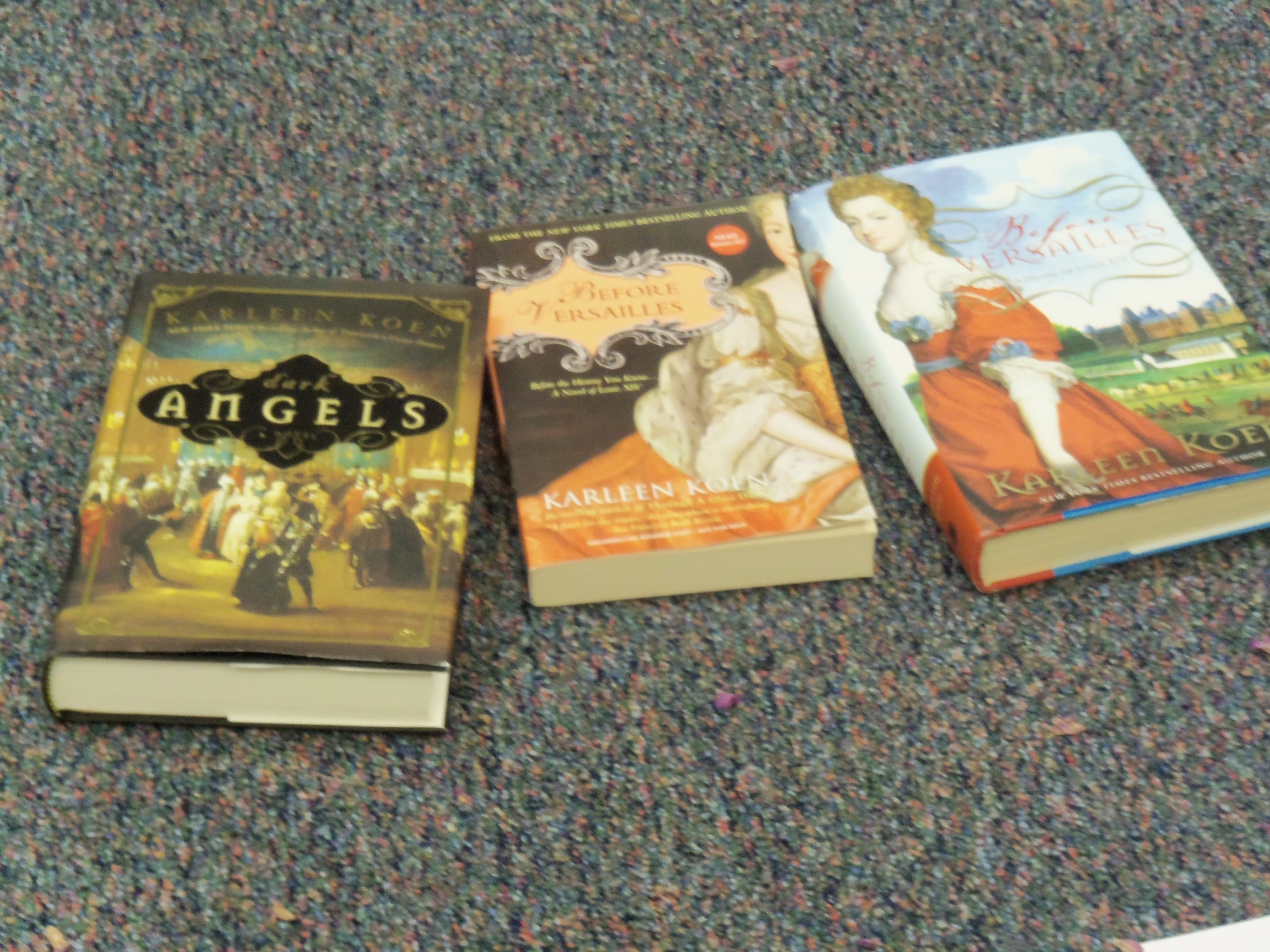
Austin Mystery Writer Gale Albright and I were retreat and workshop junkies, and we attended them together whenever we could. The highlight was the 2014 WLT retreat in Alpine. We took the class in That Damned Rough Draft, where novelist Karleen Koen told us she couldn’t teach us to write, but she could teach us to play. We spent the entire week engaged in activities designed to stimulate creativity–in other words, playing.

Gale didn’t really need to be taught to play. She was already an expert. Under her direction, we played all over the greater Alpine area–Marfa, Terlingua, Fort Davis, the MacDonald Observatory, Big Bend. We considered taking a side trip through Del Rio on the way home, but absence of a gasoline station in Marathon (I think we were looking in the wrong place) turned us around and sent us back the way we’d come. We enjoyed being crazy, but we weren’t stupid.

Gale died in 2016. Without her, retreats just aren’t the same.

This week, AMW repeats the post Gale wrote about that WLT Summer Retreat in Alpine in 2014 and some of the things we learned while Karleen taught us to play. ~ M.K. Waller

***

Rules for writing?

Outline? No outline? Seat of the pants?

Karleen Koen, instructor for That Damned Rough Draft at the Writers’ League of Texas summer writing retreat at Sul Ross University in Alpine, says there are no rules for writing. And she never said the phrase, “We don’t need no stinkin’ rules.” That’s my inner child cutting up.

She said she wouldn’t teach us to write, but would help us learn how to play. If you play, your inner child, your subconscious, will make itself known and your writing will be the richer for it.

And another thing. Writing a novel is hard–real hard.

We are adventurers, embarking on the quest of a lifetime, daring everything on a wild, reckless throw of the dice. Fame and fortune. Or maybe no one will pay attention at all.

According to Koen, a writer’s tools are her words. An artist has brushes and canvas, a sculptor his clay. We have only words to bring a whole new world to life, a world of our own creation. We must lure and seduce readers to enter our world with our use of words.

Not Rules but Suggestions:

Don’t talk your story away. Energy you need for the story goes out at the mouth.

Writers are looking for affirmation. We never get enough.

Grant yourself permission to write badly. The point is to be writing.

Poetry helps writers with their voice. Karleen Koen always reads poems before class begins.

Writing the rough draft is not a time to perfect your prose. Let your subconscious work with you. A rough draft is not linear. The novel is hard. You have to willing to commit to the marathon. Not the sprint.

Alpine 2014 135You have to pay attention to anything that excites you as a writer.

Nobody can see our hard work if we’ve done our work right. It looks slick. Bumps come with writing novels.

Our suffering is invisible to everyone but us.

Magic and alchemy are part of a story. They take the reader to another world.

You need time and space to create.

Don’t compare. Everybody feels bad when you compete

I need to know what I don’t know. I want to get the story finished. Have I bitten off more than I can chew?

What makes a novel? Hook, plot, tension, character, dialogue, scenes, ending, middle, beginning–magic.

Painters have color

Sculptors have clay.

All writers have are words.

Karleen suggests these daily exercises to tempt forth your magic, muse, subconscious, inner child, whatever makes you tick.

Keep a writer’s diary and write about your writing self every day.

Write three longhand morning pages first thing when you wake up every day, no editing. Don’t think. Just write whatever comes into your  head.

Alpine 2014 114Take photographs and write about them. Take pictures of whatever “pings” in  your gut. Write about why.

Don’t let your editor subdue your creator, even in revision.

Don’t share writing with just anyone. Writing is part of our inner child. Too much criticism shuts you down.

Your first reader is very important. All you want to ask the first reader are three questions about your manuscript:

  1. What did you like?
  2. What do you want to know more about?
  3. Where did I lose you?

This will help shape the novel and show where you are off pace.

Cool down between drafts.

Learn to play with words. Be creative and loose.

Find a niche that’s well calibrated to your interests and your talent.

You can only develop your voice by writing.

Enter your story and take us with you.

Know how your hero/heroine is going to be transformed by the end of the novel.

Sometimes revision can lead to beating a dead dog. You’ve been to the well too many times.

You adventurer,  you.

Alpine 2014 206My inner child likes murals. Is there a novel in them?

By Gale Albright

Bad Men, Lawless, and BSP

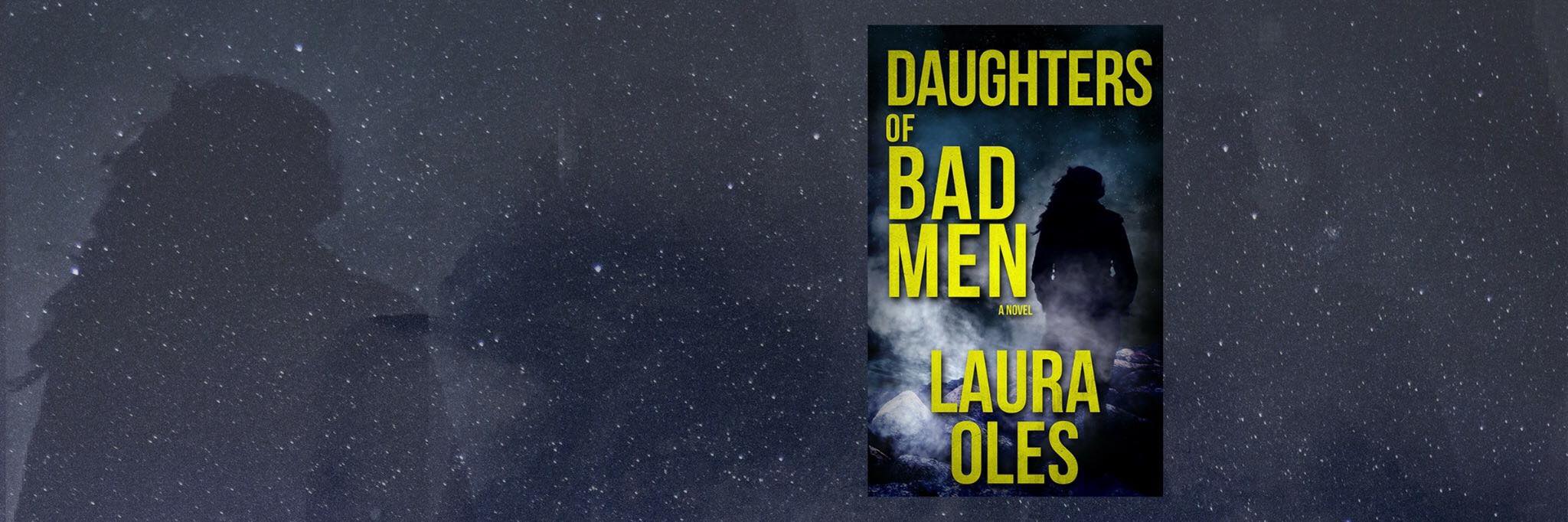
Laura Oles celebrates doubly this month–today her debut novel, DAUGHTERS OF BAD MEN, was released by Red Adept Publishing, just a week after Austin Mystery Writers’ LONE STAR LAWLESS, in which Laura’s story “Carry On Only” appears, was released by Wildside Press. Here’s what I posted about these publications at Writing Wranglers and Warriors. Laura will be along presently to tell you more.

***

I turned on my Kindle today to find Laura Oles’ Daughters of Bad Men, had appeared in its library, overnight, as if by magic. That’s a perk of pre-ordering. Laura is one of my critique partners in Austin Mystery Writers, and Daughters of Bad Men is her first novel.

I’ve been in AMW for six or seven years–can’t remember exactly–but membership is one of the best things that’s happened since I began writing for publication.  Examining others’ work and hearing their comments on mine has made me a better writer. Members have become my friends. Together we’ve enjoyed workshops and lunches and weekend retreats.

And I’ve acquired a new virtue: I’m genuinely happy when other members get their work published.

My skin turns Shrek green, but I’m happy.

Offsetting today’s greenish tinge over Laura’s debut, I’m also happy to announce . . .

Read the rest of the post here.

LONE STAR LAWLESS Is Here!

LONE STAR LAWLESS:
14 Texas Tales of Crime

by

Austin Mystery Writers and Friends

Paperback and Kindle formats  available from Amazon.com 

Proceeds to be donated to Ellis Memorial Library in Aransas Pass, Texas
to help replace collections destroyed in Hurricane Harvey

Wildside Press, 2017

***

 And watch for Laura Oles’ first mystery novel 

DAUGHTERS OF BAD MEN

November 14, 2017


Morning Pages: Don’t Speak. Don’t Judge. Don’t Fall Asleep.

Browsing through the AMW blog, I came across the title, “Morning Pages: Don’t Speak. Don’t Judge. Don’t Fall Asleep.” And I thought, What a cute title. I wonder who the author is. A couple of clicks later I discovered the author was moi. I wrote it in 2014. Quelle surprise, as those of us who took one summer class in French just for fun say but can’t remember how to spell. (I looked it up.) I also found I kind of liked it,* and since it’s mine, I’m giving myself permission to re-post. 

***

Karleen Koen

The first day of last summer’s Writer’s League of Texas retreat, author-instructor Karleen Koen told students that every morning before class, we must do Morning Pages: Wake up, don’t speak, take pen and paper–not computer–and, while still drowsy, write “three pages of anything.” Don’t judge. Keep the pen moving. In her course notebook, Karleen listed the following:

Stream of consciousness, complain, whine, just move your hand across the page writing whatever crosses your mind until you get to the end of page three.

Karleen stressed that she didn’t invent Morning Pages. The technique, minus the name, came from the book Becoming a Writer by teacher Dorothea Brande, published in 1934 and reissued in 1981. Author John Gardner, in his foreword to the reprinted edition, states it was “astonishing” that the book had ever gone out of print.

Becoming a Writer by Dorothea Brande

Ms Brande advises aspiring writers to “rise half an hour, or a full hour, before you customarily rise.” She continues,

Write anything that comes into your head: last night’s dream, if you are able to remember it; the activities of the day before; a conversation, real or imaginary; an examination of conscience. Write any sort of early morning reverie, rapidly and uncritically. (Brande, p. 72)

Julia Cameron, in her bestselling The Artist’s Way, published in 1992, named the process Morning Pages and made them the cornerstone of her Artist’s Way program. Cameron considers them a form of meditation.

Why we do Morning Pages? To quiet the internal critic; to tap into the subconscious; to discover what you know; to remember and to capture the present; to build fluency, the ability to “write smoothly and easily when the unconscious is in the ascendant.” (Brande, p. 72) And, as Koen notes, to whine and complain.

When I do Morning Pages, I like to focus on whining and complaining. Words of discontent virtually flow from my pen when I follow Brande’s instruction to rise early. To wit:

The morning after Karleen assigned Morning Pages, my roommate and I woke to my cell phone alarm at seven rather than the previous day’s eight. (I think that was the morning the phone flew from the nightstand and landed on the concrete floor.) I propped myself up on a couple of pillows, gathered the pen and the notebook I’d placed on the nightstand before retiring the night before, and started to write.

While I wrote, my roommate sat on the side of her bed. Instead of picking up her notebook, she spoke. I reminded her we weren’t supposed to talk. She told me she didn’t care what we weren’t supposed to do. After violating the rules once or twice more, she started on her Morning Pages.

Roommate Gale Albright drinking tea and smiling

In my usual all-or-nothing fashion (a tiny bit of OCD), I wrote through hand cramp and shifting pillows. Halfway through, I fell asleep. When I woke about a half-hour later, I resumed scribbling.

My roommate had already finished her Pages. She had dressed. She had sat on the porch and drunk a cup of hot tea. She was smiling.

Sometimes it is better to bend the rules.

At break time, I quoted to Karleen the first sentence of my Morning Pages: I don’t like Karleen any more. (I said it in bold font.) She laughed and asked if I knew how funny I was. I didn’t tell her I was dead serious. I knew that before the end of the day I would like her again, and if I told the truth now, I would have to apologize later, and I just didn’t have the energy.

Since I’m confessing, I might as well admit that, while I was scribbling, I figured out a fool-proof way to make Morning Pages a positive experience: Use a notebook with little tiny pages. They fill up faster.

Looking back, I’m ashamed of the thought, but at the time it seemed a darned good idea. Sometimes it still does.

Anyway. Having griped about that miserable experience, I’ll also admit that Morning Pages work. I’ve done them off and on since 1998, when I heard Julia Cameron speak at the Austin Whole Life Festival. A small group of young men stood outside Palmer Auditorium holding placards and begging attendees to abandon chakras and crystals and choose reason instead, while inside, Cameron shared the most reasonable ideas on stimulating creativity.

So I read The Artist’s Way and, although a 17-cent spiral notebook would have sufficed, I bought a copy of The Artist’s Way Journal. (The Journal had enormous, narrow-ruled pages that took forever to cover, but having the proper tools is important to us obsessive types.)

Then I wrote. And whined. And complained. As I did, the garbage in my head oozed down my arm, through my hand, and onto the page. By the time I got to page three, my mood had lightened. When I turned to other writing, the garbage stayed trapped inside the Journal.

Once the brain has been cleared of debris, words can flow.

That’s my experience. Others have their own reasons for writing those three pages per day. But those who engage in the practice swear by it.

Adequate sleep

As I said, I’m not consistent. I’ve done Morning Pages for months at a time, then skipped one day and failed to resume the habit.** Nearly every time I’ve given up,  fatigue has been the cause. A long commute before and after an extra-long day makes early rising unpleasant if not impossible. The same thing goes for getting to bed too late. Morning Pages require adequate sleep. But so does good health. So does good writing of any kind.***

Before leaving the retreat, I bought a special notebook for my return to Morning Pages. The signature on the cover looked like Dickens but turned out to be Darwin. No matter. Darwin and I are friends, too, and I wanted the green one. I’ve not yet made peace with going to bed at a decent hour. I’m trying. But when I stay up into the wee hours working on a blog post, my morning edges toward afternoon.

Oh–I’ve just remembered: A situation unrelated to fatigue once interfered with Morning Pages. It involved the repaving of twenty miles of FM20, a wintry-cold house, and a new box of cat litter.

But that’s a story for another post.

###

Charles Darwin’s signature on elegant green notebook

* Re-reading old work and liking old work don’t always occur together.

** Morning Pages is about the only habit I’ve ever managed to break.

*** I’m not sure about sleep being necessary for good writing of all kinds. I suspect Hemingway, Faulkner, and Fitzgerald might have stayed up past bedtime. But I bet Willa Cather kept regular hours. And, as people with any discernment at all recognize, Cather is at the very top of the American novelist pecking order.

***


M. K. Waller

M. K. Waller (aka Kathy) blogs at  Telling the Truth, Mainly Write (http://kathywaller1.com) and at the group blog Writing Wranglers and Warriors. She has set aside her novel manuscript for a while to concentrate on writing short stories. She likes writing short stories so much, she may declare the novel officially defunct.

Her stories appear in Mysterical-E; AMW’s first crime fiction anthology, MURDER ON WHEELS;

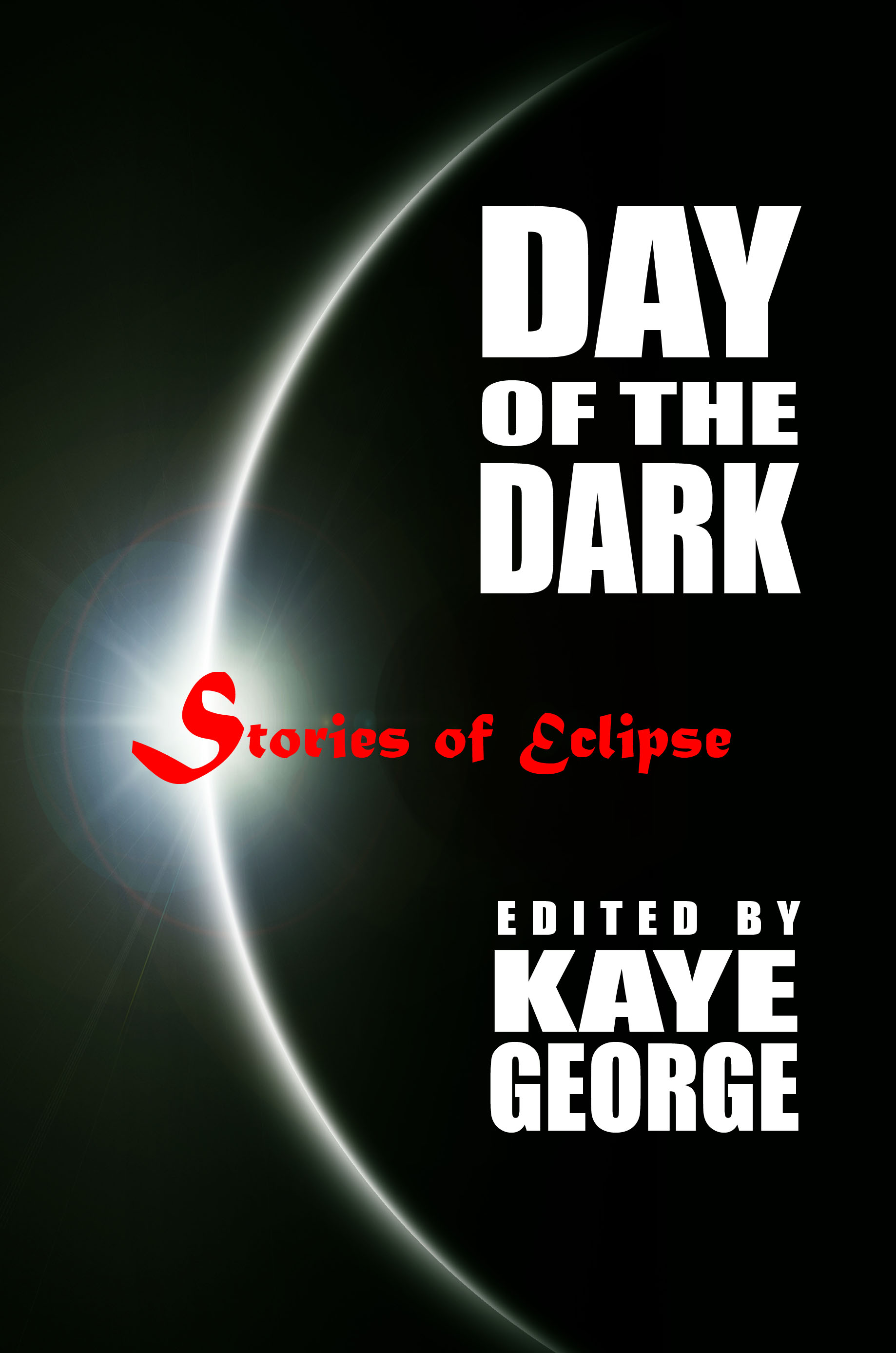
DAY OF THE DARK (Wildside, July 2017)

and in the brand new DAY OF THE DARK: Stories of the Eclipse, edited by Kaye George and released by Wildside Press on July 21, 2017.

A second AMW anthology is with the publisher and will be out shortly.

Writing as Business: An Epiphany

Please join us at the DAY OF THE DARK launch party Friday, July 21, on Facebook: https://www.facebook.com/events/199463997250907/

The following post first appeared on Writing Wranglers and Warriors. 

*****

Writing is a business.

That’s what experienced writers tell the wannabes.

For a long time, I thought business applied to action alone: Write every day, attend classes, network, become familiar with various routes to publication, learn the market, read submission guidelines, stay in good physical shape, and on and on… Items on a list, they could be checked off at the end of each day.

Recently, I discovered another aspect of writing as business that I can’t quite fit onto a list.

Last winter, Kaye George put out a call for submissions of stories for DAY OF THE DARK, an anthology to celebrate the total solar eclipse that will be visible from parts of the United States this summer. Each story would contain an element of mystery and would be related to an eclipse. Kaye would edit, and Wildside Press would have the book out before the August 21 eclipse.

I’ve known Kaye for a number of years, ever since I joined Austin Mystery Writers, which she was facilitating. I watched as her career took off–a contract for one mystery series soon turned into contracts for three more series. At the same time, she wrote and published short stories and articles, and appeared on panels, and made it look easy.

Periodically, I said, “I don’t know how she gets it all done.”

And someone would respond, “Now, you mustn’t compare yourself to Kaye.”

And I would say, “I’m not comparing myself to her. I just don’t know how she gets it all done.”

I knew, of course, that she did it by checking tasks off that list. What I wanted to know was–where did she get the energy? (I still want to know.)

When I read her call for submissions, I didn’t consider sending a story. As usual, my mind was blank. My mind is always blank–what could I write about an eclipse?–until the last minute. As usual, at the last minute, I came up with an idea for a story.

But.

I don’t like to work for friends. I don’t mix the personal and the professional. If I sent Kaye a story and she rejected it, I wouldn’t be hurt, I wouldn’t be angry, I wouldn’t be devastated–but I would be embarrassed, not by rejection, but by the knowledge that I’d had the audacity to submit an inferior product, a story I should have known wasn’t worthy–

Here’s where the epiphany comes in:

It dawned on me that–what a concept!–Kaye is a businesswoman. She intended to put out the best book possible. She would choose only stories that fit her purpose.

And epiphany, part 2:

I was a businesswoman. I would submit a story. It it was accepted, I would be pleased. If it was rejected, I would accept that as part of doing business, set the story aside, tweak it, submit it elsewhere. Or, if I discovered it wasn’t tweakable, I would set it aside and leave it there.

Write, submit, be accepted/rejected, get on with life.

So I wrote a story titled “I’ll Be a Sunbeam,” submitted, was accepted, and, after dancing

around the room for a while–dancing is also part of the writing business–I saw another call for submissions, wrote, submitted…

Today, July 21, a month before the coming eclipse,  DAY OF THE DARK is being released. It will be available in print and for Kindle.

I’m thrilled my story was accepted for DAY OF THE DARK. I’m thrilled to be in the company of the twenty-three other writers whose stories appear there.

And I’m thrilled to finally understand that the writing business is really a state of mind.

*****

To read more about stories in DAY OF THE DARK, see Debra Goldstein’s Day of the Dark Anthology!!!! – Part I . Part II will appear on July 31.

M. K. Waller, aka Kathy, 
has published stories 
in Austin Mystery Writers’ 
MURDER ON WHEELS
and in Mysterical-E.
She blogs at
Telling the Truth, Mainly.

Sneak Peek: DAY OF THE DARK

Today we get a look at the cover of DAY OF THE DARK, a crime fiction anthology edited by Kaye George and due out from Wildside Press on July 21.

Laura Oles’ “Oceans Fifty” and M. K. Waller’s “I’ll Be a Sunbeam” are two of the twenty-four stories appearing there.


Posted by M. K. Waller