by Helen Currie Foster
March 23, 2026
“Hop in the car, you little ragamuffins and tatterdemalions!” For so our papa fondly called his four children—two girls, two boys—on our long car trips.
Our papa was fascinated by words, and wordplay. Every Sunday he’d fetch the New York Times and finish the crossword…in ink. He abhorred sloppy word use, particularly if we said we “adored” something— “You adore a deity, nothing less.” He detested our casual use of “I swear!” Instead, “You may say ‘I affirm’ or ‘I attest’ but not ‘I swear’—‘Let your yea be yea and your nay be nay.’” Yes, some theological thoughts.
But only now do I realize how thoroughly we also absorbed our mama’s inherited expressions—maybe from forebears who brought to the New World some Scottish or English vocabulary. When getting ready for company she’d say “I’m all in a swivet!” I say the same thing and never realized not everyone uses that expression. Our mama also reminded us not to be “persnickety.” She turned clocks “anticlockwise” when appropriate and reported with raised eyebrows that someone was “fit to be tied.” And she fostered independence: a frequent suggestion we kids got was “Root, hog, or die!” To her, “gumption” was a great virtue.
When we four children were scattered far from Austin, we eagerly awaited her monthly letters (typed, with 3 carbons—she alternated who got the original). She always reported on local politics, Texas football, drought/rain conditions and her ongoing war against bamboo in the back yard, and signed “Heaps of love” or “I love you more than tongue can tell.” In one letter she reminded us that our papa used to refer to her housecleaning (after she’d gotten in a swivet) as “rearranging the mess.” In another, she said that after a welter of company “I bestirred myself to change all the sheets.”
Words! At Austin’s McCallum High School our senior English teacher, the redoubtable John Shelton, listed words on the blackboard for us to memorize each week—a task that sent us straight to the byways of the dictionary, a great (lifelong) destination. My friend remembers that one week the assigned words included “hygroscopic,” “tessellated,” “faience,” and “barghest.” https://bit.ly/4dF535p .
Other than “hydroscopic,” in ensuing decades I’ve never actually used any of those words in conversation. But that moment still may come!
Do you readers and writers keep a list of favorite words? Working on Book 11 in my Alice MacDonald Greer Mystery series, Ghost Music, I’m aiming for precision and concision. But I hope somehow to sneak in “awry”, “gleeful,” “impudent,” and certainly “iniquity” (right on point for a mystery). Also, maybe “drudgery,” “jasmine-scented” and “catkins.” Possibly “hygroscopic”?
It’s tough work to produce consistently vivid word pictures, precise and concise. One master is Stephen Harrigan. Of Harrigan’s The Eye of the Mammoth (2019), Texas writer Lawrence Wright wrote, “Word by word, book by book, Stephen Harrigan has proven that he’s the best writer Texas has ever produced.” https://bit.ly/4t440Aj
Wright’s right. It’s a beautiful book that tugs you straight into each story. (The cover calls them “essays” but believe me, they’re stories, and you see the word pictures so vividly you’ll be surprised there weren’t illustrations.)
For instance, you may already know, as Harrigan tells us, that there were mammoths in Texas up until some ten thousand years ago, and (of course) they were larger than the woolly mammoths, “reaching up to fourteen feet high, with domed heads and huge, sweeping tusks”:
Sixty or seventy thousand years ago, a herd of these creatures was foraging in a floodplain a few miles west of what is now downtown Waco. The landscape, in the waning millennia of the Ice Age, would have been prairies and lightly forested savannas populated with all sorts of vanished megafauna: camels, saber-toothed cats, ground-dwelling sloths that could rear up to twenty feet high, and massive, armadillo-like glyptodonts that shuffled along like living boulders.
The scene is set. You’ll want to know what happened when the mammoth herd was caught in “a flash flood roaring out of the ancestral Bosque River…” I was already trying to imagine gazing up at Mammuthus columbi, our Texas mammoth, fourteen feet high. Harrigan had me right there. Every word counted.
And he’s right about the time frame. Last weekend we toured the Gault Archaeological Site up by Florence, Texas, and saw the (now closed) excavation where Dr. Michael Collins and others excavated down to bedrock, around 10 feet deep, in the pasture next to Buttermilk Creek. The excavation (see white posts) is next to the gravesite of Mona, the ranch cow who faithfully visited daily during the excavation.
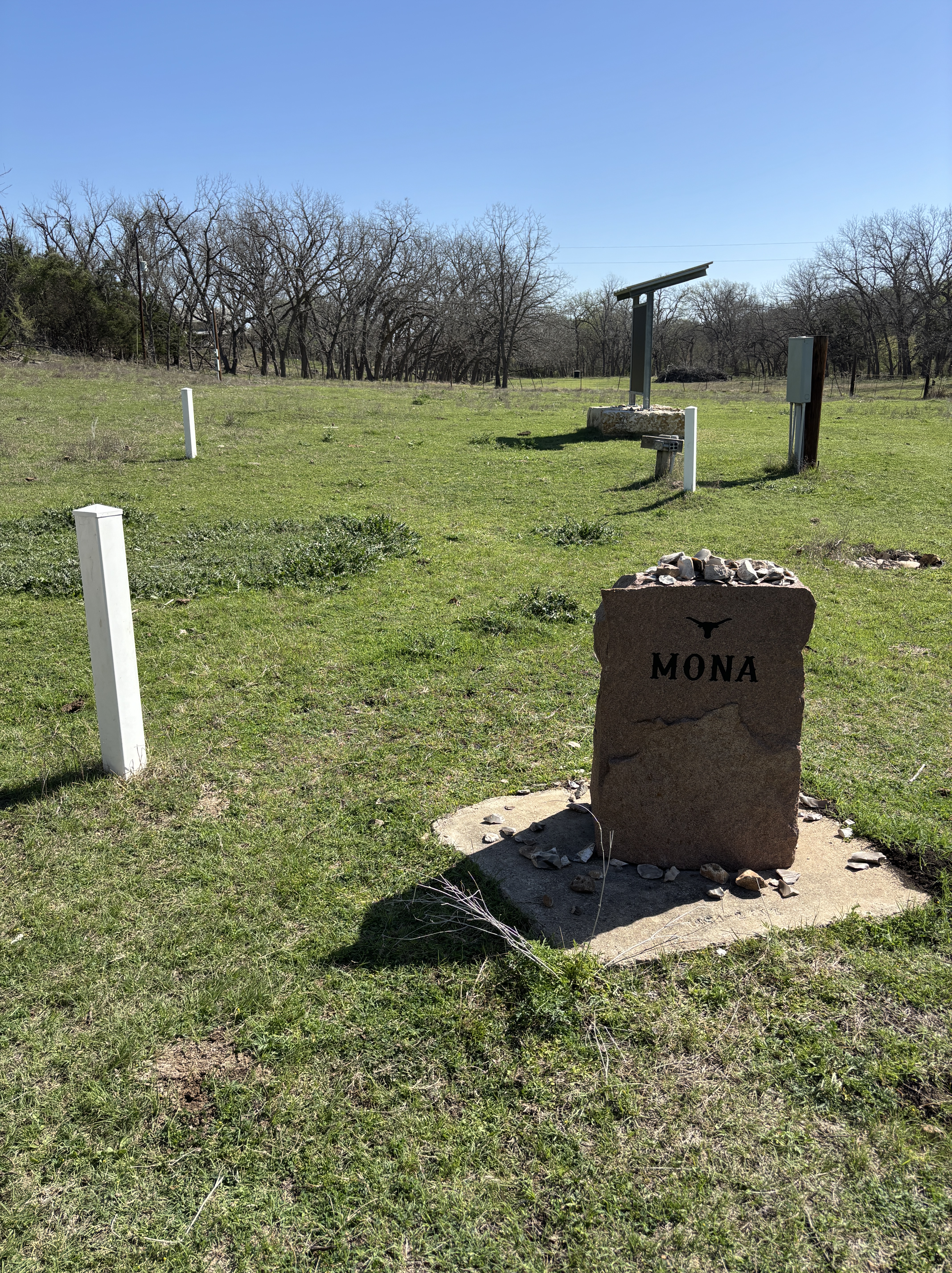
Dr. Collins had long been dubious of claims that humans had only been in North America for 14,000 years or so, relying on the age of the Clovis points you may remember from high school classes. Sure enough, when the archeologists reached bedrock at the Gault site they found artifacts which are 16,000-22,000 years old. https://bit.ly/3NlC8J5
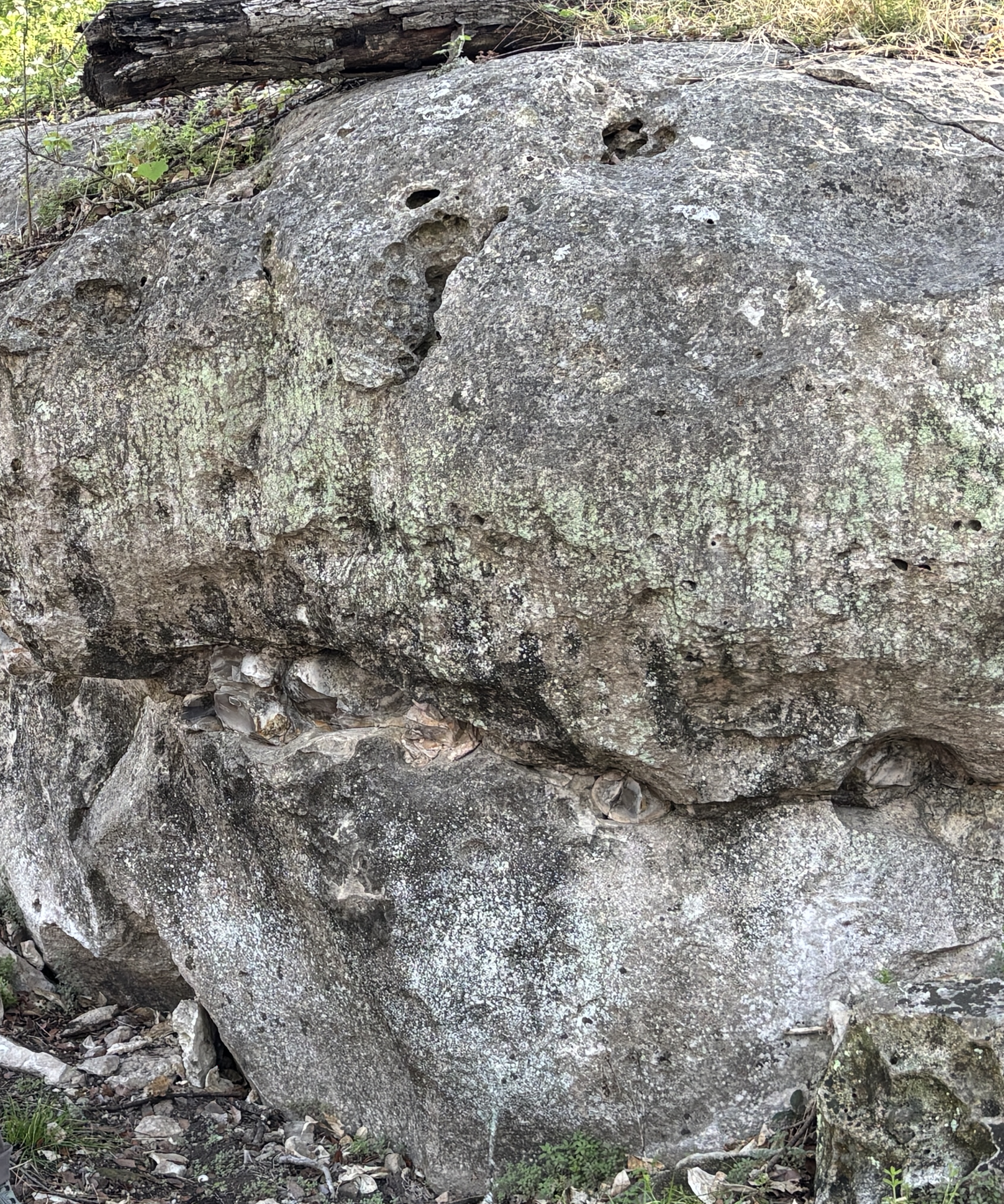
The Gault site is famous for very hard chert (visible in rock formations along the creek) which permitted Paleo-Indians to chip very sharp points for the spears/arrows they threw from atlatls. As we stood staring at the rocks it was easy to imagine mammoths in the big field by Buttermilk Creek…
Wordsmithing. Hard work, like blacksmithing. Heat the words till they glow red, shape them carefully, beat them into place. Luckily, after all that hammering, words are easier to move around, edit, and reshape… not so final as a horseshoe. Still, finding the right words for the right place—keeps me up at night.
Nathaniel Hawthorne has been quoted as saying, “Easy reading is damn hard writing.” Maybe he was repeating the words of humorist, essayist and poet Thomas Hood, whose letter to the London periodical The Atheneum in 1837 cited as one opinion on writing: “the easiest reading is d[amne]d hard writing.”
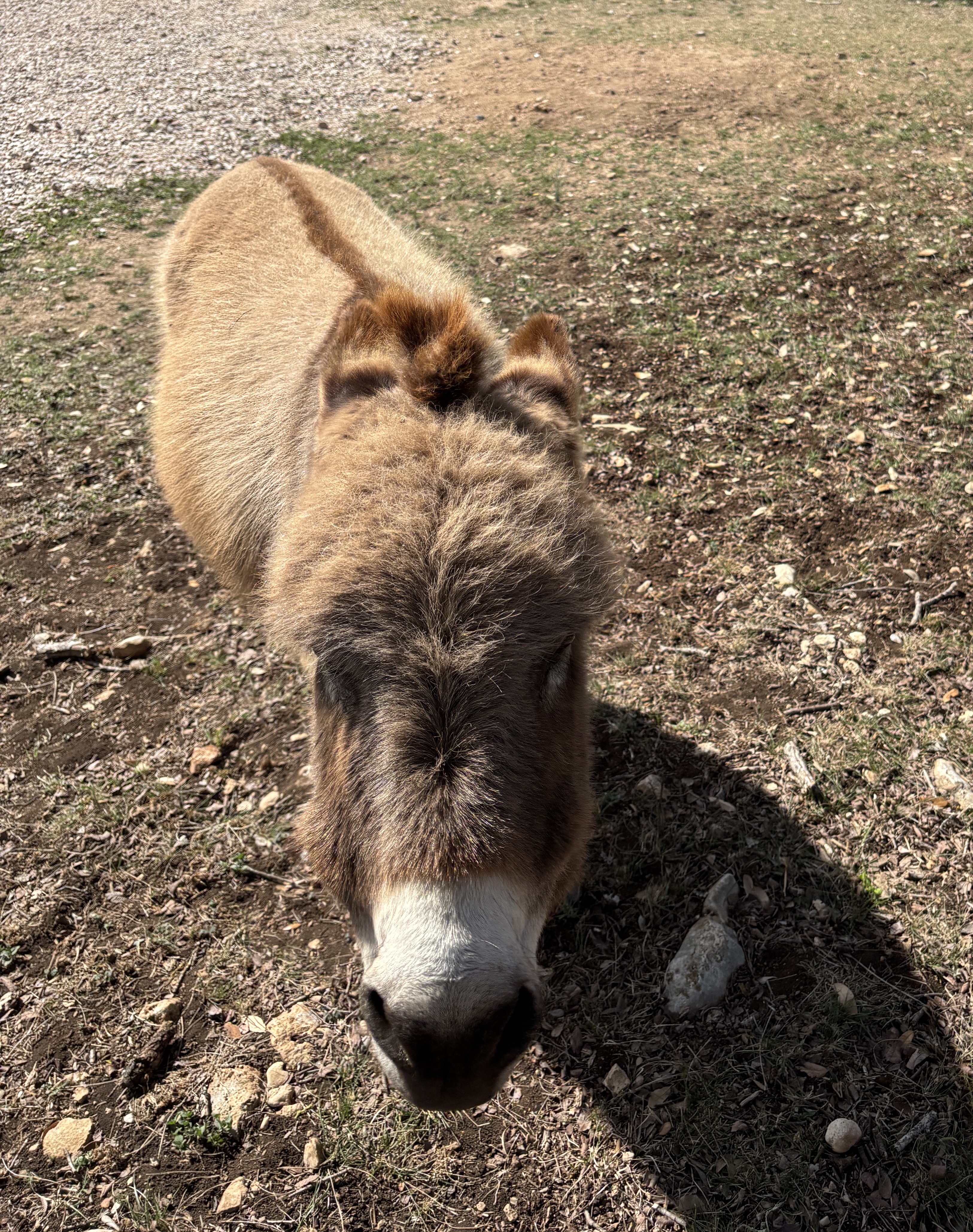
Still, west of Austin, the hill country offers generous terms to writers, at least as far as setting is concerned. The writer can count on buffalo grass, agarita, blue grama grass, and prickly pear cactus atop Cretaceous limestone chock full of snail and oyster and clam fossils. Also, painted buntings, tufted titmice, lesser goldfinch, summer tanagers, roadrunners, golden-fronted woodpeckers, ladder-backed woodpeckers, Swainson’s hawks, red-tailed hawks, great horned owls and screech owls. And jackrabbits, coral snakes, bright green lizards, newts, armadillos, bobcats, and raccoons trained to a high degree of thievery, including figuring out how to detach birdfeeders from trees and push them downhill into their favorite dining thicket. Finally, three burros live the high life, including daily carrots. Sebastian (the burro who undertakes to announce guests) offers to anyone who comes through the gate an enormous and distinctive bray of welcome, disproportionate to his small size.
And I haven’t mentioned the equally tough, equally resourceful, equally colorful characters that have settled here, some of whom have inspired the characters in earlier books the Alice MacDonald Greer Mystery series and are inspiring Ghost Music.
Yes, easy reading is damned hard writing. Yet the material’s here. Just look around!
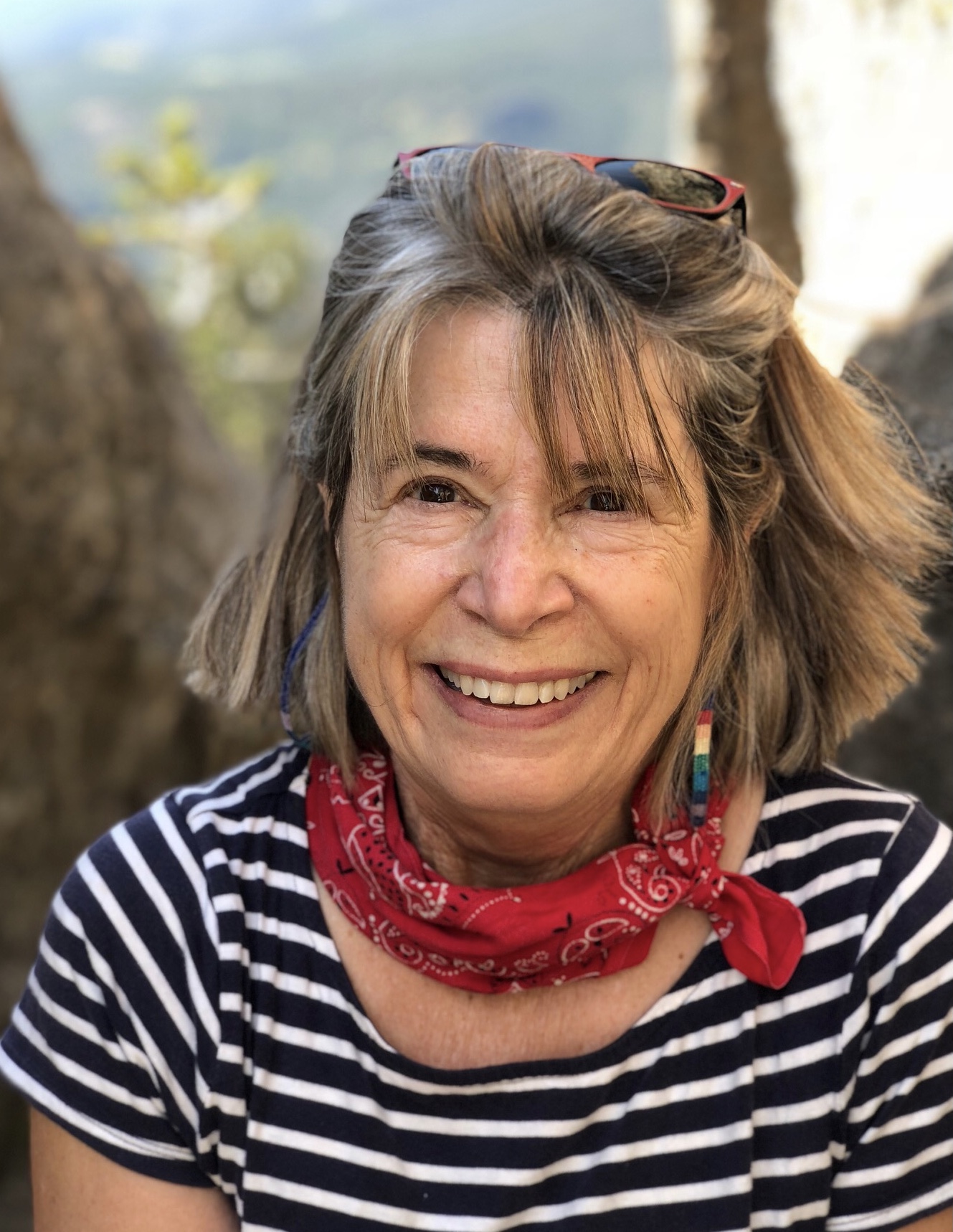
Author Helen Currie Foster lives and writes the prize-winning Alice MacDonald Greer Mystery series north of Dripping Springs, Texas, loosely supervised by three burros. She’s drawn to the compelling landscape and quirky characters of the Texas Hill Country. She’s also deeply curious about our human history and how, uninvited, the past keeps crashing the party. She’s active in Austin Shakespeare and the Heart of Texas Sisters in Crime chapter of national Sisters in Crime. And she treasures speaking with book groups.
Follow her at http://www.helencurriefoster.com and on Amazon. Her books are available at Amazon and at BookPeople in Austin.

 Austin Mystery Writers