Stop Signs, Part I

by Kathy Waller

For Thanksgiving Week, I’m sharing a story made from things I’m thankful for: a hometown the size of a broom closet; long, hot summers that started on  June 1 and stretched clear to Labor Day; a visiting teenager who spent every spare minute reading Gone With the Wind; bobby socks and garter belts and petticoats; an ornery Presbyterian great-aunt and her ornery Baptist mare; front porches where quiet kids learned a lot; Army surplus bunk beds; a grandfather who said stop signs cause wrecks. I don’t know whether he believed it, but he said it. 

Flannery O’Connor said, “Anyone who survives a southern childhood has enough material to last a lifetime.” 

I survived. So do the memories. 

(“Stop Signs” won first place for short story in the 2000 North Texas Professional Writers Association Contest. It isn’t a murder mystery, but only because one of the characters restrains herself.)

***

Stop Signs, Part I

My grandfather thinks stop signs cause wrecks. That’s what he told Mama when they put up stop signs at Farm Road 20. If you go on across, you’ll be okay, but if you stop, you won’t be able to build up enough speed, and a car will come along and hit you for sure.

Mama didn’t argue. She says when she married into the Coburn family, she learned to pick her battles. The rest of the time, she’s just polite.

Nobody was just being polite that day on Aunt Eula’s front porch. Dr. Larrimore was there, and they were talking about the new phone system we’re getting. We’ve always just turned the crank and told Ernest who we want to talk to, but now we’ll have to dial a number. Dr. Larrimore said it’ll never work—people will get the O and the zero mixed up. They also agreed that man will never go to the moon because it isn’t in the Bible. Mama said the new phone system isn’t in the Bible either. I don’t know whether to be more concerned about getting the O and the zero mixed up or about having a doctor who gets them confused.

I know Aunt Eula wasn’t just being polite because she doesn’t bother with that kind of thing. She is Daddy’s oldest aunt, and, like Grandaddy, is tall and straight and white-haired. Unlike Granddaddy, she is proud and haughty. She belongs to both the Daughters of the Republic of Texas and the United Daughters of the Confederacy. She likes the United Daughters best. Mama says that’s because she’s an unreconstructed rebel.

Aunt Eula has a beautiful sorrel mare named Lady, who is my Mr. Boots’ mother. She bought her when the San Marcos Baptist Academy sold off its stables. I used to ride her before Mr. Boots was saddle broke. Mostly I chased her around the pasture trying to catch her. Once when I finally got hold of her and got the bit in her mouth and led her into the yard to saddle her, she sidled up to a big pecan tree and walked round and round it, while I followed, trying to get the saddle across. She’s never tried to unseat me, probably because by the time we get started, she’s worn out.

Daddy says Lady’s uncooperative because those Baptist Academy kids didn’t know how to ride and let her build up some bad habits. Mama says it’s because she belongs to Aunt Eula, and animals always resemble their owners. I say it’s because she’s a Baptist set down here in a nest of Presbyterians, and she’s testing the doctrine of Free Will against that of Predestination.

My cousin Ruth must be a Baptist, too, because she’s been using her Free Will ever since she arrived last month to spend the summer.

Ruth is thirteen, two years older than I am, and she used to be my dearest friend in the whole world. I could hardly wait till she got here. I had the summer all planned out. I would ride Mr. Boots and she would ride Lady, when she could catch her, and we would explore all the places over on York Creek that Mama won’t let me go to by myself. We’d share a bedroom and talk all night just like sisters.

But when we picked Ruth up at the train in San Marcos, I hardly recognized her. She was wearing a dress with about five petticoats, and high heels, and nylon hose. She was carrying a copy of Gone With the Wind.

We got into the back seat of the car. I held her book while she spent about five minutes arranging her petticoats.

“Do you like this book?” I said. “I read it last spring.”

She raised her eyebrows. “I’m surprised Aunt Virginia let you. It was written for adults.”

“I guess you haven’t heard,” I said. “I’m advanced. I’m a third of the way through the high school reading list.”

She smiled. “You’ll probably want to read this one again when you’re older. I imagine you missed a lot.”

I let that pass and tried again. “Why aren’t you wearing loafers and bobby sox?”

She said, “They’re not appropriate for the train.”

I said, “Why?” and she said, “They just aren’t,” and I said, “Who told you that?” and she said, “You’ll understand when you’re older.”

“You told me wearing a garter belt was like sitting on rubber bands.”

“I’ve grown up a lot since I said that.” Then she crossed her legs at the ankle and folded her hands over her white straw clutch purse, and by the time we got to Martindale, I was nauseated, and it wasn’t motion sickness that was causing it.

At home, Daddy carried Ruth’s suitcases into my room, and Ruth said she would sleep on the top bunk.

“That’s where I’m going to sleep,” I said.

Ruth knows better than to boss me outright—I got that settled when I was five—so she tried bribery instead.

“Look, if you let me sleep on the top, you can lie on the bottom and kick me while I’m sleeping.”

“It’s tempting,” I said, “but my legs aren’t that long. It looks like yours are, though. Exactly how tall are you now?”

She smiled. “Mother says I’m going to be statuesque.” And then Princess Grace floated out to see if Mama needed help in the kitchen.

The next day, I was up at six o’clock as usual, ready to saddle Mr. Boots, but Ruth didn’t drag out of bed until nine. Then, instead of saddling up and heading to York Creek, she insisted on walking downtown to say hello to all of my relatives. When she saw Aunt Eula and Aunt Babs sitting on the front porch, nothing would do but we must stop and visit. The first thing out of her mouth, Ruth asked Aunt Babs to teach her to crochet. Aunt Babs lit up like a chandelier and ran inside to get a hook and some yarn so they could start right away.

While she was gone, Ruth told Aunt Eula that she was reading Gone With the Wind and asked about the United Daughters. That got Aunt Eula started. Before they were finished, she and Ruth had rebuilt Tara on the banks of the San Marcos River and were ready to move in. Aunt Eula told Ruth the next time she came, she could look at Great-great-grandpa’s Civil War sword and medals. When we finally left, I heard Aunt Eula tell Aunt Babs that Virginia’s niece was turning into a lovely young lady even if she wasn’t a Coburn.

Ruth spent all the next day chain stitching with her nose in a book. That night, she kept the light on a half-hour past my bedtime. I finally leaned over the side of the top bunk and asked her, very politely, to turn out the light.

“I can’t,” she said. “I’m putting my hair in pin curls.”

“Anybody who spends that much time on a ducktail must have a bird brain,” I said, and she took one of her statuesque legs and kicked the underside of my mattress, and I yelled, and Mama came and moved Ruth into the front bedroom, where she had her own double bed and a good breeze and our grandmother’s piano, and she played her transistor radio all night long.

And that wasn’t all she did up there at night. I know because one night when I thought she might be asleep, I tiptoed in to turn off the radio—I’d had about as much “Purple People Eater” as anyone should have to endure—and Ruth was sitting on the side of the bed in the dark, talking to Junie Franklin through the window screen. He was sitting out in the yard on Uncle Robert’s Palomino. I was shocked. If Mama knew what was going on, she would be very disappointed.

TO BE CONTINUED

***

Frank Waller [“Dad”] and Kathy Waller, ca. 1962

More about the man who said stop signs cause wrecks at “Dad” on the blog Whiskertips.

Under The Blackjack Tree

VP Chandler

by V.P. Chandler

Thrilled to announce that one of my short stories has been published by Killer Nashville Magazine! Killer Nashville Magazine is a magazine that publishes stories in any genre that incorporate elements of mystery, thriller, or suspense.

This story means a lot to me because the seed of the idea is based on my family and family experiences. Look at my author notes at the end for the explanation.

I hope you enjoy it! Link here.

In Conversation with John M. Floyd: Short Stories, Long Walks and Words on the Page

By Laura Oles

If you love reading short stories—or writing them—chances are you’ve come across John M. Floyd’s work. John is the author of over a thousand short stories in publications like AHMM, EQMM, Strand Magazine, Mississippi Noir, The Saturday Evening Post, and four editions of Otto Penzler’s best-mysteries-of-the-year anthologies. He is an Edgar finalist, a Shamus Award winner, a five-time Derringer Award winner, and the author of nine books. He is also the 2018 recipient of the Short Mystery Fiction Society’s lifetime achievement award. 

I had the good fortune of sitting next to John at the Bouchercon 2019 anthology Denim, Diamonds, and Death: 50th Year signing.  His story, “The Midnight Child,” precedes mine, “The Deed,” in the anthology, which meant we were also placed together for this event. Getting to know John was, for me, a highlight of the Bouchercon conference. This is a writer who loves the work. Below is our conversation about his career beginnings, his love of short form fiction and his advice to those with an interest in writing short stories.

LO:  I’d love to start with your career at IBM as an engineer. Were you already writing short stories by then or did that come later?

JF: The writing bug bit me in the mid-1990s, while I was working for IBM. I was a systems engineer specializing in finance application (banking) software and traveling a lot, both here and overseas, and it was during some of those times spent alone in hotels, airplanes and airports that I started dreaming up stories. And once I started, I couldn’t stop.

LO:  What drew you to the short story form? And to the mystery genre?

JF: I think my love for short fiction probably came from a childhood of watching those little anthology shows on TV like Alfred Hitchcock Presents and Twilight Zone and One Step Beyond. They had different stories every week, were usually half an hour in length, and often had surprise endings. In a way, each episode was the visual equivalent of a genre short story, and I loved ‘em. As for the mystery genre, I’ve always liked reading and watching crime/suspense stories. 

LO: I enjoyed discovering that you’re also a poet with an impressive collection in print. What drew you to poetry?

JF: Well, I’m one of those poets who isn’t really a poet (and I noet). The poetry I’ve written and sold has mostly been light verse, because I love humor and wordplay. My collection of poems, called Lighten Up a Little, is a book of 300 humorous poems published in places like Ellery Queen’s Mystery Magazine, Writer’s Digest, Grit, Writers’ Journal, Farm & Ranch Living, etc., and are designed primarily to make you smile (and maybe Laugh Out Loud). In the introduction to the book, I pointed out that if you’re searching for enlightenment, inspiration, or the Meaning of Life, you might want to look elsewhere. 

LO:  Many fellow writers marvel at your prolific ability to consistently create compelling tales that draw the reader in. Can you give us a peek inside your process? What does an average day and/or week look like for you?

JF: My process, such as it is, involves first thinking of a plot and then populating it with (hopefully) interesting people to make the story happen. Only when I have the plot in my head (beginning, middle, and end) do I start writing. Be aware, the storyline isn’t set in stone—it might change a bit once the writing starts—but I do like to have that structure firmly in mind before I begin. Then, once the story is on paper, I rewrite and polish it and send it to a market. On an average day I might write several pages, but even when I’m not writing I’m usually plotting stories in my head. The idea/plotting part usually takes a few days or a week, the writing itself takes a couple of days, and the rewriting several more. As soon as I’m done, I usually light a new story up off the butt of the last one, like a chain-smoker, and keep going—and have been doing that for almost thirty years now.

LO: Which short stories by other writers have you read and just thought, “That’s something special.” It would be madness to try to pick only one, but are there certain ones that stayed with you long after you finished reading?

JF: Yes. A few stories I especially like are “Man From the South” by Roald Dahl, “The Last Rung on the Ladder” by Stephen King, “Voodoo” by Fredric Brown, “The Green Heart” by Jack Ritchie, and “The Kugelmass Episode” by Woody Allen. Some of these are long and some very short, but all are great fun to read.

LO: What are you reading right now?

JF: I’m RE-reading a novel by Nelson DeMille called “Wild Fire.” Just before that I read “Blowback,” a political thriller co-written by James Patterson and our mutual friend Brendan DuBois. Both novels are excellent, but don’t tell Brendan—I think he’s already having trouble getting his old hats to fit.

LO: What do you enjoy doing in your spare time? 

JF: What’s spare time? Seriously, though, I like walking, movies, puzzles, and playing with grandkids (we have seven).

LO: What advice would you share with writers who would like to pursue writing short stories for publication?

JF: Read a lot of them, write a lot of them, and DON’T QUIT. I once heard that a professional writer is just an amateur writer who didn’t give up.

LO: Is there anything else you’d like our readers to know?

JF: Yes: Try reading some short stories, especially those in places like Hitchcock and Ellery Queen and Strand Magazine. I love novels too, but there’s just something special about reading (and writing) the short stuff. You might find you like it.

About John:

John M. Floyd is the author of more than a thousand short stories in publications like AHMM, EQMM, Strand Magazine, Mississippi Noir, The Saturday Evening Post, and four editions of Otto Penzler’s best-mysteries-of-the-year anthologies. A former Air Force captain and IBM systems engineer, John is an Edgar finalist, a Shamus Award winner, a five-time Derringer Award winner, and the author of nine books. He is also the 2018 recipient of the Short Mystery Fiction Society’s lifetime achievement award. You can learn more at http://www.johnmfloyd.com 

A Review of The Secret Lives of Cats

by V.P. Chandler

One thing I like about being in a book club is that I get a chance to read books that I hadn’t heard of. And since I hadn’t heard of Kristine Kathryn Rusch’s story, The Secret Lives of Cats, I’m glad that it came to my attention and I had a good excuse to read it.


Amazon describes it as: Winner of the Ellery Queen Mystery Magazine Readers Choice Award for 2008, this Anthony-nominated story was one of the most talked about stories of the year.


I can believe it. I was drawn in by its first sentence. “Homer Ziff didn’t believe in old adages, but after his long and eventful spring, he couldn’t help but think that whoever put the words “curiosity,” “cat,” and “kill” in the same sentence had to be onto something.”


I like curiosity, cats, and of course crime fiction. So I’m there! You got me. (And look at this awesome cover. I love it.)

Screen Shot 2019-04-22 at 3.04.41 PM

I like the premise. Ziff wonders where his cats go during the day so he attaches a small camera to each cat’s collar. The camera takes still photos, not video. (This was written when GoPro was still new and incredibly expensive.) Every day he downloads and saves many of the photos to see where they go. He notices that they go to a place where other cats congregate and sit there. Are they looking at something? What are they doing? He’s fascinated and after several days it becomes apparent that what they are looking at are bones, human bones.


He calls the police. “When the operator answered, he said, “I think there’s a dead body in my neighborhood.” And that brought the detectives to his door.”


He has to explain to them that the cats have found a dead body, but he doesn’t know exactly where it is. And he has to do this without sounding crazy or guilty. Fortunately for him, one of the detectives understands right away.


I’ll let you read the rest of the story to find out what happens. I thought it was a full-length book so I was a little disappointed that it was a short story, only 33 pages long. I wanted more! I liked everything about it, the characters, the descriptions, and the plot. I thought it moved right along.


I highly recommend this short read and I’ll definitely be reading more by Kristine Kathryn Rusch. I was curious to see what else she has written and was thrilled to find that she also writes a lot of sci-fi. I’ll confess that I’m a bit of a Trekkie so I was tickled to see that she’s written a few ST books too! (Insert The Original Series music here. Ah, ah, ah, ah, ah, ah, ahhhh.)


So go check out The Secret Lives of Cats and the other books listed on her site. https://kriswrites.com/


Happy hunting and live long and prosper!


Originally posted on vpchandler.com 

Bad Men, Lawless, and BSP

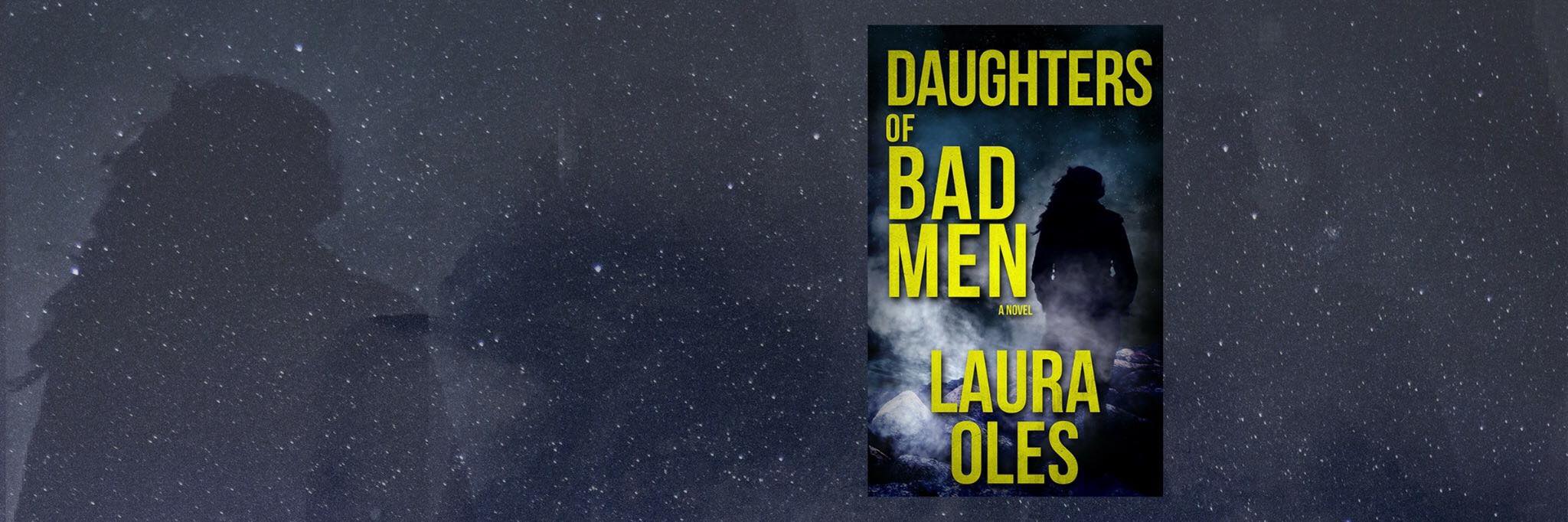
Laura Oles celebrates doubly this month–today her debut novel, DAUGHTERS OF BAD MEN, was released by Red Adept Publishing, just a week after Austin Mystery Writers’ LONE STAR LAWLESS, in which Laura’s story “Carry On Only” appears, was released by Wildside Press. Here’s what I posted about these publications at Writing Wranglers and Warriors. Laura will be along presently to tell you more.

***

I turned on my Kindle today to find Laura Oles’ Daughters of Bad Men, had appeared in its library, overnight, as if by magic. That’s a perk of pre-ordering. Laura is one of my critique partners in Austin Mystery Writers, and Daughters of Bad Men is her first novel.

I’ve been in AMW for six or seven years–can’t remember exactly–but membership is one of the best things that’s happened since I began writing for publication.  Examining others’ work and hearing their comments on mine has made me a better writer. Members have become my friends. Together we’ve enjoyed workshops and lunches and weekend retreats.

And I’ve acquired a new virtue: I’m genuinely happy when other members get their work published.

My skin turns Shrek green, but I’m happy.

Offsetting today’s greenish tinge over Laura’s debut, I’m also happy to announce . . .

Read the rest of the post here.

LONE STAR LAWLESS Is Here!

LONE STAR LAWLESS:
14 Texas Tales of Crime

by

Austin Mystery Writers and Friends

Paperback and Kindle formats  available from Amazon.com 

Proceeds to be donated to Ellis Memorial Library in Aransas Pass, Texas
to help replace collections destroyed in Hurricane Harvey

Wildside Press, 2017

***

 And watch for Laura Oles’ first mystery novel 

DAUGHTERS OF BAD MEN

November 14, 2017


Morning Pages: Don’t Speak. Don’t Judge. Don’t Fall Asleep.

Browsing through the AMW blog, I came across the title, “Morning Pages: Don’t Speak. Don’t Judge. Don’t Fall Asleep.” And I thought, What a cute title. I wonder who the author is. A couple of clicks later I discovered the author was moi. I wrote it in 2014. Quelle surprise, as those of us who took one summer class in French just for fun say but can’t remember how to spell. (I looked it up.) I also found I kind of liked it,* and since it’s mine, I’m giving myself permission to re-post. 

***

Karleen Koen

The first day of last summer’s Writer’s League of Texas retreat, author-instructor Karleen Koen told students that every morning before class, we must do Morning Pages: Wake up, don’t speak, take pen and paper–not computer–and, while still drowsy, write “three pages of anything.” Don’t judge. Keep the pen moving. In her course notebook, Karleen listed the following:

Stream of consciousness, complain, whine, just move your hand across the page writing whatever crosses your mind until you get to the end of page three.

Karleen stressed that she didn’t invent Morning Pages. The technique, minus the name, came from the book Becoming a Writer by teacher Dorothea Brande, published in 1934 and reissued in 1981. Author John Gardner, in his foreword to the reprinted edition, states it was “astonishing” that the book had ever gone out of print.

Becoming a Writer by Dorothea Brande

Ms Brande advises aspiring writers to “rise half an hour, or a full hour, before you customarily rise.” She continues,

Write anything that comes into your head: last night’s dream, if you are able to remember it; the activities of the day before; a conversation, real or imaginary; an examination of conscience. Write any sort of early morning reverie, rapidly and uncritically. (Brande, p. 72)

Julia Cameron, in her bestselling The Artist’s Way, published in 1992, named the process Morning Pages and made them the cornerstone of her Artist’s Way program. Cameron considers them a form of meditation.

Why we do Morning Pages? To quiet the internal critic; to tap into the subconscious; to discover what you know; to remember and to capture the present; to build fluency, the ability to “write smoothly and easily when the unconscious is in the ascendant.” (Brande, p. 72) And, as Koen notes, to whine and complain.

When I do Morning Pages, I like to focus on whining and complaining. Words of discontent virtually flow from my pen when I follow Brande’s instruction to rise early. To wit:

The morning after Karleen assigned Morning Pages, my roommate and I woke to my cell phone alarm at seven rather than the previous day’s eight. (I think that was the morning the phone flew from the nightstand and landed on the concrete floor.) I propped myself up on a couple of pillows, gathered the pen and the notebook I’d placed on the nightstand before retiring the night before, and started to write.

While I wrote, my roommate sat on the side of her bed. Instead of picking up her notebook, she spoke. I reminded her we weren’t supposed to talk. She told me she didn’t care what we weren’t supposed to do. After violating the rules once or twice more, she started on her Morning Pages.

Roommate Gale Albright drinking tea and smiling

In my usual all-or-nothing fashion (a tiny bit of OCD), I wrote through hand cramp and shifting pillows. Halfway through, I fell asleep. When I woke about a half-hour later, I resumed scribbling.

My roommate had already finished her Pages. She had dressed. She had sat on the porch and drunk a cup of hot tea. She was smiling.

Sometimes it is better to bend the rules.

At break time, I quoted to Karleen the first sentence of my Morning Pages: I don’t like Karleen any more. (I said it in bold font.) She laughed and asked if I knew how funny I was. I didn’t tell her I was dead serious. I knew that before the end of the day I would like her again, and if I told the truth now, I would have to apologize later, and I just didn’t have the energy.

Since I’m confessing, I might as well admit that, while I was scribbling, I figured out a fool-proof way to make Morning Pages a positive experience: Use a notebook with little tiny pages. They fill up faster.

Looking back, I’m ashamed of the thought, but at the time it seemed a darned good idea. Sometimes it still does.

Anyway. Having griped about that miserable experience, I’ll also admit that Morning Pages work. I’ve done them off and on since 1998, when I heard Julia Cameron speak at the Austin Whole Life Festival. A small group of young men stood outside Palmer Auditorium holding placards and begging attendees to abandon chakras and crystals and choose reason instead, while inside, Cameron shared the most reasonable ideas on stimulating creativity.

So I read The Artist’s Way and, although a 17-cent spiral notebook would have sufficed, I bought a copy of The Artist’s Way Journal. (The Journal had enormous, narrow-ruled pages that took forever to cover, but having the proper tools is important to us obsessive types.)

Then I wrote. And whined. And complained. As I did, the garbage in my head oozed down my arm, through my hand, and onto the page. By the time I got to page three, my mood had lightened. When I turned to other writing, the garbage stayed trapped inside the Journal.

Once the brain has been cleared of debris, words can flow.

That’s my experience. Others have their own reasons for writing those three pages per day. But those who engage in the practice swear by it.

Adequate sleep

As I said, I’m not consistent. I’ve done Morning Pages for months at a time, then skipped one day and failed to resume the habit.** Nearly every time I’ve given up,  fatigue has been the cause. A long commute before and after an extra-long day makes early rising unpleasant if not impossible. The same thing goes for getting to bed too late. Morning Pages require adequate sleep. But so does good health. So does good writing of any kind.***

Before leaving the retreat, I bought a special notebook for my return to Morning Pages. The signature on the cover looked like Dickens but turned out to be Darwin. No matter. Darwin and I are friends, too, and I wanted the green one. I’ve not yet made peace with going to bed at a decent hour. I’m trying. But when I stay up into the wee hours working on a blog post, my morning edges toward afternoon.

Oh–I’ve just remembered: A situation unrelated to fatigue once interfered with Morning Pages. It involved the repaving of twenty miles of FM20, a wintry-cold house, and a new box of cat litter.

But that’s a story for another post.

###

Charles Darwin’s signature on elegant green notebook

* Re-reading old work and liking old work don’t always occur together.

** Morning Pages is about the only habit I’ve ever managed to break.

*** I’m not sure about sleep being necessary for good writing of all kinds. I suspect Hemingway, Faulkner, and Fitzgerald might have stayed up past bedtime. But I bet Willa Cather kept regular hours. And, as people with any discernment at all recognize, Cather is at the very top of the American novelist pecking order.

***


M. K. Waller

M. K. Waller (aka Kathy) blogs at  Telling the Truth, Mainly Write (http://kathywaller1.com) and at the group blog Writing Wranglers and Warriors. She has set aside her novel manuscript for a while to concentrate on writing short stories. She likes writing short stories so much, she may declare the novel officially defunct.

Her stories appear in Mysterical-E; AMW’s first crime fiction anthology, MURDER ON WHEELS;

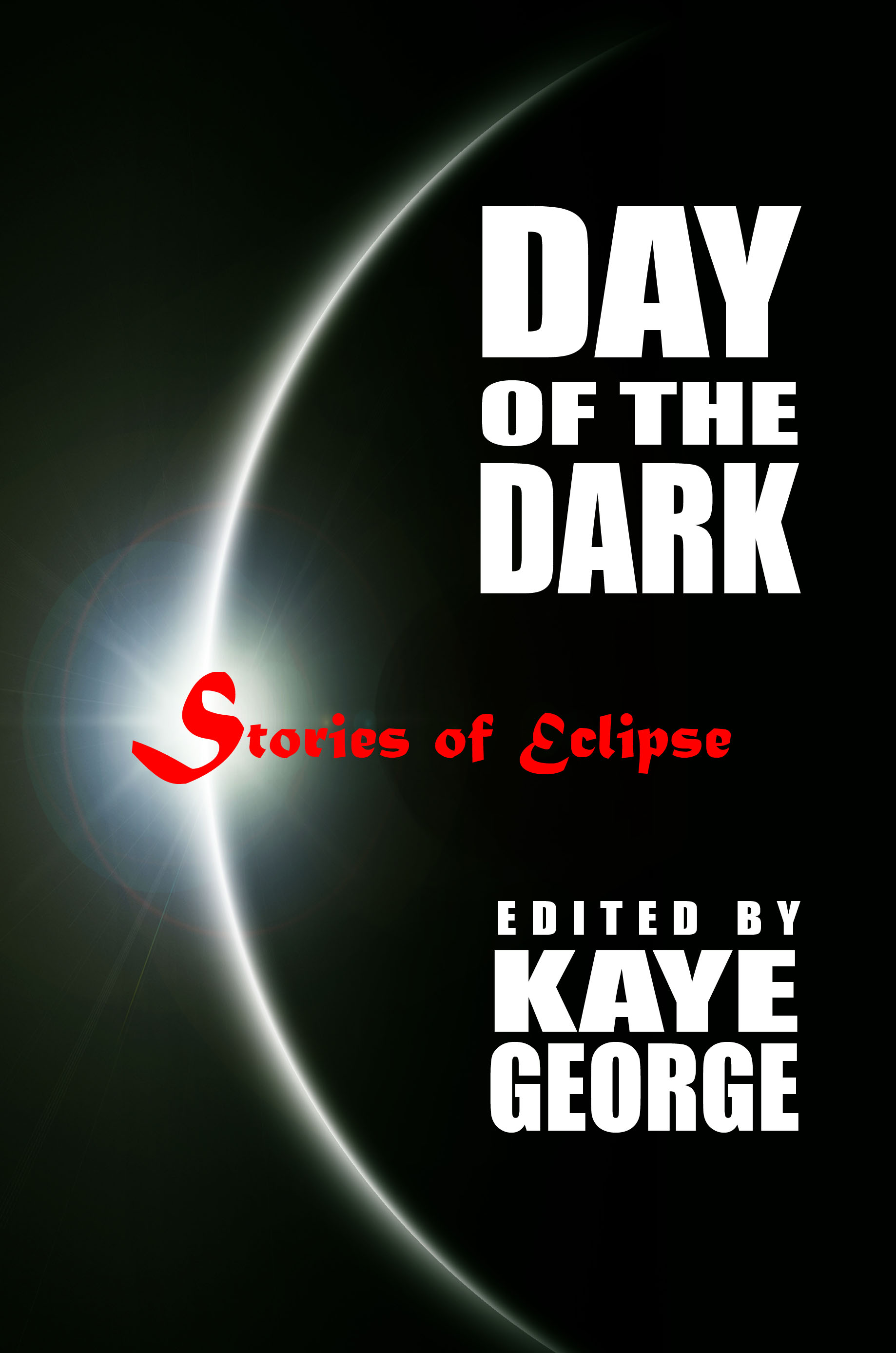
DAY OF THE DARK (Wildside, July 2017)

and in the brand new DAY OF THE DARK: Stories of the Eclipse, edited by Kaye George and released by Wildside Press on July 21, 2017.

A second AMW anthology is with the publisher and will be out shortly.

Writing as Business: An Epiphany

Please join us at the DAY OF THE DARK launch party Friday, July 21, on Facebook: https://www.facebook.com/events/199463997250907/

The following post first appeared on Writing Wranglers and Warriors. 

*****

Writing is a business.

That’s what experienced writers tell the wannabes.

For a long time, I thought business applied to action alone: Write every day, attend classes, network, become familiar with various routes to publication, learn the market, read submission guidelines, stay in good physical shape, and on and on… Items on a list, they could be checked off at the end of each day.

Recently, I discovered another aspect of writing as business that I can’t quite fit onto a list.

Last winter, Kaye George put out a call for submissions of stories for DAY OF THE DARK, an anthology to celebrate the total solar eclipse that will be visible from parts of the United States this summer. Each story would contain an element of mystery and would be related to an eclipse. Kaye would edit, and Wildside Press would have the book out before the August 21 eclipse.

I’ve known Kaye for a number of years, ever since I joined Austin Mystery Writers, which she was facilitating. I watched as her career took off–a contract for one mystery series soon turned into contracts for three more series. At the same time, she wrote and published short stories and articles, and appeared on panels, and made it look easy.

Periodically, I said, “I don’t know how she gets it all done.”

And someone would respond, “Now, you mustn’t compare yourself to Kaye.”

And I would say, “I’m not comparing myself to her. I just don’t know how she gets it all done.”

I knew, of course, that she did it by checking tasks off that list. What I wanted to know was–where did she get the energy? (I still want to know.)

When I read her call for submissions, I didn’t consider sending a story. As usual, my mind was blank. My mind is always blank–what could I write about an eclipse?–until the last minute. As usual, at the last minute, I came up with an idea for a story.

But.

I don’t like to work for friends. I don’t mix the personal and the professional. If I sent Kaye a story and she rejected it, I wouldn’t be hurt, I wouldn’t be angry, I wouldn’t be devastated–but I would be embarrassed, not by rejection, but by the knowledge that I’d had the audacity to submit an inferior product, a story I should have known wasn’t worthy–

Here’s where the epiphany comes in:

It dawned on me that–what a concept!–Kaye is a businesswoman. She intended to put out the best book possible. She would choose only stories that fit her purpose.

And epiphany, part 2:

I was a businesswoman. I would submit a story. It it was accepted, I would be pleased. If it was rejected, I would accept that as part of doing business, set the story aside, tweak it, submit it elsewhere. Or, if I discovered it wasn’t tweakable, I would set it aside and leave it there.

Write, submit, be accepted/rejected, get on with life.

So I wrote a story titled “I’ll Be a Sunbeam,” submitted, was accepted, and, after dancing

around the room for a while–dancing is also part of the writing business–I saw another call for submissions, wrote, submitted…

Today, July 21, a month before the coming eclipse,  DAY OF THE DARK is being released. It will be available in print and for Kindle.

I’m thrilled my story was accepted for DAY OF THE DARK. I’m thrilled to be in the company of the twenty-three other writers whose stories appear there.

And I’m thrilled to finally understand that the writing business is really a state of mind.

*****

To read more about stories in DAY OF THE DARK, see Debra Goldstein’s Day of the Dark Anthology!!!! – Part I . Part II will appear on July 31.

M. K. Waller, aka Kathy, 
has published stories 
in Austin Mystery Writers’ 
MURDER ON WHEELS
and in Mysterical-E.
She blogs at
Telling the Truth, Mainly.

Sneak Peek: DAY OF THE DARK

Today we get a look at the cover of DAY OF THE DARK, a crime fiction anthology edited by Kaye George and due out from Wildside Press on July 21.

Laura Oles’ “Oceans Fifty” and M. K. Waller’s “I’ll Be a Sunbeam” are two of the twenty-four stories appearing there.


Posted by M. K. Waller

What’s Happening?

Posted by M. K. Waller

The Austin Mystery Writers blog has been quiet for several months, but we’re still living the Writing Life. Here’s what’s been going on.

V. P. Chandler and Laura Oles at the AMW panel discussion, Wimberley Village Library, November 2016

In November, AMW members, along with Scott MontgomeryCrime Fiction Coordinator at MysteryPeople in Austin, appeared on a panel discussing AMW’s crime fiction anthology, MURDER ON WHEELS (Wildside, 2015), at the Wimberley Village Library in Wimberley, TX.

Laura Oles is editing her novel, DAUGHTERS OF BAD MEN, to be published by Red Adept in winter of 2017. Her story “Ocean’s Fifty” will appear in DAY OF THE DARK, an anthology compiled and edited by Kaye George. DAY OF THE DARK will be released by Wildside Press on July 21, 2017, exactly one month before the total solar eclipse that will occur on August 21. Kaye describes the anthology in “More Eclipse Glimpses “ on her blog, Travels with Kaye. Laura also attended the mystery conference Malice Domestic 29 in Bethesda, MD on April 28-30.

In November, V. P. Chandler’s story “Kay Chart” appeared on the MysteryPeople blog. V. P. categorizes “Kay Chart” as historical suspense and says it’s “creepy.” (It is.) She’s now revising GILT RIDDEN, a historical mystery set in the Texas Hill Country. She details more of her activities on her blog.

@ the Writer Unboxed UnCon, Salem, MA, November 2016

V. P. also attended the second Writer Unboxed UnConference in Salem, MA in November. She’s a moderator of the Writer Unboxed website and a contributor to WU’s Author In Progress: A No-Holds-Barred Guide to What It Really Takes to Get Published (Nov. 2017). The book comprises over 50 essays by professionals in all areas of the industry and covers the writing process from pre-writing to post-publication.


Patric Sanders

Patric Sanders is working on HOSTILE HARBORS, the third book in the Wolf Richter series, set in New England and New York City, and on a thriller, LETHAL ENCOUNTERS, set in Germany, the Pacific Northwest, Italy and Hawaii. Patric’s first novel, THE TREASURE OF THE BARRIER REEF, an adventure story set in Australia, was published by Random House-Germany. Inspired by events of his life in East Germany during the Cold War era–he witnessed the construction of the deadly Berlin Wall, served as a draftee at a secret radar station in the People’s Army, was harassed by the secret police Stasi, was fired because he ‘fraternized’ with British engineers, and planned an adventurous escape to breach the Wall–he wrote the first two volumes of the Wolf Richter-series: Chasing the Sun: Action-Packed Cold War Thriller and  Singed By The Sun. To learn more about Patric, read V. P. Chandler’s interview with him here.

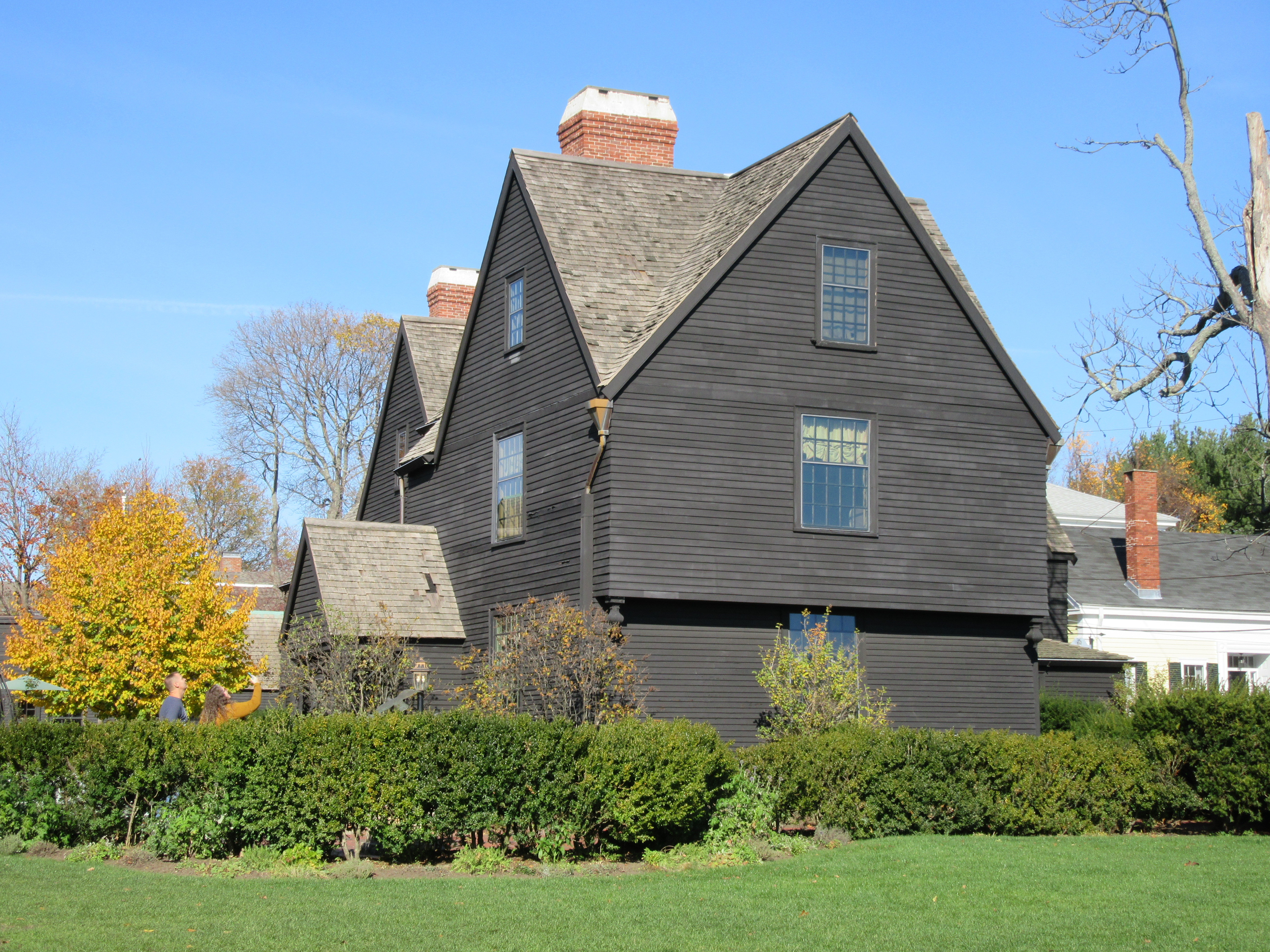
The House of the Seven Gables, Salem, Massachusetts, November 2016

Kathy Waller’s story “I’ll Be a Sunbeam” will be included in DAY OF THE DARK, along with Laura’s. Kathy’s “The Snake” won the Knife Story Challenge presented to members of Sisters in Crime Heart of Texas chapter by member author Eugenia Parrish. Kathy also attended the Writer Unboxed Unconference in Salem, where she attended a session at the House of the Seven Gables, the inspiration for Nathaniel Hawthorne’s novel. After some online confusion with another author writing under the same name, Kathy now writes under the name M. K. Waller.

And–[drum roll!]–the publication of MURDER ON WHEELS (Wildside, 2015), winner of the Killer Nashville 2016 Silver Falchion Award, was such an exhilarating experience that Austin Mystery Writers are now putting the finishing touches on a second manuscript: an anthology comprising stories by four AMW members and eight of their writer friends, tentatively titled TEXAS TOUGH.

So watch this space! When TEXAS TOUGH is ready for reading, you’ll be the first to know.