The Enduring Value of Third Spaces

By Laura Oles

Why do so many of us choose to work or study at our favorite coffee shop? Even if we have a fully equipped office, we pack up our laptop and relocate, settling in with likeminded people doing the same thing.

If this sounds like you, you’ve adopted a favorite “third space.”
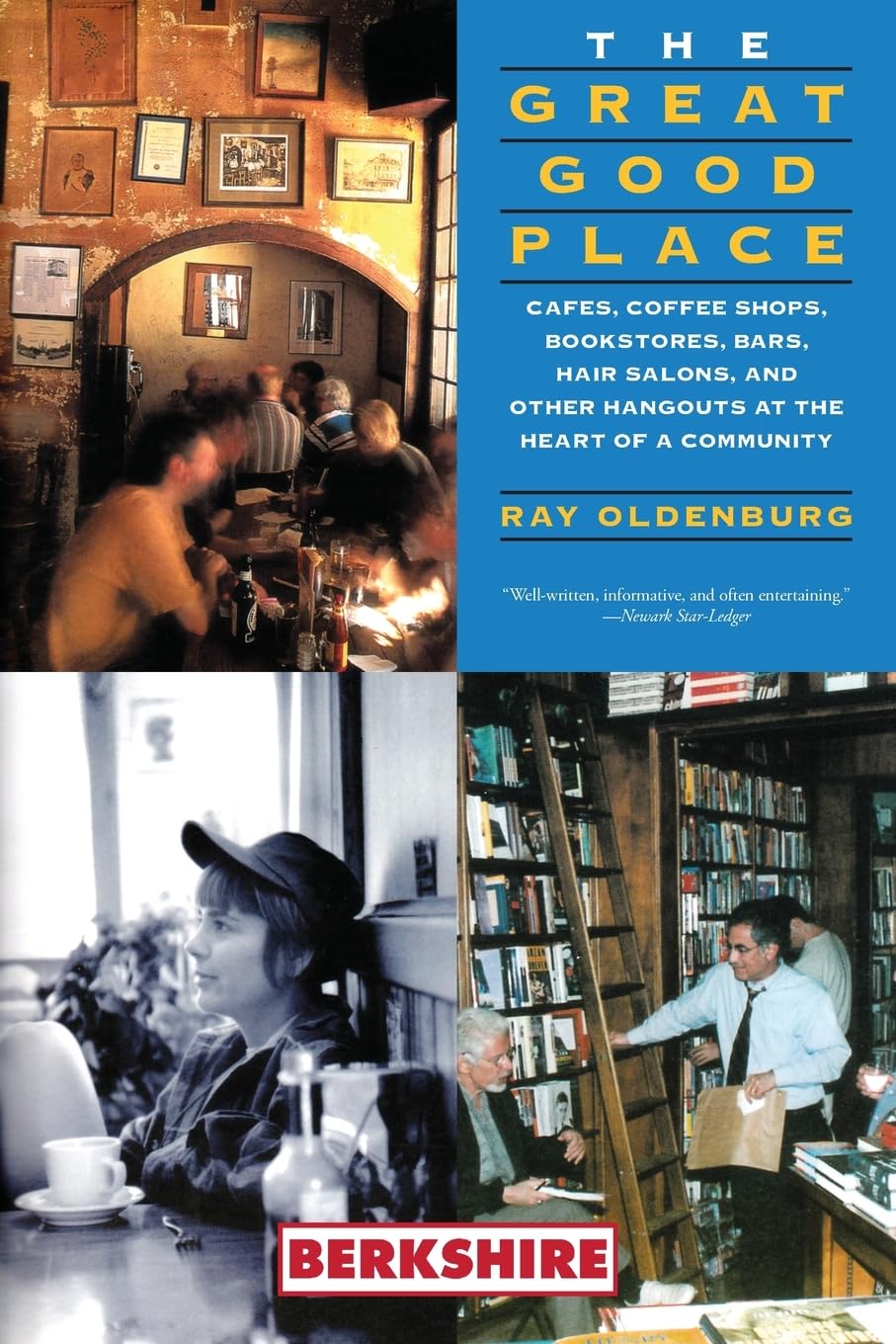
Urban sociologist Ray Oldenburg coined the term “third space” in his book, “The Great Good Place,” (originally published in 1989 and revised in 2023).  Popular third spaces include coffee shops, pubs, diners, libraries, parks and gyms. The third space, Dr. Oldenburg stated, were ones that allowed people to leave private and professional concerns behind to connect with others in conversation. Third spaces “host the regular, voluntary, informal and happily anticipated gatherings of individuals beyond the realms of home and work.”  

There’s some science that indicates it’s not simply the lure of a fantastic latte. A 2012 study published in the Journal of Consumer Research indicated that lower levels of ambient noise can spur creative idea generation. In a later 2019 study, researchers pointed to “stochastic resonance,” a measure of a particular background noise level that benefits our senses and can help in those moments where we are temporarily distracted or in a contemplative state. 

In short, the “coffee shop effect” has been cited in several studies. This, coupled with being surrounded by others seeking a similar environment, can further motivate us into action.  The idea of parallel work—working alongside others but not directly with them—can help us in our solitary efforts. All while feeling less alone.

Still, not all coffee shops will become beloved third spaces. A place where you will regularly spend both money and time is chosen. It is special. It draws you in and invites you to linger for a bit, often in the company of friends or colleagues.

The third space has evolved from being a place where people gather to connect with community, to one that incorporates these components and adds a welcoming setting for students and WFH employees and solopreneurs. As someone who raised three kids while working from home, I sometimes struggled to tune out tasks and chores. So, I sought my own third space and found it at Mochas & Javas. In addition to business articles and columns, I wrote much of my debut novel at the Wonder World location.  
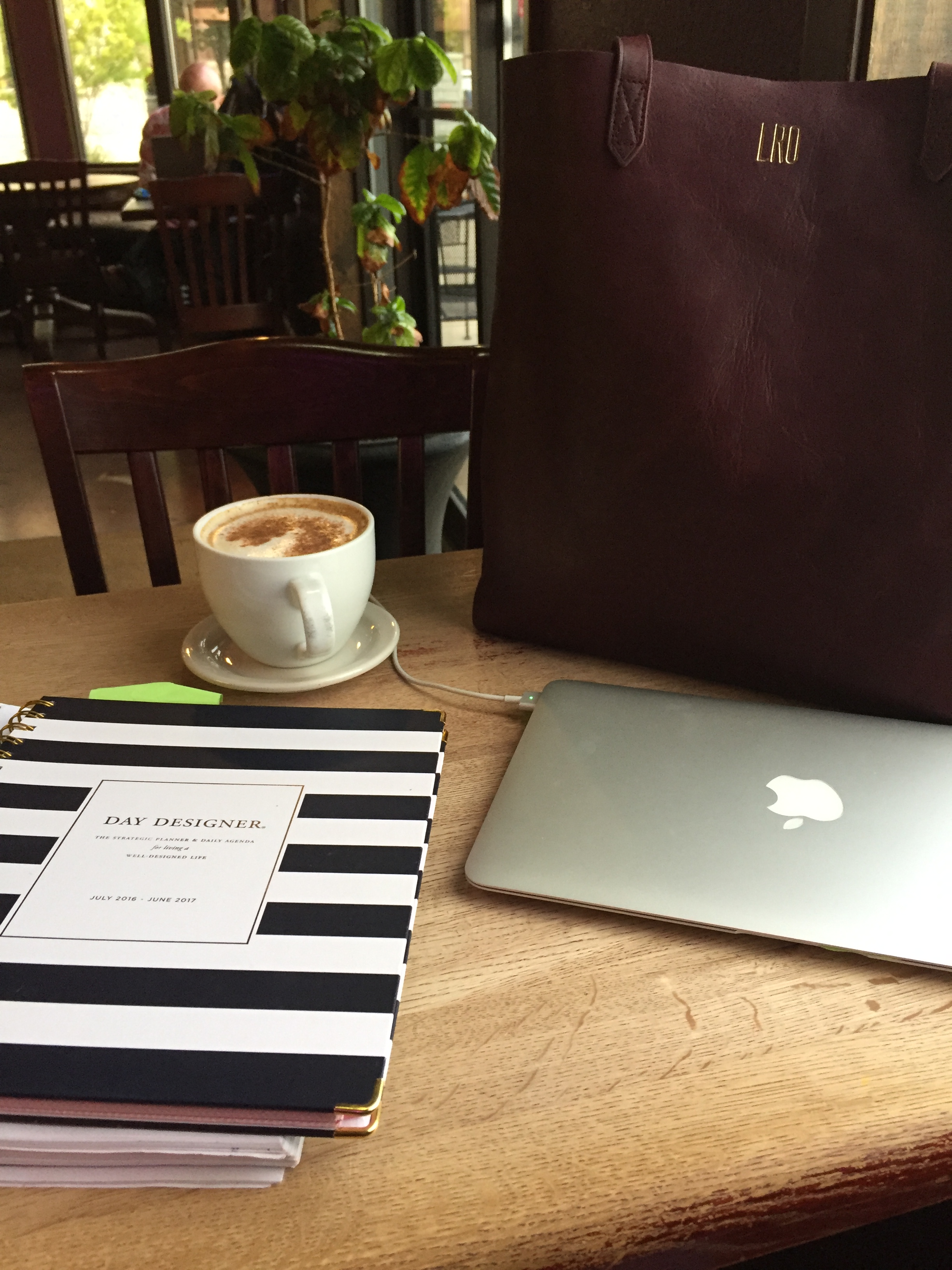
My “MJ office” in 2016

Mochas & Javas continues to be part of my regular routine—sometimes to chat with friends and other times to stare down a deadline—and I was curious to learn more about not only this beloved local institution but the guiding principles behind the business.

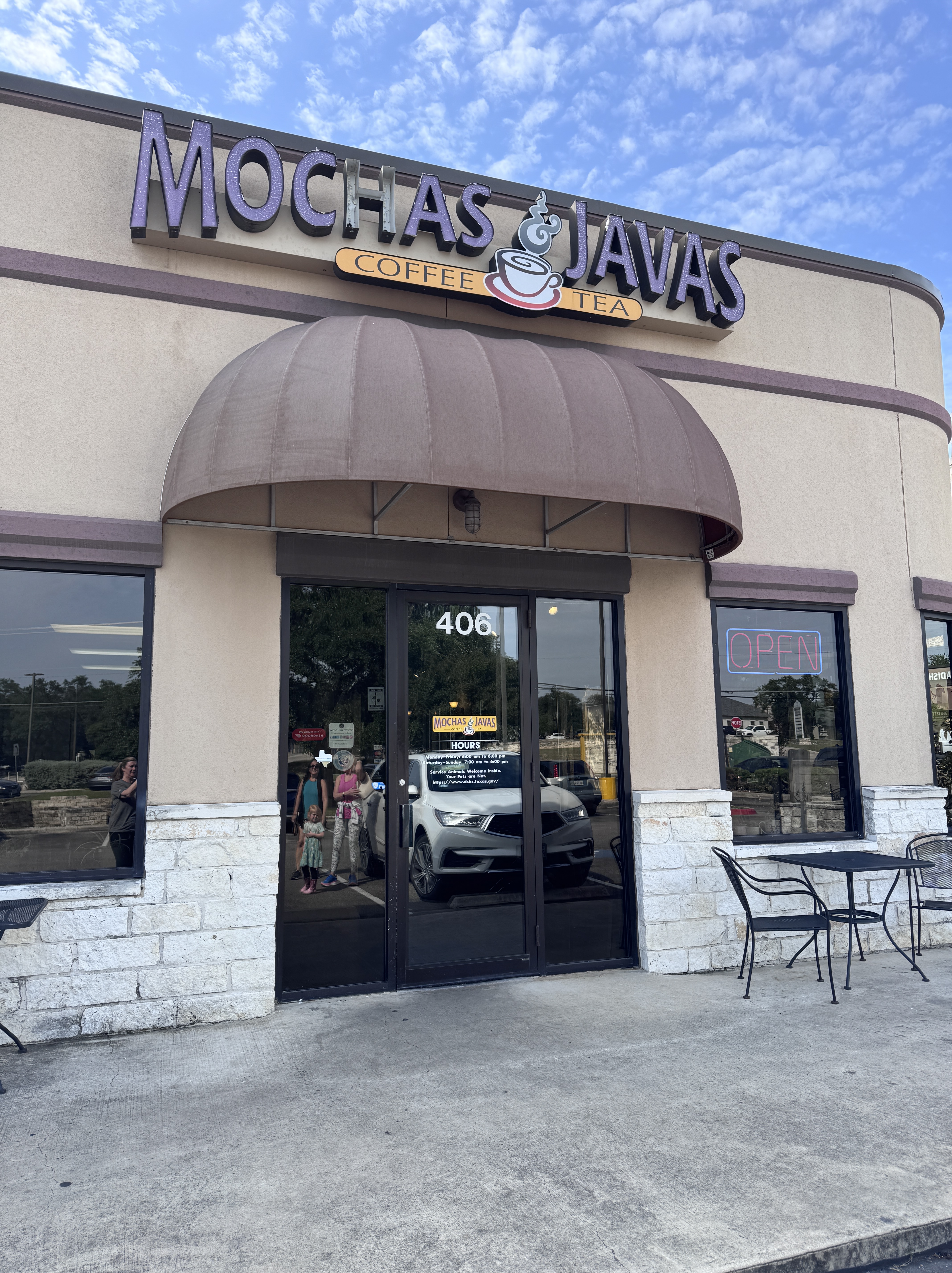
Mochas and Javas was founded in 2003 by four family members—Kevin Carswell, his brother Kirby Carswell and their wives, Michelle and Kelly Carswell. The idea originated when Kevin and Michelle began brainstorming about a local venue where San Marcos residents could gather to enjoy quality food and beverages as well as “legendary customer service.” Like many fantastic ideas penned on the back of a napkin or a business card, Michelle sketched the now well-known logo on a napkin and named the business Mochas & Javas (Community Impact, 2019). Over the last twenty years, Mochas & Javas has thoughtfully expanded into five locations.

I asked Kevin if he would share his insight about Mochas & Javas as a trusted third space in the San Marcos community and his philosophy regarding building this popular Hill Country destination. He was kind enough to share his thoughts with me in the following interview:
LO: “Getting together for coffee” is a common refrain we share with friends and colleagues.  What encouraged you to take the first steps to create Mochas & Javas as a gathering space for the San Marcos community?

KC: When we began the discussion about opening our own business we discussed several types of business. But coffee made the most sense at the time, because it was in the food and beverage industry, which is my background and in 2002, the coffee industry was rapidly expanding. I had heard the term “third” space before, but not sure that I fully grasped the concept until we opened, expanded and then had time to grow MJ’s (I’ll abbreviate the full name) over several years and then see how many of our guests became daily/weekly regulars or made MJ’s their third space. Coffee does bring people together, I’ve seen many relationships built from the connection our guests made with one another while at MJ’s, it’s a great thing to see. And for myself I’ve made many friends over the years through MJ’s, lifelong friends. It’s a good feeling. 

LO: Do you find that each location has its own personality/vibe or is the community based on proximity? Or a combination?

KC:  One of the areas that I enjoy about MJ’s is that they all have their own “vibe” or connection to the community or the surrounding area that they are located. Such as WW, many locals with a mix of students and visitors. Whereas LBJ is a more concentrated number of students and professors with a nice mix of visitors, usually families coming for informal or formal visit to TX State University. Our Frisco store is very similar to our WW store, as where it’s mostly locals and business professionals with a mix of students. 

LO:  Why do you think local writers, artists, students and businesspeople are drawn to Mochas & Javas as a third space? 

KC:  Over the years many writers have used the WW store as their office. Paul Pullin for example is in his third book and has become a good friend over the years, he’s been a regular for 22 years. We’ve chosen not to place TVs at any of our stores. I believe they are a distraction, and most people today already have plenty of screen time. If our guests were staring at a screen, they may never meet someone new. We need more face-to-face conversations and MJs provide this. 

LO:  How has Mochas & Javas expanded and evolved since you opened the first location over twenty years ago? 

KC:  MJs opened the LBJ and WW stores the same year, 2003, about 6 months apart. We have always had plans to expand, sometimes slower than we first thought, but moving a bit slower is not a bad thing. Keeping our debt in check and growth at a steady pace. Five stores in 22 years is no record, but we have five stable stores with a strong following from our loyal guests. We are planning to continue with our expansion but will plan accordingly based off good solid numbers which allow us to grow without taking on more than we can manage. 

LO:  Mochas & Javas has strong ties to the Hill Country community, and I wonder if this stems from your philosophy of “always giving back.” Can you expand on this?

KC:  I grew up in San Marcos, our family moved from the Houston area in 1967/68 to San Marcos. So, I’ve seen the city change over the past 57 years. Giving back not only to the San Marcos community but all the communities that we serve great coffee to. Giving back is an important part of owning and operating our business in the communities we serve, and we are grateful that we have the success to do this. We’ve made many small donations and added some larger ones over the years. They are all worthwhile. It’s a great way to say thank you to our community and guests for the many years of support.

The best part of working at MJs, from my standpoint, is our guests and staff. The interaction with both groups of people is the most enjoyable part of our business. I never get tired of working at the register or being a barista. It’s a lot of fun. 

Learn more about Mochas & Javas here:  https://www.mochasandjavas.com

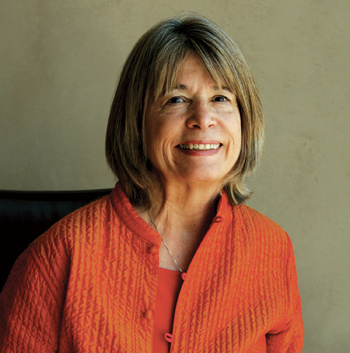
Laura Oles is the award-winning author of the Jamie Rush mystery series. Her debut mystery, Daughters of Bad Men, was an Agatha nominee, a Claymore Award finalist, and a Writers’ League of Texas Award finalist. Depths of Deceit, her second novel, was named Best Mystery by Indies Today. Her novella, Last Call, won the Silver Falchion award. Her work has appeared in crime fiction anthologies, consumer magazines and business publications. She lives in the Texas Hill Country with her family. (https://lauraoles.com

Equinox!

by Helen Currie Foster

An excess of animal spirits”–springtime! Really? Molly Ivins was right as usual when she wrote, “Texas–land of wretched excess!” We’ve had ridiculous lows, unseen for decades. Early daffodils and hyacinths came, shivered, and shriveled in the unholy cold winds roaring across the plains. But we’ve also had the earliest 90 degrees in decades! Wretched excess indeed!

Just two days until the vernal equinox on March 19, and spring. What makes us wander outside, searching for the first bluebonnet, the first violet? What makes us huddle outside the garden store, searching through the little plants shivering in the breeze, fingering seed packets, carrying home small pots of basil and blue salvia even though the weather’s far too untrustworthy for planting? What is this proto-agricultural spirit that makes us lug home the potting soil, hoe the garden bed? More sunlight? Cabin fever? Some early human gene? We, the Animal Kingdom, working with the Plant Kingdom?

I’m rereading Barry Cunliffe’s Europe Between the Oceans: 9000 BC-AD 1000a book I value not just for the stunning photographs of prehistoric sites and art, but for describing a history of human inventiveness. Cunliffe, Oxford Professor Emeritus of Archeology since 2007 (many books), says “massive transformation” occurred in Europe between 1300-800 BCPopulation growth required developing more crops than wheat and barley, including lentils, peas and—“the celtic bean (Vicia faba).”

Immediately I ordered a giant pack of fava bean seeds.

This image has an empty alt attribute; its file name is img_0981.jpg

Then I read the label: they’re mostly a winter crop–but this year I’m desperate. With last year’s blistering hot drought, I wound up with only one pot of cherry tomatoes on the porch and a dozen wilting jalapeno plants in the garden. Cunliffe’s reference to Vicia faba fired my imagination—envisioning myself harvesting large fuzzy green pods, containing delectable beans, and adding a little vinaigrette…olive oil (since 4000 BC) and vinegar (3000 BC). Using an ancient bean and ancient vinaigrette recipe! Possibly those beans were harvested, and the vinaigrette shaken, by some long-ago ancestor 3000 years ago, making me wonder if we have genetic preferences, genetic recipe roots? After all, we of the Animal Kingdom depend on the Plant Kingdom (oxygen, vinaigrette, and wine!).

Mysteries offer escape—a protagonist we like, an intriguing plot, a vivid setting. Like plants, favorite old mysteries offer much when we revisit. Mystery writers? They’re good to “talk to.” This morning I discovered on the shelf my dad’s 1934 Modern Library edition of Dashiell Hammett’s The Maltese Falcon, with a brief bio and the “new introduction” by Hammett.

This image has an empty alt attribute; its file name is img_0980.jpg

I didn’t know Hammett had worked as an operative for Pinkerton’s Detective Agency before he started writing! “Drifting through a miscellany of ill-paid jobs, he found a temporary solution to his economic problem by shadowing real malefactors with what might be called conspicuous success.” Then came the World War: “He won a sergeantcy and lost his health.”

Hammett can remember where he got his characters. Here’s a snippet of what he says about The Maltese Falcon:

“Dundy’s prototype I worked with in a North Carolina railroad yard; Cairo’s I picked up on a forgery charge in Pasco, Washington, in 1920; Polhous’s was a former captain of detectives…Effie’s once asked me to go into the narcotic smuggling business with her in San Diego…”

Hammett then muses about his own protagonist. “Spade had no original. He is a dream man in the sense that he is what most of the private detectives I worked with would like to have been and what quite a few of them in their cockier moments thought they approached. For your private detective does not—or did not ten years ago when he was my colleague—want to be an erudite solver of riddles in the Sherlock Holmes manner; he wants to be a hard and shifty fellow, able to take care of himself in any situation, able to get the best of anybody he comes in contact with, whether criminal, innocent by-stander or client.”

What a great description, and didn’t Humphrey Bogart nail it?

It strikes me that this new character of his upended the vision of the members of the London 1930 Detectives Club—Hammett gave the wide-eyed mystery audience a protagonist who is not a secret member of the aristocracy (Albert Campion) or a perfect gentleman (Roderick Alleyn) or a hyper-particular French veteran drinking tea and waxing his moustache (Hercule Poirot)…but a “hard and shifty fellow…able to get the best of anybody.” Welcome to the New World’s new-style mystery protagonists, the children of Hammett, Raymond Chandler, Sara Paretzky and others…including that hybrid protagonist, Mary Russell, in Laurie King’s Mary Russell and Sherlock Holmes series.

For Mary Russell and Sherlock Holmes, the scent of honey is a repeat theme (her Holmes is a beekeeper). I like her Holmes, I like her Russell, and just finished her Garment of Shadows (2012). King has chosen a fascinating and ambitious setting: the 1920’s, with Spain and France fighting for control of Morocco, each coveting its crucial strategic location at Gibraltar, while various Moroccan groups—Berber and otherwise—fight for independence. King uses first person point of view for Mary Russell, who’s suffering from acute amnesia—forgetting her childhood and even her marriage––but uses third person POV for Holmes’s chapters. Those shifts sometimes confused me. But her depth of history and geography, and her vivid descriptions of the magical city of Fez with its souk, bring the setting alive. Mary Russell herself has become quite a protagonist, with linguistic skills—including Arabic––and the imagination and drive to devise a daring escape from a horrible prison. I’d like to learn knife-throwing like Mary Russell (she keeps one in her boot) but the likelihood seems dim.

Writer/theologian Bruce Reyes-Chow mentioned how, when stuck, he’d “talk through ideas with myself, my plants…” I intend to follow his lead. On our deck sit five jasmine plants we’ve toted around since the seventies. I think they sometimes do communicate with me—“I’m dry-y-y-y!” But from now on, when I’m stuck on a plot, I’ll go consult them. Every spring, those jasmine produce tiny white flowers with an unmatchable scent. In search of even more scent, this year I’ve planted another mix of old and new. Rose de Recht is a fragrant pink heirloom damask, Fragrant Blush promises pink perfume, and Star of the Republic is tough, like her name, but delicate pink with exquisite fragrance.

This image has an empty alt attribute; its file name is img_0978.jpg

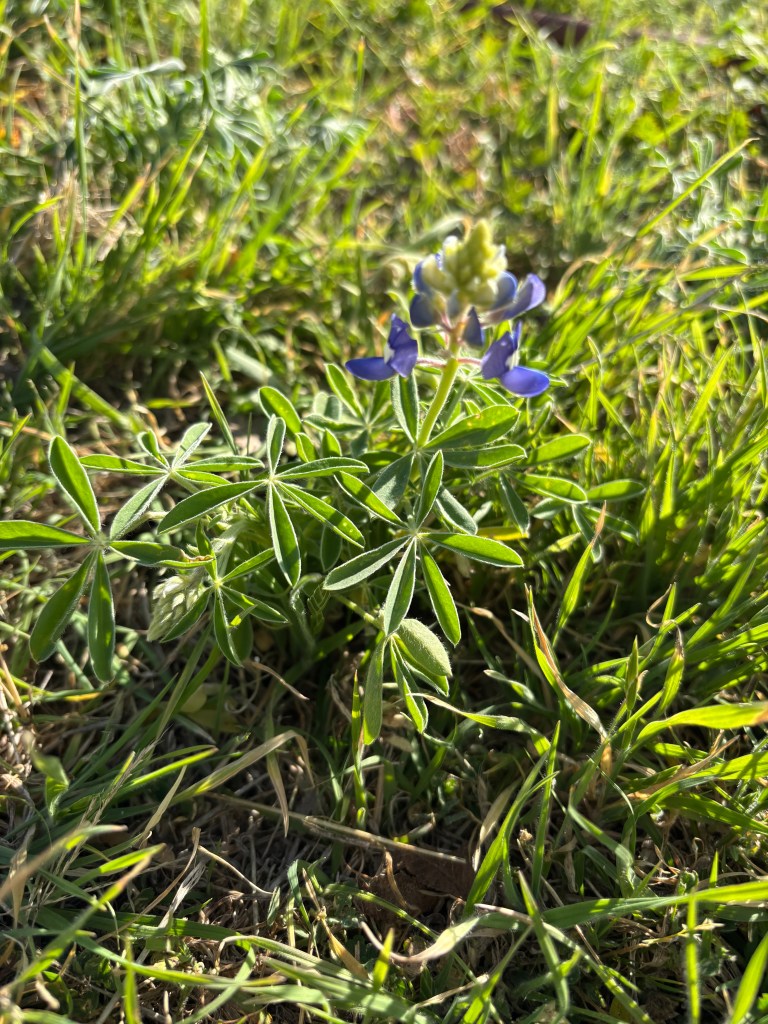
And now suddenly the redbuds, with their irresistible yet evanescent fuchsia buds, are blooming. I’ve seen our first bluebonnet,

This image has an empty alt attribute; its file name is img_0974.jpg

and the first purple prairie verbena. The live oaks know it’s almost the equinox—they’ve flung down their old leaves (aided by the fierce winds) and are preparing their catkins and baby leaves. The cedar elms have put out tiny chartreuse leaves just in the last two days.

This image has an empty alt attribute; its file name is img_0973.jpg

So it’s spring! Grab that trowel! And after all your work, you deserve to loll on the couch at night with a good mystery. I’m halfway through the tenth book in my Hill Country murder mystery series. This one raises a question I find intriguing and difficult. Can justice be served when, unauthorized to pronounce justice, we take justice into our own hands? Is that still justice? I’m discussing it with the plants. More to come….

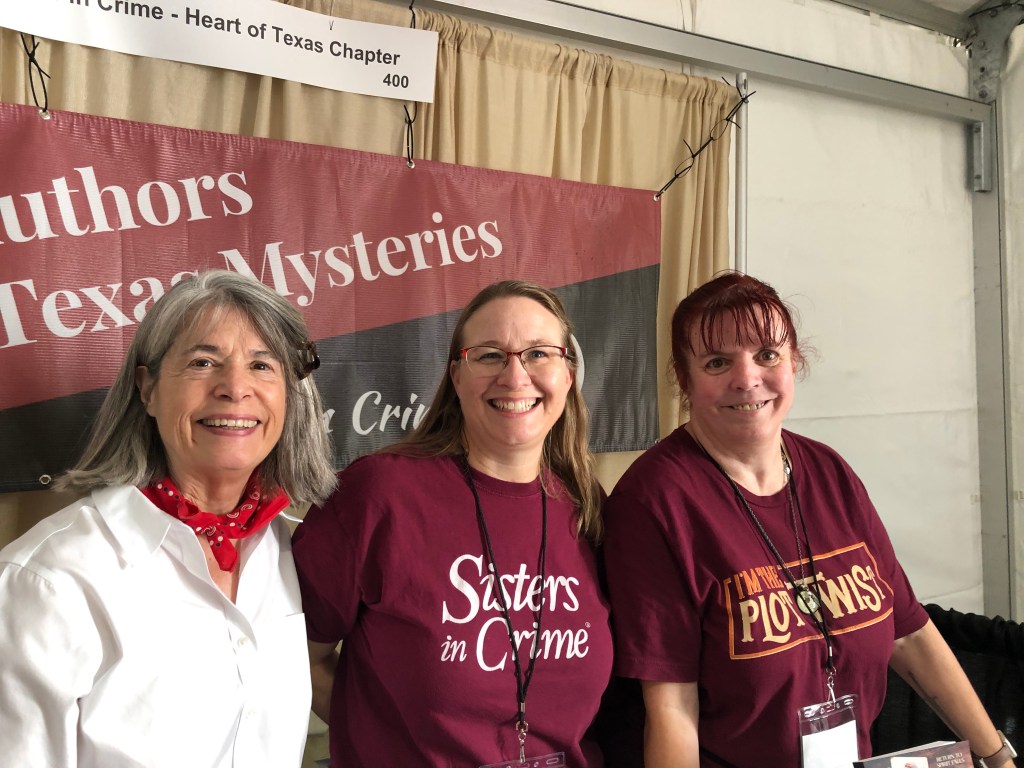
Here are Helen, Noreen Cedeno, and Juanita Houston at the Texas Book Festival!–Heart of Texas Sisters in Crime

***

Award-winning Helen Currie Foster lives and writes the Alice MacDonald Greer Mystery series (9 volumes so far) north of Dripping Springs, Texas, loosely supervised by three burros. She’s working on Book 10. She’s drawn to the compelling landscape and quirky characters of the Texas Hill Country. She’s also deeply curious about our human history and how, uninvited, the past keeps crashing the party.

Follow her at Helen Currie Foster and at her author page on Amazon.