That First Line…and More?

by Helen Currie Foster

November 24, 2025

Writers live in trepidation that they’re failing a much-publicized writing test: a great first line.

Maybe that’s not a fair burden. If I already like a writer’s work—a favorite mystery-writer, for instance–I don’t demand a blockbuster first line. But I do need reassurance that I’m going to like that writer’s new book as well as the last. So on the opening page, I hope to see a reminder of the detective’s personality, of an interesting setting, of the vagaries of the detective’s colleagues.

If, however, it’s my first encounter with an author—I need to be drawn in swiftly. Looking at first lines (and what immediately follows) is a good exercise. Each reader knows when the opening has worked, and they’re hooked on a story—or not. Maybe the lesson is this: when the reader’s eyes fall on the first page, the writer must promise the story!

“Tell me a story!” That’s what we’re looking for when we open a book. The first sentence, the first page, needn’t summarize the book, but we want very quickly to know we’re going to get a story.

Here’s a first line that kept me reading: “When Augustus came out on the porch the blue pigs were eating a rattlesnake—not a very big one.”

Blue pigs? I’d never heard of blue pigs, much less pigs dining on rattlesnake. Of course I kept reading, just to hear more about Augustus: “Pigs on the porch just made things hotter, and things were already hot enough. He stepped down into the dusty yard and walked around to the springhouse to get his jug.” By then the reader might also be feeling thirsty and might wonder if Augustus would share that jug… but the author hadn’t finished:

“[T]he sun had the town trapped deep in dust, far out in the chaparral flats, a heaven for snakes and horned toads, roadrunners and stinging lizards, but a hell for pigs and Tennesseans.”

What a setting, and what a contrast to Augustus’s home—he’s stuck in godforsaken dusty chaparral flats, heaven for snakes and horned toads, and far from the moist green hills of Tennessee.

McMurtry’s first sentence is great. But then he gives us just a couple more sentences—and we find ourselves already longing to hear more about Augustus as the saga begins—Lonesome Dove, of course, and thank you, Larry McMurtry.

The on-line lists of “famous first lines” include perennial favorites. Of course Moby Dick is famous—“Call me Ishmael.” We’re notified that our protagonist will be wandering far….

Also there’s Pride and Prejudice: “It is a truth universally acknowledged that a single man in possession of a good fortune must be in want of a wife.”  Jane Austen doesn’t keep us waiting. By the end of the first page we know that “a single man of large fortune” has arrived in the neighborhood—and we tingle in anticipation of the plot suggested in the opening sentence.

What about Shogun? The first line of James Clavell’s novel hauls us in: “The gale tore at him and he felt its bite deep within and he knew that if they did not make landfall in three days they would all be dead.” Then, “Too many deaths on this voyage, he thought, I’m Pilot-Major of a dead fleet. One ship left out of five—eight and twenty men from a crew of one hundred and seven and now only ten can walk and the rest near death and our Captain-General one of them. No food, almost no water and what there is, brackish and foul.”

What will happen? Will the pilot survive? We’re hooked by the first sentence, and the next few sentences convince us that we’ve got a tale to read in Shogun. Even if we’ve never yet read any Clavell, we’re confident—as we are in Lonesome Dove, and in Pride and Prejudice––that the author’s got a story for us.

Hilary Mantel is a genius at first lines. The Mirror & the Light begins In London, in May 1536, with this sentence:  “Once the queen’s head is severed, he walks away.” It takes another page before we begin to grasp that “he” is Cromwell, attending the execution of Anne Boleyn. And already we know that this story will be frightening.

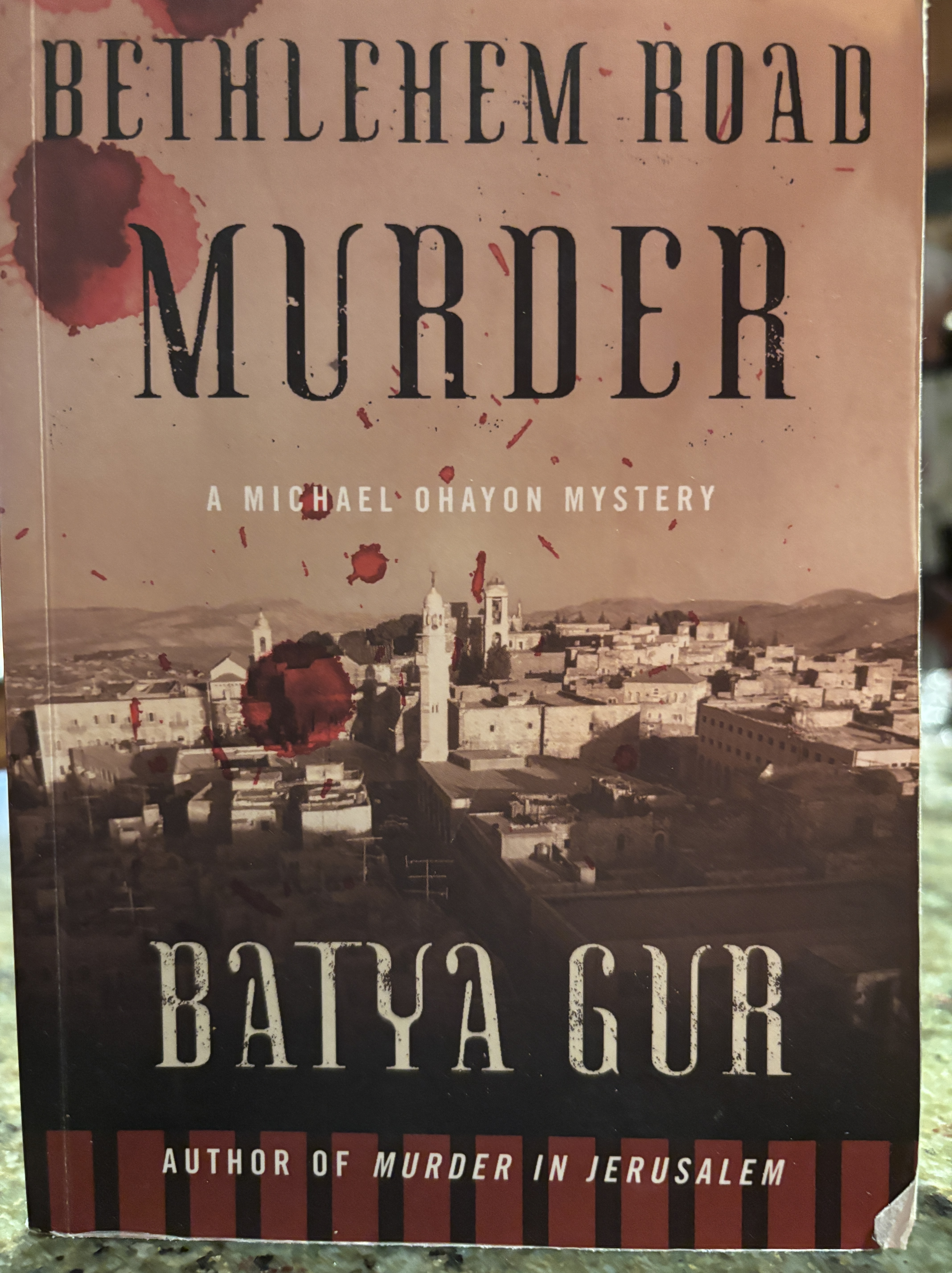
As a lover of mystery novels, I’m critical about beginnings. I liked Batya Gur’s mysteries, set in Jerusalem, with Chief Superintendent Michael Ohayon. Here’s the first line of Bethlehem Road Murder:
“There comes a moment in a person’s life when he fully realizes that if he does not throw himself into action, if he does not stop being afraid to gamble, and if he does not follow the urgings of his heart that have been silent for many a year—he will never do it.”

Okay, but who’s thinking that? The next sentence reveals the thought belongs to Chief Superintendent Ohayon himself, and he’s thinking that thought while he’s engaged in leaning over a woman’s corpse and trying to get a better look at the silk fibers from the rip in the scarf around her neck. In other words, our detective’s already on the job—but what are the “urgings of his heart” that we just heard about? I’m hooked—we have a corpse, a murder (surely a mystery to solve)—and also a mystery about what’s bugging our protagonist.
Here are the first and second line of one of Tony Hillerman’s later mysteries, The Shape Shifter (2006):

“Lieutenant Joe Leaphorn, retired, stopped his pickup about a hundred yards short of where he had intended to park, turned off the ignition, stared at Sergeant Jim Chee’s trailer home, and reconsidered his tactics. The problem was making sure he knew what he could tell them, and what he shouldn’t, and how to handle it without offending either Bernie or Jim.”

If you didn’t already know Lieutenant Leaphorn, you’d at least grasp from the first sentence that he’s tactful, careful, thoughtful. But what’s the issue he’s wrestling with? We’ll know by the end of the paragraph, and we’ll be deep into a new story. Just as we hoped.

And here’s the first line of Hillerman’s earlier The Ghostway (1986): “Hosteen Joseph Joe remembered it like this.”  The next paragraph explains how this witness “noticed the green car just as he came out of the Shiprock Economy Wash-O-Mat…The car looked brand new and it was rolling slowly across the gravel, the driver leaning out the window just a little.” And what Hosteen Joseph Joe remembered next was that the driver—though he looked like a Navajo—had yelled at Joseph Joe, who was eighty-one, and “that was not a Navajo thing to do.” We already feel a story—why would someone yell at Hosteen Joseph Joe?—but by the time Hosteen Joseph Joe winds up his narrative (just paragraphs later) he has also described the ensuing pistol shot leaving a dead man on the ground. Who was murdered? By whom? Why? We’ve definitely got a story.

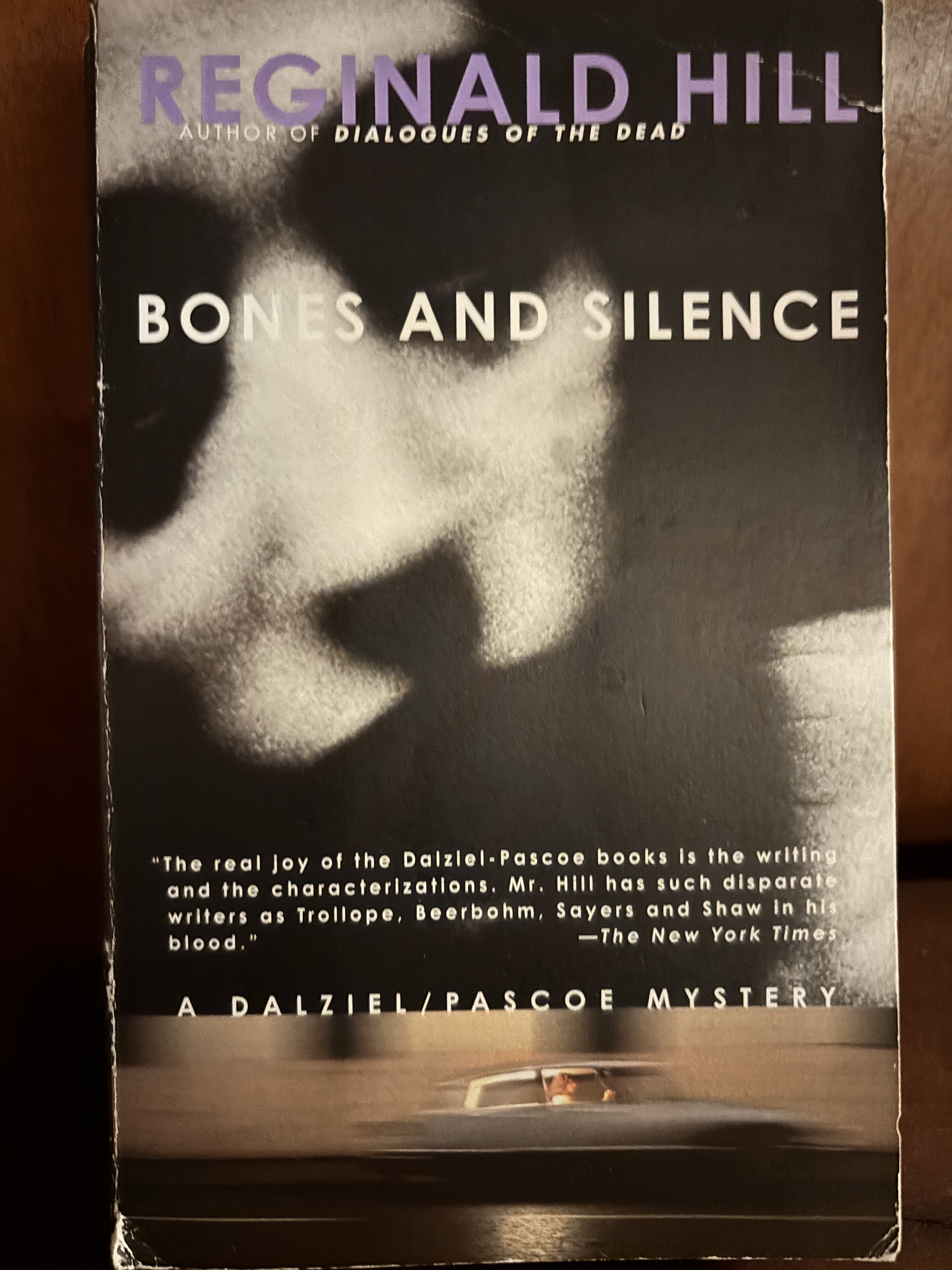
If you read Reginald Hill (his protagonists are Detective Superintendent Andy Dalziel and Peter Pascoe of the Yorkshire CID), you know that he begins every mystery differently. His Bones and Silence (1990) is no candidate for a mere “first sentence.” Instead, it opens with a letter to Superintendent Dalziel from an anonymous correspondent who intends to commit suicide, but wants to be in correspondence with Dalziel before this occurs. The letters continue to arrive for Dalziel for months—anonymous, and we don’t know whether the writer is man or woman—as he and Pascoe toil through a series of apparently unrelated murder investigations. We readers are kept in suspense until the very last page.
Finally—and do you remember being assigned this book?—consider this first sentence: “The cold passed reluctantly from the earth, and the retiring fogs revealed an army stretched out on the hills, resting.” Thus opens The Red Badge of Courage, by Stephen Crane. We see the landscape—and we see the army, “resting.” “Resting”? The army must need  rest and we wonder why. “Resting” somehow builds suspense for what may follow –for what may happen when the army finishes resting. We know there’s a story––but we don’t know what, and we won’t meet that young private for a couple of pages more.

Our craving for stories is what makes us human. Think of the power of those four little words: “Once upon a time…!” Four words that assure us of a story. We gather around to hear it, whether we’re three, thirty, ninety.

Robert Louis Stevenson, author of such tales as Treasure Island and Kidnapped, was given a name by the Samoans: TUSITALA—the Teller of Tales. What an honor!

And that’s who we aspire to be. Raconteurs! Storytellers! Writers! Authors! Tellers of Tales!

And now–here in the Hill Country west of Austin, we finally (FINALLY) got some rain. Wishing you a HAPPY THANKSGIVING!

My latest tale, Ghost Justice, came out August 29, 2025. It’s Book 10 in the series involving Alice, a lawyer working in the small town of Coffee Creek in the iconic Texas Hill Country. Legal drama, and matters of the heart! The next tale is simmering! Find Ghost Justice at BookPeople in Austin or on Amazon. https://www.amazon.com/Ghost-Justice-Helen-Currie-Foster/dp/1732722943

Follow me at http://www.helencurriefoster.com.

Quiet Wins at Bouchercon

VP Chandler

by V.P. Chandler

When people talk about Bouchercon, especially in New Orleans, they usually share stories of late nights, legendary meals, bustling crowds, powdery beignets, and lots of alcohol.

That wasn’t my week.

But the funny thing is—I still accomplished exactly what I went to do.

My panel, Wide Open Spaces, with Craig Johnson, Bruce Borgos, Jeff Ayers, George Wilhite, and moderated by the lovely Sylissa Franklin was a highlight. The conversation flowed, and the audience was engaged. I made them laugh a few times and even got a gasp. So, mission accomplished. I walked away feeling like I’d contributed something worthwhile.

I also got to meet Clay Stafford in person and thank him for publishing my short story, Under The Blackjack Tree, in Killer Nashville Magazine.  (The story that was chosen by John Grisham and Otto Penzler for The Best Mystery Stories of the Year 2025, which is still surreal to me. (Coming out next week!) Stafford’s keynote, The Story That Saved Me, was “cry for crime writers and readers to remember why stories of darkness and redemption still matter—and why telling the truth on the page can save us, too.” Honestly, it was one of the most inspiring talks I’ve heard in a long while. Glad I went.

Another highlight was finally meeting Otto Penzler in person. I thanked him for the opportunity, and he graciously signed my copy of the anthology. A small moment, but one I’ll carry with me.

At the end of most days, I met up with Laura Oles in the hotel/lounge bar. (It was so noisy all of the time!) We compared notes at the end of the day—who we’d seen, what panels had sparked ideas. She was on a terrific panel herself, Dialogue Matters: Slang, Concise, or Verbose? The group dug into how dialogue can reveal character and control pacing, which is something that I’m always working on.

I also loved being in the audience for Sweet Tea with a Splash of Crime: The Southern Influence, with Ace Atkins, S.A. Cosby, and other writers who captured both the grit and taste of Southern literature, and where it’s headed. Another standout was Killing Your Darlings, with Penzler and Donald Maass, which was a sharp reminder that ego doesn’t belong in the editing room if the goal is to make the story better.

And one of my favorite unexpected moments? Donald Maass allowed me to join him for lunch one afternoon. We had a thoughtful conversation about Writer Unboxed, an organization we’re both part of, about writing in general, and drawing inspiration from real life,. It was simple but memorable, the kind of connection that lingers long after the conference ends.

So no, this wasn’t a Bouchercon of big parties or long nights on Bourbon Street. But it was a Bouchercon where I hit my goals, connected with people who matter to me, and left with a few new insights and ideas. Sometimes the quieter wins are the ones that last.

Walking the Dark Side of Summer: A Personal Look at For Every Evil Under the Sun

VP Chandler


By V.P. Chandler

When I first sat down to write the stories that would eventually become part of For Every Evil Under the Sun, I didn’t know exactly where they would lead me—I only knew I wanted to stretch my writing skills, try new things, and be a part of a hot, cool collaboration. (Yes, I like puns.)

Now, I’m proud to announce that this collection is out in the world, published by the brand-new Fredonia Ink Publishing. I’m honored to be sharing the pages with two powerhouse writers, Alexandra Burt and Laura Oles—both of whom are not only incredibly talented but also deeply committed to telling stories that explore the dark, complex corners of the human experience.

This collection is a bit of a literary experiment. We each approached the idea of “evil” through our own unique lens—psychological thriller, family drama, crime, horror, western—and let the stories guide us. What came out of it is a collection that isn’t just eclectic, it’s electric. It shines! (Yes, another pun.)

As for me, I leaned into the grit—into crime, revenge, justice. I wanted my stories to carry that weight—to explore the consequences of violence and vengeance. And also add a little bit of fun to the mix. And the stories by Alexandra Burt and Laura Oles are equally as dark and entertaining.

And hey, if you’re in Austin this summer, I’d love to invite you to join us for a special event at Vintage Bookstore and Wine Bar (1101 E. 11th St.) on July 18 at 7pm. Alexandra, Laura, and I will be discussing short story craft, the experiences of women writing crime fiction, and what went into shaping this haunting little book. It’ll be an evening of books, wine, and maybe a few goosebumps.

So if you’re in the mood for stories that simmer under the heat of summer and explore just how far people will go—to protect, to avenge, to survive—then For Every Evil Under the Sun might just be what you’re looking for.

Hope to see you in July.

—VP Chandler
vpchandler.com


🗓️ Event Info: July 18, 7pm @ Vintage Bookstore and Wine Bar, Austin, TX
🔗 Learn more, here is the Amazon listing. Ebook now available and paperback will be soon on Amazon and bookstores everywhere: https://tinyurl.com/2tph4xcz

The Enduring Value of Third Spaces

By Laura Oles

Why do so many of us choose to work or study at our favorite coffee shop? Even if we have a fully equipped office, we pack up our laptop and relocate, settling in with likeminded people doing the same thing.

If this sounds like you, you’ve adopted a favorite “third space.”

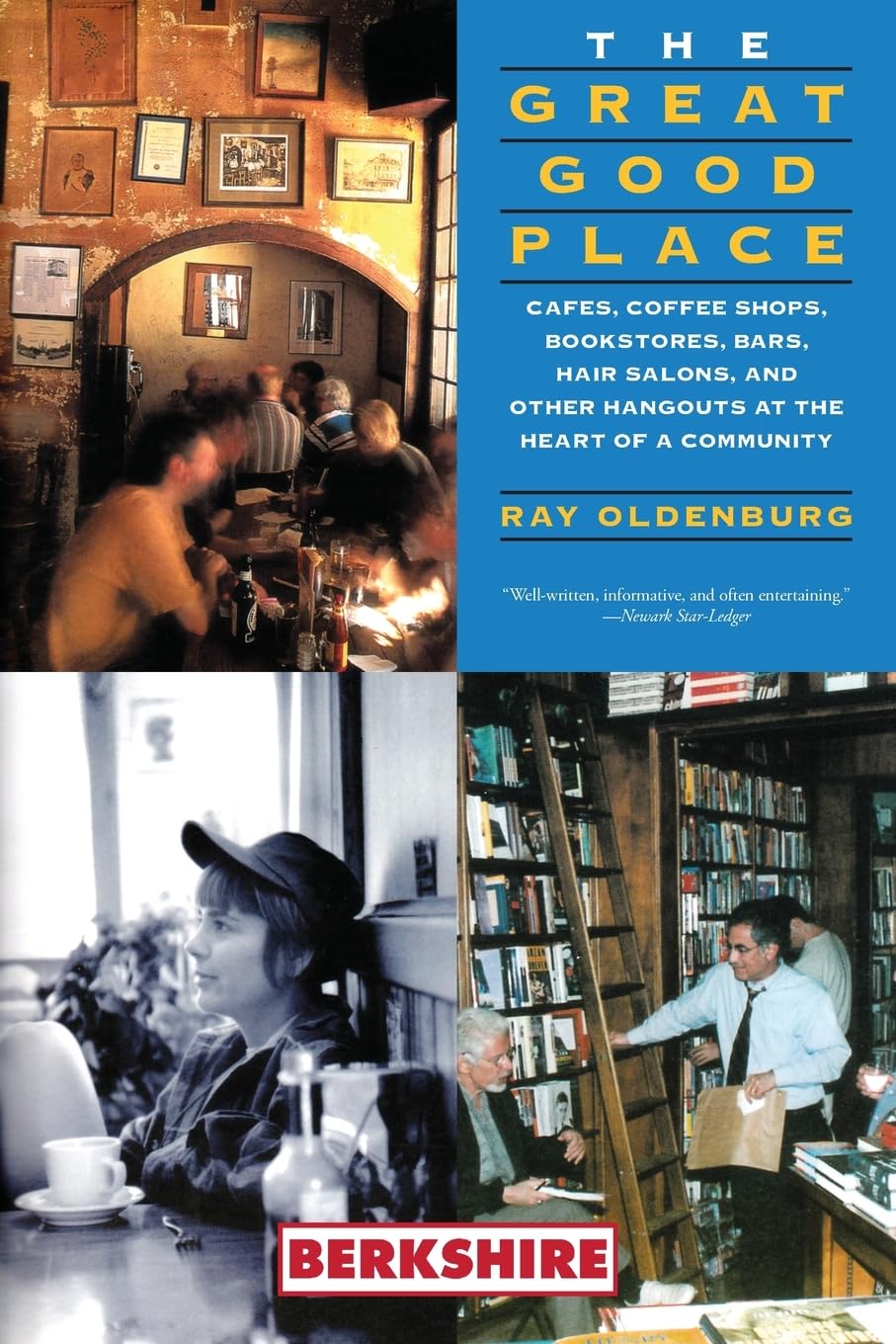
Urban sociologist Ray Oldenburg coined the term “third space” in his book, “The Great Good Place,” (originally published in 1989 and revised in 2023).  Popular third spaces include coffee shops, pubs, diners, libraries, parks and gyms. The third space, Dr. Oldenburg stated, were ones that allowed people to leave private and professional concerns behind to connect with others in conversation. Third spaces “host the regular, voluntary, informal and happily anticipated gatherings of individuals beyond the realms of home and work.”  

There’s some science that indicates it’s not simply the lure of a fantastic latte. A 2012 study published in the Journal of Consumer Research indicated that lower levels of ambient noise can spur creative idea generation. In a later 2019 study, researchers pointed to “stochastic resonance,” a measure of a particular background noise level that benefits our senses and can help in those moments where we are temporarily distracted or in a contemplative state. 

In short, the “coffee shop effect” has been cited in several studies. This, coupled with being surrounded by others seeking a similar environment, can further motivate us into action.  The idea of parallel work—working alongside others but not directly with them—can help us in our solitary efforts. All while feeling less alone.

Still, not all coffee shops will become beloved third spaces. A place where you will regularly spend both money and time is chosen. It is special. It draws you in and invites you to linger for a bit, often in the company of friends or colleagues.

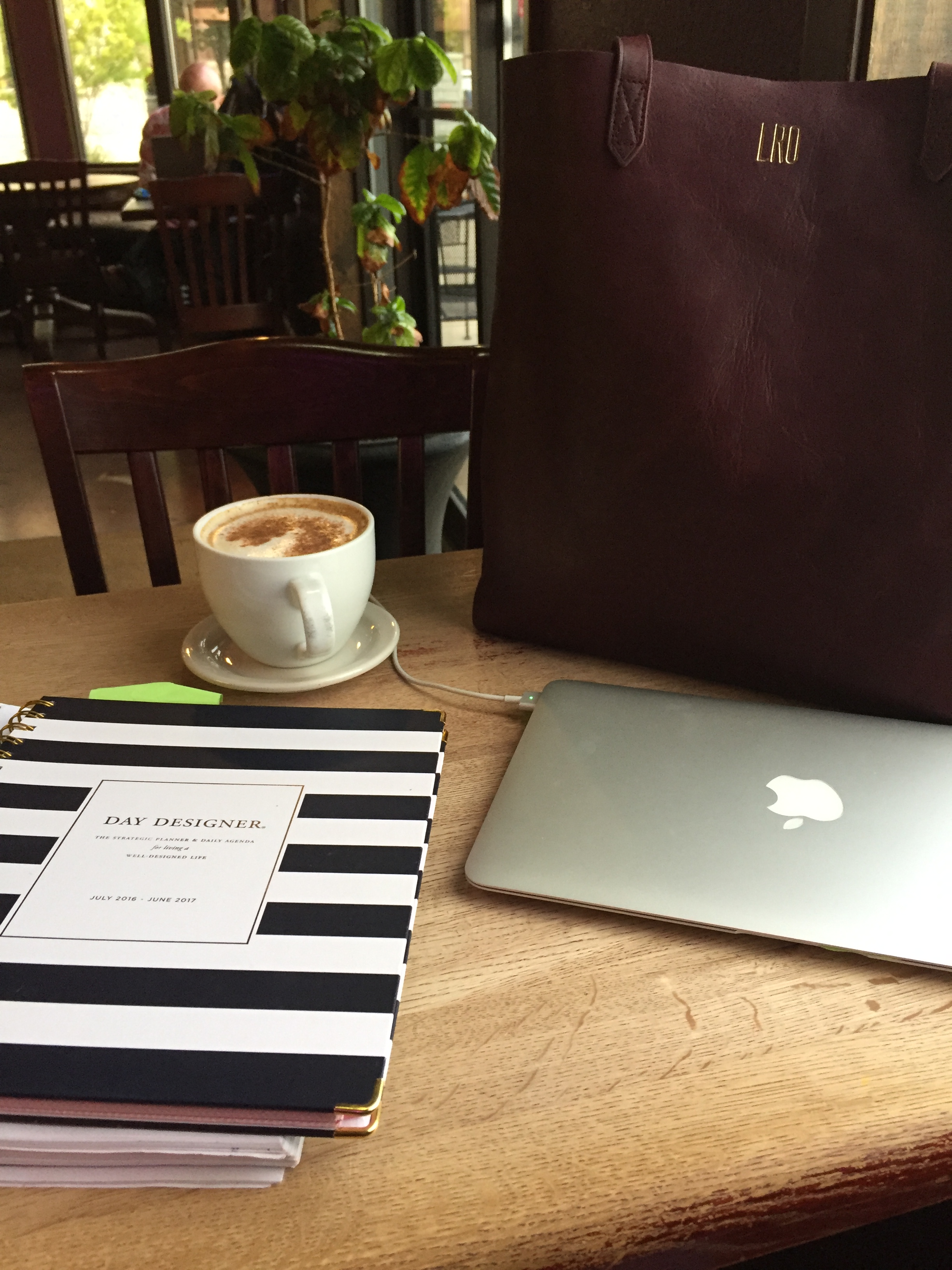
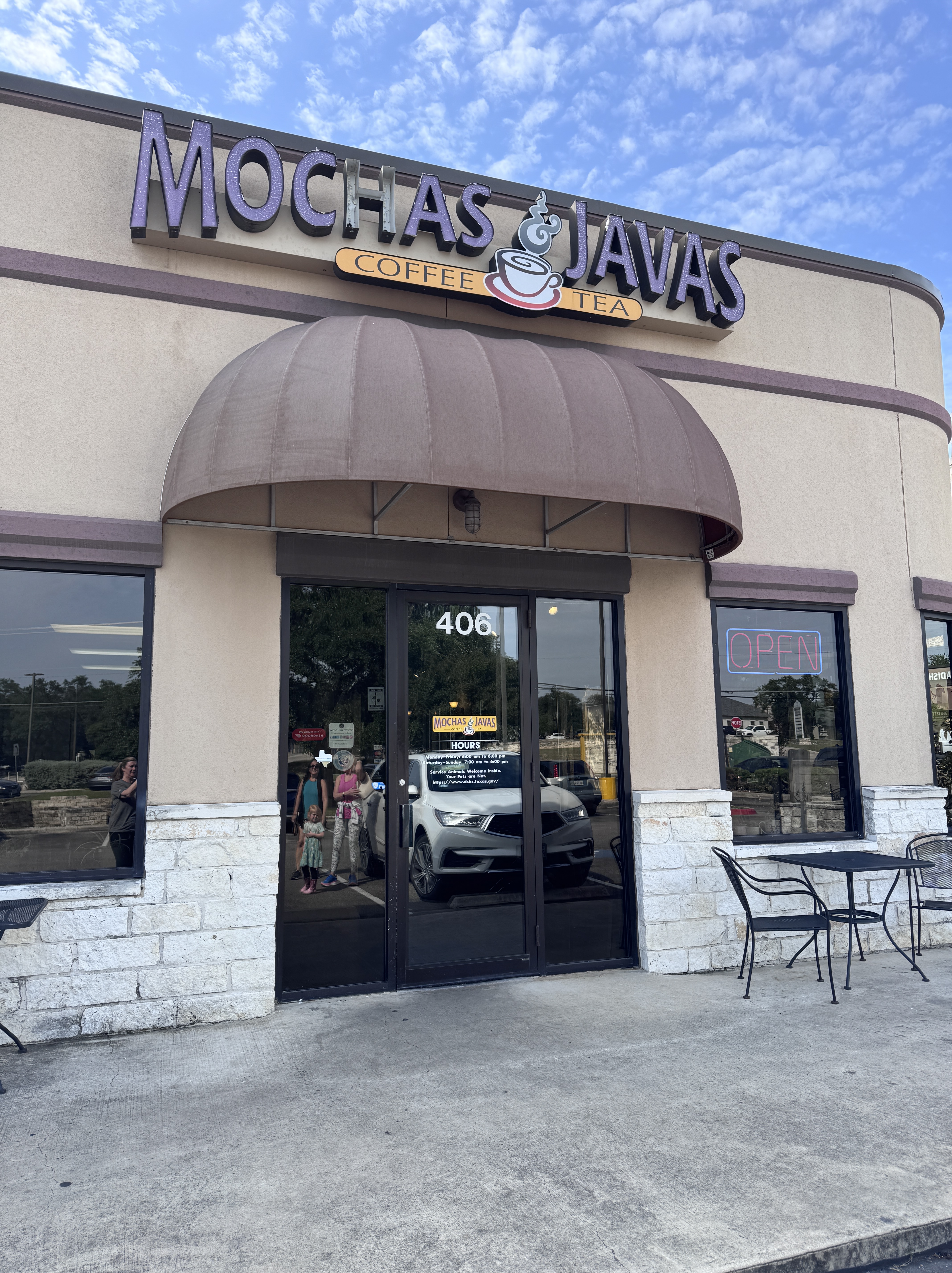
The third space has evolved from being a place where people gather to connect with community, to one that incorporates these components and adds a welcoming setting for students and WFH employees and solopreneurs. As someone who raised three kids while working from home, I sometimes struggled to tune out tasks and chores. So, I sought my own third space and found it at Mochas & Javas. In addition to business articles and columns, I wrote much of my debut novel at the Wonder World location.  

My “MJ office” in 2016

Mochas & Javas continues to be part of my regular routine—sometimes to chat with friends and other times to stare down a deadline—and I was curious to learn more about not only this beloved local institution but the guiding principles behind the business.

Mochas and Javas was founded in 2003 by four family members—Kevin Carswell, his brother Kirby Carswell and their wives, Michelle and Kelly Carswell. The idea originated when Kevin and Michelle began brainstorming about a local venue where San Marcos residents could gather to enjoy quality food and beverages as well as “legendary customer service.” Like many fantastic ideas penned on the back of a napkin or a business card, Michelle sketched the now well-known logo on a napkin and named the business Mochas & Javas (Community Impact, 2019). Over the last twenty years, Mochas & Javas has thoughtfully expanded into five locations.

I asked Kevin if he would share his insight about Mochas & Javas as a trusted third space in the San Marcos community and his philosophy regarding building this popular Hill Country destination. He was kind enough to share his thoughts with me in the following interview:

LO: “Getting together for coffee” is a common refrain we share with friends and colleagues.  What encouraged you to take the first steps to create Mochas & Javas as a gathering space for the San Marcos community?

KC: When we began the discussion about opening our own business we discussed several types of business. But coffee made the most sense at the time, because it was in the food and beverage industry, which is my background and in 2002, the coffee industry was rapidly expanding. I had heard the term “third” space before, but not sure that I fully grasped the concept until we opened, expanded and then had time to grow MJ’s (I’ll abbreviate the full name) over several years and then see how many of our guests became daily/weekly regulars or made MJ’s their third space. Coffee does bring people together, I’ve seen many relationships built from the connection our guests made with one another while at MJ’s, it’s a great thing to see. And for myself I’ve made many friends over the years through MJ’s, lifelong friends. It’s a good feeling. 

LO: Do you find that each location has its own personality/vibe or is the community based on proximity? Or a combination?

KC:  One of the areas that I enjoy about MJ’s is that they all have their own “vibe” or connection to the community or the surrounding area that they are located. Such as WW, many locals with a mix of students and visitors. Whereas LBJ is a more concentrated number of students and professors with a nice mix of visitors, usually families coming for informal or formal visit to TX State University. Our Frisco store is very similar to our WW store, as where it’s mostly locals and business professionals with a mix of students. 

LO:  Why do you think local writers, artists, students and businesspeople are drawn to Mochas & Javas as a third space? 

KC:  Over the years many writers have used the WW store as their office. Paul Pullin for example is in his third book and has become a good friend over the years, he’s been a regular for 22 years. We’ve chosen not to place TVs at any of our stores. I believe they are a distraction, and most people today already have plenty of screen time. If our guests were staring at a screen, they may never meet someone new. We need more face-to-face conversations and MJs provide this. 

LO:  How has Mochas & Javas expanded and evolved since you opened the first location over twenty years ago? 

KC:  MJs opened the LBJ and WW stores the same year, 2003, about 6 months apart. We have always had plans to expand, sometimes slower than we first thought, but moving a bit slower is not a bad thing. Keeping our debt in check and growth at a steady pace. Five stores in 22 years is no record, but we have five stable stores with a strong following from our loyal guests. We are planning to continue with our expansion but will plan accordingly based off good solid numbers which allow us to grow without taking on more than we can manage. 

LO:  Mochas & Javas has strong ties to the Hill Country community, and I wonder if this stems from your philosophy of “always giving back.” Can you expand on this?

KC:  I grew up in San Marcos, our family moved from the Houston area in 1967/68 to San Marcos. So, I’ve seen the city change over the past 57 years. Giving back not only to the San Marcos community but all the communities that we serve great coffee to. Giving back is an important part of owning and operating our business in the communities we serve, and we are grateful that we have the success to do this. We’ve made many small donations and added some larger ones over the years. They are all worthwhile. It’s a great way to say thank you to our community and guests for the many years of support.

The best part of working at MJs, from my standpoint, is our guests and staff. The interaction with both groups of people is the most enjoyable part of our business. I never get tired of working at the register or being a barista. It’s a lot of fun. 

Learn more about Mochas & Javas here:  https://www.mochasandjavas.com

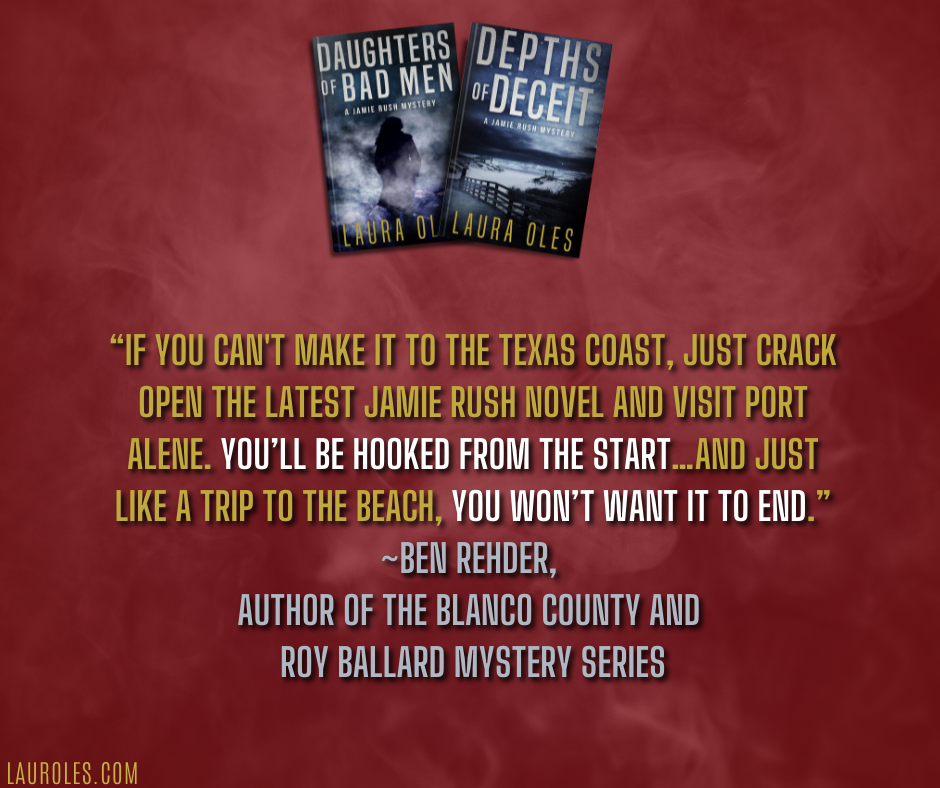
Laura Oles is the award-winning author of the Jamie Rush mystery series. Her debut mystery, Daughters of Bad Men, was an Agatha nominee, a Claymore Award finalist, and a Writers’ League of Texas Award finalist. Depths of Deceit, her second novel, was named Best Mystery by Indies Today. Her novella, Last Call, won the Silver Falchion award. Her work has appeared in crime fiction anthologies, consumer magazines and business publications. She lives in the Texas Hill Country with her family. (https://lauraoles.com

“I Should Write That Down…Now Where Did I Put It?”

The Joy of a Commonplace Book

By Laura Oles

I can’t tell you how many times I’ve come across a quote, an idea or something else I wanted to remember and thought, “I need to write that down.”

So I did.

Over and over and over.

In countless notebooks and journals and on post it notes.

The problem I found is that, while committing something to paper is an important first step, it is only a first step. There are many moments where I’ve written something down only to lose it amongst some ephemera, discovered only again when I’m looking for something else.  

It’s like finding twenty bucks in those shorts from last summer. It’s a nice surprise, but maybe I should try tracking this information (and my dollars) a bit better.

First, I tried using a Bullet Journal…

The Bullet Journal was created by Ryder Carroll as a way to organize schedules, to-do lists and other details for work and personal life. It started as his own method of corralling his many thoughts and commitments into a central place. It’s a fantastic method for many dedicated BuJo lovers, and the premise is simple.  All you need is an empty notebook and a pen.

Turns out, you also need a certain mindset. It’s a commitment.  

Image Credit: @pureplanning_bymj

I have so much admiration for dedicated Bujo people. And I love seeing their gorgeous daily/weekly/monthly spreads, but I could never stick with it. I do have one completed book—used over a two-year period—that I enjoy leafing through now and then. Scattered amongst those pages are several quotes, concepts and ideas that I wanted to gather in a more central location, to rescue from my failed experiment.

I still love the idea. I just stink at the execution.

This is when I discovered the Commonplace Book.

 A commonplace book is simply a notebook where you record learning and information from other sources for the purpose of collecting and reflecting upon for some future time. Many notable people in history have kept commonplace books, including Virginia Woolf, Mark Twain, Marcus Aurelius, Ralph Waldo Emerson, and Henry David Thoreau. (Image Credit: UT Austin, Harry Ransom Center, Lewis Carroll’s CPB)

Unlike a Bullet Journal, which has its own system, a commonplace book only requires that you collect your ideas, quotes and more in one location.  What you choose to include is completely up to you.  The most common use is for recording secondary sources, but that can take all forms. Music lyrics? Key dialogue from a movie you love? Put them all in one place. I keep my commonplace book on my desk so I can access it when I’m reading or working on a project. Others prefer to always carry one, ever prepared to catch that next inspirational idea while out for a daily walk or in a coffee shop.

Unlike a journal, with content focused heavily on personal thoughts, musings and experiences, a commonplace book is something designed to help you learn from others. These ideas may spur some new thoughts or considerations, and this is a perfect place to record those as well. It can be anything you like, of course, but it’s not the best place to record daily tasks or reminders. Keep your digital or paper planner for those purposes (and feel free to ask me about planners because I will happily engage in that topic, too). 

There is scientific evidence that supports the theory of choosing to write by hand rather than typing into a digital document. A recent study from the University of Tokyo showed that graduates revealed that “writing on physical paper can lead to more brain activity when remembering the information an hour later. Researchers say that the unique, complex, spatial and tactile information associated with writing by hand on physical paper is likely what leads to improved memory.” (Science Daily).

My commonplace book has a wide variety of quotes and concepts tucked inside. Adam Grant, Anne Lamott and James Clear make regular appearances on my pages. I can tell by my handwriting how I’m feeling because my messier cursive signals I’m in a rush while my neater entries show that I’m taking time to really consider what I’m transcribing. The important part is the practice. Keeping a commonplace book encourages my love of learning, of reading and of writing. There is a quiet joy in taking time to learn something new, to consider it and then commit it to paper.  

Maybe you’re already doing some form of this practice. I was, and it was only when I sought to improve my process that I learned about the commonplace book and how to better use it in my daily life.  Having one location helps me gather this knowledge and, more important, keep it somewhere that allows me to reflect and learn. If you haven’t tried keeping a CPB, I hope you’ll consider it, and I would love to hear how it works for you. 

Laura Oles is the Agatha-nominated and award-winning author of the Jamie Rush mystery series. Her work has appeared in crime fiction anthologies, consumer magazines and business publications.

She Never Graduated

By Laura Oles

“Education is not the filling of a pail, but the lighting of a fire.”

While there is some debate as to whether this quote belongs to William Butler Yeats, the sentiment is one that has stayed with me, particularly throughout my writing career.  One of the best things about being a writer is that it requires ongoing education.  I love that my job demands regular research. I’ve gone down more rabbit holes that I care to admit, but it’s this spark of learning something new that fuels my enthusiasm for my fiction.  

I experienced a wonderful “lighting of a fire” during my week in Salem, Massachusetts at the Writer Unboxed Unconference. Unlike other writer conferences that I attend (and love), this one involved being solely a student for the entire week.  The conference welcomes all genres, and spending time outside of crime fiction gave me some valuable insight into how others approach storytelling, structure and character development. 

Therese Walsh opened with her session titled “Good Chaos: Provocation and Invitation,” and by the end, I knew this week would be one of time well invested. Susan DeFreitas is a gift to writers. Her session, “Emotional Alchemy,” was so thoughtful and packed with practical advice that I took ten pages of notes. I’ve re-read them twice since returning home. And as someone who gets excited about outlines, timelines and plotting considerations, her “Anatomy of a Novel: Create a Blueprint” session provided me with specific skills to apply to a current project.

Watching Tiffany Yates Martin stand in front of a room to discuss fiction is an experience I hope every writer gets at least once. Her passion, knowledge and enthusiasm for characters, craft, storytelling and readers rolled through the room. She’s also damn funny. I left with another ten pages of notes. 

Because there were two session tracks, I was forced to make difficult choices regarding the schedule, and I know that I missed several other excellent sessions. Lunch breaks provided the opportunity to explore a bit of Salem, walking through downtown and adjacent neighborhoods. Evenings were spent sampling different restaurants, and I left with a favorite pub (O’Neill’s), sushi spot (Finz Seafood & Grill—the Lobster Maki Roll was fabulous), coffee shop (Lulu’s) and bookstore (Wicked Good Books).  That I was able to experience this week with some of my favorite writer friends made it even more special. 

Returning home with a novella sized document full of notes, I took my time reading through them, extracting additional gems, and analyzing how they might influence my own projects. I’m back at my desk, and the spark remains. The learning continues, and it seems I will never graduate. 

If so, I would consider that success.

Laura Oles is the award-winning author of the Jamie Rush mystery series. Her debut mystery, Daughters of Bad Men, was an Agatha nominee, a Claymore Award finalist, and a Writers’ League of Texas Award finalist. Her work has appeared in crime fiction anthologies, consumer magazines and business publications. She loves road trips, bookstores and any outdoor activity that doesn’t involve running.  https://lauraoles.com

Getting Unstuck

by Laura Oles

As a writer, I sometimes find myself struggling through periods of being stuck and working my way out of it. Like that character I locked in the trunk of a car (I’m sorry I did that to you, but I knew you’d escape somehow), I’m having to rethink my tactics.

One of my most effective methods of getting unstuck no longer works. My first line of defense, until recently, was to take my Labrador Retriever for a good long walk. I’d bounce ideas off her and she’d pretend to listen as she considered whether she could catch a nearby deer, road runner or squirrel (no, no and no). My sweet pup has recently left this world, and her absence in conjunction with the triple digit Texas heat has meant my walks just aren’t as appealing as they once were. 

The truth is that we all get stuck. Sometimes we get in our own way. Thankfully, there are strategies to get out.

In a recent episode of Hidden Brain, a podcast hosted by Shankar Vedantam, Shankar interviews psychologist Adam Alter about how musicians, writers and other professionals dig themselves out of their performance holes. The epic writers block that plagues George R. R. Martin is discussed, and Martin himself has said of the increasing gaps between each book, “I’ve had dark nights of the soul where I’ve pounded my head against the keyboard and said, ‘God, will I ever finish this?’”  

I’m scared, George. If you can’t do it, what hope do I have? 

Thankfully, Shanker and Dr. Alter have some solid strategies to offer. For example, Dr. Alter explains how an experiment from behaviorist Clark Hull might help someone struggling with stagnation. The experiment involved mice. I know, I know. How can mice running through mazes help with writer’s block? 

Hear them out.

In the beginning of the experiment, the mice moved slowly at first in the maze and then sped up again.  Once the goal came into view—exiting the maze–the mice moved more quickly. Dr. Hall labeled this the Goal Gradient.  When the end is in sight, the pace picks up. This theory has since been further researched to expose a U-shaped motivation arc.  We may start off on a project quickly and then slow down in the middle. Then our pace picks up at the and of a project. Quick. Slow. Quick.  Take the example of being in the messy middle of a novel.  Too far away from the excitement of beginning a new project and too far away to see the end.  It’s like being in the center of the ocean when we’re far away from shore but we can’t see the destination yet. 

And there we tread water.  

STUCK.

So, how do we combat this? 

CREATE SUBGOALS

Dr. Alter uses this technique in his own writing. He recommends taking a large goal, such as writing a novel, and breaking it into smaller sub goals such as completing a scene, writing one chapter, or choosing a small word count to start. “The nice thing about writing a book is that it’s broken naturally into chapters, so already you’ve shrunk those middles down.”  He further explains that you can take one subset and further divide it. “I’ve used the tactic of every hundred words when I’m struggling more…I find that I’m shrinking and expanding constantly as I’m writing a book.”   

USE A TIMER

Photo by JESHOOTS.com on Pexels.com

Dr. Alter sets a timer for a single minute for those times when he’s struggling with a particularly difficult aspect of writing. The idea is to just get back into the rhythm of writing, and each minute will lead to five minutes and then ten. “Each minute is its own goal, its own victory.”

A deadline, a timeline or some other small constraint can push us through our own block. Constraints can bring freedom. And then a breakthrough.

BATTLING PERFECTIONISM

We’re often our own worst enemy.

Musician Jeff Tweedy, front man of Wilco, has described in significant detail his own experiences with writer’s block. One thing he battles the most is perfectionism.

“Perfectionism is paralyzing because what perfectionism signals to you is that unless you produce perfection, you’re failing. The feedback you’re getting is negative feedback and it’s demotivating.”

I feel so seen right now.

But you didn’t fail.

Tweedy says that he battles perfectionism by pouring out the bad material. “Imagine that your ideas are liquids sitting one on top of the other in your head, you’ve got to pour out the bad stuff.”  This works because the expectation is that, of course, some of the work each day is mediocre. It’s part of the process but you’re “getting rid of the bad stuff so the good stuff can emerge.”

IT’S NOT JUST YOU

If you’re scrolling through social media and getting the impression that your other author friends are all killing it while you struggle to get five hundred words down, it can feel very lonely. But, chances are all the seats are full on the struggle bus.  

“Researchers have found that many of us have a tendency to focus on our own struggles while imagining that others have it easy,” Shankar says. The research shows that most people are stuck sometimes and believe they are the only ones experiencing it. “It’s hidden from view, and it feels lonely,” Dr. Alter says. Psychologists call this “pluralistic ignorance.” The concept centers around the idea that we all walk around thinking a similar thing but believe we’re the only one thinking these thoughts. 

Social media can keep us connected but it’s often a highlight reel—it’s usually the very best news each person in your feed has to share. We don’t see the long bouts of struggle, the everyday challenges, the mundane aspects of the creative process. So, while we root for those who have good news to share, we can also remember that there’s much more to their stories.

This Hidden Brain podcast episode covers additional topics, including the deeper issues of how our mind keeps us trapped in certain behaviors. I highly recommend giving it a listen the next time you’re feeling at odds with your creativity. I’m sure I’ll listen to it multiple times, maybe even on a long walk when that time returns.

Getting stuck isn’t some sort of failure or an indication that talent lacks. It happens to many of us. I wish I had a magic potion to share that would banish writer’s block forever. I’d send bottles to all my writer friends with free refills for life.

What I can offer, though, is encouragement, support, and a link to a fantastic podcast episode.

Laura Oles is the Agatha-nominated and award-winning author of the Jamie Rush mystery series. Her work has appeared in crime fiction anthologies, consumer magazines and business publications. She loves road trips, bookstores and any outdoor activity that doesn’t involve running.   

YOU 2.0:  How to Break Out of a Rut

Writers, Readers and Unexpected Detours

–By Laura Oles

I’m a little out of practice being part of a crowd. This last year has taken me down some unforeseen roads, avenues that are only now leading back to some normal semblance of my daily life.

More on that in a minute.

Speaking of crowds, I recently attended Malice Domestic (a mystery readers and writers conference) and also served as a speaker at an event at a gorgeous library in the Texas Hill Country town of Kerrville. May has meant time talking with readers about the stories they loved, connecting with other writer friends whose work I admire, and basking in the joy that is having endless conversations about the nuances of storytelling, structure, and world building.

Yes, I’m still willing to have the plotter/pantser debate. Also, I’m pro Oxford comma.

As I get my groove back attending writing conferences and other book events, I realized something.

I missed these people.

Not only as a writer but also as a reader. Reading has always been an important lifeline for me, especially in my youth when I was moving almost every year to a new school as part of an Air Force family. But books were a particularly important part of my survival toolbox once 2022 kicked down my door. It was the works of many talented authors that supported me, in part, through this last year.

Let me explain with a small detour about a big topic:

My younger sister had a horrific beginning to 2022, starting with a perfect storm of medical events culminating in her experiencing (according to one of her many doctors) “too many strokes to count.”  She then fought her way through an entire year of re-learning to do everyday things, learning to do some things differently, and keeping her razor-sharp sense of humor intact. I was grateful that I was able to spend weeks at a time with her during her hospital stays and then assisting in adjustments to being at home as she reclaimed her life. I’m sure I smothered her with too much attention and hovering, and I’m grateful that she trusted me enough to be a part of her recovery. 

Did I mention that she was also pregnant at the time? As a surrogate? (The baby is, remarkably, completely healthy, and lovely.)  And then she needed to have open-heart surgery? My sister is a fierce force of nature. Her recovery has been astounding, hard won, and also complicated in many ways. She has shared her story far more eloquently than I ever could—it’s her story after all. She’s also a gifted writer.

While many people have followed her incredible journey—and she has been so graciously open with the difficult details of her recovery—this is the first time I’ve been able to write about it in any format. For someone who makes a living with words, this last year left me speechless. 

And then towards the end of 2022, I had my own health scare, which required tests, a biopsy and then surgery.  My recovery was a good one, and I was able to enjoy the holidays with my family.  At this point, I wanted nothing more than to see 2022 in my rear-view mirror. When I talked to my sister about how my scar would heal and how visible it would be, she told me, “Be proud of that scar. You earned it.” 

During this last year of medical emergencies and the restless waiting of recoveries, my own writing simply wouldn’t come. I was immersed in traveling, caregiving and trying to keep myself together.  I simply had no space for writing stories—I was too busy living this one—but I did find comfort in reading.  I read short stories, novellas, and novels, grateful for these authors who gave me the gift of their created worlds.  I needed a break from my spinning universe, and immersing myself in a book in the late evening hours gave me respite that, to this day, I know helped me through it all.  

I started this year giving my calendar some serious side-eye, afraid to make any plans for fear of the next crisis to come. But then, while walking down a favorite stretch of beach in Port Aransas with my husband over New Year’s weekend, I spotted a beautiful shell. A lighting whelk, nestled in the sand.  In my twenty-five years of walking that beach, I’ve never come across a shell so lovely.  I took it as a sign that maybe it would be okay to consider better things would come, that being afraid of hope might be energy wasted. That shell sits on my desk as a reminder that the future holds promise as well as challenges.

I resumed making plans for the year, attending conferences, book events and celebrations. Part of me fears declaring such plans to the universe, but then again, if anything happens, I hope my writing community will wait for me until I can return. Until then, I’ll do the best I can with a book on the nightstand.

Sometimes, it’s the little things.

Laura Oles is the award-winning author of the Jamie Rush mystery series. Her debut mystery, Daughters of Bad Men, was an Agatha nominee, a Claymore Award finalist and a Killer Nashville Readers’ Choice nominee. Depths of Deceit, her second novel, was named Best Mystery of 2022 by Indies Today. She is also a Writers’ League of Texas Award finalist. Her work has appeared in crime fiction anthologies, consumer magazines and business publications. She loves road trips, bookstores and any outdoor activity that doesn’t involve running.  https://lauraoles.com

In Conversation with John M. Floyd: Short Stories, Long Walks and Words on the Page

By Laura Oles

If you love reading short stories—or writing them—chances are you’ve come across John M. Floyd’s work. John is the author of over a thousand short stories in publications like AHMM, EQMM, Strand Magazine, Mississippi Noir, The Saturday Evening Post, and four editions of Otto Penzler’s best-mysteries-of-the-year anthologies. He is an Edgar finalist, a Shamus Award winner, a five-time Derringer Award winner, and the author of nine books. He is also the 2018 recipient of the Short Mystery Fiction Society’s lifetime achievement award. 

I had the good fortune of sitting next to John at the Bouchercon 2019 anthology Denim, Diamonds, and Death: 50th Year signing.  His story, “The Midnight Child,” precedes mine, “The Deed,” in the anthology, which meant we were also placed together for this event. Getting to know John was, for me, a highlight of the Bouchercon conference. This is a writer who loves the work. Below is our conversation about his career beginnings, his love of short form fiction and his advice to those with an interest in writing short stories.

LO:  I’d love to start with your career at IBM as an engineer. Were you already writing short stories by then or did that come later?

JF: The writing bug bit me in the mid-1990s, while I was working for IBM. I was a systems engineer specializing in finance application (banking) software and traveling a lot, both here and overseas, and it was during some of those times spent alone in hotels, airplanes and airports that I started dreaming up stories. And once I started, I couldn’t stop.

LO:  What drew you to the short story form? And to the mystery genre?

JF: I think my love for short fiction probably came from a childhood of watching those little anthology shows on TV like Alfred Hitchcock Presents and Twilight Zone and One Step Beyond. They had different stories every week, were usually half an hour in length, and often had surprise endings. In a way, each episode was the visual equivalent of a genre short story, and I loved ‘em. As for the mystery genre, I’ve always liked reading and watching crime/suspense stories. 

LO: I enjoyed discovering that you’re also a poet with an impressive collection in print. What drew you to poetry?

JF: Well, I’m one of those poets who isn’t really a poet (and I noet). The poetry I’ve written and sold has mostly been light verse, because I love humor and wordplay. My collection of poems, called Lighten Up a Little, is a book of 300 humorous poems published in places like Ellery Queen’s Mystery Magazine, Writer’s Digest, Grit, Writers’ Journal, Farm & Ranch Living, etc., and are designed primarily to make you smile (and maybe Laugh Out Loud). In the introduction to the book, I pointed out that if you’re searching for enlightenment, inspiration, or the Meaning of Life, you might want to look elsewhere. 

LO:  Many fellow writers marvel at your prolific ability to consistently create compelling tales that draw the reader in. Can you give us a peek inside your process? What does an average day and/or week look like for you?

JF: My process, such as it is, involves first thinking of a plot and then populating it with (hopefully) interesting people to make the story happen. Only when I have the plot in my head (beginning, middle, and end) do I start writing. Be aware, the storyline isn’t set in stone—it might change a bit once the writing starts—but I do like to have that structure firmly in mind before I begin. Then, once the story is on paper, I rewrite and polish it and send it to a market. On an average day I might write several pages, but even when I’m not writing I’m usually plotting stories in my head. The idea/plotting part usually takes a few days or a week, the writing itself takes a couple of days, and the rewriting several more. As soon as I’m done, I usually light a new story up off the butt of the last one, like a chain-smoker, and keep going—and have been doing that for almost thirty years now.

LO: Which short stories by other writers have you read and just thought, “That’s something special.” It would be madness to try to pick only one, but are there certain ones that stayed with you long after you finished reading?

JF: Yes. A few stories I especially like are “Man From the South” by Roald Dahl, “The Last Rung on the Ladder” by Stephen King, “Voodoo” by Fredric Brown, “The Green Heart” by Jack Ritchie, and “The Kugelmass Episode” by Woody Allen. Some of these are long and some very short, but all are great fun to read.

LO: What are you reading right now?

JF: I’m RE-reading a novel by Nelson DeMille called “Wild Fire.” Just before that I read “Blowback,” a political thriller co-written by James Patterson and our mutual friend Brendan DuBois. Both novels are excellent, but don’t tell Brendan—I think he’s already having trouble getting his old hats to fit.

LO: What do you enjoy doing in your spare time? 

JF: What’s spare time? Seriously, though, I like walking, movies, puzzles, and playing with grandkids (we have seven).

LO: What advice would you share with writers who would like to pursue writing short stories for publication?

JF: Read a lot of them, write a lot of them, and DON’T QUIT. I once heard that a professional writer is just an amateur writer who didn’t give up.

LO: Is there anything else you’d like our readers to know?

JF: Yes: Try reading some short stories, especially those in places like Hitchcock and Ellery Queen and Strand Magazine. I love novels too, but there’s just something special about reading (and writing) the short stuff. You might find you like it.

About John:

John M. Floyd is the author of more than a thousand short stories in publications like AHMM, EQMM, Strand Magazine, Mississippi Noir, The Saturday Evening Post, and four editions of Otto Penzler’s best-mysteries-of-the-year anthologies. A former Air Force captain and IBM systems engineer, John is an Edgar finalist, a Shamus Award winner, a five-time Derringer Award winner, and the author of nine books. He is also the 2018 recipient of the Short Mystery Fiction Society’s lifetime achievement award. You can learn more at http://www.johnmfloyd.com 

Back In The Saddle Again

VP Chandler

by V.P. Chandler

The world has been a crazy place since the emergence of Covid-19. Although it’s still out there, I’ve begun to venture forth into the world and attend author events. It feels wonderful to get back into the world of books and speaking with other writers! I think the last event I went to was the Bullet Books event in February of 2020 at the Bosslight Bookstore in Nacogdoches. (Fellow AMW writers Kathy Waller, Helen Currie Foster, and Laura Oles are also Bullet Books authors.)

My first foray back into the public realm was a Noir At The Bar event in Dallas back in June. Of course, it was outside and still blazing hot even though it started at 7. But I had such a great time listening to the other authors that it was worth it! Not a dud in the bunch. We laughed at some stories and were creeped out by others. I read a short piece that I wrote a few years ago, Tutusuana. (“Tutusuana” is a Comanche word that’s explained in the story.) It was nice to see old friends and finally meet online friends in person. Loved the experience. I highly recommend The Wild Detectives bookstore/bar. This is a jewel in the Bishop Arts district in Dallas.

Now we travel to Book People. Yesterday, August 21, I went to my first Book People event since pre-Covid. Mark Pryor has a new book Die Around Sundown. This is the first book in a new series so of course I had to be there to cheer him on! I’m excited to read this book. It’s an historical mystery set in Nazi-occupied France. I enjoyed the book talk and, again, seeing friends in person that I haven’t seen in a while.

This Wednesday I plan to go to an author event at my local library. I haven’t met Michael Miller but since I live in a small town, I want to attend events and provide support. He’s a long-time university professor, presently at Texas State. And he is also a Presbyterian minister, serving La Iglesia Presbiteriana Mexicana for the last ten years in San Marcos. His book is The Two Deaths of Father Romero: A Novel of the Borderlands. Sounds interesting!

Then the next day I’ll be back at Book People, if the roads aren’t flooded. (We’ve been in a severe drought this summer, as much of the world has been too. I’m looking forward to the rain, but I hope it’s a slow, soaking rain and not a deluge.)

It’s going to be epic. Two of the authors are NYT best selling authors. All of the panelists are Texas mystery authors with stories set in Texas. You know I’m gonna love that.  https://www.bookpeople.com/event/mystery-author-panel

Note: AMW member Helen Currie Foster will be on the panel too.

What a busy week! Looks like I have a lot of reading in my future. A few more books to add to my TBR (To Be Read) pile. My shelves are sagging. I better get busy, or build more shelves!