by Kathy Waller
“One of the pleasant things those of us who write or paint do
is to have the daily miracle. It does come.” ~ Gertrude Stein
For most of us, the first sentence isn’t easy. Neither is the second. Often, the third is troublesome. Sometimes the process just goes on and on.
Okay, scratch all that. There’s nothing new in it. The first opening sentence I composed seemed off-putting, so I wrote another, and it wasn’t any better. So I’ll dive right in:
But it’s only fair to warn you: This post is about writing and thinking. It isn’t about childhood or cotton or plaids or sewing or shopping. But if you’ll take a minute to read through some cottons and plaids, the point will become clear.
The post is also about miracles.
Below, in italics, is a draft I wrote for another group blog, Writing Wranglers and Warriors:
I’d planned to write about Shakespeare today, but a picture of a trench dress fellow Writing Wrangler Nancy Jardine shared stopped me in my tracks.
I confess I had to look up trench dress. I’d never heard the term. Imagine my surprise when I realized I’ve had trench dresses of my own. Although I love nice clothes, the technicalities have never interested me.
 What caught my eye about this particular dress was the plaid. It reminded me of my childhood. There was never a plaid my mother didn’t love and wouldn’t wrap me up in.
And that brought to mind the annual back-to-school treks to Comal Cottons in New Braunfels, Texas, where we bought patterns, fabric, and notions to make back-to-school clothes. Friends from up the street and their mother came, too.
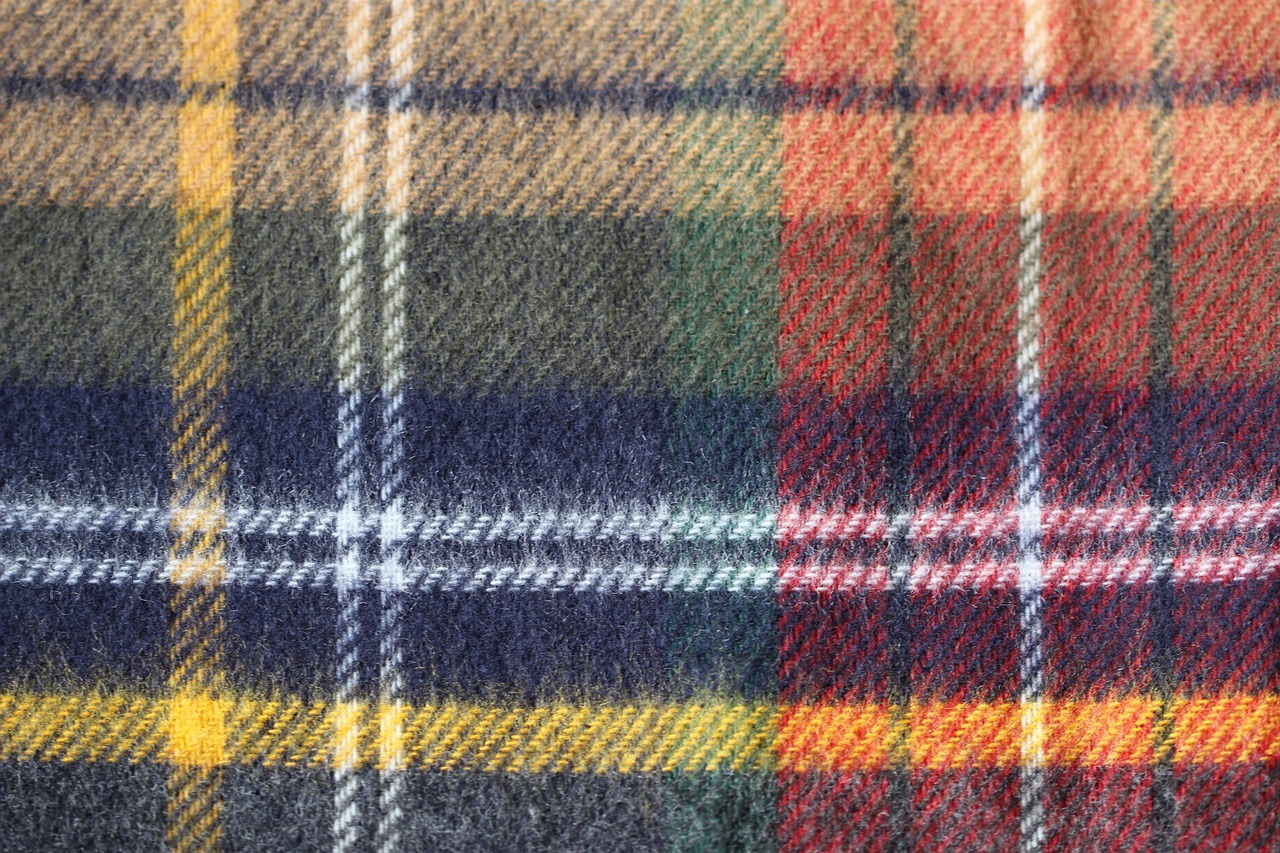 We made the trip in July, and started early, to get a jump on the summer heat. The outlet store, about thirty miles from where we lived, was filled with bolt after bolt of cloth. Mother walked slowly, running her hand across every bolt—it seemed to me she touched every bolt—and saying, “Isn’t that pretty,” or, “That color would look good on you,” or, “That would make a cute…” I followed along. My job was to chime in about the colors and patterns I liked, but I was bored stiff. I agreed with everything.
 Next step, patterns: Opening long metal file drawers, pulling out packets of patterns… Simplicity and Butterick patterns were the best; McCall’s instructions could be confusing. Then, mentally matching styles with material we’d seen, taking patterns to fabrics to make sure, checking yardage and price, reconsidering… I was sure we re-examined every bolt.
By this time, my feet were killing me. (I was born with feet designed for sitting.) Comal Cottons had no chairs. Three bored tweens, one with aching feet, needed chairs. With chairs, girls can read books. Without chairs, girls stand around, one of them shuffling from foot to foot.
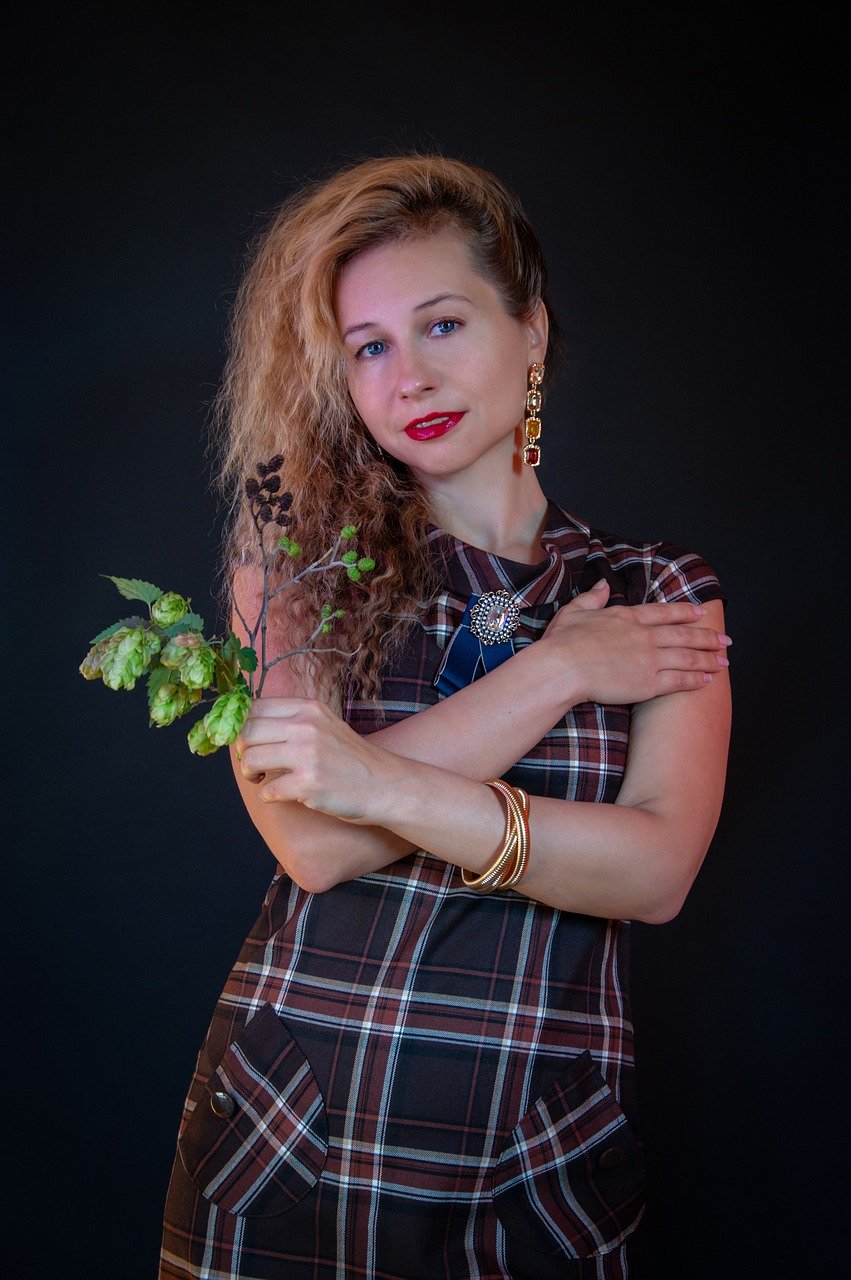 Then, decisions: making choices, stacking bolts on big tables, watching clerks cut material straight across, perfectly straight, and fold it.
And then, the notions: buttons, thread, bias tape, zippers, and lots more considering.
And finally we headed for the car, bearing loads of raw material that over the next six weeks would be made into our fall wardrobes. Which in my case would include a plethora plaids.
Now, like much else of my childhood, Comal Cottons itself is only a memory.
Thank you, Nancy. With just one picture of a plaid dress, you brought back part of my childhood.
Well. To quote one of my former high school students, BO-ring. And, So what?
But as I wrote that last line about memory, the Daily Miracle arrived: A treasured memory of a different piece of fabric surfaced. The memory I really wanted to write about.
 And then, another miracle: I realized the story about the shopping trip was a warm-up. It was a seed of an idea starting to germinate. It was brain rubble that had to be expelled before the real subject could emerge.
Acting on the epiphany, I found my bit of fabric, snapped a photograph, and added three short paragraphs. Finally, I deleted the whole boring warm-up.
The final post read this way:
Fellow Writer and Wrangler Nancy Jardine recently shared a picture of a beautiful plaid dress that reminded me of some fabric I’ve saved for more than fifty years. After residing all that time in my mother’s cedar chest, it’s wrinkled but intact.
The fall I turned eleven, my father’s father, whom we called Dad, gave Mother some money to buy me a birthday present. She purchased the wool shown in the photo and made me a pleated skirt. When I was sixteen, she remade it into an A-line skirt and a weskit.

Opening the box at breakfast on the morning of my eleventh birthday was a bittersweet experience, because Dad had died unexpectedly the afternoon before. Mother told me she’d chosen the fabric because the blue reminded her of the color of his eyes.
Now, to prevent further strike-throughs, I’ll get to the point promised in the Warning:
Writing is Thinking.
A boring (bad, terrible, appalling, disgusting, abhorrent, loathsome, etc.) first (second, third, etc.) draft is not a Stop Writing sign. It’s a Keep Writing sign, signaling that brain rubble is loosening up, that something better is about to present itself—that the Daily Miracle will come.
Because the only way to get rid of brain rubble is to write it out.
To quote author Nancy Peacock, “If I don’t have the pages I hate I will never have the pages I love.”
I wish I had more time to work on this. It would contain less brain rubble. It might also be on an entirely different topic.
*
This post appeared on the Austin Mystery Writers blog in 2015. It’s since been edited. If it appears in the future, it will be edited again. That’s part of the process. It’s always something. (Remember Gilda Radner?)
**
Note: Nancy Peacock wrote A Broom of One’s Own: Words on Writing, Housecleaning & Life. Here’s what I think about it. Other people like it, too.
***
Images from Pixabay.
*****
 Kathy Waller’s short stories have been published in anthologies and online. She is co-author, with Manning Wolfe, of a novella, Stabbed.
A native of small-town Texas, she lives in Austin but finds that cows, horses, and rivers keep showing up in her fiction, and no amount of editing can make them leave.

 Austin Mystery Writers