Connecting Through the Ether

VP Chandler

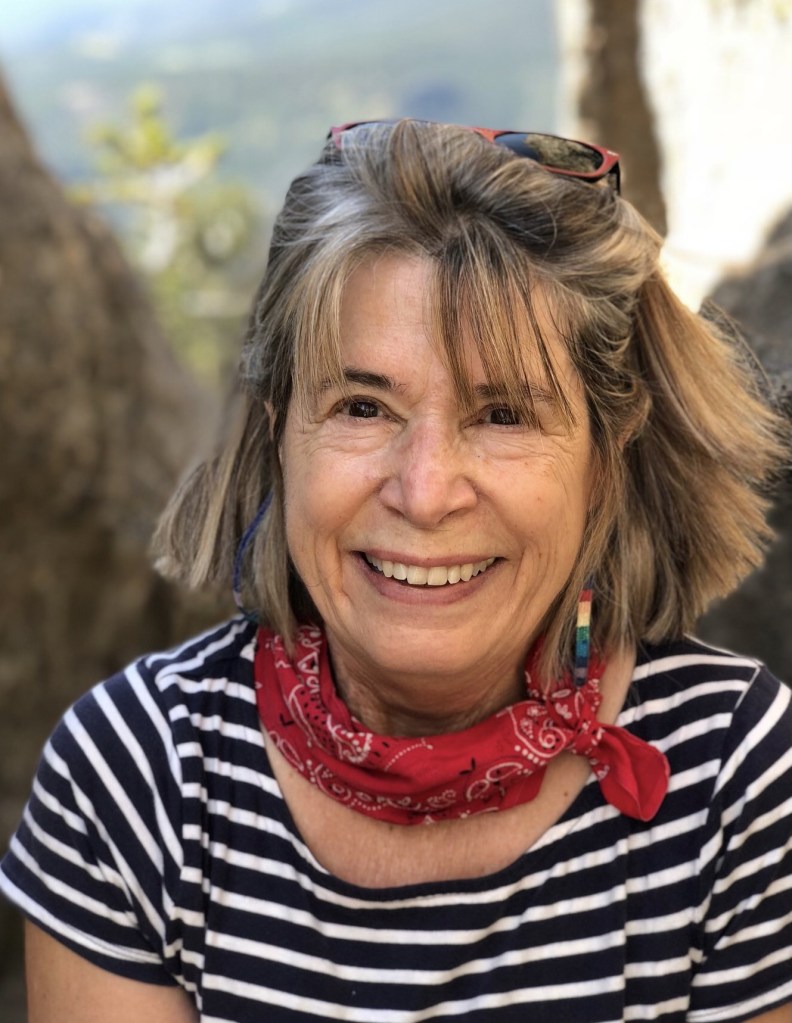
By V.P. Chandler

Have you ever researched something—like a purse, a computer, or even a car—only to suddenly notice it everywhere, even though you hadn’t before? Inspiration for stories works the same way.

One of the most common questions authors hear is: “Where do you get your ideas?” The answer: pretty much everywhere—news articles, books, movies, history, snippets of conversation, personal experiences… inspiration can spark from the smallest detail.

I’m currently writing a historical novella, and inspiration is coming from all directions. I feel like a goalie in a soccer match—I’m fully immersed.

Story Settings and Characters

My protagonist is a young woman named Martha. She’s married to Tom, who has moved her far from home—and life isn’t unfolding as she expected. (Isn’t that always the case? But is it simply the way things are, or is something nefarious at work?) They’re building a cabin in the East Texas woods around 1830. I imagined they’d arrived at the tail end of the Old 300, grabbing land wherever they could. (Although the story could take place anywhere from 1820 to 1880, west of Virginia in pine country, I discovered that pines aren’t as widespread as I once thought—which is why research matters.)

https://www.tshaonline.org/handbook/entries/old-three-hundred

As I write, Martha is revealing herself to me—like she exists on another plane and there’s a conduit between us through something I call “the ether,” a metaphysical space. (Is that a real thing? I don’t know—dammit, Jim, I’m a writer, not a metaphysicist!) Her voice is growing stronger. Her past and current life are becoming clearer. When she speaks, it feels like she’s speaking directly at me. I think most writers go through this—and when it happens, it’s exhilarating. To me, it means the character will have depth and feel real.

And, as in the past, there have been “signs” that I’m on the right track with characters and story. Sometimes these signs are even eerie. In the first chapter, when it was new and amorphous, I was writing a dream sequence to explain her inner thoughts, worries, and where she’s from. I imagined she came from a large family, and she had had a brown and white dog named “Peaches”.

A few days later I was on Facebook and came across this picture. It caught my attention because a cabin is a major feature of the story, and I took a screenshot for inspiration to look at details. Later I read the description. Look at what I circled. That’s right! I wasn’t too surprised by the date. But the dog in the picture was name “Peaches”! And it looks brown and white to me. It gave me inspiration that I’m on the right track with the story and characters.

(Picture from https://www.facebook.com/TracesofTexas. They post historical and modern pics taken in Texas.)

Another time, while writing my (currently unpublished) novel Gilt Ridden, I created a character in West Texas, educated and obsessed with gold, known locally as “The Professor,” living in a dugout. Years later, I came across a local-history book about Stonewall County describing a man known as “The Professor” who lived in a dugout and searched for gold. I hadn’t known he existed—but the parallels were uncanny. At first, I worried that people would think that I borrowed someone’s real story. But then it comforted me. I took it as a sign that I had created a realistic character from imaginary circumstances.

So when you’re writing—or working on any project—block out the world and tune in to the voice or idea coming from the ether. Who knows what will be revealed?


Bonus Content

I’ve been obsessed with one song lately. It’s been playing in my head nonstop for a week. I didn’t know much about it until I watched the YouTube video. The character is pregnant and contemplating life choices, just like Martha! Now it’s really stuck in my head. Hope you enjoy it:

Sara Bareilles – “She Used to Be Mine” (from Waitress)

The Enduring Value of Third Spaces

By Laura Oles

Why do so many of us choose to work or study at our favorite coffee shop? Even if we have a fully equipped office, we pack up our laptop and relocate, settling in with likeminded people doing the same thing.

If this sounds like you, you’ve adopted a favorite “third space.”

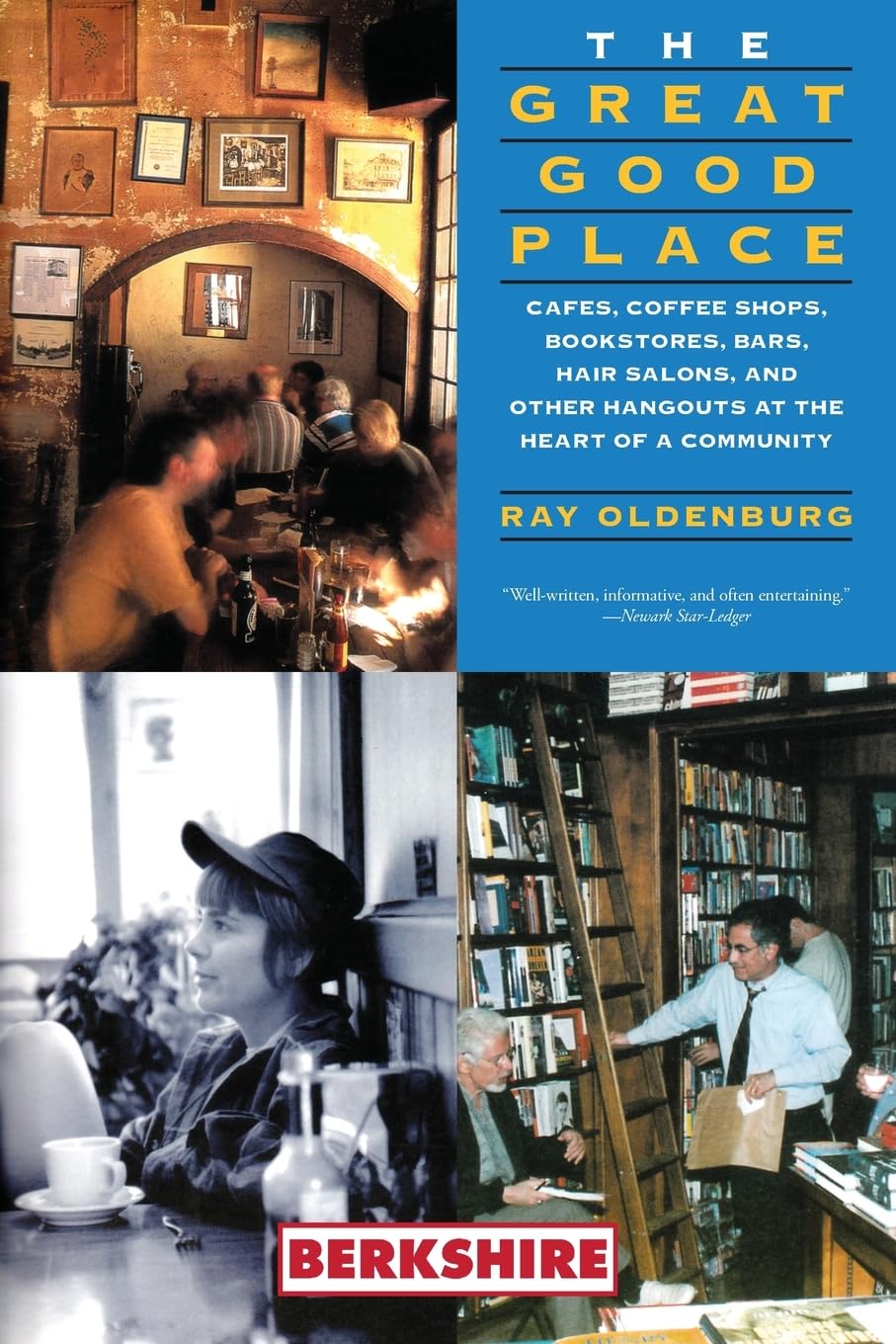
Urban sociologist Ray Oldenburg coined the term “third space” in his book, “The Great Good Place,” (originally published in 1989 and revised in 2023).  Popular third spaces include coffee shops, pubs, diners, libraries, parks and gyms. The third space, Dr. Oldenburg stated, were ones that allowed people to leave private and professional concerns behind to connect with others in conversation. Third spaces “host the regular, voluntary, informal and happily anticipated gatherings of individuals beyond the realms of home and work.”  

There’s some science that indicates it’s not simply the lure of a fantastic latte. A 2012 study published in the Journal of Consumer Research indicated that lower levels of ambient noise can spur creative idea generation. In a later 2019 study, researchers pointed to “stochastic resonance,” a measure of a particular background noise level that benefits our senses and can help in those moments where we are temporarily distracted or in a contemplative state. 

In short, the “coffee shop effect” has been cited in several studies. This, coupled with being surrounded by others seeking a similar environment, can further motivate us into action.  The idea of parallel work—working alongside others but not directly with them—can help us in our solitary efforts. All while feeling less alone.

Still, not all coffee shops will become beloved third spaces. A place where you will regularly spend both money and time is chosen. It is special. It draws you in and invites you to linger for a bit, often in the company of friends or colleagues.

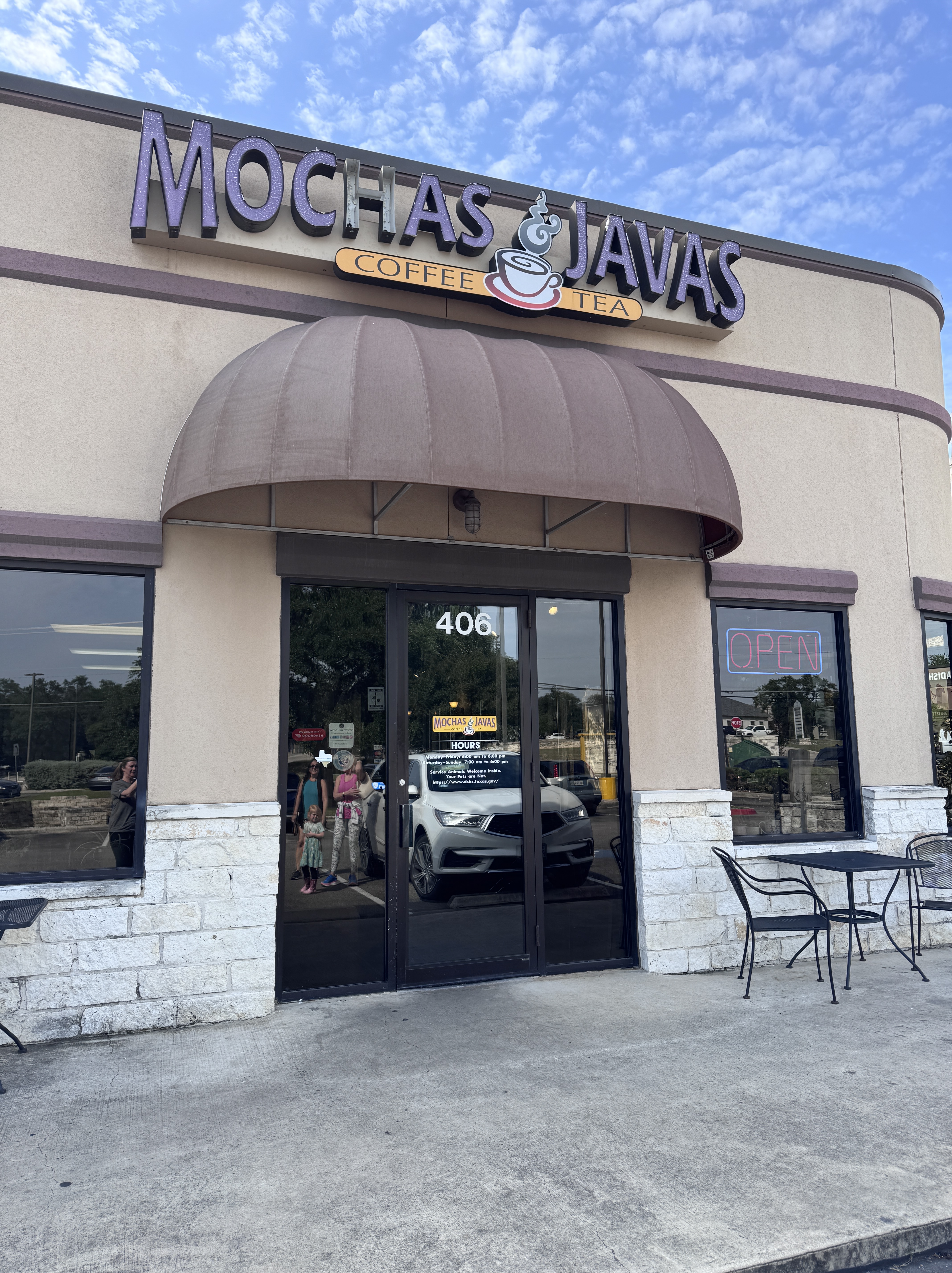
The third space has evolved from being a place where people gather to connect with community, to one that incorporates these components and adds a welcoming setting for students and WFH employees and solopreneurs. As someone who raised three kids while working from home, I sometimes struggled to tune out tasks and chores. So, I sought my own third space and found it at Mochas & Javas. In addition to business articles and columns, I wrote much of my debut novel at the Wonder World location.  

My “MJ office” in 2016

Mochas & Javas continues to be part of my regular routine—sometimes to chat with friends and other times to stare down a deadline—and I was curious to learn more about not only this beloved local institution but the guiding principles behind the business.

Mochas and Javas was founded in 2003 by four family members—Kevin Carswell, his brother Kirby Carswell and their wives, Michelle and Kelly Carswell. The idea originated when Kevin and Michelle began brainstorming about a local venue where San Marcos residents could gather to enjoy quality food and beverages as well as “legendary customer service.” Like many fantastic ideas penned on the back of a napkin or a business card, Michelle sketched the now well-known logo on a napkin and named the business Mochas & Javas (Community Impact, 2019). Over the last twenty years, Mochas & Javas has thoughtfully expanded into five locations.

I asked Kevin if he would share his insight about Mochas & Javas as a trusted third space in the San Marcos community and his philosophy regarding building this popular Hill Country destination. He was kind enough to share his thoughts with me in the following interview:

LO: “Getting together for coffee” is a common refrain we share with friends and colleagues.  What encouraged you to take the first steps to create Mochas & Javas as a gathering space for the San Marcos community?

KC: When we began the discussion about opening our own business we discussed several types of business. But coffee made the most sense at the time, because it was in the food and beverage industry, which is my background and in 2002, the coffee industry was rapidly expanding. I had heard the term “third” space before, but not sure that I fully grasped the concept until we opened, expanded and then had time to grow MJ’s (I’ll abbreviate the full name) over several years and then see how many of our guests became daily/weekly regulars or made MJ’s their third space. Coffee does bring people together, I’ve seen many relationships built from the connection our guests made with one another while at MJ’s, it’s a great thing to see. And for myself I’ve made many friends over the years through MJ’s, lifelong friends. It’s a good feeling. 

LO: Do you find that each location has its own personality/vibe or is the community based on proximity? Or a combination?

KC:  One of the areas that I enjoy about MJ’s is that they all have their own “vibe” or connection to the community or the surrounding area that they are located. Such as WW, many locals with a mix of students and visitors. Whereas LBJ is a more concentrated number of students and professors with a nice mix of visitors, usually families coming for informal or formal visit to TX State University. Our Frisco store is very similar to our WW store, as where it’s mostly locals and business professionals with a mix of students. 

LO:  Why do you think local writers, artists, students and businesspeople are drawn to Mochas & Javas as a third space? 

KC:  Over the years many writers have used the WW store as their office. Paul Pullin for example is in his third book and has become a good friend over the years, he’s been a regular for 22 years. We’ve chosen not to place TVs at any of our stores. I believe they are a distraction, and most people today already have plenty of screen time. If our guests were staring at a screen, they may never meet someone new. We need more face-to-face conversations and MJs provide this. 

LO:  How has Mochas & Javas expanded and evolved since you opened the first location over twenty years ago? 

KC:  MJs opened the LBJ and WW stores the same year, 2003, about 6 months apart. We have always had plans to expand, sometimes slower than we first thought, but moving a bit slower is not a bad thing. Keeping our debt in check and growth at a steady pace. Five stores in 22 years is no record, but we have five stable stores with a strong following from our loyal guests. We are planning to continue with our expansion but will plan accordingly based off good solid numbers which allow us to grow without taking on more than we can manage. 

LO:  Mochas & Javas has strong ties to the Hill Country community, and I wonder if this stems from your philosophy of “always giving back.” Can you expand on this?

KC:  I grew up in San Marcos, our family moved from the Houston area in 1967/68 to San Marcos. So, I’ve seen the city change over the past 57 years. Giving back not only to the San Marcos community but all the communities that we serve great coffee to. Giving back is an important part of owning and operating our business in the communities we serve, and we are grateful that we have the success to do this. We’ve made many small donations and added some larger ones over the years. They are all worthwhile. It’s a great way to say thank you to our community and guests for the many years of support.

The best part of working at MJs, from my standpoint, is our guests and staff. The interaction with both groups of people is the most enjoyable part of our business. I never get tired of working at the register or being a barista. It’s a lot of fun. 

Learn more about Mochas & Javas here:  https://www.mochasandjavas.com

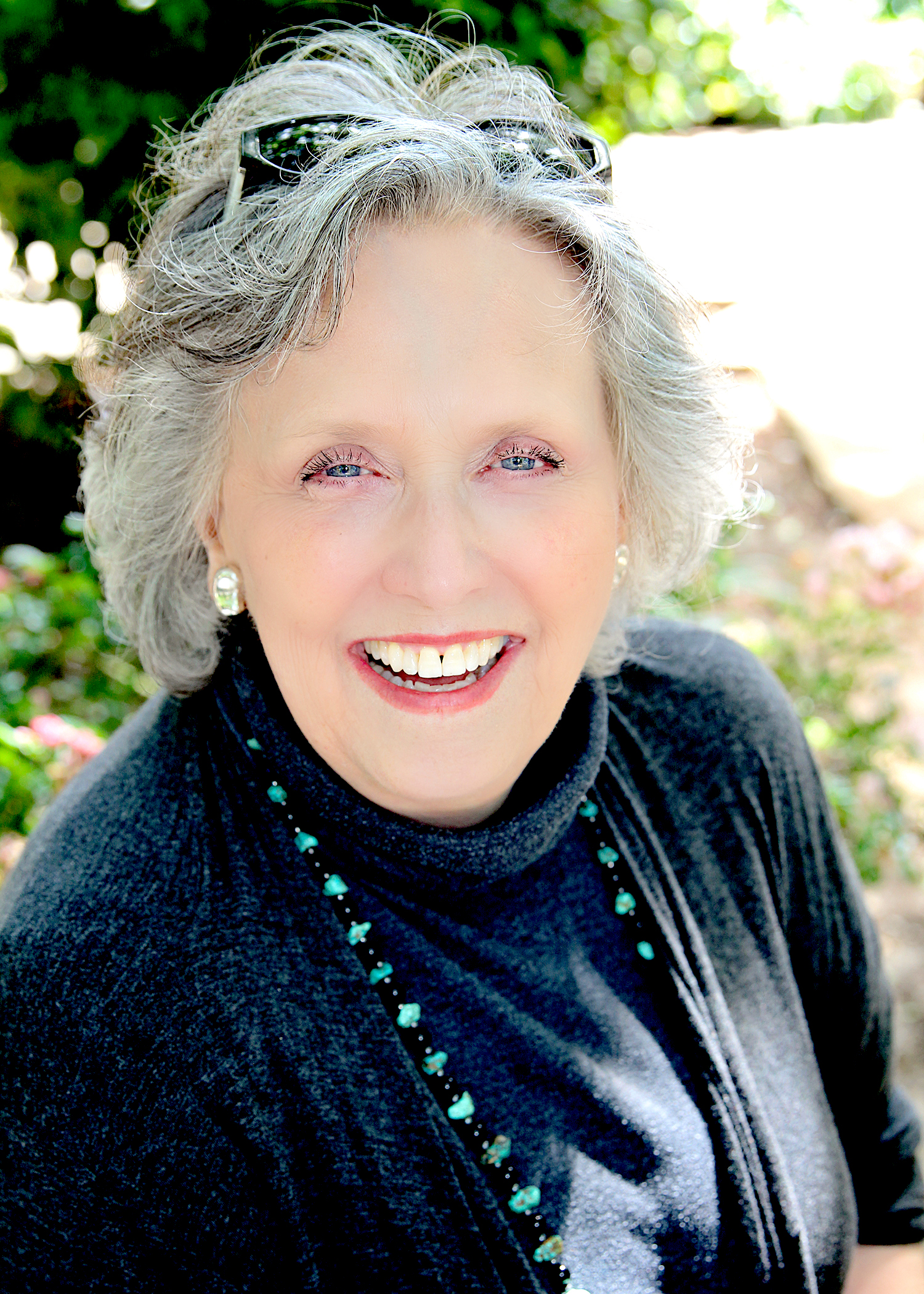
Laura Oles is the award-winning author of the Jamie Rush mystery series. Her debut mystery, Daughters of Bad Men, was an Agatha nominee, a Claymore Award finalist, and a Writers’ League of Texas Award finalist. Depths of Deceit, her second novel, was named Best Mystery by Indies Today. Her novella, Last Call, won the Silver Falchion award. Her work has appeared in crime fiction anthologies, consumer magazines and business publications. She lives in the Texas Hill Country with her family. (https://lauraoles.com

Merging Family History With Fiction

VP Chandler

by V.P. Chandler

Previously posted on vpchandler.com

My most recent blog post announced the publication of my short story, “Under The Blackjack Tree” in Killer Nashville magazine and now I’m now doubly thrilled to announce that the short story was also chosen by Otto Penzler and John Grisham to appear in the 2025 edition of Best Mystery Stories of the Year! (Mysterious Press)This is a huge honor. Honestly, at first I didn’t think it was true. I read the email about three times and did some online research before I believed it!

Picture of the jail that I took several years ago.

But another reason why this is so special to me is because my story is steeped with bits of my family’s history.

It began when my mother told me several years ago that one of her most cherished memories was when she got to help her grandfather feed the inmates at the Huntsville jail when she was about four. (Wait, what?) That’s when I learned that my great grandfather had been sheriff of Walker County. I later learned that it was common practice for the sheriff and his family to live on the first floor of the jailhouse while the inmates would be on the second floor.

The image of an innocent girl closely interacting with a potentially dangerous person was so intriguing to me, I was compelled to put it in a story. (I played with the timeline and instead of my mother being the little girl, I made it my grandmother. It simplified the story.) I had no idea where the story was going to go, but I knew that I needed that opening scene. It took me places that I didn’t expect!

Some of the things that were true are-

  • My great grandfather was sheriff at the time of Bonnie and Clyde. I thought that would make an interesting backdrop. A lot of tension in Texas at that time.
  • My grandmother’s first mother did die in childbirth and her loving stepmother was called “Cullie”.
  • There really was a bank robbery in Conroe at that time. (I don’t think it was ever solved.)
  • Trusted inmates often cooked the meals for the other inmates and sometimes for the family.
  • It was my mother that fell into the yard with the hunting dogs and was almost mauled.
  • My grandmother was shot in the face with a shotgun, by accident. It was a miracle that her eyes were spared, and she had not one single scar. That is such an amazing part of our family history that I had to include it.

And two things that I didn’t know until after I wrote the story.

  • My grandmother was sometimes called “Mary V” at school because there was another Mary in her class.
  • When she attended Sam Houston to get her teaching certificate, she would often cut across the cemetery when her classmates wouldn’t. She was never a squeamish person.
My grandmother, the flapper!

Although the Mary V in the story is pure fiction, I hope that my grandmother would be proud the story and that some of our family history is saved and shared with others.

In the Window or On the Table? What I Learned from Amor and Anton

By: Dixie Evatt

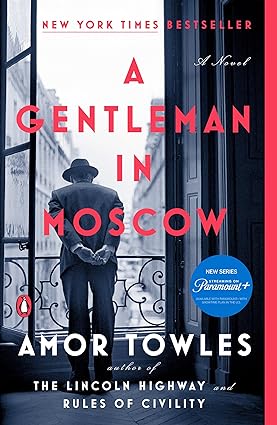
Ever since I read A Gentleman in Moscow (2016) I’ve considered Amor Towles’ writing style to be nearly perfect. So when my niece told me Towles was making an appearance at the Empire Theatre in San Antonio, I booked it. He was there to support the San Antonio Book Festival and to talk about his latest book, Table for Two. It’s a collection of six short stories plus a novella. Unlike some of his other stories, these all take place in the current Millennium.

Over the evening I learned a interesting things about Towles.

I learned that he is what we used to label in the news business, an “easy interview.” Austin’s own Stephen Harrigan (Big Wonderful Thing, 2019) was on the stage with Towles as moderator but he didn’t get to ask many of the questions on his notepad. Towles was in a talkative mood so needed little prompting.

I learned that Towles took up writing full time only after success in his first career at a small Wall Street investment firm.

I learned that once he gets a project in mind, he begins to fill notebook after notebook with hand-written outlines, ideas, scenes, characters. It may take years. He says this process frees his imagination and subconscious to go where beautiful language and the characters’ inner lives take him.

There was more but of the many memorable things I learned about this accomplished author, what I remember best, and took to heart, was his description of his research process. He said that when writing he intentionally postpones what he calls “applied research” until near the end. During this time he is also reading novels written by others that are set in the same historical period as the book he’s working on. His novel is almost written before he begins deep research.

That’s why he waited until A Gentleman in Moscow was almost finished before traveling to Moscow and checking into the Hotel Metropol, the exclusive hotel where his story about Count Alexander Ilyich Rostov is set.

Towles advised that details gleaned from this kind of active research should be written into the story much the way one might design the stage for Anton Chekhov’s The Cherry Orchard (1903). Of course Towles would choose this particular play as a point of reference because, like his own novel set in Russia, Chekhov’s tragicomedy also deals with a period of decline for the Russian aristocracy.

He said that when the curtain rises for the play the audience might see only the suggestion of a cherry orchard through large windows as if were rendered by an impressionist such as Claude Monet or Mary Cassatt. The windows might be framed by plywood bookcases painted to resemble mahogany. In the center of the room there would be a table set with a porcelain tea service.

When an author is ready to fold research into the story, Towles said it should be presented with similar layers of reality. Some details are just suggested in the background. Some, like the bookcases, give the scene the appearance of reality but need not be too detailed. Then there are aspects of research that can’t be given short shrift. For these, the author must adhere to absolute authenticity. The audience needs to hear the chair move across the floor and the teacup rattle in the saucer. The challenge for me is where all of the information that I’ve accumulated in my own research belongs – in the window or on the table?

Charles McNulty, theater critic for the Los Angeles Times, said in a June 6, 2022, review of a local revival of The Cherry Orchard, “Big things occur in Chekhov. Houses are lost, guns occasionally go off, and people die. But the focus is on muddling through.”

Much the same might be said about A Gentleman in Moscow and the subtle use of active research by Towles so that his story isn’t swallowed up in the details.

***

Cover of A Gentleman in Moscow via Amazon

Image of Anton Chekov via Wikipedia. Public domain.

Image of stage of The Cherry Orchard via Wikipedia. Public domain.

***

A former political reporter in Austin, Dixie also taught writing at Syracuse University. When she teamed up with Sue Cleveland to write fiction, they sold a screenplay to a Hollywood producer. Although the movie was never made, the seed money financed ThirtyNineStars, their publishing company. Through it they published two award-winning thrillers (Shrouded and Digging up the Dead) under the pen name, Meredith Lee. Dixie’s first solo mystery was Bloodlines & Fencelines, set in a tiny Texas town near Austin. Kirkus reviews described the book as, “A twisty whodunit that’s crafted with care and saturated with down-home Southern charm.” She is working on second mystery in the series. www.dlsevatt.com


Curious Animals And Recent Reads


by Helen Currie Foster

New reads! If, like me, you desperately miss John le Carré, consider A Spy Alone, the 2023 debut spy thriller by Charles Beaumont, a field operative veteran of Britain’s MI-6. https://bit.ly/3ZzHjHs His premise is fascinating: we know of the “Cambridge Five” who spied for Russia from the 1930’s to 1950’s—Kim Philby, Guy Burgess, Donald Maclean, Anthony Blunt and John Cairncross. https://en.wikipedia.org/wiki/Cambridge_Five But has there ever been, or could there be, a spy ring linked to Oxford? Beaumont’s protagonist Simon Sharman feels real, right from the first page:

“It is their shoes that give them away. As a lifelong fieldman, Simon Sharman hasn’t forgotten the lesson: walkers might change their jackets, pull on a pair of glasses, even a wig. But nobody changes their shoes on a job. Look at their shoes. 

I was hooked. Warning: Beaumont’s book is contemporary, well-written, tense, and may interfere with sleep. 

Two other recent reads: old adventure and a new “adult fantasy.” I’d never heard of The Long Ships by Frans G. Bengtsson (1954).

Set from 980 to 1010 A.D., the book recounts the wide-ranging adventures of Norseman Red Orm Tostesson, and the collision between Christian priests (the “shaven men”) and the Norse culture of Skania at the south tip of Sweden. Now I know what it meant to go “a-viking”—to go sea-raiding! 500 pages, with Red, a very engaging Norseman. Great maps, too.

The Lost Bookshop, by Evie Woods (2024), offers time travel between the 1920’s and 30’s in Britain, and the present; a search for a lost Brontë manuscript; a disappearing attic; and disappearing and reappearing characters. I confess I flipped through big chunks, relieved when true love finally won out after two women, generations apart, survive appalling treatment. The disappearing attic reminded me of Susan Cooper’s Over Sea, Under Stone, and of course the wardrobe into Narnia in The Lion, the Witch and the Wardrobe. I’m always up for secret doors.

I’m rereading a fascinating and fairly demanding study by Graham Robb, who has probably bicycled and walked further in Britain and France than most humans:

In The Search for Middle Earth: Mapping the Lost World of the Celts (2013)he describes how the Keltoi, or Celts, developed a system of surveying based on a midline transected by the lines of the summer and winter solstice to estimate travel distances and times—a feat not replicated for centuries. He maps the Heraklean Way, the path from southwestern Iberia that runs northeast across the Pyrenees to the Alps along the diagonal of the solstice sun, which Hannibal took when he invaded Italia. He describes Druid schooling (20 years to learn) and maps out protohistoric forts which turn out to lie along survey lines. He provides amazing maps. Two ongoing lessons from Robb’s devoted research: the winners write history; and humans tend to underestimate the accomplishments of earlier civilizations. 

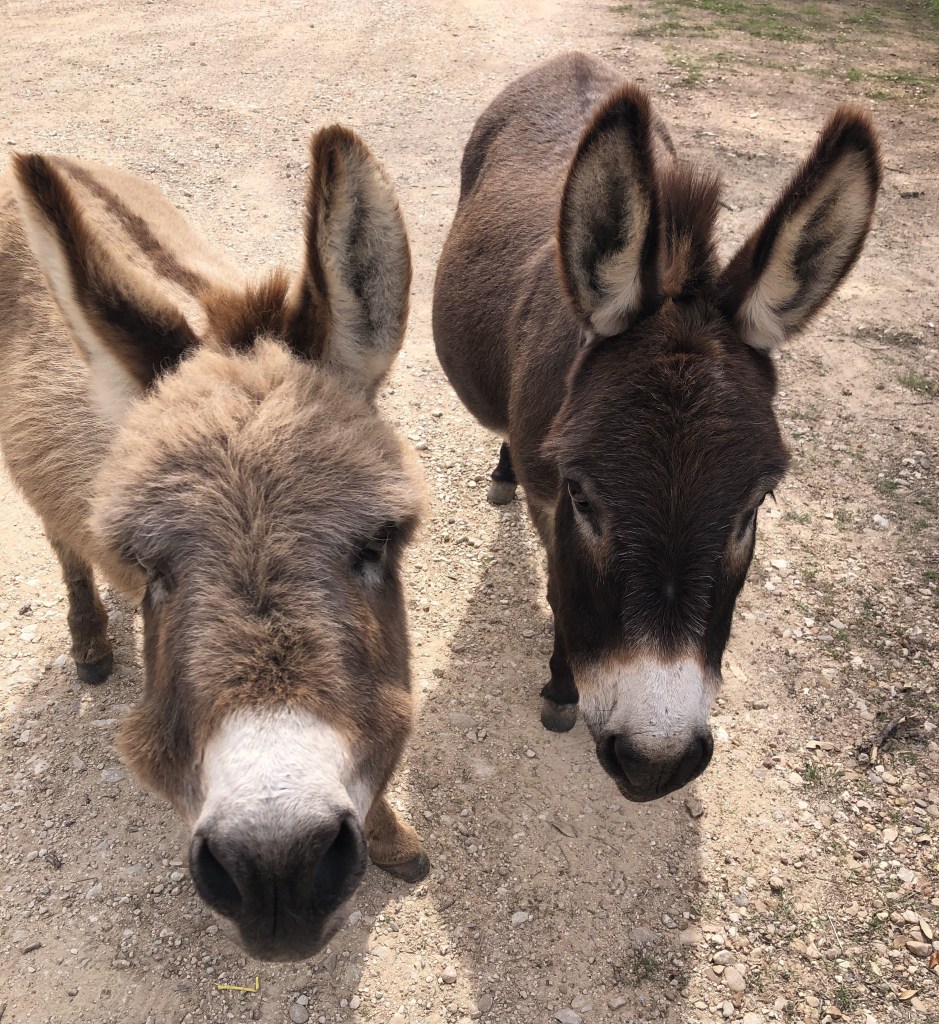
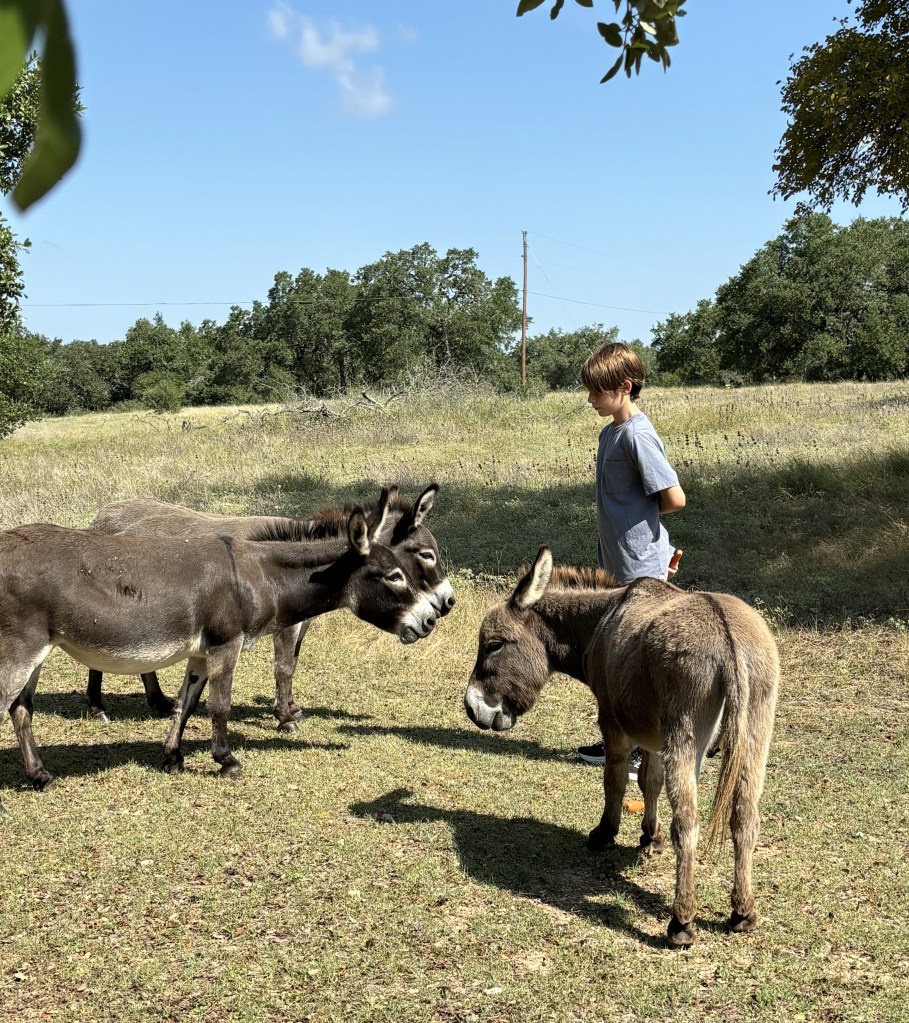
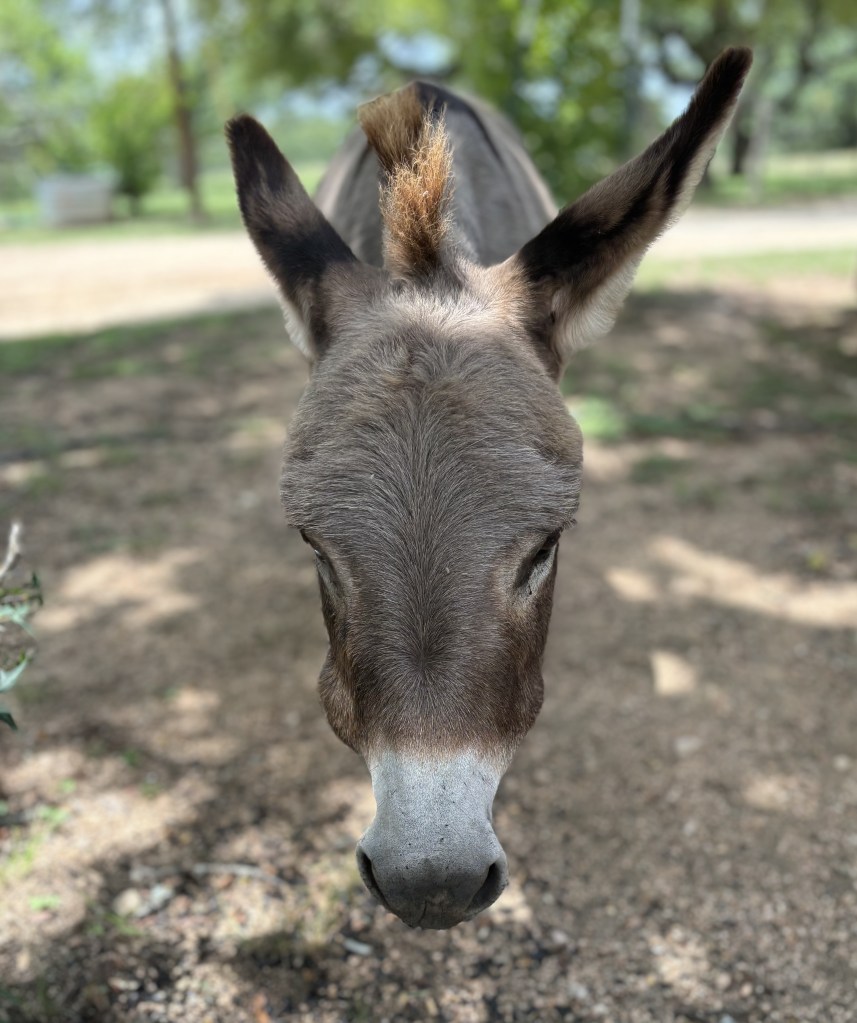
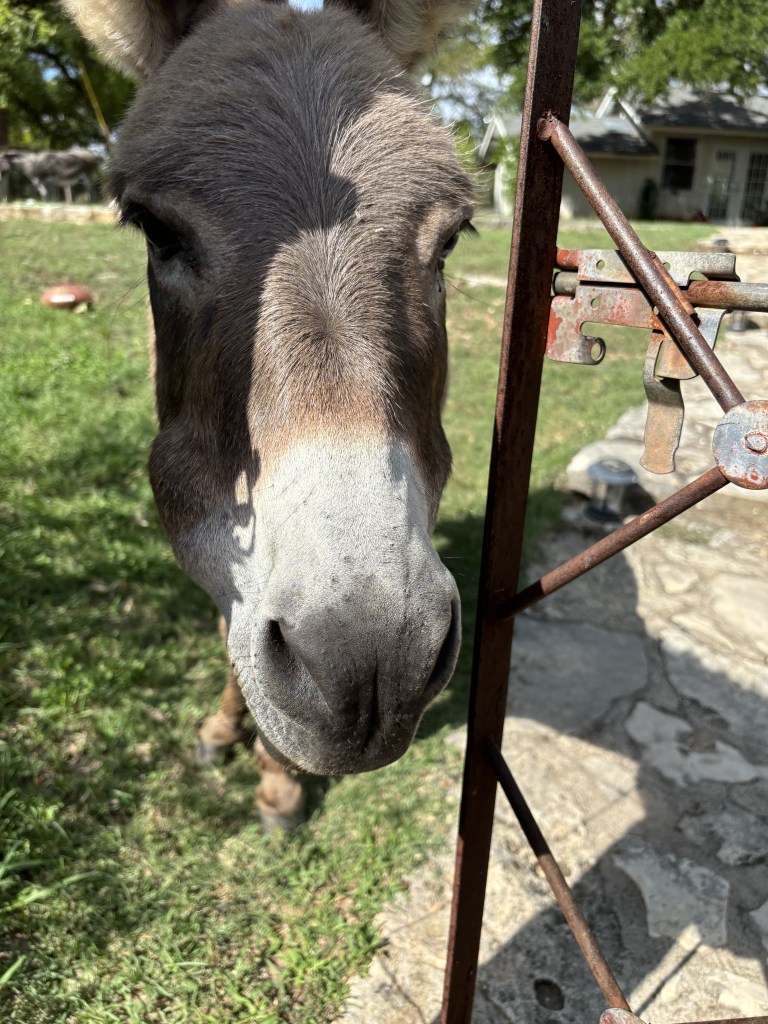
Several of you asked about the three burros, given the recent cold snap. Thank you, they’re well. Their hair’s not waterproof so in cold rain they gather on the south side of the stable, under the roof, safe from rain and the north wind. They were relieved to see green grass again after the drought broke, but they’re also eating—and rolling in––green hay. And mud!

Yet despite hay, they gather outside the gate every morning and afternoon for carrots. They consider this part of their deal.

Burros are curious. They amble over to watch us garden and hang up laundry. They need company. They graze near each other. They may live into their 40’s. Sebastian, the short stubby knock-kneed male who invited himself to live here, may be 35 or more. Amanda (who insists I tell you she’s registered, with papers) may be 20. Her daughter Caroline is 12. Sebastian deems it his duty to bray loudly when any person or car appears at the end of the driveway, and to welcome the sun every morning with a stunningly loud bray. Now both Amanda and Caroline have begun to bray occasionally. 

Only donkeys can bray. Unlike horses or zebras, donkeys begin a bray on the inhale and continue braying on the exhale. They have great hearing—supposedly they can hear another donkey bray 60 miles away. 

They especially detest canids and will attack, dance on and kick dogs, coyotes, bobcats, foxes. A spooked horse will run away: donkeys stand together until they decide what they’re going to do. This morning, leaving for the post office, I saw the three donkeys standing together, knees locked, ears cocked, eyes fixed on two trespassing dogs who’d strayed across the cattleguard and into the donkeys’ domain. 

The dogs immediately acknowledged their gross error of judgment, raced frantically away and never returned.

If donkeys could read (wait—maybe they can, but have trouble turning the pages), I predict they’d prefer mysteries. They enjoy puzzles (like how to lift the chain and invade the fenced garden). 

Humans and donkeys. We are both curious animals.

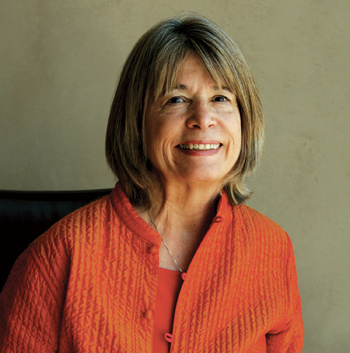
Helen Currie Foster lives and writes the Alice MacDonald Greer Mystery Series north of Dripping Springs, Texas, loosely supervised by three burros. She’s drawn to the compelling landscape and quirky characters of the Texas Hill Country. She’s also deeply curious about our human history and how, uninvited, the past keeps crashing the party! Currently she’s working on Book 10. Her protagonist, Alice, gets into legal drama, and matters of the heart. Alice does have a treehouse…

Follow Helen at http://www.helencurriefoster.com and on Amazon and Facebook, https://www.facebook.com/helencurriefoster

“I Should Write That Down…Now Where Did I Put It?”

The Joy of a Commonplace Book

By Laura Oles

I can’t tell you how many times I’ve come across a quote, an idea or something else I wanted to remember and thought, “I need to write that down.”

So I did.

Over and over and over.

In countless notebooks and journals and on post it notes.

The problem I found is that, while committing something to paper is an important first step, it is only a first step. There are many moments where I’ve written something down only to lose it amongst some ephemera, discovered only again when I’m looking for something else.  

It’s like finding twenty bucks in those shorts from last summer. It’s a nice surprise, but maybe I should try tracking this information (and my dollars) a bit better.

First, I tried using a Bullet Journal…

The Bullet Journal was created by Ryder Carroll as a way to organize schedules, to-do lists and other details for work and personal life. It started as his own method of corralling his many thoughts and commitments into a central place. It’s a fantastic method for many dedicated BuJo lovers, and the premise is simple.  All you need is an empty notebook and a pen.

Turns out, you also need a certain mindset. It’s a commitment.  

Image Credit: @pureplanning_bymj

I have so much admiration for dedicated Bujo people. And I love seeing their gorgeous daily/weekly/monthly spreads, but I could never stick with it. I do have one completed book—used over a two-year period—that I enjoy leafing through now and then. Scattered amongst those pages are several quotes, concepts and ideas that I wanted to gather in a more central location, to rescue from my failed experiment.

I still love the idea. I just stink at the execution.

This is when I discovered the Commonplace Book.

 A commonplace book is simply a notebook where you record learning and information from other sources for the purpose of collecting and reflecting upon for some future time. Many notable people in history have kept commonplace books, including Virginia Woolf, Mark Twain, Marcus Aurelius, Ralph Waldo Emerson, and Henry David Thoreau. (Image Credit: UT Austin, Harry Ransom Center, Lewis Carroll’s CPB)

Unlike a Bullet Journal, which has its own system, a commonplace book only requires that you collect your ideas, quotes and more in one location.  What you choose to include is completely up to you.  The most common use is for recording secondary sources, but that can take all forms. Music lyrics? Key dialogue from a movie you love? Put them all in one place. I keep my commonplace book on my desk so I can access it when I’m reading or working on a project. Others prefer to always carry one, ever prepared to catch that next inspirational idea while out for a daily walk or in a coffee shop.

Unlike a journal, with content focused heavily on personal thoughts, musings and experiences, a commonplace book is something designed to help you learn from others. These ideas may spur some new thoughts or considerations, and this is a perfect place to record those as well. It can be anything you like, of course, but it’s not the best place to record daily tasks or reminders. Keep your digital or paper planner for those purposes (and feel free to ask me about planners because I will happily engage in that topic, too). 

There is scientific evidence that supports the theory of choosing to write by hand rather than typing into a digital document. A recent study from the University of Tokyo showed that graduates revealed that “writing on physical paper can lead to more brain activity when remembering the information an hour later. Researchers say that the unique, complex, spatial and tactile information associated with writing by hand on physical paper is likely what leads to improved memory.” (Science Daily).

My commonplace book has a wide variety of quotes and concepts tucked inside. Adam Grant, Anne Lamott and James Clear make regular appearances on my pages. I can tell by my handwriting how I’m feeling because my messier cursive signals I’m in a rush while my neater entries show that I’m taking time to really consider what I’m transcribing. The important part is the practice. Keeping a commonplace book encourages my love of learning, of reading and of writing. There is a quiet joy in taking time to learn something new, to consider it and then commit it to paper.  

Maybe you’re already doing some form of this practice. I was, and it was only when I sought to improve my process that I learned about the commonplace book and how to better use it in my daily life.  Having one location helps me gather this knowledge and, more important, keep it somewhere that allows me to reflect and learn. If you haven’t tried keeping a CPB, I hope you’ll consider it, and I would love to hear how it works for you. 

Laura Oles is the Agatha-nominated and award-winning author of the Jamie Rush mystery series. Her work has appeared in crime fiction anthologies, consumer magazines and business publications.

Who Gets What? And Why? And Who Said?

by Kathy Waller


My mother used to tell me I should become a lawyer. “You’re analytical,” she said.

I think she meant I was argumentative, but that’s a different story.

I would like to be analytical in the way lawyers are, but I’m not. And I don’t think on my feet. If I were practicing criminal defense, my clients would be halfway to prison before I realized I should have said, “Objection!”

Nonetheless, though not a lawyer type, I decided back in Aught Three that I might make a fair-to-middlin’ paralegal after I retired from library work. So I registered for an eleven-month course in paralegal studies. And found myself back in the world of Saturday classes and papers and exams and quizzes and perpetual studying.

And perpetual remembering. Cases, statutes, ordinances. Codes, Codes, Codes. I’d been out of school for twelve years. I wasn’t accustomed to stuffing my head with–stuff–and spilling it back onto exams.

I’ve read that if you know 80% of the course material, you’ll be able to pass the tests. That may work for other students.

But I believe–I’m sure–that if I know 80% of the material, the exams will cover the other 20%. Consequently, the only thing to do is learn 100%.

And it’s such dry material. Drier than the Dewey Decimal System. No surprise, of course, but I longed for literature, novels just crying out to be torn apart, rummaged through, distilled to their very essence . . .

My memory needed story.

So, preparing for the probate exam, I wrote one–in the form of a mnemonic. It explained intestate succession–who gets what when a Texan dies without leaving a valid will–as laid out by the Texas Probate Code in force as of November 2003. One of our instructors had warned the class that students usually considered probate the most difficult section of the course.

Composing the memory aid took the better part of an afternoon. It required that I not only observe restrictions imposed by rime and meter, but that I strictly adhere to the provisions of the Code. There was no wiggle room. It had to be correct.

At the end of the day, I was pleased. Aside from a couple of rhythmic aberrations, all the lines scanned, the rime scheme was satisfactory, and the targeted provisions of the Code  were covered.

It was a pretty good song.

As a mnemonic, however, it lacked a lot. It was long and complicated. I could have completed an entire exam in the time it took me to sing (silently) down to the second chorus.

It was easier to just learn the Code.

Still, I was proud of my effort, so I posted the little flash of creativity on the class’s online bulletin board. My old biology classmates would have read it and applauded. My paralegal classmates looked at me funny.

Well, an instructor had also told us that paralegals aren’t supposed to display a sense of humor.

But funny looks don’t bother me. I spent years in education. I’m used to them.

At the risk of getting several more, I present a bit of law in verse.

DISCLAIMER

The content of the following composition was accurate as of November 1, 2003. The song does not reflect changes in the law since that date. Neither does it represent a legal opinion, nor is it intended to offer counsel or advice. Its appearance on this blog does not constitute practicing law without a license.

More specifically,

*The substance of the Texas Probate Code was codified in the Estates Code by the 81st and 82nd Legislatures, and for that reason, the Texas Legislative Council is not publishing it. If you would like more information, please contact the Texas Legislative Council.

In other words, the Texas Probate Code was swallowed up by the Estates Code, and “John Brown’s Intestacy” is no longer accurate. The author doesn’t intend to make it accurate. And she is still not attempting to practice law without a license.

********************

JOHN BROWN’S INTESTACY

By Kathy Waller

(To be sung to the tune of John Brown’s Body, 
aka The Battle Hymn of the Republic).

I.

John Brown died and went to heaven but forgot to make a will.
His intestate succession now the Probate Code will tell.
Was he married, was he single, do his kids sit ‘round the ingle?
Had he common prop. or sep.?

Glory, glory, Texas Probate!
Separate property Section 38!
Common property Section 45!
Make a will while you’re alive!

II.

If John’s married and he leaves a wife, no kids, or kids they share,
Then 45(a)1 leaves wife all common prop. that’s there.
But if he has an extra kid, wife ends up with just half
And the kids share all the rest.

Glory, glory 45(b)!
Don’t omit Section 43!
By the cap or by the stirpes,
Wife shares it with the kids!

III.

For separate prop., if he’s no wife, it goes to kids or grands.
If none of those, John’s parents halve the personal and lands.
If only mom or pop lives, the surviving one takes half.
John’s siblings share the rest.

Glory! Both John’s folks are deceased–
All his sibs will share the increase,
And if no siblings, 38(a)4 means
They’ll need a family tree.

IV.

If John has separate prop. and leaves a wife and kids or grands,
38(b)1 gives wife one-third of personal prop. at hand,
And a one-third interest just for life in houses and in lands.
Descendants take the rest.

Glory, glory 38(b)1!
It’s one-third/two-thirds division!
But if John leaves a wife but no kids,
Section 38(b)2 applies!

V. – VII.

John’s wife gets all his personal prop. and half the real estate.
The other half of real estate goes back to 38—
38(a), to be exact, and up the family tree,
Unless his gene pool’s defunct.

For if John Brown was an only child with parents absentee,
No brothers, sisters, uncles, aunts, or cousins on the tree,
No grandparents or great-grandparents to grab a moiety,
His wife will get it all.

BUT if John Brown leaves this life with naught a soul to say, “Amen,”
The Probate Code’s escheat will neatly tie up all the ends:
The Lone Star State will step right up to be John’s kith and kin,
And Texas takes it all!

Glory, glory Texas Probate!
Slicing up poor John Brown’s estate!
Avoid the Legislature’s dictate:
Make a will while you’re alive!

*****

Image of statue by Gerhard from Pixabay

Image of woman studying by Jan Vašek from Pixabay

*****

Kathy Waller blogs at Telling the Truth, Mainly. Her short stories appear in several anthologies and online. She lives in Austin with one cream tabby and one husband. She’s still working on that mystery novel.

She did work as a paralegal for 2.5 years. She found the work interesting and loved the job (mostly). When she resigned, her attorney said, “I think you’re quitting because you need to do something more creative. So much of the law is just drudgery.” She agreed with him.

Why I Go to Critique Group

by Kathy Waller

I said to my critique partner this morning, The whole project is stinky it stinks it’s fatally flawed just nothing no hope.

She said, But Chapter 13 is so good so funny Molly is so funny it’s not stinky.

I said, Yes, the first part of chapter 13 and the last part of chapter 13 are funny and very very good but there’s still no middle of chapter 13 and what there is stinks and anyway the other 47,000 words stink except for a few hundred here and there.

And she said, But the middle could be revised and edited it has promise.

I said, But it won’t work because I have written myself into a hole and can’t get out so I have to trash that part and anyway the whole concept stinks.

And she said, NO you can fix it just keep going because I like Molly she’s so funny.

And that is why I go to critique group every blessed week.

*****

Writing is a solitary activity, but most of writing isn’t writing. It’s rewriting, rewriting, and rewriting. And then it’s revising and revising. And editing editing editing. And rewriting again. And . . .

Sometimes it’s whingeing and complaining and eating peanut butter out of the jar with a spoon and buying larger clothes and telling Molly she’s a heartless ***** who doesn’t deserve one paragraph of her own, much less a whole book.

And it’s feeling like a fraud when you tell people you’re a writer and deciding you’d be happier if you gave up and dedicated yourself to French cookery or tatting or riding a unicycle.

But if you’re lucky, it’s also going to critique group and then going home and writing and writing and writing and . . .

Here’s the way Austin Mystery Writers work: We email first drafts, revised drafts, or final (almost) drafts, depending on where we are in the process.

We read all the week’s submissions, then sit around a table–or on one side of a table in front of a monitor displaying partners in little Zoom squares–and talk about what each member has written.

Criticism here doesn’t mean trashing. It means that each member points out what the writer has done well and what she might have done better. Sometimes we suggest examples of better–the “experts” say that’s not proper, but it works for us–and sometimes we simply say what we think doesn’t work so well without elaborating. Sometimes we disagree; one person doesn’t like a word or sentence or paragraph, while another thinks it’s fine. Sometimes we all chime in and discuss ideas.

Then we say, “Thank you.”

Because we’ve become friends during our association, we can say what we think and appreciate what the others say.

We encourage one another.

We also laugh a lot.

Because of AMW, I’ve published short stories and co-written one novella.

Because of AMW, I’ve become a better writer.


I posted “Why I Go to Critique Group” (one time I titled it “Why I Go to Critique Group and Can’t Afford Not To”) on my personal blog on July 9, 2010, when Gale Albright and I were members of the two-person Just for the Hell of It Writers, which was soon swallowed up by Austin Mystery Writers (a consummation devoutly to be wished).

I periodically pull the piece out and repost it.

Because it’s important.

***

Has anyone noticed that the em dash (—) in my posts looks like an en dash (–)? I can’t help it. Sometimes I find an em dash on a grammar website (like now) and copy and paste into my post, but right now I’m just not in the mood. But I’d like picky readers, like myself, to know that I’m aware of the error and wish the platform would correct it,

***

Kathy Waller posts on her personal blog, Telling the Truth, Mainly, http://kathywaller1.com. She’s published the works pictured above, the first three with Wildside Press, the last, co-written with Manning Wolfe, by Starpath. She has finally decided the ancient pre-published book is not stinky and has hopes of finishing it one day. If her critique partners agree.

James Michener Didn’t Care

by Kathy Waller

When I was four years old, I took a pair of scissors and a roll of red, gooey adhesive tape and wrote my name on the inside of the kitchen door. It didn’t occurred to me I shouldn’t, and my parents never said a word. I’m sure they discussed it, but I wasn’t privy to that conversation.  The crooked red letters stayed on the door for years. When they were finally removed, a heavy red stain remained.

Pat Boone - PixWhen I was eight, my father gave me a ream of legal-sized paper. I produced a newspaper, one copy per issue, focusing on the social activities of dogs, cats, and horses in the neighborhood. I reported on the wedding of Mr. Pat Boone, my rat terrier, and Miss Bootsie, my grandfather’s evil gray-and-white cat. Miss Bootsie was really Mr. Bootsie, but even then I knew the value of poetic license. Mr. Tommy, my cousin’s orange tabby, married someone, too, but I don’t remember whom or what gender. Or what genus and species for that matter.

For years, I loved writing—the paper, the pencils and pens, the ink, the facts, the improved facts, and the outright fiction.

The feeling lasted until high school, when I began taking courses labeled English. Writing became torture. What will I write about, how many words does it have to be, I don’t know anything about that, I don’t have anything to say. Through high school and two  college degrees–in English–I produced the required papers but agonized over every word.

There were bright spots: writing the junior class prophecy, which made even the teachers laugh when I read it at the junior-senior banquet; composing a satire on life in the teachers’ lounge I hid in when I was a teacher, issued serially on an irregular basis whenever the Muse moved me.

Overall, however, my relationship with writing remained conflicted. I pretended it didn’t. After all, I taught English.

Things began to change when I told a therapist about my early love affair with words. He responded, “I think you’d better start writing.” He suggested I join the Austin Writers’ League.

“I can’t,” I said. “James Michener belongs to the Austin Writers’ League. I can’t belong to anything James Michener belongs to.”

James Michener

The next day, I joined. James Michener didn’t object. I took informal classes at universities. An instructor invited me to a Saturday-morning writing practice group. The next weekend, I drove fifty miles, parked in front of the café where it met, watched people carry notebooks inside, backed my car out, and drove home. It took another week to build the courage to pick up my notebook to join them and become a regular.

The result? Once again, I fell in love with writing. I also fell in love with a member of the writing practice group and, after a decent interval, married him.

And I published some short stores in anthologies and online, and one novella.

But my romance with writing hasn’t ended  happily ever after. I don’t have a long list of appealing topics. I don’t have a file of perfect first sentences. I still have to write to find out what I know and what I think. I always wonder what happens next (and understand why Hemingway, Faulker, and Fitgerald drank to excess). I’m still driven by deadlines—my brain doesn’t turn on till one is upon me—and I write furiously up until the deadline (or, as now, after it).

Starting any piece is difficult. But once I (finally) begin, the words flow.

I wouldn’t exchange that feeling for anything.

In fifteen years, I’ve come from I can’t join the Austin Writers’ League to I’m working on a novel, attending Austin Mystery Writers critique group, writing for publication, blogging, writing every day.

And, contrary to the moans I make when asked how the writing is going, I love every second of it. Mostly.

***
The therapist actually said, “If you don’t start writing, you’re going to explode.” Since I took his suggestion, more things have changed. The Austin Writers’ League has morphed into the Writers’ League of Texas. The writing practice group that met at the cafe dissolved, and I joined another, Writing from the Heart, which met at BookPeople Bookstore; later it moved to various branches of the Austin Public Library. Now as 15 Minutes of Fame (More or Less), it meets online.

Invitation: 15 Minutes of Fame is free and all are invited to attend—no fees, no dues, no membership registration, no RSVP, no critique, no need write and spell as if your English teacher will scribble on your paper. No need to be a published author or to write “well.” Just have pen and paper or computer ready and show up. We do timed writings—choose a time, write, read aloud what we’ve written (IF we want to read; reading isn’t required), then do it all again. We meet from 10:00 a.m. to noon, on Saturdays; the schedule has been irregular recently but we’re in the process of getting back on track. When it’s stable, we’ll update the website, http://minutesoffame.wordpress.com If you’re interesting in writing with us, email kathywaller1 (at) gmail (dot) com.
*
Bootsie had long gray hair and green eyes, was beautiful, and slashed both a little girl who tried to pet him every time she saw him, and her owner, my grandfather, who thought he was peachy keen. Pat Boone was mine, and one of the dearest dogs who ever lived.
*
This post first appeared, with modifications, on Telling the Truth, Mainly.

*
Image of terrier by kteri3565 from Pixabay
Image of cat by Lenka Novotná from Pixabay
Image of James Michener by Robert Wilson, public domain, from Wikipedia
Image of critics examining ratty drafts by me

Morning Pages: Don’t Speak. Don’t Judge. Don’t Fall Asleep.

Browsing through the AMW blog, I came across the title, “Morning Pages: Don’t Speak. Don’t Judge. Don’t Fall Asleep.” And I thought, What a cute title. I wonder who the author is. A couple of clicks later I discovered the author was moi. I wrote it in 2014. Quelle surprise, as those of us who took one summer class in French just for fun say but can’t remember how to spell. (I looked it up.) I also found I kind of liked it,* and since it’s mine, I’m giving myself permission to re-post. 

***

Karleen Koen

The first day of last summer’s Writer’s League of Texas retreat, author-instructor Karleen Koen told students that every morning before class, we must do Morning Pages: Wake up, don’t speak, take pen and paper–not computer–and, while still drowsy, write “three pages of anything.” Don’t judge. Keep the pen moving. In her course notebook, Karleen listed the following:

Stream of consciousness, complain, whine, just move your hand across the page writing whatever crosses your mind until you get to the end of page three.

Karleen stressed that she didn’t invent Morning Pages. The technique, minus the name, came from the book Becoming a Writer by teacher Dorothea Brande, published in 1934 and reissued in 1981. Author John Gardner, in his foreword to the reprinted edition, states it was “astonishing” that the book had ever gone out of print.

Becoming a Writer by Dorothea Brande

Ms Brande advises aspiring writers to “rise half an hour, or a full hour, before you customarily rise.” She continues,

Write anything that comes into your head: last night’s dream, if you are able to remember it; the activities of the day before; a conversation, real or imaginary; an examination of conscience. Write any sort of early morning reverie, rapidly and uncritically. (Brande, p. 72)

Julia Cameron, in her bestselling The Artist’s Way, published in 1992, named the process Morning Pages and made them the cornerstone of her Artist’s Way program. Cameron considers them a form of meditation.

Why we do Morning Pages? To quiet the internal critic; to tap into the subconscious; to discover what you know; to remember and to capture the present; to build fluency, the ability to “write smoothly and easily when the unconscious is in the ascendant.” (Brande, p. 72) And, as Koen notes, to whine and complain.

When I do Morning Pages, I like to focus on whining and complaining. Words of discontent virtually flow from my pen when I follow Brande’s instruction to rise early. To wit:

The morning after Karleen assigned Morning Pages, my roommate and I woke to my cell phone alarm at seven rather than the previous day’s eight. (I think that was the morning the phone flew from the nightstand and landed on the concrete floor.) I propped myself up on a couple of pillows, gathered the pen and the notebook I’d placed on the nightstand before retiring the night before, and started to write.

While I wrote, my roommate sat on the side of her bed. Instead of picking up her notebook, she spoke. I reminded her we weren’t supposed to talk. She told me she didn’t care what we weren’t supposed to do. After violating the rules once or twice more, she started on her Morning Pages.

Roommate Gale Albright drinking tea and smiling

In my usual all-or-nothing fashion (a tiny bit of OCD), I wrote through hand cramp and shifting pillows. Halfway through, I fell asleep. When I woke about a half-hour later, I resumed scribbling.

My roommate had already finished her Pages. She had dressed. She had sat on the porch and drunk a cup of hot tea. She was smiling.

Sometimes it is better to bend the rules.

At break time, I quoted to Karleen the first sentence of my Morning Pages: I don’t like Karleen any more. (I said it in bold font.) She laughed and asked if I knew how funny I was. I didn’t tell her I was dead serious. I knew that before the end of the day I would like her again, and if I told the truth now, I would have to apologize later, and I just didn’t have the energy.

Since I’m confessing, I might as well admit that, while I was scribbling, I figured out a fool-proof way to make Morning Pages a positive experience: Use a notebook with little tiny pages. They fill up faster.

Looking back, I’m ashamed of the thought, but at the time it seemed a darned good idea. Sometimes it still does.

Anyway. Having griped about that miserable experience, I’ll also admit that Morning Pages work. I’ve done them off and on since 1998, when I heard Julia Cameron speak at the Austin Whole Life Festival. A small group of young men stood outside Palmer Auditorium holding placards and begging attendees to abandon chakras and crystals and choose reason instead, while inside, Cameron shared the most reasonable ideas on stimulating creativity.

So I read The Artist’s Way and, although a 17-cent spiral notebook would have sufficed, I bought a copy of The Artist’s Way Journal. (The Journal had enormous, narrow-ruled pages that took forever to cover, but having the proper tools is important to us obsessive types.)

Then I wrote. And whined. And complained. As I did, the garbage in my head oozed down my arm, through my hand, and onto the page. By the time I got to page three, my mood had lightened. When I turned to other writing, the garbage stayed trapped inside the Journal.

Once the brain has been cleared of debris, words can flow.

That’s my experience. Others have their own reasons for writing those three pages per day. But those who engage in the practice swear by it.

Adequate sleep

As I said, I’m not consistent. I’ve done Morning Pages for months at a time, then skipped one day and failed to resume the habit.** Nearly every time I’ve given up,  fatigue has been the cause. A long commute before and after an extra-long day makes early rising unpleasant if not impossible. The same thing goes for getting to bed too late. Morning Pages require adequate sleep. But so does good health. So does good writing of any kind.***

Before leaving the retreat, I bought a special notebook for my return to Morning Pages. The signature on the cover looked like Dickens but turned out to be Darwin. No matter. Darwin and I are friends, too, and I wanted the green one. I’ve not yet made peace with going to bed at a decent hour. I’m trying. But when I stay up into the wee hours working on a blog post, my morning edges toward afternoon.

Oh–I’ve just remembered: A situation unrelated to fatigue once interfered with Morning Pages. It involved the repaving of twenty miles of FM20, a wintry-cold house, and a new box of cat litter.

But that’s a story for another post.

###

Charles Darwin’s signature on elegant green notebook

* Re-reading old work and liking old work don’t always occur together.

** Morning Pages is about the only habit I’ve ever managed to break.

*** I’m not sure about sleep being necessary for good writing of all kinds. I suspect Hemingway, Faulkner, and Fitzgerald might have stayed up past bedtime. But I bet Willa Cather kept regular hours. And, as people with any discernment at all recognize, Cather is at the very top of the American novelist pecking order.

***


M. K. Waller

M. K. Waller (aka Kathy) blogs at  Telling the Truth, Mainly Write (http://kathywaller1.com) and at the group blog Writing Wranglers and Warriors. She has set aside her novel manuscript for a while to concentrate on writing short stories. She likes writing short stories so much, she may declare the novel officially defunct.

Her stories appear in Mysterical-E; AMW’s first crime fiction anthology, MURDER ON WHEELS;

DAY OF THE DARK (Wildside, July 2017)

and in the brand new DAY OF THE DARK: Stories of the Eclipse, edited by Kaye George and released by Wildside Press on July 21, 2017.

A second AMW anthology is with the publisher and will be out shortly.