It’s September! New school year! New shoes, after a hot barefoot summer! New outfit, for the first day of school! And then––new classes! New subjects, new teachers, new tools! New friends! New lockers, new classrooms, new hallways…. New season—new teammates, new coach, new plays.
Remember all that? Your first day back at school? Back to college, back to university? Do you remember the excitement, the nervousness, the anticipation?
September 1 was Labor Day. And now there will be apples, apple pie and apple crisp. There will be chrysanthemums, spilling out of baskets. Even in central Texas, leaves will change color—as Maxwell Anderson’s lyrics have it, “When the autumn weather turns the leaves to flame.” Here in the Hill Country, sumac and Spanish oak turn red, sweet gum turns yellow. No, not the glory of the maples, but a change in the landscape. Because finally, after the dog days of summer, that’s what September brings: something new.
It’s time to pull up the tired summer flowers and thank them for their service. Time to dig some holes and plant new trees, and order some bulbs. I’ll be planting the Mexican plum seedlings a friend gave me, and ordering narcissus bulbs for indoor blooming.
Then the Hill Country brings its own fall excitement. Dove season began September 1 and a down-the-road neighbor, disturbed by shotgun pellets clattering onto her roof, had to call the sheriff, and have officers explain to a clueless (thoughtless? lawless?) neighbor that it’s contrary to law to allow your ammunition to cross your own fence line. Also unneighborly. But hmm, that could find its way into a future book plot….
Our Hill Country holds surprises. One is the way water hides in the Hill Country—down in secret seeps and creeks, around curves and hollows. And what odd creatures live out here! For example, this fall we’ve seen again the rare and secretive rock squirrel. (We’ve seen a solitary rock squirrel only once every few years.) We’ve heard the great horned owls that call at night, up and down the creek, and the herons who call, flying down the valley. The buzzards drone, annoyingly, from the tops of telephone poles. We treasure glimpses of the shy, gorgeous painted buntings who appear briefly at the bird feeder, then flit away. Porcupines visit. Roadrunners dart across the road.
And the dog days are over. (This year they were July 3-11, and these hot sultry days have borne their name from ancient times ostensibly because it’s when Sirius, the Dog Star that accompanies Orion, rises with the sun.) https://www.almanac.com/content/what-are-dog-days-summer
But during the dog days I took refuge at night, binge-reading two mystery series that were new to me, by British author Peter Grainger: the DC Smith Investigation series and the Kings Lake Investigation. http://bit.ly/4gmPsad
These wry British procedurals are set on the coast of Norfolk, providing a cool and rainy ocean-side backdrop for the appealing characters. At least I could read about rain and cool breezes. But the books offered not only a respite from ridiculous heat, but a welcome respite from writing. I’ve been in the last weeks of finishing Ghost Justice—Book 10 in my Alice MacDonald Mystery Series, set here in the Texas Hill Country. For me that process includes waking in the wee hours with my mind on plot additions and subtractions, dialogue, characters. For such moments—when the characters wake me up at night voicing their further demands (yes, they seem to come to life and require conversation and attention)––I find mysteries provide absorbing distraction.
Helen Currie Foster lives and writes the Alice MacDonald Greer Mystery series north of Dripping Springs, Texas, loosely supervised by three burros. She’s drawn to the compelling landscape and quirky characters of the Texas Hill Country. She’s also deeply curious about our human history and how, uninvited, the past keeps crashing th eparty. Follow her at http://www.helencurriefoster.com.
Listening, I can just see, just feel, that “old blue shirt” that “suits him just fine.” I can imagine the old boots that let him “work all day” and then go “dance all night.” And of course that friend who “always shows up when the chips are down”––I’m thinking, my bestie. Just hearing about the shirt, the boots, the friend always leaves me with the same settled, restful confidence he’s describing. “Stuff that works!”
“Brown paper packages tied up with string” may have undeniable charm, “stuff that works” means stuff I turn to, go back to, and rely on. Like old travel pants with pockets that zip, soft shirts without a scratchy label, shoes that just carry me along, soles not too thick or thin.
What about you? Things that keep working, that stand the test of time? The pens that always work, the ink you like, the just-right-feel in your hand as you write? The car that always starts, the recipe you can count on?
Part of the charm of “stuff that works” is reliability – working each and every time.
Time, that deep human preoccupation! Is time reliable? Time messes with us. Time stands still. Time passes. Time flies. Time heals. Time runs out. Time grows short. The time changes…and times change. “Time, like an ever-flowing stream…” Sometimes an hour feels interminable; sometimes an hour passes in a flash. Albert Einstein’s theory of general relativity says that even in the universe, time is not constant, but is influenced by gravity. Yikes! (says the English major).
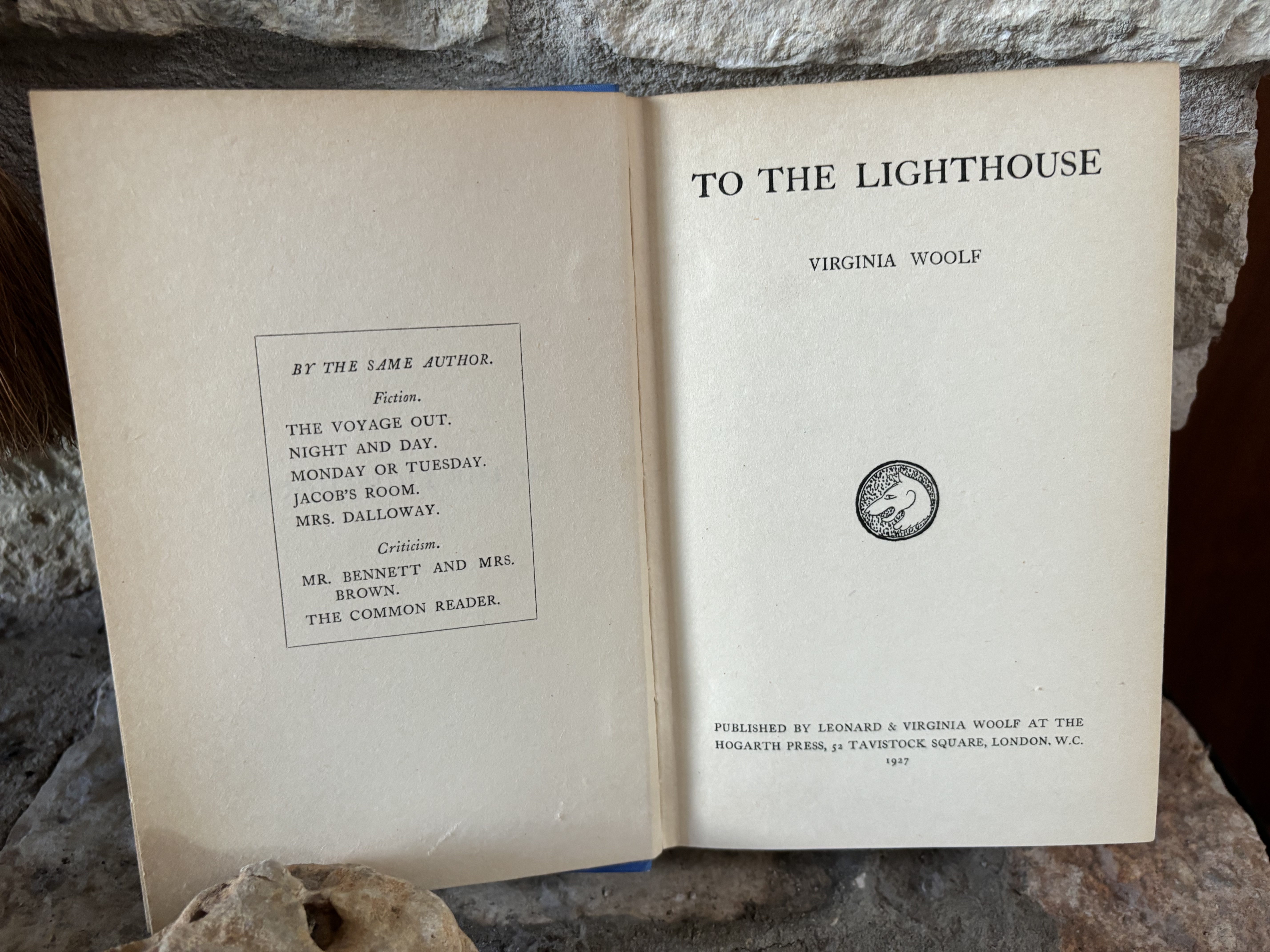
Writers struggle to analyze time’s impact on us. Just a couple of examples––Anthony Powell, A Dance to the Music of Time; Vladimir Nabokov, Speak, Memory;Virginia Woolf, particularly the “Time Passes” section of To the Lighthouse. Historians try to make sense of the impact of events over time, like Drew Gilpin Faust in This Republic of Suffering, on death and the Civil War.
Poets remind us of their mortality—and hence our own. Here’s Robert Frost, in Ten Mills, Part II, THE SPAN OF LIFE, from A Further Range (Henry Holt and Company, 1936):
The old dog barks backward without getting up.
I can remember when he was a pup.
Or Billy Collins at the beginning of “Life Expectancy” in Whale Day (2020):
On the morning of a birthday that ended in a zero,
I was looking out at the garden
When it occurred to me that the robin
On her worm-hunt in the dewy grass
Had a good chance of outliving me….
T.S. Eliot begins East Coker : “In my beginning is my end,” then:
…there is a time for building
And a time for living and for generation
And a time for the wind to break the loosened pane
Ad to shake the wainscot where the field-mouse trots
And to shake the tattered arras woven with a silent motto.
Sebastian Junger reflects on near-death experiences, including his own: In My Time of Dying (2024).
Of course animals can be aware of time. Right? The three donkeys– Sebastian, Amanda, and Caroline ––appear promptly at the gate in front of the house at 11:30 a.m., and again at 4:30 p.m., which, they are confident, are the hours when carrots ought to be offered. We know animals can mourn the loss of a member of their pod, their herd, their litter. But do they worry about their own mortality? Do our friends the non-human primates? Well, maybe! Um, time will tell! https://bit.ly/4mZqi4k
To be human is to be aware of our own mortality. And for humans, time is both reliable—tick, tock—and unreliable: we cannot know what the future holds. Fiction writers, however, get to make those decisions for their characters. In the mystery genre, we get to decide: who shall live? Who shall die? How, and why?
I’ve wrestled with these questions in my Alice MacDonald Greer Mystery Series: what happens next?Should I not have killed a particular character? Should a new character survive and reappear in the next book? It’s a heavy responsibility! We readers can become quite attached to characters. In the last few weeks, finishing Book 10, I took refuge in Laurie King’s Mary Russell/Sherlock Holmes series. She created a character I found particularly appealing in The God of the Hive. https://bit.ly/449Lugn
But then? The book made me revisit the pain of losing a beloved character to—well, literary death. Remember Gus in Larry McMurtry’s Lonesome Dove? I still miss Gus… Gus, don’t ride over that hill!
In addition to night-time plunges into Laurie King land, I found banging on the piano a helpful respite from the writing process. But after two broken wrists in the past two years (careless, careless) I’d had to quit the beloved boogie woogie lessons and feared I’d never be able to play those strenuous pieces again.
My brother the physician, when asked by his siblings for advice, often prescribes “a little tincture of time.” It’s amazing how often that prescription works. This past week, after (really quite a lot of) tincture of time, I persuaded our century-old piano once again to play boogie-woogie pieces from the 1942 All Star Boogie Woogie Piano Solos! Pete Johnson, Meade “Lux” Lewis, Pine Top Smith, Hersal Thomas, Albert Ammons. Suddenly—how long is “a little tincture of time”?––finger memory began to return. Not all the way back yet, but still! Maybe I’ll get to resume piano lessons with that Austin treasure of jazz, boogie, country and everything else, Floyd Domino.
Charles Darwin was not known to rush into print. In 1837 in Edinburgh he presented his first paper concerning the action of worms “on the formation of mould,” a topic he studied for over forty years. Not until 1881, after two scientists pooh-poohed his theories, during the Great British Agricultural Depression (1873-1896) he published The Formation of Vegetable Mould Through the Action of Worms on the work of earthworms. Curious about their senses, their awarenesss, their work, he studied how worms could tug leaves into their burrows, eat and digest them, and then produce worm casts—millions of tons of richer soil. His query as to whether earthworms were sensitive to light “led me to watch on many successive nights worms kept in pots, which were protected from currents of air by means of glass plates.” His summary after all those years? Darwin doubts “whether there are many other animals which have played so important a part in the history of the world” as earthworms. Producing stuff that works…!
For so many of us, books are the “stuff that works.” Hurrah for reading!
Award-winning author Helen Currie Foster lives and writes the Alice MacDonald Greer Mystery series north of Dripping Springs, Texas, loosely supervised by the three burros. She’s drawn to the compelling landscape and quirky characters of the Texas Hill Country. She remains deeply curious about our human history and how, uninvited, the past keeps crashing our party. Follow her at http://www.helencurriefoster.com and on Amazon, and find the books at Austin’s BookPeople!
I’ve got a secret. So many books I have NOT read. You’d be shocked. No, really. My husband (retired business professor) admires Tolstoy, especially Anna Karenina. He’s read most of Dickens and every word of Moby Dick–several times. When we were dating he bought Baudelaire’s Les Fleurs du Mal (English translation) because he’d seen it on my shelf. He knows I’m hung up on Virginia Woolf; he’s read Three Guineas. He’s read reams of history—shelves and shelves, plus tome after tome on Richard Feynman and everything that’s going on with astronomy and quantum physics. He forges onward, aiming for the stars at the edge of the universe.
I, however, the English major, the mystery writer? I who should have read All The Books? I confess a powerful secret vice: rereading my favorites, particularly Virginia Woolf. Every year, To the Lighthouse sneaks back into my hand. Why? Why not concentrate only on the new novels, the best-sellers?
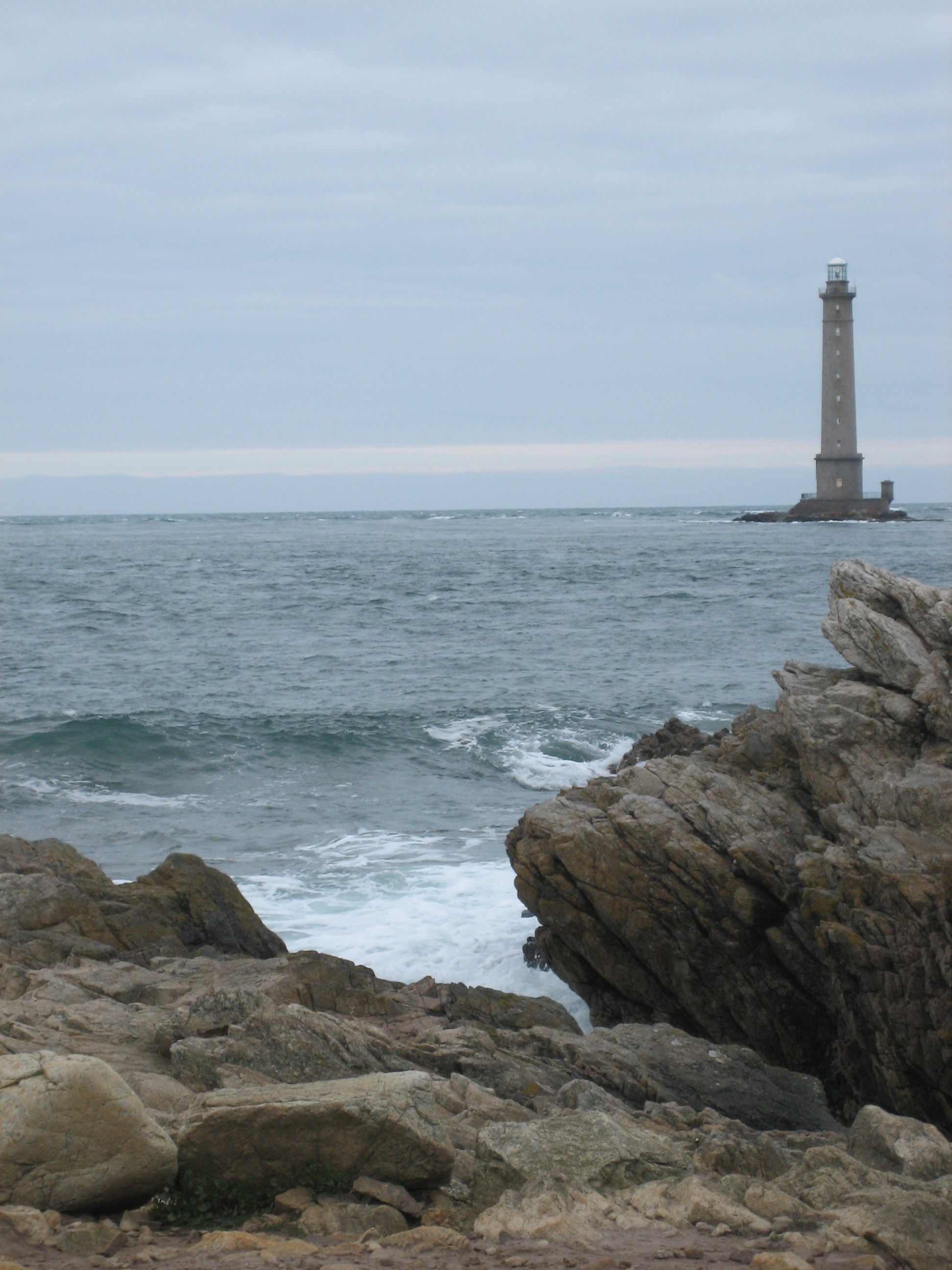
Because I have to reread that moment in Part III when, years later, after world war and illness have claimed her beloved friend Mrs. Ramsay and so many of the Ramsay family, the spinster Lily Briscoe returns to the Ramsays’ summer home on the Isle of Skye. https://bit.ly/3zHF77w
Out on the lawn, facing the old white house, she sets up again the unfinished oil painting she began all those years earlier—the painting that had posed such a challenge in Part I as her mind reverberated with the repeated mantra from Professor Ramsay’s obnoxious male philosophy student: “Women can’t paint, can’t write.” During the long day, full of changing light on the sea, and repeated interruptions by other characters, Woolf returns us over and over to Lily, staring at her painting, seeing again the remembered shapes of Mrs. Ramsay and her son James all those years ago. And her artistic effort? Here’s the end of the book:
“It would be hung in the attics, she thought; it would be destroyed. But what did that matter? She asked herself, taking up her brush again. She looked at the steps; they were empty; she looked at her canvas; it was blurred. With a sudden intensity, as if she saw it clear for a second, she drew a line there, in the centre. It was done; it was finished. Yes, she thought, laying down her brush in extreme fatigue, I have had my vision.”
Why do I return to that? So much of the book is touching, gripping, and even hilarious, including the thoughts of Professor Ramsay, a philosophy professor who’s both overbearing and insecure. He delights in his own “splendid mind”: “For if thought is like the keyboard of a piano divided into so many notes, or like the alphabet is ranged in twenty-six letters all in order, then his splendid mind had no difficulty in running over those letters one by one, firmly and accurately, until it had reached, say, the letter Q. …Very few people in the whole of England ever reach Q.” Then he falters. “But after Q? What comes next? After Q there are a number of letters the last of which is scarcely visible to mortal eyes, but glimmers red in the distance.” He braces himself, clenches himself. “Q he was sure of. Q he could demonstrate. If Q then is Q—R—” Then “he heard people saying—he was a failure—that R was beyond him. He would never reach R.”
What an image—the alphabet, R glimmering red in the distance, then fading, fading! And then of course there’s the famous dinner party featuring Mrs. Ramsay’s boeuf en daube. Surely, just reading this, you smell the simmered sauce, the wine, the bay leaf? The thought crossed my mind that if Professor Ramsay had been offered a sip of the Talisker malt whiskey for which Skye is famous, he’d have felt a bit better. https://www.malts.com/en/talisker (The distillery gives a great tour, too.)
But Lily’s painting? This spinster friend of Mrs. Ramsay, with her amateur brushstrokes? The tale of Lily’s painting, her decision and indecision as she holds her brush, grabbed me all those years ago, and refuses to let go. The same question must hit every musician—“Is this the last note? Did that chord resolve properly? Does it make you feel beauty and longing, or does it just hang there, unfinished?” Every cook: “A pinch of salt? What about some coriander? To garlic or not to garlic?” Every filmmaker: “Do they walk into the sunset? Or fade out? Or kiss?” And every writer? “Is this character real? Is this setting compelling? Does the plot work? And will anyone care?”
Lily’s painting embodies desire to capture memory, resistance, light and color, and more than that. Isn’t it her experience? A moment of creation, of recapture, of making a line on a canvas and then feeling completion? She’s had her vision. If you know of another book where we readers feel such a moment of revelation from the frustrating process of creation—let me know.
Oh, don’t get me wrong. My Kindle received today the brand-new Martin Walker (A Grave in the Woods) and I can’t wait. bit.ly/3Xzqawt Like the other women in his (busy) life, I love to accompany Inspector Bruno, in his fictional Perigord village of St. Denis, partly because of his cooking. Thank you, Martin Walker, for describing the ham hanging from the kitchen ceiling, the cheerful chickens, and the paté with its duck fat on top, waiting in Bruno’s fridge, and the way Bruno sings La Marseillaise to count how long until he must sizzle the foie de gras before he deglazes the pan. I look forward to new recipes and to finding out who’s buried in the woods.
And a sad farewell: I’ve decided to forgive Elly Griffiths for saying goodbye to Ruth Galloway in her last book in that series, The Last Remains, even though I have loved watching Ruth clamber down into a trench to dig up ancient bones in East Anglia. amzn.to/3ZxU5rv I’ve also savored every page of Alan Bradley’s latest (last?) Flavia de Luce – What Time the Sexton’s Spade Doth Rust – as he allows this delightful protagonist to feel herself beginning to grow up—not too much, not too fast, just enough. https://bit.ly/4dla13A
And I did just finish We Solve Murders, Richard Osman’s first book in a new series. bit.ly/4ezjIwh Have to confess I found myself missing Joyce, Ibrahim, Ron, Elizabeth and the other characters of his Thursday Murder Club books. My strong belief is I must careabout a mystery protagonist and so far I haven’t completely bought in to his new cadre–though I do like Steve. We’ll see. I’d be interested in your reactions.
So that’s four new mysteries, just in September. I’m also rereading Virginia Woolf’s The Waves, and finding even more, yes, even more to love about how she brings those characters to vivid life, and how she describes the way we humans think and react to each other.
And out here with the three burros I’m writing the tenth in my Coffee Creek series featuring Alice MacDonald Greer and the gorgeous landscape of the Texas Hill Country, with its pristine (well, so far) bluegreen streams. Water’s for fighting over, right?
But when the going gets tough, you may find me sidling back to the revolving bookcase, on the shelf where Virginia Woolf and all the old faves hang out.
Helen Currie Foster lives and writes north of Dripping Springs, Texas, loosely supervised by three burros. She’s drawn to the compelling landscape and quirky characters of the Texas Hill Country. She’s also deeply curious about our human history and how, uninvited, the past keeps crashing the party. Latest in her award-winning series: Ghost Bones.
I’ve got a secret. So many books I have NOT read. You’d be shocked. No, really. My husband (retired business professor) admires Tolstoy, especially Anna Karenina. He’s read most of Dickens and every word of Moby Dick–several times. When we were dating he bought Baudelaire’s Les Fleurs du Mal (English translation) because he’d seen it on my shelf. He knows I’m hung up on Virginia Woolf; he’s read Three Guineas. He’s read reams of history—shelves and shelves, plus tome after tome on Richard Feynman and everything that’s going on with astronomy and quantum physics. He forges onward, aiming for the stars at the edge of the universe.
I, however, the English major, the mystery writer? I who should have read All The Books? I confess a powerful secret vice: rereading my favorites, particularly Virginia Woolf. Every year, To the Lighthouse sneaks back into my hand. Why? Why not concentrate only on the new novels, the best-sellers?
Because I have to reread that moment in Part III when, years later, after world war and illness have claimed her beloved friend Mrs. Ramsay and so many of the Ramsay family, the spinster Lily Briscoe returns to the Ramsays’ summer home on the Isle of Skye. https://bit.ly/3zHF77w
Out on the lawn, facing the old white house, she sets up again the unfinished oil painting she began all those years earlier—the painting that had posed such a challenge in Part I as her mind reverberated with the repeated mantra from Professor Ramsay’s obnoxious male philosophy student: “Women can’t paint, can’t write.” During the long day, full of changing light on the sea, and repeated interruptions by other characters, Woolf returns us over and over to Lily, staring at her painting, seeing again the remembered shapes of Mrs. Ramsay and her son James all those years ago. And her artistic effort? Here’s the end of the book:
“It would be hung in the attics, she thought; it would be destroyed. But what did that matter? She asked herself, taking up her brush again. She looked at the steps; they were empty; she looked at her canvas; it was blurred. With a sudden intensity, as if she saw it clear for a second, she drew a line there, in the centre. It was done; it was finished. Yes, she thought, laying down her brush in extreme fatigue, I have had my vision.”
Why do I return to that? So much of the book is touching, gripping, and even hilarious, including the thoughts of Professor Ramsay, a philosophy professor who’s both overbearing and insecure. He delights in his own “splendid mind”: “For if thought is like the keyboard of a piano divided into so many notes, or like the alphabet is ranged in twenty-six letters all in order, then his splendid mind had no difficulty in running over those letters one by one, firmly and accurately, until it had reached, say, the letter Q. …Very few people in the whole of England ever reach Q.” Then he falters. “But after Q? What comes next? After Q there are a number of letters the last of which is scarcely visible to mortal eyes, but glimmers red in the distance.” He braces himself, clenches himself. “Q he was sure of. Q he could demonstrate. If Q then is Q—R—” Then “he heard people saying—he was a failure—that R was beyond him. He would never reach R.”
What an image—the alphabet, R glimmering red in the distance, then fading, fading! And then of course there’s the famous dinner party featuring Mrs. Ramsay’s boeuf en daube. Surely, just reading this, you smell the simmered sauce, the wine, the bay leaf? The thought crossed my mind that if Professor Ramsay had been offered a sip of the Talisker malt whiskey for which Skye is famous, he’d have felt a bit better. https://www.malts.com/en/talisker (The distillery gives a great tour, too.)
But Lily’s painting? This spinster friend of Mrs. Ramsay, with her amateur brushstrokes? The tale of Lily’s painting, her decision and indecision as she holds her brush, grabbed me all those years ago, and refuses to let go. The same question must hit every musician—“Is this the last note? Did that chord resolve properly? Does it make you feel beauty and longing, or does it just hang there, unfinished?” Every cook: “A pinch of salt? What about some coriander? To garlic or not to garlic?” Every filmmaker: “Do they walk into the sunset? Or fade out? Or kiss?” And every writer? “Is this character real? Is this setting compelling? Does the plot work? And will anyone care?”
Lily’s painting embodies desire to capture memory, resistance, light and color, and more than that. Isn’t it her experience? A moment of creation, of recapture, of making a line on a canvas and then feeling completion? She’s had her vision. If you know of another book where we readers feel such a moment of revelation from the frustrating process of creation—let me know.
Oh, don’t get me wrong. My Kindle received today the brand-new Martin Walker (A Grave in the Woods) and I can’t wait. bit.ly/3Xzqawt Like the other women in his (busy) life, I love to accompany Inspector Bruno, in his fictional Perigord village of St. Denis, partly because of his cooking. Thank you, Martin Walker, for describing the ham hanging from the kitchen ceiling, the cheerful chickens, and the paté with its duck fat on top, waiting in Bruno’s fridge, and the way Bruno sings La Marseillaise to count how long until he must sizzle the foie de gras before he deglazes the pan. I look forward to new recipes and to finding out who’s buried in the woods.
And a sad farewell: I’ve decided to forgive Elly Griffiths for saying goodbye to Ruth Galloway in her last book in that series, The Last Remains, even though I have loved watching Ruth clamber down into a trench to dig up ancient bones in East Anglia. amzn.to/3ZxU5rv I’ve also savored every page of Alan Bradley’s latest (last?) Flavia de Luce – What Time the Sexton’s Spade Doth Rust – as he allows this delightful protagonist to feel herself beginning to grow up—not too much, not too fast, just enough. https://bit.ly/4dla13A
And I did just finish We Solve Murders, Richard Osman’s first book in a new series. bit.ly/4ezjIwh Have to confess I found myself missing Joyce, Ibrahim, Ron, Elizabeth and the other characters of his Thursday Murder Club books. My strong belief is I must care about a mystery protagonist and so far I haven’t completely bought in to his new cadre–though I do like Steve. We’ll see. I’d be interested in your reactions.
So that’s four new mysteries, just in September. I’m also rereading Virginia Woolf’s The Waves, and finding even more, yes, even more to love about how she brings those characters to vivid life, and how she describes the way we humans think and react to each other.
And out here with the three burros I’m writing the tenth in my Coffee Creek series featuring Alice MacDonald Greer and the gorgeous landscape of the Texas Hill Country, with its pristine (well, so far) bluegreen streams. Water’s for fighting over, right?
But when the going gets tough, you may find me sidling back to the revolving bookcase, on the shelf where Virginia Woolf and all the old faves hang out.
Helen Currie Foster lives and writes north of Dripping Springs, Texas, loosely supervised by three burros. She’s drawn to the compelling landscape and quirky characters of the Texas Hill Country. She’s also deeply curious about our human history and how, uninvited, the past keeps crashing the party. Latest in her award-winning series: Ghost Bones.
I recently finished reading World War Z. I know, I know, the book came out in 2006. As usual, I’m behind the times when it comes to reading books. I have so many on my bookshelves that it takes me a long while to get to them all. This book is one that my kid read back when it was popular and insisted that I read it too. So, it sat on the bookshelf, patiently waiting for my attention for several years. And while WWZ doesn’t fall into the usual reading for me, I’ve always been interested in anything that has to do with zombies. I watch most of the movies and shows. Not for the gore, but because I like to see how people react in the beginning days of the plague and how people may or may not survive in the long term.
Within the first pages I immediately saw why it was popular. Max Brooks is an excellent writer and the format appealed to me. Instead of creating a narrative with a beginning, middle, and end, he structured the book as a series of interviews. Each story is only a few of pages so it’s great if you like to pick up a book, do a quick read, and put it aside until next time. I personally like short chapters. It’s evident in my writing. But in the format of interviews, I found that the book didn’t hold my interest. There wasn’t much to compel me to open it and keep flipping pages. The story that I liked the most was about a downed pilot stuck in a Louisiana bayou. It was longer than the others, so I became invested in her, and I wanted see her survive. I wish more of the stories had been like that.
But I will say this about the book. Kudos to Brooks in his understanding of people and countries. If I were to sum up the book, I’d say that it was a character study of how people handle emergencies. It was as if he thought, “How would the American people and government respond to a zombie plague? Japan? Russia? Israel?” He included almost every country and every environment. What would happen in the mountains? Bayous? Coastal towns? How would this effect how people live in their homes? What kind of houses or fortresses would they have? Would people trust each other afterwards? And what would this do to humanity if we survived? Would the world still be worth living in?
He answers all these questions and more.
So, while it is a book of interviews about how people survived a global zombie apocalypse, it’s much more than that. It’s a study of humanity.
V.P. Chandler has been a paralegal, a teacher, and a West Texas rancher. She grew up in a family involved with the criminal justice system, (criminal justice professor, parole officer, pathologist, photographer, etc.), so thinking about the dark side of life is in her blood. Her most recent book, THE LAST STRAW is a novella co-written with Manning Wolfe.
“But at my back I always hear time’s wingèd chariot drawing near…” (Andrew Marvell, 1621-1678)
Today in pre-dawn darkness, the house quiet except for the murmuring furnace, my characters were already at me, barking orders: “More! More smells, tastes, experiences! More about me! Tell people what I’m thinking, what I’m experiencing, what I’m worrying about!”
They’re right. Readers want to know their favorite mystery protagonists. Why? Because readers are in league with them, walking in their shoes. Readers know that stepping into a protagonist’s sensory experience—smells, food, experiences, relationships—will springboard them into the setting, help them to be in the picture, ready to seize on every clue.
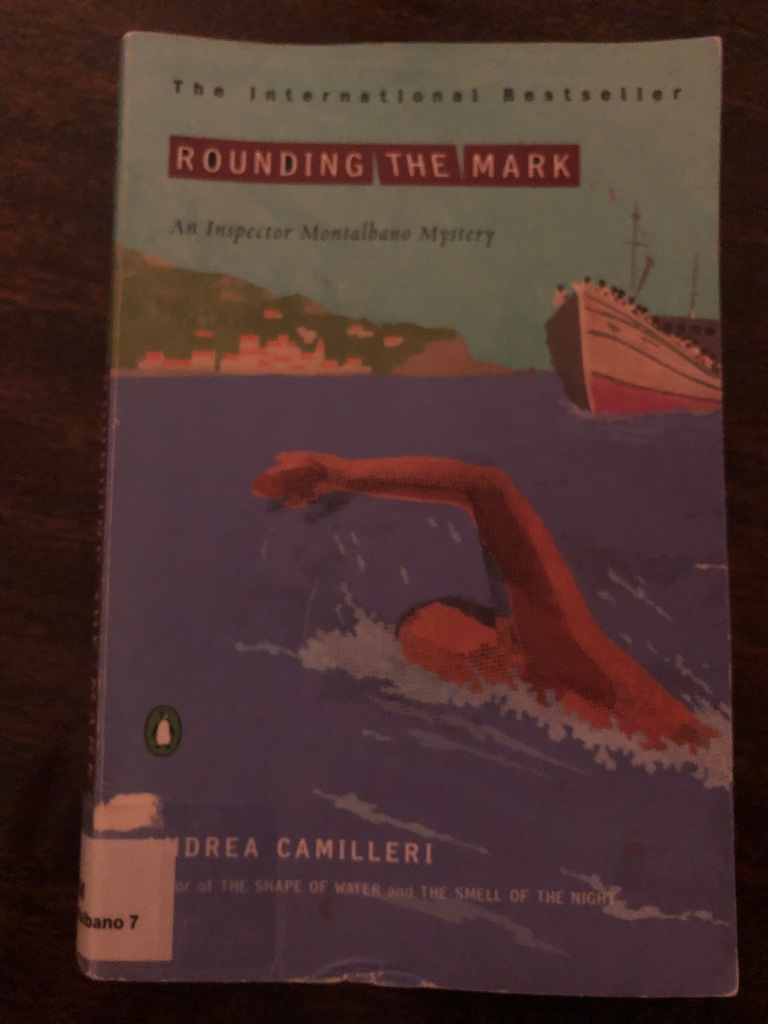
Resolution 1. Tastes! Flavors! Food! As Rounding the Mark, Book 7 of Andrea Camilleri’s long-running series, begins, Inspector Montalbano of little Vigáta, Sicily, can’t sleep:
“Stinking, treacherous night. Thrashing and turning, twisting and drifting off one minute, jolting awake and then lying back down—and it wasn’t from having scarfed down too much octopus a strascinasali or sardines a beccafino the evening before. No, he didn’t even have that satisfaction.”
Fortunately the recipes are described in the Notes at the book’s end. In Sicily, where seafood reigns supreme, Montalbano refers to small octopi, boiled and dressed in olive oil and lemon juice, and then sardines, stuffed and rolled up with sauteed breadcrumbs, pine nuts, sultana raisins, and anchovies. When Montalbano returns home from the police station he always races to his refrigerator to see what his housekeeper, Adelina, has left for him. In Book 16, Treasure Hunt, Montalbano “howled like a wolf with joy” when he finds “eggplant parmesan, done up just right, enough for four.”
Can’t you just smell this dish? Montalbano consumes the entire panful: “the sauce was a wonder to taste.” (50). We see how he delights in his food, how very particular he is. (And throughout the series Adelina keeps cooking – pasta in squid ink, involtini of small fish, pasta ‘Ncasciata…) https://www.foodandwine.com/pasta-ncasciata-sicilian-baked-pasta-7093847
Here’s Montalbano in Rounding the Mark after discovering a new restaurant:
“The antipasto of salted octopus tasted as though it were made of condensed sea and melted the moment it entered his mouth…And the mixed grill of mullet, sea bass and gilthead had that heavenly taste the inspector feared he had lost forever….After a long and perilous journey of the sea, Odysseus had finally found his long lost Ithaca. “(73)
Camilleri (died 2019) was writing mystery, murder, crime—but he included as major players in the setting Sicilian food, awareness of this ancient Mediterranean island culture, and echoes of classic myth.
We can only imagine Montalbano shaking his head at the food situation of private detective Cormoran Strike, protagonist of The Running Grave, seventh in the series by “Robert Galbraith” (aka J.K. Rowling). To protect his knee, Strike, a military police veteran who lost his lower leg in Afghanistan, must lose weight; he’s now lost “three stone” or about 42 pounds. “Usually he’d have grabbed a takeaway on the way home” but now, “without much enthusiasm,” he’s fixing broccoli and salmon in the tiny flat above his seedy London office.
Does the author need to describe these flavors? Aren’t “broccoli” and “salmon” redolent enough by themselves, especially broccoli? Later, as the plot roars into action, Strike’s off his diet, overcome by “the lure of sweet and sour chicken and fried rice” (767) and demanding that his partner Robin Ellacott stop at a 24-hour McDonald’s on London’s Strand (848) where, as they walk to the office, he’s eating “large mouthfuls of burger” and starting on two bags of fries. He’s back to his usual food habits––pub food, fast food––yet his mind’s on the recent attack, “as though he’d only just felt the heat of the bullet searing his cheek.” At chapter’s end, as they discuss the case, “Strike ate a solitary cold chip lingering at the bottom of a greasy bag.” There’s an urgency to his desperate hunger, to the need for enough energy to stick with an exhausting case—and don’t we all know about that solitary cold french fry in the bottom of the bag? Can’t you see him fishing it out? For Strike, food fills a need, but he’s not immersed in the culinary experience. He’s focused on his case.
What keeps Strike working as a private investigator? Challenge, curiosity, tenacity, terror—but not great cuisine. Food-wise, Montalbano’s habits differ sharply from Strike’s. But for each man, eating habits vividly highlight both personal life and setting.
Resolution 2: Human Scent! Other scents matter to both Strike and Montalbano. In the first chapter of The Ink Black Heart, Cormoran Strike has tried to find a perfect perfume for Robin’s 30th birthday. When she sprays on the new perfume, “he…detected roses and an undertone of musk, which made him think of sun-warmed skin.”
Similarly, in Treasure Hunt, when Montalbano and his compadre, the daring Ingrid, are outside on his veranda, “The night now smelled of brine, mint, whisky, and apricot, which was exactly what Ingrid’s skin smelled like. It was a blend not even a prize parfumeur could have invented.” (175)
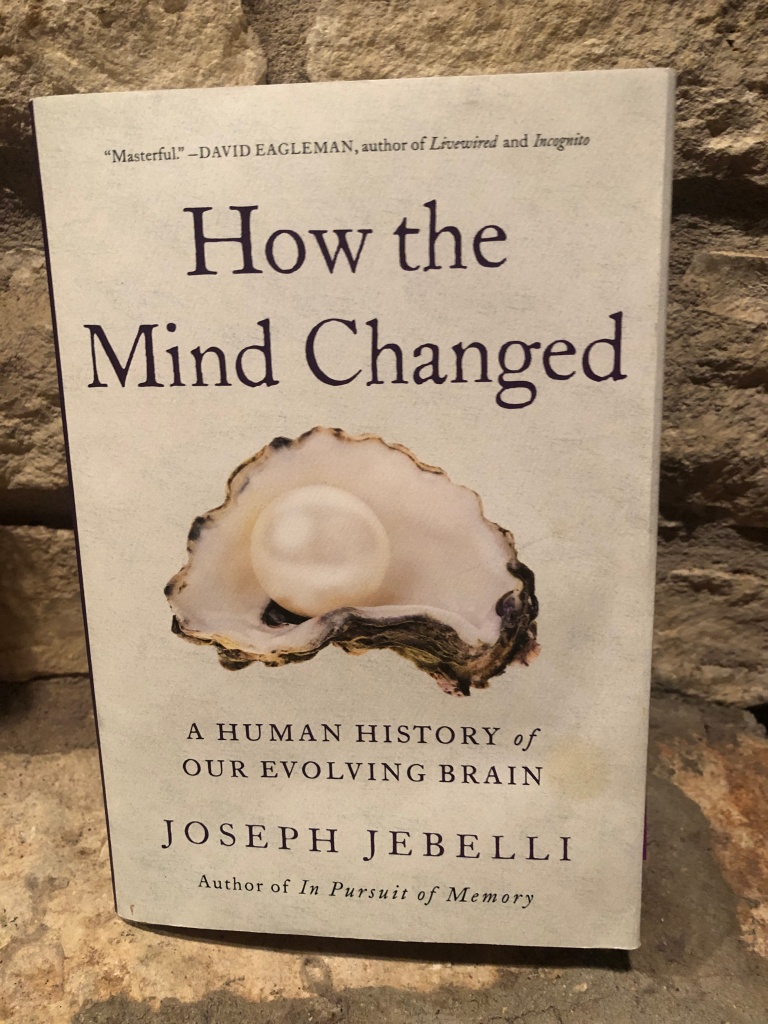
Reportedly one writing instructor has suggested that authors “include smell on every page.” These two mystery writers don’t obey that injunction (do you know any who do?). But why is scent so critical for us? Apparently the amygdala (a paired structure, with one in each temporal lobe) “developed from our most primitive sense—the sense of smell.” Joseph Jebelli, How the Mind Changed (Little, Brown, Spark, 2022, at 30). It’s near the olfactory nerve which is why scents connect strongly to emotions and memories. https://my.clevelandclinic.org/health/body/24894-amygdala
What scents spark your own memories? If a book mentions honeysuckle on a summer day, I might remember my grandparents’ front porch in Itasca, Texas, and how we learned as kids to suck nectar from a honeysuckle blossom. What pops up for you when a book mentions lavender? Or clean sheets? Baby powder? Or iodine, rubbing alcohol, band-aids? Marshmallows toasting on a stick? Pine straw underfoot? The first ocean breeze when you hit the beach? Does a book feel richer to you when your own memories are awakened?
What about the scent of January? Today’s the coldest day of 2024 so far, here in the Hill Country. Inside – hot tea: mint, chamomile, green, or maybe ginger slices, with honey and lemon. Outside, cedar burning in a neighbor’s brush pile.
Resolution 3: Character’s thoughts (and feelings)! In Treasure Hunt Camilleri includes a hilarious italicized interchange between Montalbano (called “Montalbano One”) and “Montalbano Two” where Montalbano Two criticizes Montalbano One’s case-handling as showing signs of deterioration, of “losing his cool,” highlighting Montalbano’s own concerns about aging. (18-19)
Camilleri also uses other techniques to put us in Montalbano’s head. Here’s one from Rounding the Mark, where, again, Montalbano’s worrying about getting older:
“As he was shaving, the scenes of the previous evening on the wharf ran through his head again. Little by little, as he reviewed them with a cold eye, he began to feel uneasy…. There was something that didn’t jibe….He stubbornly played the scenes over in his head, trying to bring them more into focus. No dice. He lost heart. This was surely a sign of aging. He used to be able to find the flaw, the jarring note…without fail.” (61)
Camilleri lets his character feel. When a small boy is kidnapped from north Africa by sex traffickers and escapes on the pier in Sicily, Montalbano returns him to his “mother,” not understanding she isn’t his “mother” at all. When the little boy is killed Montalbano visits the morgue:
“He lifted the sheet with one hand…and froze. A chill ran down his spine. It all came back to him at once: the look the little boy had given him as his mother ran up to take him back….he hadn’t understood that look. Now…he did. The little eyes were imploring him. They were telling him for pity’s sake, let me go, let me escape. And now…he felt bitterly guilty…He was slipping. It was hard to admit, but true… “(84)
In contrast, Cormoran Strike is more inscrutable, more unwilling to reveal his emotions, perhaps even to himself. Galbraith describes Strike as a “mentally resilient man” who tries but sometimes fails to control emotion. One of his tools “was a habit of compartmentalization that rarely failed him, but right now, it wasn’t working. Emotions he didn’t want…and memories he generally suppressed were closing in on him…” As a consequence he was “brooding so deeply that he barely registered the passing Tube stations and realized, almost too late, that he was already” at his stop. (105) In one scene after visiting his sister Strike starts home feeling very angry at his dead mother, who died of an overdose when he was nineteen. Galbraith then uses italics for Strike’s mental attack on her: “If you hadn’t been what you were, maybe I wouldn’t be what I am. Maybe I’m reaping what you sowed, so don’t you f*king laugh at the army, or me, you with your paedophile mates and the squatters and the junkies…” (106) These passages show the reader Strike’s painful upbringing and may partially explain his need (and ability) to compartmentalize—both, ironically, key to his later success.
Strike drinks, smokes, has sex, but almost in the same way as he gulps down fast food. Food seems temporarily satisfying, but not a life pleasure. Early on we become aware that the strongest sensation Strike is described as experiencing is the pain of his stump, and the relief he experiences when he removes his prosthetic. In his compartmentalization of his emotions, has he replicated this binary condition? (No spoilers here!)
Resolution Four: The Weather! Camilleri and Galbraith’s characters don’t always focus on weather, but here in the Texas Hill Country we must take notice. It’s too cold (like today), too hot (pretty soon), too wet (spring rain bombs and dangerous low-water crossings), or too dry (like last summer’s dreadful drought). Blessings on March, which will bring bluebonnets and the ethereal prairie celestial, then wine cups, with the pink of redbud and Mexican buckeye to rejoice the eye. But weather’s definitely a factor in upcoming Book 9 of the Alice MacDonald Greer Mystery series. Watch for it—coming soon!
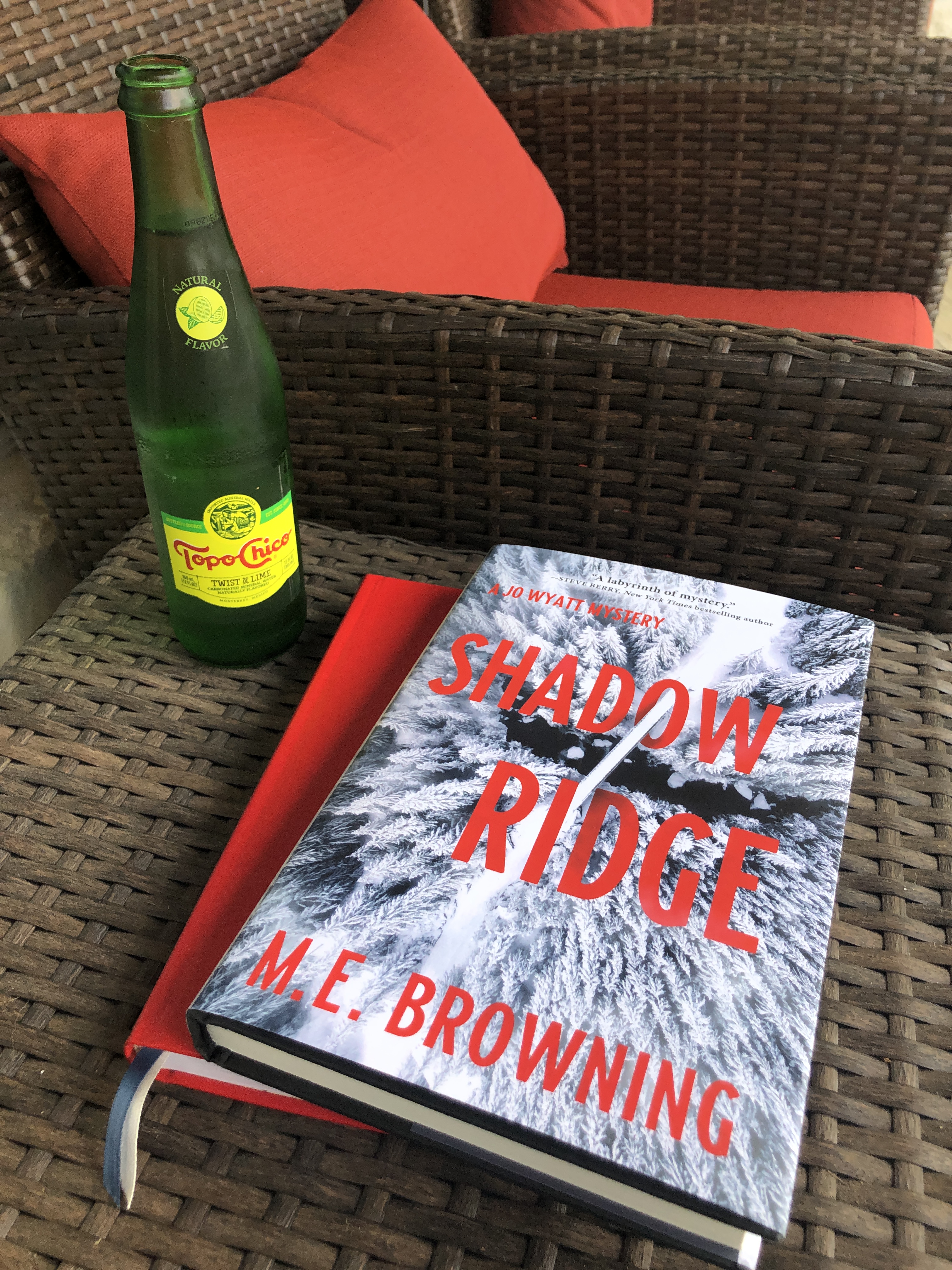
When it comes to writing riveting police procedurals, M.E. Browning has all the credentials. As a retired police captain and an award-winning author, she follows her Agatha-nominated series featuring amateur sleuth Mer Cavallo with Colorado police detective Jo Wyatt in her latest novel, SHADOW RIDGE. Readers and reviewers alike have praised Browning’s meticulous plotting and storytelling prowess as she brings us into the Colorado town of Echo Valley and the case that plunges Detective Jo Wyatt into the dangerous underworld of online gaming. Browning shares how SHADOW RIDGE came to be and what’s next for both her and Jo Wyatt.
SHADOW RIDGE was just released this week. Congratulations! What would you like readers to know about your latest novel?
SHADOW RIDGE, A Jo Wyatt Mystery
I think every author has a story that they are afraid to write–not because the content is necessarily frightening, but because it means so much to the author. For me, that book was Shadow Ridge. When I first started writing, I knew I hadn’t yet developed the skill to write this story—at least not the way I wanted. I’d tried. Despite being my third published book, Shadow Ridge is my first police procedural. It’s also my first novel to earn a starred review. In hindsight, I think it’s good to be a little scared of your story. It kept me digging until I found the emotional core of each character.
What drew you to writing SHADOW RIDGE? How did the story idea come about?
I’d read an article that detailed the misogyny that female gamers faced online. Sadly, when it comes to online abuse, women are overwhelmingly the target. In the gaming industry, that abuse flared into coordinated mob attacks. Typically, online abuse manifests in three ways: trolling, doxxing, or SWATting. We’ve all probably experienced a troll—someone who hijacks a thread and makes racist or abusive comments. In some cases, trolls escalate their behavior into doxxing, which occurs when they post a victim’s personal information online. Armed with doxxed information, a harasser can morph from an online threat into a physical one and confront the woman personally or report a phony emergency that requires a SWAT response. Obviously, when a tactical team surrounds a house because someone inside reportedly has a gun and is threatening to kill another occupant, tensions are high and the danger is real—even if the emergency isn’t.
From a law enforcement perspective, cybercrimes are difficult to investigate. Harassers hide behind firewalls and phony accounts, and while they may be as close as your neighbor, they could also live on the other side of the globe. Many smaller jurisdictions don’t have the training or resources to investigate the crime and end up referring the case to a state agency.
From a story perspective, I saw an opportunity to bring these two worlds together. The game designer runs afoul of online abuse which brings her in contact with Detective Jo Wyatt and parallels issues Jo’s’s facing within the department. And as authors like to say in an effort to avoid spoilers, shenanigans ensued.
Tell us about Jo Wyatt and her life in Echo Valley.
Jo is a second-generation cop in a small southwestern Colorado city. She’s been on the force for a dozen years, and the last two have been as a detective. I had a NetGalley reviewer describe Jo as “Smart enough to know her limitations, confident enough to trust her gut, and determined enough to unravel the threads in any case.” I almost wept reading that description because that was exactly the character I wanted to portray.
Echo Valley is urban enough to have a craft brewery, but rural enough that the bears still rummage through the trash at night. Working in a small community has its pros and cons. Jo frequently knows the people she deals with, but they often expect her to let them get away with murder.
Your past career in law enforcement has been highlighted in early reviews, with readers praising your experience coming through in a way that is masterful without being dominant. How did you decide how much of that expertise to use in SHADOW RIDGE?
The short answer is trial and error.
My earlier unpublished manuscripts proved that writing what you know isn’t always the best approach to a compelling story if you include too much extraneous detail. Instead, I discovered I needed to learn how to let law enforcement informa story. So instead of a law enforcement professional, an amateur sleuth stars in my first two books. With each novel, my understanding of the value of specific details increased. It was also important to me to portray Jo as human. She makes mistakes, but she owns them. It was a lot of fun for me to bring her to life through the other two point-of-view characters.
This is the first in the Jo Wyatt series, correct? Can you give us any insight on what is coming next for you? And for Jo?
That is correct. I’m currently working on the second Jo Wyatt Mystery. In it, Jo investigates a missing child, but as she digs into their fractured family life, she unearths a trove of secrets and half-lies that paint a different picture of the two parents she’s known since high school.
What do you hope readers will take away from this book?
Part of the joy I discover when reading a book is what lies hidden between the lines—and everyone’s experiences determine how they will interpret the same event. In Shadow Ridge, I explore the complexity of family, the meaning of promises, and the danger of secrets. But in the end, when the last word is read and the book is closed, I hope readers believe that Jo is exactly the cop they’d want to respond if they ever need to call for help.
M.E Browning
M.E. BROWNING served twenty-two years in law enforcement and retired as a captain before turning to a life of crime fiction. Writing as Micki Browning, she penned the Agatha-nominated and award-winning Mer Cavallo mysteries, and her short stories and nonfiction have appeared in anthologies, mystery and diving magazines, and textbooks. As M.E. Browning, she recently began a new series of Jo Wyatt mysteries with Shadow Ridge.
Micki is a member of Mystery Writers of America, International Thriller Writers, and Sisters in Crime—where she served as a former president of the Guppy Chapter. A professional divemaster, she resides in Florida with her partner in crime and a vast array of scuba equipment she uses for “research.” Visit mebrowning.comto learn more.
You can find SHADOW RIDGE at your favorite bookstore or online here.
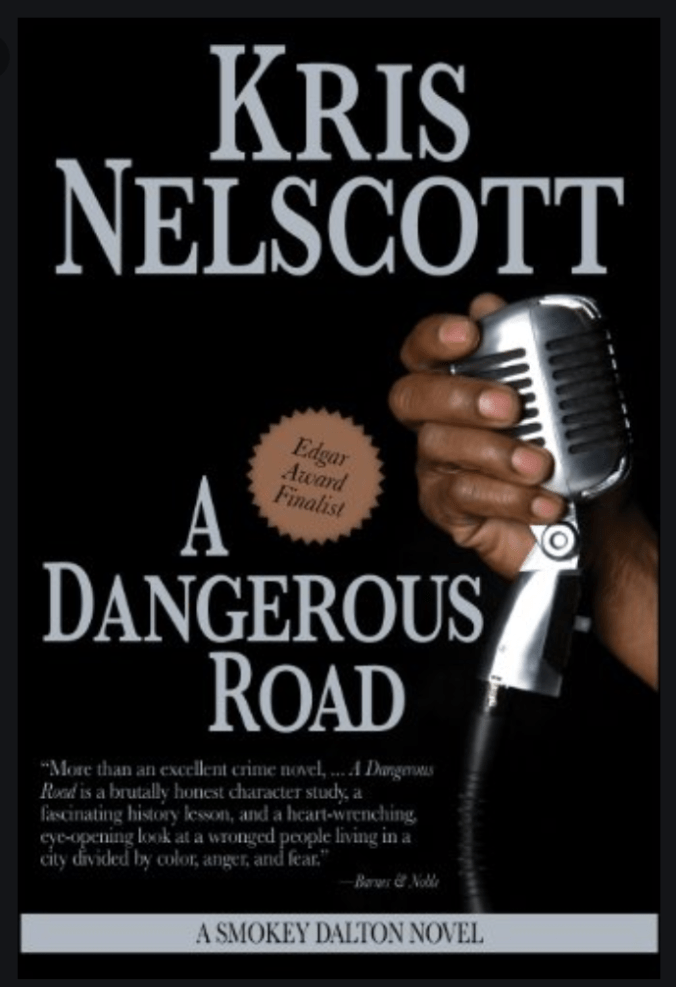
As with many other books, I’ve been late on the scene with this series and author. A Dangerous Road made its debut in 2001 but I just discovered it recently. I was fortunate that my book club chose it. So not only did I get to read a great book, I got to read an intriguing mystery that kept me turning pages! And I got to discuss it with good friends.
I primarily write historical mysteries, usually Westerns, but this one takes place in Memphis in 1968. A turbulent time and place. There was a lot that I didn’t know about this time and I can tell that Nelscott did her homework. For example, there was a strike among the garbage collectors and trash began to pile up. The smell and inconvenience added to the tension of the story. The impending marches and the arrival of Dr. Martin Luther King, Jr., are churning up hostilities between the races, and among the races. Add to that a black male P.I. who has a white, attractive, female client, Laura Hathaway, and the tension mounts!
The mystery part of the story is about $10,000. Laura Hathaway demands to know why her mother would leave $10,000 to Smokey. He has no idea. He doesn’t know the Hathaways. Could Mrs. Hathaway have been the anonymous benefactor who left him $10,000 ten year prior? It seems like too much of a coincidence. And why would she do that? Laura decides to hire Smokey to find out about her family background, what secrets they were hiding and how he is involved in it, if he is.
That’s what kept me turning pages. I had no idea where it
was going to go!
The book starts with scenes from the premiere of Gone With
the Wind in 1940 in Atlanta. (I didn’t know that it premiered there! Did you?) It
takes a while until it becomes clear why this event was important to the story.
But it’s pivotal.
Which gets me to what I admired most about the book. Not
only was it a mystery, but it deftly maneuvered through and around the worlds
of 1940 Atlanta and 1968 Memphis. Both eras are complicated. Dalton and the
black community have to constantly be alert and careful what they say and do.
And not all dangers are outside their own community.
Nelscott dances her way around and through the story, taking the reader with her. I was impressed with its complexity and how she was able to keep the tension throughout. I was not surprised to learn that it won the Herodotus Award for Best Historical Mystery and was short-listed for the Edgar Award for Best Novel.
This reader and writer will definitely be reading more of
the Smokey Dalton stories!
The master of suspense took a break from his
usual mystery, crime, and thriller books to write Playing for Pizza; a football
story hatched as he researched settings for another novel.
Playing
for Pizza tracks a third-string quarterback for the Cleveland Browns in what
turns out to be a life lesson – the question is, will he learn?
Poor
Rick Dockery. With only minutes left to play, in the AFC Championship game, Dockery
comes in as Quarterback with a 17- point lead and snatches defeat from the jaws
of victory. Rick ends up in a hospital,
recovering from the concussion he suffered along with the loss. His agent,
Arnie, and the duty nurse discourage him from remembering too much of what had
happened, but eventually, poor Rick does remember and then learns that virulent
Cleveland fans want to storm the hospital and dismember him – or at least run
him out of town on a rail. In addition to the disaster, his agent informs him
that the Browns have released him and no other team wants him – he is
unemployable in the NFL, but Rick isn’t done with football – he can’t be; it’s
all he knows.
Dubbed
by an unforgiving and vicious press as “the greatest goat in the history
of professional sports,” Rick has hit rock bottom. His agent suggests that it might be time to
find another profession; Dockery, however, refuses to give up. Arnie is running
out of patience and ideas, not to mention the fact that he isn’t making any
money representing the disgraced Quarterback, yet he makes “one more
call,” to an old buddy.
Coach
Russo is looking for a QB for the Panthers—of Parma, Italy. They play at a
Division 3 level – maybe. Russo wants an American QB to lead his team of tough
Italians, whose professions range from truck drivers to airline pilots and
everything in-between. These men hold full-time jobs and play for love of the
game, and pizza! As one of the three
Americans allowed on any team in Italy, Rick will be provided with a car, rent
money and a very small salary – nowhere near the pay scale in the NFL.
With
no other options available, feeling the pressure to get out of the States,
filled with resentment and self-pity, Rick Dockery accepts the job. He flies off
to a country he barely knows exists and a city he’d never heard of before.
The
coach meets him at the airport and immediately realizes that Dockery is in for
a few shocks. Coach Russo crash courses Rick in Italian football. The Panthers
are on an eight-game schedule with play-offs and a shot at the Italian Super
Bowl. At the same time, Rick must cope with stick-shift small cars,
bumper-to-bumper parking, and the culture of food, wine, and opera– things
about which Rick Dockery knows nothing. By his own admission, his education
consisted of football, Phys. Ed., more football, and cheerleaders.
Rick begins the process of adjusting to his new circumstances and his new team. Secretly, he believes he would be hiding out in Parma for a while and would return to the States after other NFL teams forgot his humiliation and offered him a spot.
One
vicious reporter from Cleveland, however, finds out where Dockery is and has no
intention of allowing him any salvation in football. The reporter stalks him
and reports back to the Cleveland Post on Dockery’s progress, turning anything
Dockery does well into a series of “lucky breaks.”
Throughout,
we watch Dockery cope with the culture shock of a completely alien environment
while melding with teammates who are unlike any he’d ever encountered in the
States and somehow, play his best football.
Sometimes
the story feels like a travel guide through northern Italy and a play-by-play
in football, but it’s told through the eyes of a lost soul on a life journey.
Dockery learns that in Italy, although “it (footfall) was just a club
sport, winning meant something – commitment meant even more.”
By
the end of Rick’s story, we see a man emerge from the immature self-absorbed,
culturally deficient boy/man who’d arrived in a foreign country only a few
weeks before. Moreover, if you are a football fan, the last game is a
heart-stopper.
There’s
no fairy-tale ending here. Dockery has choices to make, but he finds
confidence, becomes comfortable in his own skin, and learns the real meaning of
playing for pizza.
It’s
not a new release, but it’s still a great summer read.




















 Austin Mystery Writers
