(Details) Ripped from Real Life

N.M. Cedeño

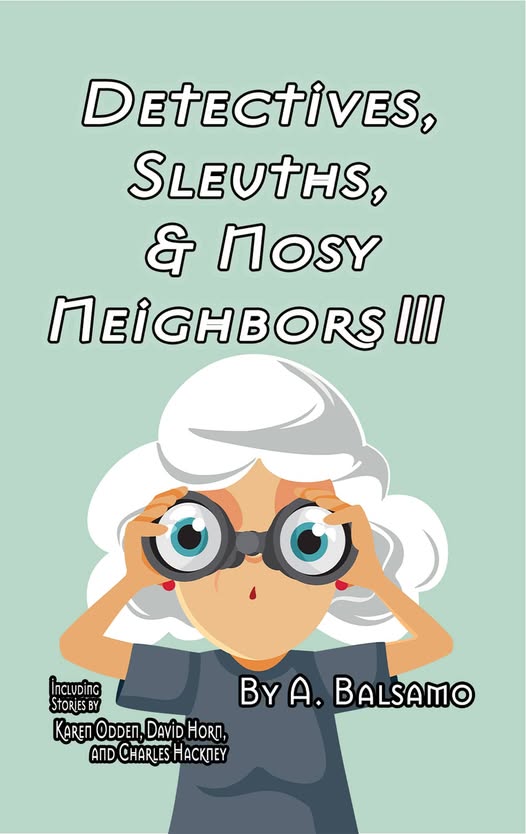
I have a short story in the new anthology Detectives, Sleuths, and Nosy Neighbors III from Inkd Publishing entitled “The Assassination Game.” This is one of the few stories I’ve written that has been partially inspired by real events that happened in my community, many of the events taking place during my children’s high school years. I selected three unconnected events and assembled details from them like a jigsaw puzzle to create my story.

What were the incidents?
Senior Assassin!

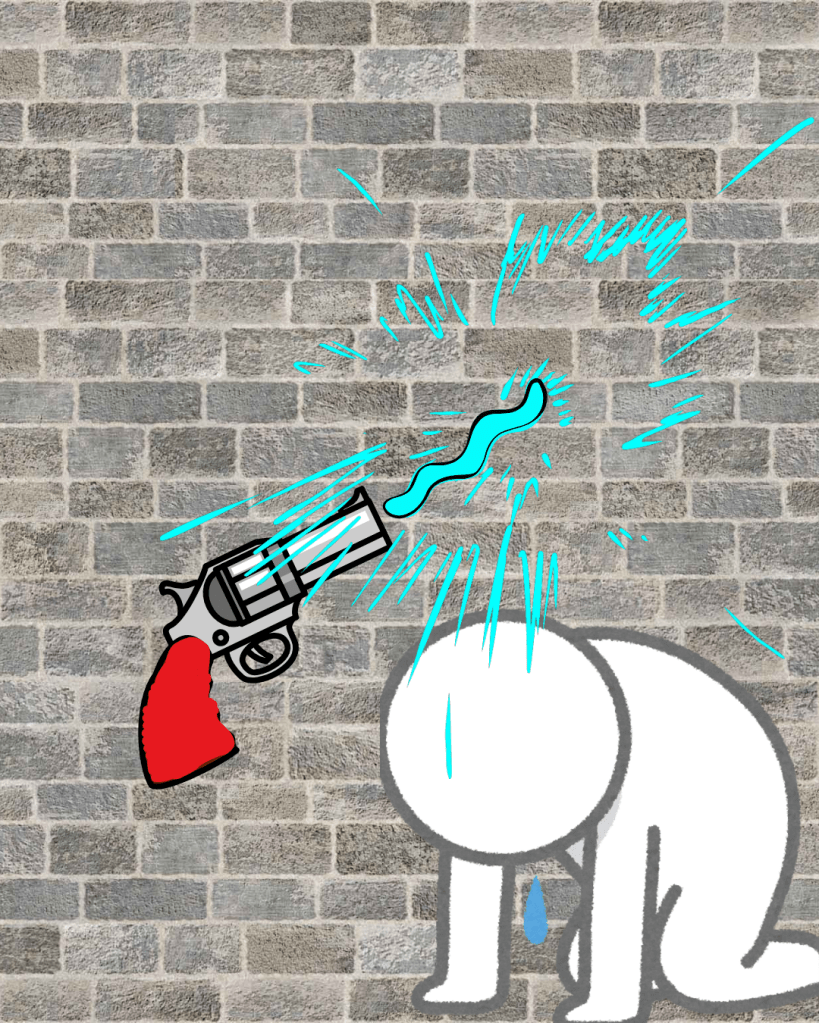
Several years ago, I heard about the game of “Senior Assassin” being played at the high school while volunteering in the library. The game is generally played in the spring, not the winter, so I took some liberties by placing it over the Winter Holidays in my story. In “Senior Assassin,” members of the senior class sign up to play an elimination game, in which they tag each other, usually with water guns, vying for the honor of being the last one standing. The school building is off-limits for the game, which must be played outside of school hours. However, the parking lot is fair game. To move from the building to the parking lot, silly rules are employed to create safe passage. For example, to be protected from elimination, you might have to wear swimming pool floaties on your arms or a maybe a hat with animal ears. The game is generally in good fun, but it makes the news almost every spring because of someone mistaking a water gun for the real thing.

The second incident that I drew from happened over a summer, a time when bored high school students have been known to get into mischief. In this case, my daughter’s friend came over and told us about how her younger brother was riding his bike in their neighborhood when some stupid teens in a pick-up truck decided to take pot shots at him with a BB gun. He was struck in the back and bloodied. He wasn’t the only one targeted that day. A couple other children were also hit with BBs.

The third piece of the story came two years ago when I drove one of my kids two days in a row to visit a friend in the hospital, who was recovering from surgery for severe scoliosis. I learned months earlier, in the lead up to the surgery, that in some instances emergency surgery may be needed if the curvature of the spine worsens past a particular point. Unlike my protagonist, my child’s friend, to his parent’s relief, didn’t have to have emergency surgery. His surgery was done in the summer, when, I’m told, most scoliosis surgeries occur.

To be clear, the teenagers in my story bear no resemblance to the actual children at my kids’ high school, or to any of their friends or to their friends’ siblings. The story and its characters are fictional. I simply borrowed details from real life to build the story.
In “The Assassination Game,” my protagonist, JB, who is recovering from emergency scoliosis surgery, learns from friends that the seniors at his high school are playing an assassination game over Winter break. However, the game has gotten out of hand to the point that someone used a BB gun to shoot another player in the back to tag them out. JB hears that police are investigating the matter.

The story is also heavily inspired by Alfred Hitchcock’s Rear Window. From Rear Window, I borrowed the names Lisa and Jeff, who became my protagonists. In the movie, Jimmy Stewart plays L.B. Jeffries, called Jeff by friends. My character’s name is Jeff, but his friends call him JB, and only his mother calls him Jeff. In the movie, Jimmy Stewart’s Jeff witnesses what he suspects to be a murder while recovering from an injury that has him stuck in his room in a cast up to his waist. My character JB sees something out his window that might or might not relate to the assassination game BB gun incident while stuck in his room recovering from emergency scoliosis surgery. As Grace Kelly’s Lisa did in the movie, my character Lisa visits her friend JB and becomes the active investigator, going to look for evidence of what might have happened.

Of course, things don’t go as the teens plan in their investigation.

“The Assassination Game” was fun to write. I’m pleased it found in home in Inkd Publishing’s anthology Detectives, Sleuths, and Nosy Neighbors III, edited by A. Balsamo. Now available at Barnes & Noble at https://www.barnesandnoble.com/…/detectives…/1150214504 and digitally from Books to Read at https://books2read.com/u/38oBw6. And on Amazon at https://www.amazon.com/Detectives-Sleuths-Nosy-Neighbors-III/dp/B0H2RBRG22/

I’ve already read and enjoyed this anthology. I hope you like it too!

A Little Hitchcock, Two Stories, Plus Spoilers

by Kathy Waller

The summer  I was six, my cousin of the same age was visiting our spinster great-aunt and bachelor uncle who lived up the street. Uncle called one evening. Cousin was being a major pain. It was a weeknight, and the only amusement our miniscule town afforded, a roller skating rink, was open only on weekends. Great-aunt and uncle weren’t accustomed to dealing with children of the painful variety, so he did what he often did when desperate. He appealed to my mother: You’ve got to do something.

A veteran of dealing with a juvenile pain, she proposed the perfect solution. They loaded both of us into the car and took us fifteen miles to the drive-in movie.

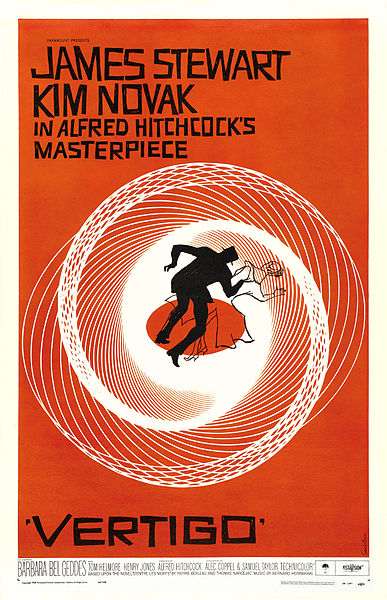
An excellent plan: Bugs BunnyPorky Pig, trailers of coming attractions, and the feature film: Alfred Hitchcock’s Vertigo.

synopsis of the novel from which the movie was adapted appears on Wikipedia:

A prosperous shipbuilder hires a former detective who suffers from vertigo to tail his wife Madeleine who is acting strangely. The detective falls in love with the shipbuilder’s wife but is unable to stop her committing suicide by jumping from a tower. Haunted by her death, he sees a woman who bears a strong resemblance to the dead woman, however, his attempts to get closer to this doppelgänger ultimately result in tragedy.

In these enlightened times, many, if not most, parents would be horrified at anyone’s allowing a first-grader to see such a nightmare-inducing movie. I, however, spent every afternoon glued to the Afternoon Movie. I guess my mother assumed that if I could handle Don Ameche trying to get rid of his wife, Claudette Colbert, by drugging her hot chocolate and then piping in repeated suggestions that she jump off her bedroom balcony, Hitchcock wouldn’t upset me.

And I’ve always been grateful to her, because that night at the drive-in, I fell in love. I watched Hitchcock’s television programs and all the movies I could manage. They were wonderful, and if they starred Cary Grant–Francine Paino wrote about one of those, North by Northwest, last week–that was icing on the cake.

Now Netflix, Prime, Roku, and other streaming services have allowed me to watch many of them again.

But this post isn’t a celebration of Hitchcock. It’s about two stories adapted for his television show. Watching them as an adult, I saw something I hadn’t seen years (and years) ago. I enjoyed both, but one had something extra.

The first is “The Second Wife,” in which a mail-order bride comes to believe that her husband plans to kill her. At the outset, he seems insensitive, unconcerned about her needs; when she says the laundry room in the basement is uncomfortably cold, he complains about the cost of installing a heater. She also hears

stories: he took his first wife to visit her people at Christmas and she died and was buried there–or that’s what he claims.

Gossip fuels the second wife’s fears, and when the husband announces plans to take her home for Christmas, she acquires a gun. Before they leave, however, he insists she go down to the basement. She takes the gun and descends the stairs. He’ll follow in a moment.

The viewer feels her fear: The husband will kill the second wife, as he killed the first.

But there’s a literary catch. In a letter, Anton Chekhov stated one of his principles for writing fiction: “One must never place a loaded rifle on the stage if it isn’t going to go off. It’s wrong to make promises you don’t mean to keep.”

The wife has a gun. And this is Hitchcock; he keeps his promises.

The wife shoots and kills her husband, then realizes he’d only wanted to show her her Christmas present–the heating system he’d had installed in the laundry room.

A tragic ending, but satisfying in its irony.

The second story, “Night of the Owl,” however, has something extra, something unexpected.

A couple have reared an adopted daughter, now a teenager, a bright student, a well-adjusted, happy girl. But the parents have carefully guarded a secret: the girl’s father murdered her mother, then killed himself in prison. When a prison chaplain and his accomplice appear and blackmail the couple, then come back for more, the father considers his options: murder the blackmailer, or tell his daughter about her past. Both are unthinkable. Then one of the blackmailers is murdered. Evidence points to the father.

How can the plot be resolved? Did the father commit murder? He escapes being charged but can’t escape telling his daughter about her birth parents.

In “The Second Wife,” the resolution is either/or, and the viewer can almost certainly predict which it will be.

But the ending of “The Night of the Owl” isn’t predictable. Will the girl become hysterical? Fall into depression? Reject her adoptive parents? Run away? Harm herself?

Told the truth about the murder/suicide in her background, she expresses empathy. How unhappy her parents must have been, she says–what sad lives they must have lived.

I didn’t see that coming. A Hitchcock program with a happy ending. And an exceptional character.

Critics (professional and amateur) point to problems with both  programs. Fair enough. I didn’t watch for flaws. In fact, I didn’t watch for anything but the pleasure of seeing programs I’d first watched as a child. I just happened to see something more.

And to quote Osgood Fielding III, “Nobody’s perfect.”

***

“Night of the Owl” is available on Youtube.

*

Robert Bloch wrote the teleplay of “The Second Wife” based on a story by Richard Deming. It aired on The Alfred Hitchcock Hour on October 4, 1962.

Richard Fielder wrote the teleplay of “The Night of the Owl” based on a novel by Paul Winterton. It aired on The Alfred Hitchcock Hour on April 26, 1965.

*

Joe E. Brown appears as Osgood Fielding III in Some Like It Hot. He has the best line in one of the best, and funniest, movies ever made.

Research turned up this biographical item: “An ardent opponent of the Nazi regime, in 1939 Brown testified before the House Immigration Committee in support of a bill that would allow 20,000 German-Jewish refugee children into the United States. He would later adopt two German-Jewish refugee girls himself, naming them Mary Katherine Ann (born 1930) and Kathryn Francis (born 1934).”

*

Images are taken from Wikipedia. Both are in the public domain.

***

Kathy Waller blogs at Telling the Truth, Mainly.