“Everybody Eats Mushrooms.” Some Live to Tell the Tale.

By M. K. Waller

Today’s post comprises two parts–a bit of fiction followed by a bit of fact–linked by a “fleshy, spore-bearing fruiting body of a fungus” and a mystery writer who used it as a murder weapon–and later confessed to something even worse.

I.

The following flash fiction was inspired by a photo prompt on Friday Fictioneers, a weekly writing challenge sponsored by Rochelle Wisoff-Fields.

‘SHROOMS

John ambled into the kitchen. “What’s cooking?”

“Mushroom gravy.” Mary kept stirring.

John frowned. “Toadstools. Fungi. Dorothy Sayers killed someone with Amanita.

“These are morels.” She added salt. “Everybody eats mushrooms.”

“I don’t.”

“Suit yourself.”

He sat down. “Where’d you buy them?”

“I picked them.”

You?

“Aunt Helen helped. She knows ‘shrooms.” Mary held out a spoonful. “Taste.”

“Well . . . ” John tasted. “Mmmm. Seconds?”

“Yoo-hoo.” Aunt Helen bustled in. “See my brand new glasses? Those old ones–yesterday I couldn’t see doodly squat.”

Mary looked at the gravy, then at John. “Maybe you should spit that out.”

II.

The following is a guest post I wrote for Manning Wolfe’s Bullet Books Speed Reads blog. In it, I explain what an author does when she doesn’t have a clue about the subject she’s writing about.

There are many rules for writers. Two of the major ones: Write what you know and Write what you love.

I was pleased that Stabbed, which I co-wrote with Manning Wolfe, was set in Vermont. I love vacationing there: mountains and trees, summer wildflowers and narrow, winding roads, rainstorms and starry nights, white frame churches and village greens.

In Chapter 1, Dr. Blair Cassidy, professor of English, arrives home one dark and stormy night, walks onto her front porch, and trips over the body of her boss, Dr. Justin Capaldi. She locks herself in her car and calls the sheriff. The sheriff arrives and . . .

What happens next? Vermont is a small state. Who takes charge of murder investigations? The sheriff? Or the state police? What do their uniforms look like? Where do major rail lines run? What’s the size of a typical university town? And a typical university? What else had I not noticed while driving through the mountains?

Not knowing the answers, I defaulted to a third rule: Write what you learn. Research. Research. Research. The best mystery authors have been avid researchers.

Agatha Christie, for example, is known for her extensive knowledge of poisons. As a pharmacy technician during World War I, she did most of her research on the job before she became a novelist. Later she dispatched victims with arsenic, strychnine, cyanide, digitalis, belladonna, morphine, phosphorus, veronal (sleeping pills), hemlock, and ricin (never before used in a murder mystery). In The Pale Horse, she used the less commonly known thallium. Christie’s accurate treatment of strychnine was mentioned in a review in the Pharmaceutical Journal.

Francis Iles’ use of a bacterium was integral to the plot in Malice Aforethought. His character, Dr. Bickleigh, serves guests sandwiches of meat paste laced with Clostridium botulinum and waits for them to develop botulism. If Dr. Bickleigh had known as much about poisons as his creator did, he wouldn’t have been so surprised when his best-laid plans went, as Robert Burns might have said, agley.

Among modern authors, P.D. James is known for accuracy. Colleague Ruth Rendell said that James “always took enormous pains to be accurate and research her work with the greatest attention.” Before setting Devices and Desires near a nuclear power station, she visited power plants in England; she even wore a protective suit to stand over a nuclear reactor. Like Christie, James used information acquired on the job—she wrote her early works during her nineteen years with the National Health Service—for mysteries set in hospitals.

Most authors don’t go as far as to stand over nuclear reactors to be sure they get it right, but even the simplest research can be time-consuming.

And no matter how hard they strive for accuracy, even the most meticulous researchers sometimes make errors.

Dorothy L. Sayers was as careful in her fiction as she was in her scholarly writing. But she confessed in a magazine article that The Documents in the Case contained a “first-class howler”: A character dies from eating the mushroom Amanita muscaria, which contains the toxin muscarine. Describing the chemical properties of muscarine, Sayers said it can twist a ray of polarized light. But only the synthetic form can do that—the poison contained in the mushroom can’t.

Considering Sayers’ body of work, this one “howler” seems a very small sin, and quite forgivable.

Most readers, however, don’t forgive big mistakes, and reputable writers don’t expect them to. Thorough research is a mark of respect for readers.

Sometimes, getting the facts straight in fiction has real-life consequences the author can’t predict. Christie’s The Pale Horse is credited with saving two lives: In one case, a reader recognized the symptoms of thallium poisoning Christie had described and saved a woman whose husband was slowly poisoning her; in a second, a nurse who’d read the book diagnosed thallium poisoning in an infant. The novel is also credited with the apprehension of one would-be poisoner.

Back to Stabbed—Well, we don’t expect it to save lives or help catch criminals. But doing my due diligence and reading up on Vermont’s railways, demographics, and criminal procedure set the novella on a sound factual footing.

Unlike Christie, Iles, and Sayers, however, I didn’t have to expend too much effort learning about how the murder weapon worked. One look at the book’s title and–well, d’oh–no research needed.

***

Learn more about Friday Fictioneers at Rochelle Wisoff-Fields’ blog and on their Facebook page.

***

M. K. Waller (Kathy) is a former teacher, former librarian, former paralegal, and former pianist at various small churches desperate for someone who could find middle C.

She writes crime fiction, literary fiction, humor, memoir, and whatever else comes to mind.

She grew up in Fentress,  population ~ 150 in 1960, on the San Marcos River in Central Texas, the Blackland Prairie, and memories of the time and the place inform much of her fiction.

Except for the part about murders. Fentress didn’t have any murders. At least any that people talked about.

She now lives in Austin.

Serendipitous Surprises

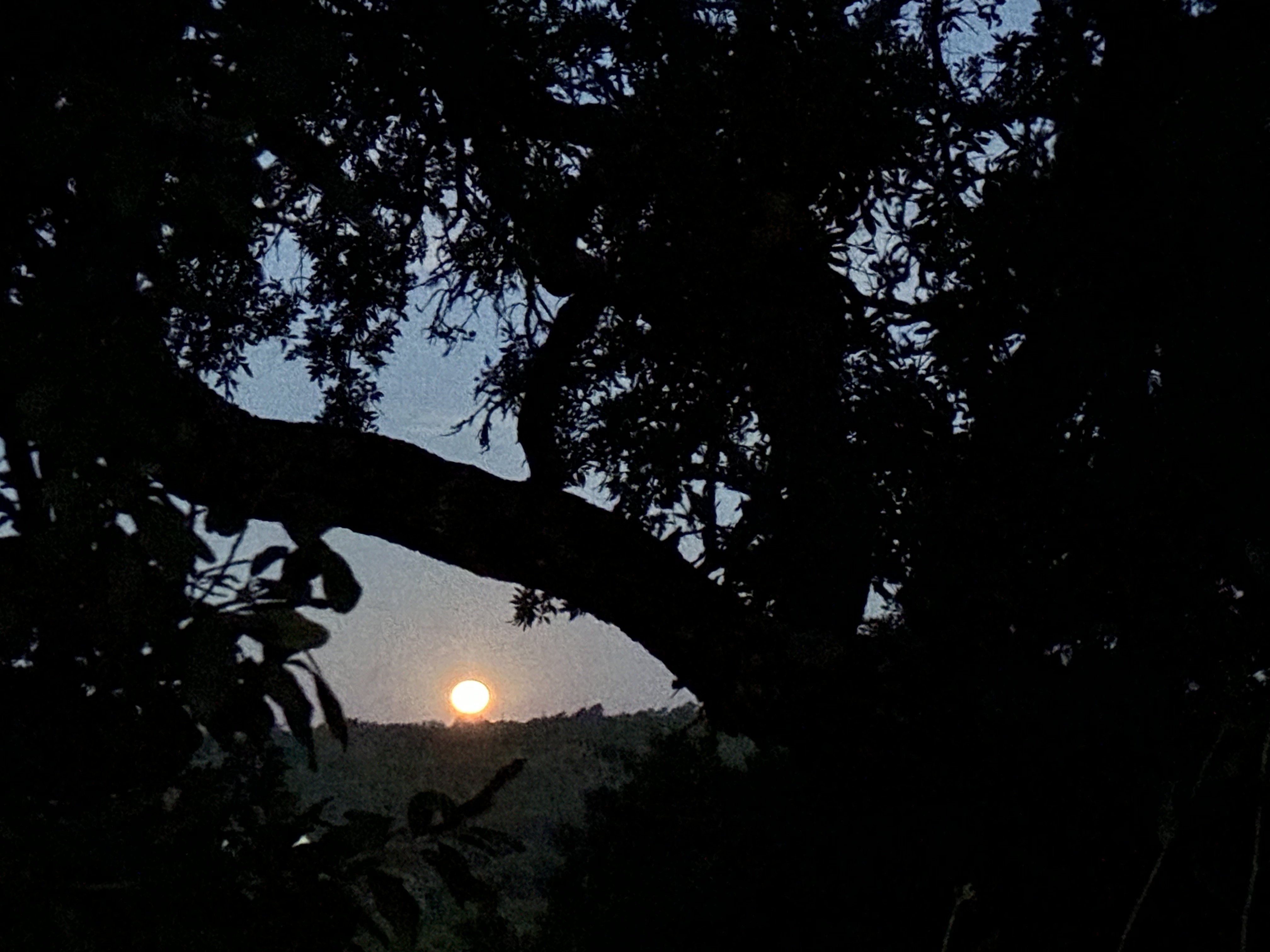
I wasn’t going to discuss the dreadful heat. But early this morning came two despite-the-heat surprises: first, moonset of the August Supermoon.

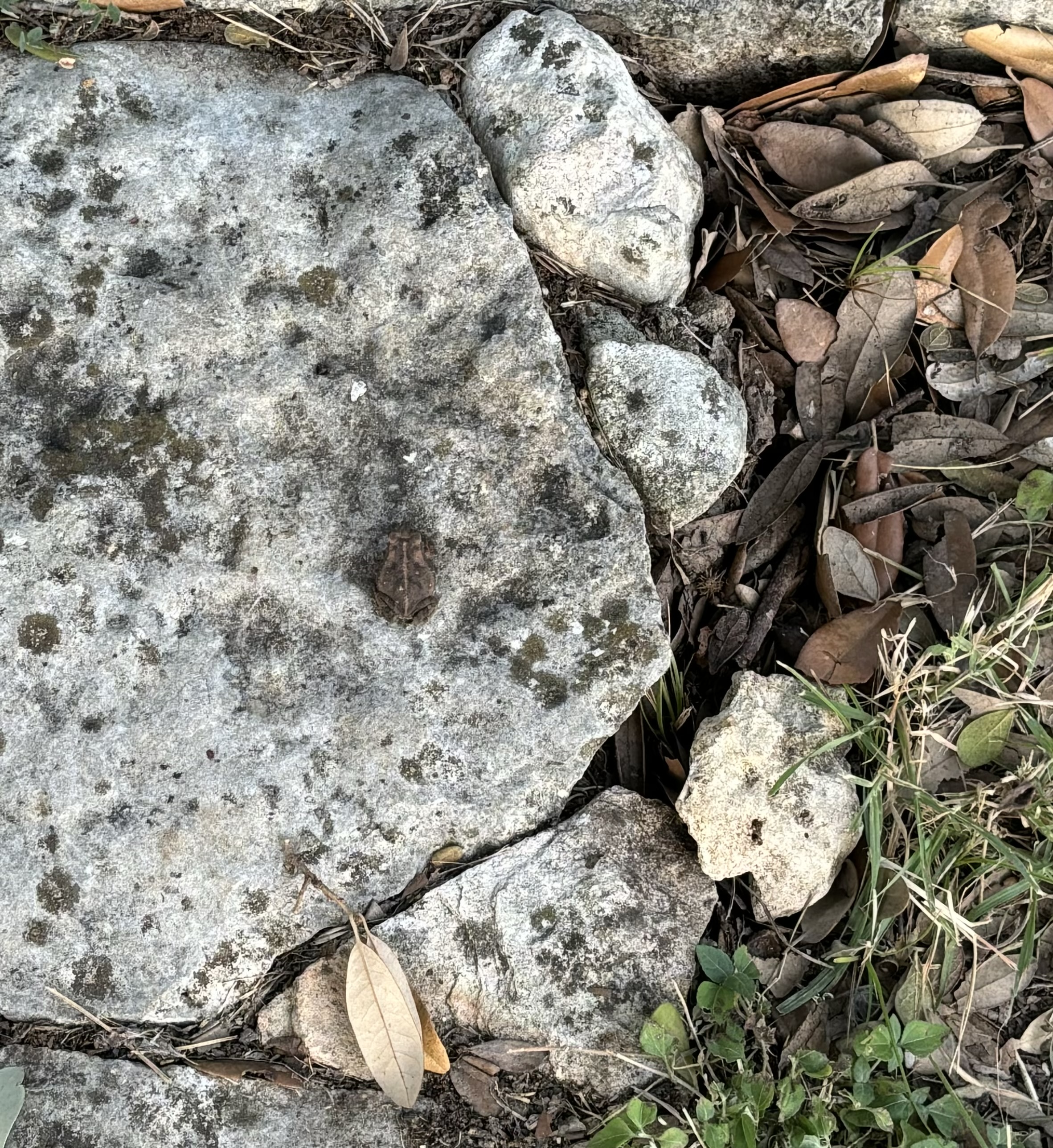
Next, a tiny frog, less than an inch long, sitting quietly in the shade. Could it be a Texas cricket frog? Maybe some frog-maven will know. Can you spot it here?

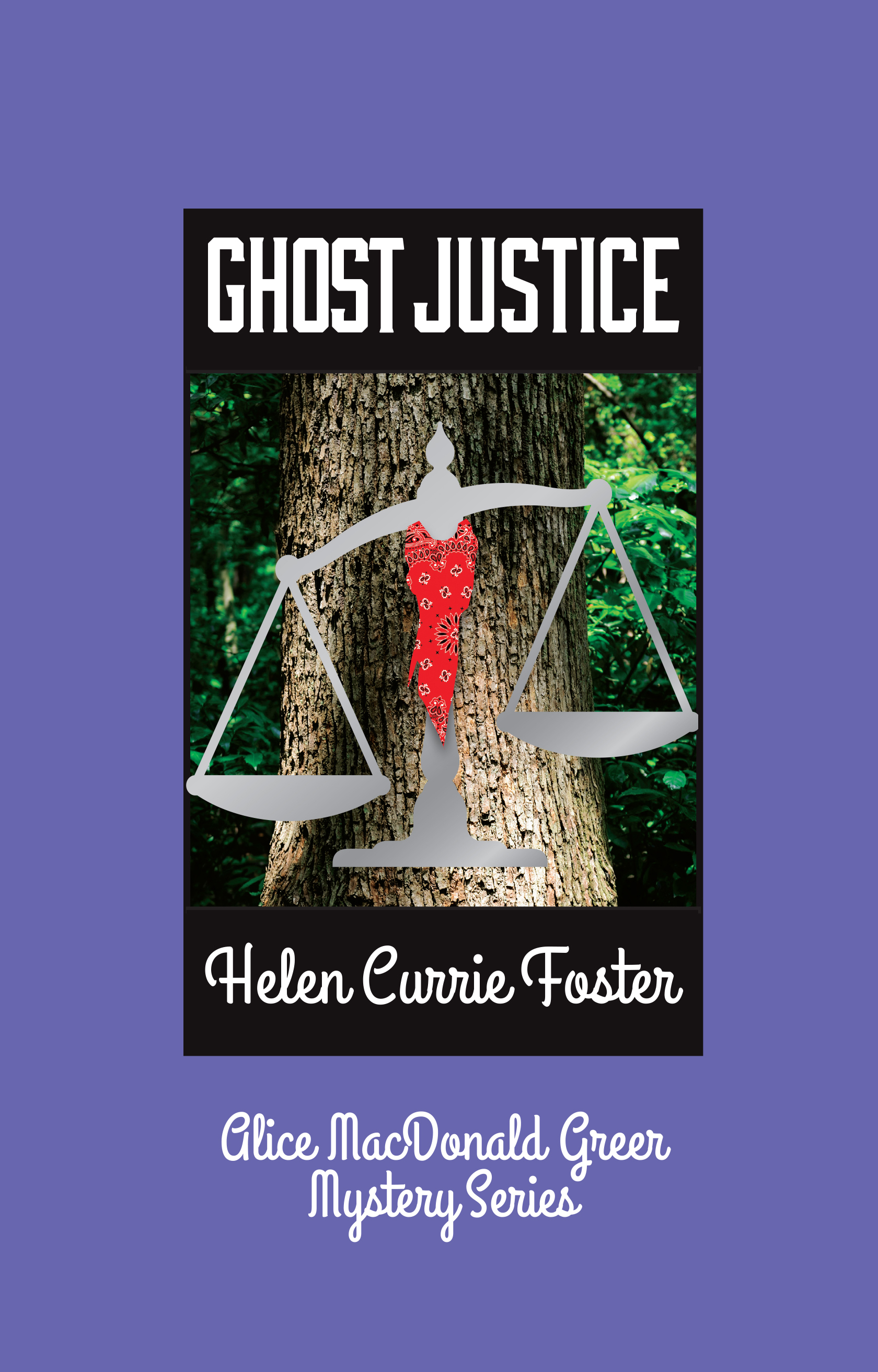
Another treasure: an email from a reader who’d read Ghost Cave, first book in my Alice MacDonald Greer Mystery series, and wanted the recipe for the coffee cake served by Alice’s redoubtable elderly friend Ilka:

They settled at the tea table. Ilka poured. Bone china, thin and old, the glaze crazed. Like Ilka’s face and hands, thought Alice. The cake stand held something Alice had never seen—a pale smooth yeasty-smelling cake with thin cinnamon topping…

“Oh, goodness, Ilka,” said Alice. “What is that?” The yeast dough, ivory and fragrant, left a mysterious fragrance in the air.

“Cardamom,” said Ilka.

Yikes! I had to tell her I had no recipe! Only—a memory! As kids we were in awe of our neighbor Mrs. Slinn, up the street. She wore her hair pulled back in a bun and longish dresses and, I think, always an apron. When we scruffy little children approached her door she always offered cookies. (We still roll out her classic “teacake” sugar cookie dough to make Santas, snowmen, reindeer.)But occasionally Mrs. Slinn swept down the street to our kitchen bringing magic: a round yeast coffee cake, no taller than 3 inches in the middle, ivory-gold with a delicate sprinkle of cinnamon and sugar on top. It tasted amazing and when cut into small wedges was absolutely delicious…

To this memory, in Ghost Cave, I’d added cardamom—not a spice we knew when I was little. But where to find a recipe for the inquiring reader?

FROM THE READER HERSELF! She wrote back that she’d located cookbooks from Mason County, Texas (dated 1976), and Fredericksburg (12th edition–Fredericksburg cooks published their first cookbook in 1916!). Each included a recipe for “yeast coffee cake.” (The Fredericksburg recipes include the original names—like Apfelkuchen, Schnecken, Kolatschen.) Which is further proof that mystery readers themselves are bright, curious sleuths. And why hearing from readers is wonderful.

Below you’ll find a slightly modified recipe from the excerpts she sent, but with a little cardamom added.

At a recent book talk I called the relationship between mystery reader and mystery writer a collaboration. Indeed, a primary rule of the 1930 Detection Club in London was that any clue must be instantly produced for the reader. No holding back explanations or back story until the end of the book! Of course that rule was sometimes violated (yes, Madam Christie, we’re talking about you). In contrast, Christie’s contemporary, the New Zealander Ngaio Marsh, occasionally adds some colorful backstory at the end, but she also generally has already given the reader fair notice of the clues that will identify the murderer.

In her series featuring the elegant Scotland Yard sleuth Roderick Alleyn, Marsh typically begins with the setting—often provided by a variety of characters––of the site where murder will inevitably take place, either in England or New Zealand. The setting could be an artist’s colony (“Colour Scheme”), a tour boat on an English river, a village church hall, a pub, an elegant country house (“Dancing Footman”), the London apartment of a practically bankrupt upper-class family (no one seems to have a job) (“Surfeit of Lampreys”). Thus when we open a Marsh mystery, first we meet the potential suspects, including one we may hope is innocent, may hope is truthful. Then comes a seriously tricky murder. (Did someone disturb the fly rod on the wall? Why?) At that point Inspector Alleyn arrives, with his sidekick Fox and the crime scene specialists. For the competitive mystery reader—collaborating with the author to detect the murderer––each detail matters and is promptly disclosed. But who lied? Who was mistaken?

Rest assured Marsh knew her subject matter and her settings: she was an artist, an actor and a theatre director as well as a writer. She lived and worked in England as well as New Zealand. She was appointed Dame Commander of the British Empire in 1966. The Mystery Writers of America bestowed the Grand Master Award for her lifetime achievement as a mystery novelist. https://en.wikipedia.org/wiki/Ngaio_Marsh  I suspect her character Agatha Troy (an artist who finally marries Alleyn) may be in part a portrait of Marsh.

And Marsh received a birthday Google Doodle on April 23, 2015! https://doodles.google/doodle/ngaio-marshs-122nd-birthday/

Marsh’s first book came out in 1934, featuring Alleyn as the upper-class “grandee” who resigned from the foreign service to join Scotland Yard. A different sort of sleuth was emerging in the U.S. In 1930 Dashiell Hammett published The Maltese Falcon and we met Sam Spade. In 1933 Raymond Chandler, like Hammett, was already publishing in The Black Mask magazine, and in 1939 he published The Big Sleep, presenting Philip Marlowe. Decades later the mystery genre continues to grow and grow:  Noir! Culinary mysteries! Cozies! Mysteries narrated by dogs! (Spencer Quinn’s Chet and Bernie series.) Cowboy mysteries! Fantasy/sci-fi/mystery! Sleuths in Laos, China, Australia, Scandinavia, Russia, Alaska, Louisiana, national parks, Native American reservations. Edinburgh! The Shetlands! Botswana! Canada! Italy! France! Israel! Scandinavia! Legal thrillers! Spy thrillers! What a wealth of mysteries for us to enjoy.

And what about the Texas Hill Country? In her latest adventure, Ghost Bones, lawyer Alice MacDonald Greer grapples with the murder of a deeply respected judge. His death was apparently triggered by his efforts to solve the murders of six people on his property almost two centuries ago. Alice needs all the help she can get from her irrepressible assistant, Silla, and from Ben Kinsear, as she tangles with mystery, legal drama, and matters of the heart.  Finally–please let me know if you recognize that little froglet!

Helen Currie Foster lives and writes the Alice MacDonald Greer Mystery series north of Dripping Springs, Texas, loosely supervised by three burros. She’s drawn to the compelling landscape and quirky characters of the Texas Hill Country. She’s also deeply curious about our human history and prehistory, and how, uninvited, the past keeps crashing the party. Follow her at www.helen.currie.foster.com.

Nearly Mrs. Slinn’s Coffee Cake:

3/8 c. milk, 2 Tbls. sugar, ½ tsp. salt, ¼ cup butter, 1 egg, beaten, 2 tsp. dry yeast, 1 ½ Tbls. warm water, 1 tsp. ground cardamom, 1 ¾ c flour–Plus additional melted butter (about 2 Tbls.) and sugar/cinnamon mixture (1 tsp cinnamon to 1/ c sugar) for the topping.

Scald milk and pour over the butter, salt and sugar. Stir and let stand until lukewarm. Dissolve yeast in warm water for 5 minutes. Stir egg and yeast mixture into milk mixture.  Stir in 1 tsp cardamom and 1 cup of flour. Beat well. Continue adding remaining flour.  Put dough on lightly floured board and knead until smooth (add a bit more flour if too sticky). Place in greased bowl, cover, and let double in size. Then punch down.

Butter bottom and sides of round 8” pan. Put parchment paper in the bottom.  Pat in dough. Brush with melted butter and sprinkle on the sugar/cinnamon mixture. Let rise again until double in size. Bake at 350 for about 20 minutes or until just turning golden.   Let cool. Serve it forth!

Happy 100th, Agatha & Hercule! and Many More

Posted by Kathy Waller

This month mystery lovers celebrate two of the most important figures in the history of crime fiction:

~ Agatha Christie, who was born on September 15, 1890, and whose mysteries have outsold everything except Shakespeare and the Bible; and

~ Hercule Poirot, who, having appeared in 1916 in Christie’s first published novel, The Mysterious Affair at Styles, is marking his one hundredth birthday.

The Royal Mail is observing the occasion with a special stamp issue focusing on six of Christie’s novels. Each stamp contains clues and features related to a specific book.  “As the solving of mysteries is the focus of Christie’s art,” said a spokesman for the Royal Mail, “it is fitting that the public have to turn detective to find the hidden words and images in each stamp.”

A series of literary events–Agatha Christie Birthday Celebrations: Marking 100 Years of Creativity–is in progress, including those in Torquay, where Christie was born, and in Wallingford, where she lived at Winterbrook House from 1934 to her death in 1976.

Closed Casket, Sophie Hannah’s second Hercule Poirot novel, was released on September 6th, just in time for Hannah to take part in the festivities, including a book signing at Christie’s holiday home, Greenway.

(Kirkus Reviews on Closed Casket: As in The Monogram Murders (2014), Hannah provides both less and more than Agatha Christie ever baked into any of her tales. But the climactic revelation that establishes the killer’s motive is every bit as brilliant and improbable as any of Christie’s own decorous thunderclaps.)

And BBC One will produce seven more adaptations of Christie’s works.

Austin Mystery Writers, alas, couldn’t attend the festivities in England, so we celebrate here in our own small but sincere way–by letting the Queen of Crime speak for herself.

handlebar-mustache-1

*The best time to plan a book is while you’re doing the dishes.

English: The Agatha Christie Bus Tour bus, at ...

English: The Agatha Christie Bus Tour bus, at the corner of the walled gardens at Greenway House. (Photo credit: Wikipedia). By Derek Harper is licensed under [CC BY-SA  2.0], via Wikimedia Commons

*Many friends have said to me, ‘I never know when you write your books, because I’ve never seen you writing, or even seen you go away to write.’ I must behave rather as dogs do when they retire with a bone; they depart in a secretive manner and you do not see them again for an odd half hour. They return self-consciously with mud on their noses. I do much the same.

*All I needed was a steady table and a typewriter…a marble-topped bedroom washstand table made a good place; the dining-room table between meals was also suitable.

*Plots come to me at such odd moments, when I am walking along the street, or examining a hat shop… suddenly a splendid idea comes into my head.

*Every murderer is probably somebody’s old friend.

*There’s no agony like [getting started]. You sit in a room, biting pencils, looking at a typewriter, walking about, or casting yourself down on a sofa, feeling you want to cry your head off.

*One problem is that the interruptions are generally far more enjoyable than writing, and once you’ve stopped, it’s exceedingly difficult to get started again.

*One’s always a little self-conscious over the murderer’s first appearance. He must never come in too late; that’s uninteresting for the reader at the end of the book. And the dénouement has to be worked out frightfully carefully.

*I myself always found the love interest a terrible bore in detective stories. Love, I felt, belonged to romantic stories. To force a love motif into what should be a scientific process went much against the grain.

*God bless my soul, woman, the more personal you are the better! This is a story of human beings – not dummies! Be personal – be prejudiced – be catty – be anything you please! Write the thing your own way. We can always prune out the bits that are libellous afterwards!

*I know nothing about pistols and revolvers, which is why I usually kill off my characters with a blunt instrument or better with poisons. Besides, poisons are neat and clean and really exciting… I do not think I could look a really ghastly mangled body in the face. It is the means that I am interested in. I do not usually describe the end, which is often a corpse.

*If I were at any time to set out on a career of deceit, it would be of Miss Marple that I should be afraid.

*Three months seems quite a reasonable time to complete a book, if one can get right down to it.

*I am like a sausage machine. As soon as [I finish a novel] and cut off the string, I have to think of the next one.

*When I re-read those first [detective stories I wrote], I’m amazed at the number of servants drifting about. And nobody is really doing any work, they’re always having tea on the lawn.

*I’ve always believed in writing without a collaborator, because where two people are writing the same book, each believes he gets all the worry and only half the royalties.

*I am not mad. I am eccentric perhaps–at least certain people say so; but as regards my profession. I am very much as one says, ‘all there.’

*It is a curious thought, but it is only when you see people looking ridiculous that you realize just how much you love them.

*If one sticks too rigidly to one’s principles, one would hardly see anybody.

*I married an archaeologist because the older I grow, the more he appreciates me.

*What they need is a little immorality in their lives. Then they wouldn’t be so busy looking for it in other people’s.

*A man when he is making up to anybody can be cordial and gallant and full of little attentions and altogether charming. But when a man is really in love he can’t help looking like a sheep.

*Mr. Jesmond made a peculiar noise rather like a hen who has decided to lay an egg and then thought better of it.

*Coffee in England always tastes like a chemistry experiment.

*I know there’s a proverb which that says ‘To err is human,’ but a human error is nothing to what a computer can do if it tries.

*I can’t imagine why everybody is so keen for authors to talk about writing. I should have thought it was an author’s business to write, not to talk.

*People should be interested in books, not their authors.

*If anyone is really determined to loan you a book, you can never get out of it!

*I’ve got a stomach now as well as a behind. And I mean – well, you can’t pull it in both ways, can you? … I’ve made it a rule to pull in my stomach and let my behind look after itself.

*Writing is a great comfort to people like me, who are unsure of themselves and have trouble expressing themselves properly.

*I would like it to be said that I was a good writer of detective and thriller stories.

handlebar-mustache-1


Agatha Christie Birthday Celebrations
2017 DATES: 13TH-17TH SEPTEMBER

*****

For a everything about Agatha Christie, go to http://www.agathachristie.com/

And for more:

Quotations from Agatha Christie were drawn from following sources:

handlebar-mustache-1

***

Kathy Waller blogs at
Telling the Truth, Mainly,
and at
Writing Wranglers and Warriors.

Interview With AMW Member Kathy Waller