MY CREATIVE KITCHEN – Conversations with my Muse

Francine Paino a.k.a. F. Della Notte

I sat with my cup of café e latte and looked around. The paper with the picture on the kitchen table intrigued me. No, I thought. Gotta clean this place first. I chugged my cup of coffee, grabbed my cleaning supplies, and began. While I twisted and turned, scrubbing granite countertops to a gleam, something whizzed past my eye – a cup of espresso splashed its contents into the air, and then all of it dissolved into nothingness.

My heart sank. Persistence had arrived. No passive muse, this one. She was furious. She’d been prodding me for days to try my hand at baking a gluten-free King Cake. Lent was approaching, and with that came Fat Tuesday. One of the charming Southern traditions is the King Cake, but I’d completely blocked out Persistence. 

Again, I refused to budge. “I will finish cleaning this kitchen. I can’t work in a messy environment.” I set the King Cake recipe on the counter, hoping that would mollify her, and moved on to preparing the guest room for my grandson’s weekend stay. Then, I cleaned the bathrooms while Persistence harassed me. 

She followed me from room to room, perching on any surface that caught her fancy, reminding me how much she had held back during the trying times of dealing with my mother’s passing, arranging her burial in New York, and taking care of my husband during his major back surgery. But now, things were settling down, and she refused to be silent any longer.

Times up. Hubby is recovering, and you are disgraceful. Wretched imposter, how can you put the elimination of dust bunnies before writing?

“Oh, shut up!” I whispered, not wanting to wake my husband with my side of a conversation with . . . .?

Persistence wasn’t having any of it. Have some backbone. Stop whispering. If he wakes up, you can always say you were talking to Miss Millie.

I laughed despite my annoyance. “Touché,” I answered. After all, Miss Millie is the smartest feline creature we’d ever adopted. Sometimes, her expressions are so human-like that it’s uncanny. But I digress.

“Have another espresso, and chill out,” I grumbled. 

I’m tired of waiting; Persistence shot back. And so the conversation, or the argument, went on for another hour. In the lotus position, Persistence sat on the bathroom counter, sipped her coffee, stared at me through the mirror, and then pointed to something on the sink.

You missed that.

I looked down. Sure enough, I’d missed a spot. “I thought you wanted to stop cleaning and get into the kitchen to bake that cake,” I muttered.

The sooner you finish your obsession with domestic tasks, the sooner you can be creative. Now hurry up.

Jump ahead an hour. House chores done, I gathered all the ingredients for the King Cake. Following the directions carefully but substituting gluten-free flour for all-purpose wheat flour, I mixed, stirred, folded, and kneaded everything into a dough, covered it, and allowed it to rise – as best as gluten-free can. While I waited, I scribbled the first part of this essay, which made Persistence happy.

About time. I heard her snarky tone.  

An hour later, I rolled the dough into a 16 x 20 sheet. Trust me, if you haven’t done it, rolling gluten-free dough is a challenge. I then spread the cinnamon, sugar, almonds, and raisins over the surface and rolled it into a long loaf. (the recipe says to make it into a ring – gluten-free dough isn’t as malleable, so I didn’t try that). Into the oven, it went.

While it baked, I stuck out my tongue at Persistence and cleaned up my baking mess. “And don’t you dare throw another cup,” I warned while Miss Millie sat at my feet, staring up at me. If she could use words, I’m sure she’d have asked, Who are you talking to? 

Forty-five minutes later, I pulled my creation out of the oven. The top was a beautiful golden brown. Once it cooled, I sprinkled the Mardi Gras sugars colored gold (yellow), purple, and green over the top and cut a slice to taste. As my late mother-in-law used to say, “If the ingredients are good, it’s bound to taste good.” And it did, but the texture was too dense.

You see, said Persistence, sitting crossed leg on the countertop with another cup of espresso in her hand. Instead of cleaning, you should have spent more time assessing the necessary changes to accommodate gluten-free flour.

“Listen, Madame Know-it-all, some recipes do not adapt well to gluten-free flour. This is one of them. Eventually, I’ll try again, but this year, I’ll make Anginetti Cookies (Lemon Drops), sprinkle them with the colored sugars, and call them Francesca’s Mardi Gras cookies.”

Persistence smiled for the first time. Nice to see you using your right brain again. I’m sure they’ll be delicious. See ya soon, she said and disappeared.

“And next time, drink decaf espresso. You’re too high-strung for Caffeine.”  

The tinkle of her laughter echoed through the house, with her words,  Laissez les bon temps rouler.

***

Fat Tuesday and Ash Wednesday open book one in the Housekeeper Mystery Series, I’m Going to Kill that Cat. Lent arrives at St. Francis de Sales Church, and so does a new housekeeper and murder. Before we delve into the crime, we meet two people of deep faith who do not hide from the realities and the dark side of life.

Father Melvyn Kronkey is a devoted priest with a sharp intellect but a bit stuffy and standoffish. That changes with the arrival of Mrs. B., a widow of unwavering faith, a fiery temperament, and a talent for cooking, organization, and problem-solving. 

She is outgoing and cares about people to the point of being nosy. Her expansive personality even makes cats respond and trust her—a lesson that Father Melvyn learns in dramatic fashion. 

While these two opposites learn to work together, a missing cat drags them into an old feud, which unravels a potential scandal.  Can murder be far behind?

“I Should Write That Down…Now Where Did I Put It?”

The Joy of a Commonplace Book

By Laura Oles

I can’t tell you how many times I’ve come across a quote, an idea or something else I wanted to remember and thought, “I need to write that down.”

So I did.

Over and over and over.

In countless notebooks and journals and on post it notes.

The problem I found is that, while committing something to paper is an important first step, it is only a first step. There are many moments where I’ve written something down only to lose it amongst some ephemera, discovered only again when I’m looking for something else.  

It’s like finding twenty bucks in those shorts from last summer. It’s a nice surprise, but maybe I should try tracking this information (and my dollars) a bit better.

First, I tried using a Bullet Journal…

The Bullet Journal was created by Ryder Carroll as a way to organize schedules, to-do lists and other details for work and personal life. It started as his own method of corralling his many thoughts and commitments into a central place. It’s a fantastic method for many dedicated BuJo lovers, and the premise is simple.  All you need is an empty notebook and a pen.

Turns out, you also need a certain mindset. It’s a commitment.  

Image Credit: @pureplanning_bymj

I have so much admiration for dedicated Bujo people. And I love seeing their gorgeous daily/weekly/monthly spreads, but I could never stick with it. I do have one completed book—used over a two-year period—that I enjoy leafing through now and then. Scattered amongst those pages are several quotes, concepts and ideas that I wanted to gather in a more central location, to rescue from my failed experiment.

I still love the idea. I just stink at the execution.

This is when I discovered the Commonplace Book.

 A commonplace book is simply a notebook where you record learning and information from other sources for the purpose of collecting and reflecting upon for some future time. Many notable people in history have kept commonplace books, including Virginia Woolf, Mark Twain, Marcus Aurelius, Ralph Waldo Emerson, and Henry David Thoreau. (Image Credit: UT Austin, Harry Ransom Center, Lewis Carroll’s CPB)

Unlike a Bullet Journal, which has its own system, a commonplace book only requires that you collect your ideas, quotes and more in one location.  What you choose to include is completely up to you.  The most common use is for recording secondary sources, but that can take all forms. Music lyrics? Key dialogue from a movie you love? Put them all in one place. I keep my commonplace book on my desk so I can access it when I’m reading or working on a project. Others prefer to always carry one, ever prepared to catch that next inspirational idea while out for a daily walk or in a coffee shop.

Unlike a journal, with content focused heavily on personal thoughts, musings and experiences, a commonplace book is something designed to help you learn from others. These ideas may spur some new thoughts or considerations, and this is a perfect place to record those as well. It can be anything you like, of course, but it’s not the best place to record daily tasks or reminders. Keep your digital or paper planner for those purposes (and feel free to ask me about planners because I will happily engage in that topic, too). 

There is scientific evidence that supports the theory of choosing to write by hand rather than typing into a digital document. A recent study from the University of Tokyo showed that graduates revealed that “writing on physical paper can lead to more brain activity when remembering the information an hour later. Researchers say that the unique, complex, spatial and tactile information associated with writing by hand on physical paper is likely what leads to improved memory.” (Science Daily).

My commonplace book has a wide variety of quotes and concepts tucked inside. Adam Grant, Anne Lamott and James Clear make regular appearances on my pages. I can tell by my handwriting how I’m feeling because my messier cursive signals I’m in a rush while my neater entries show that I’m taking time to really consider what I’m transcribing. The important part is the practice. Keeping a commonplace book encourages my love of learning, of reading and of writing. There is a quiet joy in taking time to learn something new, to consider it and then commit it to paper.  

Maybe you’re already doing some form of this practice. I was, and it was only when I sought to improve my process that I learned about the commonplace book and how to better use it in my daily life.  Having one location helps me gather this knowledge and, more important, keep it somewhere that allows me to reflect and learn. If you haven’t tried keeping a CPB, I hope you’ll consider it, and I would love to hear how it works for you. 

Laura Oles is the Agatha-nominated and award-winning author of the Jamie Rush mystery series. Her work has appeared in crime fiction anthologies, consumer magazines and business publications.

Helen Currie Foster, January 15, 2024

“But at my back I always hear time’s wingèd chariot drawing near…” (Andrew Marvell, 1621-1678)  

Today in pre-dawn darkness, the house quiet except for the murmuring furnace, my characters were already at me, barking orders: “More! More smells, tastes, experiences! More about me! Tell people what I’m thinking, what I’m experiencing, what I’m worrying about!”

They’re right. Readers want to know their favorite mystery protagonists. Why? Because readers are in league with them, walking in their shoes. Readers know that stepping into a protagonist’s sensory experience—smells, food, experiences, relationships—will springboard them into the setting, help them to be in the picture, ready to seize on every clue.

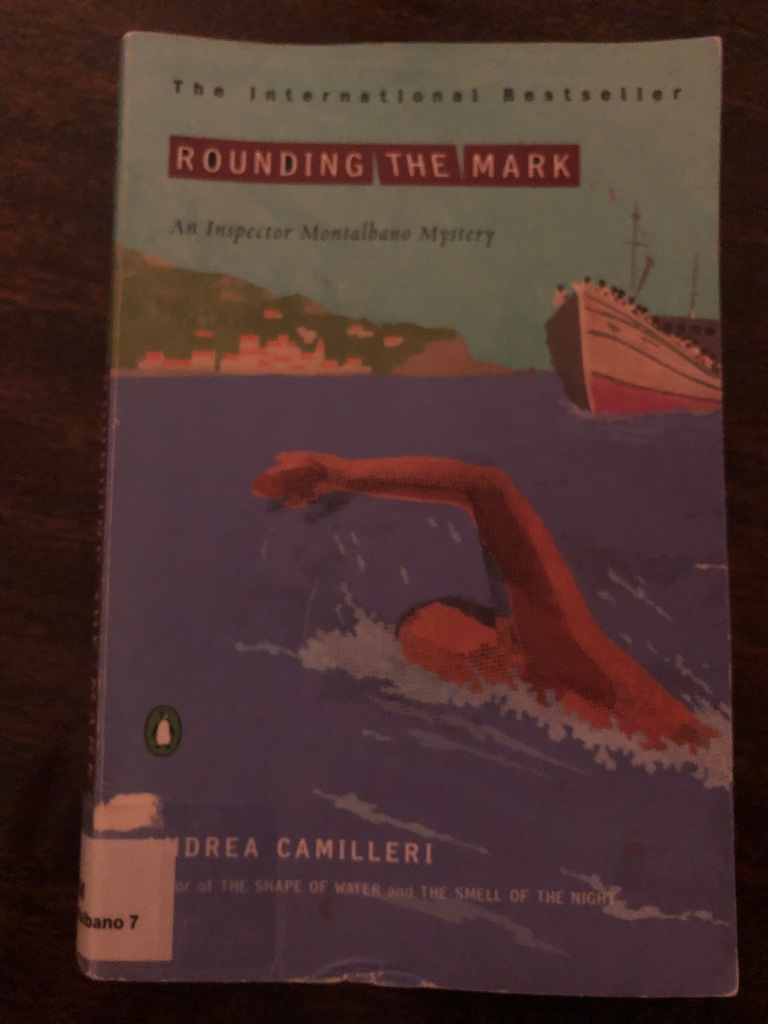
Resolution 1. Tastes! Flavors! Food! As Rounding the Mark, Book 7 of Andrea Camilleri’s long-running series, begins, Inspector Montalbano of little Vigáta, Sicily, can’t sleep:

“Stinking, treacherous night. Thrashing and turning, twisting and drifting off one minute, jolting awake and then lying back down—and it wasn’t from having scarfed down too much octopus a strascinasali or sardines a beccafino the evening before. No, he didn’t even have that satisfaction.”

Fortunately the recipes are described in the Notes at the book’s end. In Sicily, where seafood reigns supreme, Montalbano refers to small octopi, boiled and dressed in olive oil and lemon juice, and then sardines, stuffed and rolled up with sauteed breadcrumbs, pine nuts, sultana raisins, and anchovies. When Montalbano returns home from the police station he always races to his refrigerator to see what his housekeeper, Adelina, has left for him. In Book 16, Treasure Hunt, Montalbano “howled like a wolf with joy” when he finds “eggplant parmesan, done up just right, enough for four.”

Can’t you just smell this dish? Montalbano consumes the entire panful: “the sauce was a wonder to taste.” (50). We see how he delights in his food, how very particular he is. (And throughout the series Adelina keeps cooking – pasta in squid ink, involtini of small fish, pasta ‘Ncasciata…https://www.foodandwine.com/pasta-ncasciata-sicilian-baked-pasta-7093847

Here’s Montalbano in Rounding the Mark after discovering a new restaurant:

“The antipasto of salted octopus tasted as though it were made of condensed sea and melted the moment it entered his mouth…And the mixed grill of mullet, sea bass and gilthead had that heavenly taste the inspector feared he had lost forever….After a long and perilous journey of the sea, Odysseus had finally found his long lost Ithaca. “(73)

Camilleri (died 2019) was writing mystery, murder, crime—but he included as major players in the setting Sicilian food, awareness of this ancient Mediterranean island culture, and echoes of classic myth.

We can only imagine Montalbano shaking his head at the food situation of private detective Cormoran Strike, protagonist of The Running Grave, seventh in the series by “Robert Galbraith” (aka J.K. Rowling). To protect his knee, Strike, a military police veteran who lost his lower leg in Afghanistan, must lose weight; he’s now lost “three stone” or about 42 pounds. “Usually he’d have grabbed a takeaway on the way home” but now, “without much enthusiasm,” he’s fixing broccoli and salmon in the tiny flat above his seedy London office.

Does the author need to describe these flavors? Aren’t “broccoli” and “salmon” redolent enough by themselves, especially broccoli? Later, as the plot roars into action, Strike’s off his diet, overcome by “the lure of sweet and sour chicken and fried rice” (767) and demanding that his partner Robin Ellacott stop at a 24-hour McDonald’s on London’s Strand (848) where, as they walk to the office, he’s eating “large mouthfuls of burger” and starting on two bags of fries. He’s back to his usual food habits––pub food, fast food––yet his mind’s on the recent attack, “as though he’d only just felt the heat of the bullet searing his cheek.” At chapter’s end, as they discuss the case, “Strike ate a solitary cold chip lingering at the bottom of a greasy bag.” There’s an urgency to his desperate hunger, to the need for enough energy to stick with an exhausting case—and don’t we all know about that solitary cold french fry in the bottom of the bag? Can’t you see him fishing it out? For Strike, food fills a need, but he’s not immersed in the culinary experience. He’s focused on his case.

What keeps Strike working as a private investigator? Challenge, curiosity, tenacity, terror—but not great cuisine. Food-wise, Montalbano’s habits differ sharply from Strike’s. But for each man, eating habits vividly highlight both personal life and setting.

Resolution 2: Human Scent! Other scents matter to both Strike and Montalbano. In the first chapter of The Ink Black Heart, Cormoran Strike has tried to find a perfect perfume for Robin’s 30th birthday. When she sprays on the new perfume, “he…detected roses and an undertone of musk, which made him think of sun-warmed skin.”

Similarly, in Treasure Hunt, when Montalbano and his compadre, the daring Ingrid, are outside on his veranda, “The night now smelled of brine, mint, whisky, and apricot, which was exactly what Ingrid’s skin smelled like. It was a blend not even a prize parfumeur could have invented.” (175)

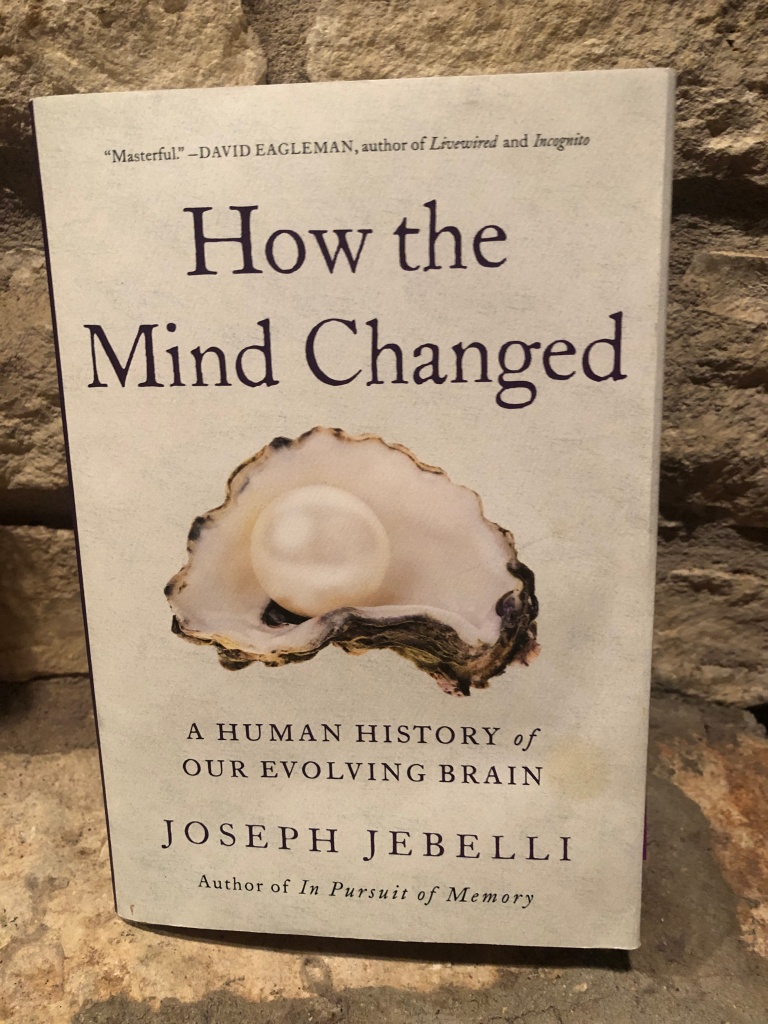
Reportedly one writing instructor has suggested that authors “include smell on every page.” These two mystery writers don’t obey that injunction (do you know any who do?). But why is scent so critical for us? Apparently the amygdala (a paired structure, with one in each temporal lobe) “developed from our most primitive sense—the sense of smell.” Joseph Jebelli, How the Mind Changed (Little, Brown, Spark, 2022, at 30). It’s near the olfactory nerve which is why scents connect strongly to emotions and memories. https://my.clevelandclinic.org/health/body/24894-amygdala

What scents spark your own memories? If a book mentions honeysuckle on a summer day, I might remember my grandparents’ front porch in Itasca, Texas, and how we learned as kids to suck nectar from a honeysuckle blossom. What pops up for you when a book mentions lavender? Or clean sheets? Baby powder? Or iodine, rubbing alcohol, band-aids? Marshmallows toasting on a stick? Pine straw underfoot? The first ocean breeze when you hit the beach? Does a book feel richer to you when your own memories are awakened?

What about the scent of January? Today’s the coldest day of 2024 so far, here in the Hill Country. Inside – hot tea: mint, chamomile, green, or  maybe ginger slices, with honey and lemon. Outside, cedar burning in a neighbor’s brush pile.

Resolution 3: Character’s thoughts (and feelings)! In Treasure Hunt Camilleri includes a hilarious italicized interchange between Montalbano (called “Montalbano One”) and “Montalbano Two” where Montalbano Two criticizes Montalbano One’s case-handling as showing signs of deterioration, of “losing his cool,” highlighting Montalbano’s own concerns about aging. (18-19)

Camilleri also uses other techniques to put us in Montalbano’s head. Here’s one from Rounding the Mark, where, again, Montalbano’s worrying about getting older:

“As he was shaving, the scenes of the previous evening on the wharf ran through his head again. Little by little, as he reviewed them with a cold eye, he began to feel uneasy…. There was something that didn’t jibe….He stubbornly played the scenes over in his head, trying to bring them more into focus. No dice. He lost heart. This was surely a sign of aging. He used to be able to find the flaw, the jarring note…without fail.” (61)

Camilleri lets his character feel. When a small boy is kidnapped from north Africa by sex traffickers and escapes on the pier in Sicily, Montalbano  returns him to his “mother,” not understanding she isn’t his “mother” at all. When the little boy is killed Montalbano visits the morgue:

“He lifted the sheet with one hand…and froze. A chill ran down his spine. It all came back to him at once: the look the little boy had given him as his mother ran up to take him back….he hadn’t understood that look. Now…he did. The little eyes were imploring him. They were telling him for pity’s sake, let me go, let me escape. And now…he felt bitterly guilty…He was slipping. It was hard to admit, but true… “(84)

In contrast, Cormoran Strike is more inscrutable, more unwilling to reveal his emotions, perhaps even to himself. Galbraith describes Strike as a “mentally resilient man” who tries but sometimes fails to control emotion. One of his tools “was a habit of compartmentalization that rarely failed him, but right now, it wasn’t working. Emotions he didn’t want…and memories he generally suppressed were closing in on him…” As a consequence he was “brooding so deeply that he barely registered the passing Tube stations and realized, almost too late, that he was already” at his stop. (105) In one scene after visiting his sister Strike starts home feeling very angry at his dead mother, who died of an overdose when he was nineteen. Galbraith then uses italics for Strike’s mental attack on her: “If you hadn’t been what you were, maybe I wouldn’t be what I am. Maybe I’m reaping what you sowed, so don’t you f*king laugh at the army, or me, you with your paedophile mates and the squatters and the junkies…” (106) These passages show the reader Strike’s painful upbringing and may partially explain his need (and ability) to compartmentalize—both, ironically, key to his later success.

Strike drinks, smokes, has sex, but almost in the same way as he gulps down fast food. Food seems temporarily satisfying, but not a life pleasure. Early on we become aware that the strongest sensation Strike is described as experiencing is the pain of his stump, and the relief he experiences when he removes his prosthetic. In his compartmentalization of his emotions, has he replicated this binary condition? (No spoilers here!)

Resolution Four: The Weather! Camilleri and Galbraith’s characters don’t always focus on weather, but here in the Texas Hill Country we must take notice. It’s too cold (like today), too hot (pretty soon), too wet (spring rain bombs and dangerous low-water crossings), or too dry (like last summer’s dreadful drought). Blessings on March, which will bring bluebonnets and the ethereal prairie celestial, then wine cups, with the pink of redbud and Mexican buckeye to rejoice the eye. But weather’s definitely a factor in upcoming Book 9 of the Alice MacDonald Greer Mystery series. Watch for it—coming soon!

A CHRISTMAS WISH

FRANCINE PAINO

A.K.A. F. DELLA NOTTE

So this is Christmas – And what have you done? 

So begins the first verse of John Lennon’s 1971 hit song. His good wishes toward wo/mankind had a political message wrapped in the lines. But politics aside, it was and still is a good message. But the question, What have you done? requires some thought. What have you done to keep the Christmas spirit alive throughout the year? What have you done for your fellow man? For your family? For your neighbor? Hard self-examination is required. Before tackling what we have done throughout the year to keep the spirit of Christmas, let’s dive into how we keep the spirit of Christmas fresh each December.

In the not-so-distant past, the commercial hype, converting the spirit of giving to the spirit of buying, began after Thanksgiving. Now, it fills the airwaves with meaningless noise throughout the year and begins a concentrated assault by mid-October. By December 25, the message is stale and lost if one is not careful about blocking out the frenzied for-profit communications, images, and messages that have little or nothing to do with Christmas. You might ask, how do you do that? There are many ways. It just takes a little effort and prioritizing. Here are a few. 

First, before Thanksgiving, never watch movies or TV programs with Christmas themes, and do not indulge in “Christmas” centered shopping, decorating, sending cards, or partying. Does that put more pressure on stuffing everything into the four short weeks of Advent (the time of awaiting the special arrival?) Yes. And that helps prioritize what’s really important. 

Then, here are uplifting classic books, moviesand performing arts that address the questions of what you have done or can do.

In books, there are hundreds of Christmas stories. My favorite is  Entitled Christmas Classics. Twelve stories of Christmas, including The Gift of the Magi by O’Henry and The Little Match Girl by Hans Christian Andersen. 

And who can get through December without watching A Christmas Carol? The Charles Dickens classic story of an unhappy, mean-spirited old gentleman who is taught the real meaning of Christmas and caring for his fellow man was well-received in 1844. It inspired an early theatrical production by C.Z. Barnett at the Surrey Theatre on February 5 of the same year, a few weeks after the first publication of the novella. There are at least 16 movie adaptations, and the list of movies and shows is too long to include, but a short trip to Wikipedia will provide it. My favorites are the 1938 and 1984 versions – (1984 stars George C. Scott.)

Then there are the live performing arts. In Austin, the Austin Symphony Orchestra and Chorus Austin perform Handel’s Messiah every year. The score and excellent musicianship lift the soul. The annual Nutcracker ballet, as much part of the Christmas season as lights and fir trees, is performed by almost every dance company and ballet school in every U.S. city. Ballet Austin’s production runs yearly for most of December. It is accompanied by the Austin Symphony Orchestra. 

At this point, you may think, well, not everyone can afford these things, and you’d be right. Books can be reserved at public libraries for those who cannot afford them. 

Theater tickets and live concerts can be pricey, it’s true. But many of the movies on TV are free, as are concerts and ballets on public TV stations.

For those who would love to see the Nutcracker ballet but cannot get to a theater, one of the best-recorded performances before a live audience is the 2012 Maryinski Ballet and Orchestra under the artistic direction of Valery Gergiev. It can be rented for far less than the cost of a theater seat, and to create the theater atmosphere, put on something nice but comfortable. Don’t watch in pajamas or an old housedress. Turn off all the lights and let the screen be the only focus. Have a cup of tea or coffee with a sweet treat – or a glass of wine and get into the mood. 

Most of these stories, concerts, and ballets are appropriate and recommended for the young, but if something lighter is desired, there are hundreds of adaptations of the classic in TV shows and movies, for children. On the lighter side, Entertainment Weekly published The 30 Best Christmas Movies for Children, by Danny Horn, November 16, 2023, which included Home Alone, Elf, and Rudolph the Red Nose Reindeer. 

For a more modern take on an old story, Disney’s 2018 reimagining of the Nutcracker, with Pyotr Tchaikovsky’s music, is brilliant. The effects are magical, the storyline is unique, touching, and beautiful, and the outcomes for the Nutcracker characters are unexpected. It’s a story for all ages, and as soon as I’m done with this blog, I shall pour a cup of hot coffee and enjoy it again. 

There are abundant enriching and inspiring events, shows, and messages to refresh our hearts during Christmas. And it may help keep the spirit alive and generous throughout the year. 

      Again, in the words of John Lennon: And so this is Christmas. Hope you have fun. The old and the young ones- The near and the dear – For the rich and the poor ones, black, white, and yellow, A very merry Christmas And a happy New Year – And let’s hope it’s a good one – Without any fear.

She Never Graduated

By Laura Oles

“Education is not the filling of a pail, but the lighting of a fire.”

While there is some debate as to whether this quote belongs to William Butler Yeats, the sentiment is one that has stayed with me, particularly throughout my writing career.  One of the best things about being a writer is that it requires ongoing education.  I love that my job demands regular research. I’ve gone down more rabbit holes that I care to admit, but it’s this spark of learning something new that fuels my enthusiasm for my fiction.  

I experienced a wonderful “lighting of a fire” during my week in Salem, Massachusetts at the Writer Unboxed Unconference. Unlike other writer conferences that I attend (and love), this one involved being solely a student for the entire week.  The conference welcomes all genres, and spending time outside of crime fiction gave me some valuable insight into how others approach storytelling, structure and character development. 

Therese Walsh opened with her session titled “Good Chaos: Provocation and Invitation,” and by the end, I knew this week would be one of time well invested. Susan DeFreitas is a gift to writers. Her session, “Emotional Alchemy,” was so thoughtful and packed with practical advice that I took ten pages of notes. I’ve re-read them twice since returning home. And as someone who gets excited about outlines, timelines and plotting considerations, her “Anatomy of a Novel: Create a Blueprint” session provided me with specific skills to apply to a current project.

Watching Tiffany Yates Martin stand in front of a room to discuss fiction is an experience I hope every writer gets at least once. Her passion, knowledge and enthusiasm for characters, craft, storytelling and readers rolled through the room. She’s also damn funny. I left with another ten pages of notes. 

Because there were two session tracks, I was forced to make difficult choices regarding the schedule, and I know that I missed several other excellent sessions. Lunch breaks provided the opportunity to explore a bit of Salem, walking through downtown and adjacent neighborhoods. Evenings were spent sampling different restaurants, and I left with a favorite pub (O’Neill’s), sushi spot (Finz Seafood & Grill—the Lobster Maki Roll was fabulous), coffee shop (Lulu’s) and bookstore (Wicked Good Books).  That I was able to experience this week with some of my favorite writer friends made it even more special. 

Returning home with a novella sized document full of notes, I took my time reading through them, extracting additional gems, and analyzing how they might influence my own projects. I’m back at my desk, and the spark remains. The learning continues, and it seems I will never graduate. 

If so, I would consider that success.

Laura Oles is the award-winning author of the Jamie Rush mystery series. Her debut mystery, Daughters of Bad Men, was an Agatha nominee, a Claymore Award finalist, and a Writers’ League of Texas Award finalist. Her work has appeared in crime fiction anthologies, consumer magazines and business publications. She loves road trips, bookstores and any outdoor activity that doesn’t involve running.  https://lauraoles.com

Thanksgiving–for Books Reread

by Helen Currie Foster

Now and then, when I sneak a book off the shelf, glancing around to be sure no one notices it’s a children’s book…or pick up an old LeCarré…I’m grateful for the joy of rereading.

Rather like upcoming Thanksgiving dinners! Think of their literary content! Suspense, of course–is that turkey really done? Imminent peril–are the drippings sufficient for decent gravy? Strong characters–the usual suspects are arriving at the table! Ethical challenges–no comments on the burnt marshmallow topping on the yams. And, hopefully, enough whipped cream for a happy ending!

Of course an invitee may decide to bring Something New. (I refer to an aunt’s “Pumpkin Chiffon” creation, still infamous years later. I mean, it wasn’t pumpkin pie and never would be.) In the face of such unwonted (unwanted) novelty we draw back: we don’t want something new: we want…reassurance.

So many good books are out now, deserving our attention–Lawrence Wright’s Mr. Texas, Paulette Jiles’s Chenneville, Paul Woodruff’s Living Toward Virtue, and my dear friend Dr. Megan Biesele’s amazing memoir about her anthropological adventures in the Kalahari, Once Upon a Time Is Now. https://amzn.to/3MSVL7y

But sometimes I return to the old faves, craving (especially these days)…reassurance.

What sort of reassurance? How about vindication for a beloved character in trouble? See the end of William Faulkner’s Intruder in the Dust (1948), a murder mystery where Lucas Beauchamp with his gold toothpick is saved from lynching with the help of two teens and an old lady. It’s a precursor to Harper Lee’s To Kill a Mockingbird (which has a sadder ending).

Children’s books require vindication of the hero. Lucy receives that in The Lion, the Witch and the Wardrobe, when her older siblings finally follow her through the back of the wardrobe into Narnia and discover her amazing story is true.

As a Le Carré follower, I remain thrilled by A Legacy of Spies (2017). And yes, like many of his spy thrillers, it’s a murder mystery. Our first-person narrator is “young Peter Guillam” who won our hearts earlier as the man that master spy George Smiley could always count on. White-haired, a bit deaf, and back home on the Breton coast, he’s no longer protected by the now-retired Smiley, and Britain’s foreign service (the “Circus”) has hauled Guillam to England and arrested him. The Circus is plotting an unconscionable rewrite of agency history, with Guillam cast as the villain.

But this old dog still knows old tricks, and, yes, is vindicated! We rejoice, reassured, when Peter Guillam once again is strolling the Breton coast, with a furious Smiley about to descend with a vengeance on the Circus.

Other great rereads for reassurance: Patrick O’Brian’s Aubrey-Maturin sea novels. The last pages of The Commodore (Book 17) provide classic vindication for our surgeon-spy, Stephen Maturin. After many perils, barely surviving yellow fever, and finally encountering his beloved potto https://en.wikipedia.org/wiki/Potto, Maturin learns of the death of a most vicious but hitherto unnamed enemy, who has plotted Maturin’s downfall, even his murder, for years (through many volumes). Just pages later Maturin experiences the wild joy of an unexpected reunion with his lost Diana. O’Brian’s unsurpassed powerful brevity can create the sudden turns and arouse the fierce emotions that satisfy a happy (re)reader.

My housemate reports that his rereads include The Cruel Sea by Nicholas Monserrat, Cannery Row, Pride and Prejudice, certain sections of Moby Dick, and more.

This Thanksgiving I give thanks for books, new and old. Do you remember learning to read? I do. Early one morning, age five, I opened a new book titled Children’s Book of Knowledge. The long strings of separate curly letters abruptly morphed into words. Like a bolt of lightning! I could read! Words became magnetic: I couldn’t keep my eyes away. I read everything–stray magazines, newspapers, the Cheerios box. I was now independent. No waiting for grown-ups to dispense information: I could simply read for myself! (With a library book stashed inside my desk at East Elementary–unfortunately confiscated by the teacher.)

Reading sets us free, gives us resources, gives us respite, gives us independence..and reassurance. Happy Thanksgiving!

I’m working on the ninth novel in the Alice MacDonald Greer Mystery series set in Coffee Creek, Texas, in the Hill Country. You can be sure the inhabitants insist on cornbread dressing and pumpkin pie with whipped cream. The burros will hope for leftovers.

Share this:

My Dirty Little Secret

by K.P. Gresham

Up to now, I’ve avoided a particular phrase in describing my Pastor Matt Hayden Mystery Series. And the secret is…I write Christ-centered mysteries.

To me, this term is more accurate in describing my books than calling it Christian fiction. Of course, it is Christian fiction. However, a lot of folks who read Christian fiction expect there will be no swear words, no blood on the page, nothing that would be considered “controversial.”

In my Christ-centered mysteries, I like to acknowledge the real world, just as Christ lived in the real world during His time on earth. He ate with taxpayers, drank wine (heavens, His first miracle was to create some awesome wine for a wedding banquet at His mother’s request), hung out with tax collectors and bad guys. Although He was incredibly within His rights to judge others, He did not. Instead, He loved them.

My character, Pastor Matt Hayden, has existed in the real world. He came from a police family. His father was a police captain, his brother was an officer on the bomb squad, and Matt was an undercover cop on the Miami docks. Then a corrupt police chief killed both his father and brother as they had been getting too close to outing the chief’s crimes. Finally, the chief came after Matt. A confrontation ensued, and Matt had the opportunity to kill the chief. God stayed his hand. And Matt was called to become a pastor, which he did when he entered the Federal Witness Protection Program.

Matt becomes a pastor who is very familiar, maybe too familiar, with the real world. He knows, as Jesus knew, people who were crooks, prostitutes, alcoholics–you get the gist. And Matt does not condemn them. He holds them to account, of course. But his main goal is to love them.

So, in my books, you’re going to hear swear words, ‘cuz bad guys swear. And Matt’s girlfriend owns a bar. And bad stuff happens to good people, and good people sometimes slip up and do bad things.

That’s life. 

I have to acknowledge this reality, because I saw folks lie to my dad a lot. My dad was an incredible Lutheran minister. The messages from his pulpit were all about love. But what I saw, that dad didn’t always see, was the “act” some folks were pulling on him. Whenever we’d go to a parishioners home, the family Bible was always on display, the best china was on the table, everyone was dressed nicely, and we all said grace before and gave thanks after a delicious meal. But I knew that some people weren’t always so crystal clean. Not everyone, by a long shot. I love the people of those churches. Good, loving people. But there were a few that had issues. One of my dad’s “good” friends was a regular at a questionable bar in town with a woman on his lap who wasn’t his wife. Dad never knew this; I didn’t want to break his heart. This type of thing happened from time to time.  Sometimes dad’s world wasn’t real.

Jesus, on the other hand, couldn’t be hoodwinked. And I wanted Matt to come into his ministry with his eyes wide-open. And I want my books to show Matt’s faith and desire to love in a real-world setting.

So, if you go to the link above to get my books, you will see that this is the first time I’m saying my books are Christ-centered mysteries. And when you get there, you will see the name of this promotion is…

November Edgy Christian Fiction.

So, I guess I’m living on the Edge. But now you know my secret.

K.P. Gresham, Author

Professional Character Assassin

K.P. Gresham is the award-winning author of the Pastor Matt Hayden Mystery Series as well as several stand-alone novels.  Active in Sisters in Crime and the Writers League of Texas, she has won Best Novel awards from the Bay Area Writers League as well as the Mystery Writers of America.

Click here to receive K.P.’s newsletter and a get a free short story!

Website: http://www.kpgresham.com/

Email: kp@kpgresham.com

Blogs: https://inkstainedwretches.home.blog/

https://austinmysterywriters.com/

Facebook: https://www.facebook.com/kpgresham

Books by

K.P. Gresham

Three Days at Wrigley Field

The Pastor Matt Hayden Mystery Series

The Preacher’s First Murder

Murder in the Second Pew

Murder on the Third Try

Four Reasons to Die

THE WITCHING HOURS OF HALLOWEEN

It’s time…for ghosts, goblins, witches, warlocks, and, of course, the dead. It’s Halloween. But what was it about in ancient times, and where did it begin?

The customs of Halloween can be traced back to the Druid priests of the Celtics. It was the second most significant holiday of their year. The first was Beltane – the growing season celebrated from April 30– May 1. The second, October 31, was Samhain when the crops were reaped. It was believed that by harvesting all the crops by October 31, there would be no damage to them by ‘evil or mischievous spirits’ who’d return on the first evening of the dark half of the year. 

Druid rituals, deeply ingrained in the Celtic belief system, consisted of lighting huge bonfires, animal sacrifice, and burnt offerings of foods. The priests disguised themselves with animal masks to confuse the spirits.

When Christian missionaries set out to convert England, Pope Gregory, the head of the Church from 590 to 604 A.D., advised them not to force the conversion to end their culture but to incorporate as much of it as possible. It wasn’t a far stretch to succeed since saints in Christianity were credited with miraculous events that were supernatural in nature. Thus, the name Samhain, on October 31, morphed into All Hallows Eve – the night before the saints were revered. 

All Hallows Eve, over time, became Halloween, and the old beliefs did not completely disappear. The concept of spirits returning survived, and Christianized customs grew out of the old ways, with each country developing its own practices.    

In France, Halloween holds little attraction or fanfare. It is considered a very American tradition, and the French are never anxious to adopt American ways. Halloween in France is overshadowed by All Saints Day, on November 1, a national public holiday. The French attend specific religious services and visit cemeteries to lay flowers on deceased relatives’ graves.

The same may be said for the Netherlands. They, too, consider Halloween an American and commercial endeavor rather than a cultural institution. On November 11, the Dutch observe Sint-Marten, a children’s feast that resembles the American celebration of Halloween and is more widely practiced.

In Asia, Halloween has become popular. Hong Kong, the American festival has caught on, and in Japan, where it was first celebrated at the 2000 Tokyo Disneyland, it has taken on a life of its own. 

In Haiti, Fet Gede, or the Festival of the Dead, has an entirely different cultural backdrop. On November 1, All Saints, and on November 2, All Souls, those who practice Voodoo, the Vodouisants, pay their respects to Baron Samedi, the father of deceased spirits. Vodouisants dance in the streets, commune with the dead, and walk through graveyards, leaving food for their ancestors from their own tables. It more resembles Mardi Gras than Halloween.

In Italy, La Festa di Ognissanti (the feast of All Saints) or Hallowmas – short for All Hallows Mass, on November 1, is celebrated by spending time with family. On all Souls, Italians leave chrysanthemums on loved ones’ graves and bake cookies called fave dei morti. They are made with almond, butter, and flour and represent the beans of the dead, a tradition that has survived from ancient Roman times, when beans were used in funerary rites. 

Perhaps my favorite Halloween ritual is from Mexico: Dia de Los Muertos – the Day of the Dead. Mexicans wear bright makeup and dazzling costumes to parade, sing, and dance. A unique aspect of Dia de Los Muertos is the building of altars in tribute to deceased ancestors. Upon these altars are sugar skull-shaped confections and bottles of tequila, along with flowers and pictures of the dead. These offerings are believed to attract the spirits and reunite them with their living families. Other traditions include gathering at the cemeteries dressed in eye-catching costumes with colorful floral decorations, including symbolic marigolds. There, they enjoy traditional foods like pan de muerto (bread of the dead) and Calaveras (sugar skulls). From Mexico, we come to the United States, where all of our American Halloween traditions evolved from other countries.

Carved Jack-o-Lanterns began with a legend about a man named Stingy Jack who trapped the Devil and only let him go on condition that Jack would never go to Hell. When Jack died, Heaven didn’t want him, so he wandered the earth as a ghost for eternity, with a burning lump of coal in a carved-out turnip (now a pumpkin) to light his way. Eventually, people began carving frightening faces on their pumpkins to scare away evil spirits.

The custom of wearing creepy costumes began with Samhain. The Celts believed that in costume, they would be mistaken for ghosts and left alone by actual spirits. And then, there is Trick-or-Treat. 

One theory is that during the Middle Ages, on All Souls Day, children and some adults collected food and money from neighbors in return for their prayers for the dead. Eventually, that was replaced with non-religious practices, including songs, jokes, and other tricks if the treat wasn’t forthcoming. The ritual of door-to-door seeking handouts has long been part of Halloween, but we are long past the days of giving fruits, nuts, coins, and toys. We now are every dentist’s dream, devouring $3 billion-plus dollars of candy.

Bobbing for Apples is not as American as Apple Pie. It stems back to a courtship ritual of the Roman festival honoring Pomona, the goddess of agriculture and abundance. Young men and women could “predict their future relationships based on the game. When the Romans conquered the British Isles in 43 A.D,” the Pomona festival melded with Samhain. 

No discussion would be complete without Pranking. Playing pranks varied by region, but the pre-Halloween tradition known as “Devil’s Night” included good-natured mischief. When Irish and Scottish immigrants came to the U.S., they brought the practice of celebrating Mischief Night as part of Halloween.

Igniting huge bonfires also began with the Druids, and over time, believed to light the way for souls seeking the afterlife. Bonfires are no longer common, at least not in big cities. In today’s world, souls need good eyesight because the most they get is candlelight.

  So, my witches, warlocks, ghosts, goblins, and mischief makers, you now have some customs, traditions, and history. Enjoy it with the candy and treats. 

Happy Halloween! Francine Paino  a.k.a. F. Della Notte

THE PULL OF EMPTY SPACES

by Helen Currie Foster~October 17,2023

Last week, trudging up a rocky trail to an abandoned abbey high above an Italian valley in the Sabine Hills, I heard another walker ask this: after the Romans defeated the Sabines, were any Sabine ruins left?

“Yes,” said the guide. “A temple to the goddess of empty spaces.”

The goddess of empty spaces? Her name?

“Vacuna.”

Even in fourth year Latin at McCallum High, our beloved teacher, Miss Bertha Casey, never mentioned Vacuna.

The walker’s question—any Sabine ruins?—had never occurred to me.

Questions by others can open empty pages in our own minds.

Vacuna’s authority remains a mystery—appropriate, if she was, among other powers, in charge of empty spaces. Or moments of rest, of vacancy, of relaxation. One writer says, “Vacuna was the Sabine goddess of water, nature, forests and fertility, but she was also the goddess of rest.” https://worldhistory.us/ancient-history/vacuna-the-hidden-goddess-veiled-in-the-mist-of-history.phphttps://www.romeandart.eu/en/art-nimphs-floating-island.htmlhttps://en.wikipedia.org/wiki/Vacuna

From this hill to the next hill stretched a vast empty space.

Well, not exactly empty––the air seemed visible, with sunlight glinting on bits of dust and mist. But the enormous not-exactly-empty openness fired imagination. The land below contains houses, farms, fences, vineyards—all presumably considered to belong to someone. But watching the air shimmer above the valley I wondered—does that openness belong to Vacuna? To anyone looking out across the valley?

Wait—it didn’t belong to anyone. Not to a hang-glider, nor a kite-flier, nor a drone.  Long after they’d folded their toys and gone home, empty space would still be there, stirring imagination, raising questions, dreams, ideas.

How do you respond to the words “blank page”? To a new notebook? To a waiting empty screen—a “new document” in Word? Your pencil is sharp. Your fingers are poised. What will you write, draw, scribble on that blank page? The very sight of the words “blank page” makes you pause, doesn’t it, making you wonder what you might write? Blank pages prick the imagination.

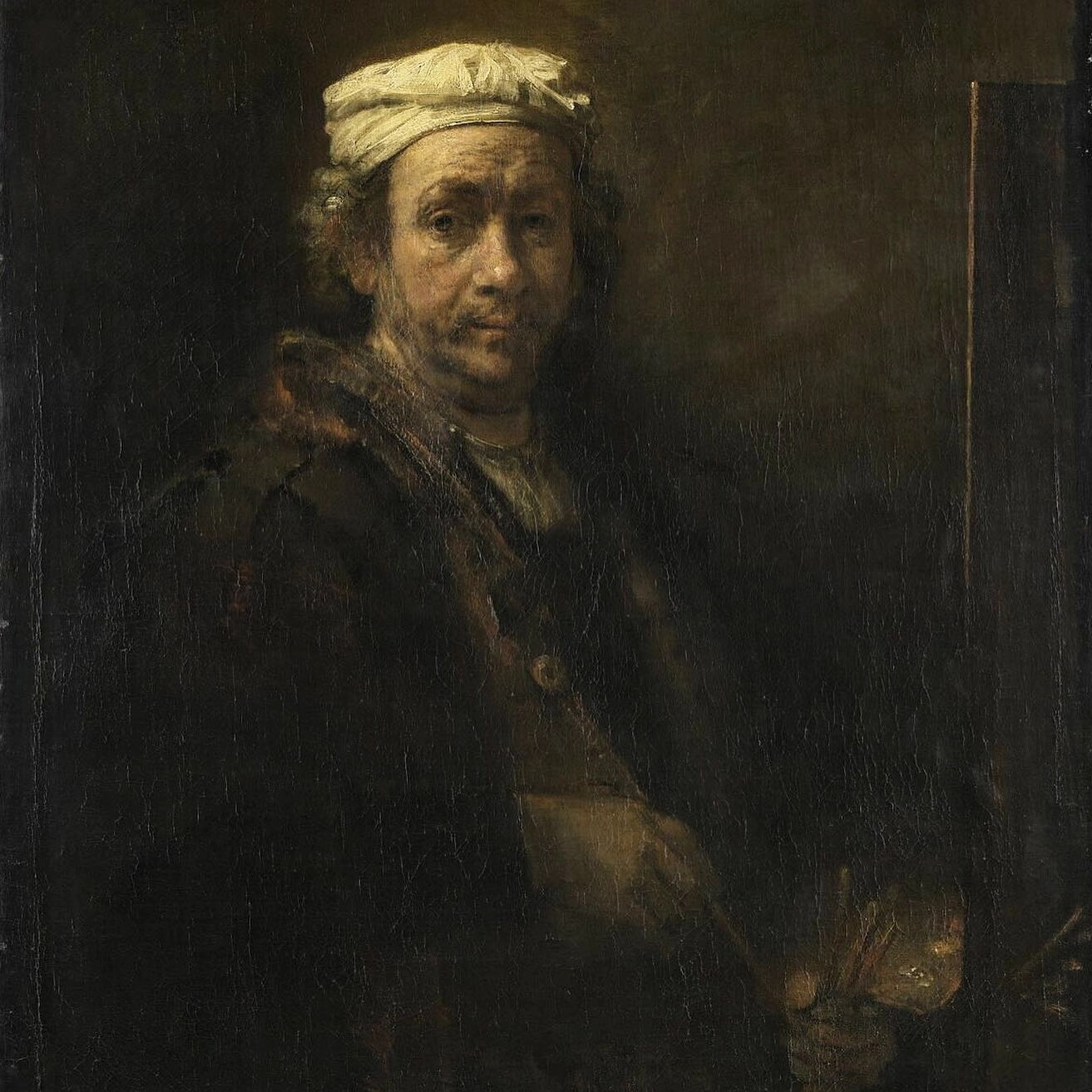
Or you’re an artist, brush in one hand, a vivid palette of colors in the other, confronting a blank canvas. The choices! Red? Violet? Ochre? Viridian? Think of Rembrandt’s self-portrait, as the artist lifts his brush, staring directly at us while coyly hiding the canvas. For us, his canvas is blank. What’s the artist thinking? What do we imagine he’s painting? Of course the tricky master has already painted the canvas we’re looking at, and he included his staring eyes, his ruthless assessment of himself, every wrinkle, every wart.

https://www.louvre.fr/en/what-s-on/life-at-the-museum/a-masterpiece-of-the-louvre And you? What would you paint?

I think of Lily Briscoe in Virginia Woolf’s To the Lighthouse, fiercely concentrating on finishing the portrait she began years ago. We can’t see her painting, but we feel the intensity of her decision-making as to precisely why, where, and how she’ll move her brush for the last stroke.

“Blank canvas”? Emptiness…better, openness; availability; possibility. Imagination calls.

I spend hours revisiting mysteries, reveling in the craftsmanship of the greats, and the enormous creativity that blossoms from the first page, where the canvas is empty before the reader. This week I’ve revisited “Fred Vargas” (writing name) – the French archeologist whose mysteries about her Pyrennean police commissaire, Jean Baptiste Adamsberg, lead the unsuspecting reader into wild leaps of imaginative plotting. https://fr.wikipedia.org/wiki/Fred_Vargas In An Uncertain Place, for instance, when Adamsberg goes to London for an international police conference, his English counterpart, Inspector Radstock, drags him to Highgate Cemetery where someone has left at the entrance 18 pairs of shoes with human feet in them. https://highgatecemetery.org/ The feet have been chopped off dead bodies awaiting burial in funeral parlors. Oh, wait—that’s 17 pairs plus one solo shoe with a solo foot. Adamsberg returns to France, still mulling this weirdness, and confronts a grisly murder where the corpse has been chopped into confetti, with special attention to the big toes and hands and feet. Why? And is the wild-eyed twenty-something who invaded Adamsberg’s Paris house really his undreamed-of son? The plot turns on Serbian vampire stories and the rumor that when Victorian artist/poet Dante Gabriel Rossetti exhumed his dead wife Elizabeth Siddal seven years after her death—ostensibly to retrieve his manuscript volume Poems—she was still rosy and pink. https://nonfictioness.com/victorian/the-exhumation-of-elizabeth-siddal/

From a blank page, to dead poets, to vampires and tombs in Serbia, to…well, check it out! Let me know if you actually identify the murderer before the end. Adamsberg’s one of my favorite characters. Still don’t know why he wears two watches and can’t tell time.

How do fiction writers fill the blank page? By that mysterious process—imagination. In the October 16, 2023 New York Times, Italian physicist Carlo Rovelli asks how we can learn about black holes—places we can neither travel to nor see. His answer? “To travel to places that we cannot reach physically, we need more than technology, logic or mathematics. We need imagination.”

Per Merriam Webster, “The meaning of IMAGINATION is the act or power of forming a mental image of something not present to the senses or never before wholly perceived in reality.” J.K. Rowling: “Though I personally will defend the value of bedtime stories to my last gasp, I have learned to value imagination in a much broader sense. Imagination is not only the uniquely human capacity to envision that which is not, and therefore the fount of all invention and innovation. In its arguably most transformative and revelatory capacity, it is the power that enables us to empathise with humans whose experiences we have never shared.” https://news.harvard.edu/gazette/story/2008/06/text-of-j-k-rowling-speech/

Our genre requires imagination. Mystery writers need a vivid, tangible setting, especially for the murder. My mind has taken me to a rock-art painted cave atop a bluff high above an old ranch, to a music recording studio, to a dining room where a horse rears. We need characters. Protagonist! Murder victim! Suspects! Subsidiary characters who adds color, flavor, depth—like Eddie LaFarge, the retired pro football center who limped into the Central Garage in my imaginary town of Coffee Creek.

And I find something unexpected has happened to me, writing the Alice MacDonald Greer murder mystery series. In the middle of the night, my characters now feel as real as relatives. I watch them driving, kissing, feeding the burros, worrying. Sometimes they pause for a moment, imagining what they’ll do next.

Thank you, Vacuna, goddess of empty spaces.

Those croissants? We’re recovering in Paris from hiking, where these, from the Maison Julien patisserie on Rue Cler, may be the best ever. Letting melting butter create those empty spaces between the layers? Genius.

Helen Currie Foster writes the Alice MacDonald Greer Mystery series (now working on the 9th) north of Dripping Springs, Texas, in the Hill Countrloosely supervised by three burros. She’s active in Austin Shakespeare and the Hays County Master Naturalists and very much enjoys talking to book groups. The 7th mystery, Ghost Daughter, published June 15, 2021, was named The Eric Hoffer Award 2022 Mystery/Crime Category First Runner-up, and also 2022 National Indie Excellence Award Finalist, Mystery.

BOWLING AND PIN-MONKEYS

By

Francine Paino, aka F. Della Notte

Mundane worlds can become amazing when writers are plunged into them. Looking through old family photographs, I came upon a picture of a handsome young man whose start in this country could have been better. He worked as a pin-boy in a New York City Bowery bowling alley a hundred years ago. My story, The Runaway Pin Boy, was inspired by this long-deceased uncle’s difficult adjustment to a new country and culture.

 Francesco Libretti was born in Sassano, Italy, in 1910, emigrated to the U.S. in 1921, and by age 14, he began his short-lived career as a runaway who found work as a pin-boy in a Bowery bowling alley, but here, the similarity stops. 

But where did it begin, what was it like back then? How were the mechanics of setting up pins handled?  

Bowling. A sport that feels as American as Apple Pie is not an American invention. It’s traced back to ancient Egypt, 5200 years ago, in articles found in the tomb of an Egyptian child. Described in its primitive form, nine pieces of stones were set up, and a rounded stone “ball” was rolled to first make its way through an archway made of three pieces of marble. The sport spread from its Egyptian roots into Western Europe, and was brought to the U.S. by the first English and Dutch settlers. It gained popularity through the mid-1800s, played by men only, as it was not the clean family sport we enjoy today. Thus, it faltered when the do-gooders associated it with gambling. Any yet, by 1850, there were four-hundred plus bowling alleys in New York, earning the city the title “Bowling Capital of North America.”

The sport revived in the late 19th century and remained popular during the Great Depression, at least for those with a disposable income. Bowling was a game for  roughnecks and the wealthiest who could afford to build their own private lanes. For the common man the game took place in honky-tonk bars where lanes were built to increase income, with or without alcohol,  and by 1939, there were 4,600 bowling alleys across the U.S. 

Until 1952, when the automatic pin-setters were introduced, picking up and resetting the pins fell to pin boys, often called pin monkeys. They stood at the end of the lanes, perched on narrow ledges or standing up in trenches, waiting for the heavy balls to fly down and slam the heavy wood pins. The pin boys then scrambled to each lane, reset the pins, and gave the heavy ball a hard enough push to get back to the bowler but not hard enough to roll off the track and upset the player in any way. And if he did, there were consequences.

Pin boys were kids, mostly teens, and despite their young years, they were tough characters,  paid meager wages and often taken from the Skid Rows of cities, including New York City’s Bowery. It was hard labor and resulted in frequent injuries, including  broken ribs, severely bruised chins, arms, hands, and smashed fingers, especially when the bowler threw the ball extra hard and fast, just to see if they could make the pins fly.

In the 1830s, the Knickerbocker Hotel in New York City opened three lanes, using clay instead of wood, but no matter the surface, the pin monkeys were at the end of every alley, hoping they wouldn’t be too injured to work again the next day or night. 

Although Child Labor Laws were codified in New York in 1913, these youngsters slipped through the net by lying about their age or being hired by unscrupulous owners. The lives of the pin boys in those early years of the sport were not enviable, but many were willing to endure physical and psychological pain in order to eat.

In The Runaway Pin Boy, the year is 1925, In the Lower East Side ghetto of New York Cityknown today as Little Italy.  Frankie Martone’s mother dies of consumption, and his alcoholic and destitute father abandons him. After witnessing what happens to other immigrant children without families, Frankie flees the authorities, deciding to fend for himself in the anonymity of Skid Row. He learns to beg, borrow, or steal. One night, while he rummages through a trash pail outside the Pin King bar,  a formidable man stinking with sweat and cigar smoke grabs him by the collar. 

“Whatcha doin’ there, boyo?” asks the barrel-chested man with a grizzly turned-up mustache.  Frankie didn’t answer, afraid his thick Italian accent would get him kicked down the street.

“You’re a straggly lookin’ thing, but I need another boy inside. Let’s see what you can do. “He flings Frankie through the door to the bar. “Hey Joe,” he yelled in his Irish brogue. “Broughtcha another.”

Turning to Frankie, he thrusts him forward and points to the trench behind the bowling lanes. Frankie sees a ledge of boys sitting and three more in the trenches. The thunder of balls rolling down the alleys, pins flying and falling, and drunks yelling was deafening, but Frankie understood what needed to be done, and jumped right in.   That was the first night of Frankie’s life as an overworked, underpaid, often injured pin boy determined to get out of this nowhere life on the fringes of Skid Row.