Writing Advice: Too Much of a Good Thing?

LRO-sanfranby Laura Oles

Writers are a curious group, with many searching for tips to help us write faster, write better,  to create stronger stories with more compelling characters.   Sometimes the writing flows and it feels so effortless. When the writing gets difficult, it must mean we’re doing something wrong. We need to fix the struggle, to find a trick or technique to navigate the tough moments.

When I find myself in this position, I sometimes search for answers from my favorite novelists. The searching is also a form of procrastination. There must remain some skills I have not yet learned that would help me better manage these difficult patches in the creative process. Certainly some other successful writers and artists have insights that will guide me back toward the easier path, right?

Maybe mimicking successful writers’ habits would be the key, so I turned to Mason Curry’s Daily Rituals: How Artists Work to find the common thread that made so many of these artists successful. With 161 artists profiled, their common techniques would reveal themselves, right?

wrong or right ethical questionWhat this careful study in creative habits revealed was that there are as many paths to success as there are barbeque options in Texas. Some, like novelist Haruki Murakami, wake up early and embrace strict routines. Yet, Jane Austen wrote amidst the bustle of visitors, housework and entertaining with no schedule at all. Some creatives drank, others abstained, some wrote a little bit each day while others wrote in a frenzied spring to the finish line.

“There is nothing to writing. All you do is sit down at a typewriter and bleed,” Hemingway said. His quote is a reminder that there isn’t a magic path to writing, a secret that will cure all that ails you (or your manuscript). There also isn’t one right way to approach the craft of storytelling. It’s simply a matter of sitting in front of the computer each day and fighting through the difficult moments, putting words to paper even if they aren’t quite the right words in quite the right order.

BirdbyBird

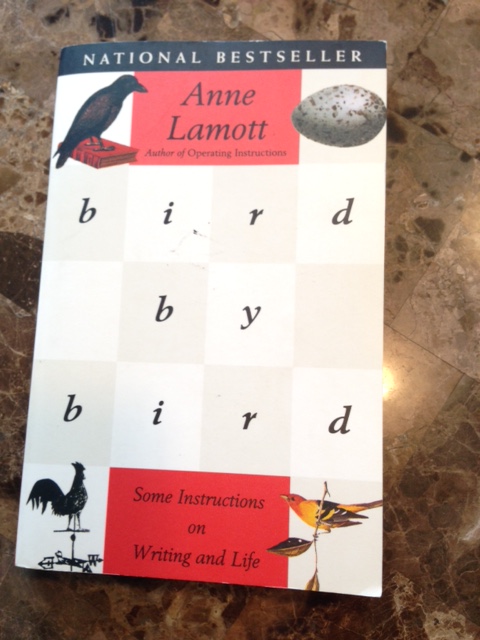
My well-worn copy, purchased at a bookstore in Maryland while traveling for work back in 1996. I still keep it close for inspiration and as a reminder to take my projects one step at a time.

I once had an impressive collection of writing reference books and, back then, I tried on advice like many try on clothes, searching for that perfect fit. I have since whittled the collection down to a handful of books that continue to provide guidance and help me get back on track. However, what helped more than anything was the realization that I had to find my own way. It was time to apply what I had learned, to shape it and make it my own. I had to quit trying to twist the routines and methods of others to fit my life, responsibilities and personality. Yes, I’ve learned quite a bit reading these books but there comes a time when practicing the craft trumps reading about it.

Sometimes the writing is hard. There is no easy answer when we hit a wall, stumble through the messy middle of a manuscript or realize a scene we love doesn’t serve the story. It’s a matter of digging in and staying with the work. Struggling is part of the process. And that realization actually makes the process easier. Now, instead of searching for the next strategy, I can get back to work instead.

My Valentine to Writing

Five members of Austin Mystery Writers post here regularly, and I sometimes wonder whether you readers know which of us is which. So I’m going to clear up any questions  concerning my identity.

I’m Kathy. I write about angst. Any time you arrive here to find weeping and wailing and gnashing of teeth over the writing life, it’s my teeth you hear gnashing.

Kathy

Kathy

I’m writing this at home, but home isn’t the only place I gnash. I do it at my office, AKA bookstore coffee shop, in full view of the public. I try to emote quietly, but muttering carries. People around me, many of them equipped with laptops and writing assignments of their own, receive full benefit of my outbursts: “Stupid, stupid, stupid!” “Noooo.” “What’s the word? What’s the word?” “^!*%&@% network.”

(I don’t really say ^!*%&@% , but that’s what I mean.)

I suspect other writers gnash, too.

Consider American poet William Cullen Bryant, author of “Thanatopsis.” I can’t imagine his interrupting himself with undignified emotional outbursts, but no one who holds his forehead like that is easy in his mind.

Today, though, there will be no gnashing. Today I depart from the usual tales of woe to say, I love writing.

I love the exhilaration I experience when words flow onto the page.

I love finding just the right word to express my meaning.

I love revising, moving sentences and paragraphs around, cutting excess–words, paragraphs, whole pages.

I love writing an entire blog post and then scrapping it and writing something different. (As I did for this post.)

I love filling holes to add clarity.

I love watching a story develop: beginning, middle, and end.

I love–oh, how I love–line editing, slashing words and phrases, discovering the one word whose omission makes the piece smoother, tighter.

I love the joy I feel on reading the finished product–and finding one more word to cut.

I love the satisfaction and the surprise of completing a task I didn’t think I could do.

I love making something out of nothing.

I love making art.

I love creating.

I love saying, “I write.”

I love loving writing.

*****

Lagniappe, Freebie, Pilon

William Cullen Bryant wrote “Thanatopsis” when he was seventeen years old. The title comes from the Greek thanatos (“death”) and opsis (“sight”), and has been translated “Meditation upon Death.” He initially hid the poem from his father because it expressed ideas not found in traditional Christine doctrine. In the concluding lines, which my mother memorized in high school and sixty years later could recite from memory, the poet instructs how to “join the innumerable caravan” of those who have gone before.

*

So live, that when thy summons comes to join
The innumerable caravan, which moves
To that mysterious realm, where each shall take
His chamber in the silent halls of death,
Thou go not, like the quarry-slave at night,
Scourged to his dungeon, but, sustained and soothed
By an unfaltering trust, approach thy grave
Like one who wraps the drapery of his couch
About him, and lies down to pleasant dreams.

Imagine Bryant reading those lines. He must have loved writing.

See the entire poem here.

*****

029

To Write Is to Write Is to Write

Kathy Waller blogs at To Write Is to Write Is to Write,which she plans to rename, and, every thirty days or so, with friends at Writing Wranglers and Warriors. She blogged at Whiskertips until cats took it over.


Interview With George Wier

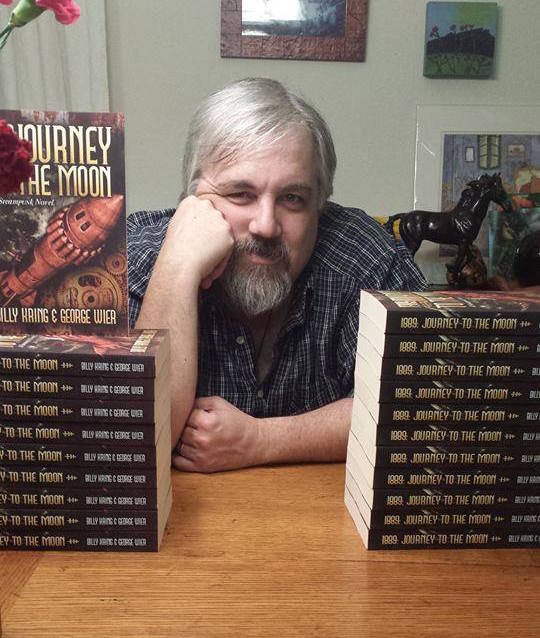
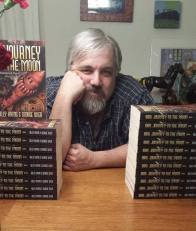
George Wier was nice enough to agree to an interview. Thank you, George! George Wier
(He’s a personal friend of mine so he knew I’d give him grief if he didn’t. 😉  )

I know that you’re not originally from Austin. How did you get here?

I moved to Austin in 2002 from College Station. One day I took a look at the world around me and realized that most of my friends and all of my family had moved away. Also, after thirty years of living in Bryan-College Station, I knew everyone and everything that I wanted to know.  In a word, I was bored. I called an old friend who lived in Austin and told him about my dilemma, and without even the hint of hesitation, he offered a spare room in his apartment and told me to load up my meager possessions and come on. I left the next day. This was about September or October, not far from my 37th birthday. I was essentially–and with malice aforethought–wiping out an old existence and beginning a new one. I was time to do that. It was one of the best decisions I ever made. Apart from rooting for the old home team (the Aggies) I took to Austin like a duck to water. I’m home now.

Have you always been a writer? Was there a book that inspired you to write?

Yes, I have always been a writer, ever since I could read. My first inspiration was comic books and film. My first actual attempt at a complete narrative was essentially a skit that was somehow a cross between a story and a script, and was actually inspired by Monty Python. I couldn’t do humor well, though, and sight gags were not my thing. The earliest, clearest influences on my writing came from science fiction, particularly Frank Herbert’s Dune books. I loved those. There is one story idea from those early days that I will attempt sometime in the near future. It’s about an outpost at the fringe of human expansion into the universe, and will be sort of a cross between Castaway and the Star Trek universe. We’ll see, though, if I ever get that done. My hopper is pretty much loaded up at the moment.

Along about 1976 or ’77, I was given a collection of Doc Savage paperbacks by my best friend’s sister. Her name was Peggy Dale Taylor. The Doc Savage books she gave me were the 1960s and ’70s Bantam paperback reprints of the old Street and Smith Doc Savage series written under the pen name of Kenneth Robeson, but mostly actually penned by Lester Dent, who though originally from Missouri, was a member of the Explorer’s Club in New York. Dent wrote about a quasi-private investigator, quasi-superhero named Clark Savage, Jr., and his five aides, who traveled the world righting wrongs and punishing evildoers. They sparked the imagination of this young teenager and would later very largely influence my Bill Travis Mystery series. The difference, however, between Doc Savage and Bill Travis is that Bill is based in Texas and rarely crosses the state line, he doesn’t have a lot of gadgets to help him out, and his small collection of friends are more from the “friends in low places” crowd, and less from the “cream of the crop”. I’ve written ten Bill Travis books, and there are at least eleven more to go before I round out the series, including three prequels. And by the time I’m at the end of that long runway, I should–hope springs eternal–know how to write.

Tell us about the different genres you write. Does the genre influence how you approach or plot your book?

Mostly, I write MY genre. I’m not sure what that is. For instance, the Bill Travis books, though billed as mystery, occasionally cross over the line into the fantastic, or you might call it Science Fiction. The first book, The Last Call, is straight action-adventure. The second book, Capitol Offense, while it has elements of action-adventure, is at least half mystery with some elements of political intrigue. The third book, Longnecks and Twisted Hearts, quite definitely crosses the line into science fiction, yet remains mostly a murder mystery. Books four and five, The Devil to Pay and Death On the Pedernales, are both pretty much straight mysteries. Book Six, Slow Falling, has so much science fiction that it should probably be classified as such, yet it’s my favorite of all of them. And so on through the series. By the time we get to book ten, Ghost of the Karankawa, Bill Travis meets Bigfoot. So, there you go. 

Genre doesn’t so much influence me. The story does, however. It’s going to ultimately be whatever it is. I don’t write from outline, or at least in those few instances when I have and “knew” what was coming in later chapters, the outline might be a simple sentence of what was to happen in that chapter. About the only time I do that however, is either when I’m skipping around in the book and writing it in a non-linear fashion or when I’m collaborating and my co-author needs to fill in what I skipped over. In the latter instance, it’s at least courteous for me to provide some clues as to what, in general, I think should happen here and there in the story. I guess that’s about it on that.

As a side-note, I don’t like to read a lot of books in the genre in which I’m going to be doing any extensive writing (i.e., mysteries) because I don’t like to be unduly influenced by other writers. People tell me that my writing style is similar to John D. McDonald. I must confess, I’ve never read a John D. McDonald book. I hear that they’re wonderful, and at the top of the mystery genre, so I always take that as a high compliment and accept it as gracefully as I can. But, I’ll only read a mystery if it’s written by a friend and this friend needs an endorsement or a general leg up. That’s about it. 

What is the secret to your success?

Writing is like anything else. Most of the battle is won by showing up. You have to sit down and write. You have to write a lot. You have to produce, bang out copy, write like there’s no tomorrow (there really isn’t, after all, there is only today!), plan and scheme and push the envelope. However, I think what you’re asking me is for some formula. Okay, I’ll give it to you. Here are my “secrets” to success (it’s interesting to me that there are no real secrets. The nature of the universe is that we all think that there’s some great secret hidden back of the curtain of reality, and that if we could only somehow penetrate that curtain, why, we’d HAVE IT and we’d simply do that magical little formula and the world would lie at our feet. The secret of the universe is nothing. This is also the definition of a mystery. A mystery is: the answer was not given. That’s all a mystery is. The mystery of the universe is a big fat zero. We don’t do well, as a species, with zero. Nothing is difficult to confront. If you don’t believe me, try walking through an unfamiliar house full of furniture in the pitch blackness. You move slowly, at best, because you’re pretty sure you’re going to hit something hard and kill your shins, or fall down and break your neck. So, in our minds, that darkness, that big zero, is really “something”. (Let me tell you, it’s not!):   

I have, this lifetime, sifted through quite a bit of data on success. I’ve narrowed my findings to ten basic points:

     1. Work toward your goal every single day.

     2. Do not let the sun set without accomplishing something towards it.

     3. Hold on to any wins you achieve along the way and disregard the losses.

     4.Don’t allow anyone to evaluate or invalidate your goals, your dreams, and particularly your abilities.

     5. Thinking about a thing is not the same as doing a thing. Success is only ever accomplished through action. The dream, however, must give your actions purpose and life.

     6. Treat your goals as if they are living beings, and grant them life.

     7. All other rules apply with regard to your goals, particularly the Golden Rule.

     8. Study, learn and become the top person on the planet in your field. Knowing WHY is of immense value. Knowing HOW will guarantee prosperity. Knowing both HOW and WHY is everything.

     9. If you get mad at someone or something that stands in your way, you have granted them or it immense power. Become unflappable. In any situation you are the expert. You are the source. Unquestionably. Success is hidden in the minutiae. It’s the small things that, brought together, create the whole.

     10. Fortune and fame are illusions, and at best are fleeting. Don’t seek these. Instead, seek happiness. You will ultimately find that it resides within you.

I’ve found that most writers have other talents. What are your other talents?

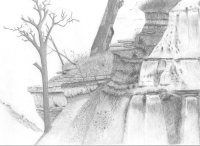
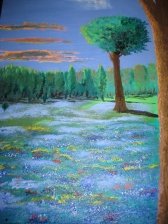
Well, that’s a loaded question. I like to think I’m adept at everything I do, and typically overinflate my abilities, at the very least to myself. However, I like to draw (with a mechanical pencil), I paint, I play violin and I play country fiddle, and I do other things I’m not supposed to do. 

Some of George’s pictures
West Texas  Fall    Secret Meadow

Do you have any advice particularly for mystery writers?

The main piece of advice, I suppose, is what I said above about not reading too much in that genre. But really, you might like to read mysteries and want to write them as well. Really, it’s a personal preference on my part not to do so. I also write a little science fiction, for instance, and I am so well-read in that genre, and will continue to be so, that it’s impractical for me to even think about not reading science fiction. So, whatever your write, whether it’s mystery or romance or whatever, you should write what my friend Joe Lansdale calls “your own genre”. Your writing is YOUR genre. Write what you want to write, and how you want to write it. And, write what you, yourself, would most want to read. That’s the simple one. Do that, and you’ve got it made.

Tell us something cool about Austin that we probably don’t know.

The one thing I like about Austin is that it’s full of secrets. There are so many little-known, out-of-the-way and off-the-beaten-path little hidey-hole restaurants, coffee bars, music venues, acting and dancing troupes, and etc. I love finding those. It’s my goal to find all of them! Sallie and I venture forth at least once weekly looking for that offbeat place that we’ve never heard of before. And I have the knack for smelling them out.

How can we find more information about you and your books?

The best place is my website, www.georgewier.com (which takes you directly to the www.billtravismysteries.comsite). Both of these sites have now been combined into one. Also, I have a wordpress blog at http://georgewier.wordpress.com. Other than that, you can follow me on Twitter at @BillTravisWrite and on Facebook at George Wier-Author. Also, I encourage everyone to communicate directly with me. I usually answer my own emails, and I typically do this quickly. So, please communicate with me. I know that people get punished in this world for the two great crimes: being there and communicating. But, that’s the only way to ever get anywhere. So, yes, get in touch with me and ask if you can’t find the answer. Or just email me to say “Hey!” I’ll say “hey” back at you.

What are you working on now?

Hmm. The question should be “what are you NOT working on now?” I’m working on Bill Travis #11, Desperate Crimes. Also, I’m right at the end of yet another mystery standalone entitled Errant Knight. It’ll be forthcoming in a few weeks as an ebook and a trade paperback. I will have another book coming out from Cinco Puntos Press in January of 2016 entitled Murder In Elysium. Also, I’m collaborating at the moment with Billy Kring (another fantastic mystery author) on the steampunk series The Far Journey Chronicles. Billy and I have completed and published 1889: Journey to the Moon, and have finished and are in the process of editing 1899: Journey to Mars. We have also begun 1904: Journey Into Time. There will be a minimum of four books in that series, with the last one planned: 1909: Journey to Atlantis. Aside from that, I’ve got a few other projects going that I pay attention to, catch as catch can. But I have far more than that planned, including a collaborative series with science fiction great (and friend), T.R. Harris, of San Diego, California. I guess that’s it.

Thanks for the interview. You’ve given me a lot to think about and now I’m pumped up! I can’t wait to get back to my writing!
Murder in Exotic Places

Elizabeth BuhmannBy Elizabeth Buhmann

I love to read murder mysteries that are set somewhere in the world that I have never been. Let me hasten to say that I do not care for such mysteries when they’ve been written by someone who has also never been there, or who has not been there for more than a visit.

No, I want a book that oozes local color and a narrator who has clearly lived there, walked the streets every day and been part of the community. Sometimes it’s an ex-pat, sometimes a person sent there by a job (or a spouse’s job). Or it may be an English-speaking native, or the books may have been written in another language and translated into English.

The River Ganges, Varanasi, Uttar Pradesh, India

The River Ganges, Varanasi, Uttar Pradesh, India

The author also needs to be a skillful and inventive mystery and suspense writer, so the kind of books I’m talking about are few and far between. When I find them, I love them. When the book is part of a series, well then. Hog heaven!

Right now for me the exotic murder mysteries are set in India. I’ve found several! MM Kaye, of Far Pavillions fame, was born in India and spent much of her adult life there. Did you know she wrote six murder mysteries? Her “Death in” series is a veritable clinic in the romantic suspense genre, and the one that’s set in India, Death in Kashmir, evokes the waning years of the British Raj.

servant

cadaver

Tarquin Hall’s Vish Puri series is more fun than a basket of Macaques (thank you, Russ Hall, for recommending them). Start with The Case of the Missing Servant. I cannot get through one of these books without making Punjabi curry and browsing Google images of Dehli.

Shamini Flint’s delightful Inspector Singh travels to Mumbai in A Curious Indian Cadaver. Flint is an attorney who lives (like her Sikh detective) in Singapore and has travelled extensively throughout Southeast Asia. Her books are set in India, Singapore, Malaysia, Cambodia, and China.

deadhand

elephanta

And why go to the expense and bother of world travel when you can read Paul Theroux? He has written about India in a number of his travel books, but did you know he set a murder mystery in Calcutta? A Dead Hand is an interesting read, but  what I highly recommend is  the Elephanta Suite—it’s terrific! It’s not a murder mystery, though. It’s a collection of short stories set in Bangalore, Mumbai and a spa in northern India.

amazing

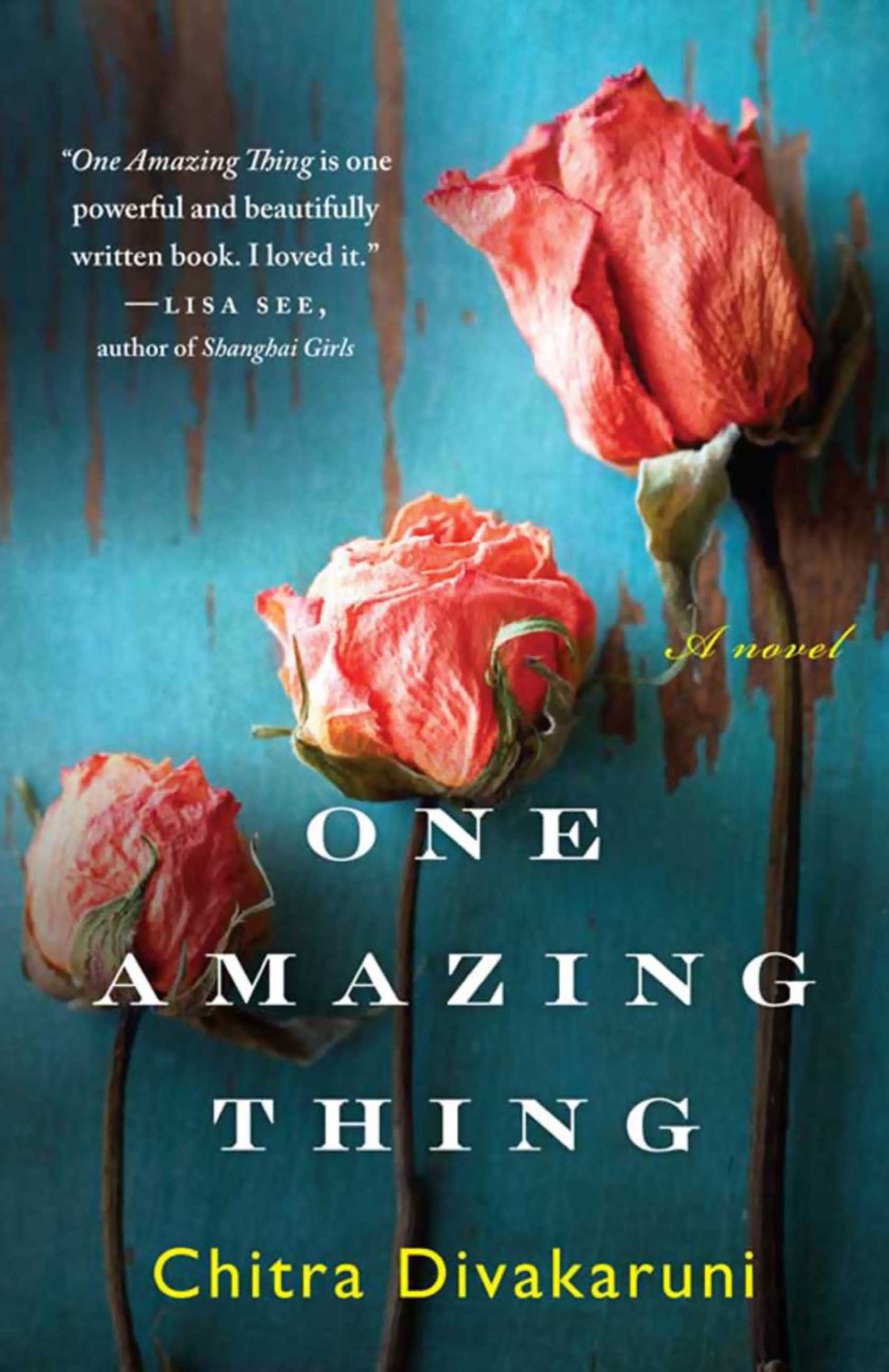
indiaSince I am digressing from murder, I have to mention Chitra Divakaruni’s books. In One Amazing Thing, an earthquake traps a diverse group of people in the basement of an Indian Consulate in America, and to while away the hours waiting to be rescued, they tell stories from their lives. When the first character began her story, I literally got a chill down my spine.

One last recommendation: If you try any of these books, you may be seized by the need for a spicy korma or rogan josh. My trusty House of India Cookbook has served me well for forty years, and it’s still available on Amazon!

Next time I’ll share a list of murder mysteries set in Africa.

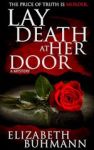
laydeathElizabeth Buhmann is the author of Lay Death at Her Door (Red Adept Publishing, May 2013), a stand-alone mystery/suspense novel about an old murder that comes unsolved when the man who was convicted of it is exonerated. The story is told from the point of view of the woman on whose eyewitness testimony the prosecution was based. When the book opens, her life is about to come apart at the seams.

No Cleavage in Broadchurch

hutto oct. 1 2014 023 (2)By Gale Albright

In crime fiction, women traditionally have taken on roles of helpmeet/spouse or devil temptress. It’s the old good girl/bad girl, Madonna/whore dichotomy so prevalent in literature, movies, and television. A great example of this dichotomy appears in the classic noir film, The Maltese Falcon.

Mary Astor is the seductive, murdering femme fatale, Bridget O’Shaughnessy. Lee Patrick plays Sam Spade’s girl Friday, Effie Perrine. She is obviously devoted to him, is on call to do his bidding 24/7 and lives with her mother. He never notices her except to say things like “You’re a good man, sister.” He plays around with Iva Archer, his partner’s wife. She is not on screen long, but she makes it count. When Miles is murdered, she forces her way into Sam’s office, draped head to toe in stylish black, somehow looking sexy, and asks Sam if he killed Miles because he was in love with her. The audience gets the idea that she wouldn’t mind. His obedient, love-starved “good man sister” gets rid of her.

https://www.google.com/search?tbm=isch&q=The%20Maltese%20Falcon&gws_rd=ssl

What has this got to do with Broadchurch and cleavage?

The idea for this post came about when I saw a comment on Facebook about the BBC crime drama, Broadchurch.

I have seen the first season of this excellent series in its entirety. The setting is a small ocean-side tourist town where everyone knows everyone else. An eleven-year-old boy is found murdered on the beach and the hunt is on for the killer. There’s nothing graphic, bloody or nasty, no drawn-out post-mortem grisly incisions, etc. Some people like this, but as a personal preference, I do not. I prefer the old Hitchcock, edge-of-your-seat suspense to buckets of blood and viscera.

Broadchurch is carried by the tremendous acting of Olivia Colman (Detective Sergeant Ellie Miller) and David Tennant (Detective Inpector Alec Hardy). Ellie, a long-time DS in the police department, is enraged when she is bypassed for promotion. Outsider DI Alec Hardy is brought in to conduct the investigation. Alec has so much emotional baggage he needs a freight train to carry it. And he’s also wonderfully strange, rude, brilliant, and completely undiplomatic. The pair clash at first meeting and things go downhill from there.

The characters are fascinating. I could go on and on about the fine craftsmanship involved in Broadchurch, but the main thing that impressed me is DS Ellie Miller. She is not a kid. Her hair blows all over the place when she’s out on the beach. Her wardrobe is the pits. There’s no cleavage and not a high heel to be seen. This woman is a working stiff. She’s got kids and her husband is unemployed and stays home with the baby. She’s mad as hell about being jumped over for promotion. She’s a part of the town and is defensive when Alec rides roughshod over everyone.

In short, she is a brave, courageous, smart woman copper who hates her new boss. She is all too human–hot-tempered, maternal, blunt, compassionate, and tough. The two protagonists are the heart and soul of the story, but the town itself is also an important character in this atmospheric, brooding drama.

http://en.wikipedia.org/wiki/Broadchurch

I prefer British crime shows to American ones. One of the main reasons is the treatment of women characters. My husband and I have gotten to the point that every time we see an actress in tight jeans and low-cut top, we say, “She must be a cop.”

There are more women characters in crime dramas than there used to be. Instead of playing only hookers, coffee-fetching secretaries, or nagging wives, they are now homicide detectives, forensic experts, profilers, spies, and medical examiners. So, people might say, isn’t that a step in the right direction for women? They are now playing strong characters in roles traditionally reserved for men.

My point is, how are they playing them? When the new crime show Stalker premiered, why was the lead actress Maggie Q, who plays LAPD detective Beth Davis, dressed up in a blouse cut halfway to her navel? Why did the female CIA operatives in Covert Affairs expose so much cleavage? Why do the two protagonists in Rizzoli & Isles look like runway models instead of homicide detective and medical examiner? I’ve read the Rizzoli and Iles novels by Tess Gerritsen, and the way the original characters are portrayed in the TV series is not true to Gerritsen’s initial creation. In the books, Rizzoli is short, has frizzy hair, no fashion sense, and can be a real jerk at times. She bears no resemblance to the gorgeous Angie Harmon seen on the tube.

Based on many years of watching shows about crime fiction, I think as a general rule, the British have better programs than we do on this side of the pond. They are more concerned with characterization. The lead characters are often not that good looking, not that young, and not that well dressed. They sometimes have crooked teeth. They look like real people.

In America, we still go for the glossy Hollywood look, with gorgeous hunk male actors and sexy actresses in scanty clothing playing lead roles in law enforcement dramas. I don’t think it’s an improvement in the status of women. I think it’s another form of gender discrimination. Sorry, I don’t feel liberated.

http://www.cbs.com/shows/stalker/about/

http://www.tntdrama.com/shows/rizzoli-isles.html


How Facebook Can Help You Write More (and More Often)

Thumb Up SignI know, I know. I actually snickered when I wrote this headline.

Most articles we read about Facebook (and other social media sites) report how much time we now spend frittering and twittering away each day. In fact, a recent article posted by Bloomberg BusinessWeek states that the average American spends as much time checking their Facebook feed as they do on their pets or on daily housework (you can read the article here: http://tinyurl.com/ml44ekl).

We really aren’t that surprised, are we? With the ability to check these sites on our phones while standing in line, or waiting at the doctor’s office, those little chunks of time all add up. The question is, “How do you feel after you’ve logged off?” Did you get anything out of it, aside from a brief respite from boredom?

As someone who uses Facebook casually to keep in touch with family, friends and colleagues, I also realize that Mark Zuckerberg is taking every bit of information I fork over in status updates and selling it to companies intent on selling me stuff related to that mined data. I know enough about Facebook and its TOS (terms of service) to realize that I am a product that they intend to monetize in any way possible. So, if we’re going to have this relationship, I might as well get something out of it. If I’m going to be on Facebook, I wanted it to be a better experience, which brought me to this question:

What if we started using these sites to help spur our writing projects?

Writers, by and large, are a supportive group, and this extends to social media as well. When checking Facebook, I specifically check updates of writer friends and authors I enjoy because they often post updates on their WIP or their processes. Reading these status updates, such as “Just finished 2K words this morning!” serves as further motivation for me. While it’s important to not compare ourselves to others–especially since we have Facebook personas that are more attractive and interesting than we actually are in real life–we can be encouraged and motivated by the posts of other writers. Anne Lamott always delivers and Louise Penny is extremely gracious with her updates. So, I now hide the feeds where people share their breakfast choices and opt to read posts from those immersed in the writing life.

Like anything, this can quickly become a rabbit hole of procrastination, so I try not to check social media until after I’ve tackled my own writing first. However, if I’m having trouble getting started, I give myself a 15-minute block of time to check authors’ posts to help spur my brain into action (and yes, I set a timer!).

I’ve also found Twitter to be  helpful  in terms of writing life and related stories because the nature of this format is condensed into 140 characters. Twitter’s format lends itself to sharing stories and blog posts, and I, again, set a specific time, and work to use the posts to motivate me and to help return my attention to writing.

I can’t say that I never waste time on social media but I have now become a bit more aware of how to use it to my benefit–and how often I’m online. Rather than scrolling mindlessly through status updates on things I don’t value, I now seek out specific posts and updates that will help me navigate the challenges of finishing a novel while working and raising a family.   I also make sure to support my favorite authors by purchasing their books and writing reviews of novels I’ve enjoyed.

So, I’m making peace with Facebook and Twitter. Like all technology, these sites make valuable servants but horrible masters, and I realize it’s up to me to decide how to leverage them to my benefit. How about you? How do you use social media in relation to your writing life?

–Laura Oles

Tailoring, Treaties, and Tomatoes: 3 Techniques to Turn You into a Tenacious Writer

Italiano: Pomodoro grinzoso

Italiano: Pomodoro grinzoso (Photo credit: Wikipedia). By Abbasnullius (Own work) [Public domain], via Wikimedia Commons

In a post that appeared here last fall, Austin Mystery Writer Laura Oles asked the burning question,

Can a technique named after a tomato serve as the answer to your time management woes?

Or, more specifically, what does the writer do when it’s impossible to devote a large block of time–several consecutive hours, at least–to writing?

Laura answered the question with a resounding Yes! and went on to describe her success using the Pomodoro Technique, which involves working in 25-minute blocks of time.

After reading her post, I put a Pomodoro on my toolbar. I like it. It helps me log my time, a necessary evil for professional writers, and gives me a feeling of accomplishment.

But my schedule isn’t demanding. I often feel I’m running around like a chicken with its head cut off, trying to just get through the day, but really–I have time to write.  Pomodoro works while I’m writing.

But procrastination–in my case known as staring into space and thinking about what I’m going to do . . . later–wastes time. I need a jump start in order to start writing.

Even the promise an old-fashioned homegrown tomato is not enough of a carrot to lure me to the page. (Sorry about that.) To move me, there must also be a stick. Fortunately, sticks are available.

One I’ve found helpful is a writing challenge: A Round of Words in 80 Days (ROW80), subtitled The Writing Challenge That Knows You Have a Life.

In ROW80, you set your own goals. They must be specific and measurable, but they’re tailored to your needs. The first day of the challenge, you announce your goals in a blog post; then you put a link to your post on the ROW80 Linky.

I won’t try to explain the Linky, but you can read about it in the FAQs.

There are four rounds each year, starting the first Mondays in January, April, July, and October. Each runs eighty days and is followed by several days off. You check in every Sunday and Wednesday with a blog post in which you report your progress. If you need to change your goals, that’s fine. Just state the new ones and go on from there.

Round 1 for 2015 began January 5. Too late to enter? No. Jump in tomorrow or Sunday, or next week . . .

Your obligations, in addition to writing the Sunday and Wednesday posts and listing them on the Linky are 1) to put a link to the Linky page on your post; and 2) to visit the blogs of other ROW80 participants, comment, encourage them.

ROW80 allows flexibility. You choose when and how much you write, and if you don’t meet your goals, you haven’t failed–you’ve learned something. No pain, plenty of gain. The challenge is a stick, but there’s a lot of carrot in it, too.

A slightly stickier stick appears on Ramona DeFelice Long’s blog, which is an excellent resource for writers. Ramona is a professional editor as well as a writer. She’s successful because she works at her craft. In this post, she describes the persistence and determination required of the serious writer:

Writers write. Writers who get published complete work and submit that work to agents and editors. It’s how it works. The way to write for publication is to commit to it. That means nothing–and no one–stands in the way of your writing goals.

Ramona invites readers to take “The Sacred Writing Time Pledge.” As in ROW80, you tailor the pledge to your own needs–within certain parameters. But after that, there’s no wiggle room. A Sacred Pledge is meant to be kept. It’s simple: You do what you said you would do, or you don’t do it.

The pledge is a kind of treaty, too–a formal agreement between the writer and other parties. In most cases, it takes a village to make a writer. You sign the pledge, but there are spaces for your villagers to sign as well.

What I like best about Ramona’s pledge is its focus on the goal most writers aspire to–publication–and its honesty about what it takes to get there.

Now for a summary: In this post, I presented for your edification three techniques:

 ROW80, which lets you tailor goals to your needs;

The Sacred Writing Pledge, which a comprises both a pledge and a treaty; and

Pomodoro, which is a tomato.

Singly, or in combination, these three can help turn you into a tenacious writer.

But Wait!

I just read over the paragraph in which I referred to Ramona’s pledge as a stickier stick, and I realize the stick part is a gross exaggeration.

The Sacred Writing Time Pledge contains much more carrot than stick. In the first place, publication is as good a carrot as any writer can aspire to. It’s the literary equivalent of carrot cake.

Also, Ramona reminds us that we take the Sacred Writing Time Pledge not to enter 2015 burdened with an overwhelming task, but with hands open, ready to receive a gift:

 Think of it as renewing a vow–or falling in love for the first time, or again—with what you want to write.

Falling in love. What could be better?

Falling in love is carrot cake with a dollop of ice cream on the side.

 *****

And now, for tenacious readers, a pilon:

Tenacious

Cowhide makes the best of leather.
It should. It keeps a cow together.

 ~ Ogden Nash (of course)

 *****

0kathy-blog

  Posted by Kathy Waller,
who also blogs at
To Write Is to Write Is to Write

Mystery/Thriller Recommendations

It’s that time of year! A time for reflection on the past year and anticipation of the new. If you’re like me, you hear a lot of people mention a good book or movie and you think to yourself, “That sounds good! I gotta remember that.” And then you don’t.

So, since I have a lot of friends on Facebook who like mysteries and thrillers, I’ve asked them to recommend at least one good book or movie they discovered this year. And of course, each of us here at AMW has a recommendation too.

Here they are, in no particular order:

1. Mandy Eve Barnett (author): mandyevebarnett.com – Lucy – it is unusual, exciting and a great twist at the end! A woman, accidentally caught in a dark deal, turns the tables on her captors and transforms into a merciless warrior evolved beyond human logic.

2. Beverly Nelms (personal and book club friend) – A Most Wanted Man with Philip Seymour Hoffman from a John LeCarre book. It’s about a (most likely) innocent Muslim man being ground up in the system by the Taliban, then by us. PSH plays a German operative with a small group of “assets” who is trying to help him. Underdogs helping the underdog. The view of agents, especially ours, is devastating.

3. Laura Wilson (personal and book club friend) – I liked The Girl with the Dragon Tattoo, book much better than the movie, by Stieg Larsson. The main character is a girl with a troubled background who is brilliant with technology and a research savant. There is torture, murder, blackmail and deceit all over this book.

4. Billy Kring (mystery author) www.billykring.com – Suspect by Robert Crais. One of my top reads of the year, and highly recommended. LAPD cop Scott James and his female partner are ambushed, and Scott is wounded, his partner killed. He is broken, suffering, and angry, textbook PTSD. As a last chance, he is partnered with a german shepherd with her own problems. Maggie is a two-tour bomb-sniffing dog who lost her handler in an ambush. She is also suffering from PTSD, and it is her last chance, too. When they begin to investigate the case where Scott’s partner was murdered, they have to rely on each other, and what they encounter in the case could well break both of them.

5. David B. Schlosser (writer, editor) – www.dbschlosser.com – The Broken Shore by Peter Temple. This terrific Australian mystery explores the traditional aspects of a crime/cop story — good guys, bad guys, and their travails — as well as some really interesting cultural challenges in Australia.

6. Kelly Pustejovsky (personal friend) – I watched Dream House yesterday on Netflix, surprisingly good.

7. Tara Madden (personal friend) – Wilde’s The Gods of Gotham and it’s sequel. Fairly new mystery series about the very beginnings of the NYPD set in the 1840s. Very good. Really pulls you into the story. Great richly created characters.

8. Jeanne Kisacky (writer) – It’s been out a while, but Elizabeth Wein’s Code Name Verity defied my ability to see where the plot was going. It was truly remarkable to read a book and not have any of my guesses pan out.

9. H.M. Bouwmann (author and professor) – www.hmbouwman.com – I’ll second the Code Name Verity recommendation. And I enjoyed both Robert Galbraith (Rowling) mysteries–though I loved the first more than the second. Also, just as an FYI, the opening couple of pages are not great. Then: very good.

10. Roger Cuevas (personal friend) – I love Alice LaPlant’s “Turn of Mind.” It’s narrated by a woman, a former hand surgeon with Alzheimer’s. Then one day her neighbor and long-time friend is found dead and the body’s hands have been expertly removed. Did she do it? Our narrator just can’t remember…

11. Morris Nelms (personal, book club friend, professor of fine arts, and musician) (Yea, he’s a cool guy) – The Afghan, by Forsyth. Frequencies, a sci-fi whodunit movie. Crescent City Rhapsody, a sci-fi thriller about what happens when an EMP disables everything.

12. Joseph Huerta (personal friend) – The two “Blood” books by James Rollins and Rebecca Cantrell that feature warfare against the forces of Armageddon, including angels and devils and a secret band of priests who were once vampires. Yes, it doesn’t really sound like a Joe-book but it was truly fascinating. The third book will be out this Spring.

13. Angie Kinsey (writer) – www.angiekinsey.com – The Martian by Andy Weir – a not too far fetched sci-fi thriller about an engineer who gets stranded on Mars. He has to figure out how to stay alive with the resources he has until he can connect with home. Entertaining and thrilling!

14. Debbie Woodard (personal friend) –  I discovered the BBC’S Sherlock this year. Fantastic production, great actors, character-driven-well-written scripts.

15. Elizabeth Buhmann (AMW member) – I’ve read a lot of good mysteries this year. I think I’ll go for Present Darkness, the latest by Malla Nunn, but my recommendation is not to start here but to start with her first, A Beautiful Place to Die. The setting for these books is South Africa in the 1950s, at the height of the Apartheid era.

16. Laura Oles (AMW member) – My favorite this year isn’t a traditional mystery but I loved it because it had a strong mystery component and very strong storytelling. It was Leaving Time by Judy Picoult.

17. Gale Albright (AMW member) – I was fascinated and awed by Tana French’s In the Woods, from the very first paragraph because her writing is lyrical and compelling. It’s set in Ireland and is her first book about the “Dublin Murder Squad.”

18. Kaye George (AMW member) – I’m JUST like that. I vow to remember the good books I’ve read, but, alas, my memory doesn’t really go back 12 months. I know that every Harlan Coben I read is my favorite. Recently I read “Iron Lake” by William Kent Krueger and it was terrific. It’s the first Cork O’Connor book. I’ve read others, but had never read this one.

19. Kathy Waller (AMW member) – Terry Shames’ A Killing at Cotton Hill. She captures small town life in a southern town while mixing humor with suspense and mystery. I couldn’t put it down. It won the 2014 Macavity Award. 

20. My favorite book that I read this past year was Jackaby by William Ritter. I loved the mix of historical fantasy and mystery. Jackaby is an investigator of unexplained phenomena and the story is told from the POV of his new assistant, Abigail Rook. It’s a bit like Sherlock Holmes meets Harry Potter. It was delightful and intriguing.

So there you have it! A whole slew of books to add to your TBR (To Be Read) list.

Etiquette for Critique Groups

We all know the importance of getting feedback from other writers, not just from friends and family. For many writers, that feedback comes from a critique group.

photo (16)Last summer, Sisters in Crime  hosted a meeting about etiquette for critique groups with special guest Tim Green, from St. Edwards University. Members of several local critique groups joined the discussion. The following guidelines and suggestions emerged.

Professor Green offered a general framework for face-to-face critiques. First the writer speaks, then readers take turns offering their comments. Finally, the whole group can engage in a general discussion, summarizing what they agree about and answering each other’s questions.

DOs:

  • The writer can introduce her work briefly, explaining what she’s trying to accomplish, whether her draft is rough or finished, and what kind of feedback she wants.
  • Readers should begin with the strengths of the piece (‘What works for me is…’) and move to questions and weaknesses (‘What doesn’t work for me,’ or ‘What I don’t understand is…’) afterwards.
  • Readers should speak to the writing, not the writer, pinning comments to specific passages in the text. This bears repeating! Find the specific words that trigger your reactions.
  • During the readers’ comments, the writer should remain silent, listen carefully, and save questions or explanations for the general discussion period.
  • Everyone should bear in mind that personal preferences are not aesthetic absolutes. Readers are only offering their subjective reactions and opinions. Writers should remember that, too.

DON’Ts:

  • Writers should resist the urge to disparage or apologize for their own writing.
  • Readers should resist the urge to rewrite or copyedit during group critiques.
  • Writers should try not to become defensive.

Professor Green advised that higher order concerns (plot, structure, character, voice, point of view, telling/showing) are appropriate for early drafts. Lower order concerns (dialogue, scene/setting, word choice, sentence management) are more likely to be useful for advanced drafts.

Most critique groups eventually settle on a routine that works for them, but for planning purposes, you could consider the following guidelines:

  • Four to six people is a good size for a critique group.
  • Ten pages is a reasonable length for submissions.
  • One or two minutes should suffice for the writer’s introductory remarks.
  • Allow about five minutes for each reader’s comments.

At this rate, you would expect to spend a half-hour or more on each submission. If everyone submits every time, you might need to allow as much as three hours for your sessions. Timekeeping can help ensure that each writer gets her fair share of attention.

Depending on where you live and what you write, you may have a hard time finding a local group that works in your genre or niche and meets at a convenient time and place. In that case, you could consider joining Authonomy, a website run by Harper Collins where thousands of authors post their work and exchange critiques online.

Elizabeth Buhmann

Elizabeth Buhmann is author of Lay Death at Her Door (Red Adept Publishing, May 2013)

Everyone agreed on the importance of keeping the comments positive. Praise for what works should come first to balance criticism. It may be necessary to curb or even remove a person who dominates discussion or persists in harsh criticism.

As writers, we learn and improve from criticism, but praise is the oxygen we breathe. Your critique group should not leave you feeling discouraged. If it does, drop out.

You should run home from your critique group sessions eager to reread the comments on your work and inspired to make the revisions that will take it to the next level.

A Christmas Pomodori

River Bluff Writers' Retreat 020Star Date: December 13, 2014

It all started with a weekend retreat. Don’t mysteries always start  like that? (Well, some of them.)

It’s like the beginning of a typical forties noir film. Think of a battered private dick, his face wrapped in bandages, trapped in a blindingly bright spotlight at the Hollywood police station. All in black and white with lots of shadows. The police want to know about a murder. When he starts talking, the scene dissolves into a flashback.

Except in my case, everything was in color, in the twenty-first century, and by the San Marcos River in Central Texas–not Hollywood.

What on earth are you talking about? I hear someone mutter. Why, I’m flashing back to how I wrote my fast-paced, hard-pulsing, heart-stopping crime melodrama, Holly Through the Heart, a live radio play done in person for an enthusiastic (I hope) audience (captive) of Sisters in Crime: Heart of Texas members.

I had come up with a daring (hare-brained) scheme in September. Why not have an old-fashioned live radio murder mystery play for our Christmas party on December 14? Then I proceeded to ask (beg, cajole) people to be in the cast. I had everything set up. But there was just a tiny, wee problem.

I was having trouble with the play itself. As in, writing it. There were three lovely paragraphs, almost a whole first page done. It was very promising. But I was stuck.

To myself, I said, “Self, you have asked all these folks to be in your play, and we are going to have to rehearse before the show debuts on December 14, so what are you going to do?”

Then fellow AMW critique partner Kathy Waller said we should have a writing retreat the first weekend in October, so we did, at a cabin on the San Marcos River. The cabin was lovely and rustic, surrounded by giant pecan trees and nestled in rural obscurity—except for the eleventy-million trucks hauling monster barbecue smokers in and out of the property next door. There was a barbecue cooking contest being held in close proximity to our cabin on Friday and Saturday. I thought there would be lots of noise and craziness going on next door, but perhaps we might be invited over to partake of delicious delicacies.

But no. There was no offer of succulent meat, but the noise level was kept to a decorous level down by the river. So I couldn’t use loud music and barbecue overdose to excuse my almost nonexistent radio play.

What did I do, you might ask. On Friday night, we went to the Sac ’n Pac on the highway and purchased delicious burgers for our supper. Then we sat around and talked and talked and talked and finally went to sleep.

On Saturday, some troublemaker brought up the fact that we were technically on a writing retreat and that maybe we should write. If I remember correctly, fellow AMW critique partner Valerie Chandler said we should use the Pomodoro technique to write something. We limbered up our laptops and did the Pomodoro. What is the Pomodoro, you may ask? Here’s the word from Wikipedia:

“The Pomodoro Technique is a time management method developed by Francesco Cirillo in the late 1980s. The technique uses a timer to break down work into intervals traditionally 25 minutes in length, separated by short breaks. These intervals are known as “pomodori”, the plural of the Italian word pomodoro for “tomato.” The method is based on the idea that frequent breaks can improve mental agility.” Taken from http://en.wikipedia.org/wiki/Pomodoro_Technique

I knew I was not motivated. But I sat there, hands poised over the keyboard, the timer went off, and I pounded away for twenty-five minutes. Took a break and then pounded for another twenty-five minutes.

And guess what?

I wrote the whole script.

That Saturday night, after we had gone back to the Sac ’n Pac to get pizza for dinner, we sat around and talked and talked and talked some more. One of the subjects we covered was my anguish over my current book plot. It needed help. So we all brainstormed, lying on couches, eating Goldfish (the baked cheese kind) and cookies and solved my plot problem.

That’s my story, coppers, and no matter how much you grill me, I won’t change my tune. That’s how it all went down.

So now, as I write this blog post on the evening of December 13, waiting for my pot roast to get almost done before I put in the potatoes (battered private dicks sometimes cook), and anticipating putting on the play tomorrow at 2 p.m. at the Book Spot in Round Rock, I think it’s going to be great.

We’ve rehearsed, given feedback, and worked on sound effects. I’ve had directorial angst, but I feel good about the whole thing.

Kudos to Kathy for setting up the writing retreat and for Valerie’s and Kathy’s help with Pomodoro sprints and book plot brainstorming.

Tomorrow Holly Through the Heart has its debut performance far from Broadway, at the Book Spot in Round Rock, Texas. But the journey begins with a single Pomodori, does it not?

I only wish, Valerie, that you had not gotten me addicted to Goldfish, but then artists must suffer, I suppose.

Star Date: December 14, 2014

Book Spot Dec. 14 SINC 028

From left to right: Alex Ferraro, Kathy Waller, David Ciambrone, Gale Albright, and Valerie Chandler, cast of Holly Through the Heart, an old-time radio mystery drama performed live at its debut at the Book Spot on December 14, in Round Rock, TexasBook Spot Dec. 14 SINC 030A  cookie script of Holly Through the Heart, created by culinary genius Valerie Chandler.

By Gale Albright