“Mirror Life Meltdown” Featuring Cleo Jimenez

By N.M. Cedeño

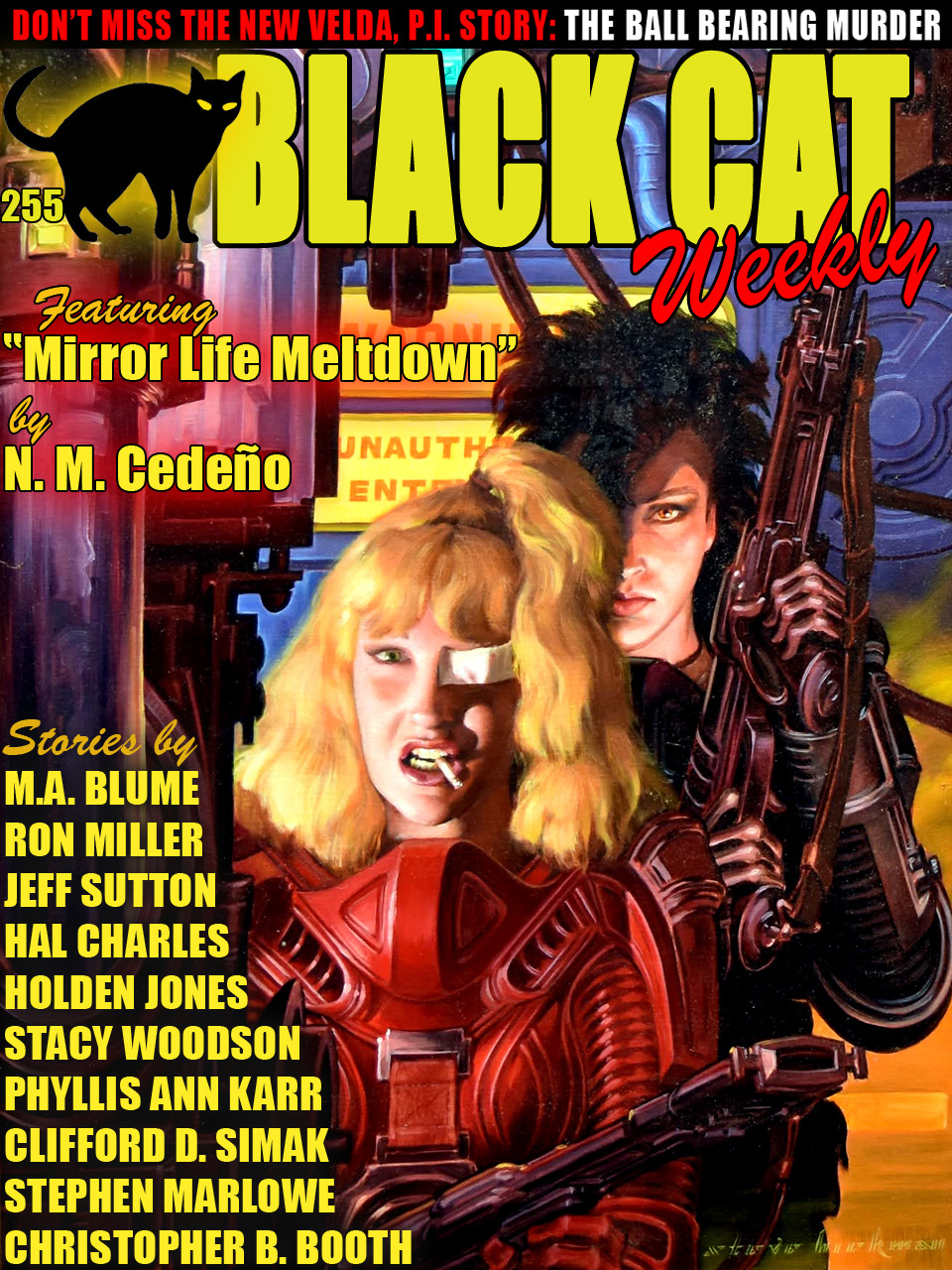
Meet my newest character, Cleo Jimenez, a former Marine, former police officer, and now Dallas-based private investigator. “Mirror Life Meltdown,” in Black Cat Weekly #255, is Cleo’s first published appearance, but not the first story I wrote for her. That story is still awaiting publication later this year. Her third case is currently on submission.
Cleo is non-descript, with average height, average build, average looks. She’s a thirty-something, brown-hair-in-a-pony-tail, jeans-and-t-shirt kind of woman. She’s not into fancy clothes, fussy hair-dos, or make-up. Being average makes it easier for her to blend into the background when she is following a subject suspected of infidelity. The majority of Cleo’s cases involve family drama, from cheating spouses to crimes caused by addiction, mental illness, greed, vanity, and lust. In Cleo’s world, a bird that walks like a duck is usually a duck, not a whooping crane. Her cases stem from people doing stupid things and making bad choices, resulting in blow-ups in their personal lives.

Cleo enjoys romance novels, historical or modern. She studied communication at the local community college. She can handle a gun, but doesn’t usually need to carry one, since taking photos of cheating spouses, unseen, rarely leads to conflict. She drinks Shiner Bock beer and drives an older model Nissan.

When Cleo accepts a case surveilling a professor whose wife is concerned by his sudden inattentiveness and lack of communication, she isn’t expecting a deep dive into the world of university-level bioengineering and biochemistry research. She fully expects to photograph the professor in a sleazy motel, maybe with a grad student. Then her duck turns into a whooping crane, and the case takes on potentially earth-shattering consequences. Thank goodness Cleo is resourceful, even when out of her depth!

Where did the idea for this story come from?

I saw a call for a short story of any genre that included a mention of something potentially apocalyptic. As I was pondering the guidelines, I asked my neurodiverse college student son, who is currently working as an undergraduate research assistant at the University of Texas at Austin, if he could think of any possible causes of a man-made apocalypse, excluding obvious things like thermonuclear war or robots and AI. He spouted a list. (This is a fairly normal conversation in my house.) The creation of mirror life bacteria was on his list. I asked what that was. He defined it. Fortunately, I retained enough of the chemistry and organic chemistry classes that I took in college to understand his explanation.

Then I went to the internet and read several articles on mirror molecules and mirror life. In one of those odd quirks of coincidence, I even received a newsletter from UT Austin with an article about the work on mirror molecules being done at UT Dallas around that time.

Now I had an interesting topic and a setting: UT Dallas, where my oldest son attended college. Next, I needed some characters for the story.

I have another PI character who lives and works in the Dallas area. Her name is Maya Laster, and she’s a private investigator specializing in forensic and genetic genealogy. I considered how I could place Maya in a mirror-life case, but she felt wrong for the story. Then I remembered Cleo. Cleo was perfect for the case I was imagining.

In her next adventure, Cleo is hired to stand guard over a painting at the State Fair of Texas. That case, entitled “A Picture is Worth a Thousand Likes,” will appear in the anthology Big Tex and Suspects: Crime at the State Fair of Texas which is scheduled for release later this year.

****

For more information on short fiction by N.M. Cedeño, visit nmcedeno.com

The Research Rabbit Hole: Hotel Room Doors and Locks

By N.M. Cedeño

Recently while writing a story set in 1968 inside a fictional, historical hotel, modeled on the Driskill Hotel in Austin, Texas, I ran into a question about hotel doors. Finding the answer took me down a rabbit hole of research into the safety codes and regulations governing hotel doors and locks.

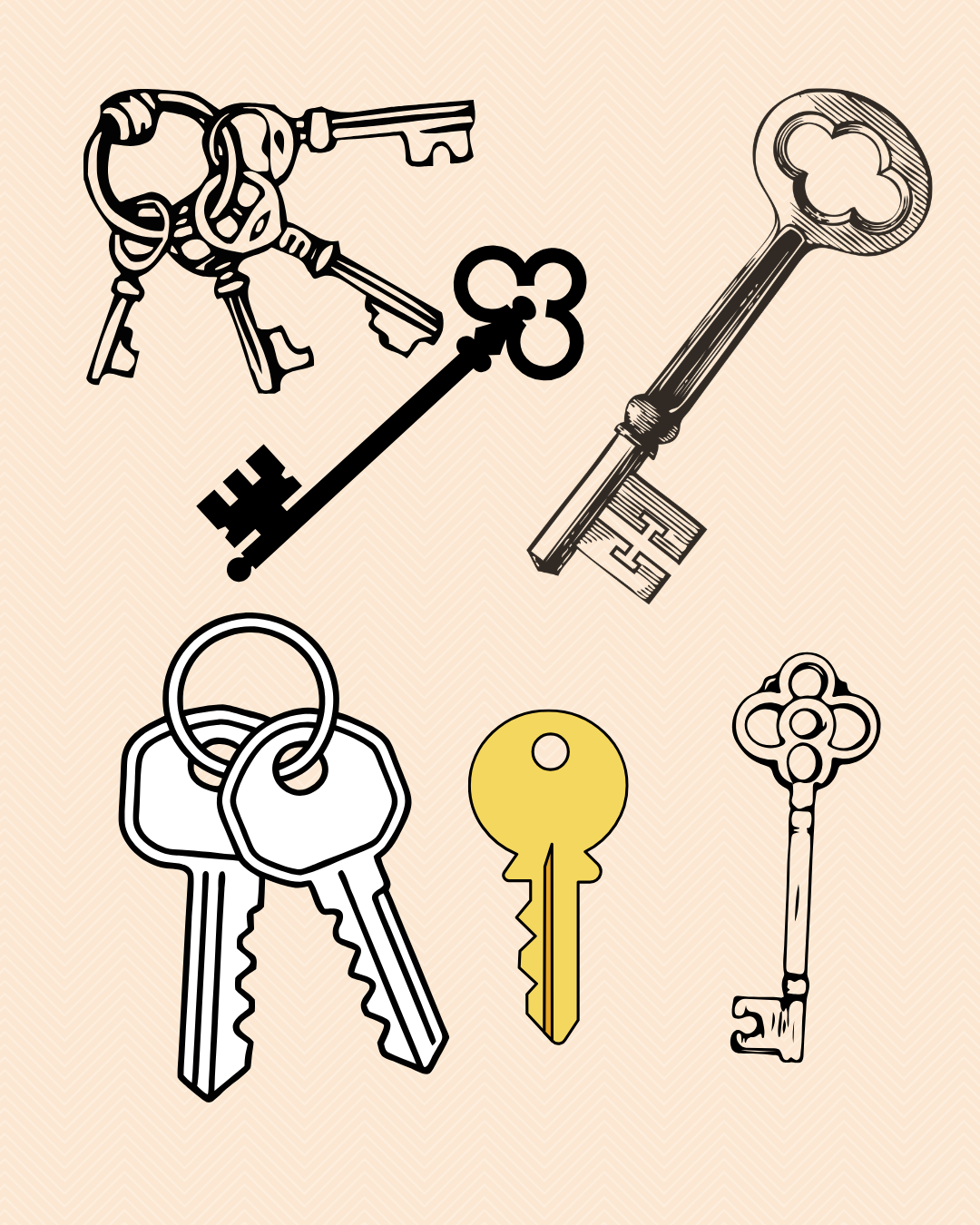
Images Created with Canva

In the 1800s many hotels kept room keys on hooks behind the registration desk. A guest would be given the key when they checked in. When leaving the hotel temporarily, guests would leave the bulky, skeleton-style keys at the desk and reclaim them when they returned. Desk clerks would know at a glance if a guest was in the hotel at any given moment.

With improvements in locks and the manufacturing of smaller keys, guests began to keep room keys in their possession when leaving the hotel temporarily. Housekeepers and managers had to have master keys to be able to access rooms when guests were out or lost their key. Hotel doors in the early 1900s did not close and lock themselves. For my story I needed to know at what point the regulations changed to require hotel doors to close and lock themselves.

This turned out to be two different questions because the requirement for self-closing is separate from the issue of self-locking.

On the issue of self-closing doors, I learned that hotel fires spurred building code changes. The June 5, 1946, La Salle Hotel Fire in Chicago killed sixty-one people. The Canfield Hotel Fire in Dubuque, Iowa, on June 9, 1946, killed nineteen people. And the Winecoff Hotel Fire on December 7, 1946, in Atlanta killed one hundred nineteen people. On the heels of these 1946 fires, building codes across the United States were changed in the 1950s to require self-closing, fire-resistant doors in hotels, and enclosed stairwells to protect people escaping from fire. The regulations only required the doors to self-close, not to lock.

Additionally, in many places, older buildings were not required to meet newer safety codes. After the 1970 Ponet Square Fire, Los Angeles passed regulations requiring retrofitting older buildings over two stories tall with enclosed stairwells to provide a protected path out of the building. The Ponet Fire Door ordinance required the installation of self-closing doors that could block the spread of fire for at least one hour on rooms and stairwells. But different states and localities have different rules on retrofitting of older buildings. After the 1980 MGM Grand Fire in Los Vegas, a commission was formed in Nevada to discuss the need for making older buildings comply with newer regulations.

I still didn’t have an answer on the question on whether the door self-locked. Here Mr. John Payne, a forensic locksmith, came to my rescue. He said: “The lock side of the equation was solved earlier: Walter Schlage patented the “key shutout mechanism” — the core of what we now call the “hotel lock function” — in a series of patents beginning in 1933. The typical hotel function lock had an outside handle that did not move and a key was required to retract the latch to enter from the corridor. The door would automatically latch behind every guest who entered or departed the guest room. The combination of a self-closing door and a self-latching hotel lock cylinder meant that by the mid-20th century, a hotel guest needed to do nothing at all when leaving a room — the door closed, latched, and locked itself.” Thus, hotels built after the mid-1930s would probably have these newer door locks.

But Mr. Payne pointed out, many hotels didn’t consider functional door locks for guest security to be an important responsibility until after singer Connie Francis sued Howard Johnson Hotels in 1976. Ms. Francis was beaten and raped in her hotel room. Her attacker gained entrance through a sliding glass door that was easily opened from the outside. The hotel was aware that the door locks were not sufficient and that other incidents had occurred at the hotel. A jury found the hotel liable for the assault. Prior to this lawsuit, only the assailant had ever been held responsible for such an attack in a hotel. This lawsuit (Garzilli vs. Howard Johnson Motor Lodges, Inc.) was the first to establish that hotels are required to provide adequate security for guests, which includes functional door locks.

After this deep dive down the research rabbit hole, I had the answers I needed to make my story work. My fictional historical hotel built in 1886 might not yet have self-closing, self-locking doors in 1968, especially if it was scheduled to undergo a major renovation in 1969 to bring it up to code. My fictional hotel guests would still have to manually close and lock their own hotel room doors using the original Victorian era knobs and locks. Which means, someone might forget to lock a room, allowing for a robbery to occur. Thus, the crime in my story was plausible. Now, I won’t have people writing to tell me that the fictional thefts in my fictional hotel were impossible, and more importantly, the editor who questioned the door closing and locking situation and sent me down this research rabbit hole is satisfied.

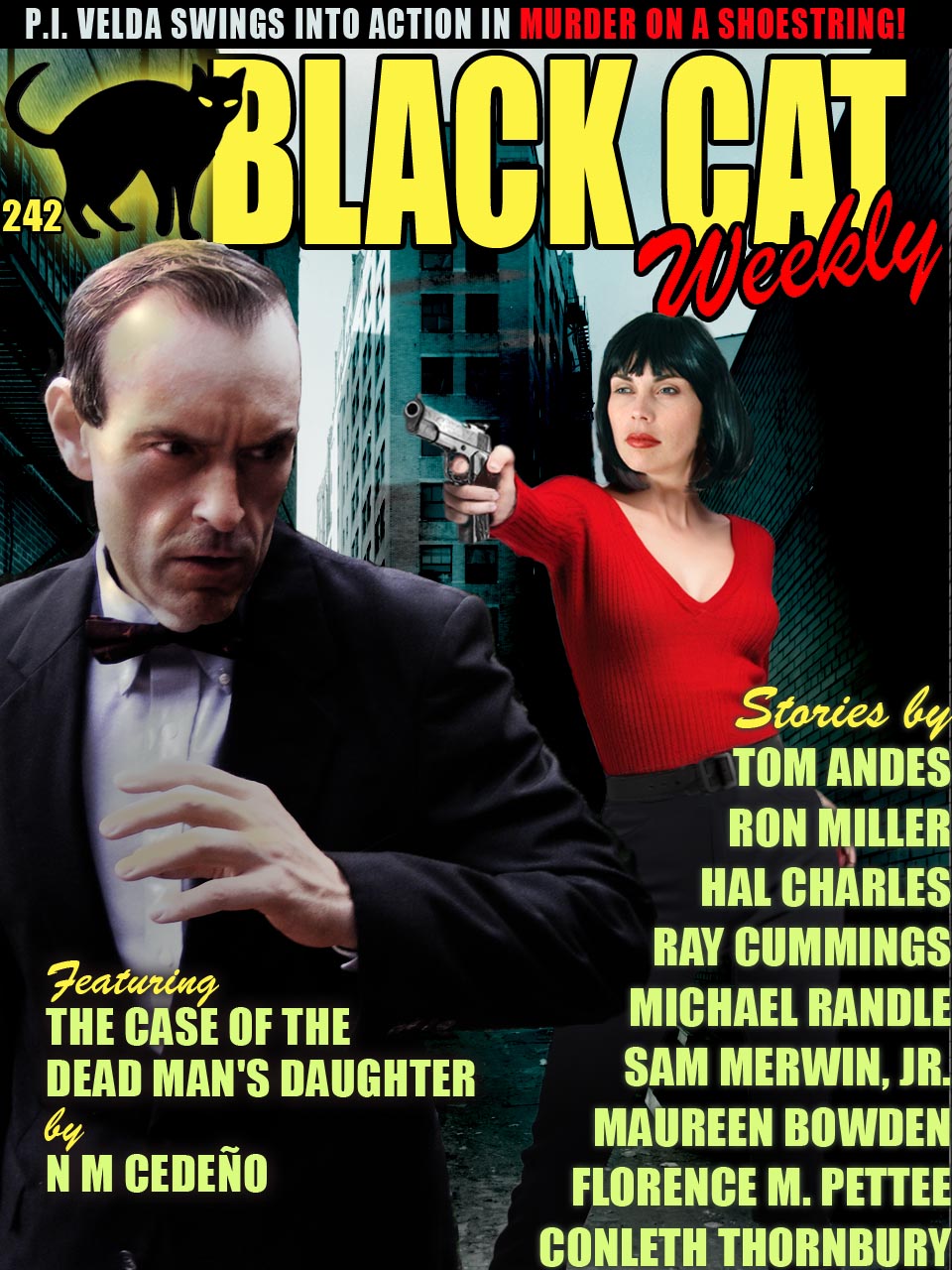
Finally, I have a new story out in Black Cat Weekly #242. “The Case of the Dead Man’s Daughter” features genetic genealogy private detective Maya Laster. I’m thrilled for her story to be featured on the cover of the magazine.