Helen Currie Foster, January 15, 2024

“But at my back I always hear time’s wingèd chariot drawing near…” (Andrew Marvell, 1621-1678)  

Today in pre-dawn darkness, the house quiet except for the murmuring furnace, my characters were already at me, barking orders: “More! More smells, tastes, experiences! More about me! Tell people what I’m thinking, what I’m experiencing, what I’m worrying about!”

They’re right. Readers want to know their favorite mystery protagonists. Why? Because readers are in league with them, walking in their shoes. Readers know that stepping into a protagonist’s sensory experience—smells, food, experiences, relationships—will springboard them into the setting, help them to be in the picture, ready to seize on every clue.

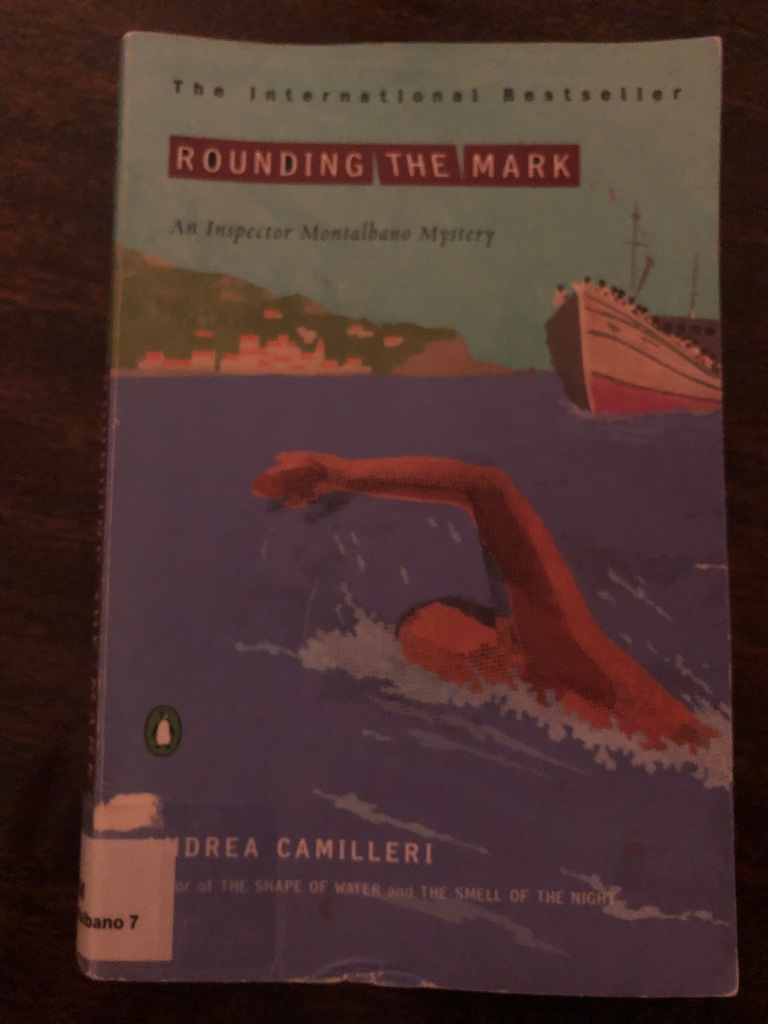
Resolution 1. Tastes! Flavors! Food! As Rounding the Mark, Book 7 of Andrea Camilleri’s long-running series, begins, Inspector Montalbano of little Vigáta, Sicily, can’t sleep:

“Stinking, treacherous night. Thrashing and turning, twisting and drifting off one minute, jolting awake and then lying back down—and it wasn’t from having scarfed down too much octopus a strascinasali or sardines a beccafino the evening before. No, he didn’t even have that satisfaction.”

Fortunately the recipes are described in the Notes at the book’s end. In Sicily, where seafood reigns supreme, Montalbano refers to small octopi, boiled and dressed in olive oil and lemon juice, and then sardines, stuffed and rolled up with sauteed breadcrumbs, pine nuts, sultana raisins, and anchovies. When Montalbano returns home from the police station he always races to his refrigerator to see what his housekeeper, Adelina, has left for him. In Book 16, Treasure Hunt, Montalbano “howled like a wolf with joy” when he finds “eggplant parmesan, done up just right, enough for four.”

Can’t you just smell this dish? Montalbano consumes the entire panful: “the sauce was a wonder to taste.” (50). We see how he delights in his food, how very particular he is. (And throughout the series Adelina keeps cooking – pasta in squid ink, involtini of small fish, pasta ‘Ncasciata…https://www.foodandwine.com/pasta-ncasciata-sicilian-baked-pasta-7093847

Here’s Montalbano in Rounding the Mark after discovering a new restaurant:

“The antipasto of salted octopus tasted as though it were made of condensed sea and melted the moment it entered his mouth…And the mixed grill of mullet, sea bass and gilthead had that heavenly taste the inspector feared he had lost forever….After a long and perilous journey of the sea, Odysseus had finally found his long lost Ithaca. “(73)

Camilleri (died 2019) was writing mystery, murder, crime—but he included as major players in the setting Sicilian food, awareness of this ancient Mediterranean island culture, and echoes of classic myth.

We can only imagine Montalbano shaking his head at the food situation of private detective Cormoran Strike, protagonist of The Running Grave, seventh in the series by “Robert Galbraith” (aka J.K. Rowling). To protect his knee, Strike, a military police veteran who lost his lower leg in Afghanistan, must lose weight; he’s now lost “three stone” or about 42 pounds. “Usually he’d have grabbed a takeaway on the way home” but now, “without much enthusiasm,” he’s fixing broccoli and salmon in the tiny flat above his seedy London office.

Does the author need to describe these flavors? Aren’t “broccoli” and “salmon” redolent enough by themselves, especially broccoli? Later, as the plot roars into action, Strike’s off his diet, overcome by “the lure of sweet and sour chicken and fried rice” (767) and demanding that his partner Robin Ellacott stop at a 24-hour McDonald’s on London’s Strand (848) where, as they walk to the office, he’s eating “large mouthfuls of burger” and starting on two bags of fries. He’s back to his usual food habits––pub food, fast food––yet his mind’s on the recent attack, “as though he’d only just felt the heat of the bullet searing his cheek.” At chapter’s end, as they discuss the case, “Strike ate a solitary cold chip lingering at the bottom of a greasy bag.” There’s an urgency to his desperate hunger, to the need for enough energy to stick with an exhausting case—and don’t we all know about that solitary cold french fry in the bottom of the bag? Can’t you see him fishing it out? For Strike, food fills a need, but he’s not immersed in the culinary experience. He’s focused on his case.

What keeps Strike working as a private investigator? Challenge, curiosity, tenacity, terror—but not great cuisine. Food-wise, Montalbano’s habits differ sharply from Strike’s. But for each man, eating habits vividly highlight both personal life and setting.

Resolution 2: Human Scent! Other scents matter to both Strike and Montalbano. In the first chapter of The Ink Black Heart, Cormoran Strike has tried to find a perfect perfume for Robin’s 30th birthday. When she sprays on the new perfume, “he…detected roses and an undertone of musk, which made him think of sun-warmed skin.”

Similarly, in Treasure Hunt, when Montalbano and his compadre, the daring Ingrid, are outside on his veranda, “The night now smelled of brine, mint, whisky, and apricot, which was exactly what Ingrid’s skin smelled like. It was a blend not even a prize parfumeur could have invented.” (175)

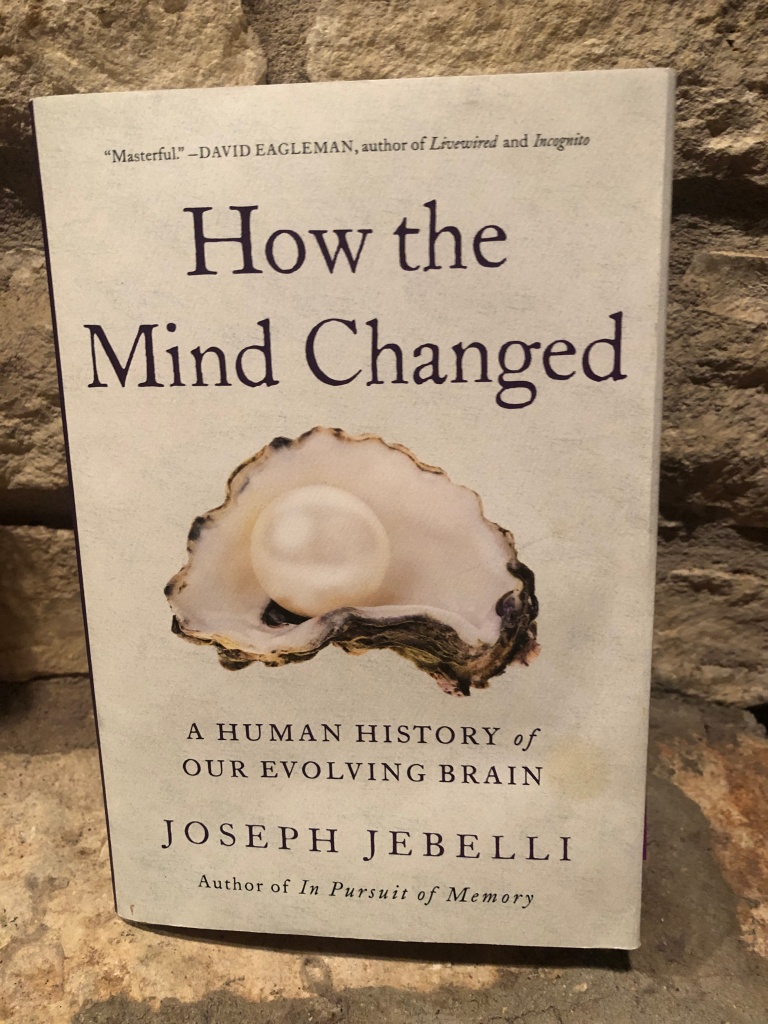
Reportedly one writing instructor has suggested that authors “include smell on every page.” These two mystery writers don’t obey that injunction (do you know any who do?). But why is scent so critical for us? Apparently the amygdala (a paired structure, with one in each temporal lobe) “developed from our most primitive sense—the sense of smell.” Joseph Jebelli, How the Mind Changed (Little, Brown, Spark, 2022, at 30). It’s near the olfactory nerve which is why scents connect strongly to emotions and memories. https://my.clevelandclinic.org/health/body/24894-amygdala

What scents spark your own memories? If a book mentions honeysuckle on a summer day, I might remember my grandparents’ front porch in Itasca, Texas, and how we learned as kids to suck nectar from a honeysuckle blossom. What pops up for you when a book mentions lavender? Or clean sheets? Baby powder? Or iodine, rubbing alcohol, band-aids? Marshmallows toasting on a stick? Pine straw underfoot? The first ocean breeze when you hit the beach? Does a book feel richer to you when your own memories are awakened?

What about the scent of January? Today’s the coldest day of 2024 so far, here in the Hill Country. Inside – hot tea: mint, chamomile, green, or  maybe ginger slices, with honey and lemon. Outside, cedar burning in a neighbor’s brush pile.

Resolution 3: Character’s thoughts (and feelings)! In Treasure Hunt Camilleri includes a hilarious italicized interchange between Montalbano (called “Montalbano One”) and “Montalbano Two” where Montalbano Two criticizes Montalbano One’s case-handling as showing signs of deterioration, of “losing his cool,” highlighting Montalbano’s own concerns about aging. (18-19)

Camilleri also uses other techniques to put us in Montalbano’s head. Here’s one from Rounding the Mark, where, again, Montalbano’s worrying about getting older:

“As he was shaving, the scenes of the previous evening on the wharf ran through his head again. Little by little, as he reviewed them with a cold eye, he began to feel uneasy…. There was something that didn’t jibe….He stubbornly played the scenes over in his head, trying to bring them more into focus. No dice. He lost heart. This was surely a sign of aging. He used to be able to find the flaw, the jarring note…without fail.” (61)

Camilleri lets his character feel. When a small boy is kidnapped from north Africa by sex traffickers and escapes on the pier in Sicily, Montalbano  returns him to his “mother,” not understanding she isn’t his “mother” at all. When the little boy is killed Montalbano visits the morgue:

“He lifted the sheet with one hand…and froze. A chill ran down his spine. It all came back to him at once: the look the little boy had given him as his mother ran up to take him back….he hadn’t understood that look. Now…he did. The little eyes were imploring him. They were telling him for pity’s sake, let me go, let me escape. And now…he felt bitterly guilty…He was slipping. It was hard to admit, but true… “(84)

In contrast, Cormoran Strike is more inscrutable, more unwilling to reveal his emotions, perhaps even to himself. Galbraith describes Strike as a “mentally resilient man” who tries but sometimes fails to control emotion. One of his tools “was a habit of compartmentalization that rarely failed him, but right now, it wasn’t working. Emotions he didn’t want…and memories he generally suppressed were closing in on him…” As a consequence he was “brooding so deeply that he barely registered the passing Tube stations and realized, almost too late, that he was already” at his stop. (105) In one scene after visiting his sister Strike starts home feeling very angry at his dead mother, who died of an overdose when he was nineteen. Galbraith then uses italics for Strike’s mental attack on her: “If you hadn’t been what you were, maybe I wouldn’t be what I am. Maybe I’m reaping what you sowed, so don’t you f*king laugh at the army, or me, you with your paedophile mates and the squatters and the junkies…” (106) These passages show the reader Strike’s painful upbringing and may partially explain his need (and ability) to compartmentalize—both, ironically, key to his later success.

Strike drinks, smokes, has sex, but almost in the same way as he gulps down fast food. Food seems temporarily satisfying, but not a life pleasure. Early on we become aware that the strongest sensation Strike is described as experiencing is the pain of his stump, and the relief he experiences when he removes his prosthetic. In his compartmentalization of his emotions, has he replicated this binary condition? (No spoilers here!)

Resolution Four: The Weather! Camilleri and Galbraith’s characters don’t always focus on weather, but here in the Texas Hill Country we must take notice. It’s too cold (like today), too hot (pretty soon), too wet (spring rain bombs and dangerous low-water crossings), or too dry (like last summer’s dreadful drought). Blessings on March, which will bring bluebonnets and the ethereal prairie celestial, then wine cups, with the pink of redbud and Mexican buckeye to rejoice the eye. But weather’s definitely a factor in upcoming Book 9 of the Alice MacDonald Greer Mystery series. Watch for it—coming soon!

A CHRISTMAS WISH

FRANCINE PAINO

A.K.A. F. DELLA NOTTE

So this is Christmas – And what have you done? 

So begins the first verse of John Lennon’s 1971 hit song. His good wishes toward wo/mankind had a political message wrapped in the lines. But politics aside, it was and still is a good message. But the question, What have you done? requires some thought. What have you done to keep the Christmas spirit alive throughout the year? What have you done for your fellow man? For your family? For your neighbor? Hard self-examination is required. Before tackling what we have done throughout the year to keep the spirit of Christmas, let’s dive into how we keep the spirit of Christmas fresh each December.

In the not-so-distant past, the commercial hype, converting the spirit of giving to the spirit of buying, began after Thanksgiving. Now, it fills the airwaves with meaningless noise throughout the year and begins a concentrated assault by mid-October. By December 25, the message is stale and lost if one is not careful about blocking out the frenzied for-profit communications, images, and messages that have little or nothing to do with Christmas. You might ask, how do you do that? There are many ways. It just takes a little effort and prioritizing. Here are a few. 

First, before Thanksgiving, never watch movies or TV programs with Christmas themes, and do not indulge in “Christmas” centered shopping, decorating, sending cards, or partying. Does that put more pressure on stuffing everything into the four short weeks of Advent (the time of awaiting the special arrival?) Yes. And that helps prioritize what’s really important. 

Then, here are uplifting classic books, moviesand performing arts that address the questions of what you have done or can do.

In books, there are hundreds of Christmas stories. My favorite is  Entitled Christmas Classics. Twelve stories of Christmas, including The Gift of the Magi by O’Henry and The Little Match Girl by Hans Christian Andersen. 

And who can get through December without watching A Christmas Carol? The Charles Dickens classic story of an unhappy, mean-spirited old gentleman who is taught the real meaning of Christmas and caring for his fellow man was well-received in 1844. It inspired an early theatrical production by C.Z. Barnett at the Surrey Theatre on February 5 of the same year, a few weeks after the first publication of the novella. There are at least 16 movie adaptations, and the list of movies and shows is too long to include, but a short trip to Wikipedia will provide it. My favorites are the 1938 and 1984 versions – (1984 stars George C. Scott.)

Then there are the live performing arts. In Austin, the Austin Symphony Orchestra and Chorus Austin perform Handel’s Messiah every year. The score and excellent musicianship lift the soul. The annual Nutcracker ballet, as much part of the Christmas season as lights and fir trees, is performed by almost every dance company and ballet school in every U.S. city. Ballet Austin’s production runs yearly for most of December. It is accompanied by the Austin Symphony Orchestra. 

At this point, you may think, well, not everyone can afford these things, and you’d be right. Books can be reserved at public libraries for those who cannot afford them. 

Theater tickets and live concerts can be pricey, it’s true. But many of the movies on TV are free, as are concerts and ballets on public TV stations.

For those who would love to see the Nutcracker ballet but cannot get to a theater, one of the best-recorded performances before a live audience is the 2012 Maryinski Ballet and Orchestra under the artistic direction of Valery Gergiev. It can be rented for far less than the cost of a theater seat, and to create the theater atmosphere, put on something nice but comfortable. Don’t watch in pajamas or an old housedress. Turn off all the lights and let the screen be the only focus. Have a cup of tea or coffee with a sweet treat – or a glass of wine and get into the mood. 

Most of these stories, concerts, and ballets are appropriate and recommended for the young, but if something lighter is desired, there are hundreds of adaptations of the classic in TV shows and movies, for children. On the lighter side, Entertainment Weekly published The 30 Best Christmas Movies for Children, by Danny Horn, November 16, 2023, which included Home Alone, Elf, and Rudolph the Red Nose Reindeer. 

For a more modern take on an old story, Disney’s 2018 reimagining of the Nutcracker, with Pyotr Tchaikovsky’s music, is brilliant. The effects are magical, the storyline is unique, touching, and beautiful, and the outcomes for the Nutcracker characters are unexpected. It’s a story for all ages, and as soon as I’m done with this blog, I shall pour a cup of hot coffee and enjoy it again. 

There are abundant enriching and inspiring events, shows, and messages to refresh our hearts during Christmas. And it may help keep the spirit alive and generous throughout the year. 

      Again, in the words of John Lennon: And so this is Christmas. Hope you have fun. The old and the young ones- The near and the dear – For the rich and the poor ones, black, white, and yellow, A very merry Christmas And a happy New Year – And let’s hope it’s a good one – Without any fear.

My Dirty Little Secret

by K.P. Gresham

Up to now, I’ve avoided a particular phrase in describing my Pastor Matt Hayden Mystery Series. And the secret is…I write Christ-centered mysteries.

To me, this term is more accurate in describing my books than calling it Christian fiction. Of course, it is Christian fiction. However, a lot of folks who read Christian fiction expect there will be no swear words, no blood on the page, nothing that would be considered “controversial.”

In my Christ-centered mysteries, I like to acknowledge the real world, just as Christ lived in the real world during His time on earth. He ate with taxpayers, drank wine (heavens, His first miracle was to create some awesome wine for a wedding banquet at His mother’s request), hung out with tax collectors and bad guys. Although He was incredibly within His rights to judge others, He did not. Instead, He loved them.

My character, Pastor Matt Hayden, has existed in the real world. He came from a police family. His father was a police captain, his brother was an officer on the bomb squad, and Matt was an undercover cop on the Miami docks. Then a corrupt police chief killed both his father and brother as they had been getting too close to outing the chief’s crimes. Finally, the chief came after Matt. A confrontation ensued, and Matt had the opportunity to kill the chief. God stayed his hand. And Matt was called to become a pastor, which he did when he entered the Federal Witness Protection Program.

Matt becomes a pastor who is very familiar, maybe too familiar, with the real world. He knows, as Jesus knew, people who were crooks, prostitutes, alcoholics–you get the gist. And Matt does not condemn them. He holds them to account, of course. But his main goal is to love them.

So, in my books, you’re going to hear swear words, ‘cuz bad guys swear. And Matt’s girlfriend owns a bar. And bad stuff happens to good people, and good people sometimes slip up and do bad things.

That’s life. 

I have to acknowledge this reality, because I saw folks lie to my dad a lot. My dad was an incredible Lutheran minister. The messages from his pulpit were all about love. But what I saw, that dad didn’t always see, was the “act” some folks were pulling on him. Whenever we’d go to a parishioners home, the family Bible was always on display, the best china was on the table, everyone was dressed nicely, and we all said grace before and gave thanks after a delicious meal. But I knew that some people weren’t always so crystal clean. Not everyone, by a long shot. I love the people of those churches. Good, loving people. But there were a few that had issues. One of my dad’s “good” friends was a regular at a questionable bar in town with a woman on his lap who wasn’t his wife. Dad never knew this; I didn’t want to break his heart. This type of thing happened from time to time.  Sometimes dad’s world wasn’t real.

Jesus, on the other hand, couldn’t be hoodwinked. And I wanted Matt to come into his ministry with his eyes wide-open. And I want my books to show Matt’s faith and desire to love in a real-world setting.

So, if you go to the link above to get my books, you will see that this is the first time I’m saying my books are Christ-centered mysteries. And when you get there, you will see the name of this promotion is…

November Edgy Christian Fiction.

So, I guess I’m living on the Edge. But now you know my secret.

K.P. Gresham, Author

Professional Character Assassin

K.P. Gresham is the award-winning author of the Pastor Matt Hayden Mystery Series as well as several stand-alone novels.  Active in Sisters in Crime and the Writers League of Texas, she has won Best Novel awards from the Bay Area Writers League as well as the Mystery Writers of America.

Click here to receive K.P.’s newsletter and a get a free short story!

Website: http://www.kpgresham.com/

Email: kp@kpgresham.com

Blogs: https://inkstainedwretches.home.blog/

https://austinmysterywriters.com/

Facebook: https://www.facebook.com/kpgresham

Books by

K.P. Gresham

Three Days at Wrigley Field

The Pastor Matt Hayden Mystery Series

The Preacher’s First Murder

Murder in the Second Pew

Murder on the Third Try

Four Reasons to Die

THE WITCHING HOURS OF HALLOWEEN

It’s time…for ghosts, goblins, witches, warlocks, and, of course, the dead. It’s Halloween. But what was it about in ancient times, and where did it begin?

The customs of Halloween can be traced back to the Druid priests of the Celtics. It was the second most significant holiday of their year. The first was Beltane – the growing season celebrated from April 30– May 1. The second, October 31, was Samhain when the crops were reaped. It was believed that by harvesting all the crops by October 31, there would be no damage to them by ‘evil or mischievous spirits’ who’d return on the first evening of the dark half of the year. 

Druid rituals, deeply ingrained in the Celtic belief system, consisted of lighting huge bonfires, animal sacrifice, and burnt offerings of foods. The priests disguised themselves with animal masks to confuse the spirits.

When Christian missionaries set out to convert England, Pope Gregory, the head of the Church from 590 to 604 A.D., advised them not to force the conversion to end their culture but to incorporate as much of it as possible. It wasn’t a far stretch to succeed since saints in Christianity were credited with miraculous events that were supernatural in nature. Thus, the name Samhain, on October 31, morphed into All Hallows Eve – the night before the saints were revered. 

All Hallows Eve, over time, became Halloween, and the old beliefs did not completely disappear. The concept of spirits returning survived, and Christianized customs grew out of the old ways, with each country developing its own practices.    

In France, Halloween holds little attraction or fanfare. It is considered a very American tradition, and the French are never anxious to adopt American ways. Halloween in France is overshadowed by All Saints Day, on November 1, a national public holiday. The French attend specific religious services and visit cemeteries to lay flowers on deceased relatives’ graves.

The same may be said for the Netherlands. They, too, consider Halloween an American and commercial endeavor rather than a cultural institution. On November 11, the Dutch observe Sint-Marten, a children’s feast that resembles the American celebration of Halloween and is more widely practiced.

In Asia, Halloween has become popular. Hong Kong, the American festival has caught on, and in Japan, where it was first celebrated at the 2000 Tokyo Disneyland, it has taken on a life of its own. 

In Haiti, Fet Gede, or the Festival of the Dead, has an entirely different cultural backdrop. On November 1, All Saints, and on November 2, All Souls, those who practice Voodoo, the Vodouisants, pay their respects to Baron Samedi, the father of deceased spirits. Vodouisants dance in the streets, commune with the dead, and walk through graveyards, leaving food for their ancestors from their own tables. It more resembles Mardi Gras than Halloween.

In Italy, La Festa di Ognissanti (the feast of All Saints) or Hallowmas – short for All Hallows Mass, on November 1, is celebrated by spending time with family. On all Souls, Italians leave chrysanthemums on loved ones’ graves and bake cookies called fave dei morti. They are made with almond, butter, and flour and represent the beans of the dead, a tradition that has survived from ancient Roman times, when beans were used in funerary rites. 

Perhaps my favorite Halloween ritual is from Mexico: Dia de Los Muertos – the Day of the Dead. Mexicans wear bright makeup and dazzling costumes to parade, sing, and dance. A unique aspect of Dia de Los Muertos is the building of altars in tribute to deceased ancestors. Upon these altars are sugar skull-shaped confections and bottles of tequila, along with flowers and pictures of the dead. These offerings are believed to attract the spirits and reunite them with their living families. Other traditions include gathering at the cemeteries dressed in eye-catching costumes with colorful floral decorations, including symbolic marigolds. There, they enjoy traditional foods like pan de muerto (bread of the dead) and Calaveras (sugar skulls). From Mexico, we come to the United States, where all of our American Halloween traditions evolved from other countries.

Carved Jack-o-Lanterns began with a legend about a man named Stingy Jack who trapped the Devil and only let him go on condition that Jack would never go to Hell. When Jack died, Heaven didn’t want him, so he wandered the earth as a ghost for eternity, with a burning lump of coal in a carved-out turnip (now a pumpkin) to light his way. Eventually, people began carving frightening faces on their pumpkins to scare away evil spirits.

The custom of wearing creepy costumes began with Samhain. The Celts believed that in costume, they would be mistaken for ghosts and left alone by actual spirits. And then, there is Trick-or-Treat. 

One theory is that during the Middle Ages, on All Souls Day, children and some adults collected food and money from neighbors in return for their prayers for the dead. Eventually, that was replaced with non-religious practices, including songs, jokes, and other tricks if the treat wasn’t forthcoming. The ritual of door-to-door seeking handouts has long been part of Halloween, but we are long past the days of giving fruits, nuts, coins, and toys. We now are every dentist’s dream, devouring $3 billion-plus dollars of candy.

Bobbing for Apples is not as American as Apple Pie. It stems back to a courtship ritual of the Roman festival honoring Pomona, the goddess of agriculture and abundance. Young men and women could “predict their future relationships based on the game. When the Romans conquered the British Isles in 43 A.D,” the Pomona festival melded with Samhain. 

No discussion would be complete without Pranking. Playing pranks varied by region, but the pre-Halloween tradition known as “Devil’s Night” included good-natured mischief. When Irish and Scottish immigrants came to the U.S., they brought the practice of celebrating Mischief Night as part of Halloween.

Igniting huge bonfires also began with the Druids, and over time, believed to light the way for souls seeking the afterlife. Bonfires are no longer common, at least not in big cities. In today’s world, souls need good eyesight because the most they get is candlelight.

  So, my witches, warlocks, ghosts, goblins, and mischief makers, you now have some customs, traditions, and history. Enjoy it with the candy and treats. 

Happy Halloween! Francine Paino  a.k.a. F. Della Notte

THE PULL OF EMPTY SPACES

by Helen Currie Foster~October 17,2023

Last week, trudging up a rocky trail to an abandoned abbey high above an Italian valley in the Sabine Hills, I heard another walker ask this: after the Romans defeated the Sabines, were any Sabine ruins left?

“Yes,” said the guide. “A temple to the goddess of empty spaces.”

The goddess of empty spaces? Her name?

“Vacuna.”

Even in fourth year Latin at McCallum High, our beloved teacher, Miss Bertha Casey, never mentioned Vacuna.

The walker’s question—any Sabine ruins?—had never occurred to me.

Questions by others can open empty pages in our own minds.

Vacuna’s authority remains a mystery—appropriate, if she was, among other powers, in charge of empty spaces. Or moments of rest, of vacancy, of relaxation. One writer says, “Vacuna was the Sabine goddess of water, nature, forests and fertility, but she was also the goddess of rest.” https://worldhistory.us/ancient-history/vacuna-the-hidden-goddess-veiled-in-the-mist-of-history.phphttps://www.romeandart.eu/en/art-nimphs-floating-island.htmlhttps://en.wikipedia.org/wiki/Vacuna

From this hill to the next hill stretched a vast empty space.

Well, not exactly empty––the air seemed visible, with sunlight glinting on bits of dust and mist. But the enormous not-exactly-empty openness fired imagination. The land below contains houses, farms, fences, vineyards—all presumably considered to belong to someone. But watching the air shimmer above the valley I wondered—does that openness belong to Vacuna? To anyone looking out across the valley?

Wait—it didn’t belong to anyone. Not to a hang-glider, nor a kite-flier, nor a drone.  Long after they’d folded their toys and gone home, empty space would still be there, stirring imagination, raising questions, dreams, ideas.

How do you respond to the words “blank page”? To a new notebook? To a waiting empty screen—a “new document” in Word? Your pencil is sharp. Your fingers are poised. What will you write, draw, scribble on that blank page? The very sight of the words “blank page” makes you pause, doesn’t it, making you wonder what you might write? Blank pages prick the imagination.

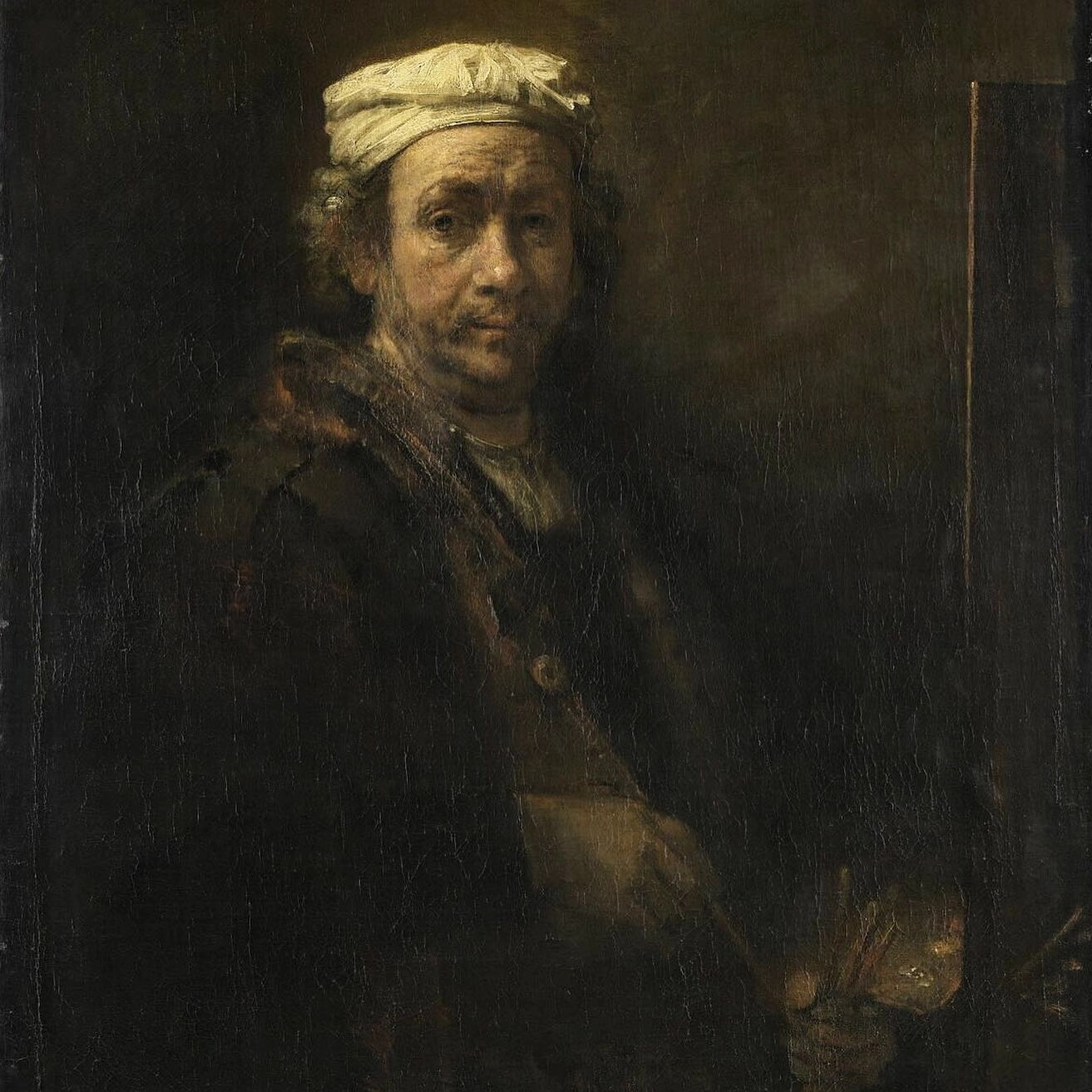
Or you’re an artist, brush in one hand, a vivid palette of colors in the other, confronting a blank canvas. The choices! Red? Violet? Ochre? Viridian? Think of Rembrandt’s self-portrait, as the artist lifts his brush, staring directly at us while coyly hiding the canvas. For us, his canvas is blank. What’s the artist thinking? What do we imagine he’s painting? Of course the tricky master has already painted the canvas we’re looking at, and he included his staring eyes, his ruthless assessment of himself, every wrinkle, every wart.

https://www.louvre.fr/en/what-s-on/life-at-the-museum/a-masterpiece-of-the-louvre And you? What would you paint?

I think of Lily Briscoe in Virginia Woolf’s To the Lighthouse, fiercely concentrating on finishing the portrait she began years ago. We can’t see her painting, but we feel the intensity of her decision-making as to precisely why, where, and how she’ll move her brush for the last stroke.

“Blank canvas”? Emptiness…better, openness; availability; possibility. Imagination calls.

I spend hours revisiting mysteries, reveling in the craftsmanship of the greats, and the enormous creativity that blossoms from the first page, where the canvas is empty before the reader. This week I’ve revisited “Fred Vargas” (writing name) – the French archeologist whose mysteries about her Pyrennean police commissaire, Jean Baptiste Adamsberg, lead the unsuspecting reader into wild leaps of imaginative plotting. https://fr.wikipedia.org/wiki/Fred_Vargas In An Uncertain Place, for instance, when Adamsberg goes to London for an international police conference, his English counterpart, Inspector Radstock, drags him to Highgate Cemetery where someone has left at the entrance 18 pairs of shoes with human feet in them. https://highgatecemetery.org/ The feet have been chopped off dead bodies awaiting burial in funeral parlors. Oh, wait—that’s 17 pairs plus one solo shoe with a solo foot. Adamsberg returns to France, still mulling this weirdness, and confronts a grisly murder where the corpse has been chopped into confetti, with special attention to the big toes and hands and feet. Why? And is the wild-eyed twenty-something who invaded Adamsberg’s Paris house really his undreamed-of son? The plot turns on Serbian vampire stories and the rumor that when Victorian artist/poet Dante Gabriel Rossetti exhumed his dead wife Elizabeth Siddal seven years after her death—ostensibly to retrieve his manuscript volume Poems—she was still rosy and pink. https://nonfictioness.com/victorian/the-exhumation-of-elizabeth-siddal/

From a blank page, to dead poets, to vampires and tombs in Serbia, to…well, check it out! Let me know if you actually identify the murderer before the end. Adamsberg’s one of my favorite characters. Still don’t know why he wears two watches and can’t tell time.

How do fiction writers fill the blank page? By that mysterious process—imagination. In the October 16, 2023 New York Times, Italian physicist Carlo Rovelli asks how we can learn about black holes—places we can neither travel to nor see. His answer? “To travel to places that we cannot reach physically, we need more than technology, logic or mathematics. We need imagination.”

Per Merriam Webster, “The meaning of IMAGINATION is the act or power of forming a mental image of something not present to the senses or never before wholly perceived in reality.” J.K. Rowling: “Though I personally will defend the value of bedtime stories to my last gasp, I have learned to value imagination in a much broader sense. Imagination is not only the uniquely human capacity to envision that which is not, and therefore the fount of all invention and innovation. In its arguably most transformative and revelatory capacity, it is the power that enables us to empathise with humans whose experiences we have never shared.” https://news.harvard.edu/gazette/story/2008/06/text-of-j-k-rowling-speech/

Our genre requires imagination. Mystery writers need a vivid, tangible setting, especially for the murder. My mind has taken me to a rock-art painted cave atop a bluff high above an old ranch, to a music recording studio, to a dining room where a horse rears. We need characters. Protagonist! Murder victim! Suspects! Subsidiary characters who adds color, flavor, depth—like Eddie LaFarge, the retired pro football center who limped into the Central Garage in my imaginary town of Coffee Creek.

And I find something unexpected has happened to me, writing the Alice MacDonald Greer murder mystery series. In the middle of the night, my characters now feel as real as relatives. I watch them driving, kissing, feeding the burros, worrying. Sometimes they pause for a moment, imagining what they’ll do next.

Thank you, Vacuna, goddess of empty spaces.

Those croissants? We’re recovering in Paris from hiking, where these, from the Maison Julien patisserie on Rue Cler, may be the best ever. Letting melting butter create those empty spaces between the layers? Genius.

Helen Currie Foster writes the Alice MacDonald Greer Mystery series (now working on the 9th) north of Dripping Springs, Texas, in the Hill Countrloosely supervised by three burros. She’s active in Austin Shakespeare and the Hays County Master Naturalists and very much enjoys talking to book groups. The 7th mystery, Ghost Daughter, published June 15, 2021, was named The Eric Hoffer Award 2022 Mystery/Crime Category First Runner-up, and also 2022 National Indie Excellence Award Finalist, Mystery.

BOWLING AND PIN-MONKEYS

By

Francine Paino, aka F. Della Notte

Mundane worlds can become amazing when writers are plunged into them. Looking through old family photographs, I came upon a picture of a handsome young man whose start in this country could have been better. He worked as a pin-boy in a New York City Bowery bowling alley a hundred years ago. My story, The Runaway Pin Boy, was inspired by this long-deceased uncle’s difficult adjustment to a new country and culture.

 Francesco Libretti was born in Sassano, Italy, in 1910, emigrated to the U.S. in 1921, and by age 14, he began his short-lived career as a runaway who found work as a pin-boy in a Bowery bowling alley, but here, the similarity stops. 

But where did it begin, what was it like back then? How were the mechanics of setting up pins handled?  

Bowling. A sport that feels as American as Apple Pie is not an American invention. It’s traced back to ancient Egypt, 5200 years ago, in articles found in the tomb of an Egyptian child. Described in its primitive form, nine pieces of stones were set up, and a rounded stone “ball” was rolled to first make its way through an archway made of three pieces of marble. The sport spread from its Egyptian roots into Western Europe, and was brought to the U.S. by the first English and Dutch settlers. It gained popularity through the mid-1800s, played by men only, as it was not the clean family sport we enjoy today. Thus, it faltered when the do-gooders associated it with gambling. Any yet, by 1850, there were four-hundred plus bowling alleys in New York, earning the city the title “Bowling Capital of North America.”

The sport revived in the late 19th century and remained popular during the Great Depression, at least for those with a disposable income. Bowling was a game for  roughnecks and the wealthiest who could afford to build their own private lanes. For the common man the game took place in honky-tonk bars where lanes were built to increase income, with or without alcohol,  and by 1939, there were 4,600 bowling alleys across the U.S. 

Until 1952, when the automatic pin-setters were introduced, picking up and resetting the pins fell to pin boys, often called pin monkeys. They stood at the end of the lanes, perched on narrow ledges or standing up in trenches, waiting for the heavy balls to fly down and slam the heavy wood pins. The pin boys then scrambled to each lane, reset the pins, and gave the heavy ball a hard enough push to get back to the bowler but not hard enough to roll off the track and upset the player in any way. And if he did, there were consequences.

Pin boys were kids, mostly teens, and despite their young years, they were tough characters,  paid meager wages and often taken from the Skid Rows of cities, including New York City’s Bowery. It was hard labor and resulted in frequent injuries, including  broken ribs, severely bruised chins, arms, hands, and smashed fingers, especially when the bowler threw the ball extra hard and fast, just to see if they could make the pins fly.

In the 1830s, the Knickerbocker Hotel in New York City opened three lanes, using clay instead of wood, but no matter the surface, the pin monkeys were at the end of every alley, hoping they wouldn’t be too injured to work again the next day or night. 

Although Child Labor Laws were codified in New York in 1913, these youngsters slipped through the net by lying about their age or being hired by unscrupulous owners. The lives of the pin boys in those early years of the sport were not enviable, but many were willing to endure physical and psychological pain in order to eat.

In The Runaway Pin Boy, the year is 1925, In the Lower East Side ghetto of New York Cityknown today as Little Italy.  Frankie Martone’s mother dies of consumption, and his alcoholic and destitute father abandons him. After witnessing what happens to other immigrant children without families, Frankie flees the authorities, deciding to fend for himself in the anonymity of Skid Row. He learns to beg, borrow, or steal. One night, while he rummages through a trash pail outside the Pin King bar,  a formidable man stinking with sweat and cigar smoke grabs him by the collar. 

“Whatcha doin’ there, boyo?” asks the barrel-chested man with a grizzly turned-up mustache.  Frankie didn’t answer, afraid his thick Italian accent would get him kicked down the street.

“You’re a straggly lookin’ thing, but I need another boy inside. Let’s see what you can do. “He flings Frankie through the door to the bar. “Hey Joe,” he yelled in his Irish brogue. “Broughtcha another.”

Turning to Frankie, he thrusts him forward and points to the trench behind the bowling lanes. Frankie sees a ledge of boys sitting and three more in the trenches. The thunder of balls rolling down the alleys, pins flying and falling, and drunks yelling was deafening, but Frankie understood what needed to be done, and jumped right in.   That was the first night of Frankie’s life as an overworked, underpaid, often injured pin boy determined to get out of this nowhere life on the fringes of Skid Row. 

MURDER, MAYHEM, CRIME

AND THE GRANDE DAMES OF MYSTERY

Reprint by Francine Paino AKA F. Della Notte

Originally submitted in 2021, I thought the s tory of the grand old men and women of mystery was worth a reprint. At the end, I have added three books not on the original list, presenting additional feisty, not-to-be ignored, seniors who make their way through crimes – sometimes committing them.  

Overall, fiction provides a brief respite from the realities in our lives. In those few precious hours of distraction, we shut off the conscious minds’ worries and efforts to find solutions to problems or imagine worst-case scenarios. In real-life crises, the subconscious must see an issue with fresh eyes and a different perspective, perhaps even finding a new approach. The most popular category for that escape in the U.S., as revealed by Nielson Bookscan Services, is the mystery/thriller/crime novels, which beat all others by two to one. But if we seek to escape from real-life problems, why is this genre more popular than romance or comedy?  

Explanations are offered everywhere, even in psychology periodicals. One reason for the popularity of murder, mayhem, and crime is that they allow a safe way to immerse oneself in high drama without the destructive aftermath touching the reader in reality. Another is that it is exciting to be emotionally flung about as if on an amusement park ride. Then there is the experience of entering the criminal’s mind—oh, horror—something we don’t get to see in real life—at least not before the evil deed is done. Readers can also figure out, see, or at least suspect what will happen before it happens, and hopefully, by the end, there is the satisfaction of Yes. Makes sense. It was in the clues all along. Most often, that is not the case in real life. These reasons help explain why this genre is the most popular, but why are stories with elderly sleuths so well-liked?

Unlike the many Mediterranean, Native American Indian, and Asian cultures, and despite the growing economic difficulties and stresses on those societies’ families, their elderly are respected; their knowledge and wisdom are put to good use, whereas in the U.S., youth has become a preoccupation. It has the mind of younger people so entrapped in worrying about maintaining youthful looks that they often miss the grace, wisdom, and knowledge acquired with age and experience. 

Aging in a culture that puts enormous emphasis on being young or appearing youthful creates a constant struggle for those susceptible to that fetish. Yet,—interest in stories employing older people in mysteries is widespread – even among the more youthful readers.

 In mystery fiction, older protagonists have already made the mistakes that younger detectives haven’t yet experienced. Whether professional or amateur, senior detectives see the world through more experienced and seasoned eyes. Thus, their mistakes are different and perhaps even more enjoyable. 

Neha Patel, writing for Book Riot, suggests several mystery thriller books starring older women, starting with the Grande Dame of Mystery, Miss Marple, who at age 70 solved the first of her 13 mysteries in Murder at the Vicarage, by Agatha Christie.  

Before She Was Helen, by Caroline B. Cooney, explores the dangers of confronting your own past life.

In Three Things About Elsie, by Joanna Cannon, the sleuth is 84 years old, and in Partners In Crime, by Gallagher Gray, Lil is a feisty woman of 84 who considers herself “84-years-young,” and has a love of playing detective and Bloody Marys. (My kinda-gal!) 

A metaphysical mystery/thriller, Death in Her Hands by Ottessa Moshfegh, has a 72-year-old widow coming across a haunting. The only clue is a note saying, “Her name was Magda.”

Writing for Early Bird Books, Paul Wargelin offers a list of feisty, intelligent, and frequently underestimated amateur sleuths over 60, beginning with Grey Mask, by Patricia Wentworth, about a retired governess. Written two years before Agatha Christie’s first Miss Marple novel, Ms. Wentworth went on to write 32 Miss Silver mysteries.  

In Tish Plays the Game, by Mary Roberts Rinehart, Tish Carberry isn’t suited for retirement activities, preferring to use her idle hands and mind to solve mysteries.

Stephanie Matteson’s Murder at the Spa introduces Charlotte Graham, a successful actress who, after four decades of screen and stage success, takes on the role of a sleuth in real life.  

“Does age really bring wisdom?” asks Rochelle Melander. She writes, “Recent studies affirm this adage. Older adults…recover quickly after making mistakes and use their brains more efficiently than younger adults.” In Melander’s article Crime Fiction: Savvy Sleuths Over 50, she offers some fascinating crime stories featuring elderly sleuths.

Celine, by Peter Heller. Celine is an artist and P.I. in her late 60s. In Rage Against the Dying, by Becky Masterman, a 59-year-old ex-FBI agent is haunted by the unsolved murder of her protégé. After an attempt on her life, she needs to unearth the truth. 

Not to be accused of gender discrimination, here are two books starring elderly gentlemen. Don’t Ever Get Old, by Daniel Friedman, is about an 87-year-old retired Memphis police officer, Buck Schatz, who learns that a Nazi officer who’d tortured him might still be alive with a stash of hidden gold. He teams up with his grandson, and they get more than they bargained for.

Summer of the Big Bachi, by Naomi Hirahara, is set in L.A. and Hiroshima. Japanese-American gardener Mas Arai, age 69, is hiding a secret. He faces bachi—the spirit of retribution when a stranger asks about his old gambling buddy Joji Haneda. Joji is murdered, and Mas must try to make things right.

Perhaps one of the qualities that fascinate readers, and they may not even realize it, is that often the elderly almost disappear, even standing in plain sight. They are overlooked, leaving them free to move about, observe, listen, eavesdrop, and study circumstances without anyone realizing what they’re doing. 

These, and many other senior Grande Dames and Grands Hommes of mystery, show how being older does not mean life stops. There is still inquisitiveness, a desire for adventure, and the need to use one’s brain. There are still mysteries and crimes to be solved—they do it with humor, grace, and aplomb.

Grab a bunch and enjoy!

PS: Add to the original list:

 Richard Osman’s The Thursday Murder Club, series, featuring the senior citizens of a retirement home.

Catherine Ingel-Sundberg’s, The Little Old Lady who Broke All the Rules, starring 79-year-old Martha Anderson and her four oldest friends, self-dubbed, the league of pensioners.  

Robert Thorogood’s, The Marlow Murder Club, headed up by feisty 77-year-old, Judith Potts.  

Getting Unstuck

by Laura Oles

As a writer, I sometimes find myself struggling through periods of being stuck and working my way out of it. Like that character I locked in the trunk of a car (I’m sorry I did that to you, but I knew you’d escape somehow), I’m having to rethink my tactics.

One of my most effective methods of getting unstuck no longer works. My first line of defense, until recently, was to take my Labrador Retriever for a good long walk. I’d bounce ideas off her and she’d pretend to listen as she considered whether she could catch a nearby deer, road runner or squirrel (no, no and no). My sweet pup has recently left this world, and her absence in conjunction with the triple digit Texas heat has meant my walks just aren’t as appealing as they once were. 

The truth is that we all get stuck. Sometimes we get in our own way. Thankfully, there are strategies to get out.

In a recent episode of Hidden Brain, a podcast hosted by Shankar Vedantam, Shankar interviews psychologist Adam Alter about how musicians, writers and other professionals dig themselves out of their performance holes. The epic writers block that plagues George R. R. Martin is discussed, and Martin himself has said of the increasing gaps between each book, “I’ve had dark nights of the soul where I’ve pounded my head against the keyboard and said, ‘God, will I ever finish this?’”  

I’m scared, George. If you can’t do it, what hope do I have? 

Thankfully, Shanker and Dr. Alter have some solid strategies to offer. For example, Dr. Alter explains how an experiment from behaviorist Clark Hull might help someone struggling with stagnation. The experiment involved mice. I know, I know. How can mice running through mazes help with writer’s block? 

Hear them out.

In the beginning of the experiment, the mice moved slowly at first in the maze and then sped up again.  Once the goal came into view—exiting the maze–the mice moved more quickly. Dr. Hall labeled this the Goal Gradient.  When the end is in sight, the pace picks up. This theory has since been further researched to expose a U-shaped motivation arc.  We may start off on a project quickly and then slow down in the middle. Then our pace picks up at the and of a project. Quick. Slow. Quick.  Take the example of being in the messy middle of a novel.  Too far away from the excitement of beginning a new project and too far away to see the end.  It’s like being in the center of the ocean when we’re far away from shore but we can’t see the destination yet. 

And there we tread water.  

STUCK.

So, how do we combat this? 

CREATE SUBGOALS

Dr. Alter uses this technique in his own writing. He recommends taking a large goal, such as writing a novel, and breaking it into smaller sub goals such as completing a scene, writing one chapter, or choosing a small word count to start. “The nice thing about writing a book is that it’s broken naturally into chapters, so already you’ve shrunk those middles down.”  He further explains that you can take one subset and further divide it. “I’ve used the tactic of every hundred words when I’m struggling more…I find that I’m shrinking and expanding constantly as I’m writing a book.”   

USE A TIMER

Photo by JESHOOTS.com on Pexels.com

Dr. Alter sets a timer for a single minute for those times when he’s struggling with a particularly difficult aspect of writing. The idea is to just get back into the rhythm of writing, and each minute will lead to five minutes and then ten. “Each minute is its own goal, its own victory.”

A deadline, a timeline or some other small constraint can push us through our own block. Constraints can bring freedom. And then a breakthrough.

BATTLING PERFECTIONISM

We’re often our own worst enemy.

Musician Jeff Tweedy, front man of Wilco, has described in significant detail his own experiences with writer’s block. One thing he battles the most is perfectionism.

“Perfectionism is paralyzing because what perfectionism signals to you is that unless you produce perfection, you’re failing. The feedback you’re getting is negative feedback and it’s demotivating.”

I feel so seen right now.

But you didn’t fail.

Tweedy says that he battles perfectionism by pouring out the bad material. “Imagine that your ideas are liquids sitting one on top of the other in your head, you’ve got to pour out the bad stuff.”  This works because the expectation is that, of course, some of the work each day is mediocre. It’s part of the process but you’re “getting rid of the bad stuff so the good stuff can emerge.”

IT’S NOT JUST YOU

If you’re scrolling through social media and getting the impression that your other author friends are all killing it while you struggle to get five hundred words down, it can feel very lonely. But, chances are all the seats are full on the struggle bus.  

“Researchers have found that many of us have a tendency to focus on our own struggles while imagining that others have it easy,” Shankar says. The research shows that most people are stuck sometimes and believe they are the only ones experiencing it. “It’s hidden from view, and it feels lonely,” Dr. Alter says. Psychologists call this “pluralistic ignorance.” The concept centers around the idea that we all walk around thinking a similar thing but believe we’re the only one thinking these thoughts. 

Social media can keep us connected but it’s often a highlight reel—it’s usually the very best news each person in your feed has to share. We don’t see the long bouts of struggle, the everyday challenges, the mundane aspects of the creative process. So, while we root for those who have good news to share, we can also remember that there’s much more to their stories.

This Hidden Brain podcast episode covers additional topics, including the deeper issues of how our mind keeps us trapped in certain behaviors. I highly recommend giving it a listen the next time you’re feeling at odds with your creativity. I’m sure I’ll listen to it multiple times, maybe even on a long walk when that time returns.

Getting stuck isn’t some sort of failure or an indication that talent lacks. It happens to many of us. I wish I had a magic potion to share that would banish writer’s block forever. I’d send bottles to all my writer friends with free refills for life.

What I can offer, though, is encouragement, support, and a link to a fantastic podcast episode.

Laura Oles is the Agatha-nominated and award-winning author of the Jamie Rush mystery series. Her work has appeared in crime fiction anthologies, consumer magazines and business publications. She loves road trips, bookstores and any outdoor activity that doesn’t involve running.   

YOU 2.0:  How to Break Out of a Rut

OUR SENSES: THE WORLD BETWEEN PAGE ONE AND “THE END”

by Helen Currie Foster

Aren’t there two keys to your enjoyment of a mystery? (1) Whether you like the protagonist(s), and (2) whether you’re drawn to the setting?

If I don’t find myself caring pretty quickly about the protagonist (or protagonists—see Mick Herron’s Slough House series, with its delightful collection of failed spies, or Richard Osman’s Thursday Murder Club series with its appealing retirement village residents), I can’t read another page. I shut the book. I want to feel I’m collaborating with the protagonist—so I want to be drawn to his or her mind and experience. Is your reaction similar? When you’re in the bookstore or library, and open a mystery by a new-to-you author, how many pages do you give the author before you shove the book back on the shelf? Not many, right?

The same goes for setting. Setting furnishes part of the puzzle, gives clues to the motivations and preoccupations of the characters. Maybe the author chooses a spot on the planet where the reader has never set foot. A tiny coastal village in Alaska? The ancient cities of Sicily? Or Fred Vargas’s French mysteries, with her Pyrenees-born police inspector Adamsberg? bit.ly/3Or0nDh

Whatever the setting, the author must help us experience it. I recently reread the Shetland series by Ann Cleeves and was caught up by her use of sensory detail. She has us breathing salty air and the smell of sheep, feeling the Atlantic breezes, hearing the cries of gulls and kittiwakes, and always tasting the cups of coffee her police detective, Jimmy Perez, makes time for as his long day wears on. https://greatbritishbookclub.com/all-of-ann-cleeves-shetland-books-in-order/

So wherever a book takes us—Texas Hill Country or Gulf Coast, Paris, Venice, Lake Michigan, Maine, the endless vistas of New Mexico or Arizona, the wilds of Yorkshire—give us the smells, the tastes, the sounds! The feel of the place! And an engaging protagonist!

I also revisited The Coroner’s Lunch, book one in Colin Cotterill’s 15-volume Dr. Siri Paiboun series, set in post-1975 communist Laos with its informers and “burden-sharing tutorials.” Cotterill again impresses with how quickly chapter one captures us, when we meet Dr. Siri, age 72, after the Pathet Lao regime denies him retirement and appoints him coroner—a job he must learn from a tattered manual. bit.ly/3K8Td3N

As we meet Siri in chapter one, we learn he dreams of the dead he’s examined: “He was somehow able to know the feelings and personalities of the departed.” He tells no one of his dreams, fearing they’ll think him a raving lunatic. Besides, “His condition did no harm and it did encourage him to show more respect to cadavers once he knew the former owners would be back”—in his dreams.

Arising from bed, “Siri…carried his small transistor radio to the coffee table. It was a sin, but one he delighted in.” Under the Pathet Lao regime it’s forbidden to listen to Thai radio from across the Mekong River. Instead, “Lao radio broadcasts boomed from public address speakers all over the city from five A.M. on.”

Here’s the smell of Siri’s morning: “He brought his thick brown Vietnamese coffee to the table, sat in his favorite chair, and inhaled the delicious aroma. It smelled a lot better than it tasted…The scent of temple incense had already filled the room, but the roosters were still dreaming of magical flights over mountains and lakes.” And here’s part of what he sees on his way to his office, passing the Mekong: “On the far bank, Thailand stared rudely back at him…The river that was once a channel between two countries had become a barrier.”

Siri defies the instructions of his doctrinaire would-be supervisor Judge Haeng: he continues to wear his ancient leather sandals to his ramshackle office, refusing the black patent shoes Haeng says a coroner should wear, and he pursues the murderous truth despite raids on his notes and even the theft of the bodies he’s analyzing.  

Sights, smells, tastes, sounds! An atmosphere of dreams, the presence of the dead, the feel of an omnipresent regime, and the casual defiance of this irrepressible witty doctor in his ancient leather sandals! Plus a dose of magical realism! Siri’s surrounded by vivid, believable characters—but Cotterill keeps us in Siri’s point of view.

But wait, you say—is there no romance? Wait until you meet Auntie Lah, with her baguettes—“the sweetest in Vientiane”—or taste the sandwiches she makes for Siri—“always different and always delicious.” Siri’s acerbic assistant, nurse Dtui, tells him: “She’s got a crush on you.”

An appealing though wacky protagonist, and a fascinating setting: just one chapter, and I was in.

At the moment, my setting’s different. With the epic heat dome squatting on Texas, I’m temporarily two states away from home, drinking coffee in early morning cool, looking at alpenglow pink on the Front Range and sniffing the vanilla scent of ponderosa pine. From the porch you can hear Glacier Creek rushing past. This setting includes a quartet of mule deer boys, sporting their impressive antlers, still velvety, as they stalk quietly through the sage above the creek. Black squirrels prance on granite boulders, pink and green with lichen; Richardson’s ground squirrels dash from burrow to burrow. Hiking yields paintbrush, mariposa lilies, periwinkle-colored harebells.

And the remnants of past fires!

Tomorrow, though, back to the beloved Texas Hill Country: limestone, live oaks, the stubborn creek still reflecting the sky, and Book 9 of the Alice MacDonald Greer Mystery series.

To Thine Own Self Be True

By K.P. Gresham

When I start a new mystery novel, there are a lot of decisions that must be made. Is someone going to die?  Who’s the murderer? Who’s the victim? What is the setting for the book—location? Era? Is the book intended to be an escape from the world or immerse the reader in a world of reality, using the current (or historical) goings on to push the story forward?

Many authors (past and present) are fearless in their desire to delve into reality and what they have to say about it. They refuse to hide or camouflage their belief system in the telling. Sounds like freedom of expression, to me. So what’s up with all the following authors (living and dead) whose books are being banned?

George Orwell was such an author. His novels Animal Farm (1945) and Nineteen Eight-Four (1949) made very clear Orwell’s admonishment of communism, censorship and surveillance. Using phrases such as “cold war,” “newspeak,” and “Big Brother,” Orwell introduced terms that are now prevalent in our world.

Margaret Atwood, author of The Handmaid’s Tale (1985), chooses to shed light on her view that the males subjugate females. Presented on stage, in opera and on film, the book was given new life as the widely popular 2017 Hulu series which brought the novel back into the limelight.

Ayn Rand’s most popular books, The Fountainhead (1943) and Atlas Shrugged (1947), spoke to her belief in the morality of rational self-interest. Rand described her philosophy “Objectivism”, as “the concept of man as a heroic being, with his own happiness as the moral purpose of his life, with productive achievement as his noblest activity, and reason as his only absolute.”

I chose to highlight these authors because they were very clear in expressing their thoughts on the world, but there are many authors who fit this bill. Consider Harriet Beecher Stowe’s book Uncle Tom’s Cabin. Lincoln referred to her as the lady who started the Civil War.  John Steinbeck’s book The Grapes of Wrath showed the shocking poverty and problems of thousands of immigrants. Even Charles Dickens wrote about the plight of the poor in Oliver Twist.

The author walks a tightrope when it comes to controversial content. In present day, people seem to be more divided on what is right and what is fair and what subjects are forbidden territory.  Most writers do not write to be controversial, but on other the hand, writers must be true to themselves as to what they put on the page.

The decision belongs to the writer. Consequences, good or bad, will follow. But hopefully the author has the grist to hold their heads high, knowing they’ve told their own truths. As Shakespeare wrote in Hamlet, “To thine own self be true.”

Seems to me that is exactly what freedom of expression is all about.

K.P. Gresham is the award-winning author of the Pastor Matt Hayden Mystery Series as well as several stand-alone novels.  Active in Sisters in Crime and the Writers League of Texas, she has won Best Novel awards from the Bay Area Writers League as well as the Mystery Writers of America.

Click here to receive K.P.’s newsletter and a get a free short story!

Website: http://www.kpgresham.com/

Email: kp@kpgresham.com

Blogs: https://inkstainedwretches.home.blog/

https://austinmysterywriters.com/

Facebook: https://www.facebook.com/kpgresham

Books by

K.P. Gresham

Three Days at Wrigley Field

The Pastor Matt Hayden Mystery Series

The Preacher’s First Murder

Murder in the Second Pew

Murder on the Third Try

Four Reasons to Die