The Woods Are Lovely: A Passion for Trees

by Helen Currie Foster

October 29, 2024

The mystery is solved! In my search for  what I recalled as “the “Blitzkuchen” once served at Schwamkrug’s outside New Braunfels, in the Texas Hill Country, I had the name wrong. It’s a blitz torte, not a blitz kuchen! Several readers sent recipes from German cookbooks indicating that “Blitzkuchen” is a quick cake, usually one layer only. My memory, though? A tall two-layer confection, baked with meringue and almond flakes on top and between the layers! And in my memory, more meringue on the outside, plus some moistness in the filling.

Online I found Oma Gerhild’s “Oma’s Blitz Torte Recipe ––Lightning Cake.” https://www.quick-german-recipes.com/german-blitz-torte-recipe.html  Each almond-flavored layer is baked with meringue and sliced almonds on top of the batter. The recipe offers either custard filling or whipped cream filling. I opted to finish off with whipped cream with powdered sugar and vanilla, not just inside, but around the cake (and in blobs all around the kitchen).
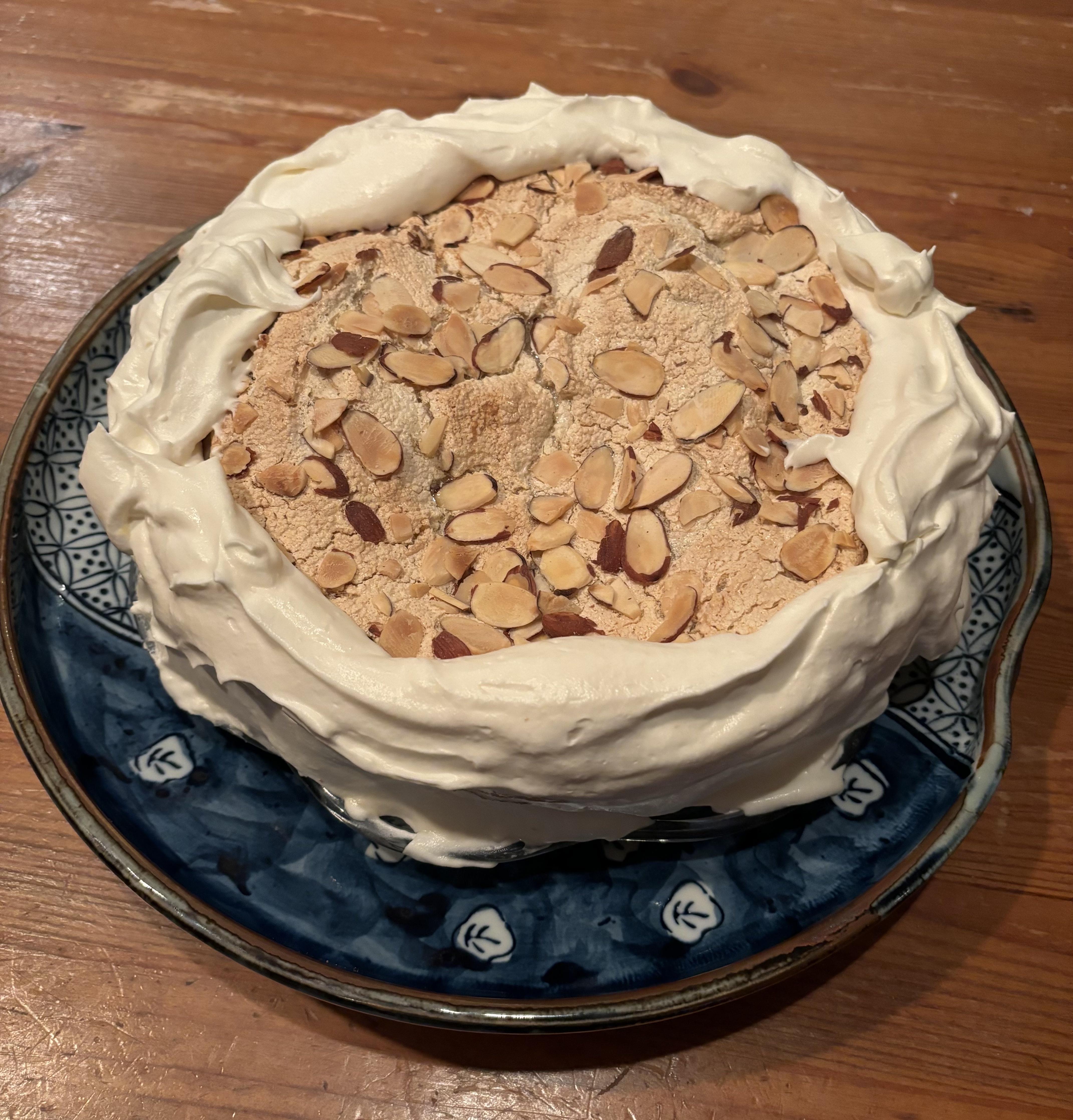
FINALLY! First, that lovely almond taste. Plus, everyone at the table now wore an attractive little white mustache of whipped cream. You don’t get that with a madeleine and a cup of tea, do you, M. Proust?

As October runs into November, Texas Hill Country towns are celebrating Oktoberfest, or, in New Braunfels, Wurstfest. Normally by now our trees would show some fall color––nothing like New England, of course. The cypresses by Lake Austin are turning bronze. Out here north of Dripping Springs, the possum haws are showing their red berries. The cedar elms turned bright yellow, then slowly lost their leaves. The live oaks, thankfully, stay green.

But this year? Drought brings bad news for trees. Cypress-lined creeks are dry…the cypresses’ arched roots groping into the earth for water. Downhill at our place Barton Creek is dry, and I mean dry, with only occasional small pools. Up on the limestone plateau the leaves on some smaller saplings just turned brown and fluttered to the ground, with the tree already looking dead. We’re watering, but in Stage 2 drought restrictions. Will our wells run dry? Have we drained the Trinity aquifers that lie hundreds of feet below?

So, to general geopolitical angst, I’ve added…tree worry.

Trees in books play such a role in our imaginations. After reading Johann David Wyss’s Swiss Family Robinson (1812)—where the shipwrecked family builds a tree-house on their desert island––I always wanted to live in a tree-house! https://en.wikipedia.org/wiki/The_Swiss_Family_Robinson We’re drawn to forests, home of the trees—scary, but sometimes the safest place. In The Sword in the Stone by T. H. White (1939), first of the four volumes that make up The Once and Future King, the Wart (the young Arthur, under Merlin’s tutelage) and Kay meet Little John who tells them about Robin Wood (explaining why it’s not “Robin Hood” and why he lives in the woods (or “‘oods”):

“They’m free pleaces, the ‘oods, and fine pleaces. Let thee sleep in ‘em, come summer, come winter, withouten brick nor thatch, and huntin’ ‘em for thy commons lest thee starve; and smell to ‘em with the good earth in the springtime; and number of ‘em as they brings forward their comely bright leaves, according to order…”

There the boys, the future King and Sir Kay, approach “the monarch of the forest. It was a lime tree as great as that which used to grow at Moor Park in Herefordshire, no less than one hundred feet in height and seventeen feet in girth, a yard above the ground….” Headquarters for Robin Wood and Maid Marian! And there begins a great and perilous adventure for Kay and Wart, who break into the castle of Morgan le Fay, Queen of Air and Darkness—to rescue prisoners paralyzed by magic. (Speaking of paralyzed victims of witches—note how C.S. Lewis later describes turned-to-stone courtyard figures in his first foray into fantasy, The Lion, the Witch and the Wardrobe (1950).)

One writer, Elisabeth Brewer, notes that “The Sword in the Stone shows a passion for trees that White shared with Tolkien. https://bit.ly/3Ceqk. How about the Ents we meet in Fangorn Forest, in J. R. R. Tolkien’s Middle-Earth? Trees that walk…and tend other trees. Not all trees are benign––including the wicked old willow which captures Frodo and friends (rescued by Tom Bombadil).

I’m reading a fascinating graphic (yes, graphic!) book about Tolkien and his close friend C.S. Lewis: The Mythmakers: The Remarkable Fellowship of C.S. Lewis and J.R.R. Tolkien, by John Hendrix. https://bit.ly/4hqiyFr

Tolkien and Lewis met in 1929 in Oxford, where they were, famously, members of a writers’ group, the Inklings, and shared many hours at The Eagle and Child. That’s not all they shared. In 1916, both men experienced horrific warfare on the Western Front in France. Young and just married, Tolkien fought in the trenches, then contracted life-threatening trench fever. At nineteen, Lewis was wounded by shrapnel (from friendly fire) on the Somme, and carried shrapnel in his body the rest of his life. Hendrix’s wonderful book uncovers the sort of salvation two disillusioned veterans found in the healing power of imagination, including Norse mythology and the European fairy tale. Tolkien knew of Yggdrasil, the sacred ash tree central to Norse mythology. https://en.wikipedia.org/wiki/Yggdrasilhttps://dc.swosu.edu/cgi/viewcontent.cgi?article=2130&context=mythlore

And how the worlds created by Lewis and Tolkien fired our imaginations! The fantasy world of C.S. Lewis’s Narnia emerged when The Lion, the Witch and the Wardrobe was published (1950). Tolkien’s The Hobbit, or There and Back Again, was first published in 1937 but became a pop-culture phenomenon only in 1960’s, when the paperback edition became available. https://time.com/4941811/hobbit-anniversary-1937-reviews/

Both Lewis and Tolkien had copies of The Sword in the Stone early on. Indeed, in 1939 it was a Book-of-the-Month Club selection. T. H. White 1964 obituary, https://nyti.ms/4hlasht. Curiously, Hendrix’s book on Tolkien and Lewis doesn’t mention T. H. White, perhaps because Hendrix focuses on the impact of war; T.H. White 1906-1964) was born too late to serve in World War I. Nor was he an Oxonian. While C.S. Lewis reportedly disparaged The Sword in the Stone in 1940, he later invited T. H. White to the Inklings if he ever visited Oxford. https://bit.ly/4f4wcww (“Dickieson post”). Perhaps Hendrix doesn’t mention T. H. White because unlike Tolkien and Lewis, though he creates a fantasy world, White grounds The Once and Future King firmly in England.

But Elisabeth Brewer commented in T.H. White’s The Once and Future King that The Sword in the Stone shows a passion for trees that White shared with Tolkien. (Dickieson post.)

What about powerful trees in more recent books? Consider the Whomping Willow, in J. K. Rowling’s Harry Potter and the Wizard of Azkabanhttps://bit.ly/4f1koex Magic—but terrorizing—it reveals the secret passage which ultimately allows Harry and friends to discover––well, remember? Indeed, Harry reminds us of T. H. White’s Wart, both with an earnest determination to do right, and a magical tutor.

Maybe children are especially open to tree power because they still climb trees. My dad swooped us off to grad school in Atlanta, and then to Charlotte, before we moved back to Texas. In the southeast I discovered the power of pine trees. We children built an admirable and secret treehouse in the woods, where we surveyed the world from on high. No parents came near to scold or warn: deep in the trees we ruled our own domain. Later in Carolina at eleven, I could climb the neighbors’ big back yard pine all the way to the top. The tree swayed slowly back and forth, but I could see the entire neighborhood and beyond. Tree power.

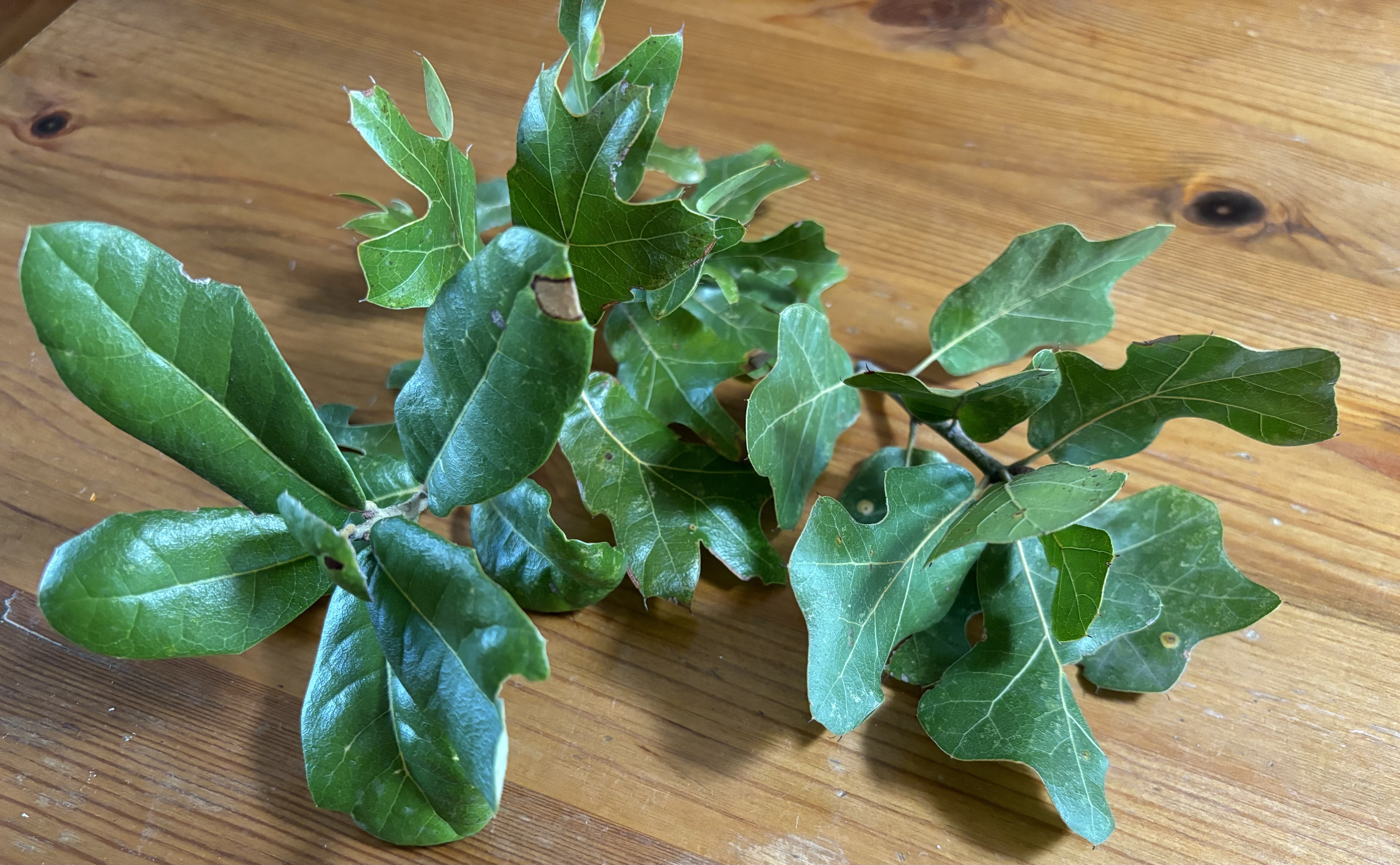
Out here on the Edwards Plateau, in the rugged karst landscape above a hill country creek, live oaks rule. The big evergreens, up to sixty feet tall, with a wide crown and massive limbs close to the ground, are Quercus Virginiana. They often grow in a circle—and you know they are communicating through their root systems. https://www.npr.org/sections/health-shots/2021/05/04/993430007/trees-talk-to-each-other-mother-tree-ecologist-hears-lessons-for-people-too
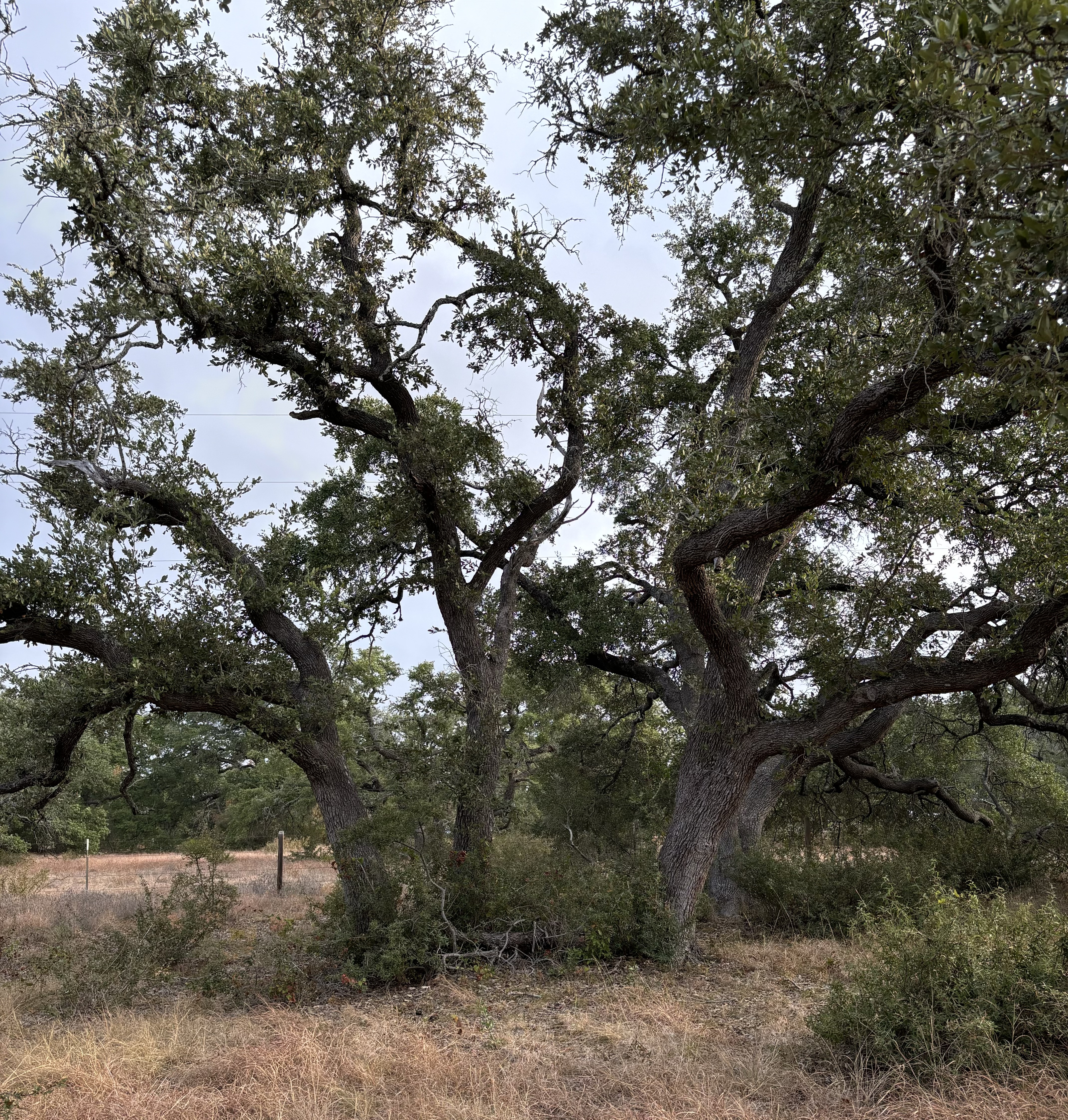
The way live oaks vary their leaves makes identification tough. On the Edwards Plateau, the species passes into the “shrubby Texas Live Oak”—shorter with smaller trunks: “…[I]ntermediate forms occur between the variety and the species and the distinctions are often difficult,” per Robert Vines, Trees, Shrubs and Woody Vines of the Southwest (1960). Well, thanks.

Now, in drought, with grass turned grayish tan, with dirt powder-dry beneath our feet, we treasure the blessed green of live oaks, often home to swings and hammocks, and providing wide shade to houses, pastures, and somnolent cattle.

Trees inspire us. We know Shakespeare’s song: “Under the greenwood tree, who loves to lie with me…” (As You Like It). The first poem in Wendell Berry’s A Timbered Choir begins, “I go among trees and sit still.”

Mary Oliver’s “Honey Locust” begins,

“Who can tell how lovely in June is the

honey locust tree, or why

A tree should be so sweet and live

            in this world?”

Robert Frost knows his trees: The Road Not Taken, Stopping by Woods on a Snowy Evening, Tree at My Window, Spring Pools, so many. Of course, his Birches:

“When I see birches bend to left and right

Across the lines of straighter darker trees,

I like to think some boy’s been swinging them…”

Frost makes it easy to imagine “some boy” swinging the birches—or Frost imagining that, as he marched through a yellow wood.

And then e.e. cummings, My Father Moved Through Dooms of Love—I like this verse:

“My father moved through theys of we,

Singing each new leaf out of each tree

(and every child was sure that spring

Danced when she heard my father sing)”

And Gerard Manley Hopkins, Spring and Fall:

“Margaret, are you grieving

Over Goldengrove unleaving?”

Yes, trees: later in the poem we find when “worlds of wanwood leafmeal lie.”

The forecast calls for rain. Please cross your fingers.
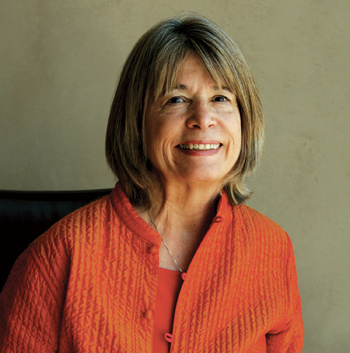
Helen Currie Foster lives and writes the Alice MacDonald Greer Mystery Series north of Dripping Springs, Texas, loosely supervised by three burros. She’s drawn to the compelling landscape and quirky characters of the Texas Hill Country. She’s also deeply curious about our human history and how, uninvited, the past keeps crashing the party. Currently she’s working on Book 10. Her protagonist, Alice, gets into legal drama, and matters of the heart. And yes, Alice does have a treehouse.

WIND TURBINES – SEE THEM DANCE  

Francine Paino a.k.a. F. Della Notte

Texas has over 15,300 wind turbines, representing 28.6% of Texas energy generation. These turbines have surpassed the state’s nuclear production in 2014 and coal-fired production in 2020. Windfarms dot the landscape from north to south, with the majority of the windfarms operating in South Texas, along the Gulf Coast, south of Galveston, and in the mountain passes and ridge tops of the Trans-Pecos in western Texas.

Driving north and south from Corpus Christi to Austin on route 181 gave me a birds-eye view of them in action—in some places up close and almost personal. All the turbines I saw were of a three-blade variety, although there are some designs with two blades or circular blades. The three-blade type has the most blades turning like Don Quixote’s imaginary opponent where they all turn in tandem, locked into the same rhythm, going round and round, in the same positions.

Other turbines, however, mimic dance. Each blade moves independently of the other two, almost like the arm movements called port de bras in ballet, where one arm may move at a time. Over and over, the first blade arrives at a designated proximity to the next before the second blade moves. Then, that blade moves to a preordained location to the next before the third blade moves. And the process repeats, over and over. Mesmerized, I watched this dance of the windmill blades, but couldn’t select a piece of music in my head to accompany the movement. Instead, I turned to research. Why do some turbines move this way, unlike others in the same field where all the blades on each unit move at the same time? Here is the answer I found.  

According to information on the National grid, it is normal for a wind turbine to have its blades not moving simultaneously. They are affected by wind speeds and direction variations, which cause “slight differences in the force acting on each blade, resulting in a non-perfectly synchronized movement.” However, the site warns, “If the blades are significantly out of sync or not rotating, it could indicate a potential issue requiring maintenance.”

 And so, the blades do create the wind. It is the wind that turns the blades. Even a slight breeze of seven mph will move them. If the wind exceeds 56 mph, they are programmed to stop to avoid damage. Maximum efficiency is roughly 18 mph. The energy created by the blades is then sent through a gearbox to a generator. That’s where it’s converted to electrical power and sent to an onsite transformer, which “matches the voltage to the national grid system.” The electricity then moves along the transmission network to a substation, which links the transmission to a distribution system that sends it on and powers homes, businesses, and other users. A wonderfully efficient method of creating and harvesting wind power, but one cannot discuss wind turbines without including the danger they represent to birds.

It’s interesting that the national grid information and Climate Change enthusiasts dismiss the question of damage to birdlife, stating that more birds are killed by feral cats. Happily, the American Bird Conservatory takes a more balanced approach.

While it is true that feral cats kill more birds than wind turbines, the percentages of cats vs turbines are unequal, and so are the numbers that can be killed at once. Also, cats are not deadly to all species, as are the wind turbines, which are a direct danger to species approaching extinction, like the Marbled Murrelets, the Gold Eagles, and the Condors.  Still, there is no malice either in the cats or the turbines. The Conservatory is also working on Bird-Smart Wind Energy.  For more information, see the ABC link below. 

So, while humans thrash about, mourn the loss of wildlife, and celebrate the growing potential for wind energy, these strange, soulless creatures possess an odd beauty and a consistency that can be haunting.  I find them beautiful but unsettling, like strange beasts without thought or feeling. Although my fascination with wind turbines hasn’t yet resulted in a story, plenty are out there already.

On Amazon, novels involving wind turbines  are led by C.J. Box’s Cold Wind, a Joe Picket murder mystery. The one that captured my attention is War of the Wind, by Victoria Williamson, a story for young readers involving a boy named Max, who wears hearing aids that pick up odd sounds from a new wind farm off the coast. He suspects a sinister scientist is using wind turbines to experiment on the islanders, whose behaviors are becoming bizarre.  Max enlists the help of his classmates to shut down the government’s secret test before it spins out of control. The story sounds intriguing, and I’ve ordered it for my grandchildren, but I’ll read it first.

Wind turbines are here to stay and an important part of our efforts to provide more and cleaner energy. It’s a subject that enters everyone’s life and conversation, and perhaps wind turbines will appear in another Housekeeper Mystery Series. . but not yet.

At this time, Mrs. B. and Father Melvyn are sorting out crimes and murders with local and international repercussions while they prepare for their tour of ancient Christianity in Rome, Italy.

Coming soon: The Catastrophist and the Killing God War. 


Https://comptroller.texas.gov/economy/economic-data/energy/2023/wind-snap.php#:~:text=There%20are%20239%20wind%2Drelated,coal%2Dfired%20generation%20in%202020.In 2023, wind represented 28.6 percent of Texas energy generation, second to natural gas (41.8 percent).

https://en.wikipedia.org/wiki/Wind_power_in_Texas#:~:text=The%20broad%20scope%20and%20geographical,the%20western%20tip%20of%20Texas.

https://www.energy.gov/eere/wind/how-do-wind-turbines-work

https://www.nationalgrid.com/stories/energy-explained/how-does-wind-turbine-work#:~:text=What%20happens%20to%20the%20wind,by%20the%20national%20electricity%20system.

https://abcbirds.org/blog21/wind-turbines-are-threat-to-birds/

https://dariuszzdziebk.wpenginepowered.com/wp-content/uploads/2020/03/Bird-Smart-Wind-Energy-Fact-Sheet.pdf

A Halloween Story: Hansel and Gretel and Cuthbert and Me

By M. K. Waller


Shakespeare said, “A sad tale’s best for winter,” but this is only October, and in Texas, that sure ain’t winter. And I don’t feel like telling a sad tale.

Halloween is near, so I shall tell a scary tale, one about a wicked witch and innocent little children.

But with a reminder: Sometimes it’s the innocent little children you have to watch out for.

For you to fully appreciate the trauma inflicted here, a preface—

My university degrees are in English and biology. I trained to teach secondary students. High school. Teenagers. People as tall as I am. Usually taller.

Mid-career, I was invited to take the position of school district librarian. I had neither education nor experience in the field, but both my employers and the State of Texas said that was okay—I was an English teacher, I could do anything. I would start working in August, two weeks away, and then jump back into graduate school for a second master’s degree when January rolled around. I’d do fine.

I thought both the State and my employer were a little crazy, and I hadn’t planned a return to grad school, but I was a little crazy, too, so I accepted the offer.

And both the library and I were fine. I was more than fine. I absolutely adored library work. It was like putting together a big puzzle—so many different pieces. And a couple of years later, here came computers and networking and T1 lines and the Internet and the world wide web and  . . . A wild learning curve, perpetual continuing education. On-the-job boredom? Not a chance.

Library school was—not adorable. It was challenging. Some courses were nerve-wracking. When they said library science, they meant science. In the words of the Library of Congress cataloger teaching the Organization of Materials course, as she looked out over a sea of bewildered students— “Come on, people. Cataloging isn’t rocket science. Rocket scientists couldn’t handle it.”*

But nothing was so challenging—or so nerve-wracking—as the two days a week I spent in my own elementary school library with the little people. Very little people. The ones some teachers called, privately, the ankle-biters.

I loved little children, nieces and nephews and such. I would play with them for hours on end. But they came in twos and threes. At the library, little children came in hordes.

Nothing in my formal education had prepared me to be in the same room with themIn all my fifteen years as a librarian, I was never prepared. They always managed to surprise me.

And now, my story for Halloween.

Oh—you must also know the story of Hansel and Gretel. In case you’ve forgotten, here’s Wikipedia’s summary:

Hansel and Gretel are siblings who are abandoned in a forest and fall into the hands of a witch who lives in a bread, cake, and sugar house. The witch, who has cannibalistic intentions, intends to fatten Hansel before eventually eating him. However, Gretel saves her brother by pushing the witch into her own oven, killing her, and escaping with the witch’s treasure.

Okay, to the story.

*

This is the story of Cuthbert, a five-year-old boy
who visited
my school library
for twenty minutes every week.
My job was to teach him about the library.
I’m not sure what his job was.
But he was very good at it.

*

Once upon a time, I read “Hansel and Gretel” to a class of kindergarteners. The audience, sitting rapt at my feet, comprised sixteen exceptionally good listeners, a fact I later regretted.

While I read, Cuthbert sat on the floor beside my chair and stroked my panty-hose-clad shin. Small children find panty-hose fascinating.
When I reached, “And they lived happily ever after,” Cuthbert stopped stroking and tugged on my skirt. I ceded him the floor.

“But it’s a good thing, what the witch did.”

Because he spoke kindergartener-ese and I sometimes didn’t, I thought I had misunderstood. Come again?

“It’s really a good thing, what the witch did.”

I should have slammed the book shut right then, or pulled out the emergency duct tape, or something, anything to change the subject. But I’m not very smart, so I asked Cuthbert to elaborate.

His elaboration went like this:

When the witch prepared the hot oven to cook and then eat Hansel, she was doing a good thing. Because then Hansel would die and go to Heaven to be with God and Jesus.

I smiled a no doubt horrified smile and said something like But But But. While Cuthbert explained even more fully, I analyzed my options.

a) If I said, No, the witch did a bad thing, because it is not nice to cook and eat little boys and girls, then sixteen children would go home and report, Miss Kathy said it’s bad to go to Heaven and be with God and Jesus.

b) If I said, Yes, the witch did a good thing, because cooking and eating little boys and girls ensures their immediate transport Heavenward, then sixteen children would go home and report, Miss Kathy approves of cold-blooded murder and cannibalism. Plus witchcraft. Plus reading a book about a witch, which in our Great State is sometimes considered more damaging than the murder/cannibalism package.

c) Anything I said might be in complete opposition to what Cuthbert’s mother had told him on this topic, and he would report that to her, and then I would get to attend a conference that wouldn’t be nearly so much fun as it sounds.

Note: The last sentence under b) is not to be taken literally. It is sarcasm, and richly deserved. The earlier reference to emergency duct tape is hyperbole. I’ve never duct taped a child.

Well, anyway, I wish I could say the sky opened and a big light bulb appeared above my head and gave me words to clean up this mess. But I don’t remember finding any words at all, at least sensible ones. I think I babbled and stammered until the teacher came to repossess her charges.

I do remember Cuthbert was talking when he left the room. There’s no telling what his classmates took away from that lesson.

If I’d been in my right mind, I might have said something to the effect that God and Jesus don’t like it when witches send people to Heaven before their due date.

But the prospect of talking theology with this independent thinker froze my neural pathways.

And anyway, I was using all my energy to keep from laughing.

*

*I know most people think librarians are educated to do two thing: stamp books and say, “Shhhhhh.” Those people are dead wrong. Someday I shall publish a post—maybe an entire book—upending all the common misconceptions about librarians. It will be a page-turner.

*

This post appeared on Telling the Truth, Mainly, in 2011 and again in 2012. I like to repost around Halloween, because the season cries out for scary stories, and that day with Cuthbert was pretty darned scary. (I’ve never thought of myself as a witch, but some people probably did. And still do.)

The discussion about  fairy tales and religion took place over twenty years ago. I think about it often and feel lucky I’ve never had a nightmare about it. But I remember Cuthbert fondly for giving me both the worst and the best day of my career. He was adorable.

***

M. K. Waller’s short stories appear is several anthologies, the latest of which is Kaye George’s Dark of the Day: Eclipse Stories (Down and Out Press, 2024). Her novella, Stabbed,  was co-written with Manning Wolfe. She also writes as Kathy Waller. Read more about her at kathywaller1.com and follow her on Facebook at https://www.facebook.com/kathy.waller68/

She lives in Austin, Texas.

****

Image by Gordon Johnson from Pixabay

Image by Free Fun Art from Pixabay

Image of “Hansel and Gretel” by Arthur Rackham from Wikipedia

Who Do You Love?

 / AUSTIN MYSTERY WRITERS

Yes, Bo Diddley, https://www.youtube.com/watch?v=e5tSgiB_Tgc but I like the Thorogood version too bit.ly/4gNi38m

I’ve got a secret. So many books I have NOT read. You’d be shocked. No, really. My husband (retired business professor) admires Tolstoy, especially Anna Karenina. He’s read most of Dickens and every word of Moby Dick–several times. When we were dating he bought Baudelaire’s Les Fleurs du Mal (English translation) because he’d seen it on my shelf. He knows I’m hung up on Virginia Woolf; he’s read Three Guineas. He’s read reams of history—shelves and shelves, plus tome after tome on Richard Feynman and everything that’s going on with astronomy and quantum physics. He forges onward, aiming for the stars at the edge of the universe.

I, however, the English major, the mystery writer? I who should have read All The Books? I confess a powerful secret vice: rereading my favorites, particularly Virginia Woolf. Every year, To the Lighthouse sneaks back into my hand. Why? Why not concentrate only on the new novels, the best-sellers?

Because I have to reread that moment in Part III when, years later, after world war and illness have claimed her beloved friend Mrs. Ramsay and so many of the Ramsay family, the spinster Lily Briscoe returns to the Ramsays’ summer home on the Isle of Skye. https://bit.ly/3zHF77w

Out on the lawn, facing the old white house, she sets up again the unfinished oil painting she began all those years earlier—the painting that had posed such a challenge in Part I as her mind reverberated with the repeated mantra from Professor Ramsay’s obnoxious male philosophy student: “Women can’t paint, can’t write.” During the long day, full of changing light on the sea, and repeated interruptions by other characters, Woolf returns us over and over to Lily, staring at her painting, seeing again the remembered shapes of Mrs. Ramsay and her son James all those years ago. And her artistic effort? Here’s the end of the book:

“It would be hung in the attics, she thought; it would be destroyed. But what did that matter? She asked herself, taking up her brush again. She looked at the steps; they were empty; she looked at her canvas; it was blurred. With a sudden intensity, as if she saw it clear for a second, she drew a line there, in the centre. It was done; it was finished. Yes, she thought, laying down her brush in extreme fatigue, I have had my vision.”

Why do I return to that? So much of the book is touching, gripping, and even hilarious, including the thoughts of Professor Ramsay, a philosophy professor who’s both overbearing and insecure. He delights in his own “splendid mind”: “For if thought is like the keyboard of a piano divided into so many notes, or like the alphabet is ranged in twenty-six letters all in order, then his splendid mind had no difficulty in running over those letters one by one, firmly and accurately, until it had reached, say, the letter Q.  …Very few people in the whole of England ever reach Q.” Then he falters. “But after Q? What comes next? After Q there are a number of letters the last of which is scarcely visible to mortal eyes, but glimmers red in the distance.”  He braces himself, clenches himself. “Q he was sure of. Q he could demonstrate. If Q then is Q—R—” Then “he heard people saying—he was a failure—that R was beyond him. He would never reach R.”  

What an image—the alphabet, R glimmering red in the distance, then fading, fading!  And then of course there’s the famous dinner party featuring Mrs. Ramsay’s boeuf en daube. Surely, just reading this, you smell the simmered sauce, the wine, the bay leaf? The thought crossed my mind that if Professor Ramsay had been offered a sip of the Talisker malt whiskey for which Skye is famous, he’d have felt a bit better. https://www.malts.com/en/talisker (The distillery gives a great tour, too.)

But Lily’s painting? This spinster friend of Mrs. Ramsay, with her amateur brushstrokes? The tale of Lily’s painting, her decision and indecision as she holds her brush, grabbed me all those years ago, and refuses to let go. The same question must hit every musician—“Is this the last note? Did that chord resolve properly? Does it make you feel beauty and longing, or does it just hang there, unfinished?”  Every cook: “A pinch of salt? What about some coriander? To garlic or not to garlic?” Every filmmaker: “Do they walk into the sunset? Or fade out? Or kiss?” And every writer? “Is this character real? Is this setting compelling? Does the plot work? And will anyone care?”

Lily’s painting embodies desire to capture memory, resistance, light and color, and more than that. Isn’t it  her experience? A moment of creation, of recapture, of making a line on a canvas and then feeling completion?  She’s had her vision. If you know of another book where we readers feel such a moment of revelation from the frustrating process of creation—let me know.

Oh, don’t get me wrong. My Kindle received today the brand-new Martin Walker (A Grave in the Woods) and I can’t wait. bit.ly/3Xzqawt Like the other women in his (busy) life,  I love to accompany Inspector Bruno, in his fictional Perigord village of St. Denis, partly because of his cooking. Thank you, Martin Walker, for describing the ham hanging from the kitchen ceiling, the cheerful chickens, and the paté with its duck fat on top, waiting in Bruno’s fridge, and the way Bruno sings La Marseillaise to count how long until he must sizzle the foie de gras before he deglazes the pan. I look forward to new recipes and to finding out who’s buried in the woods.

And a sad farewell: I’ve decided to forgive Elly Griffiths for saying goodbye to Ruth Galloway in her last book in that series, The Last Remains, even though I have loved watching Ruth clamber down into a trench to dig up ancient bones in East Anglia. amzn.to/3ZxU5rv I’ve also savored every page of Alan Bradley’s latest (last?) Flavia de Luce – What Time the Sexton’s Spade Doth Rust – as he allows this delightful protagonist to feel herself beginning to grow up—not too much, not too fast, just enough. https://bit.ly/4dla13A 

And I did just finish We Solve Murders, Richard Osman’s first book in a new series. bit.ly/4ezjIwh  Have to confess I found myself missing Joyce, Ibrahim, Ron, Elizabeth and the other characters of his Thursday Murder Club books. My strong belief is I must careabout a mystery protagonist and so far I haven’t completely bought in to his new cadre–though I do like Steve. We’ll see.  I’d be interested in your reactions.

So that’s four new mysteries, just in September. I’m also rereading Virginia Woolf’s The Waves, and finding even more, yes, even more to love about how she brings those characters to vivid life, and how she describes the way we humans think and react to each other.

And out here with the three burros I’m writing the tenth in my Coffee Creek series featuring Alice MacDonald Greer and the gorgeous landscape of the Texas Hill Country, with its pristine (well, so far) bluegreen streams. Water’s for fighting over, right?

But when the going gets tough, you may find me sidling back to the revolving bookcase, on the shelf where Virginia Woolf and all the old faves hang out.

Helen Currie Foster lives and writes north of Dripping Springs, Texas, loosely supervised by three burros. She’s drawn to the compelling landscape and quirky characters of the Texas Hill Country. She’s also deeply curious about our human history and how, uninvited, the past keeps crashing the party. Latest in her award-winning series: Ghost Bones.

Follow her on http://www.facebook.com/helencurriefoster/ and http://www.helencurriefoster.com

Share this:

Who Do You Love?

Yes, Bo Diddley, https://www.youtube.com/watch?v=e5tSgiB_Tgc but I like the Thorogood version too bit.ly/4gNi38m

I’ve got a secret. So many books I have NOT read. You’d be shocked. No, really. My husband (retired business professor) admires Tolstoy, especially Anna Karenina. He’s read most of Dickens and every word of Moby Dick–several times. When we were dating he bought Baudelaire’s Les Fleurs du Mal (English translation) because he’d seen it on my shelf. He knows I’m hung up on Virginia Woolf; he’s read Three Guineas. He’s read reams of history—shelves and shelves, plus tome after tome on Richard Feynman and everything that’s going on with astronomy and quantum physics. He forges onward, aiming for the stars at the edge of the universe.

I, however, the English major, the mystery writer? I who should have read All The Books? I confess a powerful secret vice: rereading my favorites, particularly Virginia Woolf. Every year, To the Lighthouse sneaks back into my hand. Why? Why not concentrate only on the new novels, the best-sellers?

Because I have to reread that moment in Part III when, years later, after world war and illness have claimed her beloved friend Mrs. Ramsay and so many of the Ramsay family, the spinster Lily Briscoe returns to the Ramsays’ summer home on the Isle of Skye. https://bit.ly/3zHF77w

Out on the lawn, facing the old white house, she sets up again the unfinished oil painting she began all those years earlier—the painting that had posed such a challenge in Part I as her mind reverberated with the repeated mantra from Professor Ramsay’s obnoxious male philosophy student: “Women can’t paint, can’t write.” During the long day, full of changing light on the sea, and repeated interruptions by other characters, Woolf returns us over and over to Lily, staring at her painting, seeing again the remembered shapes of Mrs. Ramsay and her son James all those years ago. And her artistic effort? Here’s the end of the book:

“It would be hung in the attics, she thought; it would be destroyed. But what did that matter? She asked herself, taking up her brush again. She looked at the steps; they were empty; she looked at her canvas; it was blurred. With a sudden intensity, as if she saw it clear for a second, she drew a line there, in the centre. It was done; it was finished. Yes, she thought, laying down her brush in extreme fatigue, I have had my vision.”

Why do I return to that? So much of the book is touching, gripping, and even hilarious, including the thoughts of Professor Ramsay, a philosophy professor who’s both overbearing and insecure. He delights in his own “splendid mind”: “For if thought is like the keyboard of a piano divided into so many notes, or like the alphabet is ranged in twenty-six letters all in order, then his splendid mind had no difficulty in running over those letters one by one, firmly and accurately, until it had reached, say, the letter Q.  …Very few people in the whole of England ever reach Q.” Then he falters. “But after Q? What comes next? After Q there are a number of letters the last of which is scarcely visible to mortal eyes, but glimmers red in the distance.”  He braces himself, clenches himself. “Q he was sure of. Q he could demonstrate. If Q then is Q—R Then “he heard people saying—he was a failure—that R was beyond him. He would never reach R.”  

What an image—the alphabet, R glimmering red in the distance, then fading, fading!  And then of course there’s the famous dinner party featuring Mrs. Ramsay’s boeuf en daube. Surely, just reading this, you smell the simmered sauce, the wine, the bay leaf? The thought crossed my mind that if Professor Ramsay had been offered a sip of the Talisker malt whiskey for which Skye is famous, he’d have felt a bit better. https://www.malts.com/en/talisker (The distillery gives a great tour, too.)

But Lily’s painting? This spinster friend of Mrs. Ramsay, with her amateur brushstrokes? The tale of Lily’s painting, her decision and indecision as she holds her brush, grabbed me all those years ago, and refuses to let go. The same question must hit every musician—“Is this the last note? Did that chord resolve properly? Does it make you feel beauty and longing, or does it just hang there, unfinished?”  Every cook: “A pinch of salt? What about some coriander? To garlic or not to garlic?” Every filmmaker: “Do they walk into the sunset? Or fade out? Or kiss?” And every writer? “Is this character real? Is this setting compelling? Does the plot work? And will anyone care?”

Lily’s painting embodies desire to capture memory, resistance, light and color, and more than that. Isn’t it  her experience? A moment of creation, of recapture, of making a line on a canvas and then feeling completion?  She’s had her vision. If you know of another book where we readers feel such a moment of revelation from the frustrating process of creation—let me know.

Oh, don’t get me wrong. My Kindle received today the brand-new Martin Walker (A Grave in the Woods) and I can’t wait. bit.ly/3Xzqawt Like the other women in his (busy) life,  I love to accompany Inspector Bruno, in his fictional Perigord village of St. Denis, partly because of his cooking. Thank you, Martin Walker, for describing the ham hanging from the kitchen ceiling, the cheerful chickens, and the paté with its duck fat on top, waiting in Bruno’s fridge, and the way Bruno sings La Marseillaise to count how long until he must sizzle the foie de gras before he deglazes the pan. I look forward to new recipes and to finding out who’s buried in the woods.

And a sad farewell: I’ve decided to forgive Elly Griffiths for saying goodbye to Ruth Galloway in her last book in that series, The Last Remains, even though I have loved watching Ruth clamber down into a trench to dig up ancient bones in East Anglia. amzn.to/3ZxU5rv I’ve also savored every page of Alan Bradley’s latest (last?) Flavia de Luce – What Time the Sexton’s Spade Doth Rust – as he allows this delightful protagonist to feel herself beginning to grow up—not too much, not too fast, just enough. https://bit.ly/4dla13A 

And I did just finish We Solve Murders, Richard Osman’s first book in a new series. bit.ly/4ezjIwh  Have to confess I found myself missing Joyce, Ibrahim, Ron, Elizabeth and the other characters of his Thursday Murder Club books. My strong belief is I must care about a mystery protagonist and so far I haven’t completely bought in to his new cadre–though I do like Steve. We’ll see.  I’d be interested in your reactions.

So that’s four new mysteries, just in September. I’m also rereading Virginia Woolf’s The Waves, and finding even more, yes, even more to love about how she brings those characters to vivid life, and how she describes the way we humans think and react to each other.

And out here with the three burros I’m writing the tenth in my Coffee Creek series featuring Alice MacDonald Greer and the gorgeous landscape of the Texas Hill Country, with its pristine (well, so far) bluegreen streams. Water’s for fighting over, right?

But when the going gets tough, you may find me sidling back to the revolving bookcase, on the shelf where Virginia Woolf and all the old faves hang out.

Helen Currie Foster lives and writes north of Dripping Springs, Texas, loosely supervised by three burros. She’s drawn to the compelling landscape and quirky characters of the Texas Hill Country. She’s also deeply curious about our human history and how, uninvited, the past keeps crashing the party. Latest in her award-winning series: Ghost Bones.

Follow her on http://www.facebook.com/helencurriefoster/ and http://www.helencurriefoster.com

“Everybody Eats Mushrooms.” Some Live to Tell the Tale.

By M. K. Waller

Today’s post comprises two parts–a bit of fiction followed by a bit of fact–linked by a “fleshy, spore-bearing fruiting body of a fungus” and a mystery writer who used it as a murder weapon–and later confessed to something even worse.

I.

The following flash fiction was inspired by a photo prompt on Friday Fictioneers, a weekly writing challenge sponsored by Rochelle Wisoff-Fields.

‘SHROOMS

John ambled into the kitchen. “What’s cooking?”

“Mushroom gravy.” Mary kept stirring.

John frowned. “Toadstools. Fungi. Dorothy Sayers killed someone with Amanita.

“These are morels.” She added salt. “Everybody eats mushrooms.”

“I don’t.”

“Suit yourself.”

He sat down. “Where’d you buy them?”

“I picked them.”

You?

“Aunt Helen helped. She knows ‘shrooms.” Mary held out a spoonful. “Taste.”

“Well . . . ” John tasted. “Mmmm. Seconds?”

“Yoo-hoo.” Aunt Helen bustled in. “See my brand new glasses? Those old ones–yesterday I couldn’t see doodly squat.”

Mary looked at the gravy, then at John. “Maybe you should spit that out.”

II.

The following is a guest post I wrote for Manning Wolfe’s Bullet Books Speed Reads blog. In it, I explain what an author does when she doesn’t have a clue about the subject she’s writing about.

There are many rules for writers. Two of the major ones: Write what you know and Write what you love.

I was pleased that Stabbed, which I co-wrote with Manning Wolfe, was set in Vermont. I love vacationing there: mountains and trees, summer wildflowers and narrow, winding roads, rainstorms and starry nights, white frame churches and village greens.

In Chapter 1, Dr. Blair Cassidy, professor of English, arrives home one dark and stormy night, walks onto her front porch, and trips over the body of her boss, Dr. Justin Capaldi. She locks herself in her car and calls the sheriff. The sheriff arrives and . . .

What happens next? Vermont is a small state. Who takes charge of murder investigations? The sheriff? Or the state police? What do their uniforms look like? Where do major rail lines run? What’s the size of a typical university town? And a typical university? What else had I not noticed while driving through the mountains?

Not knowing the answers, I defaulted to a third rule: Write what you learn. Research. Research. Research. The best mystery authors have been avid researchers.

Agatha Christie, for example, is known for her extensive knowledge of poisons. As a pharmacy technician during World War I, she did most of her research on the job before she became a novelist. Later she dispatched victims with arsenic, strychnine, cyanide, digitalis, belladonna, morphine, phosphorus, veronal (sleeping pills), hemlock, and ricin (never before used in a murder mystery). In The Pale Horse, she used the less commonly known thallium. Christie’s accurate treatment of strychnine was mentioned in a review in the Pharmaceutical Journal.

Francis Iles’ use of a bacterium was integral to the plot in Malice Aforethought. His character, Dr. Bickleigh, serves guests sandwiches of meat paste laced with Clostridium botulinum and waits for them to develop botulism. If Dr. Bickleigh had known as much about poisons as his creator did, he wouldn’t have been so surprised when his best-laid plans went, as Robert Burns might have said, agley.

Among modern authors, P.D. James is known for accuracy. Colleague Ruth Rendell said that James “always took enormous pains to be accurate and research her work with the greatest attention.” Before setting Devices and Desires near a nuclear power station, she visited power plants in England; she even wore a protective suit to stand over a nuclear reactor. Like Christie, James used information acquired on the job—she wrote her early works during her nineteen years with the National Health Service—for mysteries set in hospitals.

Most authors don’t go as far as to stand over nuclear reactors to be sure they get it right, but even the simplest research can be time-consuming.

And no matter how hard they strive for accuracy, even the most meticulous researchers sometimes make errors.

Dorothy L. Sayers was as careful in her fiction as she was in her scholarly writing. But she confessed in a magazine article that The Documents in the Case contained a “first-class howler”: A character dies from eating the mushroom Amanita muscaria, which contains the toxin muscarine. Describing the chemical properties of muscarine, Sayers said it can twist a ray of polarized light. But only the synthetic form can do that—the poison contained in the mushroom can’t.

Considering Sayers’ body of work, this one “howler” seems a very small sin, and quite forgivable.

Most readers, however, don’t forgive big mistakes, and reputable writers don’t expect them to. Thorough research is a mark of respect for readers.

Sometimes, getting the facts straight in fiction has real-life consequences the author can’t predict. Christie’s The Pale Horse is credited with saving two lives: In one case, a reader recognized the symptoms of thallium poisoning Christie had described and saved a woman whose husband was slowly poisoning her; in a second, a nurse who’d read the book diagnosed thallium poisoning in an infant. The novel is also credited with the apprehension of one would-be poisoner.

Back to Stabbed—Well, we don’t expect it to save lives or help catch criminals. But doing my due diligence and reading up on Vermont’s railways, demographics, and criminal procedure set the novella on a sound factual footing.

Unlike Christie, Iles, and Sayers, however, I didn’t have to expend too much effort learning about how the murder weapon worked. One look at the book’s title and–well, d’oh–no research needed.

***

Learn more about Friday Fictioneers at Rochelle Wisoff-Fields’ blog and on their Facebook page.

***

M. K. Waller (Kathy) is a former teacher, former librarian, former paralegal, and former pianist at various small churches desperate for someone who could find middle C.

She writes crime fiction, literary fiction, humor, memoir, and whatever else comes to mind.

She grew up in Fentress,  population ~ 150 in 1960, on the San Marcos River in Central Texas, the Blackland Prairie, and memories of the time and the place inform much of her fiction.

Except for the part about murders. Fentress didn’t have any murders. At least any that people talked about.

She now lives in Austin.

World War Z Review

VP Chandler

by V.P. Chandler

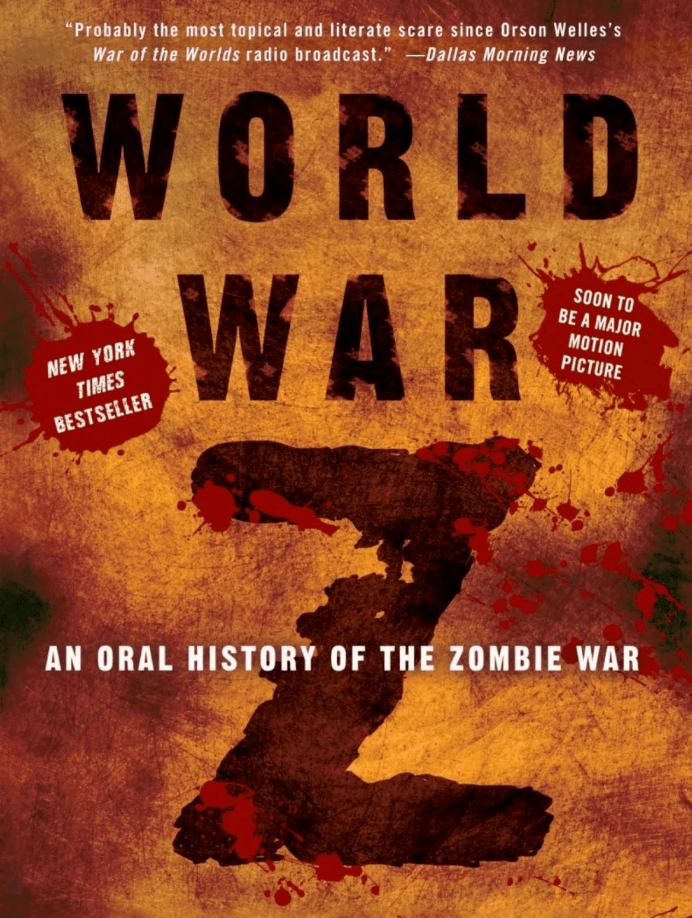
I recently finished reading World War Z. I know, I know, the book came out in 2006. As usual, I’m behind the times when it comes to reading books. I have so many on my bookshelves that it takes me a long while to get to them all. This book is one that my kid read back when it was popular and insisted that I read it too. So, it sat on the bookshelf, patiently waiting for my attention for several years. And while WWZ doesn’t fall into the usual reading for me, I’ve always been interested in anything that has to do with zombies. I watch most of the movies and shows. Not for the gore, but because I like to see how people react in the beginning days of the plague and how people may or may not survive in the long term.

Within the first pages I immediately saw why it was popular. Max Brooks is an excellent writer and the format appealed to me. Instead of creating a narrative with a beginning, middle, and end, he structured the book as a series of interviews. Each story is only a few of pages so it’s great if you like to pick up a book, do a quick read, and put it aside until next time. I personally like short chapters. It’s evident in my writing. But in the format of interviews, I found that the book didn’t hold my interest. There wasn’t much to compel me to open it and keep flipping pages. The story that I liked the most was about a downed pilot stuck in a Louisiana bayou. It was longer than the others, so I became invested in her, and I wanted see her survive. I wish more of the stories had been like that.

But I will say this about the book. Kudos to Brooks in his understanding of people and countries. If I were to sum up the book, I’d say that it was a character study of how people handle emergencies. It was as if he thought, “How would the American people and government respond to a zombie plague? Japan? Russia? Israel?” He included almost every country and every environment. What would happen in the mountains? Bayous? Coastal towns? How would this effect how people live in their homes? What kind of houses or fortresses would they have? Would people trust each other afterwards? And what would this do to humanity if we survived? Would the world still be worth living in?

He answers all these questions and more.

So, while it is a book of interviews about how people survived a global zombie apocalypse, it’s much more than that. It’s a study of humanity.

It’s definitely worth reading.

Previously published on vpchandler.com

V.P. Chandler has been a paralegal, a teacher, and a West Texas rancher. She grew up in a family involved with the criminal justice system, (criminal justice professor, parole officer, pathologist, photographer, etc.), so thinking about the dark side of life is in her blood. Her most recent book, THE LAST STRAW  is a novella co-written with Manning Wolfe.

Serendipitous Surprises

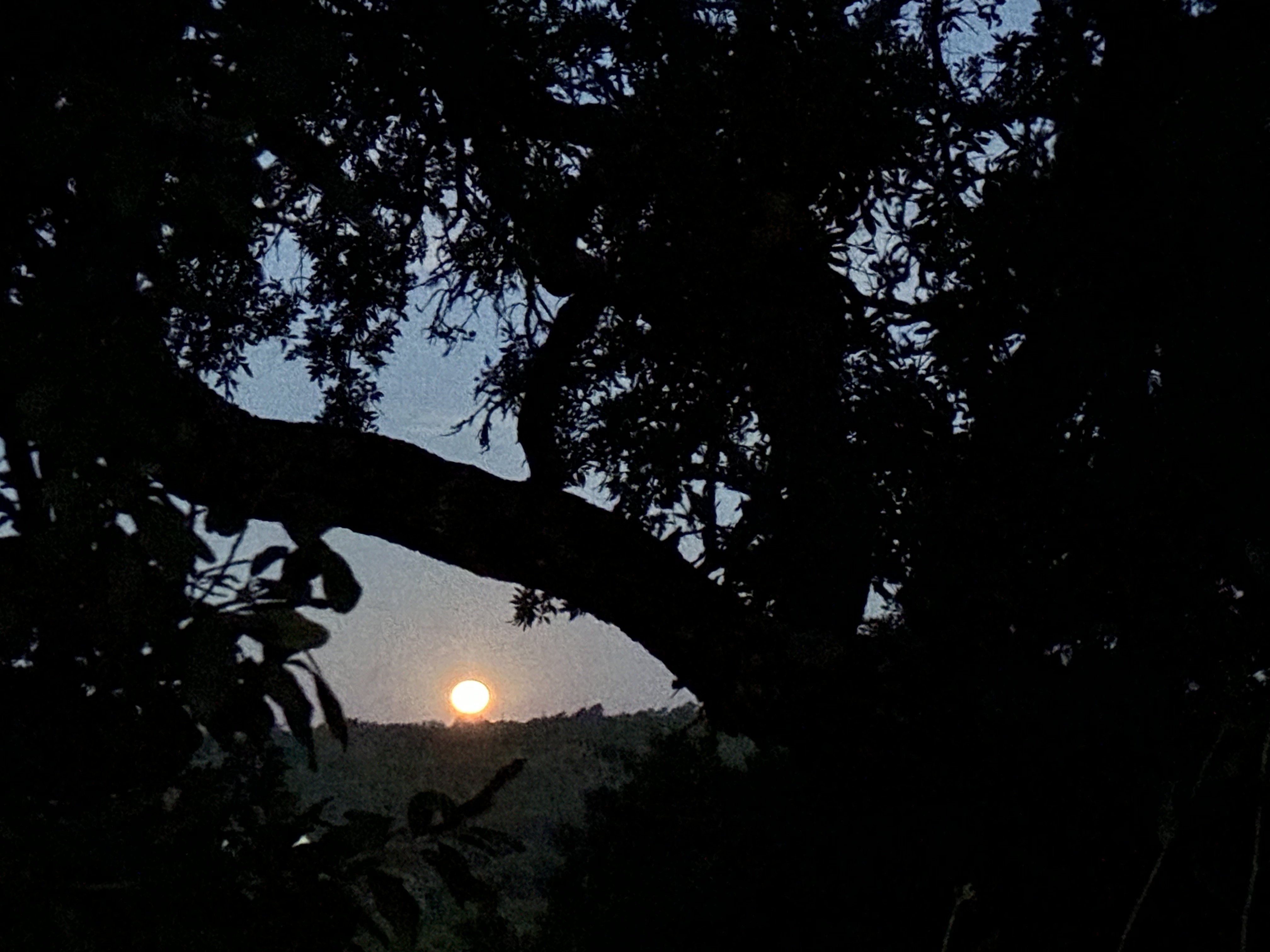
I wasn’t going to discuss the dreadful heat. But early this morning came two despite-the-heat surprises: first, moonset of the August Supermoon.

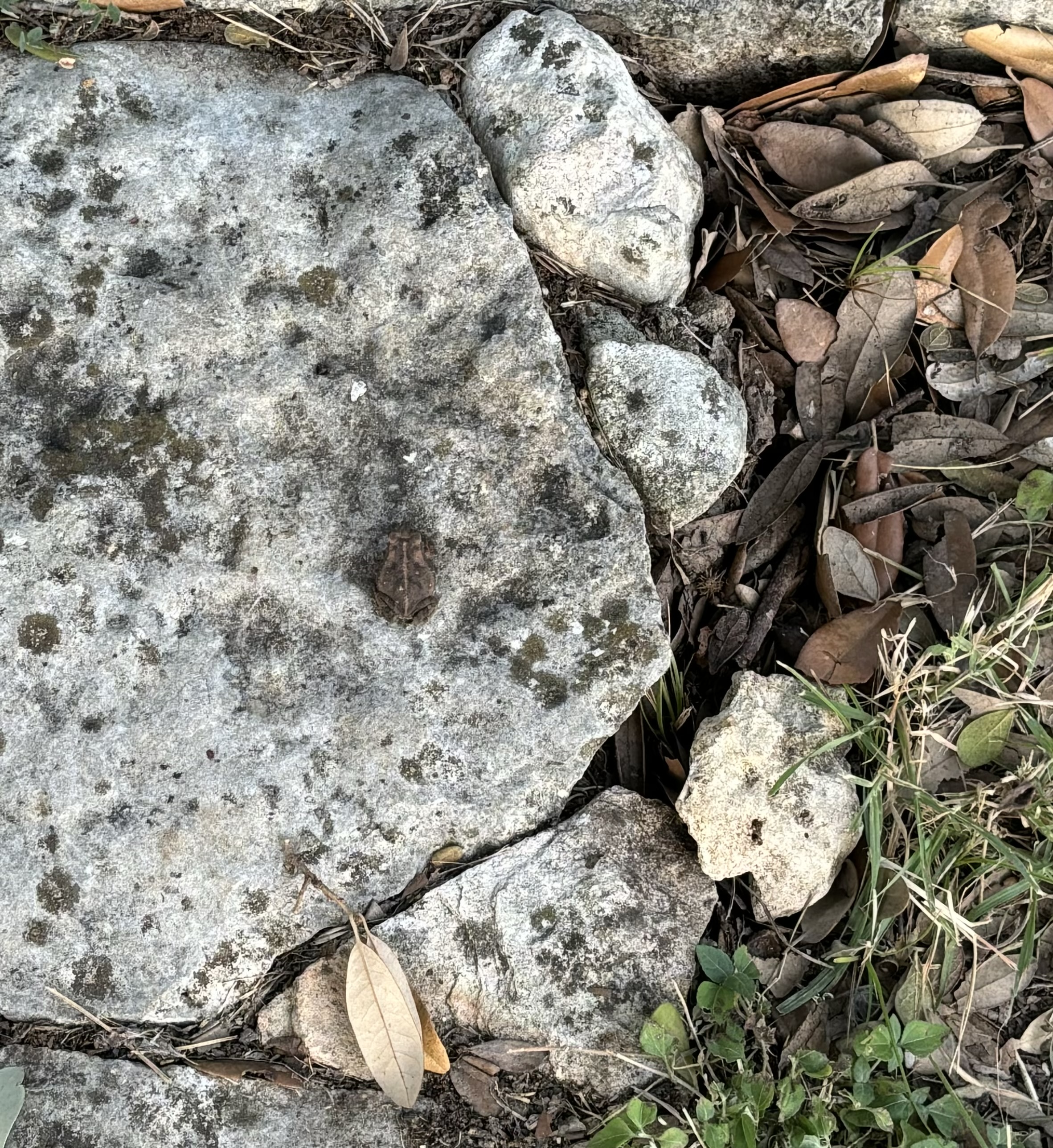
Next, a tiny frog, less than an inch long, sitting quietly in the shade. Could it be a Texas cricket frog? Maybe some frog-maven will know. Can you spot it here?

Another treasure: an email from a reader who’d read Ghost Cave, first book in my Alice MacDonald Greer Mystery series, and wanted the recipe for the coffee cake served by Alice’s redoubtable elderly friend Ilka:

They settled at the tea table. Ilka poured. Bone china, thin and old, the glaze crazed. Like Ilka’s face and hands, thought Alice. The cake stand held something Alice had never seen—a pale smooth yeasty-smelling cake with thin cinnamon topping…

“Oh, goodness, Ilka,” said Alice. “What is that?” The yeast dough, ivory and fragrant, left a mysterious fragrance in the air.

“Cardamom,” said Ilka.

Yikes! I had to tell her I had no recipe! Only—a memory! As kids we were in awe of our neighbor Mrs. Slinn, up the street. She wore her hair pulled back in a bun and longish dresses and, I think, always an apron. When we scruffy little children approached her door she always offered cookies. (We still roll out her classic “teacake” sugar cookie dough to make Santas, snowmen, reindeer.)But occasionally Mrs. Slinn swept down the street to our kitchen bringing magic: a round yeast coffee cake, no taller than 3 inches in the middle, ivory-gold with a delicate sprinkle of cinnamon and sugar on top. It tasted amazing and when cut into small wedges was absolutely delicious…

To this memory, in Ghost Cave, I’d added cardamom—not a spice we knew when I was little. But where to find a recipe for the inquiring reader?

FROM THE READER HERSELF! She wrote back that she’d located cookbooks from Mason County, Texas (dated 1976), and Fredericksburg (12th edition–Fredericksburg cooks published their first cookbook in 1916!). Each included a recipe for “yeast coffee cake.” (The Fredericksburg recipes include the original names—like Apfelkuchen, Schnecken, Kolatschen.) Which is further proof that mystery readers themselves are bright, curious sleuths. And why hearing from readers is wonderful.

Below you’ll find a slightly modified recipe from the excerpts she sent, but with a little cardamom added.

At a recent book talk I called the relationship between mystery reader and mystery writer a collaboration. Indeed, a primary rule of the 1930 Detection Club in London was that any clue must be instantly produced for the reader. No holding back explanations or back story until the end of the book! Of course that rule was sometimes violated (yes, Madam Christie, we’re talking about you). In contrast, Christie’s contemporary, the New Zealander Ngaio Marsh, occasionally adds some colorful backstory at the end, but she also generally has already given the reader fair notice of the clues that will identify the murderer.

In her series featuring the elegant Scotland Yard sleuth Roderick Alleyn, Marsh typically begins with the setting—often provided by a variety of characters––of the site where murder will inevitably take place, either in England or New Zealand. The setting could be an artist’s colony (“Colour Scheme”), a tour boat on an English river, a village church hall, a pub, an elegant country house (“Dancing Footman”), the London apartment of a practically bankrupt upper-class family (no one seems to have a job) (“Surfeit of Lampreys”). Thus when we open a Marsh mystery, first we meet the potential suspects, including one we may hope is innocent, may hope is truthful. Then comes a seriously tricky murder. (Did someone disturb the fly rod on the wall? Why?) At that point Inspector Alleyn arrives, with his sidekick Fox and the crime scene specialists. For the competitive mystery reader—collaborating with the author to detect the murderer––each detail matters and is promptly disclosed. But who lied? Who was mistaken?

Rest assured Marsh knew her subject matter and her settings: she was an artist, an actor and a theatre director as well as a writer. She lived and worked in England as well as New Zealand. She was appointed Dame Commander of the British Empire in 1966. The Mystery Writers of America bestowed the Grand Master Award for her lifetime achievement as a mystery novelist. https://en.wikipedia.org/wiki/Ngaio_Marsh  I suspect her character Agatha Troy (an artist who finally marries Alleyn) may be in part a portrait of Marsh.

And Marsh received a birthday Google Doodle on April 23, 2015! https://doodles.google/doodle/ngaio-marshs-122nd-birthday/

Marsh’s first book came out in 1934, featuring Alleyn as the upper-class “grandee” who resigned from the foreign service to join Scotland Yard. A different sort of sleuth was emerging in the U.S. In 1930 Dashiell Hammett published The Maltese Falcon and we met Sam Spade. In 1933 Raymond Chandler, like Hammett, was already publishing in The Black Mask magazine, and in 1939 he published The Big Sleep, presenting Philip Marlowe. Decades later the mystery genre continues to grow and grow:  Noir! Culinary mysteries! Cozies! Mysteries narrated by dogs! (Spencer Quinn’s Chet and Bernie series.) Cowboy mysteries! Fantasy/sci-fi/mystery! Sleuths in Laos, China, Australia, Scandinavia, Russia, Alaska, Louisiana, national parks, Native American reservations. Edinburgh! The Shetlands! Botswana! Canada! Italy! France! Israel! Scandinavia! Legal thrillers! Spy thrillers! What a wealth of mysteries for us to enjoy.

And what about the Texas Hill Country? In her latest adventure, Ghost Bones, lawyer Alice MacDonald Greer grapples with the murder of a deeply respected judge. His death was apparently triggered by his efforts to solve the murders of six people on his property almost two centuries ago. Alice needs all the help she can get from her irrepressible assistant, Silla, and from Ben Kinsear, as she tangles with mystery, legal drama, and matters of the heart.  Finally–please let me know if you recognize that little froglet!

Helen Currie Foster lives and writes the Alice MacDonald Greer Mystery series north of Dripping Springs, Texas, loosely supervised by three burros. She’s drawn to the compelling landscape and quirky characters of the Texas Hill Country. She’s also deeply curious about our human history and prehistory, and how, uninvited, the past keeps crashing the party. Follow her at www.helen.currie.foster.com.

Nearly Mrs. Slinn’s Coffee Cake:

3/8 c. milk, 2 Tbls. sugar, ½ tsp. salt, ¼ cup butter, 1 egg, beaten, 2 tsp. dry yeast, 1 ½ Tbls. warm water, 1 tsp. ground cardamom, 1 ¾ c flour–Plus additional melted butter (about 2 Tbls.) and sugar/cinnamon mixture (1 tsp cinnamon to 1/ c sugar) for the topping.

Scald milk and pour over the butter, salt and sugar. Stir and let stand until lukewarm. Dissolve yeast in warm water for 5 minutes. Stir egg and yeast mixture into milk mixture.  Stir in 1 tsp cardamom and 1 cup of flour. Beat well. Continue adding remaining flour.  Put dough on lightly floured board and knead until smooth (add a bit more flour if too sticky). Place in greased bowl, cover, and let double in size. Then punch down.

Butter bottom and sides of round 8” pan. Put parchment paper in the bottom.  Pat in dough. Brush with melted butter and sprinkle on the sugar/cinnamon mixture. Let rise again until double in size. Bake at 350 for about 20 minutes or until just turning golden.   Let cool. Serve it forth!

COOKIES, MYSTERIES AND MORE COOKIES

by Francine Paino, a.k.a. F. Della Notte

Cookies. Who doesn’t love them?  Far and away, the American favorite is the Chocolate Chip cookie, a creation of the Wakefields of Massachusetts. (More on that later).  Over 53% of American adults prefer Chocolate Chip to other varieties.  But the most popular cookie worldwide, sold in over 100 countries… drum roll, please, is Oreo!  

The popularity of these cookies made me wonder what other fun facts I could find to entertain and inform, so I set out to investigate the origins of these sweet delights. Did you know Oreo is considered the number one copycat cookie? Two brothers, Joseph and Jacob Loose, battled for dominance over the Oreo. It was first produced by Hydrox. (Remember them? Or have I dated myself?) Then, it was baked and sold by the National Biscuit Company, now known as Na-Bis-Co.  See the link below for more information on the Battle of the Oreo.

With this in mind, one might imagine that the earliest origin of cookies began in a Western European country, perhaps in Great Britain, Ireland, or Scotland. It may have begun in one of the Romance Countries. The first was Italy, followed by France and Spain. In fact, the biggest surprise of all is that the cookie dates back to Persia, in the 7th century C.E.

It all began around 550 B.C.E. in the Persian Empire, conquered many times and most famously by Alexander the Great, who defeated Darius III. These luxurious little cakes were well-known, and as Persia evolved into a diverse nation in the Islamic world, its culture spread.  Sugar, which originated in the lowlands of S.E. Asia, was brought to Persia and cultivated there. It then spread through the eastern Mediterranean and into Europe, and bakers created beautiful cakes and pastries—for the wealthy, of course.

 After the Muslim invasion of Iberia in the 8th century, followed by the Crusades and the developing spice trade, cooking techniques and ingredients began to reflect different civilizations, especially the influence of Arabian cuisine. In fact, one of the most treasured desserts of Italy, the Cannoli originated in Sicily and reflected Arabic recipes – but back to the cookie.

According to culinary historians, the cookie’s origin had a more serious purpose. It was, in fact, a test cake. Small amounts of cake batters were dropped onto baking pans to test the temperatures of the ovens. These little cakes were the first crude thermostats used to determine when the fires, fueled by burning wood, were at the correct heat to cook without wrecking the food, and each region or nation developed its own little cakes for this purpose. Eventually, these little test cakes morphed into the dry, hard-textured cookies we know today, and the renaming of these little cakes first appeared in print in the early 18th century.  

Eventually, the cookie came to America via the British Empire, where they were and still are called biscuits. After the Revolutionary War, the newly minted Americans changed the name to further separate themselves from Great Britain. They chose the Dutch variation Koekje/koek, which evolved into the word cookie, but it wasn’t until 1924 that the most beloved of all American cookies was created: the Chocolate Chip.

Ruth Graves Wakefield, before marrying, was a graduate of the Framingham State Normal School Department of Household Arts (at that time not considered a slur or degradation of women). She worked as a dietician and lectured on food. In 1930 Ruth and hubby Kenneth purchased a Cape-Cod style inn, The Toll House, in Massachusetts. Constructed in 1709, the house was a stop-over for travelers in Colonial times where they paid their road toll, changed horses, and dined. Under the Wakefield’s ownership, the Toll House served traditional Colonial fare, and Ruth’s homemade desserts were quite popular. One day, in 1937, she discovered she didn’t have the baker’s chocolate required for her brown sugar cookies. Instead, she chopped a bar of Nestle’s Semi-Sweet Chocolate into tiny pieces, believing that adding them to the dough and baking would melt them, but the chocolate held its shape and softened to a creamy texture. The new cookie became very popular at the inn, and Ruth’s recipe was published in newspapers throughout New England, skyrocketing the sale of Nestle’s Semi-Sweet Chocolate Bars. Thus was born the Chocolate Chip Cookie. And there you have the basics of the origin of cookies. But what you might ask, has this to do with mysteries besides the secrets of various bakers and recipes?

Cookies, I have found, are not only popular desserts and treats; they play an essential and often intriguing role in many culinary mysteries, especially the cozies.  I logged onto Goodreads and searched mystery books with the word cookie in the title. I was intrigued to find 18+ pages, 20 titles to a page, representing approximately 360  books, excluding cookbooks and children’s books. And that was only on Goodreads. Some of the titles I found brought a smile to my face. In the interests of full disclosure, I haven’t read any of them, but among my favorite titles were A Tale of Two Cookies, And Then There Were Crumbs, Misfortune Cookie, Tough Cookie, and Murder of a Smart Cookie.  

Many authors of cozies and some traditional mysteries weave the art of cooking and baking into their stories. In the Housekeeper Mystery Series, set primarily in Austin, Texas, Mrs. B., a fine cook, keeps the priests of St. Francis de Sales supplied with her home-baked Italian Lemon Drop Cookies (Anginetti), while she and the pastor, Father Melvyn, help solve crimes and find answers.  For cookie enthusiasts, I’m happy to share my favorite Lemon Drop Cookie recipe. See the link below.  

Meanwhile, happy munching and happy reading.   

http://www.thenibble.com/reviews/main/cookies/cookies2/cookie-history2.asp

https://www.cbc.ca/radio/undertheinfluence/the-best-selling-cookie-in-the-world-is-a-copycat-brand-1.7080582#:~:text=Oreo%20was%20priced%20cheaper%2C%20and,Joseph%20had%20the%20bigger%20company.

https://cookingwithgracedotnet.wordpress.com/2013/09/21/anginetti-italian-lemon-drop-cookies/

THE MAGIC OF SUMMER AND HERBS

Francine Paino, a.k.a. F. Della Notte

The long, dreamy days of summer are upon us – some places hotter than others, but summer all the same.  Along with daylight for twelve-plus hours to enjoy beaches, sand, and vacations from work and school, we are blessed with a profusion of herbs to flavor our food and our lives.

In archeology, evidence indicates the use of medicinal plants dates back to the Paleolithic age, approximately 60,000 years ago, and written information dates 5,000 years to the Sumerians, who compiled lists of plants and uses. It is no wonder that herbs flavor our foods and, through the centuries, has been used in medicines, and magic spells. Most people associate herbs in witchcraft with poisons, but even the herbs most commonly used in cooking have fun lore surrounding them, and summer is when we enjoy them in abundance and freshly picked.

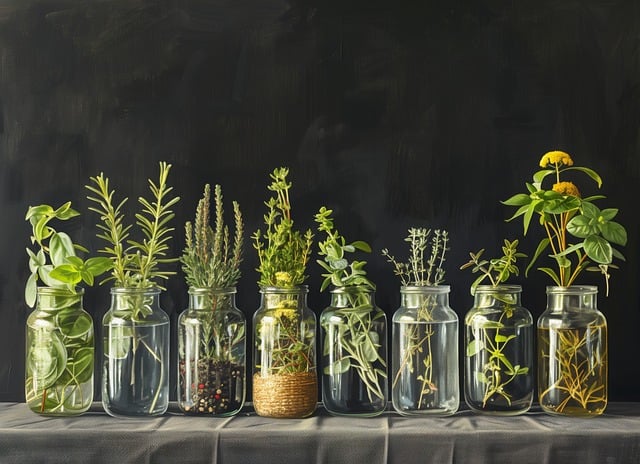
There’s nothing sweeter than a bright, lush Basil plant. Its leafy growth gives off an aroma that is slightly sweet, clove-like, and peppery. It’s also described as giving hints of mint and anise. Basil is one of the few herbs that can be enjoyed raw. One of my favorites is the Caprese Salad, where its peppery flavor enhances sliced tomato, mozzarella, and olive oil. 

Basil has far-reaching, ancient folklore. With over 5,000 different varieties, ranging from Thai to Genovese, Basil is one of the most popular herbs in the world. In Hinduism, it is considered sacred. In India, it’s also regarded as holy and used to ward off evil. In Ancient Egypt, Basil was used in the mummification process because of its antibacterial properties. It didn’t, however, protect Lord Carnarvon.

Other than culinary and religious books, I haven’t found any fun fiction involving Basil in stories, other than Basil, the Great Mouse Detective. The same goes for what’s become known as the “pizza herb.”  

Oregano has a piney, peppery, sharp flavor with menthol and lemon undertones. Depending on the conditions in which it’s grown, it can have a warm, slightly sour, and spicy taste, and it lends its flavors to meats and sauces. Personally, this cook favors the Greek Oregano over the Italian—believe it or not!

It is reported that Oregano has been used in magic spells, and brings good fortune and protection. Some believe that growing Oregano near your home can protect you from evil.  Kept near you while sleeping, it may aid in visions and psychic dreams.  – I’ll pass on that one.

In herbal lore, Oregano is said to promote good fortune and was used as an antidote to poisons, treating convulsions and skin irritations. “In Shakespearian time, it was thought to cure overdoses of opium and hemlock.”  Whether or not any of that is true, herbalists still recommend it for its antibacterial properties.

Have you ever munched on Parsley? Try it sometime. Fresh and clean, it’s a good palate cleanser. It’s uplifting, chopped into soups, stews, and sauces, from Tabbouleh to Gremolata. I particularly enjoy its piney taste mixed with ricotta cheese prepared for lasagna. High in vitamins C, A, and K, iron, and folic acid, it has incredible health benefits on the spectrum of ancient uses.

In the spirit world, sprinkling chopped Parsley over your food would  help protect you from low-level spirits. Here’s an exciting find. “Ancient Greeks associated Parsley with Achromous, the Herald of Death, and covered their tombs with wreaths of it.” “Superstition held that only pregnant women or witches could grow Parsley.” Happily, that cultural restriction is long gone. You will find uses for Parsley in any cookbook, from domestic to foreign recipes, and Tamar Myers’s Parsley, Sage, Rosemary and Crime series may entertain you.  

Among my favorite herbs is Rosemary. This herb, with its woodsy flavor and subtle tones of pepper, lemon, and mint, is powerful, both in cooking and in magic. Adding a little is more than enough to enhance the flavors of chicken and roasts. Rosemary’s scent is described as pungent, astringent, somewhat similar to Eucalyptus or camphor. I liken it to pine.

Ancient uses and beliefs were that it strengthened memory. In literature and folklore it was a sign of remembrance and faithfulness. The power of Rosemary doesn’t stop in the cooking pots.

In fiction, it is mentioned in the movie Practical Magic—“plant it outside your front door for good luck.” Hang bundles to keep harmful people, like burglars, from entering. I have Rosemary beside my front door walkway and outside my kitchen door, but I don’t suppose I can leave either door unlocked.

In literature, Rosemary is a popular name, and there is the Jane Louise Curry mystery series, Parsley, Sage, Rosemary, and Thyme. Moving along, the next herb to season our foods and entertain us is Sage.

Stroking the soft, furry Sage leaf reminds me of stroking my cat’s soft, shiny fur. Sage doesn’t smell like any animal I’ve ever petted. It’s complex and multi-layered, with both herbal and earthy notes. Described as warm and woody, it hints of camphor and eucalyptus. I find Sage is especially effective in brightening the flavors of gamey, earthy meats like lamb.

“Sage was recognized as an herbal remedy in ancient Greece and Rome, as well as in Native American and Chinese medicine.” According to the Naturally Modern Witch’s website, Sage impacts balance, business clairvoyance, comfort, concentration, focus, consciousness, gratitude, harmony, insights, mental clarity, money, and wisdom.  That’s a lot of power for one leaf!

I’ve found Sage mentioned in fiction on a list of cozy mystery and witchy books.  Again, we can look to the Amish Mystery Series by Tamar Myers to find Sage referenced in multiple roles.

Thyme. The smell of spring. I have a large pot growing  a verdant Thyme planted outside my kitchen door. One of my pleasures is to cut a bouquet and before storing it in the fridge or freezer, bury my nose in it and inhale its beautiful, fresh, floral scent with hints of Rosemary, lemon, and grass. Close your eyes and breathe in its scent on dark, dreary days, and you’re transported to a summer field with clear blue skies and crisp air. I am happy to report that this morning I opened a plastic bag of Thyme in my veggie compartment, and the fragrance is almost as strong as when I cut it weeks ago.

Thyme’s medicinal properties have been relied upon for thousands of years. In ancient Egypt, its antimicrobial properties made it essential in embalming. The Romans thought it brought strength and courage and used it in bathhouses to purify body and mind. It was relied upon in ancient Greece for its antiseptic powers and was often used to treat battle wounds.

Thyme has a strong herbal flavor, somewhat like lavender or Rosemary, and gives dishes a minty flavor—a little sweet and a little peppery. Its flavoring works for all types of meats and fish, and it’s great in vegetable soups, and stocks. . It can withstand long cooking times, so it can be added early to infuse dishes with its flavor Another interesting fact is that Thyme is often used in Cajun and Creole cooking, because it was easily available to the earliest settlers in Louisiana, who incorporated it into their cooking.

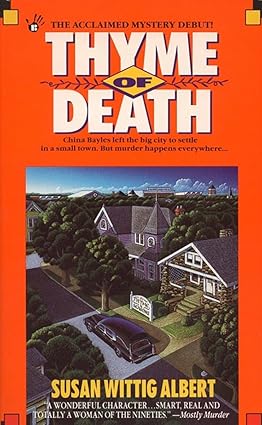
I’ve found a new fun book, with Thyme. Susan Wittig Albert’s mystery, Thyme of Death. It takes place in a small Texas town where an attorney leaves his law practice to open an herb shop and becomes involved in the first China Bayles Mystery.

All of these fascinating stories and facts about herbs are fun, but the true magic of herbs, even beyond the ones I’ve mentioned, is while often described with the same adjectives once they’re added to food, they add layers of flavors to any dish and are easily distinguishable.

So, happy summer, happy reading, and happy eating herb-infused foods.

References:
https://universalium.en-academic.com/188866/Rosemary
https://bronchostop.com/our-herbal-ingredients/what-is-sage.html
https://hort.extension.wisc.edu/articles/parsley-petroselinum-crispum/
https://foodprint.org/real-food/rosemary-and-thyme/#:~:text=According%20to%20%E2%80%9CThe%20Spice%20Lover’s,settlement%20of%20the%20Louisiana%20territory.