So Many Blogs, So Little Time #ROW80

Originally posted on Ink-Stained Wretches. https://inkstainedwretches.home.blog/2020/02/23/so-many-blogs-so-little-time-row80/

by Kathy Waller

blog 

noun

  1. a website containing a writer’s or group of writers’ own experiences, observations, opinions, etc., and often having images and links to other websites.
  2. a single entry or post on such a website:She regularly contributes a blog to the magazine’s website.

Dictionary.comAccording to GrowthBadger, there are over 600 million blogs online today. Over 31 million bloggers in the United States post at least once a month. Over 2 billion posts are published each year worldwide.Alas, no matter how hard I try, I can’t read them all. I have some favorites, however, and in this post I’ll profile two of them.*

FRIDAY FICTIONEERS

Which is easier to write—novels or short stories? How about short-short stories? How about short-short-short . . .

Each week, a photograph is posted at Rochelle Wisoff-Fields—Addicted to Purple. Using the photo as a prompt, you write a 100-word story—complete with beginning, middle, and end—post both photo and story on your own blog, and link to an inLinkz list of other Friday Fictioneers’ stories.

Prompts are also posted on the Facebook Friday Fictioneers page.

Rules and February 21 photo prompt appear here.

Photo prompts are not in the public domain. They’re to be posted only for Friday Fictioneers, and photographers are always to be credited.

The week’s inLinkz list is here. Currently, 56 writers have added their names here.  Below are five stories I’ve chosen at random.

“After All This Time” 
“Diluted”
“Rosey, a buggy and a heap of hay”
“Secrets”
“Why Should I Go to Pakistan?”
“How Much?”

Here are some of my own past efforts:

“You’ll Be Fine”
“‘Shrooms”
“Lovestruck”
and more here.

***

A ROUND OF WORDS IN 80 DAYS: THE WRITING CHALLENGE THAT KNOWS YOU HAVE A LIFE

Many writing challenges set goals for you: Write 1,000 words every day. Write five chapters every week. Write write write . . .  And then life gets in the way, and goals are not met, and the challenge ends not with a bang, but a whimper.

ROW80, on the other hand, allows writers to set their own goals. There are four 80-day rounds in a year. At the beginning of a round, you set your goals, write about them on your blog, and then post about your progress on Sundays and Wednesdays.

As with Friday Fictioneers, posts are linked so other participants can keep up with your progress.

Progress is the operative word. Goals can be modified at any time.

Everything you need to know about how the challenge works is on the ROW80 site:

What Is Row 80?
How Do I Join?
I’m Lost . . . FAQ
Accountability Partners
Blog

If you miss out on the beginning of a round, you haven’t missed out. Just set goals, write them up, and post on the next Sunday or Wednesday that comes along.

***

I missed the beginning of 2020’s first ROW80 round, but today is Sunday, so I’m going to jump in.

Round 1 ends on March 26–31 days away.

Goal: By March 26, I’ll add 4,000 words to my WIP.

*

I hope you’ll check out Friday Fictioneers and ROW80. Now I have to post.

NEW ORLEANS – A CITY OF MYSTERY, MAGIC, HISTORY AND THE WORLD WAR II MUSEUM


Francine Paino

Written by Francine Paino


New Orleans is known for many things.  It is a city of magic, mystery and a creole culture. New Orleans offers fabulous Cajun food, jazz and traditions born of hundreds of years of French, Spanish and American influences melding to create one of the most exciting cities in the U.S.


February marks the beginning of the Mardi Gras culture of masks, beads, and jazz music on every corner and in the streets, and the closer it gets to Fat Tuesday, the more frenzied the partying becomes.


Somewhat out of character in this atmosphere, however, New Orleans has a very sobering institution. Surrounded by the city’s distinctive and ornate French architecture, surrounded by the mysterious atmosphere, and surrounded by celebrations and festivities, stands a stately monument.

Flying the Stars and Stripes, high above its roof, is the National World War II Museum. Visitors who take time off from the city’s fun events to come here experience the sacrifices made by so many in defense of other nations, as well as our own.

A 2017 TripAdvisor rated the World War II Museum the number one attraction in New Orleans, and number two in the world.  Again, in 2018, it was rated one of the top ten museums in the world.

Well planned, the museum’s design provides immersive exhibits, multimedia experiences, and a vast collection of artifacts. Spanning the nation’s pre-war domestic manufacturing, preparation to enter the war, and its industrial efforts on the home front once the U.S. entered the conflict, the exhibits pay attention to the women on the home front who took over the industrial work when the men were sent overseas.

Upon entering the museum, one looks up to see a  C- 47 transport plane suspended on cables. The C-47 carried many of the young men sent to fight and die in Europe and Southeast Asia. Beneath this plane is a Nazi anti-aircraft gun, the type used to shoot down the C-47s, and alongside the gun is an Andrew Higgins landing craft.

Throughout the museum, there are displays of weapons, the soldiers’ back packs, communication equipment, and first-person oral histories, as well as unique immersive exhibits—all included in the admission price.  One interactive exhibit is The Dog Tag Experience, which encourages visitors to choose a soldier from the kiosk of registered combatants and follow him through the war.

For those who prefer to go from exhibit to exhibit on their own, the displays are labeled and arranged to move the viewer from event to event, but also included in the admission price are guided tours.

These guides are well versed in the areas they cover, and they provide the details and connective tissue that turn specific events into full histories.

Then there is the 4D movie. Shown on a panoramic screen, and narrated by Tom Hanks, Beyond All Boundaries covers the epic story of WW II. The film is a very intense experience and not recommended for young children.

Although there are many stories of inspiration and courage, all war is hell, as is clearly shown here. No one sane wants it, but in the words of the first president of the United States, in his first annual address to Congress, “To be prepared for war is one of the most effectual means of preserving peace.” (George Washington, January 8, 1790) To that point, there is an exhibit board displaying how unprepared the U.S. was in 1941. Japan had 1,700,000 men in uniform, Germany had 3,180,000, and the U.S. had 335,000.

In a separate pavilion, connected by an indoor bridge are two roads. Each one occupies a full floor. One takes the visitor on the combat road to Berlin, starting with the battles in North Africa, and the other, on the road to Tokyo, weaves in and out of the island fights in the jungles of Southeast Asia.

New Orleans was selected for the museum because it is the city in which Andrew Higgins built the landing craft used in the amphibious invasions.  As the Supreme Allied Commander, Eisenhower believed the landing craft was one of the five essential inventions that helped win the war. New Orleans is better known, however, for its free spirit, fun, food, music, multicultural events, and Mardi Gras festival.  Having the museum here is a solemn reminder that the freedoms and celebrations we enjoy carry a hefty price tag.

The men and women who paid the price in the mid-twentieth century are almost gone. One day soon, all that will be left to tell future generations what happened to the world between 1932 and 1945 are these stories of the citizen soldiers, the men and women who fought the battles in Europe and the Pacific, and the odds they faced. Their records, personal oral histories, and photographs taken by military photographers in real-time ensure that they will be remembered forever.

The World War II museum is comprehensive, and it is not possible to see and experience everything it has to offer in one day. Nonetheless, any amount of time spent there is worth the price of admission.

Favorite Fictional Detectives

During a recent panel event at BookPeople on private detective fiction, we were asked to list some of our favorite characters in print and television/movies.  While it was difficult to narrow down, here are a few of my few favorites.  If you haven’t read Lisa Lutz, Sara Paretsky or Laura Lippman, I hope you’ll make a beeline for your favorite bookstore and give one (or all) of them a read.  I think you just may find your next favorite series.

Isabel (Izzy) Spellman: Isabel Spellman has been described as “the love child of Dirty Harry and Harriet the Spy,” which is one of the many reasons I love this character. As a licensed investigator in her family’s firm, she’s extremely capable and sharp, even as she navigates the pitfalls that come from working with her dysfunctional family. Her cleverness has an edge that keeps me turning the pages, and her sarcasm always sticks the landing. 

Tess Monaghan:  I discovered Tess during a time when my career required a great deal of travel. I picked up Baltimore Blues and never looked back. Tess’s investigative journalism background and her balance of strength and compassion compelled me to continue with the series. Laura Lippman gives us such a layered and authentic view of Baltimore through Tess’s eyes. And Tess ventured to go where few female detectives have dared—motherhood.

V I Warshawski:  I’m drawn to a strong and complex female protagonist, and VI absolutely fills this role. Sara Paretsky was one of the first authors to introduce a complicated and fully formed female private investigator, and readers will be forever grateful. Vic doesn’t apologize for who she is and how she makes her way in the world. She’s skilled in a street fight, appreciates Torgiano red wine and doesn’t suffer fools. What’s not to love?

TV:  Jim Rockford:. When I think about private detectives on television, my mind always goes to Jim Rockford. Maybe because he kept me company in my childhood. An ex-con who served time in San Quentin and then was later pardoned, he ran his investigative business out of a mobile home in LA and preferred fishing to most other pursuits. His father never felt being a PI was a real job, and the fact he was often getting shorted by clients didn’t help his end of the argument. Jim Rockford was fallible times, skilled at working cold cases but not always coming out on top in a brawl. He rarely used his gun. He was human, and I find that particularly appealing. And that theme song is pretty catchy, too.

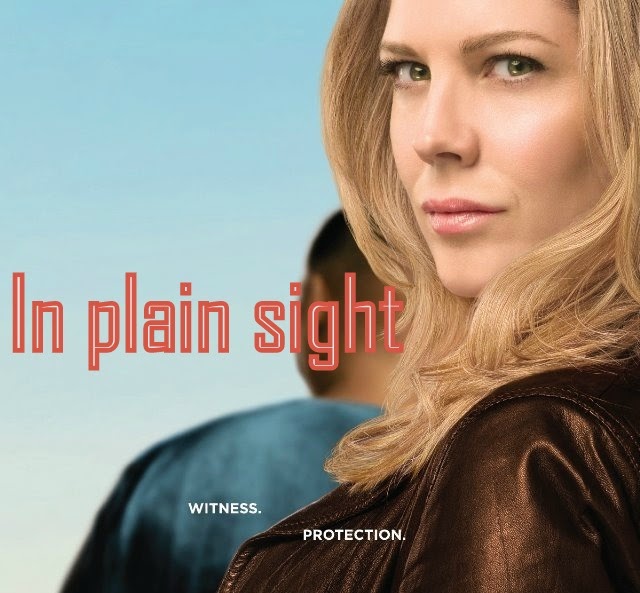
Mary Shannon/In Plain Sight: I’m going to color a little outside the lines on this one. Mary Shannon is a U.S. Marshall working for the Federal Witness Protection program, not a PI, but she’s a skilled investigator with a highly tuned (and hard-earned) understanding of human nature. Her complicated family backstory (her father is on the FBI’s most wanted list) informs her views on her cases and charges, but she’s first and foremost an outstanding hunter and protector. And her banter with her partner, Marshall, is pure gold.

What about you? Who are your favorite series characters? What keeps you turning the pages or tuning in? –Laura Oles

CHRISTMAS IN TEXAS – ITALIAN STYLE

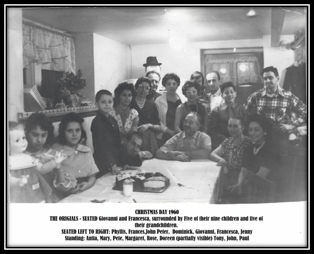
            We Italian-Americans take our Christmas tradition seriously – as do Texans. I’m fascinated by some of the “Texas-American” customs, including Fried Turkey, on Christmas Day, which I haven’t yet had the pleasure of tasting. My son-in-law, a fabulous cook, promises that one day he’ll do it for us.

I cannot, however, separate myself from my cultural heritage being only a second-generation American, and more of an immigrant than I’d ever realized, having grown up in an immigrant community of Italians, in Corona, New York. I’ve lived my life until six years ago, in New York surrounded primarily by other Italians and Jews, many of whom graced our home and table to share our Christmas Eve rituals. Many are no longer with us in this world, but my love for them spans time, distance, and death – Here’s what they shared with us, and what I brought to Texas with me.

           The tradition of the special Christmas Eve dinner for La Vigilia (the vigil), came over with the unwanted Italian immigrants in the late 19th and early 20th centuries. In the U.S., it evolved into The Feast of the Seven Fishes

Hundreds of years ago, until the reforms of the 1960s, the Catholic liturgical calendar specified several days of abstinence from food and meats altogether; Christmas Eve was once such day. Although no longer required by the Church, preparing meatless meals and specifically fish dinners on Christmas Eve is still a widespread tradition across Italy and other predominantly Roman Catholic countries.  Its origins, however, were rooted in the impoverished areas of southern Italy, where locals relied on fish because it was considerably less expensive than meat. 

Some of my warmest childhood memories of Christmas Eve are of my grandmother preparing a range of fishes. Baccala (dried cod) salad, followed by spaghetti with a red sauce with eel (which I never ate) and/or Linguini with clams and anchovies (I always picked out the anchovies – which got me into a world of trouble.) Following the pasta dishes were lots of vegetables, fried smelts, maybe some baked flounder or redfish (what she bought depended on price). Fruit, coffee and hard biscotti ended the meal – and we all looked forward to the sumptuous dinner we’d have on Christmas Day.

For many years, in my home in New York, the Vigil dinner on Christmas Eve brought family and close friends to our table to share food, fun, stories of my husband’s and my backgrounds, as well as the tradition of our friends of other cultures who’d join us.

Typical menus always started with appetizers, followed by salads, then at least two different fish dishes. When my mother-in-law was alive, she’d prepare my husband’s favorite, a Sicilian dish of codfish in a red sauce with potatoes and capers. Linguini with white clam sauce was a constant, as well as bakes flounder and shrimp scampi. We always had an array of vegetables and the meal ended with coffees – espresso, American and decaf, as well as fruits, and cakes. (For our non-Catholic friends I always had roasted chicken and beef), but I held my family’s feet to the fire: No Meat on Christmas Eve! 

           When my children were very young, we made a big production of Santa’s arrival at midnight (Yes, that’s the one night a year I’d wake them from a sound sleep to greet Santa). Well, children grow, life moves on, many of the elders pass away, and we moved to Texas, where new traditions add to the old.

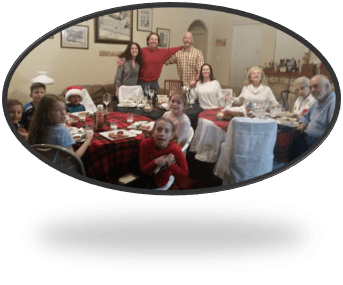
This year, on Christmas Eve, we were a scant fourteen because only one of my daughters lives in Austin.  She, her husband, and three children were here, along with my son-in-law’s mother and my friend, our Scottish/British friends and their triplets, and, of course, my mother, the still cooking and baking nonagenarian.

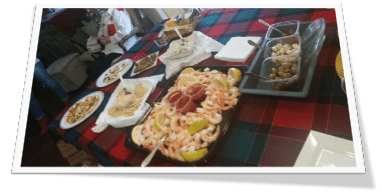
I decided for this Vigil dinner, I would prepare a seven fish menu. We began with appetizers of sardines with jalapeno cream cheese on crackers with hot sauce; smoked salmon on toasts with cream cheese and capers; a halibut salad, anchovies, and spicy green olives, shrimp cocktail and an assortment of other olives and cheeses.  Most of these were consumed with pre-dinner drinks – gotta keep those appetites going!

The first course at the table was a green-bean and sliced pepper salad – then came the star of the evening: Cioppino – Something I’ve adopted as my Christmas Eve tradition 

            Cioppino traveled from west to east. Created in the late 1800s by the Italian fisherman in California, this tomato-based seafood stew contained leftovers from the day’s catch, and cooked on the boats while at sea. 

There are some myths concerning the origin on the word Cioppino; it is not the fractured English of fisherman asking each other to Chip-a EENO. The immigrant fishermen were predominantly from the Genoa region of Northern Italy. In the Ligurian dialect, the word “ciuppin” (chu-pin) means “to chop” or “chopped,” which is an apt description of the process of making Cioppino.

Here, almost 200 years later, in my home in Austin, my Cioppino contained cod, shrimps, clams, scallops, and crabmeat. ( All store-bought, by the way. I’m not a fisherperson.)  I served Texas toasts and crusty Italian bread to soak up the delicious liquid in the bowl. Stuffed, we then refreshed our palates with fruits and took a rest to track Santa’s progress from the North Pole.

The meal ended with an assortment of cakes, from cheesecake to my mother’s homemade apple turnovers, biscotti, and pound cake – Yes, at 96, she still bakes. 

Before everyone departed to rush home before Santa arrived, the children gathered around the crèche. I passed the figure of baby Jesus from child to child and last to received Him, placed Him in the manger. The next day we’d celebrate His birth. This is a new custom I’ve started to remind them why we celebrate Christmas.

I don’t know what the next iteration of our Italian-American/Texas Christmas Eve traditions will be, but I’m confident the constant will be family and friends. 

Buon Natale  e felice anno nuovo a tutti!

(Merry Christmas and Happy New Year to all. )

Spinning Stories

About three years ago, I did something I never thought I’d do.

I joined a gym.

I’d walked through the doors in search of a way to deal with stress, and I knew that exercise was an effective method of managing it. And I liked the fact that it was a community gym, one that welcomed people of all ages and at all stages of athletic ability. Almost immediately, I found a supportive group of friends who helped me adjust as I tried new classes, learned to use the equipment, worked up to heavier weights.

In the midst of this, I discovered that many of my gym friends were also avid readers.  In particular, my spin class is filled with men and women who love to read books, discuss books and trade books. In the few minutes before class, we’d catch up on what we were reading, what we loved and what we planned to read next.  When I had discussed an effort to gather books for donation for the Ellis Memorial Library, which had been devastated by Hurricane Harvey, Trisha Taylor quickly set up her own network and had collected so many boxes of books that it took over half of her garage.  

I had found my people.

The Texas Health & Racquet Club Free Library

Encouraged by the knowledge that so many members of my gym were readers, I asked the manager for permission to set up a small free library in the lobby.  He was very supportive, and soon I brought a small cabinet and filled it with some of my favorite books.  

Our little library skews pretty heavy towards crime fiction, but that hasn’t been a problem. The books disappear, and other members are bringing in their own favorites to share. I love introducing my gym friends to my author friends (through their work), and I’m thrilled when someone tells me she ordered another book in a series because she loved the one she picked up from our library.  

We have also entertained the idea of combining a spin class with a book club but none of us are coordinated enough to pull that off. So for now, we’re content to go to class and discuss our latest reads during warm up.  We’re too exhausted to say anything else once it’s over, but every now and then, I see someone leave with a book—or a leave a book—and I can’t help but smile.

–Laura Oles

The New Girl Will Scare You Stiff

By KP Gresham

Originally posted on Ink-Stained Wretches

I can’t put down THE NEW GIRL–Daniel Silva’s latest book, that is. I have long been a fan of Silva’s series featuring Gabriel Allon, art restorer and master spy. The New Girl(Harper Publishing, July 16, 2019) is the 19thbook featuring Allon, and, in my opinion, the best. It’s a fast-paced, fact-filled, emotional, beautifully written suspense thriller, that mirrors the times we are living in.

It begins with the kidnapping of the Saudi Crown Prince’s daughter. Allon, head of Israeli intelligence, is directed by his Prime Minister to help the prince find the girl. The two become unlikely allies in a race against time to stop a Russian move to take control of the Middle East.

The book weaves fiction into the baffling aspects of Middle East intrigue in a way that actually helps explain what the heck is going on “over there”. Usually when I read such a book I spend my time wondering, how much of this is fiction and how much of this is fact. Luckily, I accidentally did something that provided a clear vision of where that line is drawn.

I mostly listen to audiobooks during my dog’s three miles walk every morning. (I tag along as company.) By mistake I played the end of the book complete with Mr. Silva’s acknowledgments and comments. I’m glad I did. I recommend this “oopsie” to those who pick up Mr. Silva’s book. He clearly sets out what is fact and what is not. This makes the reading of this suspenseful page turner even more meaningful because I could trust the author. He wasn’t trying to pull the wool over my eyes. He was trying to tell a good story, yes, and he was making it even more realistic by using facts to back up his plot line.

Full disclosure, because I enjoy a good night’s sleep, I wish the book had included fewer facts.

I love Bob Woodward’s quote about Mr. Silva’s book. “At times a brilliant novel tells us as much about the times we live in–and the struggles of the world, the global deceptions and tragedies–as or better than journalism. Daniel Silva’s The New Girl is such a novel.”

Pick up this New York Times (and USA Today and Wall Street Journal) #1 Bestseller. You’ll be enlightened.

And scared stiff.

The New Girl by Daniel Silva Amazon Link

https://inkstainedwretches.home.blog/2019/12/09/the-new-girl-will-scare-you-stiff/

A Mind Unhinged

Posted by Kathy Waller

So you start writing your post about the incomparable Josephine Tey’s mystery novels two weeks before it’s due but don’t finish, and then you forget, and a colleague reminds you, but the piece refuses to come together, and the day it’s due it’s still an embarrassment, and the next day it’s not much better, and you decide, Oh heck, at this point what’s one more day? and you go to bed,

and in the middle of the night you wake to find twenty pounds of cat using you as a mattress, and you know you might as well surrender, because getting him off is like moving Jello with your bare hands,

Elisabet Ney: Lady Macbeth, Detail

Elisabet Ney: Lady Macbeth, Detail (Photo credit: Wikipedia) Attribution: Ingrid Fisch at the German language Wikipedia.  GNU_Free_Documentation_License

so you lie there staring at what would be the ceiling if you could see it, and you think, Macbeth doth murder sleep…. Macbeth shall sleep no more,

and then you think about Louisa May Alcott writing, She is too fond of books, and it has turned her brain,

and you realize your own brain has not only turned, but has possibly come completely unhinged.

And you can’t get back to sleep, so you lie there thinking, Books, books, books. Strings and strings of words, words, words. Why do we write them, why do we read them? What are they all for?

And you remember when you were two years old, and you parroted,

The owl and the pussycat went to sea in a beautiful pea green boat,

because happiness was rhythm and rime.

And when you were five and your playmate didn’t want to hear you read “Angus and the Cat,” and you made her sit still and listen anyway.

And when you were fourteen and so happy all you could think was, O world, I cannot hold thee close enough!, and you didn’t know who wrote it but you remembered the line from a Kathy Martin book you got for Christmas when you were ten.

And when you were tramping along down by the river and a narrow fellow in the grass slithered by too close, and you felt a tighter breathing, and zero at the bone.

And when you woke early to a rosy-fingered dawn and thought

By Dana Ross Martin, (CC BY-NC-ND 2.0), via flickr

By Dana Ross Martin, (CC BY-NC-ND 2.0)

I’ll tell you how the sun rose,
A ribbon at a time,
The steeples swam in Amethyst
The news, like Squirrels, ran –
The Hills untied their Bonnets –

And when you saw cruelty and injustice, and you remembered, Perfect love casts out fear, and knew fear rather than hate is the source of inhumanity, and love, the cure.

And when your father died unexpectedly, and you foresaw new responsibilities, and you remembered,

We never know how high we are
Till we are called to rise.

And when your mother died, and you thought,

Oh, if instead she’d left to me
The thing she took into the grave!-
That courage like a rock, which she
Has no more need of, and I have.

Fentress United Methodist Church. © Kathy Waller

Fentress United Methodist Church. © Kathy Waller

And at church the day after your father’s funeral, when your cousins, who were officially middle-aged and should have known how to behave, sat on the front row and dropped a hymnbook, and something stuck you in the side and you realized that when you mended a seam in your dress that morning you left the needle just hanging there and you were in danger of being punctured at every move, and somehow everything the minister said struck you as funny, and the whole family chose to displace stress by laughing throughout the service, and you were grateful for Mark Twain’s observations that

Laughter which cannot be suppressed is catching. Sooner or later it washes away our defences, and undermines our dignity, and we join in it … we have to join in, there is no help for it,

and that, 

Against the assault of Laughter nothing can stand.

And when you fell in love and married and said with the poet, My beloved is mine and I am his.

And when, before you walked down the aisle, you handed a bridesmaid a slip of paper on which you’d written, Fourscooooorrrrrrre…, so that while you said, “I do,” she would be thinking of Mayor Shinn’s repeated attempts to recite the Gettysburg Address at River City’s July 4th celebration, and would be trying so hard not to laugh that she would forget to cry.

And when your friend died before you were ready and left an unimaginable void, and life was unfair, and you remembered that nine-year-old Leslie fell and died trying to reach the imaginary kingdom of Terabithia, and left Jess to grieve but to also to pass on the love she’d shown him.

And when the doctor said you have an illness and the outlook isn’t good, and you thought of Dr. Bernie Siegal’s writing, Do not accept that you must die in three weeks or six months because someone’s statistics say you will… Individuals are not statistics, but you also remembered what Hamlet says to Horatio just before his duel with Laertes,

There’s a special providence in the fall of a sparrow. If it be now, ’tis not to come. If it be not to come, it will be now. If it be not now, yet it will come—the readiness is all.

And by the time you’ve thought all that, you’ve come back to what you knew all along, that books exist for pleasure, for joy, for consolation and comfort, for courage, for showing us that others have been here before, have seen what we see, felt what we feel, shared needs and wants and dreams we think belong only to us, that

Photograph of Helen Keller at age 8 with her t...

Photograph of Helen Keller at age 8 with her tutor Anne Sullivan on vacation in Brewster, Cape Cod, Massachusetts (Photo credit: Wikipedia)

everything the earth is full of… everything on it that’s ours for a wink and it’s gone, and what we are on it, the—light we bring to it and leave behind in—words, why, you can see five thousand years back in a light of words, everything we feel, think, know—and share, in words, so not a soul is in darkness, or done with, even in the grave.

And about the time you have settled the question to your satisfaction, the twenty pounds of Jello slides off, and you turn over, and he stretches out and leans so firmly against your back that you end up wedged between him and your husband, who is now clinging to the edge of  the bed, as sound asleep as the Jello is, and as you’re considering your options, you think,

The Owl and the Pussy-cat went to sea
   In a beautiful pea-green boat,
They took some honey, and plenty of money,
   Wrapped up in a five-pound note.
The Owl looked up to the stars above,
   And sang to a small guitar…

and by the time the Pussycat and the Elegant Fowl have been married by the Turkey who lives on the hill, and have eaten their wedding breakfast with a runcible spoon, and are dancing by the light of the moon, the moon, you’ve decided that a turned brain has its advantages, and that re-hinging will never be an option.

###

20 pounds of cat. © Kathy Waller

20 pounds of cat. © Kathy Waller

###

http://nfs.sparknotes.com/macbeth/page_58.html
https://www.goodreads.com/author/quotes/1315.Louisa_May_Alcott
http://www.poetryfoundation.org/poem/171941
http://www.vintagechildrensbooksmykidloves.com/2009/06/angus-and-cat.html
http://www.poetryfoundation.org/poem/182477
https://en.wikipedia.org/wiki/Epithets_in_Homer
http://biblehub.com/1_john/4-18.htm
http://writersalmanac.publicradio.org/index.php?date=2002/10/15
http://www.twainquotes.com/Laughter.html
http://biblehub.com/songs/2-16.htm
https://en.wikipedia.org/wiki/The_Music_Man_(1962_film)
https://en.wikipedia.org/wiki/Bridge_to_Terabithia_(novel)
http://www.shareguide.com/Siegel.html
http://nfs.sparknotes.com/hamlet/page_320.html
http://www.shorewood.k12.wi.us/page.cfm?p=3642

***

“A Mind Unhinged” appeared on Austin Mystery Writers on February 25, 2016.

*

Kathy Waller writes crime fiction, literary fiction, humor, memoir, and whatever else comes to mind. Her short stories appear in the Silver Falchion Award winner Murder on Wheels, Austin Mystery Writers’ first crime fiction anthology, and in their second, Lone Star Lawless, as well as in other print publications and online. Her novella STABBED, co-authored with Manning Wolfe, was released in October 2019. She blogs at Telling the Truth–Mainly.

Memories of growing up in a small town on the San Marcos River in Central Texas, and life in a large extended family, inspire much of her work. She now lives in Austin with two cats and one husband.

THE ARTS AND OUR SOCIETY

by Francine Paino

 Day after day, whether we want to or not, we hear nothing but murder, mayhem, the politics of personal destruction, and a new insistence on rigid lines of political correctness. Somehow we put one foot in front of the other and march on – sometimes wondering to what end. On November 16, I had an experience that washed all of that away, even if just for a little while.

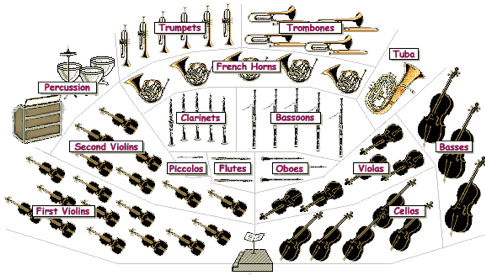
I attended a special concert by the Austin Symphony Orchestra at the Lake Travis Performing Arts Center. As expected, Maestro Peter Bay and his orchestra were superb in their renditions of Holst, Mozart, and Musorgsky. But Mr. Bay went beyond. To provide another level of inspiration to young musicians in training, he reached out and arranged for sixteen music students from Lake Travis High School to join the orchestra, some even given the honor of sitting in the first chairs.     

For this brief moment, all the tensions of daily life melted away, and I felt a surge of renewed hope for the future, for in the arts lies the unity of humankind. At the concert, I cannot tell you if I saw people of color, blonds, brunettes, or greying heads on the stage.

I only saw musicians making sounds that swelled my soul and transcended the noise of our daily lives. 

Artists in all disciplines must reach for more, whether conceiving an architectural masterpiece, a painting, an opera, a ballet, or a symphony. In their quest for excellence, their creations help erase the boundaries that separate us as people. Those who create must look beyond the narrow limits of mob-think; they must see in vivid colors, hear in vivid sounds, and often take the roads less traveled. They may be reclusive in the process of creating, but they do not function in isolation. Individuals who dedicate themselves to artistic development have a strong sense of self, driven to self-actualization. Their visions give to society while they draw from their cultures and many academic disciplines. 

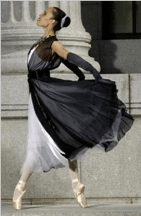
Painters see in colors, form, and proportions. Composers and musicians operate within mathematical formulas: divisions of time; use of fractions to indicate the length of notes. Dancers operate within the structures of Physical Science and the theories of motion and gravity. Actors must empty themselves to absorb the characters they play on stage – This requires looking beyond their own perceptions and truths.

 The arts are vital to humanity. They give flight to imagination and creativity and should be an essential part of academic education. Albert Einstein, perhaps one of the most highly self-actualized human beings, once said, “Creativity is intelligence at play.”

The Austin Symphony Orchestra and Lake Travis High School showed us a model for Einstein’s playful quote. We watched and listened to the young, who are still fresh and full of hope, join the seasoned professionals, and reach for excellence. They expanded their horizons and brought a diverse audience together in admiration. 

You may be thinking, lovely sentiment, but how do we do it? 

Many believe that the government should become the primary support for everything – including the arts. That road too quickly leads to a government having the power to define and control creativity. Study the long list of artists who defected from socialist/oppressive nations where the State defines what art is and how it’s to be expressed. The government can, however, have a constructive place in nurturing our children’s individual creative development.

Block grants to school districts, earmarked explicitly for promoting artistic growth, might be of great value in helping our young reach for their stars, and in the process, build bridges between people and help elevate humanity to higher levels of well-being. That requires recognition and respect for the fact that people are different, and the differences go deeper than  color or ethnicity.   

The arts ensure that diverse identities and cultures are recognized and given a voice in the world. The arts of every culture reach back in time, relying on those who came before. Present-day artists build on the past and expand their disciplines, reflecting today’s world. Our art not only leaves a record of who we are, but also the growth we’ve contributed to the future.

Bouchercon 2019

There are few things I enjoy more than spending several days with other crime writers.  Writing is often a solitary experience, so the opportunity to connect with friends to debate all aspects of the craft and business of crime fiction is something I look forward to.  Discussing the issues of plot structure, character arcs, how to poison imaginary people….

I was thrilled that my short story titled, “The Deed,” was chosen for this year’s Bouchercon anthology.  We had a fantastic turnout of readers, and I learned that many readers collect every edition of the anthology.  My good fortune included sitting next to John Floyd, whose talent is  outshone only by his generous nature.  This year’s lineup of short stories includes a bevy of accomplished authors, and I can’t wait to steal an evening so I can read every single story.  All proceeds benefit Literacy Instruction for Texas (LIFT), so if you didn’t pick up a copy at the convention, you can order it from BookPeople or online.  

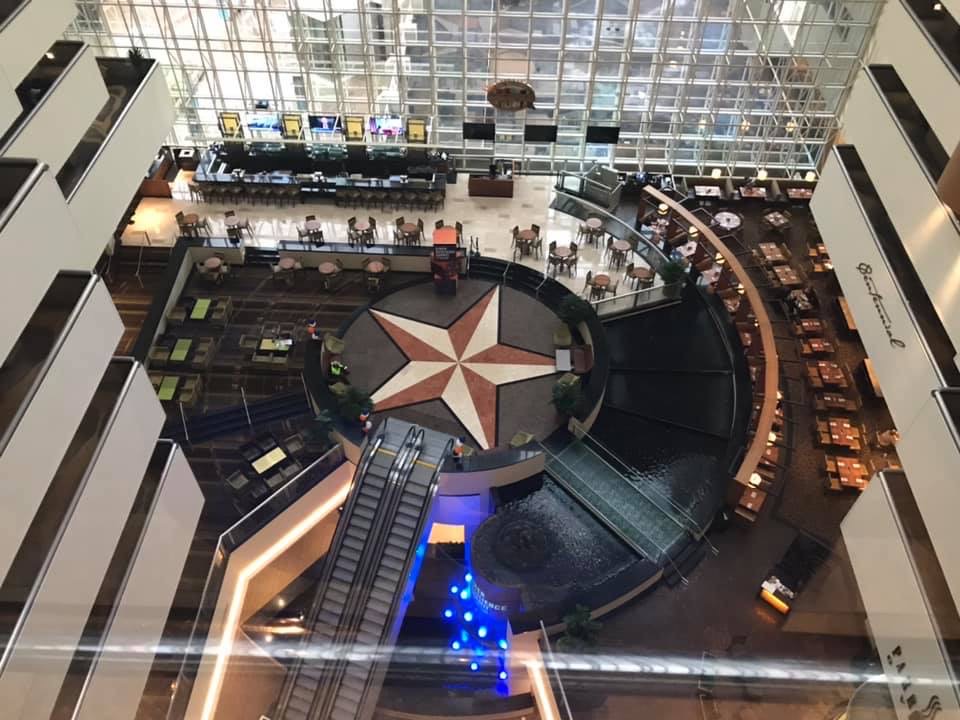
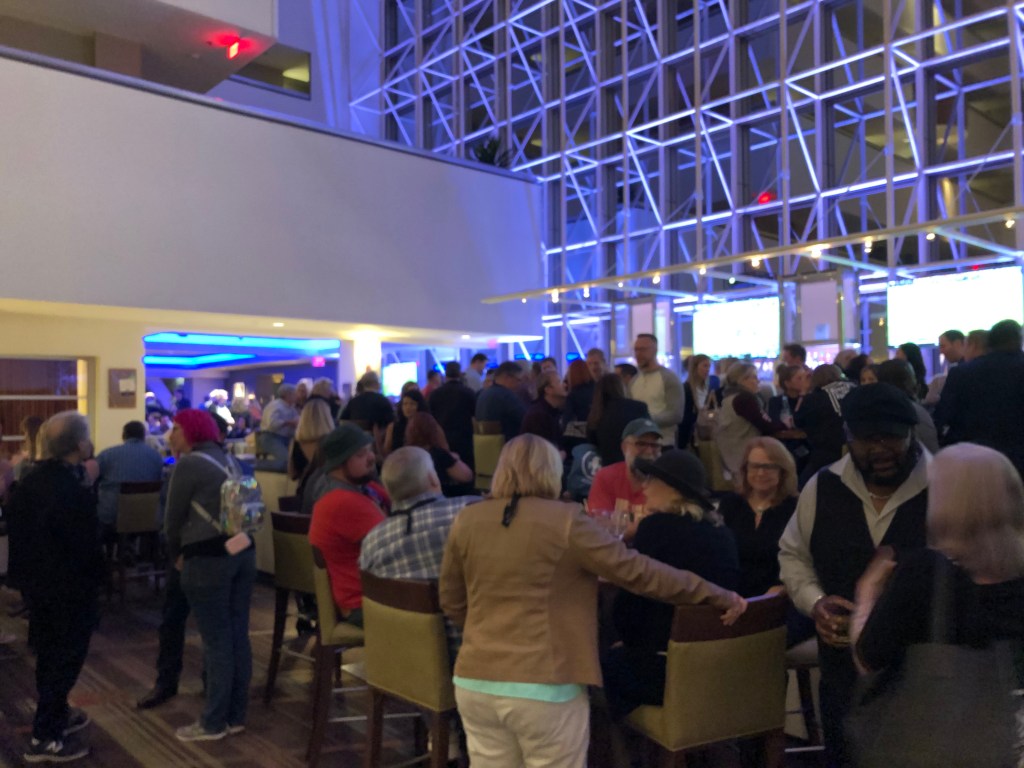
The challenge of Bouchercon is that there are so many events happening that you simply can’t do them all. There were several panel options in every time slot for the entire four days of the show, and I realized that many of the panels I wanted to attend were scheduled at the same time of my own panels or other events.  You have to sit with the program and prioritize where you want to be.  And make time for the bar.  Some of the best conversations I had took place in the bar. 

One of my favorite panels was given by Luci Zahray, affectionately called The Poison Lady, and she will scare the hell out of you and make you laugh all at the same time. She generously gives her time and expertise to crime writers across the country, and her presentations are always packed with information. If she’s on the schedule, I make sure to attend.

More Real Than the Housewives Panel

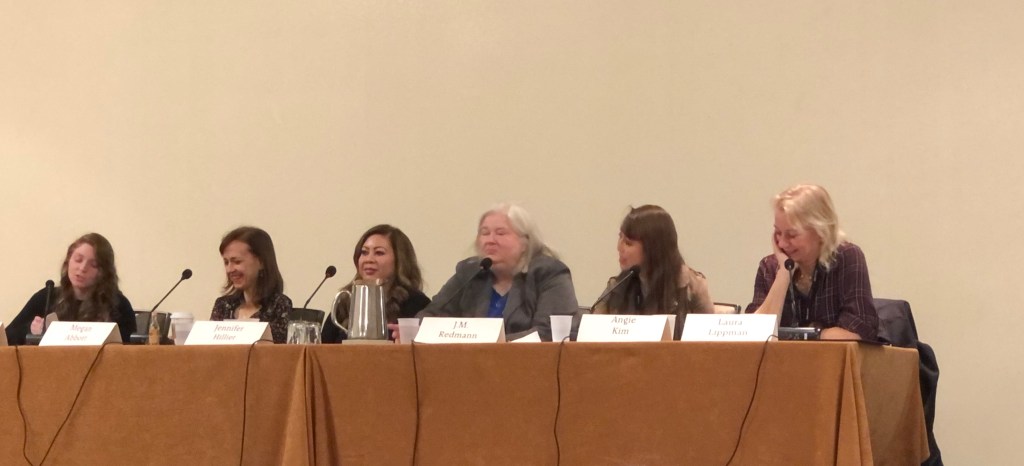
Another panel that I add to my favorites was “More Real Than the Housewives: Unlikeable Women. Moderated by Katrina Niidas Holm, the panelists were Megan Abbott, Jennifer Hillier, Angie Kim, Laura Lippman, and J.M. Redmann. The conversation around the issues pertaining to how female characters must/should act in fiction in order to be accepted/rooted for by the reader/etc. was fascinating. There were too many relevant points to list here, but I agree with the panelist who said that she preferred that a character be interesting above all else.

That’s What She Said: Snappy Dialogue

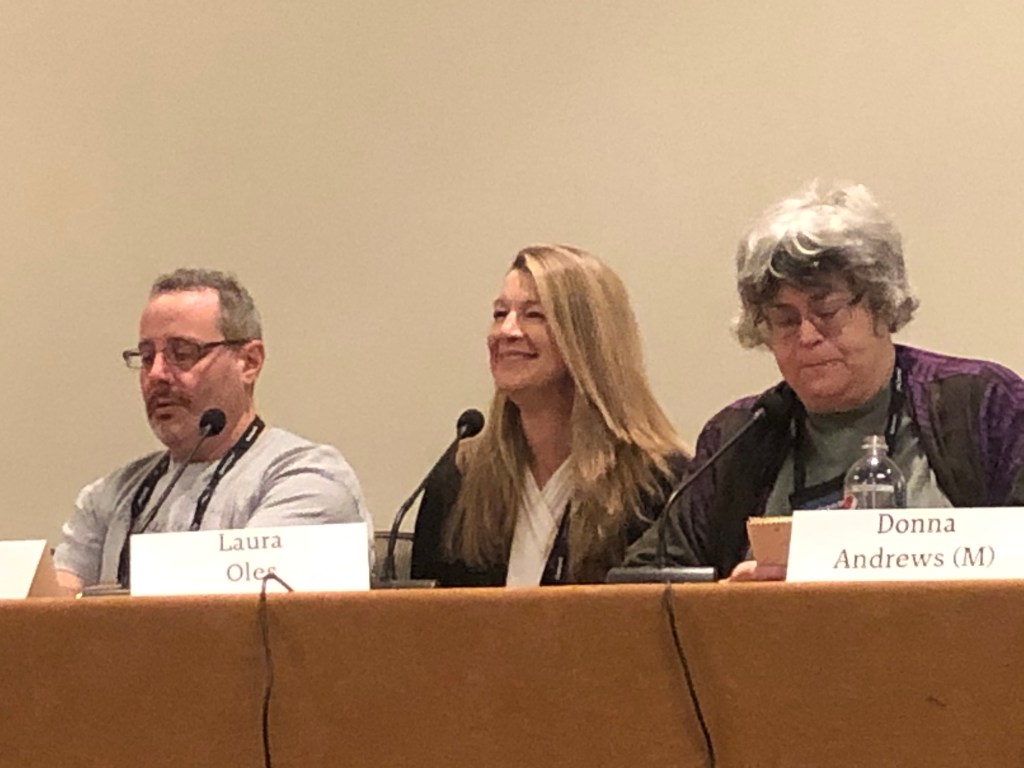
I served on two panels, the first titled “That’s What She Said: Snappy Dialogue,” and the experience was fantastic.  We had a wonderful crowd.  Donna Andrews was a thoughtful moderator and my fellow panelists—Hillary Davidson, Dana Haynes, Matt Iden and Lynette Eason—made the hour fly with their wit and clever banter. My stomach hurt from laughing when it was over.  

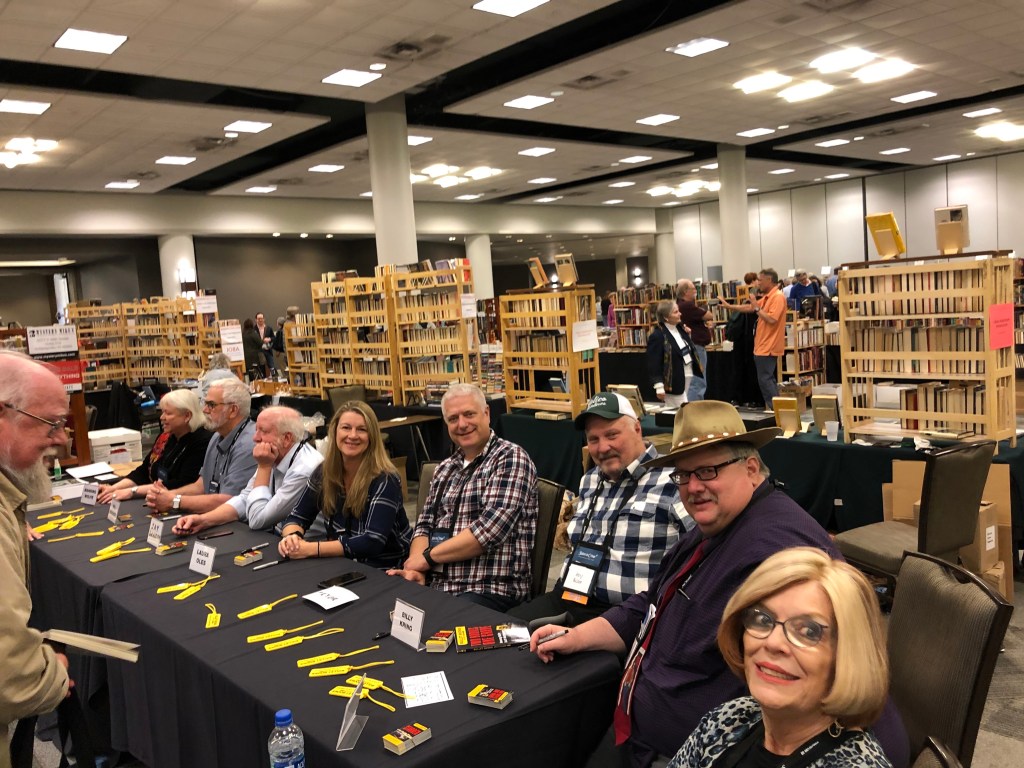
Bullet Books signing at Mystery Mike’s

My second panel, Co-Authoring, moderated by Manning Wolfe, focused on the process of co-authoring a book project. Her Bullet Books project,  which includes my novella titled LAST CALL, offers readers a way of enjoying a shorter story while traveling on a plane, train, or bus. Reading while driving is probably not a good idea.  We had several authors serve as panelists, including Jay Brandon, Billy Kring, Bill Rodgers, Kay Kendall, V.P. Chandler and Scott Montgomery. Co-authoring a book is a different experience than writing solo, so we wanted to explore the topic in the hopes of helping our audience decide if this was something they might want to try in the future.  

How did I miss the class on lock-picking?  I’m still bummed about that one. 

The Sisters in Crime breakfast starts SO EARLY but is well worth the lost sleep. It’s another opportunity to catch up with friends, hear the latest updates from the Board, and hear how certain projects such as We Love Libraries, We Love Bookstores and others have progressed throughout the year. I also love the webinars and classes that are offered, and I enjoyed talking with other members to learn which aspects of SINC they enjoy the most. Oh—and the pancakes were SO GOOD.  I’ll get out of bed early for pancakes.

The most important part of this year’s conference, though, was the time I spent with friends. Truly, it’s the people who make this community so special, and I’m grateful to be part of it.

Laura Oles

Bullet Books Launch at the Texas Book Festival

No matter what they tell you, Texas isn’t all cowboys and cactus and bullets and brush.

Texas is also BOOKS, and this weekend there’s proof: Today, the Texas Book Festival  opened on the grounds of the State Capitol in Austin.  Exhibitor tents and food trucks line N. Congress Avenue from Colorado Street, on the west side of the Capitol, clear down to 8th Street. An international slate of authors—John Grisham, Malcolm Gladwell, Sarah Bird, Elizabeth Crook, Alexander McCall Smith, and Terry Tempest Williams among them— are speaking, signing books, and appearing on panels. There are books for display and  for sale.

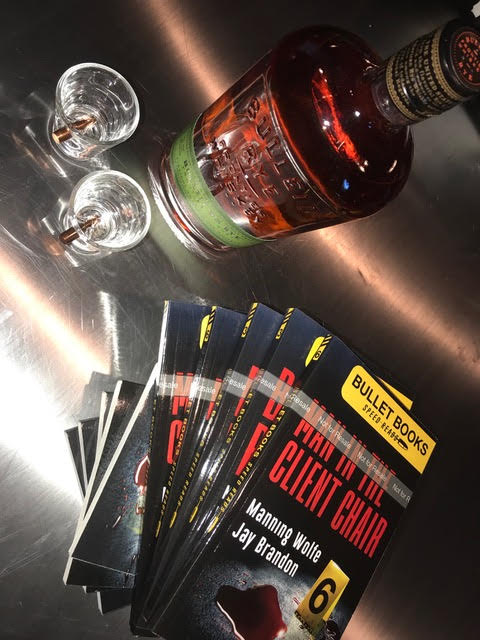
And in Exhibitor Tent #4, a new mystery series is being launched: BULLET BOOKS SPEED READS.

BULLET BOOKS is the brainchild of Manning Wolfe, author of the Merrit Bridges, Lady Lawyer series. Each Bullet Book is co-authored by Manning and another writer of crime fiction. The books are short, designed to be read in two to three hours—the length of a plane or train ride, or an afternoon spent lying under an umbrella on the beach.

Twelve Bullet Books are being introduced. They range from mystery to suspense to thriller. Among the characters are spies, lawyers, terrorists, gun runners, trash collectors, and teachers. Settings range from courtrooms, to classrooms, to comedy clubs, to embassies. There’s something for mystery lover.

A trailer for each book appears on the website. Here’s a look at the trailer for Bullet Book #1, Bill Rogers’ KILLER SET DROP THE MIC:

Trailers for the other books can be viewed on the Bullet Books website (links below). Follow the link to Youtube if you’d rather watch there.

Bill Rogers – KILLER SET DROP THE MIC
Billy Kring – IRON 13
Helen Currie Foster – BLOODY BEAD
Mark Pryor – THE HOT SEAT
Kathy Waller – STABBED
Jay Brandon – MAN IN THE CLIENT CHAIR
Kay Kendall – ONLY A PAWN IN THEIR GAME
Suzanne Waltz – DANGEROUS PRACTICE
Scott Montgomery – TWO BODIES, ONE GRAVE
Laura Oles – LAST CALL
V.P. Chandler – THE LAST STRAW
Elizabeth Garcia – THE NEON PALM

The first twelve Bullet Books are available from Amazon in both paper and ebook formats.  Another thirteen volumes will be released in 2020.

Authors will sign their books at the Starpath Books booth, # 405 in exhibitor tent #4, this Saturday and Sunday, October 26-27.

By the way, Bullet Books Speed Reads will meet an even wider audience next weekend at Bouchercon, the largest annual international convention of mystery readers and writers, which will take place in Dallas, October 31-November 3. Billy Kring, Laura Oles, Kay Kendall, Jay Brandon, Bill Rodgers, Manning Wolfe  will participate in a Co-Authoring Panel, October 31 at 2:30 p.m.

Eleven Bullet Books authors will attend the convention. They’ll sign on November 2 at 3:30 p.m

If you’re anywhere near Austin this weekend, stop by the Capitol and see a side of Texas that doesn’t get nearly enough press.

And be sure to visit the Starpath booth and let Manning Wolfe and the other authors introduce you to Bullet Books Speed Reads.