Whispers of Memories

I recently took a trip to Huntsville, Texas, and everything I saw at every turn stirred up old memories.


–          Right behind the hotel where I stayed was the apartment complex where my cousins had lived. A few blocks away was a second place they lived.

–          I passed a street of good friends of many years. They hosted a wedding shower for me.

–          I passed the fancy restaurant where my grandmother lived for a while when she was a child. I remember that when she told us, we had no idea!

–          I saw the nursing home where my other grandmother spent her last years.


All of this within a short drive just to get a burger! My mother’s family has been in the Huntsville area since the mid 1800’s so we have a lot of stories. A couple of my favorites:


–          Sam Houston was a friend of the family. He used to come and visit.

–          My great-grandfather was sheriff for a while and lived in the jail.


Neither of my parents grew up there, but my father moved there after my parents got divorced. He was offered a job at Sam Houston State University as a Criminal Justice professor. So I have a personal connection to the place through my mother and my father.

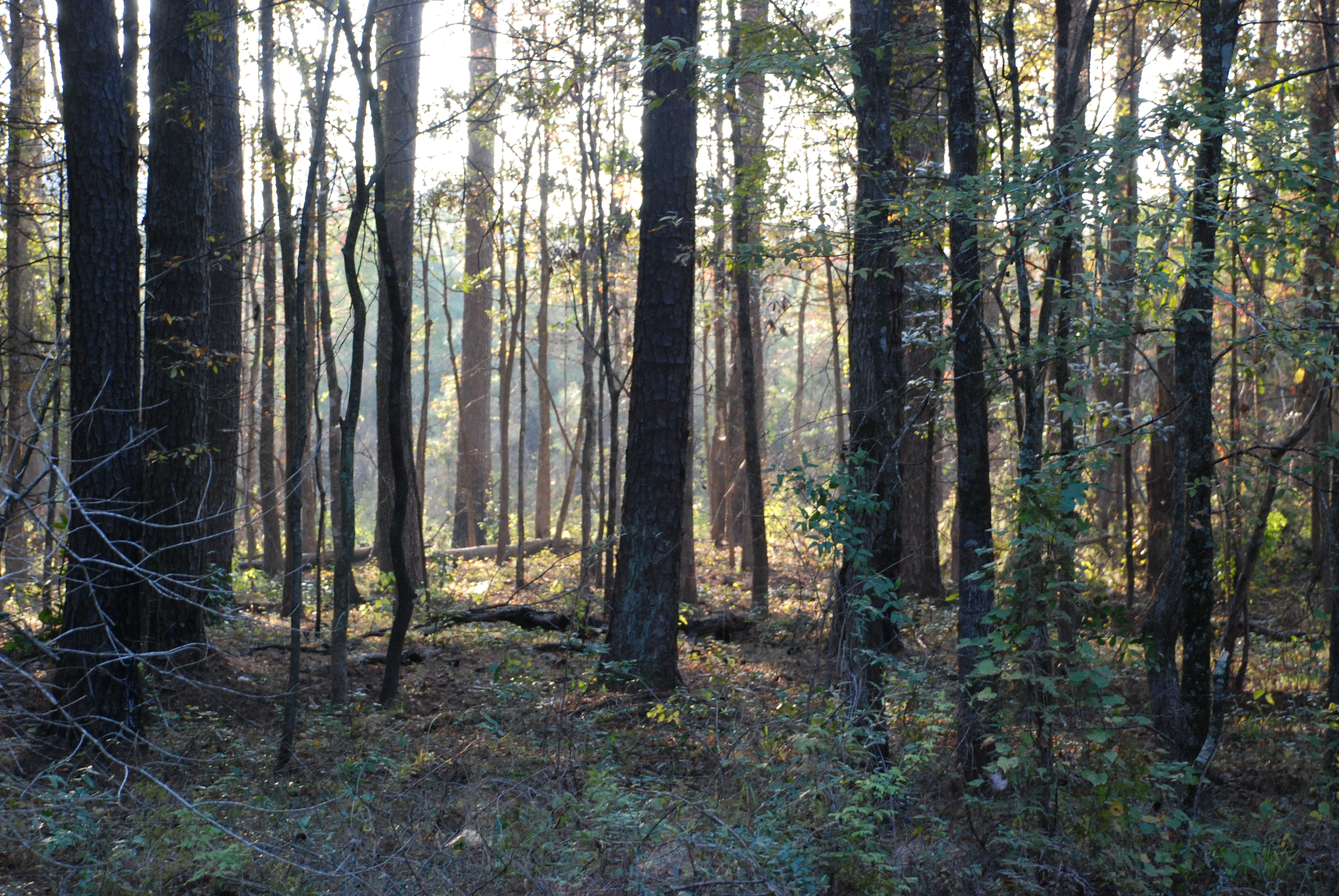
Besides the personal connections, there is something that draws me to the place. OLYMPUS DIGITAL CAMERAMaybe it’s something about the vines growing in the pines, maybe it’s because I love history and old things, maybe it’s because of my “writer brain”, but when I pass old houses, I imagine children playing and grannies rocking while shelling peas. I love browsing through the old stores. I sometimes look at what they’re selling, though I’m more likely to be looking at the tin ceilings and wondering what the original store was.

The history of a place just calls out to me. I look at the red leather seats in the booth at a diner and remember when not everyone was welcome as a customer. I look at the young, happy families and wonder if they hear or feel the negative things that happened. Can they even imagine it? I pass the prison walls and know the prison has been there since 1849. Lots of famous and infamous people have been in those walls.

At the university I think of my great great aunts who attended when it was a Sam Houston Normal School. We’ve had a graduate from there in every generation. My grandmother went to kindergarten at Old Main, which has since burned down.

I think about my father when I sit on the bench outside the CJ building that’s dedicated to him. There’s a plaque with his name on it. He used to sit outside and smoke and talk to students. Inside the building there’s a big picture of him. DadNext to it are plaques with names of students who have received scholarships named after him.


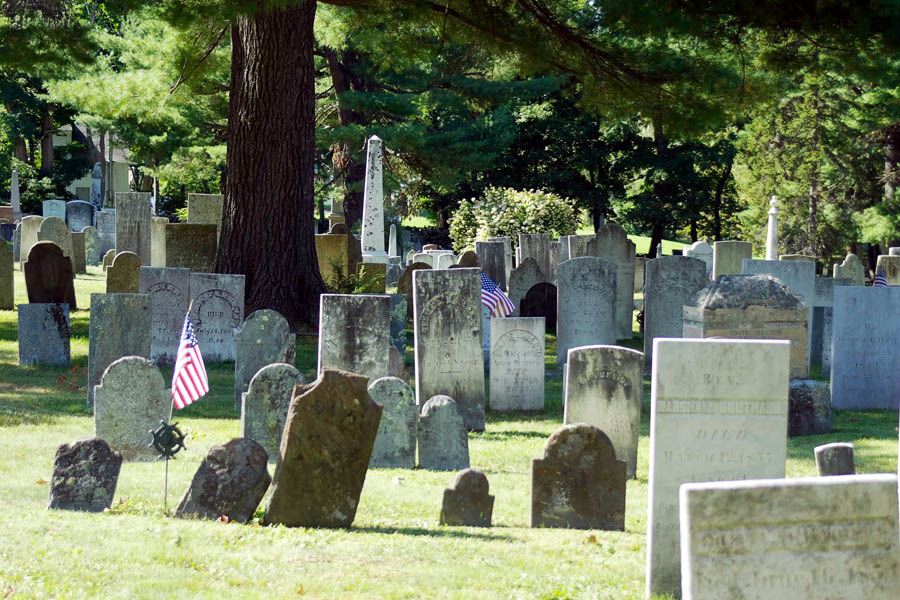
Sometimes when I’m in town, I visit the cemetery. I look up my folks and browse around. Yep, some people like museums, I like cemeteries. file000511322167When you’re looking at someone’s headstone, you see when they were born and when they died. You can see if they were married or had children buried with them. So many stories untold.


It’s all a bit overwhelming for me at times. But I guess it’s no surprise that I like to write historical fiction. file0001461581320For me the place is full of mystery, history, conflicts, love, death and birth. Those piney woods have a lot of secrets.
 

Do you have a place that calls to you?

Opening the Study Door

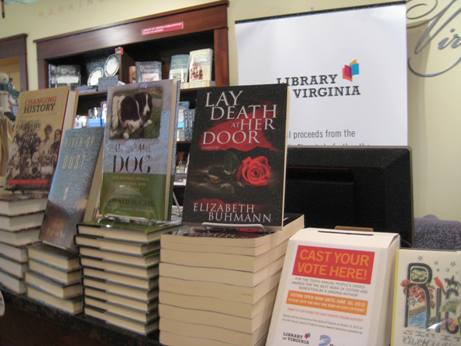
By Elizabeth Buhmann, author of Lay Death at Her Door (Red Adept Publishing, 2013)

ut2Writing is a solitary occupation—up to a point. We confront the blank page alone, wresting plot from story idea, populating plot with characters, and putting words in their mouths. But you can’t get from first draft to final draft without feedback from readers.

In his popular book On Writing, Stephen King says, “You take your story through at least two drafts: the one you do with the study door closed and the one you do with it open.”

King’s advice is to finish writing down the whole story—and to let it sit for a while and then revise—before showing it to anyone. I know writers who do very well letting readers’ comments guide them early and often during the creative process, but for me, King’s way is what works best.

For me, it’s a matter of not allowing other people’s input to knock me off-course. With early feedback, I am likely to lose access to what’s coming from within. If the story is still fragile in my mind, showing it around can be like letting someone sit in a chair I’ve just assembled before the glue has dried. The chair gets busted, the reader lands on the floor, and I am left with a pile of broken sticks!

Readers’ reactions are hard to predict. My first novel was pretty smooth, I thought, by the time I took it to a manuscript class. I was completely taken by surprise when no one understood my main character’s reactions to the events at the beginning of the story.

In chapter one, she learns that a man convicted on her testimony has been exonerated. Yet she shows no surprise, no fear, no consternation. She just sort of hunkers down. My first readers said, “She can’t do that! Why isn’t she angry, why isn’t she stunned? Why isn’t she afraid?”

It made sense to me. MY MC didn’t act surprised because she knew all along that the man was innocent. I was keeping that up my sleeve! I wanted it to come as a surprise a little later in the book. I thought readers might wonder why she was acting the way she was. I thought they might have suspicions, or even guess what was going on.

I was wrong.  Instead of questioning their assumptions, my readers lost confidence that I was telling the story right. I knew how my character had to act, but my readers couldn’t accept what I was telling them. What a disaster!

Lay Death at Her DoorFinding a big weakness in a story (especially in chapter one!) can be discouraging at first. But it often leads to much greater strength. This was how it worked for me (to my immense relief, after I got over my initial panic).

Oddly enough, I didn’t even understand what my story’s real hook was until one of my critique partners–Brenda Vicars Hummel, whose wonderful YA comes out later this year!–pointed it out to me. My hook was that my main character had lied. Her reactions in chapter one made perfect sense once I let the reader in on her secret.

And once the readers knew she lied, many of them were very curious about why she would have done such a thing. To quote one five-star review: “This mystery grabbed me from the two-word second paragraph. `I lied’…the lie is the elephant in the room…I want to know why she lied! Why, why, why?!”

I still had a good surprise up my sleeve for the ending, but I might never have gotten my readers past the first chapter without what I learned from readers when I opened the study door.

Two New Mystery Events for May

DENNIS TAFOYA’S SHORT MYSTERY WRITING CLASS AT BOOKPEOPLE

tafoya  pictureAcclaimed crime author Dennis Tafoya is teaching a short mystery writing class on May 1st, 6:30 PM on BookPeople’s third floor.

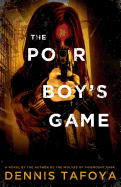
It’s a fun way to promote his new book The Poor Boy’s Game. He will teach an hour-long class on the elements of crime fiction using examples from classic and current authors as well as his own work. A fun and informative night for beginning and practicing writers as well as people who are just fans of the genre. Bring pen and paper. Admission is free.

Dennis Tafoya has also authored The Wolves of Fairmount Park and Dope Thief.

Tafoya book cover

To find out more, click on http://www.dennistafoya.com/

BookPeople is located at 603 N. Lamar Blvd., Austin, TX78703.

tafoya  dope thief

Tafoya wolves

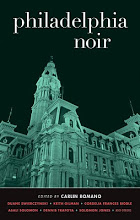
tafoya philly noir


BARBARA BURNETT SMITH ASPIRING WRITERS EVENT

On May 18, Sisters in Crime Heart of Texas Chapter will host the Barbara Burnett Smith Aspiring Writers Event (BBSAWE) at 2 p.m. at Recycled Reads in Austin.

This event will celebrate the legacy of Barbara Burnett Smith, a published mystery author who helped many writers in the Austin community. Aspiring Writers will meet with their Mentors, who are published mystery authors in the Sisters in Crime Heart of Texas Chapter.

W.D. Smith will speak about his mother’s legacy and Russ Hall will talk about mentorship. Following these remarks, the mentors will introduce their aspiring writers to the membership and the writers will read their 500 submitted words to the audience.

Following the program, a buffet supper will be served and aspiring writers will consult with their mentors.

Jan Grape mentors Jane Shaughness; Russ Hall mentors Alex Ferraro; Helen Ginger mentors Shelby O’Neill; Susan Rogers Cooper mentors Lindsay Carlson; Caroline Shearer mentors Eileen Dew; Elizabeth Buhmann mentors co-authors Sue Cleveland and Dixie Evatt.

Recycled Reads is located at 5335 Burnet Rd, Austin, TX78756.

img_1111-1


James Michener Didn’t Object

By Kathy Waller

0kathy-blog

Last week, Valerie wrote about why she writes. Here’s my take on that subject:

When I was four years old, I took a pair of scissors and a roll of red, gooey adhesive tape and wrote my name on the inside of the kitchen door. It didn’t occurred to me I shouldn’t, and my parents never said a word. I’m sure they discussed it, but I wasn’t privy to that conversation.  The crooked red letters stayed on the door for years. When they were finally removed, a heavy red stain remained.

When I was eight, my father gave me a ream of legal-sized paper. I produced a newspaper, one copy per issue, focusing on the social activities of dogs, cats, and horses in the neighborhood. I reported on the wedding of Mr. Pat Boone, my fox terrier, and Miss Bootsie, my grandfather’s cranky gray-and-white cat. Miss Bootsie was really Mr. Bootsie, but even then I knew the value of poetic license. Mr. Tommy, my cousin’s orange tabby, married someone, too, but I don’t remember whom or what gender. Or what genus and species for that matter.

For years, I loved writing—the paper, the pens, the ink, the facts, the improved facts, and the outright fiction.

The feeling lasted until high school, when I began taking courses labeled English. Writing became torture. What will I write about, how many words does it have to be, I don’t know anything about that, I don’t have anything to say. Through high school and two college degrees–in English–I produced the required papers but agonized over every word.

There were bright spots: writing the junior class prophecy, which made even the teachers laugh when I read it at the junior-senior banquet; composing a satire on life in the teachers’ lounge, issued serially on an irregular basis–whenever the Muse moved me.

Overall, however, my relationship to writing remained conflicted. I did my best to camouflage the discomfort, though. After all, I taught English.

Things began to change when I told a therapist about my early love affair with words. He responded, “I think you’d better start writing.” He suggested I join the Austin Writers’ League.

“I can’t,” I said. “James Michener belongs to the Austin Writers’ League. I can’t belong to anything James Michener belongs to.”

The next day, I joined. James Michener didn’t object. I started taking informal classes at nearby universities. An instructor invited me to a Saturday-morning writing practice group. The next weekend, I drove fifty miles, parked in front of the café where it met, watched people carry notebooks inside, backed my car out, and drove home. It took another week to build the courage to pick up my notebook to join them and become a regular.

The result of all this effort? Once again, I fell in love with writing. I also fell in love with a member of the writing practice group and, after a decent interval, married him.

In my romance with writing, I didn’t live happily ever after. I don’t have a long list of appealing topics. I don’t have a file of perfect first sentences. I still have to write to find out what I know and what I think. I still find myself writing furiously right up to the deadline. (Or slightly after, as I am now.) Starting any piece is difficult. But once I begin, the words flow.

I wouldn’t exchange that feeling for anything.

In fifteen years, I’ve come from, I can’t join the Austin Writers’ League to I’m working on a novel, attending Austin Mystery Writers critique group, writing short stories for publication in an anthology, blogging, writing every day.

And, contrary to the moans I make when asked how the writing is going, I love every second of it.

Why I Write

By Valerie Chandler

Almost every writer is asked, “Why do you write?” Many writers have lofty answers, but mine is, “Because I have to.” I love telling stories. I have to tell stories. I think it’s something I got from my dad who was a natural-born storyteller. He used this gift in his job as a college professor. He loved to entertain his students.

I wrote my first stories in first grade and I loved it. During my elementary years, every time a teacher said, “Get out a pencil and paper. It’s time to write a story,” I practically jumped out of my chair from excitement while the rest of the class groaned. As I grew older, writing exercises turned from writing stories to writing essays. I felt the school system was conspiring to squash our creativity.

Then in eighth grade Mrs. Cunningham read a story called “The Spanking Machine”. My heart raced. When I was in kindergarten, my older brother teased me that Principal Rockefeller of the elementary school where I would attend the following year, had a spanking machine and she accidentally killed a kid with it.

The story that Mrs. C. read was not about that, but it brought back a vivid memory of my run-in with her spanking machine. I knew that was the story I had to write. (You can read what happened here.)

A few days later, before Mrs. C. returned our stories to us, she said, “You all wrote really good stories, but there is one I’d like to read to you. It’s called ‘The Spanking Machine’.”

The students protested, “You already read that to us!”

“No, this is a different one. A story that one of you wrote.” I couldn’t believe she was going to read it to the whole class! I was nervous and curious as to how they would react. I remember looking around the room, pretending I didn’t know who wrote it, in case they didn’t like it. As the story progressed they leaned forward in their chairs, got nervous as the tension grew, and laughed at the end.

To have an effect like that on someone is fun, intriguing and addictive. The idea that a writer can reach through the words and grab a reader is a powerful and fun feeling, but it’s also a compulsion. I have stories constantly swimming through my head and I want to share them with the world. I hope readers will still lean forward with anticipation when they read my stories.

The Hidden Drama

By Elizabeth Buhmann

ut2I love a really good mystery. There is nothing I would rather read.

What I like is the discovery of a hidden reality—dark and terrible—that underlies appearance. And there is satisfaction in seeing evildoers dragged out in the open and brought to justice.

When you write a mystery novel, you invent not one but two stories. One is the hidden story of a crime. The other is a story of discovery.

You start with the hidden drama. Why might one person kill another? How exactly does it go down? How does the murderer conceal the crime?

A man might be jealous of his lover. He quarrels with her, strangles her, conceals the body, and invents an alibi. That’s what happens, but it’s hidden. Nobody knows about it.

The underlying story could be a novel in itself, but it wouldn’t be a mystery—it would be a crime drama, or a tragedy, perhaps. The mystery is about how the hidden story comes to be exposed.

The plot of the mystery begins with the first public sign of a violent reality that hides beneath the placid surface. Shots are heard, or someone disappears. A body might be found.

The first inkling of the hidden story typically leads to a detective being hired or police being called to a crime scene. The detective/protagonist then makes deductions and discoveries that lead inexorably from the first sign of violence to a full exposure of the hidden drama. Only then can justice be restored.

Somebody once asked me why I write stand-alone mysteries instead of detective stories, which can be developed into a series. It’s because the hidden drama is what intrigues me most–the dark and terrible evil underneath the surface.

Blue Ridge Mountains

Lay Death at Her Door is set in the Blue Ridge Mountains of Virginia.

My first book, Lay Death at Her Door, is not a detective story, but it still has the heart of a mystery, because it’s all about the laying bare of a hidden life. My main character Kate got herself into a situation which led to a man getting shot and Kate being beaten and raped. To protect herself, Kate lied on the stand, and an innocent man went to prison.

So in my book, an eruption of violence was initially explained away by a false solution. The wrong man took the blame. The first inkling of what really happened comes twenty years after the fact (in chapter one), when the innocent man is exonerated by new evidence.

In another departure from the usual structure of a mystery novel, I chose a main character in the hidden drama as my protagonist, rather than the detective who solves the crime. I wanted to tell the story from the inside, even though it meant my main character would be a dark one, morally complicit, however unwillingly, in the real killer’s crimes.

Mysteries are ultimately about justice. In Kate’s story, there was a very real possibility that the truth would never be revealed. What breaks the case is Kate herself. Her own character is her downfall. This to me is a compelling idea—that evil deeds destroy us from within.

The Halls of Mystery

by Gale Albright

Joan  uh

The April 13 Sisters in Crime Heart of Texas program will feature “The Halls of Mystery” with authors Joan Upton Hall and Russ Hall. They will present mini-workshops on everything you ever wanted to know about writing. Bring your questions! Be ready to listen, take notes, and interact. It should be a lively meeting.

JUH bookcover

Joan and Russ, who have a number of books under their belts, have always been more than happy to help fledgling writers learn the craft of writing. They will share their personal experiences on getting published and keeping the right mental attitude. Both have received Sage Awards from the Barbara Burnett Smith Mentoring Authors Foundation. The award is given to an author who demonstrates an outstanding spirit of service in mentoring, sharing and leading others in the mystery writing community.rx book doctor

A former English teacher, Joan Upton Hall is an author, editor, writing instructor and speaker. Her books run from historical nonfiction to urban fantasy and the paranormal. She offers sample chapters and more on her website. Her books include The Shadow of Excalibur, Dream Shifters, Just Visitin’ Old Texas Jails, and RX for Your Writing Ills. http://joanuptonhall.com/home

Russ Hall

russ hall bk

Russ Hall has had fifteen novels published, including: The Blue-Eyed Indian, Wildcat Did Growl, Island, No Murder Before its Time, Goodbye She Lied, Talon’s Grip, Bones of the Rain, and South Austin Vampire. He has also co-authored (as well as ghost written) numerous non-fiction books. Russ is a frequent mentor and judge for writing organizations. In 1996 he won the Nancy Pickard Mystery Fiction Award for short fiction. http://www.russhall.com/russ hall bk2

“The Halls of Mystery” program starts at 2 p.m., Recycled Reads at 5335 Burnet Road in Austin, TX.


Book Review: Burrows

By Valerie Chandler

Austin Mystery Writer Valerie Chandler

Austin Mystery Writer Valerie Chandler

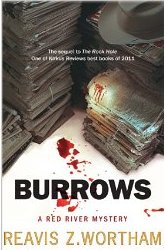
Burrows, the second book of Reavis Z. Wortham’s Red River series, is a page-turner and a satisfying read. In 1964, in North Texas along the Red River, young constable Cody Parker, recently back from Vietnam, has his hands full. An escaped lunatic has already left dead bodies in Nebraska, Kansas, and Oklahoma. So when a body is discovered in the Red River, it looks like the killer is in the area.  To add to Cody’s problems, his young cousins, Pepper and Top, are always underfoot and causing trouble. Cody’s uncle, retired constable Ned Parker, can’t break his habit of following hunches and does some of his own investigating while trying to reassure the town that Cody is fully capable.

Cover of Burrows by Reavis WorthamTheir investigations lead both Cody and Ned to the Cotton Exchange over in the next town, Chisum. They believe the killer is inside a hoarder’s nest crammed three stories high with junk. It’s a masterful feat of engineering, complete with deadly booby traps and a maze of tunnels. Cody and fellow officer, Deputy Big John Washington, volunteer to enter and as soon as they do, the entrance collapses. The only way out is forward and they hope that Cody’s experience as a tunnel rat in Vietnam will get them out alive. Ned and the rest of the town have to wait outside during the ordeal, wondering if the officers are even still alive.

Wortham skillfully captures 1960’s Texas culture and language while also providing a great mystery. He places the reader right in the musty, stinky, death trap, every stifling inch of the way. It was so descriptive, I sometimes had trouble breathing and he made me squirm more than once! He does an excellent job of pacing and adding tension. Just when one problem is overcome, there is another to face. I had to keep turning pages to see what happened next.

An Evening with Laurie R. King

By Laura Oles

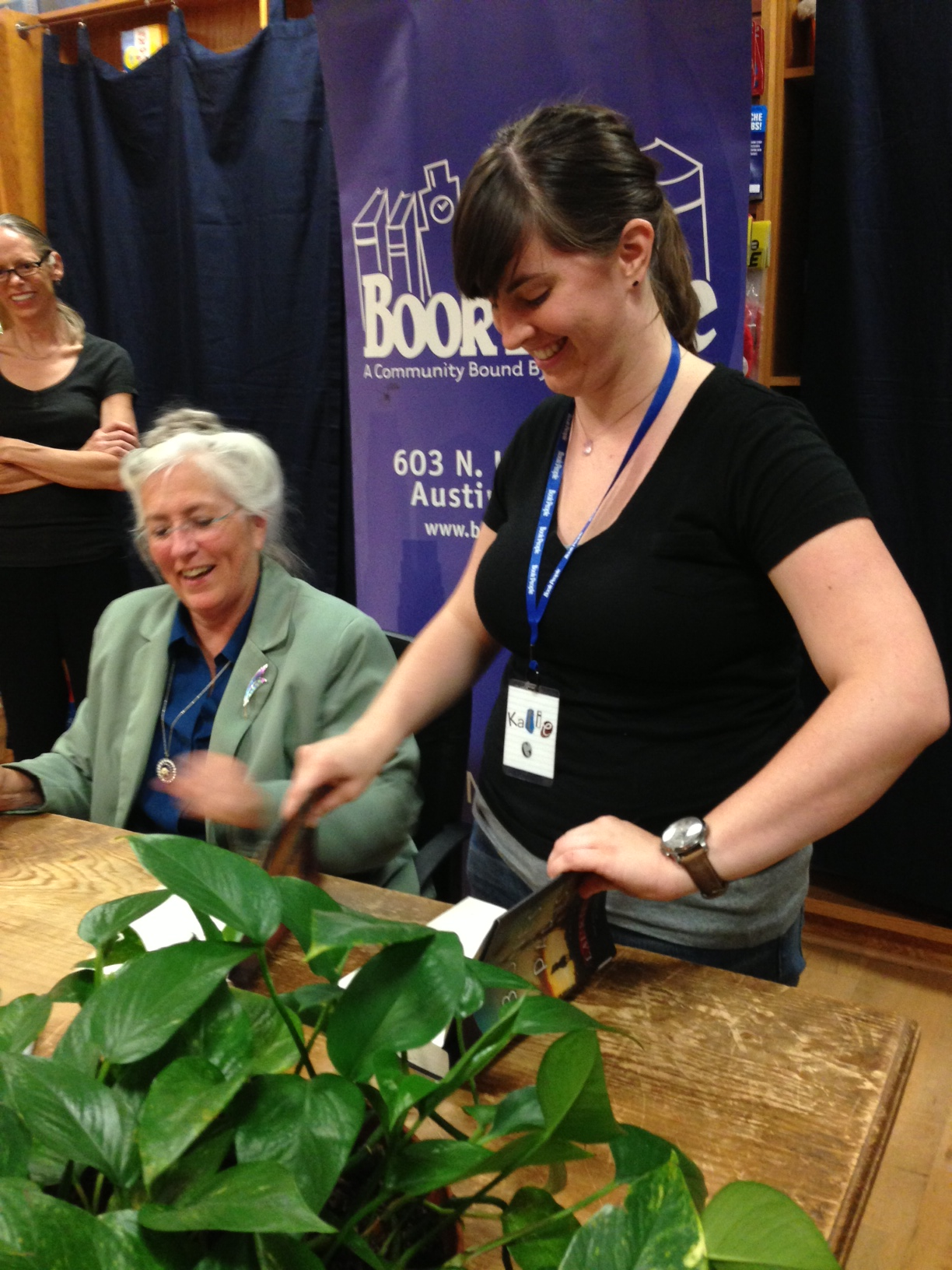
BookPeople in Austin, Texas, always has an impressive schedule of author events on the calendar, so it can be difficult to decide which ones to attend.   When Laurie R. King’s name appeared on the roster, I cleared my schedule for that evening (well, after hustling kids to soccer practice, helping with homework, cooking dinner, you get the idea) and made my way to Lamar Blvd.

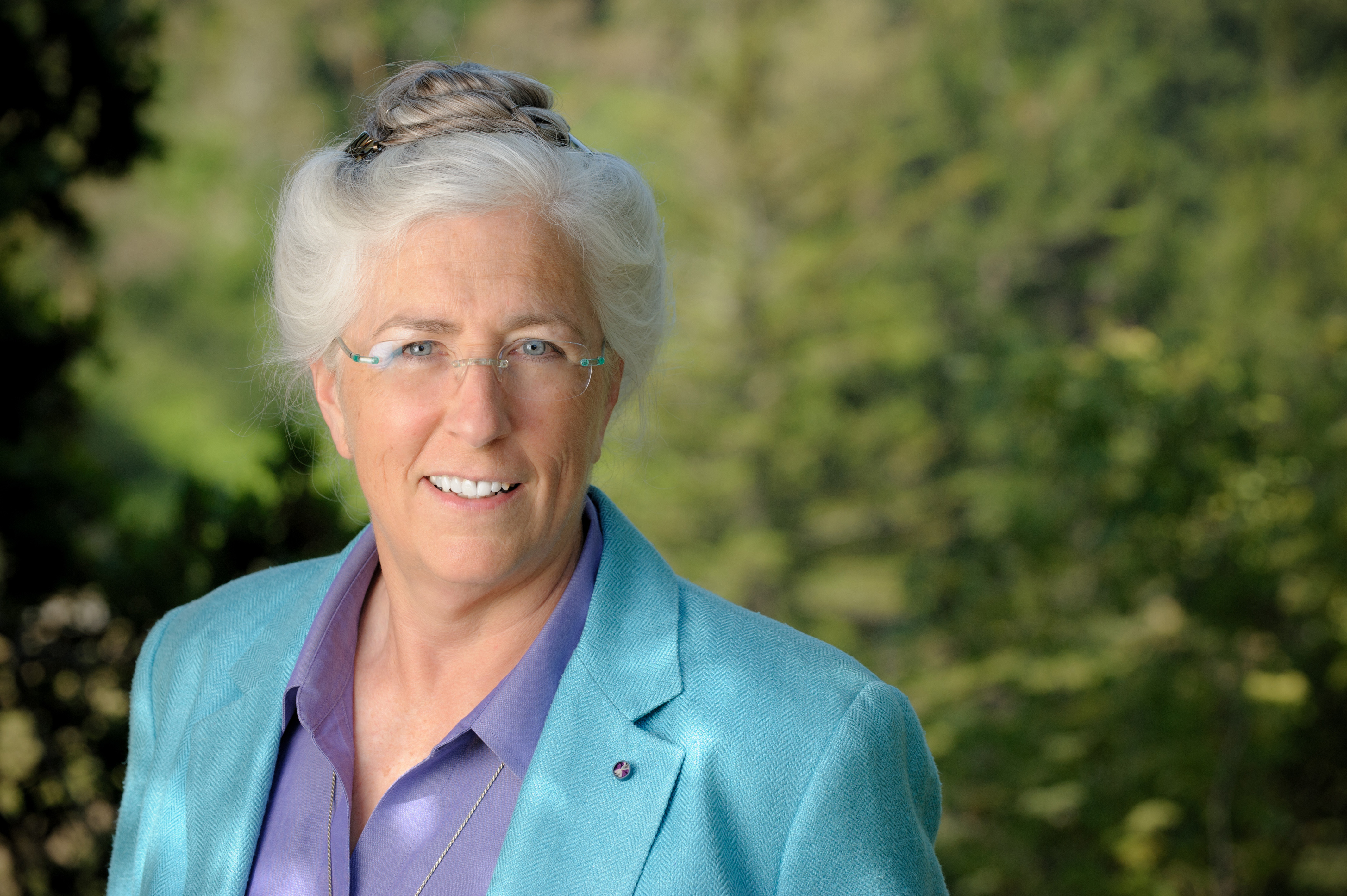
laurieking2I had the pleasure of meeting Laurie at this year’s Malice Domestic conference in Maryland.  She was funny and kind and extremely gracious with her time.  As the conference’s chosen Guest of Honor for Malice Domestic 2013,  she still found a way to make time for every person hoping for a moment of her attention.   There are few things more wonderful than realizing a favorite author is also a gem of a human being.

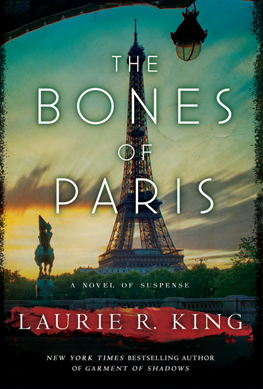
Laurie discussed her latest novel, The Bones of Paris,which is set in the City of Light at the end of the 1920’s.  When asked why she chose this particular time, Laurie said, “The end of the decade was when things began to fall apart, and I find that to be much more interesting for a crime writer.”

King book coverThe Bones of Paris received a starred review from Booklist and Publisher’s weekly was equally kind with its praise.  Exploring the dark underbelly of Paris’ Jazz Age through the eyes of Harris Stuyvesant will have readers up all night in anticipation of what he discovers next.  While Mary Russell remains a crowd favorite, it’s clear that Harris Stuyvesant will garner loyal readers as well.  After all, there’s room on our nightstands for more than one compelling King protagonist.

When asked by an audience member how she was able to juggle writing multiple series, she answered that she found herself easily bored and preferred switching from one project to an entirely different one.  Loyal King readers are thankful for this view as it gives us a broader range of stories from which to choose and affords us the opportunity to experience King’s storytelling prowess in numerous ways.

Laurie can’t speak in public without someone asking her about her decision to take on the character of Sherlock Holmes through her vision with Mary Russell.  She confesses that early on, she was surprised by the uproar from some Holmes fans.  She says that one message board started flaming her on the Internet, back in the early days of such boards, but that she wasn’t on the Internet so all their disparaging efforts went on without her knowledge, something that still brings a smile to her face.  “They were getting all worked up and I had no idea for the longest time,” she says with a grin.

Laurie R KingIn truth, she was fascinated by the idea of taking many of Holmes’ traits and seeing how they would manifest in a young, intelligent woman who would stand as his peer.  She was interested in “how it would be the same and how it would be different.”   Needless to say, the success of The Beekeeper’s Apprentice captured the imagination of those who loved Sherlock Holmes as well as those who loved the idea that she would take the character and explore him through more current times and with compelling twists on the classic detective.

One question that often comes up at such events–from curious writers– involves the debate between being an ‘outliner’ or ‘pantser,’ which has since evolved into the ‘organized vs. organic debate.’  Want to know under which camp Laurie King falls?

While she does take notes on certain scenes or particular characters, Laurie finds it best to write organically.   In fact, she co-authored a book with Michelle Spring titled the Arvon Book of Crime and Thriller Writing, which details the two authors’ differing approaches to crafting a novel.

She says her first drafts are often “300 page outlines with characters disappearing and such.”  Struggling novice novelists will be grateful to hear that someone with King’s writing chops turns out a less than perfect first draft.  She does write 1,500-2,000 words per day until she hits a slowing point, which signals that she has more ‘back of the mind’ work to do in figuring out what happens next in the story.  She finds it best not to continue to force the writing and uses the slowed pace as a signal that more questions need to be answered before continuing.

When asked which authors she currently enjoys reading, King offers up Lyndsay Faye.  “She’s such a talented writer.  I loved the Gods of Gotham.” She also gives kind mention to Tony Broadbent, author of the Smoke series featuring Jethro, a jewel thief and cat burglar.

King is hard at work on her next projects and promises that we will see more of Mary Russell in the future as well as other characters that have captured her imagination (and ours).  King readers can rest assured that whatever the author brings next, it will be well worth the wait.

To learn more about Laurie R. King, visit www.laurierking.com.

Welcome to Austin Mystery Writers 2014!

We are ramping up our blog for the new year and adding several new features to our website. If you are a mystery reader, writer, or fan, especially if you are in Central Texas, we want to hear from you!

Mystery writers: Stay tuned if you are interested in being interviewed or in having your book reviewed on our website. We will post submission guidelines soon!

Mystery readers and writers: how about writing a book review or a guest post? Contact us about your ideas for the coming year. And come back soon to see what we’ve got in store for 2014!