Where Do You Find Hope?

0kathy-blog*

*

*

Posted by Kathy Waller

*****

This isn’t a kindergarten for amateur writers. I’m sorry, Mr Kipling, but you just don’t know how to use the English language.” ~ Rejection from the editor of the San Francisco Examiner to Rudyard Kipling

*****

What makes a successful writer?

Aside from a working knowledge of the language and a certain amount of talent, answers generally include persistence, organization, initiative, professionalism, practice, vision, confidence, tolerance for criticism and rejection, vision, confidence, self-discipline, resilience, motivation, creativity, empathy, patience, courage, flexibility . . . Well, it’s a long list.

But Ralph Keyes, in The Writers’ Book of Hope, says aspiring writers need two basic things: a knowledge of how the publishing industry works, and hope.

Publishing has changed considerably since Keyes’ book was published just over ten years ago, and the Internet has made it easier to find what beginning writers want to know.

Hope is a different matter. There’s plenty of pessimism and discouragement out there. Where does a writer seeking publication acquire hope?

In my experience, much of it comes from other writers.

Last month I spent a Saturday morning in a class sponsored by the Writers’ League of Texas and taught by novelist Karleen Koen. I first met Karleen three years ago, when she taught at the WLT Summer Writing Retreat, and I’ll see her again at the WLT retreat this August. Last month’s class was a “sneak peek” at the August class: “The Damned Rough Draft: Reframing and Reimagining Your Novel in Its Beginning Stages.”

I’m not the only one of Karleen’s students who keeps coming back for one more course. She’s a good teacher. What she knows, she shares. She also acknowledges both the highs and the lows of her own writing life. (The title of this year’s class–“The Damned Rough Draft”–is evidence of her empathy with students.)

Karleen doesn’t promise the people sitting in her classes will become novelists, but she makes the possibility come alive. She is generous. She offers hope.

Who are other hope-givers?

Members of Austin Mystery Writers, and similar groups, who read and critique thirty to fifty pages every week. Beta readers, who go through entire manuscripts–hundreds of pages–to offer criticism. Strangers who read blog posts and Like or Reblog or Tweet or leave comments. All readers who tell the truth–both positive and negative–in a way that says, “I believe in you. Keep writing.”

It’s your turn now, writers: Who gives you hope?

Much Ado About Malice Domestic 2014

photo 1Writing is often a solitary endeavor. Working alone for long stretches of time can take a toll on us and on our work.   We spend too much time chatting with our imaginary friends and not enough time with our real ones.

This is one of the reasons I believe attending a writers’ conference is so important. When you spend stretches of time in your own imagination, plotting where your perp should hide a body or debating how your protagonist will emerge victorious from her latest dilemma, it’s important to get out among others who share your love and frustration for the craft that is crime fiction

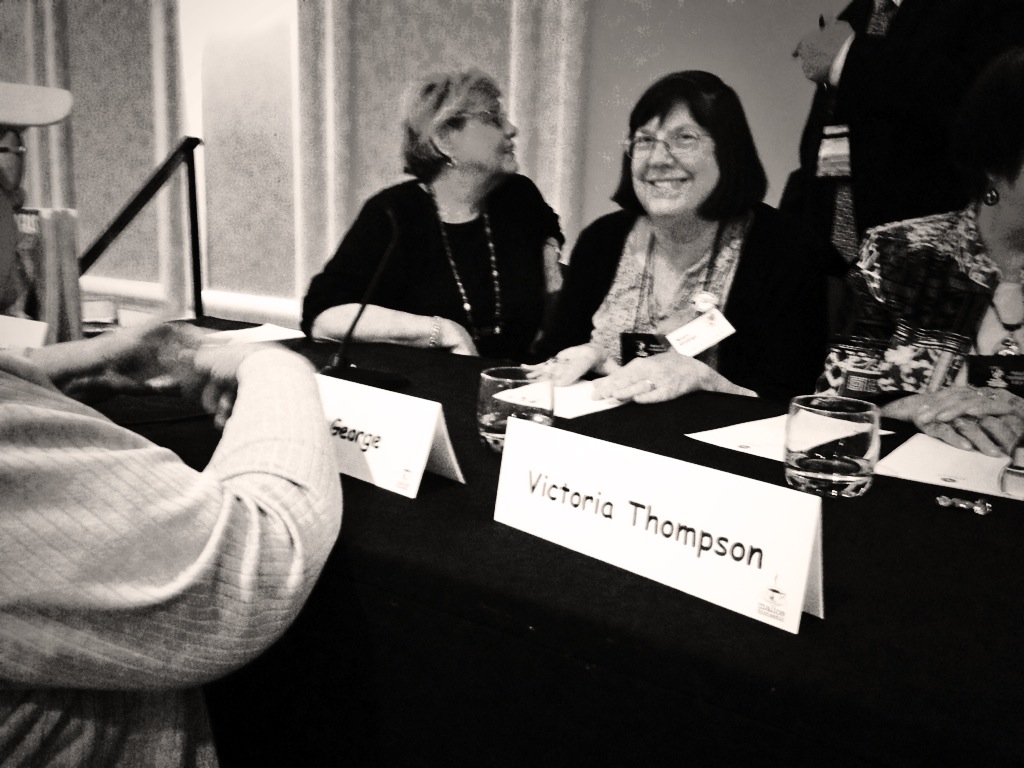
Malice Domestic 2014 was my choice this year, in part, because I had attended in 2013 andphoto 4 found the people enthusiastic and welcoming. I also wanted to cheer on our friend and Austin Mystery Writers member, Kaye George, who was nominated for an Agatha for her novel Death in the Time of Ice. While I have attended a few other conferences over the years, Malice Domestic is the first one that I attended that brings together both readers and writers. Many of the panels were directed toward reader questions, although I gleaned important tips designed to help me improve my craft as well. Overall, the experience focused more on the shared love of mysteries and the opportunity to discuss the many facets of why we love this genre.

We are members of the same tribe.

The conference sessions ranged in topics from the role of outsiders in mysteries to how to
balance murder and humor and mysteries to mysteries set on different continents. Perhaps one of my favorite sessions was Dr. Max Houck’s Crime Lab Gab. A favorite from last year’s Malice Domestic, he returned this year to share more insight into his daily life as the director of D.C.’s Department of Forensic Sciences. With a sense of humor twisted perfectly to fit the rest of us in the room, Houck provided an inside peek into what it’s like to oversee cases ranging from food poisoning to contagious diseases to the realities of processing a crime scene.

It ain’t pretty, people.

Dr. Houck tells us “your house is far cleaner than you know. However dirty you think your homMax Houcke is, it isn’t. It’s just fine.” He then shares a story of walking through the front door of a crime scene to find a hoarder’s home filled with piles of trash. And a body.
And farm animals.

Yes, farm animals in the living room.

So, ignore the dusting this week. You’re good.

Houck also discusses the prickly issue of DNA as it is used in fiction and on television. Unlike contemporary TV shows that produce forensic DNA results quicker than a fashion model denounces dessert, the reality is that the average DNA turnaround time is 78 days. That’s right–over two months. This is due mostly to backlogs, with crime labs working at 200% or higher capacity. So, Houck advises that it’s fine to play with the timeline when it comes to referring to DNA in fiction but he pleads with us to put in the effort to make it feel authentic.   He also tipped his hat to Jan Burke, who he feels is one of the most accurate authors handling the topic of forensic science.

One of Houck’s most compelling comments still sticks in my mind. “Anybody will do anything to anyone, given the right conditions.” It was a cautionary comment, a reminder that his experience has taught him that even the most virtuous among us might be pushed over the edge, given the Perfect Storm of circumstances. It is certainly the launching point for many a mystery and an observation with brutal reality at its core.

It is in these sessions, and with other passionate mystery lovers, that writers can find Hank & Laurainspiration and an opportunity to explore the many “what ifs” of a project with others who have their own work in progress. This camaraderie should not be underestimated; many a ‘stuck’ writer has found a story resolution in a hallway conversation at Malice Domestic with another writer. We are all Ping-Pong balls, bouncing ideas and character motivations off one another.

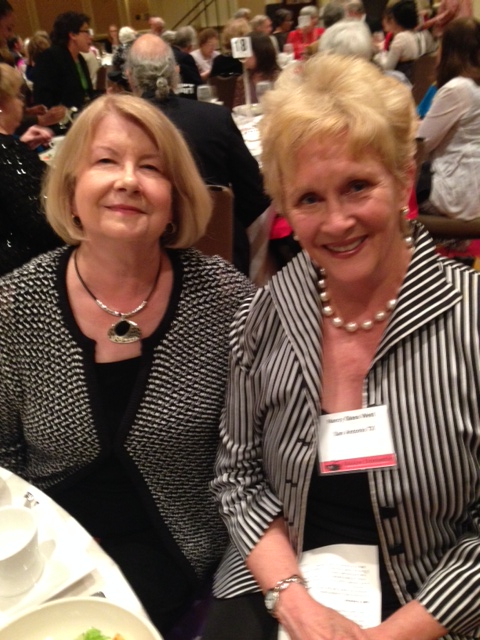
Nancy and SharonCommunity is at the heart of this conference. It is the red thread that binds the attendees and authors together, a shared love for figuring out “who did it and why.” It is commiserating over dinner to suss out why a certain plot point isn’t working out and to share with others why we love writing, why we hate it and why we simply can’t do anything else.

Sometimes you have to venture out behind your desk to find your tribe. It can be a challenge to make the time, but make the time. Juggle what you need to and live in chaos for a bit to make it happen.


Your people are waiting for you.

–Laura Oles