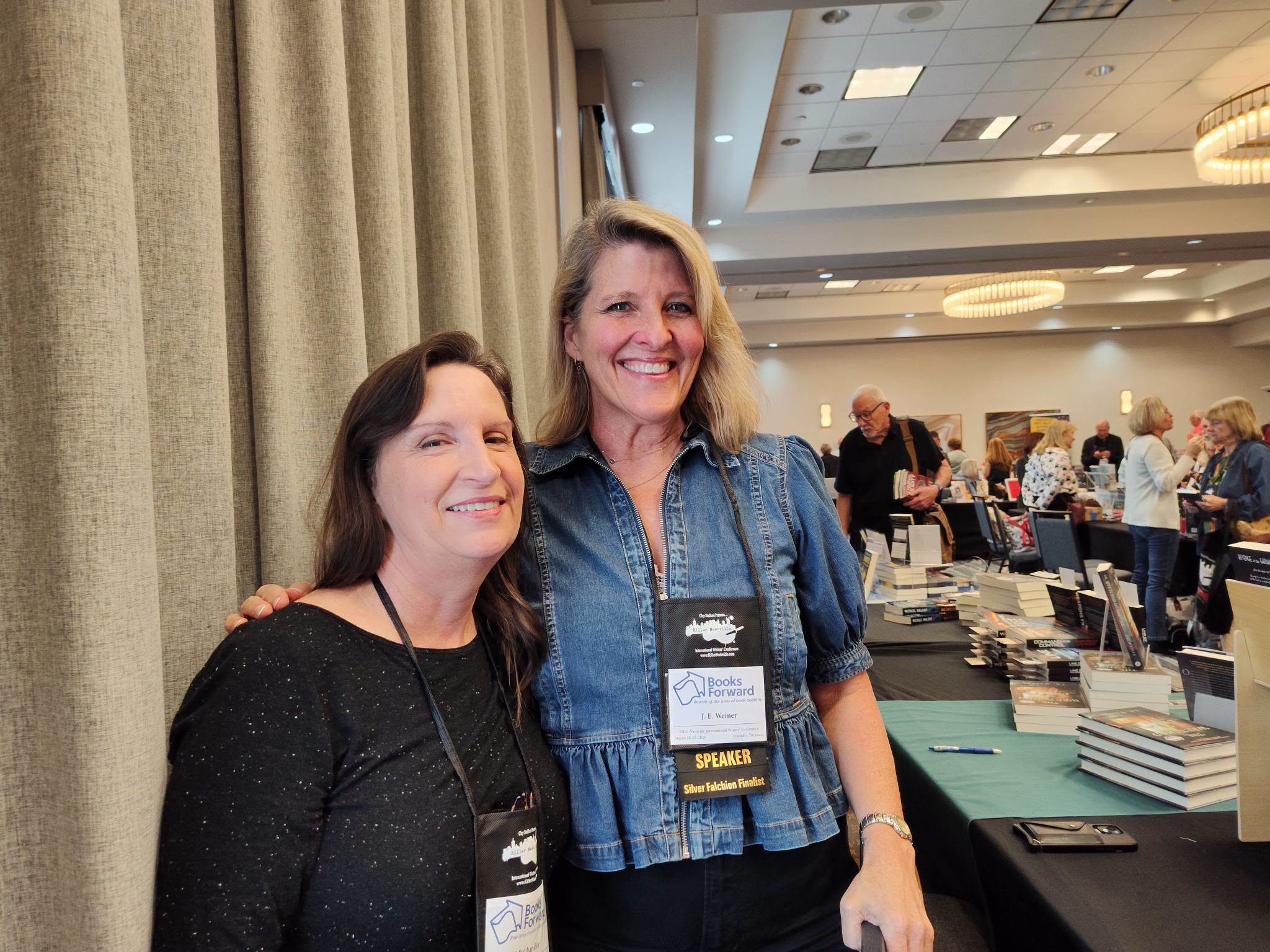
I had a wonderful time at Killer Nashville this year. From the moment I walked in, everyone I met was warm and welcoming. One of the things I loved most about this conference was how easy it was to strike up a conversation with a total stranger and walk away with a new friend. I exchanged business cards and swapped stories with more people than I can count, and every one of those conversations reminded me why I’ll probably return.
One of the higlights for me was speaking on my panel, “Feisty Women Protagonists in Historicals.” I was in great company: Nancy Herriman (1800s San Francisco), Nina Wachsman (1600s Venice), Joy Allyson (historical French romance), and Nancy Locklin (nonfiction books about women and violence in 1700s France), plus me, mostly mucking around in the American West. Different centuries, different continents, same throughline: women have always been feisty, using wit and guile to work within, or around, the systems of their time, and sometimes using those systems to their own advantage. I also made a point of reminding the audience that a quiet woman, doing exactly what society expected of her, is no less brave for it. Women have held families and communities together through hard, unglamorous work since the beginning of time. That’s feisty too.
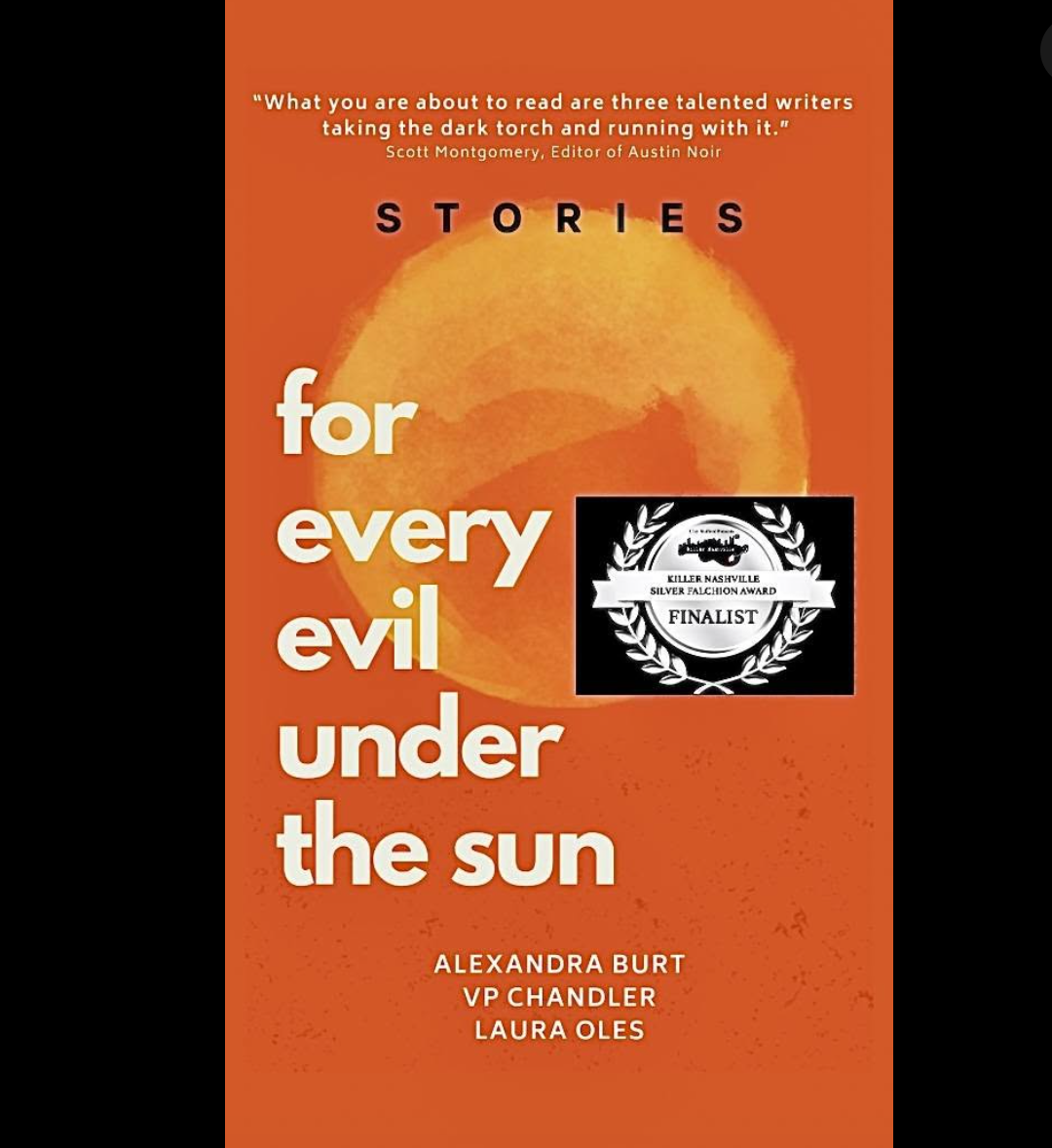
I also got some news at the awards ceremony: For Every Evil Under the Sun, a short story collection I contributed to, was nominated for the Silver Falchion Award for Best Short Story Collection. We didn’t take home the win, but we placed third, and honestly, that felt pretty good. It’s always nice to be noticed. (Fellow AMW member, Laura Oles was a contributor, as well as Alexandra Burt.)
But at the end of the day, what I’ll remember most isn’t the panel or the awards, it’s the people. What stayed with me is how much Killer Nashville is about writers helping writers: swapping craft advice, cheering each other on, and generally leaving each other a little more inspired than when we arrived. Conferences like this have a way of turning strangers into friends over the course of just a few days, and this year was no exception. I left with a stack of business cards, a handful of new stories to tell, and a lot of new friends I’m already looking forward to seeing again.
Below are photos of me harassing interesting people.
Molly Ivins—always a truth-teller—described the state this way: “Texas! Land of wretched excess!”
Yes, I also quoted her in a March 2025 blog. But I was describing sustained icy weather.
This time? Austin weather persons say it has not rained here this August!
And as you’ve noticed, temperatures continue to spike above 100 degrees. Outdoor house plants? In a fit of mercy, maybe you brought some back inside.
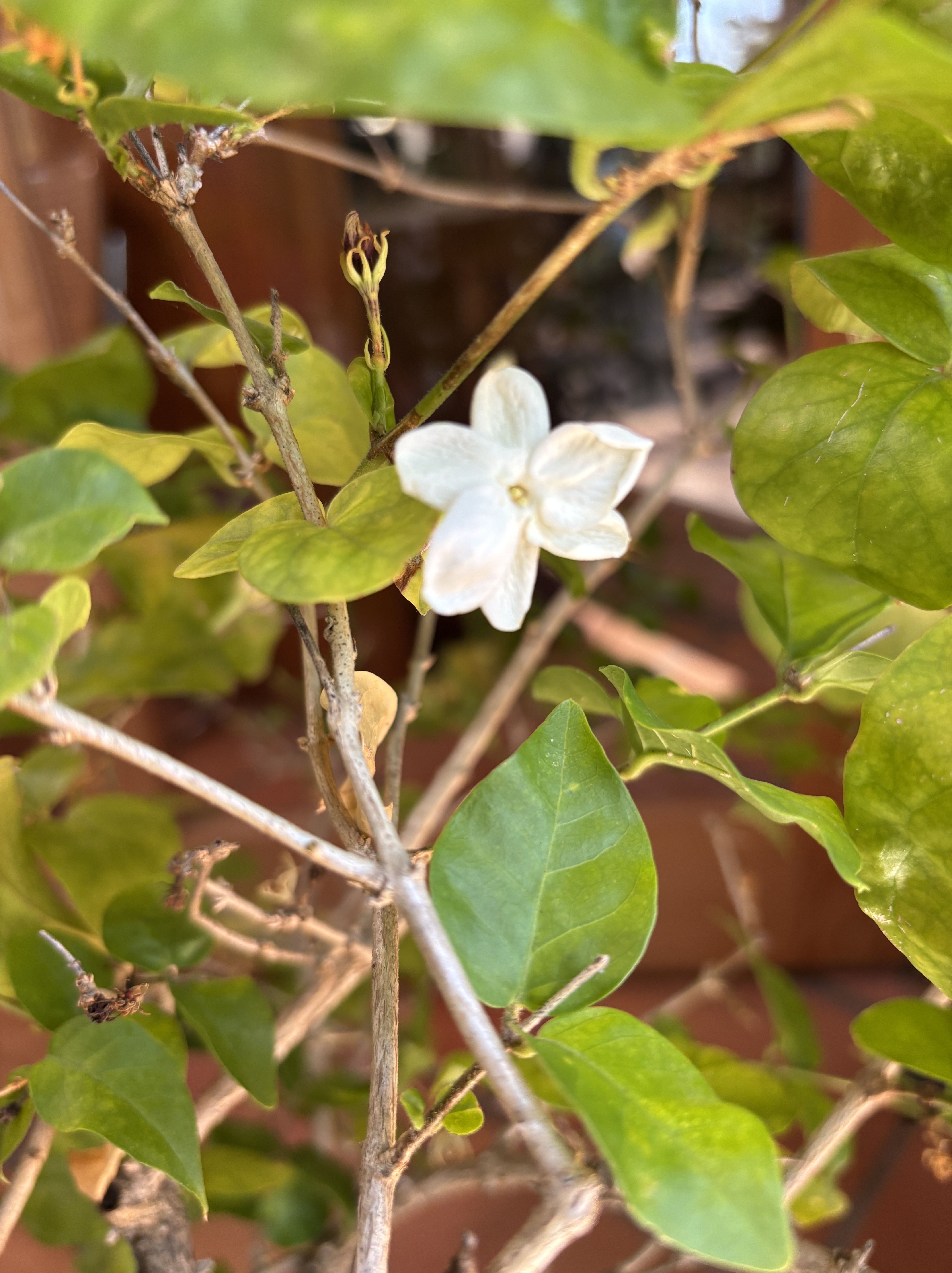
That’s what we did today for five jasmine plants, acquired in grad school, that we’ve cosseted for decades. Decades! Usually they live indoors in winter, or on the deck in summer.
But this week, walking past them, I felt a disturbance. Even with daily water, even with blossoms, I felt warning signals.
Was that just my…overheated…imagination? Plus the fact that, as eloquently sung in Kiss Me Kate, “It’s too darn hot!”?
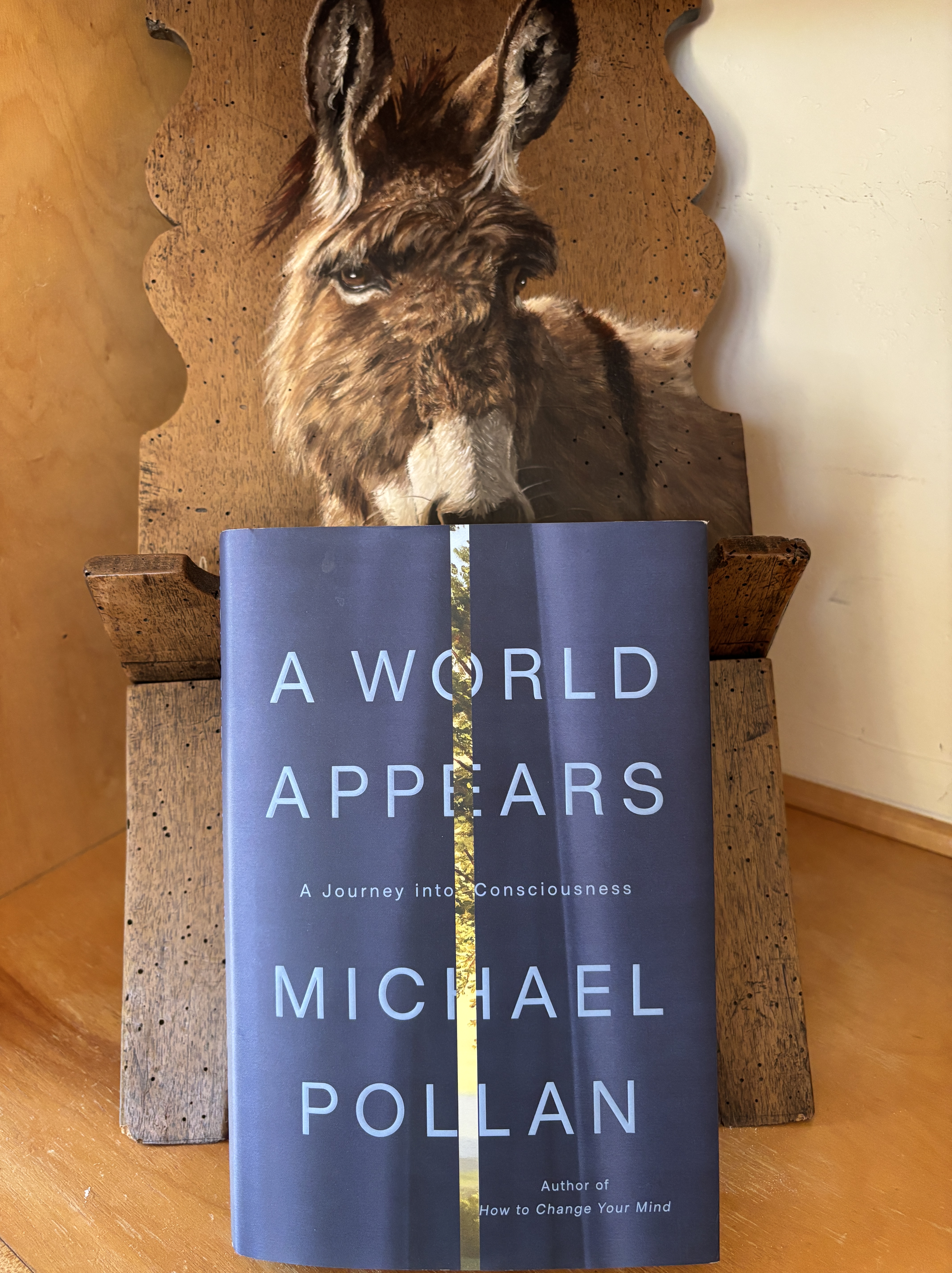
Per Pollan: “A great many mammals, several bird species, and octopuses are now generally thought to be conscious, and there are scientists and philosophers who believe that some rudimentary form of consciousness, or sentience, reaches much further, all the way to insects and, possibly, beyond the animal kingdom.” (Id., at 1.)
Beyond animals? Yes, all the way to plants!
So, are plants sentient? One plant scientist points to “all the volatile compounds emitted by a succession of plants, from poplars and tobacco plants to peppers and olive trees. Plants emit volatile chemicals for a range of purposes: to signal distress, to alert neighboring plants to threats, to thwart or poison herbivores, and possibly even to soothe themselves (many plants emit ethylene, an anesthetic gas, for reasons not well understood.” Id., at 20.) (Please to note Pollan has inserted plants in the middle of the cover.)
So maybe our jasmines emitted a volatile alarm chemical. Was the alarm intended for humans? Who can tell? But the plants made it inside…
It’s a “hard problem,” the whole “consciousness” debate that Pollan’s book describes, and we’re in for a fascinating scientific journey.
Query for you mystery readers: would you agree that it’s premature for the unraveling of a murder mystery to depend on warnings from plants? For one thing, the science is evolving. But also, to provide a real fact-based clue in a mystery, should the plant’s warnings alert not just perhaps other plants, but a human? The detective, a witness, the victim—or the reader? The jury will be out on that for awhile.
But I ask because, in the oppressive heat, I took refuge in Agatha Christie’s The Mystery of the Blue Train (also titled Heart of Fire) (1928).
Woe! The author appears to have committed the sin of presenting to the reader (who, like all mystery readers, is determined to solve the mystery based on available clues) information about what appears to be a mere notion on the part of a character. Poirot reveals, at book’s end, that Miss Grey (a sensible character) “firmly believes that she felt your daughter’s presence beside her one day in the Casino Gardens at Monte Carlo, just after she had been having a talk with Knighton. She was convinced, she says, that the dead woman was urgently trying to tell her something, and it suddenly came to her that what the dead woman was trying to say was that Knighton was her murderer!” (Ch. 35.)
What? Is this a ghost story? What actual fact, what actual clue, was revealed by an already dead person to Miss Grey? Could this apparent ghostly concern, this ghostly attempt at communication, convey a real clue? Yet in the last chapter that’s how Poirot treats Miss Grey’s interpretation of the ghost’s concern––as an actual clue.
I’m not sure this accords with the sacred collaboration between the mystery writer and the mystery reader, where (as the 1930 Detection Club rules insist), every clue must be instantly produced to the reader.
And the notion of a character thinking she hears a dead victim trying to whisper the name of her murderer? What’s your reaction?
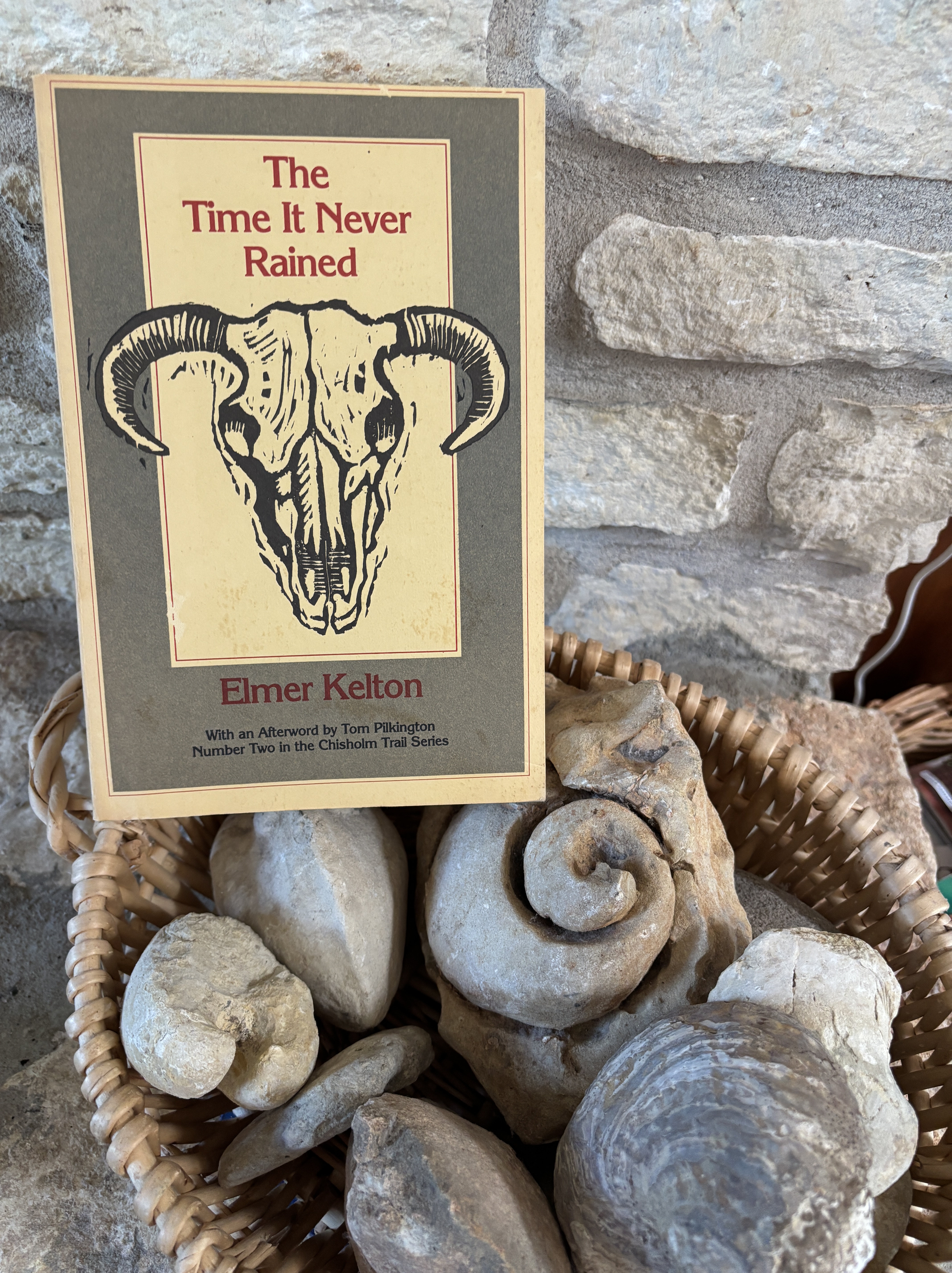
Still, given the (possible?) messages from the jasmine, I’m hoping we won’t relive the worst Texas drought, the drought of the 1950’s, so vividly described in Elmer Kelton’s classic The Time It Never Rained (1973).
Kelton’s dedication: “In a broad sense this book is dedicated to the old-time Western ranchman, whose life style gave him an inkling of Heaven and more than his proper share of Hell.”
The heat was indeed hellish. Corsicana, northeast of Austin, experienced 82 days of temperatures over 100 °F or 37.8 °C, peaking at 113 °F or 45 °C. https://en.wikipedia.org/wiki/1950s_Texas_drought
The seven-year drought finally broke in 1957. Per NPR, “Rural Texas never fully recovered. Between 1950 and 1960, the state lost nearly 100,000 farms and ranches, and rural residents who had made up more than a third of the population dwindled to just a quarter of the population.” https://www.npr.org/2012/07/07/155995881/how-one-drought-changed-texas-agriculture-forever
Out in the pasture the grass is tan, not green. The three donkeys are disconsolate. They come to the gate to pester us for carrots.
For continued green, I’m counting on the live oaks. Cedar elms. Redbud. Peach trees. Other plant treasures—basil, sage, geraniums, lantana, plumbago, bay tree, mint––are faring okay so far. But what about the poor suffering stuck-in-the-dirt rose bushes? Water? More mulch? Crossed fingers?
I’m working now on Book 11 in my Alice MacDonald Greer Mystery Series set in the hill country…Ghost Music. No drought involved, so far! But as always in this series, water is an important character!
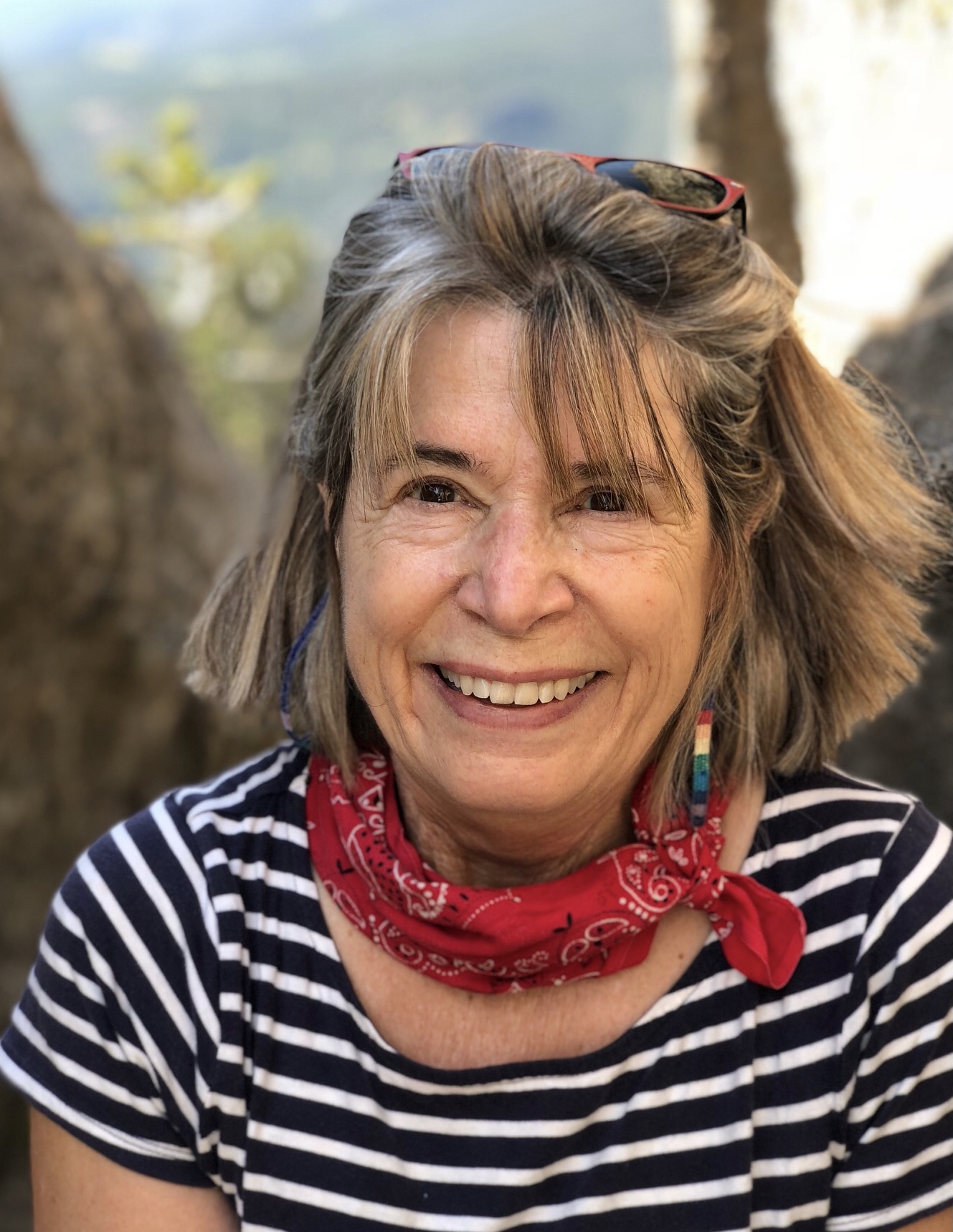
Helen Currie Foster lives and writes north of Dripping Springs, Texas, loosely supervised by three burros. She’s drawn to the compelling landscape and quirky characters of the Texas Hill Country. She’s also deeply curious about our human history and how, uninvited, the past keeps crashing the party! She’s active in Heart of Texas Sisters in Crime and also Austin Shakespeare. Follow her at http://www.helencurriefoster.com
Find her books on Amazon and also at BookPeople in Austin, Texas.
One morning each year the bird genius, Jesse Huth, of Huth Avian Services, arrives from Wimberley to conduct our annual bird survey.
Every year I tiptoe along behind, hearing his soft announcements. “Green heron above the creek.” I look up, straining to spot the lovely heron in flight. While I’m wondering what it would be like to fly like that, I hear: “Red-tailed hawk.” Now Jesse’s facing a different direction, lifting his binoculars. Later, “American Redstart.” (I ask myself: what’s that?) We climb back up from the creek. Then, “Field sparrow. Lark sparrow.” (I peer, unsure of the difference.) Then off to the pasture. “Vireo, red-eyed.” “Vireo, white-eyed.” And “Vireo, yellow-throated.”
Those vireos?—I never spot them, whatever they are doing––flying, darting, twittering, disappearing.
Then—such elation! Sitting boldly at the top of a tree we see the brilliant crimson of a summer
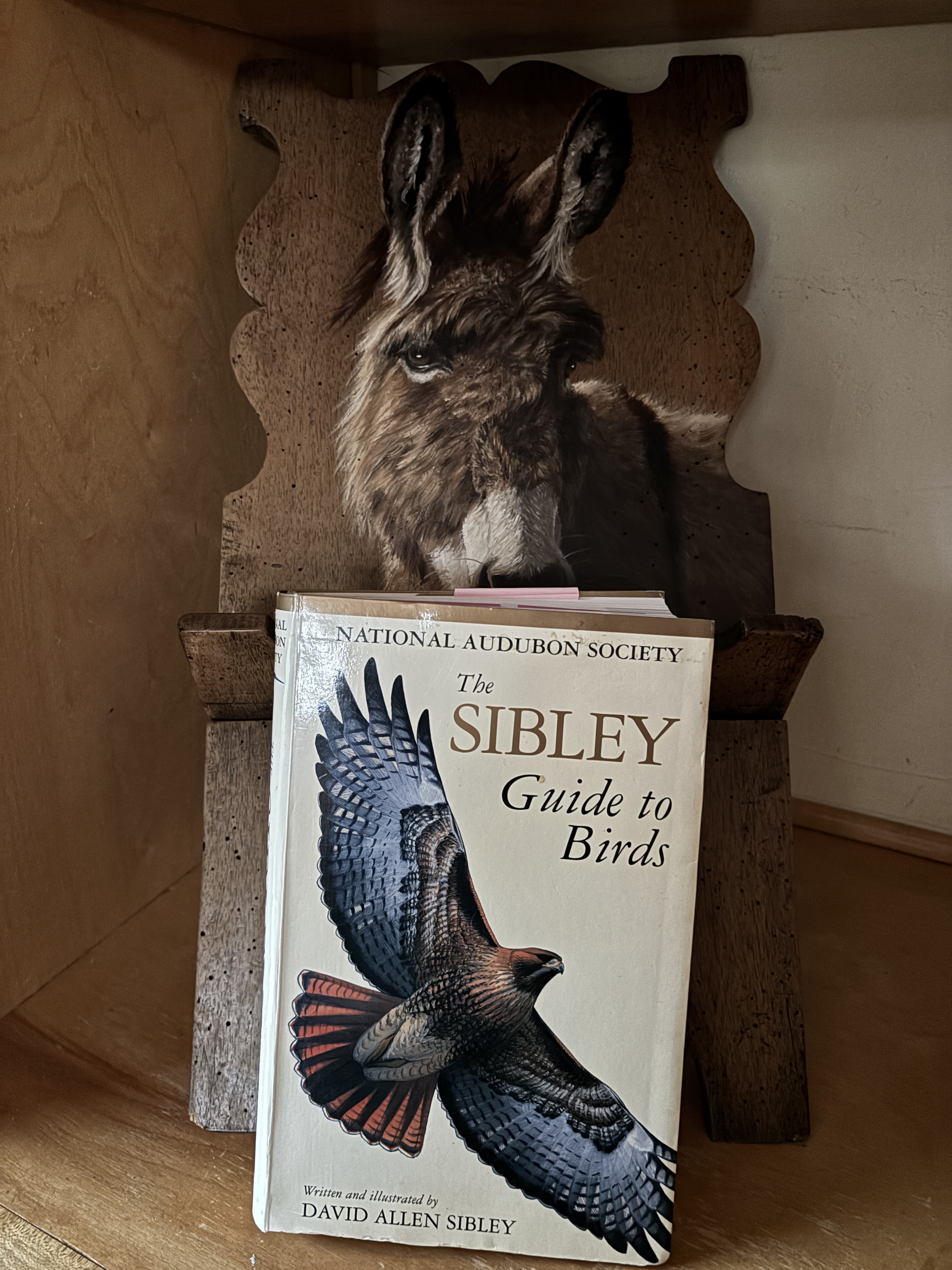
Jesse’s an expert on birds. He has studied their voices, their habits, their preferences, their appearance. He knows how to use owl calls to draw a crowd of various birds. After Jesse departs, I grab The Sibley Guide to Birds to study those three vireos (red-eyed, white-eyed, yellow-throated).
So tiny, the differences! You have to see the eye, where the yellow is, and where it isn’t; you must notice whether it has the gray cap, or not…
Jesse has spent years with those birds under close observation, yes, and under closer observation, applying his knowledge of detail. He sees differences that escape me. He can distinguish their songs.
After two hours he’s observed, and recorded or photographed, 40 species.
Details! Writers also must choose details that work, that light up, that bring to life characters and setting. That phrase—“under close observation”—describes the writer’s job: finding just the right details of setting, just the right details of characters, to make the plot come to life and satisfy the reader, the audience.
We all know great examples. In Act I, Shakespeare’s Julius Caesar closely observes Cassius:
“Seldom he smiles, and smiles in such a sort
As if he mock’d himself and scorn’d his spirit
That could be moved to smile at anything.
Such men as he be never at heart’s ease
Whiles they behold a greater than themselves,
And therefore are they very dangerous.” Act I, Scene II.
Reading that, did you get a glimpse of Cassius’s face, as Caesar describes it? And hear that firm conviction, “therefore are they very dangerous”? Right away we begin to hold our breath.
I confess I do want to like the protagonist, whether in a play, a novel, a mystery, biography, autobiography. I do not need to approve entirely of that character, but, whatever the genre, I prefer to spend time reading about someone I can empathize with. So, turning to autobiography, consider these excerpts from the beginning of Out of Africa, by Isak Dinesen:
I had a farm in Africa, at the foot of the Ngong Hills. The Equator runs across these highlands, a hundred miles to the North, and the farm lay at an altitude of over six thousand feet. In the day-time you felt that you had got high up, near to the sun, but the early mornings and evenings were limpid and restful, and the nights were cold. …
We grew coffee on my farm. The land was in itself a little too high for coffee, and it was hard work to keep it going; we were never rich on the farm. But a coffee-plantation is a thing that gets hold of you and does not let you go, and there is always something to do on it: you are generally a little behind with your work.
…Later on, when I flew in Africa, and became familiar with the appearance of my farm from the air, I was filled with admiration for my coffee-plantation, that lay quite bright green in the grey-green land, and I realized how keenly the human mind yearns for geometrical figures.
With these details Isak Dinesen makes us see the farm and the Ngong Hills, then makes us feel the air at six thousand feet… with “lipid and restful” evenings. We feel her emotional attachment—“a coffee-plantation is a thing that gets hold of you and does not let you go.” Then she catches our imagination, describing seeing her farm from the air while flying, and shares her discovery that “the human mind yearns for geometrical figures.” Her own observations of detail reveal to us the protagonist, the main character in this autobiography, as a thinker, a noticer, a person with staying power, who once (but no longer) “had a farm in Africa”—and now offers to share that adventure. Her intelligence, her sensibility, her brilliant use of detail, kept me turning the page.
Another protagonist we meet and can’t abandon: Count Alexander Ilyich Rostov, of Amor Towles’s A Gentleman in Moscow. We’re introduced as the Count strides back from the Kremlin Gates to his home at the Hotel Metropol. On the way he greets the fruit seller, thanks the soldiers whose prisoner (we now perceive) he is, returns to his elegant suite—and learns that he has been dispossessed. He will spend the rest of his life in a tiny room in the hotel’s attic: “a cast-iron bed, a three-legged bureau, and a decade of dust.” He’s allowed to retrieve a few possessions. He wants “all the books” and also chooses two high-back chairs his grandmother’s oriental coffee table, porcelain plates, two table lamps, and the portrait of his sister…plus one trunk which he fills with clothes and personal effects, including his sister’s tiny scissors. We watch him take a last walk through his suite, then return to his tiny new room. A pigeon lands outside:
“Why, hello,” said the Count. “How kind of you to stop by.”
The pigeon looked back with a decidedly proprietary air. Then he scuffed the flashing with its claws and thrust its beak at the window several times in quick succession.
“Ah, yes,” conceded the Count. “There is something in what you say.”
I already liked this man, his exquisite courtesy to the pigeon, his apparent ability to laugh at himself, his apparent determination to stay himself, to refuse to give the state the satisfaction of causing him despair …despite the state’s efforts to destroy almost everything he has. Then I watch while he hosts a party for his friends in the hotel staff:
“The Count was something of a natural-born host and in the hour that ensued, as he topped a glass here and sparked a conversation there, he had an instinctive awareness of all the temperaments in the room.”
Personal tragedy, but humor, civility, sensitivity, courage—and determination. Okay, I’ll definitely keep reading.
Screenwriter Robert McKee, in his book Story about principles of screenwriting, points out that a story’s protagonist must have a conscious desire, but must also have the capacities, and at least a chance, to attain that desire. Also, according to McKee, “The protagonist must be empathetic; he may or may not be sympathetic.” Per McKee, “Empathetic means ‘like me.’ Deep within the protagonist the audience recognizes a certain shared humanity.”
McKee explains: “The unconscious logic of the audience runs like this: ‘This character is like me. Therefore, I want him to have whatever he wants, because if I were he in those circumstances, I’d want the same thing for myself.’” Amor Towles certainly accomplished that with Count Rostov.
So what details have kept you reading a book? What particular description made you think—this writer’s keeping me entertained, keeping me turning the pages? In particular, are there protagonists who—when you think about it—have some appealing characteristics you enjoy? I’d love to hear your thoughts.
Now, a short report. First, no peaches. Tragically, after warm weather when the blossoms opened and tiny peaches formed, two late freezes killed the baby peaches. Sigh. Second, after unusual rain, the pastures out here in Hays County are bright green. No bluebonnets this year (well, maybe six), but we still have magenta Wine Cup, lavender Passion Flower, and so many yellow flowers—Brown-eyed Susan, Mexican Hat, Golden-Eye, Coneflowers, Sunflowers, Cowpen Daisy, Golden-Wave Coreopsis, Navajo Tea, Indian Blanket. Hard to know which is which.
I’m at work on Book 11 in the Alice MacDonald Greer Mystery series, set in the Texas hill country. That means working on the big triumvirate—setting, characters, plot. The protagonist, Alice, definitely has a conscious desire, and the capacities to attain it—but barriers lie ahead. Yes, she’s under close observation. Stay tuned.
Helen Currie Foster lives and writes the Alice MacDonald Greer Mystery series north of Dripping Springs, Texas, loosely supervised by three burros. She’s drawn to the compelling landscape and quirky characters of the Texas Hill Country. She’s also deeply curious about our human history and how, uninvited, the past keeps crashing the party. She’s active with Austin Shakespeare and the Heart of Texas Sisters in Crime Chapter of the national Sisters in Crime (come join us! 2-3:30, Laura Bush Library on Bee Cave Road, second Sundays of the month).
June 25, 2026–Watch for the DSCL Author Showcase–Helen will be presenting, along with Jo Pellinore and Michael Baldwin! Social at 5:45, Panel Discussion 6-7:30. Contact Dripping Springs Community Library to register.
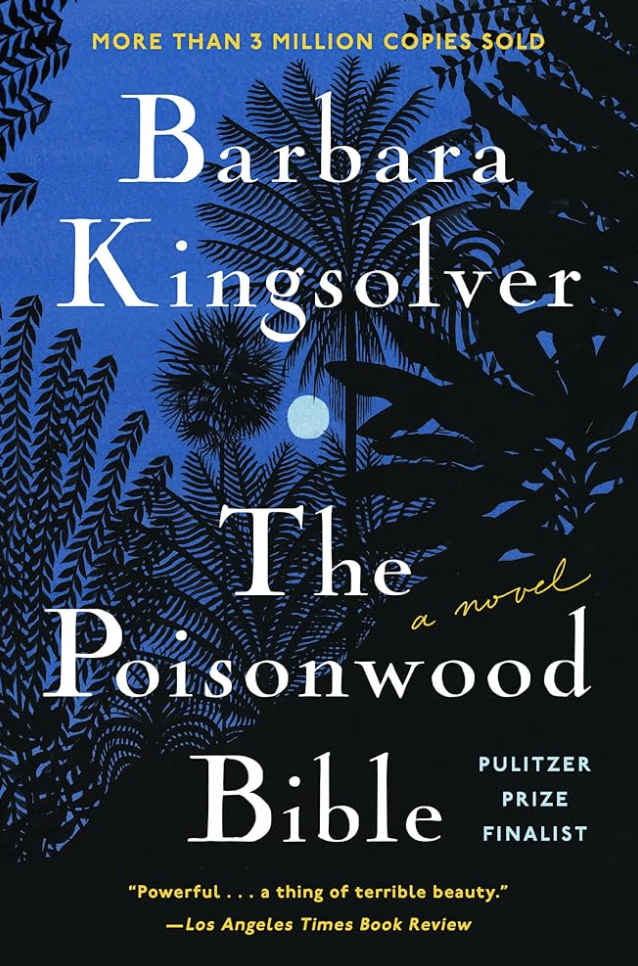
I recently read The Poisonwood Bible for the second time. It’s interesting how it’s a different experience after I’ve become a mother and after I’ve have had more life experiences. What stuck with me this time wasn’t the politics, religion, or the history as much as a mother’s fear of living in a place that doesn’t feel safe.
Years ago, we lived on a ranch where there were a lot of rattlesnakes. (I know, you’ve heard me talk about this before.) We had hundreds in the vicinity. For the first year we were there, I worried almost every single day that my small child would get bitten. And possibly die since we were far from any hospital or antivenom. I didn’t talk about it much, but it was always there in my head. Every walk outside, every noise in the grass, every moment my child was out of my sight. I truly believed that any day could be the day something terrible would happen.
After about a year, something shifted. I still knew the danger was there, but I wasn’t consumed by it anymore. I had learned where the snakes were likely to be, when to be extra careful, and when I could relax a little. The fear didn’t disappear; it just stopped running my life.
One day I told my husband how I wasn’t worrying as much. He was stunned, and frankly, kind of appalled. He couldn’t believe I had lived with that level of anxiety every day. He had no idea. We were in the same place, raising the same child, but our inner experiences were completely different.
I thought about this when reading The Poisonwood Bible. A mother, Orleanna, did the best that she could, given her circumstances, to prepare for their new life. Like bringing cake mixes for her daughter’s birthdays, only to have the mixes turn to rock in the humidity. Such a symbol of motherhood/parenthood. We do the best we can. The trials that we may face are not the ones we expected. And Nathan, so sure he was right, so focused on his mission and his authority, his divine calling, that he didn’t notice what was happening to the people around him. (Not that my husband was a tyrant or a fanatic!)
The book also made me think about living and trying to parent in an oppressive patriarchal society. A general observation, while male egos and cultures clash, it’s the citizens who pay the price. Nathan’s rigid religious authority collided with local power structures and culture. While he was so wrapped up in his zeal to save souls, trying to live by the laws in The Bible, that he missed the message of The Gospel. And he was so bent on changing the local “heathen” customs, without really looking at or connecting to the people, he was doomed to fail. No one wins when the people in power are fighting to maintain power instead of helping society. When patriarchies rule, all citizens end up paying the price. Even those in charge seem trapped by the need to dominate rather than care.
I guess I’m feeling this more than ever before. It’s what’s happening in the world. For me, The Poisonwood Bible landed as a reminder that paying attention matters and caring about people matters. And the people who notice danger, who quietly adapt, who carry the worry, so others don’t have to, are often invisible. But they’re doing the work that keeps everyone alive.
I think about that first year with the rattlesnakes sometimes. I think about how long I carried that fear alone. And reading this book helped me see that experience more clearly—not as weakness, but as awareness.
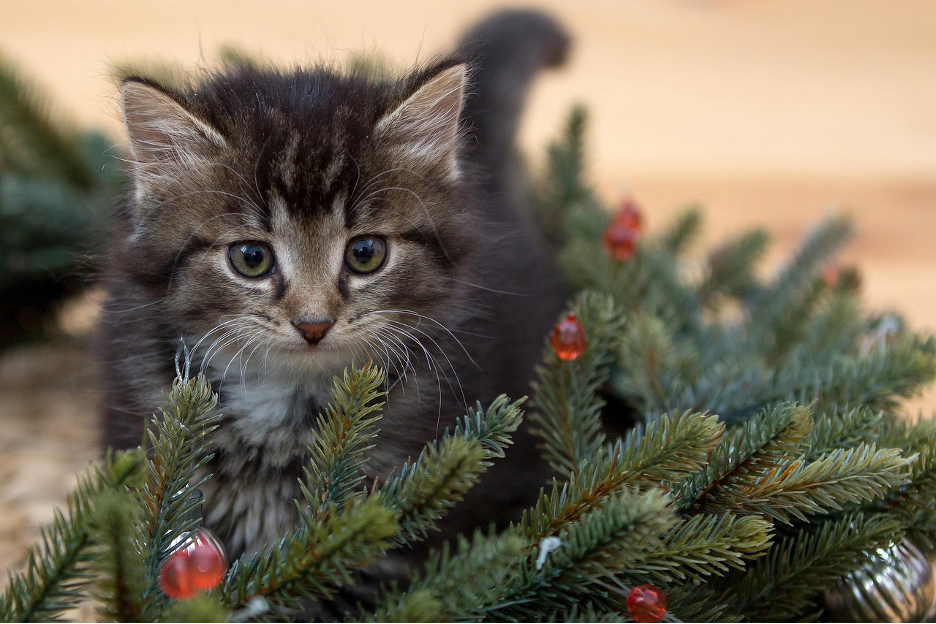
And now here is a picture of a Christmas kitten so you won’t be so bummed out.
When people talk about Bouchercon, especially in New Orleans, they usually share stories of late nights, legendary meals, bustling crowds, powdery beignets, and lots of alcohol.
That wasn’t my week.
But the funny thing is—I still accomplished exactly what I went to do.
My panel, Wide Open Spaces, with Craig Johnson, Bruce Borgos, Jeff Ayers, George Wilhite, and moderated by the lovely Sylissa Franklin was a highlight. The conversation flowed, and the audience was engaged. I made them laugh a few times and even got a gasp. So, mission accomplished. I walked away feeling like I’d contributed something worthwhile.
I also got to meet Clay Stafford in person and thank him for publishing my short story, Under The Blackjack Tree, in Killer Nashville Magazine. (The story that was chosen by John Grisham and Otto Penzler for The Best Mystery Stories of the Year 2025, which is still surreal to me. (Coming out next week!) Stafford’s keynote, The Story That Saved Me, was “cry for crime writers and readers to remember why stories of darkness and redemption still matter—and why telling the truth on the page can save us, too.” Honestly, it was one of the most inspiring talks I’ve heard in a long while. Glad I went.
Another highlight was finally meeting Otto Penzler in person. I thanked him for the opportunity, and he graciously signed my copy of the anthology. A small moment, but one I’ll carry with me.
At the end of most days, I met up with Laura Oles in the hotel/lounge bar. (It was so noisy all of the time!) We compared notes at the end of the day—who we’d seen, what panels had sparked ideas. She was on a terrific panel herself, Dialogue Matters: Slang, Concise, or Verbose? The group dug into how dialogue can reveal character and control pacing, which is something that I’m always working on.
I also loved being in the audience for Sweet Tea with a Splash of Crime: The Southern Influence, with Ace Atkins, S.A. Cosby, and other writers who captured both the grit and taste of Southern literature, and where it’s headed. Another standout was Killing Your Darlings, with Penzler and Donald Maass, which was a sharp reminder that ego doesn’t belong in the editing room if the goal is to make the story better.
And one of my favorite unexpected moments? Donald Maass allowed me to join him for lunch one afternoon. We had a thoughtful conversation about Writer Unboxed, an organization we’re both part of, about writing in general, and drawing inspiration from real life,. It was simple but memorable, the kind of connection that lingers long after the conference ends.
So no, this wasn’t a Bouchercon of big parties or long nights on Bourbon Street. But it was a Bouchercon where I hit my goals, connected with people who matter to me, and left with a few new insights and ideas. Sometimes the quieter wins are the ones that last.
Have you ever researched something—like a purse, a computer, or even a car—only to suddenly notice it everywhere, even though you hadn’t before? Inspiration for stories works the same way.
One of the most common questions authors hear is: “Where do you get your ideas?” The answer: pretty much everywhere—news articles, books, movies, history, snippets of conversation, personal experiences… inspiration can spark from the smallest detail.
I’m currently writing a historical novella, and inspiration is coming from all directions. I feel like a goalie in a soccer match—I’m fully immersed.
Story Settings and Characters
My protagonist is a young woman named Martha. She’s married to Tom, who has moved her far from home—and life isn’t unfolding as she expected. (Isn’t that always the case? But is it simply the way things are, or is something nefarious at work?) They’re building a cabin in the East Texas woods around 1830. I imagined they’d arrived at the tail end of the Old 300, grabbing land wherever they could. (Although the story could take place anywhere from 1820 to 1880, west of Virginia in pine country, I discovered that pines aren’t as widespread as I once thought—which is why research matters.)
As I write, Martha is revealing herself to me—like she exists on another plane and there’s a conduit between us through something I call “the ether,” a metaphysical space. (Is that a real thing? I don’t know—dammit, Jim, I’m a writer, not a metaphysicist!) Her voice is growing stronger. Her past and current life are becoming clearer. When she speaks, it feels like she’s speaking directly at me. I think most writers go through this—and when it happens, it’s exhilarating. To me, it means the character will have depth and feel real.
And, as in the past, there have been “signs” that I’m on the right track with characters and story. Sometimes these signs are even eerie. In the first chapter, when it was new and amorphous, I was writing a dream sequence to explain her inner thoughts, worries, and where she’s from. I imagined she came from a large family, and she had had a brown and white dog named “Peaches”.
A few days later I was on Facebook and came across this picture. It caught my attention because a cabin is a major feature of the story, and I took a screenshot for inspiration to look at details. Later I read the description. Look at what I circled. That’s right! I wasn’t too surprised by the date. But the dog in the picture was name “Peaches”! And it looks brown and white to me. It gave me inspiration that I’m on the right track with the story and characters.
Another time, while writing my (currently unpublished) novel Gilt Ridden, I created a character in West Texas, educated and obsessed with gold, known locally as “The Professor,” living in a dugout. Years later, I came across a local-history book about Stonewall County describing a man known as “The Professor” who lived in a dugout and searched for gold. I hadn’t known he existed—but the parallels were uncanny. At first, I worried that people would think that I borrowed someone’s real story. But then it comforted me. I took it as a sign that I had created a realistic character from imaginary circumstances.
So when you’re writing—or working on any project—block out the world and tune in to the voice or idea coming from the ether. Who knows what will be revealed?
Bonus Content
I’ve been obsessed with one song lately. It’s been playing in my head nonstop for a week. I didn’t know much about it until I watched the YouTube video. The character is pregnant and contemplating life choices, just like Martha! Now it’s really stuck in my head. Hope you enjoy it:
Sara Bareilles – “She Used to Be Mine” (from Waitress)
When I first sat down to write the stories that would eventually become part of For Every Evil Under the Sun, I didn’t know exactly where they would lead me—I only knew I wanted to stretch my writing skills, try new things, and be a part of a hot, cool collaboration. (Yes, I like puns.)
Now, I’m proud to announce that this collection is out in the world, published by the brand-new Fredonia Ink Publishing. I’m honored to be sharing the pages with two powerhouse writers, Alexandra Burt and Laura Oles—both of whom are not only incredibly talented but also deeply committed to telling stories that explore the dark, complex corners of the human experience.
This collection is a bit of a literary experiment. We each approached the idea of “evil” through our own unique lens—psychological thriller, family drama, crime, horror, western—and let the stories guide us. What came out of it is a collection that isn’t just eclectic, it’s electric. It shines! (Yes, another pun.)
As for me, I leaned into the grit—into crime, revenge, justice. I wanted my stories to carry that weight—to explore the consequences of violence and vengeance. And also add a little bit of fun to the mix. And the stories by Alexandra Burt and Laura Oles are equally as dark and entertaining.
And hey, if you’re in Austin this summer, I’d love to invite you to join us for a special event at Vintage Bookstore and Wine Bar (1101 E. 11th St.) on July 18 at 7pm. Alexandra, Laura, and I will be discussing short story craft, the experiences of women writing crime fiction, and what went into shaping this haunting little book. It’ll be an evening of books, wine, and maybe a few goosebumps.
So if you’re in the mood for stories that simmer under the heat of summer and explore just how far people will go—to protect, to avenge, to survive—then For Every Evil Under the Sun might just be what you’re looking for.
🗓️ Event Info: July 18, 7pm @ Vintage Bookstore and Wine Bar, Austin, TX 🔗 Learn more, here is the Amazon listing. Ebook now available and paperback will be soon on Amazon and bookstores everywhere: https://tinyurl.com/2tph4xcz
My most recent blog post announced the publication of my short story, “Under The Blackjack Tree” in Killer Nashville magazine and now I’m now doubly thrilled to announce that the short story was also chosen by Otto Penzler and John Grisham to appear in the 2025 edition of Best Mystery Stories of the Year! (Mysterious Press)This is a huge honor. Honestly, at first I didn’t think it was true. I read the email about three times and did some online research before I believed it!
But another reason why this is so special to me is because my story is steeped with bits of my family’s history.
It began when my mother told me several years ago that one of her most cherished memories was when she got to help her grandfather feed the inmates at the Huntsville jail when she was about four. (Wait, what?) That’s when I learned that my great grandfather had been sheriff of Walker County. I later learned that it was common practice for the sheriff and his family to live on the first floor of the jailhouse while the inmates would be on the second floor.
The image of an innocent girl closely interacting with a potentially dangerous person was so intriguing to me, I was compelled to put it in a story. (I played with the timeline and instead of my mother being the little girl, I made it my grandmother. It simplified the story.) I had no idea where the story was going to go, but I knew that I needed that opening scene. It took me places that I didn’t expect!
Some of the things that were true are-
My great grandfather was sheriff at the time of Bonnie and Clyde. I thought that would make an interesting backdrop. A lot of tension in Texas at that time.
My grandmother’s first mother did die in childbirth and her loving stepmother was called “Cullie”.
There really was a bank robbery in Conroe at that time. (I don’t think it was ever solved.)
Trusted inmates often cooked the meals for the other inmates and sometimes for the family.
It was my mother that fell into the yard with the hunting dogs and was almost mauled.
My grandmother was shot in the face with a shotgun, by accident. It was a miracle that her eyes were spared, and she had not one single scar. That is such an amazing part of our family history that I had to include it.
And two things that I didn’t know until after I wrote the story.
My grandmother was sometimes called “Mary V” at school because there was another Mary in her class.
When she attended Sam Houston to get her teaching certificate, she would often cut across the cemetery when her classmates wouldn’t. She was never a squeamish person.
My grandmother, the flapper!
Although the Mary V in the story is pure fiction, I hope that my grandmother would be proud the story and that some of our family history is saved and shared with others.
Thrilled to announce that one of my short stories has been published by Killer Nashville Magazine! Killer Nashville Magazine is a magazine that publishes stories in any genre that incorporate elements of mystery, thriller, or suspense.
This story means a lot to me because the seed of the idea is based on my family and family experiences. Look at my author notes at the end for the explanation.