When people talk about Bouchercon, especially in New Orleans, they usually share stories of late nights, legendary meals, bustling crowds, powdery beignets, and lots of alcohol.
That wasn’t my week.
But the funny thing is—I still accomplished exactly what I went to do.
My panel, Wide Open Spaces, with Craig Johnson, Bruce Borgos, Jeff Ayers, George Wilhite, and moderated by the lovely Sylissa Franklin was a highlight. The conversation flowed, and the audience was engaged. I made them laugh a few times and even got a gasp. So, mission accomplished. I walked away feeling like I’d contributed something worthwhile.
I also got to meet Clay Stafford in person and thank him for publishing my short story, Under The Blackjack Tree, in Killer Nashville Magazine. (The story that was chosen by John Grisham and Otto Penzler for The Best Mystery Stories of the Year 2025, which is still surreal to me. (Coming out next week!) Stafford’s keynote, The Story That Saved Me, was “cry for crime writers and readers to remember why stories of darkness and redemption still matter—and why telling the truth on the page can save us, too.” Honestly, it was one of the most inspiring talks I’ve heard in a long while. Glad I went.
Another highlight was finally meeting Otto Penzler in person. I thanked him for the opportunity, and he graciously signed my copy of the anthology. A small moment, but one I’ll carry with me.
At the end of most days, I met up with Laura Oles in the hotel/lounge bar. (It was so noisy all of the time!) We compared notes at the end of the day—who we’d seen, what panels had sparked ideas. She was on a terrific panel herself, Dialogue Matters: Slang, Concise, or Verbose? The group dug into how dialogue can reveal character and control pacing, which is something that I’m always working on.
I also loved being in the audience for Sweet Tea with a Splash of Crime: The Southern Influence, with Ace Atkins, S.A. Cosby, and other writers who captured both the grit and taste of Southern literature, and where it’s headed. Another standout was Killing Your Darlings, with Penzler and Donald Maass, which was a sharp reminder that ego doesn’t belong in the editing room if the goal is to make the story better.
And one of my favorite unexpected moments? Donald Maass allowed me to join him for lunch one afternoon. We had a thoughtful conversation about Writer Unboxed, an organization we’re both part of, about writing in general, and drawing inspiration from real life,. It was simple but memorable, the kind of connection that lingers long after the conference ends.
So no, this wasn’t a Bouchercon of big parties or long nights on Bourbon Street. But it was a Bouchercon where I hit my goals, connected with people who matter to me, and left with a few new insights and ideas. Sometimes the quieter wins are the ones that last.
If your idea of the perfect vacation getaway includes time on the beach, a bookstore visit and a coffee shop stop, then I have the perfect place for you. Coffee Waves is one of my regular stops when visiting the island, and on a recent weekend trip, I pulled into the parking lot and found my dream come true—a new bookstore!
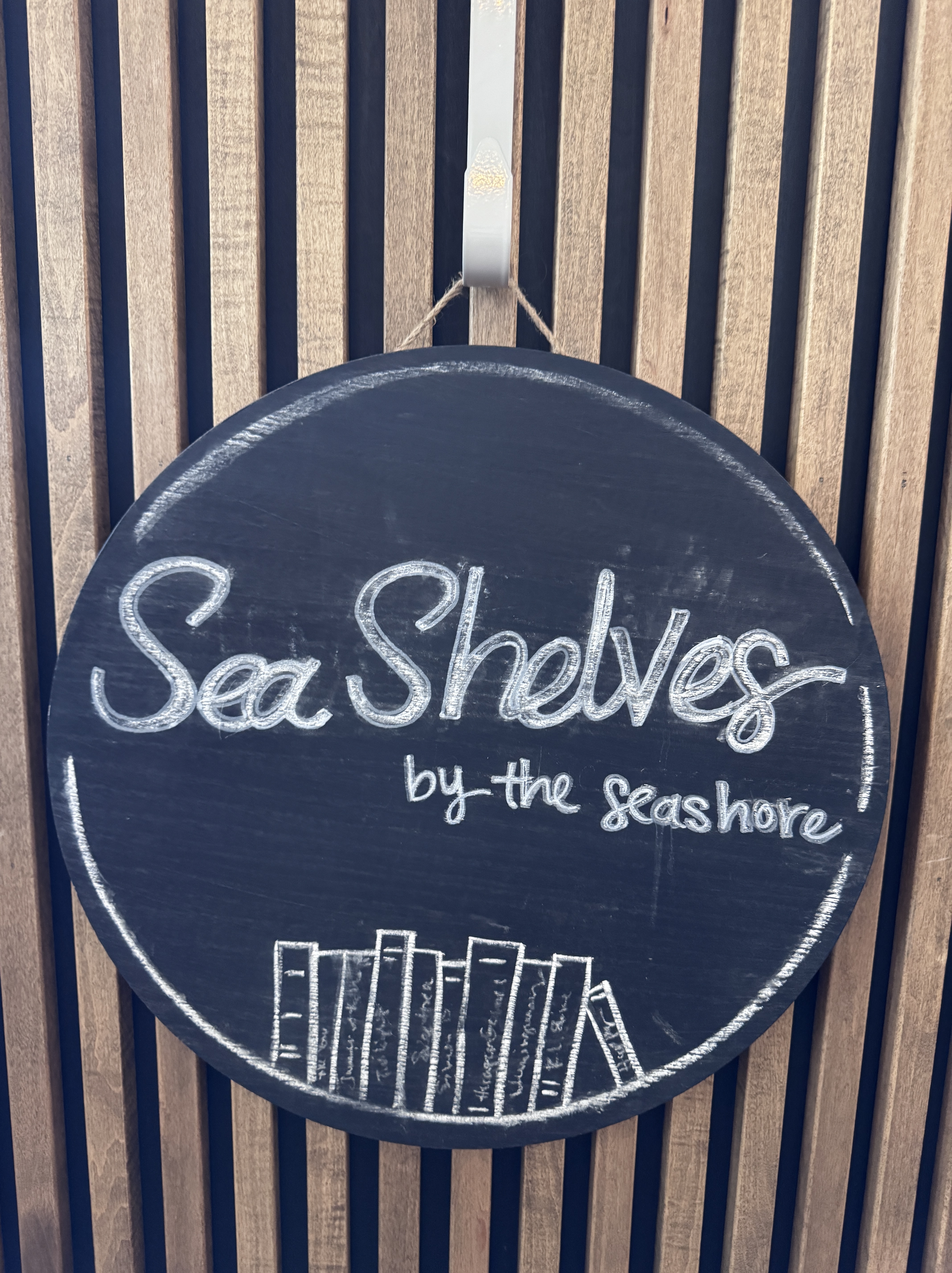
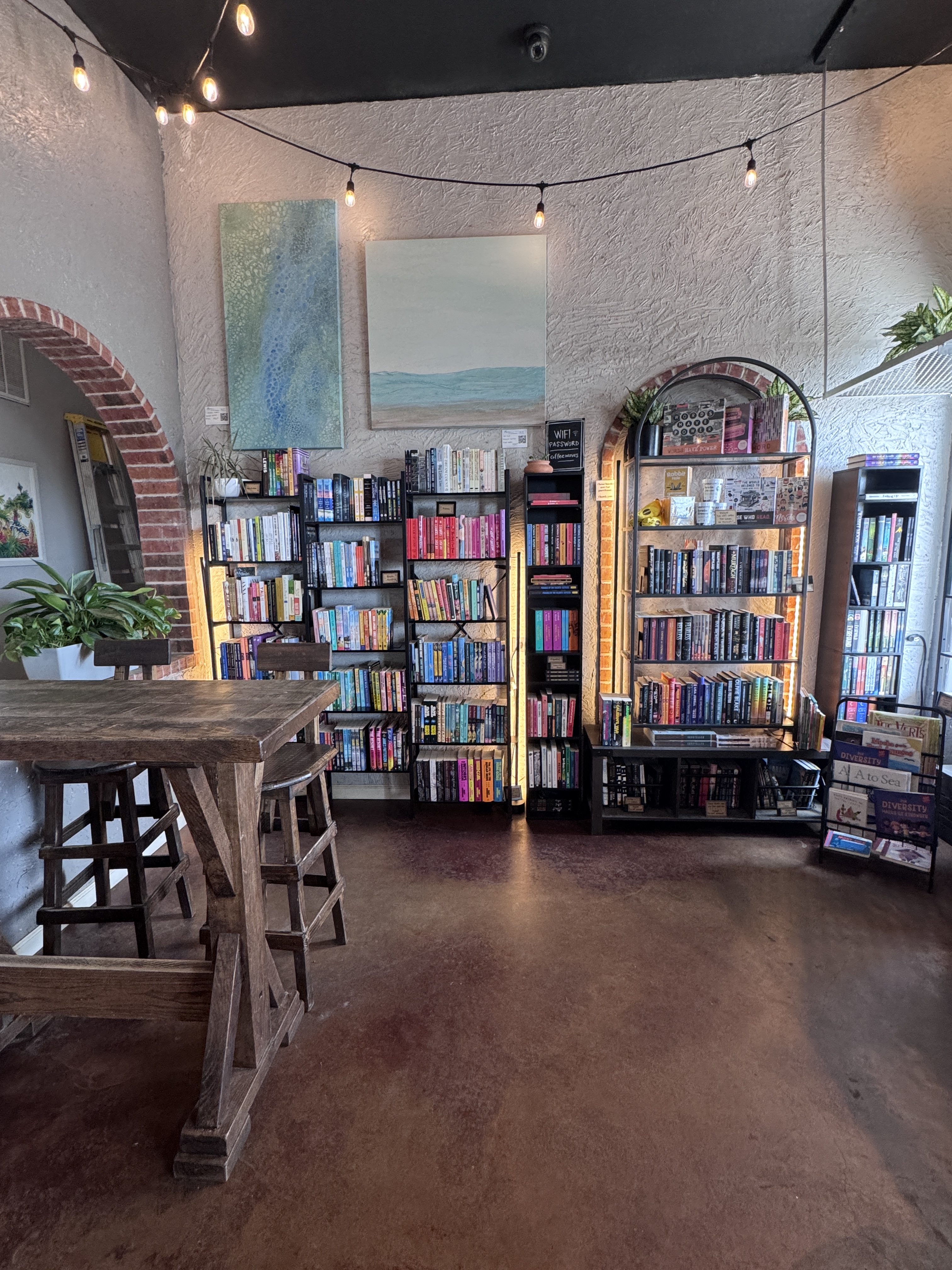
I’ve long believed that Coffee Waves was the perfect place to host a bookstore. The shop has a substantial nook with welcoming open arches and enough room to browse, sip and read. This area is now home to Sea Shelves by the Seashore. As I took time to scan the shelves, I was impressed with the varied selection and thoughtful choices offered. I felt the selection reflected a love of books and a mission to offer a wide range of options to readers of all ages. It was also a lovely surprise to find my Jamie Rush novels on the shelf!
I had the good fortune to meet the owner, Myra Barreiro, on a recent visit and enjoyed getting to know her. I wanted to learn more about her background and her journey in bringing Sea Shelves to life. When I invited her to share her story with Austin Mystery Writers, she was gracious with her time. Below is our conversation:
LO: Hi Myra! Thank you so much for speaking with us. Please share a bit about yourself.
MB: Hi! My name is Myra. I have lived in Port Aransas for four years but have been visiting for 13. I grew up in Mineral Wells, Texas. In the time between graduating high school and opening my own bookstore, I have served 4 years in the United States Army as an Intelligence Analyst, worked for Lockheed Martin for 7 years (also as an Intelligence Analyst), graduated from Sam Houston State University with a Bachelor’s degree of Science in Public Health, and–most recently–helped manage and run two local shops for several years in Port Aransas. I have two extremely smart and handsome boys, a dog named Kahlua, and a black cat named Michael B. Kitty… that’s what I call him, but he has several names.
LO: Many people dream of one day opening a bookstore. What made you decide to bring this idea to reality?
MB: It’s funny how opening a bookstore seems to be a dream for many. I am very happy to have had the chance to turn my dream into a reality. So, as mentioned before, I was helping to manage two local shops, and had been doing so for a while, but it was time for me to move on and create something for myself, something I thought this community desperately needed. I had been dreaming about opening a bookstore on the island for several years, and stepping away from my previous position allowed me to move forward with that dream.
LO: I’ve always thought the back lounge area of Coffee Waves was the perfect location for a bookstore or reading area. How did this relationship come about and how long did it take?
MB: When I decided I was going to make this bookstore dream happen, finding the perfect location was pretty high up on my list of priorities. I drove all around the island looking for properties or buildings, units with potential. I asked realtor friends if they had any info on empty commercial spaces, but nothing piqued my interest. There were spaces, but they were either already under contract or not in the right location, weren’t the right size, and out of my price range. I started to think my dream would remain just that, a dream. I almost gave up until I started thinking on a smaller scale. I had a crazy idea to maybe ask other businesses if they wouldn’t mind letting me take up a bit of their space. Set up shop in an existing shop. I wondered if that was a thing, so I did a search on the internet and sure enough, it was something that was happening all over. I took some notes. Wrote out pros and cons and key things to bring up while talking to businesses to get them onboard with the idea. After researching a bit more, I started a list of potential businesses that might be willing to let me move forward with the idea of putting a bookstore inside of their existing shop.
Naturally, Coffee Waves was at the top of my list. Who doesn’t love a good book with a cup of coffee? And they have that overflow seating area?? It seemed like the perfect place to make it happen. I came in and asked if I could schedule a meeting with someone to discuss the idea. We scheduled a meeting, met up, and I pitched my idea. I said, “I don’t want to take away from your seating, I just want to occupy your wall space.” They mulled it over for about a week and decided to give me the green light! I was so unbelievably elated until I realized I had about 2 weeks to get this dream up and running before the chaos of Spring Break! I immediately placed an order for shelving and my first book order and haven’t stopped since.
LO: You’ve done a wonderful job of curating both titles and genres. Can you share a bit more about how you choose what to carry?
MB: I receive recommendations every now and then of specific titles or authors, but the curation of titles has been mostly research. When I initially thought of opening a bookstore, I wanted to focus solely on beach, island, small fishing town, and vacation themed reads, but not everyone is into that and I wanted to give people options, so I started researching. What were people reading in 2024? What are they looking forward to reading in 2025? Best-selling genres? What are the top favorites and must-read titles of all time? Favorite classics? What’s trending on BookTok? I took my findings and curated what you’ve seen in the bookstore and continue to add to it every week.
LO: What do you love to read? And has opening Sea Shelves impacted your reading in any way?
MB: My favorite genres are psychological thrillers, mystery, and horror. I’m drawn to scary stories with twist endings and stories that make you think.
If opening the store has had any impact on my reading, I would have to say that I am now more willing to read and am interested in reading genres outside of my favorites. Thrillers will probably always be my favorite, but I’ve come to appreciate and enjoy reading other genres as well. I have over 1200 titles on the sea shelves and would love to get through them all. Maybe one day I will(:
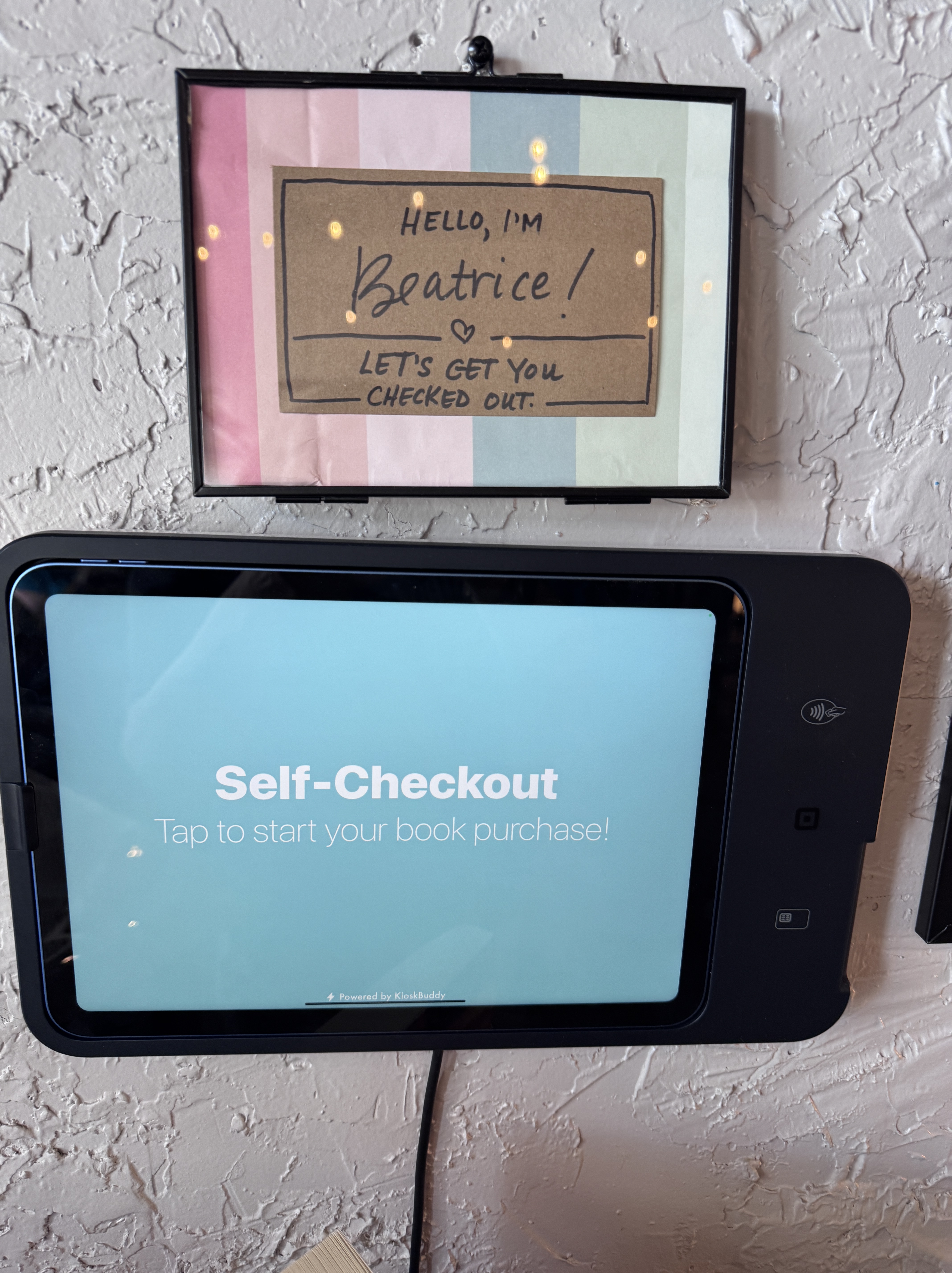
LO: I met Beatrice when purchasing a book during my last visit. Please tell us about her.
Meet Beatrice!
MB: I’m jealous she had the chance to meet you before I did.
Beatrice is amazing. Hardest working employee I have. She’s great. Since not taking away from the coffee shop’s seating was a big selling point in setting up the bookstore here, the books are out and exposed during the coffee shop’s business hours, 7 a.m. to 9 p.m. As much as I’d love to be at the bookstore all day, I have other responsibilities outside of the shop that need my attention, and sometimes I just need to step away for a quick lunch or to run a quick errand. That’s where Beatrice comes in. She holds it down while I’m away. It was an easy decision to set up a self-checkout option, giving customers the ability to make a purchase even if I was not physically present. Customers seem to love having the option to checkout with Beatrice, and I think giving her a name makes the experience a little more personable for them. Definitely a great addition to the bookstore.
LO: Anything else you’d like to share?
MB: I would just like to say that this entire experience of opening a bookstore has been a roller coaster ride and a dream come true. I encourage anyone who has the same dream to go for it if they are ever presented with the opportunity. Taking the first step will be scary but definitely worth it.
I would also like to thank Coffee Waves Port Aransas for giving me a chance to live out my dream in their space, and Laura Oles for this interview and giving me the opportunity to share my story.
LO: Thanks so much, Myra, for sharing how Sea Shelves started as a dream and became a reality. I know Sea Shelves is quickly becoming a favorite of locals and visitors.
***
Some readers may know that my mystery series is set in a fictional version of Port Aransas. Maybe Jamie and Cookie will make a stop into Sea Shelves one day? Jamie’s always on the lookout for an Elmore Leonard novel, and I know she’d love this place.
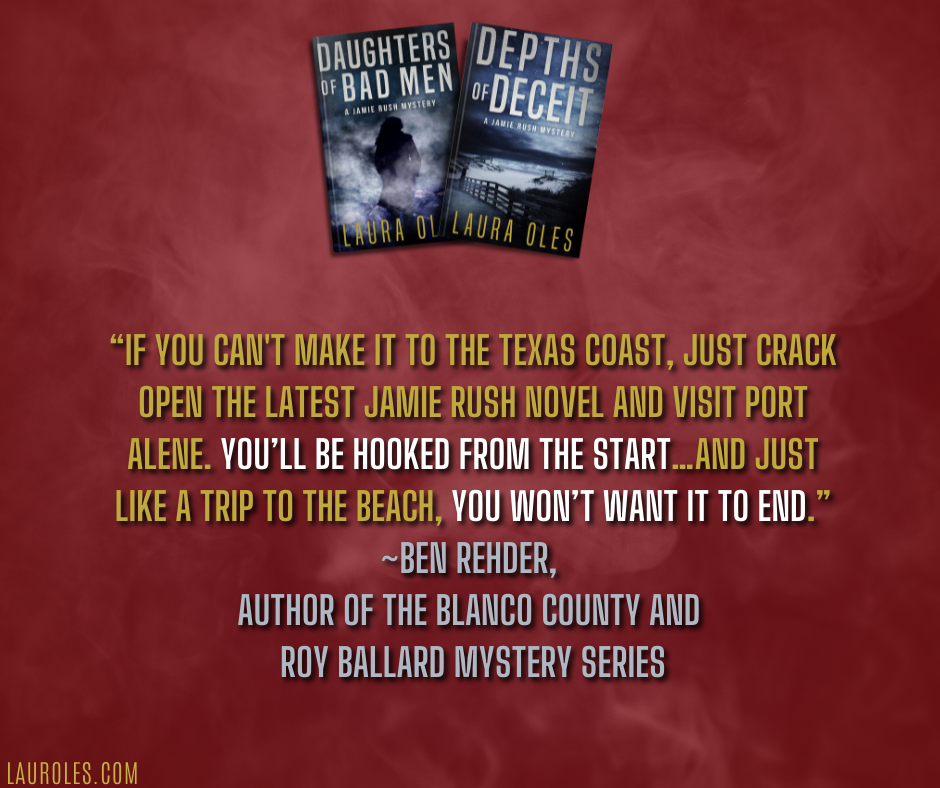
Laura Oles is the award-winning author of the Jamie Rush mystery series. Her work has appeared in crime fiction anthologies, consumer magazines and business publications. Her debut mystery, Daughters of Bad Men, was an Agatha nominee, a Claymore Award finalist, and a Writers’ League of Texas Award finalist. Depths of Deceit, her second novel, was named Best Mystery by Indies Today. She loves road trips, bookstores and any outdoor activity that doesn’t involve running.She lives in the Texas Hill Country with her family. (https://lauraoles.com)
When I first sat down to write the stories that would eventually become part of For Every Evil Under the Sun, I didn’t know exactly where they would lead me—I only knew I wanted to stretch my writing skills, try new things, and be a part of a hot, cool collaboration. (Yes, I like puns.)
Now, I’m proud to announce that this collection is out in the world, published by the brand-new Fredonia Ink Publishing. I’m honored to be sharing the pages with two powerhouse writers, Alexandra Burt and Laura Oles—both of whom are not only incredibly talented but also deeply committed to telling stories that explore the dark, complex corners of the human experience.
This collection is a bit of a literary experiment. We each approached the idea of “evil” through our own unique lens—psychological thriller, family drama, crime, horror, western—and let the stories guide us. What came out of it is a collection that isn’t just eclectic, it’s electric. It shines! (Yes, another pun.)
As for me, I leaned into the grit—into crime, revenge, justice. I wanted my stories to carry that weight—to explore the consequences of violence and vengeance. And also add a little bit of fun to the mix. And the stories by Alexandra Burt and Laura Oles are equally as dark and entertaining.
And hey, if you’re in Austin this summer, I’d love to invite you to join us for a special event at Vintage Bookstore and Wine Bar (1101 E. 11th St.) on July 18 at 7pm. Alexandra, Laura, and I will be discussing short story craft, the experiences of women writing crime fiction, and what went into shaping this haunting little book. It’ll be an evening of books, wine, and maybe a few goosebumps.
So if you’re in the mood for stories that simmer under the heat of summer and explore just how far people will go—to protect, to avenge, to survive—then For Every Evil Under the Sun might just be what you’re looking for.
🗓️ Event Info: July 18, 7pm @ Vintage Bookstore and Wine Bar, Austin, TX 🔗 Learn more, here is the Amazon listing. Ebook now available and paperback will be soon on Amazon and bookstores everywhere: https://tinyurl.com/2tph4xcz
Why do so many of us choose to work or study at our favorite coffee shop? Even if we have a fully equipped office, we pack up our laptop and relocate, settling in with likeminded people doing the same thing.
If this sounds like you, you’ve adopted a favorite “third space.”
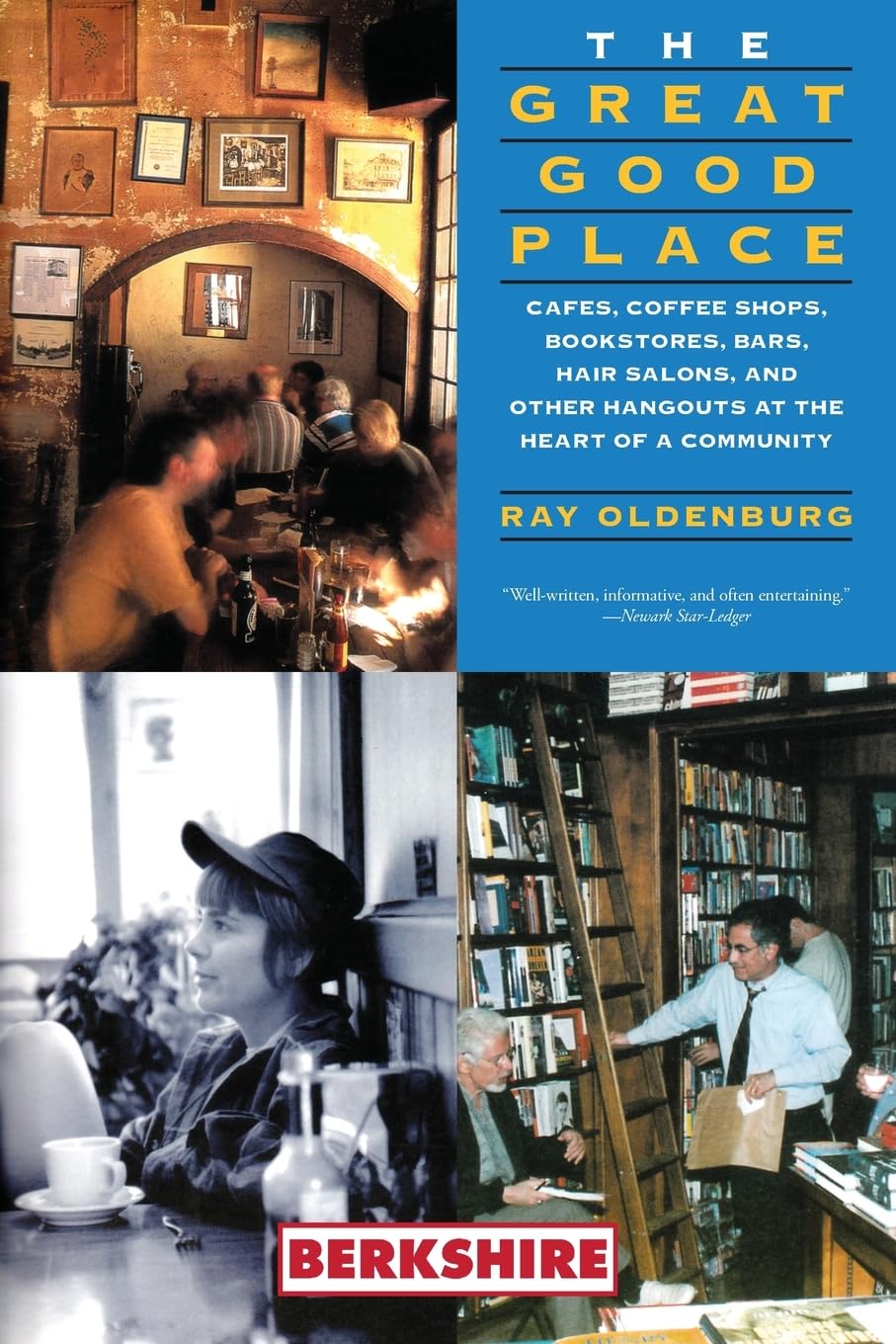
Urban sociologist Ray Oldenburg coined the term “third space” in his book, “The Great Good Place,” (originally published in 1989 and revised in 2023). Popular third spaces include coffee shops, pubs, diners, libraries, parks and gyms. The third space, Dr. Oldenburg stated, were ones that allowed people to leave private and professional concerns behind to connect with others in conversation. Third spaces “host the regular, voluntary, informal and happily anticipated gatherings of individuals beyond the realms of home and work.”
There’s some science that indicates it’s not simply the lure of a fantastic latte. A 2012 study published in the Journal of Consumer Research indicated that lower levels of ambient noise can spur creative idea generation. In a later 2019 study, researchers pointed to “stochastic resonance,” a measure of a particular background noise level that benefits our senses and can help in those moments where we are temporarily distracted or in a contemplative state.
In short, the “coffee shop effect” has been cited in several studies. This, coupled with being surrounded by others seeking a similar environment, can further motivate us into action. The idea of parallel work—working alongside others but not directly with them—can help us in our solitary efforts. All while feeling less alone.
Still, not all coffee shops will become beloved third spaces. A place where you will regularly spend both money and time is chosen. It is special. It draws you in and invites you to linger for a bit, often in the company of friends or colleagues.
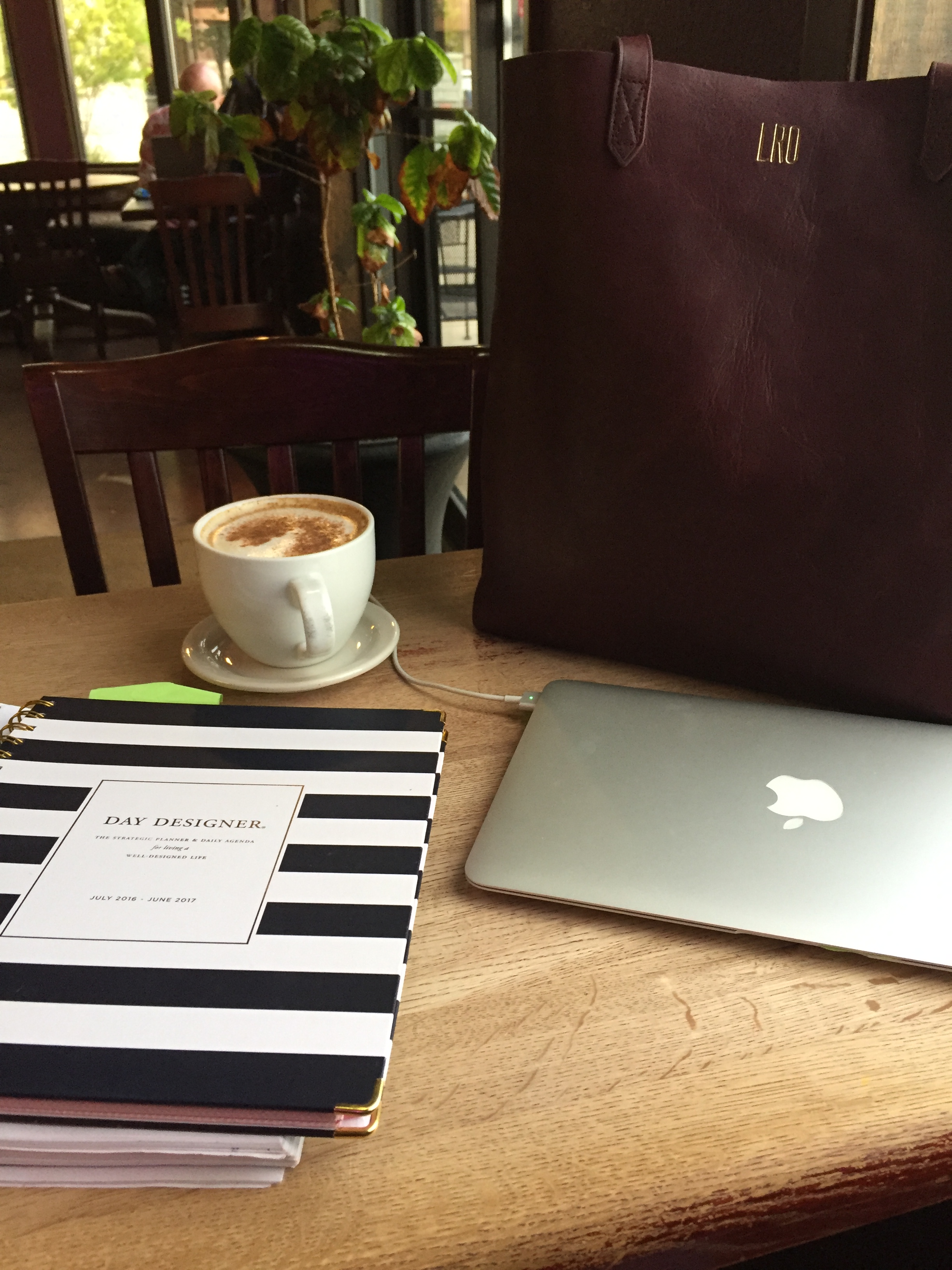
The third space has evolved from being a place where people gather to connect with community, to one that incorporates these components and adds a welcoming setting for students and WFH employees and solopreneurs. As someone who raised three kids while working from home, I sometimes struggled to tune out tasks and chores. So, I sought my own third space and found it at Mochas & Javas. In addition to business articles and columns, I wrote much of my debut novel at the Wonder World location.
My “MJ office” in 2016
Mochas & Javas continues to be part of my regular routine—sometimes to chat with friends and other times to stare down a deadline—and I was curious to learn more about not only this beloved local institution but the guiding principles behind the business.
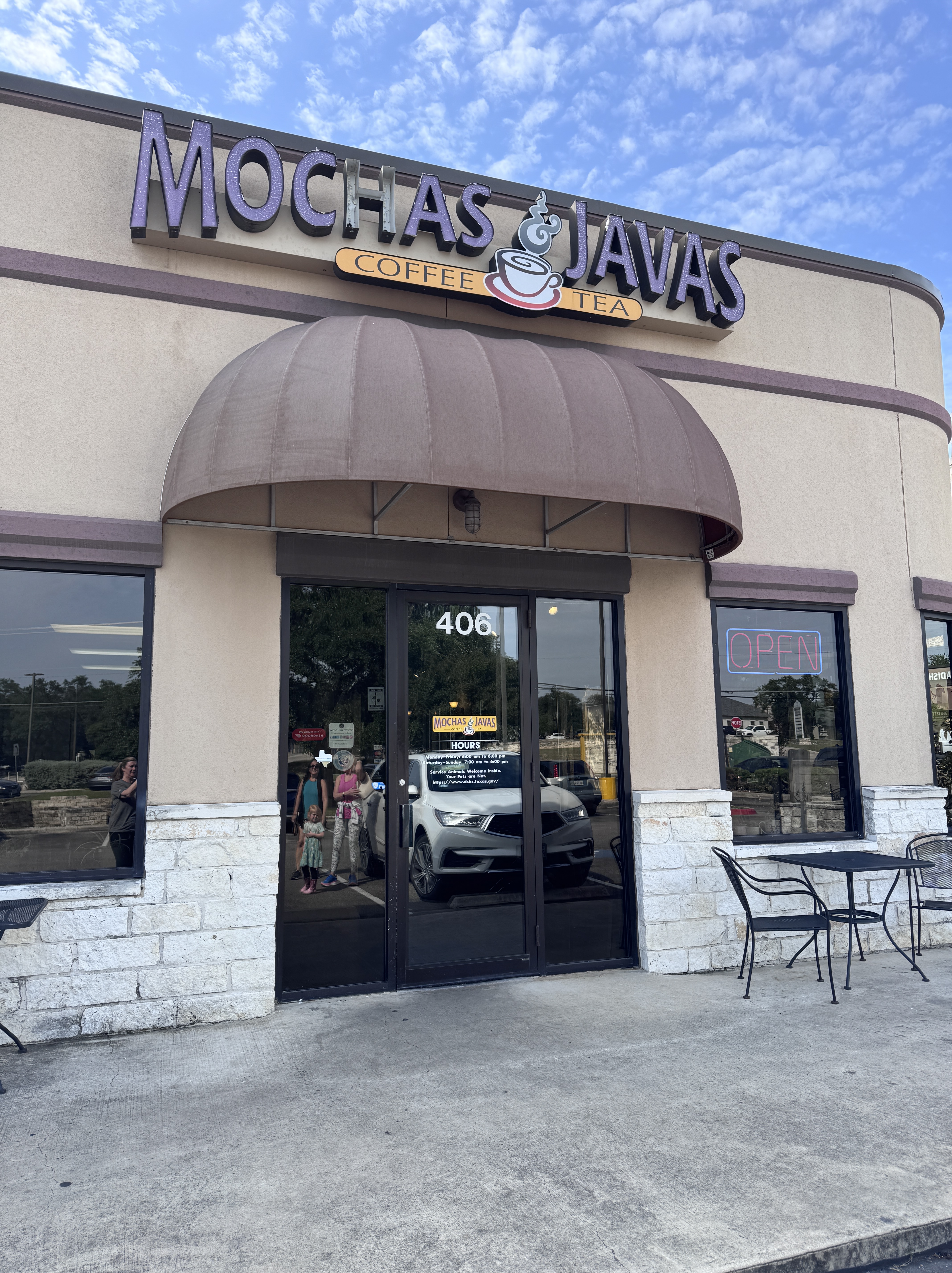
Mochas and Javas was founded in 2003 by four family members—Kevin Carswell, his brother Kirby Carswell and their wives, Michelle and Kelly Carswell. The idea originated when Kevin and Michelle began brainstorming about a local venue where San Marcos residents could gather to enjoy quality food and beverages as well as “legendary customer service.” Like many fantastic ideas penned on the back of a napkin or a business card, Michelle sketched the now well-known logo on a napkin and named the business Mochas & Javas (Community Impact, 2019). Over the last twenty years, Mochas & Javas has thoughtfully expanded into five locations.
I asked Kevin if he would share his insight about Mochas & Javas as a trusted third space in the San Marcos community and his philosophy regarding building this popular Hill Country destination. He was kind enough to share his thoughts with me in the following interview:
LO: “Getting together for coffee” is a common refrain we share with friends and colleagues. What encouraged you to take the first steps to create Mochas & Javas as a gathering space for the San Marcos community?
KC: When we began the discussion about opening our own business we discussed several types of business. But coffee made the most sense at the time, because it was in the food and beverage industry, which is my background and in 2002, the coffee industry was rapidly expanding. I had heard the term “third” space before, but not sure that I fully grasped the concept until we opened, expanded and then had time to grow MJ’s (I’ll abbreviate the full name) over several years and then see how many of our guests became daily/weekly regulars or made MJ’s their third space. Coffee does bring people together, I’ve seen many relationships built from the connection our guests made with one another while at MJ’s, it’s a great thing to see. And for myself I’ve made many friends over the years through MJ’s, lifelong friends. It’s a good feeling.
LO: Do you find that each location has its own personality/vibe or is the community based on proximity? Or a combination?
KC: One of the areas that I enjoy about MJ’s is that they all have their own “vibe” or connection to the community or the surrounding area that they are located. Such as WW, many locals with a mix of students and visitors. Whereas LBJ is a more concentrated number of students and professors with a nice mix of visitors, usually families coming for informal or formal visit to TX State University. Our Frisco store is very similar to our WW store, as where it’s mostly locals and business professionals with a mix of students.
LO: Why do you think local writers, artists, students and businesspeople are drawn to Mochas & Javas as a third space?
KC: Over the years many writers have used the WW store as their office. Paul Pullin for example is in his third book and has become a good friend over the years, he’s been a regular for 22 years. We’ve chosen not to place TVs at any of our stores. I believe they are a distraction, and most people today already have plenty of screen time. If our guests were staring at a screen, they may never meet someone new. We need more face-to-face conversations and MJs provide this.
LO: How has Mochas & Javas expanded and evolved since you opened the first location over twenty years ago?
KC: MJs opened the LBJ and WW stores the same year, 2003, about 6 months apart. We have always had plans to expand, sometimes slower than we first thought, but moving a bit slower is not a bad thing. Keeping our debt in check and growth at a steady pace. Five stores in 22 years is no record, but we have five stable stores with a strong following from our loyal guests. We are planning to continue with our expansion but will plan accordingly based off good solid numbers which allow us to grow without taking on more than we can manage.
LO: Mochas & Javas has strong ties to the Hill Country community, and I wonder if this stems from your philosophy of “always giving back.” Can you expand on this?
KC: I grew up in San Marcos, our family moved from the Houston area in 1967/68 to San Marcos. So, I’ve seen the city change over the past 57 years. Giving back not only to the San Marcos community but all the communities that we serve great coffee to. Giving back is an important part of owning and operating our business in the communities we serve, and we are grateful that we have the success to do this. We’ve made many small donations and added some larger ones over the years. They are all worthwhile. It’s a great way to say thank you to our community and guests for the many years of support.
The best part of working at MJs, from my standpoint, is our guests and staff. The interaction with both groups of people is the most enjoyable part of our business. I never get tired of working at the register or being a barista. It’s a lot of fun.
Laura Oles is the award-winning author of the Jamie Rush mystery series. Her debut mystery, Daughters of Bad Men, was an Agatha nominee, a Claymore Award finalist, and a Writers’ League of Texas Award finalist. Depths of Deceit, her second novel, was named Best Mystery by Indies Today. Her novella, Last Call, won the Silver Falchion award. Her work has appeared in crime fiction anthologies, consumer magazines and business publications. She lives in the Texas Hill Country with her family. (https://lauraoles.com)
I can’t tell you how many times I’ve come across a quote, an idea or something else I wanted to remember and thought, “I need to write that down.”
So I did.
Over and over and over.
In countless notebooks and journals and on post it notes.
The problem I found is that, while committing something to paper is an important first step, it is only a first step. There are many moments where I’ve written something down only to lose it amongst some ephemera, discovered only again when I’m looking for something else.
It’s like finding twenty bucks in those shorts from last summer. It’s a nice surprise, but maybe I should try tracking this information (and my dollars) a bit better.
First, I tried using a Bullet Journal…
The Bullet Journal was created by Ryder Carroll as a way to organize schedules, to-do lists and other details for work and personal life. It started as his own method of corralling his many thoughts and commitments into a central place. It’s a fantastic method for many dedicated BuJo lovers, and the premise is simple. All you need is an empty notebook and a pen.
Turns out, you also need a certain mindset. It’s a commitment.
Image Credit: @pureplanning_bymj
I have so much admiration for dedicated Bujo people. And I love seeing their gorgeous daily/weekly/monthly spreads, but I could never stick with it. I do have one completed book—used over a two-year period—that I enjoy leafing through now and then. Scattered amongst those pages are several quotes, concepts and ideas that I wanted to gather in a more central location, to rescue from my failed experiment.
I still love the idea. I just stink at the execution.
This is when I discovered the Commonplace Book.
A commonplace book is simply a notebook where you record learning and information from other sources for the purpose of collecting and reflecting upon for some future time. Many notable people in history have kept commonplace books, including Virginia Woolf, Mark Twain, Marcus Aurelius, Ralph Waldo Emerson, and Henry David Thoreau. (Image Credit: UT Austin, Harry Ransom Center, Lewis Carroll’s CPB)
Unlike a Bullet Journal, which has its own system, a commonplace book only requires that you collect your ideas, quotes and more in one location. What you choose to include is completely up to you. The most common use is for recording secondary sources, but that can take all forms. Music lyrics? Key dialogue from a movie you love? Put them all in one place. I keep my commonplace book on my desk so I can access it when I’m reading or working on a project. Others prefer to always carry one, ever prepared to catch that next inspirational idea while out for a daily walk or in a coffee shop.
Unlike a journal, with content focused heavily on personal thoughts, musings and experiences, a commonplace book is something designed to help you learn from others. These ideas may spur some new thoughts or considerations, and this is a perfect place to record those as well. It can be anything you like, of course, but it’s not the best place to record daily tasks or reminders. Keep your digital or paper planner for those purposes (and feel free to ask me about planners because I will happily engage in that topic, too).
There is scientific evidence that supports the theory of choosing to write by hand rather than typing into a digital document. A recent study from the University of Tokyo showed that graduates revealed that “writing on physical paper can lead to more brain activity when remembering the information an hour later. Researchers say that the unique, complex, spatial and tactile information associated with writing by hand on physical paper is likely what leads to improved memory.” (Science Daily).
My commonplace book has a wide variety of quotes and concepts tucked inside. Adam Grant, Anne Lamott and James Clear make regular appearances on my pages. I can tell by my handwriting how I’m feeling because my messier cursive signals I’m in a rush while my neater entries show that I’m taking time to really consider what I’m transcribing. The important part is the practice. Keeping a commonplace book encourages my love of learning, of reading and of writing. There is a quiet joy in taking time to learn something new, to consider it and then commit it to paper.
Maybe you’re already doing some form of this practice. I was, and it was only when I sought to improve my process that I learned about the commonplace book and how to better use it in my daily life. Having one location helps me gather this knowledge and, more important, keep it somewhere that allows me to reflect and learn. If you haven’t tried keeping a CPB, I hope you’ll consider it, and I would love to hear how it works for you.
Laura Oles is the Agatha-nominated and award-winning author of the Jamie Rush mystery series. Her work has appeared in crime fiction anthologies, consumer magazines and business publications.
“Education is not the filling of a pail, but the lighting of a fire.”
While there is some debate as to whether this quote belongs to William Butler Yeats, the sentiment is one that has stayed with me, particularly throughout my writing career. One of the best things about being a writer is that it requires ongoing education. I love that my job demands regular research. I’ve gone down more rabbit holes that I care to admit, but it’s this spark of learning something new that fuels my enthusiasm for my fiction.
I experienced a wonderful “lighting of a fire” during my week in Salem, Massachusetts at the Writer Unboxed Unconference. Unlike other writer conferences that I attend (and love), this one involved being solely a student for the entire week. The conference welcomes all genres, and spending time outside of crime fiction gave me some valuable insight into how others approach storytelling, structure and character development.
Therese Walsh opened with her session titled “Good Chaos: Provocation and Invitation,” and by the end, I knew this week would be one of time well invested. Susan DeFreitas is a gift to writers. Her session, “Emotional Alchemy,” was so thoughtful and packed with practical advice that I took ten pages of notes. I’ve re-read them twice since returning home. And as someone who gets excited about outlines, timelines and plotting considerations, her “Anatomy of a Novel: Create a Blueprint” session provided me with specific skills to apply to a current project.
Watching Tiffany Yates Martin stand in front of a room to discuss fiction is an experience I hope every writer gets at least once. Her passion, knowledge and enthusiasm for characters, craft, storytelling and readers rolled through the room. She’s also damn funny. I left with another ten pages of notes.
Because there were two session tracks, I was forced to make difficult choices regarding the schedule, and I know that I missed several other excellent sessions. Lunch breaks provided the opportunity to explore a bit of Salem, walking through downtown and adjacent neighborhoods. Evenings were spent sampling different restaurants, and I left with a favorite pub (O’Neill’s), sushi spot (Finz Seafood & Grill—the Lobster Maki Roll was fabulous), coffee shop (Lulu’s) and bookstore (Wicked Good Books). That I was able to experience this week with some of my favorite writer friends made it even more special.
Returning home with a novella sized document full of notes, I took my time reading through them, extracting additional gems, and analyzing how they might influence my own projects. I’m back at my desk, and the spark remains. The learning continues, and it seems I will never graduate.
If so, I would consider that success.
Laura Oles is the award-winning author of the Jamie Rush mystery series. Her debut mystery, Daughters of Bad Men, was an Agatha nominee, a Claymore Award finalist, and a Writers’ League of Texas Award finalist. Her work has appeared in crime fiction anthologies, consumer magazines and business publications. She loves road trips, bookstores and any outdoor activity that doesn’t involve running. https://lauraoles.com








 Austin Mystery Writers