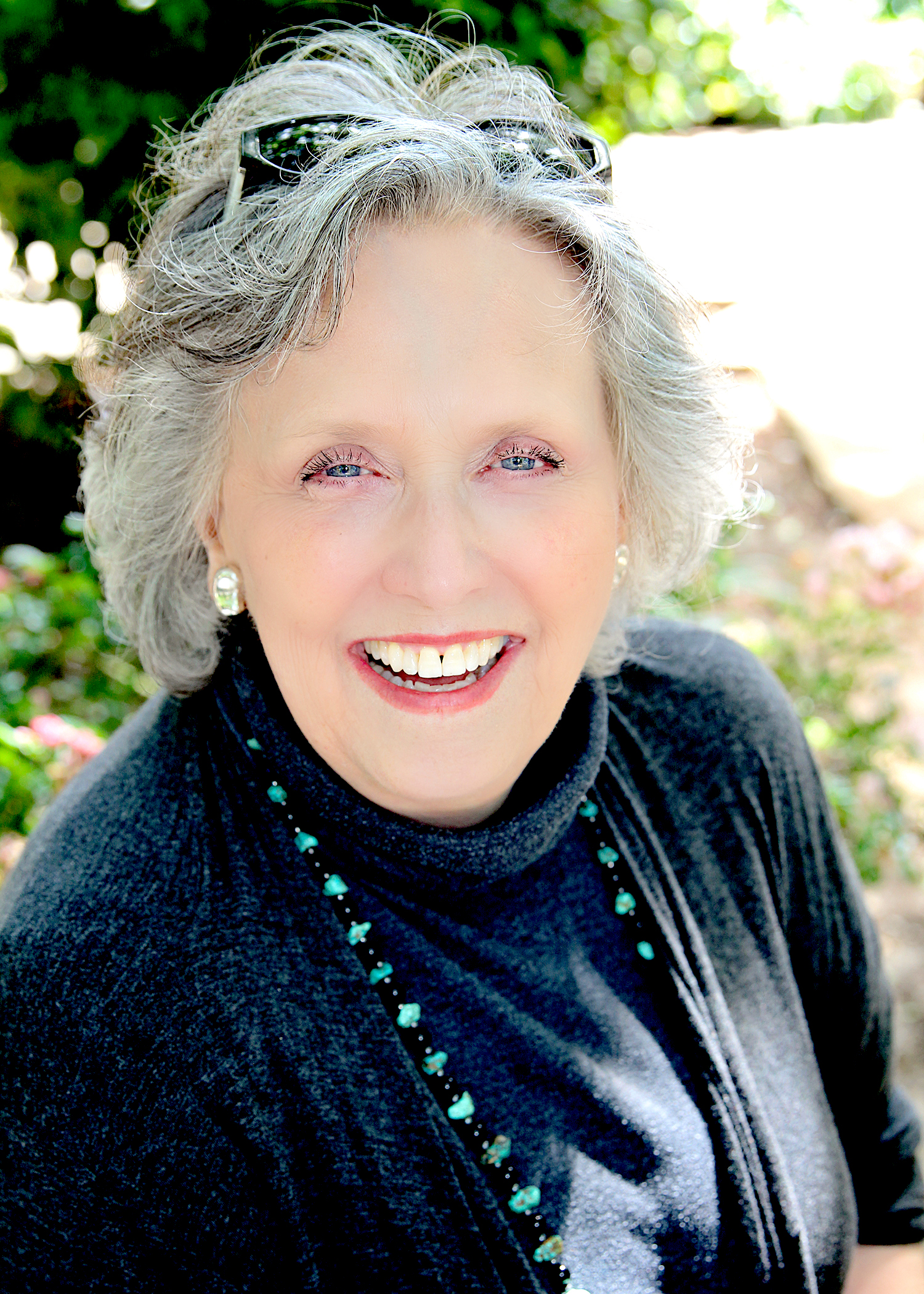
By Dixie Evatt
Words, words, words . . .
~ Shakespeare
Before we had powerful computers in our pockets or on our laps, we had reference books. . . shelves and shelves of them.
 One of my favorite possessions is a vintage Webster’s dictionary, published 1956 – when I was 10 years old. All 11-plus pounds of the five-inch-thick book teeter on a top shelf in my office. I can no longer safely lift it and the pages are laid out in three columns of typeface so tiny that my aging eyes strain to make out the words.
My book is a holdover from the days when library dictionaries were housed and opened on a specialized wooden lectern. I wonder, do libraries still have these throwbacks to that bygone day or have the enormous books all made their way to the shredder?
I never look at mine that I’m not reminded of the 1950s movie, Born Yesterday, starring Judy Holliday. She won an Oscar for her portrayal of the  brassy girlfriend of an uncouth tycoon. Her character tries to overcome her limited education and rudimentary vocabulary by reading, among other texts, Alexis de Tocqueville’s Democracy in America. In one of the more humorous scenes, she struggles to make meaning of the archaic text and is advised to simply check the dictionary if she encounters any words she doesn’t understand. The increasingly frustrated Holliday would no more than read a sentence before she is up again, consulting a dictionary. Word by word. Trip by trip. Written today, the scene would surely lose its charm since she would likely be reading Tocqueville on a Kindle where all you must do is press and hold a finger on a word for the meaning to flash before you.
 Like Holliday with a Kindle, writers don’t have the need for shelves full of reference books since language prompts are everywhere from the demons in autocorrect to the drop-down menus in word processing programs that produce synonyms.
The 19th Century French author Jules Renard is credited with saying, “What a vast amount of paper would be saved if there were a law forcing writers to use only the right word.
Yet, finding the right word isn’t always so easy even with all our modern assets. Luckily there are still some reference sources to help. Here are a few:
Evan Esar’s “20,000 Quips & Quotes: A Treasury of Witty Remarks, Comic Proverbs, Wisecracks and Epigrams.” If she’d thumbed through this one, Holliday would have learned that Tocqueville said, “The last thing a political party gives up is its vocabulary.”
“The Allyn & Bacon Handbook” by Leonard J. Rosen and Laurence Behrens. You must love any book that is willing to devote 22 pages to the uses and misuses of the comma alone.
Theodore M. Bernstein’s “Dos, Don’ts & Maybes of English Usage.” For instance, he explains why Mark Antony didn’t say “Friends, Romans, countrymen, loan me your ears.”
“Describer’s Dictionary: A Treasury of Terms & Literary Quotations,” by David Grambs and Ellen S. Levine. It indexes illustrative passages of more than 600 authors from travel writer Paul Theroux to contemporary British novelist Zadie Smith.
Eli Burnstein’s “Dictionary of Fine Distinction Book,” offering a humorous look at often misused words and phrases. For instance, couch vs. sofa.
Valerie Howard’s “1,000 Helpful Adjectives for Fiction Writers,” promises to spice up characteristics, qualities or attributes of a noun when a writer is having trouble capturing just the right word.”
Bill Bryson’s “Dictionary of Troublesome Words: A Writer’s Guide to Getting it Right” sets out to decipher the idiosyncrasies of the English language. Things such as 126 meanings of “set” when used as a verb and another 58 when used as a noun.
Brian Shawver’s “The Language of Fiction: A Writer’s Stylebook.” Need to be reminded when to use a comma or semicolon? Shawver’s there to help.
Kathy Steinemann’s “The Writer’s Lexicon: Descriptions, Overused Words, and Taboos.” Among other things, she offers writers cures for overused modifiers (I’m talking about you “very”).
John B. Bremner’s “The Columbia Dictionary for Writers: Words on Words.” Here you can learn the history of H. L. Mencken’s inspiration for coining the term “ecdysiast” to replace “striptease.”
Christine Lindberg’s “The Oxford American Writer’s Thesaurus.” Writing about bread? How about a baker’s dozen choices: dal, pita, rye, naan, tortilla, focaccia, ciabatta, challah, corn, sourdough, pumpernickel, baguette, etc.
“Associated Press Stylebook and Briefing on Media Law” has been found on the desk of every journalist for decades since it dictates uniform rules for grammar, punctuation, style for capitalization and numbers, preferred spelling, abbreviations, acronyms, and such.
“Words, words, words,” is the sarcastic response Hamlet gave when Polonius asked him what he was reading. Fortunately, authors still have no shortage of excellent reference books to help them find the right ones.
***
A former political reporter in Austin, Dixie also taught writing at Syracuse University. When she teamed up with Sue Cleveland to write fiction, they sold a screenplay to a Hollywood producer. Although the movie was never made, the seed money financed ThirtyNineStars, their publishing company. Through it they published two award-winning thrillers (Shrouded and Digging up the Dead) under the pen name, Meredith Lee. Dixie’s first solo mystery was Bloodlines & Fencelines, set in a tiny Texas town near Austin. Kirkus reviews described the book as, “A twisty whodunit that’s crafted with care and saturated with down-home Southern charm.” She is working on second mystery in the series. www.dlsevatt.com
***
Image of dictionary by PublicDomainPictures from Pixabay
Publicity photo of William Holden and Judy Holliday for Born Yesterday via Wikipedia
Image of tablet by Gerd Altmann from Pixabay



 Austin Mystery Writers

