Writing to Music

I think the writing process fascinates writers and non-writers alike. There seem to more questions asked of writers about it than anything else. “Where do you get your ideas? Do you have a writing schedule? Do you have a special workspace?”

When writers congregate over the communal coffeepot, we talk about these things too.

One of the questions I like to ask is, “Do you listen to music when you write?”

I asked file3551243435174this on Facebook and Twitter the other day and here are some of the responses I got. I was curious to see what the answers would be, and if they were similar for writers within the same genre.
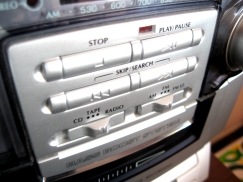
 

Mystery/Thriller –

Gale Albright – I don’t listen to anything if I can help it. I prefer quiet when I’m writing. I am writing EVA in a definite time period, the Great Depression in East Texas in the early thirties. I have thought that maybe I should get some music (probably from the library) of popular songs played on the radio during the Depression, plus old-time church music, etc. I could listen to set the mood. I don’t know if I could write with it on. I haven’t done it, so I could try it as an experiment.

Steve Freeman – Not usually. If I do, though, it has to be instrumental or it’s too disruptive. I usually listen to Hans Zimmer.


Fiction:

Brianna Soloski – I have a play list of songs I never get tired of hearing. As for type…Billy Joel, Carly Rae, Jepsen, Train, and more.


Romance:

Michelle Hughes: If it wasn’t summer I would. Right now I get to listen to screaming. LOL


History

Jeff Kerr – No


Historical Fiction –

Jeri Westerson – Yup. I like to listen to medieval music or soundtracks to medieval-themed movies while I write… Some of the worst movies have produced some great soundtracks.

Kim Bullock – I have to have silence. This is not always easy to come by.


Fantasy/Sci-fi –

Tonia Marie Harris – I listen to certain music when I’m writing or revising. For my current book, I’ve found myself listening to … post-industrial like Tool or Portishead, but I like classical pieces like Lakme’s The Flower Duet….Living in a tiny house with three kids, three animals, and babysitting full-time, playing music on low helps me focus, rather than detract from my work.

Vaughn Roycroft – Three words. Dead Can Dance.

JC Cassels – I listen when percolating. I use music to set the mood… I bought some royalty free soundtrack music that I listen to while plotting. It helps with pacing the action scenes.

Marta Pelrine-Bacon – Often, but not always. I listen to music appropriate for what I’m writing as if the scene is a movie.


Freelance/Essays/Other –

Katherine Wolbrink- Never. I find it way too distracting. But I have the attention span of a toddler, so…

Patrick Thunstrom – …I listen to trance, techno, metal, or some form of rock, with the occasional foray into classical. I have a “get pumped” list that is fun.

Joel B. Matuszczak – I write about things that happened to me, so I often listen to the music that I listened to during whatever phase of my life that I’m writing about. My taste in music, like the rest of my life, has changed a lot over the years…

Roberta Schirado – Instrumental jazz. The beat seems to focus my attention.

Kit Frazier – Yes, and sometimes I have a movie playing in the background…


I used to listen to movie soundtracks while writing. I found I couldn’t listen to anything with lyrics, especially if I was writing dialogue. I even created a personalized station on Pandora I named, Music for Writing. It’s composed of movie/video game soundtracks. Most are by Hans Zimmer (I love HZ!). It’s great for setting the mood when I’m thinking and plotting tension and action. When I’m thinking about my Texas historical fiction, I listen to the soundtrack to Lonesome Dove. It works for me every time.  But once I sit down to write, I have to turn it all off. I’ve found I need to focus on the words and I already have too many other things swirling around my head.

So there you have it, a totally unscientific survey of a few writers and their music/writing habits. My conclusions?  I guess it depends more on the individual’s personality and not the genre. That and, I feel old because I don’t know who some of these groups are or even the type of music!

Thank you to my writing friends who answered my questions and let me use their answers.

VP Chandler

Whispers of Memories

I recently took a trip to Huntsville, Texas, and everything I saw at every turn stirred up old memories.


–          Right behind the hotel where I stayed was the apartment complex where my cousins had lived. A few blocks away was a second place they lived.

–          I passed a street of good friends of many years. They hosted a wedding shower for me.

–          I passed the fancy restaurant where my grandmother lived for a while when she was a child. I remember that when she told us, we had no idea!

–          I saw the nursing home where my other grandmother spent her last years.


All of this within a short drive just to get a burger! My mother’s family has been in the Huntsville area since the mid 1800’s so we have a lot of stories. A couple of my favorites:


–          Sam Houston was a friend of the family. He used to come and visit.

–          My great-grandfather was sheriff for a while and lived in the jail.


Neither of my parents grew up there, but my father moved there after my parents got divorced. He was offered a job at Sam Houston State University as a Criminal Justice professor. So I have a personal connection to the place through my mother and my father.

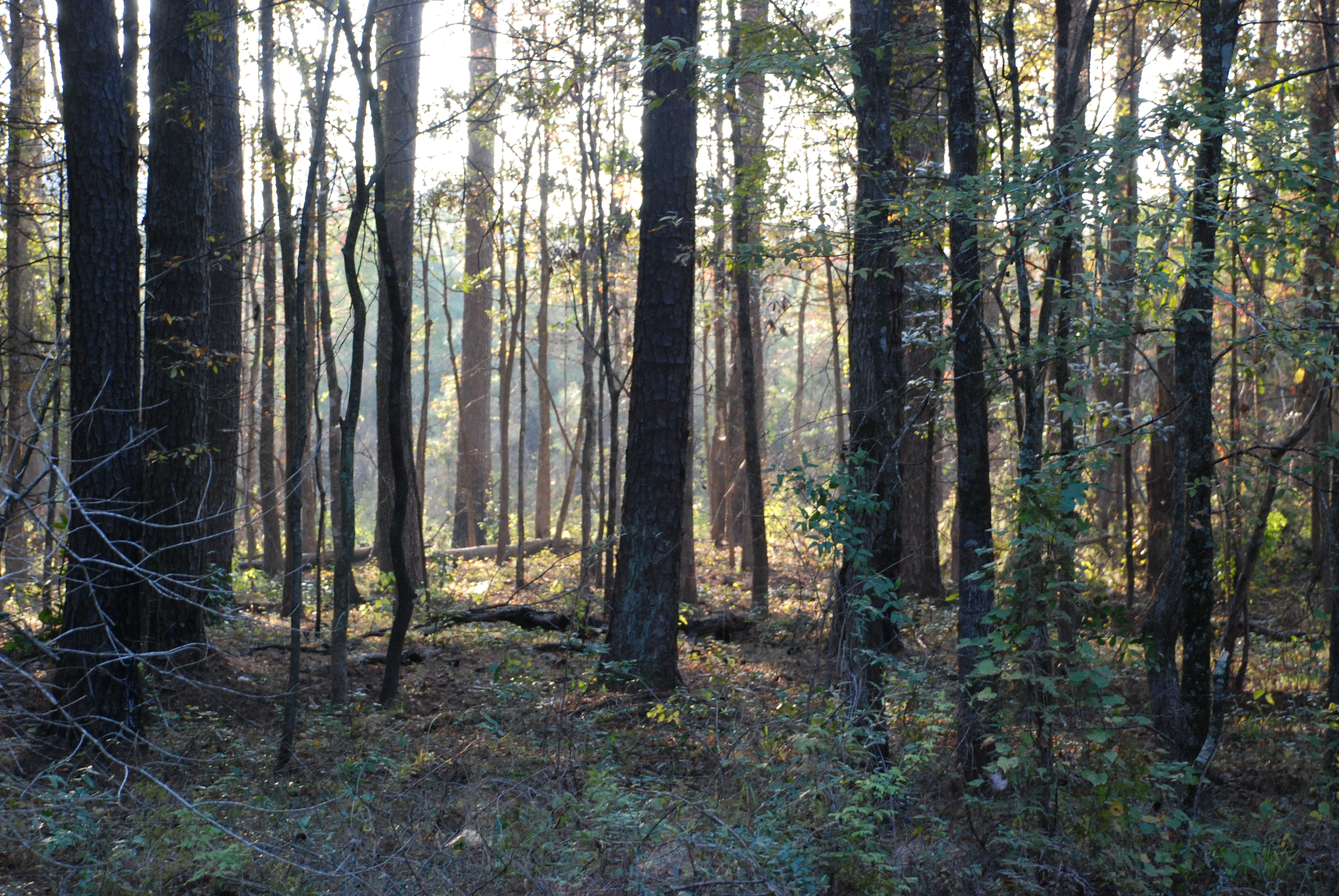
Besides the personal connections, there is something that draws me to the place. OLYMPUS DIGITAL CAMERAMaybe it’s something about the vines growing in the pines, maybe it’s because I love history and old things, maybe it’s because of my “writer brain”, but when I pass old houses, I imagine children playing and grannies rocking while shelling peas. I love browsing through the old stores. I sometimes look at what they’re selling, though I’m more likely to be looking at the tin ceilings and wondering what the original store was.

The history of a place just calls out to me. I look at the red leather seats in the booth at a diner and remember when not everyone was welcome as a customer. I look at the young, happy families and wonder if they hear or feel the negative things that happened. Can they even imagine it? I pass the prison walls and know the prison has been there since 1849. Lots of famous and infamous people have been in those walls.

At the university I think of my great great aunts who attended when it was a Sam Houston Normal School. We’ve had a graduate from there in every generation. My grandmother went to kindergarten at Old Main, which has since burned down.

I think about my father when I sit on the bench outside the CJ building that’s dedicated to him. There’s a plaque with his name on it. He used to sit outside and smoke and talk to students. Inside the building there’s a big picture of him. DadNext to it are plaques with names of students who have received scholarships named after him.


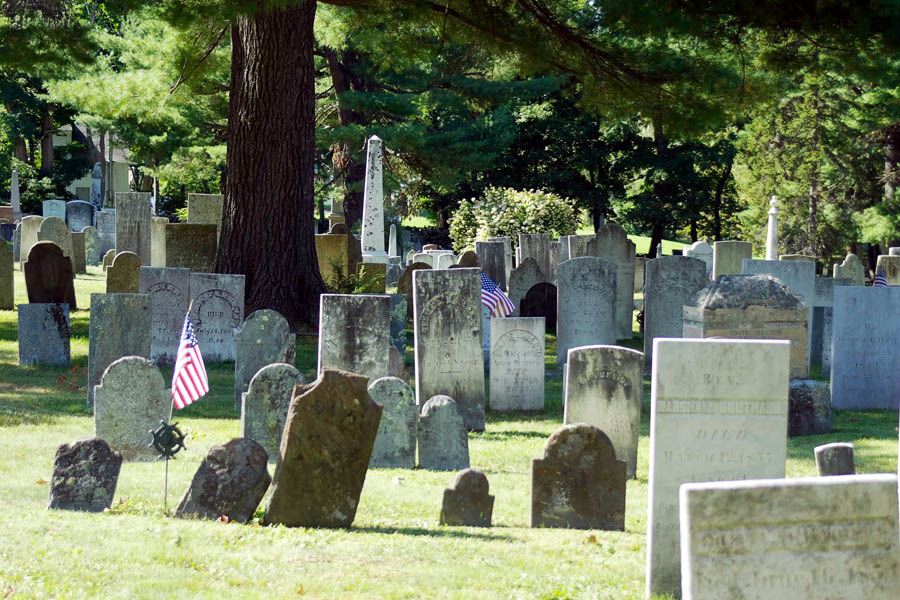
Sometimes when I’m in town, I visit the cemetery. I look up my folks and browse around. Yep, some people like museums, I like cemeteries. file000511322167When you’re looking at someone’s headstone, you see when they were born and when they died. You can see if they were married or had children buried with them. So many stories untold.


It’s all a bit overwhelming for me at times. But I guess it’s no surprise that I like to write historical fiction. file0001461581320For me the place is full of mystery, history, conflicts, love, death and birth. Those piney woods have a lot of secrets.


Do you have a place that calls to you?

Why I Write

By Valerie Chandler

Almost every writer is asked, “Why do you write?” Many writers have lofty answers, but mine is, “Because I have to.” I love telling stories. I have to tell stories. I think it’s something I got from my dad who was a natural-born storyteller. He used this gift in his job as a college professor. He loved to entertain his students.

I wrote my first stories in first grade and I loved it. During my elementary years, every time a teacher said, “Get out a pencil and paper. It’s time to write a story,” I practically jumped out of my chair from excitement while the rest of the class groaned. As I grew older, writing exercises turned from writing stories to writing essays. I felt the school system was conspiring to squash our creativity.

Then in eighth grade Mrs. Cunningham read a story called “The Spanking Machine”. My heart raced. When I was in kindergarten, my older brother teased me that Principal Rockefeller of the elementary school where I would attend the following year, had a spanking machine and she accidentally killed a kid with it.

The story that Mrs. C. read was not about that, but it brought back a vivid memory of my run-in with her spanking machine. I knew that was the story I had to write. (You can read what happened here.)

A few days later, before Mrs. C. returned our stories to us, she said, “You all wrote really good stories, but there is one I’d like to read to you. It’s called ‘The Spanking Machine’.”

The students protested, “You already read that to us!”

“No, this is a different one. A story that one of you wrote.” I couldn’t believe she was going to read it to the whole class! I was nervous and curious as to how they would react. I remember looking around the room, pretending I didn’t know who wrote it, in case they didn’t like it. As the story progressed they leaned forward in their chairs, got nervous as the tension grew, and laughed at the end.

To have an effect like that on someone is fun, intriguing and addictive. The idea that a writer can reach through the words and grab a reader is a powerful and fun feeling, but it’s also a compulsion. I have stories constantly swimming through my head and I want to share them with the world. I hope readers will still lean forward with anticipation when they read my stories.

Book Review: Burrows

By Valerie Chandler

Austin Mystery Writer Valerie Chandler

Austin Mystery Writer Valerie Chandler

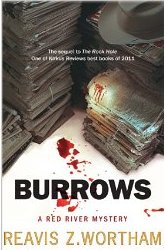
Burrows, the second book of Reavis Z. Wortham’s Red River series, is a page-turner and a satisfying read. In 1964, in North Texas along the Red River, young constable Cody Parker, recently back from Vietnam, has his hands full. An escaped lunatic has already left dead bodies in Nebraska, Kansas, and Oklahoma. So when a body is discovered in the Red River, it looks like the killer is in the area.  To add to Cody’s problems, his young cousins, Pepper and Top, are always underfoot and causing trouble. Cody’s uncle, retired constable Ned Parker, can’t break his habit of following hunches and does some of his own investigating while trying to reassure the town that Cody is fully capable.

Cover of Burrows by Reavis WorthamTheir investigations lead both Cody and Ned to the Cotton Exchange over in the next town, Chisum. They believe the killer is inside a hoarder’s nest crammed three stories high with junk. It’s a masterful feat of engineering, complete with deadly booby traps and a maze of tunnels. Cody and fellow officer, Deputy Big John Washington, volunteer to enter and as soon as they do, the entrance collapses. The only way out is forward and they hope that Cody’s experience as a tunnel rat in Vietnam will get them out alive. Ned and the rest of the town have to wait outside during the ordeal, wondering if the officers are even still alive.

Wortham skillfully captures 1960’s Texas culture and language while also providing a great mystery. He places the reader right in the musty, stinky, death trap, every stifling inch of the way. It was so descriptive, I sometimes had trouble breathing and he made me squirm more than once! He does an excellent job of pacing and adding tension. Just when one problem is overcome, there is another to face. I had to keep turning pages to see what happened next.

Successful Workshop at Book People!

Panel discussion

 First of all, I’d like to thank Book People and Mystery People for allowing us to use their space. And  huge thanks to the writers Reavis Z. WorthamKaren MacInerney, and Janice Hamrick for giving of their time to share their knowledge with us.

Lessons I learned:

1. Mysteries come in all shapes, sizes, and styles, but good writing is good writing.

2. Take out as many of the dialogue tags as you can. (he said, she said, he yelled, etc.) Try to change your description and action so you don’t have to use them. Reavis called it “trimming the fat”. Actually, I think he said, “It’s trimming the fat, y’all. You don’t need it.”

Words of wisdom

Words of wisdom from Reavis Wortham

3. Your story will drive the pace of your writing. Slower action will probably have longer chapters, faster action will have shorter chapters. The shorter chapters will make it move quickly.

4. It’s good to have a little humor to break up the heaviness of the drama. But don’t force the humor, some people just aren’t funny. (Surely I don’t have that problem. Right?)

5. Most writers probably write to work out something from their past. (I can see that.)

6. Karen said, “Read, read, read your genre!” You should know what is expected of your writing. A cozy mystery will have a different form and elements from a hard boiled mystery.

Karen MacInerney

Karen MacInerney

7. Your MC (Main Character) has to have a reason for solving the mystery. They can’t just “be there”. They have to have a stake in the outcome. (I knew this, but for some reason I’ve had trouble applying this to my current WIP, until Saturday. I had an “aha!” moment and fixed the problem.)

8. Janice talked about creating great characters. She had the audience do a simple, yet effective, writing exercise. She asked us to write down a description of a dotty old woman. The descriptions varied widely. She gave a scenario and told us to write the woman’s reaction. Boy! Even more variety than the first descriptions! She said that it goes to show that no two people write exactly the same way.

Jancie Hamrick teaching about how to make great characters.

Jancie Hamrick teaching about how to make great characters.

9. The one thing Janice said that really stuck with me was about adding depth to a character. You can start with a stereotype, but add an unexpected twist to the character. For some reason that really stuck with me. So many of my favorite characters are flawed heroes. It works.

10. Janice also recommended you Google a character’s name before using it.  Make sure you don’t accidentally give your hero the name of a famous killer.

There was so much more to the lectures, but these were the things that struck a chord with me. We had such a good time laughing and learning and giving away prizes! We are already talking of doing another on in the Spring.

P.S. I think my cookies helped make it fun too.;)

-VP Chandler

Cookies!